Doctor of Intercultural Studies

Overview

Biola’s Doctor of Intercultural Studies program further equips those currently engaged in a cross-cultural or multicultural setting by deepening their understanding and application of lessons from history, theology and the social sciences. Graduates of this program may continue in their present vocational placement or step into various teaching positions and leadership roles. The program may be completed wholly on campus and up to 50% in Thailand or online.

The Doctor of Intercultural Studies (DIS) degree is a practitioner's degree designed to enhance people, partnerships and publications that advance the mission’s enterprise in scholarship, spirituality, service and sacrifice through the critical strategizing of three cross-disciplines: church history, theology and the social sciences. As a student of this program, you will:

  • Demonstrate an understanding of important theories and theorists relevant to one’s research area and/or ministry context.
  • Construct new applied understandings explaining how the student can improve vocational engagement outcomes.
  • Demonstrate a mastery of important theoretical constructs in missiology applied to the student’s vocational engagement.
  • Discuss and analyze the integration of one's faith commitments, theological understandings, and pertinent educational convictions.
  • Exemplify rigorous scholarship accompanied by Christ-honoring professionalism in all scholarly activities.

Show More


Global Learning Center

The global learning center provides students the unique opportunity to earn credits while taking courses in Chiang Mai, Thailand.

Learn More About the Global Learning Center


Yes! Tell Me More!

Loading…

Program Requirements

What are the program requirements for a Doctor of Intercultural Studies student?

The DIS degree requires 36 credits of coursework, including 6 units of foundational courses, 15 units of concentration core courses, 6 units of theology courses, and 9 units of research courses, culminating in the dissertation.

  • Doctoral Coursework. Throughout the program, students will engage in coursework designed to increase their knowledge and engagement with relevant topics in the field, as well as begin work on specific components of the final dissertation.
  • Advancement to Candidacy. Official DIS candidacy indicates that students have completed all of the preliminary requirements and are now qualified to undertake the doctoral dissertation.
  • Dissertation. The dissertation demonstrates high attainment in scholarship in the field of educational leadership.
  • Dissertation Defense. The final examination is an oral defense of the dissertation before the doctoral committee and other invited professionals. Successful defense of the dissertation completes the candidate’s responsibilities for the degree, which is conferred in the scheduled graduation ceremony immediately following the defense.
  • Graduation Requirements. All students must submit an acceptable dissertation and completed all required course work with a minimum 3.25 GPA to qualify for graduation. Beyond completion of academic requirements, doctoral program faculty must also recommend that the student is eligible for conferral of the degree on the basis of evidence of Christian life and character established during his or her course of studies. All financial obligations must be settled. Students must meet with their department advisor and submit the required forms to declare intent to graduate.

Career Outlook and Preparation

What can you do with a Doctor of Intercultural Studies?

As a student of Biola’s Doctor of Intercultural Studies program, you will be equipped for intercultural services through advanced study, training and research. While this program of study can lead to a variety of career paths, here is a sample of a few of the many doors that may open to you with this degree:

  • Mission Organization Leader
  • Missionary
  • Professor in a non-Western setting
  • Missions Pastor
  • Pastor
  • CEO / Founder of a Missions Organization
  • Business Founder / CEO
  • CEO of an International Business

Parnell Lovelace Jr

Those considering the Ph.D. in Intercultural Studies will find the program challenging and Christ-centered. Scholarly research aligns with spiritual discernment and a commitment to proclaiming the gospel of Jesus Christ.

Pastor and Church Consultant
Intercultural Studies, Ph.D. '21

Admissions & Deadlines

As a Christian institution, Biola seeks to admit applicants whose backgrounds clearly demonstrate scholarly aptitude, a commitment to the historic Christian faith, personal character and integrity, and a positive service-oriented motivation toward their field of study. Biola does not discriminate on the basis of the applicant's race, color, sex, socio-economic status, disability, or national or ethnic origin.

Education and GPA Requirements

  • You must have a master’s degree or its equivalent appropriate to the Doctor of Intercultural Studies from an accredited institution, with a minimum GPA of 3.25 (on a 4.0 scale).
  • Note: If applicants do not meet the degree or GPA requirements above, they may still be considered for admission. Please contact the Talbot Doctoral Programs Office at talbot.doctoral.office@biola.edu.

Professional Experience

  • Demonstrate three years of cross-cultural or multicultural ministry experience.

English Proficiency Requirements

  • If English is not your first language, you are required to display your English proficiency before admittance into a Biola University graduate program. See “English Proficiency” in the application steps section below.

Application Deadlines

  • Fall Semester
    • General: February 15

Visit Biola

Explore our sunny Southern California campus in person or virtually. Learn more about your program of interest and the admissions process by scheduling an appointment with an admissions counselor.

Visit Biola
Virtual Tour

Meet Your Admissions Counselor

If you have more questions about the program, admissions process or Biola in general, schedule a phone call or send an email to your admissions counselor.

Graduate Admissions Counselor
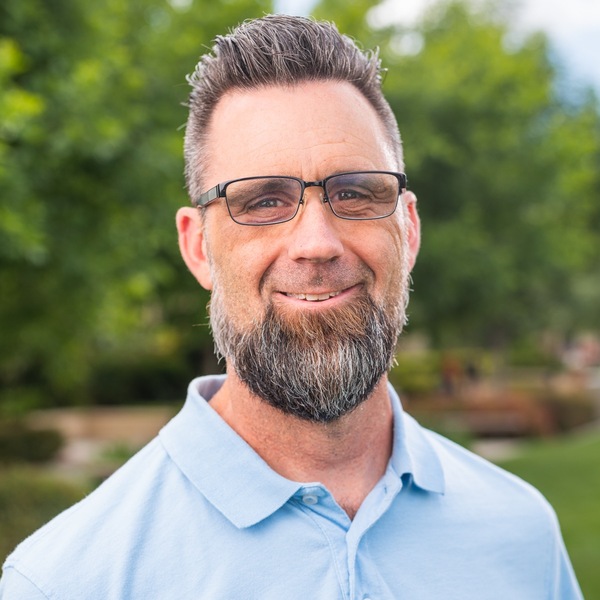
Photo of Mike Klunder
Mike Klunder

Email: michael.klunder@biola.edu
Phone: (562) 906-4115
Book a Phone or Virtual Appointment

International Graduate Admissions Counselor

The Office of International Admissions serves students who are not citizens or permanent residents of the United States.

Email: grad.international@biola.edu
Book a Phone or Virtual Appointment
Application Steps

  1. Complete and submit the online application

  2. Submit a non-refundable $65 application fee

  3. Submit supplemental application materials through your online application portal:

  4. Official Transcripts

    • Submit all official transcripts from previous academic institutions.
      • Request official transcripts from all colleges and universities attended.
      • If enrolled at the time the application is filed, be sure to request transcripts of work finished to date and final transcripts upon completion of your course of study.
      • Transcripts will be considered official only when a) mailed directly from the institution to Biola, b) sent electronically through an approved vendor or c) physically delivered in an untampered envelope sealed by the institution. Final approval for admission is contingent on receiving an official transcript.
        • Mail transcripts to:
          Biola University Office of Graduate Admissions
          13800 Biola Avenue, La Mirada, CA 90639
    • International Transcripts: All international transcripts should be evaluated by a credential evaluation agency like SpanTran (Biola Discount), World Education Services (WES) or Foundation for International Services (FIS). Be sure to choose "course by course report" and have SpanTran/WES/FIS send them directly to Biola University via online portal or post (13800 Biola Ave, La Mirada, CA 90639) in order to be considered official.

    Three Reference Letters

    • Two academic references – Must be completed by faculty who had the applicant in at least two courses.
    • Pastoral reference – Must be completed by a mentor, teacher or pastor
    • Note: Additional instructions can be found in the online application.

    Three Essays

    • Formal academic paper – Submit a sample of scholarly writing (with citations and bibliography), preferably related to intercultural studies (at least 10 pages)
    •  Vocational objectives statement
    • Personal biography
    • Note: These essay prompts can be found in the online application.

    English Proficiency (required for non-native English speakers)

    • Evidence of English proficiency is required for all students to support student success. Proficiency must be shown through one of the methods described below:
      • Minimum test score on a qualifying standardized test
        • TOEFL: minimum score of 100 iBT
        • IELTS: minimum score of 7.5
        • Duolingo: minimum score of 125
      • A degree (bachelor’s, master’s or doctoral) issued by an institution where English is the medium of instruction.
        • Official written communication from the institution (Registrar, Controller of Examinations Office, or Undergraduate College)
        • Official degree statements or transcripts may be accepted given English is stated as the medium of instruction
        • Official catalog verification
        • Note: For universities from non-Anglophone countries, further language assessment may be required.


    Things to Note

    • Track your application status at any time. You do not have to complete the application in one sitting. You can complete a portion and finish at a later time. Your information will be saved. When you apply, to guarantee confidentiality, you will be asked to create a user name and a password, and will receive a personalized identification number. Track your application status by logging in to the online application.
    • Official documents presented for admission or evaluation become part of the student’s academic file and normally cannot be returned or copied for distribution.
    • International students who will be studying on campus are required to apply for an F-1 student visa. For more information, visit biola.edu/international/admitted-students.

Tuition and Financial Aid

Biola is committed to help make your studies affordable — each school offers different scholarship, grant and loan opportunities to help finance your education.

Cost Per Credit (2026‑27) $802
Full-time Tuition Per Term (Estimated) Based on 6 credit courseload$4,812
Part-time Tuition Per Term (Estimated) Based on 3 credit courseload$2,406
Total Program Tuition (Estimated) Based on total program credits and 2026‑27 cost per credit$32,080

Faculty


You may also be interested in

Doctor of Ministry (D.Min.)

Talbot School of Theology

Ed.D. in Educational Studies

Talbot School of Theology

Ph.D. in Intercultural Studies

Talbot School of Theology

Ph.D. – Educational Studies

Talbot School of Theology

Format

Hybrid (On Campus and Online): This program includes a blend of course formats, including online and in person at Biola University's Southern California campus.

Total Credits

Every program at Biola University features rigorous academics, biblically integrated curriculum and vocational preparation.

Cost per Credit

This is the cost per credit; total tuition costs for each term will differ for part-time and full-time students.

Standard Completion Time

This indicates the standard duration of this program. Completion time may vary depending on transferred coursework and preferred courseload.

Accreditation

Biola University is accredited by the WASC Senior College and University Commission. Additional accreditations may apply to specific programs.