M.S. in Occupational Therapy


Program at a Glance
Format
Hybrid
Online classes with on-campus in-person weekends/labs once a month (Thur-Sat), totaling four times per trimester for trimesters 1-4, and in-person fieldwork requirements for trimesters 5-6.
Total Credits
76
Cost per Credit
$1,095
Standard Completion Time
2 years
Accreditation
WSCUC / ACOTE (in process)
Overview
Discover a clear path to a rewarding career as an occupational therapist with the M.S. in Occupational Therapy at Biola University. Join a cohort of aspiring Christian occupational therapists on the journey to licensure. Experience deep faith integration while working with the latest in professional equipment housed in our cutting-edge facilities.
Our program equips future occupational therapists with a Christ-centered education integrating theory, practice and leadership. Our M.S. in Occupational Therapy program is designed around five core values that set us apart from the rest:
- Biblical Integration. Immerse yourself in a unique curriculum based on biblical principles and combine your passion for occupational therapy with your commitment to Christian values.
- Hybrid Mode. Enjoy the flexibility of asynchronous learning combined with on-campus labs, offering a more adaptable approach than rival programs. Balance your studies with your personal and professional commitments without compromising quality education.
- Speed to Practice. Accelerate your path to becoming a licensed occupational therapist with our streamlined master’s degree program. This program prioritizes efficiency and affordability, ensuring you enter the workforce sooner and with less financial burden than a combined master's and doctoral program.
- Career Outcomes. Occupational Therapists have a median pay of $96k/year and a booming job market projected to grow by 12% from 2022 to 2032 (Bureau of Labor Statistics). Our program equips you with the skills and knowledge needed to thrive in this dynamic field.
- Take Your Faith to Work. Actively participate in Christ's mission to heal and serve the marginalized and embrace the freedom to openly integrate your faith into your professional practice and education. Explore the intersection of occupational therapy and religious practice under the broad umbrella of "meaningful daily activities," fostering enriching conversations with your clients.
What is Occupational Therapy?
Occupational therapy is a specialized field within healthcare dedicated to helping individuals of all ages overcome challenges that impede their daily activities. Through evidence-based techniques and personalized intervention strategies, occupational therapists strive to enhance independence, productivity, and overall well-being. With an M.S. in Occupational Therapy from Biola University, you’ll be equipped with the knowledge and skills to assess and treat a wide range of conditions, empowering clients to lead fulfilling and meaningful lives.
Yes! Tell Me More!
Program Format
Didactic Coursework
All didactic coursework in the MSOT program is delivered asynchronously through Canvas, Biola’s Learning Management System. This format allows students to engage with course materials, lectures, assignments, and learning activities online.
To participate successfully in the program, students are expected to have access to the following:
- Reliable computer or laptop
- Stable internet connection
- Webcam and microphone
- Canvas
- Zoom
- Biola email account
- Any required course-specific software, platforms, or digital resources
In-Person Weekend Labs
Students are required to attend in-person weekend labs on Biola’s campus once per month. These lab weekends typically take place Thursday through Saturday and provide hands-on learning experiences that support clinical skill development and application of didactic coursework.
The in-person lab schedule is generally structured as follows:
- Summer semester: Weeks 3, 7, 11, and 15
- Fall and Spring semesters: Weeks 4, 8, 12, and 15
Biola’s campus is ADA compliant, and accessibility accommodations are available to support students’ participation in required in-person learning experiences.
Courses
What will I study as an occupational therapy student?
Biola's M.S. in Occupational Therapy program spans six continuous trimesters of classes, labs and fieldwork designed to broaden your knowledge in the OT field and give you valuable field experience working with licensed occupational therapists. Course topics and learning highlights include:
- Advocacy and leadership in occupational therapy
- Occupational therapy preventative care and wellness
- Pediatric, adult-geriatric and mental health occupational therapy courses
- Faith integration and introduction to occupational therapy practice framework
- Patient care foundations
- Theology of disability
- Quantitative and qualitative research methods
The first four trimesters are focused on online coursework with monthly on-campus labs with the final two trimesters dedicated primarily to in-person fieldwork at placement sites. For the in-person fieldwork segment, please note the following:
- Students do not need to be California residents
- Fieldwork does not need to be completed within California
- Fieldwork placements are coordinated by the occupational therapy academic fieldwork coordinator
- Students may need to relocate for each placement (one in trimester 5 and one in trimester 6)
- Students are responsible for living expenses during fieldwork placement
Career Outlook and Preparation
What can you do with an M.S. in Occupational Therapy?
Graduates of this program are prepared to sit for board licensure and become entry-level occupational therapists. The following is a glimpse into some work settings graduates of this program may pursue careers in:
- Acute hospital (pediatric and adult)
- Rehabilitation clinics
- School districts
- Pediatric private clinics
- Mental health settings
- Skilled-nursing facilities
- Senior living facilities
- Home health visits
- Therapeutic programs
12% job growth
According to the Bureau of Labor Statistics, job growth for occupational therapists is projected to be much faster than average between 2022 and 2032.
BLS projections are not specific to Biola University students or graduates.
Certification & Accreditation
Graduation Rates
| Graduation Year | Students Entering | Students Who Withdrew for Reasons Other Than Academic Performance | Students Graduating | *Graduation Rate |
|---|---|---|---|---|
| 2027 | 8 | 0 | __ | __ |
| 2028 | 20 | __ | __ | __ |
| 2029 | XX | __ | __ | __ |
| Total | 28 | 0 | __ | __ |
Certification
Upon completion of the program, graduates will qualify to sit for the National Certification Examination for Occupational Therapists, administered by the National Board for Certification in Occupational Therapy (NBCOT®). Upon successful completion of this exam, graduates will earn the title of Occupational Therapist, Registered (OTR). Additionally, licensure is required in all states to practice occupational therapy. Typically, state licenses are granted based on the results of the NBCOT® certification examination. It's important to note that felony convictions may impact a graduate's eligibility to sit for the NBCOT® certification examination or obtain state licensure.
For information on the National Board for Certification in Occupational Therapy (NBCOT) results, visit the NBCOT website for program data.
Felony Conviction and Eligibility for Certification and Licensure
Graduates of the Master of Science in Occupational Therapy (MSOT) program at Biola University must meet the requirements established by the National Board for Certification in Occupational Therapy (NBCOT®) to be eligible to sit for the national certification examination. Certification is required for professional practice and state licensure in most jurisdictions.
Applicants should be aware that a felony conviction may affect an individual’s ability to obtain NBCOT certification and/or state licensure. NBCOT conducts a character review process, and state licensing boards may also consider criminal history when determining eligibility for licensure. Therefore, a felony conviction could impact a graduate’s ability to become credentialed and practice as an occupational therapist.
Prospective and current students with questions about how a criminal background may affect certification or licensure are encouraged to review NBCOT’s Early Determination Review process and contact NBCOT or the appropriate state licensing board directly for guidance.
ACOTE Accreditation Status
The entry-level occupational therapy master’s degree program has applied for accreditation by the Accreditation Council for Occupational Therapy Education (ACOTE) of the American Occupational Therapy Association (AOTA), located at 7501 Wisconsin Avenue, Suite 510E, Bethesda, MD 20814. ACOTE’s telephone number c/o AOTA is (301) 652-AOTA and its web address is www.acoteonline.org. The program must be granted Candidacy Status, have a pre-accreditation review, complete an on-site evaluation, and be granted Accreditation Status before its graduates will be eligible to sit for the national certification examination for the occupational therapist administered by the National Board for Certification in Occupational Therapy (NBCOT®). After successful completion of this exam, the individual will be an Occupational Therapist, Registered (OTR). In addition, all states require licensure in order to practice; however, state licenses are usually based on the results of the NBCOT® Certification Examination. Note that a felony conviction may affect a graduate’s ability to sit for the NBCOT® certification examination or attain state licensure. In addition, students must complete 24 weeks of Level II fieldwork within 18 months following completion of the didactic portion of the program.
ACOTE Accreditation Timeline:
- Current status: Candidacy
- Full accreditation: Awarded after ACOTE on-site evaluation in November 2026 (achieved before first cohort graduates)
Admissions & Deadlines
As a Christian institution, Biola seeks to admit applicants whose backgrounds clearly demonstrate scholarly aptitude, a commitment to the historic Christian faith, personal character and integrity, and a positive service-oriented motivation toward their field of study. Biola does not discriminate on the basis of the applicant's race, color, sex, socio-economic status, disability, or national or ethnic origin.
Note: This program is currently not designed to meet the curricular guidelines for international F-1 visa students.
Education and GPA Requirements
- Applicants should have a bachelor’s degree from an accredited institution or its equivalent, with a minimum grade point average of 3.0 (on a 4.0 scale), unless otherwise noted.
- Note: If you do not meet the degree or GPA requirements above, you may still be considered for admission. Please contact the Office of Graduate Admissions office at graduate.admissions@biola.edu.
- We do not accept students in advanced placement and/or transfer or credits.
Prerequisites
- Complete the following prerequisites with a minimum of “C” grade or higher within seven years of planned enrollment (note: prerequisite courses may be in progress at the time of the application):
- Human Anatomy with Laboratory
- Human Physiology with Laboratory
- Abnormal Psychology or Introduction to Psychopathology
- Developmental Psychology
- Sociology, Cultural Anthropology or Cross-Cultural Psychology
- Medical Terminology (pass/no pass accepted)
Note: The MSOT program does not grant advanced placement, accept transfer credit or award credit for experiential learning. All admitted students must complete the full MSOT curriculum as designed by the program.
Volunteer Experience
- Completion of 40 hours of documented volunteer experience under the supervision of a licensed occupational therapist and proof of volunteer hours. For multiple observation/volunteer sites, submit proof for each site. Acceptable proof may be a timecard or a letter outlining all volunteer hours — but the timecard and/or letter must be signed by the supervising OT with the OT's name printed and credentials provided.
- Prior work experience is not required for admission to the program.
English Proficiency Requirements
- If English is not your first language, you are required to display your English proficiency before admittance into a Biola University graduate program. See “English Proficiency” in the application steps section below.
Application Deadlines
- This program currently admits new students in the summer (May)
- Summer deadline: January 1
- Admissions review dates: January 12–30
- Admissions decisions will be made between February 2–13
Visit Biola
Explore our sunny Southern California campus in person or virtually. Learn more about your program of interest and the admissions process by scheduling an appointment with an admissions counselor.
Meet Your Admissions Counselor
If you have more questions about the program, admissions process or Biola in general, schedule a phone call or send an email to your admissions counselor.
Graduate Admissions Counselor
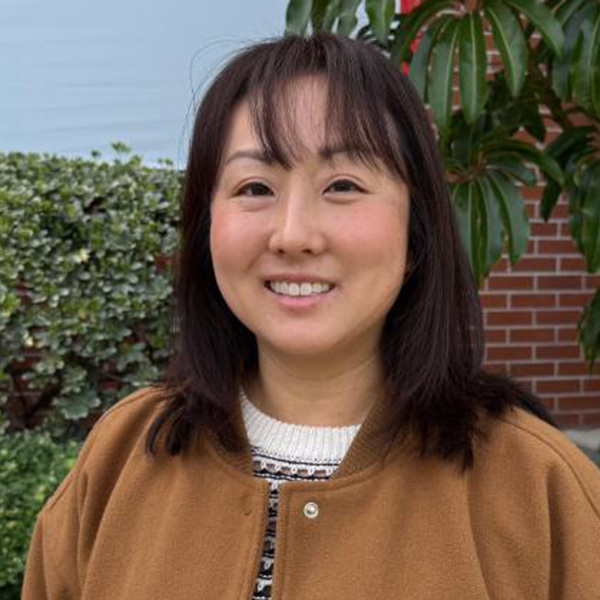
Email: hannah.h.kim
Phone: (562) 903-4752
Text: (562) 667-2844
Book a Phone or Virtual Appointment
International Graduate Admissions Counselor
The Office of International Admissions serves students who are not citizens or permanent residents of the United States.
Email: grad.international@biola.edu
Book a Phone or Virtual Appointment
Application Steps
Complete and submit the online application
Submit a non-refundable $65 application fee
Submit supplemental application materials through your online application portal:
- Submit all official transcripts from previous academic institutions.
- Request official transcripts from all colleges and universities attended. In addition, transcripts with prerequisites, leveling courses, advanced standing, and any other courses relevant to your desired program should be submitted.
- If enrolled at the time the application is filed, be sure to request transcripts of work finished to date and final transcripts upon completion of your course of study.
- Transcripts will be considered official only when a) mailed directly from the institution to Biola, b) sent electronically through an approved vendor or c) physically delivered in an untampered envelope sealed by the institution. Final approval for admission is contingent on receiving an official transcript.
- Mail transcripts to:
Biola University Office of Graduate Admissions
13800 Biola Avenue, La Mirada, CA 90639 - International Transcripts: All international transcripts should be evaluated by a credential evaluation agency like The Evaluation Company, World Education Services (WES) or Foundation for International Services (FIS). Be sure to choose "course by course report" and have the evaluation agency send them directly to Biola University via online portal or post (13800 Biola Ave, La Mirada, CA 90639) in order to be considered official.
- Spiritual mentor or leader recommendation
- Academic, character or employer recommendation
- A copy of your resume or Curriculum Vitae (CV)
- Evidence of English proficiency is required for all students to support student success. Proficiency must be shown through one of the methods described below:
- Minimum test score on a qualifying standardized test
- TOEFL: minimum score of 100 iBT
- IELTS: minimum score of 7.5
- Duolingo: minimum score of 125
- A degree (bachelor’s, master’s or doctoral) issued by an institution where English is the medium of instruction.
- Official written communication from the institution (Registrar, Controller of Examinations Office, or Undergraduate College)
- Official degree statements or transcripts may be accepted given English is stated as the medium of instruction
- Official catalog verification
- Note: For universities from non-Anglophone countries, further language assessment may be required.
- Minimum test score on a qualifying standardized test
Interview with a faculty member
- After your application and supplemental application requirements are submitted and approved, a select number of qualified applicants will be scheduled to have an interview with a faculty member.
- Track your application status at any time. You do not have to complete the application in one sitting. You can complete a portion and finish at a later time. Your information will be saved. When you apply, to guarantee confidentiality, you will be asked to create a user name and a password, and will receive a personalized identification number. Track your application status by logging in to the online application.
- Official documents presented for admission or evaluation become part of the student’s academic file and normally cannot be returned or copied for distribution.
Official Transcripts
Two Reference Letters
Resume or CV
English Proficiency (required for non-native English speakers)
Things to Note
Tuition and Financial Aid
Biola is committed to help make your studies affordable — each school offers different scholarship, grant and loan opportunities to help finance your education. Note that the tuition is subject to change.
| Tuition & Fees | $83,214 |
|---|---|
| Housing | $24,975 |
| Food | $11,790 |
| Personal Expenses | $8,550 |
| Transportation | $2,070 |
| Books & Supplies | $1,800 |
| Average Loan Fees | $177 |
| Total Cost of Attendance | $132,576 |
Faculty
Andre Woo
Director of Occupational Therapy Program
- OTD, University of Southern California
- M.A., University of Southern California
FAQs
Program Overview
How long does it take to complete an M.S. in Occupational Therapy graduate degree?
The M.S. in Occupational Therapy (MSOT) program is designed to be completed in two years of full-time study across six continuous trimesters, including fall, spring and summer terms. The first four trimesters primarily consist of online coursework and monthly on-campus labs, while the final two trimesters are dedicated primarily to Level II fieldwork. The program requires a total of 76 credits.
How does the hybrid format work?
All didactic coursework is delivered asynchronously through Canvas, allowing students to access lectures, course materials, assignments and learning activities online. Students then come to Biola’s La Mirada campus for required hands-on lab experiences approximately once per month. This format combines the flexibility of online learning with the hands-on clinical education essential to occupational therapy practice.
What do the monthly in-person meetings look like?
Biola’s MSOT is a hybrid program that combines asynchronous online coursework with required in-person learning experiences. During the first four trimesters, students complete their didactic coursework online and attend hands-on lab weekends on Biola’s campus. The final two trimesters are dedicated primarily to in-person Level II fieldwork experiences.
During the first four trimesters, students attend four in-person lab weekends per trimester, approximately once per month. Lab weekends generally take place Thursday through Saturday. Summer labs are typically scheduled during weeks 3, 7, 11 and 15, while fall and spring labs generally occur during weeks 4, 8, 12 and 15.
These immersive experiences allow students to apply concepts learned through their online coursework and develop hands-on occupational therapy skills through laboratory activities, practical application and clinical learning experiences.
Admissions & Faculty
Are observation or shadowing hours required to apply?
Yes. Applicants must complete 40 hours of documented volunteer experience under the supervision of a licensed occupational therapist. Applicants may complete their hours at more than one site, but documentation must be provided for each site and verified by the supervising occupational therapist. Prior work experience is not required for admission.
What are some areas of faculty expertise?
Some of the our distinguished faculty’s area of expertise and research interests include:
- Hand Therapy and Rehabilitation
- Gut-Brain Connection for Mental Health and Autism
- Sensory Processing Disorder
- Leadership Skills
- Behavior
You can also check out our faculty profiles for more information on individual faculty.
What does faith integration look like across the curriculum?
We have two courses dedicated to faith integration: Faith Integration and Introduction to Occupational Therapy Practice Framework and Theology of Disability. However, faith integration does not end there. All of our faculty teach from a Christian perspective in which everyone we work with, including clients, caregivers, supervisors, and interprofessional teams are made in the image of God.
Fieldwork & Clinical Education
Can I complete fieldwork near where I live?
Fieldwork placements are coordinated by the MSOT Academic Fieldwork Coordinator and are not limited to California. While placement location and student circumstances may be considered, placement near a student’s home cannot be guaranteed. Students may need to relocate for each Level II fieldwork experience and are responsible for their living expenses during fieldwork placements.
Can I work while completing the program?
The hybrid format is designed to provide greater flexibility for students balancing graduate education with other responsibilities. However, the MSOT is a full-time professional program, and students should carefully consider the time required for coursework, required Thursday–Saturday lab weekends and other program responsibilities when determining whether employment is manageable. The final two trimesters include full-time Level II fieldwork experiences, which may significantly limit the ability to maintain outside employment.
Professional Preparation
How are students prepared for the board exam (NBCOT)?
Biola’s 76-credit MSOT curriculum is designed to prepare students for entry-level occupational therapy practice through coursework in areas such as clinical reasoning, evidence-based practice, mental health, pediatrics, adult and geriatric rehabilitation, assistive technology, physical agent modalities, leadership, research and professional development. Students also complete Level I fieldwork experiences and 24 weeks of Level II fieldwork.
Upon successful completion of the program and contingent upon the program obtaining ACOTE Accreditation Status, graduates will be eligible to sit for the National Board for Certification in Occupational Therapy (NBCOT®) examination. After passing the examination, graduates earn the Occupational Therapist, Registered (OTR) credential and may pursue state licensure. Licensure requirements vary by state.