Biola University


The Story Behind the Work
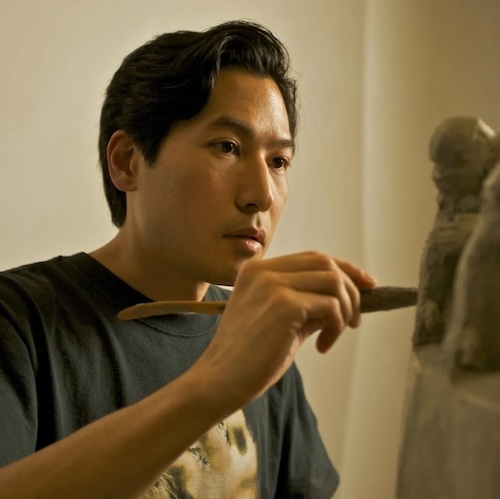
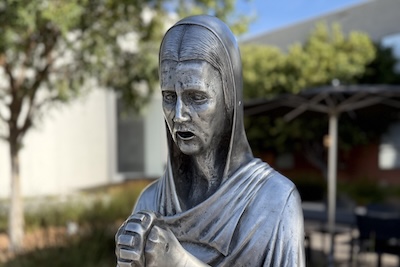
Commissioned as part of Biola University's ongoing commitment to integrating faith, learning and the arts, The Spirit of Christ was installed in 2014 as the first permanent sculpture on campus, created by nationally recognized sculptor Tom Tsuchiya.
Across his career, Tsuchiya has produced sculptures ranging from public monuments and sacred art commissions to museum exhibitions and figurative works. His technical craftsmanship and careful storytelling are woven together in The Spirit of Christ, which resides in front of the Earl and Virginia Green Art Gallery in the heart of campus.
Tsuchiya was given a location for his sculpture and theme to work with: the teachings of Christ. To cohere with the visual identity of the location chosen for the piece, Tsuchiya chose to use steel to reflect the words already adorning the art gallery, then moved quickly to using brick-like shapes to mimic the brick building it would accompany. His next step was to arrange them in a fish shape. Tsuchiya was initially inspired by 1 John 3:18, which calls believers to put love into action. “I didn’t want a sculpture that was merely just a theme or subject of Christ, but actually be able to function as something which can help carry on Christ’s message,” said Tsuchiya.
From there he turned to cans of soup.
The story of Jesus feeding 5,000 people from just five loaves and two fish was intrinsic to the Tsuchiya’s creative process. What if the sculpture not only represented Jesus feeding people, but actually helped feed real people? He was soon measuring how many soup cans could fit into one piece of the sculpture using his kitchen cabinets.
Twelve metal compartments make up a giant fish-shaped structure, which can take on two forms: one, with the steel scales closed over the compartments, and another revealing the inner spaces, each one etched on the inside with the name of one of Jesus’ disciples. These compartments are opened periodically to receive canned goods for food drives on campus, transforming the sculpture with color and new shapes.
Tsuchiya’s work was a significant milestone in Biola’s public art history, setting the tone for the subsequent intentional curation of pieces that both bring beauty to campus and reflect the truth, goodness and beauty of God.