Biola University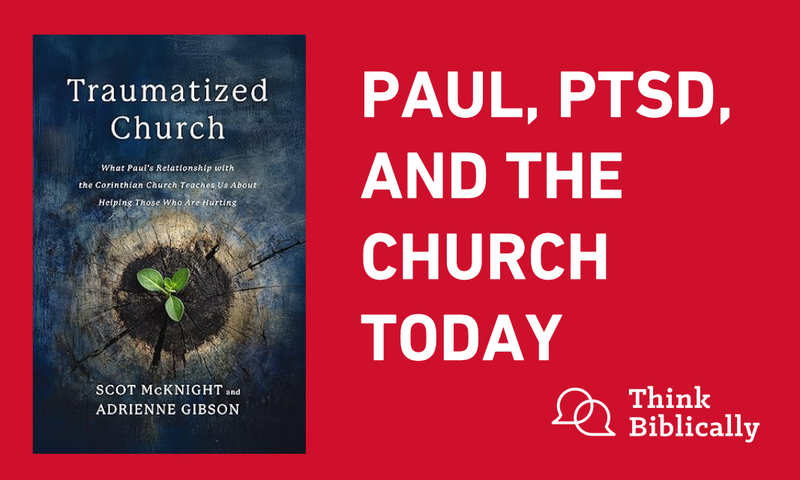
Did the apostle Paul suffer from PTSD? How did his experience with trauma shape his spiritual life and ministry as an apostle? What can we learn from his experience with trauma for the life of the church today? We’ll answer these questions and more with our guest, Dr. Scot McKnight, around his new book, The Traumatized Church.
Scot McKnight is former Julius Mantey Professor of New Testament at Northern Seminary and a voluminous author, having authored or co-authored more than 80 books and numerous journal articles.
Episode Transcript
Scott Rae: [gentle music] Did the Apostle Paul suffer from PTSD? How does his experience with trauma shape his spiritual life and ministry as an apostle? And what can we learn from his experience with trauma for the life of the church today? We'll answer these questions and a whole lot more with our guest, Dr. Scot McKnight, around his new book, The Traumatized Church. I'm your host, Scott Rae.
Sean McDowell: And I'm your co-host, Sean McDowell.
Scott Rae: This is Think Biblically from Talbot School of Theology at Biola University. Scott, welcome. Great to have you with us, and so appreciate the book that you've actually co-authored with a trauma counselor to help, to help understand the background of trauma as well as your background in New Testament, and on the life of Paul. So welcome. Thanks so much for being with us.
Scot McKnight: Well, thank you, and kind, for this invitation. Glad to be with you.
Scott Rae: Now, Scott, on the surface, this does not seem like something that a New Testament scholar might write on, but in my view, is actually the kind of integrative scholarship that we desperately need. So tell us what got you interested in the subject of trauma related to Paul in the first place?
Scot McKnight: Okay, a couple steps. The first is I had a student named Adrian Gibson who wrote her master's thesis under my direction on trauma and the New Testament, and I really liked it because, though my wife is a psychologist, I had never studied trauma enough to say that I knew the details that needed to be known to be able to think about it very much. So she writes her thesis, and I say to my wife, I said, "This thesis deserves to be published because it's so clear on what trauma is, and we need, we need books like this." The second thing is I was working on a commentary on 2 Corinthians in a series with Harper Christian Resources, I think it is. I never get this straight. To me, it's all Zondervan.
Scott Rae: [laughs]
Scot McKnight: On 2 Corinthians, and as I was reading 2 Corinthians 10 through 13 especially, I said to myself... This was after reading, Adrian's thesis. I said, "Paul has suffered trauma." The way he describes things in 2 Corinthians 10 through 13, the way he won't let things go, the way he ruminates, even the jerkiness of the Greek and back and forth and, almost incomplete sentences and answering questions that he's asking of himself, I thought, "Well, these could be signs." So I worked on that, and then I was asked by a British publisher to write a small booklet, and I said, "Could I write something on Paul and trauma?" He said, "Sure." So, and it wasn't very long. It was just, I didn't know how long it was, but I sat down for a week and put down all my thoughts that I had on this, and at the end of the week, I wrote my editor or the the invitation person in England, and I said, "How many words do I have?" And he said, "8,000 maximum." And I said, "I've got 21,000 and I'm not, and I'm not cutting anything." [laughs] So I write to Adrian and I say, "Adrian, I think we're ready to propose a book because I have a part- ... That I can contribute, and you can do the trauma, and I'll do Paul. We'll see if a publisher thinks it can work together, and then we're gonna have to work really hard to unify all these threads." And that's the origin of the book. Now, Adrian tells a different story, but that's-
Scott Rae: [laughs]
Scot McKnight: ... For her to tell.
Sean McDowell: That
Scot McKnight: No, her story is different because-
Scott Rae: Fair enough
Scot McKnight: ... 'cause I suddenly said something to her about working on a book with her and she was stunned, so.
Sean McDowell: I'm sure.
Scot McKnight: Yeah.
Sean McDowell: Well, that is a story for another time. The title is Traumatized Church. So give us a definition of trauma, if you will.
Scot McKnight: Yeah. Well, trauma, has a variety of definitions and, you know, this is the portions of the book that Adrian wrote, most especially. But basically trauma is,
Scot McKnight: it's when traumatic events overwhelm the ordinary systems of care that give people a sense of control, connection, and meaning. It's something like too much, too fast, more than one can handle. So essentially, trauma is indicated by an inability to cope with something that has happened to you. Trauma is not the event. Trauma is a response to an event, and this is really important. And it overwhelms and affects even a person's identity as to whether they are safe, secure. And I also, because I'm more of a New Testament person, I had to think about this in other ways. It's subjective. Trauma is a subjective experience. It is something that a person senses themselves, and it's perceptive. They perceive that they are in danger. So for instance, my wife, we got a brand-new car about 10 years ago. She was driving down a busy street and a car came out from the right side off of a... She was on a very busy street, two lanes, and a car came out of a driveway and hit her on the side. Now, when we're driving and a car pulls up to us on the right, she feels it. It's perceptive.
Scott Rae: Interesting.
Scot McKnight: She's not in danger.
Scott Rae: Yeah.
Scot McKnight: You know, this has only happened one time in her life, but she feels it. But it's also embodied. In other words, trauma is something our body is communicating to us, and if we're aware, self-aware of what our body is doing, communicating, we can say to ourselves- I didn't realize this, but this conversation has put me into, a memory of my trauma. So, trauma is an inability to cope. It's a, it's a perception that a person is in danger.
Scott Rae: All right. So let's turn to Paul.
Scott Rae: And we'll, come back to some of the elements of trauma and how that, how that affects people in the church and how we can help churches better deal with this. But I'm curious, what exactly was Paul's experience of trauma and, why do you say that he suffered from PTSD?
Scot McKnight: Well, okay, now, l-let me say this. I'm willing to say that Paul suffered from P-PTSD, but I'm not a psychologist, and I can't diagnose him.
Scott Rae: I understand.
Scot McKnight: So I'm using terms of a person who is a theologian, PhD in theology, and a degree, I think it was a a PhD or whatever- ... In psychology, who studied Paul and diagnosed him with PTSD. Now, my wife would say, "You can't diagnose somebody who's not in your office-"
Scott Rae: [chuckles]
Scot McKnight: "... Without taking tests."
Scott Rae: Fair enough
Scot McKnight: ... Yes, fair enough. But at the same time, we can do what we can do with the evidence that Paul provides. And here's what happened to me. As I was reading, especially Second Corinthians 10 through 13, and Scott and Sean, I know for a fact that most people don't read Second Corinthians very much. And so when I say Second Corinthians 10 through 13, people don't-- light bulbs don't go on for people 'cause they haven't, they haven't thought about it very much. But as I was reading those chapters, for this commentary, I thought, "Man, there's stuff going on in this letter." So I began to write out the criticisms that it looked to me like Paul was bringing up that he had heard from the Corinthians. And I found seven of them, but that's sort of accidental. I didn't try to find seven, even though I know you people at Biola and Talbot have a history of dispensationalism, so seven is a really magical number.
Scott Rae: [chuckles]
Scot McKnight: It's not so, it's not so magical for me. But here's what-- Here are some of the things that Paul brings up.
Scott Rae: We we'll ignore that shot. [laughs] So...
Scot McKnight: [laughs] Sean, I grew up with that stuff too. So seven. Seven is a, is a magical number in the Bible anyway. So here's what I, here's what I discovered with Paul. I thought, "He can't let some of these criticisms go." And that is, rumination on a past experience is a signifier of trauma. He was They accused him of being fickle. Paul, after all, at the end of First Corinthians said, "Perhaps I will stay with you a while or even spend the winter so that you can help me on my journey wherever I go." Now, what kind of plan is that? I might be there, I might not. I might be there in the winter, I might not. I don't know how long I'm gonna stay. "Because I was confident of this," Paul says in Second Corinthians one, "I wanted to visit you so that you could benefit twice." Now he's changed his plans. Paul changed his plans, and they saw him as fickle. And this is not an allegation that leaders want to be charged with. Second thing I noticed is that they say that he was timid, all right, when he was present with them. But when he was away, he was a different personality. And he says in Second Corinthians chapter 10, and now we'll enter these chapters, "By the humility and gentleness of Christ, I appeal to you." And then he says this. This is Paul quoting, well, he's gonna quote some words that he's used against him, and different translations put these in quotation marks. "I, Paul, who am timid when face to face with you, but bold toward you when away." All right. So they know what happens when Paul gets the safe distance of being at Ephesus and decides to write a letter to him. He tells him what he thinks. But when he's present with him, he evidently was calm or timid is what they're accusing him of. Now, those can all be exaggerations. One of the most important things that I have found, and recently a major book has been studied, written on this, is Paul's appearance. Paul says in Second Corinthians 10:7, there's a little bit of discussion of translation, but, made sure that the major scholars that I read on Second Corinthians saw it this way. Paul says, "You are judging me by appearance." All right? What is Paul talking about? All right, now this is, this is a little bit more complex, but I really like this because I think it could be true. First thing is this. Paul's name, Pavlos in Greek, means small. All right? Now, some people think, well, Paul was, he was Saul, and someone came up with a name that was more Greek sounding, so they called him Pavlos when he was in Greek-speaking countries. Very unlikely. It's most likely that this was a nickname given to Paul. But in the second century, there's a book called The Acts of Thecla and Paul, and this is what is said about him. "Then he saw Paul coming, a small man." The Greek word used for small is mikros. And we, you know, micro, tiny. He was a small man with regard to height, bald on the head, and now listen to this, curved in the legs. Healthy, monobrowed, which means his eyebrows touched one another to a little degree, an aquiline nose, full of grace. Sometimes he appeared as a man. Sometimes he had the face of an angel. The Greek word used for curved in the legs was used routinely in the ancient world for those who had dwarfism.
Scott Rae: Mm-hmm.
Scot McKnight: So now we have pavlos, which means small, and a second century person who knew of Paul and knew about his body said that he had what people at that time would have called dwarfism. In second Corinthians 11, we learn that the Apostle Paul was let down in a basket. Now, there's a scholar on the West Coast, way up north, Canada, who has studied all the baskets of the ancient world, sagane and sporus. And this is not to be seen as the kind of basket that people go up in a big balloon from airports and then go visit everything. But his study of baskets indicate that they, as a general rule, would never hold anything more than 100 pounds. So now we put together that Paul was small, that he was tiny, that he was under 100 pounds, and if the average male in the first century was five four to five six and weighed about 135, a scholarly estimate for Paul to be called these terms is he was about four six to four eight and did not weigh 100 pounds. And maybe his condition was dwarfism. All right? Isaac Soom, this scholar, says, "Persons with short stature and dwarfism were stereotyped, made the object of humor and derision, and subjected to violence and processes of dehumanization." All right. Now, I think that this general, research is accurate, that Paul suffered from the fact that he did not look manly in a world that valued manliness by military effort, body size, height, as well as by capacity to speak in public. So Paul, I think, suffered from this, and he brought this up. "You're judging me by appearance." All right. Also, Paul heard the criticism that he was a mediocre talent. Listen to this statement. Now, you people teach at a seminary. Is that correct? All right. Here's what Paul, here's what is said of Paul in second Corinthians 10:10. "His letters are weighty and forceful, but in person he's unimpressive and his speaking amounts to nothing." Now, you know what it's like to tell a preacher... In fact, remember Eutychus fell asleep when Paul was preaching. All right. So my contention is that Paul did not stand up to the standards that the Corinthians expected of public speakers, and they knew what a public speaker was supposed to be like because they did not have sports TV, ESPN1 or ESPN2 or the Golf Channel or anything else like that. They, for public entertainment, they saw plays and they heard speeches and they were very common speaking, speakers who traveled from village to city and spoke, and Paul was seen as a mediocre speaker. All right. Now, I'm I'll stop right here. That's four. And I'm not done, but four of these. If you wake up on Monday morning after preaching in your church and you get an email from a leader in the church and they list these four things about you would probably be traumatized. Paul also is critiqued for low self-esteem. Jews in the first century, especially, well, Romans in the Roman world were expected to brag about themselves, to boast about their CV and all they had accomplished. The Apostle Paul instead refuses to boast about these things, and they would have seen this as someone who didn't have the credentials to be bragging. They said that he played favorites and basically that he was no longer special. Now, this is what I would say. If you add this complication of Paul, of these points I've brought up, to the fact that this man was beaten bloody, this man suffered shipwreck, this man almost died, I would say the chances of Paul being traumatized are 125% actually.
Scott Rae: Wow.
Scot McKnight: All right,
Scott Rae: That's amazing
Scot McKnight: ... He's been traumatized. How does he respond to this? This is, this is something that I find fascinating about the Apostle Paul. Okay. I know that was a long sermon.
Scott Rae: No. Go ahead.
Sean McDowell: So as you're describing this, until you write this and you say it this way, I think in my mind, the Apostle Paul is kind of superhuman. He's not the human Paul. He's the Apostle Paul. And of course, we've read some of these descriptions you're talking about, but never tied it together as thoroughly as you are here. So I want to know, how does your view of Paul and reading his letters and being a New Testament scholar change now that you're over 100% sure [laughs] that he experienced trauma?
Scot McKnight: [laughs] Yeah. Okay. I live with the exaggeration that I learned from the prophets, from Jesus, and from Paul. Okay.
Scot McKnight: All right. I don't think that I was suddenly, my mind changed about the Apostle Paul. What changed me about the Apostle Paul was to recognize how vulnerable he is in 2 Corinthians, which and I took a course with Murray Harris when I was a seminary student, so way back in the '70s. And I saw how vulnerable Paul was at the beginning of 2 Corinthians when he even says, "I couldn't preach the gospel in Troas because I hadn't heard from Timothy or Titus. I hadn't heard the news about how the Corinthians had responded to my letter." I found Paul at that time in my life to be far more vulnerable and far less tough-skinned than a lot of people think. And I dwell in an academic world that thinks Paul was a traumatizer rather than traumatized. So people have been, you know... Sean, you bring up a good one, and that's this. The reformed side of evangelicalism has made Paul a super saint, and this is just a mistake. This is just wrong because there's only one super saint for us, and that's Jesus.
Sean McDowell: Amen.
Scot McKnight: And everybody else is good and bad. And Paul's letters, I mean, I think that his getting in the face with Peter in, Antioch is not a very pretty moment for Paul. I think kicking John Mark off the mission trip is not a very pretty picture of the Apostle Paul. I think he was at times a little belligerent. But I also think that he was a highly emotional person who could weep quickly and who could get angry quickly and who wasn't always in total control of himself. So I it hasn't changed me in a big sense other than this has put together something about 2 Corinthians ten through 13 that I had never even thought about much before. And trauma became the category that I think best explained it.
Scott Rae: You know, Scott, I've, you know, I've read 2 Corinthians numerous times over a lot of years. And Sean, I don't know about you, but the-- I've never connected the dots quite like this before.
Scot McKnight: Yeah.
Scott Rae: Why-- I don't know about if you're the same.
Sean McDowell: I agree, yeah.
Scott Rae: Why do you think we've missed this for... I mean, and I've read, you know, several commentaries on 2 Corinthians. Nobody mentions anything like this. Why have we, why have we missed this?
Scot McKnight: Okay, let's, stand together, as Christian believers that this is scripture for us. And scripture means we're gonna learn something from it. So we already approach the text as positive. Now, none of us looks at David as innocent or Solomon. And I don't think any of us wanna walk around naked like Isaiah and break pots and hide silly pots in hills like Jeremiah or do bizarre things like Ezekiel. But we seem to be able to be pretty objective, and even about Moses, about these Old Testament saints. But when it comes to Paul, because of our, the impact of the Reformation and because we love his letters and we've framed our theology by what he says, I don't think we look at him as a human being like anyone else. I think Paul would be very unimpressive if we met him in a room today and had a conversation. I think he'd
Scott Rae: Not not likely to invite him to lunch after church?
Scot McKnight: [laughs] Well, I'll let's say, I'll say it this way. He's not, you know, he's not as impressive as, say, a Rick Warren or an Andy Stanley or an Adam Hamilton in Kansas. He, he's-- I think we would see him as a pretty ordinary person with a whole lot of passion and a whole lot of experience of following Christ in ways that brought danger to his life, that gave him a genuineness. All right? I compare, I know you'll probably know this. I compare the Apostle Paul to Dan Kimball, who's a pastor in California. All right?
Sean McDowell: I love Dan.
Scot McKnight: All right, Dan's a wonderful guy. But when you listen to him speak, you wonder, you know, he uses all these images up here, and he's not real fluid at times, and he he's not real tall, and he, okay, he has a very distinct way of dressing and combing his hair, and he's a good friend of mine, all right? But after you get to know Dan, you love him, and you know this is a man in whom the Spirit of God is at work and through whom God is blessing this, you know, the church. That's the way I think we should look at the Apostle Paul. Not like the greatest preacher in our world today, but more like an ordinary person whose personal spirituality was so distinct and impressive that he was a person that you would listen to.
Sean McDowell: All right, Scott, so connect some dots for us here because I feel like this should almost be a part two conversation. But this is not titled Traumatized Paul. It's titled Traumatized Church. So fascinating study, important to understand who Paul is, but connect some dots of how this would change towards how we teach the scriptures, how we address trauma in the church.
Scot McKnight: Okay. I think we need to become, this is what Adrian's part of the book is, that we need to become trauma informed. We need to understand what trauma is. And that will know, that will give us, Abilities to recognize trauma. But that's only a part of the story. The other part is we have to work at being trauma safe. To be trauma safe means to implement behaviors, words, policies, structures, physical appearances, et cetera, that make people who've been traumatized feel safe. And there's only one way to find out if a place is trauma safe, and that is to find out who is traumatized and to ask them, "Do you feel safe here?" When I talked about... I was talking with this with a pastor recently and he said, "Well, how do I find them?" I said, "Well, this is a problem because there are probably 25 to 50% of the people in your church who have experienced trauma in their life."
Scott Rae: Wow.
Scot McKnight: "And if you don't know who they are, then you're not listening very well because they're there."
Scott Rae: Hm.
Scot McKnight: "And they may not feel safe enough around you to tell you that they don't feel safe in this place." All right? For instance,
Scot McKnight: therapists have learned that when they, when someone comes in their office, they need to put that client between the door and themselves so that they can escape if they feel like they need to. All right, if you pin them in a corner behind your desk and they have to go by you to get out there, that's not safe. Here's another example. Introverts, people with avoidant personalities, don't like passing the peace in a church. If you, if you do this is a very standard procedure in liturgical churches. It's not safe. New people don't like to come to a Sunday school class or a small group and have it in a circle, 'cause they don't wanna have to face people. These are just basic sensitivities that we can create with space.
Scott Rae: Hm.
Scot McKnight: But it takes awareness of trauma and then very local experience with people who are traumatized in a place to know that a place is safe. Now, here's one that my female students taught me and I think this is extremely common, and a lot of people like us don't get it. If you mention Mark Driscoll, I'm using him as a name, John MacArthur,
Scot McKnight: what's the guy up in Moscow, Idaho, who's so famous right now?
Scott Rae: Wilson.
Scot McKnight: Douglas Wilson.
Scott Rae: Right.
Scot McKnight: You mention these names, women who have been traumatized in those circles will immediately have a reaction, and I've learned that we have to be extremely sensitive about the use of certain names and certain ideas. For instance, I know someone who was teaching a class, and he was really big on the idea from Michael Gorman called cruciformity. All right? That is to be conformed to the image of Christ in his cross and to learn to, let's say, be submissive. All right? And in that class were eight women who had experienced sexual abuse or spiritual abuse at the hands of husbands, men, related men, et cetera, and pastors, and they were really bothered by the way this professor was talking about cruciformity.
Scot McKnight: And the professor talked to me about this and I said, "You need to define this more like crystalformity rather than cruciformity, and then talk about it in a more positive way rather than just being submissive." Because many women have learned that the word submissive means that a man can do whatever he wants to that woman's body. That's being sensitive. That's trauma-informed and trauma sensitive, and when we learn to use language like that of anything that triggers people, we are be, helping to create a trauma safe space.
Scott Rae: Wow. This is... Scott, this has been super enlightening and you know, and Sean and I, Sean and I both [chuckles] we read the book cover to cover and the conversation has helped elucidate more and more the, all the good content that's here. So I wanna commend to our listeners, Scot McKnight and Adrian Gibson, Traumatized Church, subtitle What Paul's Relationship with the Corinthian Church Teaches Us About Helping Those Who are Hurting. And so, we really appreciate, especially this last part, to help us, to make a, make good application to the life of the church-
Scot McKnight: Hm
Scott Rae: ... And how we can become more trauma informed and more trauma sensitive. Those are, you know, those are not, those are not big things that you're asking churches to do. But they do take a degree of sensitivity, and I suspect some of our listeners may think, "Wow, I would, I would have never thought about those, some of those things triggering people the way you described that they do."
Scot McKnight: You know, here's an illustration. I know we're running out of time. Wom- Jesus is talking to the Canaanite woman, and she's begging Jesus, and the disciples say, "You know, she's bothering us." Now, there is a perfect example of trauma insensitive by the disciples-
Scott Rae: Hm
Scot McKnight: ... And trauma sensitive by Jesus. Now, we don't call it, most people, you know, I've never read a commentary that says anything about the word trauma in that situation, but that's what that is. And what is amazing is the disciples, this isn't the only time, you know, they do these kinds of things. Jesus sees people who need food, and his disciples say, "Where are we gonna get food?" After Jesus has already fed 5,000, males plus- Family members. So they're insensitive. The disciples are really good examples. So, I just wanna, I wanna say thanks for this invitation, and I hope that, people, will work on being, trauma-informed.
Sean McDowell: Hey, just quick question. I know, like you said, we're pushing time, but Paul is human.
Scot McKnight: Yeah.
Sean McDowell: Jesus is God, but he's also human. Are you open to the possibility that Jesus was traumatized, sweating like blood, "Father, take this away from me," or is Jesus not one who could be traumatized in the way that we talk about here? Or is that like, "That's another book, I haven't even gone there yet"?
Scot McKnight: Well, I've never, I've never written on trauma and Jesus and studied it like that. But I do think that this whole sweating, in the garden, could only be seen as Jesus experiencing the trauma of what- ... Could happen to him. I mean, this is perceptive. He's perceiving what, where this story's going. You know, you've heard people say this, "I know where this book is going, this novel." So, yes, I would say that that's a good candidate for experiencing trauma. But the other thing that I think is pretty indicative that Jesus experienced trauma is that his best friend, John the Baptist, was decapitated, and that loomed and lurked over Jesus's life his entire public ministry. Antipas, that fox. That's language of someone who knows what that guy's really like.
Sean McDowell: Fascinating.
Scott Rae: This
Sean McDowell: I love it.
Scott Rae: Yeah, this is so good. Scott, thank you so much for hanging-
Scot McKnight: Thank you
Scott Rae: ... With us, and this has been really super enlightening. And, again, commend to our listeners your book, The Traumatized Church.
Scot McKnight: Thank you very much.
Scott Rae: Thanks so much, brother. Really appreciate your time.
Scot McKnight: Thank you.
Scott Rae: This has been an episode of the podcast Think Biblically: Conversations on Faith and Culture. Coming to you from Talbot School of Theology at Biola University. We've got programs in Southern California and online. Our master's degree in Christian Apologetics, our Institute for Spiritual Formation, programs in Bible theology, Old and New Testaments, marriage and family therapy, and probably one or two more that I'm, that I'm not remembering. If you'd like a little bit more information, visit biola.edu/talbot in order to learn more. If you have comments or questions or suggestions, please email us at thinkbiblically@biola.edu. If you enjoyed today's conversation, please give us a rating on your podcast app, and we encourage you to share it with a friend as well. And join us on Friday for our weekly cultural update. Thanks for listening, and in the meantime, remember, think biblically about everything. [upbeat music]