Biola University
Key Issues Ignored by Christian Voters : Host Scott Rae and guest host Rick Langer examine an article highlighting critical societal issues—such as systemic poverty, housing affordability, and long-term care—that Christian voters frequently overlook in favor of high-profile political debates.
Measuring Faith with the Religious Behavior Index: The discussion dives into recent survey data analyzing shifting trends in religious practice, exploring how active engagement is measured and what declining scores signal for the future of the local church.
When AI Anticipates Crime: The hosts unpack the bioethical dilemma surrounding Anthropic's Claude AI flagging a murder plot in Pakistan before it occurred, weighing predictive safety interventions against severe risks to user privacy and free expression.
Thank God for Brave Men: Unpacking Louise Perry’s WSJ piece, the episode highlights the vital role of traditional male heroism and courage in maintaining civil safety and civic flourishing.
Audience Question: Use of AI for Children's Cognitive Development: Scott and Rick respond to a listener's question wondering if AI could have positive uses in helping in childhood cognitive development.
Audience Question: Engaging in Existential Apologetics: Following up on last week's conversation, an audience member wonders what are some good ways of engaging in an Existential Apologetics Dialogue.
Audience Question: Defeated Satan and Spiritual Warfare: An audience member questions how we still engage in Spiritual Warfare even when Satan is defeated. Scott and Rick expand on the idea explaining that Satan's fate is known but that does not mean that the battle is over.
Episode Transcript
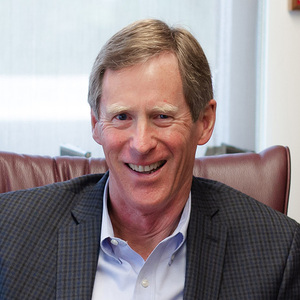
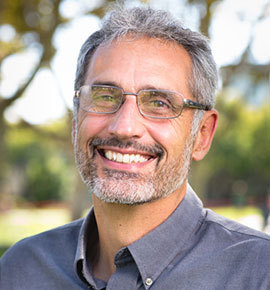
Scott Rae: [upbeat music] As the election approaches, are there issues that Christian voters are neglecting? A new study questions how actually engaged are believers in their faith. What happens when AI anticipates a crime that is yet to be committed? And a response to a school shooting suggests that society still needs male heroes. These are the stories we'll discuss, and we'll answer some of your questions. I'm your host, Scott Rae, and sitting in for Sean this week is my longtime Talbot and colleague in philosophy, Dr. Rick Langer. This is the Think Biblically weekly cultural update coming to you from Talbot School of Theology, Biola University. Rick, thanks so much for joining us. Really glad to have you filling in. Look forward to your insights.
Rick Langer: Glad to be with you guys.
Scott Rae: All right, this, the first story is from The Atlantic. This is particularly timely with an upcoming election, but something to think hard about in general for the political positions that we tend to take. It, like I said, is from The Atlantic. It does have a bit of a progressive slant, yet it asks a good question about the issues that the Christian community tends to be most passionate about. The article begins with the admonition coming from the president of the Southern Baptist Convention at their, at their recent meeting, urging his fellow pastors to be more politically engaged around four specific issues that he highlights: abortion, redefinition of marriage, transgender identity, and illegal immigration, issues that he considers central to human flourishing and the flourishing of communities. The article asks the question of why there tends to be a Christian silence about other issues that also seem to impact human flourishing. Now, the author cites the funding aids, funding cuts to USAID, the US Agency for International Development, which according to some estimates, has resulted in half a million deaths around the world, many of them children. In addition, he cites the suspension of the Refugee Admissions Program, redu- resulting in reducing the number of refuges mainly, refugees, mainly Christians fleeing for their lives to just a trickle. Further, he cites what he calls the assault on medical research from the drastic cuts to the National Institutes of Health, disrupting research on life-threatening diseases. We could also cite cuts to Medicaid, which is the insurance program for the neediest among us. Now, he, Rick, he raises the question: Why don't these three issues, saving the lives of the world's poorest children, offering refuge to those fleeing war and persecution, and advancing research that brings healing to the sick, occupy more attention of politically active Christians? Now, he insists, and I'm quoting here, "After all, these are not peripheral concerns. They go to the essence of what mattered to Jesus. He told his followers that whatever they did for the least of these, they did for him. He counted welcoming the stranger among such acts, and he spent much of his ministry healing the sick and relieving suffering." So Rick, I know you've given a lot of thought to things like this. I'm really curious to hear your take on this particular author from The Atlantic asking good questions, I think, about are there issues that we as a Christian community are neglecting?
Rick Langer: Yeah. So I, the first thing I'd want to say about the article is I think that he is asking the exact right question. So I'm a huge fan of the, of the question itself. It, and I want to kind of highlight something. He's asking this question, are we, are we really neglecting the important issues? And I think he did a pretty good job of not making that a rhetorical question, but answering that as if it was a serious question. Are we? And if I say that we are neglecting these things, in what way are we doing that? Why or how are we neglecting things that are legitimately important? And I think that's always the thing we should be asking ourselves. I don't think we're skeptical enough about our own selves sometimes, and with it are the, you know, the preferences of our political tribe or our, I don't want to call it political tribe, kind of our subculture in the evangelical world. You know, you look back through church history, and to say that the predominant Christian voice at every time has always been right, I'm just saying you're reading different church history books than I am if that's what you're claiming. So this is one of these questions that I think we ought to always be asking ourselves. And so I appreciate, Waner's comments here in terms of provoking, some really good thought about that. So that would be the first thing I'd wanna kind of wanna underscore. And he's right. So the cuts to USAID, and the consequence of those cuts, I would want to point out those are always debatable consequences. In other words, this is a thing that's hard to assess. You're predicting, it's different than abortion statistics in the sense that you're often actually counting. It's like predicting how many people would die in abortions after some social policy change. But the point is, he's making, I think, legitimate forecasts. And I was in a Bible study group where one of the people was working with a foundation that was largely supported by USAID, and when these cuts came through, they basically were closing. She lost her job as well as a whole pile of people within that organization. And I'm like, why was that a good thing for us as Christians to be excited about is the, you know, the doge cutting of things like USAID and things like that? So I agree with a good number of the things that he pointed out. As long as we aren't saying therefore we don't care that much about abortion, we don't care that much about transgender identity, we don't care that much about the redefinition of marriage, which I don't think he was saying but- It would be easier to read the article that way. So those are some things that came to my mind as I was, thinking about it. And yeah, I have a couple other comments, but let me go ahead and kick it your way.
Scott Rae: Well, I guess my first, my first reaction to this, Rick, is wondering sort of why people who have a more progressive political slant tend to be silent about protecting the most vulnerable among us, who I would consider to be the unborn. Though to be fair, this particular author has written about abortion, but I think this, you know, pro-protecting the unborn, tends to be that I think that's the area where people of a more progressive bent are also silent. And I think if we're gonna, if we're gonna take seriously Jesus' admonition to, put a priority on those that are the the weak and the powerless and the most vulnerable among us,
Scott Rae: then I think we we have to include the unborn in that category, given the number of unborn children that have been, have died via abortion since Roe v. Wade was legalized in 1973 is in, is in several million. Now one of the things I think that helps explain to this, maybe help explain the selectivity, is maybe a difference in views about the role of government in solving these issues. And I wonder if this sort of maybe speaks to this, maybe a slight libertarian strain among our evangelical brothers and sisters, who hold the, who some who hold the view that Jesus never expected government to take over these areas away from the responsibility of the community to address them. Now of course, you know, we did, you know, there was no democracy in ancient Rome. It was a brutal, ruthless, totalitarian regime that had no interest in taking care of the poor among them. So I wonder, but I wonder if that is a, is a factor in this, that it's not skepticism about the issues, but maybe skepticism about, you know, to what degree is this government's place to do this, and has government usurped, the role of churches and other, more boots-on-the-ground or nonprofit organizations. Now, of course, the the counter to that is that, you know, the churches and nonprofits don't have the resources that state and federal governments have to solve these problems. But I think there is merit to the idea that the closer you are to the issues at hand that you're trying to solve, the more, the more capable and competent and efficient you tend to be with the resources you have at your disposal. And the issue I think is the amount of resources at the disposal of these various groups tend to be a drop in the bucket, given what the, what the huge factor that the needs are. I wonder, a second factor I that I just wonder about is that, in our social media fueled polarized culture, it's these culture wars issues that get the most attention, and they... The most immediate attention. But global poverty, refugees halfway around the world, I think is a bit of out of sight, out of mind. And so the farther... The closer the proximity to the, to your locale, the issues, the more urgent they tend to be. And I wonder, this may be overstated, but, the article points out that partisanship may also play a part in this. That for many evangelicals, party identity may drive the issues that feel religiously important. I don't think it's quite right to say, as the article points out, that politics has become the master identity and that everything else lines up behind partisanship. I think that's way too strong a statement because I think most people see their political positions as entailments of their faith, which is the reason they're so passionate about them.
Scott Rae: But so that's my initial take on this. I, you know, I've got a few other things to say, but, I'm curious to know, Rick, if you, if you thought, if you, if you responded to this, what you make of his... The author sort of ventured into hermeneutics, biblical interpretation, and his understanding of the Bible. So I wonder if you've thought about that. I have a few thoughts on that, but if you want to take it another direction, you feel free to do that.
Rick Langer: I think I I would say that Vayner's comment, the author's comments about why it is that people... In our, as I said at the outset, he took seriously the question of why is it this way? It wasn't just a diatribe against that, and his suggestion, as you were pointing out, he kind of identifies three sort of things. One is that we live in this culture war environment, so everything becomes them against us. And so it's like expecting a American GI, you know, coming across on the D-Day invasion to say, "Well, you've got to remember there's good things about the Nazis too." You know? That's not the context.
Scott Rae: [laughs]
Rick Langer: Once you're in a war-
Scott Rae: Yeah
Rick Langer: ... You're not making those distinctions. Certainly not on the ground. Maybe if you were forced to philosophically or in abstract, you could do it. But I think he's right. When you're in the culture war mentality, you really do have that kind of, in psychology, you call it splitting, where you see the, this other person's all bad, these guys are all good, and there's just no room between it. And so I think he's right about that. You already mentioned the issue about,
Rick Langer: the polarization and kind of tribalizing these things because it becomes identity markers for our tribe versus their tribe. And these four that are identified here, you know, from the Southern Baptist, you know, leaders are indeed tribal markers for evangelicals. So I think that's definitely, part of it. And then the other part is actually just the clicking behavior of consciousness, like you pointed out. Are we aware of these things? And the answer is no. And I think he pointed out all three of those, and I go, "Yeah, I think he's kind of right and right about why that does make things the way they are." The question is should we be thinking Be correcting that, and I'm a lot more open to its correction. I, as long as we're viewing this as an addition and not a subtraction. Again, I'm like, "Why don't we care about unborn kids in Africa? Why do we care if they only die by abortion but they don't die because we refuse to give them malaria vaccines that have been developed?" this is stuff that's well within our power, and the cost of this is just crazy small. But when we suddenly withdraw the aid, then suddenly this is no longer available, and then you just plain have kids who are dying, and it's not that uncertain how many people will die because we've got a lot of statistics about that on the average year in Africa. And these are the last, the least, and the lost that become victims of those kinds of aid, which is a significant portion of what USAID was involved in. You know, vaccinations, malaria treatments, things like that were a huge part of this, and those were discarded. So I'm like, yeah, good question.
Scott Rae: Yeah.
Rick Langer: And I I think that is one of those things that says, you know, we've got stuff what it... You've heard me talk about this probably before with some things you do with the Winsome Conviction Project, where we talk about how we form our convictions, and there's kind of biblical principles and truths that I think are transcendently true that, by and large, I want to say Christians would all hold in common. But we have really different particular policies. How does that happen? And I say, what happens is all of these great crypts- scriptural truths pass through the black box of your particular subculture, and particularly your own personal life. You have life experiences that change not necessarily what your values are, but how you rank order them, and so we get a lot of differences out the backside. So one of the things when I read this is to say, ha, we should become more self-reflective about what's in our own black box that colors the specific policies that we draw out of scripture and blinds us to other policies that we could equally well draw out of scripture, but we don't. Why? A lot of times it's things inside us that are... Or our subculture, our tribe, our small group Bible study. You know, you have, you have these things that kind of make you see things a particular way that could be different.
Scott Rae: Yeah, and I think we get better at this. I think we all have our lenses through which we see the Bible. And, I think we can, we can get better at what you're referring to by reading the Bible with those from other parts of the world.
Rick Langer: Yeah.
Scott Rae: And better yet, traveling to some of those parts and interacting with believers from other cultures who read the Bible and maybe read the Bible the same way, but apply it differently than we might. So I think there's, you know, there I think there's there's much to appreciate about this, and I think you're right to say as long as it's addition and not subtraction is 'cause it's not a zero-sum game here.
Rick Langer: That's right
Scott Rae: ... And I think, and I think we have to admit there are issue, the issues of, you know, the definition of marriage. That's important. You know, the transgender identity, you know, that's an important issue. You know, in, immigration, I'm, you know, I'm convinced our immigration policy is still quite broken. And how we, how we address, how we address that I think is important. And I think people who have strong convictions about those things do so largely on the basis of seeing those as outworkings of their faith. But so is caring for the weak, the powerless, and the vulnerable. I think the Bible is very clear about that. You know, government's role in that I think may be a little less clear. But I think there's good reason, I think, to be supportive of policies that care for the weak, the powerless, and the vulnerable among us. All right. Anything else you want to add to that?
Rick Langer: Just one quick note on, intellectual humility, [chuckles] and the idea that, you know, just what we talked about of us tending to live in our little subculture, and we have these things that are clearly valued to us and that we become blind. And therefore, to just have a posture when you're talking to another person of stopping, counting to 10, or at least give them five, and then say, "Huh, I never thought of it that way. I'm curious. Why do you view it that way?" And exhibiting that kind of intellectual humility because sometimes you may find out you're wrong, but I think a lot of times, and I think this article is a great example, a lot of times you just realize, "I never really thought of that. I just never thought of that."
Scott Rae: Yeah.
Rick Langer: And I think it's great to listen up and have that kind of intellectual humility, when talking about issues like this.
Scott Rae: Very good. All right. Here's a second story, very interesting story from our friend, and for Sean and me, we consider him our chief data guy on religion in America, Dr. Ryan Burge. This is based on survey data from the Pew Research Group. Roughly 35,000 survey participants of all stripes, religious, non-religious, including the nones, N-O-N-E-S. And the question is asked, how engaged in their faith are Americans really? Now, to put it simply, statistics show roughly about a quarter of Americans report that they attend a house of worship at least a couple times per month. But how engaged are they in their faith? Often it's normally measured through three different measures, what are called the three Bs, beliefs, belonging, and behavior. But the main one social scientists look at is church attendance. Important, certainly, but not the whole story. Burge cites eight religious behaviors that further refine what religious engagement looks like. Okay? They are in-person church attendance, online church attendance, prayer outside of church service, sharing religious views with others, reading devotional or religious literature, reading scripture, attending a prayer or Bible study group, and saying grace before meals Involvement is measured on a scale ranging from never to seldom to once or twice a year to once or twice a month to at least once a week. Now, the result of this I found really arresting, 'cause Rick, guess which groups of Americans are at the top of the religious engagement scale? First place, and it's not even that close, may surprise you, Jehovah's Witnesses.
Rick Langer: Wow.
Scott Rae: Second are Mormons. Third, historically Black Protestants. Fourth, evangelical Protestants, and then a whole host of others that include Roman Catholics, mainline denominational folks, Hindu, Buddhist, Muslim, and, then none at all. So I'm really curious to think, to hear what you think about this data. I've got some observations about it, but, you know, give me your take on this.
Rick Langer: Yeah. So, I, number one, I appreciate, Ryan Burge trying to do a difficult task of get a bead on what does it really mean when a person says they are a Christian or says they're religious or whatever these sorts of things might be, and trying to come up with measurable behavior markers that give you at least a little more nuance on that. So that I think was great. I get, I can't really complain about this except what he found I found worthy of complaining about, but I can hardly blame him for that, right?
Scott Rae: [laughs]
Rick Langer: 'cause I was amazed at, how little impact people's religion tend to have on their behavior. And back to your scale, if you wanna, if you wanna, you know, on a, on a 0 to 10 scale, where are you? And the scale, is so skewed to the 0 side as opposed to the 10 side, I found it very disturbing. And so basically you have 33% of the scale, squeezes you into the top, the top quintile, the top 20% of religious behavior. You just... It's hard to get up by the, his scale on that. And I looked at his scale for those markers and go, that isn't really that rigorous a scale. I would hope that-
Scott Rae: Right
Rick Langer: ... The vast majority of the attenders of my church would be able to, if not peg the needle, at least be in the 90th percentile on this scale. And the bottom line is that if you're over 60, mid 60th percentile, you end up in this kind of more extreme last, you know, the last group standing of most religiously active. And I guess that hit me... Scott, you would relate to this 'cause you and I both have a Campus Crusade for Christ crew background, and we were both rattling around in that movement, at a time where a lot of, oftentimes the conversation would be, would revolve around have you made a lordship commitment to Christ? So it isn't just that you're saying, "Oh, Jesus is my savior," but are you saying that He's your Lord? And I'm not trying to enter into a conversation here about what genuinely saves you. I'm talking about what makes you a real disciple, what makes you a spirit-filled Christian, to use the language that we tended to use with Campus Crusade. And the lordship decision thing, I just have realized I don't hear people talking about that the way we did back in the 1970s, I guess for me, when I was kind of coming in age of, as a believer. And I feel like a lot of what he just gave us here was information about the fact that we really are not doing, lordship of Christ kind of, behaviors. We're not organizing our life around these kinds of things. And I just bumped in this morning reading, a good example of this. This is a person who's a pretty influential Christian influencer, whatever in the world that's supposed to be. But the point is, this is a person who has a significant following, they're involved in a lot of stuff, and is very much identified as a Christian. She recently was involved in divorce proceedings with her husband, and this is part of what was her reason, her self-described reason for, divorcing her husband was that she realized she had been living in her husband's shadow, not realizing that God, quote, "Doesn't want us to shrink ourselves or give up our voices in order to fit in our marriages."
Scott Rae: Yes.
Rick Langer: And I'm going, how in the world do we reconcile that kind of language with notions of dying to self? I have been crucified with Christ. It's no longer I who live who Christ, but Christ who lives in me. And the life I now live in the flesh, I live by faith in the Son of God who loved me and gave Himself for me. I mean, what, are we really saying things like, "I don't want to shrink myself, so therefore I will go ahead and divorce my husband"? And this is what I feel is lurking in the back of... This, these are all the things that came to mind when I was reading Burge's article. And I guess I do wanna say, how engaged are we really and how transformed are we really by our faith in Christ?
Scott Rae: Yeah, Rick, I think, although I think the categories he's describing here are an improvement over what we've had,
Rick Langer: Yes
Scott Rae: ... Because, you know, if you showed up at church twice a month, you were considered religiously engaged. But I think your point's well taken here about you know, it's tough to measure transformation because transformation is character. And it's... You know, how do you measure the fruit of the spirit? You know, how do you measure love, joy, peace, patience, kindness, gentleness, goodness, self-control? Though, you know, I I don't know how we do that. Except by being up close and personal in somebody's life. So I think that, you know, that's an inherent limitation of any kind of social science measurement for religious engagement. The other thing that struck me on this is that, you know, these are mostly, not all of them, but mostly private behaviors that-
Rick Langer: Yes
Scott Rae: ... Are engaged in a privatized faith. Now, granted, that's... I'll take that over nothing, but I think we sometimes forget that Chris- you know, Christian faith has an intrinsic public dimension to it as well, which manifests itself in how, like the previous story, how we care for the least among us, how we contribute to the flourishing of our communities, how we see our work as contributing to, you know, God's kingdom purposes. You know, things like that, I think we miss the public dimension of Christian faith. And by public, I don't mean political or partisan, because-
Rick Langer: Right
Scott Rae: ... There's a, there's a public sphere that is, you know, well, you know, well beyond what, we define as the political arena. Now it includes that, but it is certainly not limited to that. So those were, I think, a couple of observations. Now, again, I think the criteria are an improvement over what we've had, but there are a couple other things that caught my attention on this. One is that the statistics on age groups and generations and religious engagement according to these eight categories, it's very clear that older Americans are more religiously engaged than younger ones, and that the percentage of engagement has gone down with each successive generation. Now, this is to quote the article here. The unfortunate part of that is that religious behavior is more than likely the most beneficial type of religiosity that exists. The data indicates that those who engage in religious activities frequently have a longer life expectancy, less likely to suffer from mental illness, are more politically engaged, for better or for worse, are more likely to acquire civic skills, and are more tolerant of views they disagree with. Now, I'm not so sure about that part.
Rick Langer: [laughs]
Scott Rae: Yet here's the point though, Rick. Yet it's the type of religiosity that is fading the fastest, and that ought, that ought to get our attention about encouraging the kind of real discipleship that you're talking about. You know, in response to that, the person you cited who's divorcing her husband, I wonder what how does she make sense out of Jesus' admonition to deny yourself, take up your cross, and follow him? You know, denying yourself I think means that you deny that you have ultimate ownership of yourself. Not that you transfer that to a spouse, but that that ultimately that is under the Lordship of Christ. So any other observations on this?
Rick Langer: Well, I would want to underscore the point you just made about how oftentimes the behaviors that are being neglected that Burgess is measuring here are behaviors that are enormously beneficial for human flourishing. And I think it's tragic that we do that, but I think it's partly a side effect of we don't often cultivate enough of an imagination for how the Christian faith really is something that is intended to make human life better. It isn't just a thing that you do to get life insurance, eternal life insurance, so to speak. It isn't just a thing that we do because, you know, it gives us a devotional, kind of healing relative to the daily sufferings we have, which are great things, right? I mean, that's not a problem, but, to just say it is a life, a way of living that is actually in keeping with what Jesus would have us do, and he does that because his intent is exactly that we flourish as human beings. So I think, I think you're right that it's an interesting mark. I hadn't thought about that when I read the article, but it absolutely does identify a bunch of those kind of behaviors that don't exhaust the gospel but are very much included within the gospel.
Scott Rae: Yeah. I think this is data I think that's really helpful. I would love to see us be a little bit more specific about identifying criteria that give an indication of what you're, you were calling more true discipleship and transformation. That would be a next step in this that I think would be very helpful. Now, I think how you measure that is really challenging, and we may not be, we may not be able to do that with the kind of accuracy that we actually want.
Rick Langer: Yeah.
Scott Rae: All right. Here's a, here's a third one. This one really got my attention. And you know, Sean and I comment there's... We could talk about an AI-related story almost every week and
Rick Langer: [laughs]
Scott Rae: ... Lots of weeks we do. But this one comes from the Hastings Center, which is still the preeminent bioethics think tank in the world today, and it begins with an account from a Pakistani gentleman who describes the situation like this: two 17-year-olds in Pakistan in two different regions were recently arrested for brainstorming plans for murder using the AI assistant Claude. Now, Claude flagged the accounts of these two 17-year-olds to the FBI, which passed along the details to Pakistan's Ministry of Foreign Affairs, and the, and the National Cyber Crime Investigation Agency in Pakistan then made the arrests. Now, one of the teenagers allegedly asked a chatbot about effect- the effects of methanol on the human liver and was suspected of trying to poison his father. The other allegedly asked about abducting and killing a police officer's son. And when questioned, told investigators he was only developing a fictional story. Now, whether that's true or not is there are not enough facts to determine those things, which is part of the point I think the article is making. Now, it's not just in the Middle East, it's not just in, you know, places that are more totalitarian in their governments. Governments around the world are embracing what is being called predictive AI with significant investments and policy shifts. You know, o-one example is that the UK has announced a four million pound initiative to develop an interactive real-time predictive AI to help prevent serious crimes by giving police forces and local councils early warning signals. And here in the US, documents show that the FBI is working on AI tools that would help predict who might be a terrorist. You know, and Rick, I can't help but think that this brings back films like Minority Report from years ago that starred Tom Cruise. But now with AI as the predictor giving probabilities instead of in Minority Report, more, you know, more certainty in the prediction. Now, I'm curious to see, hear what you think of this. I know you've thought a lot about AI and some of the potential issues with the application of AI to various things. I don't think we should be particularly surprised by this, but I admit I didn't see, I didn't see this coming right around the corner.
Rick Langer: Yeah. So this was an interesting article to me when I read it. When I first saw the headline... You know, you send me these articles, I see the headlines, I look, I'm quickly, "Oh, that's interesting." And I thought I was going to like this article and think, "Hey, this made a great point." I found myself not liking it so much as I read it. And let me give you a couple of reasons why.
Scott Rae: Yeah.
Rick Langer: I... A-and begin by pointing out why I thought I'd like it. And it very we-much was kind of your anxiety about the Minority Report sort of scenario suddenly becoming reality. And the punchline here is, of course, people are actually getting arrested because of what they typed into Claude, which is kind of, kind of dramatic. But as I read the article, I was like, wow, there's a lot of statements here that are kind of, I don't know what to call them, sort of totalizing things. So if AI flags you as being suspicious, the article has a way of writing it up. You'll be arrested, incarcerated, and your, y-you know, your punishment will be executed. And I'm like, well, I'm sorry, but the bottom line is police do this kind of a thing all the time with saying, "If there's any suspicious behavior, please call the police." And it's possible the police in Pakistan just go out and arrest people and throw them in prison. I mean, that may be exactly what happened. I literally, like you said, we have no idea of the backstory. Maybe this kid had already bought the methanol and then mixed it with all of his dad's wine collection. I mean, I have no clue what was going on there. But the fact that you're identifying suspicious behavior, I'm like, well, gee, that doesn't sound like an AI newsflash. When I, when I moved to the, our house here in Littleton, they had had a few crimes around here. They had a very active n-uh, neighborhood watch group even before they had a couple of these things happen. So I ended up going to a couple of these meetings. The first thing the police says, "If you see anything suspicious, just give us a call." And the thing that precipitated this was a guy who was standing around at a park that people baptized him as looking like he was suspicious. Well, lo and behold, he was, and he went and he tried to assault a ten-year-old girl riding her bicycle home. And the policeman said, "Look, if it looks suspicious, give us a call. We go check it out. We don't go shoot the guy. We go check it out." And we have things like this in the airport all the time. "If you see a suspicious behavior, speak up." So I'm kind of like reading this and saying, can we make a big divide between reporting suspicious behavior and incarcerating and punishing people only on the basis of the suspicion report? And so a lot of the examples he gave seem to be AI triggering, this might be suspicious. And I'm like, well, that's not a newsflash. Now, the thing that does concern me that I want to underscore here was that all this can happen automatically in the background universally with no good checks and balances. And that is very concerning because the kinds of reporting I just described require a human being to actually be there, actually make the phone call, and actually talk to a human policeman to do the checking out. A lot of this, I can see it beginning with AI at level one and spreading to level two, three, and four that does end up looking like the Minority Report. So there's my mixed bag response, right?
Scott Rae: I appreciate that. I think that's a good, a good balanced, nuanced view of it. I think to be clear too, when an AI system flags a potential crime, it's not observing the future. It's identifying patterns in the data that statistically correlate with historical incidents of crime, and the system calculates a probability. And I would say I think the problem arises when law enforcement treats this algorithmic probability as more of a certainty that requires that they take action. Now again, I think you're right to say w-what action they take based on this information is where I think the battle is, really is. And police, I think that they detain people, they question people, based on, you know, all sorts of hunches and reports of suspicion. But it, but I think it's it's too much, I think, to say that AI here is encouraging governments to arrest people and prosecute people, on the possibility of a crime being committed as opposed to an actual crime being committed. Now I'd wanna be clear, you know, to flag someone is different than arresting them or detaining them to, you know, to put someone under observation or under surveillance. You know, of course, police do that all the time when they have probable cause. I wouldn't want someone to feel like that just by what they are writing to a chat box or expressing to a chat box, the chat bot can be actionable for something more severe than maybe just putting under observation or questioning. I would not want to assume that someone's future choices are determined by these data points that AI has analyzed. Now, the part that, the part that I get troubled about is what does this say about the right, rights to privacy? I would not want... And even a right of free expression, I would not want, AI to flag someone for political views that are opposed to what a totalitarian tyrant, may hold. So this, I think the, opportunities for this to go off the rail, I think are still significant. But I think your caution, I think, is right. I would, I would, I would, I would wanna be careful that, you know, free expression, even freedom of assembly, I think government could get word that an AI, that an AI-generated algorithm could highlight, you know, a protest or a demonstration that government would have an interest in shutting down. Sort of different, I think, than what's going on in France at the moment. I think government has a, has the obligation to protect their citizens and to be aware of things that could go off the rails. But I'd... I I worry that maybe at some point, if this is abused, that even freedom of assembly could be curtailed based on algorithmic probabilities. That part, I think, is still troubling to me.
Rick Langer: Yeah. And I would absolutely agree. And I say, I came in with a bent towards anxiety about the way AI is being used and will be used, and the thing that bothered me wasn't so much that there was anything this article said that wouldn't have been concerned. It just that it was... I think he was trying to create, elevate our anxiety because a lot of people are kind of not properly anxious about it, and the particular arguments he gave were kinda like, there's better arguments to be given for generating my anxiety than just inflating the concerns of everything. Because, again, if you're starting to say, "Well, they're flagging suspicious behavior," I'm like, "Okay, every time I ride a train, every time I go to the airport, every time I go to a neighborhood watch thing with the police, they're telling me [laughs] to flag suspicious behavior," and that doesn't lead to bad law enforcement inherently. Of course, it can be abused, but the telephone call can be abused. All those things can be abused, and I think this article kind of clouded that distinction for me. But I appreciate what you're underscoring, is that AI is very much susceptible to being abused in this kind of a direction, and we should be very concerned about that. We can add that to our long list of reasons we ought to
Scott Rae: Well,
Rick Langer: ... Worried about that.
Scott Rae: Yeah. And it may, it may be that the, you know, AI-generated algorithms might be more accurate in giving us warning signals than, you know, the average person who we rely on to call in to report suspicious behavior.
Rick Langer: Yeah.
Scott Rae: I'm open to that possibility. But the prospects of this being misused, I think, are pretty significant Although the way the UK is describing it, just using predictive AI to, by giving, you know, early warning signals, which I think is totally appropriate. Now, most, I think, the police will tell you, most of the suspicious behavior gets reported doesn't amount to anything.
Rick Langer: Yeah.
Scott Rae: And so this, could make it, even a bit more reliable. All right. One final story here, Rick. I, This is a, this is a, this is sort of a good news story, in my view. This is from The Wall Street Journal, from a British commentator that Sean and I both have great admiration for, and I suspect you do, too, Louise Perry. And it's entitled Thank God for Brave Men. Now, recently, just last week in Bend, Oregon, a carpenter, by the name of Caleb Giammanco happened to be driving past his children's school, elementary school, when he saw a gunman enter. Receiv- He retrieved his own gun from his truck, pursued the attacker into the school, and shot him dead. He ended the rampage just minutes before police arrived, although not before the gunman had killed three kids, ages five, eight, and 11, and a 25-year-old teacher. As Mr. Giammanco recalls, he told himself, "This is probably the last thing I'm ever gonna do." But he felt a profound impulse to intervene. As he He had called 911 at the moment he left the safety of his truck to enter the school with these words: "I have to go in." Now, four days later, on the other side of the world, Australian politician Helen Haines was deliberately struck by a car outside her office in a rural town in an attack that later led her to lose both of her legs. Now, a, gentleman working in a nearby barbershop, father of three, said later he felt he had no choice but to intervene. He dragged the attacker out of the car, removed the knife from his possession, and held him down until police- Arrived. Now, the author here, Ms. Perry, makes the point that in both cases, the attackers and the heroes were male. She suggests that this kind of instinctive physical courage is more common among men than women. She cites the Carnegie Medal for heroism is awarded to those who voluntarily risk death or serious injury to save or attempt to save the lives of others, and roughly 90% of Carnegie Medal winners are men. And men are most likely than women to be honored for rescues of strangers. That's not to say that women don't exercise heroic courage, especially what I would call mothers going mama bear on anyone or anything that threatens her children. You know, there was recently a story of a, of a woman who suffered serious burns going into a burning house to save her four children. But the kind of altruism shown in these cases for strangers is rare and is gendered. Now, it's true, men are far more likely to commit violence, but men are also more, far more likely to step in to defend strangers and to work in professions that demand extreme altruism and physical courage on a regular basis, such as things like the military police and firefighters. Now, she makes other comments about this, but I'm curious to hear your take on this. Do we need, do we need more heroic men?
Rick Langer: So I would vote in favor of that. And it... I do think as a matter of brute statistical fact that it... I think she's probably right about, you know, the, that men test three tend to be disproportionately involved in this. And I don't know that it's particularly surprising that men are disproportionately involved on the negative side of this too, right? Men are more prone to aggressive risk-taking behavior, and I think that's, you know, that's part of what we're seeing here. And sometimes aggressive risk-taking behavior can mean saving people's life as a hero and risking your own life to do it, and sometimes it can mean just running around beating people up or killing people. So yeah, men do both of those, and, you know, for good or for ill, I think that's part of, you know, I, you know, our biochemistry, testosterone levels, whatever it is. I don't pretend to know, but the brute fact is that I think we do occupy those two extremes. And in light of that, we should be concerned with actually promoting and celebrating this, and I don't know that it's so bad to shy away from the fact that we do tend to identify this quality more with men than we do with women. As long as we don't do that to the exclusion of women, I think her observation is probably accurate. The one thing I want to say about this as I was reading it is, I remember writing an article, and I talked about the fact that we don't talk about, bravery very often as a Christian virtue, and I think that's kind of unfortunate. And it isn't... The wording isn't super common of bravery in scripture, although I happen to be... This is one of those things, my devotional time this morning, I happened to be reading Revelation chapter 21, and it's talking about, you know, the future of people who end up on the opposite end of the great white throne judgment here. And, for one set of people, they get to drink of the water of life forever without payment. That sounds like a good gig. But the others do not, and they end up in the lake of fire. But notice the phrase that introduces that. "But as for the..." And then it lists a whole bunch of vices here. We're gonna get a classic vice list. You know what the first vice is? "As for the cowardly."
Rick Langer: And I was struck by that, and I thought, "You know what? This is a thing where God has an expectation of us to be brave." And I would say in this case, this isn't a thing that only applies to men, right? This is a, this is a Christian disposition, and I think particularly in scripture, if instead of every time the Bible said, "Do not be afraid," that the Bible said, "Be brave," that we might have more of a sense of ownership of bravery as a Christian virtue. And I would point out that that's pretty much what it does. The word for cowardice here is also the word that's used in the New Testament when they're describing Jesus walking, you know, goes out in the storm. You know, the disciples are out on the lake in the storm, and, Jesus confronts them and says, "Do not be afraid. Do not be cowardly. Why are you so worried? What are you afraid of?" And so I think that we need to kind of recapture a vision of genuine bravery as being a positive Christian virtue and an expectation that comes out of our faith, and it manifests both in the kind of risks that are identified here. But the other thing that I think the same thing is applied to, I think the common synonym for bravery, or courage that is used in the New Testament is actually faithfulness. So it's a perseverance, a willingness to be faithful, even in the context of suffering, of persecution and things like this. So when we say the seed of the blood of the martyrs is the seed of the church, we're pointing our finger at the fact that these are people who are risking their life, and this is a quintessential act of Christian bravery, is to be able to say, "I lay it all on the line for the sake of Jesus." And yeah, so kudos to brave men and kudos to bravery as a Christian virtue. How about that, Scott?
Scott Rae: Right. And I'd say, you know, kudos to brave women as well.
Rick Langer: Yeah. Absolutely.
Scott Rae: You know, Rick, several years ago, my middle son, exhibited this kind of bravery and, I've been... It's one of the, one of the proudest moments I've had of him, of him in his life. His band was playing in a, in a venue, that, you know, he was, he was outside, he was going... It was, there was a break in the, in the music, and he was going... He was outside You know, just taking a break in the alleyway, and came across a a gentleman who was considerably taller and stronger than his girlfriend, beating up on her. And he instincti- he's instinctively made that same move to intervene. And although he, you know, he admitted that the guy he was intervening with got the first punch in and caused him to lose a tooth that cost me a couple thousand dollars to get repaired. But he ended up disarming the person. He said he actually ended up throwing him into the trash bin,
Rick Langer: [laughs]
Scott Rae: ... And sort of, and sort of rescued the young woman from being beaten further by her boyfriend, who was already punching and pulling her hair and, was probably gonna escalate it further. And I think that's, you know... That's, I think, a good example of the kind of instinctive thing that, Perry points out that men tend to do in a way that's different in, than the way women do. Now, obviously, I think one of the points of application here is we need to think about productive ways for young men to channel the aggression that you mentioned, you know, in ways that are fruitful and not destructive. But I think there are, there are lots of ways that we can do this, and it doesn't necessarily involve, you know, the military or combat or sports. You know, I think you can have, you can have people aggressively play the piano and get the, get those aggressions out in... There are lots of other ways to do that. All right. You ready to take some questions?
Rick Langer: You bet.
Scott Rae: All right. Before we do that, let me just suggest here that, if you've enjoyed the Think Biblically podcast and are considering continuing or starting some sort of formal theological education, we would love to have you come study with us at Talbot. We have two campuses now in Southern... One in Southern California and another in Phoenix, with master's, doctoral, and bachelor's programs in all sorts of fields from Old and New Testament, Bible, theology, apologetics, philosophy, marriage and family therapy, pastoral ministry, spiritual formation. And we're beginning cohorts in cities across the country. We have them now functioning in Seattle and San Diego, and I think soon to be in Las Vegas and others to be launching very soon. Visit us at biola.edu/talbot in order to learn more. All right, here's first one. This is an AI question. What a surprise. I feel that there are some unexplored uses of AI for enhancing a child's cognitive abilities. For instance, what if a Socratic AI model was developed to function like a human tutor? This could be used to work with children at their own pace and guide them with individualized training and developing problem-solving skills rather than providing fully solved answers. What do you think of this? Is this possible? And do you think this is a healthy use of AI? Rick, what do you think?
Rick Langer: Well, the easy question, is it possible? For things like this, I I don't know there's any question that it's possible.
Scott Rae: Yeah
Rick Langer: ... So let's just take that part for granted, at least for the sake of the conversation. What do I feel about using this, to help children who need some, help with their cognitive abilities? I'm not opposed to replacing the human being in this transaction, I am opposed to put it bluntly and simply. As an, as a way for generating a curriculum, I could imagine sitting there with an AI model generating some good Socratic questions and me being a tutor for a young kid who's having problems and say, "Hey, that's a good question. What do you think about that, John?" And then you're having the human interaction. I tell you, I freak out when it's like, let's eliminate the human from this because it's... I think we're denying our embodied existence, we're denying our social existence, and we're denying the power that comes from seeing an adult modeling a behavior lived out that you want a child to pick up on. So there's a whole side to human formation relative to culture, to education that never shows up on an intellectual assessment. "Oh, the kid has moved up from the twentieth percentile to the fiftieth percentile. We had victory." And I'm like, yeah, if the, if the victory came at the price of making social connections, making relational connections, and engaging in all of the behaviors that come from face-to-face interaction, I'm not a fan. So very... That'd be my two bits.
Scott Rae: That's a, that's a great take on that. I think it's, it may be, may be possible to use this in a healthy way, but I would say only under the supervision of a skilled Socratic teacher, who can, you know, who can offer correction, if the model provides questions or answers that are not appropriate or are are just flat out wrong. I think it could maybe give, maybe it could give a start, you know, at generating questions for a Socratic model. But most of the time, I think a Socratic model is best done in conversational mode in the first place. And that's is best done with a human being. All right, here's a second one. Said, "In last week's cultural update, Thad Williams," who sat in for Sean, "mentioned an existential apologetic related to the Michel Foucault discussion. Is there an approach to engage with people using this apologetic without first appealing to scripture? What are some of the best strategies to engage in existential apologetics?" So I sent this, sent this to Dr. Williams, and here's how he responded: "Great question. An existential apologetic seeks to show the non-believer how the triune God of the Bible is the only one who can reach and scratch the deepest longings of the human soul." So in a deep sense, it leads with scripture about who God is and how our souls are restless until they rest in him. So it's less about a case for the reliability of the Bible, which is also important, but more about what we call the resonance of the Bible, how we want it to be true because it fits humanity's most profound aspirations. Here's a couple of suggestions on how to do that. In his book, Our Deepest Desires, Talbot Prof Greg Ganssle, who we talked about last week on this, zeroes in on our shared human longings for truth, freedom, beauty, and love. Talbot grad also Paul Gould's book, Cultural Apologetics, builds the case from imagination, reason, and our moral sense that Christianity is true. Much of the work of the great apologist also appealed to the fact that only an infinite God can satisfy our deepest appetites and desires. Even Thad's new book, Reflecting the Son: How to Mirror Jesus, was written to offer a Christ-centered existential apologetic. And just last week, Sean also, interviewed Gavin Ortlund, and they do a great job of talking about beauty as a, an apologetic that, can be, can be used in this way. All right, hope that's helpful. Here's the third one: "We are always hearing that Satan is a defeated foe. If this is the case, why are we in spiritual warfare against him? Also, why did Jesus say that he is the ruler of this world?" Okay, got an answer for that?
Rick Langer: [laughs] Well, so this is, in some ways, this is a classic example of the danger of just reading one Bible verse, right? So you can get... It's really easy to talk about Satan as a defeated foe or that, and then think, oh, therefore, there's kind of no such thing as Satan left. And I think the analogy that's often given in spiritual warfare discussions, it's a little bit like once the allies had successfully landed on, D-Day and were going across, you know, France and then, you know, Netherlands and Belgium and whatever, and on in through Germany was a defeated foe. And you know, the the fate was sealed, and especially with the Russians coming in on the eastern side. And so just like there wasn't a question what was gonna happen, but that didn't mean the Nazis all threw away their weapons. They were gonna make a havoc of all of this till the last moment. And I think this is clearly portrayed in the New Testament with, you know, Satan prowling like in the lion, looking for he who can be devoured, right? So we're devourable, or at least he thinks he can devour us even if Jesus steps in to save us. We're being warned to pay attention, and that's exactly the spiritual battle. You see the same kind of formulation in Ephesians chapter six where Paul is writing about our put on the armor of God so that we can stand against, Satan and his devices. And this is exactly a preventative intervention from the harassings of Satan. And if Jesus will ultimately save all those who are his own, wonderful. But the point that Paul and Peter are making in this context is, in your daily Christian life, you should be actively seeking to to resist the unrelenting temptation that Satan puts upon us, either directly or through the context of the world or through our own sin nature. All of those things are being prodded and enhanced by by Satan's activities, and we should, by all means, be aware of that and be fighting that sort of a spiritual battle.
Scott Rae: Amen. I'd say Satan's defeated, but guerrilla warfare is still ongoing.
Rick Langer: You got it. Yep. When you say that, Scott, I just remembered, I was on Guam in the late 1970s doing a mission project, and the last Japanese soldier came out of the jungle in Guam four years before I got there in 1979, I think it was.
Scott Rae: Unbelievable.
Rick Langer: So yeah.
Scott Rae: Still going on.
Rick Langer: There you go.
Scott Rae: That's it. Hey, Rick, thanks so much for joining us today. Lots of good insight. Really appreciate your contribution and your take on these stories.
Rick Langer: Well, thanks for having me. It was great to be here.
Scott Rae: Yeah. This has been an episode of the Think Biblically weekly cultural update, coming to you from Talbot School of Theology at Biola University, with lots of programs to offer, both in our, in our Phoenix and La Mirada campus, and fully online. Visit biola.edu/talbot in order to learn more. If you want to submit comments, ask questions, make suggestions, please email us at thinkbiblically@biola.edu. If you enjoyed today's conversation, give us a rating on your podcast app and share it with a friend, and join us on Tuesday for our regularly scheduled episode. In the meantime, thanks for listening, and remember, think biblically about everything. [upbeat music]