Biola University
Embryo Research in the Netherlands: Sean and Scott reflect on the Dutch Senate narrowly passing legislation allowing scientists to create human embryos specifically for research, such as gene-editing experiments. They critique this move as an erosion of human dignity from conception that treats unborn lives as disposable commodities.
Major U.S. Tech Outages: Following widespread disruptions across airlines, banks, and Microsoft Outlook, the hosts weigh whether foreign cyberattacks, AI vulnerabilities, or fragile legacy code are to blame. They challenge listeners to resist conspiracy theories through "epistemic humility" while reflecting on how biblical truth-telling underpins the trust our economy and communities rely on.
The Youth Sports Industrial Complex: From kids missing school for travel tournaments to families spending fortunes on F1 racing academies, the $40 billion youth sports industry is reaching unprecedented extremes. Drawing on their own coaching experiences, Sean and Scott urge parents to ensure athletics foster Christ-like character rather than becoming an all-consuming priority that crowds out faith and family.
Parents Tracking Their Kids: With apps like Life360 allowing parents to monitor their kids from preschool well into college, Sean and Scott examine how "helicopter parenting on steroids" can stunt young adults' independence and resilience. The hosts discuss the balance between staying safely connected and gradually letting go so kids learn personal responsibility and spiritual maturity before God.
Audience Question: AI Mind-Reading and False Accusations: Responding to a listener's concern that governments could misuse AI brain-scanning tech to falsely accuse innocent people, Scott acknowledges the real risks of powerful tools in a fallen world. He and Sean then offer practical ways to distinguish the physical brain from the immaterial mind and soul.
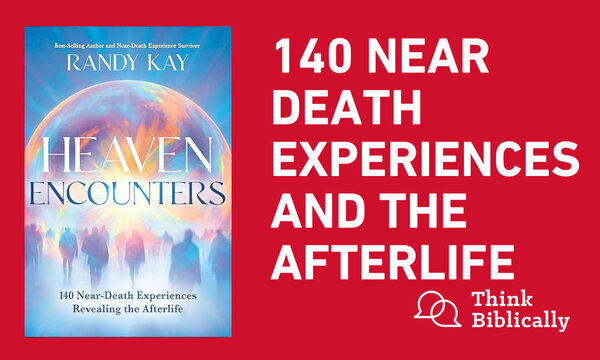
Audience Question: Near-Death Experiences and Theology: Following up on their recent conversation with Randy Kay, Sean and Scott explain how Christians can evaluate near-death experiences through Scripture while recognizing how they point to an immaterial soul and an intermediate state after death. They also explore how common NDE features—such as a life review—challenge determinism and support human free will.
Episode Transcript
Sean McDowell: [upbeat music] With Microsoft Outlook, US air traffic, and major national banks going down this week, is the AI apocalypse here? Has the greed of youth sports hit a new level? Parents now constantly surveil their kids from three years old into college. How does this affect both the kids and this new generation of parents? And the Netherland approves embryo creation for research. These are the stories we'll discuss, and we also address some of your questions. I'm your host, Sean McDowell.
Scott Rae: I'm your co-host, Scott Rae.
Sean McDowell: This is the Think Biblically weekly cultural update, brought to you by Talbot School of Theology, Biola University. Scott, we're recording this from Denver at the Evangelical Theological Society, so we are in between recording people for future episodes, going to sessions, hanging out with other scholars. But it never fails that fascinating stories will drop, and this first one that you sent to me is about the Netherlands approving embryo creation for research. And, just really brief, it says, "The Dutch Senate has narrowly, by three votes, approved legislation allowing embryos to be created specifically for research purposes. Proponents say," of course, "it gave," you know, "it could pave the way for medical advances. They expect the research to help improve, say, fertility treatments like IVF and enable earlier detection of inherited diseases. Christian parties have been among the main opponents of the bill, describing it as, quote, 'morally reprehensible,' and arguing that it would permit human embryos to be created solely for use in research and subsequently destroyed." Now, up until this point, researchers in the Netherlands could only use embryos left over from fertility treatments such as IVF with the consent of people involved, but now apparently they can create them specifically for research. This is the first I've heard of this. Give me your take on this, especially since this is right in the lane of your expertise with bioethics.
Scott Rae: Well, Sean, this is a further erosion of respect for essential human dignity at the beginning of life, and treating human embryos as disposable commodities. Now, there's always been a guardrail, Sean, for, in the US and most other European countries, involved in embryo research, but, you know, in my view, it's only a matter of time before this guardrail was crossed, and I'm a little bit curious as to why it took so long. Because in the US, and I think other European countries, embryo research is only allowed for the first 14 days of the embryo's development and only from embryos left over from IVF treatments. So after the 14-day mark, they were, they were, they were off limits. Now, if we have persons from conception forward, then embryos are persons as much as fetuses in the womb are or newborns or two-year-olds or adolescents are, and they shouldn't be used for research, period, no matter how they were created. [lip smack] now, if you don't believe that, then using embryos for research purposes is not a problem, and where they came from actually is not relevant. And the Dutch actually are being quite consistent to say there's no moral difference between embryos left over from IVF treatments and embryos created for research. Because if they're just clumps of cells or just, you know, as some writers have put it, like a human equivalent of a bag of marbles, then they're just, they're just, they're just stuff, and can be used for research and disposed of without any moral issues. But for those of us who hold that you have a, you have a person from conception forward, and whether an embryo is in the womb or in the lab, [lip smack] that location is irrelevant to what kind of a thing it actually is. So I don't, I don't see any, you know... I think, I think the Dutch are being consistent, but I think their fundamental view of what an embryo is mistaken. And in my view, we ought not be using embryos for this kind of research at all. And couples who have embryos left over for, from IVF treatment should not be discarding them. Just no, extra charge for that comment.
Sean McDowell: [laughs]
Scott Rae: So.
Sean McDowell: Fair enough. It, so you said if embryos are human beings or persons, we shouldn't be using them for experiments and research. If they're not human beings-
Scott Rae: I'd say unless, the caveat, the caveat, sorry, the caveat on that would be unless it's for the benefit of the embryo himself or herself.
Sean McDowell: Oh, fair enough. Okay. Yeah, gotcha. And I think the article is presuming that's not the case, for sure-
Scott Rae: Right. That's right
Sean McDowell: ... Since they're created solely for research and can be discarded or manipulated-
Scott Rae: That's right
Sean McDowell: ... However they see fit. So the point that I'm making is, you're right, and I agree with you 100%, that if the embryos are human beings from the moment of conception, this is not how we treat human beings. But if they're not, and it's a clump of cells, then it's also arbitrary to say that at 14 days, that's the limit-
Scott Rae: Correct
Sean McDowell: ... Of when we can do the experiment. So why not 21 days? Why not 35 days? Why not three months? Why not six months? And this is the problem with the pro-choice argument as a whole, is it fails to take into consideration what the unborn is fundamentally. We look at it in terms of how it can act, differences or apparent differences with those outside of the womb, and then say maybe it's smaller or not as developed, but none of these are significant or substantial enough differences to deny the unborn its human or person status, and hence the right to life. So I agree with you that they're being consistent on one level, but I'd also argue they're being inconsistent, 'cause when it's all said and done, we are all only cells. That's all we are, is material stuff. And if we are a human being as a distinct organism, and you know this, the science shows from the moment of conception, we have a distinct living human being, and nothing changes in terms of what that is from conception until death, then I think they're being profoundly inconsistent by [laughs] creating human beings for this utilitarian purpose of allegedly helping out mankind. And I still wonder if this is gonna be like adult stem cells that don't help out anyways. I can't answer that, but that's something I'd be curious about.
Scott Rae: Yeah. I think, yeah, the the use of embryonic stem cells, I think has been largely a bust, ... In terms of clinical applications, and because it's adult stem cells that are, that are where the, all the action is. And here, Sean, the interesting thing about this is that the ambi- there's a, I think a interesting degree of ambivalence in the US about what kind of a thing an embryo actually is, because people recognize that there's continuity between embryos in the lab, fetuses in the womb, newborns in their mother's arms, two-year-olds walking around, all those, you know, and as one, as one writer put it, "We were all once embryos."
Sean McDowell: That's right.
Scott Rae: We just happened to, we just happened to be nurtured in the womb. And here's, you know, when the, when this was first, put into practice in the US and embryo research was allowed, the reason they put the the short-term limit on it was because they
Scott Rae: they made it clear that embryos are entitled to what they called, quote, "profound respect."
Scott Rae: But it's really hard to see how profound respect is consistent with destroying embryos, either in the process of research or in the aftermath when they're finished with the research. So the idea that, And in fact, I was just with some folks, you know, earlier this week, and they described how their particular denomination's statements on stem cell research use that same terminology, that embryos are entitled to profound respect, but not persons. And what that profound respect looks like when you can actually destroy them when you're finished with them, that looks more like disposable commodities with whom we don't have any respect for.
Sean McDowell: That sounds like language obfuscation to confuse what's actually going on. I mean, I that just, to me, that's sheer nonsense to even make such an argument. I it, I'm not surprised by this on one level. I didn't really see this coming, but once I see it here, I go, "Oh, it makes sense. If this is all the unborn is, then we should be able to treat it this way." in other words, as an object towards an end. It's just not clear to me why we can say that abortion is fine all the way through birth, and that's allowed in some states, but you can't experiment on the unborn. I mean, which is worse, to experiment on somebody or to kill them? Well, in some ways, they're both terrible, [laughs] but obviously killing somebody-
Scott Rae: Right
Sean McDowell: ... Is worse than experimenting on them, and I think it's just a profound inconsistency 'cause we've lost sight of what the unborn is and where human rights and values come from.
Scott Rae: Yeah. One more comment on this.
Sean McDowell: Sure.
Scott Rae: I think this is, the moral status of embryos, I think, is gonna be coming up again, and not just, not just as a result of the Dutch story. But the reason they're creating embryos for this research is because they're, they are researching the gene editing procedures on human embryos so that they can test the procedures to cure disease and eventually enhance, and eventually select other traits. So that's the, that's why this is an issue again. It's not so much for the stem cells, but as the raw material for gene editing.
Sean McDowell: Well, I agree with you that this story's not going anywhere in terms of [laughs] the status of embryos. We will be revisiting this. Well, this next story we're talking about is perhaps the biggest story of the week that people are discussing, all of these various outages with airline flights, and that affected me directly trying to get in somewhere, what happened with Microsoft Outlook, what happened with some banks, apparently the NSA. Everybody's kind of asking the question, what is going on? Well, there was an interesting piece that I just actually found this morning that was in The Atlantic, and this author floated three different reasons or explanations for this phenomena I thought was fascinating. And he did say, "What you see with..." What I've seen a bunch of people do this, Scott, is people give these principles that they live by and then apply it to an issue. So it's really interesting. One guy's principle, which makes sense, it's called Hanlon's razor. Never attribute to malice what is easily explainable by stupidity or incompetence. [laughs]
Scott Rae: [laughs]
Sean McDowell: That's, like, not a bad, you know, rule of thumb, so to speak.
Scott Rae: I think that's pretty good, actually.
Sean McDowell: It he says there's three likely hypotheses for what happened this week. One, the explanation is benign. These are just breakages and failures 'cause we have an old legacy system that's running on outdated code, and that's true for these different systems, okay? Second is nefarious, that there's some kind of foreign interference taking place, maybe China, while Trump had his China summit this week, and Putin won maybe Russia, whatever. There's some outside interference that has found our weaknesses and is exploiting them. The third, he says, is that they're third-party actors are using powerful AI tools to target vulnerabilities and bugs in our digital infrastructure. You could also add to that there could be rogue AI actors like we saw with the Hugging Face incident that is causing this. Now, he brings full circle and he says there's really one explanation. This is all relatively benign. It turns out that a lot of stuff breaks all the time. Major outages on government sites, cloud services, and a number of low-profile systems have been going down over the past few months, all with mundane software issues brought on by new code slapped haphazardly onto old software. So basically, he's saying rather than lean into some conspiracy theory, maybe there's just a simpler explanation for this. Makes a couple other points. He says, "It's tempting to blame these outages on some mission impossible foreign bad guy operation." But then he gives another principle. He says, "When you hear hoofbeats, think horses, not zebras." And I saw a few people say that, which is just interesting.
Scott Rae: [laughs]
Sean McDowell: Don't assume it's outlandish. Go... You and I would actually-- Well, not just you and I. Like Occam's razor. Go with the simplest explanation-
Scott Rae: Mm-hmm
Sean McDowell: ... All things being equal. And this can be hard in our current moment of AI hype, and it's a boring response that doesn't get clicks. Last thing he says is AI is responsible for the failures, but not because the AI singularity is here. Rather, most of the complex systems you run on are held together with duct tape. I think that's a good way to look at it. AI itself isn't breaking these things. We're using AI to break them faster, and it's, in other words, it's kind of revealing old, out-of-date systems that are in place, and some of those just emerged to the surface this week. That makes the most sense to me. I don't have the tech savvy to really do a deep dive into this, Scott, but that's reasonable. What are your thoughts? And, like, how do we think biblically about these outages that happened this week, if we even can?
Scott Rae: Well, I think we can, and I think this is about two things in particular. It's about knowledge and trust. It's about, for one, how much we don't know about what caused these things, and perhaps shakes our trust that our tech will always work seamlessly. Now, to be fair, you know, my experience is the tech works pretty well most of the time. But in these instances, when it fails, it cascades, and it becomes, you know, it becomes a national news story, and it becomes a reason for the FAA to ground flights for the afternoon. You know, the Microsoft outage gave my wife a day off from work, which she was welcoming.
Sean McDowell: [laughs]
Scott Rae: But, you know, the article I think makes some really interesting observations about what he calls a crisis of our knowledge. And he said the conditions of, for knowledge have changed so much that knowledge itself is the thing that is melting down. I thought that was really interesting insight. He said the cause of that, he says was like this. When you know, in the past, you know, broadcast news, you know, they vetted stories really carefully. And he said, he said, but of course, the internet ended all of that by allowing anyone to broadcast anything to the world and then being, making every broadcast appear similarly credible. Hence, all of the different conspiracy theories that were awash on the, on the internet, about the, you know, the outages of the last week. And I would, I would say it's maybe a crisis of epistemology, crisis of our knowledge, maybe a little strong, but, it sort of raises the question, you know, how do we know what we know? And it's a plea for, I think, for what the article, what the article, describes as righteous ignorance. Which the term I would use for that would be epistemic humility. And basically, what I, what I would say to put this in sort of layman's terms, I want to avoid the syndrome of the, of people who I suspect we all know who are characterized by this notion that they're sometimes wrong but never in doubt.
Sean McDowell: [laughs]
Scott Rae: So I think we, you know, we all know people, I think, who are like that, and could use, I think, a little, a little more epistemic humility. But I feel, I think it raises the question of what we can know for sure and what we can trust today. And I think to, the observation I think that the article makes is there's a lot of mistrust in lots of fields today. You know, there's mistrust in science, in medicine. There's increasing mistrust in technology now, in business. Some of it's well-earned, but I think some of it is not, and some of it can be actually very destructive to our life together in community to which we are called. If you think about it, much of our day-to-day life presumes trust. You know, I'm getting on an airplane this afternoon, and I'm, jumping on that airplane with the full trust that I'm gonna land safely in Orange County later this evening. We exercise huge amounts of trust when we drive a car, when, the food we eat, internet commerce, banking. I'd say much of our technology. And trust is actually the engine of our economic system, and you think about millions of transactions are that take place every day that are premised on trust. You know, every time you make a credit transaction, the company you're purchasing something from trusts that the payment's gonna go through. Your credit card company trusts that you're gonna pay the bill. You trust that you're gonna get in the mail what you paid for. And I think that, here's, and here's the think biblically part. That trust presumes a modicum, at least a modicum of virtue- ... That I think is eroding somewhat. But I'd say there's still a deep reservoir of shared morality that I think ultimately comes from our Judeo-Christian heritage. That makes our life together possible. I mean, imagine if we, if we did away with the biblical notion of, not bearing false witness or the principle of truth-telling. If we, if we could no longer trust what we say to each other to be the truth, how long would it be before authentic, real, genuine communication ceased to take place? If I had to always presume that people were lying to me, it'd be incredibly difficult to have consistent, reliable communication. And I think that what the Bible talks about is that the importance of our character and the virtue that we develop for their... For its own sake, we develop it for the sake of Christ-likeness. But that, the trust that that virtue engenders makes our life in community actually possible. 'Cause without that, then we become, we go back to the sort of the ancient tribal, types of, types of communal living where you only trust the people with whom you have blood relations.
Sean McDowell: That's a good take. I hadn't thought of that, but it makes sense given how much you look at things through an economic lens, and that economically, things like capitalism cannot survive and flourish apart from trust. And if this incident this week highlights a a further erosion of trust, that doesn't bode well for the future of our country and beyond. I looked at this through a little bit of a different lens and this article in The Atlantic says, "As the chestnut goes, if you see two ants in your kitchen, you definitely have more than two ants in your kitchen." And it's kind of like when you see one, it could be rogue. When you see two, you start to see a pattern. And it got me thinking how we are pattern-making beings. We see instances of things. We try to connect them together to make sense of the world. We have to have a coherent worldview, at least to a degree, to live our lives and make sense of what it means to be good, how we should treat others, how we should spend our money, and that's a good thing that God has built into us, and I think it reflects the Imago Dei. I mean, the doctrine of Imago Dei provides a basis for why we kind of have a pattern-making nature. Now, of course, evolutionists would give a very different explanation for this, but I think it helps us show that, you know, our life experience and culture, art, music, we make sense of the world through these mediums, and we, of course, need to make sense of them and find meaning with one another. The problem comes not when we find meaning and purpose, but when we have one or two or a handful of examples, and we draw full meaning from them that might not be representative of the facts. So this article has a really interesting point here when it talks about what's kind of called, like, the frequency illusion, that we see something show up a few times, and we draw large conclusions from it that might not be accurate. So I remember, it went through my mind when I was reading this, Scott. I was like, "When was this huge, massive shark scare in the United States?" And I remember thinking it was right before 9/11, and so I did a little quick research, and it was, like, July 2001, a couple months before, that there was this huge shark scare. And what happened is there were a few attacks that just got disproportionate attention, but it really wasn't an increase as significantly as people would argue. Some say it actually decreased, but the few instances that we saw caused us to make these connections, also driven by the media that needs you to believe that there's a shark scare 'cause people will watch the media. And so when I look at this, I'm thinking, "Okay, is there really enough here to draw patterns?" Maybe there is, and we're missing it, but I think it's dangerous when we do this. If I have an experience with somebody with, say, three or four experiences with somebody with a certain race, and I draw a whole narrative from that's dangerous and stereotyping. If I do that with the opposite sex, if I do that with young people, if I do that with somebody of a different political party. So the, there's so much incentive in our culture to avoid the boring conclusions and tell these radical conspiracy theories that these two articles that are like, "Let's slow down," and, "Actually, the truth is boring," were kind of actually encouraging to me, and I thought, "Good, we need to hear more of this." That was my take.
Scott Rae: Yeah. That, that's really insightful. I think it goes back to the, author's plea for sometime it's okay to have a, sense of righteous ignorance about things. And I think to recognize that, you know, we, may not have the clarity we want, but in the absence of that, not to presume that things are clearer than they actually are and not to, not to opt for, you know, simplistic solutions when things actually may be a lot more complicated than they appear.
Sean McDowell: I think that's well said. I, last quick point that I'll make is, this a kind of new normal that given that we're so dependent upon technology, AI has such new powers, there's a decent chance that that's the case. So in some ways, we kind of need to prepare ourselves for more of these and expect this, and reshape our expectations possibly. But I guess that, in some ways, remains to be seen. Now, these next, this next story, we've talked about this a lot. We brought Ed Uszynski on a few months ago to talk about youth sports, but it seems to me that it keeps increasing, and there were two stories that popped up. One of them is in The New York Times, and it says, "The Greed of Youth Sports Has No Limits." This is an opinion piece, by Jessica Gross And she's talking about this new Paramount+ show I haven't seen. It's called Team Moms Baseball, and it follows several families with children enrolled at the Legendary Prep Academy, which is a private baseball-focused middle and high school in Scottsdale, Arizona. This is the first that I've even heard of this. I hadn't heard of it before this event, but I know events that are like that. And of course, there's some over-the-top elements in the show, apparently. And the article says, "Maybe you're dismissing this as over-the-top made for TV, and it certainly is dramatized for our viewing pleasure. But unfortunately, the youth industrial complex has grown out of control. Youth sports are now a $40 billion business." A chief executive of Fastbreak AI has talked about, his operations for youth, said in an interview he hopes to start offering charter flights for youth sports in the next few years. You've got to be kidding me. The Boston Globe wrote about how travel sports are contributing to absenteeism in Massachusetts schools because more and more students are missing class for far-flung games. Now, you and I have talked about concern missing church. Now it's missing school, so it's almost like we're seeing youth sports becoming the single most significant priority, period, in the lives of increasing number of Americans. Now, this response I thought was fascinating. The one scholar says we need to reinvest in public school sports, which are often on the chopping block when districts cut budgets, and there's something about playing for a school team and the experience you had that a club team can't offer. Now, I want to circle back with my thoughts on this, but what'd you make of this article?
Scott Rae: Well, you know, Sean, both you and I coached in both rec leagues and club teams with our kids, so we've been, we've been down this road a bit ourselves. I wouldn't say, I won't speak for you on this, but, you know, my club experience with two of our kids was not the crazy kind of travel kind, but it was definitely a level up from the recreational league. And I had I'll never forget this. I had a, I had a mom of one of the kids on one of my club teams that, one year she looked at our schedule, and almost all the games were on Sunday mornings. And she said she's a Christian, and she said to me, she said, "Scott, I wonder what God thinks about our schedule."
Sean McDowell: [laughs]
Scott Rae: And what it was, and what it was going to do to their church attendance. Now, in my view, Sean, this raises a much deeper question that I think our Christian worldview really helps to answer. And it begs the question of why do we have kids play sports in the first place? Why do we encour-encourage them to play sports? And we used to tell our club teams, I'd say, "Look, guys, we play sports to learn about life, to build character, and not to make a living from it." you know, the odds of even getting a Division I scholarship in a major sport are astronomical. You know, not to mention the the prospects of competing, you know, in a professional s-sports league. But the reason I have my kids play sports, and I suspect it's the same for you, is to learn about the value of a team. You know, it's not always, that it's not always about me. To learn about handling adversity, taking losing, taking being cut from a team, and being gracious when you win, working toward a goal. But as I realized with my three kids, there are lots of other arenas in which kids can learn those things. Another thing sacred, I think, about sports as the only arena in which they can learn that. My youngest son, we discovered pretty quickly that teams, team sports were not gonna be his thing. But theater and stage was. And Sean, he learned all the same things in his experience on stage that my other two boys learned from their experience in sports. All the same virtues, all the same character things. Maybe a little more drama for my wife in this, but not nearly as much drama for me as there was with some of the sports scene. And, you know, this is where, like, the scripture indicates that, you know, our character is the most important thing for us and for our kids. And it's more important than our success in it, in any given endeavor. And I say if sports or whatever it is helps kids become more like Jesus, helps them to develop character, that's great. But if it doesn't, if it's counterproductive to that or if, and if it cuts out other important things that do contribute to their developing character, then I say it's on, it's on the parents to reevaluate that.
Sean McDowell: That's a great principle. It's, it's difficult in the moment when you're being told by club coaches, "Your kid is great, has a future. They can play pro." Your kid is saying, "I really wanna do this." I mean, these are difficult decisions to make. I do think, I would pause, and this article I thought it was interesting, reinvest in public school sports. Well, my son is the only one left now, my two are in college at Biola, 14 playing club sports, and it's a little bit lower key. If he misses a tournament, they're fine. It's caring coaches that aren't over the top. So he's having a good experience. We don't travel outside of Southern California at all, and when they did last year, we just decided not to go, and they were fine with it. We told them that ahead of time. So they're generally having a good experience. But the thing that club sports lack is, like, why am I playing for this? Commitment to a club, the moment a better club comes along, you just shift and you play for another club-
Scott Rae: That's right
Sean McDowell: ... 'cause you're in it for yourself. But playing for a school, it's like I'm part of a tradition. I'm part of something larger than I am. I'm playing with my friends. When I put on this jersey, it means something. Those are not insignificant things. Those are some of my favorite memories that I want kids to have an experience with. And so much of the NIL stuff, people being paid in college, and now club sports dominate that, we just miss something good. You know, the Bible talks about we're made for community. Love involves sacrificing for one another. Like, God has built us for drama. All these things can be fulfilled not only in a school sport. There's other ways, like drama, to fulfill that. But I do mourn losing that to a degree. There's another article that came out this week. [laughs] This is so interesting. It was in The Wall Street Journal. It's about parents are spending fortunes to turn six-year-olds into F1 drivers. You might have seen this one as well.
Scott Rae: Saw, I saw that.
Sean McDowell: And, oh my goodness. They said, for example, that, here's the total. With a five-year, $200 million build-out, this one person is building this undeveloped land into family friendly motor sports clubs complete with children's classes, on-site mechanics and chefs and butlers, 'cause there's money in this. American families are uprooting to be close to tracks and programs where their kids get the best shot at going pro, which makes me ask the question, how many Christian families are uprooting to a more strategic place for missions to reach the lost? I suspect a lot less. They said in this article that they said, some families, there's a private automotive country club in New York where families pay $175,000 for membership. So part of my concern with some-
Scott Rae: Yes
Sean McDowell: ... Of this is that there's a certain elitism, and people with resources will be favored here against those who don't have those kinds of resources. So that concerns me a little bit. But, you know, overall, I think you're right. It, it's just, this is a good place, I think, for parents to ask, "Where's my values?" Because the Bible says, "Where your treasure is, there your heart is also." Where I put my time and my money and my investment reflects what's most important to me. So I'm not judging anybody who sacrifices for club sports, because I'd be calling myself a hypocrite. But my wife and I consistently said, "How much are we sacrificing for this? How much are we valuing this? How much does this show the treasure of our hearts? And are we putting not as much, but more into the kingdom?" If not, we've got off kilter and are taking cultural cues rather than biblical cues.
Scott Rae: And Sean, I think it, one of the things you'll find in a lot of these travel teams, the more aggressive they are, I'd wanna be, I'd wanna really wanna be careful that the parents aren't more passionate about their kid succeeding in a sport than the kid is himself or herself.
Sean McDowell: Yeah.
Scott Rae: 'Cause I think there's, you know, it you're right. It's challenging to opt out of this, 'cause kids, I think, you know, they don't wanna miss out, and it's prestigious for both kids and for parents.
Scott Rae: And I think to say that, to think that the parents aren't getting something out of their kid's success is hopelessly naive. But I think to count the cost of what they miss out on, and the article also in The New York Times points out that 70-plus percent of the kids who play youth travel sports are done by the time they hit 13.
Sean McDowell: Oh, wow.
Scott Rae: Because it's been so, it's been, it's been so all-consuming. And I, we've heard this from physicians as well, that the focus on one sport year-round is actually not good for kids' physical development either. And I'm not, this article also points out that the fact that they're always competing, you know, in in higher levels of competition, I'm not sure that that's always a good thing for kids either. And to be sure, you know, you describe that that the, that it leaves out kids participating in their public schools, in their sports teams. This definitely leaves out lower income families. It also leaves out kids that are late bloomers physically.
Scott Rae: And it's the early bloomers definitely have a significant- ... Advantage here. So I think if if the, if the scenarios were that the parents are actually more passionate about this than the kid playing the sport is, I think that's a, that's a really unhealthy thing and a, and a definite red flag that maybe everybody ought to take a step back.
Sean McDowell: Good word. Last thing I'll say is, I loved, you know how I was a gym rat, played all the time. I would've loved to play club sports growing up. I'd have been in the gym every day. I'd have probably tried to play for two club sports if they would allow me to. But I just would ask ... And my parents sacrificed for my love for sports, but it was just clear that their larger sacrifice, they were focused on the gospel, the kind of person I was becoming. And when youth sports began to compromise that, then my parents were like, "Time out. That's going too far." We try to raise our kids the same. Certainly can't sit here and said I did it perfectly. [laughs] Looking back, you have a unique perspective that you maybe don't have at the moment. But I'd just ask people with young kids to just say, "What are we sacrificing for?" Because the bottom line is if we want our kids to adopt our faith, one of the most critical things is to have an authentic faith in which you are living it out. And so if kids see us valuing this more, then as a whole we do the kingdom. And I'm not saying it's club sports or the kingdom. I don't mean to simply frame it that way. But what we prioritize and what we value, it might undermine what we value most in life, and I think that's your point. Now, in some ways, this takes-
Scott Rae: It is
Sean McDowell: ... Us actually to our next story. There were two that popped this week on kids, and this one is fascinating in The Atlantic. It the title is "The Parents Who Never Stop Tracking Their Kids." [laughs] So interesting. And the way it starts off with is a lady telling a story about how she, her daycare, I'm sorry, her pre- Like, the very earliest stages when they were watching her child, they did not have monitoring, like their daycare, but when they got to preschool, it was constant monitoring, and they were getting notes all the time of like, "Your daughter woke up from her nap at 2:17 PM. She got a scrape on her knee." And what's happening is now parents are tracking their kids almost everywhere they go, and it's causing constant surveillance and concern moment by moment what our kids are doing or not doing. Now apparently, among college students, one-third are being tracked by their parents with an app called Life360, which we've used, and I'll circle back to my thoughts on that. But I appreciate this article. They just asked a simple question: What is all this tracking doing to us? Now, in some ways, I don't have a perfect answer to that, but we gotta stop and just ask, how is this tracking affecting us? How is it affecting our relationships with our kids? How do we think biblically about being tracked all the time by somebody else with every action that we do? That's a really interesting question. And they talk about here, while, you know, it's hard to argue that newborns are suffering from over-attentive parenting, developmental psychology suggests that constant monitoring eventually becomes unhealthy. One of the primary development tasks of adolescence is to separate and have a degree of independence, which is getting harder and harder and harder. And I liked in the story how they asked students, you know, kinda, "When did your parents start monitoring you?" And they looked at them like they were stupid and was like, "Well, when I was three."
Scott Rae: [laughs]
Sean McDowell: Like, of course. This is what everybody does. It's standard now. And one quick one, this one just kinda blew me away, but it's becoming more popular, is this counselor in North Carolina sent her daughter off to college a few years ago. She was invited to join a group chat for moms of the girls living on the same floor. The mom, she recalls, tracked their daughters' locations during sorority rush, watched as they moved from house to house. But the incident that stuck in her mind came one fall morning when a mom messages the group chat that her daughter was still in her dorm room. She had a math test in 10 minutes. Could somebody, one of the moms, tell their daughters to go wake her up and make sure she goes to her math test? I thought, "Oh, my goodness, this surveillance has gone way too far." We used to call it helicopter parenting, but now it's helicopter parenting on steroids. Your thoughts?
Scott Rae: That was exactly the phrase I was gonna use.
Sean McDowell: Are you serious? [laughs]
Scott Rae: Yeah, no, helicopter. Heli- I said this is helicopter parenting on steroids.
Sean McDowell: [laughs]
Scott Rae: And it's not an accident. The kids actually refer to this not as tracking, but as stalking. And Sean, I think we're, we are generating or enabling both neurotic parents and dependent kids. Reality is, you can't entirely insulate kids from making mistakes or facing adversity, and if you could, you shouldn't in the first place because it stunts their growth and development. And what it's doing, Sean, in my, in my judgment, and the article points this out too, it's contributing to a generation that's less inclined to take any risks of any sort. You know, not just, not just the risks that bad judgment would make that we'd wanna prevent. But I think it raises that. That's a really important question you point out that it, that it raises. What is this doing to parents in their development, in their ability to let go of their kids? Because Sean, parenting is the only job that I know of that has built-in obsolescence to it. And you know, and I realize, you know, you're always a parent. That doesn't change, but it change, it, the way you parent actually changes dramatically as kids become more and more independent. And I think, I mean, I think there's just, there's dangers in this. I understand the need for parents to be able to track their kids to make sure they're not doing things that they shouldn't be. But I think at some point, unless you have compelling evidence to the contrary, parents need to increasingly trust their, that the seeds that they've planted within their kids are gonna be okay and increasingly trust them to do things sort of on their own without supervision, without tracking, 'cause they'll, they will recognize that their kids are a lot more capable than I think they're giving them credit for. And they can, you know, they can go out on their own, and they can come back, and it's okay. I mean, my nephew and his wife and two daughters, they live in the heart of Brooklyn, and they started, his girls started taking the subway to school when they were in middle school. Untracked, as far as I know. But this really healthy degree of independence when, 'cause when they came home, they all recognized, "Hey, I can do this. I can go out on, I can, I can ride the subway. I can get to school on my own. I can get home. I can do what I need to do without Mom and Dad coming in to bail me out." Plus, kids also need to learn that there, that there are consequences for not getting up for your math test.
Sean McDowell: [laughs] Exactly.
Scott Rae: Because, 'cause if you don't get up for a math test, the article points out, you run the risk of not getting up for a job interview or not getting up in time to go to work. And at some point, they have to learn that there are consequences to not keeping commitments and not keeping a schedule.
Sean McDowell: That's so true. I would wake up my son right now, who's 14. If it was a high school junior and senior, depending on the kid and how responsible they actually were, I might just let them sleep in for not setting their alarm and deal with the consequences and then not back them up. I'd back the teacher up and teach them, "Hey, you chose to sleep in. You didn't set an alarm. You gotta learn this lesson before you leave our home, or this is gonna be a hard life." So you're right. The question is, like, what lessons are being stunted by constant surveillance? The article made a few interesting points, but it said, "A persistent theme in the conversation of the author is that the sense that the world has become dangerous and too many risks lurk out there." And this is not borne out by the statistics because teenagers are actually as a whole living safer lives than they did in the '80s and the '90s. So I remember when I was a kid, there was this kind of hysteria about, you know, stranger danger, and they would teach us what would happen if somebody would come up and try to ask you to get into a car and kidnap us. And then I remember, like, years later that-- and so we, like, viewed all strangers as being dangerous. Well, it turns out most kidnapping is done from people who you know, who's not a stranger. A lot of other kinds of abuse are done by people you know, not by strangers. So it kinda created a faulty view of the world that doesn't match up with reality. That's what some of this constant surveillance could maybe do. I did love the way the article ended. It said this college junior said his dad still tracks him. He says, "This is the same generation that talks all the time about, 'Oh, it was so great in the '80s. Like, we would ride our bikes all around the neighborhood and, you know, we would just come home when the sun goes down.'" He's like, "These are the same parents that are on Life360 stalking their kids and watching their every move." I was like, "That's a good line," and there's deep irony-
Scott Rae: Exactly right
Sean McDowell: ... That's there. You know, I we use Life360, but there's-- we try to use it selectively, and so my kids know, like, if I land in Denver, they get a little notice. "You know, your dad," or it just says, "Dad lands in Denver." And that's fine. They can see where I'm at. I don't mind that. I actually like us being connected in that way. It's not a weird stalking thing. I am just curious. "Oh, she's at Biola right now." When I'm heading up to Biola, I can see her. "Oh, she's out to dinner." Like, it's not a weird thing. I actually like the connection to a degree. And my son, who's 14, maybe some people won't like this, but he has an e-bike. We live in Southern Orange County. It's actually kind of built somewhat for e-bikes to get places. But these things, not his, some of them can go, like, 40 and 50 miles an hour. So we tell him he's got a specific speed limit. At 14 years old, these things are dangerous, and I wanna limit it to that. So I think it can get out of control, like this examples that we gave. There's nothing wrong in principle with being connected. My older son, who's at Biola, is like, "I don't wanna be on Life360 anymore." I'm like, "That's fine. No problem. Like, [laughs] you're an adult. Don't worry about it." So we can be overly protective, but I think they can offer some balanced ways of staying connected and understand what kids are doing. I mean, literally last week, my son was up riding bikes in the hill behind where we live in, southern Orange County, and he took a video of a huge rattlesnake that they stepped off the road and-
Scott Rae: Oh
Sean McDowell: ... Didn't even see. They hadn't even seen it, and he's like, "It was
Scott Rae: Oh
Sean McDowell: ... Foot or something away from me." You know, like, if that happened to me growing up where I grew up, it would've been game over. Like, I couldn't have called anybody. They couldn't have found me. So being connected-
Scott Rae: Yeah
Sean McDowell: ... That way, if that happens, like great. But I'm not monitoring every second everywhere he goes. He's gotta be able to make mistakes and let go of the leash a little bit, is how we see it. And it got... You know, last thing I'll say, it got me thinking, part of growing up as a Christian is realizing my parents can't monitor everything. But you know what? God is actually watching. He's watching everything that I do. Not a God to control us, not a God to punish us, but He's the just ruler of the universe. And we should have some fear of God, and that should in part motivate us to behave rightly. You know the name David Berlinski. He wrote this book, The Devil's Delusion-
Scott Rae: Mm-hmm
Sean McDowell: ... Responding to the new atheist movement. He's a mathematician, philosopher. He's brilliant. And he said what Pol Pot and Stalin and Hitler, when they created these mass casualties of the 20th century, he said, "What I know they weren't doing was thinking that God is watching me." [laughs] And I thought, "You know what? There's a healthy perspective of I can escape my parents and they're not seeing this, but there is a God who watches me, and I'm gonna be held accountable to Him." And ultimately, we mature not when God is watching us to judge us, but I wanna please God, and I wanna honor God and be faithful.
Scott Rae: Sure.
Sean McDowell: That's where I think spiritual maturity comes into play.
Scott Rae: Let me add one more thing to this. I think theologically too, our kids are not entirely our own. Our kids ultimately belong to God, and He has given them to us to steward their growth and maturity and development. And I think we're, responsible to God for how we steward that, but I think we're also responsible for creating in them the kind of independence that they need to function as responsible adults.
Sean McDowell: Good. Good word. Well said. Well, let's shift to questions. First, just wanna remind people this is brought by Talbot School of Theology, where Scott and I teach, and we would love to have you join us to study theology, apologetics, philosophy, marriage and family, Old Testament, on campus here in Southern California and/or Phoenix now, which is really cool, or by distance. Scott, we've got some questions here. There's no way we can get to all of them, but there's a few for you. So let me ask you this first one. This person has a question on our conversation about AI attempting to read a person's mind. And he said, "If scientists think they're able to track and predict a person's thoughts by looking at blood flow in the brain, even if that cannot metaphysically be true, is there a danger that people or governments might still use that data to unjustly accuse people of wrongdoing?" So really two questions. It was framed longer. How do we prevent such a scenario from taking place? And how do we effectively help people understand that the mind and brain are different things?
Scott Rae: Well, I think there are, there are dangers that government could use that you know, for wrongdoing. And I think there's, you know, because we live in a fallen, broken world, there's no way, I think, to prevent some of this technology from falling into the wrong hands. This is one of the reasons why there's so much interest in, you know, the fact that, just exposed in The New York Times today that Nvidia's chips were being used by folks with, access to the Chinese military.
Scott Rae: Now, and the mind and the brain are two different things, and we talked about that a little bit last time, with the fact that you are not your brain. And you... We all have an immaterial part, to us, the mind, the soul. In fact, I think the mind is a capacity of the soul that gives us our rational capabilities. And the reason we say we have an immaterial part is to account for the fact that we are the same person through physical time and change. If we were, if we're only a a conglomeration of our parts and properties, then every time our parts change, we would become a different person. And that's, and that's clearly not true. Our whole notion of moral responsibility and criminal justice is premised on a continuity of personal identity through time and change. So that's how I would help people understand the mind and the brain are different things. The mind is the immaterial part. The brain is the physical organ that facilitates many of the functions of the mind.
Sean McDowell: That's great. The simplest way I could approach somebody is I just ask questions. I'd say, "Okay, let's start with the brain. Can you tell me properties of the brain? What does it weigh? What color is it? What do you think the texture is of it?"
Scott Rae: That's good.
Sean McDowell: "Where is it located? Okay, now tell me properties of the mind." And immediately people know, well, my mind is not physical. It doesn't have weight. My mind contains thoughts. My mind has reflection. My mind has awareness. These are different properties which minimally tell us the mind is not the brain. Much more can be said, and there's responses to that, but that's where I would start to metaphysically untangle that for people. There are some other ones here on this that are great questions, but let me shift down to this last one. It says, "Been enjoying the podcast the past few years." Awesome. This individual enjoyed our one last week with Randy Kagan, near-death experiences. Brought a few questions. What's a healthy way to incorporate near-death experiences into our theology as Christians? And do near-death experiences actually contribute to the argument of the free will of humanity? Now, I've got a bunch of thoughts on this, but I wanna go to you first and see if you wanted to weigh in on this one, Scott.
Scott Rae: Well, I think there is a way to incorporate these experiences into our theology, and I think these are, to go back to our previous question, this is some of the evidence that there is an immaterial part to a human being that can exist outside the body. And I think these near-death experiences demonstrate that. And they anticipate what I think the Bible teaches is that after our death, between the time of our death and the return of Christ, we will exist in an immaterial state. And we will get resurrection bodies at the Lord's return when the general resurrection of all the dead takes place, and we will live for eternity embodied. That's true. And our embody- being embodied is the normal state of our, of who we are. But in that, in that intermediate state, we exist as a disembodied person. So anyway, I think that helps us anticipate that, and I think it's very helpful in describing the, some evidence for things, like an immaterial mind or an immaterial soul.
Sean McDowell: Good stuff. Now, like I said earlier, you and I are here recording at Evangelical Theological Society. Yesterday, interviewed Steve Miller, who is my go-to guy, learned about him from J.P. Moreland twice, and one was a theology of near-death experiences. I don't think this has anywhere really been done, so we're gonna release that as a regular episode in the upcoming weeks. So hang in there. You're anticipating where we're going. But I would say a couple things about this. First off is we always run near-death experiences through scripture. Sola scriptura does not mean we can't learn things from natural law. It doesn't mean we can't learn things from near-death experiences. But the final arbiter of truth is scripture, not somebody's experience. Now, what's fascinating, though, is when we take what are called the common experiences that emerge in near-death experiences. These are things that appear, like, at least 15% of the time. I think all of them are consistent with a Christian worldview. Things like, for example, feeling deeply loved, seeing different kinds of spirit beings, sometimes angelic-type beings, sometimes demonic-type beings, a life review that people have, the soul separating from the body. These majority experiences that appear, and John Burke has written on this in his book Imagine Heaven, actually powerfully line up with a Christian worldview. Now, with that said, the last part of the question was, do they contribute to the argument of free will of humanity? And I think they do. Why? Well, when people report near-death experiences, they don't meld and blend into the oneness of everything, which would be New Age. We don't cease to exist, a kind of materialism. There's an individual self that exists during this experience, and then this self is challenged in some ways to see the world differently, to live their life differently, hence a life review. And what that implies is that there's an immaterial part of the self that can exist apart from the body, but also that this immaterial self has free will That I'm not a deterministic body, but I am a soul and a body deeply wedded together, but I can actually choose. So I think near-death experiences actually challenge the idea of determinism, because it would make no sense to have something like a life review look at your choices and strongly imply that you should live differently. Now, Randy Kay's book is excellent on this. The other books by Steve Miller are excellent on this. I have about 15 interviews, and I posted some of them here on Think Biblically, but on my YouTube channel, I have an entire playlist of videos where we deal every conceivable objection and walk through near-death experiences. Scott, honestly, I think this is part of the future of apologetics, and so I get excited about this topic. But, hopefully that helps people with their excellent questions. Keep them coming. Anything else I missed, buddy, before we wrap this one up, Scott?
Scott Rae: No, that's great stuff. Great stuff.
Sean McDowell: This has been an episode of the podcast Think Biblically: Conversations on Faith and Culture, brought to you by Talbot School of Theology, Biola University. As I mentioned earlier, we have master's programs. We would love for you to study with us in a range of topics, theology, Bible, apologetics, spiritual formation, so much more, in person and distance. Please keep your comments and questions coming. You can email us at thinkbiblically@biola.edu, and we'd be honored if you'd just take a moment and give us a rating on your podcast app. It actually really helps. And if you found this fascinating, consider sharing this with a friend. We appreciate you listening, and we'll see you Tuesday when our regular episode airs. In the meantime, remember to think biblically about everything. [outro music]