Biola University
Political Identity 2.0: Scott and Sean examine how identity politics is shifting from race and gender toward economic class. They encourage believers to reject zero-sum financial mindsets while engaging civically.
Colorado Pre-K & Religious Liberty: The hosts discuss a Supreme Court case challenging Colorado for withholding funding from religious pre-K programs that maintain biblical views on sexuality. They highlight why institutional religious freedom must be protected in the public square.
Family Time Over Friendships: Evaluating data that shows Americans prioritizing home life over outside social ties, the hosts weigh the trade-offs. They affirm strong family bonds while stressing the biblical necessity of intentional friendships.
Doctors Counseling on Climate Change: Reacting to a National Review piece on bioethicists urging physicians to counsel patients on climate change, the hosts critique expanding medical consultation into political activism. They argue that doctors should remain focused on individual patient health rather than lecturing on planetary care.
Audience Question: Serving on Ideologically Opposing Boards: The hosts advise Christians on navigating boards with conflicting worldviews by drawing on Daniel's diplomatic example in Scripture. They encourage working for positive change from within unless core convictions are compromised.
Audience Question: Duty to Vote with Flawed Candidates: Addressing moral hesitation in elections, Scott and Sean explain voting as a neighbor-loving duty to lessen evil. They remind voters that all political options in a fallen world are mixed bags.
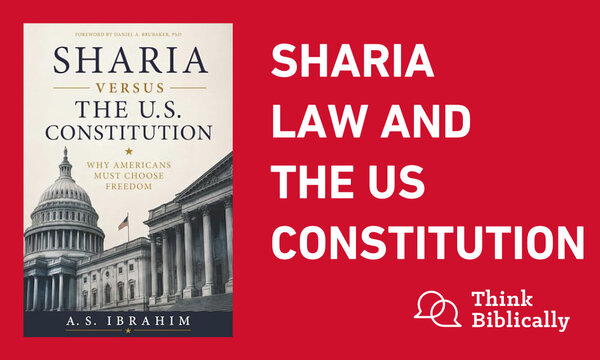
Audience Question: Clarifying the Threat of Sharia Law: Addressing a follow-up question on whether the threat of Sharia Law in the U.S. is exaggerated, the hosts clarify their previous guest's core argument. They explain that while an imminent takeover of American institutions is unlikely under the Constitution, Sharia law fundamentally conflicts with constitutional freedoms.
Episode Transcript
Sean McDowell: [upbeat music] With the massive political blue wave this week, is identity politics 2.0 on the horizon? The Supreme Court visits another religious liberty case out of Colorado that denies religious schools certain funds if they will not adopt the state's view of sex and gender. Is family time replacing time with friends? And should doctors push patients to reduce their carbon imprints? These are the stories we'll discuss, and we'll also address some of your questions. I'm your host, Sean McDowell.
Scott Rae: I'm your co-host, Scott Rae.
Sean McDowell: This is the Think Biblically weekly cultural update brought to you by Talbot School of Theology, Biola University. Scott, I've been gone a couple weeks, and some people have asked, "Where have you been to host or co-host the show?" And last Thursday, I actually flew to Vegas to debate 10 Mormons on key doctrinal [chuckles] and historical issues. It was over three hours, exhausting, but it was fun, I think it was fascinating. We're not gonna post it here, but if some people are intrigued for that content, I guess if they went to YouTube and probably just typed in Sean versus Mormons, it might pop up.
Scott Rae: [laughs]
Sean McDowell: But it's on, it's on my YouTube channel if everybody's, anybody's interested in kinda hearing that take. And by the way, if people submit questions here related to that, we'll try to take a look next week. Now, before we jump into the stories, I know you have some comments that you wanna make because this week has just been dominated by the midterms and politics, so give us some thought to kick off today.
Scott Rae: Well, yeah, Sean, I appreciate the chance to do this at the very beginning, because the, as you said, the election has dominated the news, and we are, we are not a partisan podcast. You know, we acknowledge that Christian faith is public, but it's not partisan. And so I would suggest, as a way to think about the election results from the viewpoint of a follower of Jesus. I would say if you, if you were happy about the results, no dancing in the end zone. And if you're not happy with the results, no jumping off a bridge. God's kingdom continues to proceed. God's Spirit is still at work around the world, bringing people to Jesus. And I would, I would, adhere to the admonition, of both Paul and Peter in the New Testament to pray for the country, regardless of who's in political control because, the New Testament admonished believers to pray for those in authority over them when it was the Emperor Nero who was in authority over them ultimately. Now, this is from... This is, this... I'm gonna quote a little piece from the Good Faith Network. And it goes like this: "Paul told the church to pray for everyone in authority. He wrote it while living under the reign of an emperor who would eventually kill Christians. The command isn't conditional. It is a way of keeping the church's heart from being run by the election. Pray for the winners, for wisdom, honesty, and restraint with power. Pray for those who lost, that they are treated with dignity, and that their voters aren't viewed as the enemy. Pray for yourself, that the election results don't decide who you are or how you are to love your neighbor." And it closes with this suggestion for people. Who is the hardest name in politics for you to pray for today? And pray specifically for that person.
Sean McDowell: That's a great word of encouragement. I love that. Good word, Scott. This first story is not political, but it intersects with political ideas. I'm more concerned with the cultural ideas, and then hopefully some biblical insights that stem from it. And it's a piece in The New York Times that, interestingly enough, was before the elections, so I think we have somewhat of an answer to the question [chuckles] now that the elections are done and how people are commenting on it. But this article says, it says, "Identity politics have entered a new phase." And this writer says, "There's a strong consensus in the Democrat Party this year. Race and gender are out. Class politics are back in." They, she argues that the return of Trump was the death knell for a presumption that had dominated American life since the 2010s, that identity was a stand-in for societal progress. Now the very notion of identity politics is in retreat. And she makes a point over the past few years, like the number of corporations and universities, now that they speak of diversity in whispers. Like in 2024, 98% of companies in the S&P 500 disclosed the ethnic and racial makeup of their boards. Last year, that fell to 66%. So in two years, that's a significant drop. She also talks about how Representative Alexandria Ocasio-Cortez from New York recently said Woke 1.0 was crazy, but has not really said that identity politics is necessarily going away. Now, there's kind of a historical story that she tells in this article. I won't go back to all of it, but she does say, "In the aftermath of the 2020 killing of George Floyd, the Democratic Party and much of corporate America rushed to demonstrate moral urgency. Human resources offices educated their employees on race. President, Biden fulfilled his promise to get a Black woman on the Supreme Court by nominating Ketanji Brown Jackson. Karine Jean-Pierre was the first Black female, House pre, press secretary," and goes on and on about some of these shifts. But argues that basically some of that stuff seems to be waning, and the concern is more economic than it is racial and other kinds of identities. What's your take on this, Scott?
Scott Rae: Well, I think in general, Sean, the, you know, the election, regardless of what side of the aisle you were on, the election was actually a good day for women and minority candidates. But race and gender, like you mentioned, were not emphasized anywhere close to like they were in the past. I think what you describe as the You know, socioeconomic class is the new identity, is, it's different than what we've experienced in the past decade or two, but it's not new. Socioeconomic populism is a very, old and respected trend. And what I, wanna, encourage our listeners to watch for is I think the new focus of this economic class identity will will be focused on economic inequality, which is a really tricky concept in itself. And I wanna encourage our listeners, beware of the zero-sum assumptions that underlie this notion. And anytime you hear the idea that the wealth of the rich or the income of the rich is causing the poverty of the poor, that's a zero-sum assumption that I think is, it was true for most of the history of civilization, certainly true in biblical times, but no longer true today. That with the advent of market economies and their extraordinary engine for economic growth, they make the size of the overall pie bigger for everyone. Now, I think the distribution of that is something that we can debate about. But the, there is a sense in which the rising tide lifts all boats, though not equally, to be sure. And the genius of market systems, Sean, is that you can, you can now do well financially and do good for your community at the same time. And they are, they are what I would, what I would call value-adding, not fundamentally value-extracting. So I wanna be, I always just wanna be careful that we don't buy into a set of assumptions about economic life that I think are no longer true today with the advent of market systems in the past two to, two to three hundred years. Now, there may be some parts of the world, Sean, where that, the zero-sum arrangement still is the case, but I would call those areas for the most part where market systems have not, either not been tried or not been fully implemented or have been dominated by political cronies.
Sean McDowell: That's really helpful. That is a very different lens than I thought of approaching this, and it makes sense through an economic lens, that you would look at it in that fashion. I think back of the times we've interviewed Os Guinness, and Os Guinness talks about certain larger worldviews that are in conflict with the Christian worldview in this cultural moment. And some would be what he calls, like, the rainbow coalition, which would be the sexual revolution. He talks about critical theory and kind of that revolution, and then he talks about an Islamic revolution, and he gives colors and different, frameworks for these. And part of the question that I'm asking as I'm listening to this is some of the critical theory which might be at the root of the identity politics that people are talking about, is that going away, or did people pivot away from that over the past [chuckles] couple years more for effectiveness and for political reasons rather than ideological reasons? And I remember when I interviewed Os about this, he said some of these ideas are so deeply embedded in the university, in culture, in people's mindsets, that he doesn't think that those ideas are going away. So when I read this article in The New York Times, I think politicians and I think businesses are savvy and smart enough to realize how the winds had shifted a little bit and frame their approaches differently. But I don't believe some of the deep ideological commitments behind this have shifted. And I haven't done an exhaustive study, but I was just reading some of the news, seeing how are some of these stories covering this. And there was a piece in both The New York Times and The Atlantic that kinda confirmed my suspicions a little bit. So there's one in The Atlantic, and I couldn't quite tell. I think it was a little bit of a satirical piece. It's called "It's the End of America as We Know It." And of course, it's exaggerating to kind of make fun of and mock a certain side, understandably. But it says certain things like, "I looked out the window and saw Santa Claus," then it had the pronouns listed for Santa Claus, "being led away in chains." it says, "For the next two years, instead of getting to talk, Joe Rogan will be required to listen." And presumably because he's a white male, what his job in light of critical theory to do is to be an ally and listen and not talk and give his opinion on some of these topics. That's how these discussions are framed sometimes. Read down the article further, and it just talks about things like, you know, it's illegal to be blonde now, statues are going down, pronouns are back up, and then at the end it says, "Well, it's actually looking like this is kind of a hopeful move." So it's somewhat of a, sarcastic piece, but embedded within it are some of these ideas like we might actually return to this. Now, one of the things I enjoy about The New York Times is there's a weekly conversation between Frank Bruni and Bret Stephens where they debate political issues back and forth. And on this one, they both-- The title of the article, actually, it was in on Thursday. It was "Elation Is Not Too Strong a Word." So they are both completely thrilled of what happened politically speaking with the blue wave. That's where they're coming from politically. But less politically in my thoughts is they write here, Frank says, "Kesha Lance Bottoms, the Democrat who was just elected governor of Georgia, will be the first woman and first Black person in that role. Gina Hinojosa," sorry if I mispronounced her name, "isn't just the first Democrat elected governor in Texas in more than 35 years. She'll be the state's first Hispanic governor. Abdul El-Sayed, the Democrat who won in Michigan, will be America's first Muslim senator. Byron Donalds, a Republican, will be Florida's first Black governor. None of these politicians styled themselves primarily as trailblazers." So back to the point that they didn't characterize themselves this way. He says, "But it turns out that our increasingly diverse country is happy to celebrate that diversity when it doesn't denigrate into shrill identity politics." And then Brett jumps in and says, "Did you forget Chris Pappas in New Hampshire, the first openly gay man to win a US Senate?" And then he writes, talks about a national culture that over time has elated acceptance over hate. That was really interesting to me, and thinks, wait a minute, some of the way this diversity has been framed might just be coming back, and it might be coming back with a vengeance, but in some ways only time will tell. What do you think?
Scott Rae: Well, I think you're right to say that the worldview underlying it has become part of the cultural fabric today, and I think it's become, it's become one of those things that's almost unrecognizable anymore when people see it because just because people are so accustomed to thinking about diversity in the positive ways that they have. So I think the You're absolutely right about the worldview being more firmly entrenched, and it, and it... I think it goes to show the trend moves from academia into the broader culture at large, which is why the world of ideas, why the academic setting is so important for believers to be involved in. Let me go back. Can I go back to the economic part for just a minute? 'Cause I do think-
Sean McDowell: Yeah
Scott Rae: ... That's where we're gonna see more emphasis in the
Sean McDowell: Boss, man
Scott Rae: Yeah
Sean McDowell: You don't have to ask me. Go. [laughs]
Scott Rae: Yeah. Well, I think what we need to recognize is that we, there has been a remarkable sense of economic equality for the vast majority of the history of civilization. And it, and it was not a good thing because people were equally poor, and they were equally wretched, and they were equally miserable. And they were stuck, equally stuck in their socioeconomic class into which they were born, and that was true of biblical times as well, which I think is something we have to take into account when we read the scripture about money and economics. But with the rise of markets, people emerged out of poverty at different rates and for different reasons, which there now inequality's on the scene, but I think, but nobody would suggest that everybody being equal and mired in poverty at the same time was a good thing. And now some people made career choices, like artists and pastors and sometimes seminary professors-
Sean McDowell: [laughs]
Scott Rae: ... You know, that are not, that are not first and foremost financially driven. And some people have, I think may they, for bad reasons, there's, they have economic inequality, too, that reflects poor life choices. But most people moved in and out of classes economically throughout their lifetime. And so, you know, for example, students are normally gonna be in the bottom 50% of the wealth and income categories, but they expect to rise out of those if they, you know, if they stay out of trouble with the law, if they don't have children out of wedlock, and if they generally finish their education. So it, I think for the most part, we have a system that enables people to get out of poverty. Now, that's not to say that, you know, race and gender don't prov- haven't provided some sort of disadvantage to that in the past. I think that's fair to suggest that. However, I'd wanna point out the Black middle class has risen consistently in the past decades, and women are more financially independent than ever before, which we've talked about just in the last few weeks. So I wanna, I wanna be really careful that if it's true that what's coming is this new economic populism, that we don't throw the baby out with the bathwater and dismantle an economic system that over time has been remarkably productive and enabled people to move out of poverty in unprecedented percentages.
Sean McDowell: One reason this may happen is because people tend to link, or they tend to view this through the lens of oppressed versus oppressor and apply that to all these different lenses. So racism could be tied to issues of, say, sexism, could be tied also to economic issues, and what ties them together is this oppressor versus oppressed narrative. So we've seen that sometimes, of course, like you mention, in racism and in sexism, but let's not apply this apart from the evidence of, I would argue, the failures of socialism and the success of market economics because we're driven by this common oppressed versus oppressor narrative. So the idea of looking at woke 1.0 and asking what is woke 2.0, we don't wanna throw the baby out with the bathwater. Now, this would take us a little aside here, but I was just speaking to my students this week, in fact, this past week, in the Gospel Kingdom Culture class, the undergrad Bible class I teach, about how a biblical view of diversity. And in some ways, we have diversity in the character of God. There's one God who exists as three persons. Marriage, there's one marriage, male and female. God builds diversity into creation. There's land and sea, animals and plants. It's not a monolith. We have diversity in the past, we have it in the present in the body of Christ and, of course, in the future in Revelation when there's people gathered from every tongue and tribe and nation. Diversity is a beautiful thing, and that was... But where it gets off-kilter in woke 1.0 and 1... In woke 2.0 is when it's applied in a way that either isn't effective economically, like when it comes to socialism, or starts to include identities, for example, in sexuality, that go beyond a biblical understanding of what it means to be human ... And what marriage is. So all this is to say is let's not be knee-jerk reactive. Let's be thoughtful about this and pay attention. You and I will continue to cover it as it comes up here, and hope that it's not crazier than woke [laughs] 1.0 and we can maintain some of the good. All right.
Scott Rae: Hear hear.
Sean McDowell: So this next story you sent to me, in some ways when I got it, I just sighed, Scott. I was like, [sighs] "Here we go again. I thought we've settled this at the Supreme Court." But I'm also not surprised that this is coming out of Colorado, because in some ways they are pushing certain progressive ideas arguably more than California. And this piece talks about how, it, there's a Wall Street Journal piece, and here's basically what they say. "Colorado State's universal pre-K plan lets religious schools participate only if they agree to enroll families who oppose them on sex and gender. So the Colorado program, which was launched in 2023, pays for 15 hours of preschool a week, which is about $6,300 a year. Providers are subject to what the state calls, quote, 'equal opportunity requirements,' including enrollment without regard to religious affiliation, gender identity, or sexual orientation. Two Catholic parishes, two parents, and the Denver Archdiocese argue they're being denied funds solely on account of their religious exercise." So as St. Mary's argues, the fact that Colorado gladly funds some faith-based schools, not others, actually makes things worse. Religious families get money for education if the church agrees with the government on gay marriage and gender transitions. But if a pastor has theological objections, the choice is to bend or lose out as the state offers parents $6,300 to go elsewhere. Now, there's more to this, but I'd love for you to weigh in and give your thoughts on this ruling.
Scott Rae: Well, Sean, this puts parents of these students in a really tough position. Either they bend to beliefs that they don't hold, and have in our view have really good reasons for not holding, or give up the state financial aid for private schooling. And you're right, you're right to point out that this is, this has, this has happened in Colorado several times, and they keep bucking a trend that's continues to go against them, because they've lost all the cases that they've brought before the Supreme Court. And I think the issue here is that should the freedom of to live out one's deepest religious convictions disqualify them from receiving state educational aid? And in my view, thankfully, on Tuesday of this week, the Supreme Court indicated a skepticism toward Colorado's stance and favored the religious freedom of the Catholic schools, which would certainly be going with the trend that the Court has set over the last, you know, five to six years.
Scott Rae: Now, the Court argued, I think, that Colorado should have known that signing the statement of non-discrimination would exclude religious schools, and they should have known that there are many other places where gay and trans parents can send their kids to preschool. Which sort of makes me wonder, Sean, why would these gay and trans parents want to send their kids to a Catholic preschool in the first place?
Sean McDowell: Great question.
Scott Rae: I that is baffling to me, unless they wanted to make a test case out of it. And the school in question, of course, has no kids enrolled from gay or trans parents. So this is, I find this, I'm heartened by the trend toward protecting religious freedom, and I don't think religious freedom is necessarily code for bigotry and discrimination, but I think it is an opportunity for schools basically to do what the gay community wanted for themselves many years ago, which was to be left alone and to live it, to live their lives according to their deepest convictions about gender and sexuality.
Sean McDowell: You know, one of the cases that first came up in Colorado was with our friend Jack Phillips, who has Masterpiece Cakeshop, and he's had a couple, maybe it's three now, cases that have come against him that he's won. And one, his side pointed out, he goes, "Look, there's bakeries within walking distance who will bake the kind of cake that you want. Can I have the religious liberty and freedom of speech to have my business operate out of my deep moral convictions about the nature of marriage?" He also wouldn't make a pornographic cake. He also wouldn't make a Halloween cake. So this really is another example of what's called religious liberty versus the way it's sometimes phrased, LGBTQ or erotic liberty is sometimes the way I've heard it framed, coming into conflict, and how do we have a pluralistic society that's going to let people of different views live together with the most freedom? This is really an example of the kind of tension that we're seeing here. Now, there's a New York Times piece about this, and Justices Jackson and Sonia Sotomayor asked, they were on the other side. It seems from what I read you're right, that the majority opinion was very skeptical of this. And I would be shocked, Scott, if they do not push back on Colorado again and actually not allow them to withhold these funds from private schools, which by the way, the government doesn't grow this money on trees. It comes from [laughs] its citizens anyways and is returning back to it. I would be shocked if the Supreme Court didn't side with religious liberty. But the minority voice, Jackson and Sotomayor, asked why the same line of reasoning would not allow schools to turn away children based on race or ethnicity. Because of a religious belief. So if you're going to allow the schools to get funds who differ with marriage and sexuality, why not with race? And a lot could be said here. I'd be curious if you would add anything to this, but the Bible in nowhere justifies any distinctions between treating people differently based on race. The Bible actually looks at us in terms of ethnicity, not in terms of race. That is more of a modern construct. And so the Bible clearly, because people, Black, white, whatever race you mention, are made in the image of God, it is biblically wrong to treat them differently because of this, and anybody who used the Bible to do so is corrupting and twisting what the Bible really says. But built within the Christian worldview, the primary metaphor we have, or really illustration for God and his faithfulness to us, is marriage, and marriage is presented as a sexed institution long before any of this debate about sexuality came along. So race is incidental. The idea of sexuality and God making us male and female, which is built into the fabric of creation in the scriptures, is just a fundamentally different instance. So if we push back against race, it doesn't follow that we push back against sex and against gender in the same way. And this kinda ties to our earlier story, is that discrimination and diversity now is seen in terms of race, also in terms of sexuality, and that's where it gives Christians serious pause and disagreement with this oppressor versus oppressed lens. Your take.
Scott Rae: Yeah, that's a great take on that. I appreciate that. I think, Sean, the other thing that we need to watch out for is, states and, you know, government institutions who wanna restrict religious freedom to just the private sphere. And it was, we've ... That's been tried in the past during the Obama administration to restrict the expression of religious freedom just to those houses of worship. But once you step outside of that and go into the public, into the workplace or other arenas outside of your private life, then religious freedom no longer applies. And the Court, I think, has been right to insist sort of with what we've emphasized in the past, that, no, religious faith in all its dimension, in all of its expressions, I think is an appropriate place because most expression of Christian faith that we've talked about are, the private, yes, in house of worship, yes, but it's it also has a public dimension, that if Jesus is Lord over all of life-
Sean McDowell: Amen
Scott Rae: ... Then we can't restrict religious freedom to just houses of worship or the private sphere of your own personal spiritual life and maybe your marriage and family.
Sean McDowell: I think the way Colson would describe this is freedom of religion versus freedom of worship, that freedom of worship is in your home or in your church. Freedom of religion means obviously within a pluralistic society within reasonable limits, I can live out my religion in the public sphere, and limiting things to reli- freedom of worship is forcing a secular idea upon religious people through the state. And we can argue, I think pretty convincingly, that the founders definitely did not have that kind of religious liberty in mind. All right, good stuff. Anything else on this story?
Scott Rae: No. Let's carry on.
Sean McDowell: All right, so this next one I think is maybe a little bit more positive. It's kind of a big trend that caught me this week in The Atlantic, and the title is "The Socializing That's Replacing Friend Times," and argues that most, more Americans are hanging out with family by choice, but also by necessity. And so they make a really interesting argument here that there's certain things shifting and changing within the American family. So they ask a question in a huge poll. They said, "What's your favorite way to spend an evening?" They said typically in the past people would say, "Go dancing with friends," "Go on a walk with somebody," whatever. Last year, survey participants answered this open-ended query. Many of them described a very different kind of scene, a night at home cozied up with family. [laughs] That was, like, one of the top responses. Now, this university professor said that on average, American is staying in more now inside compared with past decades and hanging with friends less. But he was reminded time at home is not necessarily time alone. So according to this article, the study suggests that although alone time is increasing in the US, which we've talked about and are concerned about, family time may also be increasing. Over the past handful of decades on average, parents have started spending more time with their young kids, romantic partners have become more intertwined, more grown children are maintaining close relationships with their parents, and more grandparents are actively involved in caring for their grandkids. So these are wonderful, trends that we're starting to see take place. Now in the past, it's interesting, American families, like, tended to be the nucleus of social life because people, like, worked together [laughs] on the farm. It was kind of by necessity that they did, and of course we're not in the 18th century anymore. But now many Americans are homebound by kinda necessity, namely money and finances limiting going out and spending time with people and doing social things that they did in the past. And so one more point here that I want you to jump in. They said in a 2024 study, they analyzed people's participation in work, school, dining, leisure sports, religious or spiritual life from 2003 to 2022. They found over that period that people spent roughly the same amount of time on these activities, but the share of time they spent at home significantly increased. So people are spending more time at home as a whole than they did in the past. And this article says it's good they're spending time with friends, but we are concerned... I'm sorry, with family, but there's a concern that it's at the expense of friends, and friendship is also still important. What do you make of this trend?
Scott Rae: Well, Sean, I admit I relate to this story quite a bit.
Sean McDowell: Okay. [laughs]
Scott Rae: Because our kids are up and out, and only one of them lives in the general area. And, you know, both my wife and I, you know, we're at an age where we could retire if we wanted to, but both of us still work full time. And we have, you know, very busy schedules, and it's time and fatigue that are mostly the issues, not some of the other factors that the article describes. Now, we both have, you know, a handful of friends with whom we get together periodically, some as couples, but I say more often, separately. And I have a group of guys that I play tennis with twice a week, but I don't really see them socially other than that. And we rarely, I know you may be the same way, we rarely socialize with the people we work with. And our friends typically have grandkids who take up most of their discretionary time in the same way that, our kids took up most of our discretionary time when we were younger. And what we, what we've discovered is that, you know, our kids, you know, the stuff that our kids were involved in, whether it was sports or stage and theater, we had, we had a lot of friendships and did a lot of things with the people who had kids the same age that our kids were. We developed some great friendships during that time, but what, funny thing happened. Once the kids stopped playing sports and stopped doing community theater, we sort of, we sort of all disappeared from each other's lives. And it took a, it took a high degree of intentionality to stay connected to any of them. I think probably my wife stays connected to, you know, maybe one or two of them. I stay connected to one who I see maybe once a year. But those people have, for the most part, disappeared from our lives. And so we've recognized that we have had to develop friendships that are not dependent upon the families of our kids. And that's even more so now that our kids are up and out. And I think you know, for the, for the most part, Sean, my wife and I spend most evenings just like that article describes, hunkered down at home with our dogs on the couch, watching something that's streaming that either, you know, one of us or both of us falls asleep to [laughs] during the episode.
Sean McDowell: [laughs]
Scott Rae: ... And I think, you know, we're both a bit more on the introvert side, but especially me. And I think we recognize those friendships are important, but the inertia is against us in not developing, but in, I say nurturing those friendships.
Sean McDowell: Yeah, that's a great take. That's really interesting and helpful. I think I... It's important to distinguish, I think, for our listeners and for ourselves, that there's a difference between natural friendships given a stage of life that change as we age and move into different phases of life, and culturally, what this article is pointing out, that we've seen a shift over the past couple decades of more people, presumably across different ages of life, spending time at home. That feels like a certain cultural shift that goes beyond just the stage of life that somebody is in, and it goes back to a lot of what we talked about, that if people are spending more time at home, then of course we're gonna see loneliness higher for those who are single. It's just gonna be harder to have those kind of relationships. But if somebody's married... So in some ways, the temptation if you're single, they say in the article, is you might be home alone and sometimes get lonely and then just get into a cycle and not work on those friendship relationships. On the flip side, if you get married, you might settle into certain married relationships that are there and family and not also work on friendships that are outside of the home. And it got me thinking this week, like what is the biblical role and importance of friendship? And just a few kind of verses jumped out to me. I think it's interesting, in some ways it starts with God, like in John 15:13, "Greater love had no man than this, that a man lay down his life for a friend." That we are called a friend of God is so powerful because that's exactly what Jesus did for us. In Romans 5:3, of course, it says, "While we were yet sinners, Christ died for us." So in some ways, our model of friendship starts with God befriending us. I'd also argue friends are for love, not just family. Proverbs 17:17 says, "A friend loves at all times, and a brother [laughs] is born for adversity," which is a really interesting contrast. Also the Bible talks about how friends are for relationship and closeness. So Proverbs 18:24 says, "A man of many companions may come to ruin, but there is a friend who sticks closer than a brother." So it's interesting to me how many times biblically a friend is contrasted [laughs] with a brother and almost seems to, fulfill certain deep human needs that we have in a way that family can't. But of course, friends also help us grow. Proverbs 27:5-6, "Better is open rebuke than hidden love. Faithful are the wounds of a friend." So I would encourage our listeners on two levels. We encourage our listeners to get married and have a lot of kids, and that's where a lot of happiness [laughs] and meaning comes from, but also to work on those friends. Friendship is important for our health, for our flourishing, and also biblically, don't let them be replaced. And your thoughts on this one, Scott?
Scott Rae: Well, I, yeah, and don't forget about the friendship between David and Jonathan-
Sean McDowell: Amen
Scott Rae: ... In the Old Testament. You know, Sean, I think that the challenge here is that the the data is clear, and the Bible's clear, that friendships outside of family are not just key to longevity and our mental health, but they're key to our spirituality as well.
Sean McDowell: Mm-hmm.
Scott Rae: That's the point of the text that you, that you described. But it in the culture that we're in, it's just so easy to default to family or to solitude. I say, you know, unless, you know, unless your family is not, you know, not a peaceful place for you, which, some of our listeners may think of it that way, I think, and understandably so.
Sean McDowell: It's bad.
Scott Rae: But it takes, it takes being intentional about it. And it takes, it takes work, and it takes effort. But like most other things in life that take work and effort, it's well worth it, and every- almost every time that my wife and I get together with a couple that we haven't seen for a while, we almost always say, "Why don't we do this more often?"
Sean McDowell: That's so true, huh?
Scott Rae: You know, and Sean, I love, I love my Talbot colleagues, and, they are, they are the main reason that I hesitate to seriously consider retiring- ... Anytime soon, 'cause I would miss the interaction with them and with my students. You know, we love our small church. And you know, we have developed some friendships outside of our church context, but those, you know, again, those take, they take work and intentionality to make that happen.
Sean McDowell: Good word. Good encouragement. Well, this last story you sent to me, and it's hard for me to tell in some of these bioethics publications how mainstream and central of an idea this is. I have pretty strong opinions about this one, actually. But the title of this was in the National Review, so I suspect it has a little bit more traction than some people might think. And it says, "Bioethicists: Doctors should push patients to reduce their carbon footprint." And essentially, the argument is talking about general practitioners, and overall, they say their view is that, "as part of a general practitioner's obligations to steward planetary health, and due to their unique position as trusted members of communities who have access to a wide range of people, they should devote some of their consultation time to this issue, even where it is separate from consideration about patients' health." By the way, this is not necessarily the National Review promoting this. This is an article they're discussing in the article. And then they quote this. It says, "General practitioners could be trained to have a degree of knowledge on the major issues relating to climate change that would help them educate patients on some of the basic change they might make and would point them towards credible and appropriate resources when they can learn more." Now, give me your thoughts on this.
Scott Rae: Well, Sean, I thought, I thought about my own, my own doctor, and I can't imagine my own doctor asking me about, or worse yet lecturing me about, reducing my carbon footprint unless it directly affected my health.
Sean McDowell: Right.
Scott Rae: If he did, that would be the last time I would see him, and I would start my search for another doctor immediately. Now, I think the, you know, how I might adapt my lifestyle to reduce my environmental impact seems to me go, to go well beyond the goals of medicine. And, you know, bringing up environmental factors that affect my health, like the, examples that the article that, the National Review is referring to, that seems appropriate to me. But to take it further, to say that, as the article points out, "Our view is that as part of the doctor's obligations to steward planetary health, they should devote some of their consultation time to this issue, even when it's separate from considerations about the patient's health." Now, I think this probably has little chance of being widely adopted due to the prominence of a patient's autonomy and the importance of the patient-physician relationship. But I think we need to recognize that there are times when the patient's autonomy conflicts with the common good. You know, for example, confidentiality can be breached when it, with a communicable disease is involved or with a dangerous driver or pilot or heavy machine operator. But I think going from there is a big stretch to have a patient mitigate their environmental impact. And I also wanna be sure that the doctor is doing the same thing personally that he's admonishing me to do, if that's the case. So I, you know, I don't, I don't know how mainstream this is, but the, just to be aware, too, the area of public health has been broadening for the last few decades, and the definition of health has been broadening, you know, similarly, and it no longer, it no longer refers just to freedom from disease, but it refers to a whole host of other things, that have to do with the common good of our communities and the, flourishing of individuals. So, I think it may be shown that the groundwork might be being laid to see this have a little greater emphasis. Though I think this is probably a, you know, a long-run project at best. You know, we'll see. I'd be interested. You say you have strong feelings about this. I'm not particularly surprised by that.
Sean McDowell: [laughs] Well, I actually think this is a terrible idea. Like, it, I think it's ridiculous on so many levels. One is I wouldn't have any lawyers in my family or my wife's family, but we have multiple nurses and multiple doctors of different kind. I can envision all of them looking at me and going, to give more training to doctors on top of how busy they are, and they're an expert in so many things. Now I gotta go to more seminars. Just practically, this is ridiculous. Second, what I think what really bothers me about this is really lurking behind it strikes me as a political agenda, and somebody saying, "We've gotta persuade people to hold a certain view of environmental care. How can we do this? Let's do it through doctors, who our culture holds as authorities," and they should. They're experts. I mean, I've seen even commercials where people who play doctors speak as if they're experts, [laughs] and they're actors. And in people's minds, they think they have authority because they wear kind of the white robe. So it strikes me as they're using doctors who have direct access to people, who are viewed as authorities under the guise of health, which is planetary health rather than individual health. So I don't like that strategy is all. But third, it's also like we live in an overly political age. Everything has become politics. Now I can't even turn on ESPN without it becoming politics. It's infused its way into sports. So I think you could argue, all right, this might be good for planetary health, but what about the social good? What about my relationship with my doctor? What about the trust that is there? And frankly, to be really honest, my my wife had a miscarriage after our first two, and I remember the doctor... I'll never forget it. Like, we were just, we were in tears. We were stunned. We did not expect this. Our first two were so just easy and smooth, and I remember she looks at him and she goes, "You know, it's okay. It's not a human. It's not a baby yet."
Scott Rae: Ouch.
Sean McDowell: And she's trying to help me in a way, where in my mind it's making me more angry. And I think I'm a pretty patient person. I was about to lose my mind. I was like, "I cannot spend an energy on this doctor."
Scott Rae: Yeah.
Sean McDowell: But I thought, she doesn't know what she's talking about philosophically and morally speaking just because she's trained as a doctor. I'm sorry, I don't want my doctors telling me about how to care for the planet. And why this issue? Why not, why don't they speak to us about gun control? Why don't they speak to us about immigration? Why don't they speak to us about everything that fits some political agenda? So I just think, I try to stay in my lane, and I realize there's probably listeners going, "Sean, there's times you've spoken out of your lane," and I hope I qualify-
Scott Rae: [laughs]
Sean McDowell: ... My confidence to the amount I've thought about it. I hope that. But I don't want my doctors talking about planetary care any more than I want my, you know, car mechanic, who's an expert in that, talking about planetary care. I just think it's a terrible idea.
Scott Rae: Yeah, I think there are legitimate issues about, you know, physicians' expertise on this. They're not, they're definitely not trained to do this. In fact, they're barely trained in medical ethics in general. And the time it would take, and the fact that, you know, I'm not paying my doctor for his opinion on climate change, and I especially don't want them moralizing on other issues like you describe, even those that are close, closer to my health like they were, you know, close to your wife's health. And I think that your doctor there was, you know, was being good-natured and trying to help, but-
Sean McDowell: Sure
Scott Rae: ... Definitely stepped out of their lane on that. So if it affects my health, I'm fine with that. But if not, I'd say keep those opinions to yourself.
Sean McDowell: [laughs]
Scott Rae: And I think the, you know, just, I think just to be clear, too, there are times when physicians are okay, I think, to do things that run against a patient's autonomy to preserve concerns for the common good.
Sean McDowell: Sure. Yeah, that's fair
Scott Rae: ... I think, you know, and I think, you know, I think that, you know, breaching confidentiality is okay when there's a communicable disease or, you know, for a therapist it's widely accepted now that that confidentiality can be breached for a therapist if their, if their client is considering doing something that is dangerous to himself or to others.
Scott Rae: So I think the, you know, the patient autonomy is not a, it's not absolute. We're a long way from the paternalism of physicians back, you know, several decades ago, but the pendulum, I think, has swung maybe a bit too far in the other direction, in that patient autonomy is not, is not a 100% absolute. And we would say that as believers about autonomy in general.
Sean McDowell: For sure.
Scott Rae: Because the Bible's really clear that, you know, we are not our own. We've been bought with a price, and we are to, we actually, Jesus' admonition we're to deny ourselves actually means that we're to deny ownership over our lives in an ultimate sense.
Sean McDowell: I think the ultimate issue we take with autonomy is, what does autonomy mean? Auto means self,onomy means rule. Rule over self. Well, I'm not the authority of [laughs] myself when it's all said and done, for a lot of reasons, so that's where some of that would bump up against a Christian worldview. And even take God out of the picture, we're sharing the same space, and our decisions affect one another. We can make a critique of autonomy there as well. All right, Scott, we've got some good questions here, as always, by the way, and this first one I I'm always fascinated to see what your take is. But this question says, "How can a Christian serve on the board or council of an institution in a Christian, meaningful, and grounded way? How can they serve the organization well while also not caving or giving into woke or morally, bankrupt ideologies? For example, on the board of a library, do you push for banning books or preventing books? What if the company pushes for certain LGBTQ rights? How do we navigate difficult situations like this?"
Scott Rae: Yeah, I love the way he puts it too. Do you go along with it, speak up, or flip the tables?
Sean McDowell: [laughs]
Scott Rae: And I I wouldn't recommend flipping the tables in any instance, 'cause that, I think that right was reserved for Jesus in the temple. But I think in general, if you, if the board, you know, if the organization stands for some things that you oppose, I wouldn't serve on the board in the first place. And if something generates that kind of reaction that you wanna flip the tables, I would step down from that board. I mean, you're the ... You know, they are, they're asking you to serve the mission and the interests of the organization, and if you can't do that in good conscience, don't join the board in the first place.
Sean McDowell: Good stuff. I have a slightly different take on this. I've learned a lot from really the head, of our dean of our cinema, media, and arts program, Tom Halleen, who's an executive in Hollywood for a long time, working on programs like Breaking Bad and Walking Dead. And one of the things he talks to our students about is having a seat at the table and being able to make a difference from the inside for good. Now, to your point, there does come a point where you say, "This organization, what it stands for, is so against Christian principles, I can no longer have a seat anymore." But many times we can have a seat and a voice on the inside for good. So there's something to be said about serving on a board, being in the conversation, having a voice. And if Christians are not in these spaces, we can't speak into them at all. Now, two other things is I think the example of Daniel in Daniel 1 is a brilliant example. So Daniel, of course, is being pressured by the king 'cause he's taken with his free, three friends, Shadrach, Meshach, and Abednego, to serve under the king. But they have to eat the king's food and drink his wine, which was too far for David to go on his conscience before the Lord, 'cause either it was kosher or there was something else going on, he couldn't do it. So what does Daniel do? He comes up with a creative solution where the king could get what the king wanted. It wasn't really about the food. It was about healthy people who could serve him well. So it was a creative solution from the inside with a lot of wisdom. That's how Christians can serve on these boards and say, "Okay, is there a creative solution that we can offer here that does less damage than, you know, maybe one of these policies would that this person is talking about?" And the last thing I would say is we just have to choose our battles wisely. I think we as Christians sometimes just die on the wrong hills, where it's like, you know what? Let's make sure we've exhausted every opportunity first, and it's really a hill we want and need to die on before doing so. Now, one of the best leaders I've ever learned from, his name is Bob Beall, and it's B-O-B-B. He has a whole book just on serving on a board well. So you could look it up and get a lot of ideas from that. He has shaped my life and my leadership in profound ways, so that might be a resource that helps. All right, this next one, Scott, I think is fascinating, certainly pointed this week. It says, "Is voting a privilege or a right or a duty? Is there a particular responsibility of a Christian to vote? What if you feel you cannot support either candidate? Should vote, should Christians vote for the lesser of two evils? How should we as Christians think about voting, especially in light of the trust issues and moral dilemmas facing voters today?"
Scott Rae: John, I think vote of, voting is a responsibility of citizenship, and it's our way of contributing to the common good. And our obligation to the common good comes from a deeper theological principle, the mandate to love your neighbor. And I think it does, we do so with the recognition that all candidates, like their parties, are mixed bags. And you probably will have to hold your nose about something for most everyone that you vote for. And there may be, you know, you need to decide are there certain issues that are hills that you would die on? And like you mentioned, you can't have too many of those. And I would, I would make a distinction between things that are not negotiable for you and preferences that you would rather see. So I, you know, I've, you know, I've been in ... I've had elections in the, in the past, some in the distant past, some more recent, where I wasn't happy with either candidate. And I think there's, you know, there's the ... There's some, there's some votes that I've cast I've had to hold my nose, you know, more than others. But I think if, you know, if you find, if you find a perfect candidate, you know, I'd say, you know, keep looking because you're probably, you're probably not gonna find that person. And that's why I think the, even the adulation for candidates I think should be, should be somewhat muted because they're all a mixed bag.
Sean McDowell: Mm-hmm.
Scott Rae: And they've got great, they got great stuff going for them, but they also have flaws.
Sean McDowell: So I don't fully know how to square this circle, Scott. Like, I think Christians ought to vote. I think it's a responsibility, and I think something's lacking if we don't in terms of loving our neighbor, but I don't know that I can blanket say it's like a sin if Christians don't. So I don't know how to say we have the duty and we ought to do this without saying people are sinning if they don't, especially given some of the complexities. Are you with me in just kind of the tension that's there, or do you have an easier-
Scott Rae: Yeah. Oh, yeah
Sean McDowell: ... Way to state that?
Scott Rae: No. I think that-
Sean McDowell: Okay
Scott Rae: ... You're right. That's a tough circle to square.
Sean McDowell: Okay. All right. Fair enough. The other thing that I've heard John Stonestreet at the Colson Center say, by the way, he hosts Breakpoint, and they also have a Friday weekly cultural update that I listen to every week that's more worldview than we try to give a biblical angle here. But he'll frequently say, "It's not about the lesser of two evils, but vote to lessen evil." And that's how I look at it. Which of these... And I have to prioritize. You have to look at character, you have to look at policy, you have to look at different policies and do my best, and then vote, sometimes holding my nose depending on the options that are there, in terms of what I think is the best way of loving my neighbor. And so I do that. I just don't view politics as an ideal situation. It involves some give and take. Last question is, in the episode on Sharia law, do you think that things were blown out of proportion? Is there actually a real threat of Sharia law being implemented in the US? Also, are Sharia law and Christian nationalism the same? Is one worse than the other?
Scott Rae: Well, Sean, this is a harder question to answer because I have great respect for our guest that we interviewed, that we posted on Tuesday of this week. And I think, my suggestion is Sharia law a threat to being implemented in the US? I think probably not, and I'll believe it when I see it. But Aiman's point, our guest's point, was that by the time we see it will likely be too late to do much about it. And to be careful. Now, and there's, I think in the United States, there is such an opposition to any kind of theocracy, mostly aimed at Christian types of theocracy, that I think it'd be very challenging to see it take any other form. But if, Sean, if I lived in England or France, I would be much more concerned about that. And they've, there's already places in, you know, some cities in London that are, that basically the police are allowing, you know, predominantly Muslim communities to operate according to Sharia law. And I think, we have to recognize, too, that most of the immigrants who come to the United States, unlike those that come to England or France, come from Latin America with a modestly Catholic worldview that happens to be, I think, much more compatible with democratic institutions and freedoms than those coming to Europe from the Middle East and North Africa from a predominantly Muslim background.
Sean McDowell: That's a great distinction. I think the difference with England is, number one, the kind of immigration that you described, and the numbers arguably. But also, we have a constitution that builds in certain rights of religion and freedom of speech that are at least far more hindrances to this. You know, not every predominantly Muslim nation has Sharia law. It's actually a minority, which tells me that this isn't happening in every single Muslim-dominated nation. It's less likely to happen in the US, but that doesn't mean there's not pockets and influences of Sharia law that should not give us serious concern, and I think that's what his point was. I think we tend to look at Islam as Westerners and as Christians through the same lens we do of kind of separation of church and state, and I think he argued quite convincingly. And people who are not argued by that interview, get his book. It's called Sharia Versus the US Constitution, that Sharia law, by its very nature, conflicts with the Constitution. You cannot have both. There is a conflict between the two of them, where the US Constitution came out of, at least largely in part, certain freedoms rooted in the Old Testament and in the New Testament. And that's why part of the question is, am I concerned about Sharia law as much as Christian nationalism? You and I have talked about concerns with Christian nationalism, and of course you have to define what that is and what we mean by Christian nationalism. [laughs]
Scott Rae: Right.
Sean McDowell: But I would take Christian nationalism any day of the week, anywhere, any time, compared to Sharia law. I don't even think we're... I don't even put them in the same category remotely. And with that said, I do have concerns about Christian nationalism, again, depending on how we define what is meant by that. So all right. Anything you want to add here? Did I miss anything, Scott?
Scott Rae: Nope. No, good word on that.
Sean McDowell: All right. It's good to be back. Always enjoy this conversation. I'm looking forward to next week. This has been an episode of the podcast Think Biblically: Conversations on Faith and Culture, brought to you by Talbot School of Theology, Biola University. We have master's programs that both Scott and I teach in theology, Bible, apologetics, philosophy, spiritual formation, marriage and family, online and in person. We'd love to have you join us. Our program is growing and flourishing. Please keep your comments and questions coming. You can email us at thinkbiblically@biola.edu. And please take a moment. It really helps if you give us a rating on your podcast app, and consider sharing this with a friend. Thanks so much for listening, and we'll see you Tuesday when a regular episode airs. [outro music]