Biola University
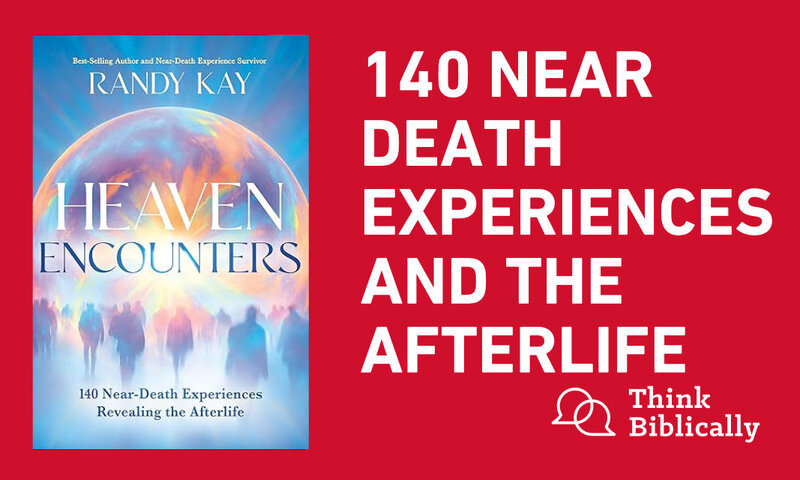
Randy Kay was a biotech CEO and a self-described skeptic who didn't believe in near-death experiences until he flatlined for 30 minutes in 2005 and, in his telling, found himself face to face with Jesus. Now he's collected 140 NDE accounts he says he's vetted more rigorously than any single volume before. In this episode, Sean asks the obvious question: Does the evidence actually stack up? What can we learn about heaven from some carefully vetted NDEs?
Randy Kay is an author, speaker, and former corporate CEO best known for his profound near-death experience (NDE) and subsequent books about heaven. After suffering severe medical crises, including blood clots and an MRSA infection that left him clinically dead for over 30 minutes, he experienced an encounter with Jesus Christ. His latest book is Heaven Encounters: 140 Near-Death Experiences Revealing the Afterlife.
Episode Transcript
Sean McDowell: [upbeat music] Is heaven a fairy tale, or have people actually had heavenly encounters and returned to talk about them? Is there good evidence that heaven is real? Our guest today, author Randy Kay, not only had a life-transforming near-death experience, but he claims to his knowledge that his new book has more authentic near-death experience accounts carefully vetted than any other single volume. The subtitle of his book is 140 Near-Death Experiences Revealing the Afterlife. We're gonna see if his evidence stacks up. Randy, it's such a treat to meet you for the first time, and also to have you in studio here at Biola Talbot School of Theology.
Randy Kay: Great to be with you, Sean. Thanks for having me.
Sean McDowell: Absolutely. So I have totally leaned into afterlife apologetics. I'm intrigued by it. I'm compelled by it. When I saw your new book, was like, "You live in San Diego. We need to have a conversation. You kind of drive up here with your wife." So let's jump right in. This new book, it's called Heaven Encounters, and you start with the words, "I never believed in near-death experiences until I had one myself."
Randy Kay: Mm-hmm.
Sean McDowell: What kind of near-death experience did you have, and how did it affect or transform your life?
Randy Kay: Yeah. I had, what's called a septic shock from MRSA, but what really was the more,
Randy Kay: the more dangerous and also the fatal, incident was having pulmonary emboli. So I had seven blood clots occluding the main blood flow of the pulmonary artery to the lungs. And because of the MRSA, the septic shock, I had clotting also throughout my body. So that was, that was what caused me to flatline in the hospital- ... For a little over 30 minutes.
Sean McDowell: 30 minutes. When was this?
Randy Kay: This was in 2005, April 5th of 2005.
Sean McDowell: Okay.
Randy Kay: And, I did not believe in these experiences. I had a crisis of faith, actually, Sean, that I went into this 'cause our, we had a drug that was pulled off the market by the FDA. We had a potential cure for Alzheimer's- ... That we had developed. Stock plummeted. Much of our investment was in that. I had a biotech company,
Sean McDowell: Wow
Randy Kay: ... You know, had need to raise about $80 million. Our daughter then-
Sean McDowell: My goodness
Randy Kay: ... She developed, strokes- ... Many strokes. So all of this kind of coming together, we were in a Christian coffee [laughs] shop, my wife and I, that is, and we said, "Well, at least we have our health." And two weeks later, I was clinically dead.
Sean McDowell: Oh, my goodness. Okay, so tell us what happened in the experience. Tell us about it. [laughs]
Randy Kay: Yes. So initially, as is common with these experiences, I could see my body. It was kind of a tugging at my shirt. I don't know if that was my spirit leaving my body, but that was, the last feeling I had in the physical body. And then, I was being pulled by a light. I could see my still body on the bed, and I was pulled into what initially was a kind of a darkened, space. I saw these figures in the distance. I believe what I was seeing was, after and looking at this, was spiritual warfare. And as a believer, in Christ, I knew to cry out the name of Jesus Christ, and I did. And immediately, I was cheek to cheek with a figure. I could feel his bristles against my right cheek. And I knew it was Jesus Christ. And I just dropped immediately. I was like a wet rag. And I felt unworthy, but I felt, very accepted by him, that he had found me worthy of himself. I had left at a crisis of faith, but I did not feel that I had faced any degree of rejection. Then what happened is he reached down, pulled me up, and he faced me toward him. And I was looking into his eyes, and the light emanating from him had, I say, it tunneled into every dark place within me, illuminating the light of Jesus Christ. Then he leaned over to my right ear, and he whispered, two words. He whispered, "Trust me." And then we went on a life review of my life and his redemption of all of the occasions in my life that he revealed to me.
Sean McDowell: So a skeptic at this point might say, "Okay, Randy, how do you know this wasn't a dream?"
Randy Kay: Well, I was clinically dead. Now, bear in mind that I had been in the space of neurology and cardiovascular surgery, so my entire career. So I led clinical teams in heart surgery. I had been in the neurology space as we were developing, and I was out in Washington, D.C. To introduce, a new potential cure for Alzheimer's, and neurology was my forte and cardiovascular. And the brain, as is verified by clinical studies, is dead within a matter of less than a minute, typically. The outlier study is six minutes. I was clinically, dead, that is, the heart stopped, which is the definition of clinical death, for a little over 30 minutes. So my brain was no longer active, and so I could not hallucinate as I originally, as a skeptic, thought that was what caused these experiences. And what I experienced was more real than would be this world, which sounds, like a contradiction, but it's a very common, experience that's, accounted for by those who have gone through these. And so, I could... I'll give you an example on, just finish with this.
Sean McDowell: Sure.
Randy Kay: So I can go through, and this is a little over 20 years later, I can go through every detail of my experience. I can either, if I'm dwelling on it, I can start counting blades of grass, and I can't remember what I had for breakfast the other day.
Sean McDowell: [laughs] Okay.
Randy Kay: So that's a conundrum in and of itself. But again, from a clinical perspective, having returned, there's no accountability for that.
Sean McDowell: That's one of the common threads I hear from people I've talked with near-death experiences, those I've read in the present, in the past, young, old, different faiths, is they just kind of look at me and go, "It wasn't a dream. It was far more real and impactful and life-changing than anything. It's not even-"
Randy Kay: Mm-hmm.
Sean McDowell: "... Close." Now, we weren't planning on talking about this 'cause we're gonna get into your book, but you mentioned a little bit before when we were kind of chatting that speaking up on this, like you waited a while to share, but then speaking up kind of cost you something. Tell us about that.
Randy Kay: 14 years I did not share. My wife knew the experience, my pastor knew the experience, but no one else. I was interviewed for a business book at, on GOD TV that I'd written, and it was then that the pastor who had, was interviewing me was a pastor of a handful of people that knew about my experience, and he asked me if he could ask me about that. So when I shared it, I actually, Sean, I lamented, when I was flying back from Florida to California, that I felt the Holy Spirit wanting me to share our private time together because-
Sean McDowell: Okay
Randy Kay: ... I was not inclined to share it ever. When I did share it publicly, things changed, because all of the friends and the associations I had within the, within the, clinical realm, the healthcare, realm, knew me as a very scientifically minded person, not a fanciful thinker, one that, you know, would not, you know, lend my thinking towards something of, this sort. So I think they thought, they knew my experience in the hospital. They thought maybe I had a stroke or something like that. In fact, I did have a brain bleed after, but I didn't. And so they treated me differently. I was working on a project for bringing a mitral valve, reformulation device, to market, and the person with whom I was working at that time said, "Well, you know, maybe we should, just put this on hold for a while." And I noticed gradually after sharing publicly that many of those people kind of faded away. I was, you know, routinely working with them, discussing things with them. And so long story short, my career, you know, basically went by the wayside, and, we eventually sold our house. We had a house, near the ocean-
Sean McDowell: Wow
Randy Kay: ... In San Diego, North San Diego.
Sean McDowell: That's beautiful, by the way.
Randy Kay: [laughs] I remember it fondly. [laughs]
Sean McDowell: Yes. I grew up in Julian, which is just head 78 east-
Randy Kay: Yes
Sean McDowell: ... From, you know, an hour-
Randy Kay: Beautiful
Sean McDowell: ... And a half probably from there, and those mountain- or that area on the beach is just stunning. So you were living there-
Randy Kay: Carlsbad
Sean McDowell: ... Given your six... Yeah, ... Is amazing.
Randy Kay: California, right. Yeah, it was... Was wonderful. You know, my son actually went to school at Biola, you know, and daughter-in-law. They met here. So, you know, that's the world that I lived in. And it was a, it was a great sacrifice. But again, I didn't share it for 14 years. I wasn't inclined to do that. It was my private experience. And so there was a very significant, sacrifice for me. And I enjoyed my life. I enjoyed, you know, leading a clinical team in minimally invasive cardiovascular surgery. The research we were doing, was something that I loved to do, and I got into that field because I wanted to help people and save lives, altruistically, you know?
Sean McDowell: So Raymond Moody writes his book in the '70s on near-death experiences, and then you have Michael Sabom and Jeffrey Long and Bruce Greyson and others doing work towards the end of the 20th century into the 21st century. Still, 30 years after his book, there's this kind of backlash. Do you think now, 20-plus years after your experience, if somebody shared their experience in your world, they'd receive the same reception, or is there a little bit more openness now than maybe there was?
Randy Kay: I think there's a degree of openness. What's interesting, Sean, is that I have found it actually more difficult within the Christian community to share-
Sean McDowell: Oh
Randy Kay: ... These experiences-
Sean McDowell: Really?
Randy Kay: ... Than in the secular community.
Sean McDowell: Wow.
Randy Kay: I did not expect that. I thought ... Brothers and sisters in Christ would embrace this because, there are many evidences in the Bible. We know of Paul's experience in 2 Corinthians. We know of Jesus recounting what is commonly thought of as a parable of the, of the, former rich man in the bosom of Abraham and the, and the former beggar,
Sean McDowell: Mm-hmm
Randy Kay: ... In the place-
Sean McDowell: Luke 16, yeah
Randy Kay: ... Of what we would call... Or he was in the bosom of Abraham.
Sean McDowell: Mm-hmm.
Randy Kay: The rich man in Hades. So there were numerous, Stephen, you know, and as he was being stoned. So I did not expect that. I think perhaps, and this is my theory on this, Sean, is that, the New Age community had dominated this space- For so long that I think, Christians by and large had thrown the baby out with the bathwater, as they say. And so it was an uphill battle. Now, when I, when I discuss this with, somebody who is not a believer, obviously we're not talking about scripture, we're not talking about some of those validations within the Bible. But when I'm talking with a Christian, I'll discuss those openly, and then I'll say, "Well, you know, is this assumption on your part based on a confirmation bias, or is this, something that you've delved into with any degree of
Randy Kay: corroborating this with what the Bible says, whether it rejects it outright," which it clearly does not. So it's been, it's been that kind of battle which I did not expect.
Sean McDowell: So I've done videos, probably 10 with Steve Miller, alm- maybe almost a dozen now. He's one of the few careful academic Christians challenging some of the biblical objections to near-death experiences. And we did one where we took the top 12, 'cause it's a biblical number, and responded to them. I think they're compelling. I think we should embrace these. But I do understand, given the universalism, reincarnation, new age beliefs we often hear, that we're tempted to throw the baby out with the bathwater. I think that leads us really well to your book, because you chronicle 140 accounts of near-death experiences which come from personal interviews. Now, what is interesting, there's another case here that just came out two years ago. These are not from Christians. It's from kind of the International Association of Near-Death Studies. It's 128 total cases. So more and more people are chronicling these carefully. We're just, in some ways, really seeing this research begin. But I don't know, what criteria do you use to determine if these stories are trustworthy and if they're reliable? And I noticed in the back of the book, there's an appendix which I appreciated. It's called Distinguishing Authentic from Counterfeit Testimonies. So how do you determine and what do you consider a genuine account?
Randy Kay: Yeah. Well, it's interesting, IANDS, which the organization that you referenced-
Sean McDowell: Mm-hmm
Randy Kay: ... Actually is the opposite of my, inclusion of these experiences. In other words, they tend to, not necessarily discount, but not entertain, Christ-centered experiences, that is, meeting Jesus.
Randy Kay: ... It's... What I oftentimes say, it's the, look at the pattern. Don't look at the individual story. One story is a testimony, but 140 would be a testament. So you asked about the qualifiers.
Sean McDowell: Yeah.
Randy Kay: So I have a team of people now. We do pre-interviews with people. They come to us. We don't necessarily go outside to them. Many, in the past, you know, probably, four years, have been coming to us. "I had an experience," and so on and so forth. The pre-research showed that, you know, a large number of people, do have these type NDE experience.
Sean McDowell: They do.
Randy Kay: Not afterlife, necessarily. So, the validation process is as such. So we're looking first and foremost, and for our people, what is their faith?
Sean McDowell: Yeah
Randy Kay: ... Do they have a faith in Jesus Christ? So we are exclusive. Now, I've interviewed those who are not. I've interviewed, those who are in the New Age space. I've interviewed, and we probably know some of those people,
Sean McDowell: Mm-hmm
Randy Kay: ... You know?
Sean McDowell: Mm-hmm.
Randy Kay: And I've talked to them as well.
Sean McDowell: Mm-hmm.
Randy Kay: But by and large, that's how we... We're exclusive, to Christian NDE experiences. Secondly, we're looking some, for some form of clinical validation. That could be some hospital, record, which is proprietary, but if there's some experience that is validated in an ambulance or a hospital with records that are available. We're looking at family, and their corroboration with these experiences. All of those fit into the domain of did the experience really happen? So we're looking at that foremost. Then we're looking at the person and the reason they're sharing. As I mentioned, I didn't share for 14 years.
Sean McDowell: Yeah.
Randy Kay: Clearly, I was not looking to share. So we wanna know what their motivation is, and if there's anything that we glean out of interviewing them that shows that they're looking for attention, they're not drawing, their experience toward Jesus Christ, they're drawing it to themselves, that's a knockout factor. If they are, if their motivation is one of writing a book or something of that nature, you know, that's a red flag that we're not doesn't discount them necessarily. But also we're looking at the experience itself. Does it... Is it kind of the repetitive as to what other near-death experiencers have said? In other words, are they kind of writing the script based on what they've heard, or are they detailing their experience with a very unique perspective related to themselves? In other words, God typically reveals these experiences tailored to the individual, what He desires to reveal for them specifically. And so if they've kind of, kind of have a cookie cutter, if you will, account of these experiences, that's kind of a red flag as well. And then finally, looking at all of these, experiences, we're looking at a level of discernment- ... As to the credibility of the individual. We love afterlife experiences versus, let's say, near-death is all-encompassing. Moody, coined that term.
Sean McDowell: He did, yeah.
Randy Kay: And, so a near-death can be a clinical death-
Sean McDowell: Mm-hmm
Randy Kay: ... Or it can be a coma or something of that sort. So we didn't take any visions, as a result. Nothing where somebody said, you know, "I was sleeping at night, all of a sudden, you know, I'm in heaven." These were people who had some level of trauma, and we favored, clinical death experiences, which are far fewer, because at that point, the brain is dead, and the person- ... Has no means of hallucination or of fabricating these stories that are quite outlandish in some cases.
Sean McDowell: Yeah, they are. [laughs]
Randy Kay: Yeah
Sean McDowell: They definitely are.
Randy Kay: Yeah.
Sean McDowell: What's the verification point about it? I think that was one of the last bullet points. What do you mean by verifying part of the account?
Randy Kay: So verifying the account is when we get into kind of the ambiguous nature of these. We can't verify the experience itself. We weren't there. But we can verify it as is a scientific study of it based on other corroborated stories. So if we find any, evidences where, let's say, there's a contradiction, that let's say somebody tells us that Jesus said, that they are special and chosen to bring back that message. That's not how God operates. He doesn't... Lift somebody else up, and he doesn't men- where if the person comes back, the validation process is largely dependent upon the motivation, the clinical aspect, you know, verifying that experience. But then we're verifying it based on why they share it. And if they share it because God called them to do it, and he called them to do it because he was test- they were testifying, called to testify that the God of Jesus Christ is real, that, heaven is real, that hell is real- ... And that he's coming back, returning, second coming of Jesus Christ, that is a key indicator to us that they're doing it for the right reason, and we've covered the checklist of all of these other things, that tell us that it's a valid story. And then, quite frankly, by the time it gets to me, I have about probably well over 20 that's gone through all of that process that I've put on the back shelf. Because, and I'd say, it didn't fit, it didn't fit what we call the smell test, you know?
Sean McDowell: Okay. Sure.
Randy Kay: It just wasn't right.
Sean McDowell: [laughs] Sure.
Randy Kay: So.
Sean McDowell: Fair enough.
Randy Kay: Yeah.
Sean McDowell: So this is helpful because diff- people who are studying near-death experiences have different biases and different methodologies and different reasons for doing it. So Gary Habermas, of course, has what he calls evidence near-death experiences. He will only consider those in which somebody claims to have seen something or met somebody that later is corroborated in a way they could not have known in their physical state. Like, that is his criteria. Steve Miller, I can't remember if it was 100 or 150 from the Ender site. He just studied the first 100 and said, "What themes do we see that are showing up here? Do they teach reincarnation? Do they teach universalism?" You are distinctly interviewing Christians, which is fine, because you're laying your criteria out there, faithful to scripture, but then also walking through the smell test, why am I doing this? What's my motivation? And then accounting stories. So that's fair, given that you've laid out your motivation and your approach to why you do this. Okay, so let's flip it on the other side. What would tell you that a story is fabricated? Like, what would be a sign, like, that is not... Somebody's inventing this for whatever reason, or they're just mistaken.
Randy Kay: Yeah, I'll answer that. If I could just touch on the,
Sean McDowell: Please
Randy Kay: ... The other experiences in terms of, let's say, an out-of-body experience where the person is in the OR, and we have those as well in the book.
Sean McDowell: Mm-hmm.
Randy Kay: And they count the number of Mar- Mervyn, Burst from South Africa. He counted eight people in the operating room, and I would know the operating room. I know how many people there are, scrub nurse and so forth, circulating. But he counted that, and that was corroborated by the surgeon. So we have those kinds of experiences as well.
Sean McDowell: Right
Randy Kay: Those are very difficult to refute. You know- ... He couldn't possibly have known that. The...
Randy Kay: That in and of itself is not, from my perspective, is not the key indicator. Because let's say somebody comes back, and they're in the clinical setting. They're talking to, you know, a nurse or somebody, and they say, "Yeah, we had such and such people." "How many people were in the room?" You know? So it's not an exacting validation. The exacting validation is, and if I'm being honest, is not entirely accurate. I mean, it's not entirely exacting, that is. In other words, there's a degree of ambiguity. However, and this is the part where we assimilate or synthesize all of these stories. What are some of those evidences from somebody who has not studied this- ... That corroborates with others that have had these experience? Again, we're looking for a pattern. The pattern's not necessarily the same experience. They're saying, seeing the same things. They aren't oftentimes. You know, a person can visit, can visit Europe, and two people can visit the Europe, and they come back with entirely different stories. Because they're different doesn't- ... Invalidate the existence of Europe. So that in and of itself is not an indicator. However, the experience in terms of its effect upon them is, I think, the primary indicator. These people are... We have atheists who are coming back.
Sean McDowell: That's crazy. Yeah.
Randy Kay: Militant atheists coming back. We have people who have had these experiences who were, like yours truly, who would deny them and were coming back- ... Advocating, for them and losing. Could... We have a airline pilots, successful, two of them, who sacrificed their careers as well. So there's that skin in the game that we look for. There's something, a sacrifice that was made, and they are testifying of the lordship of Jesus Christ, even though some of them went into the experience as either lukewarm Christians or atheist or agnostics. And I was an agnostic, by the way, in my youth, not going into the experience. So their transformation, many of them come back, and they have sacrificed their careers or jobs, what have you, and they've gone into various forms of ministry. Now the ministry could be, you know, something where they're just, you know, witnessing, to people on the streets. But to the person, and all 140 that are in the book, came back so transformed that they were very on fire, I'll call it, for sharing the great news of Jesus Christ. Not necessarily their experience- ... But sharing who he is, that heaven is real, and there is an afterlife. But more importantly, they're on... They are, they are virtually to the person in some form of ministry, either formally or informally.
Sean McDowell: So one more question on that if I could push back a little bit, and then I wanna get to some of the cases you consider most compelling, is I imagine somebody could say, "Okay, there are cases of Christians who come back and are fired up." But you and I were chatting the before about people who were, say, materialists having an experience, come back, and they're fired up about reincarnation. They're fired up about universalism. So if we're going to qualify by somebody's experience, then we have to consider all of the experiences, don't we, if we're gonna ask what near-death experiences actually prove and point towards? How would you respond to that?
Randy Kay: Well, the passion itself is not the indicator, I do believe. You know, Satan can appear as an angel of light.
Sean McDowell: It's true.
Randy Kay: And deception is part and parcel with, some of the experiences apart from Christ. Satan is the great deceiver. And so we've had experiences, for example, where people have gone into a hell experience as non-believers. Initially, the experiences with Brian Melvin was they saw... They were greeted by these beings who said, "Welcome to paradise." Now, he was a militant atheist, as he called himself. And so he, saw this mansion. It looked beautiful. Everything was wonderful, glorious, and so he was enticed to go through. And as soon as he passed through, convinced that by the pleasant experience he had initially, he entered into a hell experience. So the emotion, the light, the feelings of being at peace, all of those things. You know, reincarnation is one that many of these experiencers who are non-Christians, non-Christian experiencers, would say that I saw whatever and that reincarnation happened. Well, the fact that they saw, somebody and testified reincarnation in in the afterlife is somewhat discounted by the fact that how do they know if they see somebody in there, let's say a person who is alive, and they see-
Sean McDowell: Mm-hmm
Randy Kay: ... Them there in their experience, then they translate as evidence of reincarnation. Well, there is no clear evidence for reincarnation. There is, there are innuendos, and there are extrapolations of assumptions as to reincarnation.
Randy Kay: For the Christian experiencer, whether they became, were a Christian going into it or a Christian coming out of it,
Randy Kay: their the life review itself discounts reincarnation because the life review is one of the, effect of one's life throughout and the impact that God had made in those experiences. So it's appointed once for a man, for a person to die-
Sean McDowell: Mm-hmm
Randy Kay: ... Once to meet Jesus, and so obviously there's no evidence of reincarnation in the Bible. So the person who has a life review, and many of those who are, by the way, who would testify reincarnation or say that reincarnation was, is true, also testify of a life review, AKA Moody and others.
Sean McDowell: A lot of them do. That's right.
Randy Kay: And so the... Why would one have a life review that is going through their life in review if they were going to have another experience over and over It discounts the need to have a life review, which is a kind of a review of one's life and why it mattered. So there are a lot of conflicts and contradictions, to those, but I think the primary one is the feeling of being, in the light, of this feeling of being at peace and all of those things does not in and of itself testify of a true heaven experience.
Sean McDowell: I interviewed Ryan Melvin recently. I noticed he endorsed your book, and I don't still even know what to make of [chuckles] that experience. It was so dramatic and so chilling. But when I've talked with some of the leading experts of kind of writers and researchers in near-death experience, I'll ask about hellish near-death experiences, and it doesn't fit the narrative of all is good and universalism and reincarnation. It challenges it, so many will downplay how populous they are. Right? I've seen some studies that suggest 5 to 10, maybe even more than that, of near-death experiences are hellish near-death experiences. But if you go back, you're talking about kind of the core experiences that define a near-death experience, and this goes back to Moody, Van Lommel, Bruce Greyson, Michael Sabom would talk about these kind of core factors that show up, not every time, but kind of common threads such as going to a light, a being that's personal, a super, like, beyond natural senses, what you hear and what you see, and a life review. What doesn't show up is reincarnation.
Randy Kay: Mm-hmm.
Sean McDowell: It's not a core part of the experience. In fact, Steve Miller's research, he goes, "If I'm generous on what I've done, maybe 2%, maybe 2%, which isn't close." So really what we know about near-death experiences doesn't promote this reincarnation narrative within itself. Some of that is us reading into it rather than what the experience is. So I'm I'm with you on that one. Okay. Let's shift to some of the stories. Now, what I was not gonna do to you, Randy, is I've had people say, "Okay, page 137, you tell about this girl named Paula." I'm like, "There's 140. There's no way you remember all of these." So I want you to just tell me, you pick two or three that you just think are the most compelling for whatever criteria you choose of near-death experiences, that if somebody says, "Tell me about your book," you start with, say, these two.
Randy Kay: Yeah. Well, I have transcripts on all of the interviews.
Sean McDowell: Okay.
Randy Kay: So I have those. By the way, anyone that says they're, you know... And our, we have about, in my collection, about 20% to 25% are hell experience. I would call them hell experiences, but for the-
Sean McDowell: Oh, 20 to 25%
Randy Kay: Well, it doesn't mean... Statistically, that doesn't, that's not verifiable, but-
Sean McDowell: Okay
Randy Kay: ... It it... If somebody... My point being, if somebody who is of a new age persuasion, and all of the people you mentioned, with the exception of, Lommel would, Van Lommel, probably are of that persuasion,
Randy Kay: they put an I-S-H after hell, and if one is to then accept a hellish experience but discount hell, which is mentioned, as you know-
Sean McDowell: Mm-hmm
Randy Kay: ... More times in the Bible, then they're kind of, they're kind of not being entirely honest about it. This is a hell experience. And by the way, all of, all of those, to the person who have had those experiences, come back with some form of PTSD.
Sean McDowell: That is a stunning thing to me.
Randy Kay: Yes.
Sean McDowell: Like, it's different than your typical dream, although people have had scary dreams. In the interview, I mean, Melvin was in tears, and I think his was in the, I don't know, 60s or 70s he had this near... And it was like, it was raw for him. Now, if he's the only one, you could write it off, but you're right. There's so many. And there, you were reluctant 14 years. In my experience, if you've had a hellish near-death experience, you're more reluctant 'cause it kind of suggests, "I'm the kind of person [chuckles] that's headed to hell."
Randy Kay: Yeah.
Sean McDowell: That's worse than, like, something supernatural that's positive. So give us, give us maybe one, just, like, one or two cases-
Randy Kay: Yeah
Sean McDowell: ... That you interviewed that are just fascinating to you.
Randy Kay: Mike Olson, had idiopathic pulmonary fibrosis. He was using oxygen for years and waiting to get a lung transplant. So finally, he got the call, went into surgery. The clamp came off of his artery to stop blood flow, and therefore, he bled out on the operating room table. He met his lung donor in heaven. Now, what really differentiates this from just a personal account is the fact that his wife, who I know Patty well, I know both of them well, at the same time, she was talking to her sister, and she said,
Randy Kay: "Mike is in..." She didn't say, "I believe." She said, "Mike is in heaven," and he's meaning his lung donor. So Mike went to heaven- ... Met his lung donor. So clinical definition of death-
Sean McDowell: Okay
Randy Kay: ... For a period of time, and then he said Jesus told him, "These are your new lungs, and this is for you. Use them." So he came back. A skeptic, his brother-in-law, I think it was Jimmy, said, "I've been praying for you, and I had this vision." A skeptic now. Not a believer in near-death experiences and a skeptic by nature, said, "I had this vision of you, and it was a meeting of having this meeting in heaven with Jesus. And did you meet your lung... Did you meet somebody there?" And so he came back Having shared this experience, validated by two individuals who were praying for him, validated by the surgical team, and he had this experience of this person who even to this day is, often is common with lung transplant recipients, he has some affinity, for, that lung donor. But that aside-
Sean McDowell: Yeah, understandably
Randy Kay: ... Dean Braxton is another one.
Sean McDowell: Okay. So tell me, what exactly was verified in that one? When you said two people and maybe a medic verified, did they verify that he shared the story? Did they verify that he was brain-dead? What was verified?
Randy Kay: Well, the wife had a vision of him meeting his lung donor.
Sean McDowell: While he
Randy Kay: Was there, with a description-
Sean McDowell: Okay. So you're saying-
Randy Kay: Which fit-
Sean McDowell: ... The two match
Randy Kay: Yes
Sean McDowell: ... Independently.
Randy Kay: Independently. She was praying while he was in the OR. Now, she would not-
Sean McDowell: Okay
Randy Kay: ... Have known-
Sean McDowell: Got it
Randy Kay: ... That he flat-lined at that point as she was praying in the waiting room. That came later, and that she had an impression and told her sister that he had met his lung donor. Now, the clinical, the surgeon has admitted that there was an error in the operating room, that the clamp came off, and therefore he was, he had flat-lined. So that is clinically verified by Mike.
Randy Kay: And then his friend is the other corroborating evidence. So we have clinical team, we have an impression, as his wife was praying. No reason to believe that she would've known that he would've met his blood donor in heaven. His description of his blood, of his... Excuse me, did I say blood donor? His lung
Sean McDowell: Donor, yeah
Randy Kay: ... In heaven. And then his skeptical, friend, Jim, who also, you know, confirmed something to that effect.
Sean McDowell: That was the skeptical friend. Okay. So I have like a million questions on this case, as we don't have to go there, but like what's the credibility of these two witnesses? How much had they talked about the lung donor before? Like who else did they share the story with? I don't have to ask all those, but your team really pushed and probed for clarity and trustworthiness and to match up on this account in a way that was satisfying to you, obviously.
Randy Kay: Well, I've had experience with transplant teams.
Sean McDowell: Hm.
Randy Kay: They're a special team that is in waiting upon being called that the donor, the organ donor is ready. There's no communication, to the recipient at that point going into surgery. They do not want the recipient to have an affinity at that point for the donor for obvious reasons-
Sean McDowell: Hm
Randy Kay: ... Because then they'll, you know, might say, "Well, you know, you know, I can. It was a young man," for example, and you know, they don't want the emotional tie. They want the patient is in a, in an, all of these critical surgeries, they want the patient to have a very positive frame of mind. So there's not a description of the, of the donor. For the family waiting in the waiting room, there is, there's no communication typic- Well, there is communication, you know, "She's doing fine," or whatever.
Sean McDowell: Okay.
Randy Kay: But her, but the wife's account of having this impression was prior to the surgeon coming out and saying, "We had an incident. We corrected it. He's doing fine." But there was corroborating medical evidence that the clamp came off, which I know.
Sean McDowell: Mm-hmm.
Randy Kay: That happens sometimes in surgery. And so you have all of these corroborating evidence. Now, he, was an Anglican priest-
Sean McDowell: Hm
Randy Kay: ... Going into this. He was not prone to lying. [laughs]
Sean McDowell: [laughs] That's fair.
Randy Kay: He was a very, a very ethical-
Sean McDowell: Okay. Okay
Randy Kay: ... Integrous, individual who I've gotten to know as a friend because we have mutual lung issues because of our, you know, what did us in, if you will.
Sean McDowell: And Anglicans are not particularly charismatic in my experience to have-
Randy Kay: No [laughs]
Sean McDowell: ... Maybe an experience like vision and a dream-
Randy Kay: Yeah
Sean McDowell: ... And something supernatural as a whole in my experience-
Randy Kay: Yeah
Sean McDowell: ... At least in the States.
Randy Kay: He wasn't, and you brought up Brian Melvin, for example, and you know, I prayed with him. I said, "Brian, you have PTSD and you need some vision of heaven," and, you know, and he had a vision of heaven. He's healed of PTSD today,
Sean McDowell: Hm
Randy Kay: ... You know, there's evidentiary, you know, validation of these experiences. But in Mike's case, you know, all of the testimonies that we get from other people, is a highly integrous individual, would not make things up. He sticks to his story. He could have embellished his story and said, you know, "I met my lung donor in heaven, and he took me on a tour of heaven, and, you know, we saw this," and there was none of that. It was very clear-
Sean McDowell: Straightforward
Randy Kay: Testimony.
Sean McDowell: That's super interesting. Now, there is, we don't have to sidetrack on this, but there are dozens of cases of kind of shared deathbed experiences and shared near-death experiences. We have indincro- independent corroboration, same time, same place, same details. That's especially hard to explain away if the witnesses are reliable and you can really document the events. Okay. So you just mentioned a name, Dean Braxton. Did I get that right?
Randy Kay: Yes. Dean Braxton, is, has the most time confirmed by hospital records for having been clinically dead, an hour and 45 minutes. Now, that I've been in neurology, so I know, you know, at six minutes there's typically brain damage That's what you said, yeah. You know, he's fully cogent and doesn't show any sign that he's had a stroke or any residual effect of that. So his was from the case of a kidney stone. An infection sent, set in, and he had septic shock. And that
Randy Kay: led him to go into the hospital. And he explains his experience in depth. He explains, seeing, as is common, as you know, some of his, deceased relatives in heaven. And then he goes through his experience in in great detail, and the minutiae of things. Now, his doctor, and this is... He's been interviewed, he's been validated by several sources beyond ourselves.
Sean McDowell: Okay.
Randy Kay: Confirms that this experience happened. And so he,
Randy Kay: did not want to bring attention upon himself, as many of these experiencers did not. But he was kind of forced into it when he shared his testimony initially to friends, and that led to his being showcased on CBN.
Sean McDowell: Oh, wow.
Randy Kay: And CBN does a very rigorous, you know, validation process in and of themselves. By the way, I have been, A documentary you'll see coming out next year, and I'll be in that as well, [laughs] so.
Sean McDowell: That one with Billy Hallowell?
Randy Kay: Yes, with Billy Hallowell.
Sean McDowell: He's a buddy.
Randy Kay: He's
Sean McDowell: I've had him on here a few times.
Randy Kay: He's a good friend.
Sean McDowell: He's doing great work. Yeah.
Randy Kay: Yeah, he's a good friend as well, so.
Sean McDowell: He did, he actually wrote one of, I think, the forward for your book now that I think about it.
Randy Kay: He wrote the forward.
Sean McDowell: Yeah.
Randy Kay: Yes, he did. He and, Piper. But yeah, Billy is, has this great journalistic approach to things. But anyway, I'm, getting off topic. So, those are just a couple. You know, I've... There are... I can cite obviously, [laughs] you know-
Sean McDowell: Yeah
Randy Kay: ... 140 of them.
Sean McDowell: That's amazing. One of the things that's compelling to me at first is these accounts are documented carefully and researched by doctors, neuroscientists, cardiologists. Some of my favorite people to interview are doctors 'cause they stay on task, they're no nonsense, they want the facts, and these are not people prone to just being persuaded to something that's not true. So this doctor who was interviewed corroborates it. He's one of many, I think gives it even a even stronger credibility. Now, there's a few cases in here, and you mentioned this earlier about an atheist, and there's one, I think if I got it right, his name is Jeffrey Porter, who you describe as, like, cursing his way to heaven.
Randy Kay: [laughs]
Sean McDowell: What happened with his story?
Randy Kay: [laughs] You would not believe the before and after. I mean, here was a, here was a guy who used the F word and as you said, he cursed God. Had never read the Bible, not once, not one word of the Bible. He had seven strokes, relatively young man. Had, been an alcoholic, and drugs. He was in a boating... He was sailing and had another stroke, and he tried reaching for his phone, couldn't get to it to call 911, so he flat-lined. Now, he is cursing God all this time, and [laughs] you would think, you know, he'd kind of throw up a prayer or something, but he did not. He was, to the very end, he was cursing God. So he went the opposite direction to H-E-double L.
Sean McDowell: Mm-hmm.
Randy Kay: He explains it as being in this space, which is very typical, hot, the smell of sulfur,
Randy Kay: these beings, he calls them demons, who were chasing him, and he was trying to get away from them. Now, he didn't call out, the name of Jesus Christ. He was- ... Very committed to the end. He was a firm atheist. However, he heard this voice that said to him, "This is your last chance. You need to give it your all."
Randy Kay: Apparently, God, in His divine providence, knew- ... That this guy, who was a devout atheist, would respond. So he fought, and this is all verified, by the way, as he got to the ambulance into the hospital. And then he fought, and then,
Randy Kay: he explains it as Jesus pulling him up to a place, perhaps not heaven, but this other place, toward this light where the presence was very, comforting. And he was challenged at that point that said God told him, as he, accounts for it, or recounts, that he was going to give him a second chance. And there's a chapter of second chances in the book, and there's also one titled, Grace That Defies Logic. There's no reason why he should've been saved. The doctor then, when he recovered, the doctor said, "You must have had, you had, must have had a real NDE experience." The doctor. And then the doctor said-
Sean McDowell: That doesn't often happen
Randy Kay: ... From what he had told him, he said, "Then you need To receive Jesus Christ
Sean McDowell: The doctor said that, wow.
Randy Kay: The doctor said that to him
Sean McDowell: Oh my goodness
Randy Kay: But he was a devout atheist to the very end. And for whatever reason-
Sean McDowell: But he's passed away now
Randy Kay: ... He's... Excuse me?
Sean McDowell: You mean he's passed away now to the very end?
Randy Kay: No, he's alive now.
Sean McDowell: Okay.
Randy Kay: In fact, when he came back, he's another example. So this former devout atheist,
Randy Kay: the records show, the medical records show that the scarring from his strokes was nearly, nonexistent. In other words, many much... That doesn't happen. Scarring doesn't just go away, but that's confirmed. And because he was addicted, you know, he was addicted, and he was no longer addicted. He was healed of that, and now he is evangelizing everywhere, you name it. On the streets, he's evangelizing. He goes into a store, he's evangelizing. He is on fire for Christ. That does not happen. I mean, the the experience of becoming a believer, you know, being born anew as a new creation, you know, that's causes a transformation. His transformation was caused through the experience itself and in coming to Christ. He's completely diametrically different than he was going into this experience.
Sean McDowell: So your team was able to confirm that he was an atheist before, and other people are like, "Yep, that's who he was," that medically he had this near-death experience, and now you can just see as his life, like your team pieces those together before including it in the book.
Randy Kay: Well, there's some, We try our hardest to do so. Now there is... Now, in some cases we'll ask, "Are you willing to share medical records?" there's testimony. I think much of it is validated,
Randy Kay: sometimes they don't have the medical records. Those are by, protected by HIPAA, they are proprietary, through, friends or relatives. So we'll say, "Do you have, you know, whether it be a spouse or somebody that walked you through that experience? Is there somebody like that?" we look also at the credibility of the person themselves, and the fact that in the benefit that I have in my case, I can look at it from the clinical perspective. So I can look at it in terms of what he's telling me, in terms of what, whether that is clinically possible and, for example, the scarring on the lungs, that there would be, and he, you know, x-rays would show that. The stroke, you know, which would be a scarring which would caused in the brain, and so he had the CAT scan, or the MRI, excuse me, on a brain. So not all of those, Sean, are available, but to the best of our ability, we test those. But by the way, when you referenced the other book, with 128 experiences-
Sean McDowell: Yeah
Randy Kay: ... They don't, they they do not have those, their validation- ... I don't, I don't know exactly what their validation is, but I've, Their validation is no less significant than our, or no greater significance than ours is. I think ours is, [sighs] I don't wanna call it state-of-the-art, but ours is very strenuous 'cause... Bear in mind, I was a skeptic about NDE experiences going into it, I, until I had my own. I'm still a skeptic going into this when someone share the, shares their, experience. So that's the viewpoint I look. As you, as you mentioned, you know, you like talking to doctors and-
Sean McDowell: I do, yeah
Randy Kay: ... Clinical people 'cause they're naturally inclined that way. I'm naturally inclined that way. I've led clinical teams in minimally invasive. I've been trained and certified. So that's my mindset. You know, I'm, I've been there. I've been in that space- ... My entire career.
Sean McDowell: So chapter five is the warning of hell's reality. We talked about this a little bit. Is there anything more you'd wanna add about hellish near-death experiences, what they communicate, how common they are, maybe another instance of one?
Randy Kay: Yeah. Well, Lisa Sharkey was a,
Randy Kay: almost lifetime drug addict, ... Up to her experience.
Randy Kay: She was abused, and this is kind of a, if I might mention, a common theme that I discovered- ... As far as the grace of God. So many of these people went through, some form of abuse, as did the former person we talked about, Jeffrey Porter. I think that does potentially factor into, to his, you know, he's near to the brokenhearted. Lisa Sharkey went through abuse from, early childhood, of all kinds. She became a drug addict, an alcoholic, and she did not, unlike Jeffrey, she wasn't angry at God, but she felt that he was angry at her. And she did, flatline. She was in the, from a heroin overdose. She was in the ambulance, during her experience when she went to this hellish place. Now, here's another common theme that she, testifies of. She did not feel like God had abandoned her- ... Or that God was at fault for her being there. She felt that she deserved to be there. Now, that in and of itself, for these hell experiencers, is, You know, a-antithetic to how you would think. You know, they were praying, "Why, God, did you know, allow me to go here?"
Sean McDowell: Meaning the vast majority of Americans who believe in hell don't think they're going there. Most of us think we're going to heaven is the point, that that's what we would expect.
Randy Kay: Absolutely. And there's something about the soul going to, hell, where the person has been outright denied, you know, the God of Jesus Christ, and they realize they have an innate understanding that that's the reason they're there, as Lisa did. And so she heard then, again, back to the grace that defies logic, she heard a voice she knew implicitly because she knew of Jesus, that it was Jesus who, told her to cry out His name. She cried out His name, and many of those say likewise when they've been there, this crying out, as in Brian and, not Jeffrey, he was too devoutly, atheist, but, crying out the name of Jesus, and then she was rescued. Today she
Randy Kay: not only testifies of Jesus as her Lord and Savior, she ministers to those who have gone through abuse and drug and alcohol, addiction. So her life, as all of them, had been transformed. And it wasn't transformed, necessarily because, you know, she prayed the sinner's prayer. It was transformed because she had the relationship, and the relationships itself was very sincere to her, and she was totally transformed. No addiction, nothing of a residual effect from her prior life.
Sean McDowell: Wow.
Randy Kay: Yeah.
Sean McDowell: That's amazing. We've probably done four or five of the stories in here. All of them have drama in their own way, but you had a life review. Tell us a little bit more about this, because if, like we've talked about in some of the main studies of near-death experiences, these are peer-reviewed, documented. Many, if not most of these, are not Christians. This life review shows up consistently as one of the common features that people report. And again, this is across time, this is across culture, this is across religious faith. And to me, it suggests a few things, that if there's a life review, I maintain my consciousness in the afterlife. I don't just kind of fade into the unconsciousness, so there's continued soul and thinking and self-existent afterwards, that morality matters in this life, that relativism is not true. Like, these things challenge certain ideas that are prevalent in our culture. But tell us your experience, and what are some of the common threads in life reviews of people that your team has interviewed?
Randy Kay: Yeah. I think all of what you said is true, and that's, I think, the life reviews perhaps that are accepted on the other side, if you will, are probably the most in need of explaining. That, you know, Jesus Christ is not the way, the truth, and life. No one comes to the Father, but through Him, because there is this walk through a life. There's no reincarnation. It's a walk through the life that has been existent. The life review, generally speaking, and for myself included, is one where there's an impression about what we did to the other person. In other words, we have, the Lord shows what that person, how that person was affected by us. So there's a degree of empathy for that, but also a degree of understanding as to what God was doing in that moment. Now, the other side, I'll call the other side-
Sean McDowell: Sure
Randy Kay: ... The one that doesn't, [laughs] you know, testify of Jesus-
Sean McDowell: That's fine
Randy Kay: ... As Lord, would just say, "We went through an experience. I went through an experience," and have no reason for that experience. In other words, it just, it just happened. Well, why did it happen? Well, in the Christian experiencer, it we know that it happened so that, the Lord could, give us a reason for those vignettes that, I call them the theater of life, 'cause we're actually there. If I can give an example of my own?
Sean McDowell: Please, yeah.
Randy Kay: So I was going through, from early childhood, so I was, I was an agnostic in my youth. At Northwestern University, I tried to disprove all religions. I was heavy-duty agnostic with a team of atheists and agnostics. So I was, I was a teenager at the time, and I was in the hospital as an orderly. I was giving a tray of food to a little boy about six, seven years old, and he was dying of cancer. And he told me as such, and he said, "I'm going to heaven." And I said to him, and this is the life review. By the way, this is, I'm explaining the life review and what happened
Sean McDowell: Okay, both
Randy Kay: ... In my life, both, as Jesus was showing me. And he said, "Someday I'm going to be," or, "I'm gonna be in heaven." Not someday. He said, "I'm gonna be in heaven." And I said, "Well, that's great. If there is a heaven, then I'm sure you'll be there." So I'm watching this with Jesus, and, he said, okay, but he picked up on that I wasn't really a believer, and he said, "I'm gonna pray for you. I'm I will pray for you." So three days later, he died. I'm seeing this in real time. I'm seeing the effect of his prayer while the Holy Spirit is explaining to me that the prayer of that little boy, as he did pray, was ushered forth And to stop myself from getting emotional, ushered forth to heaven, received by God.
Randy Kay: And he explained to me that the prayer of that little boy, who I did not know, was affected and answered by God, so that God weaved together through my life several incidences as an agnostic, including a car accident, other things that should have killed me, keeping me alive as... And I'll end with this. As I mentioned, I tried to dis- we, a team, we tried to disprove all religions. We couldn't disprove the Bible, as much as we tried at a huge computer at Northwestern.
Randy Kay: God showed me the instant I looked out a window of my apartment, and I said to an unknown God, "If you're real, I need to know you as more than pages in a book. I need to know you- ... As real as I know anyone else." He showed that to me as the trigger in these life reviews. Again, everything has meaning. Everything has a redemptive quality aspect for the believer, and that was an answered prayer. He said, "Okay." And I didn't... He didn't say this verbatim, [laughs] but he basically-
Sean McDowell: Yeah
Randy Kay: ... Was telling me that that triggered what would be then his, receipt of my petition to show himself to me and that I became a believer.
Sean McDowell: How old was that boy, by the way, bet you can remember?
Randy Kay: About six or seven years old.
Sean McDowell: He was six or seven years old.
Randy Kay: Yeah, he was a little boy. I remember him vividly.
Sean McDowell: Faith of a child like. [laughs]
Randy Kay: And I didn't remember him vividly. I remembered the experience, but now I remember him vividly from the life review experience.
Sean McDowell: Mm-hmm.
Randy Kay: I mean, exactly. I could describe him exactly. I
Sean McDowell: Thought when you were describing that, you were gonna say in the life review, you looked back and were, like, ashamed at the way you treated and rejected this boy. Was that a piece of the life review, where there were, like, positive things, how God worked, and just looking back at, oh my goodness, my whatever, kind of just sin or arrogance or whatever? Was that a piece of the life review, too, awareness of sin?
Randy Kay: Yes, but here's the interesting thing, Sean, and this, it is this. And this is, blows my mind. So there were those experiences where I had disappointed, failed God, and, you know, this little boy was sharing, and I wasn't accepting of his faith. So when I returned, I can share, I can remember distinctly precisely all of those life reviews except for the times that I had failed him, although I knew implicitly-
Sean McDowell: Interesting
Randy Kay: ... That they, that he had showed me those. And so I prayed, and this is after I'd returned. I prayed and said, "Why is that, Lord? Why is it that I can remember all of these other life reviews except the ones where you had shown me that I had failed?" And he said this. He said, "Because I remove them as far as the east is from the west."
Sean McDowell: Oof.
Randy Kay: And I learned that all of those, and this is what spoke to me profoundly, that he showed me those experiences when I had failed, not to condemn me, but to reflect the grace of Jesus Christ in all of those experiences.
Sean McDowell: That's amazing. One of the things that jumped out of my book, and I'm really, I'm it's so fascinating you shared that, is that you view the near-death experience like this is God's grace. He didn't have to give people another chance. And some people are like, "Well, he doesn't give everybody a near-death experience." Well, he's given some who testify about it, and you have 140 that are here that people can read whether they've had one or not. So what would you say at this point if somebody goes, "All right, Randy, I'm just not convinced. This sounds all too much like fantasy and dream and hallucination." Like, no way. What would you
Randy Kay: Yeah
Sean McDowell: ... Or, like, maybe what would you say to yourself before you had the near-death experience?
Randy Kay: Yeah.
Sean McDowell: Or is there anything you could have said-
Randy Kay: [laughs]
Sean McDowell: ... To get yourself to view them differently?
Randy Kay: I think they would be valid if it was one testimony or 10 testimonies even, but 140 I think is a testament, and I'll put it in context-
Sean McDowell: Mm-hmm
Randy Kay: ... 'cause of my clinical background. I was in the healthcare industry all of my career.
Randy Kay: When we would... The FDA requires probably the most stringent,
Randy Kay: clinical proof, in other words, patients, outcome studies, verifications. And typically, in a Stage III trial, you would have-
Sean McDowell: Mm-hmm
Randy Kay: ... About the same number, about 100 or so patients in that clinical trial for the final prior approval. So the most stringent organization in the world, the FDA-
Sean McDowell: Mm-hmm
Randy Kay: ... You know, takes years, sometimes up to 10 years of development to get to, a market finally, requires a similar level of validation in these, in experiences. In other words, 140 being a testament is one that's hard to discount. All of the validation processes aside, when you take all of these people who have made sacrifices- ... Of their careers, who have made sacrifices of friends, who are doing it for the sake of just because God told them to do ... Not wanting attention.
Randy Kay: Aside from all of the clinical validations, all of the family, validations, all of the corroborations in terms of stories and things of that sort- Just the mere fact that these people, by and large, almost to the person, put themselves out there so that they could, knowing they would be accused of making it up, of
Randy Kay: looking for attention or writing a book or something of that sort. Sean, I can't imagine anyone wanting this kind of attention. I
Randy Kay: have oftentimes gotten on my knees or just spoken to the Lord. I've said, "Lord,
Randy Kay: if you could remove me from this maybe, and let somebody else do this." Because the hardest thing for me is to live a life of credibility and achievement and
Randy Kay: then to have somebody say, "Well, you're just making it up," or, "You're just, you know, telling stories of people who make it up," people I've come to know. It's the hardest thing that I've ever gone through, and I've gone through some hard things.
Randy Kay: Who would want that? Who would want that? I think you'd almost have to be a masochist to want that kind of attention because it it almost overnight can destroy your credibility with some. Years trying to, of developing a reputation and a credibility that is beyond reproach, and all of a sudden, overnight, people are questioning.
Sean McDowell: And these are the real names of people in here. They're not hidden. Dean Braxton. What was it? Did you say Steve Porter, did I remember?
Randy Kay: Steve... Jeffrey Porter.
Sean McDowell: Jeffrey Porter.
Randy Kay: Yes. They're all, there's one person who doesn't have a last name. Her name is Daley.
Sean McDowell: Okay.
Randy Kay: And she specifically asked her last name not be used because she has been at the effect of, a stalking and abuse.
Sean McDowell: Oh, that's understandable.
Randy Kay: So,
Sean McDowell: We will give her a pass [laughs]
Randy Kay: But the rest of them, their names, yes, and in some cases, their locations. I mean, they're full transparency.
Sean McDowell: They put themselves out there.
Randy Kay: We've gotten approval from every single one, that we've sent out. Some have since gone on to heaven, are there-
Sean McDowell: Mm-hmm
Randy Kay: ... Today, so we've recorded their, stories, for posterity. And yes, they are, they are in their real names, real experiences, and real lives.
Sean McDowell: Are these... So just a couple more questions. Are these... So this from, you know, IANDS, very carefully documented 128 cases. These 140, could these overlap? Are they independent? Are you the first one reporting these 140 stories, or have they reported them elsewhere? I'm asking because Gary Habermas, and again, we have to be careful the metric we're using, we've talked about, to assess these as being valid stories. But Gary Habermas would say there's about 500 evidenced near-death experiences. So would these potentially overlap? Are they distinct and unique stories you're telling us? How would they fit in with other near-death experiments?
Randy Kay: Well, some of them may overlap, but, rarely, I think. I was talking to, Dr. Jeffrey Long-
Sean McDowell: Yeah
Randy Kay: ... One day. And-
Sean McDowell: A chance to interview him. He's amazing.
Randy Kay: Yeah, he is amazing. And I said, "Jeffrey, it's, do you know that there's very little overlap between a Christian ND experiencer in terms of, in terms of, let's say, IANDS entertaining myself?" Because I'll talk about Jesus Christ as being the way, the truth, and the life. No one comes to the Father. I'll talk about exclusivity. I cannot talk about anything else, and that's... Jeffrey, I can't be a speaker for IANDS. And plus, probably somebody's talking... I know somebody who's talking about reincarnation would not be in this book. And he was surprised that I told him there's a mutual exclusivity. I think he understood the Christian part because we don't, you know. Some who testify, and you've interviewed, some, who've, you know, reincarnation, former-
Sean McDowell: Yeah
Randy Kay: ... Neuro- or neurologist and, Harvard trained. All of those people would say, "Well, I'm a Christian. You know, I'm a Christian." Well, a Christian and also a Buddhist and a Hindu and all of the others [laughs] kind of pod people-
Sean McDowell: It's a different understanding what that means.
Randy Kay: Yeah. ... And so
Randy Kay: all of the people that I've included here, 140, they will start evangelizing. You will not get them in a room [laughs] and they will not talk about Jesus. He's the one. He's the only one. They'll talk that way. That, that's off-putting to some who want kind of an all-of-the-above type testimony. So I've never spoken at that organization. Now, I've been treated very kindly, and Jeffrey Porter, I would consider him as a friend and very friendly, and I res- deeply respect him. Dr. Grayson, all of those people I deeply respect. However, there's a fine line there, and-
Sean McDowell: It's understandable
Randy Kay: ... And there's very few that would cross over on one side or the other. There's ... Almost a mutual exclusivity. Whether it's said explicitly or not, it's there.
Sean McDowell: I sense that too. We won't go into the details of that, but I appreciate you sharing that. I found your book fascinating. Probably, I'd have to do the math, maybe six, seven years ago, if I saw this, I would've thought, honestly, I would've thought, "This guy's crazy. The, there's no way you can corroborate these stories." I really would've been tempted to write most of them off until I really read... I started with Steve Miller's book, where he lays out the evidence carefully for near-death experiences and was genuinely ... Pleasantly surprised. Even though I'm an apologist and believe in the soul and I believe in heaven, I really was skeptical. Like, I don't wanna get taken by this stuff. Now, those who listen to my podcast and watch know that I'm on board with this, and I think it's a compelling evidence for heaven, for the soul, for the afterlife, for God, and wanna talk to as many people as I can. So I read your book. I thoroughly enjoyed it. I love these stories. They're so interesting to me. And I have two mindsets. Number one, I'm still skeptical. I still wanna know why are they telling the story? What are the details? Can it be corroborated? Like, I still have that skeptical, but I'm far more credible and give people the benefit of the doubt rather than writing it off. So I definitely would encourage people to pick up your book, Heaven Encounters: 140 Near-Death Experiences Revealing the Afterlife. How else can people follow you and what you're doing?
Randy Kay: Well, we're at randyk.org. Heaven Encounters is a program that we broadcast on Middle Eastern television because they will not accept, any proselytization, but they will accept an NDE story-
Sean McDowell: Oh
Randy Kay: ... Even though we're talking about Jesus. [laughs]
Sean McDowell: Wow.
Randy Kay: So, I have a Muslim in there that, now knows Jesus, as his Lord and Savior. So yeah, so, on the website are all of our, different, outlets that we have, and, so and our reaches. So we can go into places the church cannot, because, and vice versa. It's difficult for us sometimes to speak at a church, so we host a Heaven Encounters conference. We were the first to do a Christian, afterlife conference. And we've hosted that a number of times now, and we'll do probably, one again next year, and we have one, kind of ad hoc one, in, Arkansas, this year.
Sean McDowell: Well, we need to talk and connect because as far as I'm aware, we just had at Talbot this summer the, first afterlife apologetics class. We had Steve Miller here. We co-taught it. And so I'm really leaning into this. I think it's compelling on so many reasons. I get excited about it. I find it fascinating. So we'll have to talk and kind of see ways we can maybe partner together and work. I do think, one last thing I'll say, it's interesting that this is accepted in the Muslim world, 'cause the Muslim world, there's far more cases of dreams, as you know, of people. And people criticize NDEs and will say, like, "Why don't they just share the gospel clearly?" Now, in your cases, some others, that happens, but it doesn't seem to be the norm. Well, that also doesn't happen with dreams to Muslims. They have dream of somebody in white. They have dream of grace. They have dream of something supernatural, and it's often years, sometimes decades later, that God sends someone to interpret it. So I don't think we should expect near-death experiences to always get straight to the gospel, but to provoke people about life after death, provoke them about the way they live their life, challenge materialism, and I think you're right that it's a part of God's grace. Randy, thoroughly enjoyed this. This is so much fun.
Randy Kay: Likewise.
Sean McDowell: Thanks for driving up, being here at Biola. Again, your book, Heaven Encounters, is fascinating. Folks, if you're listening, make sure you hit subscribe, and let me know, do you want me to keep leaning into afterlife apologetics? Tell me, are you on board with this? Is this interesting? Who else should I interview? Are there particular stories? Are there authors? Are there skeptics that I should talk with? Let me know your thoughts. I'm probably gonna do some anyways, 'cause it fascinates me, but I would love to know what my viewers and listeners think. And if you have a near-death experience story, please think about sharing it here. This has been an episode of the podcast Think Biblically: Conversations on Faith and Culture. We have programs in person and online in Old Testament, in ethics, in philosophy, apologetics, New Testament, marriage and family, spiritual formation, so many more. We'd love to have you join us. Talbot is really growing right now, which is quite remarkable. Please keep your comments and questions coming. You can send them to us at thinkbiblically@biola.edu. If you enjoyed today's conversation, please give us a rating on your podcast app and consider sharing it with a friend. Remember to join us Friday for our weekly cultural update, and in the meantime, remember to think biblically about everything. [upbeat music]