Biola University
What has philosopher J.P. Moreland learned from two dozen surgeries? What does he consider the best evidence for the existence of God? How confident is he that heaven is real? And what is his advice for the next generation of leaders? In this frank conversation, Sean sits down with Talbot/Biola professor J.P. Moreland to talk about his life and faith.
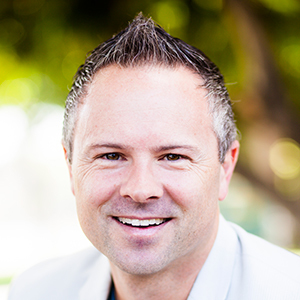
J. P. Moreland is Distinguished Professor of Philosophy at Talbot School of Theology at Biola University. He is a philosopher, author, and speaker who has authored, edited, or contributed to 95 books and published more than 85 scholarly articles on philosophy, theology, consciousness, and the existence of God, including Finding Quiet. He has lectured and debated on more than 200 college campuses worldwide and was named one of The Best Schools' 50 Most Influential Living Philosophers in 2016.
Episode Transcript
San McDowell: [upbeat music] J.P. Moreland, you are considered one of the most influential living philosophers today, especially your work in philosophy of mind. By my standard, and an objective one, you would be one of the most influential apologists of the past three or four decades. You've also been through a lot of physical pain and hurt, and you're at a unique place in your life and ministry. Thanks for being willing to sit down with me and just talk about what you're up to, about your life journey, and kind of your advice and reflections on the ministry and apologetics today.
J.P. Moreland: Well, Sean, I love and respect you so much. We've been buddies in the, in the war. [laughs] And it's a privilege to be with you and just to chat.
San McDowell: Well-
J.P. Moreland: Thanks for inviting me on.
San McDowell: Oh my goodness, it's a treat for me. You know I went through a period of doubt and a period of questioning.
J.P. Moreland: I do.
San McDowell: And I told my dad that I was not sure that I was convinced Christianity was true. And even though my dad was and still
J.P. Moreland: Oh
San McDowell: ... The great Josh McDowell, I needed somebody else to weigh into it, and honestly, move beyond popular apologetics to more academic.
J.P. Moreland: Sure
San McDowell: And I remember knocking on your door. This is, I don't know, '94, '95-
J.P. Moreland: I remember this
San McDowell: ... '96, bugging you a few times. You're like, "I gotta get some work done. [laughs] Get out of here." I'm kidding. You were patient with me, and really formative in my life. So it's an honor that you'd come on. We're gonna get to what you're doing today, some of the surgeries you've been through. You've been very public and honest with some of those struggles. But let's go all the way back. I suspect there's a lot of people that don't even know your journey to the faith. So tell us your story of how and why you became a Christian.
J.P. Moreland: Well, I was born in Kansas City and moved to a suburb when I was two. And, I grew up through high school attending a kind of a mayonnaise Methodist church. Jesus was basically a white Midwestern Chiefs fan.
San McDowell: [laughs]
J.P. Moreland: And, but I never ... It was a liberal church, but nobody- ... Really knew it. And so I heard about, you know, do right and do good, and Jesus tells us to care about the poor. I never heard the gospel, and to be honest, it was really boring. I went to college to 1970, '76 rather, graduated in '70, to do a major in physical chemistry. And I actually ended up getting a full scholarship to the University of Colorado to do a PhD in nuclear chemistry. But something happened my junior year. And there was some Cru people.
San McDowell: Campus Crusade for Christ, formally.
J.P. Moreland: Campus Crusade for Christ, yes, who came to my fraternity house. And they presented evidence that Jesus Christ was the Son of God who performed miracles and died for our sins, rose from the dead. I had never thought that evidence had any ... I thought you just, you know, you inherited it from your family and believed it, just believed it on, with no basis. Well, I was shocked, Sean. And I'm ... It was my junior year. I met with this, staff member. He gave me some books to read on apologetics. And I was ... I came to the conclusion that it was highly likely this was true. I wasn't certain. I I don't, I don't think you can be epistemologically certain, but you can psychologically. But I went up to my room in November of 1968 and said, "Lord Jesus, I've been pulling for you, but I just wasn't sure you were there. And I want you to forgive me for my sin." And I prayed the-
San McDowell: Wow
J.P. Moreland: ... Sinner's Prayer. And dude, I became a radical. I got up on free speech platforms.
San McDowell: [laughs]
J.P. Moreland: I would've been a Christian three months, and there was a bunch of Black Panthers that came from Kansas- ... City and went in the student union, 200, 250 students having lunch and studying. He gets up on this chair, and he's got this box with him with a microphone, and he starts yelling and cussing and criticizing the country and, when some of it was legitimate. But I said ... I swear I said to myself, "There's a, son of the living God in this room. It's me, and I'm gonna go up there and take the mic from him and preach the gospel." So I went up and said, "Hey, can I have that mic?" Well, he didn't know what he was doing, so he gave it to me. And I started saying, "I know that what some of you are saying is out of truth and frustration, but there's a deeper issue," and I gave my testimony to this guy, and told them the gospel. And I would do stuff like that.
San McDowell: Wow. [laughs]
J.P. Moreland: And so when I graduated, I, instead of the fellowship, I joined Crus- Campus Crusade- ... And went to Colorado, oddly enough, for two years, and then opened a ministry in Vermont, from, '72 to '75. It it is so cold up there. One day, I got out of bed-
San McDowell: [laughs]
J.P. Moreland: ... And I tripped, and I broke my pajamas. It was unbelievable.
San McDowell: [laughs]
J.P. Moreland: But by '75, I wanted to go to seminary, so I went to Dallas-
San McDowell: Yes
J.P. Moreland: ... Seminary, '75 to '79.
San McDowell: Mm-hmm.
J.P. Moreland: Met my wife, who was on Crusade staff there.
San McDowell: Mm-hmm.
J.P. Moreland: We got married in '77. And
San McDowell: Scott Rae, right? Weren't you there with Scott at that time?
J.P. Moreland: Yeah. In fact, his team and my team played for the intramural championship.
San McDowell: [laughs]
J.P. Moreland: And he guarded me, and we were-
San McDowell: Are you serious?
J.P. Moreland: It was tied with about five seconds left. This is no kidding. And I faked him, and I drove to the bucket, and they had a 6'10" forward, or a center, and he came over and blocked, tried to block my shot, and knocked me down, so I had two free throws, and I sunk those babies.
San McDowell: Amazing.
J.P. Moreland: And we beat them by two points. [laughs]
San McDowell: You know, Scott hasn't told me that story.
J.P. Moreland: Yeah, and I
San McDowell: Now understand why. I'll ask him at some point.
J.P. Moreland: You please do.
San McDowell: Mm-hmm.
J.P. Moreland: Yeah, I think you'll enjoy that. But then, from, '70 to,
J.P. Moreland: I guess it was about '75, we went out, hoping I... No, '70, I got out of Dallas '79, so then we went out and taught at the International School of Theology-
San McDowell: Mm-hmm
J.P. Moreland: ... At Arrowhead Springs.
San McDowell: Yeah.
J.P. Moreland: And I did my MA during that time at UC Riverside, and my PhD under Dallas Willard at SC. And I've been, I've been teaching ever since, couple of secular schools. But then I've been at Biola, working with the Apologetics and the Philosophy program since 1990, so that is 36 years ago. I have two daughters that are in their early 40s, five grandchildren. They live close, and we have a really close family.
San McDowell: So what was the shift to go from studying chemistry-
J.P. Moreland: Yeah
San McDowell: ... To decide you wanna study the philosophy of mind in particular?
J.P. Moreland: Well,
J.P. Moreland: there were a lot of Christians that were doing their work about the existence of God or the reliability of the New Testament, and I can do that. I've done my work in that. But I began to read some books, and they were written by Christians. One was a Stanford professor, Richard Bube, and another British scholar, D.M. Mackay, was a psychiatrist, and they were saying that the idea of the soul is an ancient Greek notion that the Bible never teaches. When it uses the word soul, it's simply talking about an, a way the brain can function soulishly. We can relate to people, and so on. I didn't believe that, and so I began to do a study, and from that point on, that has been my area of specialty. I have an area of competence in philosophy of science and, metaphysics. But, I think I was trying to fill a hole that our soldiers, [chuckles] there was a place that wasn't filled, and I wanted to step up and see what I could do to help.
San McDowell: So is that the kind of advice you would give to young apologists or young thinkers or young Christians today, kinda ask the question, "Where's there a need, and can I fill it?" Is that the case? And what other advice would you give
J.P. Moreland: Right
San McDowell: ... Young aspiring thinkers?
J.P. Moreland: I think the first thing I would ask is, what are the passions of my heart? You know, "Love God and do what you please," Augustine said. And I recommend this only if a person is reasonably dedicated to Jesus, or this isn't a game or a hobby. They're serious about their faith, and they wanna make a difference. They, but they wanna know the Lord better the rest of their lives. Well, I would just ask the Lord to give you create some desires that fit the person you are. Because we all might have a some people are, would be interested in Bible and science, and others in ethical issue. So what you want to do is to ask first, where's my... What do I, what do I drift toward when I go to a bookstore or look at Amazon? And I think that if you follow those passions, you you'll stick it out the long haul. But the second question then is, if my passions are somewhat general, where do we need people to fill the gap? Like, we don't have very many people working in political philosophy and philosophy of law. And when-- We could use some help there. So that would be a good place for apologists that are coming up to go into those, but you have to also have a, have a passion. And those would be some things like that. There is a third thing, and in our philosophy program, we consider ourselves a movement, not a department, and we use movement language. And, our goal is to make the name of Jesus famous and respected and help fulfill the Great Commission by spreading four values, through writing, teaching, speaking, however, podcasts. The first one is to develop a rigorous philosophical Christian mind that, it respects the inerrancy of Scripture. Secondly, to develop a very tender, loving, and warm heart toward Jesus, and to fall in love with Him-
San McDowell: Amen
J.P. Moreland: ... And wanna be, and wanna be like Him. And then the third, is that we're activists. We don't just sit and write articles, but we wanna get out there. Push back on the culture. We wanna strengthen our brothers and sisters. And the fourth one is that we're a community. It's not all about me. We don't tell people our grades after you... And if you see students that are hurting, reach out to them and see if you can help them get up to speed. We pull from other programs around the country. So those were some of the things that I think are values, and I would just say to people, "Whatever you do, this is a, this is about Jesus Christ and His kingdom, and it it is, it is also about you," because we'll get rewards for what we do. And we're told in Timothy that we're to respect the elders who labor among us. Well, what are they supposed to do? It wasn't me, it was Jesus. You know, don't respect me. It's me, it is I and Jesus. The Bible says we co-labor. But you have to stay in love with Him. Don't lose that first love. Keep... ... Find ways to cultivate it.
San McDowell: You and I had breakfast, I think it was 1999, somewhere in Yorba Linda. You showed up with a Talbot sweatshirt on, and if you forgot this, it doesn't bother me for one second. I was doing, to help my dad update his book, The Resurrection Factor. But you also talked to me about the Talbot program, and the next year I started. And I said this multiple times, that ... Actually, my wife is the one who pointed this out. She said, two times in my life she's seen the most growth. And I know my wife going back to third grade [laughs] .
J.P. Moreland: Oh, no.
San McDowell: Going way back.
J.P. Moreland: Wow. [laughs]
San McDowell: That's a separate story for another time. She said, during the Talbot MA philosophy and theology, my confidence, my sense of a movement and purpose blossomed. And then a few years ago, when I went through some significant pain and suffering for-
J.P. Moreland: Oh
San McDowell: ... A season, God just softened my heart-
J.P. Moreland: Oh, yeah
San McDowell: ... And shaped me, and-
J.P. Moreland: Absolutely
San McDowell: ... We're gonna come to the way some of the suffering and pain or hurt you've been through, and how that's shaped you-
J.P. Moreland: Yes
San McDowell: ... Really importantly. But I do wanna ask a question from before. You said, in the area of philosophy, an area would be philosophy of law, and you mentioned one other. I sent out a tweet-
J.P. Moreland: Political philosophy
San McDowell: ... And political philosophy. I sent out a tweet/X a few weeks ago, and I was trying to think of areas. I said, "Apologists and Christian thinkers, here's some areas I'd love to see people lean into."
J.P. Moreland: What were they?
San McDowell: And so, good question. One was AI. Second was a theology of the body, which I,
J.P. Moreland: That's good stuff
San McDowell: ... Huge topic.
J.P. Moreland: Good stuff.
San McDowell: Third was Islam. That's only gonna grow- ... And increase.
J.P. Moreland: I agree.
San McDowell: And fourth, afterlife apologetics.
J.P. Moreland: Yes.
San McDowell: And so I wanna circle back to this also, the near-death experiences, deathbed experiences, visions, dreams, et cetera, that are happening today.
J.P. Moreland: Yes.
San McDowell: But would you add any to that? What, as you kind of look at the landscape now of, I don't know, I mean, just the next two, five, 10, 20 years, what are some areas? Because I asked Gary Habermas in the Resurrection, he's kind of like, "We've done most the work." [laughs] "We need to nuance certain things, but we've done a lot of the work there." What areas would you encourage young Christians to consider as well?
J.P. Moreland: Well, I think when I used to go on campus decades ago and give an evangelistic talk,
J.P. Moreland: people would raise their hand and say, "Well, I don't think what you're saying is true. I don't agree with that." But the point is that they recognized that I was making truth claims.
J.P. Moreland: The, it shifted, I would say in the '80s- ... Where people would say things like, "Well, I'm offended by what you're saying." And my response was always, "Have you tried therapy?"
San McDowell: [laughs]
J.P. Moreland: Because whether you're offended or not, the issue is, if I may say honestly-
San McDowell: Mm-hmm
J.P. Moreland: ... Whether what I'm saying's true. And, but you've gotta convince... So what I would encourage people would be to convince people that truth matters, and say a little word about what truth is. It's a correspondence between our thoughts and so on, and reality.
San McDowell: Mm-hmm.
J.P. Moreland: If we think about reality the way it is, then our thought is true. And, I think I would learn some just basic epistemology.
J.P. Moreland: In Bill Craig's and my book, Philosophical Foundations for Christian Worldview, there's a whole section on epistemology. And there's one thing people need to learn, and that's the difference between particularism and Methodism. That's not a denomination. It's a way of approaching epistemology. And I won't go into detail on it now, but I will say that that has been one of the single most important things to me. The, basic idea is that if you're a particularist, then you can know things without having to know how you know them. You can start, "Look, I know that I had breakfast this morning," but I might not know how. I know, I do now, but I still know it. The Methodist says, "No, you can't know something unless you can say how you know it." And that's true in some areas, but not as a general epistemology. And the problem is that if that's true, then they would have to know how they know their criterion for knowledge is the correct one, and then you have to know how that was, to know how that was, to know how that was, and it leads to an infinite regress. And the skeptic, who says we can't know anything, has got the Methodist, and the particularist says, "Doggone it, before I ever started this field of philosophy, I came in and I know some things." "Two and two's four, blah blah And the burden of proof is on the skeptic to convince me I don't know things. It isn't on me to convince him that he does, because if the skeptic says we can't know anything, he cannot give a reasoned, principled argument for his skepticism. Because once he does that, then I can say, "Well, do you know that that's a good reason for skepticism? I mean, it might not be. Do you know it is?" And he can't answer the question, and so he ends up just asserting skepticism. "Well, I'm just claiming this," without any [laughs] reason at all. It's a pretty embarrassing place to be. But that issue is something I would really encourage people to study.
San McDowell: I've been meaning to write a blog or do a video on what I consider the most important training apologists and thinkers can get.
J.P. Moreland: Wow. I've-
San McDowell: And that would be in philosophy, because the distinction you made is only one of many.
J.P. Moreland: Oh, yeah, exactly.
San McDowell: In your book, Love God with Your Mind, you're you ... And I had you, 1998, for Apologetics, and you talked about the difference between necessary and sufficient conditions. That is such
J.P. Moreland: Huge
San McDowell: ... Distinction. And so when people argue, "Well, we shouldn't be surprised that we're in a fine-tuning universe, fine-tuned universe, because we couldn't find ourself anywhere else," they're confusing necessary and sufficient conditions. The point that you just made-
J.P. Moreland: That's a great point
San McDowell: ... Like, I remember in class, you're like, "There's four or five different ways the word is can mean." And this is in the '90s, not long after-
J.P. Moreland: Yeah
San McDowell: ... Clinton.
J.P. Moreland: Thank you
San McDowell: So everybody was laughing about-
J.P. Moreland: Thank you so much
San McDowell: ... About that point. But I realized the is of identity, the is of accidental predication, the is of constitution.
J.P. Moreland: Yeah.
San McDowell: Knowing these distinctions avoids-
J.P. Moreland: Oh, it's huge
San McDowell: ... Silly errors. Like, I just was reading this morning a leading thinker of a church I won't mention, was like, "Christians say God, you know, the Father is God. Christians say the Son is God. Was Jesus praying to himself?" I'm like, if you just would understand-
J.P. Moreland: Yeah
San McDowell: ... What we mean, you could avoid these mistakes. So this point about Methodism versus Particularism, in the moral argument, for example, this is where Bill Craig has often said, "If somebody doesn't know that torturing a child for fun or adult entertainment is wrong, that person doesn't need an argument. They need a therapist."
J.P. Moreland: That's right.
San McDowell: Why? Because we know it.
J.P. Moreland: We do.
San McDowell: We don't need a method. We know-
J.P. Moreland: It's self-evident
San McDowell: ... Certain things like that.
J.P. Moreland: We just know it. We may not know how we know it, but we know it.
San McDowell: But we know it.
J.P. Moreland: Yeah.
San McDowell: And even, like, that truth is important, why is truth important? An atheist can only give a a pragmatic utilitarian value-
J.P. Moreland: Oh
San McDowell: ... Of truth.
J.P. Moreland: You nailed that. That's right.
San McDowell: But we know truth is important. It's axiomatic.
J.P. Moreland: Oh, it is.
San McDowell: But that only makes sense if there's a truth-getter. I'm preaching to someone who knows this, but I'm trying to point out the ways this philosophical training... So I'd recom- I'm gonna throw some of your books out there for people, but your book, and I'm gonna butcher the title, I think it was with IVP, with, Gary DeWeese, on Philosophy Made Slightly Less Difficult?
J.P. Moreland: Yes.
San McDowell: That close?
J.P. Moreland: Yes.
San McDowell: I would recommend that-
J.P. Moreland: Yeah
San McDowell: ... For people. Hit pause, read that book, and come back to make the distinctions that you're talking about.
J.P. Moreland: Yes.
San McDowell: Now, before we keep going, I'm curious, you're in the late '60s, and someone gave you apologetics books. In the back of my mind, I'm thinking, they didn't give you my dad's books, because Evidence came out in '72.
J.P. Moreland: Yeah.
San McDowell: And More Than a Carpenter, '77. Was it Mere Christianity and Who Moved the Stone? [laughs] Like, what apologetics books?
J.P. Moreland: Yeah. Well, the, one of them was Paul Little's book,
San McDowell: Oh
J.P. Moreland: ... Know Why You Believe, and, that was really, at that stage of my life, it just really met a lot of needs, because he was actually taking critics' questions seriously and responding to them.
San McDowell: Hm.
J.P. Moreland: The very fact he did that showed me that he was confident, that he could say something meaningful about their criticisms. Mere Christianity, Francis Schaeffer- ... Was around then, and I, and I read him. And so those were the ways that I sort of got in the door. There was another guy named Fritz Ridenour. I
San McDowell: Don't know him
J.P. Moreland: ... I don't remember him, but he wrote a little apologetics book.
San McDowell: No way.
J.P. Moreland: And I read it, and I loved it, and, you know, it's, nobody's ever heard of it, was fairly good in those days.
San McDowell: That's amazing. I love that. So let's shift to, I show up in '94 at Biola. You were rocking out apologetics stuff. Had you in class, '98. When I came, my dad said, "There's two people I need to ta-," well, three. He said, "Scott Rae, Walt Russell, and you."
J.P. Moreland: Oh, my.
San McDowell: And took each of you ... In different ways. But you started writing, it seems like, shortly after that. You went through a pretty serious, and it's public, you've shared it, just season of depression. If, and maybe two of them. We could do five or six videos just on this, but maybe share with
J.P. Moreland: Yeah
San McDowell: ... What happened, what you learned-
J.P. Moreland: Yeah
San McDowell: ... Through it.
J.P. Moreland: Yeah. Well, I was born with a genetic predisposition to anxiety. My, it, I can trace
San McDowell: Hm
J.P. Moreland: ... Four generations on my mom's side of the family. That doesn't mean you have to be that way. It just means I was I'm more inclined than the average person to get anxious. And then, my mom was a very anxious person, and part of anxiety is a learned habit, and I watched her, and I internalized it. And so, I I was high-strung, I guess you'd say.
San McDowell: Hm.
J.P. Moreland: And I would get anxious about things, but it was never, debilitating. But after the school year 2003, Sean, I had a horrible-
San McDowell: Hm
J.P. Moreland: ... Set of things happen, to my family and to a close friend.
San McDowell: Hm.
J.P. Moreland: And and it was a, it was a stressful year. At the end of the school year, the day of graduation, when that was over, I went out to my car, and I began to fall apart.
San McDowell: Hm.
J.P. Moreland: And I didn't know what was going on. I was having panic attacks, but didn't know what they were. And I went through, I'd say, five months of this. I I I got into Christian therapy. I began to to read
J.P. Moreland: passages in the Word that spoke to me, warmed and made me feel secure.
J.P. Moreland: I started on medication, and, eventually, I got out of it, and it hit me again in 2013 after graduation. [laughs]
San McDowell: Really?
J.P. Moreland: Yeah, I interesting, 'cause that year was a, was the second most stressful year I'd ever had. And what I was doing was I was stuffing-
San McDowell: Hm
J.P. Moreland: ... My anxiety and stress-
San McDowell: Hm
J.P. Moreland: ... 'cause I had to get through the classes, and... But when the school year was over both times, whoop, I I fell apart. So I did, said, "I don't want this to happen again," and it hasn't, since 2013. So I did research, in secular and Christian literature on psychological issues and spiritual formation books, you know, Dallas Willard's writing- ... Celebration of Discipline, things like that. And I wrote a book called Finding Quiet, where I explain four practices that form, can form habits. When Paul says, "Present your body to God as a living sacrifice," he's really talking about,
J.P. Moreland: ful- doing habitual things in parts of your body so that you out-groove the tendency to be afraid or whatever, and you put grooves in there where you just see it, the glass half full or more. And it really it really helped me. So I, the, what I... A couple things I learned.
San McDowell: Yeah.
J.P. Moreland: Number one, always be formed and not deformed. Now, what I mean by that is don't waste your suffering. ... If you, if you suffer of anxiety or depression and it just makes you you don't do anything, and it makes you a more bitter person, not only have you suffered, but you've been harmed. It's, so it's a two for one. [laughs] If you're suffering, do things to form you. Learn from your suffering because the times I have suffered, I have, I have let that draw me even closer to God. I've sought Him more passionately. I was desperate. And so I, the end result of that suffering was I was my
J.P. Moreland: closeness to God were formed. And so while I wouldn't wanna suffer again, I benefited from it. That's the first thing. The second thing is don't hide it. Don't be embarrassed and not let other people know you're suffering. No no We all have times where we suffer in a lot of different ways, anxiety, depression, other ways, loneliness. And you need to have a group of Christian friends, and you can have, you can have 50 friends, but you wanna narrow it down to four or five. And these are real buddies. And you can open up and say anything, and and they'll listen and give you feedback. Well, I had some friends that I could talk to, and they said, "Yes, you're not crazy. You're going through a crisis time." "And other people have gone through it, and you're gonna make it." well, that, just kind of getting that sort of help. But open up and be honest about it, and then, work smarter, not harder. ...
J.P. Moreland: You wanna try to do some reading about whatever you've got. Anxiety and depression, we'll focus on that. Now, I'm not trying to sell my book. It's doing fine. But a book like that-
San McDowell: Tell us the title. I wanna sell your book
J.P. Moreland: ... Yeah. [laughs] The book is Finding Quiet, and if you look at, on Amazon, the 550 or more reviews so far, I mean, it's just, it's helped so many people.
San McDowell: Praise the Lord.
J.P. Moreland: And so be proactive. If you can, get exercise, and if that's just walking around the block, if that's all you got, walk around the block. But don't just sit in front of the television and become a couch potato. I love television like the next person, okay? So I'm not saying don't watch TV. Great show's on. But that, those would be some things that I, ... I could mention.
San McDowell: What is J.P. Moreland's all-time favorite TV show?
J.P. Moreland: Oh, goodness gracious.
San McDowell: Just give us one of them. You don't have to give your top-
J.P. Moreland: I would have to say probably the top one was the, I think it was a Netflix series called Homeland.
San McDowell: Oh, yeah, okay.
J.P. Moreland: Yeah, and it was, it was really good.
San McDowell: Amazing. Good stuff.
J.P. Moreland: Yeah
San McDowell: All right, fair enough. I love Breaking Bad, but that is
J.P. Moreland: [laughs]
San McDowell: ... Conversation for another time. So I wanna come to some of the physical suffering you've been through recently.
J.P. Moreland: Yeah.
San McDowell: But I'd love to talk about how the suffering you went through, as I listened to you described that it's brought on by certain genetic tendencies that have been passed on. It's important to exercise, which deals with the body. But then you said certain ways of thinkings and patterns, don't be deformed, be formed or transformed, which is really Romans 12:1 and 2, is thinking. So going through this, how does this experience of going through depression fit in with a substance dualist perspective of what it means to be human? And honestly, are you reading this into the data? Or since you've read 40 or 50 plus books, does it really bubble up to the surface that the best way to deal with depression is to carry care for the body and care for the soul?
J.P. Moreland: Yeah, it absolutely does, because, the for someone who believes the that I'm my soul, I also believe I'm embodied, and I can affect my body through my mental life. So if you change the way you're thinking, it literally can regroove damaged parts of your brain. So the mind can have an effect, especially your thought life. But the body and the brain can have an effect on you. If your brain chemistry gets out of balance, then you start being afraid for no good reason. And so, the couple of things that were very helpful about thought,
J.P. Moreland: Douglas Willard said in Renovation of the heart, that emotions make wonderful servants but terrible masters. And he said, you don't wanna live your life by emotions. You have to train yourself to live your life by your thinking and what you believe. And an example of that is your self-talk.
J.P. Moreland: We have habituated, we've formed a habit of talking to ourselves, and in the book that I wrote, Finding Quiet, I list 10 different thought distorters. Now, for example, emotional reading. You look at somebody's face and you you think, "Oh, they don't like me." you- So you're feeling that they're scrowl- scowling at you, but they probably aren't. But the one, my favorite one was, and this is what hurt me most, is I would, catastrophize or magnify what might happen to me in the future. So I would say, "Gosh, you know, I haven't found a wife yet." I mean, or, "What if I never get married?" Well, okay, so then I, or or other things. If I don't get a raise, you know, what, how am I gonna send my kids to college?
San McDowell: These are big things, and probably small ... Consistently. Yeah
J.P. Moreland: ... Yeah.
San McDowell: Okay
J.P. Moreland: Small things, too. But so what you have to do is you have to learn to pay attention without being obsessive and overly introspective, but you ask the Holy Spirit at the end of Psalm 139, "Search me and know me, examine me and see if there's any hurtful way in ... And lead me in the way of of flourishing." And so I invite the Holy Spirit to come in and help me during the day to be aware of how I'm talking to myself. And, if I start catastrophizing,
J.P. Moreland: I catch it, and then there's a, there's a set of steps you can do that I have in the book that you can learn, and if you practice it a couple of months, two and a half months, it'll go away. It won't go away overnight, but you have to stay with it. So your thought life is tremendous, and there are two kinds of doubts that people have. One's an emotional doubt. And those are because you
J.P. Moreland: you never learned to connect with your dad or your mom, and you're the kind of person that finds it hard to emotionally touch with other people. And so you experience God's absence, which we all do, but you experience God's absence, and that creates emotional doubts that God is there, or that He's listening, or He loves me, or what have you. Now, the way to deal with that is not to find an answer to the question, but to try to get some help in finding out how you can escape the burden of not being attached to important people in your life. An intellectual doubt is a legitimate thing. People really have them.
San McDowell: Yeah.
J.P. Moreland: And they're not smoke screens. Some are. But if you have an intellectual doubt, you ought to be able to write it down, let's say in a paragraph on a piece of paper, because it ought to be specific enough where you can verbalize it and put it down. Then what you do is you don't rest until you get an answer to that thing. And you Google, you go online, you go, you go to, if they're a pastor or that is kind of up on answering questions, or others, you go and you, until you get, 'cause there will, there are answers out there. You just have to go find them. And so that's the way that you deal with that kind of doubt, and that's what my approach was. And I
J.P. Moreland: thought that it was important to, for me to have the courage to read what the atheists were saying. And, if some people don't feel strong enough to do that, then postpone it later. Get yourself strengthened by your, what you believe and why. But generally speaking, as you mature all the way through life, you have to, understand who your critics are. So in my Philosophy of Mind classes, Sean, we use mostly books by complete materialists that are the top of the field.
San McDowell: Oh, I remember them.
J.P. Moreland: Yeah, I know you read them.
San McDowell: I read them.
J.P. Moreland: Yeah, you did read them.
San McDowell: Kreeft, Keen, Jagwan Kim-
J.P. Moreland: Yeah, exactly
San McDowell: ... And Searle, if I remember.
J.P. Moreland: Yeah, that, yeah, that's exactly right. He was at ... Berkeley, yeah.
San McDowell: Yeah.
J.P. Moreland: And then we, I give responses, and the students can tell whether my response is good or [laughs] bad, but that's the way you grow. But you don't do it at the beginning. If you you start just reading things that'll strengthen you to the point where you'd be able to do that and it wouldn't upset you.
San McDowell: You're right. We could agree or disagree, although I do remember a claim like, "You know what, Sean, if you disagree, this will affect your grade."
J.P. Moreland: [laughs]
San McDowell: And I was like, "Well, you know."
J.P. Moreland: [laughs]
San McDowell: Definitely not. Kidding aside, but I will tell you, in the mid-'90s, I remember I came in.
J.P. Moreland: Yeah.
San McDowell: And at that time, the questions, stuff I
J.P. Moreland: Remember this
San McDowell: ... Reading on the three big ones I remember was, is evolution incompatible with Christianity, what's the evidence, contradictions in the Bible, hadn't really thought that through, and the pagan mythology claim that Adonis, and Osiris, and Mithras, Christianity was borrowed from that. And I asked you something. I said, "JP" Actually, I said Dr. Moreland at the time. I'm sure I stated
J.P. Moreland: Yes
San McDowell: ... That way [laughs] coming to think about it.
J.P. Moreland: JP would've been fine.
San McDowell: But I said, "When's the last time you heard a new question or objection?" He looked at me and he said, "There's certain nuances that are new, but it's been a long time." And you said, "If you study this enough, you'll get to the point where you feel the same." And I remember thinking, "Okay, I trust him. I like this guy. He's smart. That must be nice." And it hit me, I don't know, maybe five or 10 years ago, it came back to me, like 20 years later, and I thought-
J.P. Moreland: Really?
San McDowell: ... "He's right about that." I still... I'll hear new things-
J.P. Moreland: Oh, of course
San McDowell: ... And new challenges. There's always some new, but in the back of my mind it's like I've done this long enough to know that there's a good answer-
J.P. Moreland: Yeah
San McDowell: ... If I'm willing-
J.P. Moreland: That's right
San McDowell: ... To find it.
J.P. Moreland: Right.
San McDowell: And I find myself saying that to young people all the time, not to tell them not to research and ask tough questions-
J.P. Moreland: No
San McDowell: ... But just to say, "Give yourself some space and some time." And so I appreciate you saying that. I still remember it.
J.P. Moreland: Well, I, and thanks for bringing that up, Sean, because another reason it's so important, is because you will build up a track record from when you're born again and through the 10, first 10 or 15 years or whatever, where the track record will be that there was a problem that was kinda causing you a doubt, but somebody in the body of Christ had an answer to it. They dealt with... Maybe Augustine dealt with it in, you know, the 400s. Your job is to try to find where that answer is. And what, you know what happens? You succeed. And you find that you have these questions and you think, "Oh, this is, this is gonna knock the whole thing over," but doggone, you find an answer to it. Well, after a while, you realize that these questions have had answers. And so now I don't know a good answer to this particular one, but I know there's gonna, I'm gonna find one- ... Because it's happened to me all the time. And that's a very comforting thing to know, and they all, people need to remember we're a body. We don't all have to know everything. There will be, I I don't believe in certain views of the Old Testament, but I don't have time to study all that. I go to our Old Testament scholars and [laughs] I say, "Tell me about this." Or if you don't have the availability, go online and ask the question. And, that way we're, we spread the the sustaining of our lives because we all have a different role to play. I don't have to be omniscient. And that's, very important to have brothers and sisters. And we hope that those that are listening to this program will come here and do the apologetics program-
San McDowell: Amen
J.P. Moreland: ... Or the philosophy program, whichever one, and strengthen yourself so you can be a resource to your brothers and sisters.
San McDowell: That is exactly the vision. Now, one more line of questioning before we shift to some of the more recent just physical suffering you've gone through and what you've learned from it, is afterlife apologetics. So I'm gonna guess maybe seven, eight years ago, two, three years before COVID, I don't remember if it was in a staff meeting or somewhere, you kind of held up a book or maybe you referenced a book on evidence for near-death experiences by Steve Miller, who's now a friend of mine. He just taught a class here a few weeks ago, and you said, "You ought to check this out. This stuff is compelling." And I thought, "You know, I'm an apologist. I've read a lot of stuff. I probably need to study this." And I really, to be honest with you, had pretty low expectations. I was like, "Well, JP said."
J.P. Moreland: Yeah.
San McDowell: "I'll give it due diligence. I've heard fake stories. You can't confirm this stuff." that was my expectation.
J.P. Moreland: Yeah, right.
San McDowell: And it honestly blew me away.
J.P. Moreland: Oh.
San McDowell: And I've become one of probably the most, maybe the most outspoken apologist. Lee Strobel's written a book on the supernatural just last year-
J.P. Moreland: Yes
San McDowell: ... That he included a chapter-
J.P. Moreland: I've read it
San McDowell: ... Interviewing Steve, and he was in part motivated by reading my interviews with Steve, and he looked at some of the comments and was like, "Oh, my goodness," story after experience.
J.P. Moreland: Oh.
San McDowell: It kind of blew him away. But I'm trying to, thinking of like, what is it, what's it gonna take to get more people to study and do apologetic work biblically, philosophically, scientifically for near-death experiences? 'Cause I could probably count them on my hand who are doing it well. But why did you start studying that? Why do you find it so compelling?
J.P. Moreland: Knowledge can increase. It's like the sky being cloudy. It can be 80% cloudy or sev- 50%. Well, knowledge can be a certain level of strength if you have a true belief based on adequate reasons, but then it can actually grow into greater knowledge. So I knew there was life after death because I was convinced Jesus rose from the dead-
San McDowell: Amen
J.P. Moreland: ... Based on the evidence, and it was strong. The only argument against it is, well, miracle. It involves miracles. Well, so anyway, but when I started getting sick,
J.P. Moreland: about 12 years ago, I was facing death, and there were times when I would go get a scan, I didn't wanna wait to get the results, and I would go down and I'd get a copy of it, and I was sitting there in a parking lot in my car, and I was gonna open this thing, and it could be one or the other. And,
San McDowell: Wow
J.P. Moreland: ... So I my my knowledge level at that point of the life after death needed strengthening, 'cause I was now facing it. It was an existential issue. So I began to read and, I tell you, I've, my wife and I have probably read 40 books or 50 books on this. The number one I would rec-
San McDowell: Just on near-death experiences?
J.P. Moreland: Yeah
San McDowell: Oh, wow.
J.P. Moreland: Yeah.
San McDowell: Okay.
J.P. Moreland: And I would recommend John Burke's Imagine Heaven-
San McDowell: That's great
J.P. Moreland: ... As my first book. And I wrote a book, called, A Simple Guide to Experience Miracles.
San McDowell: Mm-hmm.
J.P. Moreland: And in that book, I showed how you can tell the difference between a miracle and a coincidence. There's a way to tell.
San McDowell: Mm-hmm.
J.P. Moreland: And then I listed vetted stories that I verified and that were publicly verified in five areas: answer to prayer, healing, hearing God's voice, angels and demons, and near-death experiences. Now, in the back of the book, I have a bibliography where I've listed, I'll put my reputation on the line here, credible sources of all five kinds of miracles, and there's a section in there of near-death books that you wanna read, if you're interested in it.
San McDowell: Yeah.
J.P. Moreland: And you can start with Burke, but, and then, that's great, but there are a lot of other ones, and that would be a place to go find some further sources if you're interested. But it, did nothing but, strengthened me, and I have absolutely no fear of dying. It's, I
San McDowell: Like, when you say absolutely no, you talk about knowledge from zero, 50s agnostic, 100% is certain. You are 100% certain.
J.P. Moreland: No. Well, I don't think you can be 100% certain about anything-
San McDowell: Okay
J.P. Moreland: ... Except my own existence. But I have, I have
J.P. Moreland: sufficient evidence from the resurrection and from what I've read, and I can tell that these are credible stories for a number of reasons. What these NDE books have done, besides being persuasive, is that they take what the Bible paints in sort of gray and puts color on it, and it real, that you feel it's real. You already think it is, but it's an experiential kind of a thing as well. So I'm at the point where I I am, I'm actually where Paul was when he said to depart is better-
San McDowell: Wow
J.P. Moreland: ... But to stay here is worth it. And I've told the Lord, I've said, "Lord, you know what? I I'm looking forward to coming on your side- ... And leaving this place." But I said, "I don't think what you put me here to do is I'm finished. My family, they need me financially. I, they need my presence, and I, they all tell me that. I've, I I've helped my grandchildren along the way, and so I don't think I'm finished with that, God. And so I'm asking you, I'd like to teach at least two or three more years, ... And I'll reevaluate. But if you're gonna take me, take me when I can feel somewhat confident that I've finished the job that you put me here to do, and I'll be, I'll be comfortable." Now, there are ways of dying that I'm afraid of.
San McDowell: [laughs]
J.P. Moreland: I mean, you know.
San McDowell: I agree with that. [laughs]
J.P. Moreland: So I mean, I don't wanna go through... So that's kind of about those issues.
San McDowell: Well, I've created a whole playlist of just near-death experiences.
J.P. Moreland: Oh.
San McDowell: I've had a chance to interview Michael Sabom, who's a legend in this.
J.P. Moreland: Oh, he is.
San McDowell: Pim van Lommel.
J.P. Moreland: Yeah.
San McDowell: Eben Alexander, John Burke twice. He has a new book coming out this fall.
J.P. Moreland: Yes, I endorsed it.
San McDowell: Steve Miller, I think 10 or 12 times, and I'm gonna keep doing interviews on this.
J.P. Moreland: He's writing a new one, by the way. Yeah, go ahead.
San McDowell: Yeah, he is, a couple more, and actually, Steve and I are working on a book together in due time-
J.P. Moreland: Oh, just do it
San McDowell: ... Trying to have the best chronicled, established academic case for each one of these.
J.P. Moreland: That would be unbelievable.
San McDowell: I think there's a need, a need for that. But let's shift. You look the best physically that I think I've seen you in a while. [laughs]
J.P. Moreland: Yeah yeah.
San McDowell: Tell us what you've been through physically, and then you-
J.P. Moreland: Okay
San McDowell: ... Kinda said, "Don't waste your suffering." What have you learned through this-
J.P. Moreland: Yeah
San McDowell: ... Physical suffering?
J.P. Moreland: Well, I didn't know this, but I inherited a rare disease from my father- ... Who died at 37, and it's called Lynch Munrobator syndrome, and what it does is it makes me more likely to get a range of cancers than the average population. So I'm kind of it's easy for me to get cancer. And I've had so many different kinds, and in the last 11 and, three fourth years, as August will be the 12th year-
San McDowell: Wow
J.P. Moreland: ... I've had 25 surgeries.
San McDowell: 25 surgeries.
J.P. Moreland: Yeah, in 11 and a half years or so. And it's, that's you know, that's more than twice a year. And I've had every kind of surgery you could imagine. And, I just had one last week, to replace my pacemaker. And, so, I'm used to that. I'm, I was really afraid the first, I'd say, 10, but after a while, you kinda get used to it, and I'm just, I'm not afraid of surgery.
J.P. Moreland: That's because of practice, and I've been exposed to it.
San McDowell: Yeah.
J.P. Moreland: And I mean, I've had, you know, I've had a lot of physical pain through this, because some of the areas where surgery has been performed were painful, and they were trying to get rid of that. And then the surgeries themselves, recovering are painful. [laughs] And so, I, you know, I'm not, I'm not complaining, but I have suffered more than my share of physical suffering. And I
J.P. Moreland: realized again that I could either have a pity party, and I don't disparage anybody who's- ... Feeling a little bit picked on and wonder what, God, you know, are you still up there? I didn't doubt that, but I would say, you know, what's, what are you doing? And
J.P. Moreland: or I could ask God to help me and to be present to me in a special way so that I could honor him and his kingdom without faking it. I'm not, I'm not gonna fake anything. And so, what I began to do is I began to practice, various kinds of prayer, ... Contemplative prayer, where you sit quietly and you tell the Lord, "I receive you. If you have anything you want me to notice or say." Read the scriptures through the Ignatian way, where you put yourself in the passage. A lot of different ways. But I really increased my intensity in reading spiritual formation books. There's a lot of really good ones out there. And, I think what that did is it it caused me to be formed by these things, not deformed, and as a result, I think I've been an encouragement to people. And if it ... That means a lot to me, my, including my family. So,
J.P. Moreland: the good, the good news is that modern medicine, and I, and I also believe in divine healing and and very much. I've, I've seen it happen. So I've also sought divine healing, and I believe that I... In one of the occasions, I was healed without medicine. But medicine has reached a point where it's so, they're so good, and they've been able to handle pain. And so, you know, you get surgery, and there's just, it it doesn't hurt. You just, you're knocked out.
San McDowell: It's amazing.
J.P. Moreland: And the next time you're in the recovery room and... So it's not something to fear.
J.P. Moreland: You have to trust me on that if you're not there, but you can get there. And you know, this is not your citizenship. It's in heaven. It's not here. And we were made to live here, but to do it in light of there and to, and to honor the kingdom that way. So I just tried to do that and- ... But do it wisely. And I'd look for books, and I'd ask people things to read, practices that they'd done that have helped them deal with, you know, fear and, that that's- ... That's what happened. The only, the only thing I have not been able to deal with is because of those 25 surgeries, and I'm 78, my energy's low. Now, I can get really excited about teaching. I love... I told you before the show here, I don't know when I've enjoyed teaching as much. I I'm having a ball in those times.
San McDowell: I love that.
J.P. Moreland: Oh, it's so much fun. But I come home and I need [laughs] ...
San McDowell: You're wiped.
J.P. Moreland: I'm kind of wiped out, you know? And so I don't have the energy I used to, and that just means there's a lot of things I can't do. I can't keep a really bus- too busy a schedule, and I've learned that there are stages of life. One period is where I needed to be busy because that was appropriate to that stage, but now I'm not as as, busy as I used to be. And I'm focusing a little bit more on my inner life and my connection with Jesus, and those are kind of the things that preoccupy me, although I'm writing a little bit.
San McDowell: And kids and grandkids you always talk about as well.
J.P. Moreland: Oh, those little stinkers.
San McDowell: You smirked up the most when I mentioned that.
J.P. Moreland: Yeah.
San McDowell: So I hesitate to even make this comparison. I'm 28 years younger. It's almost been three years where I went through, for about three months, the worst physical pain I've ever been through. There was probably three or four hours a day I'd just kind of lay on my back, taking a breath at a time. It hurt so bad, and I should have taken non-addictive opioids, but I just was so, like, afraid to get addicted to anything. Looking back, I was like, that was kind of dumb. But it was, it was so painful, and I dropped down to about 135 pounds.
J.P. Moreland: Oh, that's unbelievable.
San McDowell: And I learned that if you don't have enough fat on your body, you can't even regulate some of the emotions that you have.
J.P. Moreland: Oh, that's actually true.
San McDowell: And there's a couple times that I just emotionally broke.
J.P. Moreland: Oh.
San McDowell: And I remember saying to one of my, just one of my best friends, a pastor, I said, "I'm, I I'd be lying if I said I could thank the Lord for this. I can't."
J.P. Moreland: Yep.
San McDowell: "But all I can do is pray that at some point I would see it."
J.P. Moreland: Yep.
San McDowell: "God, help me hang on so I can see it at some point."
J.P. Moreland: Right.
San McDowell: And that is the honest to God only prayer that I could make, and I knew I wasn't gonna die. I had two surgeries. It was not a fatal kind of thing. Did you have that kind of experience? Did it make you doubt your faith at all?
J.P. Moreland: You know, it no, it I mean, but what I want to say is that there's nothing wrong with doubting, just- Keep growing. But I don't know, I guess I'd reached the age where those kind of things I had- ... I'd been diligent in getting solid about my beliefs, and I... So I didn't have doubts. What I did doubt was that God, I knew God loved me, but I didn't know what His larger program was. And it could well be that He was allowing this to happen to me to accomplish a greater good. Now, I don't think He was just using me as a means to an end.
San McDowell: Sure.
J.P. Moreland: But and so I didn't... I I said, "Lord, is this the point? Where is this going? I mean, are Is there something you're trying to accomplish, and this is the only way that you can get it done? Can you find another way?" [laughs] You know, so those were questions that I couldn't solve, you know. And, at some point you just have to say, "Well, I've either gotta choose to live the life I've got right now or make it become bitter about it."
San McDowell: That's great, and for the record, it didn't make me doubt or question my faith at all. I think I was just in so much-
J.P. Moreland: Oh
San McDowell: ... Physical pain, was like, "Can I just go, yeah, thank you, Lord-
J.P. Moreland: No
San McDowell: ... For this the way we do." I was like, "I can't thank you for that. I want to be able to see it."
J.P. Moreland: Right.
San McDowell: And I do now looking back in different ways, but that was just the level of faith I could muster. Question for you. I'm curious your take on this. I would say in the last five or so years, one of the issues that has just divided the church is politics. You mentioned earlier that you'd love to see people do work in the philosophy of politics, and yet political philosophy. You've chosen not to speak up on political issues, endorse a candidate, as, whatever, as far as I'm aware. And I see some people like my dad, Lee Strobel, William Lane Craig, others who are like, "This is my lane. I have those opinions, and I'll speak offline, but I'm not speaking into that." And I've seen a lot of other people, namely apologists, speak up and just say, "I've got to speak into this. This is a part of my call and my duty."
J.P. Moreland: Mm-hmm.
San McDowell: I personally have a big tent for people saying, you be faithful to what you think and believe God is calling you to.
J.P. Moreland: Mm-hmm.
San McDowell: But how do you see that division, and how do you kind of navigate that personally?
J.P. Moreland: Well, I think it's, the fundamental thing is about your attitude. And I've had to do is to fight and work through bitterness and anger- ... At people that are pro-choice, for example. 'Cause pro, I believe that it's virtually self-evident that it's wrong to take these little infants' lives in the womb, okay? So, I think it has to do with th... If can you dialogue with someone who has a different view and do it without getting angry? So that's number one. I think it has to do with our attitude. And you can,
J.P. Moreland: actually have some compassion for this other person and realize that they're, they really think they're right about this, then it brings out empathy. And what you want to do is to, is to not beat them over the head and win some argument. I mean, I've been there. [laughs] But you wanna have a conversation that could be enlightening, and to both of them. They, I'm willing to learn, too. So, but I think that... I wrote an article on, why conservatives ought, why, biblical Christians should be political conservatives. And I published it in an online outfit called IfWe, Internet Institute for Faith, Work, and Economics. And then a book came out,
J.P. Moreland: four years ago. It's called Dissident Philosophers. And I was asked to write... They, they've got a whole bunch of people writing chapters, and they're atheists, but we're all con- politically conservative in this. And so what I did is I beefed that article up, and I put it in there, and I made the case that that scripture has a view of the purpose of the state. And once you come to understand the purpose of the state,
J.P. Moreland: you have to be a conservative. Because, for example, if you look at all the New Testament texts that talk about the state, every one of them says that the state's job is to guard negative rights, not provide positive rights. Now, what's the difference? Take healthcare.
San McDowell: Mm-hmm.
J.P. Moreland: If I have a negative right to healthcare, that doesn't mean the government or anybody gives it to me. That means in my attempt to find it for myself, the government has to keep me from being discriminated against, so they're protecting me to do what I can accomplish on my own. If healthcare's a positive right, then the government owes it to me. And and all those passages, there's no indication of, the government owing us things. It's all negative rights. I also looked at Old Testament profits that were speaking to pagan nations.
San McDowell: Yeah
J.P. Moreland: Because, if you go to the Old Testament, the it's a problem because is that the state? Is it the church? And, so you can't just co-opt passages and apply it to America, because then you're starting to create a theocracy, and that's gonna kill evangelism. So but there are other passages in the Old Testament, like murder is wrong, that are obviously not tied to the covenant. So I looked at all those, and doggone Amos, I he when he's addressing Israel, he appeals to scripture.
San McDowell: Mm-hmm.
J.P. Moreland: But when he's addressing these pagan nations, he doesn't appeal to scripture. He appeals to the, to the evident sense that they are harming each other, and they, that, and that they must stop harming one another. And so it's a negative. Yeah, it's a protection of a negative right. Anyway, the bottom line for me is that I
J.P. Moreland: was kicked out of a church- ... For mentioning politics because I spoke at this church, and I was gonna use the president, it was, it was, George Bush, as an illustration, 'cause my topic was spiritual formation. And so I started off by talking about George Bush, and I was gonna make a point about that that related to my message. Well, some guy stood up in the middle of the church and says, "Preach Jesus. Preach Jesus. We don't wanna hear this politics. We wanna hear Jesus." And he stomped up and left. And I was standing there in the, you know, all these people.
San McDowell: Wow.
J.P. Moreland: And I said, "Well, I planned on preaching Jesus, so let me continue with my message." Well I probably shouldn't have done this, but between the first service and the next two, I got a little bit angry.
San McDowell: [laughs]
J.P. Moreland: And I said, "Doggone it, I'm gonna preach on politics."
San McDowell: [laughs]
J.P. Moreland: 'Cause I was able to ... I knew enough about it, 'cause I'd had courses on it in my doctoral work, where I could lay out a message from the scriptures. And I preached a, the biblical basis for being politically conservative. Well, I went back to my book table, and this man and his daughter, who was in college, came up to me. And he was ... You can tell that he was want, he was about to punch me in the face. He was so mad at me. And his daughter, they were both, you know, political leftists. And he said, "I'm sick and tired of you
J.P. Moreland: people who think that we all oughta think like you. And if it weren't for my union and the Democrats' support for my union, I wouldn't have been able to put my daughters through college." And so, you know, I, the elders had a little talk with me, and- ... And, I was never invited back.
San McDowell: Wow.
J.P. Moreland: Yeah.
San McDowell: Interesting.
J.P. Moreland: Yeah, quite an interesting thing.
San McDowell: Yeah, that's fascinating. I'd love people to go check out that article and see your case and how you-
J.P. Moreland: Yeah
San McDowell: ... Navigate that. And that's helpful. So tell us, maybe as we wrap up, you'd mentioned before you've done, like, 12 podcast interviews recently or something like that, and you had a debate with a guy in Syria-
J.P. Moreland: Yeah. Yeah yeah
San McDowell: ... Who's an atheist or something.
J.P. Moreland: Yeah.
San McDowell: Tell us a little bit what you're up to.
J.P. Moreland: Well, I'm I'm not able to get on an airplane right now. So I'm doing podcasts, and I've been getting a lot of invitations. And, there was this one, podcaster that wanted me to debate, just retired professor of philosophy. I think he was in the UK, 'cause his, that's his accent. I'm not sure. But the broadcast came out of Syria, and the, moderator was a Christian. Well, we, it was a cordial-
San McDowell: Good
J.P. Moreland: ... Debate. But he wanted to debate one principle, and it is, a principle in the broader Kalam cosmological argument. And the principle was
J.P. Moreland: it's impossible to cross actual infinity one at a time. And I affirmed that, and he thought ... He didn't believe it. And I ... And so we went after that, and I think I may have ...
J.P. Moreland: I won the debate.
San McDowell: [laughs]
J.P. Moreland: I don't mean to, but that's,
San McDowell: Fair
J.P. Moreland: ... Said, "Thank God, man." He he emailed me, "Thank God you were there, because this guy just didn't have a clue compared to what you were saying." And he was a bright guy. I mean, he's a professional philosopher. So yeah, I don't know how to get, how to ... I'm not sure I kept it. I'm gonna, I'm gonna try to find it and get it.
San McDowell: I would, I would love to share it, have people go watch it.
J.P. Moreland: Yeah.
San McDowell: Just so people understand, the Kalam cosmological argument says whatever begins to exist has a cause.
J.P. Moreland: Yes.
San McDowell: The universe began to exist, therefore, the universe has a cause that would be outside of the universe.
J.P. Moreland: Yes.
San McDowell: That second premise, the universe began to exist, you can defend it scientifically-
J.P. Moreland: Yes
San McDowell: ... Or theologically, biblically-
J.P. Moreland: Yes
San McDowell: ... But also philosophically.
J.P. Moreland: Yes.
San McDowell: And the idea being traversing an infinite, just like we can't count up to infinity, in fact, at any point in time, you would look back, and it'd be finite in the past. You never arrive. Then we couldn't count down in the negative from infinity to the present.
J.P. Moreland: Well, he thought we could. [laughs]
San McDowell: And he apparently thought we could.
J.P. Moreland: And I told him, "Look, it's, you're going the same distance both ways, number one. Number two, that you're confused about the issue. The issue isn't about whether the you be, the series has a start or doesn't have a start. It's about the nature of actual infinity itself. That's what this is about." "The what is an actual infinite?" And and no matter which direction, forward or backwards, you're going-
San McDowell: It's still an infinite
J.P. Moreland: It's still an infinite, but at least if you go forward, you can start. It's like jumping out of an infinitely tall pit with a four.
San McDowell: [laughs]
J.P. Moreland: But on your view, you're jumping out of an infinitely tall pit with no floor. It's bottomless. Not only can you not finish the cross, but you can't begin 'cause you take any finite number in the past, and it's, there's an actual infinite number of moments before that that have to be crossed. Well, pick a moment a trillion years- ... Before that. So the problem is that's inter, it goes over and over again, and you will never be able to even get started, much less finish.
San McDowell: That is one of many arguments the universe had a beginning, which cries out-
J.P. Moreland: Yes
San McDowell: ... For what caused-
J.P. Moreland: Yeah, absolutely
San McDowell: ... The universe to come into existence, which you've talked about in another book I'll throw out there, Scaling the Secular City.
J.P. Moreland: Yes.
San McDowell: Maybe a little dated, but I, it has some timeless factors in there that I would still encourage people to pick up and read. JP, I have so many more questions for you, but this has been wonderful, really helpful, really encouraging. Folks, you said you're teaching maybe two or three more years. Your classes were just... I loved them, hung on every word. My classmates and I would oftentimes go to the Common Grounds Coffee House-
J.P. Moreland: Yeah yeah
San McDowell: ... Afterwards and say, "Okay, what'd you get? What's he saying? How do you understand this?" Sometimes you had two periods. I'd come sneak in the second one-
J.P. Moreland: Yeah yeah
San McDowell: ... To hear it again, to try to understand. So folks, you've got a living legend. Come join us at Talbot.
J.P. Moreland: Oh.
San McDowell: You got two or three more years to have him in class. Don't miss it. Come study here, apologetics and philosophy. Had to get that in there, but most importantly, appreciate you, love you, brother.
J.P. Moreland: I love you, my friend, and I respect you, and I'm so honored- ... To be here. Thank you.
San McDowell: This is a, this is a joy, my privilege. [outro music]