Biola University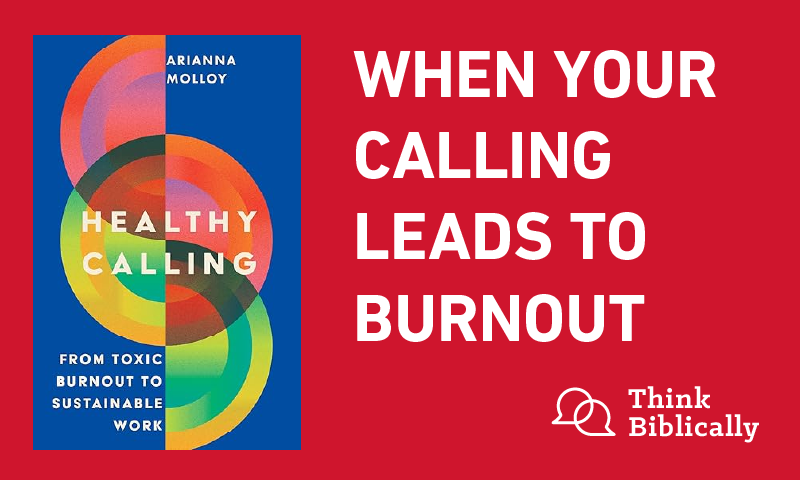
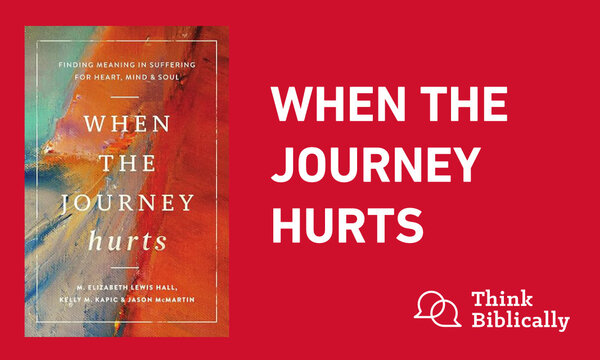
What does it mean to have a healthy calling? Why are people who view their work as a calling more vulnerable to burnout? How do you know when your work has given way to idolatry? We’ll discuss these questions and much more with our Biola communications colleague, Dr. Ariana Molloy, around her new book, Healthy Calling: From Toxic Burnout to Sustainable Work.
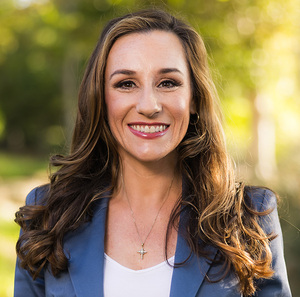
Dr. Arianna Molloy (Ph.D., University of Denver, CO) is an Associate Professor of Organizational Communication in the Division of Communication at Biola University. Dr. Molloy's research focuses on meaningful work, work as a calling, having published in premier journals such the International Journal of Business Communication, Communication Studies, Journal of Management, Spirituality, and Religion. She also works as a communication consultant for organizations such as Chick-fil-A, as well as business professionals, and ministries.
Episode Transcript
Scott Rae: [upbeat music] What does it mean to have a healthy calling? What do you- what do we mean by the notion of calling, and how do you discern that? What is the difference between a calling and a career in today's work environment? We'll talk about these questions and more on with our guest, Arianna Malloy, our colleague at Biola University here in the Department of Communications. Her new book, Healthy Calling: From Toxic Burnout to Sustainable Work. I'm your host, Scott Rae.
Sean McDowell: And I'm your co-host, Sean McDowell.
Scott Rae: This is Think Biblically from Talbot School of Theology at Biola University. Arianna, so glad to have you with us. Loved your book. Great stuff, lots of insight, and lots of stuff that you've been through personally-
Arianna Molloy: Yeah
Scott Rae: ... With this, too. This is not something that's just been this abstract, academic thing-
Arianna Molloy: [laughing]
Scott Rae: -but it's, it's been part of your, part of what you've had to live through in pursuing your calling as an academic, as a professor. So first of all, maybe what was the one thing that sort of put you- ... Put you over the edge, that made you decide, "I have got to write on this subject?"
Arianna Molloy: [laughing] Wow, that's a really good question. Well, first of all, it's such a delight to be here. Thank you so much for having me. The one thing... So, okay, COVID. Teaching in my home with a two-year-old at the time, with a makeshift backdrop in our bedroom, with my, sort of my dresser pretending to be a bookshelf behind me while I was teaching my students, and I heard this crash in the other room, and my husband was watching our kid and feeding him something like spaghetti, so stain-worthy food-
Scott Rae: [laughing]
Arianna Molloy: ... And a cry. And all I could think of is, "I gotta make sure my child's okay." So I scoop up my son. I put him on my lap as I'm teaching my class, and I'm noticing that their non-verbals look kind of like they're about to laugh.
Scott Rae: [chuckles]
Arianna Molloy: And I realize he's opened my dresser and pulled out something of my own-
Scott Rae: [laughing] Wow!
Sean McDowell: Wow.
Arianna Molloy: ... Waving it around.
Scott Rae: Wow! [laughing]
Arianna Molloy: And on that day, I was, I was, contacted by a friend of mine in the publishing world, and he said, "Hey, you know, I've seen some of your talks. I think you ought to write a book." And I laughed-
Scott Rae: [chuckles]
Arianna Molloy: ... Because I was in a place of potential burnout in that moment. And I thought to myself, "No way can I do that." And so I talked about this with my husband. He's like: "Well, why don't you just pray about it?" So I did. I forgot to do that, and I realized I have something to say about this, 'cause I'm living it. I've had experiences of burnout before, and I know what it's like to recover from it, and I also know what it's like to anticipate it and sort of figure out what you can do to not get into the depths of it.
Sean McDowell: Now, you've mentioned that there's quite a few books on burnout, so what makes this book unique?
Arianna Molloy: Yeah. Well, if we go back to thinking about our calling- ... And when we're talking about calling, I'm not just talking about our primary calling, which is to love God and love others. As believers, we know that we are to do that at all times, but that only acknowledges the magnificence of God- ... The grand mastery of God. It doesn't acknowledge the artistic nature and personal connection- ... That God has with us. He's designed us with skill sets and passions that if we are brave enough to pursue and develop, then we get to experience it in a way that feels like a sweet spot. Now, the reason that that's important to burnout is regular burnout is terrible. We know this. There's lots of research out there. It leads to depression- ... Anxiety, apathy, cynicism, massive fatigue, sick days, all of those things, and that's really real. It's, it's, "Oh, my gosh, I don't like what I'm doing anymore." But burnout from a calling is different, because burnout from a calling has to do with burnout in a relational way. As a communication person, we talk about this a lot, but calling has to do with a relationship with three different sort of dynamics. There's yourself, that's intrapersonal communication.
Sean McDowell: Mm-hmm, mm-hmm.
Arianna Molloy: How you know yourself and what you think about yourself.
Sean McDowell: Mm-hmm.
Arianna Molloy: There's the caller, which is God.
Sean McDowell: Mm-hmm.
Arianna Molloy: And then there's the third C, which is community- ... The people you serve and those who impact you. So when you have burnout from a calling, it's not just, "I don't like what I'm doing anymore," which is terrible, it's, "I don't know who I am anymore." And there's a deep kind of toxic shame about the- ... Spiritual, relational, emotional connections- ... That come from feeling burnt out.
Scott Rae: So this would be something like, you know, pastors-
Arianna Molloy: Sure
Scott Rae: ... Who burn out-
Arianna Molloy: Mm-hmm
Scott Rae: ... And are left feeling with, you know, "Who am I anymore?"
Arianna Molloy: Yeah, and- ... Having that holy obligation, that knowing that you can make a difference, that God's equipped you, and yet you don't have it in you anymore. And it's not just within, explicit pastoral ministry. It's within healthcare and medical professionals. I've spoken with people, executives and doctors at hospitals or- ... Stay-at-home parents. There is a direct sense of calling when you're doing certain things, firs- certainly educators, and when you just don't have it in you anymore.
Scott Rae: Well, I can see that, applying to business-
Arianna Molloy: Absolutely
Scott Rae: ... And a lot of other professions, and just making sure that I think we distinguish between sort of burnout generically, but this is a different category when you burn out in things that you are called to do.
Arianna Molloy: Yeah.
Scott Rae: All right, so what... We've talked about the notion of calling. Just to say a, say just a bit about how you discern that in the first place.
Arianna Molloy: Ooh! I wish I had, like, a three-by-five card-
Scott Rae: [chuckles]
Arianna Molloy: ... Where I could just pass that around to everybody. "Here's how you can discern your calling." [laughing] That would be great. Yeah, you know, and we, you and I have talked about this a bit before. There are those moments where it's really clear, but those, integrated into the rest of your life, are fewer and harder to discern in the moment. A lot of times, discerning your calling means that you pay attention to the things that you are good at, that you're interested in. You pay attention to, of course, what Scripture is revealing to you in that moment- ... Too, because the Word of God is living and active. You pay attention to the mentors in your life and what they- ... See in you. You pay attention to what you're thinking about when you're driving the car or you're brushing your teeth, and you're just naturally gravitating towards those things, and you see where the intersection of skill set, passion, and positive impact might be.
Sean McDowell: ... Wait, say that again. Skill set?
Arianna Molloy: Passion.
Sean McDowell: Passion.
Arianna Molloy: Positive impact.
Sean McDowell: And positive impact. Okay, so it's less like hearing a voice from God, so to speak, and more just saying, "What is my gifting? What do I enjoy? Where can I make a difference?" And leaning into that is more so what you mean by calling.
Arianna Molloy: Yeah, and again, there are people who've had a very clear feeling.
Sean McDowell: Sure.
Arianna Molloy: And I, myself, have had a few of those moments. I remember when I was walking on campus at Biola, deciding whether or not I wanted to be a professor here, and I was walking across the lawn, and I had that very clear but soft sense of peace, and I called my dad right away. And I said, "Dad, I don't think I'm coming back home."
Scott Rae: Yeah.
Arianna Molloy: Like, we're from Seattle. I don't think I'm-
Sean McDowell: I was gonna say, where's home?
Arianna Molloy: Yeah, home was Seattle.
Sean McDowell: Wow.
Arianna Molloy: I had no intention of coming to California, and it was a clear sense of peace, but I would say if I wasn't vulnerable enough to pay attention to that whisper- ... And courageous enough to take the leap, I would've missed that calling moment.
Sean McDowell: Interesting.
Scott Rae: So, just distinguish then between a calling and a career.
Arianna Molloy: Yes. Ooh, I love that. Actually, there's three different categories of work, generally speaking, and they can overlap, and they can be seasonal and even happen, you know, a little bit together, but there's three general categories. The first is just a job. A job pays the bills. A job, you might live for the weekend. It doesn't necessarily promise that you're gonna use the things that you're passionate about, your skill set, or even the, kinds of schooling and education that you've had. The job pays the bills. That's the main goal. The second is a career. The career, there is some promise of upward mobility, the 5- to 10-year plan, that sense of like, "Oh, my gosh, I got a corner office. I can take my family on vacation. This is amazing!" [chuckles] It's the external reward, and that's good, but a calling is something different. A calling is when the intrinsic, the internal thirst, is quenched by knowing you are doing something deeply meaningful. Now, when I've interviewed people, a lot of them actually choose a job or a career to pay the bills, and their calling isn't necessarily paid work. So I want to be clear that it's not necessary that your paid work is your calling. You can still find ways to integrate that into the work that you're doing.
Scott Rae: I think in some cases, we don't, we don't often help our college students recognize the meaningfulness of things that other people might just call a job.
Arianna Molloy: Yes.
Scott Rae: But... And I think, I think to re- it's, it's more a mindset, it seems to me, toward the job or the occupation rather than the job itself.
Arianna Molloy: Mm-hmm.
Scott Rae: 'cause I suspect you would hold that, you know, any job can be a calling.
Arianna Molloy: Yes.
Scott Rae: And I think if we, if we recognize that God calls people to business or to the profession in the same way that he calls people to the pastorate or the mission field, then we need to do a better job of explaining the meaningfulness of those other occupations- ... That don't get a paycheck from a church or other Christian organization.
Arianna Molloy: I'm smiling right now because I have this distinct memory of interviewing a financial advisor- ... Who felt called, and I asked him to tell me a little bit more about his experience, and he was telling me that he actually was getting his, MDiv, wanting to be a pastor and a theologian, and he was in India, doing a service work there, and every day off that he had, he would go to the market, and he would just be drawn to financial books- [chuckles]
Scott Rae: [chuckles]
Arianna Molloy: -and numbers. And he re- he told me in the interview, he said- ... "I remember that feeling of God saying, 'Why are you denying who you are?'" And so he ended up becoming a financial advisor, but guess what he does? He uses his pastoral skill set to be a phenomenal financial advisor, praying over his clients-
Scott Rae: Hear, hear
Arianna Molloy: ... Honoring- ... That rest time, being the kind of person that develops a work rhythm that is worshipful to the Lord.
Sean McDowell: And that's back to the three kind of job orientations you're talking about, that there's the job, like you described, there's a career, then there's a vocation. When you're a financial planner and you have or calling, another term that's often used is vocation, like a deeper purpose in terms of what I'm doing. The literature I read on happiness says that's also where happiness comes from, when you have that meaning of something you're contributing to. So I love that distinction. What would you say to somebody who said, "Arianna, I want to do this. I have a deep sense of calling, but I can't make a living doing what I love [chuckles] and feel called to"? How would you navigate that?
Arianna Molloy: Yeah, those are really good questions that I get a lot, and I- ... Would obviously need to know the specifics of that person's life, but what I would say is, if there is that longing, always look for the third option. I feel like God is- ... The God of third options. We often look at one or the other. Either it's this or it's that, because this sense of it's this or it's that feels very clear. But rather than saying, "Lord, if you've given me this passion and this skill set, I'm gonna keep doing what I'm doing right now, I'm gonna pursue every option," open the door if there's an open door. There are ways to do informational interviews with people who you're interested in doing that kind of work. Learn about those things, network with them. I will say this, though, as it relates to calling, and we can get into this or not, about the dark side of calling.
Scott Rae: [chuckles] Oh, I definitely want to go there.
Arianna Molloy: [laughing]
Sean McDowell: Okay.
Arianna Molloy: I genuinely believe that a healthy calling does not harm the people God has entrusted to you. So if you feel called to do something in your work but it harms your family, I would push back real hard about whether that's a calling, because I think that a healthy calling honors your whole life. And we are called in our relationships to honor who God has put in our life as well.
Scott Rae: Now, one of the things I particularly appreciate here that I hadn't thought about all that much is that you make the point that people who view their work as a calling are more vulnerable to burnout. Why is that the case?
Arianna Molloy: Yeah. Well, here's what's really interesting. Of all the categories, job, career, or calling, the people who are the most motivated, the most satisfied, who are able wi- to withstand organizational change, economic crisis, who will work the extra hours with the gladness of their heart, who will be the positive change agent in the room, is the person who feel cl- feels called, right? ... But they are actually, more than any other people group, the most prone to burnout, because it is harder to establish healthy boundaries in calling because of those relational, holy obligations. And so unfortunately, and this is part of the impetus of writing this book, my heart would be that we all care for our calling in a stewardly way so that we don't get too deep into that dark side. 'Cause when we get there, it really disrupts all the potential that we have.
Sean McDowell: Seems like mixed into calling, like, we would look at that person and go, "Wow, they're so called, and they're so motivated. They're working so hard." But there also can be other issues tied up into why that person is working so hard-
Arianna Molloy: [laughs] Mm-hmm.
Sean McDowell: Right? That's not that we say, "Oh, they're so passionate. They're calling," and we give an excuse to workaholism or things like, "This is my identity. I work hard." So how do you balance, or how do you know when a calling has become idolatrous, which we described earlier, it can lead to burnout, but even if it doesn't, we should be concerned about that potential idolatry?
Arianna Molloy: Yeah, absolutely. So within the dark side of calling, there's so many things that could happen- ... And some things that are out of our control. We could have a sense of exploitation, manipulation, marginalization. Certain cultures take advantage of our feelings of calling to cause us to work overtime beyond our capacity. So those are things that are potentially out of our control. But the things that we do have in our control is not succumbing to workaholism and job idolization. So should we, should we define those terms real quick?
Scott Rae: Go for it.
Sean McDowell: Sure, and I-
Arianna Molloy: Okay.
Sean McDowell: Yeah.
Arianna Molloy: Yeah. So workaholism is an addiction. Let me just pause for a second. If, if we could get anything out of our time, it would be to never compliment someone again with the phrase, "Oh, you're such a workaholic." That's not a compliment. We can say, "You have such a high capacity." That's a compliment. "It's phenomenal that you're able to do all of this."
Sean McDowell: Huh.
Arianna Molloy: That's a compliment. But workaholism is an addiction. It's one of the most widely held addictions in our contemporary culture right now, and what it is initially, it feels really good to be wanted. Feels good to be that person in the room, they're like, "Hey, I can count on you to do this, to work overtime, to get it done." Oh, my gosh, that feels so good. The social capital, knowing that people can count on you, it's great. But it becomes an addiction when we no longer are doing it for the good feeling, we're doing it to avoid the bad feeling when we're done. We're doing it because to slow down all the other things that we've pushed to the side, all the other emotions rise to the top, and it's wildly uncomfortable. That's workaholism. Job idolatry is a little bit different. Job idolatry is when work is no longer an expression of who you are, but the definition of who you are. It's when it has- ... The highest primacy of value in your life. So it's the kind of thing where you use your job to not show up for the people and the commitments that you've made- ... Because your job always takes priority.
Sean McDowell: If, if I can lean to something, I think you said that there are certain professions that take advantage of a sense of calling to generate a kind of workaholism. What are some of the professions- ... That tend to do that?
Arianna Molloy: I think any profession that's a serving profession, so again, in the medical field, that's for sure. I mean, if you say no, someone dies. [laughs]
Sean McDowell: [laughs] That's pretty dramatic.
Arianna Molloy: It's, it's really hard.
Sean McDowell: Okay.
Arianna Molloy: I was, I was talking to some executives-
Sean McDowell: Huh
Arianna Molloy: ... At a, at a hospital recently. And it's really hard if you are exhausted- ... And you want to go home- ... But if you go home, someone could get actually, physically, truly hurt. That's really hard. Anytime there's a culture of calling, whether it be explicitly faith-based or not, it's a little bit hard to create those boundary lines sometimes. Because we all wanna do more. We wanna do something for the kingdom. But the very first thing that was called holy in the Bible was Sabbath- ... And we know that Jesus withdrew. We know that He found Himself- ... Places to restore, and we must walk humbly with God in that way.
Scott Rae: Are there some ethnic cultures that I- that you think are more susceptible to burnout than others?
Arianna Molloy: Oh, that's a really interesting question. I don't know the research on that. I've primarily worked within Western culture, but I do know that there are studies within Asian cultures as well that also look at this type of... There's actually a specific term for that they use to describe it, but just overworking. There's other dynamics here, though, because if you think about first-generation versus second-generation immigrants, second-generation immigrants typically carry the callings of their parents, which is to succeed [chuckles] ... Along with their own desire to do something in work. And so certainly, calling is complex. There's elements of privilege. It's contextual as it relates to different ethnic and cultural backgrounds, but I don't know personally what those statistics might be.
Scott Rae: Okay. Now, one other concept I found really helpful from the book is you refer to something called boundary shaming. What is, what is that?
Arianna Molloy: Yeah. [chuckles] So this is a term I came up with, to describe what happens- ... When we're dealing with different capacity levels. So boundary shaming is when someone does not like at w- someone in power over you at work is asking you to do more than what your job requires. So it's not that you're not doing your work. You're doing your work, but there's an ask to do more, and if you say no, you're not, you're not viewed as being part of the team. So you might not be explicitly penalized, but you're also not the person they call on again. And you're looked at as not being all in. So boundary shaming is when you try to create a sense of, "Hey, this is sort of where I need to stop," and it's not accepted in that way.
Sean McDowell: There's probably a whole different element when you're talking about a Christian parachurch or a church organization-
Arianna Molloy: Yeah
Sean McDowell: ... 'cause it's not only you're not all in, you're not all in on the faith and saving the lost-
Arianna Molloy: For the kingdom, yeah. [laughs]
Sean McDowell: ... And the king- That adds a layer of what can really be-
Arianna Molloy: Mm-hmm
Sean McDowell: ... Spiritual abuse.
Arianna Molloy: Yes.
Sean McDowell: Now, to avoid that, I'm wondering what advice you have for individuals who maybe feel guilty about setting bound- setting boundaries in light of kind of the demanding nature of work or this kind of pressure we're talking about is being put on them.
Arianna Molloy: Okay, I'm getting really excited.
Sean McDowell: [laughs]
Arianna Molloy: Are you ready? [laughs]
Scott Rae: Go for it.
Arianna Molloy: Okay, so here's the deal. There is a way to do this, and it- the way is humility. ... If we want to prioritize the virtue of humility, that is the compass where we can kind of use to guide us through these really complicated terrains. So let me unpack that.
Sean McDowell: Yeah.
Arianna Molloy: There are three components to humility that we can see biblically and also in the workplace. So humility, number one, is knowing what you're good at and what you're not so good at, and not being consumed by either of those things. So you know where your strengths are. This is part of being a competent communicator. Jesus knew who he was, and he was humble. He knew who he was. But h- you also are not so distracted by your weaknesses that that's the thing you're thinking about all the time. So that's the first component. The second is a lifestyle of learning, the ability- ... To know there's always more to learn. I think it's lovely that one of the names we call Jesus is Teacher. We're supposed to keep learning, and this means that in the workplace, we delegate, we're not defensive if there's other ideas, and we know that there's more to learn. The last part, so the strengths and weaknesses, not being distracted by either one-
Sean McDowell: Mm-hmm
Arianna Molloy: ... The lifestyle learning, the last part is the ability to walk away for a little bit.
Sean McDowell: Mm-hmm.
Arianna Molloy: That we are not the God of the universe. Jesus walked away for a little bit- ... And we get to do that, too. We're supposed to walk humbly with him, Micah 6:8. And so what I would say to someone is, either we are consumed with the relationship of our caller, which is good, or we are consumed by the task of our calling, which is not so good. So if someone in the workplace is asking you to do more than you should, especially in churches and para-churches, my response would be, "I care so deeply about this, that I have to pay attention to my own tank right now, and it's getting really low. So here are all the things that I'm in charge of currently. What do you suggest I take off in order to do this new thing?"
Sean McDowell: Now, let me, let me follow that.
Arianna Molloy: Of course.
Sean McDowell: Like, w- like, what's hard... It, it is hard, maybe it's just my own issue, is, like, there's so many expectations that other people have that they don't understand what it's like.
Arianna Molloy: Yeah.
Sean McDowell: So I get a million emails. That's an exaggeration, but every- people are like-
Arianna Molloy: Probably not too much of an exaggeration. [laughing]
Sean McDowell: People are offended if you don't give... Not most people, but a whole lot of people have complete unfair expectations. Do you just live with disappointing people? Like, how do you navigate that? Is that the reality, like, "I'm just gonna disappoint people, can't control that. Set boundaries between them and God"?
Arianna Molloy: Yeah. I mean, yeah, I think that we do. I also think that it's part of communicating the process. So something happens when we are in a season of sustained or chronic stress. There are three things that happen in our communication, but the one that I wanna touch on here is that we withdraw. When you're in a season of massive stress, it's a survival mechanism to withdraw. Now, withdrawal itself, not a bad thing. What's bad is when we don't communicate it. So again, every situation's different, but in those... I think many work situations, we don't really know what that job involves. You know, we think we do. I even remember working as a server at a restaurant. I had no clue what was happening in the kitchen until I became- ... A server. After that, I'm a much better tipper now. [laughing]
Sean McDowell: [laughing] Yeah.
Sean McDowell: [laughing]
Arianna Molloy: I just, I fully understand that there's a lot going on, you know? And so whether it's a pastor or as a professor, I did not realize all the things professors did. I didn't realize that teaching is maybe, on a good day, a third of what you do.
Sean McDowell: Yeah.
Arianna Molloy: So I think part of it is, yeah, we do have to get used to disappointing people, but also taking the extra step and trying to communicate, "Here's where I'm at," and then their response is not something that we own.
Sean McDowell: That's really helpful. Now, you described the big myth- ... About humility. What is that?
Arianna Molloy: I think that, unfortunately, we conflate humility with modesty, and those are not the same things. So modesty is, you know, not wanting attention, is being, If someone, you know, compliments you say sort of, "Oh, thanks," and you kind of shrug your shoulders and, you know, maybe m- you put your head down. Humility is being aware of what you're good at, but you're just not distracted by it, and the way to do that- ... Is through the spirit of gratitude. "Thank you." That's such a God thing. You know, la- yesterday, I spoke at an event last night, and I have to confess, I was exhausted. I was so tired, and the event was so important to these people, but they were also running a little bit late, and in my mind-
Sean McDowell: [chuckles]
Arianna Molloy: ... I was like, "Oh, my gosh, I need to get home to my five-year-old.
Sean McDowell: [laughing]
Arianna Molloy: I'm gonna miss his bedtime!" And, and I just thought, I had this moment of, "Okay, but I'm here to do this right now." And they were kind, and they had kind responses to me. Rather than holding tight to those kind responses and treasuring them in my heart as my own, I hold them with an open hand and say, "Thank you so much. I'm so glad it was a blessing to you." And then I consciously decide to not think about it again- ... Because I don't wanna hold it so tightly- ... Like manna the day afterwards.
Sean McDowell: Well said. How can we help people understand the contribution that their work makes to their communities and ultimately to God's kingdom? Maybe some examples of what it looks like so people can grasp this.
Arianna Molloy: Yeah, I love that. I love the way we think about work as an opportunity to, scatter the seeds, till the soil. It's not our job to necessarily be in charge of this little seedling all the way till it becomes a tree. We figure out, what is our job? Maybe my job is just to locate the seeds, and it's someone else's job to water them, someone else's job to prune them, it's someone else's job to cultivate them. And so as it relates to work, there's a lot of work that's not very romantic. I mean, I feel so called to be a professor here. I mean, so just the other... Every once in a while, I hold my hands open and I'm like, "Okay, Lord, this is yours. I don't ever wanna hold tightly to it. Do you still want me here?" And I'm walking on Biola's campus, and this is a little unusual, but not that unusual, and there's a group of students just standing around, praying. I kind of chuckle. I walk a little farther. There's a second group of students praying on Metzger Lawn for each other.
Sean McDowell: God, I love that.
Arianna Molloy: ... I walk a little farther, and I hear these students talking about- ... What the resurrection of Jesus means and how we integrate that into understanding the birth of Jesus, and I just start to laugh. And I w- I walk a little farther, there's a third group of students praying. Now, this is, this is not necessarily the typical day, but it's not atypical either. And so for me, I think about I can't change the lives of every single person, but every person that comes into the door, if I can help them feel seen and heard, that's part of what makes my calling feel fulfilled. I think about the callings that my parents had. My dad is a pastor through and through, but he was also a real estate agent, so he found ways to use his pastoral skill by being a chaplain, being a first responder- ... Having a group of guys that he met with for over 20 years.
Scott Rae: That's great.
Sean McDowell: Yeah.
Arianna Molloy: My mom in the same way of her own calling. So I guess I would say work isn't always romantic- ... But so in the same way calling is looked at, there's metaphors about calling that are both romantic love of falling in love and romantic love as committed love. So I interv- I... One more, do we have time for another story?
Sean McDowell: Yeah, please.
Arianna Molloy: Okay, good. So I interviewed an NFL coach one time who felt called to be an NFL coach, and so I was a little bit nervous to meet with him, and I said, "So, you know, what do you- what does a bad day look like? Like, I heard about the good days, but when you're having a hard day with your team, with the guys that you're coaching, like, what does it look like?" And he's like, "What do you mean?" [laughing]
Sean McDowell: [laughing]
Arianna Molloy: So I got a little bit nervous. [laughing]
Scott Rae: [laughing]
Arianna Molloy: I backed up. I'm like, "Well, you know, on the hard days..." And he looks at me, and he says, "I decide. I just decide. Have you ever heard that love is a decision? So I think to myself, if I'm really called to be here, I just decide." [laughing]
Sean McDowell: [laughing]
Scott Rae: [laughing]
Arianna Molloy: And of course, you know, now in my family, when we're having a hard day, we kind of jokingly say, "Just decide!"
Sean McDowell: [laughing]
Arianna Molloy: But I think that, again, this is something I wish that- ... College students in particular would be able to digest.
Scott Rae: [chuckles]
Arianna Molloy: There are a lot of days that are not going to be romantic days.
Scott Rae: Right.
Arianna Molloy: That doesn't mean you're not called, and also because calling is a process, just because on that day you feel like nothing happened doesn't mean something didn't happen.
Sean McDowell: Well, what you keep coming back to is just perspective, right? I'm tired. Do I feel like speaking at this event? I'm gonna make a choice to contribute and do my best here. I'm tired at work, like, a lot... And, and this coach, like, "Just decide."
Arianna Molloy: [laughing]
Sean McDowell: Now, it's not always just flip the switch-
Arianna Molloy: Yeah
Sean McDowell: ... On and off. That's why he's a coach. But we have agency. We can make choice, and that's a lot of our happiness and our sense of calling amidst when maybe not even... You said a lot of our work, maybe most of our work is not romantic. [chuckles]
Arianna Molloy: Sure.
Sean McDowell: But that's a piece of it, and that's okay. That's a part of, part of a calling. Maybe, maybe give us some immediate steps individuals could take to begin transforming their work into a sustainable calling. So somebody already has a job or a career, and they wanna take that next step, like that financial planner you talked about. What might that look like?
Arianna Molloy: Yeah, really good question. So again, because a calling is relationship with yourself, getting to know who you are, relationship with the caller, God, and relationship with the community, it's all process-based. It's not just about the outcome. It's about the process that gets us there. So I think things I would suggest, build your own board of directors. Think of three to five people who you admire. Proverbs tells us that wise kings have wise counselors, so find three to five people who you admire. Figure out why you would want them on your board. Let them know they're on your board. [laughing]
Sean McDowell: [laughing]
Arianna Molloy: Ask them, "Hey, can I meet with you occasionally?"
Scott Rae: Yeah.
Arianna Molloy: To check in with them. And I know this doesn't sound that exciting, but it's so true: stay worded, rooted in the Bible. Really, it is the living, breathing Word of God, and I don't think that we can grow without staying in it. And the third thing is take risks in your developing, in the skills that you're developing and the passions that you're developing. So you might feel called to be a surgeon, but you're not gonna walk into the surgical room on day one. You actually have to go through training, and that's why I think college and other internships and first jobs or experiences, but I even- are important, but I even think of people who are in job transitions. This book isn't just for right out of college. It's for people who are in their 30s and 40s or people who are even in the retirement stage, and what do you do when you're not doing paid work anymore, but you still wanna do purposeful work? And it is about a process, finding those little steps along the way.
Sean McDowell: Real fast, before you-
Scott Rae: Go for it
Sean McDowell: ... Ask one more question. You've twice, I think you've said, like, risk, or you've used- ... That term. I just have to highlight that 'cause even professionally, for me right now, there's a few opportunities. I'm like, "That sounds awesome, but there's a risk," and it's-
Arianna Molloy: Yeah
Sean McDowell: ... Easy to not do that. But I think that's where faith comes in, and that purpose and that meaning comes in- ... Taking those risks. So I love that you've highlighted that a few times.
Arianna Molloy: Yeah.
Scott Rae: Yeah. One, one final question here. What do you hope, if you could, if you, if you could have readers take one thing, primary thing, away from your book- ... To help them have a sustainable work life- ... What would it be?
Arianna Molloy: Because I believe we were made in the image of God, we were made to thirst for purposeful creating. Before sin entered the picture, God worked by creating, and so for those that are thirsting to feel that sense of purpose, that's a good thing. Now we get to figure out how to do it in a healthy way. And so my hope would be that we would not be afraid of burnout necessarily, because it's not really a category, it's a spectrum. Like, where [chuckles] are you on the sliding scale of burnout? It's not, "Am I burnt out?"
Scott Rae: Yeah.
Arianna Molloy: It's, where am I on that scale? So paying attention to the way you talk about things or other people. Has cynicism entered into your speech more often than empathy? That's a really good sign you're not on the good road. So that's an important thing to pay attention to. And then the other thing that I would hope is that we begin to value the role of rest and reflection as we pursue healthy work. We cannot have healthy work without healthy rest. So at the end of the day, I think this is what I would say-... One of my favorite stories is about a person who fell into a hole. [chuckles] And it's a deep, dark hole, and he can't get out. He's tried so hard, and w- oh, this guy walks by, and it's, it's a doctor. And so he's like: "Hey, Doc, can you help me get out of the hole?" And the doctor says, "Absolutely!" And he signs a little prescription pad and drops it down the hole. And the guy who's in the hole is like: "Oh, my gosh, I can't believe this." And then a pastor walks by, his pastor, and he's like: "Hey, Pastor, can you help me get out of this hole?" And the pastor says, "Absolutely, let me pray for you." And it's this beautiful, poetic prayer, but then after he's done, he leaves. And then a friend walks by, and he's like: "Hey, I'm so tired. I don't know how to get out of here. Can you please help me?" And the friend says, "Absolutely," and he jumps in the hole. Well, the guy is like: "Oh, my gosh, now we're both stuck in the hole. Why did you do that?" [laughing]
Scott Rae: [laughing]
Arianna Molloy: And the friend says, "Yes, but I've been down this hole, and I know the way out." And I've been in a place of burnout.
Scott Rae: Yeah.
Arianna Molloy: I've interviewed people who've had burnout, and it's easy to feel like you will never get out, that this is how life is, that maybe to hope for something else is immature or unwise. It's not. You can get out, and there's a way to do it.
Scott Rae: Well, and I think this book will help show you the way out.
Arianna Molloy: I hope so.
Scott Rae: 'Cause I appreciate you jumping in the hole- [laughing]
Arianna Molloy: [laughing] It's my pleasure
Scott Rae: ... With people with this book.
Arianna Molloy: My pleasure.
Scott Rae: 'Cause that's, 'cause that's what you've done. You've shown people the way out here.
Arianna Molloy: Thank you.
Scott Rae: Super helpful. And I think it's, it's really important, I think, too, that to recognize that, you know, every job has meaning to it.
Arianna Molloy: Mm-hmm.
Scott Rae: We just don't recognize it. And help even the most menial jobs, say, a, you know, janitorial service in a hospital, for example, that has huge meaning and significance because if those janitorial people don't do their job, the hospital closes down.
Arianna Molloy: That's right.
Scott Rae: And germs run rampant. And doctors can't do their jobs. Nurses can't do their jobs.
Arianna Molloy: Mm-hmm.
Scott Rae: So I think that's, that's part of what's incumbent on us in our churches and as we're training the next generation of church, you know, church leaders at Talbot, to be able to help people in specific professions recognize the meaning that God has endowed-
Arianna Molloy: Mm-hmm
Scott Rae: ... For that particular profession, so.
Arianna Molloy: And what's so cool is, as we pursue the calling, we get to know the caller more. I was thinking of a CEO that I interviewed, and she was describing to me being a mom of five kids, doing homeschool for all of them, having all these ideas for the work she wanted to do, and she somehow found a way to do it. And as she did, it restored and re-energized her relationship with God.
Scott Rae: Yeah.
Arianna Molloy: And now she's, like, doing amazing things all over the world. [chuckles]
Scott Rae: That's great stuff. Well, again, I want to commend to our listeners, Ariana Malloy, Healthy Calling: From Toxic Burnout to Sustainable Work. Thanks for jumping in the hole with people and showing them the way out.
Arianna Molloy: My pleasure.
Scott Rae: That's great stuff. This has been an episode of the podcast Think Biblically: Conversations on Faith and Culture. It's brought to you by Talbot School of Theology, Biola University, offering programs in Southern California and online, master's programs in all sorts of different fields, in Old Testament, New Testament, theology, philosophy, apologetics, pastoral ministry, marriage and family. I think I've missed a couple somewhere.
Sean McDowell: You got them, man. You got them.
Scott Rae: I think I maybe... And undergrad programs, both in person and online. Visit biola.edu/talbot in order to learn more. Submit comments, ask questions, or make suggestions on issues you'd like us to cover or guests you'd like us to consider. Email us at thinkbiblically@biola.edu. If you enjoyed today's conversation with Dr. Malloy, give us a rating on your podcast app and share it with a friend. Join us on Friday for our weekly cultural update. Thanks for listening, and remember, think biblically about everything. [upbeat music]