Biola University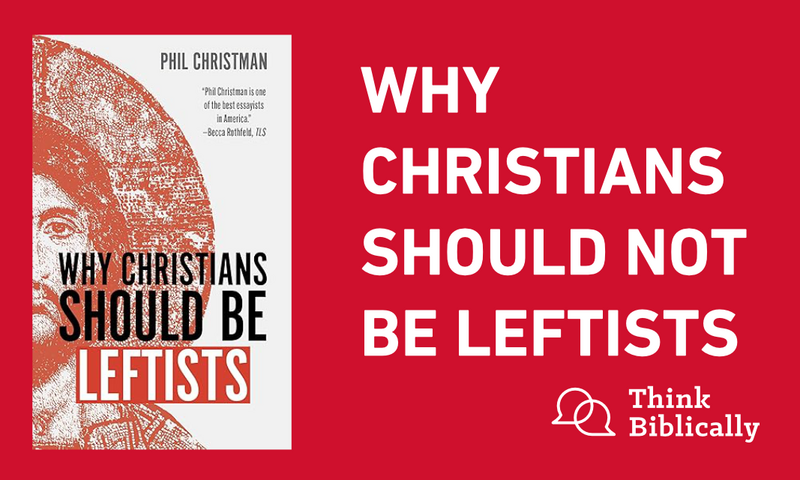
What is Leftism and can it be consistently wed with a Christian worldview? And is Leftism gaining ground in the culture and church? In this episode, Sean and Scott explore these questions and more in their review of the book Why Christians Should Be Leftists by Phil Christman. They carefully define Leftism, look for positives and common ground in the case made by Christman, and then compare Leftism with the biblical, economic, and historical facts.
Episode Transcript
Sean McDowell: [upbeat music] Should Christians be leftists? Can leftism consistently be wed with a Christian worldview? And is leftism gaining ground in the church and in the culture? Scott Rae, we've got a fascinating new book we're gonna do a review on by Phil Christman called Why Christians Should Be Leftists. You ready to rock and roll?
Scott Rae: I'm ready. Let's get to it.
Sean McDowell: All right, so this is really more of an essay than it is a book. It's kind of a testimony of his experience, which we'll get to, but before we dive into the case that he makes, what does the author mean by leftism? What are we talking about here?
Scott Rae: Well, he distinguishes it from liberalism-
Sean McDowell: Mm-hmm
Scott Rae: ... Which he, r- he's referring to political liberalism there, as opposed to... And we- just to be clear for our listeners, the term classic liberalism is different than political liberalism, which is different than leftism.
Sean McDowell: Okay.
Scott Rae: The classic-
Sean McDowell: Mm-hmm
Scott Rae: ... Classic liberal tradition is what our Founding Fathers had in mind, of individual rights, free expression, limited government, you know, things like that form, I think, sort of the heart and soul of a, of con- political conservatism-
Sean McDowell: Mm-hmm
Scott Rae: ... Today. Political liberalism is a d- a different, a different view of that, which takes a larger view for the state, heavier taxes, more services, things like what we might call democratic socialism, uh-
Sean McDowell: Mm-hmm
Scott Rae: ... Which is we see in Scandinavia and parts of Europe, where it's just a different, it's a different arrangement, where taxes are higher, servi- and services are more provided, and there's less space for d- what we call mediating institutions- ... That stand between the state and the individual. Leftism is political liberalism on steroids.
Sean McDowell: [laughing] Okay.
Scott Rae: And the leftism that he's describing here is, I think, sort of heavy on deconstructing the institutions, mainly of the market economy. The, the liberal- I would say political liberals wanna re- they wanna remodel the house. Okay? Leftists wanna tear the house down and create something new- ... Create an entirely different system. Because he describes the political liberals as being complicit with capitalism.
Sean McDowell: He does. That's right.
Scott Rae: And so what that suggests is that he wants, he wants to dismantle the whole apparatus and start over again. Right? Now, of course, what that, what the starting over again looks like is a lot trickier than dismantling the current one.
Sean McDowell: Of course.
Scott Rae: But that's, but that's what he-
Sean McDowell: Yeah
Scott Rae: ... That's basically what he means by leftism. Is that how you read it?
Sean McDowell: Yeah, so he's not talking about theological leftism, although we see that seep in here at times.
Scott Rae: It does.
Sean McDowell: It's more political, and so sometimes we tend to think, "Well, those to the right of us, wherever we are fundamentalists, and those a little bit to the left of us, we might call liberals or leftists." He is way to the left politically than probably most, if almost any, at least in the evangelical world. So he functionally-
Scott Rae: I think that's true.
Sean McDowell: But-
Scott Rae: And I think he would be far to the left of most in the Democratic Party-
Sean McDowell: Yeah
Scott Rae: ... Today.
Sean McDowell: He has a chapter why the Democratic Party doesn't go far enough. We'll get to that-
Scott Rae: Yeah
Sean McDowell: ... Why classical liberalism [laughing] doesn't go far enough.
Scott Rae: Yeah, I mean, classical liberalism-
Sean McDowell: [chuckles]
Scott Rae: ... He wants very little to do with.
Sean McDowell: Nothing to do with. Okay, so he says here on page 67, "Heavy taxes on or common ownership of the sort of property that produces wealth." So he really means socialism, but in many ways, he's also very favorable at times towards Marxism. So that's the kind-
Scott Rae: Yes
Sean McDowell: ... Of leftism that-
Scott Rae: Yeah
Sean McDowell: ... He seems to be arguing for.
Scott Rae: Yeah, he says the leftist view, instead of a market economy, where it's individuals, you know, doing mutually beneficial exchanges, it's more, it's more the, I think, the idea that, the mean- what he calls it, "the means of producing our stuff"- ... Is commonly owned.
Sean McDowell: Right.
Scott Rae: And can't, and can't then... The ownership of those, as Marx described, "the means of production," can't be owned by individuals who concentrate their wealth and their ownership by virtue of that. So it's, it's, it's co- either state-owned, but more owned in common, more owned by the public, is what they're after.
Sean McDowell: We're gonna offer some of our critique of that, but I'd love to know what you think the author gets right. Whenever I read a book like this, my first instinct is, "I'm going to take issue with [chuckles] this book." I look for areas I have common ground, areas that are positive, areas I can learn from. So what do you think the author gets right?
Scott Rae: Well, I think there are a number of things. First on my list is the biblical mandate to care for the poor.
Sean McDowell: Okay.
Scott Rae: The, the biblical mandate to make sure- ... That, you know, our public policy doesn't disadvantage further the least among us. And I think that's a biblical mandate that I think he get, he gets right.
Sean McDowell: Okay.
Scott Rae: The other one that I think, I think is really strong, that I think he gets right, and this is a critique of capitalism in general, is it does lead to overconsumption. I mean, I think c- we all could benefit from deaccumulating the amount of stuff that we have. In fact, [chuckles] one of my worst nightmares is that, you know, my wife and I are gonna pass prematurely-
Sean McDowell: [laughing]
Scott Rae: ... And leave our kids to sort all that out, you know, and God forbid.
Sean McDowell: [laughing]
Scott Rae: I think he rightly recognizes the importance of politics, and I think he gets the definition-
Sean McDowell: He does
Scott Rae: ... Of that right. He gets that exactly right.
Sean McDowell: I was curious if he got that.
Scott Rae: He says... Yeah, and this is why we've said before, Sean, that this is- ... What makes politics fundamentally a moral enterprise.
Sean McDowell: That's right.
Scott Rae: Because it's how we order our lives together.... And economics is intertwined with that, because economics, to go a step further, is how we balance the burdens and benefits of how we order our lives together in community. Those are, those are-- all have significant moral overtones, and I think he gets that right. You know, and I love, you know, toward the end, he says, you know, [chuckles] "The essence of Christian faith is that we're all sinners in need of grace." And, you know, being a Christian doesn't ma- doesn't make you feel like you're on top of things. It, it actually makes you feel like you're under things and in, and in need of grace. He points out we live in a moral universe, which he's right.
Sean McDowell: Yep.
Scott Rae: There's morality... I think he's right that God has embedded a moral framework into the nature of reality, and our intuitions, every day tell us that that's true. And every time somebody is the victim of injustice, your relativism goes out the window- ... Because people say, "No, I've been wronged!" And for the relativist, you know, the giant "says who?" question looms large, but not, but not for Chrisman. You know, yeah, ultimately, we live in a moral universe because God said these things are right- ... Or wrong. I mean, he's-- he offers a critique. He doesn't have a lot of tolerance for woke stuff- ... Which I appreciate. He points out, you know, scientism. His, his faith in science to be able to take over what would be lacking if you put religious faith on the back burner is- ... Not high. So he's-- you know, he is definitely-- he is de- he's not a secularist. He is... I mean, I think his Christian faith, I think, is real. And I- ... Think as a result of that, he gets a lot of- he gets, he gets some things right. You got other things you want to add to that?
Sean McDowell: Yeah, that's a great list. That's pretty much many of the common ones that I had. His definition of politics is, he says, "It's just morality is practiced by more than one person. As humans, we need each other, thus, we have to continually hash out how we'll live together."
Scott Rae: Exactly.
Sean McDowell: And so he agrees with us. We differ on his political views, but he's basically saying we need to think biblically about politics, and politics is one way we love our neighbor.
Scott Rae: Right.
Sean McDowell: We would agree with that approach, differ on the practice, which we'll get to.
Scott Rae: Yeah, now, and I think we might actually differ on some of the ends-
Sean McDowell: Okay
Scott Rae: ... Of politics.
Sean McDowell: I think that's right.
Scott Rae: And we would definitely differ on many of the means- ... To accomplish those ends. In the past, I think we've said that generally, we-- there's widespread agreement on the an- on the ends of what a political economy should look like. I'm not, I'm not so sure we will always agree on the ends for this.
Sean McDowell: Fair enough.
Scott Rae: Uh-
Sean McDowell: I think that's, I think that's right, and we'll get to some of that. He says, for example, "We live in a moral universe." He writes this on page 78. You know, I did think... You see coming through this idea, he goes, that morality is not optional for Christians, and he says, "We live in a moral universe. This is one of the points that Christians of all stripes ought to agree about, agree. We think that both morality and existence itself emanate from God's nature. But as a good leftist, God's nature seems to be reduced towards love. Which is love?" And I go, "Yeah, it's love. It's also [chuckles] justice."
Scott Rae: It's also justice.
Sean McDowell: And if you go too far to the right, it's just justice. In this case, too far to the left seems to just be love. I think we need to balance that out, but insofar as we live in a moral universe, he says, "Morality, at least for Christians, is not an add-on. It's part of the fabric of the universe."
Scott Rae: Okay.
Sean McDowell: Amen to that.
Scott Rae: Absolutely right.
Sean McDowell: He says, "Scientism tends to reduce us to selfish survival machines." I'm reading this going, "Amen." So there's plenty we can be positive about, but in some ways, he says this is really more of an essay than a book, and I thought it was fascinating, 'cause he's kind of giving a testimony.
Scott Rae: Exactly, yeah.
Sean McDowell: Like, somebody could [chuckles] stand up, give a testimony in an evangelical church about how he left kind of the right-leaning Republican Party, remained a Christian, in the way he describes it, and now is on the left. So I'm curious what you make of his conversion story and any points that jumped out as significant to you.
Scott Rae: Well, it seemed, his conversion, quote, political conversion, was because he read the Sermon on the Mount-
Sean McDowell: That's right
Scott Rae: ... And was deeply impacted by that. And I think saw, you know, saw a whole host of things that had implications for him in terms of politics and economics, right? Now, I think we can... We'll debate a bit with some of the takes that he had-
Sean McDowell: That's right
Scott Rae: ... Takeaways from the Sermon on the Mount, but I think that's basically what got him sort of started on this leftward, trend. And I wonder, this is a point I think we've made in the past when we've talked about the intersection of Christian faith and politics and economics, is that the political and economic world in which the Bible was written was so different-
Sean McDowell: Absolutely
Scott Rae: ... Than today.
Sean McDowell: That's right.
Scott Rae: And I, that's why I think we have to be very careful in how we, how we do any direct application from the biblical text, namely- ... Things like the Sermon on the Mount, to political economy today. So there's, there are- I mean, there's just a whole host of really significant differences that have to be taken into account. I mean, f- the big one is that, you know, if you would've asked, [chuckles] if you would ask the average person in the first century who they were gonna vote for [laughs]
Sean McDowell: [laughing]
Scott Rae: ... "We, we have a vote? [chuckles] Like, so what do we vote? We're vote-
Sean McDowell: Exactly.
Scott Rae: ... We're voting for Caesar or not?" [chuckles] You know- ... You don't vote for Caesar, you lose your head. And, you know, economics was completely different. You know, it was a zero-sum economic world.... And so there w- there was this necessary connection between winners and losers, and people were stuck in the economic, strata that they were born into. Nobody, you know, nobody, there were no rags to riches stories- ... In the ancient world. Lots of the opposite, as the Prodigal Son shows. But, the, you have to take those differences into account. Now, we'll talk more about how-
Sean McDowell: Yeah
Scott Rae: ... He reads the Sermon on the Mount in a, in a bit.
Sean McDowell: So I, some of the things that jumped out on page one, the title is Testifying, and he talks about growing up in a fundamentalist, evangelical, Pentecostal, Calvinist background. Now, I don't wanna-
Scott Rae: That's, that's quite a combination. [chuckles]
Sean McDowell: It, it is, and I, my point is not to pick on any one of those, but I've written a book on deconstruction, and just this is... You hear this over and over again when people move to atheism, agnosticism, progressive Christianity. There's very much a reaction against the way somebody was raised.
Scott Rae: And, and I think what this sounds to me like is that the subtheme underneath this is religious rigidity.
Sean McDowell: I think that's right.
Scott Rae: Yeah, that's-
Sean McDowell: And that's, that's a part of the theme that we hear, understandably so.
Scott Rae: Yeah, a good... Yeah.
Sean McDowell: But, but in his mind, he's like, "Instead of chucking the faith, I wanna hold on to Jesus," but re-envision what that looks like politically and economically, is how he approaches this. So we don't need to talk about this, but he walks through how he assumed that the Republican Party was exactly what it meant to be a Christian. He's concerned about the wedding between the two. He taught... His case of how he went left is he feels like President Barack Obama was just completely attacked by Christians in terms of being a secret Muslim and his character, et cetera. The economic crash of 2008, he talks a lot about that. Talks about Michael Brown and, Tamir Rice, and some of these stories, Eric Garner, Freddie Gray, that started to emerge about 2012, 2013, really shaped him, and he felt like concerns about wokeness and CRT were just a diversion from the issue. Donald Trump put him over the top. He's like, "Once people can support Donald Trump and call themselves Christians, I'm out." the Me Too movement, the pandemic, these... I'm just trying to give people a sense of... And we're not gonna go into this-
Scott Rae: Right
Sean McDowell: ... Narrative, but they have a sense of where he came from-
Scott Rae: Yeah
Sean McDowell: ... And how it frames-
Scott Rae: Yeah
Sean McDowell: ... Where he's at now.
Scott Rae: You can sort of see sort of one domino falling after another. And he gets, he gets to... You get to the end of the dominoes, and, you know, there's, there's not, there's not much left that he was wanting to embrace, except for, I think he still embraced the Scriptures. He still embraced his relationship to Jesus. Now, I think we read the Scriptures, we read the Scriptures-
Sean McDowell: Yeah
Scott Rae: ... Quite differently as a result of that, and I think we can... I mean, we all have our lenses through which we read the Scriptures. And I think some political, economic lenses are stronger than others for s- for some people.
Sean McDowell: Sure.
Scott Rae: And I think the... It's less clear, Sean, you know, which came first, you know, the political reorientation-
Sean McDowell: Oh
Scott Rae: ... Or his reading the Scripture.
Sean McDowell: Oh, that's an interesting question.
Scott Rae: And I, and I think, I think for him- ... The Sermon on the Mount probably came first, and that was the first... That, that was what kicked off the dominoes falling. It's not as clear that he continued to read the Scriptures, I think, through, you know, without those pretty strong, left-leaning lenses.
Sean McDowell: You're right, and some of what he talks about here in the Sermon on the Mount was, "It suggested a life that was available to me and to them. I felt the possibility of universal solidarity," as opposed to this kind of Darwinian winners and losers approach on the right. You had this universal solidarity we should lean into, which is a theme we always hear on the left. So he's drawn in by that.
Scott Rae: Yeah.
Sean McDowell: Now, one thing he talks about-
Scott Rae: Which, yeah, which is, I think, just another way of saying that what you had mentioned earlier, is that the left tends to emphasize love, the right tends to emphasize justice, and, you know, that's, I think, that's another way of saying the, saying some of those same things.
Sean McDowell: Right. Okay, fair enough. So we're gonna, we're gonna come back to some of the issues that we've just peppered on here, but early in the book, I mean, page 25, he raises some of the questions of what this means for the LGBTQ conversation. And part of his leftism, which seems to always occur in my book, maybe someone could find-
Scott Rae: Yeah
Sean McDowell: ... Exceptions to this, involves a rejection of the historic Christian view of sex and marriage and embracing LGBTQ relationships and identities. Now, he three times says in the book on different pages, 25, 58, and 86, that we know something by its fruit. And it says, "Sometimes theological arguments you can only settle by observations." So he's talking about certain biblical arguments about-
Scott Rae: Yeah
Sean McDowell: ... Sex and marriage, and he says kind of, you know, "Once I was in several churches where some people who..." What does he describe as, "lesbians were not able to serve," he goes, "For me, that's the end of the debate, that people say we want to obey Jesus, but some people couldn't serve." And then he says, you know, "That some people would stand in the way of a gay person's right to marry, I'm out." Now, I have a lot of thoughts on this. I don't want to get too sidetracked, but any... Do you want to weigh in on this?
Scott Rae: Well, again, like you, I'm not particularly surprised- ... That this is where he went. It's, it's not, it's not a central part of what he's dealing with. You know, in my view, this is just an- this is another domino that fell. And not... It's not, it's not a surprise at all that it's one that did. And the, you know, the... I think part of the left-leaning culture is, you know, and this emphasis on inclusion-... And, yeah, what he talked to emphasis on sort of universal solidarity, is, I think, another way of saying that they're trying to be as inclusive as possible. And I think it... I'm not, I mean, I'm not surprised. And I'd wanna, I'd wanna be careful that we don't, we don't put- get the theological cart before the horse- ... On this. Because our theology, our ideas, determine how we act.
Sean McDowell: They should. [chuckles]
Scott Rae: They should. No, and it doesn't, it do- he, we're not le- not leaving room for places where the Church has failed. And I think the Church has failed in some respects to be... To show the love of Christ to the LGBTQ community. Now, I think we can do that without abandoning our convictions either, but... And it's true that there are some in the LGBTQ community who see our convictions as the same thing as not being loving toward them.
Sean McDowell: Sure.
Scott Rae: And, and I think that's, the, I think that's... My guess is that's probably what he, some of what he means by their fruits.
Sean McDowell: I agree, but he's adopting a certain view, a cultural understanding of love being affirmation, which I think is-
Scott Rae: Yes
Sean McDowell: ... Decidedly not biblical. And three times he says, "By your fruits, you shall know them." Well, what is the Scriptures talking about? What is, what is the point being made here? It's the fruit of repentance. It's the fruit of-
Scott Rae: Right
Sean McDowell: ... Obedience. Look in the Sermon on the Mount, in Matthew, again, 5 through 7, ironically, in Matthew-
Scott Rae: Yeah
Sean McDowell: ... Chapter 7, it's very clear that we judge a fruit by... We judge a tree by its fruit. In that context, it's the fruit of obedience, it's the fruit of lawfulness, and it's the fruit of repentance. And so three times he mistakes this argument. If people have been doing this, I've responded to this for probably a decade and a half now, and people continue to advance this. And so to me, maybe this is uncharitable, Scott, but when somebody says, "We believe in biblical authority," and keeps advancing such a bad argument, it makes me question the commitment to biblical authority, and at least say, on this issue, something is overriding biblical authority-
Scott Rae: Fair, fair
Sean McDowell: ... From the culture. That's the case that I would make.
Scott Rae: Fair enough.
Sean McDowell: All right, so he says the [chuckles] he goes after the Democratic Party as not going far enough, which I just thought was interesting. You often hear it from the right, but to hear it from the left, their critique is going to be different from the right. Why does he say the Democratic Party doesn't go far enough?
Scott Rae: Because it's, it's in collusion with capitalism.
Sean McDowell: Exactly.
Scott Rae: That's the point. And in his view, our capitalist system... And, and again, remember, he uses the term capitalism. I don't like that term- ... Because, but I'm gonna use it, 'cause that's what he did. But just so-
Sean McDowell: That is his term
Scott Rae: ... Just to remind our listeners, that Karl Marx coined that term, and it was intended pejoratively- ... At the emer- at emerging market systems. So I would prefer, you know, market-based economies, you know, things, market systems. But that's a little more unwieldy to say, so we'll, we'll just go- we'll go with capitalism for now, with that caveat.
Sean McDowell: Fair enough.
Scott Rae: But, I think he, you know, in his view, anything that's tainted by capitalism is morally tainted. And what I, what I don't get is I'm not sure how you can live in the world without being in some form of collusion with capitalism. If you are buying and selling things on the open market, how can...
Sean McDowell: Such as a book.
Scott Rae: Mar- you know-
Sean McDowell: [chuckles]
Scott Rae: ... Market exchanges are sort of the way we get out of subsistence level, where we produce everything that we own. We'll come back, we'll come back to that in a minute-
Sean McDowell: Yeah, we will
Scott Rae: ... In a minute, too. But, I mean, that's basically the reason, Sean, is... I mean, he would, he would like to see the capitalist system dismantled- ... And replaced with something different. The, the tension, I think, is that, if you, if you're going to deconstruct something, you have to reconstruct it, too.
Sean McDowell: Mm-hmm.
Scott Rae: And it's pretty, it's pretty heavy on deconstructing market systems and pretty light on what's gonna take its place. And so we'll, we'll, we'll, but we'll come back to that.
Sean McDowell: You're right, Tho. On page 63, he says, "Even the Democrats are always, in practice, in some amount of collusion with capitalism." So capitalism is the ultimate bad guy-
Scott Rae: That's right
Sean McDowell: ... The cause of suffering in the world. And so he says, "Biden, as I expected, was horrible." And so, by the way, his critique of Biden helps us understand what he means by the left. He says he offered unqualified support for Israel's ethnic cleansing campaign in Gaza. So being on the left is completely seemingly abandoning and critiquing Israel. Really strong climate change policies, forgiving billions of dollars in student loans, these are the kind of things... He holds up Bernie Sanders, Rashida Tlaib, Ilhan Omar as kind of brave and constantly fighting the right kinds of battles. So that's the leftism that he's leaning into, and he-
Scott Rae: Although, although, you know, Bernie Sanders has a very healthy net worth.
Sean McDowell: Of course, yeah. Se-
Scott Rae: [chuckles]
Sean McDowell: ... Separate issue. Fair enough, but-
Scott Rae: And he, and gets really nice-
Sean McDowell: Based on capitalism
Scott Rae: ... Speaking honorariums, too. [chuckles]
Sean McDowell: He does. Okay, so how do you... I... There was a statement in here that he made. Let me see. It's on page 24. I'm, [chuckles] I'm really curious your take on this, 'cause you've written a lot on-
Scott Rae: Yeah
Sean McDowell: ... Capitalism. He says, "It is now at least possible for a person to, say, write a book for a major Christian publisher that says, 'Why not consider socialism?'" Now, this is Eerdmans, so it's a little broader than, say, like a Baker or a Zondervan-
Scott Rae: Right
Sean McDowell: ... Or, you know, a-
Scott Rae: Right
Sean McDowell: ... Harvest House Publishers, but it's a, it's a Christian publisher. Is this new, and does that surprise you?
Scott Rae: Well, I would... I- actually, I would have expected a different publisher.... Oh, on this. I would have-
Sean McDowell: Meaning what?
Scott Rae: I would have expected something like, Orbis or Mary Knoll-
Sean McDowell: Okay
Scott Rae: ... Which are, which are the Catholic publishers that have been, have been advocates of li-
Sean McDowell: That's interesting
Scott Rae: ... Liberation theology around the world.
Scott Rae: So I- ... That's the part, the imprint was a bit of a surprise to me. Although I'm not surprised that Christian publishers are publishing it, because, as we've mentioned several times before, there is, there's this fascination with socialism among millennials and Gen Z today that did not exist among, you know, my baby boomer generation. And part of the reason for that is because, you know, Gen Z, I think, has a very fading memory, if at all, of what life was like in Eastern Europe under communism, where-
Sean McDowell: That's right
Scott Rae: ... Where socialism was tried. I mean, socialism was tried in Cuba, North Korea, Soviet Union, China, you know, all, I mean, all sorts of places around the world. And every place that it's been tried, h- it's been accompanied with tyranny, for one. And economically, it sh- it's proven to be disastrous. B- and the reason for that is because the state can't read the minds of individuals who make their, who make their preferences known by the exchanges that they make in the marketplace. The state, the state ca- they can't figure out what's best for individuals, apart from those market realities. And that's why the market- the markets reflect our values, for be- for better or for worse.
Sean McDowell: Sure.
Scott Rae: Now, sometimes it reflects them for worse. I think he's focused on the way markets reflect our values for worse. Okay? But, this is qu- I think, quite consistent with some of the, what we've seen, the Gen Z fascination-
Sean McDowell: It is
Scott Rae: ... With socialism.
Sean McDowell: And there's a difference between a Gen Z fascination with it and a Christian publisher opening the door to a book making a case for socialism. So to me, it's a sign that I'll be looking for more to see if we see a normalization- ... In that direction, which I'm all for arguing ideas, but I have some real issue we're gonna get to with some of the arguments here. So I-- what's your take on this? Is it possible for someone to be a leftist in the way he characterized it in the book and a Christian, or are they mutually contradictory positions?
Scott Rae: Let me... I'll answer that, and then I want to sharpen the question. I'd rather answer a different question. [chuckles]
Sean McDowell: Okay.
Scott Rae: And the reason is because the, I think the Bible is clear, that b- you believe in the Lord Jesus Christ, and you will be saved.
Sean McDowell: Okay.
Scott Rae: Nothing about, you know, political, economic, you know, entailments of that. The q- so I don't think anything in here disqualifies him from naming the name of Jesus and being saved. Okay? I would say, is being a leftist in the way he describes consistent with faithfulness to Scripture-
Sean McDowell: Okay
Scott Rae: ... Or fa- consistent with a Christian worldview? And that's a dif- that's a different question.
Sean McDowell: Yes.
Scott Rae: And I think the answer to that is probably not. Not to mention the LGBTQ stuff we've already talked about.
Sean McDowell: Yeah.
Scott Rae: But I think there, I think there's, there's just some problematic things in the v- the view that leftism takes, mainly on economics, that I think run counter to the notions of human beings being created with freedom in the image of God, with dignity, and that, and that Sean, everywhere this has been tried, those things have been-
Sean McDowell: Wow
Scott Rae: ... They've just been wiped out. And you-- there's a funny thing about utopias. There's only one time where utopia is not gonna have tyranny. And that's when the Lord returns and consummate his, consummates his kingdom, and we will have, we will have a utopia with a benevolent king, without tyranny or coercion. Now, the other thing that I think is problematic with leftism is the view of private property. And I think private property, the way, particularly the way John Locke articulated it, and it was very influential to the Founding Fathers. Locke's view was that the view of private property, was an entailment of our rights over our own lives- ... And our own bodies. Because he ex- he saw the fruit of our labor as an extension of our right over our own body. Now, of course, we got, from a Christian worldview, of course, God is the one who owns our bodies, and he owns-
Sean McDowell: Of course
Scott Rae: ... He owns it all. So the theological argument is a little bit different for that. But I think Locke was onto something, and I think this is one of the reasons why the Bible affirms private property as being consistent with not only, the ability to take care of the poor, but consistent with a view of a human person as being free and created in God's image with intrinsic dignity that allows for the freedom that market systems, that empower, in ways that no other system has done. Now, it doesn't do it perfectly, but it does it a whole lot better than any-
Sean McDowell: Sure
Scott Rae: ... Any other system that's been tried.
Sean McDowell: I think that distinction is very fair, and that was a similar distinction I was gonna make. God judges somebody's heart-... And we can't. Your point about if you believe in Christ, you know, you shall be saved, that's like a minimal Christian [chuckles] salvation. So denying the right to private property doesn't mean you lose your salvation. Believing in radical climate change or some of the other things that he talks about-
Scott Rae: Right
Sean McDowell: ... Are not salvific issues. The question is, do they line up with a Christian understanding of the world? That's where we would take serious issue. The thing that does give me concern is there's just flirting with Marxism at times, and Marxism is directly antithetical to the Christian worldview. It is a materialist worldview, period, and of course, Christianity is not-
Scott Rae: Right
Sean McDowell: ... Has a fundamentally different view of what it means to be human, the nature of what sin is. So he doesn't call himself a Marxist and embrace all of that, but the flirting with that, I would just say, gives me concern on that level. And I... You know, he doesn't lay out exactly what the gospel is. Talks about grace, being a sinner. It still feels like a left-leaning kind of solidarity, heaven on earth kind of gospel, but that might just be a lack of clarity on his part that he clarifies somewhere else, and I haven't taken the time to look at that. But in principle, I think your distinction, your distinction is fair. So he defines capitalism, and I want to read it for us. [chuckles] And I just, again, super curious if you agree with his take on this. He says, Let me just read it for us. He says, "By capitalism, I mean the social system in which the means of production, the stuff that makes all our stuff, which includes land, equipment, intellectual property, like patents and the like, and stock that gives you a controlling interest in these things, is allowed to belong to individual people. You have a legal right to pass it on to their children, sell to other individual people, or whatever else they might take a mind to do with it. That's it. That's all I mean." Is that a fair description of capitalism?
Scott Rae: No.
Sean McDowell: No? [chuckles] Okay. To not mince words. [chuckles]
Scott Rae: Well, there's, there's just, there's quite a bit more to it. Now, in part two of this, we're gonna offer a mor- a moral case-
Sean McDowell: That's right
Scott Rae: ... For free markets, and we're gonna- and we're gonna use the term free markets- ... In that. But I think his, you know, his definition, it all reflects around a right of private property, and there's just, there's just a lot more to it than that. Now, I think private property is central to that, but the problem with [lips smack] I think the view that he's taking is that, yeah, I think we have... There, there can be limits on how much, how much you pass on to your heirs. That's why we have inheritance taxes, to limit some of that-
Sean McDowell: Yeah
Scott Rae: ... Which I don't, which I don't think is unfair.
Sean McDowell: Okay.
Scott Rae: And, you know, I've got a, we've got a, you know, a good, a good family friend that we've known for a long time, very well-to-do, who basically said, "I'm not giving anything inheritance to my kids- ... 'cause I don't, I don't want them to be in a place where they're not earning their own way on their own." I commend him for that. But th- w- Sean, what happens when you don't have private property is really the problem because, one of the, one of the things that our listeners may not be aware of, and our, and our students are not being taught in their history courses, is when the earliest settlers came to the United States- ... In the Massachusetts Bay Colony, they tried socialism-
Sean McDowell: Interesting
Scott Rae: ... For the first year, and they nearly starved to death. And it wasn't until they adopted basically a regimen of recognizing private property and allowed people to have an interest in their own interests economically, that they began to flourish, and they began to produce enough food to actually feed themselves. And they pr- began to produce other things that they needed- ... By virtue of these mutually beneficial exchanges. And w- I think that the reason... I think the other reason that private property matters is because you c- you can't produce everything that you need on your own. You have to have o- you have to have others producing other things, and we trade and exchange based on the things that we're good at. You know, there's a video that was done years ago called I, Pencil.
Sean McDowell: Oh, yeah. It's fascinating.
Scott Rae: And it was, it was- it's a story about a person who tries to make a pencil all by himself.
Sean McDowell: That's right.
Scott Rae: And it... It's this Herculean task-
Sean McDowell: Yeah
Scott Rae: ... That if he tried to put it to scale, pencils would probably cost $10 to $20 apiece. And it was... It, it showed how unrealistic it was to think that we can have the things that we have without a vibrant, dynamic, market-based system. The follow-up to that, by the way, is called I, Smartphone.
Sean McDowell: Oh. [laughing] That's awesome.
Scott Rae: And I encourage our, I encourage our viewers to take a look at both of those videos. They're very enlightening about, what's, what's involved.
Sean McDowell: Yeah.
Scott Rae: And none, but none of that happens if we don't recognize a right to private property.
Sean McDowell: Jay Richards talks about that in his book, God, Greed, and Money, in which he says, "You've got to get the right material. You've got to transport the right material. You've got to weave it together. You've got to shape it. You've got to market it." Like, there's so much m- the whole point is a pencil seems simple, but it's f- a lot of cooperation that takes place-
Scott Rae: Yeah
Sean McDowell: ... That one individual can't do by themselves.
Scott Rae: Right. Now, I... Now, to be fair, I wouldn't call that community.
Sean McDowell: Okay.
Scott Rae: Like some do- some want to do that. I think cooperation is the right thing. I mean, think about, think about-... You know, John Stossel did this years ago in a v- a video he entitled, that he, that he made, entitled Greed. That a great piece on ABC News. And he goes into the grocery store, and he said, "How did this, how... This is my steak I'm bringing home for dinner. Like, how did this get here?" And he goes back all the different steps and all the different people who've had to do their jobs and be involved in order to bring the most basic food to market, and there were about, like, 20 different steps that were involved, and all sorts of different companies that were involved- ... Each seeking their own interest, while at the same time benefiting-
Sean McDowell: For the collective good
Scott Rae: ... The common good.
Sean McDowell: And his enjoyment of the steak, of course. [chuckles] I'm sure he enjoyed it.
Scott Rae: Right.
Sean McDowell: So we're gonna come back, like you said, in part two, and make a case for, not capitalism, market... What's the term you used again?
Scott Rae: Market economies.
Sean McDowell: Market economies. But there's three kind of big objections that he levels, and maybe just kind of give us your quick take on this. And one of them that he writes on page 68 is that he says, "You know, capitalism doesn't generate dynamic innovation, in part because people are just one step away from financial ruin." And so if people had more of kind of a social security that was built into them, and had more insurance, then they'd be dynamic and innovative, and capitalism undermines that. And he gives the example, actually, I thought it was interesting. He says, Jonas Salk, when he wanted to get, the polio, not to become a billionaire, but he just wanted to give the property rights away as an example of how this can be done for the collective good. What's your take on that?
Scott Rae: Well, I th- I think what he's, what he's, what he says is true in the developing world, but not in the West- ... Where, and I would call it crony capitalism, that's being tried in a lot of the developing world, mainly Sub-Saharan Africa. And I d- I don't think the average person is one step from financial ruin. Now, I think there are more people living paycheck to paycheck. That probably is true. And it is true that, you know, people are... People do get bankrupted by cancer treatments, for example, if they're not insured.
Sean McDowell: Sure.
Scott Rae: Now, there's, there's a lot more discussion about that, but capitalism, there's no doubt, and the empirical evidence is beyond dispute- ... That capitalism generates dynamic innovations. Now, there's just that, I mean, his statement about capitalism not doing that is just patently false. Because, I mean, we could go, we can go on and on and on about the innovations that market-based systems that allow people to benefit from the fruit of their labors and from taking risks. And we forget, entrepreneurs are the ones who provide the vast majority of jobs. And it's, it's companies that are under the si- under the size of 50 that produce, like, 75% of the jobs in the United States. And so without entrepreneurs being willing to take risks, and they risk it all-
Sean McDowell: They do
Scott Rae: ... And, you know, and lots of entrepreneurs-
Sean McDowell: They do
Scott Rae: ... Fail- ... For a variety of reasons. But and the ones that succeed often do so spectacularly. But remember, some of the, some of the most significant entrepreneur, Jeff Bezos, didn't make a profit for probably 15 years.
Sean McDowell: I didn't realize it was that long.
Scott Rae: It was a long time- ... Until people trusted the internet that their f- that their financial information was gonna be safe. So I think that Salk, I think, is a, is a wonderful example of, charity and altruism. You know, that, you know, although my understanding is the people who made the COVID-19 vaccines, they did make a nice profit off of that. [chuckles]
Sean McDowell: [chuckles]
Scott Rae: That was not, that was not the same kind of-
Sean McDowell: Yeah
Scott Rae: ... Uh-
Sean McDowell: That's fair
Scott Rae: ... Of altruism. But- ... That, you know, that's just patently false.
Sean McDowell: Yeah, I think these are the exceptions that kind of prove the rule. Like, if you were counting numbers here, the amount of people that built businesses, like you said, that hired other people, created products that worked for the collective good, were not motivated by these very things and would not have been motivated by these very things. So you can find an exception here or there isn't gonna set up a pattern that this will work as a whole because, like you said, it actually never has. One of the arguments he makes at least twice in here, and you see this a lot in kind of the mainstream media, is he talks about how we outlawed, non-penal slavery in the US, but that, especially in developing countries, slaves grow our chocolate, build our iPhones, work on the stadia that will host the World Cup. He says, "Whatever you call our economic system, it has not fully outgrown the slavery that attended its expansion." So should we blame the US for enslaving people around the world for our own greed because of capitalism?
Scott Rae: Way overstated, and the exceptions don't make the rule. What I wanna be careful about, Sean, is that we don't equate employment with enslavement. Okay? Those are two different things.
Sean McDowell: Okay.
Scott Rae: And I caught glimpses of where... You know, you know, all the examples that he cited were these extremes. You know, he didn't cite-
Sean McDowell: Yeah
Scott Rae: ... The examples that way outnumber them, about people who, you know, take jobs voluntarily. They leave them voluntarily. They're mutu- they're mutually beneficial exchanges. I mean, you and I, you know, we get, we get paid for coming to teach our class. We agree to do that. It's, it's a mutually beneficial exchange. Nobody's forcing us to do this. We can both leave these at any time we want to, though I'm hoping that neither of us do. But to equate employment with being enslaved-... I think is hugely reductionistic- -and just doesn't, doesn't appreciate just the, what the, what a labor market actually is.
Sean McDowell: I think he also does not talk about places like in, say, China, and the actual slavery of Uyghurs over [chuckles] there.
Scott Rae: Yeah.
Sean McDowell: You know, and that wouldn't get... If he was right, that wouldn't get capitalist countries off the hook-
Scott Rae: Yeah
Sean McDowell: ... For what they allegedly do. I think your point still stands, but to just single this out as if it's a unique problem of capitalism is completely narrow-minded.
Scott Rae: Well, and I'm, and I'm not, I'm not giving three cheers for sweatshops- ... But I'm giving maybe one or two. Because if in the, in the, in the parts of the developing world where those exist, yeah, the conditions are unethical and should be illegal. But to give... I mean, if those people don't have those jobs, those factories aren't there, w- Sean, what are their alternatives? The alternatives- ... Are, you know, begging on the street, or, you know, selling their children, or, you know, se- you know, prostitution for women. There are, there just aren't good alternatives. So yeah, there are things problematic about that, and I'm not, I'm not a, I'm not an apologist for those.
Sean McDowell: Sure.
Scott Rae: But I think those thing- those do provide meaningful jobs, and in some parts of the world, Sean, we- families don't have a choice- ... But to send their children to work because they, because they can't feed their families without that, right? Now, you might ask, "Well, why are they in that situation?" Some of that has to do with the economic system that exists in general that doesn't provide innovation. But that, again, that's, that's another story.
Sean McDowell: Sure.
Scott Rae: But I don't, I don't wanna, I don't wanna, I don't wanna equate being employed with being enslaved.
Sean McDowell: Agreed. Fair enough. Good, good distinction. So in his... Part of his solution against capitalism is what he calls private sufficiency plus public luxury. Let me just read the way he describes it. It's on page 66. He says: "I'm personally a big fan of the idea of private sufficiency plus public luxury, to quote a mantra beloved of some eco-socialists. 'A society where nobody has a private swimming pool, but there are well-maintained and beautiful public pools every few blocks. Few people have cars, but public transit is a sci-fi dream. I can't own thousands of the books I covet, but every last little township library has a robust collection and a direct line to the fanciest research libraries in the world.'" Is that doable, what we should strive towards and be fans of, or is that an unworkable utopian dream?
Scott Rae: Well, I think it's a, it's a nice idea in theory, and the public libraries... You know, we just got back from New York City not long ago, and the New York City Public Library is astonishing.
Sean McDowell: Yeah.
Scott Rae: It's fantastic. But private sufficiency, it will not motivate people to work harder.
Sean McDowell: So true.
Scott Rae: And this is where, you know, yeah, I mean, we have to take into account the fallen, the fallen timber of humanity. Although the Bible does not condemn the pursuit of self-interest, right? We'll get to that in part two. But, I think private sufficiency is not enough to keep people striving, and working, and continuing to bring new products to market that bene- that provide wealth, and jobs, and products and services that people need. It's not gonna provide the kind of medical innovation that's gonna save lives. And the public luxury, I think, is subject to what environmentalists call the tragedy of the commons. And w- generally, when things are held in common, nobody owns them, and nobody takes responsibility for them-
Sean McDowell: That's right
Scott Rae: ... And nobody feels responsibility for them. And that's, that's a big part of the reason we have issues with the environment, because the pollution that I create, the wind takes that to somebody else's neighborhood- ... And I don't have to worry about it, right? And rivers that are polluted, you know, they go to other countries- ... And, I therefore, I don't have to worry about it. And if it's... And think about what's happened to public housing today. You know, that's, that's, that's not a good advertisement for the possibility of public luxury. Now, lots of communities have great parks, but lots of parks are not privately owned. They're run down, and there's, there's not, there's not a- nobody has an incentive to keep them up.
Sean McDowell: My wife's family is a big car family, and one of the advice they gave us is, "Never buy a used car that was a rental," because it's-
Scott Rae: Exactly
Sean McDowell: ... People who drive a rental car are going to drive it differently 'cause they just turn the keys over to somebody else, versus one you own and care for because of human nature. And I think that makes your point, that good in theory, but just simply not going to work. I like libraries, but there's some books I like to own, and it means something to me, and I write in it, and I go back to it, and I think there's not only not something wrong with that, there's something good about that I think he's missing. Biblical argument, love your take on this, is, he talks about work and makes the point that he says Jesus decouples work from subsistence entirely. So this passage in Matthew 6, verses 28 through 30, I'll read it, and Jesus says, "And why are you anxious about clothing? Consider the lilies of the field, how they grow; they neither toil nor spin. Yet I tell you, even Solomon in all his glory was not arrayed like one of these. But if God so clothes the grass of the field, which today is alive and tomorrow is thrown into the oven, will he not much more clothe you, O you of little faith?"
Scott Rae: ... What's in between the lines on this is that work is primarily the means by which God clothes us and feeds us.
Sean McDowell: Mm-hmm, mm-hmm, mm-hmm.
Scott Rae: And I think instead, I don't think he's decoupling work from subsistence. What he's saying is that God will ultimately provide for you. He doesn't, he doesn't suggest what the means is to provide that. Sean, there's-
Sean McDowell: Interesting point.
Scott Rae: I mean, how does, how does, how does, how does God answer the prayer, "Give us this day our daily bread?"
Scott Rae: Mainly, it's by our jobs that we have. Right? And I think in part, it's by the economic systems that we have that generate wealth. Okay? I, you know, I, to be honest, I can't remember the last time I prayed that prayer, except in church when we repeat the [laughing] Lord's Prayer.
Sean McDowell: [laughing] Right.
Scott Rae: 'Cause I- because, you know, I, God has, God has provided this through my job. Now, he also says later that Jesus also sacramentalized-
Sean McDowell: He does
Scott Rae: ... Work.
Sean McDowell: He does.
Scott Rae: And that, you know, in part, the reason is because our work contributes to the common good. But it also is the means by which we take care of ourselves and our dependents.
Sean McDowell: That's a, that's a great point. I'd not thought about that, the means by which God gives the bread, the means by which God clothes us. And I think the larger point he's making here, the end is, "Oh, you of little faith." It's about their faith. It's about their trust in God, and this is merely an illustration to get there, not trying-
Scott Rae: Right
Sean McDowell: ... To decouple work from, you know, subsistence-
Scott Rae: Well, I-
Sean McDowell: ... In the way that he argues
Scott Rae: ... I guess I'd, I'd wanna, I'd wanna ask our author, if he's taking this literally like this, why does he... Why doesn't he quit his job?
Sean McDowell: It's a fair question.
Scott Rae: Why, why does he get up and go to work? 'Cause he knows that [chuckles] if you don't work, you're probably not gonna eat.
Sean McDowell: Which is the danger of taking passages out of a larger biblical context-
Scott Rae: Right
Sean McDowell: ... In which Paul has a lot to say in the Proverbs about somebody being worthy of their wages and specifically working. All right, so I got just a few more for you here. At the root of some of this, he argues that Christians should view everyone as their neighbor. So, should we view everybody as our neighbor, and should the government not favor citizens over non-citizens?
Scott Rae: Well, I think, you know, let's put it this way: the parable of the Good Samaritan-
Sean McDowell: Yes
Scott Rae: ... Suggests that our neighbor is anyone who has a need. That's the definition of our neighbor. Now, I think we have, we have slightly different obligations to different types of neighbors based on relationships, right? For example, I have a different... What compassion looks like for my students is different than what it looks like for my family.
Sean McDowell: Mm-hmm.
Scott Rae: Right? 'Cause I'm- there are things that I will do for my family that I won't do for my students, right? Just to clue my students in on that. [laughing]
Sean McDowell: Yeah. [laughing]
Scott Rae: Just, just to let you know. And I think it, and it also, I think, depends on proximity and ability- ... And stewardship, right? The, the, Well, I think what he's suggesting here is something akin to, you know, open borders, immigration policy, that I think d- fails to take into account that governments have limited resources. And that the citizens that pay taxes, I think, have a greater claim on those resources than those who do not. Right? Now, those who have need also have a claim on the common resources. I think that's true. But I don't think governments are necessarily wrong to restrict those, exercising those claims to those who are citizens, right? Now, I think that we need to leave some room for people who are non-citizens as a safety net. I think there's a... For example, I think they ought to be provided with medical care, 'cause that's a public health concern if they're not. But I think that the combination of open borders in a welfare state is a prescription for, I think, a stewardship disaster. And I think that's, that's probably not quite what's taken into account.
Sean McDowell: I think that's fair. I don't know. We could have a discussion about this. You might be right, whether the point of the Good Samaritan is that my neighbor is anyone in need, versus we should not just assume that my neighbor is those who are like me and I get along with, but it expands my boundaries to include-
Scott Rae: Right
Sean McDowell: ... Somebody like the Good Samaritan. Wait a minute, they're my enemies. And obviously, the Bible's not gonna address the age of the internet, where we're aware of [chuckles] needs-
Scott Rae: No, that's right
Sean McDowell: ... Around the world and the impossibility of managing that. I mean, right now, my, m-my wife, we have a neighbor who's not doing well, and she was shopping yesterday and went over and delivered food to her and spent an hour just talking with her. There's a responsibility to somebody across the street from us that you don't have equally to somebody on the other side-
Scott Rae: There's-
Sean McDowell: ... Of the world. Doesn't mean we don't care about them, doesn't mean we don't give to them, but-
Scott Rae: No, she's just-
Sean McDowell: ... There still is-
Scott Rae: It's weighted more heavily.
Sean McDowell: I don't think it's po- yeah, weighted more heavily. It's not possible to treat-
Scott Rae: Right
Sean McDowell: ... Every single person on the planet as a government or an individual.
Scott Rae: Yeah, that's sort of-
Sean McDowell: Nor should we-
Scott Rae: Yeah
Sean McDowell: ... It seems to me.
Scott Rae: That's, that's sort of what I meant by proximity-
Sean McDowell: Okay, fair enough
Scott Rae: ... Determines the weighting of it.
Sean McDowell: That, that makes sense. So a couple last questions, and we'll wrap this up. I, [chuckles] I'm curious what... At the very end, he has-
Scott Rae: [chuckles]
Sean McDowell: ... This suggestion about how to move forward to get people to become leftists. And he says, "We need to recruit Christian moms-"... Of all genders.
Scott Rae: [chuckles]
Sean McDowell: So in part, there's the angle of, like, do we need-
Scott Rae: Yeah
Sean McDowell: ... To recruit more moms than more guys? And this is probably such a stereotype, but some would say the left can lean towards more feminine compassion, the right can lean more masculine with justice, and these are just kind of stereotypical ways sometimes people will characterize that. So for someone in the left that leans into compassion and solidarity to say we need more moms, it's interesting, 'cause in this moment, we're seeing more guys, at least in the US, become more conservative and more women leaning to the left a little bit. It's ju- it's an interesting moment to say that. So there's that piece, but then Christian moms of all genders?
Scott Rae: Yeah, let's-
Sean McDowell: I mean-
Scott Rae: We should, we should probably... We should just point that out, and then otherwise leave it alone.
Sean McDowell: I do ha- I,
Scott Rae: I know you can't-
Sean McDowell: I have to
Scott Rae: ... You can't help yourself.
Sean McDowell: I point- when you say that, I'm like, "I'm sorry, you have left-
Scott Rae: Yeah
Sean McDowell: ... The Christian faithful farm."
Scott Rae: You've left-
Sean McDowell: That is nowhere in Scripture.
Scott Rae: You've left the Christian worldview.
Sean McDowell: The idea that a biological male-
Scott Rae: Right
Sean McDowell: ... Can be a mom is a, it's an insult.
Scott Rae: Right.
Sean McDowell: I hate to say it. Not to an individual person, but to the clear-
Scott Rae: Right
Sean McDowell: ... Teachings of Scripture, Genesis all the way forward.
Scott Rae: Right. Yeah, he says we need to recruit Christian moms because they get things done. [laughing]
Sean McDowell: [laughing]
Scott Rae: That's why!
Sean McDowell: That's probably true. [laughing]
Scott Rae: Which, which sounds... You know, which, you know, that sort of wipes out that masculine, feminine characterization- ... That we were going for. But, you know, I get why he wants to recruit people to the cause, but it's a... I think the hard, the hard left is a really hard sell- ... For most people. And, I think, you know, I think this is why, you know, the candidacy of folks like Bernie Sanders never really went anywhere. So it's just, it's a tough sell because people, I think people recognize that incentives matter- ... And that you have to account for reality in a fallen world, and markets do a really good job of that.
Sean McDowell: We're gonna talk about that in our next episode, but I feel in some ways it feels like a tugging between my heart and my mind, 'cause a lot of things he writes, my heart goes, "Yeah, I want solidarity like that. I want to have this universal connection with people and care for the poor and the environment." Like, some of the stories he tells are pulling on the heartstrings. Like, I get why-
Scott Rae: Right
Sean McDowell: ... People are drawn to the left. I understand it. At the very end, though, why I think I'm not is it, there's no other way to put it than it's just divorced from reality. He writes on page 162, "One of the most important things about leftism is that it is a rejection of the existing reality in favor of moral values that no society has made concrete yet." I go, "Yeah, it hasn't made it concrete. Why? Because it doesn't line up with human value. It doesn't line up with economic laws. It doesn't line up with human nature and our self-interests." So it's not that we haven't tried it yet, it's that we've tried it, and it's failed, and that's the consistent record. So I'm not a leftist because I don't think the Bible supports it, and even if I wasn't a Christian, I wouldn't be a leftist because it just doesn't match up with reality. It doesn't work. Now, if you have any final comments on that, great, but maybe tell us we're gonna do a part two-
Scott Rae: Yeah
Sean McDowell: ... On the positive case for market economics.
Scott Rae: Right. I've w- I've written on this, on the virtues of, quote, "capitalism." that was, that was the publisher's title, not mine.
Sean McDowell: Fair enough.
Scott Rae: And we laid out a moral case for free markets, and I think there are, there's just good biblical and moral justification for organizing our political economy around as free a mar- as free a market system as we can have. That's not to say that it shouldn't have guardrails, and that there's a place for that, and it doesn't mean that there shouldn't be abuses, but as, 'cause we've said it before, the problem with capitalism is capitalists. [upbeat music]
Sean McDowell: [chuckles]
Scott Rae: Same with the problem with socialism is socialism. That it's intrin- those, the problems you mentioned, that's intrinsic to the system.
Sean McDowell: That's right.
Scott Rae: And whenever it's been tried, it has failed.
Sean McDowell: Well, I'm looking forward to that episode, and if you're watching this on either YouTube or listening on the Think Biblically podcast, make sure you comment or you send in your email thoughts to us, thinkbiblically@biola.edu, and, give us a review. Thank you for watching. In the meantime, make sure you think biblically about everything. [upbeat music]