Biola University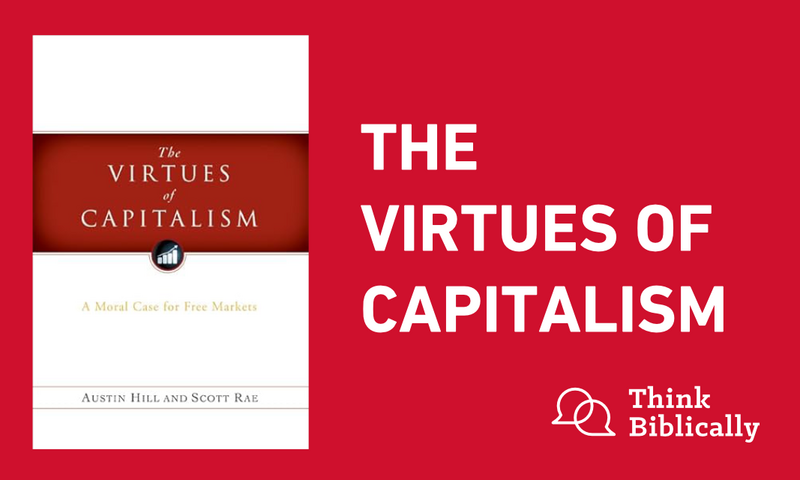
Should Christians support capitalism? How effective has capitalism been in elevating people out of poverty? In this episode, which is the second part of a two-part series, Sean and Scott lay out the positive case for capitalism (aka, market economics). In the first part of this series, they offer a critique of socialism. In this episode, they advance a moral and biblical case for free markets and they respond to the most common objections.
Scott's 2010 book on this subject is called The Virtues of Capitalism: A Moral Case for Free Markets.
Episode Transcript
Sean McDowell: [upbeat music] What are the virtues of capitalism, better referred to as market economics? Should Christians be capitalists? Scott, people have asked us to talk about this. You wrote a book called The Virtues of Capitalism, which makes your [chuckles] position clear. This is part two.
Scott Rae: Let's hope so.
Sean McDowell: In part one, we did a critique of a book about why Christians should be leftists. Now we wanna kinda give a positive moral case for why Christians should embrace market economics. Now, with that says, I'm really curious, is socialism making a comeback? And why do you think it is?
Scott Rae: Well, I think it is making a comeback, but among Gen Z. And the reason is because I think of historical myopia.
Sean McDowell: Fair enough.
Scott Rae: You know, you know, I g- I grew up in the... You know, I was born in the '50s, grew up in the '60s and '70s at the height of communism, and watched, you just watched it fail. In fact, I was, 1972, I was in Czechoslovakia- ... And I watched what socialism had done- ... In the country. You, Sean, you'd be amazed at the number of people who were standing around doing nothing and being paid virtually nothing for it. And the number of people who were under, [chuckles] who were under-employed was just staggering. And the, you know, the lack of, the lack of goods on the shelves. I mean, it was, it was clear that the system was failing.
Sean McDowell: I saw that personally, by the way, going to Russia 13 times starting in the early '90s, growing up in the '80s when big movies were, like, Rocky IV, US versus [chuckles] Russia-
Scott Rae: Yeah, yeah. Yeah
Sean McDowell: ... Of course. I saw it with my own eyes, so it doesn't actually surprise me at all. I think the other piece is socialism just s- it sounds good. Like social good, collective, community. So on the surface it makes a lot of promises that are appealing to people. But we'll get to why it doesn't work. What's the... Maybe just lay out for us, what is the basic difference for people to understand between socialism and market economics, again, known as capitalism?
Scott Rae: Who, who owns the means of production.
Sean McDowell: Okay.
Scott Rae: Basically.
Sean McDowell: That's the basic dividing line. [chuckles]
Scott Rae: That's the basic dividing line.
Sean McDowell: Okay.
Scott Rae: I mean, even under socialism, there is a limited right of private property. I mean, even in the Soviet Union, there were laws against theft. You know, so that, just because there are laws against theft doesn't mean you've got a market economy. But it's who, it's who is able to own the means of producing the stuff that we have, and there's, it's a high emphasis on private ownership as opposed to public ownership or state ownership of the things that produce our stuff.
Sean McDowell: So-
Scott Rae: That's the main difference.
Sean McDowell: So there's other philosophical, theological differences that tend to go with it about the nature of the world, about the nature of human beings, but at its core, we're talking economic systems.
Scott Rae: That's right.
Sean McDowell: Is it-
Scott Rae: Now, I think we should be, we should be aware, too, that there's, you know, pure capitalism and pure socialism exist on the extremes. Neither of those exist in real life. I mean, I mean, even, you know, you know, communist China had markets, you know, and they've got... You know, they have a dynamic market-based economy. And, you know, and we have, in the US, we have certain socialist tendencies. Like, we have Medicare-
Sean McDowell: Social Security, maybe
Scott Rae: ... Medicaid, Social Security-
Sean McDowell: Okay
Scott Rae: ... Thing, you know, things like that, so- ... It exists on a bit of a continuum. So where you are exactly on the continuum, so the US would be here, and maybe Scandinavia would be, you know, a bit, a different market, different set of market incentives.
Sean McDowell: Yeah, that makes sense. That's fair. I'm gonna quote you directly that you wrote with your book, Austin Hill. You said, quote, "Despite its flaws, failures, and imperfections, capitalism remains the most moral choice among the world's economic systems." Explain and defend. [chuckles]
Scott Rae: Well, there's three reasons.
Sean McDowell: Okay.
Scott Rae: One is it historically is the best... It's the, it's really the only proven means for lifting the poor out of po- lifting large numbers of the poor- ... Out of poverty. And it is, it is clearly the best means to obey the Biblical mandate to care for the least among us. And, and Sean, if throwing money- ... At the poor around the world would've worked, it would've done so. By... We've been throw-
Sean McDowell: It's been tried
Scott Rae: ... We've been doing it, we've been doing that for the last 50 years, and it hasn't worked. What works are systems in place that allow people to start small businesses, to take part in entrepre- in entrepreneurial activity- ... That enables them to lift themselves out of poverty by pursuing their own self-interest in, also in ways that meet the common good. That's, that's one.
Sean McDowell: Okay.
Scott Rae: The second reason is, it is the best way to fulfill the Genesis 1 creation mandate- ... That God gave to human beings. The first imperative that God gave to Adam and Eve after they were both created was to be fruitful.
Sean McDowell: Mm-hmm.
Scott Rae: And we typically put be fruitful and multiply together, meaning procreation, okay, but they are separate.
Sean McDowell: Oh, okay.
Scott Rae: Multiply and fill the earth go together for procreation. Be fruitful has economic and vocational overtones to it. It means to be economically, it means to be vocationally fruitful. It means unlocking what God has embedded into His creation and bringing it to a place where it can benefit the common good. So and market systems I think are the best way to do that because they provide incentives for innovation and initiative.
Sean McDowell: Okay.
Scott Rae: Third, and maybe there'd be a fourth.
Sean McDowell: Sure.
Scott Rae: Third is I think it best accords with the freedom that God has created human beings with by virtue of being made in His image. Religious freedom I think is the most basic freedom, but economic freedom is right behind it. And lots of other freedoms go with that. And the freedom to order your economic life according to your own self-interest, and the Bible never condemns self-interest. It only mandates that it be balanced by need, the concern for the interest of others. So, and then a fourth reason is that market-based systems both require and nurture a certain set of virtues- ... That are essential. They require creativity, initiative, innovation, ent- what we call entrepreneurial traits, but they also require perseverance. They require a work ethic. You know, they require punctuality. They require personal responsibility. They require good stewardship. All of these virtues, they both require them and they nurture them at the same time. Think about- ... Who would you rather hire, somebody characterized by the fruit of the spirit or by the deeds of the flesh?
Sean McDowell: See-
Scott Rae: That's, that's not even close. And so I think, and I think, you know, we get, we get a lot of, we get a lot of comment about outliers, but the vast majority of people who succeed in the marketplace do so because it's assumed that there's a m- at least a modicum of virtue that's necessary to be successful.
Sean McDowell: Which is why, and this is a separate point, sometimes capitalism is not the best system for a nation where it's at just morally, experientially. You wanna get nations there, but it's not a cookie cutter for every nation of all time.
Scott Rae: Right.
Sean McDowell: That doesn't necessarily fall from the point you're making.
Scott Rae: It, it, yeah, markets have to be planted in fertile ground.
Sean McDowell: There you go. Th- Well said. Okay, now in some ways you might have answered this question, but another quote that you and your co-author said is that, "Not only do you believe that it," market economy, economics, "is the preferred choice, we also believe that capitalism is the most consistent with a, with a Judeo-Christian view of the world." Now, you might have answered this because your second one was about be fruitful, economically grow, about certain virtues, about caring for our neighbor. All right, so why does capitalism work? And there's a little bit of an irony there 'cause we're talking about [laughs] work-
Scott Rae: Yeah
Sean McDowell: ... And what work is. In other words, why has it driven so many people out of poverty? And again, to quote the book, you said, "It's transformed entire regions of the world, and as a result, generated such robust economies." So from kind of a worldview perspective, why does it do the things that you're describing?
Scott Rae: Well, because Sean, part of human nature, and part of it I think is because we're made in God's image, but also I think part of it because we're, we're fallen also, is that human beings respond to incentives. And if people don't have incentives to work, to take risks, to go the extra mile, they're probably not gonna do it. Most people are not motivated for the long term. Now, they'll do it in the short run maybe, but they're not f- they're not motivated to d- to be volunteers for the long haul. I mean, both of us, we love what we're doing, and we do it because of its intrinsic value.
Sean McDowell: That's right.
Scott Rae: But I suspect if we weren't getting paychecks for it, we'd be doing something else.
Sean McDowell: [laughs]
Scott Rae: Right? Maybe I shouldn't speak for you on that.
Sean McDowell: [laughs]
Scott Rae: Maybe you're just more altruistic than I am.
Sean McDowell: [laughs] I'll just let that one sit. [laughs]
Scott Rae: But let me, for our viewers, you'd be, you'd be well-served, I think. There's a, there's a short video that's been done that's gotten ... It's, it should have ... If it hadn't gone viral, it should have.
Sean McDowell: Okay.
Scott Rae: The Swedish demographer Hans Rosling did a piece, it's about four minutes, called 200 Years, 200 Countries. And it ch- it charts how over 200 years, most of the world emerged from $2 a day poverty into, you know, thriving middle and upper classes. And it's a fascinating look at it.
Sean McDowell: Yeah.
Scott Rae: And he do- he does it, like [laughs] he does it in, like, f- three or four minutes. And everywhere markets have been tried, they've succeeded because they wed the pursuit of self-interest with the common good.
Sean McDowell: So you reject the idea, and I agree with you by the way, that we read in the book why Christians should be leftists, that we're kind of wired to just feel good. We wanna work. We wanna contribute to the whole. Like, that's often framed as being sufficient for a work ethic, and you would just say that's not sufficient.
Scott Rae: That's, that's ... Well, that's, that's just not, that's not the reality of living- ... In a fallen world. Now, I think part of it, you know, we're not, you know, we're not this, what economists call Homo economicus. We're not just driven by our economic needs and our self-interest. But we're driven by more things than that, but n- but I don't wanna minimize how important it is. And the Bible mandates, Sean, that we pursue our self-interest sufficient to care for our, ourselves and our dependents. I think that's what the Bible means when it says, "If you don't work, you don't eat." y- It means you're not ... If you don't work, you're not entitled to the community's goods that are set- ... Aside as a safety net. And Paul says the person who doesn't provide for his family, it's the strongest possible language in the Scripture. He calls him an anathema. You know, let them be accursed. That's a, that's really a significant statement from the Apostle Paul about the importance-
Sean McDowell: That's strong
Scott Rae: ... Of pursuing your self-interest sufficient to care for yourself and your dep- your dependents.So that's the reason. This is, this is what Adam Smith was onto. He said, "You don't, you don't get your meat or your milk from the butcher and the milkman, and you don't get your bread from the baker out of their concern for altruism. You get it because of their concern for their self-interest." Which also meets the common good.
Sean McDowell: Well, the Bible says to love others as you love yourself. The assumption is we naturally love ourselves, and that's good. We're supposed to. In fact, we can only really love other people and care for their interests if we first care for our own. [laughs] It's not a bad thing. That's how God has made the world. So you've talked about why capitalism works. Why does socialism always fail? What is it on a worldview level that no matter how good intentioned we are, it doesn't work?
Scott Rae: Well, it's economic... Well, for one, it mis- it misunderstands what a human being is. But on economic reasons, the reason socialism fails is because, as Margaret Thatcher put it, you eventually run out of other people's money.
Sean McDowell: [laughs]
Scott Rae: And I think she was right about that.
Sean McDowell: I agree.
Scott Rae: Because socialist systems don't create wealth, they redistribute it. And people, there's no incentive for people to innovate, to take risks, to work hard, to put themselves out for their companies. And there, if your, if your income is capped, basically there's n- once you reach the cap, you lose incentives to work hard. This is why France, several years ago, raised their tax rate to 75%, and people stopped... You know, money fled the country.
Sean McDowell: Yeah.
Scott Rae: And entrepreneurs stopped- ... Innovating because the way they would say, "What's the point?" They're not, you know... We, yes, we have, we have altruism, but alt- in a fallen world, altruism is not enough to carry us in the long term. And that's the genius that Adam Smith was onto, is that pursuing your self-interest in ma- in many cases, not all of them, but can provide for the common good.
Sean McDowell: And you guys are not shy of talking about some of the weaknesses and flaws. You're not saying this creates a utopian society. So you're not saying it's, it's perfect.
Scott Rae: Well, and I think-
Sean McDowell: You're saying it's-
Scott Rae: Yeah. And one of the other reasons socialism's failed is what you mentioned about utopia. Because utopias almost always require totalitarianism to pull them off. And the reason for that is because people don't like to give up what they've achieved. They don't like to give up the freedom to pursue their own self-interest and to better themselves economically.
Sean McDowell: And by self-interest, it's themselves and their family and their church-
Scott Rae: That's right
Sean McDowell: ... And their community, rather than some amorphous government that's out there. It just doesn't work, right? And the government had... There's no accountability. If the government spends money, it doesn't affect them. It's somebody else's money. But when I spend my own money, I see it subtracted from my bank account. [laughs] It's very personal, so I'm, as a whole, gonna spend it differently. That's, that's the disconnect that often exists.
Scott Rae: I think there's, there's a dynamism to market economies that doesn't exist in socialism.
Sean McDowell: So there's a number of objections, and you deal... I think you, I think you deal with each one of these, but these are ones that I've heard and would love your take on it, Scott. One is that capitalism is Darwinian. It's kind of dog eat dog. Its competitive structure encourages disunity, non-cooperation. If you don't create this product, you fail, so I've got to beat you to get to the top.
Scott Rae: I'd say n- it's competitive, but to say it's non-cooperative is clearly not true. Because nobody creates their own products by themselves.
Sean McDowell: [laughs]
Scott Rae: [laughs] That, that isn't happening. As we mentioned, I think in part one, every, you know, bringing a product to market requires incredible cooperation among competing businesses, and businesses that are pursuing their self-interest. In fact, you know, when I, when I hit send on an order for a new computer, hundreds of people spring into action going to work to fulfill my order. And if they don't do that, then I don't get my computer. Right? Yeah, is it competitive? Yes. Competition's a, competition is a good thing because competition enables us to get, make sure that the best products are the ones that succeed.
Sean McDowell: That's right.
Scott Rae: And the ones that have the most benefit are the ones that succeed. Now, to be, to be fair, i- you know, the markets reflect the virtues and values of the participants in it, which would suggest that there are times when, sort of to get, to get to another major objection, that it's, it is gonna all be based on greed.
Sean McDowell: Well, that actually-
Scott Rae: That's-
Sean McDowell: ... Was my next one.
Scott Rae: All right.
Sean McDowell: So tell, respond to the claim-
Scott Rae: Yeah
Sean McDowell: ... That capitalism is about greed.
Scott Rae: Well, for one, greed's a human vice, not an economic one. To say there are no greedy people among socialists is absurd. They just had other ways to satisfy their greed, that were not, th- and that's why they, that's why in most socialist countries they have thriving black markets- ... Which are, I'd say, much more pure- ... Market exchanges-
Sean McDowell: [laughs]
Scott Rae: ... Than what exists above-
Sean McDowell: For better or worse
Scott Rae: ... Above, you know, above ground.
Sean McDowell: Yeah.
Scott Rae: And I would say profit and greed are not the same thing. Profit just means that you're using your resources efficiently. And I think, I think what I would say is an honest profit actually means that you are fulfilling the dominion mandate faithfully.So an honest pro- by honest profit I mean is not one that's not fraudulent or producing a product that's inherently evil. Like pornographers are not fulfilling- ... The dominion mandate, even though they're very profitable. That's a dishonest profit.
Sean McDowell: Good distinction. So you're right, like c- greed is in every economic system because human- it's a matter of the heart that we carry with us. Is there something you would say to Christians, though? Like, we have to be especially careful and cautious in a culture where I can create a business for my own good, I can buy products that I'm promised will fill my heart, that there's at least more temptation to greed here in a capitalist society-
Scott Rae: No, no
Sean McDowell: ... Or is it just a different kind?
Scott Rae: Well, I think it's, it's, it's because market systems have the capacity to create wealth like no others, there probably is the temptation toward greed and toward overconsumption. Right? But with that, there's also... It also creates the resources for charity and for a safety net like we've never seen before. And so the b- you know, it would I rather be tempted by greed than by grinding poverty?
Sean McDowell: For sure.
Scott Rae: Yes. I will, I will deal-
Sean McDowell: But-
Scott Rae: ... With my greed. And I think the reason, the Bible has a, as a s- as a solution for greed, and it's called giving. You know, God commands giving not because He needs it. The kingdom will get along just fine if we hoard all our wealth. Our heart is what needs our giving. 'Cause that's, that's what breaks the power of money in our lives.
Sean McDowell: That's fair. So one of the other critiques that comes up often is that in a capitalist system, the rich get richer at the expense of the poor.
Scott Rae: Yeah, you gotta be careful how you say that, because that's saying it clearly.
Sean McDowell: Okay.
Scott Rae: Okay? When they leave out the at the expense of the poor and just say the rich are getting richer and the poor are getting poorer, sometimes that at the expense of is implied but not stated clearly, and, you're right to state it clearly, okay? And I think that for most of the history of civilization, that was true. And as a result, everybody was equally... I mean, they were equal, but they were equally poor, wretched, and miserable. And once markets were introduced, then you could do well financially and do good at the same time, which was not true in the ancient world prior to market systems being introduced. So I would say yes. Just because, just because the rich are getting richer doesn't necessarily mean that the poor are getting poorer. Because there is the sense when a, when a profit is made and when economies grow, the size of the pie actually gets bigger. And just because the rich are getting richer, you know, factory wages can be up at the same time. Now, there are things that, there are things about market systems where you do have dislocations sometimes. And so sometimes there are temporary setbacks. That doesn't say that there is consistent economic growth all the time. But it does say that the general pattern has been that the size of the pie generally gets bigger over time.
Sean McDowell: That's really the key, that it's not a finite, if I get, that means you lose. Wealth can actually be created and generated so the pie gets bigger.
Scott Rae: Yeah. Wealth is being created every day.
Sean McDowell: Hence not at the expense of the poor is why you focused on that point.
Scott Rae: That's correct.
Sean McDowell: Okay. All right. So you talked about this a little earlier, that capitalism leads to overconsumption and materialism. I think, I think you've addressed that one. So-
Scott Rae: I'd say, yeah, materialism is a, is a human vice-
Sean McDowell: Fair enough
Scott Rae: ... Just like anything else.
Sean McDowell: And e- you might say in a different economic system, it, there might be other vices that are emphasized more, but it's not like there's just no vices in other economic systems-
Scott Rae: Well, I'll tell you what-
Sean McDowell: ... They're just expressed differently
Scott Rae: ... I'll tell you what the other vice is. When, when you are stuck in your economic strata, the vice is envy- ... And covetousness, because that's all you can do is- ... Look up with envy at the person, at the social economy standing above you. And I mean, in my view, envy and covetousness are far worse in socialistic systems than they are in market systems.
Sean McDowell: That's... I'd love to explore that, but that point is fascinating. I'ma let that sit with folks. So the last, objection that is often raised is that capitalism leads to economic busts. So in our last episode, one of the... I think there were seven or eight factors that led the author of the book Why Christians Should Be Leftists to abandon kind of a capitalist system, and one was the economic crash of 2008, 2009. So you think about, like, the dot com bust of the early 2000s, market crash of 2008. I'm sure another one is coming in due time. Some people are talking about an AI crash. Maybe that could happen in the future. Doesn't capitalism lead to economic busts like that?
Scott Rae: It can.
Sean McDowell: Okay.
Scott Rae: But I would say, by contrast, socialism is a constant economic bust.
Sean McDowell: [laughs]
Scott Rae: Not just at one time.
Sean McDowell: I didn't expect that answer. [laughs]
Scott Rae: So-
Sean McDowell: [laughs] Okay
Scott Rae: ... You know, the do- the dot, you know, the re- part of the reason for these booms and busts, there's... That's a whole complicated subject, but part of the reason for that is because people don't always act in their economic self-interest. The dot com bust was labeled irrational exuberance. And I think that was right
Sean McDowell: I remember it well
Scott Rae: That w- that was right.
Sean McDowell: Yeah.
Scott Rae: And I think the, you know, the market crash in, you know, when the financial system nearly melted down, I think was largely through... This is a quick and dirty summary of it, but-
Sean McDowell: Sure
Scott Rae: ... Largely through unethical activity where people were foisting securities on the investing public knowing that they were useless and knowing that they were gonna get bailed out. That's my, that's my-
Sean McDowell: And they were gonna get-
Scott Rae: That's my take
Sean McDowell: ... Bailed out because of the-
Scott Rae: By the, by the federal g- because the bank-
Sean McDowell: Systems that were arguably more socialist on the spectrum would bail them out. Is that a fair way to characterize it or not-
Scott Rae: Not quite
Sean McDowell: ... Quite that way? Okay.
Scott Rae: Because, because the federal government recognized that they were too, that the institutions that were failing were too big to fail.
Sean McDowell: Got it. Okay.
Scott Rae: Now, we can... There's a l- I mean-
Sean McDowell: I'm sure that's a whole story
Scott Rae: I've, I've read ev- I've read everything published on that market crash.
Sean McDowell: Oh, okay.
Scott Rae: And I'd encourage our listeners, if you've not read... The, the best thing on this is Michael Lewis's book called The Big Short.
Sean McDowell: Oh.
Scott Rae: Which was, which was made into a movie, which I think really captures that really nicely. About all... And it was the, it was excesses, and it was, it was putting risks onto investors unknowingly. And I think the conclusion of The Big Short was that the people who did that knew they were gonna get bailed out. So anyway, that's a-
Sean McDowell: Okay
Scott Rae: ... Longer, lots of people, we can agree to disagree about some of that. But is that endemic to capitalism? I say not necessarily. I mean, Australia's had a market system for a long time. They've, they basically avoided a lot of these booms and busts.
Sean McDowell: And they have a capitalist system-
Scott Rae: Yes
Sean McDowell: ... Largely speaking.
Scott Rae: Yes.
Sean McDowell: Interesting. Okay. So even if it were, some of this, I guess, has to be our expectations. If our expectation is constant growth forward without any steps back, and your home was gonna increase 10% every year. Like, if you have that expectation-
Scott Rae: Can't go on forever
Sean McDowell: ... Then the bust is going to-
Scott Rae: Yeah, yeah
Sean McDowell: ... Be a negative. But if you compare it as a whole, capitalism in America, with some of the busts, which some people really have been hurt by it, and we can ask whether or not those are caused by capitalism-
Scott Rae: Yeah
Sean McDowell: ... Or not, but they exist.
Scott Rae: You know, and whether those harms are permanent or temporary.
Sean McDowell: Fair enough. It still doesn't compare whatsoever to a socialist system. So the comparison shouldn't be capitalism during its upswings versus the downswings. It should be capitalism with the upswings and downswings versus socialism. Then it's not even in the same ballpark. It's like JV versus the NBA.
Scott Rae: Something like that.
Sean McDowell: Is that [laughs] something?
Scott Rae: Yeah, something like that.
Sean McDowell: You don't want to be too nailed down to that example, but generally makes the point.
Scott Rae: Yeah.
Sean McDowell: Okay.
Scott Rae: I think, I think most people, if they had their choice between living in socialist systems and living in market systems, they would choose market-based. Now, they may choose a, maybe something that's a little, a little differently structured. They may choose Europe, Scandinavia, and they may choose higher taxes and more services. That, that's not a, that's not an unreasonable choice.
Sean McDowell: Okay.
Scott Rae: What it lacks, though, is the incentives for innovation, 'cause you just get to keep less of your income, and there's le- I think less incentive to go the extra mile.
Sean McDowell: Look, people in a capitalist system have different proclivities to take risks, right? If somebody wants a more secure, solid job, you could go in the military, you could become a teacher, you could do certain things, but you have the opportunity-
Scott Rae: Yeah
Sean McDowell: ... And there's a trade-off with that, but also to take the kind of risks that create wealth, create jobs. It's just the opportunity to do that doesn't mean people can't follow systems and give up some of that for security. A capitalist system allows that. It just doesn't require it and squelch [laughs] those who wanna take the risk.
Scott Rae: That's, that's... Yeah, that's correct.
Sean McDowell: All right. So are there any goods and services that should be off the market? Like, slavery is an obvious one, that we shouldn't buy and sell human beings. [laughs] I mean, it's obvious now-
Scott Rae: Yeah
Sean McDowell: ... Not throughout the history of the world.
Scott Rae: 14th Amendment to the Constitution has something to say about that.
Sean McDowell: There, there you go. So it wasn't obvious throughout the history of the world, but it's obvious now. But are there other pressing issues today, and you and I have talked about this- ... Such as surrogacy, just to give one example, but you could give others, that we should not allow on the market, and how do we make some of those decisions about what's for sale and what's not?
Scott Rae: Yeah. I would think, I would say adoptable children should not be for purchase and sale on the open market. Even though that's probably a much more efficient way to do it than the system we have in place. Efficient, I would say, not effective. Those are two different things. Um-
Sean McDowell: Okay, explain.
Scott Rae: Well, it does, it wouldn't, it wouldn't prevent people from, you know, simply, you know, using financial means as the only determinant of whether you get a baby or not.
Sean McDowell: Okay.
Scott Rae: So it would take away the, you know, sort of the fitness of the parents, all of that. And it would, it would force people, and this is, this is part of the reason that something should be off the market, because we don't want financial dire straits to be coercive to people, to force them to do things that they would otherwise never consider doing. So that would be... I would say, you know, organs for donation- ... Should be for donation, not for saleNow, don't get me wrong, I wouldn't have... I would've been okay if my brother had paid me 10 grand-
Sean McDowell: [laughs]
Scott Rae: ... For my kidney. [laughs] But-
Sean McDowell: So you're saying not, it, so it's not an in principle problem, but having a system in which they're for sale is going to create a supply and a demand that's gonna have a negative net effect. Is that what you're-
Scott Rae: Well, I'd also say, for organs?
Sean McDowell: Yeah.
Scott Rae: Yes. And m- I think there, you know, again, having a market would make it a lot more efficient, but it would also create this huge level of unfairness because it would assume, and it would exacerbate the medical, the- ... The gap between the medical haves and have-nots- ... That already exists. And I think the way we, the way we distribute scarce resources medically is first come, first serve- ... For the most part.
Sean McDowell: And that's part of the concern about surrogacy, is that the rich could hire the poor to be a surrogate, and then people would feel-
Scott Rae: Right
Sean McDowell: ... Inclined to do that in a way that's not-
Scott Rae: Yeah
Sean McDowell: ... Helpful and good for them. That's why-
Scott Rae: Yeah. That, yeah
Sean McDowell: ... Is that the main reason why we don't want that?
Scott Rae: And I, and I'm not, and I'm not thrilled about, you know, a woman's eggs or a man's sperm- ... Being for sale on the open market. Because then you can put specifications on what kind of characteristics you might be inheriting in your child, leads us toward designer children- ... Which I think is a, which undermines the notion of children being a gift.
Sean McDowell: So, so part of the core issue then is, like, are we selling something that's going to undermine human dignity? Like selling sex and prostitution-
Scott Rae: Mm-hmm
Sean McDowell: ... Is going to undermine-
Scott Rae: And-
Sean McDowell: ... The dignity of the family
Scott Rae: ... That's, that's another, that's another one I would suggest
Sean McDowell: ... The dignity of the woman. Surrogacy undermines the dignity. And of course, just because there's- ... Clear cases, like I would say drugs and prostitution, doesn't mean there's not more difficult cases that could go either way, and there might be some of those. But capitalism doesn't mean we sell anything whatsoever.
Scott Rae: No. And here, the principal problem, Sean, is that if everything's a market transaction, then it, then it crowds out altruism.
Sean McDowell: And that's part of the concern also with socialism, is that it removes giving to the government-
Scott Rae: Correct
Sean McDowell: ... And takes away the need and incentive to give individually-
Scott Rae: Well, yeah
Sean McDowell: ... To people potentially.
Scott Rae: And it also takes away, takes away the resources too. [laughs]
Sean McDowell: Oh, and the resources to do it. Fair enough. Okay. Well, again, we could have a huge conversation on this, but one of the big topics that people talk about is healthcare. Is the problem that we don't have enough market economics and competition, or that we're not enough like Canada and don't have a more of a, or say Europe, a more state-run kind of healthcare system, or is it really not [laughs] simple enough to-
Scott Rae: I'd say it's neither of those.
Sean McDowell: Okay.
Scott Rae: And c- because both our system and the Canadian system share the same basic flaw, and that is we have objectives and goals that are incompatible. Our healthcare system is trying to provide world-class innovation and care at low cost with universal access and full freedom of choice, and you can't have all those things at the same time. You just can't. You can't have the, you can't have the pharmaceutical industry that we have coming up with these incredible, you know, life-altering, game-changing medications, and have, and have everything be low cost at the same time. 'Cause the pharmaceutical companies are, you know, most of what they experiment on fails. And they pour billions of dollars into things that never get to market, and rightly so. And so we have to make choices in this. Now, the- ... The merit of a system like Canada and the UK is they've made their choices consciously. We've defaulted into our choices. But we have to... I'm waiting for the politician to say, "In healthcare, you can't have it all at the same time," and nobody's been willing to say that.
Sean McDowell: So last question for you. You've been an advocate of capitalism, again, market economics.
Scott Rae: Thank you.
Sean McDowell: And you're one of the first people that I had as an undergrad, I think my senior year. Now, my brother-in-law took your class on economics. We talked about this a little bit, and then in grad school some. And then really for me, reading Jay Richards' book God, Greed, and Money was like, oh, my goodness, this is... I agree with what you said about it being the engine or the mechanism that has liberated more people from poverty than anything else in the history of the world.
Scott Rae: Just since 1970.
Sean McDowell: Just since 1970.
Scott Rae: 1.5 billion people.
Sean McDowell: And that's because of a shift towards market economics.
Scott Rae: Right.
Sean McDowell: So how much do you think churches should talk about this? Because I don't think I've ever heard a sermon on capitalism. I'm not even saying they should give a sermon on capitalism. In some ways, I don't have a lot of power over the kind of government system that I live in.
Scott Rae: Right.
Sean McDowell: My responsibility-
Scott Rae: Right
Sean McDowell: ... Is to my neighbor, like we talked about. But should, especially since we're seeing socialism grow within maybe younger millennials and Gen Z-ers, and arguably the next generation, should this be an issue that more churches are championing, and if so, how?
Scott Rae: Well, for one, Sean, I think we should be honest about the history of socialism in our public schools.
Sean McDowell: You mean how it's taught-
Scott Rae: How it's taught
Sean McDowell: ... In our public schools. Okay.
Scott Rae: But I think in our churches, I think we talk about money a lot. We don't talk a lot about, a lot about economic life in general, and I think part of the reason for that is because we don't know what to do with the first-cent- with the first-century economy, which was so different than our ownAnd we don't, we don't know what to do with things like Jesus' statement that it's harder for a rich man to enter the kingdom of heaven than a camel to go through the eye of a needle. And we don't know what to do with the, with the Bible's lack of teaching about ambition. The Bible has virtually nothing to say about economic ambition, and the reason for that is because people's place was fixed.
Sean McDowell: Right.
Scott Rae: It, it was, it was, it was, it was [laughs] it was a moot point.
Sean McDowell: The system it was written in. Yeah.
Scott Rae: And so I think we need to be talking about economic life, but we have, we have to take into account these vast differences and that should, that should govern how we interpret the biblical text on this. But I think there are some general principles that we need to be talking about. One is God owns it all. Okay? It's his. God has entrusted this to us. God has, God has given us a right of ownership. God has given us a responsibility toward taking care of the poor. God's given us an obligation to pursue our self-interests sufficient to take care of our own needs and those of our dependents. You know, things like that, which we lay, we lay out all of those in the book. There's several more of those. I think those are things that we can be talking about when we talk about money. Most of, most churches talk about money when it comes to giving.
Sean McDowell: Yeah.
Scott Rae: But there's, that's just a small piece of the biblical wisdom about money and economic life.
Sean McDowell: I imagine socialism can take away the incentive and resources to give. I imagine some Christians could go, "Well, as long as I support capitalism, that's creating a system. I've done my duty." That is definitely-
Scott Rae: Mm-hmm
Sean McDowell: ... Not what you're arguing for-
Scott Rae: Nah
Sean McDowell: ... Here.
Scott Rae: Definitely not.
Sean McDowell: We still have a responsibility biblically over and over again to-
Scott Rae: Oh, if anything, you-
Sean McDowell: ... Care for those, to give
Scott Rae: ... I think, I think you have, you have more responsibility because you have more resources at your disposal.
Sean McDowell: [laughs] Okay, fair enough. That's a good way to put it. Well, I appre- your book is fascinating, The Virtues of Capitalism: A Moral Case for Free Markets, and it's now in my top two books alongside, Jay Richards' book I just think is fantastic.
Scott Rae: It's good stuff.
Sean McDowell: Virtues of Capitalism. God, Greed, and Money, I think is the title. Makes a biblical, a historical, and an economic case that capitalism really is what's best for society, and I'm gonna check out that video you mentioned, that four-minute video. We'll try to link to that below.
Scott Rae: That's a good call.
Sean McDowell: All right, friends, let us know what you think about this. You can email us at thinkbiblically@biola.edu. If you're watching this on YouTube, you can comment below. Is this kind of content helpful? Would you like more about how to think biblically or kind of defend free market economics? Or if there's enough objections that people write in and send us, maybe we'll do a full episode responding back to it, but we would love to hear from you. This is a little bit of a unique two-part series that we've done, so make sure you subscribe and follow, and, thanks for joining us on the Think Biblically podcast. [outro music]