Biola University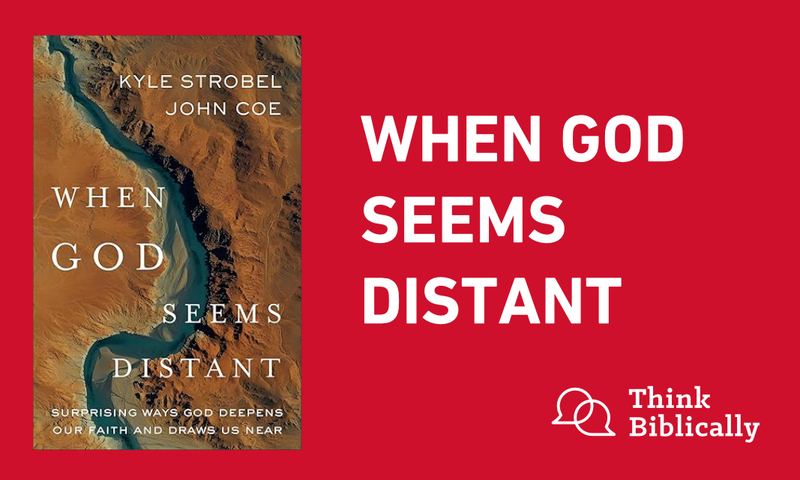
Why have we misunderstood what is normally involved in spiritual growth? What does it mean to say that our God is a withdrawing God?” And what do we do when the bible becomes boring and prayer seems pointless? We’ll discuss these questions and more with our guest Dr. Kyle Strobel around his new book When God Seems Distant.
Kyle Strobel (Ph.D. University of Aberdeen) is the director of Talbot's Institute for Spiritual Formation and Marriage and Family Therapy program. He is a systematic theologian interested in theological anthropology, Jonathan Edwards, spiritual formation and prayer. He writes both popular and academic books and articles, and is on the preaching team at Redeemer Church, La Mirada. Kyle writes regularly on kylestrobel.substack.com
Episode Transcript
Scott Rae: [upbeat music] What do we do in our spiritual lives when God seems distant from us? Why have we misunderstood what is normally involved in spiritual growth? And what do we do when the Bible becomes boring and prayer seems pointless? We'll discuss these questions a whole lot more with our guest, Dr. Kyle Strobel, and on his new book, When God Seems Distant. I'm your host, Scott Rae.
Sean McDowell: I'm your co-host, Sean McDowell.
Scott Rae: This is Think Biblically from Talbot School of Theology, Biola University. Kyle, welcome. Great to have you with us. So appreciate your new book that, you did with our, with our colleague, Dr. John Coe. Just great stuff, and I'm looking forward to our listeners hearing some of this really enlightening stuff that you bring out there.
Kyle Strobel: Great. Thanks so much, John. Thanks so much, Scott. Good to be with you guys, as always.
Scott Rae: So what is it about our spiritual experience- ... That motivated you to write a book like this? It's, it's a common problem, I think.
Kyle Strobel: Yeah.
Scott Rae: But there, I think there's, there's, sounds like there's things in particular that you were aiming at.
Kyle Strobel: Yeah. Well, this is actually a part of a larger project, so this is part of a trilogy that John and I are working on in spiritual formation. We started with Where Prayer Becomes Real, kind of introducing spiritual formation. And for us, the second question really becomes about developmental spirituality. Like, why does Scripture talk about the spiritual life as a life of maturation, comparing us to infants in Christ who were on milk versus- ... Adults who are on solid food? So you get, you get that imagery all throughout Scripture. And, and one of the things we find in Scripture just everywhere is as we live with God, everyone seems to be shocked at how He behaves. [laughs] I mean, it's a, it's a very inch... I mean, everyone from Job to the psalmists to, I mean, Jesus, the Son of God, crying out from the cross, "My God, my God, why have you forsaken me?" I mean, that's not a script any of us would've written just by thinking of a good God and His people. And so John and I certainly know that experience in our own lives. You know, we were both Bible students as undergraduates. We both went into seminary. We're both involved in ministry. And, and we both hit stages where it was like, "Ah, this feels like death." Like, [laughs] I just, I don't wanna do this anymore, or I'm looking at my Bible and it's like, man, I remember a season when I just looked at my Bible and it just felt like opportunity and glory and excitement, and now I'm looking at it and it just feels, like, heavy and prickly. [laughs] And, and so the question we wrestled with was why? Why do we experience this? And then as we read the Christian tradition, why have we all experienced this? I mean, that's one of the things that was so striking, is how in our whole both Protestant and broader Christian experience, we discovered throughout the ages, Christians named and experienced these very things. And so we really wanted to meet people in those experiences because what we find is almost inevitably when Christians do experience this, they blame themselves- ... Or they blame their leaders. And so you'll get Christians be like, "Well, that church down the street, they all seem to be excited. Must be my pastor's fault I'm going there." Or I think more often than not, they just think, "I've done something wrong." And so we wanted to try to shepherd them from that space back to the gospel, in a lot of ways, and back to their Lord ultimately.
Scott Rae: Yeah, I get, I get where people could say, you know, if the Bible becomes boring, that's a me problem.
Kyle Strobel: Totally.
Scott Rae: Um-
Kyle Strobel: Yeah, yeah
Scott Rae: ... And trying to, trying to help people deal with that. So what, you describe the, there are three seasons of the soul-
Kyle Strobel: Yeah
Scott Rae: ... That you refer to that are part of this developmental spiritual experience.
Kyle Strobel: Yeah.
Scott Rae: What are those? 'Cause that's, that's, I th- I think that if people get that, I think that's the big idea-
Kyle Strobel: Yeah, yeah
Scott Rae: ... Of the book.
Kyle Strobel: That's right, yeah. So the first season, historically we just call this consolation, and so there's different experiences of consolation. The most obvious one is typically either a brand-new Christian, if they became Christian kind of later in life, or most people, if they grew up in the Church, can kinda name a season where you're, you're owning your faith for your own the first time. And you kinda know you're in a season of consolation when, you know, especially early consolation, where every sermon was just amazing, right? Every worship set was, like, the greatest worship set ever produced. Every Bible study was profound.
Sean McDowell: You were on fire, we would describe it in evangelical-
Kyle Strobel: Totally
Sean McDowell: ... Circles.
Kyle Strobel: That's right. Yeah, yeah, and it's, you know, it's kind of the honeymoon of the faith. And it, and again, I actually think that's a important parallel, where this is a season where the Lord is just lavishing His kindness upon us, and He's, He's treating us, as Scripture tells us, He's treating us as infants. And so He's meeting us in our fleshliness. It's, it's so important, I think, in 1 Corinthians 3, Paul talks about infants in Christ, and he says they're fleshly. Like, that's actually astonishing biblical language, 'cause typically-
Scott Rae: Which means what?
Kyle Strobel: Well, which means they're, they're... [laughs] And that's a great question because let me put it in a different frame. If you have, if you've ever had a child, and we all have children, infants are narcissists, right? [laughs] Like, they just are. Now, we don't call them that because they're infants. Like, they're supposed to be narcissists. But objectively speaking, if any other person behaved like an infant would, crying out whenever they wanted food-
Scott Rae: Throwing, throwing tantrums
Kyle Strobel: ... Throwing tantrums. But in that, in that developmental phase, it's appropriate. And so Paul's naming spiritual infancy as an equivalency with fleshliness, and it is kind of living according to your passions, which... And, and here passions are kind of, your embodied desires are just driving your life. And so God says, "Okay, I'm gonna meet your embodied desires."You used to love these sorts of secular things. Now that sermon is gonna actually meet that passion. Now that worship set is actually gonna awaken those desires. And so God kind of s- and it's so amazing that God would do this, [laughs] that God kind of meets us right in our deepest longings. The problem is, in infancy, most of us equate the feeling of consolation with God's presence and acceptance, and that's where things... So now God tends, and this is the second season, God then begins to lead us into the desert. And if you want a biblical archetype for this, think of the Exodus, right? So you have- ... God delivering Israel very visibly, very profoundly, lots of consolation. I mean, so much consolation, the Egyptians are, like, giving them jewelry. Like, "Get out of here, please. [laughs] Take whatever you want." And then he marches them in the desert without food or water. And again, suddenly it's, "God, what are you doing?" And in Deuteronomy 8:2, we're told that God leads us in the wilderness to show us what is in our hearts. And so desert seasons aren't bad necessarily. They're not horrible, but they're, they're dry. And in evangelical language, we usually talk that way, right? Like, "I ju- I just feel kinda dry."
Sean McDowell: Oh, we do.
Kyle Strobel: And, and I think what's going on here is the Lord is pulling away. He's, he's, to use the old language, he's weaning us. And as if you've ever weaned a child, [laughs] you know the child's convinced you don't have their best good in mind, but you do. And so the Lord is weaning us off of, off of that consolation, but now experientially, I'm leaving church now, and instead of saying, "Man, what a sermon," now I'm driving home talking to my wife, going, "You know, eh."
Sean McDowell: Yeah.
Kyle Strobel: "That wasn't, that wasn't him at his best."
Sean McDowell: Yeah.
Kyle Strobel: You know? "Man, I hate it when they introduce a new worship song. I can't really... It just..." And suddenly we kind of find ourself like, wow, we're more critical. We're more... And what the Lord's doing, I think, in this, is the Lord's revealing our hearts to us, as Deuteronomy 8:2 says, and what we're beginning to experience is actually how much of the Christian life we're trying to lift by our flesh. Like that we're actually trying to-
Sean McDowell: By, by our own, by our own efforts
Kyle Strobel: ... By our own efforts carry the Christian life. And so the Lord is kinda saying, "Okay, it's time to grow up. Like, you're gonna have to actually love me and follow me because I'm God, not because I'm gonna give you the experience you want." And then the third season, which our own tradition, and particularly I think here the Puritans, would say this is the most confusing tr- season of the Christian life. It's a season they call spiritual desertion. In the book, we use the language of desolation, which is language that gets used as well. But now this is a season, it's not like the desert, which is just dry. It's a little more like consolation, actually, where God's given you a gift of an experience, but now it's an experience of His absence. And so biblically, I think of Paul's experience here when he narrates in 2 Corinthians kind of 11 into 12, where he names a thorn of the flesh. And so God has given him a gift. It's a messenger of Satan, which is interesting. And we're told the Lord gives him this gift because he's worried that Paul's prior religious experience, prior consolation, would actually puff him up in pride. And so to keep him humble, he refuses to answer Paul's prayer to take this away from him. And he says, "No, Paul, my grace is sufficient for you, for my power is made perfect in your weakness." And so the season of desolation is a season now where we're actually experiencing something positive, but it's a negative experience. Feels like God's left me here. And I will say, i- you know, if you're in this season, experiencing this season, the Puritan tradition uniformly says their biggest worry is you'll start looking in a mirror of your life and questioning your salvation. And pastorally, they would say, "Don't. That's not what this is." But then they would say their biggest worry is you wouldn't have a guide. And in many ways- ... That's why we wrote this book, is to try to give people a guide in this season.
Sean McDowell: The moment you're saying this, I was thinking of how many young people I wanna give this book to. Because from step one to step two is where so many young people will deconstruct and deconvert their faith-
Kyle Strobel: Totally
Sean McDowell: ... Because God, the way it's titled, God seems distant. God feels distant.
Kyle Strobel: That's right.
Sean McDowell: And so much of that are expectations we have, often framed of being on fire, and I had a student this week in my office. He's like, "I read the Bible, and I just don't have the joy and passion. [laughs] What's wrong with me?"
Kyle Strobel: Totally.
Sean McDowell: And I wanna go, "This is not as crazy as you think. This is a-
Kyle Strobel: Yeah
Sean McDowell: ... Process." I should use the term of like, God is weaning you, and you're-
Kyle Strobel: Yeah
Sean McDowell: ... Growing up. Like, you've given me tools to make sense of this.
Kyle Strobel: Yeah.
Sean McDowell: Before we go further, you mentioned that both you and John had Bible training and went to seminary. You also both have apologetic backgrounds.
Kyle Strobel: Yeah, that's right.
Sean McDowell: So we're gonna get into some of these- ... Spiritual practices of how to engage God when he seems distant. But what role does apologetics play beforehand or in this process? And I think of, like, Dennis Prager, Jewish talk show host and commentator, talked about how when parents lose a child, a majority of them it causes them to end up in a divorce. But if they have a philosophy of life that can at least make sense of the pain-
Kyle Strobel: Yeah
Sean McDowell: ... They're far more likely to stay together and keep following God. So what role does that play, if anything, maybe it's not relevant, in this process you're talking about?
Kyle Strobel: Yeah, well, I immediately, one of the first things I think of is just the cultivation of a life that rests on the promise by faith.Rather than simply being tossed by the ways of my experiences
Sean McDowell: Amen
Kyle Strobel: And I think so many... Now here's- But there's a mistake on both sides of this, actually, I find. I find more often than not, people do one of two things. They're either just tossed by the ways of their experiences, and that's kind of the culture we live in, of course. But then I find a whole other group that are also tossed by the ways of their experiences, but say, "Don't trust your feelings." And I think sometimes we say things like, "Don't trust your feelings" ... As a way to shut ourselves off from our inner life- ... In such a way that we actually are just, we're totally ignorant of the way we're tossed by our feelings. And so we wanna kinda chart a middle path here and say, and the apologetics group, I think would have hopefully cultivated a life of the mind in such a way that would help them separate a little bit out of like, well, wait, what's driving this in me? Like, why am I inclined towards this versus this? But I also think that audience can oftentimes be blind to some of the ways that their emotional life is driving their beliefs, is driving how they discern things. And it's amazing. I mean, I mean, I know academics who, you know, PhDs in philosophy and theology, who, when I talk to them about their faith, they're using the language of the mind- ... And all they're really doing is talking about if God feels close or not. [laughs]
Sean McDowell: Yeah.
Kyle Strobel: And so it's, it's, I wanna start-
Sean McDowell: It's a thing
Kyle Strobel: ... To cultivate really in many ways, both this book and its predecessor, Where Prayer Becomes Real. For me, the question becomes, what does it mean to walk by faith? Like, like what does that actually mean? Because faith is opposed to sight. It's not opposed to knowledge, of course.
Sean McDowell: That's right.
Kyle Strobel: But if I'm not looking at sight, then I can't look at just my life or my church or the numbers or my budget as a way to discern if God's present to me. And I think in one way or another, most of us are inclined to give up on faith and to look for sight somewhere else for assurance.
Sean McDowell: Right.
Scott Rae: I remember, Kyle, the fir- I had two reactions when I first got into the book. I thought, f- one, this mirrors my own spiritual life. 'Cause when I came to faith in high school, it was through Young Life, and we had these incredible worship experiences. And I had, I mean, I, the Bible was so exciting, and I could hardly wait to get into it.
Kyle Strobel: Yeah.
Scott Rae: And then, you know, I g- I got, you know, I wouldn't, I would probably not have used the term got weaned off of that. I would, you know, I would say, man, maybe I matured into something that was, you know, not as experience-dependent.
Kyle Strobel: Yeah.
Scott Rae: But, you know, there was definitely a transition, definitely a different stage.
Kyle Strobel: Mm-hmm.
Scott Rae: The other reaction I had was, why have I not heard this before?
Kyle Strobel: Yeah.
Scott Rae: Where, where has this been-
Kyle Strobel: Yeah
Scott Rae: ... In our discussions of the spiritual life? I mean, it just seems, this seems like, as J.P. Moreland would say, "A profound grasp of the obvious"
Kyle Strobel: [laughs]
Scott Rae: ... That our spiritual-
Kyle Strobel: Totally
Scott Rae: ... Growth is developmental. But-
Kyle Strobel: Yeah
Scott Rae: ... Why do we not treat it that way?
Kyle Strobel: Yeah, no, that is a great question. It's, in many ways, it's, it's, there's so many good answers to it, actually, that it's hard to answer [laughs] straightforwardly. I mean-
Scott Rae: I'll, I'll settle for one.
Kyle Strobel: Yeah. Well, there's, let me give you two. I mean, on the one hand, I think theolo- And I'm a theologian. I'm a systematic theologian by training. Theologians are notoriously bad at thinking developmentally in the modern era. And we just are.
Kyle Strobel: The historical theologians we study weren't bad at this. They were actually quite good at it. But a lot of our training has moved away from that. And in many ways, you know, at Talbot, we've tried to recover a segment of theology that we used to call under various names, experiential divinity, practical theology, the Dutch called it Christian ethics, which is an experiential reality of life in the presence of God. It's what we often now call just spiritual formation. So we've tried to recover spiritual theology in the seminary, and I think the fact that it hasn't been in the seminary curriculum in so many traditions has caused us to lose grasp and sight of our own spiritual tradition. And so we actually have, at the end of the book, I wanted to do a little bit of, like, a choose your own adventure at the end of this book because I just kinda realized a lot of people are coming with different questions. And so the first path is actually answering these questions, like, "Well, I've never heard this before." And I have a certain student [laughs] that'll say that to me. Most say it to me, and it is like you asked it, which is like, "This is so helpful. Why have I never heard this before?" Some are a bit incredulous. It's almost like, well, if this were true, I would've heard it before.
Scott Rae: Yeah.
Kyle Strobel: And so we just wanted to kinda show our receipts. Well, it's like, "Oh, you haven't heard this before? Well, let me give you Spurgeon. Let me give you Calvin." "Let me..." And it's like, it's not because we haven't talked about it. In fact, it is everywhere. But unfortunately, after the Enlightenment, Protestants really forgot their own spiritual tradition, and I think a lot of that has to do with what happened to the seminary curriculum, and that stuff had no place to go. It doesn't land in a systematic theology class. It doesn't land in a biblical theology cla- Like, and so you look at how things have kind of been divvied up, we have lost so much-
Scott Rae: Yeah
Kyle Strobel: ... Of our own tradition because of that.
Scott Rae: So it should've landed everywhere, and as a result, it landed nowhere.
Kyle Strobel: That's exactly right. Yeah, that's exactly right.
Sean McDowell: Kyle, you have a line in your book where you talk about our God is a withdrawing God. Now, I was trying to think of any modern worship song-
Kyle Strobel: [laughs]
Sean McDowell: ... That describes him being a withdrawing God, and I can think of this pursuing, this gel Scott. He's on your trail. He's after you. I can't think of one. Maybe there's some classic ones, which is somewhat beside the point.
Kyle Strobel: Yeah.
Sean McDowell: But what do you mean by that? Where does the Bible teach that, and why is it important to think of God on those terms?
Kyle Strobel: Yeah, yeah, no, that's a great question. I think if memory serves, that line comes from Richard Sibbes, who's a Puritan, pastor theologian. And it's funny because y- that line shows up everywhere in our own tradition-
Sean McDowell: Mm-hmm
Kyle Strobel: ... Or a line like it. And you know, what it means is simply thisThat God is not a withdrawing God in the sense that he actually has withdrawn himself from you.
Scott Rae: Objectively withdrawn.
Kyle Strobel: Objectively.
Scott Rae: Yeah.
Kyle Strobel: That's a great distinction. But rather, he's removed the subjective experiences that actually you've been relying on rather than relying on God- ... To expose you to that fact. And so, you know, in many ways, I would equate this similarly. Like, one of the ways I interpret wrath in the Bible, and I think Jonah is the great book here, Jonah teaches us that wrath is for the sake of grace, right? The Ninevites knew this. They heard, "God's gonna destroy you." Well, you know, they should've just said, "Well, eat, drink, for tomorrow we die, [laughs] I guess. I mean, I don't know. There's nothing else to do- ... If God's gonna destroy us," right? Instead, they threw themselves at the mercies of God because they recognized-
Scott Rae: Yeah
Kyle Strobel: ... The declaration of wrath is actually an invitation to come to God and offer your life to him. And I think similarly, what we see all throughout Scripture is God's leading his people- ... In the desert. God... I mean, just think of the Psalter. Like, why is the most... If you look at all the different genres of psalms there are, why is the largest grouping of them laments, where the psalmist says, "God, where are you?" [laughs] Like, "Why have you abandoned me? Why is your face no longer upon me?" I... And so we consistently see this experience. And I, and I would even say if you read the Gospels, pay attention to the disciples' experiences of Jesus. You know, when Jesus asks his disciples, "Hey, what are you guys talking about?" And they have to admit they're debating which one of them is the greatest. Like, Jesus knows what he's, they're talking about. Like, he's exposing them to, "Look what you're doing." And this experience isn't a positive one. It, it is one where God is doing what God always does, which serves as a mirror that you have to look in, and it's a mirror that exposes the truth, right? So I think of James 1, the Word is a mirror, and the temptation is to turn around and forget not what it says, but forget what you look like. Or you think of Hebrews 4:12-13, where the Word is this double-edged sword that causes the thoughts and intentions of the heart to be laid bare. Well, that's not a positive experience. And so Scott, like in my experience with you, just, I had the exact same experience where suddenly the Bible felt like, it's not as exciting as it once was, and I realized I'm now experiencing in a deeper and in a, in a different way, oh, wow, look how little has been formed, actually. Like, early on when the Bible exposed me, that was exciting as, when I was, when I was in the middle of consolation, it was like possible, there were opportunities. It was like, "God's here with me, though. Like, yeah, I'm a mess, but God's here." Well, after a while, [laughs] suddenly it's like, "I'm still a mess. I don't know what to do. Like, why am I still a mess?" And I think one of the things to remember, and a verse that has come to mean so much to me in all of this, is, it, and I think Jesus says something so important in Luke 7:47 when he says, "The one who is forgiven little, loves little."
Scott Rae: Yeah.
Kyle Strobel: And I think he's showing us there what the developmental life of the life in Christ will look like. It'll look like coming to know ever more deeply how desperately we need forgiveness so that we can love much. Well, a young Christian in consolation doesn't think that's what the Christian life's gonna be. [laughs] It's gonna be me crushing my sin, me... You know. And, and if the Lord would just keep lavishing consolation on that person, they actually would never see how much they need Jesus. And so I think this is where our expectation makes sense. Just like my children kind of think the life is gonna be me meeting their needs and demands and, [laughs] and when I begin to wean them off of these things, they're surprised 'cause it doesn't feel loving like they've come to understand love. And so that's the maturation of these things, and it's, I think, what faith requires. If we're gonna walk by faith and not by sight, the Lord's gonna have to pull away from us all the things we use for sight. And a lot of us, that was consolation. Like, we're looking at our consolation going, "Look, God's right here." And God says, "Yeah, that's good for an infant. Now it's time to grow up and realize, no, I am here." "I'm here in your boredom. I'm here in your pain. I'm here in all of it, and I want you to actually show up in the midst of all [laughs] of it with me."
Scott Rae: This is one of the things I appreciate about what we're doing differently with our spiritual formation-
Kyle Strobel: Yeah
Scott Rae: ... Emphasis at Talbot, because when I went to seminary, I s- I postponed that-
Kyle Strobel: Yeah
Scott Rae: ... That getting out of that consolation stage 'cause I started learning Greek and Hebrew, and I really dug into the text. And I was, I was loving what I was learning. But... And then when I got out, I started, you know, I started, you know, I was preaching and teaching-
Kyle Strobel: Yeah
Scott Rae: ... Regularly, so I was in the text, but not for my own spiritual growth.
Kyle Strobel: Yeah.
Scott Rae: It was, it was for ministry purposes.
Kyle Strobel: Mm-hmm.
Scott Rae: So,
Scott Rae: I just wanna be, I wanna be careful that we don't, you know, that we, that we don't see these phases as, you know, the kinds of things that we can, you know, that we can get out of.
Kyle Strobel: [laughs] Yeah.
Scott Rae: But just be, or delay just- ... Because we're doing something that we might think is otherwise a good thing.
Kyle Strobel: Yeah, yeah. Yeah, no, that's, that is a great word, and I think particularly for those going to ministry, 'cause I had the same experience I think, and I think a lot of seminary students do. This is one of the reasons, to your point, I'm so glad we bring this up for them. And it's funny, most students, when we bring it up, they just go, "Oh," and it just changes everything. But I get s- particularly students who are still younger in the faith, they had a late conversion, they immediately thought, "I'm gonna go to seminary," and they're look- listen, they're in early consolation and they're looking at me like, "You just need to love Jesus more." Like, [laughs] I, like I don't-
Scott Rae: Yeah.
Kyle Strobel: ... I don't understand. And of course, normally they're, they're generous enough where they realize, like, "Okay, there's a map here that I haven't yet experienced."But I think a lot of folks, they don't actually deal with their life with Jesus. They keep on going from one set of consolation to another. This is exactly what I did. It's like, "I'll just study harder. I'll just learn more. I'll just... And then when that dries up, I'll just preach with more passion. And I'll just... And now I'm gonna actually use my church to try to find that feeling of excitement again. I'm gonna..." And it's, it is this re- almost this refusal to be weaned off of ourselves. And this is why I think you do get this kind of more narcissistic pull oftentimes in ministry.
Scott Rae: That's really interesting.
Sean McDowell: That is interesting.
Scott Rae: That's a, that's, those are dots I hadn't connected.
Sean McDowell: So I had a student in my office this semester, basically said, "I don't feel like I care about my spiritual life." And kind of looked at me and said, "I think when I read the Bible, shouldn't I feel something?" How would you counsel or what would you say to-
Kyle Strobel: Yeah
Sean McDowell: ... A student at that spot?
Kyle Strobel: Yeah. Well, the first thing I would say is, or it would be a question, which is, have you asked Jesus? Like, have you actually drawn near to your Lord and said, "Lord, I don't care. Where are you in this? What does it mean to be faithful here?" And, you know, and I would actually then turn to Scripture and say, "Actually, I would argue Scripture shows you exactly what you're [laughs] experiencing." I mean, you look at- ... Again, just the disciples who had the visible Lord in their presence. Most of their experiences were kind of negative experiences. I mean, even the most positive, the Transfiguration maybe, before at least the Resurrection, it becomes a profoundly negative experience. You know, Peter wants to stay on the mountain, as we all do. Like, "Hey, mountaintop experience. Like, let's stay. I'll build tents. We'll just camp out here." Jesus immediately brings them down the mountain and exposes them to their spiritual impotence, and they're unable to cast a demon out of a child. He then asked them the question, "What are you guys talking about?" And they have to, they have to wrestle with all of that. And then, you know, James and John are exposed to the fact that they don't want Jesus at all, they want Elijah, because what they want is a prophet to call down fire from heaven. And so they ask the Lord, "Can we call down fire from heaven and consume the Samaritans?" Like, the whole path is one of our expectations being this is gonna be light and glory and fire, and Jesus is going, "I'm walking to the cross, and you're gonna have to bear your cross and follow." But I would actually tell this person, like, even if the Bible exposed you to a totally different way that convinced you my experience should be different, so what?
Sean McDowell: Hm.
Kyle Strobel: Like, you're, like, wherever you are, you're, like, where else are you going to go? [laughs] Go to Jesus. Like, I think in John 6 when Jesus is so offensive, right? He says, "You're gonna have to eat my flesh and drink my blood."
Sean McDowell: Yeah.
Kyle Strobel: And he just refuses to qualify it. [laughs]
Sean McDowell: Yep.
Kyle Strobel: And we're told that, like, crowds of his disciples abandon him. And Peter's words are like, "Lord, where else are we gonna go?" And I think that's a legitimate question. Like, Lord, is there somewhere else [laughs] we can go? 'Cause that was weird. Like, I, where else we... Lord, you have the words of eternal life. And so I'm gonna constantly move people in light of the gospel, in light of the promise, by faith, draw near to your Lord. You're not called to walk by sight. Stop, stop looking at your experiences as if they're telling you where God is and if God accepts you or not. If you're bored out of your mind, draw near to God as the person who's bored out of their mind. God knows you're bored out of your mind, so draw near as one who's actually bored. And, and I would suggest to them that if you actually start doing that, what you'll discover is that you actually begin praying the things you actually care about. And what you'll realize is you actually were kind of removed from your own Christian life. Because instead of praying the truth, you were praying what you imagined a good Christian would pray if they prayed, and so you weren't actually showing up. And that's the theme of Where Prayer Becomes Real. I mean, that's how these books fit together, is we're always saying the solution is Jesus. Like, you can't, you can't fix this on your own. Jesus told you, "Without me, you can do nothing." And so if you're bored, you have to know, I can do nothing about this without Jesus, and so I need to draw near to him and offer my life to him here.
Sean McDowell: Love it.
Scott Rae: All right. So what do you suggest? Is there, are there any, are there any things besides bring this to God? And that I think, that was the big idea-
Kyle Strobel: Yeah
Scott Rae: ... That I got ac- you know, that when you're in these periods, you just, you just... And, and when stuff, you know, stuff of, you know, deep inside beco- starts becoming apparent-
Kyle Strobel: Yeah
Scott Rae: ... You know, you don't necessarily try to fix this yourself.
Kyle Strobel: Mm-hmm.
Scott Rae: But you bring, you bring this to God.
Kyle Strobel: Yeah.
Scott Rae: Are there other spiritual practices that are helpful when the Bible becomes boring- ... And when prayer seems pointless?
Kyle Strobel: Yeah.
Scott Rae: Other th- now, I'm not, I'm not negating bringing this to God, 'cause I do, I do think that's the main thing that you're getting at.
Kyle Strobel: Yeah.
Scott Rae: But are, you know, are there other things that you're suggesting,
Scott Rae: to help, to help, I think, get with the thing that God's trying to do-
Kyle Strobel: Yeah
Scott Rae: ... During these periods?
Kyle Strobel: Yeah, yeah. Totally. No, that's a great question. So I always go back to one of the Puritan and early evangelical emphases, which we've de-emphasized, interestingly enough. In Colossians 4:2, Paul says, "When you're praying, be watchful." And so that became a major term, actually, when Christian ascends the Delectable Mountains in Pilgrim's Progress. He meets four shepherds, and they're the four shepherds of discernment.And two of the shepherds are watchfulness and sincerity-
Sean McDowell: Mm-hmm
Kyle Strobel: ... Sincerity being honesty. And these are supposed to help him orient himself to life with God. And part of what watchfulness would do, and I, and I would encourage folks, as you're cultivating watchfulness in your life, one of the things that this will help you do is, 'cause there's gonna be a set amount of spiritual practices I'm presupposing, right? Every Christian should be going to church, unless you're, you know, in a country where there are no churches or something. Every Christian should be in scripture. Every... Like, there's a whole series of these that are just kind of what we would, what historically we would call the typical means of grace, right? Like, you just embrace these things. But now you have to realize, like in consolation, spiritual practices are one thing.
Kyle Strobel: In the desert they become something different. And this is actually something I say that the spiritual formation conversation up until this point has been naive here. Too often we talk about spiritual practices as if they can grow you.
Sean McDowell: Hm.
Kyle Strobel: And as long as you just do these things, you'll grow. But spiritual practices, as Paul talks about them in Romans 12:1, is a mode of presenting your body as a living sacrifice, and it requires a relation with the Lord. It's, it's presence that is formative, not simply my action. My action's necessary. Like, I can't be passive in my growth. But now in the desert and in desolation, you have to be watchful of, like what are you doing when you're sitting in church listening to a sermon? Like, what's really going on when your lips are moving but your heart's far from him? When you look at your Bible and think, "Ah, I don't wanna do that," but you go, "Okay, but I'm gonna sit here and do this," well, what's actually going on? And so I would say with the Bible one in particular, pay, you know, pay very careful attention to passages like James 1 and Hebrews 4. And the Bible in seasons of the desert and desolation are gonna feel more purgative than like consolation. Like, you're not gonna leave feeling like, "Oh, wow, it's so rich." You're gonna leave feeling like, "I just looked in the mirror and I didn't like what I saw." It's like, okay, where do you go with that? And then again, that's gonna be now take that to the Lord.
Sean McDowell: Right.
Kyle Strobel: But it isn't going to be pausing these spiritual practices until you feel better. No, it's, it's recognizing in this season they're, they're, they're taking on a different mode. You're gonna have to see your idols in a way that maybe you're not all that open to.
Sean McDowell: So you have somewhat I would call appropriately provocative statements and terms- ... In your book, and one of them is the statement, "Our spiritual growth and formation are not primarily about our growth or our formation." [laughs]
Kyle Strobel: [laughs]
Sean McDowell: Explain.
Kyle Strobel: Yeah, yeah.
Scott Rae: I was wondering if that was a misprint when I read it.
Kyle Strobel: [laughs]
Sean McDowell: Had to double check that one.
Kyle Strobel: Yeah. My hope was to trip people a little bit along the way to make them stop. You know, I... One of the mistakes I think that has been made in the spiritual formation discussion is that s- when spiritual formation primarily becomes about our growth, we instrumentalize God-
Sean McDowell: Hm
Kyle Strobel: ... And it becomes about us. And I wanna say, no, spiritual formation isn't first and foremost about you at all. It's about God, the God who is and the God who has descended to be with us in Christ Jesus and exposed us to the reality of who he is. And so and this is also why I would say, and this is where I disagree with some other writers in this area, like, there's a temptation, I think, in spiritual formation to think of spiritual formation as mere growth or something like that. So everyone has a spiritual formation in this regard, Hitler, Mother Teresa, whoever. And I wanna say, no, that's just false. That's not how the Bible uses the word spiritual.
Sean McDowell: Hm.
Kyle Strobel: Spiritual formation is the work of the spirit to form you ever increasingly into the likeness of Jesus. Only Christians have a spiritual formation. And because it's precisely about spiritual formation, it's about God, and it's about abandoning our life to God ultimately.
Sean McDowell: So now I'm thinking aside the way you said spiritual formation. I would think Hitler had a kind of spiritual formation of a very different spirit.
Kyle Strobel: Hm.
Sean McDowell: Almost a spiritual deformation-
Kyle Strobel: Yeah, yeah
Sean McDowell: ... As a side, as a side point, but that's a whole debate. I didn't realize that was a discussion in-
Kyle Strobel: [laughs]
Sean McDowell: So but help me understand when you say it's primarily about God.
Kyle Strobel: Mm-hmm.
Sean McDowell: So instead of thinking anthropologically about ourselves, think theocentrically.
Kyle Strobel: That's right.
Sean McDowell: Is this about obedience to God? Is this about the pleasure God gets out of it? What does it mean to say this is first and foremost about God?
Kyle Strobel: Well, I think it's a recognition that human persons, because we're made in the image of God, you have to talk about God first to know who we are and what we are. That's an entailment of being made in the image of God. As my friend Ryan Peterson likes to say, "Squirrels don't have to look out the, look outside of squirrels to learn how to squirrel well," right? It turns out [laughs] it turns out that humans do, because we're made in God's image, to know what we are and what we are made for, we have to look outside of ourselves. And so we start with God, and only God then can reveal what it means to flourish as a human being. And so typically the tradition talks about this in two words, holiness and glory.
Sean McDowell: Hm.
Kyle Strobel: We are to be holy as God is holy. And so holiness isn't just goodness. It is a life ordered around God as our center. Glory is not just, again, greatness or something like that, but it's, it's, to use Paul's language in 2 Corinthians 4:6, it's the light of the knowledge of the glory of God in the face of Jesus Christ-
Sean McDowell: Hm
Kyle Strobel: ... That now emanates from my person as one who's been born again in Jesus.
Scott Rae: So Kyle, help us distinguish a little bit better between these last two phases.
Kyle Strobel: Mm-hmm.
Scott Rae: You talked about the desert and the desolation. I get the desert part-
Kyle Strobel: Yeah, yeah
Scott Rae: ... Where it just all feels dry.
Kyle Strobel: Yeah.
Scott Rae: But what's, what's, how is that different-
Kyle Strobel: Mm-hmm
Scott Rae: ... Sort of experientially-
Kyle Strobel: Yeah
Scott Rae: ... Than the desolation that you're describing?
Kyle Strobel: Yeah, so in desolation, the claim is that God is actually gifting you something. So instead of pulling consolation away, which is the dryness, He's actually gifting you an experience of His absence. And so again, this is, the tradition here in Protestantism-
Scott Rae: I'm sorry, that just sounds like an oxymoron to me.
Kyle Strobel: Yeah, yeah. No, it's interest- Well, part of what we need to realize here is, and I would say this is true for even in human relationships, we tend to think of other persons as able to be accessed in our experiences. But we don't actually judge if someone's present to us in our experiences truly. Like, Sean right now could be all... He could be anywhere. Like [laughs] he could be-
Sean McDowell: You mean you can't accurately judge whether somebody is-
Kyle Strobel: That's right
Sean McDowell: ... Is what you're saying.
Kyle Strobel: Yeah, that's right. Yeah.
Sean McDowell: Yeah.
Kyle Strobel: So I can know that you're physically present to me.
Sean McDowell: Yeah.
Kyle Strobel: But I can't actually find your presence in my feelings truly. You could be thinking of-
Sean McDowell: You could be lying through my body, so to speak.
Kyle Strobel: Yeah, that's right. Yeah, yeah.
Sean McDowell: Yeah.
Kyle Strobel: You could... I mean, and we've all had the experience where we get, we get a sense of, "I'm not sure they're [laughs] actually here."
Sean McDowell: [laughs]
Kyle Strobel: Like, "I don't know. Like, it doesn't seem that they're with me." But again, even more so with God.
Scott Rae: I'm, I'm resisting all sorts of opportunities.
Sean McDowell: I know, I'm sure. I'm sure. [laughs]
Kyle Strobel: [laughs] But even so much for with God, and I think, you know, we consistently see throughout Scripture... I mean, again, I would say Jesus on the cross becomes paradigmatic here. We don't think that the Father f- really forsaked Jesus. Like, there was no... He wasn't rejecting Jesus on the cross.
Scott Rae: Right.
Kyle Strobel: Jesus wasn't truly forsaken in that sense. But Jesus had to experience that forsaking because He's taken on the full breadth of the human condition and the full breadth of the human experience. And I wanna say, what He's actually experiencing is what the life of faith entails in this present evil age. And so God gives us these experiences ironically as a good father because He actually wants us to find his experience in the promise, not simply in our feelings.
Sean McDowell: Good stuff. My last question is tell us who you wrote this for.
Kyle Strobel: Mm-hmm.
Sean McDowell: What the audience is and how you hope people use this. Personal study, group study, pastors?
Kyle Strobel: Yeah. Well, I mean, I, we definitely hope pastors will navigate it because this is what their people are going through.
Sean McDowell: Yep.
Kyle Strobel: And I've just met too many pastors who haven't navigated this. [laughs] And so they're oftentimes speaking advice from a place that lacks knowledge of the experience, and that's p- you know, pretty dangerous typically. You know, the biggest, for me it was the Christian who I constantly run into, and it reminds me of the student that was in your office, who when we tell them this, they take a deep breath and go, "Oh my goodness." And they be- they've lived through these experiences, and they've come to believe either I've just gotta try harder- ... Or I've gotta get more passionate. And what we wanna show them is actually those are fleshly responses to God. It's not only that those won't work, but they won't work, it's that those are actually fleshly responses to God's action in your life that'll leave you feeling consumed. And so whether that's someone who's, you know, been in the desert for a while or, I, lately I've seen a lot of people who they've recently, and I- by recently I think last two or three years, gotten really excited about spiritual formation and spiritual practices. And what those practices have done in their life, which is what our whole tradition says they'll do, is actually expose them- ... To their depravity.
Sean McDowell: Mm-hmm.
Kyle Strobel: And they're beginning to spin off. And, and to your worry, Sean, I think it's exactly right. Folks who are now... It looks like there's two paths, either pretend or deconstruct. And what we wanna say is, no, there is a very different path, and it's through the wilderness, and it's coming to know your God is with you here, and you're not, you're not merely wandering. He is present to you in these spaces.
Sean McDowell: Love it.
Scott Rae: Yeah, and that's not, that's not to say that there aren't periods of consolation that-
Kyle Strobel: And that's, and praise God
Scott Rae: ... Can, that can recur. Yeah.
Kyle Strobel: That's right. He's gonna lead you into-
Scott Rae: That's, that's purely a gift
Kyle Strobel: ... These seasons of living waters and all sorts of things.
Scott Rae: Yeah.
Kyle Strobel: And it, but it is surely a gift.
Scott Rae: Wow. I g- I got a whole bunch more questions.
Kyle Strobel: [laughs] Me too.
Scott Rae: And, this is really good stuff. And, I wanna commend to our listeners, this is, this is just a terrific book, When God Seems Distant, by Kyle Strobel and John Coe, it's really good stuff. And, so I think so needed, so helpful. I think, Sean, this could be one of the antidotes that we're looking for to combat deconstruction.
Sean McDowell: 100%.
Scott Rae: I think this says, this may, this may take us farther than a lot of other strategies that are out there.
Kyle Strobel: Yeah.
Scott Rae: Because I think to sort of weigh in that this is, this is not an abnormal experience that you're going through.
Kyle Strobel: Yeah.
Scott Rae: But to bring this to God and to trust Him and to r- to really learn to walk by f- walk by, walk by faith, not by feelings or by experience-
Kyle Strobel: Yeah, yeah
Scott Rae: ... I think is so, such a good word, particularly in our expressive individualist-
Sean McDowell: [laughs]
Kyle Strobel: [laughs]
Scott Rae: ... Culture today.
Kyle Strobel: Yeah.
Sean McDowell: Exactly.
Kyle Strobel: Yeah, yeah.
Scott Rae: So great stuff. So appreciate you being with us, and such in- such insightful stuff. I wish I'd have come across this a long time ago.
Kyle Strobel: Oh, thanks so much, Scott.
Scott Rae: Would've been really helpful.
Kyle Strobel: I appreciate it. Thanks so much, Sean. Good to be with you guys.
Scott Rae: We hope this has been helpful for you all. We th- we think this is pretty good stuff, as you can tell. We think our colleague, Dr. Strobel, has a lot of insight on this. So we'd encourage you to pick up the book, you know, When God Seems Distant, and give it a, give it a good, slow, thorough read. And come back to it, you know, maybe a second or a third time. We hope you found this helpful, and, we'll see you next time. [upbeat music]