Biola University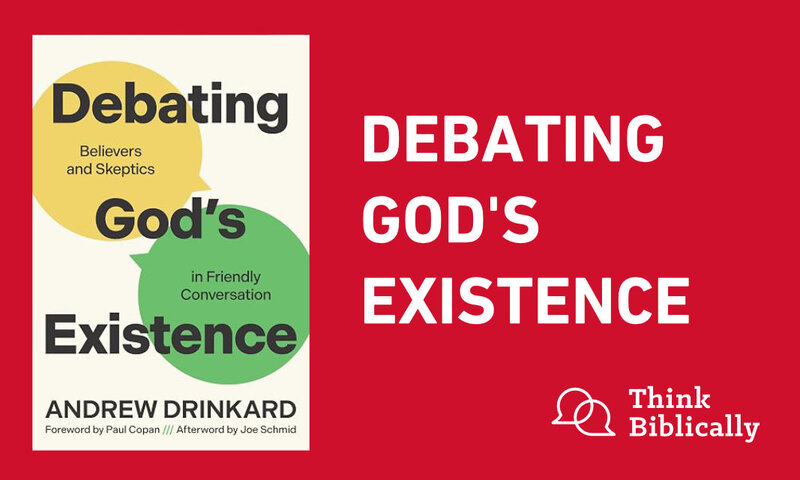
What is the best evidence for God's existence and what are the toughest challenges against it? In this episode, Sean and Scott are joined by Christian apologist Dr. Adam Lloyd Johnson, who debates atheist Dan Barker in the new book Debating God's Existence. They discuss the fascinating story about how the debate and book came about, what Adam learned through his interactions with atheists, and how Christians can best make the case for God today.
dam Lloyd Johnson is the founder and president of Convincing Proof Ministries and a former campus missionary with Ratio Christi at the University of Nebraska–Lincoln. He has also taught classes for Midwestern Baptist Theological Seminary and has spent time living and teaching at Rhineland Theological Seminary in Wölmersen, Germany. Adam received his PhD in Theological Studies with an emphasis in Philosophy of Religion from Southeastern Baptist Theological Seminary in 2020.
Episode Transcript
Sean McDowell: [upbeat music] What is the evidence for and against the existence of God? How has the God debate shifted the past few years? And how can we disagree with others well? These are some of the questions we are going to explore with our guest today, Dr. Adam Lloyd Johnson. He is the main Christian contributor to a new book that both Scott and I thoroughly enjoyed called Debating God's Existence. I'm your host, Sean McDowell.
Scott Rae: I'm your co-host, Scott Rae.
Sean McDowell: This is the Think Biblically podcast, brought to you by Talbot School of Theology, Biola University. Adam, thanks for coming on.
Adam Lloyd Johnson: Yeah, it's a pleasure. Thanks so much for having me.
Sean McDowell: Now, one thing we know is there's a story behind every book, and this book is really about a debate that you had with an atheist by name of Dan Barker. But tell me how that debate, that relationship, and this story came to be.
Adam Lloyd Johnson: Yeah. No, it's a neat thing how God worked it out providentially, but it was 2021 where some folks contacted me from Florida about possibly doing this debate. There's a large atheist conference every year there in Florida, in Orlando, and this year at the conference, that year, 2022, they wanted to have a debate. So they were gonna have Dan Barker, their, one of their main atheists, debate a Christian, and so they reached out to me and, asked me to participate in the debate, and I was happy to do so. So it came about in the spring of 2022, and, it was really a new environment for me. I mean, I've done a few debates, usually universities, Christian conferences, but never [chuckles] at an atheist conference before.
Sean McDowell: Yeah.
Adam Lloyd Johnson: So kind of a unique environment. But I think the debate went well, and, I enjoyed hanging out with the group, you know, all weekend. It was a weekend conference, so they had breakout sessions, keynote speakers, and I hung out with them all weekend at the, at the hotel, just getting to know them and make friends. I'll tell you one quick story. They kicked off the weekend conference with an '80s night, right?
Sean McDowell: Oh, fun. [laughs]
Adam Lloyd Johnson: So Friday night, everybody's wearing '80s clothes, '80s costumes.
Sean McDowell: Yeah.
Adam Lloyd Johnson: And I'm a... Yeah, I grew up in the '80s, so I'm a big '80s fan of all sorts of stuff. Anyway, I went dressed up that night as Freddy Krueger.
Scott Rae: [laughs]
Sean McDowell: Yeah.
Adam Lloyd Johnson: Because I knew in that environment, right, I was the bad guy.
Scott Rae: Nice.
Adam Lloyd Johnson: And so we had a lot of fun. I went around, took pictures with a bunch of, well-known atheists with my Freddy Krueger claws, slicing them across their chest and everything, just to show them that, hey, trying to break down some of these walls. We know how to have fun and make friends, and I had a good time all weekend with them.
Sean McDowell: But you're also subtly showing that Christians are not opposed to culture, but can embrace culture in a way that maybe undermines some of their stereotypes. So I think that was a good play.
Scott Rae: Yeah. Now, Adam, I appreciated the book as well, and I I'm looking forward to getting a chance to go through it in a little more detail. And there, you know, there are obviously, there are a lot of books out there on the debate and even a lot of books in a debate format, but what makes this one so different than the other things that are out there?
Adam Lloyd Johnson: Yeah. No, it's a good question. There's a sense in which this conversation has been going on for thousands of years, right? And so there's always some new flavor, rising to the surface. There's new arguments, there's nuances to arguments, so I think, there's that going on. Even in the title, though, one of the things that we wanted to highlight in this conversation is that it's a friendly one. So my hero in the faith is Francis Schaeffer, and I've always thought that he is one of the best out there in terms of being able to, deliver good, solid content, but in a friendly, respectful, gentle way. And so I aspire to reach others the way that he did, and so I've always tried to do so in a friendly way. And I think the way that we approached this, the way that the debate went, was able to be done in that sort of, atmosphere, a friendly atmosphere. So very excited for that. I guess another thing that might be a little bit of a nuance is my specialty is in moral philosophy, metaethics and such, the moral argument, the problem of evil, and, a lot of apologists concentrate on, you know, other arguments, fine-tuning, first cause arguments, so on and so forth. So maybe adding this is a little bit unique. And I think what's cool about this book is that it can be useful for a popular level audience and an academic audience, 'cause the debate itself is pretty popular level, just pretty simple, the debate itself, which the book has a transcript of the debate, so you can see our back and forth and see how we treated each other on stage. But then the contributors that we invited, I mean, some of the contributors, I'm so humbled that they were willing to chime in on this because their academic credentials, some of them are just, like, through the roof. And so those get a bit more technical and academic. So I think the book provides a good, the beginning, popular level, towards the end, more technical level, so it can, you know, be useful to a whole broad array of folks.
Sean McDowell: I would second that and strongly, encourage our audience to pick it up. It's very readable, but as someone who's also been in these debates for a long time, there were some nuanced and responses I was like, "Oh, that's interesting. I haven't heard that before." So you guys hit that kind of middle tier, I think, really well. You've been doing this for a while, Adam. You've been a pastor. You have a PhD. You've done a lot of debates. How would you characterize the way the God debate has changed, if at all, in, say, the past 20, 25 years?
Adam Lloyd Johnson: Yeah.
Adam Lloyd Johnson: One of the things that's happened, not just to the God debate, but apologetics in general, is a lot of it has moved from books to online venues. So YouTube, podcasts, which there's pros and cons of that, of course, but I think one of the things that has resulted from that move, though, is a bit more feistiness. I mean, the you know, the whole big New Atheism movement, that was mostly done via books back in the day, what? Twenty years ago now, and that was pretty feisty. So maybe that got the ball rolling, and then now everything moving online has just increased that feistiness, just a little bit of, I would say, maybe too, being too aggressive against your opponent. So I think that's a huge, shift that's happened, and that's one of the reasons I was motivated to try to bring back a little bit more of the friendliness, the respect to, "Hey, let's view this as a conversation and not a, you know, a death hole drag down type of kill the other person type debate."
Scott Rae: Yeah, no. Just to I think to take that a little bit further, you've got... The book opens with this notion of disagreeing well and how to do that, and I commend you both for modeling it the way you did. But tell us a little bit more about what else is involved in, maybe the things that you try to do explicitly or maybe inadvertently, to make sure that you adhere to that notion of disagreeing well.
Adam Lloyd Johnson: Yeah. No, it's important. I mean, there's a reason I think that, the New Testament makes this point even in, what? First Peter three, 15, and 16, that we're to give a reason for the hope that is within us, but to do it with gentleness and respect, because oftentimes the way we say things can be just as meaningful and impactful as what we say. So whenever I'm in a conversation with somebody, whether it's, you know, street, one-on-one evangelism, or whether I'm having an online debate with somebody on social media or, you know, these more public venues, I strive to treat my, opponent with love and respect. Don't do anything to them that I would not, prefer them to do towards me. So I try my best. You know, I fail, but again, I strive to do ministry the way that Francis Schaeffer did. He's my hero in this respect. So I definitely don't wanna straw man my opponent. If anything, I wanna steel man and deal with the, my opponent's best arguments. It's very easy, you know, to put a YouTube video together or go online and just bash our opponent's dumbest, weakest, terrible, most terrible arguments. But to find their best ones and try to pick those apart, I think is more impactful, in the long run. And so I wanna treat my opponent with respect, make sure their argument is represented well, and then listen. I think that's another big part of it, too, is a lot of our conversations, whether they're online or in person, we're just so, anxious to jump in with our own side. It, it's helpful, and Schaeffer was a master at this, of listening and trying to understand where they're coming from and how we can best reach them for Christ.
Sean McDowell: Well, there's definitely no straw men in the book because you let people make their arguments, and you respond back and forth. So the format creates that, and then you have a range of different people writing and responding back. And then I love at the end of the two of you come full circle and say, "Here's where we're at. Here's our responses. Here's our case." So you do tackle the tough issues. What's your personal story, Adam? Like, why are you a Christian? Why did you get into these debates about God's existence? Why is this so important to you?
Adam Lloyd Johnson: Yeah. Well, I became a Christian when I was a teenager, but all throughout my 20s, I struggled with doubt. You know, how do we know this stuff is really true? I was an actuary, so after college, I worked in the field of actuarial science for 10 years, worked for Allstate and then Humana for a short stint. So I have got that sort of analytical thinking, you know, logical problem-solving type, mind and was struggling. I was a deacon at my church. I was involved in my evangelical church, but, kind of in secret, I was struggling with these questions and doubts. Came to a head in my late 20s. Thankfully, somebody introduced me to Schaeffer, and I would say through his works, his books, he rescued me on all sorts of levels. And that's how it became pretty obvious then that God was calling me to walk away from my actuarial science career and serve other people, help other people the way that Francis Schaeffer helped and served me, and that began a process of... Like I said, I'm from Nebraska. Never thought I'd move away from my home state of Nebraska, but we moved down south to the Carolinas for 10 years to go to seminary. I served as a Southern Baptist pastor, and thankfully, since 2017, I've been able to do, this sort of apologetics ministry full-time.
Scott Rae: So as you, Adam, as you look back at the the debate and the, not just in this book, but the conversations you've had with people of all stripes about the existence of God, how-- what are, what are the biggest barriers that people have to coming to believe that God exists? Are they, intellectual or is, are there, or are there some other factors, emotional, volitional, whatever they might be, that play a role in this as well? How would you sort those out?
Adam Lloyd Johnson: Yeah. I think there definitely is all sorts of factors going on. I know just within my own [chuckles] belief system and consciousness and understanding of things, there's a lot going on as well. But I tend to stay away. I think that you can easily fall into an ad hominem, fallacy or a straw man somebody if you start assuming what somebody's motives are. So this idea that, oh, so and so just doesn't believe in God because, they hate religion, or they don't want some sort of a moral accountability in their life. That might be true, but it's very difficult for our, for us to know that about somebody's internal makeup. I mean, there's, most of the time, I don't even know what my own motives are. So for me to try to speculate About somebody else's, I think, is near to impossible. But if Christianity is true, and I believe that it is, then certainly there's a spiritual dimension to all this as well. But like Schaefer, I'm going to turn that over to God. Like Paul, I guess you could say, I'm going to concentrate on more of the objective aspects of it, you know, their intellectual questions. I'm gonna take what they say at val-- face value. If they say that they don't believe that there's a God because of lack of evidence, then I'm gonna try to provide them the evidence that they say that they need. But at the same time, I'm gonna be praying that the Holy Spirit would work in their heart and mind and do the things that only the Holy Spirit can do and I can't. So that's usually my approach. It's usually my thinking, that God, even in a debate like this, I know Dan Barker has been an atheist for decades, and he's pretty solidified in his position. God can do anything, of course, but my prayer often is for the people in the audience. Even though it was an atheist conference, I I was convinced, in fact, there were some neat stories afterwards where I, learned that this was the case, that people are still, you know, even they consider themselves an aciost-- atheist, they're still wrestling with these issues and, open to the evidence. So I was encouraged by that.
Sean McDowell: That really is interesting because it takes a select atheist to go to an atheist conference, right? Probably most atheists would not care enough or have the time and value it. So one might assume if you're an atheist conference, you are all in and solidified. But it sounds like there's at least a decent number that came up to you that were open and hearing you. And so let me ask you this. What do you consider a win in a scenario like that? Because I teach a class at Biola called Gospel Kingdom Culture, and I'm trying to encourage my students all the time to have spiritual conversations with people who see the world differently. So I have to frame for them a success while we want to see people come to believe. I mean, even the rich young ruler walked away from Jesus, and Paul in Acts 17, most people didn't believe, and some mocked him. So if people are gonna walk away from Paul and Jesus, then clearly you can't say success is necessarily converting at least everybody. So what do you consider a win and a success in going on atheist turf and defending the Christian faith as best as you can?
Adam Lloyd Johnson: Yeah. No, I kind of viewed it going into it as, hey, if I can make some friends here, if I can break down some of those, walls, if I could break down some of those stereotypes that they have of us evangelical Christians, I would consider that just by itself a win. But then, in the debate, I wanted to present my case, articulate it well, and then summarize it simply, not overcomplicate things, 'cause the debate was only an hour and a half. So split that in half, I had forty-five minutes to argue for the existence of God, including-
Sean McDowell: Yeah
Adam Lloyd Johnson: ... You know, Q&A time with that. So I didn't have much time. I wanted to make it simple for folks, and then planting seeds. You know, you just never know. You never know how God's gonna use these things, the ripple effects and praying both before and after. So one story I'll tell you, there was a neat, retired couple that came up to me afterwards. They were from Florida, so they didn't have to travel. People came from all over the place for this conference. But they were local, and they came up to me, an older retired couple. They said, "You know, we come every year to this, but we weren't gonna come this year. We thought it's kinda, it's always the same speakers, [chuckles] the same topics. So we weren't gonna come, but we're so glad that we did, Adam, because what you presented, we had never heard anything like that before."
Sean McDowell: Really?
Scott Rae: Oh, interesting.
Adam Lloyd Johnson: That just kind of blew my mind and helped
Sean McDowell: Yeah
Adam Lloyd Johnson: ... Realize that, hey, this this was worth it.
Scott Rae: Wow. So may-maybe just for our, for our listeners' sake here, you make three primary arguments for God's existence in the debate. Briefly summarize what each of those three arguments are.
Sean McDowell: And why you picked those, by the way.
Adam Lloyd Johnson: Yeah. Well, these are the standard arguments that have been around for, in a sense, thousands of years, and one of the things I pointed out to the audience was that you find these three arguments all around the world, throughout history, popping up independently, and it's simply first cause arguments, design arguments, and moral arguments. And I showed how these arguments can be found, like I said, all around the world throughout history, independently, both in the East and the West, Hindu thinkers, Zoroastrians, obviously Plato, Aristotle, and I think there's a reason for this, and it's because these thinkers are looking at the world around them and making logical inferences, coming to the same conclusion that there must be some sort of supreme being. Different names for the supreme being, obviously, but remarkably similar in the attributes that these various thinkers attribute to this supreme being. All-powerful, all-knowing, all good, et cetera, et cetera. So first cause arguments, just a simple bare bones first cau-cause argument I presented, Kalam cosmological argument. Design argument, fine-tuning in our contemporary, conversation. The fine-tuning would be the key design argument. And then, which, honestly, I find the most compelling, design arguments. I find those most compelling, even though I specialize in moral arguments. So I specialize in metaethics, the moral argument for God, the problem of evil a little bit. So that's what I specialize in, and I think especially in my additional chapters in the book, I was able to dive in further in some of my meta-ethical theories and make my case, not only against Dan Barker, but the key, atheist moral philosopher we invited, David Enoch.
Sean McDowell: I interviewed a hundred apologists, and I wish I had interviewed you for this one, but it was before we met, Adam, asking what they thought was the strongest argument for God's existence. Number one was design, which would include cosmology, fine-tuning, and number two was the moral argument. So two of the three you used, at least a hundred apologists I talk with would agree with you. So I think that's fascinating. Now, I wanna, I wanna ask you some of the objections that Barker raised. When there's a debate like this, you can't answer all objections. You just gotta pick and choose sometimes in the moment where you're going, and here's a few that he said. He said, for example, "The lack of agreement along, among believers on issues," and this is what he said, like gay marriage or gun control. And here's a direct quote from him, "You'll find good Bible-believing, church-going Christians on both sides of these issues. The Bible is not a clear moral guide." So he seems to be claiming that somehow disagreement amongst Christians on important ethical issues undermines the existence of God. Like, how would you respond to that?
Adam Lloyd Johnson: Yeah, I thought this was a pretty poor argument, if I'm honest. In the debate, I think this came up during the Q&A, but the way that I responded is to point out all the different fields in which there are disagreements, whether it's history or mathematics [chuckles] or science. I mean, there's a, there's a large amount of disagreement among scientists. They disagree on some of the, you know, fine-tuned aspects of their theories, but that doesn't mean we're gonna reject their overall scientific positions or scientific beliefs just because there's some disagreement. So I think that's kind of a, almost a red herring in a sense. And I pointed out how Christians, you know, we agree on the major doctrines, right? There's a, there's a fundamental, things that all Christians agree on, and it's more on some of these secondary issues that we disagree because there's always interpretation at play. And this is, [chuckles] this is just part of the human condition. Christianity or the Bible is not unique, in this regard at all. I mean, we've got, what, nine justices whose full-time job is to debate and disagree on how to interpret the Constitution, right? So interpretation always leaves room for mistakes. And so as, even as Christians then, as we're trying to interpret God's word, well, special and general revelation, there is, there is going to be mistakes, and there's gonna be disagreements on how to interpret some things. But to throw Christianity out the window, because of that seems, like, rather extreme.
Sean McDowell: I agree with you. It's, in some ways, it's a non sequitur to say Christians disagree, the Bible is not a clear moral guide, therefore God doesn't exist. I mean, it you're missing so many steps that are in there. On the other hand, it's fair to say if there's a God who exists and He's spoken and He wants us to live a certain way, why would there be so much disagreement? It, it's a fair question when phrased that way, but it doesn't prove God doesn't exist. It doesn't prove the Bible's not a moral guide, especially when you add the different cultures people come from, the differences of where people are in their spiritual journeys, the freedom we have in Christ to differ over things like gun control. And not to mention, it, we can focus on differences. That misses how much we have in common and that most [chuckles] of the Bible is clear. So I thought these are some of the-- I'm trying to give our audience a flavor of some of the objections that come up, and I think you walk through just in a very helpful, systematic way how to respond to these objections. So I think you did, you did a great job.
Scott Rae: Yeah, and let me tackle another one of those, since the moral argument is your specialty. First of all, how would you explain the moral argument to our listeners who might not be familiar with it? And then one of the, one of the strongest objections that I think is pretty tricky to deal with is, was what the ancient philosophers call the Euthyphro dilemma about, a, specifically a view of morality that is based on, somehow on God's commands. So tell us just briefly, what is the moral argument, and then how do you respond to the Euthyphro dilemma?
Adam Lloyd Johnson: Yeah. No, good question. So yeah, the moral argument, the way that I usually present it is, in its abductive form. So I'll start with premise one being that there are objective moral truths and then argue for that, defend that idea that there are objective moral truths that exist beyond how humans think and feel. They're somehow objective, kind of like mathematical truths are objective. Two plus two equals four, even if we all, believed that that was, incorrect, that would still be the case. It's objectively true. Premise two then would be that the, in particular, the Trinitarian God of Christianity best explains where these objective moral truths come from. So in the debate, I was just arguing for mere theism. I wasn't arguing necessarily-
Scott Rae: Right
Adam Lloyd Johnson: ... For the Christian understanding of God. I was just arguing that there is a God. But in my work, specifically my book, Divine Love Theory, I lay out a, oh, I guess a more thorough argument that no, actually the Trinity, 'cause all Christians agree that God is the source and foundation of morality, but I wanted to go a little bit further and say, "Well, exactly how is God the source and foundation of morality?" And I made the case that the loving relationships between the members of the Trinity is the,
Adam Lloyd Johnson: source and foundation of all moral truth. So it was my PhD dissertation. It got published by Kriegel in 2023. William Lane Craig wrote a nice endorsement for the back cover. The atheist that I'm writing against in the book, Eric Wielenberg, wrote a nice endorsement-
Sean McDowell: Mm-hmm
Adam Lloyd Johnson: ... For the back cover.
Sean McDowell: Yeah. Very good.
Adam Lloyd Johnson: But what I do there is I try to point out, that the Trinity really, best explains the moral truths that we've discovered and that we experience in the moral realm, and so I traced it back to, the Trinity, hence the name Divine Love Theory. It's not Divine Command Theory, it's Divine Love Theory. But I do, pull things from, you know, previous theories that I find to be insightful, so I pull a little bit from Natural Law Theory, I pull a little bit from Divine Command Theory. But you're right, the, Euthyphro dilemma has always been the number one objection to at least, Divine Command Theory versions of theistic metaethics. And the Euthyphro dilemma goes all the way back to Plato. There's a sense in which Plato even responded to it, but that's usually not brought up very much. It's just the objection that you find in his work. But it's referred to as the Euthyphro dilemma, and it's, this idea that either... There's two horns to the dilemma, and it seem- usually it's presented against theistic, beliefs. And the two horns, it's it's trying to force theists, or Christians in this case, to pick one of the horns. But we would not [laughs] like either of the horns. So the first horn is that God,
Adam Lloyd Johnson: can just choose anything he wants and command anything he wants and make that moral. So tomorrow he might choose to command that, rape is morally acceptable. And, if morality works that way, if it's just based on God's commands, then it's arbitrary, 'cause God could just choose anything he wants and, horrendous things could be commanded of us. And then the second horn is this idea that if that's not the case, it must be the case therefore that morality is somehow separate from God, that God commands us to do X, Y, Z because there's some sort of external standard. Morality is somehow external or separate from God that God is referring to or looking at in order to make his commands. But we don't like that horn either because as theists, either Plato or us as Christians would say, "No, God is the source and foundation of morality. We wouldn't want morality to be somehow separate from him." And so the non-theist usually is trying to force us to pick one of these horns. But the solution, and it's been the solution for centuries, if not thousands of years, and can even be, I think, found in Plato's work, is that there's another option, and that is, a third option that morality is based on God himself. So there is a sense in which God's commands are constrained, yes, but they're not constrained by something that's separate and apart from God. They're constrained by something within God himself, and that is his perfect moral nature. And I go further and make... Describe it as his perfect Trinitarian moral nature. And then, especially I talk a lot about this in my Divine Love Theory book, but that constrains God to only command us things that are, consistent with his perfect moral Trinitarian nature.
Sean McDowell: So of course, this goes back to the time of Plato, and Plato envisioned this Platonic realm of the good that exists independently of God. And your point is that objective good is in God's character. God is good. God is just. God is holy. Like the number two is essentially even, God is essentially good. I actually had a debate with Michael Shermer from Skeptic Magazine maybe a year and a half ago, and he raised Euthyphro dilemma, and I gave this response, and I said, "Can you help me understand why this doesn't work? Or does it work?" And he kinda paused and he goes, "Yeah, that's an adequate response." I about fell out of my chair.
Adam Lloyd Johnson: [laughs]
Sean McDowell: I was like, "Oh." I was tempted to say, "Well then, can you encourage your friends not to use this anymore?" But that would've felt like I was... I let it go, but-
Adam Lloyd Johnson: [laughs]
Sean McDowell: ... I think your response works.
Adam Lloyd Johnson: No, and it has for centuries. It's not a new response by any means. And in fact, the main atheist opponent I've had over the years, Eric Wielenberg, he's an atheist moral philosopher in Indiana, but he's told me, in person numerous times that, yeah, the Euthyphro dilemma has been well-
Sean McDowell: Oh, wow
Adam Lloyd Johnson: ... Answered by theists, and he's trying to convince his fellow atheists to stop using it because it's been, it's been answered already.
Sean McDowell: Well, your lane is the moral argument, and if I'm not mistaken, did you edit the book that was the debate between Wielenberg and Craig, or did you contribute to that in some fashion?
Adam Lloyd Johnson: Both, yeah. So I organized the debate. I moderated it.
Sean McDowell: Wow.
Adam Lloyd Johnson: We had it at NC State University in 2018, had like 1,200 people show up, and then we put it... We turned it into a book afterwards published by Routledge. I wrote the first chapter, and then we had Craig and Wielenberg, write additional chapters beyond the debate, and several other folks like David Baggett, J.P. Moreland wrote a chapter. But yeah, that's kinda how I got started in this area of metaethics.
Sean McDowell: J.P. Who? It's... No, I'm kidding.
Adam Lloyd Johnson: [laughs]
Sean McDowell: He is our colleague. Scott and he go back to Dallas Seminary in '80, Scott? When did you go to seminary?
Scott Rae: Late '70s.
Sean McDowell: Late '70s with J.P., and the two of them started the philosophy and ethics program here, which I've said many times was just game changing and life changing for me. Well, let me bring this full circle. I've got so many questions for you. Maybe we could just do a deep dive on the arguments and responses, but I'm really curious. This is done. The book is now out. People can read it. And I wanna encourage our audience really to read this. It's well done on style and on substance. But now that you're on the other side of this- What did you learn going through this, whether it's intellectually, relationally, personally, spiritually? What's some of your takeaway, Adam?
Adam Lloyd Johnson: Yeah. Don't give up with people. You know, as we were talking prior, you know, even if somebody's been an atheist for decades, don't give up. You know, keep praying for them. Some of your audience members might have, children, family members, friends, neighbors, coworkers who have been atheists for years. Don't give up on them. Keep praying for them. Keep trying to have those conversations in a loving way. Be a good listener. You know, have coffee with them. Ask them questions about what they believe, why they believe it. Don't feel like you need to answer all those, all their arguments on the spot. Just calmly, patiently, show them your kindness, your friendship, and usually, you know, my experience, not always, but usually my experience has been that if you are a good listener, if you're kind and patient, they'll reciprocate, and eventually you'll have an open door there to be able to explain why it is you believe that Christianity is true. So just a reminder of those things, and these are real folks. You know, hanging out with them that weekend, eating food, getting drinks, just, trying to break down, dressing up as Freddy Krueger [laughs] on the '80s night. You know, just hang out with folks. Get to know them as as friends. Don't always think of them as your enemies per se. I felt well-respected. I felt treated well. Nobody ever attacked me. I never felt ridiculed. I had a great time all weekend with them.
Sean McDowell: Oh, I love that so much.
Scott Rae: That's so good to hear.
Sean McDowell: I'm writing a book with an atheist friend of mine right now of a very different background and focus. He's a journalist, and he came out to Biola, and he came out to my church. We did public events, did private events. He joined my family for dinner, and then I'm heading out there soon to just spend time with him and his family and go to New York City, and it's just like that relational piece like you're saying. You know, walls kind of come down. You listen to each other. You understand. And there's a way to make your case and be firm and not compromise, but do it graciously, and I think this book is a great example of that. So I want to commend the book Debating God's Existence: Believers and Skeptics in Friendly Conversation. Now, you're not the editor, but the book is really about your story, Adam, and you're kind of the underlying Christian apologist here. It's actually edited by Andrew Drinkard with a forward from our friend Paul Copan. So you've really got some great contributors here. Thanks for coming on. Really appreciate it.
Adam Lloyd Johnson: It was, it was great. Thanks for the conversation, guys.
Sean McDowell: This has been an episode of the podcast Think Biblically: Conversations on Faith and Culture. This podcast is brought to you by Talbot School of Theology, and we have programs in philosophy, like you've heard, and ethics, Old Testament, New Testament, apologetics, marriage and family, so much more. Please keep your comments and questions coming or even suggest, guests that you'd like to have us include. You can email us at thinkbiblically@biola.edu. That's thinkbiblically@biola.edu. If you enjoyed today's conversation, please take a moment to give us a rating on your podcast app and consider sharing this with a friend. Remember to join us Friday for our weekly cultural update, and in the meantime, remember to think biblically about everything. [outro music]