Biola University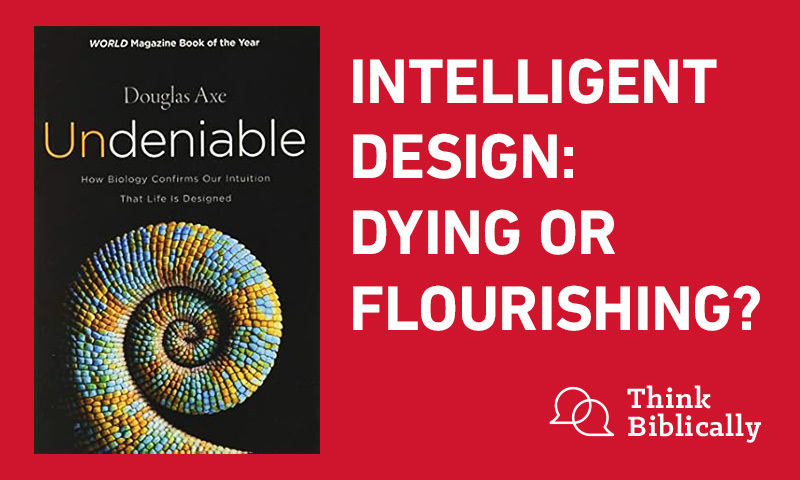
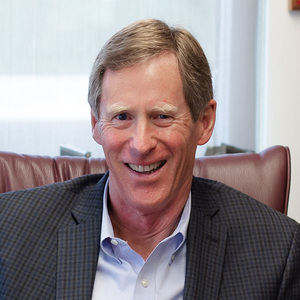
What is the state of the intelligent design movement today? How is it faring in the scientific realm, the church, and in the public? How has the strategy of the ID movement shifted, and what has it learned over the past 20 years? Our guest today is Biola University Biology professor Doug Axe.
Douglas Axe is the Maxwell Professor of Molecular Biology at Biola University, the founding Director of Biologic Institute, the founding Editor of BIO-Complexity, and the author of Undeniable: How Biology Confirms Our Intuition That Life Is Designed. After completing his PhD at Caltech, he held postdoctoral and research scientist positions at the University of Cambridge and the Cambridge Medical Research Council Centre. His research, which examines the functional and structural constraints on the evolution of proteins and protein systems, has been featured in many scientific journals, including the Journal of Molecular Biology, the Proceedings of the National Academy of Sciences, BIO-Complexity, and Nature, and in such books as Signature in the Cell and Darwin’s Doubt by Stephen Meyer and Life’s Solution by Simon Conway Morris.
Episode Transcript
Sean McDowell: [upbeat music] What is the state of the intelligent design movement? How has the conversation about origins shifted in our culture and in the church? Well, we've got the perfect guest today, 'cause he's not only a Biola professor, Doug Axe, but he's also written a book on intelligent design called Undeniable. So good to have you here. Thanks for joining us.
Doug Axe: It's great to be here.
Sean McDowell: Well, let me just start in. Before we talk about some of the cultural shifts that have taken place, there's still a lot of confusion about what intelligent design is. So what is it, and how is it different and/or similar from, say, young Earth creationism and old Earth creationism?
Doug Axe: Yeah, there's, there's similarity- similarities and differences. Both young Earth creationism and old Earth creationism are embarking on the project of trying to reconcile scientific results to Scripture, and therefore, they contradict each other. Young Earth says the Earth is young. Old Earth says- ... The Earth is old, so you can't be both. But both-- people in both of those camps are actually intelligent design advocates. They may not say that because it-- ID is not really about making that reconciliation between scientific results and- ... Scripture. It's about just using science and asking, does the science say either that we are cosmic accidents or that we are the products of divine creation? And it lands on the side of we are the products of divine creation. So it's simply... It's that simple. It's a scientific approach, not trying to reconcile science to Scripture.
Sean McDowell: So hence, we have old Earth intelligent design-
Doug Axe: Yeah
Sean McDowell: ... Proponents
Doug Axe: And young Earth
Sean McDowell: ... Young Earth-
Doug Axe: Sure
Sean McDowell: ... Intelligent design proponents, even here at Biola Talbot School of Theology.
Doug Axe: Yeah.
Sean McDowell: Because it's starting with the question, is there design in nature that's empirically observable?
Doug Axe: Yeah.
Sean McDowell: And then the question is, how do we reconcile this with Scripture?
Doug Axe: Correct.
Sean McDowell: Basic difference.
Doug Axe: Yeah.
Sean McDowell: Okay.
Scott Rae: So Doug, tell us, for our listeners who may not have thought about this much before, tell us a little bit more, what exactly is at stake in this debate over intelligent design?
Doug Axe: Well, in the broader question of what's at stake on the question of are we created or are we cosmic accidents, just that is at stake.
Scott Rae: Right.
Doug Axe: Who are we? Where do we come from? [chuckles] Where are we going? Which is huge. But are we asking, like, what's at stake if you take an ID position versus these other positions?
Scott Rae: Yeah.
Doug Axe: I think what's at stake is your, posture toward science, and, there's... We also haven't mentioned theistic evolution, so that's another one of these positions that's, that's common out there within the, within the Christian community. They have different postures with respect to Scripture and different postures with respect to science. It can be the case, it's not always the case- ... That young Earth creationists can say, "Scripture first. If I s- if I encounter something where it looks like science is in tension with Scripture, I chuck the science, and I go with Scripture." And old Earth creationism could be that as well. I'm not saying that everyone is operating that way.
Sean McDowell: Of-- Yeah, of course.
Doug Axe: That can be.
Sean McDowell: That's fair.
Doug Axe: Whereas intelligent design is saying, "Let's just look at the science carefully and see what the science actually says and not spin it in the direction of materialism, atheism."
Scott Rae: So one, so one of the distinguishing marks of the intelligent design movement is that it specifically is not trying to do that harmonization of science-
Doug Axe: Correct
Scott Rae: ... And Scripture?
Doug Axe: Yeah.
Scott Rae: So that's, that's just not even on the table?
Doug Axe: Yes, but the interesting thing is, so it's saying, "Let's do the science honestly," and when you do the science honestly, it ends up beautifully [chuckles] harmonizing with-
Scott Rae: Mm-hmm
Doug Axe: ... With the big, story of Scripture.
Scott Rae: Mm-hmm.
Doug Axe: Okay? It's... And I'm not trying to teach-
Scott Rae: But, but not on the details.
Doug Axe: There's lots of details that remain to be, figured out, and-
Scott Rae: Fair enough
Doug Axe: ... And I think it's great that people are thinking about that. I also don't think that we have to get answers to some of those details. The big questions are the things that we really need an answer to.
Sean McDowell: I'm really curious your take on where the intelligent design movement is at because you go back about 10 years ago, kinda the height of the new atheists, and intelligent design was everywhere. It was talked about in the news media. There's major publications like Expelled that took place. There's Supreme Court rulings on this. In some ways, it seems to have faded from the collective conversation, but I also think for people that are paying attention, there are stories popping up, like Stephen Meyer being on Joe Rogan for a while-
Doug Axe: Yeah
Sean McDowell: ... Like the conversion not long ago of Larry Sanger, the co-founder of [chuckles] Wikipedia-
Doug Axe: Right
Sean McDowell: ... Who cites intelligent design-type arguments as kind of central or at least a key piece of his conversion. What's your sense of how the movement is doing and maybe how the conversation has shifted?
Doug Axe: Yeah, it depends on how you track things. So for people who aren't really paying attention- ... The only connection they have to ID is when it's mentioned by CNN or something. And then there was a blip there when, It was the Dover trial, not a Supreme Court ruling yet, so it was a lower court-
Sean McDowell: Oh, that's right
Doug Axe: ... Ruling.
Sean McDowell: Good call.
Doug Axe: Dover trial in-
Sean McDowell: Good call
Doug Axe: ... In Pennsylvania. 2005, I think that was, and George W. Bush, President, made a comment on that, and then suddenly, all the news media are on it. And it seemed like everybody's talking about this, and it seems to have gone quiet in that respect. But if you're actually following more behind the scenes- ... You see that it's actually growing. The, the number of people who are doing research from a design perspective is growing. The number of young people who are being trained up and very interested in this is growing, so it's not at all... It, it's, it's not at all died down. It's growing, quite rapidly. But the news media have their ups and downs. There are things that they're interested in and things that they're not interested in.
Scott Rae: So that speaks to where it's, where it's headed in the broader culture. How would you assess the state of the movement within the church, more specifically?
Doug Axe: Yeah, so there, too, there's been a, maybe eight or nine... When was the Christianity Today, Adam, was Adam real? There-
Sean McDowell: Oh.
Doug Axe: This was a big debate-
Sean McDowell: Yeah
Doug Axe: ... Maybe eight years ago or something like that?
Sean McDowell: Yeah, it's been playing out over the past five to eight years. Yeah.
Doug Axe: Yeah, so there's been a push. Francis Collins started an organization-
Sean McDowell: Mm-hmm
Doug Axe: ... Called BioLogos, as you know- ... Pushing for, uh-... Christians to be okay with the broad Darwinian story, as long as we say God is the one who put everything-
Sean McDowell: Sure
Doug Axe: ... In motion. There's been a l- an answer to that, a very strong answer to that from the design community. But if we go back to Young Earth Creation, Old Earth Creation, ID encompasses both of those. Theistic evolution, a lot of people who are believers aren't happy with this, call- ... To make peace with Darwinism because they say, "There, there's something huge at stake here. We cannot just brush this off and carry on as Darwinists." So there was a volume that came out, Crossway-
Sean McDowell: Mm-hmm
Doug Axe: ... Publishers, twoth- 2023, I wanna say, called Theistic Evolution: A Philosophical, Scientific, and Theological Critique.
Sean McDowell: Massive text.
Doug Axe: Massive [chuckles] .
Sean McDowell: Yeah, yeah.
Doug Axe: I have a chapter in there. But it's, it's a big answer to that, trying to say, "Hey, people of the church, wake up. Don't, don't sleep on this one. There is something very significant at s- at stake here, and we don't want to baptize Darwin, because that goes, that goes down... A whole lot of dominoes fall when you, when you do that."
Sean McDowell: It is interesting, you- the point you made earlier about how we assess these things depends upon where we look.
Doug Axe: Right.
Sean McDowell: So there's certain publishers that 10, 20 years ago were publishing new books by Dembski, new books by Intelligent Design, and have leaned in much more towards theistic evolution type of books. And then other publishers, like you said, have jumped on the intelligent design movement. So that, there's a little story behind that, so to speak.
Doug Axe: Yeah.
Sean McDowell: Seems to me there's less debate about the merits of intelligent design, but the way you framed it, like should we baptize, which is an interesting word, Darwin and Darwinian ideas with Christianity? Can we do that? What would that look like if we do so? In other words, can we just make peace [chuckles] with Darwin and move on? What's your sense of that? I'm really curious because, on one hand, you can make the case and say, "Look, if we keep the theological essentials at play, who Jesus is, Bible's inspired, but we just differ over not that we were created, but how we were created, let's make a bigger tent." But on the other hand, it sounds like you have some reservations, saying, "Ah, time out. Not sure I wanna go that direction." Why?
Doug Axe: Yeah, so [clears throat] if we say, "Can we just take Darwinism as an account of the details, the, say, the scientific details of how- ... We came to be, and say God is the one who put things in motion and allowed there to be, an Earth-like planet, where these mechanisms could kick in, mutation and natural selection, and that becomes the scientific account of how we came to be, how the world came to be the way it, the way it is."
Sean McDowell: Sure.
Doug Axe: The two big problems with that are, first, if you, if you wanna say God is the one who's involved, that is somewhat contradicted, quite profoundly contradicted by an account that says, "Pure chance, sifted by, a simple process of selection," is what accounts for all of life. Because that's not very much involvement. [chuckles] So by that view, God was very involved in creating the laws of physics, say, and the Big Bang and getting things in motion. But after that, it's just physics does what physics does, and we're the, we're the out- we're, we're the products of that. The second thing is, it's the distinction between humanity and the rest of life. Is it important? Is there something, particularly and profoundly important about humanity with respect to the rest of life? And according to Scripture, there is. We are made in the image of God- ... But also the incarnation. So God, the Son, becomes one of us, not an ape, not anything else. So that means there's divine significance to humanity, and that gets very badly messed up if you say that we could've been anything, because it's this random process sifted by- ... Selection. If you play the tape again a thousand times, you get a thousand different outcomes. That, that view is saying, "There isn't anything particularly special about us. We could've been anything," and I think that gets... That badly messes up the incarnation. It badly messes up who we are in terms of our-
Sean McDowell: And-
Doug Axe: ... Image of God.
Sean McDowell: If I may, I, it feels like we had, we had a conversation here, maybe 20 years ago at Biola, and the theistic evolutionist basically argued that we have to give up the Fall. We have to give up humans uniquely made in God's image. The authority of science basically trumps Scripture. Like, to anybody paying attention, that's [chuckles] obviously out of bounds, and I think is heretical to go that direction-
Doug Axe: Yeah
Sean McDowell: ... Not to mention, you know, abandoning the historical Adam. It doesn't seem like theistic evolution as a whole, they're making these kind of arguments, like evolutionary creationism. So they would say, "Yeah, it's a Darwinian mechanism, but it's not materialistic or chance. God is guiding it, just maybe we don't understand the means by which God is guiding it. So we're still made in God's image, and He's still specially, you know, guiding the process." It's just not typically a c- account at the beginning. Maybe He takes an evolutionary process and speaks a soul into it. Now, whether that's true or not, and the evidence supports it seems like at least the conversation is moving towards a more biblically grounded conversation than it was 20 years ago. Do you agree with that- ... Or are you still like, "Time out, I've still got big concerns?"
Doug Axe: Yes, and I haven't followed BioLogos closely, but I'm told that, they've backed off on the, there wasn't a historical Adam.
Sean McDowell: Yeah, that's true.
Doug Axe: And I- eight years ago or around then, they were saying, they were questioning that, whether there could've been a s- historical Adam and Eve. So there has been a shift. And I think it's a shift in the right direction. But, I still think it's important that we-... If we, if we talk about who, what is our ultimate source of understanding what is- ... What is true? Is it the scientific enterprise, or is it scripture? I think as Christians, we have to say, "No, scripture is paramount," and we're, we're- Amen ... We're pro-science, but when science is saying something that contradicts scripture, we need to think very carefully, and we don't go down the road of saying, "Well, the scientists told us this," because how many times have we heard science says this, and it turns out not to be true? We need to, be committed to- ... Taking scripture seriously and having that be our foundation for truth. We love science, and science has delivered a lot of great things to humanity, but when it's making claims about, who we are and where we came from, there we need to be really careful.
Scott Rae: Doug, it almost sounds like as you describe the theistic- ... Evolution position, it almost sounds like deism can come-
Doug Axe: It, it can be, yeah
Scott Rae: ... Where God started it in motion, and then as you describe it, the science sort of takes, you know, the evolutionary mechanism just sort of takes over from there. But you describe it as-- What you're describing as theistic evolution, the way it's shifted, seems to be different, that God is somehow actively involved-
Doug Axe: Mm-hmm
Scott Rae: ... In the, in the, in the evolutionary process. So my... I guess what I'm wondering is, what's the problem with God being involved in the evolutionary process, as long as He's involved in s- in some meaningful way? And I think we can, we can debate about the historical Adam and- ... And where that come, you know, where that comes from. And God-- obviously, God was involved in creating human beings in His image, in a way that's, that is a bit of a departure from the standard evolutionary account. But, you know, how- ... How do you put, how do you put those together, you know, in a way that, you know, that might be consistent with scripture, but yet, you know, have some, you know, credence for the science as well?
Doug Axe: I think, if you go down the road of saying God direct... So if this is a directed evolution, view, now you've broken ranks with all the scientists. The scientists are not gonna be at all happy with that. And if we ask, how did theistic evolution come about? I think it's an attempt to, you know, make peace. You can imagine a Christian who's a scientist, who's in the life sciences, is getting heat at church for being an ev-- "Are you an evolutionist?" [chuckles] And they answer that question. When they go to work, "Are you a Christian? Do you believe that?" [chuckles] And Christians are-
Scott Rae: [chuckles]
Doug Axe: So you have to, you have to settle on a way of- ... Being real and answering these questions. And I can see that theistic evolution, some time ago, felt like a way that, to the scientists, when I'm at work, I can say, "Trust me, I'm totally with you on all the scientific view." At church, you ha- you have maybe the advantage, if you want to- ... Of playing the I-have-a-PhD card. So, trust me, I'm a theistic evolutionist, and I know what I'm talking about 'cause I have, I have a PhD. But I do think, if we go the direction of saying God guided, does that solve the doctrinal, the doctrinal problems? It can solve a lot of them. I think you have to be very careful then what you do with humanity. So- ... Are we related to chimps? Are we, are we a branch of the great apes? And there, I think it becomes difficult to tease that out in a way that I think is true to scripture. But if one did that, you're way far away from what the scientists believe. So at this point, you're taking heat at work [chuckles] for this view. So why go that way? And another way to look at this is, I've been a careful scientific critic of molecular Darwinism for decades and decades and published a lot on it. When you see how badly wrong the theory is, when you see how badly wrong- ... They got it, why are you giving that theory anything? [chuckles] It's a... You don't need to concede anything to a theory that's this badly wrong. So my question would be one of motives. Why are people wanting to warm to some-- Why do-- Why would a Christian feel as though they need to make concessions to what I consider- ... To be one of the weakest, most pathetic scientific theories that has ever come out in the history of science? I'm on record saying that, by the way. How do you really feel about that? [chuckles]
Scott Rae: Don't, don't sugarcoat it there, brother. [laughing]
Doug Axe: [chuckles] I'm talking here- ... About as an origins theory. Yeah. Is natural selection a real thing? Yes, it is. Of course. I've studied it in the lab. Is mutation a real thing? Yes. Does any material natural process account for- ... New living things and the- ... Abundance of life we've seen around us? Not at all. It's, it's pathetic theory, actually.
Scott Rae: So we've-- Just to follow up on that, we've seen, I think, a bit more interest in the historical Adam, both from theologians and I take it from folks who are immersed in the sciences as well. Where, where is that debate among the scientists? You know, we know that-- we know where the theologians are on that, but is the... Is that, is that becoming more credible within the scientific community?
Doug Axe: Yes, 'cause if we go back whenever it was, eight years ago, where this was being hotly debated, Christianity Today had an issue-
Scott Rae: Mm-hmm
Doug Axe: ... On it. The Biologos crowd was saying there was no, original couple, that humanity was, never smaller than, a population of something like 10,000 hominids coming out of the hominid line. Then came Ola Hershberg, my, colleague, in Stockholm, Sweden, a population geneticist with definite credentials. Ann Gauger, my colleague, and maybe a few others-
Scott Rae: Mm-hmm
Doug Axe: ... Who did a s- uh- ... Couple of papers, I think maybe three papers on this, where they said, "Hang on," because this was a mathematical argument. They were saying, "If you look at human genome data, and you do the math, it says that there was never an original couple." And they redid the math and said, "No, no." [chuckles] ... And they actually showed this is consistent with an original couple. So I think there's been-- the science has definitely shifted in the direction of, the credibility of an original couple, an original Adam and Eve, and I think, that's broadly conceded now.
Sean McDowell: Part of this debate when we say, you know, should we baptize our faith with evolution, depends on what we mean by evolution.
Doug Axe: Yeah.
Sean McDowell: 'Cause there's a big difference between common descent and what might be a materialistic Darwinian type of mechanism itself, natural selection, random mutation, and of course, additional kind of mechanisms that today people will say contribute to that. So that's the key, is really defining what we mean by evolution.
Doug Axe: Yeah.
Sean McDowell: Of course, it can mean a lot of different things. So whenever somebody asks me, "Could God have used evolution?" I'm like: Tell me what you mean by evolution. Let's get on the same page with this. Now, you mentioned some of your work in molecular biology. Talk a little bit about your work and kind of role within the larger ID movement, and maybe why you think the Darwinian [chuckles] explanation is so pathetic, and the other adjectives-
Doug Axe: Yeah [laughs]
Sean McDowell: ... That you used. Fill that out for us, if you will.
Doug Axe: Yeah. So, really, I was drawn to apologetics- ... As a young believer. I didn't-- I was not raised in a Christian home, came to- ... Faith in my early teen years. Found myself at UC Berkeley studying chemical engineering a few years, few years after I came to faith. [clears throat] And it was really there that I started to become interested in worldview. Why? Because I'm at UC Berkeley.
Sean McDowell: [laughs]
Doug Axe: And this view is being put across that I'm studying scripture and thinking, "Wow- ... These people are saying [chuckles] something that's very different from what I believe." [clears throat] And they seem to be saying it not, They seem to be saying it, in kind of a religious way. "We think there's no God, and we're-- there is no God." But it seemed to be, um- ... A doctrinal position, not something that came out of science at all. But they would sometimes... I ha-- I was in a chemistry lecture, a professor at Berkeley teaching on thermodynamics, so we're learning about the second law of thermodynamics. He used that lecture as an opportunity to just bash, uh-
Sean McDowell: Interesting
Doug Axe: ... Christianity and faith.
Sean McDowell: Yeah.
Doug Axe: And he said this, "You hear this argument, the second law is being, used to argue for God's existence." The second law is the law that says that things go from order to disorder naturally.
Sean McDowell: Mm-hmm. Mm-hmm.
Doug Axe: And so on planet Earth, you have life, which is highly ordered.
Sean McDowell: Mm-hmm.
Doug Axe: How do you get life in a world that's just doing what thermodynamics does? [lips smack] And so that's a decent argument. It's a, it's an argument that has to be made carefully, and he was really, dismantling a less careful version of the argument- ... Saying, "Well, that applies to a closed system. The Earth is not a closed system. The Sun is-
Sean McDowell: Sure
Doug Axe: ... Giving energy, to Earth." But anyway, I'm sitting here as a 19-year-old and feeling as though [clears throat] this guy is a, is abusing his platform, where he's trying to teach me thermodynamics, and he's on this rant about, faith and Christianity. And got me stirred to thinking about, as I am approaching my career, my education here, is there a way that I could use science to address these things and to give it a scientific apologetic? And so that led me eventually to move into molecular biology from engineering-
Sean McDowell: Yeah
Doug Axe: ... Which I think was also a God thing, because I was studying, the life sciences when I came to study the life sciences as a graduate student from an engineering perspective. I had learned- ... Principles of engineering, and now I'm seeing these- ... Principles playing out at the molecular level, and I was blown away. I thought- [chuckles] ... How can anyone look at these things- ... And think they happened by an accidental process? Took a postdoc at Cambridge, and that's where I was thinking about, how would you design an experiment to measure the information content in an, in an individual gene? That's what I did, eventually measuring, the information content in a bacterial gene, basically by messing it up and finding out what fraction of the messed-up versions work versus don't work, messing it up in little portions, [clears throat] and then doing a little math to say, what if you messed the whole thing up? Or what if you didn't have a protein and you had to just throw amino acids together and make a protein? [lips smack] What would the odds be of it coming together and doing the job? And so this was eventually published in a paper in Journal of Molecular Biology in 2004. And the number that was put on this, if you think of it as a probability, was, the odds of amino acids coming together, 150, to fold correctly-
Sean McDowell: Which is a smaller protein-
Doug Axe: That's a smaller-
Sean McDowell: ... As I understand it, yeah
Doug Axe: ... Chunk of a protein.
Sean McDowell: Okay.
Doug Axe: Yeah. To fold up correctly and be ready to perform a biological function, I measured at 1 in 10 to the 77th power, so one in... How do you say it? One in a trillion, quadrillion. Uh-
Sean McDowell: I think there's one more trillion.
Doug Axe: [laughs]
Sean McDowell: But no, I'm just kidding. I'm messing with you. The- do you still maintain that number, by the way?
Doug Axe: Yes, actually, it's, it's held up. There have been... People didn't like it. Well, I was thinking when the paper got accepted for publication, I was thinking, "Well, when this comes out, that's the end of Darwinism." I was a little arrogant- ... At the time.
Sean McDowell: [laughs]
Doug Axe: What really happens if people don't like a result is they ignore it, and that's pretty much what happened. But the ID side did not ignore it. They picked it up and said- ... "Look at this." And then it got critiqued, but not at a high level. You have these blogs who would say, "Yeah, he actually did this or that wrong." This went through rigorous peer review. People who were critiquing it- ... At the blog level didn't know the science very well. I interacted with some of them, I mean, before, Can't remember the guy's name. Hunt, Art Hunt- ... Did a critique of it on a blog called Panda's Thumb.
Sean McDowell: I saw that, yeah.
Doug Axe: And before he did his critique, this was shortly after the paper came out- ... In 2004.... He emailed me and said, "I'm, I'm wanting to write something up on this, how I got this right," and he didn't have it at all right. And so I was [chuckles] like-
Sean McDowell: Oh, interesting
Doug Axe: ... Trying to get educate him on what the paper said so that he could do his critique of me. [chuckles]
Sean McDowell: [chuckles]
Doug Axe: Needless to say, it was n- it was not a solid critique. But there's a few critiques that came out early. These are not peer-reviewed publications, okay? This is just a blog. And then ever since then, if people wanna critique that 2004 paper, they go do their Google search, and they find, oh, here's the things that I grabbed. Now, I do know of one paper... So in terms of the peer-reviewed scientific literature, it's actually stood the test of time.
Sean McDowell: Nice.
Doug Axe: This is now a 20, 21-year-old-
Sean McDowell: Yeah
Doug Axe: ... Paper. Shortly, maybe a few years after it was published, I got, an, a manuscript sent to me from the Journal of Theoretical Biology for- ... Me to review as a peer reviewer, and it was a philosopher, I don't remember the guy's name, who wrote a paper that was entirely a critique of what I did wrong in my 2004 JMB paper, and I thought, "This is bold." [chuckles] So, I read the paper. He, he got a lot of things wrong. Like, he didn't even understand the terms, which is totally understandable. He's a philosopher. He's not a-
Sean McDowell: Yeah
Doug Axe: ... Life scientist. So I just wrote a polite-
Sean McDowell: We're philosophers, so be careful. But keep going. Keep going.
Doug Axe: I'm not knocking philosophy.
Sean McDowell: Keep going. I'm just saying keep going.
Doug Axe: I dabble in philosophy. [chuckles]
Sean McDowell: [chuckles]
Doug Axe: But he got a lot of things wrong, and so I pointed out what was wrong, and I thought, "If the editors know what they're doing, they'll, they'll, they'll can this one." and I was polite. I said, "I think it's, it's great that he's, he's trying to-
Sean McDowell: Sure
Doug Axe: ... Enter this debate, and there are philosophical reasons to be interested in this, but you do need to understand the work." so I thought that would, that would be the end of it. Maybe a month and a half later, I get version two, and now-
Sean McDowell: Oh
Doug Axe: ... He's added a biologist as a co-author, so.
Sean McDowell: Okay. Okay.
Doug Axe: To, to resolve that problem, and I thought, "Okay, [clears throat] we're in for round two." And usually, the way scientific publishing works- ... If editors are entertaining a revision, then often it gets published.
Sean McDowell: They're gonna do it.
Doug Axe: Yeah.
Sean McDowell: Yeah.
Doug Axe: So I thought, "They're gonna publish this." So my approach this time was to carefully lay out one, two, three, four, five, the five things that this paper does not understand about the paper it's critiquing, so that when they publish it in J- in Journal of Theoretical Biology, I could say, "This is..." I laid this out for them.
Sean McDowell: Smart.
Doug Axe: And, instead, two weeks later, I get a envelope that says, "We've rejected, we've rejected the paper," so-
Sean McDowell: Oh, wow!
Doug Axe: Yeah.
Sean McDowell: That's really interesting. That's good. And I want folks to realize, you're talking about, like, a protein coming together. This is like, you need to have this life before the Darwinian mechanism can even kick in and create more complex, diverse life. That's a whole another problem on top of this.
Scott Rae: Let me follow up on that, 'cause you mentioned, just, I think, in passing, that a big part of this is information-
Doug Axe: Yeah
Scott Rae: ... Coming into the system. What-- Tell our listeners a little bit more about what's the significance of that, of the emphasis on information- ... At this r- early elementary stage?
Doug Axe: Yeah, so you can think of information as being,
Doug Axe: knowledge about how to arrange something so that it works. So when you send a text message, you're putting information into your phone, using your thumbs, saying, "I wanna say something. I'm gonna put letters together to say what I wanna say." there's 26 letters, but... And there's, there may be lots of ways that I can say the thing that I'm gonna say, but it's a very small fraction of the total number of ways you could just mess around with your thumbs on a smartphone, right? So if you just jumble letters together, you're never gonna get them to say what you want to say. You have to arrange them in particular ways. There's not one unique way to arrange them- ... But the set of ways to convey what you want to convey, compared to the set of whole possible, all possible ways to arrange letters, is extremely small, minutely small. So that's the idea of something that is highly constrained and therefore contains a lot of information, and protein chains are like this. They have not 26 letters, but you have 20 amino acids, so it's like an alphabet.
Scott Rae: Mm-hmm.
Doug Axe: [lips smack] And they have to be arranged in particular ways to get the job done. Like a sentence, you could rephrase your sentence in lots of different ways, and it will get the job done. But like a sentence, those ones that work are very small fraction of the total number of ways you could throw letters together or amino acids together, in the case of proteins. So the question was, the question I was addressing with that work was: How finicky are proteins? Is it like, letters to make sentences, or are they much more forgiving? And they turn out to be very finicky. It's very, it's very much- ... Like writing.
Scott Rae: So one more-
Doug Axe: Yeah
Scott Rae: ... Just to follow up on that, too. You, you've talked a lot about sort of the state of the ID movement. What-- How would you assess sort of the state of Darwinism- ... Among the scientific community at present?
Doug Axe: Yeah, interesting things there. There was a conference, a meeting convened by the Royal Society of London in 2016, that I went to, and a handful of ID people went to. The title of the meeting was something like, New Directions In... I don't remember the title.
Sean McDowell: Yeah.
Doug Axe: Something like New Directions in-
Sean McDowell: Yeah
Doug Axe: ... Evolution. It was the third way, people, and I'll unpack that. There's, there are people who are very smart, live scientists, who totally get that our critique of Darwinism is right. [chuckles] And they've, they say they know that natural selection and mutation cannot make life, but they don't wanna be in the ID camp. So a lot of these- ... Might be agnostics or atheists. So by third way, they're saying, "There's gotta be something else. [chuckles] There's gotta be a way to naturally produce life- ... But we acknowledge the problem with saying that natural selection and mutation can't do it." and so this was a conference where those people came together, but they also had some of the-... Hardcore, old school Darwinists there. And the, it was a very interesting, tense meeting where the third wave people were saying, "Here's, you know, you gotta take this into account, and selection can't do it." And then the Darwinists would say, "This is all- this all comes under the Darwinian umbrella. You guys are protesting too much." "And if you protest too much, the bad guys" [laughing]
Sean McDowell: [laughing]
Doug Axe: "are gonna hear you," and they didn't know that there were so many bad guys-
Sean McDowell: Of course [chuckles]
Doug Axe: ... In the actual audience. So I think, although if you pick up a textbook and look at AP Biology, [clears throat] I'm sure it gives the same old shtick that it's been giving for a long time. But among the scientists who know what they're talking about in evolutionary biology, they know the writing's on the wall. They, they know that the old simple story, does not work, and it's been shown that it doesn't work, and so they're trying to think creatively about how to augment it. And they have all kinds of ideas about what can we add to the picture- ... That will explain the emergence of life, because we know this is not enough.
Sean McDowell: Which, if materialism is true, is the way they should think, and eventually they would find that other mechanism.
Doug Axe: Mm-hmm.
Sean McDowell: But of course, that's assuming [chuckles] that materialism is true-
Doug Axe: Right
Sean McDowell: ... Which, if it's not, would be misguiding the research. That's really where the debate lies. To make your point, by the way, Bret Weinstein, an evolutionary biologist, was on Joe Rogan a number of weeks ago now, and for about an- the last hour, they were talking about evolution. And as I remember it, he was somewhat chiding the larger evolutionary community for overstating their confidence in the mechanism-
Doug Axe: Yeah
Sean McDowell: ... And how they're still working out some of those details. So I really appreciate his honesty in this, but I was like, "Wait a minute. Where are these voices 20 years ago saying, 'This is, you know, this is for sure'" And I mean, I have a number of quotes. Of course, Dawkins would say this.
Doug Axe: Evolution is a fact.
Sean McDowell: Yes! Fact, fact. You have Dawkins saying things like, "If you question this, you're evil and insane and wicked," and of course, that's a Dawkins overstatement. We also have theistic evolutionists saying, "It's as obvious as, like, gravity and obvious as plate tectonics." And I think there's more and more people saying, "Well, we still think it's true, and we're working it out, but maybe we overstated things." Now, on the flip side, you could make the case that intelligent design proponents 20 years ago when this started, maybe had a little bit too much confidence. I hosted a conference, I think it was 2004, when the ID movement was just launching, and I think that was the year that The Case for Creator from Lee Strobel came out.
Doug Axe: Yeah.
Sean McDowell: So I had Jay Richards there, I had Jonathan Wells there, Lee Strobel showed up. J.P. Moreland was there doing a- 'cause he has a chapter in there, Philosophy of Mind. So I've interacted with a lot of intelligent design proponents and followed this. In fact, as you know, in 2008, wrote a book with Dembski on intelligent design. Like, I've followed these discussions closely. It feels to me like a couple things. Number one, early on, there was probably too much confidence that Darwinism was just gonna fall within our lifetime. But second, more positively stated, I think there was a sense of, like, the newness of this movement. We're finding other people in different worlds that are making a common case, and that we got all the press and the excitement. Some of that has died down, and now it's kind of like, okay, we gotta just keep plodding along step by step, train more young scientists, have more peer-reviewed journal articles, show that there's actual research that comes out of an ID format, ID paradigm, and play more of the long game rather than this younger, kind of youthful, triumphalistic [chuckles] spirit. Do you agree with that assessment? Tell me your take on that.
Doug Axe: I do. Well, partially.
Sean McDowell: Okay.
Doug Axe: So, one question, a key question is, in what sense... C- 'cause I would say neo-Darwinism has fallen. It's done. Okay? But another question is that being broadly acknowledged in the academy? And they're definitely not. [chuckles]
Sean McDowell: That's a fair distinction.
Doug Axe: Yeah. So, I think in a sense, the triumphalism was on the right track- ... That we knew, in 2004 is when this JMB paper came out, so I felt like- ... It is done. It's over. Okay? Scientifically, for people who care to look carefully at the facts, I really think the Darwinian paradigm has failed, past tense. It's done. Okay? But if you're a, agnostic, atheistic, materialistic, academic in the life sciences, the last thing you wanna do is concede that. So you wanna keep this thing limping along and say, "Okay, maybe there are some things that need to be added to neo-Darwinism. We acknowledge there's, there are some problems, but, we're still holding this thing together." So I think there's a social, cultural, political, sense in which Darwinism still lingers on. And if you wanna distinguish true scientific understanding from that game, then it really has died. But the game goes on- ... And, there's just too large a coalition of people who don't want to acknowledge- ... That Darwinism has failed. They're the people who don't wanna acknowledge that God exists. [chuckles]
Sean McDowell: So-
Doug Axe: Because you have a problem if you say, "Darwin- Darwinism is dead, and we don't have an atheistic replacement." Okay, that sounds like you lost, [chuckles] and they don't wanna go there.
Sean McDowell: So is it fair to say that the ID proponents were dead on in terms of seeing and predicting the death of the Darwinian and neo-Darwinian mechanism, but maybe underestimated how entrenched [chuckles] people would be-
Doug Axe: Yes
Sean McDowell: ... To acknowledge that it had died?
Doug Axe: Yes.
Sean McDowell: Is that fair?
Doug Axe: Right, right.
Sean McDowell: Okay.
Doug Axe: And a lot of careers have kind of played that out. So Dembski was at the forefront of this. Dembski took a hit.
Sean McDowell: Yeah, he did.
Doug Axe: Um-... Dembski's still active, and he's still-
Sean McDowell: He's back!
Doug Axe: I mean-
Sean McDowell: Yeah.
Doug Axe: He's got-
Sean McDowell: He's tweeted.
Doug Axe: He's working on interesting stuff right now. I've just seen a manuscript that's not yet been published from him.
Sean McDowell: Oh.
Doug Axe: So he's back.
Sean McDowell: Okay, good.
Doug Axe: But his kind of career trajectory, maybe in some ways, mirrors this. He was, like, at the forefront.
Sean McDowell: He was.
Doug Axe: Took a big hit- ... Kind of stepped back and thought, "This is, this is a different kind of war than I thought it would be." And then, you know, trench warfare that just goes on and on and on. And, he kinda stepped back and got involved in other things, entrepreneurship, building companies and stuff, but he's never left this as an interest, and he's followed it, and he's contributed, and he's, he's upping his contribution- ... Just recently.
Scott Rae: Doug, maybe one final question.
Sean McDowell: Sure.
Scott Rae: I'm, I'm interested in how the younger generation is perceiving this. So where do you sense, you know, Gen Z, some of the, some of the, some of the younger generation, where are they at in terms of intelligent design, evolution- ... Theistic evolution? Well, what's your sense of that?
Doug Axe: I think this is a generation... I mean, every generation faces its challenges and has to come up with some way of conquering them. The challenges that you face now as an, as a adolescent, as a young adult or a teenager, are, really kinda crazy in some ways, [chuckles] because you've got social media. I mean, the internet brought its own challenges. Social media brings another layer of challenges. I think AI brings another layer of challenges, and we can unpack that at some time, but y- we have-
Scott Rae: That, that'll be a tease for our listeners for next time.
Doug Axe: [chuckles]
Scott Rae: Yeah.
Doug Axe: There's all kinds of things going on right now- ... That are, I think, providing substitutes to humans for the things that we really need, okay? So we are made to need each other and to need-
Sean McDowell: Amen
Doug Axe: ... Interpersonal interaction. We have all kinds of ways to fill in, to not actually do that and fill in.
Scott Rae: Mm-hmm.
Doug Axe: Social media was one way to way to do that, but now you can have a conversation, and there's nobody at the other end of your conversation, and this is gonna ramp up more and more and more. So I think we have a generation that is facing a temptation to withdraw from real interaction with people and find your own kind of imaginary space and f- and kind of feel as though you're meeting your needs, but you're actually, harming yourself, and a lot of young people are seeing that. A lot of them are being drawn in, and a lot who are tempted to be drawn in are seeing, "No, no. We need to understand who we are as people." So I see a lot of really,
Doug Axe: strong interest in these deep questions among young people. I'm speaking at, a Maven conference in-
Sean McDowell: Yeah, love it
Doug Axe: ... A week. This is high schoolers who are coming-
Sean McDowell: Yep
Doug Axe: ... Together by the thousands to, wrestle with these big questions. I teach a course, two courses, so one of them- ... Is to non-science majors here at, here at Biola. There's huge... It's packed every time, so I'm, I'm packed up to the limit, and these young people are very interested in seeing what the truth is, and they care about it, and so, that's why I love teaching it, 'cause they're very interested.
Sean McDowell: Of course.
Doug Axe: Yeah.
Sean McDowell: Well, we love having you here.
Scott Rae: Yes.
Sean McDowell: When I get out, and I'm, I'm speaking, and people are asking about the Biola faculty, whenever it shifts to science, I'm like, "You know, we've got Doug Axe on our team."
Doug Axe: [chuckles]
Sean McDowell: I drop your name all the time 'cause you're doing just great work. You know, as I think about it, we used to host a lot of conferences here at Biola on intelligent design. We haven't for probably a decade. I mean, if we could-- if you could help us, I'm asking you on the spot, get Myers, Behe, maybe Dembski, yourself, and we have just, like, a three-hour in-depth conversation, maybe a dialogue with somebody, like a Bret Weinstein or something-
Doug Axe: Yeah
Sean McDowell: ... Who's just not convinced. Take questions from the audience. What a dynamic, interesting exchange that would be, talking about these ideas and maybe what the next decade looks like. So if you're watching this or listening to this, either write a comment or send us a note. If you think that's a good idea, and if you would come, and if we get enough responses, I will almost, at this moment, commit to pulling this on if you'd work with me, but let's talk about that.
Doug Axe: I think it's a great idea.
Sean McDowell: So-
Doug Axe: I think it's a great idea.
Sean McDowell: I think we need to do it.
Doug Axe: Yeah, we definitely need to do it.
Sean McDowell: Well, your book... Oh, go ahead. You were gonna say something.
Doug Axe: Well, there's people like Bret. There's, there's,
Doug Axe: a crystallographer in, Israel, who's very... He's, he's not a design-
Sean McDowell: Crystallographer?
Doug Axe: Yeah, so-
Sean McDowell: Interesting.
Doug Axe: A crystallographer. He-
Sean McDowell: Okay
Doug Axe: ... He doesn't work with crystals, so I should unpack that. [chuckles]
Scott Rae: Please.
Doug Axe: To, to solve the structure of a protein, you get protein in crystal form, and then you shine X-rays on it. Max Perutz, a guy that I got to know-
Sean McDowell: Interesting
Doug Axe: ... In Cambridge, was the first guy to solve a protein structure using X-ray crystallography. But, um-
Sean McDowell: Fascinating
Doug Axe: ... There's someone in Israel who-- there's people who are not ID, not in the ID camp, but they recognize there's a real debate here, and they're done with-
Sean McDowell: Gotcha
Doug Axe: ... People saying, "Stop talking about there's no debate-
Sean McDowell: Okay
Doug Axe: ... This is a Darwinian world." And they say, "No, no, we need to talk about this carefully." those are great interlocutors- ... For a, for a conversation like this. And I'm totally in favor of doing this. I'm, I'm-
Sean McDowell: Let's do it.
Doug Axe: Yeah.
Sean McDowell: You and I can talk through the details-
Doug Axe: Yeah
Sean McDowell: ... Who those guests would be-
Doug Axe: Yeah
Sean McDowell: ... And what that would look like. We need to get back to hosting some of those conversations here-
Doug Axe: Yeah
Sean McDowell: ... At Biola. Why don't I encourage folks to pick out your book, Undeniable?
Doug Axe: Yeah.
Sean McDowell: You've got a lot of the data behind it, but it's a very readable book that's intuitive, where I think people could say, "Oh, I get it. I understand it." not only-
Doug Axe: To be confused with Bill Nye's Undeno- Undeniable.
Sean McDowell: Yes.
Doug Axe: So my subtitle is How Biology Confirms-
Sean McDowell: [chuckles]
Doug Axe: ... Our Intuition That Life Is Designed. If you clicked on order the Bill Nye one, cancel that order, and, order mine instead.
Sean McDowell: Of course, that would be an interesting debate, you and Bill Nye.
Doug Axe: Yeah. [chuckles]
Sean McDowell: But I digress. Maybe who's more undeniable? But, Doug-
Doug Axe: Oh
Sean McDowell: ... Really appreciate your work here-
Doug Axe: That's great stuff
Sean McDowell: ... Your contribution in the intelligent design field, and I'm excited as we talk about this, of possibilities we can do in the future. We will have you back sooner than later, and for those of you watching or listening, make sure you hit Subscribe. We've got other conversations about origins coming up. If you have comments or questions, you can send them to us at thinkbiblically@biola.edu, and we hope you'll consider sharing this with a friend. This is brought to you by the Think Biblically podcast at Biola University. Thanks, Doug.
Doug Axe: Thank you. [upbeat music]