Biola University
Why are we committed to a Protestant understanding of Christianity? What is a unique Protestant view of the Bible, the gospel, and the ordinances? In this episode, we talk with Biola professor Fred Sanders about the historical and biblical reasons to be Protestant. We also carefully define what is meant by “Protestant” and respond to common objections such as the claim that Protestantism shifts the locus of authority to the individual and thus leads to fragmentation.
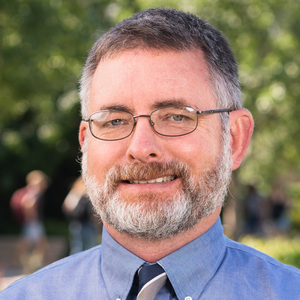
Dr. Fred Sanders is a systematic theologian who studies and teaches across the entire range of classic Christian doctrine, but with a primary focus on the doctrine of the Trinity. Sanders has taught in Torrey Honors College since 1999, and is an amateur historian of Biola's institutional history. He is co-founder of the annual Los Angeles Theology Conference, and maintains an active internet presence via Twitter and blog. He and his family are members of Grace Evangelical Free Church.
Episode Transcript
Sean McDowell: [upbeat music] What does it mean to be Protestant, and why are we Protestant? What is a Protestant view of the sacraments, the gospel, and the scriptures? Back to discuss these issues is author and Biola University professor Fred Sanders. This is an episode of the Think Biblically podcast. I'm your host, Sean McDowell.
Scott Rae: I'm your co-host, Scott Rae.
Sean McDowell: Fred, this is a conversation I've been wanting to have for a long time, and you're the perfect person to talk about it, in my estimation. You have argued in blogs and in other forums that Protestant is not the most helpful name for our movement, 'cause it doesn't stand for anything positive, but just implies protest. So what does it mean [chuckles] to be Protestant, and what do you think might be a better name for our movement?
Fred Sanders: Yeah, so we're stuck with the name.
Sean McDowell: [laughing]
Fred Sanders: You can't really rebrand at this point. It goes, it goes way back into the 1500s. But something has changed in the English language since then, where- ... The word Protestant used to mean, from the Latin protestare, to hold forth, to have a view, to advocate for it passionately. That, that's not a word root we use in English in any way. If we say protest, it means mainly you're mad about something-
Sean McDowell: [chuckles]
Fred Sanders: ... And you're gonna protest it, and that's the reason you're talking at all- ... Is to say no to something. So protesting has just kind of poisoned our use of the word. Is there a better word? The problem with thinking about Protestants as mainly protesters, and again, let me make clear, that's a bogus etymology. That's, that's not where that word comes from. We're not anti-Catholics as our defining identity. A better... What, what that term leaves out is the idea that we are holding forth a positive teaching about Christianity, and that we're passionate about it, and that we're part of the one Christian Church of all ages- ... And we have an idea for how to reform it. So you could link up to the word Reformation and say Reformation Christians-
Sean McDowell: Okay
Fred Sanders: ... Is a nice, helpful way to kind of historically tag it. It'd be cool to say we're in the Reformed Church, but again, branding-wise, um-
Sean McDowell: Yeah
Fred Sanders: ... That means the Magisterial Calvinists who are not Lutheran or etc., etc. So that words out.
Scott Rae: So Fred, how... Given the Reformation was in the 1500s, and that the sort of the birth of Protestantism was around that time, how should we view the Church before the Reformation?
Fred Sanders: Yeah, that's a great question, and really important, too, because it's possible to sort of install a denominational grid on how you think about these things before you have a historical grid. And, and I think-
Scott Rae: That's a good point
Fred Sanders: ... You're right to say, "Oh, you know, they've got 2,000 years of history here, divide it up into four quarters," and if you just wanna think of your church as only starting in the fourth quarter, you're already sort of, cattywampus, to use the technical term, [chuckles] right?
Scott Rae: [chuckles]
Fred Sanders: 'Cause you need to install the historical grid first and say, "Oh, this goes all the way back, and the Church I'm in is the Church founded by Jesus Christ, carried out by the Apo- by the Apostles, and it didn't sort of go into a time capsule and vanish for 1,500 years, and it wasn't a thin trickle of marginal kind of weirdos that were my church all the way back." I bring you good news that the entire Christian tradition belongs to Protestant Christians. Now, something big happened in the around... In the 1500s, of course, and then that's where it's legitimate to talk about distinct sorts of confessions or denominations. At that point, you could put the denominational grid in place and start thinking that way, but you don't wanna let that grid trick you out of owning three-quarters of the Christian tradition.
Scott Rae: So be- say a little bit more about when you s- when you said pr- basically, f- most of church history is essentially the Protestant tradition.
Fred Sanders: Mm-hmm.
Scott Rae: W- spell out a little bit more what you mean by that.
Fred Sanders: Yeah. So if you're trying to get your bearings on this, you could think, "Okay, at some point in the early 1500s, somebody kicked out Martin Luther for teaching justification by grace alone, through faith alone, and sola Scriptura." Someone heard him teaching that stuff, which I like, and said, "Anathema, you're out. We're not gonna reform and take that on board. We are instead expelling you." Now, whoever did that is not on my team, to speak denominationally, to speak in terms- ... Of teams and that. But if you try to think back before that, well, okay, that was 1517. What about 1417? What about 1317? What about 1217? Are all those people also not on my team and against the Reformation teaching? Well, and then you start realizing, oh, well, Thomas Aquinas was 1274. Now, denominationally speaking, he agreed with some things that we would call Roman Catholic now, but historically speaking, he was before the Reformation turning point, and so I'd like to say, "I think Aquinas is mine."
Scott Rae: [chuckles]
Fred Sanders: And you see where this is going.
Scott Rae: Mm-hmm.
Fred Sanders: You go further back, "Hey, Bernard of Clairvaux, I think he's mine."
Scott Rae: Mm-hmm.
Fred Sanders: "Says some things about Mary that are not the way I would put things, but that guy is completely my intellectual property, part of my Christian heritage, part of my birthright." If you jump all the way back to, like, Augustine of Hippo, you know, Athanasius of Alexandria, Irenaeus of Lyon, the Apostles, you kind of see where this goes. There's a turning point in 1517, but you shouldn't absolutize that and say everything before it doesn't count as mine. The default for a good Protestant is, "That all counts as mine."
Sean McDowell: So if I could, like, sum up what you're saying and make sure I'm tracking with you, there's a big split in the 1500s between Catholics and Protestants, but what we understand to be Protestant, which we're gonna get to, scripture, grace, sacraments, etc., even though there are some differences with some of these leaders you said, like maybe Irenaeus, maybe Aquinas, you're saying they're a part of the larger global church, and you think Protestants get the answers right to these questions, which go back to the beginning, Jesus, the Apostles, and the scripture itself. Is that fair?
Fred Sanders: Yeah. So one of the charges against Protestants, in the 1500s was that they were not patristic, that they were not traditional, that they were not historical. You can think about different ways to address that charge. That's what Cardinal Sadoleto, who I think was the- ... Bishop of Geneva, the Roman Catholic Bishop of Geneva, said to John Calvin. Think about how to respond to that. Calvin's response, and the standard Reformation response, was, "No, we're the ones being traditional and patristic and in touch with the great tradition. There have been some recent deviations from that, where things have hardened into a Roman Catholic deviation from the great tradition."... The Reformation was an attempt to get back to the Church Fathers, and, a lot of the Reformers were great scholars of the Church Fathers.
Sean McDowell: So that's what you mean by making the Church more catholic, lowercase C. Talk about that a little bit, if you will.
Fred Sanders: Yeah, if you take the word Catholic in its original meaning, it's from the Greek through the Latin, according to the whole, holistic, universal, total. Then you can- once you define it that way, once it means that in your mind, and not the name of a particular denomination, you can kind of pick up on how paradoxical it is to call something Roman Catholic. And, you know, not to be snarky, but the question would be something like, "Well, which is it? Is it Roman or is it Catholic?" [laughing] Like, is it local and tied to one particular-
Sean McDowell: That's great
Fred Sanders: ... Organization?
Sean McDowell: Yeah.
Fred Sanders: Or is it universal? I could start calling my church the Total Church, [laughing] right? And then you'd say, "Well, yeah, but that's a brand name," right?
Scott Rae: Yeah, I mean, I- every- almost every week, I affirm that I believe in the Holy Catholic Church.
Fred Sanders: Yeah.
Scott Rae: Yeah.
Fred Sanders: Again, in English, we've had semantic drift over the last four or five centuries.
Scott Rae: But I think it's, I think it's important for our listeners and viewers to be aware that there's a, there's a big difference between capital C Catholic and lower C- ... Catholic.
Fred Sanders: Yeah.
Scott Rae: And we, what we are affirming is the lower C catholic in that universal aspect of the Church.
Fred Sanders: Yeah, yeah, which is to say, we're attempting to reform and correct by Scripture, the one Church.
Sean McDowell: All right, so tell us what a unique Protestant view of Scripture would be. And of course, when we say a Protestant view of Scripture, you don't mean as opposed to a capital C Catholic-
Fred Sanders: [chuckles]
Sean McDowell: ... But in terms of what the Scripture's view about themselves- ... What Jesus and the apostles taught, and how does that maybe pair with things like reason, history, tradition, and other sources of knowledge?
Fred Sanders: Yeah. Yeah, and it's, it's nice to kind of catch yourself there and say, "Well, the main thing I want to say about a Protestant view of Scripture is it's a Christian view of Scripture." So thank God, Roman Catholics also believe that Scripture is the word of God and is authoritative.
Sean McDowell: Amen.
Fred Sanders: From a Protestant point of view, we'd say, "Okay, so let's tease out the difference, though." Protestants are better at describing it as the authoritative word of God, and as the norm that, norms other norms, you know?
Sean McDowell: Mm-hmm.
Fred Sanders: There, there are various ways that we get our doctrine right, and we would want to use tradition and reason and all kinds of things like that, and thinking well and thinking connectedly. But when it comes to Scripture, we say, "Oh, this is in a whole different category. This is not one of the norms that mutually norm each other. This is the norm above all other norms." This is, this is where we would use the phrase sola Scriptura, obviously a Latin phrase, which doesn't mean, "All I read is the Bible-"
Sean McDowell: [laughing]
Fred Sanders: "... Or I can't get a bad idea out of the Bible, no matter how hard I try." It certainly does not mean those things. What it means is... Actually, if you think about the phrase sola Scriptura, it implies that there's a range of influences on our theology, but that Scripture alone is the one- ... That stands above them all. And so again, to put the Protestant edge on that, you'd say, in those places where tradition develops sort of odd little excrescences and oddities, you'd say, "We can correct these, not by just appealing to more tradition, but by appealing back over tradition's head to Scripture itself, which stands out with a clearer profile as having authority."
Scott Rae: Yeah, my understanding is there, that that's often misunderstood- ... To refer to Scripture as the sole source of valid knowledge.
Fred Sanders: Yeah.
Scott Rae: And there's, that's why there's skep- there can be skepticism about the other disciplines, and how they might inform our theological understanding. But that, you're saying that's, that has nothing to do with the notion of sola Scriptura.
Fred Sanders: Right. Yeah, the phrase sola Scriptura, sometimes people try to substitute something like, "Well, you're, you're describing a solo Scriptura or a nuda Scriptura," or something like that. So people will pick up this motto and read into it things like, "You don't need anything ever but the Bible to tell you anything about anything." Also, it's a question of how information-rich your way of confessing Scripture is. If you've never read any of the Church Fathers, if you've never read anything but the Bible, well, it doesn't really matter much that you say Scripture alone, 'cause you don't have any other options even on the table. It's when you're dealing with the entire Christian tradition, all the pre-Reformation exegesis of Scripture, all the riches of the entire Christian faith, that you're able to say, "I've got all of this on the table," and when it's decision-making time, Scripture is what guides and norms and controls what I do with all of that.
Scott Rae: So what-
Fred Sanders: If the table's empty, sola Scriptura means less.
Scott Rae: What, what's the distinction, then, between... How do, how do the Roman Catholic traditions see Scripture differently?
Fred Sanders: Yeah, that's a good question, and I, again, I would want to say it's great that, Roman Catholics believe the Bible is the word of God. If I could put that in an edgy way, I'd say they just believe it badly. That is to say, they clutter up the confession of Scripture's authority with all kinds of competing norms and-
Scott Rae: So such as?
Fred Sanders: Such as an appeal to unwritten tradition, which they would claim goes all the way back. So if you, if you ask, you know, "Why... Seems to me that Mary, as described in Roman Catholic devotion and doctrine, is very different from the minor character of the New Testament?" And they would say, "Yeah, but there's an ancient tradition that gives to Mary a certain level of veneration." and so that's an appeal to unwritten, extra-biblical, ancient tradition.
Sean McDowell: So things like Mary, purgatory, other differences that Protestants have with Catholics-
Fred Sanders: Mm-hmm
Sean McDowell: ... That's different than questions of, like, the historicity of, say, the Exodus, or the intersection of science and faith, where people say there's a tension between Scripture and between some other field of knowledge.
Fred Sanders: Mm-hmm.
Sean McDowell: Is there a difference in general between how Protestants and Catholics would say, "sola Scripture," when science seems to be in conflict or history seems to be in conflict with Catholics? Or what would it look like to be a Protestant view of Scripture in light of challenges that come from other fields?
Fred Sanders: ... So in my view, in my opinion, there's not, that's not a sorter between the two. You get various kinds of Protestant ways of dealing with, say, the claims of science or of reason, and you get various kinds of Roman Catholic ways of doing that. Just because there's a magisterium and a stronger defined tradition in Roman Catholicism, doesn't mean they have one particular way of dealing with those rival claims or those other ideas.
Scott Rae: Well, let me give you an example on this.
Fred Sanders: Sure.
Scott Rae: I think it might clarify this. When I was a doctoral student- ... I took, I took some, a couple courses from, Charles Curran- ... A very prominent Catholic theologian. We didn't agree on hardly anything. [chuckles] but he was very kind to me, and we got to be friends. And he-- I, for the first time, I read really carefully a number of Catholic encyclicals- ... Which are the pa- the papal documents that sort of govern the way that the Catholic faithful view their doctrine and its application.
Fred Sanders: Mm-hmm.
Scott Rae: What I noticed throughout almost all the ones I read, until very recently, is that they started with, an appeal to reason.
Fred Sanders: Mm-hmm.
Scott Rae: And it's what, it's what made sense rationally. That was sort of the main argument to carry the day, and Scripture was almost like an appendix at the end, and s- it was, it was clear that they viewed, at least in the ex, encyclicals, they viewed Scripture as supplementing- ... What they had established by reason. And I wonder, would it be fair to say that a Pro- a Protestant view of Scripture might view that somewhat in reverse? That we would lead with Scripture and use reason to support our understanding of Scripture. They, they tended to do that, just quite differently. Would that, would that be a fair recognition of the role of reason vis-a-vis Scripture?
Fred Sanders: Well, I think it might be. Again, I don't think it's a total sorter because you get some very, reason-first Ro- Protestant apologists. It might also be that in, that you're speaking out beyond my expertise.
Scott Rae: You mean, you mean like us? [laughing]
Fred Sanders: [laughing] Yeah. It could also be that in fields like ethics, where you're gonna be way ahead of me on this reading, that there might be more of a... The Protestants might have a cleaner shot because of their, careful attention to confessing the authority of Scripture, that they might be able to leverage that more effectively than Roman Catholics.
Scott Rae: Okay, fair enough.
Sean McDowell: Yeah, I sense more that there's just a more of a weight and a tradition within Catholicism of valuing, like, natural law and general revelation- ... Than within Protestants, but it doesn't have to be a dividing line. I think that's something Protestants can [chuckles] and should do better. But you're probably right, it doesn't divide. Now, let's get to the one that arguably does divide. According to Protestants, what is the gospel, and why do we believe that is the gospel?
Fred Sanders: Yeah, so even here in the doctrine of salvation or soteriology, where we're gonna come to some real divisions, like this is really what the fight is all about or the difference between Protestant and Catholic. Even here, you can start by talking about what we have in common. Roman Catholics believe that we're saved by the grace of God. Again, I would want to say they just believe in it badly, in a cluttered way- ... That the various, ceremonies and works and things have sort of gotten between them and a clear confession of the totally unmerited favor of God. And that's why, as you kind of drill down into this, you would say Protestants teach their doctrine of salvation by emphasizing justification, the declaring to be righteous of sinners, justification by grace alone through faith alone. And that's where you start bringing in these alones again to say, as compared to, say, a medieval Catholic doctrine, which would be, you're introduced into a sort of a state of the grace of God, but within that state of grace, you ask for God's help and power to make you do good works, and those good works set your soul in order. So you're increasingly sanctified- ... And sort of brought into alignment with God. You get rid of vices. You take on virtues. Picture the way Dante has people climbing Mount Purgatory in the afterlife. Something like that, but now, like in this life- ... You're getting rid of virt- getting rid of vices, taking on virtues. At the end of that, God looks at you and says, "Well, you have been made just by my assisting power, and therefore, at the end of the process, I call you justified." You might consider the whole process justification. That's the edge where Protestants say, "No, that's not how it works. We're, we're forgiven, freely forgiven by the grace of God and justified at the beginning of it. Then we do get rid of vices, take on virtues, and live that life of sanctification, but it starts with justification by grace alone through faith alone."
Scott Rae: So, Fred, would it be fair to say that Protestants make a cleaner distinction between justification and sanctification than there is-- they're, they don't tend to be... It sounds like in Catholic teaching, they are, they are more fused together rather than seen as more separate and distinct.
Fred Sanders: Yeah, I think that's a fair way to say it, and even to take the word justification on the Catholic side, to take it to mean actually being made just. Whereas Protestants have had to dig that out of Romans and Galatians and kind of hone it and say, "No, it actually is being used in Scripture to mean declared just." Then we go on to be made holy, and at the end of that, there's a kind of justification, but the key use of the word is at the outset.
Sean McDowell: You might have answered this, but I want to ask you about a unique Protestant view of grace- ... Which is obviously at the [chuckles] root of the gospel. What's a unique Protestant view of grace, and then what would the relationship look like we think Scripture teaches between grace, faith, and works?
Fred Sanders: Yeah, um-... So Protestants, you know, reduce everything to the grace of God. This is what salvation is, and they want a clean shot at it. So there's a kind of a, I don't wanna call it nervousness, but there's a, there's a caution about introducing anything in between just free forgiveness and the grace of God. You don't want any of your works or of your, alignment, or submission to church authority, or any of those things to sort of get between you and saying, "I'm saved by grace." As a result, we then have to emphasize that the life we're introduced into by grace-
Sean McDowell: Mm-hmm
Fred Sanders: ... Is a life which has a particular shape to it, that has a form, and that we're going to obey God because God continues to have the authority to command our moral lives. We don't remove the just authority of the rule maker when we say that we are forgiven for breaking those rules. And then we can go on to say, and this is the classic Protestant view, I could cite lots of sources here- ... That works are, in fact, necessary as part of the Christian life. I just, one example, the Heidelberg Catechism, which is a, like a Reformed document on Lutheran territory in the 1500s. The Heidelberg Catechism says, "Since we are saved by grace through faith alone, why must we do good works?" That's, that's the question. Just the fact that you can put that question in a properly Protestant-
Sean McDowell: Mm-hmm
Fred Sanders: ... Document alerts you to the fact that, oh yeah, works are necessary. Works don't constitute our salvation, but the Christian life has to include a transformation in which you do good works.
Sean McDowell: Okay, so necessary in what sense?
Fred Sanders: Yeah.
Sean McDowell: Not necessary for salvation, but necessary to reveal to the world we're actually saved? What's that necessary component?
Fred Sanders: Yeah, that's very... That's, that's properly Protestant and vigilant of you- [laughing]
Sean McDowell: [laughing]
Fred Sanders: ... To get in there. [laughing] Yeah. Never necessary as a condition, right?
Sean McDowell: Yeah.
Fred Sanders: Never as a condition, like you must do these works, and when you have satisfied the condition of doing these works, then you are saved. That's- ... That's not how that works. That would be- Again, the Heidelberg Catechism question puts it, "Since we are saved by grace, why must we do good works?" And that means it can't come first as a condition. It certainly does help to testify to the world- ... That we're not just imagining that God has forgiven us, but that- ... That forgiveness has entered our lives as a factor and a principle in how we live towards the righteous lawgiver, God, the Holy One. But also because this is not a fantasy. We're actually aligning- ... Ourselves with God and taking on the character of Christ- ... And that's gonna have the form of, Ephesians 2:10, you know, "Doing good works, which God has prepared beforehand, that we should walk in them." Ephesians 2:10 is, of course, right after, "By grace, you are saved through faith-
Sean McDowell: Right.
Fred Sanders: ... And that is not your own doing, so no one can boast. But we are His workmanship, created for good works in Christ." If I start quoting Paul, I'm gonna get kind of carried away here-
Sean McDowell: [chuckles]
Fred Sanders: ... 'cause, if you, if you take on all of Paul's letters, especially including, like, his letters to Timothy and Titus, where he's not writing to a church, but to pastors of a church, he's constantly using the phrase "good works" in a very positive sense. "Remind them to do good works." "Remember that the point of the Christian life is to do good works, to be transformed and renewed, to do these things."
Scott Rae: I wonder, just to clarify this maybe a little bit further, I wonder if one of the ma- one of the major differences would be where a believer would get the assurance, ultimately, of their salvation. 'Cause I'd be nervous if the assurance of salvation was coming from my good works. I'm, I'm, I'm inclined to say that the Scripture teaches that it come, that comes at the foot of the cross.
Fred Sanders: Yes.
Scott Rae: And that's what assures me of my salvation and my eternal security.
Fred Sanders: Yeah. No, that's exactly right. Is it D. James Kennedy who had that question in Evangelism Explosion, "If you stood before God right now, and He said, 'Why should I let you into Heaven- ... What would you answer?" Yeah, the Protestant impulse, following the biblical teaching, is never gonna be, "I've had a pretty good couple of years here, you know?" [laughing] It's always gonna be, only for the sake of the death and resurrection of Jesus Christ counted to me on, you know, by God.
Sean McDowell: So what's a Protestant view of the sacraments? This is another one where we see a lot of debate and disagreement. So you can compare and contrast with Catholics if you want to, but what are the Protestant sacraments? What are they? How do we practice them? Why do we practice them? What do they mean?
Fred Sanders: Yeah, so to tag that base of unity first, because this is a point where it's easy to do- ... Not only a comparison between Protestants and Catholics, a contrast, but also among Protestants, the various different views that we would have of Baptism and the Lord's Supper. We've learned some real habits of disagreement and distinction- ... [clears throat] and we could pursue that. But it's worth saying, we all agree that the sacraments are special ordinances of Christ to be observed in the Church, that mean we die with Christ and rise with Him and are nourished by faith in Him. So dying and rising, obviously, localized in Baptism, and being nourished by faith in Him, localized especially in the Lord's Supper. Now, I use the word ordinance there, not to avoid the word sacrament, uh- ... Though I do often, when someone says sacrament, I kind of get professorial and say, like, "Could you please define your term?
Sean McDowell: Sure.
Fred Sanders: What, what content did you just add to our discussion by using that word?" Et cetera. Ordinance is just a way of saying these are things ordained by Christ. And so it brings us back to the life of the Church as a body of believers, sort of, That we d- we didn't invent our own ordinances. We didn't come up with some, like, cool stuff we would do in order to be in this club. We're actually following directly the commands of Jesus Christ, that He ordained Baptism and the Lord's Supper in the Church.
Sean McDowell: So is it fair to say, as Protestants, since we don't have, as in Roman Catholics, kind of a top-down, authoritative structure apart from the Scripture-
Fred Sanders: Mm-hmm
Sean McDowell: ... We're clearly called to Baptism, for example, clearly called to practice the Lord's Supper, but how we practice them, there can be some in-house differences among Protestants, and we have seen that, historically speaking.
Fred Sanders: Yes, and there have been in-house differences in the history of the Church in what we would now retroactively call the Roman Catholic tradition. It was not always transubstantiation developed in Aristotelian categories- ... As in the 13th century.
Sean McDowell: Interesting.
Fred Sanders: So there's been some difference there. The other thing I'd say, and I think you indicated this, we'll start counting sacraments, that is, ordinances of Christ, and stop at two.... Because, you know, mission accomplished, that's, that's what we're doing. Union with Christ and fellowship with Christ, that's what we're organized around. Which in the Roman Catholic system, in addition to that, so we agree about that, but they go on to sort of link it to, the sacerdotal or the sort of church system of how you would get the right sacraments by the right person at the right time. Once you admit that principle of what's gonna count as a sacrament, you're gonna have to go for about seven, because you've gotta have a sacrament to make sure that the priest is ordained to do the sacraments. Then you're gonna have to have baptism, and that's gonna have to be followed up by confirmation, and then you're gonna have to have marrying and burying, and all of the things that sort of go with the sacramental churchly system, and that's just to have admitted a different principle of what you're gonna use for sacraments.
Scott Rae: So is there something distinctive that's Protestant in the view of the Church? You know, you've talked about some of the, some of the practices-
Fred Sanders: Yeah
Scott Rae: ... Some of the ordinances that are different, but is there, is there something that's distinct about a Protestant view of the Church?
Fred Sanders: Yeah, I think it's meaningful to talk about a kind of a mere Protestant view of the Church. So again, you could get out into all the differences between Lutherans and Anglicans and Methodists and all that kind of stuff, but, the Protestant view is actually a strength, because it's the community of people called by the Word into fellowship with God. So it's that, calling and gathering of a people of God around the Word. The, the way this sort of shows up in contrast to Catholicism is you'll often hear Roman Catholic apologists say something like, "You wouldn't even have the Bible if it weren't for the Church handing you the Bible." It's a- it's, that's considered a knockdown argument. But of course, if you think about it theologically, the Church was always that group of people gathered around the Word of God, right? They had the books of Moses, they had the Bible Jesus had, and when Jesus himself said, "Follow me," that is the Word of God gathering the people of God. And so, Protestant ecclesiology or doctrine of the Church just takes that fully seriously, that the Word gathers the people of God.
Sean McDowell: So there's a few concerns or objections that are often raised to Protestants, and I love your take on them, Fred. One is what's often called individualism- ... That Protestants shift the locus of authority from the Church to Scripture, which elevates the individual [chuckles] reader, such as you and me or every other reader, to the authority of interpretation.
Fred Sanders: Mm-hmm.
Sean McDowell: Is that true, and is that a fair concern we should pay attention to?
Fred Sanders: Yeah. Well, I the first part of it is great, that, how did you just put it? That Protestantism-
Sean McDowell: Shift the locus of authority from the Church to Scripture.
Fred Sanders: Yep. Totally on board with that. It does not follow from that we therefore ought to enthrone the lone interpreter as-
Sean McDowell: Mm-hmm
Fred Sanders: ... The actual authority there. So that's a little bit of sleight of hand. Um-
Sean McDowell: Yeah
Fred Sanders: ... I'm not blaming you for it.
Sean McDowell: Yeah.
Fred Sanders: But when someone does that and thinks-
Sean McDowell: That's right
Fred Sanders: ... "Well, if the Bible's in charge, that means I'm in charge," that's where I would really encourage people to study some actual Protestant theology. You know, there's- ... There can be a tendency to use Protestant as a default setting for, "If you're not Catholic, you must be this other thing," and that must mean anyone who finds a Bible in a hotel room and gets an idea out of it must be Protestant. [laughing] Right? Well, that's... We're gonna need some quality control here, right?
Sean McDowell: Mm-hmm.
Fred Sanders: I'm like, I'm not a control freak, but read the actual Protestantism of the 1500s. It was never about handing someone a Bible and leaving them all alone to figure out what they could get from it. It was a movement of catechizing, of teaching, of scriptural preaching, of intense guidance to help instruct people, and by the way, that intense guidance included the Bible interpretation of the previous 1,500 years. So it wasn't a lopping off everything and starting afresh with a Bible I happened to find. It was always about giving authority to the Word of God and doing so with proper guidance.
Sean McDowell: Okay, so the key is to talk about authority. The authority is not in the individual interpreter to say, "This is what it means to me."
Fred Sanders: Yeah.
Sean McDowell: Although individuals can do that, the authority is the Scripture-
Fred Sanders: Mm-hmm
Sean McDowell: ... And there's a tradition of doing theology well, pointing to Scripture, debating what the text means. So just because there's differences- ... Doesn't mean we have this individualistic strain that leads to a kind of relativism.
Fred Sanders: Right.
Sean McDowell: Is that fair?
Fred Sanders: That's right.
Sean McDowell: Okay.
Scott Rae: But do, just to be clear, is there some place in Catholic theology that encourages the individual to read Scripture on their own and to come to some of their own conclusions?
Fred Sanders: I mean, it's not prominent in the way Catholicism teaches. You know, they have a thing called the Magisterium, which means the teaching office, and supposedly in Roman Catholicism, if the Bible is unclear, then you would go to the Magisterium, who would tell you what it means, and supposedly they would be clear. I say supposedly, 'cause if you've spent any time looking at magisterial teaching, you realize you need a Magisterium for the Magisterium. [laughing]
Sean McDowell: [laughing]
Fred Sanders: And also, you want to drop back to the-
Scott Rae: Yeah, yeah
Fred Sanders: ... Classic Protestant way of teaching, the clarity of Scripture. We're not denying that there are difficult passages. It is a biblical doctrine that there are hard passages, right? Peter says that of Paul, like, "Some of the stuff he writes is hard to read." but we don't think that Scripture is so radically unclear that you must install a Magisterium to give you a supposedly clear interpretation of it.
Sean McDowell: So the first concern that's often raised is individualism, and you said that Scripture itself is the authority. The other one is often called fragmentation. That we've seen the Church fragment since the 1500s. There's now dozens... That's probably a radical understatement. I don't know how many denominations there are, [chuckles] but tons of-
Fred Sanders: Yeah
Sean McDowell: ... Protestant denominations and divisions across and within those denominations, seemingly with minimal unity. So have we lost unity, which is a theme Scripture, like Ephesians, talks about and is vital, as shifting towards this Protestant movement?
Fred Sanders: ... Yeah. Well, the main thing I wanna talk about there is unity, but let me, let me first say, dozens is probably a pretty good answer to how many denominations-
Scott Rae: Okay
Fred Sanders: -there are, unless you take Protestant again as a default setting to mean anyone who finds a Bible-
Scott Rae: Mm-hmm
Fred Sanders: ... And finds a doctrine in it, has to count as Protestant. Even if they swear out loud, "I am not a Protestant," like, "I am from Pastor Bob's Doctrine Emporium, and we are not Protestant," it'd be weird to count them as Protestant and sort of count them against us. I'm not looking for some global Protestant council to declare who's in and who's out. I'm just saying, if you define Protestant as anyone who finds anything in Scripture and doesn't wanna be Catholic, and then you ask why they're fragmented, well, your sorting mechanism was, by definition, fragmenting. And so at some point, you wanna say, "I can't be held accountable for..." Well, I was gonna say, if I turn on the TV and see someone saying things from the Bible, I can't say, "There's Protestantism," right?
Scott Rae: [chuckles]
Fred Sanders: I guess the modern way to say that would say, I can't just find any YouTube channel-
Scott Rae: There you go
Fred Sanders: ... And say, "This counts as Protestantism."
Scott Rae: There you go.
Fred Sanders: So, that's one thing. The other thing I wanna say is, Roman Catholicism has invested in external forms of unity. In many ways, you know, you could think about Roman Catholicism as investing in externals rather than internals.
Scott Rae: Yeah.
Fred Sanders: And I don't mean that as a put-down. I mean, that's a strategic move to say the Roman Catholic Church is one because it's based in one city with one head, and it's got brand control- ... And everybody knows what a Roman Catholic is, and so that counts as one. You turn from that to Protestants, who do not have that external sort of investment, but who often consider themselves spiritually one in lots of ways, right? So I'm in the Evangelical Free Church of America denomination. I've got friends in town in Baptist denominations. They invite me to preach at their church. I don't think I'm doing something weird. I think, obviously, we're, like, the same-- We believe the same doctrine. We believe the same ways. We might have a couple minor disagreements, but we are fundamentally unified. So there's a big difference there between an external criterion of unity and an internal criterion. Speaking as a Protestant, as a fairly low-church Evangelical Protestant, I could say we might be able to steal a few cool ideas from the Catholic investment in external unity. It would be neat if my secular neighbors driving down the street didn't think-- didn't drive by two churches in a row and think, "Those are competing franchises in a religious food court-
Scott Rae: Mm-hmm
Fred Sanders: ... And they must hate each other." It'd be cool if they were in on the secret that that's actually two different ways of getting the same thing- ... And our distinction from each other is not a big division. Anyway, one other thing I want to say about that Catholic investment in external unity, though, is it's merely external unity, and if you spend any time with lots of different kinds of Catholics, you know that inside, behind that facade of oneness, a lot of Catholics hate each other for a lot of deep-seated reasons, you know? I did my graduate work in Berkeley- ... Hung out with a lot of Catholics there. The theological union I was part of included Dominicans, Jesuits, and Franciscans. Now, I don't know what their global situation is, but in Berkeley, they don't get along. [chuckles]
Scott Rae: [chuckles]
Fred Sanders: Right? Like, the Dominicans are pretty conservative Thomists- ... And the Franciscans are a little wild and crazy, and then the Jesuits-
Scott Rae: [laughing]
Fred Sanders: ... Act like the Boston Jesuits. It's really not clear how they're Catholic. And if you ask them, "What do you think about the last few popes?" Woo! Fights break out, right? [chuckles] I mean, John Paul II, I think, was a pretty cool pope, but a liberal Catholic is gonna think-
Scott Rae: Not so much
Fred Sanders: ... "No, that's the guy who stopped Vatican II from doing its perfect work." and so just to say- ... There's a bunch of disunity behind the investment in external unity, but it's a neat strategy, and again, speaking as a Protestant, I'd like to borrow a little bit of, a little bit of that appearance of unity toward the outer world.
Scott Rae: Fred, let me tackle one more, I think, maybe significant difference. And that is the understanding of Peter- ... And the, you know, the papal succession part that comes from Matthew 16-
Fred Sanders: Yeah
Scott Rae: ... And the statement that, you know, the declaration that, you know, "On this rock I will build my church," and what exactly that rock refers to. So clarify for us, where does the Catholic view on this come from, and then how is the Protestant view of that different?
Fred Sanders: Yeah, well, the Catholic view takes that as a definite proof that Peter has a special leadership role that he exercises in the church, and this is crucial, first you have to focus it on Peter so that whatever wordplay Jesus is doing there, and we could, we could spend some time on that passage-
Scott Rae: Yeah
Fred Sanders: ... 'cause it's really interesting, the binding and loosing and all of that. That Jesus is, according on the Catholic view, focusing on Peter himself, picking him out from the others, but in such a way that, to make the Catholic view work, he's actually being installed in an office which is inheritable. So it's a kind of a push and pull there. We have to see him like it's mainly about Peter to the exclusion of the other disciples, but not just Peter himself, but the office that's being instantiated there. That's an unusual view, and that's sort of... If you interpret that view as instantiating the papacy for all time as the vicar of Christ on Earth, by definition, that makes you Roman Catholic. The Orthodox don't think that. Protestants don't think that. It's-
Scott Rae: So that is, that is a uniquely Roman Catholic view.
Fred Sanders: That, yeah, that is. Mm-hmm, and you can't-- It's not, you don't have 1,500 years of unity about how to interpret that. So Augustine looks at that and says, "Well, I think, I think what's going on there is Jesus is picking out, what the rock here, on which the church is founded, is the confession of Peter, Cephas, Rocky, [chuckles] you know, about the identity of Jesus Christ as the foundation of the Church." So there's a complex thing going on there. To develop the Protestant view there, we don't look for an apostle who then passes apostolicity down to a successor. We consider an apostle to be that first generation, and we have that apostolicity in our Church in Scripture, not in an office that inherits Scripture.
Scott Rae: So, so the rock there would actually be Peter's confession-
Fred Sanders: Mm-hmm
Scott Rae: ... Of Jesus as the Son of God?... Not anything personal to him.
Fred Sanders: Right, and the main, the main way to treat that is you could, if you decide that it's a hard passage because people have made certain claims about it, then you interpret it in light of clear passages, and you simply don't have Peter stand out with a profile of a leader. He calls himself a fellow elder. You know, he just doesn't behave in a way, and no one behaves toward him in a way that puts him forward as an authoritative center.
Sean McDowell: So this highlights one of the differences before, is it- is that Protestants are gonna say, "This passage, at best, is debatable, but doesn't give us the uniqueness of Peter as the first pope in a way that maintains that authority and passes it on from generation to generation. Something so significant and distinctive to the nature of church should have been found in the Scriptures." Catholics are gonna find it somewhere else, which they consider authoritative, and this would be sufficient to open up the door to that. Is that a fair way to put it, you think?
Fred Sanders: Yes, and that is another place where unwritten tradition is gonna loom pretty large in their argument for why you should read that passage in Matthew a particular way.
Sean McDowell: That makes sense. Now, I-- back to my question earlier about fragmentation. I was just preaching in a church, Tremont Temple Baptist Church, just a incredibly beautiful church- ... In downtown Boston. And they told me, they were like, "All the big figures, like Moody and Billy Graham, have preached here," which is, which is pretty cool. [chuckles]
Fred Sanders: And now it's your turn.
Sean McDowell: It... Yeah, exactly. [laughing] That w- yeah, fair enough. [chuckles] And, which was humbling.
Scott Rae: Now that just means don't mess it up. [laughing]
Sean McDowell: [chuckles] Don't mess it up. Fair enough. But I was talking with some people there, like, I walked inside, and there was this sense of just, like, beauty, and it's transcendent, and history is built into that. I go to a church in San Clemente, and it's called The Shoreline. Basically, people can surf in the morning, and then if they want to just come, not literally in their bathing suit, but it's meant to be like meeting people where they're at, and I actually think it's a strength of Protestantism that we have a range of ways you can worship and have the church. But it makes me wonder, what do you think is the draw to Roman Catholicism, or even maybe to Orthodoxy, outside of the Evangelical church?
Fred Sanders: Yeah, I think it's... There's a Methodist theologian, William Burt Pope, who talked about some of these objections to Protestant theology and said, "These should all be entertained, not as defeaters, but as cautions to remind us how to be better Protestants." So he would take on these criticisms and wouldn't really own them, but say, "We're to use these as tools, as Protestants, to think about how to improve w- how we're being and what we're being." So the rules are something like, if you're living a Christian life, and you get the sense from your church that this really just started in the '70s or in the '90s-
Sean McDowell: [chuckles]
Fred Sanders: ... And there weren't Christians before that, and that it's really just us, [laughing] or that the casualness of our ability to approach God is a casualness that goes all the way to the gates of Heaven, and, like, there's no- there's never any room for formality or a sense of awe or majesty in coming into the presence of God. If that's sort of your experience, then the argument I would want to give is, "Well, step up the kind of Protestantism you're doing." Like, cultivate an awareness of- ... The entire heritage of the whole church, and develop that. But you can understand how if somebody has never experienced that, and they visit a church that does have some of those things, they would pretty quickly, be drawn to those. And so, yeah.
Sean McDowell: Did you say the guy's name was Bird Pope?
Fred Sanders: Burt, B-U-R-T.
Sean McDowell: Oh, Burt-
Fred Sanders: Two names
Sean McDowell: ... Pope.
Fred Sanders: William Burt Pope.
Sean McDowell: Burt Pope-
Fred Sanders: Yeah
Sean McDowell: ... And he's a Protestant theologian.
Fred Sanders: Yeah, Methodist theologian.
Sean McDowell: Interesting. I got a million comments about that one, but I'll let it go.
Fred Sanders: [chuckles] Oh, yeah, the Protestant-
Scott Rae: Yeah
Fred Sanders: ... Named Pope. Yes, that's right. [chuckles]
Scott Rae: So you've seen, I think, some students from your Torrey program, for example, I think desire, I think a bit more formal, maybe a bit more liturgical-
Fred Sanders: Mm-hmm
Scott Rae: ... Tradition. And I know some at- some, have started attending Orthodox churches, some Anglican. Have some, turned to Catholic tradition as well? And if so, what would you say to them-
Fred Sanders: Mm-hmm
Scott Rae: ... About that movement?
Fred Sanders: Yeah. Yeah, right, so we recruit sort of, high-achieving, Protestant high schoolers, and we introduce them to the Great Tradition, and one of the dangers is, if they have never heard of anyone... I used to say before Luther, but what's the real situation on the ground, right? If they have [chuckles] never heard of anyone before the year 1990- [laughing]
Sean McDowell: [chuckles]
Fred Sanders: ... Like, [chuckles] then the danger there-
Sean McDowell: That's fair
Fred Sanders: ... Is when you open the riches of the Great Tradition up to them, they see that and think, "I never got this at my church. There must be another organization that I can go to to find that." then that's a problem. They tend not to go Roman Catholic because Roman Catholics are so clear and explicit about what's different about them and how much the change is. Orthodoxy has a lot of the same issues as Catholicism but is just vaguer about it and has a different sort of apologetic or proselytizing kind of pitch, and life is too short to describe the situation with Anglicanism. [chuckles]
Scott Rae: Fair enough.
Fred Sanders: So properly speaking, Anglicanism is a Protestant movement-
Scott Rae: Yes
Fred Sanders: ... Based on the-
Scott Rae: That's right
Fred Sanders: ... Thirty-Nine Articles, but local results may vary in how they describe that.
Scott Rae: That's right.
Fred Sanders: Yeah.
Scott Rae: I am still Protestant. [chuckles]
Sean McDowell: There you go.
Fred Sanders: [laughing]
Sean McDowell: Good, good.
Scott Rae: [chuckles]
Fred Sanders: My main advice for students like that is, think hard about this, consider blooming where you're planted, and consider being the person for the next generation of people in your church who does talk about Irenaeus and Athanasius and Augustine and Aquinas. If everyone who discovers that stuff decides it's not available at their local outlet and leaves, then they're perpetuating the poverty of that local outlet. And especially if your church managed to get you saved, that's a serious thing to consider- ... Like, how that happened-
Scott Rae: Mm-hmm
Fred Sanders: ... And what are you gonna do about that?
Sean McDowell: ... Fred, I have a last question for you. I think this is the first episode we've done on kind of Catholic-Protestant differences-
Fred Sanders: I believe it is
Sean McDowell: -on the podcast. It's certainly the first one I've done on YouTube, because I'm, I'm an apologist and evangelist. I don't spend a lot of time on these conversations. To be completely honest, they don't interest me as much as the evidence for God, proof for the Scripture, just 'cause the way I'm wired. But you've been in some of these conversations. So two-part question: How have you seen this conversation shift in the time you've been a part of it over the past few decades? I guess we could say the '90s, since that's come up [chuckles] a few times.
Fred Sanders: Yeah.
Sean McDowell: And where would you like to see these kind of conversations go? What would be most productive for the kingdom to see these kind of conversations head to?
Fred Sanders: Yeah. And, you know, I'm, I'm not an apologist, but I'm a Trinitarian theologian, and so you think about the, uh- ... Choice there, to focus on the doctrine of the Trinity. It's a zone of tremendous convergence and unity-
Sean McDowell: That's right
Fred Sanders: ... Among all kinds of Christians. So, I can say I have a high tolerance for all kinds of Christians, but mainly that's because, we agree on the doctrine of the Trinity, and there's something really powerful about that fundamental unity about, belief in Father, Son, and Holy Spirit. Speaking as a Protestant, who really loves being Protestant and considers it a positive thing, and is, the most helpful way of being a member of the one Church, you know, in a way that has a clear confession of the authority of Scripture and of salvation by grace. Some really promising areas are a greater, development of Protestant self-consciousness, of kind of an awareness that this is a 500-year-old tradition now, even as a sub-tradition, even as a reform movement within the one Church. And what that means is, if you think you know what a Protestant is, but you've never studied it, there's reason to wonder if you actually have an intelligent, adult understanding of what it is to be Protestant.
Sean McDowell: That's fair.
Fred Sanders: We talk about the Dark Ages, you know, which is kind of a humanist propaganda about the time when Christianity was a major influence in the world.
Sean McDowell: Yeah.
Fred Sanders: But we talk about, "Oh, this, these Dark Ages, you know, before the Reformation and Renaissance." And they're mainly dark 'cause we don't read anything from them and don't know anything about them- ... Right? Actually, lots of great things were happening there. We are currently in danger of having cultivated a second Dark Ages between Luther and Calvin and the '90s. [laughs] You know?
Sean McDowell: [chuckles]
Fred Sanders: Between the early 16th century and the 21st century, there's this period where lots of brilliant Protestants were doing great things, gigantic tomes of theology. They're all locked away in Latin, and that's why we haven't been reading them. But just in the last 10, 20 years, more of those books are now available in affordable paperbacks, in readable English, and you can actually look at the Leiden Synopsis, Petrus van Maastricht. Increasingly, you can find all kinds of great Protestant theology from those middle centuries- ... Which I just want to say is most of Reformation theology's history, right? It's, it's kind of surprising when you look at it to realize, when I tell you I grew up Protestant, what I really mean is what the views of my youth pastor were. [laughs]
Sean McDowell: [chuckles]
Fred Sanders: Right? And, and Luther as, like, someone I dress up for on Reformation Day, uh- ... Dress up as on Reformation Day, but really zero content. Like, apparently internalizing the idea that to be Protestant, all I do is read the Bible and nothing else. Well, there actually is a wonderful, rich Protestant history, and if you want to dwell deep in the entire Christian history, one way to do it is by focusing on that middle distance of great Protestantism.
Sean McDowell: Fred, thanks for coming on. I got a ton more questions for you about this. I'd invite our listeners and viewers, if you want a follow-up on this, let us know how we could do it in a way that would be helpful. Appreciate what you're doing at the Torrey Honors College. It actually started in the '90s, back to the '90s-
Fred Sanders: That's right
Sean McDowell: ... When I was here.
Fred Sanders: [chuckles]
Sean McDowell: And had it started earlier, I would've done it in such a heartbeat. The conversations you guys are having, teaching people how to think, read not only great literature, but great church history, and just wrestling with it and thinking about it, learn to think theologically and scientifically and philosophically, I think is one of the great undergrad programs in the country and beyond.
Fred Sanders: Thanks.
Sean McDowell: So we appreciate, really appreciate a ton what you're doing. If you are listening on the Think Biblically podcast, send your questions in to thinkbiblically@biola.edu. Let us know what you think about this episode. This has been over eight years we've been doing this, Scott, and we haven't weighed into a topic like this. We'd love to know if you want more of this topic. If you're watching this on YouTube, make sure you hit Subscribe, and, let me know if on my channel you would enjoy more of this kind of dialogue and depth as well. Thanks for listening and joining us. [upbeat music]