Biola University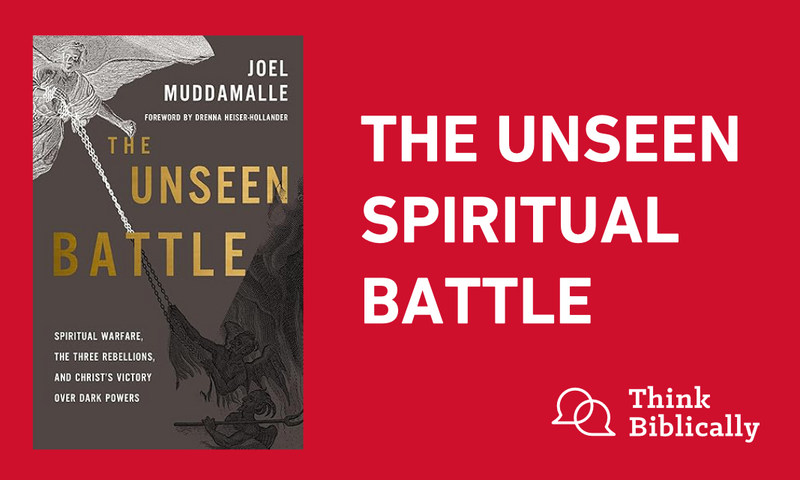
What have modern Christians missed about spiritual warfare? Have we overly focused on demonic exorcisms and missed the cosmic worldview, as found in Scripture, and what that means for how we encounter the spiritual realm? In the spirit of Michael Heiser, Dr. Joel Muddamalle argues that there is an unseen battle taking place that helps us make better sense of evil powers and equips us to conquer them through Christ.
Joel Muddamalle, Ph.D. is the director of theology and research at Proverbs 31 Ministries and cohosts the Therapy and Theology podcast. He speaks frequently at churches, conferences, and events and has a significant ministry on social media, which can be found at @muddamalle or online at www.muddamalle.com
Episode Transcript
Sean McDowell: [upbeat music] Hey, friends. Welcome to a special episode of the Think Biblically podcast. This is gonna be a little longer than normal because I have in studio Joel Muddamalle, who's written a fascinating new book called "The Unseen Battle." You might recognize the name because he's playing off of Michael Heiser, who is one of the most influential biblical Old Testament scholars over the past few decades, who sold a mega best-selling book called "The Unseen Realm." Joel was a student of Heiser's. His book, "The Unseen Battle," just came out, and let me tell you something, it's provocative. This is longer because we're walking step by step through how to understand the rebellion in the Old Testament, what it means for spiritual warfare today. Again, longer than normal on the Think Biblically podcast, but I'm telling you, if you stay with us, I narrate it, there's gonna be a lot of eye-opening, potentially game-changing moments for you. Enjoy. Joel Muddamalle, you've written a provocative new book called "The Unseen Battle," which builds on Michael Heiser's enormously influential and bestselling book, "The Unseen Realm."
Joel Muddamalle: Mm-hmm.
Sean McDowell: We're gonna get into the book. I found it fascinating. I found it eye-opening. It was enjoyable. But I want listeners and viewers to mark their calendars 'cause you're coming back live with me, March 24th, 4:30 PM Pacific Standard Time, to take questions, challenges, clarifications on your book and also on the work of Michael Heiser. So mark your calendars. If you're a Heiser fan or if this is the first time, join us, 'cause I get a ton of questions about this.
Joel Muddamalle: Yeah.
Sean McDowell: And I don't always know how to answer it. Not that you have all the answers, but you knew Michael personally.
Joel Muddamalle: Yep.
Sean McDowell: And so let's just jump in. Who was Michael Heiser, and why has he had such a massive and lasting impact on the church?
Joel Muddamalle: Yeah, I mean, there's so much to say, Sean, about Mike. Michael Heiser was a, PhD in Hebrew Semitics, languages and scholarship, and, he was a Hebrew Bible nerd. He, truly loved the scriptures. He was a husband, a dad, a granddad. And one of the things about Mike that you need to know right off the bat is he was one of the most obnoxious Green Bay Packers fans-
Sean McDowell: [laughs] Fair enough
Joel Muddamalle: ... That you could have ever, you could have ever met. And in all of that, Mike cared deeply about reading the Bible, on its own terms, in its own context. And being a Hebrew, Bible guy, he really wanted us to understand the Bible in the context of the ancient Near Eastern world. And so that's what he dedicated his life to. He wrote, many books. "The Unseen Realm," which you just referenced, is probably-
Sean McDowell: Mm-hmm
Joel Muddamalle: ... His most prolific book in terms of reach and influence. But he also wrote books on, the Enochic tradition, a book called "Reversing Herman." he wrote a book simply called "Angels," all about, angelic figures-
Sean McDowell: Great book
Joel Muddamalle: ... And demons. And, if... Y- I mean, his footnotes could be a book in and of themselves. And so, he made a pretty big impact on me, in that way.
Sean McDowell: So I've done two shows on Heiser, and they're two of the most viewed and engaged shows that I've done.
Joel Muddamalle: Yeah.
Sean McDowell: He really was a revolutionary thinker. I don't think it's an overstatement to say that. Even people not convinced by his arguments have to pause and say, "Maybe he got something right, and... Or a lot of things right, and maybe I'm underplaying the supernatural element in the scriptures and in our present," which is what's important in your book.
Joel Muddamalle: Yeah.
Sean McDowell: Now, how did you first come across his writings? 'Cause I remember the first moment somebody told me about him.
Joel Muddamalle: Yeah.
Sean McDowell: And I could come back to that. So tell me when you were introduced to it and how his writings influenced you.
Joel Muddamalle: Well, I think what's so interesting about what you just said, actually, is I was one of those individuals that actually was pretty skeptical, if not, straight up disagreed with Mike on his worldview and his biblical kind of take. Particularly when it comes to Psalm 82. And so I came across Mike, actually, we both worked for a Bible software company called Logos Bible Software. I know you're, very familiar with them.
Sean McDowell: I use it.
Joel Muddamalle: [laughs]
Sean McDowell: I literally promote their stuff. Almost every day, I literally use their software.
Joel Muddamalle: Same.
Sean McDowell: So I'm a huge fan.
Joel Muddamalle: Same. They launched a product called, faithlife.com and Faithlife Study Bible, and so they brought me on to kind of be a product manager for that. And so with the Faithlife Study Bible, one of my jobs was to read through all of the essays and the articles. Well, Mike was scholar in residence at Logos Bible Software, and he wrote a majority of those articles. He wrote a lot of those footnotes and study notes, and I came across Psalm 82 'cause I'm thinking, "Hey, what should we promote as we're getting ready to do this?" And I read Psalm 82, and to be frank, Sean, I was, like, offended.
Sean McDowell: [laughs]
Joel Muddamalle: Offended. I'm like, "Wait a minute. Is this guy actually suggesting that the sons of God in Psalm 82 are divine beings?" And then I was like, "If he says that about Psalm 82, what does he say about Genesis 6?" And so I-
Sean McDowell: That's right
Joel Muddamalle: ... Flipped over to Genesis 6, and then I'm like, [gasps] "He thinks the sons of God in Genesis 6 are angelic. Angels can't have sex with human women. Like, they can't..." And, and I mean, w- my level of panic had really kind of increased. And, and so I actually s- [laughs] I can't believe I did this. I'm kind of, young as well, kind of new in my career. I sent an email to the CEO, Bob Pritchett.
Sean McDowell: Oh, gosh. [laughs]
Joel Muddamalle: I sent an email to the editor, and I'm like, "I've got some concern." You know, just very, just... I was a punk kid, to be honest, Sean. And then I got up. Mike's office was, if you've been to Logos Bible Software, there's a Flatiron building.
Sean McDowell: I have, yep.
Joel Muddamalle: And, there's this cool spot where there's, like- ... All these games and books and food and everything. Well, Mike's office was right there. And so I'm up one day, and I see Mike's door is open, and I was like, "You know what? I'm just gonna ask him about this." And I kind of walked in, bri- I'd just gotten done with my seminary degree from Knox Theological Seminary, so I'm kind of newly minted.
Sean McDowell: Is this your master's or your PhD?
Joel Muddamalle: My master's.
Sean McDowell: Okay.
Joel Muddamalle: I just got done, yep, a Master's of Theological Studies. So I'm kinda thinking. I'm walking with my broad shoulders, you know, walking in. And right behind him, this is very important, right behind him is a sign that said, "Reserved parking for Hebrew scholars." [laughs]
Sean McDowell: [laughs]
Joel Muddamalle: So here I am, you know, freshly minted-
Sean McDowell: Of course. Of course
Joel Muddamalle: ... With my mats degree, walking in, and I was just like, "Mike, I've got some real concerns with your take on Psalm 82, and, you know, and, I don't think we can promote this. I think that the biblical world, the evangelical world is gonna call us heretics, and I think we gotta protect the brand," all this stuff. [laughs] And Mike smiled, and he looked at me, and he said, "Huh, so what do you think, the sons of God are in Psalm 82?"He said, "Come and sit down."
Sean McDowell: Great question.
Joel Muddamalle: And I was like... You know? And, and that, I would say, Sean, was one of the most significant interactions I ever had with Mike because he confronted, I would say, my pride and arrogance with a posture of humility. And that humility has been, like, the mark for me as I've thought about theology, as I've gone on to do PhD studies and all of that, has been, gosh, I don't wanna trust theologians and scholars and pastors who do not walk with a limp. And, and Mike really just was like, "Hey, let's walk through this." And we walked through the text and I was confronted with my own kind of idiosyncratic kind of ideas about the text- ... That were told to me, that I had kind of ingested and just believed about it, versus trying to identify where does the text itself say that on its own terms. And, and so that was kind of the first thing. And so then Mike and I worked together for years. I was kinda convinced of the Deuteronomy 32 worldview and his angelic view. I was confronted with the-
Sean McDowell: Which we'll get to, by the way, if people are like, "What are you talking about?"
Joel Muddamalle: [laughs]
Sean McDowell: We'll get there.
Joel Muddamalle: We'll get there.
Sean McDowell: We'll get there.
Joel Muddamalle: We'll get there. And then we part, we parted ways. I went to go work- ... For, a gal named Lisa TerKeurst. Uh-
Sean McDowell: Mm-hmm
Joel Muddamalle: ... She is an incredible Bible teacher, and an author, and she is the president of a ministry called Proverbs 31 Ministries.
Sean McDowell: Mm-hmm.
Joel Muddamalle: And, yeah, I went to work for them to bring oversight to theological development and research. One of the kind of deals, though, was, I needed to get a PhD along the way. And so I started a PhD program at Midwestern Baptist Theological Seminary. So I'm really a theological mutt, if you've caught onto this- ... By now. An undergrad at Trinity Life Bible College, which was, charismatic-
Sean McDowell: Okay
Joel Muddamalle: ... Kind of Assemblies of God. A master's degree at Knox Theological Seminary, which is Presbyterian, and then a PhD at Midwestern Baptist Theological Seminary.
Sean McDowell: Yep.
Joel Muddamalle: Only thing I haven't done s- Sean, is Anglican, which I'll probably hit postdoc work or s-
Sean McDowell: [laughs]
Joel Muddamalle: ... Or at some point I'll, I'll do that. But I get to, my program, and then I'm thinking deeply about, kind of the chaos that's happening in our world, as we're working through, you know, different seminars-
Sean McDowell: Mm-hmm
Joel Muddamalle: ... Particularly the image of God, upon humanity. I'm Indian. You know, I g- my parents are immigrants from India here.
Sean McDowell: Okay.
Joel Muddamalle: So I'm the child of immigrant parents-
Sean McDowell: Mm-hmm
Joel Muddamalle: ... And, grew up in a kind of confused situation in the streets of Chicago [laughs] trying to figure out my own identity and kinda thinking there's so much more to the chaos that's happening in this world, not just outside of the household of God, but even within the household of God. And then I came across Paul and his, letter to the church in Ephesus and his kind of household terminology, which is what got me to thinking, I think Paul has in mind much more than what we've or I've traditionally thought when he's referring to the household of God. And I had to start thinking about, advisors. And so my first reader is a guy named Dr. Patrick Schiner.
Sean McDowell: Yeah.
Joel Muddamalle: Brilliant-
Sean McDowell: Oh, yeah
Joel Muddamalle: ... New Testament scholar.
Sean McDowell: He is.
Joel Muddamalle: Great work on The Ascension. And also you'll love this about, Pat.
Sean McDowell: What?
Joel Muddamalle: I knew that I wanted to ask him to be my first reader when he walked into one of our seminars with a pair of Jordan 1s.
Sean McDowell: Love it. Love it.
Joel Muddamalle: He had a pair-
Sean McDowell: Let's go
Joel Muddamalle: ... He had, like, the suit coat on, the whole nine-
Sean McDowell: [laughs]
Joel Muddamalle: ... But he had a pair of Jordans. I'm like, "That's my guy." And then I was like, "I think I'm gonna ask Mike," but Mike didn't really take any PhD students at that time. He was, Unseen Realm had done really well. So I was like, "I'm just gonna shoot my shot [laughs] and see what's the worst that can happen?"
Sean McDowell: Why not?
Joel Muddamalle: You know?
Sean McDowell: Yeah. Let's go.
Joel Muddamalle: Sent him an email, kind of a brief thesis. I think that the Greek phrase oikos theou, I think it means more than just, human family. I think Paul has in mind a cosmic family. And, Mike responded. He's like, "You're absolutely onto something." "Let's do this." And so that is how he became my second reader, and, I built my dissertation really off of kind of the Deuteronomy 32 worldview. And then sadly, we can get into this as much as you want or as little, I had submitted chapter three of my dissertation when he was diagnosed with pancreatic cancer.
Sean McDowell: Oh.
Joel Muddamalle: And, um-
Sean McDowell: That's rough
Joel Muddamalle: ... I have the text message-
Sean McDowell: Oh, gosh
Joel Muddamalle: ... 'cause I'm thinking, "Hey, he's gonna have to bounce out. He's fighting for his life." [laughs] And he messaged me and said, "Don't even think about getting another second reader. I'm gonna see you through this." And, and that's what happened. He, we figured out a rotation. I submitted my chapters when he was in chemo 'cause he was bored, and that was the perfect time. The week after chemo was hard for him 'cause that was when his body was kinda-
Sean McDowell: Oh, yeah
Joel Muddamalle: ... Taking a toll.
Sean McDowell: Yeah.
Joel Muddamalle: So he would send me often pictures of just him sitting, you know, in his chemo chair working through it. Just... And when I say-
Sean McDowell: That's incredible
Joel Muddamalle: ... Working through my dis- Incredible. Incredible. And but honestly, he wasn't nice to me.
Sean McDowell: Oh, man.
Joel Muddamalle: He just really ripped me apart, too, so [laughs]
Sean McDowell: [laughs]
Joel Muddamalle: That, you know, the, that didn't help me, at all. In fact, I think that he had more time to [laughs] look with detail on my argumentation. And so I defended, and, a couple years later, he passed, because of the pancreatic cancer. But in a interesting way, I, my theological kind of career has bookended these two incredible scholars. I was Mike's very last PhD student that he-
Sean McDowell: That's incredible
Joel Muddamalle: ... Saw all the way through. And I was actually Patrick's very first PhD student-
Sean McDowell: Oh, interesting
Joel Muddamalle: ... That he mentored with a, with a PhD, and so-
Sean McDowell: That's fascinating. Well, there's a few things.
Joel Muddamalle: Really is.
Sean McDowell: Just his response, I gotta highlight this. Student comes in, and he goes, "Let's talk." That shows confidence.
Joel Muddamalle: Yeah.
Sean McDowell: Shows humility. It shows a commitment to the scriptures-
Joel Muddamalle: Yeah
Sean McDowell: ... Above all. That's just a model that literally convicts me right here, going, how many times as apologist do I get defensive and not just invite that conversation?
Joel Muddamalle: Yeah.
Sean McDowell: Beautiful. I interviewed him on demons, and I reached out and I said, "Hey, can we do an interview on angels?" Emailed me back and he said, he goes, "I'd love to do it. I'm going in for an appointment to check on the cancer." And it turns out it was the one which he found out it was basically fatal.
Joel Muddamalle: Ugh.
Sean McDowell: One of my regrets is like, why didn't I just reach out sooner? He would've done it, just wanted to give him space.
Joel Muddamalle: 100%.
Sean McDowell: But-
Joel Muddamalle: Yeah
Sean McDowell: ... What an incredible, what an incredible example that you have to interact with him in that way. I love it. Well, let's get into the book, and in the book you frame this, you talk about how the supernatural reality of the Jesus story has been normalized.
Joel Muddamalle: Yeah.
Sean McDowell: And you kinda ask the question, what if we took off our kinda naturalistic Western lens and looked at this within the culture in which it existed and actually understood itWhat would take place, and how does Unseen Battle approach this?
Joel Muddamalle: Yeah, so I would kind of, ask a question, and this is what really convicted me. So I'll ask it to everybody who's watching, listening, in on this, and you can kinda play this out with me. I wanna make a statement, and then Sean, tell me, you know, kinda fact-check me on this.
Sean McDowell: Okay.
Joel Muddamalle: That the core of what you and I believe as followers of Jesus, as Christians, you know, followers of the way, that we would say that, this is foundational for our belief system. That we believe that Jesus is the Son of God, that He is 100% God, didn't lose an ounce of His divinity-
Sean McDowell: Mm-hmm
Joel Muddamalle: ... Took on humanity upon Himself through the incarnation-
Sean McDowell: Mm-hmm
Joel Muddamalle: ... Was born of, immaculate conception through literal virgin birth, lived an actual perfect literal life, that He defeated sin and death through death itself, died on a literal Roman cross, went into a literal grave-
Sean McDowell: Mm-hmm
Joel Muddamalle: ... Came out of the grave three days later, and then just for the fun of it, I think, hung out for 40 days, you know, to prove the point to a whole bunch of people as eyewitnesses, and then ascends to the right hand of the Father, which is where He sits right now, reigning and ruling. Like, what part of that, Sean, is not cosmic in nature?
Sean McDowell: See, I love this, because you asked that question in the introduction, and I paused before I read forth further, 'cause I'm like, "I know he's setting me up-
Joel Muddamalle: [laughs]
Sean McDowell: ... For something, but what is he setting me up for?"
Joel Muddamalle: Yeah. [laughs]
Sean McDowell: And obviously I don't wanna steal your thunder, but you just basically explained the Gospel, the root of who Jesus is, what He accomplished, and so I want you to land this plane.
Joel Muddamalle: [laughs]
Sean McDowell: I don't wanna steal your thunder, because this is a really important point that sets up your book.
Joel Muddamalle: Yeah. There's not an ounce of it that is not cosmic in nature.
Sean McDowell: Right.
Joel Muddamalle: And so what I think has happened is there are some ideas and terminology and frameworks to how we read and understand the story of Jesus that have become normalized in such a way that we just kind of gloss over it, and we lose the significance of the impact of, like, this is the cosmic Christ. This is all of what Ephesians and Colossians is talking about, the reigning and ruling cosmic reality of the King of Heaven and Earth. And then my question is, if that is so true and that is so crucial to what we believe, why would we want to intentionally or unintentionally strip the spiritual real- the cosmic reality-
Sean McDowell: Amen
Joel Muddamalle: ... Of the rest of the Scriptures? 'Cause it's almost like we act like we just need it right here in the story of Jesus, and then everything else we can allow our 21st century-
Sean McDowell: Mm-hmm
Joel Muddamalle: ... Kind of modern industrial revolution mind, post-Enlightenment worldview to kind of just answer all of the questions that we have everywhere else, because in a way, they're a threat to us, or we're uncomfortable with the cosmic impact of that. But don't mess with the Jesus part of it. [laughs] Like, we gotta keep the J-
Sean McDowell: Maybe Elijah, maybe Moses.
Joel Muddamalle: Yeah.
Sean McDowell: But those are the exceptions. Maybe Acts when the Church started-
Joel Muddamalle: Sure
Sean McDowell: ... But it's not the norm-
Joel Muddamalle: Yeah
Sean McDowell: ... Is what you're getting at.
Joel Muddamalle: Yeah.
Sean McDowell: Yeah.
Joel Muddamalle: And, and the real big part of it is that this was the norm. This was the worldview of the ancient Near Eastern world and the Greco-Roman world of the New Testament. And God is sovereign, and in His sovereignty, He chose to give us the written word, the canon of Scripture today within human space and time, through human authors that He divinely is inspiring and guiding and leading. And we get personality from the human authors, right? Like, we get a little bit of, I think, the sarcasm of Paul as he's writing, and I think Paul's a little bit passive-aggressive in his writing, which makes me really happy, you know? 'Cause it gives me a little bit-
Sean McDowell: [laughs]
Joel Muddamalle: ... Of encouragement, you know? You get John, and then every time I read John, I just kinda think, like, man, he'd be one of those friends that I really love but is always annoying me, 'cause he's always pointing out, like, how much he's, like, the pa- like, you know, he's, like, the best friend of J- and, like, but you get the personality, and-
Sean McDowell: So true
Joel Muddamalle: ... And that is so important to us. And, and why would we wanna miss that when it comes to the Bible, particularly the first five books of the Old Testament, Genesis, Exodus, Leviticus, Numbers, and Deuteronomy, that Moses, we believe, traditionally penned, the Torah. And it's like, hey, in these books lies the cosmic storyline of Scripture, and this is actually the battlefield that we enter into within our worldview today. Why would we wanna be disconnected from the story that we have stepped into?
Sean McDowell: I love it. So it, I wanna tie together what you're doing with what we do here. So you're kinda have to fly from the East Coast-
Joel Muddamalle: [laughs]
Sean McDowell: ... Sit down with me at Talbot School of Theology. We have an apologetics program.
Joel Muddamalle: Yep.
Sean McDowell: And so we've noticed naturalism coming with a critique of miracles, a critique of the soul, a critique of the existence of God.
Joel Muddamalle: Yep.
Sean McDowell: We spend a decent amount of time critiquing those who critique the worldview outside.
Joel Muddamalle: Mm-hmm.
Sean McDowell: In part, you're saying we do it to ourselves-
Joel Muddamalle: [laughs]
Sean McDowell: ... By not letting the supernatural, cosmic element of the Bible that's right there if we just see it, speak for itself. So in some ways, naturalism encroaches in the Church through non-believers and skeptics and atheists, and through quish- Christians who unwittingly adopt a normalized naturalistic worldview. Let's go to the text-
Joel Muddamalle: Yep
Sean McDowell: ... And take a look at it. Now, one more question. You've said a lot of things that if people are still with us, probably had that thought you had originally, like, wait a minute, the family of God, what are you talking about? The household of God.
Joel Muddamalle: Mm-hmm.
Sean McDowell: Are we talking about gods that exist? Now, we're going to get there, the Deuteronomy 32 worldview.
Joel Muddamalle: Mm-hmm.
Sean McDowell: What on Earth is that? But I wanna read something that you said that I think is intentionally provocative-
Joel Muddamalle: [laughs]
Sean McDowell: ... But gets the heart of your worldview.
Joel Muddamalle: Yeah.
Sean McDowell: You write this early on. "Something that may be surprising to us is that humanity was not alone in the Garden of Eden." Now, you don't mean the snake. You don't mean the animals.
Joel Muddamalle: Yep.
Sean McDowell: "There were other family members of God alsoPresent.
Joel Muddamalle: Mm-hmm.
Sean McDowell: What do you mean, and how does that line up with kind of the ancient Near East worldview at that time?
Joel Muddamalle: Yeah, I mean, there's a couple things, that's happening here. One of them, Sean, is often we take, imagery that's present in the Biblical context, and we, again, either intentionally or unintentionally, impose our modern 21st century worldview. So for instance, the idea of a mountain, I don't know about you-
Sean McDowell: Mm-hmm
Joel Muddamalle: ... I think of a mountain, I'm like, "Oh, cool. That might be a great Instagram spot. We can go on a hike." You know, it's like, "Oh, that's, that's fun," you know?
Sean McDowell: Yeah.
Joel Muddamalle: The mountains in the ancient Near Eastern worldview were... It was understood as the meeting place of God and humanity. Think about all the Greek myths, right? You've got Mount Olympus.
Sean McDowell: Mm-hmm. Mm-hmm.
Joel Muddamalle: You've got, this idea of the council of the gods that take place on these peaks. And one of my basic fundamental thesis kind of ideas is the best narrative has always and will always be the Biblical narrative.
Sean McDowell: Amen.
Joel Muddamalle: It, it really is. This is what gives the fuel and the steam to the myths of the nations, is they realize, like, "Hey, we, why would we recreate the wheel? Let's just plagiarize the one true story, but then spin it out in a way that's actually deceptive." And so right off the bat with Eden, you find that Eden is actually on a mountain. And, and Eden on a mountain, you've got these rivers that come down. You've got, Isaiah 14 and Ezekiel 28 that, explicitly give us- ... The sense that of the holy garden of God that is on top of a mountain, Mount Eden. And so, like, why is that important? Because in the ancient Near Eastern worldview, the mountaintops were the place where God would plant a garden, and the garden would be the place where he would reside with his family, with his loved ones. This is true not just for the deities of the ancient Near- ... Near Eastern world. It was also true for the human kings of the Mesopotamian, time period, the Babylonian time period. And so it would be common for them to plant gardens and to have their families together and to enjoy it. One of the details of the Edenic story that I think is so fascinating is that it was routine, Genesis 3 tells us, it was routine for Yahweh to walk in the Garden of Eden- ... With Adam and Eve.
Sean McDowell: Mm-hmm.
Joel Muddamalle: And then the detail is, in the cool of the evening breeze. Well, why? In the cool of the evening breeze because, it was after the day's work had been done. And so now here come- And then the Hebrew word, I won't get too into the details on this, but the Hebrew word for walk there does not have a destination in mind, right? I, confession, Sean, I hate going on walks.
Sean McDowell: [laughs]
Joel Muddamalle: Like honestly, it's like I d- I'm a hooper, so I love hooping-
Sean McDowell: Oh, man
Joel Muddamalle: ... 'cause there's like a goal.
Sean McDowell: I wish we had time.
Joel Muddamalle: I know. We, I-
Sean McDowell: [laughs]
Joel Muddamalle: ... Was talking to your son, Scotty. Like, I was like, "I've got the itch right now." but, like, my wife, we've been married for 16 years. That girl loves to walk. She loves to walk for no reason.
Sean McDowell: So does my wife. I'm not kidding.
Joel Muddamalle: I mean, they, it, and so after 16 years, I have learned the way to love, show my love for my wife is when she says-
Sean McDowell: Right
Joel Muddamalle: ... "Hey, babe, you wanna go on a walk?" I'm like, "This, the flesh is saying no, but the Holy Spirit is telling me, 'You better get out there on that walk.'" [laughs] And so I'll, like, go on a walk, and- ... For me, it's a destination. Go, do a cul-de-sac-
Sean McDowell: Totally
Joel Muddamalle: ... Be done. For her, it's not. So when we are done, I'm done. I look at her. I'm like, "Hey, babe, are we done?" And she'll be like, "No." "Well, why?" I'm like, "I don't, I don't know." And I'm, like, all disappointed. The aim and ambition of that walk for the two of us is very different. For my wife, the aim and ambition is about the intimacy of conversation from the starting point to the end point, but for me, it's just purely about the destination. That Hebrew word for walk in the Garden of Eden has nothing to do with a destination, and it has to do with the leisurely walk that one would have with-
Sean McDowell: I love that
Joel Muddamalle: ... Ones that they love. Which you think, what is God doing? He is king and father, and these two kind of duality roles play itself out in Eden. And then the question of, well, who are these other family members? Have you ever wondered, Sean, why does Eve not freak out when the serpent shows up?
Sean McDowell: I totally agree with you.
Joel Muddamalle: [laughs]
Sean McDowell: It's such an obvious, fair question.
Joel Muddamalle: It's, and-
Sean McDowell: Yeah
Joel Muddamalle: ... You're like, "There's a serpent. The serpent is talking." Like, forget what the serpent says.
Sean McDowell: Yep, yep.
Joel Muddamalle: Like, let's start with what is going on right now.
Sean McDowell: Mm-hmm.
Joel Muddamalle: And, and once again, the ancient Near Eastern worldview would help us in this moment because, in the Greek, in the, actually the Hebrew myths, particularly in the Mesopotamian, Akkadian kind of worldview, whenever animals started to speak, this w- this was an inclination that something cosmic supernatural was happening, right? Kind of a telltale sign.
Sean McDowell: Yeah.
Joel Muddamalle: The other interesting detail is that the Hebrew word for the serpent is the Hebrew word nachash, and that word, has in mind kind of three things. It has in mind a literal serpent. It also has in mind a bronze or fiery image, which actually echoes back to Isaiah 14, and it also means guardian cherub. So a cherub was a throne room guardian, right? Interesting detail. What is placed outside of Eden to protect Eden after Adam and Eve fall? Guardian cherubim, right? So why does Eve not freak out when she sees the serpent? Maybe it's because it's not about the appearance of the serpent. It was normative for cosmic supernatural beings to come to and fro and to, be in the garden house of God. But you know what was odd? For that supernatural being to cause doubt and dissension about the truth and the identity of who God is. So this is actually spiritual warfare.
Sean McDowell: Mm-hmm.
Joel Muddamalle: Spiritual warfare is an issue of discernment. It is discerning... Charles Spurgeon has this great quote. It's the discernment between not just what is right and wrong, but between what's right and what's almost right.
Sean McDowell: Mm-hmm.
Joel Muddamalle: And so here the serpent kinda gives, the nachash kinda gives just fragments of truth, but actually is aiming at despoiling them and causing rebellion to take place. And so, you've got that. Once again, you can go to Isaiah 14, you can go to Ezekiel 28-
Sean McDowell: Mm-hmm
Joel Muddamalle: ... Which lets you know that in the garden of God, you've got these, cosmic supernatural beings. And these stories parallel other ancient Near Eastern stories. You've got the Epic of Gilgamesh, which, f- kind of interesting. There's this cedar forest that is the entrance into a mountain. That mountain is where the god resides, the gods reside, and there was a jewel forest that actually made that mountain inaccessible. So just in your own time-Think about that story. Now read Isaiah 14, Ezekiel 28, right? There's another Sumerian story of Enki, which, defined this story about a gardener, the gardener of the gods. And, and so some people might right now, Sean, be like, "Wait a minute. Did the, did the Hebrew Bible rip off the ancient Near Eastern stories?" Like, which one is the true story? I wanna, I wanna ... You're a hoops guy.
Sean McDowell: Yeah, it's a good apologetic question.
Joel Muddamalle: Okay, this is ... You're a hoops guy, right?
Sean McDowell: Yep.
Joel Muddamalle: Sean, who's the GOAT, MJ or LeBron?
Sean McDowell: Well, you and I are gonna agree on this. I read this in your book.
Joel Muddamalle: Oh.
Sean McDowell: My son would make a case for LeBron.
Joel Muddamalle: Yeah.
Sean McDowell: But I'm going with MJ.
Joel Muddamalle: Okay.
Sean McDowell: And here's how I land it.
Joel Muddamalle: Yeah.
Sean McDowell: If I line up and I say, "I'm playing five on five," there's no one on the planet I ever pick over Jordan, end of story.
Joel Muddamalle: Done.
Sean McDowell: That's my case. But go with your point.
Joel Muddamalle: Okay. So, I find this fascinating. Do we have any evidence of MJ ever saying that he's the GOAT?
Sean McDowell: No, he's actually, ironically, a little bit more humble about that, and lets other people decide, in a way LeBron claims to be the GOAT.
Joel Muddamalle: Okay, so-
Sean McDowell: But make your point. [laughs]
Joel Muddamalle: This is fascinating. The one true story doesn't need to be defended.
Sean McDowell: Agreed.
Joel Muddamalle: The one true... I mean, why? Because the story's there. The, because it has truth in and of itself. The simple fact that LeBron has to go around all the time, it feels, it's kind of nauseating, honestly, about, like, why he should be the GOAT or why he's got that status actually is an inclination that there is a contrary story to that one that is being presented. And so, this is ... All imageries, illustrations break down-
Sean McDowell: Yeah
Joel Muddamalle: ... At some point, but I'm, I'm using this as a way to point us back to what's happening in the Hebrew Bible. The Hebrew Bible presumes the one true story, and along the way, and we're gonna get into this with the Deuteronomy 32 worldview, there are competing stories that are being told that just have vestiges of the truth, right? They, like, they just sound almost good, and yet there's clearly some issues that are there. For instance, LeBron jumps ship to every other team just to win a championship, you know?
Sean McDowell: You just can't help yourself from critiquing.
Joel Muddamalle: [laughs] I can't. I just, I just can't.
Sean McDowell: It just bubbles-
Joel Muddamalle: It just-
Sean McDowell: ... Over with you
Joel Muddamalle: ... It just comes out.
Sean McDowell: Okay.
Joel Muddamalle: Okay?
Sean McDowell: So I, so I'm, I'm with you on this. The key point, it's just because there's similarities doesn't mean borrowing.
Joel Muddamalle: That's right.
Sean McDowell: The Bible's written a certain culture-
Joel Muddamalle: Yep
Sean McDowell: ... In a certain language at a certain time, and that can help shed light on what's going on in the scriptures.
Joel Muddamalle: Yeah.
Sean McDowell: That's what you're doing, which is-
Joel Muddamalle: And, and the tech-
Sean McDowell: ... Fair
Joel Muddamalle: ... And the technical term here is that I would argue that these opening pages of Genesis are a polemic. They are an argument against the competing narrative myths, because as these myths have come-
Sean McDowell: Okay
Joel Muddamalle: ... Into existence, now we've gotta create a correction to it, which is why, you know, like, The Last Dance came out. But I'm gonna stop.
Sean McDowell: Uh-
Joel Muddamalle: I'm gonna stop.
Sean McDowell: All right.
Joel Muddamalle: I'm gonna stop.
Sean McDowell: So, so let's, let's do this. That helps. Let's walk through four passages.
Joel Muddamalle: Yep.
Sean McDowell: I'm gonna ask you to give just the brief, concise interpretation, 'cause I want people to connect these together.
Joel Muddamalle: Yeah.
Sean McDowell: And then we're going live Tuesday, 4:30. If somebody's not convinced-
Joel Muddamalle: Sure
Sean McDowell: ... By these passages, raise your objections. We'll go into more depth there.
Joel Muddamalle: Yeah.
Sean McDowell: But tie this together. You argue Genesis 1:26, when it says, "Let us make man in our image," what do you think that means?
Joel Muddamalle: Okay, so I wanna start this, because really we're continuing the argumentation of does God have a heavenly family, right?
Sean McDowell: Mm-hmm.
Joel Muddamalle: And that's-
Sean McDowell: A household, yep
Joel Muddamalle: ... Right o- right off the bat, people are gonna be like, "Wait a minute. I've never..." Right? So again, let me argue from the text for why I'll hold to that. Look at Ephesians 3:14-16. "For this reason I kneel before the Father, from whom every family," look at this, "in heaven and on earth derives its name." So explicitly inside of the text-
Sean McDowell: That's interesting
Joel Muddamalle: ... Right?
Sean McDowell: Huh.
Joel Muddamalle: You have the context of God, who is Father, not only is He Father, but He has a family. These families are present in both heaven, the heavenlies, right, and on Earth. So, you just exegetically are gonna have to figure out if God doesn't have a two-family household, how do we deal with that, okay?
Sean McDowell: Yeah. Okay.
Joel Muddamalle: And but let's go to Genesis 1:26. So Genesis 1:26 is this kinda phrase, "Let us make man." Now, I'm gonna be honest, this is the view that I used to have, I held for a really long time, until I really got into my dissertation work. I came from kind of a systematic theology background, you know?
Sean McDowell: Uh-huh.
Joel Muddamalle: And so most systematic theology books, when you come across Genesis 1:26, they're gonna say the, "Let us" is an indication of the Triune God.
Sean McDowell: Yep.
Joel Muddamalle: Right? Is, is an indication of the Trinity. I know there's probably gonna be a question later on that is gonna be, like, some differences that I might have had with Mike. We can kind of earmark this as one of them, which is I am not... I don't think that it's necessary for us to create sharp distinctions and say, "Genesis 1:26 has nothing to do with the Triune God."
Sean McDowell: Yeah. That's fair.
Joel Muddamalle: Because-
Sean McDowell: Okay
Joel Muddamalle: ... God is ontologically triune. [laughs]
Sean McDowell: Yeah.
Joel Muddamalle: Right? Like-
Sean McDowell: He's present. Father, Son, and Holy Spirit are present in the creation moment.
Joel Muddamalle: He's 100%, 100%.
Sean McDowell: Question is does this verse
Joel Muddamalle: Teach that.
Sean McDowell: Yeah.
Joel Muddamalle: Okay. So j- the, I don't wanna get into too much of the nerdy Hebrew grammar. You can go to the footnotes in my book for this, when I kinda work through it in Genesis, 1, 2, and 3. But the idea here is that you've got what's referred to as a plural of majesty-
Sean McDowell: Mm-hmm
Joel Muddamalle: ... That's taking place, that when God makes the statement, the, "Let us," it's less about Him and His Trinitarian nature, and more about placing Him as king in a council, in the midst of a heavenly host and an assembly. It'd be similar, Sean, to I've got four kids, 14, 12, 10, and then 5. And so I've been in the room every time that the kids have been born. It would be similar- ... To my wife when I walk in to the, to the, you know, the room. She goes, "Let's do this thing," right? And I'm like, "Yeah." And then guess what? She does it all. [laughs] I have no part. My only part is to hold her hand, and when I hold... I'm, I have arthritis in my right hand- ... Because she just crushed my hand-
Sean McDowell: [laughs]
Joel Muddamalle: ... Throughout the preg- [laughs] Like, like, but she does the whole thing. But she uses a plural we. Like, "Let, let us do." It's an acknowledgement of all of the people that are inside of the room. Now, every analogy breaks down, so don't-
Sean McDowell: Of course. Of course
Joel Muddamalle: ... You know, don't read too much into it, but it's an example to say, "Okay, what's happening here?" And you've got actually, church history on our side, in the sense of you've got, Philo, from early as Philo onwards,
Sean McDowell: Who's Jewish, for people not tracking this, by the way
Joel Muddamalle: ... Not, yeah.
Sean McDowell: Yeah.
Joel Muddamalle: And Philo is not just Jewish. He's roughly around the same time of Jesus.
Sean McDowell: He is, yeah.
Joel Muddamalle: He's living, you know?
Sean McDowell: Mid-first century. Yep.
Joel Muddamalle: Absolutely. And he's doing incredibly important work of taking Hellenistic thought of the time and contextualizing it to the Hebraic worldview and thought.
Sean McDowell: That's right.
Joel Muddamalle: And so we should pay attention. One of the, you know, one of the, arguments against, this is like, "Well, Philo's not a Christian." Well, of course he's not a Christian, but does that mean that non-Christians can't give us, like, really incredible, important insights?
Sean McDowell: I think that helps your case, actually.
Joel Muddamalle: [laughs]
Sean McDowell: I don't think it hurts it.
Joel Muddamalle: Yeah.
Sean McDowell: Okay, so I wanna make sure people are making the connections here.
Joel Muddamalle: Mm-hmm.
Sean McDowell: So when God says, "Let us make man in our image"
Joel Muddamalle: Image
Sean McDowell: ... Obviously God is the sole creator, doesn't need angels or animals, or the point you're making, this household of God who is present.
Joel Muddamalle: Yeah.
Sean McDowell: He's announcing this to them, just like your wife says, "Let's go," she's the one who does all the delivery and the hard work here.
Joel Muddamalle: And the grammar, this is so important 'cause it's gonna be misconstrued, the grammar affirms this because you go from a plural we of Genesis 1:26 to a singular act, a singular verbal act of creation- ... In Genesis 1:27.
Sean McDowell: Okay.
Joel Muddamalle: And then it's extremely explicit. Then God singularly creates Adam and Eve in His singular likeness and image. So the grammar-
Sean McDowell: That's interesting
Joel Muddamalle: ... Reinforces the idea of a singular creator, and it maintains the creator/creation distinction, while leaving room for the fact that He's not by Himself. There's a, and actually, there's a passage-
Sean McDowell: Okay
Joel Muddamalle: ... In Job that we're gonna get to-
Sean McDowell: Yep
Joel Muddamalle: ... That actually reaffirms this. But we can get to that later.
Sean McDowell: Okay, so let me pause. So far, you're saying in the creation moment, there's animals that are there.
Joel Muddamalle: Yep.
Sean McDowell: But He's referring to this household of God, other gods, not Yahweh's-
Joel Muddamalle: Yahweh
Sean McDowell: ... Lesser kinda divine-
Joel Muddamalle: Yeah
Sean McDowell: ... Type powers, which we'll get to. I don't want people to lose their mind.
Joel Muddamalle: [laughs]
Sean McDowell: You're not teaching polytheism.
Joel Muddamalle: That's right.
Sean McDowell: So we see this in Genesis 1. Connect the dots with Genesis 6, and this is a huge-
Joel Muddamalle: Ooh
Sean McDowell: ... Passage, but just make the point-
Joel Muddamalle: Yeah
Sean McDowell: ... About how you believe this indicates a household of God and advances your case.
Joel Muddamalle: Yeah.
Sean McDowell: And again, we can come back in the question and answer-
Joel Muddamalle: [laughs]
Sean McDowell: ... And unpack that crazy passage.
Joel Muddamalle: Yeah.
Sean McDowell: But keep the thread going.
Joel Muddamalle: Okay, so this one is difficult because it requires us to do a little bit of Biblical theology here, particularly in the Hebrew Bible. So, in areas of confusion, we wanna go to passages of clarity in order-
Sean McDowell: For linking
Joel Muddamalle: ... To reinforce it, right? So where does the Hebrew phrase "sons of God" most explicitly, clearly show up? It actually shows up in Job, right? Right off the bat in Job 1 and 2, and then again, later on, where the phrase "sons of God" is a, the Hebrew phrase is bene elohim, and it refers to angelic beings who are in the divine throne room of God. Okay? So if that is the indication there, then when we look at Genesis 6, we have to have continuity of our hermeneutical method of how we study and read and interpret the scriptures. And so what does this mean? Some have argued that the sons of God is what's called a Sethite view, a human rulers view. I wanna give just a couple reasons why this is, for me, incoherent.
Sean McDowell: Okay, so by the way, before we come back to the Sethite view-
Joel Muddamalle: Yep
Sean McDowell: ... This is the passage in Genesis 6-
Joel Muddamalle: Oh, yeah
Sean McDowell: ... Where the sons of God have
Joel Muddamalle: Sex with a human
Sean McDowell: ... With the daughters of men.
Joel Muddamalle: Yeah, yeah.
Sean McDowell: And the question is there a natural interpretation?
Joel Muddamalle: Yes.
Sean McDowell: These are rulers or humans, or is it supernatural?
Joel Muddamalle: Yeah.
Sean McDowell: And if it's supernatural, then these sons of God might be a part of the family of God who have gone wrong.
Joel Muddamalle: Yes, exactly.
Sean McDowell: That's the basis.
Joel Muddamalle: Yes, that's really good. And remember, this shows up as the precursor to the flood. Now, I've been, I grew up-
Sean McDowell: That's right
Joel Muddamalle: ... In the church, been in a lot of vacation Bible schools. The flood is, like, the most famous, like, right, it's like the Hollywood top five, like, themes to do.
Sean McDowell: Yeah.
Joel Muddamalle: I don't know about you. I never seen nobody do, a story about the Nephilim.
Sean McDowell: Ever.
Joel Muddamalle: [laughs]
Sean McDowell: Never.
Joel Muddamalle: Right? Like, like, no, like, but why are we ignoring Genesis 6:1-4?
Sean McDowell: Even though the flood is kinda horrifying if you actually think about it.
Joel Muddamalle: 100%. [laughs]
Sean McDowell: But I, but I digress. [laughs] Keep going.
Joel Muddamalle: 100%.
Sean McDowell: [laughs]
Joel Muddamalle: And so, how do we make sense of Genesis 6:1-4? So, the view is, well, this c- this, there's a naturalistic view to it, which is, the sons of God are the lineage of Seth. It's called the Sethite view. The challenge is to this, just for sake of clarity, the Hebrew word Adam, is a catch word categorically for humanity. And so now you have to suggest that the first time Adam is used in Genesis 6, it's referring generally to-
Sean McDowell: Mm-hmm
Joel Muddamalle: ... Humanity, but then the second time that it's used, it's now being used specifically of Cainite women, right? And because the idea is that it's the-
Sean McDowell: Okay
Joel Muddamalle: ... Holy line of Seth.
Sean McDowell: Yep.
Joel Muddamalle: Right?
Sean McDowell: Yep.
Joel Muddamalle: That now intermarry with the unholy line of Cain and his daughters, which creates chaos. But the problem is we have to find exegetically, one, where are the line of Seth referred to as sons of God throughout the rest of the Bible? You won't find it. It's not there. So that's an issue. The second issue is we're imposing the idea that the ungod- that the women are ungodly because they come from the line of Cain, which once again, is not found- ... In that verse or anywhere else that I can find. Now, maybe somebody can do a Google search or ChatGPT and find it.
Sean McDowell: Sure.
Joel Muddamalle: Which you should, and you should write a PhD dissertation on that, 'cause that would be, you know, crucial-
Sean McDowell: Yeah
Joel Muddamalle: ... To this conversation. The next issue is the Nephilim. Who are these Nephilim? And they're described as giants. That's the Greek term for Nephilim in the-
Sean McDowell: Mm-hmm
Joel Muddamalle: ... Septuagint is gigas, so and so these massive individuals.The question is a question of coherence. Why would human men who would marry human women produce gigantic [laughs] beings, right? Like, there's a chemistry, biology question that's over here. So the most coherent- ... Response from me would be that we look at sons of God, we look at other places that the phrase sons of God is used.
Sean McDowell: Okay.
Joel Muddamalle: Most clearly in Job, which is, of angelic beings. And then we say, "Oh, sons of God, they, have an unholy union with the daughters of man." The, the nature of that union, we would suppose, is having sexual relations, which produces these hybrid beings, unclean beings, which are, really, I think, the origin story of where you get Hercules and where you get Achilles and where all these other-
Sean McDowell: Oh, yeah
Joel Muddamalle: ... Gilgamesh, you know-
Sean McDowell: Okay
Joel Muddamalle: ... Kind of are rooted from. And I think that that is a coherent end. In Genesis 6, Sean, there is a worldview that is already understood, that you and I have been disconnected from, that I think the biblical author, Moses, doesn't feel the need to fill in the dots for because the people at the time already knew it. And this is where we get into-
Sean McDowell: That is crazy-
Joel Muddamalle: ... The Enochic tradition
Sean McDowell: ... About this story. We're not even given details about it, right? Like, it's just placed there, like you said, as if we would know what's going [laughs] on.
Joel Muddamalle: Yeah.
Sean McDowell: And it moves on.
Joel Muddamalle: Yeah, like, and we can do another-
Sean McDowell: Yeah
Joel Muddamalle: ... Illustration for that. I said earlier, who's the greatest, MJ or LeBron, but who did I mean by MJ?
Sean McDowell: You meant Michael Jackson, clearly, by [laughs] that.
Joel Muddamalle: Right. See, so you-
Sean McDowell: Right?
Joel Muddamalle: I mean, you already-
Sean McDowell: Magic Johnson. I mean. [laughs]
Joel Muddamalle: I mean, yeah, so the context helps us. LeBron, MJ.
Sean McDowell: That's right, that's right.
Joel Muddamalle: You know, what do we mean by GOAT, greatest of all time, versus a furry animal. See, you and I are doing this consistently.
Sean McDowell: Yeah.
Joel Muddamalle: 500 years from now, maybe even 1,000 years from now, people are gonna have to figure out what that statement means, and they're gonna have to use context and clues and other writing.
Sean McDowell: Totally.
Joel Muddamalle: They're gonna have to figure out-
Sean McDowell: Yeah, that makes sense
Joel Muddamalle: ... "Oh, this is what..." And so for us, when we're thinking about this, I think we have to remember that the biblical authors are presuming a narrative-
Sean McDowell: Mm-hmm
Joel Muddamalle: ... A story that was already preexistent. They just didn't feel the need to fill in those dots, 'cause as soon as they say, "Sons of God, daughter," they're thinking, Mount Hermon, the Watchers. "Oh, we know what happened with the giants and the unholy union," and that's what takes place.
Sean McDowell: Okay, so let me connect with people-
Joel Muddamalle: [laughs]
Sean McDowell: ... What we're talking about. You're saying in the beginning, in the Garden of Eden, there was not just human beings, there were these gods, which we're gonna get to.
Joel Muddamalle: Yep.
Sean McDowell: And, when God says, "Let us make man," he's kind of announcing this. So he's not just starting an earthly family, has a spiritual family.
Joel Muddamalle: Mm-hmm.
Sean McDowell: Get to Genesis 6, and these sons of God are these supernatural beings who have rebelled against God in some fashion. We're not given when or how that happened.
Joel Muddamalle: Right.
Sean McDowell: But the Nephilim come from their union with human women, and so now you have this household of God. Some of them have gone bad and rebelled.
Joel Muddamalle: Yeah.
Sean McDowell: Let's take it one step further.
Joel Muddamalle: One, one more thing about-
Sean McDowell: Yeah
Joel Muddamalle: ... Genesis 6, which is very-
Sean McDowell: Yep
Joel Muddamalle: ... Important because, the, once again, the Bible has to interpret the Bible.
Sean McDowell: Yeah.
Joel Muddamalle: So you have both Jude and 1 Peter that are actually quoting back and drawing on this Genesis 6 story, and the way that they quote the story-
Sean McDowell: Mm-hmm
Joel Muddamalle: ... Once again, they presume the Enochic tradition. That, that Second Temple literature is actually, playing into that storyline. So now you have to deal with that, is why would Jude and Peter be thinking about these angelic beings in chains in Tartarus, and then really making a direct quotation back to Genesis 6, and once again presuming that we know the story that Genesis 6 is already kind of embedded in. So I just wanna give the biblical connections-
Sean McDowell: That's great
Joel Muddamalle: ... As well.
Sean McDowell: Okay, so again, people watching, going, "How's Enoch fit into this?" Put your questions in there.
Joel Muddamalle: [laughs]
Sean McDowell: We're going live Tuesday 'cause we don't have time right now to go into the depth, and I know e- we could probably spend an, we could spend multiple hours on each-
Joel Muddamalle: For sure
Sean McDowell: ... One of these issues. I'm trying to draw some threads for people.
Joel Muddamalle: Yeah.
Sean McDowell: Really glad you brought that in. You, you referenced Job a couple times.
Joel Muddamalle: Yep.
Sean McDowell: How does Job 38 just advance this general point about the household of God?
Joel Muddamalle: Yeah, I mean, so Job 38 is kind of important for us because in Job 38, I can kinda, summarize it for us. Job 38 points out to this moment, where, God asks Job like, "Yo, where were you?" That's my, like, translation.
Sean McDowell: Yeah, yeah. That's fine.
Joel Muddamalle: Like, you know, like, "Yo, where were you?"
Sean McDowell: I... [laughs]
Joel Muddamalle: So, so Job, I'll just read it. "Where were you when I laid the fo- the Earth's foundations? Tell me if you understand, who marked off its dimensions. Surely you know. Who stretched a measuring line across it, or what were its footing sets or who laid its cornerstone?" And this is the key. "While the morning stars sang together and all the angels shouted for joy." So this is an indication that lets us know at the beginning of creation, as God is giving this masterful brushstroke by just- ... Breathing everything into... You've got an audience that's just like, God is hitting homers right and left. [laughs] Like, everything he does. The sun is brilliant, the moon, the sea, and then the peak of all of creation is humanity, and that's when these angelic beings are shouting for joy, which for me, if we go back to Genesis 1:26 and we go, well, the "Let us," it's like, it almost feels like God's like, "Yo, just watch what I'm about to do. Check this."
Sean McDowell: [laughs]
Joel Muddamalle: And then he goes and he does it, and then everybody goes, "Whoa," you know?
Sean McDowell: Which they should.
Joel Muddamalle: Which they should.
Sean McDowell: Yeah.
Joel Muddamalle: And so once again, we're finding intertextual connection points. And Job, while this is somewhat debated today, what we can know is that it is a very early writing-
Sean McDowell: That's right
Joel Muddamalle: ... In terms of dating and publication-
Sean McDowell: Yep
Joel Muddamalle: ... Which should tell us something.
Sean McDowell: Okay, so what's important about this is you're not just saying, "I'm going to some passage in Job to read back into this." Verse 4 says, "Where were you when I laid the foundation of the earth?" Job, or God is speaking to Job, referring back to the moment of creation. And verse 7, this is the ESV, "When the morning stars sang together and all the sons-
Joel Muddamalle: Of God
Sean McDowell: ... Of God shouted for joy."
Joel Muddamalle: Yep.
Sean McDowell: So this advances your argument or raises the question, who are these sons of God?Are they angels? Are they deities? We're gonna get to that, but hopefully people are making the connection. Okay, one more, and the way you connected that was great. This is a hugely important passage, [laughs] is Psalm 82.
Joel Muddamalle: 82.
Sean McDowell: Yep.
Joel Muddamalle: We could do an entire episode on just Psalm 82.
Sean McDowell: We could.
Joel Muddamalle: And this was the, this was the passage that messed up Mike, you know, when he read it for the first time, in the Hebrew Bible. And so Psalm 82 is really important. And how we handle Psalm 82 is gonna have direct impact on what you do with Genesis 6 and then what we do later with Deuteronomy 32:8-9. I'll just read the text. It says that, and I'm reading from ESV, "God has taken his place in the divine council." So explicitly, you have reference to God, who's king, in a council, right? In the midst of... The Hebrew word here is Elohim. I wanna be impor- this preci-
Sean McDowell: It's just-
Joel Muddamalle: Precision matters in this, okay?
Sean McDowell: Yeah, it's key.
Joel Muddamalle: Elohim is a categorical term for a disembodied spirit. One, one of the things that Mike did really well was he had these little catchphrases where he would say, "Yahweh is Elohim, but no other Elohim could ever be Yahweh."
Sean McDowell: That's great.
Joel Muddamalle: So this is not polytheism. This is not co-creation. This, this is not heresy. This is an idea that you have- ... The uncreated creator who creates different types of beings. One type of those beings, that are actually fleshed out in different ways, are spiritual beings. So just the simple fact that they're spiritual beings means that they have the categorical term Elohim. The, in biblical grammar, context determines usage. We get a little bit freaked out because we take an English word like God, and we create an- ... Entire definition around it, and now we impose that English gloss back into a Hebrew-
Sean McDowell: Good
Joel Muddamalle: ... Term.
Sean McDowell: Good.
Joel Muddamalle: And we panic 'cause we're like, "That's not..." And we're just like, "Wait a minute. Let's go in the right trajectory. What did the Hebrew term mean?" So Elohim, God, singularly, has taken his place in the divine council in the midst of the gods. This is plural. So you have to have a singular God in the midst- ... Of a plural assembly. And then this is the indictment against these Elohim. "How long will you judge unjustly?" So you've got a issue of injustice. And then, "How long are you gonna show partiality to the wicked?" So you're favoring the wicked people, right? And then he's like, "This is what you should have done. Give justice to the weak and the fatherless. Maintain the right of the afflicted and the destitute. You were to rescue the weak and the needy, to deliver them from the hand of the wicked." And then he says about these beings, "They have neither knowledge nor understanding. They walk about in darkness. All the foundations of the earth are shaken." And then, like, if you just think about this theatrically, can you imagine this moment where the high King of heaven then kind of declares upon them, "I said you are gods," Elohim. "You are sons of the Most High." That phrase, sons of the Most High, is syntactically connected to bene Elohim, which is sons of God. So you've got familial language about angelic beings. "I said you are gods, sons of the Most High, all of you. Nevertheless," and this is the consequence, "like men you shall die and fall-" ... "like any prince." And I love verse eight, and this actually advances my thesis in the book. The last line says, "Arise, O Elohim, judge the earth, for you shall inherit all the nations." Sometimes I think we think of Jesus like he's just hanging out in a green room, waiting for his grand ap-
Sean McDowell: [laughs]
Joel Muddamalle: ... Appearance and the incarnation, right? It's like, nope, he's active, he's there, he's working. I hold that the Angel of the Lord appearances throughout the Old Testament is actually the pre-incarnate Christ. And right here, who is this Elohim? It's almost like in a theatrical, scenario, you've got a figure who's standing off scene, off set, and the entire time he's listening to this corruption and this chaos. This is all played out through the minor prophets, right? Amos and Micah. And, and, at the very end of it, here's God the King who says, "Arise, O Elohim." And what is this Elohim to do? To inherit all the nations, to draw the families of the earth back into the one household, which is where they were always to belong. The big objection to this is often, "Well, no, this, sons of God phrase refers to human rulers." Well, there we can go into a lot of details on this. One of them is there's a guy, named Julius Africanas, who was one of the first-
Sean McDowell: Uh-huh
Joel Muddamalle: ... Individuals in, you know, kinda the medieval time period, earlier than Augustine, who suggested, a s- asset that view for Genesis 6, and then also kind of, suggested because of that view, you now have to, correlate that to Psalm 82 to create- ... Cohesion, right? Augustine was famous for the same thing. Augustine suggested Psalm 82 was human rulers. But the problem with this is a couple things. One, human rulers, the Israelite religious rulers were never given jurisdiction over the nations.
Sean McDowell: That's a really good point.
Joel Muddamalle: Right? So now you have an issue.
Sean McDowell: Mm-hmm.
Joel Muddamalle: And the second one is- ... But just a question of coherence. Why would it make any sense for human rulers to have the consequence that they should die like men? This would be like me, Sean, saying, "Hey, Sean, you know, the consequence for you not eating for 24 hours is you're gonna be hungry." Like, what? Of course I'm gonna be hungry.
Sean McDowell: Okay, so can I challenge you on this one?
Joel Muddamalle: Yeah, okay. Yeah.
Sean McDowell: 'Cause I was reading your book.
Joel Muddamalle: Yep.
Sean McDowell: And I thought, if it's speaking to sons of Gods that have authority-
Joel Muddamalle: Mm-hmm
Sean McDowell: ... Like kings, they would kind of assume that they're not like men.
Joel Muddamalle: Mm-hmm.
Sean McDowell: Right? So when it says, "You're gonna die like men," it's basically saying, "You're ordinary. Your power and your throne doesn't give you any power against death. You're going to die like all other men."How would you respond to that?
Joel Muddamalle: I would respond to, I think that's a good pushback. I think that's a great pushback. I would just say, but what does it mean to die like men? And how is that phrase used- ... Elsewhere throughout Scripture, especially in Isaiah 14 and Ezekiel 28.
Sean McDowell: Yep.
Joel Muddamalle: It talks about the consequence for this angelic being sent down to Sheol, to Hades. So there is a literal, there's a literality to it, of a spiritual being, who, changes status from, being, you know, unlimited or having some kind of mor- immortality, whether it's conditional or non-conditional, but there's consequence to it, and it's a literality of death to it. And I think there's other- ... Passages of Scripture that suggest, you know, this is what you're waiting for, Revelation 4. You're waiting, the, these, angelic beings in Tartarus are waiting to be- ... Transferred into the lake of hell-
Sean McDowell: Yeah
Joel Muddamalle: ... Into Gehenna, right?
Sean McDowell: Yeah.
Joel Muddamalle: Gehenna, the lake, the lake of fire, was prepared for who? [laughs] Angelic beings.
Sean McDowell: Yeah, yeah.
Joel Muddamalle: You know?
Sean McDowell: Satan's angels.
Joel Muddamalle: So an- yeah, exactly. So I would just say that's a, that's a good pushback, but I just think that when we're reading it through the rest of Scripture, it just, it's feels like this isn't just a gloss term of saying, "Hey, like men, you're gonna lose power."
Sean McDowell: Yeah.
Joel Muddamalle: It's like, "No, no, like men, you're gonna die like they die." Like there's- ... A literality to their death.
Sean McDowell: Which I think is totally fair, because even, I mean, every king that's ever lived before Jesus died-
Joel Muddamalle: Facts
Sean McDowell: ... Like every other man, so do they really need to be reminded of that? And the context is God has taken His place in the divine-
Joel Muddamalle: Council
Sean McDowell: ... Council. That's the way Psalm 82 starts, so suggesting more here about the sons of God.
Joel Muddamalle: And there's a connection back to Job 1 and 2. In Job 1 and 2-
Sean McDowell: Okay
Joel Muddamalle: ... The sons of God are present in a divine council scene before the hassatan shows up. And so once again, you've got this same idea. This is, similar to Micaiah, where you've got Micaiah having this vision in, 1 Kings 22, where he sees a host of heaven. They're sitting to the right-
Sean McDowell: Yeah, that's interesting
Joel Muddamalle: ... And to the left of God. You find this in Isaiah 6 with the seraphim. Daniel 7:9-10, where, the Ancient of Days takes a seat on a throne, and there's, holy ones that are attending Him. So once again, the context seems to be a context of a divine council, cosmic scene, and we would have to make some kind of shift where we'd say the first half is that, but the second half is human rulers.
Sean McDowell: Okay, so this is helpful. Let's go back to Genesis.
Joel Muddamalle: Okay.
Sean McDowell: Because if you ask somebody, "Tell me about the rebellion in Genesis"
Joel Muddamalle: [laughs]
Sean McDowell: ... It would always be Genesis 1. You talked about this.
Joel Muddamalle: Yep.
Sean McDowell: Or at, the rebellion would be, of course, Genesis chapter 3-
Joel Muddamalle: Yep
Sean McDowell: ... With the Fall. Talked about Genesis 6 now.
Joel Muddamalle: Mm-hmm.
Sean McDowell: Where we have, we had the human family maybe rebelling in Genesis 3, and then the divine family rebel, these sons of God in Genesis chapter 6 create the Nephilim, which is their offspring.
Joel Muddamalle: Yep.
Sean McDowell: You say there's a third rebellion in Babel, and these three rebellions tie together this broader story-
Joel Muddamalle: Yep
Sean McDowell: ... That in the New Testament when we look at spiritual warfare, they're tying these threads back together.
Joel Muddamalle: Yeah.
Sean McDowell: So one more rebellion. Tell us what's important in Genesis chapter 11, of course, the Tower of Babel, and how this kinda fits in the larger story you're telling.
Joel Muddamalle: Yeah, so Genesis 3 is household rebellion internally. Genesis 6 is about a transgression of domains. You've got these sons of God who are allotted. This is what's happening in the Enochic literature, and they, transgress, they, transgress their domain. Genesis 11 is gonna be an issue of, allotment rebellion. They were given a task to do, and yet they, are devious about it. So in Genesis, and you're like, "Wait a minute, Joel, where in the world do you even get an-
Sean McDowell: Right
Joel Muddamalle: ... Angels from Genesis 11?" So Genesis 11 is a story about the Tower of Babel, kind of one of those- ... Famous stories. Genesis 10 directly that precedes it gives you the table of nations.
Sean McDowell: Mm-hmm.
Joel Muddamalle: There's a scholarly debate on how to read Genesis 10 and 11, whether 10 actually chronologically happens after 11, or, and then it's just placed before it's kind of like a prelude. I actually-
Sean McDowell: Right
Joel Muddamalle: ... Don't think that's the case. I actually think that Genesis 10 should chronologically be placed before it because of the one lip of Genesis 11:1. The, the anthropological kind of idea here is this concept called the lingua franca-
Sean McDowell: Mm-hmm
Joel Muddamalle: ... Which is the one lipped kind of ru- it's like the one ring to rule them all kinda thing. Right now English is kind of that. I was in India, Sean, like, in August, of last year with my family. Dude, everybody spoke English. It was wild.
Sean McDowell: Oh, that's crazy.
Joel Muddamalle: Like, I, it was, like, in the main city, everybody spoke English.
Sean McDowell: Wow.
Joel Muddamalle: You know? So you had the one language. Now, what happens here is the people go into rebellion because they have an aim and an, and ambition that is not in connection with the task and the vocation that was given to them. They were told to go out and into the world, right? To expand the goodness of God out and into the world, not to build a monastic society. They get to a plain. Well, a plain has a problem. What is the problem? There are no mountains on plains. But we talked about earlier that mountains mattered because mountains is the place where God and humanity met. So what do the people do? They attempt to build what's called a ziggurat temple tower. In archeological digs today, you find them all over the place.
Sean McDowell: Right.
Joel Muddamalle: And, and the ziggurat was actually a house of the deity. This is really important once we get into Ephesians. At the very top of the construction was a, was a home that the deity would come down to, and at the base would be the place where the priests would be, and there would be a staircase that would go all the way to the top.
Sean McDowell: Mm-hmm.
Joel Muddamalle: So what are the people trying to do? They're, it's actually a little bit twofold. One, they're trying to force God's hand, to force Him to come down simultaneously in their own aim and their own ambition. Instead of making a name for God, they say, "I wanna make a name for myself-
Sean McDowell: That's a key point
Joel Muddamalle: ... For ourselves."
Sean McDowell: Yeah.
Joel Muddamalle: Huge, right?
Sean McDowell: Yeah.
Joel Muddamalle: So whose, fame are we about? And so they go up to try to force God to come down.
Sean McDowell: Mm-hmm.
Joel Muddamalle: Really fascinating. The exact same phrase in Hebrew of, "Let us," in Genesis 11, yeah, God says, "Let us come down," right? It's a copy and paste from the Hebrew of Genesis 1:26. So right there we have a plural of majesty.
Sean McDowell: Yep.
Joel Muddamalle: We, right?
Sean McDowell: Mm-hmm.
Joel Muddamalle: You have the host of heaven that are connected now based off of Genesis 1 through 26, and then you have the diversification of the tongues of Genesis 11. Well, what happens? The one language that knit them all together is taken away. So imagine if, Sean, you speak, German, I speak Telugu, the people who are listening in, they all speak, I don't know, French, but we all speak Hebrew together, right? But Hebrew is taken away. Who are we gonna hang out with?The people that speak our own distinct languages and will probably spread out and into the world, right? That's exactly what happens Genesis 11. The rebellion is a rebellion, of pride and selfish ambition. God deals with the rebellion and still institutes His mission, which is ultimately the expansion of His image out and into the world. So even in the midst of rebellion, God is gonna have His way in and through it.
Sean McDowell: That's right.
Joel Muddamalle: Right? Now we get to this odd thing. You have a Marvel shirt on, which I love.
Sean McDowell: I wore it intentionally because there's different gods-
Joel Muddamalle: [laughs]
Sean McDowell: ... Or superheroes.
Joel Muddamalle: Yeah.
Sean McDowell: It, it was a little of the backdrop, but-
Joel Muddamalle: Yeah, no, I-
Sean McDowell: ... Keep going
Joel Muddamalle: ... I love it.
Sean McDowell: [laughs]
Joel Muddamalle: In fact, I kind of think it's hilarious. We watched, my family watched The Eternals, you know. And-
Sean McDowell: It's horrible
Joel Muddamalle: ... The Eternals, it's horrible. But you know what's even more horrible is there's no creativity. They are just ripping off the Mesopotamian myth. Like, they don't even change the name. They just call Tiamat, you know, which is, like, the sea dragon of the, Babylonian epic, creation story in the new unleash. Anyway, side note. So, I loved Iron Man. I loved the early, movies.
Sean McDowell: Great.
Joel Muddamalle: And I remember being in the theater, and I remember after, I can't remember which Iron Man it was, but it was when they found Thor's hammer in the end scene. Right? The whole theater, like, lost its mind. Everybody's like, "Oh, my gosh, look what they're doing." I kind of read Deuteronomy 32:8-9 as the post-credit scene of Genesis 11.
Sean McDowell: Okay, now, let me cut in.
Joel Muddamalle: Yeah.
Sean McDowell: Before we get to Deuteronomy 2, I'm gonna keep narrating this 'cause I don't want people listening to get lost in some of the details here.
Joel Muddamalle: Yeah, yeah.
Sean McDowell: So God creates-
Joel Muddamalle: Yep
Sean McDowell: ... And He announces in Genesis-
Joel Muddamalle: Yep
Sean McDowell: ... To His divine
Joel Muddamalle: Council
Sean McDowell: ... And to, you know, arguably to angels as well, but it's not just a human family. There's a divine family. Then there's the rebellion in Genesis chapter 3. You get to chapter, and that's a human rebellion-
Joel Muddamalle: Yep
Sean McDowell: ... Against God.
Joel Muddamalle: Yep.
Sean McDowell: Get to Genesis chapter 6, now we have these divine beings, whatever they are, these sons of God, having sex with the daughters of men.
Joel Muddamalle: Yep.
Sean McDowell: This Nephilim, you know, evil, lineage comes out of this.
Joel Muddamalle: Yep.
Sean McDowell: There's a third rebellion in Genesis chapter 11, where they're trying to force God's hand, make a name for themselves.
Joel Muddamalle: Themselves.
Sean McDowell: He splits up their languages, so they spread out according to, their language, and people tie together-
Joel Muddamalle: Yeah
Sean McDowell: ... Which in some ways, when He said, "Multiply and fill the earth" in Genesis 1-
Joel Muddamalle: That's exactly what's happening
Sean McDowell: ... Through their evil, He's accomplishing their means. Then Deuteronomy, 32:8-9, let me read it.
Joel Muddamalle: Yep.
Sean McDowell: And you can tell us what you think is happening here. It says, "When the Most High gave to the nations their inheritance, when He divided mankind," which is-
Joel Muddamalle: Genesis 11
Sean McDowell: ... Genesis 11, "He fixed the borders of the peoples according to the number of the sons of God. But the Lord's portion is His people, Jacob His allotted heritage." So He seems to divide the peoples according to the sons of God, but the Lord has His people, which of course comes next in Genesis 12 with Abraham. We'll get to that.
Joel Muddamalle: Yep.
Sean McDowell: What is going on in Deuteronomy 32, and how does this advance your case?
Joel Muddamalle: Okay, so, why is there so much chaos in the Old Testament? [laughs] Why, what is going on with the-
Sean McDowell: Great question
Joel Muddamalle: ... What is going on with the conquest issues in Joshua? Why, why is David dealing with Goliath? Like, what, why is it so important throughout Leviticus? I just reading my Bible, reading Leviticus 19 and 20, of, like, have nothing to do with Molech, you know, and child sacrifice. And, and if you even, this is so wild, Sean, I don't know, I'm listening to the Bible this year, for the first time, and I don't know, I didn't catch this, even to those that observe child sacrifice and say nothing about it- ... Are condemned. Okay? That, like, that'll preach. You see evil, you do nothing about it, you're held accountable. Like, you have a responsibility. So where does all of this come from? What is the origin story of this? Deuteronomy 32:8-9 is the origin story for it. In my book, The Unseen Battle, I refer to this, and I'm drawing from Heiser's work, the Deuteronomy 32 worldview, which actually I think puts in perspective the nuances and the cosmic conflict that's taking place in the Old Testament that Jesus comes to deal with in the New Testament. So what happens here in Deuteronomy 32:8-9 is you've got the origin story of the rebellion of Babel, and you've got the l- the nations that are dispersed, but what Deuteronomy 32:8-9 lets us know is that God is still a loving God. You actually find this- ... In all through rebellions, all the way through, is in the midst of human chaos and rebellion is a kind and compassionate God-
Sean McDowell: That's important
Joel Muddamalle: ... Who remains just and shows compassion and mercy in the midst of that justice, right? These two, these things are working together. Well, the same thing happens here. God doesn't want the peoples to be left alone unattended, right? And so He says, "Hey," and my language is very important. He allots to them the sons of God as stewards or guardians of the people, okay? They, it is a delegated-
Sean McDowell: [laughs] It's, oh, interesting
Joel Muddamalle: ... Responsibility, delegated responsibility, and they're part of the divine council. They have vocation and responsibility. This is an important role. Now, some of you, when you're reading your Bible, depending on which your translation, like CSB, I think even NIV, you might be like, "Joel, my Bible doesn't say sons of God," right? Which you're right, so this is important, and I kinda get into the scholarship part of it. In the ESV translation, which, Sean, you and I read from, you'll notice there's a little footnote right next to sons of God.
Sean McDowell: Mm-hmm.
Joel Muddamalle: And it says, "Compare Dead Sea Scroll or Septuagint." It says, "Masoretic Text say sons of Israel." So a very quick study on this 'cause I don't want people to be like, "Is this dude, like, you know, lying, or is he, like, making up stuff, and now can we not trust the Bible?" No, that's not it at all. What actually happened is you have the Masoretic Text, the Hebrew text of the Bible, and in the Masoretic Text, you have a textual emendation, a variant, and in it it says sons of Israel. Lots of scholarship on why that phrase was used. I tend to think it has to do with the good ambition, the good desire to preserve monotheism later in scribal history.
Sean McDowell: Yeah.
Joel Muddamalle: Okay?
Sean McDowell: Okay.
Joel Muddamalle: The challenge that we have is the Septuagint, the Hebrew Bible translated into Greek, which actually dates earlier than the Masoretic Text, the Septuagint actually has the angels of God here. There's a brilliant New Testament scholar named G.B. Caird who, reading the Septuagint, goes, "Wait a minute, something happened here in the Hebrew Bible. There's probably an alternative reading, and the most accurate reading should be sons of God." What's fascinating is Caird made this note in his New Testament theology book prior to the discovery of the Dead Sea Scrolls. When the Dead Sea Scrolls were found-
Sean McDowell: Okay
Joel Muddamalle: ... It affirmed Caird's hypothesis- ... Based off of the Septuagint and affirmed the Septuagint reading because the Dead Sea Scrolls are dated much earlier [laughs]
Sean McDowell: Way earlier
Joel Muddamalle: ... Than the He- way earlier-
Sean McDowell: Yeah, yeah
Joel Muddamalle: ... Than the Masoretic Text, and I mean, then you go, "Oh, the overwhelming weight of evidence is that the accurate reading here is sons of God."
Sean McDowell: The textual earlier evidence, Septuagint, and, Dead Sea Scrolls-
Joel Muddamalle: Dead Sea Scrolls
Sean McDowell: ... Weighs the sons of God.
Joel Muddamalle: Yes.
Sean McDowell: Okay... Important. So did I miss anything on Deuteronomy 32, that's key? Because-
Joel Muddamalle: Yes, the Lord's portion is His people, Jacob, his allotted heritage. So He gives the nations over to stewardship, but He keeps a people in and unto Himself. This is why Genesis 12 matters. My, Hebrew scholar friends, I always argue with them. One of them is a dude named Hakim Bradley. He used to work for The Bible Project. Hakim, shout out to Hakim. He's brilliant. Hakim's a Hebrew Bible scholar guy, and he and I debate this all the time 'cause he's always like Genesis... Hebrew scholars love Genesis 1 through 11. They're like, "Genesis 1 through 11 recapitulates the entire story of the Bible. You gotta know."
Sean McDowell: They love it or hate it-
Joel Muddamalle: Right?
Sean McDowell: ... Man, 'cause it's so tough. [laughs]
Joel Muddamalle: Yeah. So the, I kinda push back. I'm like, "Yo, why do you always ignore Abraham?" [laughs] Well, I th- I actually think it should be Genesis 1 through 12, because 12, book ends and gives the solution to the issue of the rebellion of Genesis 11. In Genesis 12, I know you wanna get here, is the promise that God makes-
Sean McDowell: Mm-hmm
Joel Muddamalle: ... To Abram out of Ur of the Chaldeans by way of Haran. But...
Sean McDowell: Okay, so that's, that's important-
Joel Muddamalle: Yeah
Sean McDowell: ... Because you just said in the rebellion in Genesis 11, they're making a name for themselves. And God is like, "Nope, I'm gonna divide your language, divide you up into allotted portions-
Joel Muddamalle: Mm-hmm
Sean McDowell: ... According to the sons of God," which you suggest, and again, we'll get to this, that there's a certain gods of these realms.
Joel Muddamalle: Yeah.
Sean McDowell: So this changes the way we think about spiritual warfare, and again, we'll get back to that. They rebel against God, so now there's God's nation of Israel.
Joel Muddamalle: Mm-hmm.
Sean McDowell: And part of the spiritual warfare is what makes them distinct and right and true, in contrast with these other nations and people groups ruled by other gods. But what God says to Abraham, it's the reverse of Genesis 11. "I will make your name great."
Joel Muddamalle: Yes.
Sean McDowell: Make that connection in why where he's from is so important.
Joel Muddamalle: Yeah, so you've got the gods of the nations. There's a great scholar named Dr. Block who wrote a book called Gods of the Nations.
Sean McDowell: Mm-hmm.
Joel Muddamalle: And, if we're in, like, a seminary class right now, I'd kinda try to draw this out for you in a triangle, that you've got this idea in the ancient Near Eastern world where you have the god or the deity, you've got the people, and you've got the land. So what Deuteronomy 32:8 and 9 lets us know is that the allotment is, gods, these deities that are connected to land, who is connected to people, which is what is creating chaos all the way throughout. You know, it's like, God has a plan for Israel to give them the promise, and the promise is occupied by other people.
Sean McDowell: Mm-hmm.
Joel Muddamalle: And now they're gonna have to do war. This is the whole Egyptian narrative, right? God is not just dealing with the Egyptians explicitly throughout Exodus. It's like, "And I'm gonna deal with their gods as well." Each of the 10 plagues is aimed at one of the gods of the Egyptian pantheon. It's kind of fascinating. Now, why is this all important for Genesis 12? In Genesis 12, we've got the story of Abram. Abram is said to be called from Ur of the Chaldeans.
Sean McDowell: Mm-hmm.
Joel Muddamalle: And then he makes a pit stop in a place called Haran, right? Why is all this important? Genesis 11 is the story about the Tower of Babel. That, project falters and fails, but a civilization still comes up in that area. And what is that civilization? It's Babylon. It's Babel.
Sean McDowell: That's right.
Joel Muddamalle: Right? Fascinating. Ur of the Chaldeans, if you plot it on a geographical map, is roughly the vicinity of Babel.
Sean McDowell: Mm-hmm.
Joel Muddamalle: So what does God do? I think this is, like, so genius. Yahweh says, "Oh, out of the epicenter of rebellion, [laughs] I'm gonna call one family to, be my family as a missional witness to redeem and restore and to rescue all the families of the world." Right? And this is where you get the Abrahamic Covenant of Genesis 12, Genesis 15, 17, and 22 that's, that's restated.
Sean McDowell: Mm-hmm.
Joel Muddamalle: Why are, Ur of the Chaldeans and Haran so important? Here's why. Abram goes out of Ur of the Chaldeans, but he makes a pit stop in Haran. When Abram goes out of Ur of the Chaldeans, he's got two people with him, his family members. He's got his father, Terah, and he's got his brother with him as well, right? Nahor. What's really interesting is in Haran, he pit stops. Terah and his brother dip. They're like, "We're not going with you." And Abram has to follow the call of the Lord by himself.
Sean McDowell: Mm-hmm.
Joel Muddamalle: Why do they dip? I make the argument in The Unseen Battle that the gods of the nations are still active. And in both Ur of the Chaldeans and in Haran, there was a massive temple to the moon goddess Sin. And there was this idea that if you leave the land that is protected by the deity, you leave the protection of the deity.
Sean McDowell: Mm-hmm.
Joel Muddamalle: And if you leave the protection of the deity, now you're vulnerable to the other gods, the other spiritual beings that are out there. And so for Abram to follow the call of Yahweh was so s- this is why he's called a man of faith, because he is turning his back literally, and this is what spiritual warfare is, turning your back literally on the spiritual beings, the gods of the nations that wanna elicit your worship. They want you to put your trust in them. And instead says, "No, I'm going to follow Yahweh." The Hebrew word shuv, which is the word that we have for repentance, it means turning away from evil and turning towards God. The problem with the Israelites consistently is they love to turn away from one evil. They just turn to another evil.
Sean McDowell: Turn towards another one.
Joel Muddamalle: [laughs] Exactly.
Sean McDowell: Yeah.
Joel Muddamalle: And so what Abram models for us is no, and then the Abrahamic Covenant is so vital because now, through the people of Israel, which come out of Abram, there is a plan and a path for the nations of the world to be subsumed back into the family of God, right? Consequence for rebellion, but a path for restitution and restoration.
Sean McDowell: I love it. Amen. So God's rescue plan through the person of Abraham is to become a nation that will bless all-
Joel Muddamalle: The na- the nations
Sean McDowell: ... Nations because God loves all nations and wants to restore all nations. Okay, so, w- like, in some ways, y- fast-forward to the time of Jesus.
Joel Muddamalle: Yeah.
Sean McDowell: And you've gotAnd of course, a generation or two afterwards, you have Christians called atheists because they will not worship these other gods.
Joel Muddamalle: Yeah.
Sean McDowell: They weren't atheists like materialists or naturalists.
Joel Muddamalle: Right.
Sean McDowell: They worshiped God.
Joel Muddamalle: Yeah.
Sean McDowell: And they were called atheists 'cause they wouldn't worship the
Joel Muddamalle: Local, yeah
Sean McDowell: ... Gods.
Joel Muddamalle: Mm-hmm.
Sean McDowell: Okay, so that really plays into the kind of idea that you're talking about. But the pushback is, okay, wait a minute. Are these gods actually real?
Joel Muddamalle: [laughs]
Sean McDowell: So 1 Corinthians 8:4-6, and I know you deal with this in The Unseen Battle, but-
Joel Muddamalle: Yeah
Sean McDowell: ... While I'm reading it, I read halves of this, went through my mind a bunch of times. It, it says this. Paul writes, he says, "Therefore, as to the eating of food offered to idols, we know that an idol has no real existence."
Joel Muddamalle: Mm-hmm.
Sean McDowell: "And there's no God but one. For although there may be so-called gods on, in Heaven and on Earth, as indeed there are many gods and many lords, yet for us there's one God, the Father, from whom all things and for whom we exist, and one Lord Jesus Christ, through whom all things and through all whom exists." Seems like he's saying these gods or idols have no existence. We talk about them, but really, there's one true God.
Joel Muddamalle: Yeah.
Sean McDowell: How would you respond?
Joel Muddamalle: Yeah, I would say that's a good observation, and I think that we need to read the text for what it says and, do our best not to impose something that the text itself is not saying. So.
Sean McDowell: Agreed.
Joel Muddamalle: In the ancient, once again, worldview, I think this is why the context actually really matters, there's this sense that, there's a distinction between the ib- the idol-
Sean McDowell: Mm-hmm
Joel Muddamalle: ... Which was representative of the deity, and the actual presence or the ontological truth-
Sean McDowell: Yeah
Joel Muddamalle: ... Of that actual deity. And so what Paul is getting at here, in 1 Corinthians 8:4-6, is the absurdity [laughs] of the presence of an idol, of like... And this, he's actually echoing back to Isaiah and Jeremiah and other places, where it's like, you know, you fashion out of a piece of wood an idol. You sit by a fire. You do all this work, right? You, you- ... Worship and bow to it, and then you throw the same piece of wood back into a fire, and it burns to keep you warm or to cook your bread or to, like,
Sean McDowell: It's like mocking it
Joel Muddamalle: ... It's mocking it, right?
Sean McDowell: Yeah.
Joel Muddamalle: So there's a difference between a claim of non-existence versus the claim of non-superiority or n- or, non-comparability. And so what's happening here in 1 Corinthians 8:4-6 is a claim that says the idol itself, which in that worldview was the house of the deity, the idol itself has no power, that that's a thing that can be tossed. This is so unlike Yahweh, right? Which I actually think is one of the reasons why God early on is like, "I don't need a house. Don't build me a house. I don't..." Like, all of the gods-
Sean McDowell: Yeah
Joel Muddamalle: ... Of the nations, they all need houses, and they, that's not... Like, I don't need... And even when the temple is created, the temple is not a h- technically a house.
Sean McDowell: Yeah.
Joel Muddamalle: It's the footstool of God, which I actually think is a fun, like, little passive-aggressive jab at all the other gods-
Sean McDowell: [laughs]
Joel Muddamalle: ... Of the nations, you know? So this is the one thing, and again, we need to read 1 Corinthians 8:4-6 in light of 1 Corinthians 10:20. So what it, this 1 Corinthians 10:20 says, "No, I imply that what pagans sacrifice they offer to, they offer to demons." So just a couple chapters later, Paul says, "But hey, demons are real." [laughs] Right? So the idol itself is useless, meaningless, has, makes no sense, but don't forget this. "No, I imply that what pagans sacrifice they offer to demons and not to God," not to Yahweh. "I do not want you to be participants with demons. You cannot drink the cup of the Lord and the cup of demons. You cannot partake of the table of the Lord and the table of demons." So why would Paul talk about an object that, you know, or, spiritual beings that have non-existence, but then say, "Actually, no, what you're doing is a question of allegiance"? Because now you're showing your allegiance. If you've been baptized, if you've been, you know, you take communion, like, if you're showing these symbols of allegiance to Yahweh, but then you participate in offering, a food offered to demons, this is an issue. And so there's actually, a sense here where, yeah, the idol itself is meaningless. It's nothing. It comes to ruin. But that doesn't reject the ontological reality of the spiritual beings behind it.
Sean McDowell: Okay, so when it says, "There may be so-called gods in Heaven and on Earth," he's not saying w- they're, they're so-called because they don't exist. You're arguing it's almost like an insult to these gods. They are just not the real God. They pale in comparison to the one God, the Father, whom all things come. So it's not a claim about non-existence. It's more of a claim about comparison.
Joel Muddamalle: Non-comparability.
Sean McDowell: They're just so-called gods because they got nothing on the one true God.
Joel Muddamalle: Yeah.
Sean McDowell: Is that fair?
Joel Muddamalle: 100%. I mean, you've got language through Deuteronomy, like Deuteronomy 4:35, in Deuteronomy 6:4 that talks about the phrase that "There are no gods beside me." This is usually an objection to, like, this whole idea of gods. But we have to use this terminology, how it's used exegetically throughout the rest of those passages. So, you have a saying in Isaiah 47:8, which has the same literary and immediate context of Isaiah 43, of "There are no other gods beside me," but in this one, it's a statement of Babylon saying, "There's no one beside me," the city of Babylon. Like, "Oh, there's no one beside me." S- but clearly this doesn't mean that Bab, that that's a statement that-
Sean McDowell: It doesn't exist
Joel Muddamalle: ... There are no other cities exist.
Sean McDowell: Yeah, yeah.
Joel Muddamalle: It's an issue of comparability. The same is done- ... In Zephaniah 2:15, which makes the exact same claim about the city of Nineveh. And so this is exaggerative language. This is intentional to point at the creator and the creation distinction, and to say that "There are no other gods beside me" is to say, "There are none that can compete, compare, or even be in my same sphere of existence. They are created things."
Sean McDowell: Got it.
Joel Muddamalle: "I am the uncreated creator."
Sean McDowell: And all these other gods, lowercase G, are created things and belong in that category. That's an important distinction. By the way, have you done a dink, deep dive on, like, 1 Corinthians 8 and 10, if most scholars agree with you on this? Is this... I'm not saying it's determined by numbers.
Joel Muddamalle: Yeah.
Sean McDowell: But is this a fringe view, or is this a pretty accepted view amongst scholars of 1 Corinthians 8, where you're like, "Sean, I [laughs] haven't done a deep dive. I don't know"?
Joel Muddamalle: No, I mean, it's been a while since I've, I've worked on this, but for the most part, this is a pretty popular view-
Sean McDowell: Okay
Joel Muddamalle: ... On that.
Sean McDowell: Okay.
Joel Muddamalle: So th- there are definitely, some scholars who would, who would disagree with it, but I think if you look at, a whole list of New Testament, commentaries, on Corinthians, then you're gonna see this is a very viable view.
Sean McDowell: So there's precedent for it, and people debate. Okay.
Joel Muddamalle: Yeah.
Sean McDowell: Fair enough. All right. At this point, I know some people should be tracking with us, and probably have more questions than when they started with.Put them in the comments. You can email me questions at seanmcdowell.org. We're gonna go f- live at 4:30, and we can go back to Genesis 6. We can go to Deuteronomy 11. We can go to Job 38, the Deuteronomy 32 worldview. But right now, let's kinda shift to what this means if you're right about this.
Joel Muddamalle: Mm-hmm.
Sean McDowell: What this means f- so like how should we think differently about spiritual warfare? If there are these gods that exist in different realms of different peoples, how does that change our approach?
Joel Muddamalle: Yeah, I mean, I think, one, we have to ask, well, what does this mean about the cross? Like, what does this mean about what Jesus came to do? And I would just read Ephesians 2:18-22, which is the thesis of my book. "For through Christ, through Him, we both have access in one spirit to the Father," paternal language. "So then you're no longer strangers and aliens, but you're fellow citizens with the saints." The Greek word there, saints, hagios, I think often we just think of humanity. That same word is used of angelic beings. I actually think Paul is playing a little bit of a play on words here, of saying, "Hey, you're members of the household of God, built on the foundation of the apostles and the prophets, which Christ Jesus Himself being the cornerstone in whom the whole structure being joined together grows into a holy temple in the Lord. In Him, you're also being built together into the dwelling place for God by the Spirit." Why is all this so important? Because what happens to the powers? So there's a lot that we haven't even gotten into, which is Paul's language of powers, principalities, and authorities-
Sean McDowell: Yeah
Joel Muddamalle: ... In the New Testament.
Sean McDowell: Yep.
Joel Muddamalle: They are categorically similar beings to the sons of God of the Old Testament, and the reason why we can draw that conclusion is a grammar connection to Daniel chapter 10-
Sean McDowell: Mm-hmm
Joel Muddamalle: ... Which is, the Prince of Persia, the Prince of Greece. You've got geopolitical warfare, which is what puts Deuteronomy 32:8-9 on our map on display for us- ... Of these gods of the nations, working behind the scenes. And then, the language of prince, the Septuagint and y- even more consistently the Theodotion text uses archon for prince, Prince of Persia, Prince of Greece, while that's the same word that Paul is using when he's talking about the powers and principalities.
Sean McDowell: That's really interesting.
Joel Muddamalle: Right? So in Paul's mind, I think he's actually a good Jewish boy, and he's drawing back on his Hebrew roots- ... In that context. And so, why does this matter? Because at the cross, the dark powers are stripped. Their, their legal kind of allotment to the nations, their ability to blind the nations, has now been stripped away from them. They can no longer keep the people in bondage and to, keep them away from Yahweh. Every battle, Sean, has a prize. Every battle has a prize. So what is the prize for the cosmic battle that you and I are in? It's always the people. It's been about the people. It is about the people. It will be about the people tomorrow. If you just open up your social media today and you look at the amount of chaos that's taking place in our world, from, politics to social justice issues to, even the chaos inside of l- the local church, this is all a fight for people and their love and their ambitions and- ... And so, like, what happens at the cross? The, at the cross, Jesus disarms the dark powers, and, He takes away their ability to blind the nations. So how does this impact our spiritual warfare? This is where I probably differ from some out there that are very passionate about, like, demon exorcisms and-
Sean McDowell: Yeah
Joel Muddamalle: ... And power encounters-
Sean McDowell: Deliverance ministries and
Joel Muddamalle: ... And deliverance ministries. Now, I think there's a place for that, but I think we need to think about this normative and non-normative. And what is normative? What is normative is the gospel. This is why in Ephesians 6, Paul gives us language of defense, to stand, that we're equipped with these tools so that, we can take on the onslaught of the fiery darts of the enemy. Nowhere in the scriptures, particularly through, the G- through the pastorals, do we find, like, this command for believers to be demon hunters, right, like to be exorcist hunters. Like, we just... And I think there's a reason why. The command given to us is the Great Commission. Go and make disciples. It is the very rebellion of, Babel in Genesis 11 that we're not doing, taking the name of God and the image of God and spreading it out into the world. It is an affirmation of Acts chapter 2 in Pentecost, right? Which, funny thing, if you look at the list of nations in Acts chapter 2, that mirrors the list of nations in Genesis chapter 10.
Sean McDowell: That's amazing.
Joel Muddamalle: There's a parallel.
Sean McDowell: 'Cause it's doing the reverse-
Joel Muddamalle: Yeah
Sean McDowell: ... Of Babel.
Joel Muddamalle: Yeah, and it's reinstituting-
Sean McDowell: Mm-hmm
Joel Muddamalle: ... The aim and ambition always for the people. And so I would say how this reframes how we think about spiritual warfare is that it puts us back into our, into our goal and into that momentum of gospel proclamation, that we ought to proclaim. This is Colossians 1:13. Every time somebody goes from death to life, they're transferred from the domain of darkness into the Kingdom of God. This is what Ephesians 2:18-22 is saying the temple of God is constructing. At the Tower of Babel, it was bricks and mortar, and they're trying to force God to come down. But in Ephesians 2:18-22, it's fascinating. It's a temple structure, but this time you don't have bricks and mortar. You've got the nations of the world. And now we're not forcing God to come down. God lovingly desires to indwell the people of God as His holy dwelling place, and now we're a royal priesthood. And so I think it calls us to faithfulness and proclaiming and preaching the gospel, to live it with our life and to speak it with our words in all the places of the influence that we have, from the car line waiting to pick up your kids- ... To your vocation in your office to your... And I think this is a big one today, Sean, through your actions on social media, [laughs] your comments and your lack of comments, how you position yourself, that posture of humility, of, you know, trying to point people to the goodness of Jesus. And so I think all of these things are part of spiritual warfare, but it would, it would be amiss for us to bypass gospel proclamation so we can deal with demons. In fact, when we do gospel proclamation, you're gonna deal with demonic things anyways, you know?
Sean McDowell: Interesting. So some people go, "Oh, I'm disappointed," because, like, these videos, if I do something like talking with an exorcist or somebody who had a demon inside, I'm like, we are drawn to this, and it's fascinating. It's like here's evidence of the supernatural. And in some fashion, it is clear evidence of the supernatural. You're saying there's a place for that, and we need that, but sharing the gospel itself is a part of the unseen battle-
Joel Muddamalle: Yeah
Sean McDowell: ... And proclaiming the authority of what Christ has accomplished on the cross and the resurrection and engaging in this cosmic battle. So it's almost like we think, "Well, demonic experience, that's supernatural." But when it comes to sharing the gospel and loving our neighbors, we don't view that as being supernatural. You are like, "Time out. If we knew what was going on, not visibly, we would see that that is a spiritual, supernatural, cosmic encounter." That's a radical shift. You're inviting us just to see differently.
Joel Muddamalle: Yep. Absolutely.
Sean McDowell: Now, with that said, one, this is, this is one of my favorite takeaways from your book. I always like it when people tell me that, whether I-
Joel Muddamalle: [laughs]
Sean McDowell: ... I intended that or not. But you're talking about how going back to these rebellions, what the rebellions do is they divide us and God, and they divide people.
Joel Muddamalle: Mm-hmm.
Sean McDowell: And so when we fast-forward to the New Testament, Paul's multiethnic church now is the reverse of that.
Joel Muddamalle: Yep.
Sean McDowell: And of course, we see it in Ephesians, and the theme of Ephesians is about unity. So why would the unity within the church amidst our differences be such a part of the cosmic battle we need to engage in today?
Joel Muddamalle: Yeah. This is, Ephesians chapter three. It talks about the mystery of Christ, you know? So in verse six, "The mystery is that the Gentiles were fellow heirs, members of the same body, and partakers of the promise of Chri- in Christ Jesus through the gospel." And then if you go down to verse 10, it says, "So that through the Church," this is wild. So that... I think the most important preposition in the Bible is the preposition through, you know? It's necessary for the Israelites to go through the Red Sea. They experience the power of God. They gotta go through the wilderness to meet the provision of God.
Sean McDowell: Through the Jordan.
Joel Muddamalle: Yeah, yeah.
Sean McDowell: Okay. Okay.
Joel Muddamalle: Exactly. So I think, so look at this. So that through the Church, the manifold, the Greek word there, polupoukos, is the same word in the Septuagint that's used of, Joseph's color, coat of many colors. It has in mind a beautiful array of flowers, right? So the, through the Church, the manifold wisdom of God might now be made, this is wild, may now be made known to the rulers and the authorities. Who are the rulers and authorities? These are the fallen sons of God or the Old Testament in the heavenly places. This was according to the eternal purpose that He realized in Christ Jesus, our Lord. And so, as you and I are faithful in proclaiming the gospel, as we embody the Abrahamic covenant of Genesis 12, 15, 17, and 22, as the Church continues to grow in, a multiethnic, multicultural, multigenerational reality, as is as applicable in the context and the location that you're at, this is a winsome witness to the dark powers. It is a reminder to them every day [laughs] of their failure at the cross. One of my favorite passages is in 1 Corinthians where Paul's like, "Yo, if the rulers and authorities knew what they were doing, they would have never sent Jesus to the cross." Right? And-
Sean McDowell: I love that
Joel Muddamalle: ... And it's almost like, I think of it, I'm a biblical theologian. I love to think of, like, reversals. I think of it of, Haman and Mordecai. Like, it's almost like a throwback to that, you know? Haman's like, "I'm gonna get Mordecai, and I'm gonna build a gallows, and he's gonna die on those things." And in the end, he gets hung on the very gallows- ... That he created. And I just think about the dark powers, like, all the way back from Assyria and Persia, and, like, the Romans don't invent the cross. They just perfect the death of the cross. But there's this thing called the cross that has been almost implanted in human history to be the ultimate sign of defeat and of disaster and devastation, and all the while, Jesus is marched across the dark powers working through human systems and structures, the Pharisees and Sadducees and the Roman government. Like, it's like, "We got him." And in the end, the dark powers were hung themselves on the very cross that they tried to hang Jesus on. And so, why does the multiethnic church matter? Why does unity matter in the Church today? Because it puts on display the victory of Jesus.
Sean McDowell: Amen.
Joel Muddamalle: And I would just, as a word of pastoral caution- ... Suggest when we intentionally or unintentionally participate in activity that is unbecoming of the people of God that creates division and dissension, we are, in a way, hindering the proclamation of the gospel. Because I think there is a world that is desperate to know, could the story of Jesus actually be true? And the first-century church, the church in Corinth, the church in Galatia, the church in Ephesus, the wildest thing about that church was you had people who hated each other of different ethnic, cultural, and social backgrounds that all of a sudden, because of their love for Jesus, came together in Acts chapter 2, had everything in common, and gave to all the believers as they had in need. It's like, man, like, that is, like, spiritual warfare in a very real, tangible way that breaks into our world that I don't think we should overlook.
Sean McDowell: I love that. That is a sober warning because I actually mourn how divided we are as a church. And everyone's going to agree that there's some issues we should divide on and some issues we shouldn't divide on, but the way we divide and the failure to divide on essential issues is where I think Paul would pull his hair out and would just mourn this.
Joel Muddamalle: Yeah.
Sean McDowell: You know, you mentioned Marvel movies earlier. Avengers chapter 1, the bad guy is Loki-
Joel Muddamalle: Yeah
Sean McDowell: ... Who's a Satan-type figure.
Joel Muddamalle: Yeah.
Sean McDowell: He possesses people... Wants Earthlings to worship him.
Joel Muddamalle: Yep.
Sean McDowell: And of course, his strategy is to turn the Hulk against the Avengers, 'cause if they're fighting each other, they can't fight him.
Joel Muddamalle: Yep.
Sean McDowell: I don't know if they did that intentionally or not, but I'm watching this going, "Whoa, wait a minute."
Joel Muddamalle: [laughs]
Sean McDowell: Even at the end of that one, Iron Man's willing to lay down his life.
Joel Muddamalle: Yeah.
Sean McDowell: He doesn't, but it's foreshadowing what, of course, happens in Endgame.
Joel Muddamalle: Exactly.
Sean McDowell: That's, that reality is right there in the scriptures-
Joel Muddamalle: Yeah
Sean McDowell: ... And that is a cosmic battle we're involved in. I have two more questions for you, but here's what we're gonna do.
Joel Muddamalle: Yeah.
Sean McDowell: We're gonna wait on these two questions until Tuesday.
Joel Muddamalle: Okay.
Sean McDowell: I wanna, I wanna ask you about if there's this divine council-
Joel Muddamalle: Yeah
Sean McDowell: ... How should we think differently about heaven?
Joel Muddamalle: Yeah, yeah.
Sean McDowell: I, don't answer right now.
Joel Muddamalle: Okay.
Sean McDowell: I'm really curious about that. I also wanna know, where do you disagree with Heiser?
Joel Muddamalle: Yeah.
Sean McDowell: If you do, why? But I want you to bring that back Tuesday. Folks watching, listening to this, write down your questions if you have challenges about Heiser, if something we've said today, you have objections to it. By the way, I was just doing a little search while we were, we were talking. If you search, like, Deuteronomy 32 worldview critique, all these articles come up critiquing it.
Joel Muddamalle: Yeah.
Sean McDowell: So I'd invite people to watch this, pick up a copy of your book. Bring your tough questions and your objections. We might not settle it all, but we will try to clarify and bring some understanding to this. And if this, of course, is after Tuesday, you can go and find that Q&A, and hopefully it would be helpful to you. Make sure you subscribe to the podcast, or make sure you subscribe to YouTube. We got a lot of shows coming up like this. Joel, your book The Unseen Battle is fantastic. How else can people follow you and your work?
Joel Muddamalle: Yeah. I do the majority of my stuff on Instagram, so it's just my last name, @M-U-D-D-A-M-A-L-L-E. And, my friends from a podcast called Blurry Creatures, I know, it's wild. We started a new project on Substack called Stranger Theology. And so, if you're, like, interested in this and you wanna have, like, an orthodox evangelical kind of foothold for the odd, weird things that are happening in our, in our world, strangertheology.com would be a great place to kinda learn more about that.
Sean McDowell: Strangertheology.com. And by the way, Heiser did work on Stranger Things.
Joel Muddamalle: Yeah.
Sean McDowell: So you could bring some of your questions about that. I have opinions about Stranger Things.
Joel Muddamalle: Yeah.
Sean McDowell: Maybe we'll get into that a little bit Tuesday. But really appreciate you coming all the way out. You rock it on Instagram.
Joel Muddamalle: Mm-hmm.
Sean McDowell: It's interesting. It's educational. It's fun. You're doing great work there. I hope people pick up The Unseen Battle. Thanks for the conversation.
Joel Muddamalle: Thanks, bro. [outro music]