Biola University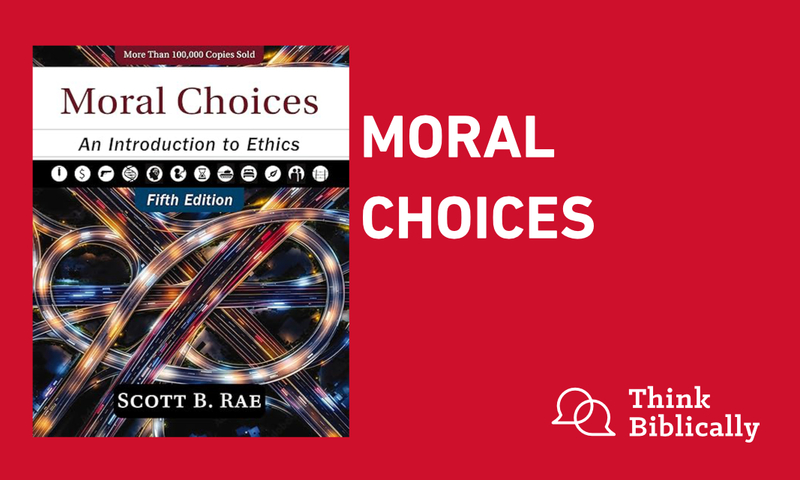
Maybe you have heard some of these kinds of claims:
"Religious views don’t belong in politics." "Jesus said never judge–so don’t." "You can’t legislate morality." These are some of the most common moral slogans proclaimed today. But they are deeply misguided. Today, Sean interviews Scott to get his responses to the top ten misguided moral claims that need debunking! Scott deals with these objections in the first two chapters of his book Moral Choices, which is newly released in its 5th edition.
Episode Transcript
Sean McDowell: [upbeat music] "Religious views don't belong in politics." "Jesus said never judge, so don't." "You can't legislate morality." These are some of the most common moral slogans you have heard, and maybe even spoken at times, but they are, as you will see today, deeply misguided. Today, I get to interview my friend, colleague, and co-host, Dr. Scott Rae, who, by the way, is arguably one of the leading Christian ethicists in the world today, given your publications, your conversations, your consulting that you've done, your professional work. And we're gonna talk about the top 10 misguided moral claims that need to be debunked. Now, you deal with all of these in the fifth edition of your book, Moral Choices, which we'll get to, kind of framing deeper conversations on reproductive technology, end of life, war, et cetera. But I thought this would be a helpful and interesting way to kinda get into the conversation. I'd love your take on these, so I'm just gonna state it the way I often heard it said, and then you can give your response.
Scott Rae: Yeah.
Sean McDowell: How does that sound?
Scott Rae: That, that sounds great. But we've been dealing with these since the first edition of Moral Choices.
Sean McDowell: Fair enough.
Scott Rae: And they've been refined over the years.
Sean McDowell: Okay. Okay, good. Bring that out, at times, if this has shifted and become more pressing or less would be great. All right, so number one, you can't legislate morality.
Scott Rae: Categorically false.
Sean McDowell: [laughs] Okay.
Scott Rae: Because we, the lawmakers in most countries do it on a, on an almost daily basis.
Sean McDowell: Mm-hmm.
Scott Rae: Every law is the imposition of somebody's morality. Even, even things as seemingly morally neutral as driving on the correct side of the road presumes respect for life and property. Because if we see somebody driving [laughs] down the freeway at 80 miles an hour in the wrong direction, we assume that they have respect for neither of those things. And in most cases, I think justifiably so. Martin Luther King was well known for saying, you know, you c- you know, the law can't prevent people from hating me, but it can stop them from lynching me. And so if you were talking about a moral intent, that's true. You can't legislate a moral intent. But you c- we legislate moral behavior in virtually every law that's passed today because almost every... Now, there are some exceptions to this, but almost every law presumes a, some sort of moral foundation on which it's based. And if that's the case, then we legislate moral behavior on a regular basis.
Sean McDowell: Okay, so is it fair to say that some moral laws, like don't steal and don't murder, it's not like we could have done it differently or we should have done it differently, as opposed to, like, the street that you drive on, the side of the road, it doesn't really matter if it's the right or the left, but that you just legislate some consistent side that people drive on.
Scott Rae: And that's why, that's why I said driving on the correct side of the road.
Sean McDowell: Okay.
Scott Rae: Regardless, you know, 'cause in, if, you know, if you're in the UK, it's gonna be different. But if you, [laughs] if you don't drive on the correct side of the road in the UK, maybe you don't, maybe you don't presume a lack of respect for life and property, but you're gonna, you're gonna engage in behavior that will soon get you arrested.
Sean McDowell: Okay, so even some of these smaller rules or laws, like the side of the road you drive on, which doesn't really matter in itself, are, they can vary according to culture, but beneath them are moral values and-
Scott Rae: Right
Sean McDowell: ... Commitments-
Scott Rae: It's the application
Sean McDowell: ... We can't escape, and that's the point.
Scott Rae: It's, it's the applic-
Sean McDowell: Okay
Scott Rae: ... It's the application of that that can change with context.
Sean McDowell: Gotcha. Okay. Excellent. Good response. All right, second one. Secular ethics is neutral, but religious ethics is biased.
Scott Rae: I'd say, partially true.
Sean McDowell: Okay.
Scott Rae: I'd say both are biased. Both have built-in biases, which is not a, not necessarily a negative thing, but they have, they have perspectives. And just because something is secular doesn't mean that it's unbiased, because secular and neutral are not the same thing. Because secularism-
Sean McDowell: Mm-hmm
Scott Rae: ... Is just as much a se- a worldview, it's just as much a set of religious views as any religion is. And so to be secular, I think, is to, that, I think that's to sort of live under the illusion of neutrality, when in reality, nothing of the sort is the case.
Sean McDowell: The illusion of neutrality. I appreciate what you said, that both religious and secular individuals and belief systems have a bias. It's not like one is neutral and the other is biased, whichever you pick.
Scott Rae: Yeah, and what I mean by that, they have, they have their own distinct way of framing- ... Moral questions that's, that is dramatically diff- they're dramatically different from each other. So they have a perspective. And, I mean, if you wanna call that a bias, I think that's fine.
Sean McDowell: Okay.
Scott Rae: 'Cause, and I, and I would say not every bias is problematic.
Sean McDowell: Sure. Okay. So I had a debate maybe seven, eight years ago with an atheist, and one of the things he argued was that secularism is neutral, and they're not trying to make the state secular, but just secular one option aside Christian options. And the example I brought up, I said, "Well, when it comes to marriage, it's one or it's the other. It's not like you're expanding marriage to include same-sex marriage. We are changing the nature of marriage and saying that being, our sexed bodies are irrelevant to what marriage is."So my point was not to argue that a biblical view of marriage is right, but that if we shift towards adopting same-sex marriage, we're not neutral, we're not expanding it, we are taking a biased or worldview-laden approach to what marriage is and the role of the state. That was my point. Do you agree with that example?
Scott Rae: I do. And I think what secular, what secularism does to religion is it forces it to be private. Secularism takes religion out of the public theology and the public morality business, and it does so intentionally and by design. I remember, this was, this was years ago when, human cloning was first being-
Sean McDowell: Yeah
Scott Rae: ... Debated. And, the commission, this was... I think this was President Clinton's National Bioethics Commission, that they created this big set of hearings, invited experts from all over, all over the world to come in, and they had a section of the final report called Ethics and... I don't think they said religious, but maybe they did, Ethics and Religious Views of Human Cloning. And it was this really well-done section. Lots of insight on it. But in their final recommendations, they completely marginalized it and said that when it comes to public policy, religious claims can't be the basis for any kind of public policy in a pluralistic culture. And so what they, what they were essentially doing is they were secularizing the discussion by forcing the religious contribution of that back into the private sphere, where it's out of reach of public policy. And that is, in my view, that is a perfect example of how secularism forces- ... Religious views and religious morality in, back into the private sphere, where it will basically leave the culture alone.
Sean McDowell: That sets us up. We have, another slogan that matches that, but first one is our third, misguided slogan, is, "You shouldn't force your morals on others."
Scott Rae: That works only until you're the victim of injustice. Or until somebody clearly wrongs you. Then we become... I, in my view, we become passionate absolutists who are forcing our view of justice on- ... The person who we believe has done us an injustice. So that s- that sounds nice in theory, but nobody can live with that- ... Consistently. I remember, Sean, I was... This was years ago when the s- the stem cell debate was first-
Sean McDowell: Yeah
Scott Rae: ... Getting rolling, and I was invited to, by one of our students, who was the pastor of a church in the area, and was invited to a debate in the healthcare system on the ethics of using embryonic stem cells for research and treatment.
Sean McDowell: Interesting.
Scott Rae: And I remember at s- about halfway through the debate, some crusty old physician in the audience raised his hand and said, "I am so sick of you religious people forcing your views on the rest of us." And he had come at me with a little horseradish on that comment [laughs]
Sean McDowell: [laughs]
Scott Rae: So I felt the freedom to come back at him with a similar dose. And I said, "First, we should get rid of the silly notion that it's only religious people who are forcing their morality on everybody else." Be- And that's why, back to the first question. That's why every law- ... Is the imposition of somebody's morality on s- on somebody else. And I said, "You, you are forcing a view of a human person on me by saying that embryos, who I consider to be full human persons, should be subject to destruction or to experimentation that will lead to their destruction eventually." I said, "That you..." I said... Basically, I called him a hypocrite. I didn't use those terms.
Sean McDowell: Sure.
Scott Rae: But I said, "You should stop doing what you are accusing me of doing."
Sean McDowell: I'm really thankful that Martin Luther King Jr. Didn't get the memo, "You shouldn't force your morals on others."
Scott Rae: [laughs]
Sean McDowell: Now, obviously, he was trying to persuade, that which is one of the strengths of our political system today. That's the same thing you are trying to do, is we all can persuade. But of course, I think the vast majority of people today are gonna say, "Thankfully, then when it came to the civil rights movement, we had laws put in to protect African Americans and other minorities that were shaped deeply by Jeremiah and Amos and the teachings [laughs] of Jesus." But you're right, it's contradictory. I heard Greg Koukl used to tell a story about how somebody said to him, "You shouldn't force your morals on others." And he just asked him a question back, "Is that your morality?"
Scott Rae: Exactly.
Sean McDowell: Yes.
Scott Rae: [laughs]
Sean McDowell: Well, if you shouldn't force your morals on others, and this is your morality, then why are you trying to force it on me? And the words force, on one sense, we shouldn't force our morals on others. Unless somebody's getting attacked, then I'm gonna force my morality [laughs] and protect that person. But the primary means that Christians are called to do are to persuade people with argument and reasons, and people confuse giving an argument for something with forcing somebody.
Scott Rae: Yeah, I'm glad the women who were at the forefront of the Me Too movement-
Sean McDowell: Exactly
Scott Rae: ... Also didn't get that memo.
Sean McDowell: Yep. Good.
Scott Rae: Um-
Sean McDowell: Good stuff. All right. Fourth misguided, slogan that we often hear about morality is that right and wrong are products of evolution, nothing more.
Scott Rae: I think if morality arose out of evolution, then we have some really odd moral values that have almost universal acceptance today. We have, we have the moral value of self-sacrifice.Uh, we view peop- we view people who sacrifice for the benefit of others to be heroes. You know, the soldier who falls on a grenade is a, is an idiot in the evolutionary scheme of things, but we routinely hold them up as heroic. That tells me that there's something about morality that's deeper and intrinsic and a part of how we are wired. We have a moral sense that Romans 2:14 tells us that God has implanted his law in us, and though it's been skewed as a result of the fall, that hasn't erased the moral sense- ... That God's deeply implanted- ... In all of us. And I think, you know, there's, the survival mode of evolution can actually lead to... It doesn't really, this is our, what our friend Alvin Plantinga has pointed out. It doesn't necessarily lead to an appreciation for truth, because adaptive measures can be demonstrably false and still be adaptive.
Sean McDowell: That's right.
Scott Rae: Right? You know, I can believe that the wild animal who's staring at me across the canyon will not attack me if I sing sweetly to this animal from a distance.
Sean McDowell: [laughs]
Scott Rae: Okay, now that's categorically false, but as long as I do that from a distance, that w- that- ... Adaptive value will st- will still work. And so there's nothing, there's nothing necessarily, intrinsic about an evolutionary process that is based on adaptive value that leads us to the truth of an assertion. So, and I think that stands for morality as well. Now, I think some of the things, you know, you can explain, adaptively, like, say the value of community, that we're better off, we survive-
Sean McDowell: Sure
Scott Rae: ... Better in community than we do individually. But I think there are, there are others that I think are really tough to explain on an evolutionary scheme.
Sean McDowell: That's well said. I've got a couple objections. Number one, I can understand how an evolutionary process could generate better bone density or elongation and strength of muscles, but right and wrong and moral values, which aren't physical-
Scott Rae: Right
Sean McDowell: ... How does a physical process even develop or generate them? And you say, "Well, it's just a belief in them." And then I say, "Well, that's a belief." [laughs] That's not physical. Where are these coming from? You're, it's almost example getting something from nothing. That's a philosophical problem. The other objection I think that's fair to say, and this is to expand on your second one, is that if right and wrong are products of evolution, nothing more, then there really is no right and wrong. There really is no human value. There really is no equality, and evolution has tricked us-
Scott Rae: Right
Sean McDowell: ... To follow these things to survive.
Scott Rae: And we could, we could eventually-
Sean McDowell: But
Scott Rae: ... Evolve out of those things.
Sean McDowell: We could evolve out of those things, true. It's contingent. But also raise a question, I have this feeling of obligation, but that's just a product of evolution. I don't actually have that obligation. You don't have human value. Men and women and other races don't have equality. So I'm under no obligation to actually live that way, at least moral obligation, which undermines the entire moral project.
Scott Rae: Yeah.
Sean McDowell: And I don't s- and I don't see people going, "Okay, that's true. It's all illusion." Well, then live out that nihilism, as Nietzsche said. That's what nobody's actually doing. My final critique is C.S. Lewis talked about how at best, instinct, if morality's just instinct, the problem is we have competing instincts. And so how do we decide between the two of them? It can't be a third instinct. It has to be something outside- ... Of the instinct, which evolution can't explain. Now, in fairness, there are other ethical theories. You go through them in moral choices very thoroughly, very fairly, offer critique. This is just one. Let's move on to o-
Scott Rae: Which I, which I do have a s-
Sean McDowell: And
Scott Rae: ... Fairly lengthy section in the book-
Sean McDowell: You have a lengthy section-
Scott Rae: ... On this very point
Sean McDowell: ... On this one, 'cause it's so prominent. Good. Okay, fifth misguided slogan, religion is just a private matter and has no place in public ethics.
Scott Rae: False.
Sean McDowell: Okay.
Scott Rae: And the script- the scripture I think is very, is very clear. At least, at least Christianity was never intended to be simply a private matter. Even in the early church, even the statement, "Jesus is Lord," in the early church was a profoundly political statement because it was saying that Jesus is Lord and Caesar is not. And that had, that could have disastrous consequences if you said that in the wrong company. And you know, when the, when the scripture talks about the, God's, the kingdom of God coming in its fullness, it's true, there is a, there is an individual component to that, where individuals are rightly related to God and every knee bows at the name of Christ. But there's also a social component to that, in that justice will rule. When, in Isaiah 42, for example, when the servant of Yahweh is coming to bring his kingdom, he bring, he comes to bring justice to the nations. And, the islands and the coastlands hope in his justice that will be come, w- that will be coming. And it's a proper ordering- ... Of society. Now, I admit, I'm not exactly sure what that's gonna look like, but it will mean at the least that culture will be free from sin and corruption in ways that I think will be revolutionary. So Chri- I'd say Christianity is an intrinsically public faith, and to say that it's a private matter is actually a violation of a Christian's religious freedom. So to say it, that it has no place in public ethics is essentially to say that the First Amendment that guarantees freedom of religion only applies to what you do in private.Not in public. And so it's a truncat- it's a truncated view of Christian faith and a truncated view of what religious freedom is about.
Sean McDowell: Love it. Now, when I hear religion is just a private matter, part of me wants to go, "What do we mean by religion?" It's not just those who have a Christian or Jewish or Muslim faith.
Scott Rae: Yeah, and I would say-
Sean McDowell: It-
Scott Rae: ... The Muslim faith is much more public than Christian faith is.
Sean McDowell: By its very nature-
Scott Rae: It's, well, and they're, and the-
Sean McDowell: ... It is to be public, top-down
Scott Rae: ... For both, for both, I mean, for both, that's intrinsic to them. Though it looks like in Islam it is entirely different.
Sean McDowell: Yes, I agree. Fair enough, but it raises the question, and Frank Beckwith had a book probably 20, 25 years ago on kind of law and related to Darwinism, and you see the same kinda debate, like keep intelligent design and religion out of the classroom. He has a section saying, "Well, what is religion?" You don't have to believe in a god to be a religion, because Buddhism is religious. There's no god. Doesn't have to be an afterlife. I mean, the Sadducees [laughs] were religious, but they don't believe in at least a resurrection in the way that you and I do, and the Pharisees did. And he actually makes a case that, like, secularism could be a kind of religion 'cause there's metaphysical commitments, beliefs about what it means to be human, our place in society. So I don't think, this is often taken selectively to disqualify certain religious beliefs, not applied consistently. That's one area we could discuss further. But I also know you're not saying Christians should just say and make their case, "Well, you should be in favor of the death penalty because Genesis 9:6 says this." Connect the fact that religion is not private to how we as Christians argue publicly in a pluralistic society.
Scott Rae: Yeah, no, th- yeah, that's a, that's a great point. And there's, I would say there's, there's nothing necessarily follows from Christian morality to the law- ... Without further argument. So why should certain things be a matter of law as opposed to just a matter of morality? That re- at the least, that requires an additional argument. Now we, for example, we believe assisted suicide is morally wrong.
Sean McDowell: Mm-hmm.
Scott Rae: But why that should be legally restricted doesn't follow automatically from the fact that we believe it's immoral.
Sean McDowell: Yeah.
Scott Rae: It requires an additional argument, which I've made at length-
Sean McDowell: You have, yeah [laughs]
Scott Rae: ... In every edition of Moral Choices on that. And I think there are good reasons to think that that ought not be legalized, but it's not because that it, that it's, it's a religious view.
Sean McDowell: Okay, good.
Scott Rae: It's, it's consistent with the relig- with Christian ethics, but not derivative from Christian ethics.
Sean McDowell: Fair enough, and this is where natural law comes into play.
Scott Rae: Yeah.
Sean McDowell: And what Jesus taught about something is a piece of an argument, but it needs-
Scott Rae: Yeah
Sean McDowell: ... To be much broader than that.
Scott Rae: Well, and usually when people say religion's just a private matter, what they mean by religion is worship.
Sean McDowell: Okay.
Scott Rae: And when, for example, when the Obama administration tried to restrict religious freedom back during his administration, the, he specifically defined or limited the freedom of religion to what takes place in the s- in the houses of worship- ... In churches, synagogues, mosques, and things like that. It's, it specifically, eliminated the public dimension of that.
Sean McDowell: Christians should not accept that, and also historically in our country we have not accepted that. Okay, let's shift to misguided moral slogan number six. Morality is a matter of subjective taste, not objective truth.
Scott Rae: This is one of my favorite ones-
Sean McDowell: [laughs] Okay
Scott Rae: ... To deal, to deal with. And I'll give you an example of this.
Sean McDowell: All right.
Scott Rae: I was speaking at a public high school years ago on the, on the note, the subject of relativism and morality. And there was a young woman who was sitting right in the front row, and she was making this passionate point that, "I think we ought to be able to make up our own moral rules for ourselves." "And that basically my moral rules are mine, and yours are yours." And she had a brand-new iPhone on her desk. You can see, you can see where this is going.
Sean McDowell: I can.
Scott Rae: And I, as I was sort of casually making my way through the presentation, I just walked over to her desk and picked up her iPhone and put it in my-
Sean McDowell: You actually took it [laughs]
Scott Rae: ... And put it, and put it in my pocket.
Sean McDowell: Wow, [laughs] okay.
Scott Rae: And, and she was too polite. She had some semblance of morality, I think, to... She was too polite to-
Sean McDowell: Interesting
Scott Rae: ... Object right on the spot. But as she went on f- and then went on for another, like, 20 minutes, had her inter- I had, I had her iPhone right in my pocket. And so she said, came up to me afterwards and said, "Well, can I have my phone back?" And I said, "No, sorry, you can't." And she said, "Well, well, why not?" And I said, "Well, you said that we ought to be able to make up our own moral rules for ourselves, and my moral rules- ... Are that the people who are older, wiser, and more experienced are entitled to the stuff of people who are younger, dumber, and less experienced." I don't think I said it quite that bluntly.
Sean McDowell: Sure, sure.
Scott Rae: And so, but she, but ... And she could tell that she was sort of flummoxed, but, and she finally just blurted out, but she said, "But that's wrong."
Sean McDowell: [laughs]
Scott Rae: And I said, "Well, tell me why that's wrong."
Sean McDowell: Good question.
Scott Rae: And, you know, then I gave her her phone back, and we-
Sean McDowell: Of course. Of course
Scott Rae: ... We left on good terms. But, you know, I think we, Sean, we commonly think of morality the same way we do religious belief, and philosophical, positions that we hold, as being matters of belief instead of matters of fact. But I think we, I think we can actually know that racial discrimination is wrong- ... And that sexual assault is wrong. I love what our colleague Bill Craig says about that.
Sean McDowell: Yeah.
Scott Rae: He said, "If you think sexual assault is okay, you need a therapist, not an argument."
Sean McDowell: That's right.
Scott Rae: I think he's absolutely right about that. Now, there are some things that we disagree about, but disagreement does not make them subjective.
Sean McDowell: Good.
Scott Rae: Okay? Disagreement just means that we're, we have, we have a disagreement about what the objective truth is.... In morality. And so I think, you know, our culture, I think sometimes doesn't, doesn't really understand the difference between objective and subjective statements. Where an objective statement is something that is true regardless of how you feel about it.
Sean McDowell: That's right.
Scott Rae: Subjective statement, what is true determined by what you feel about it. Like my preference for ice cream.
Sean McDowell: Sure.
Scott Rae: Or the thinking my kid, my kid is just the cutest kid in the neighborhood.
Sean McDowell: [laughs]
Scott Rae: Obviously those are subjective things.
Sean McDowell: Sure.
Scott Rae: And there are some, there are some objective things that we can disagree about, some objective things that we're not sure about, like I believe the Los Angeles Dodgers will win the World Series this year, but we won't know about that.
Sean McDowell: Yeah.
Scott Rae: And some things that are objective that are false. Like the statement that I can bench press 300 pounds is cle- [laughs] is clearly false. And I've never been able to do that, and never will. So I think we ha- we just have to, you know, we have to be careful how we look at the notion of objectivity, because it's, it's those things that are, that the truth of which is determined independent of my own feelings about them.
Sean McDowell: It's a great answer. And I wanna point out what your example of taking the iPhone implied, is that she was spouting off that morality's subjective, but deeply knew that it's actually objective. And so your exercise was to illustrate what she really knew and show the inconsistency. And so we know it, and we also don't live like it's really true. So morality's not something that you prove like math or history or science, it's something like our Declaration of Independence. We know these things because they are self-evident. That's how morality works, and your illustration brought that out. All right. Seventh misguided claim, science can tell us what is right and wrong.
Scott Rae: Absolutely not. Science, I think, science can tell us how things work. It can't tell us how things ought to work.
Sean McDowell: Good distinction.
Scott Rae: It can, it can tell us, you know, how things function, but it cannot, it can't tell us the ends for which they were designed to function. And I think that the notion that science, that this sort of morality is a, is a science, I think, I think what people mean by that is they want it to be more than just a gut intuition. And I think that's a pl- that's a plea for good reasons. And just, but we can have, we can have disagreements and, w- and, yeah, we have disagree, we can have disagreements in science, but that doesn't render science null and void for what it's designed to do. And just because we have moral disagreements doesn't mean that the whole exercise of morality is useless. We just ha- we have disagreements about what the moral thing is, which we should expect, since the lenses through which we see morality in a fallen world are not 100% clear, right? And this, I think this is why we can have people who say that, you know, abortion is justifiable for nine months of pregnancy. You know? And we can, we can disagree profoundly on that. And because of the fallen, our fallen nature, people can have all sorts of different motives for holding the moral beliefs that they do, right? I think people can ho- people can hold beliefs about abortion because, perhaps because some experience in their life with, you know, with abortion has, you know, has tempered, has tempered some of their, what they would otherwise say about it if it were just a purely objective moral analysis. So I think this, science is ill-equipped to tell us about morality. I remember when that same stem cell debate. I remember I was sitting, one of the panelists was a, was a biology prof at the local university. And I remember him saying that, you know, when I said that science can't tell us what kind of a thing an embryo actually is. It can tell us how it functions, but it can't tell us if it's, if it's a person or not. And he conceded that I was right about that.
Sean McDowell: Interesting. [laughs]
Scott Rae: I nearly fell out of my chair. And I thought, "I can't believe a scientist is actually conceding-
Sean McDowell: That's good
Scott Rae: ... That science has limits when it comes to metaphysics- ... And morality."
Sean McDowell: That's great. Your distinction I think is helpful between science and morality. The way I would phrase it is science is a descriptive discipline. It describes cell division. It describes geological formation. It describes processes in physics, where there's an action and a reaction. Morality is not descriptive, it's prescriptive. It says you ought to do this.
Scott Rae: It's a, it's a normative discipline.
Sean McDowell: Normative. You ought to do this. You should not do that. And so it's a-
Scott Rae: That's right
Sean McDowell: ... Category fallacy to apply science to morality. Now, Sam Harris, I think his book is called The Moral Landscape, where he argues that science can help understand right and wrong. Now, science could help adjudicate between what beliefs and behaviors help us blet- better flourish, like we could objectively study that. But you can only get that off the ground, and Sam Harris concedes this point, if we kind of muzzle in this commitment to the objective flourishing of others [laughs] and society, which is the very thing science and atheism cannot provide. All right, we got three more misguided notions, and this one relates to something you said earlier. Cultural disagreement proves there's no moral truth.
Scott Rae: No, cultural disagreement just proves that we disagree on what the moral truth of a specific issue actually is.
Sean McDowell: Okay.
Scott Rae: Nothing more. And w- if that, if that were true, then science goes out the window, too, because scientists disagree on all sorts of things all the time. But yet nobody dismisses science as being this inherently subjective thing- ... Just because there's disagreement about, you know, what, you know, what certainYou know, certain axioms of science are to be believed. So I'm not willing to throw science out, and neither should the scientist be willing to throw morality out for the same reason.
Sean McDowell: That's great. I see the same thing when I talk to my students about objective beauty. I'll say, "A rose is beautiful. If you don't think it's beautiful, you're just as wrong as if you don't think two plus two equals four." And, and the most common objection is, "Well, what about people differ over what is beautiful?" And I make the same point. I say, "If people differ over a scientific claim, it doesn't mean there's no truth. If people differ over a historical theory to explain the origin of World War I, doesn't mean there's no truth." So the same applies to beauty, the same applies to morality. All disagreement shows is that people differ. It doesn't follow that therefore there's no truth. The only way it would is if we assume from the get-go that we're talking about subjective [laughs] claims, which needs to be demonstrated, not assumed.
Scott Rae: Right. And people don't usually get super passionate about subjective claims.
Sean McDowell: Usually is important.
Scott Rae: Usually.
Sean McDowell: Yes, I agree.
Scott Rae: Now, I, you know, I don't, I don't go to the stake for my view that chocolate ice cream's-
Sean McDowell: [laughs]
Scott Rae: ... Tastier than vanilla. Uh-
Sean McDowell: Chocolate, peanut butter. The steak, I agree, though.
Scott Rae: I, but-
Sean McDowell: For certain.
Scott Rae: And, and-
Sean McDowell: [laughs]
Scott Rae: ... I think the passion with which people disagree about things reflects how much they believe that a truth is at stake.
Sean McDowell: And that's Lewis's argument that he makes at the beginning of Mere Christianity. If anybody watching this has not read the first five books or short sections of Mere Christianity, like, hit pause on this [laughs]
Scott Rae: Yes, go back
Sean McDowell: ... Read it, and then come back, 'cause he makes that very point, and I think it's compelling. Okay, two more misguided moral notions. All right, Scott, number nine, "Jesus said never judge, so don't."
Scott Rae: He didn't, and you should.
Sean McDowell: [laughs]
Scott Rae: He, he-
Sean McDowell: I like these short quips
Scott Rae: ... He never [laughs] Jesus never said, "Don't judge." Read the rest of the passage. He says, "Judge not and you will not be judged." But he goes on to say, five verses later, "Be careful when you take the speck out of your brother's eye," which is a figure of speech for judgment, "Don't, don't mistake the fact that you might have a log in your own eye." When he says, "Don't judge," he's saying, "Don't judge hypocritically."
Sean McDowell: Good.
Scott Rae: "Don't judge without looking in the mirror yourself." And the reality, Sean, we make moral assessments all the time. You know, every time we say that somebody is- ... Acting out of character, we've just made a moral assessment. Any time you write a letter of recommendation for someone, you're making a moral assessment of their character. Any time you decide not to do business with someone you don't trust, you're making a moral assessment of their character. And we could go on and on with examples of that.
Sean McDowell: That's a great example. By the way, not only did Jesus not say to never judge, He will judge all of us-
Scott Rae: Exactly
Sean McDowell: ... At the end of time.
Scott Rae: Exactly.
Sean McDowell: And He made moral judgments about hypocrisy, moral judgments about the Pharisees. He made moral judgments and gave us an example to do so. Which I think you're right, in Matthew 5 through 7, in the Sermon on the Mount, chapter 7, it's about don't judge hypocritically. John 7:24 says, "Stop judging by appearances. Make a righteous judgment." So if we're not supposed to judge hypocritically, we are supposed to judge according to a righteous judgment. First judge ourselves. That's the point of the Matthew 7, is that if we don't judge ourselves first, we won't be able to see clearly, and we also will not have the right spirit and attitude in approaching others-
Scott Rae: Right
Sean McDowell: ... Which, of course, is Matthew chapter 18.
Scott Rae: Which, which presumes you're making a moral assessment-
Sean McDowell: That's exactly right
Scott Rae: ... Of someone. And Paul says that in Galatians 6. You know, if you see a brother caught in sin, you know, you go to him and confront him. Paraphrasing that.
Sean McDowell: Sure.
Scott Rae: But you offer correction. You know, the Scripture's there to offer correction.
Sean McDowell: Agreed. And Paul also says, it's 1 Corinthians 5, about judging outsiders would be different than your example-
Scott Rae: Correct
Sean McDowell: ... Of judging a fellow brother. But the claim that Jesus ne- said, "Never judge, so don't," He didn't say that. We're supposed to, according to the Scriptures, in a righteous way, not hypocritically. Good. All right, last one. We kinda dealt with this one before, but it's so important, and we live in such a politicized age, that I think we need to get this right. So misguided slogan number 10, Scott, "Religious views don't belong in politics."
Scott Rae: That's a violation of the First Amendment. A violation of religious freedom to say that. Because you are forcing religious views to be kept private and saying that the public dimension of someone's religious faith has no place. Reality is that, religion has always infused politics. It's always infused public policy. And the founders did not see any problem with that. In fact, the founders' view was that the democracy couldn't survive without a regular infusion of religion and morality. And, you know, Jefferson and Madison and others, they were clear that the laws need to be infused with the moral beliefs that religion both nurtures and inspires. So think even, the debate over abolition of slavery-
Sean McDowell: Great example
Scott Rae: ... Was at, fundamentally, a moral debate. I mean, Lincoln and Douglas debated for hours on this. The civil rights movement, as you pointed out earlier, was fundamentally a moral debate about the worth of African Americans. Vietnam War, uh-The, the New Deal, around the time of the Great Depression, the New Deal legislate. All of that was morally based.
Sean McDowell: Mm-hmm.
Scott Rae: And what we've started hearing more recently is with the rise of the religious right back in the '70s and '80s when, you know, the pro-life movement became public, there were just, there were people who didn't like that particular iteration of religion infusing public policy. But they were part of a very rich and long tradition in American history.
Sean McDowell: What I found is when people say religious views don't belong in politics, they mean your-
Scott Rae: Exactly
Sean McDowell: ... Religious views don't belong in politics. And I see it from the right to the left. I see it from the left to the right, which is a reminder, if we're going to bring our religious views into politics, we need to do so consistently and faithfully to the text. And I can think of our governor here, Newsom, had a... I believe it traced back to him, but there was some statements and billboards around our state citing certain passages to justify moral beliefs that you and I would differ strongly with. I was like, "Wait a minute. If he takes that to its logical conclusion, it's going to actually be the opposite of what he's arguing for." So it was selective. And I've seen people do it on the right. I've seen people do it on the left.
Scott Rae: That's right.
Sean McDowell: So we shouldn't keep our religion out of politics. Number one, it violates the First Amendment. Jesus didn't model doing this. By the way, he was killed for political and religious reasons. In that day, they couldn't separate. He was... There were political issues taking place.
Scott Rae: They were completely intertwined.
Sean McDowell: And there were religious reasons, and they intertwined, and we couldn't untangle them that way, and that's often true today. Let's just do it consistently. All right. Good job. We got through all 10 of those.
Scott Rae: Hey, how about that?
Sean McDowell: There were others that came up. I'd love to know from folks if this kind of, like, slogan and response is helpful, kind of doing what you might call popular apologetics and ethics. But in your book, this is really just kind of some of the preliminary material, and then you get into-
Scott Rae: Right. This is, this is-
Sean McDowell: ... Some of the big issues of the day
Scott Rae: ... This is covered in the first two chapters.
Sean McDowell: It's like [laughs] this is... I mean, we could, we could, we could actually do a show on every single one of your chapters. Maybe at some point we will. But tell us what's unique about the fifth edition of Moral Choices.
Scott Rae: Well, it, everything's been brought up to date.
Sean McDowell: Okay.
Scott Rae: All, most of the cases have been changed. They added new material on a theology of technology-
Sean McDowell: Great
Scott Rae: ... With underpinnings, theological underpinnings for how we treat things like AI, robotics, and social media, screens and social media, things like that. There's an expanded section on, criminal justice.
Sean McDowell: Good.
Scott Rae: Ethics in the criminal justice system, not just the death penalty, which is a part of that, but it's a broad expansion, so at all, sort of at all levels of the criminal justice system, what are the different ethical issues that have to be addressed? That's a, that's a big addition. Said a lot more about gender, transgender, than I did in... The fifth, the fourth edition was in 2018 before transgender was... It was just beginning-
Sean McDowell: Yeah, it was
Scott Rae: ... To become a thing.
Sean McDowell: It was.
Scott Rae: And there's an expanded section on race that, uh-
Sean McDowell: Good. Good
Scott Rae: ... Take up the topics of, intersect- intersectionality, white privilege, critical race theory. Have, have expanded section on all of those things. Expanded section on immigration. What else? And, and just bringing things technologically up to date on the, on the debate on euthanasia and assisted suicide-
Sean McDowell: Good. Good
Scott Rae: ... Reproductive technologies. Got new cases that reflect the new technologies. Gene editing, was, wasn't a thing when the fourth edition came out, so the ethical issues have to do with genetics and genetic and biotechnology. That's all new stuff, and there are probably 100 or so sidebars, which are, examples from popular media, how ethical issues are being framed and being discussed. I repla- I replaced over 100 of those.
Sean McDowell: Oh, wow.
Scott Rae: So those are all from-
Sean McDowell: That's a lot of work
Scott Rae: ... All from the last two years.
Sean McDowell: Good. Well-
Scott Rae: So-
Sean McDowell: ... We're gonna have... It's weird to say we're gonna have you back, but I [laughs]
Scott Rae: [laughs]
Sean McDowell: I just thought of that when I was saying it. We will have a follow-up conversation 'cause I have so many questions. The, the first version of Moral Choices, first edition, was the white cover, right? Mid-'90s or so, or was that-
Scott Rae: Black, black cover. That was the second.
Sean McDowell: Oh, that was the second edition.
Scott Rae: Yeah.
Sean McDowell: Okay. So that's when I took your class in the '90s. It's been my go-to text since. Yours and the text by Ken Magnuson are my two go-to ethics texts, but this is updated now. So much has changed in that past seven to eight years that it's a must-get. We're gonna come back and talk about, you've been doing this for a while, so how have the ethical questions changed in the church-
Scott Rae: Yes
Sean McDowell: ... Outside of the church? How has technology changed? What have you learned through this? Have you shifted on any issues? We don't have to answer that now. We're gonna come back to that. But-
Scott Rae: I'll just say that's why there's five editions.
Sean McDowell: Okay. [laughs] Well, good. Fair enough.
Scott Rae: [laughs]
Sean McDowell: Fair enough. But if you have questions specifically for-
Scott Rae: Good
Sean McDowell: ... Scott Rae, and I'm gonna say one of the, one of the world's leading ethicists, certainly leading Christian ethicist, send them in to thinkbiblically@biola.edu, or you can send them to questions@seandowd.org. We will gather those, and then we will bring you back.
Scott Rae: That'd be, that'd be a lot of fun.
Sean McDowell: So on any of those topics that you just mentioned, your ethical questions, even some of the toughest dilemmas. Like, if we could think of some of these impossibly difficult dilemmas would be fun. Maybe we'll take the top 10-
Scott Rae: Yeah, maybe we'll take some cases
Sean McDowell: ... Thorny, difficult ones.
Scott Rae: I'd love that.
Sean McDowell: That would be really fun, but send those questions in. And before you click away, make sure you hit subscribe to Think Biblically Podcast and-
Scott Rae: Amen
Sean McDowell: ... Follow us on YouTube. This was a lot of fun, Scott. We'll do it again.
Scott Rae: Nice. Thanks. Good stuff. [outro music]