Biola University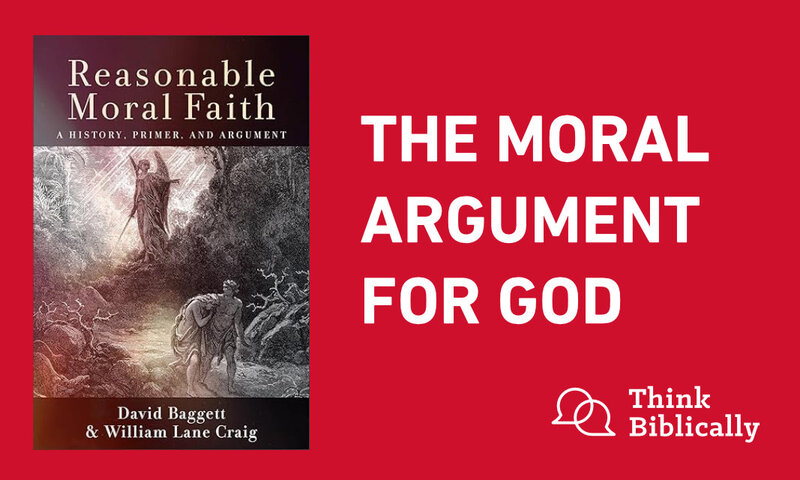
What is the moral argument for God? What is meant by the notion of moral realism? How do we respond to the claim that evolution can explain morality? We'll answer these questions and more as Scott interviews our guests, Dr. David Baggett and Dr. William Lane Craig around their new book Reasonable Moral Faith.
Dr. David Baggett is former professor of philosophy and director of the Center for the Foundations of Ethics at Houston Christian University. He is the author of several books on the moral argument for God. Dr. William Lane Craig is Emeritus Research Professor of Philosophy at Talbot School of Theology, Biola University. He is the author of numerous books and articles in philosophy and apologetics.
Episode Transcript
Scott Rae: [upbeat music] What is the moral argument for the existence of God? And what is meant by the notion of moral realism? And how do we respond to the claim that evolution can adequately explain all of morality? We'll answer these questions and more with our guests today, Dr. David Baggett and Dr. William Lane Craig, around their new book that they've co-authored together called A Reasonable Moral Faith. I'm your host, Scott Rae, and this is a Think Biblically podcast from Talbot School of Theology at Biola University. Both of you, David, Bill, welcome. So good to have you all with us, and so appreciate the great work that you've done together, in this book, Reasonable Moral Faith.
David Baggett: Thanks, Scott.
William Lane Craig: Thank you. Great to be with you today, Scott.
Scott Rae: Yeah. So here, David, let me start with you. You've written several books on the moral argument for God. Can you tell us briefly what you mean by that, and tell us a little about what makes this Reasonable Moral Faith book different from what you've done in the past?
David Baggett: Well, sure thing. So I'll just go back a little bit. When I was in graduate school in philosophy, I wanted to write my dissertation on the Euthyphro dilemma, because I had noticed that nearly every, you know, book would make mention of the Euthyphro dilemma as the decisive piece of evidence against any kind of theistic ethic. So I actually wasn't thinking about the moral argument at that time, just the Euthyphro dilemma, and that's what I wrote my dissertation on. And then I wanted to turn that dissertation into a book, so I went to my old teacher, Jerry Walls, and together he and I, turned the dissertation into our first book, Good God. And, then, when you write a book, [laughs] this has been my experience, invariably, you realize, oh man, that chapter needs to be expanded into another book. You know, there's just too much there. And this happened-
Scott Rae: Yes
David Baggett: ... By the way, with this most recent book [laughs] with Dr. Craig. Actually, it's two or three projects there. But, so then we wrote the second book, and that was called God and Cosmos. So in the first book, Good God, we defended theistic ethics against objections, and that's part of the moral argument, but you need more. You need to critique naturalistic ethics, and so that's what we did in God and Cosmos. And then we thought, well, we've got to now go back and defend moral realism because the whole project depends on it. [laughs] It really should've been our starting point, but honestly, I remember when I wrote Good God thinking, "Well, who's gonna deny the wrongness of torturing children for fun?" But they're out there. So, we wrote a book defending, moral realism. And in between the second and third books, and that third book is called, The Good, the Right, and the Real, but in between God and Cosmos and that one, we paused and wrote a history of the moral argument because we found it to be such a rich, fertile area. So many great thinkers through the years contributing to that project, and we just enjoyed that a lot. And then my my wife and I, before the tetralogy was done, those four books with Jerry, we wanted to write a more popular level book, and so we wrote Morals of the Story, and we kinda did what Dr. Craig and I did in this book, but it was before the tetralogy was done. So the distinctive, feature of this book is the tetralogy is done, and we talk about all those things in broad compass, you know. So that's all included. Plus, I'm teaming up with the man, who's done such great work in the moral argument through the years. And, we've had our agreements and disagreements, but I thought, you know, we agree on a whole lot more than we disagree on this stuff, and I think it would make for a great collaboration. So this book has his stuff included with, all of the stuff from the tetralogy, and more, and we sort of, aim to make it a one-stop shop for folks interested in the moral argument. You could kinda get it all, the history, the defense of moral realism, critique of alternative metaethical theories, you know, the, a a moral argument of our own that has five parts, and more. So that was the goal here.
Scott Rae: Yeah. Well, I think you succeeded in making it the one-stop shop, because the history part is really helpful. The explication of moral realism, now we'll get to more of that in a minute. But Bill, you've formulated the moral argument for some time. How did you uniquely formulate that, and how, and why do you do it the, in the way in which you do?
William Lane Craig: I was speaking on university campuses, Scott, giving a talk that I called The Absurdity of Life Without God. And in this talk, I argued that if God does not exist, then life is ultimately without meaning, value, or purpose. It was a completely negative, talk. Now, notice that the second element there of life's absurdity is that life would have no ultimate value. And what I found is that students would respond to this claim by saying, "Well, surely there are some things that are truly, wrong, other things truly right. How can you deny that there are really moral values and duties that we have?" Now, clearly, that didn't refute anything that I had said. I was simply arguing that if God does not exist, then there are no such, ultimately, objective moral values and duties. But it struck me forcefully that what the students had done was to furnish me with a missing premise in a moral argument for God, for now I could argue if God does not exist, then objective moral values and duties do not exist. That was my presentation. But then the second premise would be that objective moral values and duties Do exist. This was the premise furnished by the students themselves. And from those two premises, it follows logically and inescapably that therefore God exists. And so I have used this deductive, simple formulation of the moral argument, over the years to defend God as the best explanation of the objective moral values and duties that we apprehend in moral experience.
Scott Rae: Okay. Thank... I appreciate it. That's really clear. It's amazing what students can help you with-
William Lane Craig: Yes [laughs]
Scott Rae: ... If we're paying attention. Now, David, you you mentioned that this view of moral realism is sort of the, is the thing you have to establish first before making, you know, the a moral argument for God as Bill has formulated it. Tell us, just for our listeners who may not be familiar with this whole area, what do you mean by the term moral realism, and what's the evidence for that?
David Baggett: Yeah, moral realism is basically the the proposition on which the moral argument, at least as we present it, is predicated. You need those objective moral values and duties, say, that Dr. Craig speaks of, in order for the argument, to go through. I mean, the second premise in his argument was that these things exist. And and to say that they exist objectively is to, is to affirm moral realism. So, what we, what we do is give various, arguments in favor of moral realism. And one of the, one of the ways in which we go about it is to look at the alternatives. And there are positive reasons to believe it too, and I can get to those. But- ... We begin by looking at the alternatives to moral realism. And what this has done in the middle portion of the book, part two, you know, when we look at error theory and e-expressivism and constructivism, so forth, and we point out in each case limitations with those metaethical accounts. And we argue that moral realism is the, is the better account to make sense of a a broad ar-array of evidence. And, we also, after having given various philosophical arguments against the opposing theories and in favor of moral realism, we sort of tug at the heartstrings a little bit in the conclusion to that section by pointing to various, pieces of literature and whatnot that sort of elicit within us very strong convictions about some things being right and wrong and just and unjust. And, I remember years ago, Dr. Craig saying in his debates, he likes to help people realize the steep price they have to pay, if they hold on to their, to their views, and how theism can liberate them from that high price to pay. And this is, I think, really one of those examples, right? So if you, if you don't believe in the objective wrongness of torturing children for fun because you want to reject moral realism, I mean, that really grates against one's sensibilities, right? And I think most people, even most professing non-realists in ethics, when pressed, would be inclined to say, "Well, of course that's wrong." [laughs] Right? "Of course, you know, this is wrong." Like, you know, racism or homophobia or something, right? I mean, invariably, their moral hackles get up, and it, and it shows that, you know, they probably do, believe in moral realism after all. But, yeah, it's sort of a foundational question to answer when you're talking about the moral argument.
Scott Rae: Yeah. Bill, I'm reminded of a statement I've heard you make before, that if somebody believed that sexual assault is morally acceptable, they don't need an argument, they need a therapist.
William Lane Craig: [laughs]
Scott Rae: And,
William Lane Craig: That sounds like something Morland would say. [laughs]
Scott Rae: [laughs] Well if he did, he attributed it to you.
William Lane Craig: Oh. [laughs]
Scott Rae: So, just to, I guess just to be clear for our audience too, when we talk about objective morality, what exactly do we mean by that?
William Lane Craig: I think we mean that it's mind independent. It's not a matter of human opinion. Even if everybody believed that the Holocaust was right, say the Nazis had won World War II and succeeded in exterminating or brainwashing everybody that disagreed with them, so everyone thought that the Holocaust was a good thing, if it is objectively wrong, then that doesn't make any difference. It is not dependent upon human opinion or consensus. And so the question is, are moral values and duties objective in that sense, or are they just the subjective, result of human tastes and opinions?
Scott Rae: That, I think that that, I think that's a helpful distinction to make, the idea that objective morality is something that doesn't, it doesn't depend on our opinion about it in order to establish the truth of it.
William Lane Craig: Yes.
Scott Rae: That's that's helpful. Now, Bill, to come back to you for a moment. There are folks out there who deny the notion of objective moral values. They, you use the term in the book. They, they're the, they're, the, they what are called the expressivists. And there are a number of different ways to do that. But they're, they essentially are suggesting, if I, if I understood this correctly, that objective moral values don't exist, or they're an illusion, or, you know, there's There, there's some, there's something that we may fool ourselves into thinking is real, but they're actually not.
William Lane Craig: Mm-hmm.
Scott Rae: So when you talk about the expressivists, who are you referring to? And what is that expressivism as a, moral theory?
William Lane Craig: Well, as a moral theory, what expressivism says is that moral statements do not express propositions that are true or false. They do not state, an objectively true or false proposition. So for example, the verificationist philosopher A.J. Ayer propounded this view of, moral statements. He said that when you say stealing is wrong, you are not stating anything that is true or false. It's just a way of expressing your feelings. It's as if I were to huff and puff and say, "Stealing, oh." that's all. It doesn't express a proposition. So that is basically what expressivism holds, is that moral statements or sentences don't have, truth values. They merely express the emotions or feelings of those who use them. And I think that the deficiency of this view is that certain moral statements do seem to express propositions that are true or false. I think, for example, of a statement by the, Canadian agnostic philosopher Michael Ruse, who once said that the man who says that raping little children is,
William Lane Craig: good, is fine, is just as mistaken as the man who says that two plus two equals five. Now, that's a remarkable statement because that places moral judgments on the same level as logical and mathematical truths, like two plus two equals four. And so even a person like Ruse, I think, found it difficult to deny that there are, true or false moral statements that do express propositions.
Scott Rae: Okay. That's helpful. I've often, I've often wondered how people who hold to expressivist views of morality, how do they actually live that out? How do they live in a, in a... How do they live consistently with those particular views? Any thoughts on that?
William Lane Craig: I think it's rather difficult to live consistently with that, and, I think that, again, as intimated earlier, many such folks who might claim it at a, as a sort of a theoretical commitment of theirs, betray in their behavior, you know, less than a full commitment to it, right? Because invariably, there arise moments when, they're going to want to be taken seriously when they say, something is wrong. They're going to want to be taken as rhetoric, something propositional, something that's either true or false. Can I add one other thing on this expressivism?
Scott Rae: You may.
William Lane Craig: Yeah. As we wrote the book, it was an interesting thing for us to see as well, about expressivism. It can be used as a metaethical theory, you know, and that's what it's typically known for. But, Carl Truman and Alasdair MacIntyre and some others have pointed out another kind of way in which it manifests in our society oftentimes, and it's in just this more general commitment to thinking of morality in emotional terms, right? So the idea is, well, if I say it's true, it just means I, you know, really believe it. But moreover, if I really believe it, then it can't be questioned. Like, it's true, you know? It's somehow true for me or something like that, right? That it's just taken as a sacrosanct expression of one's emotion. It really isn't so much a matter of truth or falsehood, but it's practically treated in that way. But this is seeing sort of expressivism, manifesting as more of a social theory than merely a an ethical theory, and it's actually quite, I think, widespread.
Scott Rae: That's helpful. You know, I found that, people tend to give up their expressivist views as soon as they are the victim of an injustice. And want to say, you know, when you press them on that, "Well, you know, what's the reason that you were treated unjustly or unfairly?" And they'll say... They'll eventually, if you push them hard enough, they'll eventually just say, "Well, that's it was, it's just wrong for that to happen." and they're stating, I think, something that is in direct contrast to the way they view morality in general. David, let me come back to you for a moment. Who were some of the first Christian thinkers to formulate a, this sort of moral argument for God?
William Lane Craig: Well, I don't think the... I could be wrong on this, but, I don't think the first full-fledged moral argument came about before Kant, full-fledged. There were sort of precursors and, precursors [chuckles] and hints, intimations, and such in earlier times, and I can talk about those if you wish. But I think in Immanuel Kant, the ideas really came together and a couple variants of the moral argument emerged, clearly. But I think you can see echoes earlier in ancient Greece, among medievals, you know, early moderns
David Baggett: Right up until Thomas Reid. I mean, I think he was on the cusp of giving a a really good, strong moral argument, but, it took a few more years, and then, and then Kant sort of, hit it out of the park. And then since Kant, and as to whether Kant was a Christian or not, there's quite a bit of debate on that. [laughs] But since Kant there was a wide proliferation, of the moral argument. In the, in the 1800s, oh my goodness gracious, what a century for the moral argument. You had all manner of Christians, reflecting on the issue, and in fact, I mean, it really was a high point, like in Scotland with the, with the Gifford Lectures. You have a number of Christians, Christian philosophers who gave their Gifford Lectures on the moral argument. And then, and you had John Henry Newman, and you had then all kinds of folks, you know, Sorley, and Hastings Rashdall, and, a number of others, and we talk about all of them, in the book. So, Christians really, took the ball, I think, after Kant became the first full-fledged moral apologist.
Scott Rae: Yes. Now my... Yeah, I first, I first read about this in C.S. Lewis-
David Baggett: Sure
Scott Rae: ... In his Mere Christianity, and was struck by how he found that the most compelling of all the arguments for God. So Bill, a question for you. One of the things I think that's become quite a bit more popular in recent years is the claim that evolution can explain morality, and that in the same, in the same way that human beings are said to have evolved to their current state, morality is said to have evolved in sort of similar fashion. How would you, how would you respond to that? Because that seems, that's, that... If that's true, that would seem to be a pretty standard de-defeater to the moral argument.
William Lane Craig: I think this all depends on what you mean by the word morality. The word is ambiguous. Do you mean a system of moral beliefs, or do you mean moral values and duties themselves? Now, I see no reason to dispute the claim that evolution can explain the origin of our moral beliefs. It could well be that in the process of, interacting with one another and, seeing the values of social interaction that our moral beliefs come to exist. So there's really nothing of significance here in terms of the objectivity of moral values and duties in saying that our moral beliefs are cont- conditioned by sociobiological factors. But if someone infers that because our moral beliefs have evolved, that therefore moral values and duties have evolved or are not objective, then he makes a fallacious inference. If moral values and duties are gradually discovered rather than gradually invented, then our gradual, fallible, apprehension of the moral realm no more undermines the objectivity of that realm than our gradual, fallible apprehension of the physical world undermines the objectivity of the physical realm. So I think that the, claim that evolution can, explain, objective moral values and duties is just based upon this, fallacious inference from moral beliefs to moral values and duties.
Scott Rae: Yeah. Thank you. That's a, that's a helpful distinction to make. I wonder, though, if there's a, you know, there's a way to think about how our moral beliefs have evolved as well that might be somewhat problematic in that.
William Lane Craig: Oh, I think that's absolutely true, Scott. I was here reasoning by, making a concession-
Scott Rae: Yeah
William Lane Craig: ... To say let's suppose-
Scott Rae: Yes
William Lane Craig: ... That it can explain the origin of our moral beliefs that's still of no philosophical significance.
Scott Rae: That's right.
William Lane Craig: But I think that the claim definitely needs to be challenged. Chatting with Jeffrey Schloss, who is an evolutionary biologist, he said to me there isn't even a close approximation to explaining, through evolutionary or biological means how our moral beliefs evolved. He said you might be able to explain how certain types of behavior evolve, like sacrificing individual self-interest for the interest of the herd. You see that kind of behavior among all social animals, like pigs and elephants and so forth. But to say that the content of our moral beliefs is the product of evolutionary conditioning, that goes way beyond anything that the evidence supports.
Scott Rae: Yeah, and I think, you know, for example, some of our, some of our views of heroism, I think would be directly at odds with that kind of account of our moral beliefs because the... We would, we would see somebody as heroic who, you know, falls on a grenade to save his fellow soldier's life. I think in the evolutionary scheme of things, that person would be a loser.
William Lane Craig: [laughs]
Scott Rae: And we... I think we'd have a very different view of,
William Lane Craig: Yeah
Scott Rae: ... The content of what constituted heroism, for example. So David, for you, I'm, you know, I'm curious how common you think that moral relativism is today, in the academy and in the public. And I'm curious just for your general take on that, and I think that's, you know, again, that's been the prevalence of relativism has been, I think, one of the challenges to the moral argument. But where do you think that stands in the academy and in the, in the broader culture today?
David Baggett: Yeah. I think in the broader culture, you probably find moral relativism expressed quite a bit. I think that, in the academy you find it expressed much less. And I think that the reason for that is that those who have thought about this issue, usually come to realize pretty quickly that ethical relativism is just a an, a very bad moral theory. I mean, it's outrageously bad. [chuckles] I can only think of one thing worse, and ethical relativism probably devolves into it. So I'll explain that real quick, right? So let's go back to that distinction between beliefs and truths, right? So people think, well, look, moral beliefs vary. So... And they might just use the word morality, right? So therefore, morality is relative, right? But what they're trying to, trying to, trying to do is say something like moral beliefs vary or are relative, therefore moral truth is relative, right? But that only works if you import a hidden premise, you know, smuggle in something like a conflation of belief and truth, and clearly they're not the same thing or else there wouldn't be any such thing as false beliefs, right? So that's a really bad argument. It doesn't show that it's false yet, but as an argument in favor of moral relativism, that fails spectacularly. But I can give you some reasons why moral relativism is just flat false. So the, it's the idea, right, that what your culture believes to be true about morality is what is actually true, right? So what a culture say, says about slavery, what that culture says is true for that culture, okay? Well, this is, this is, based on the assumption, I suppose, right, somehow that the majority view in the, in the culture is always right or something, and that's just, something that grates against our sense of things. So when slavery was the predominant view, it was true in that culture that slavery was the right behavior. That, that's just as we might say, this is the even worse theory, right, where you relativize things to the individual and you say, "Well, if someone believes it, really wholeheartedly believes it, then it's true for them," right? So now you're relativizing it to the individual, right? What... But Hitler presumably really believed what he was doing, and what he was doing, right, that didn't make it right. At that point, you're just saying everyone is right, no one is ever wrong when it comes to morality. That's why that's even worse than cultural relativism. But the lesson to take from it is just as an individual can be wrong, our intuitions declare, about morality, so can a whole culture. Moreover, you might think, well, let's try to salvage it by talking about subcultures, you know? Not the whole culture, subcultures. Yeah, but all of us are part of numerous subcultures, and those different subcultures would predominantly believe different things. So what would be true for you? So you cut up subcultures to sub-subcultures, and you try to fix it that way, but no two people believe absolutely everything in common when it comes to morality, so then ultimately, like I say, cultural, moral relativism just devolves into this sort of individualistic relativism, which again, is the death of the moral enterprise.
Scott Rae: Yeah. Which yeah, devolves to moral subjectivism entirely. Okay. A couple more things before we run out of time here. Bill, I know, you know, we're familiar, there are several moral realists who are not theists.
William Lane Craig: Mm-hmm.
Scott Rae: Can you have a coherent view of moral realism without reference to God?
William Lane Craig: Well, I don't need to characterize it as incoherent, Scott, to reject it. Simply say that it's not a good explanation. So I don't think that coherence is the real question. And I give three reasons why I think nontheistic moral Platonism is not a plausible moral theory. First, I don't even understand what it means to say that moral values just exist as abstractions. I understand what it means to say that a person is loyal, but I have no conception of what it means to say loyalty just exists. Secondly, I don't see any basis for moral obligation in Platonism. Suppose there are these abstract moral values like loyalty, courage, faithfulness, and so forth. Presumably, there are also moral vices that exist as abstract objects, like hatred, sloth, and avarice. Why am I obligated to align my life with one set of these abstract objects rather than another? I don't see any basis for moral duty or obligation in Platonism. And then the third reason would be that it seems utterly implausible that the blind evolutionary process would yield a being, a creature, man, who is exactly attuned to the moral realm, which has no impact, no causal impact upon the natural world whatsoever. That would be an amazing coincidence when you think about it. So it seems to me much more plausible that both the natural realm and the moral realm are under the hegemony of a natural and moral lawgiver. Which would be God. So I find that theistic moral realism is more plausible than this non-theistic moral Platonism.
Scott Rae: That's helpful. Okay, let me... I got one final question, and if you, if you both wanna weigh in on this, that'd be fine. But Bill, I want just on a, on a more pastoral note, how can Christians use the moral argument in their personal lives and evangelism?
William Lane Craig: Mm-hmm. I think that this is the most persuasive argument for the existence of God, and I say that with some reluctance because as you know, I love the cosmological argument.
Scott Rae: Yes you do.
William Lane Craig: But the moral argument hits people where they live. You can get by without ever thinking about the beginning of the universe or the ontological foundations of reality.
Scott Rae: [laughs]
William Lane Craig: But every day you get up, you answer by how you treat other people, whether you think that they have intrinsic moral value and are ends in themselves, or whether they are merely means for you to exploit for your own end. And so the question of the objectivity of moral values and duties and their basis, I think, is existentially inescapable, and that's what makes this argument have such a, powerful grip.
Scott Rae: That's so, that's super helpful. David, what do you, what do you wanna add to that?
David Baggett: Yeah. And what he just said was, terrific. That was amazing and so right. Yeah, you know, Aristotle talked about persuasion, right? And you talk about pathos and ethos and logos. The ethos component largely has to do with the character of the person giving the argument, you know? 'Cause you can give the moral argument. But if you're treating people badly all the time, I don't think it's going to be very effective. This is a dimension of the-
William Lane Craig: Yeah, that's gonna be a problem [laughs]
David Baggett: ... Of apologetics that we don't talk about enough. [laughs] I had this conversation yesterday with a Christian apologist lady, oh, a a fledgling on on the internet, and boy, some of the, some of the nastiness I was running into, and I was a Christian. [laughs] We weren't admittedly talking about arguments for God's existence. We were talking about other issues, but I kept thinking, "If this is how she does apologetics, I'm afraid it wouldn't be very effective." I bring that up because, you know, there's, there are lots of dimensions to this relationship between God and ethics, and the moral argument is just one of them. But there are others that are more important, right? Like living a holy life, living a loving your neighbor as yourself, you know, really being the people that God's called us to be. And so it seems to me that we need to,
David Baggett: think about the issue of virtue and in two respects. You know, living lives of virtue and and of love, loving God with all our heart, soul, mind, and strength, loving our neighbors as ourselves, which in and of itself is a tremendous witness. And then also intellectual virtue, where we encourage people and model for them what being attentive to the evidence really looks like. And we need to do that in every area of our life, not just when we're do, you know, doing apologetics. And I'd like to finish just with a quick story. Some years ago, a documentary came out about Fred Rogers. Remember Mr. Rogers? So there was-
Scott Rae: Mm-hmm
David Baggett: ... This documentary about his life, and I saw at the end grown men walking out of the documentary just, like, with tears streaming down their face. [laughs] And I remember thinking, "This guy's whole life was like a living moral apologetic." And he, by his life, is basically promulgating all of these various truths that I write about, that I don't move people to tears, but his life did. It really struck me in a powerful way. If you wanna take the moral argument seriously, if you wanna use it effectively, truly commit yourself to love your neighbor as yourself and allowing God to work within you to conform you to the likeness of Christ, 'cause without that ethos component in persuasion's not gonna be there.
Scott Rae: Wow, that's a powerful close to to both of you for that. Well, this has been a rich conversation. I'm so grateful for both, for both of you, for your work on this. I wanna commend to our listeners A Reasonable Moral Faith by David Baggett and William Lane Craig. It's a terrific work on this. It's, it... You know, it will, it will take, it will take some effort to get through it. It's not, it's accessible, but it will push you too. So for people who are not familiar with the moral argument for God, this is a good place to start to get, virtually everything you need to know to get a good start in getting a handle on that. So very grateful for your work, guys. Thanks so much for being-
William Lane Craig: Thank you
Scott Rae: ... For, with me today. It's been a delightful conversation. This has been an episode of the podcast Think Biblically: Conversations on Faith and Culture. It's brought to you from Talbot School of Theology at Biola University, offering programs in Southern California and online, master's and bachelor's programs in apologetics, in philosophy, in pastoral ministry, Old and New Testament, theology, marriage and family therapy, and probably one or two more that I'm, that I'm missing. If you want more information on that, we'd love to have you come and study with us. Visit biola.edu/talbot in order to learn more. If you wanna submit comments to us or ask questions, please email us at thinkbiblically@biola.edu. If you enjoyed today's conversation with David Baggett and William Lane Craig, please give us a rating on your podcast app and share it with a friend. And join us on Friday for our weekly cultural update. In the meantime, remember, think biblically about everything. [upbeat music]