Biola University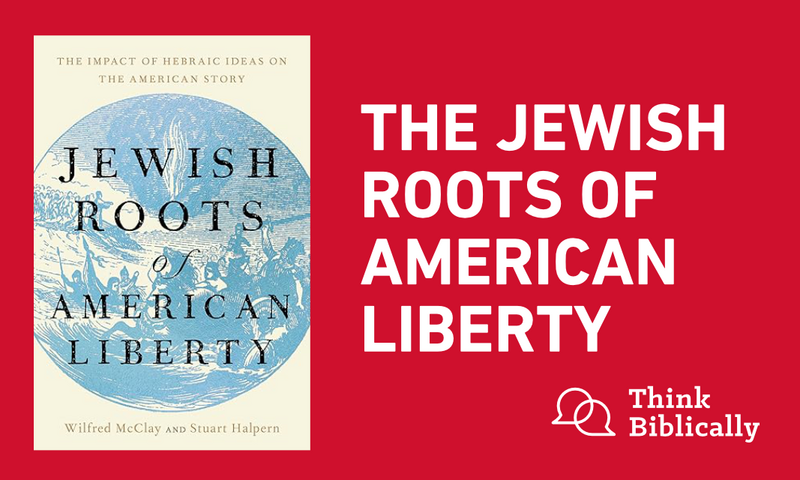
What is the contribution of Judaism and the Hebrew Bible to Western concept of liberty? How did the Hebrew Bible influence Western concepts of law in particular? And how did the experience of Israel and the main characters in Israel’s history impact the American founders? We’ll answer these questions and more with our guest Rabbi Stuart Halpern around his book, The Jewish Roots of American Liberty.
Dr. Stuart Halpern is Senior Adviser to the Provost of Yeshiva University and Deputy Director of Y.U.’s Straus Center for Torah and Western Thought. His books include The Promise of Liberty: A Passover Haggada, which examines the Exodus story’s impact on the United States, Esther in America, Gleanings: Reflections on Ruth and Proclaim Liberty Throughout the Land: The Hebrew Bible in the United States.
Episode Transcript
Scott Rae: [upbeat music] What is the contribution of Judaism and the Hebrew Bible to the Western concept of liberty? How specifically did the Hebrew Bible influence the Western concepts of law? And how did the experience of Israel and the main characters in Israel's biblical history impact the American founders? We'll answer these questions and a whole lot more with our guest, Rabbi Stuart Halpern, around his new book that he edited, called "The Jewish Roots of American Liberty," subtitled "The Impact of Hebraic Ideas on the American Story." Stu, great to have you with us. Really delighted to have you, g-get a chance to talk about some of these really important concepts that are predominant in the Hebrew Bible.
Stuart Halpern: Thank you so much. It's an honor to be here.
Scott Rae: So why do you feel such urgency to have the Jewish roots of Western liberty appreciated? I think it's fair to say that the Christian roots- ... Of liberty have been more than adequately appreciated. Uh-
Stuart Halpern: Of course
Scott Rae: ... And many people will fuse together and call it the Judeo-Christian roots. But why do you feel such urgency to have the Jewish roots appreciated?
Stuart Halpern: Thank you so much. Well, if I could introduce your, listeners, your wonderful listenership, to a, to a Hebrew word, I'll say the word halavai, which means in English, if only. 'Cause I think if only folks took, the Judeo-Christian tradition as seriously as you presume, that would be amazing. You know, I have the misfortune of having an account on X, as I'm sure most of your, listenership does, and it's every day, maybe even every hour when I see people calling into question the rootedness, the sen- the sense of brotherhood and kinship, between Jews and Christians, and people coming from, you know, I dare even mention their names, but you can imagine, you know, Tucker Carlson and his ilk, who are calling into question, any sort of connection between both Jews and Christianity and Jews in America. So while we didn't plan this book, we being my co-editor Wilfred McClay, who's an award-winning, Bradley Prize-winning American historian, who is of course, a Christian, he and I did not plan this book to counter such, ahistorical, voices. I think, you know, with God's help, it has come out at this crucial moment where so many, people out of ignorance, malice, or both, are calling into question, how Jewishly, informed and shaped and inspired, this country has been from its earliest moments to today. And so we're grateful to have this book out there, in the public to be able to tell the stories that we try to tell and uncover the historical sources that we provide.
Sean McDowell: Why did religious freedom take root in the U.S. And not so much in Europe with its state churches?
Stuart Halpern: So, I would answer that on... With a, with a twofold answer. One is, for better or worse, America is very large, very decentralized, so even when there were first initial settlements, even then there was not necessarily an official centralized religious authority. People were coming, fleeing for religious freedom, of course, and away from persecution, and therefore were not so quick necessarily to institute, a harsh official framework. And so due to the geography, and... Of the country, even of its early days, and the decentralized authority, I think that allowed for a greater degree of religious variety. The, the second half I would say is that the premise of the country after the Pilgrim and the Puritans era was one that was sourced in the Hebrew Bible, as of course, part of the overall Christian Bible, but based on a very Jewish idea. And that, of course, is, as stated in the Declaration of Independence, "We hold these truths to be self-evident that all men are created equal, that they are endowed by their Creator with certain inali- unalienable rights." Then, of course, we get into all the fun stuff about life, liberty, and the pursuit of happiness. But the idea that the Creator has created humankind with certain rights, well, that's a very biblical idea. In fact, that's of course from Genesis chapter one, right there from the beginning. So I think this country was both, blessed by the circumstances of a decentralized initial stage of development and gifted itself a later stage whereby the very framework from which the country was forged is one that is articulated with an idea that recognizes, in a way that had not been recognized in history previously, the inherent dignity of man, which was spelled out chapter and verse in the Bible. And so of course, of course, when all men are created equal was written in the Declaration, it was not understood the way you and I and your listeners understand it today. However, the voice of liberty that echoed in those lines was one that proclaimed that people should be able to follow their own conscience and had their own inali- unalienable rights that were gifted to them by God.
Scott Rae: Now, if you've answered this already, say so, but it strikes me that most of, I mean, almost all the early American colonies did have state churches.
Stuart Halpern: Yes.
Scott Rae: It's just at the federal level they did not.
Stuart Halpern: Yeah.
Scott Rae: So the con- So I think what you're arguing is that the conception of religious freedom changed a bit from the early colonies to la-later on.
Stuart Halpern: Yeah, I think as more and more folks moved into the, moved into the, to the colonies that became America, they pushed the boundaries of what America can and should be about. So I would direct your listeners to a wonderful book by, Adam Jortner, who I believe is at Ohio State University, called "A Promised Land." And he goes through how early American Jews, which there were not many of course during the Pilgrim and Puritan era, but there were in the decades following, helped shape religious liberty in the United States.First and foremost, of course, before they were shaping religious liberty, they were fighting for the freedom of the colonies. They were fighting in the revolution. So for example, there was a fellow Hart Jacobs who received exemption from New York's militia on Friday nights so he can keep the Jewish Sabbath. And Chaim Solomon partnered with Robert Morris, the delegate at the Continental Congress, and one of the Declaration signers in securing funding for the fight against the British. So this service was, of course, repaid in kind in that General Washington promoted at least 15 Jewish soldiers to officer rank, which was something that history had never seen. Jews were not permitted to achieve such rank in European armies. And of course, the Jews deeply appreciated Washington's recognition of Jewish contributions to the fight for freedom. And there's an incredible prayer, absolutely incredible prayer in 1789 in a synagogue in Richmond, Virginia, that literally spelled out the name Washington in Hebrew letters across its middle lines as the Jews literally wrote an appreciation for the merc-- the first American president into their prayers. Now, it's not only that, it's that American Jews petitioned against what was called test oaths. In other words, it used to be that you have to swear on a Christian Bible, even if you weren't Christian, to achieve public office. And in every state that had a synagogue built in it, those states eventually repealed their test oaths. So while Jews could not have served in public offices in 1775, by 1795, they were elected to public office. So Jews participated in the revolution from the beginning, and post-revolution, pushed for greater freedoms in the United States that benefited not just Jews, of course, by being able to swear on your own, holy book, your Bible, or whatever you would choose to swear on, that allowed for religious freedom to flourish in a new way.
Sean McDowell: So where does that notion that you're talking about in terms of freedom of conscience appear in the Hebrew Bible? Like, what makes that such a sacred notion biblically speaking?
Stuart Halpern: I would say it's the premise of the whole thing. It's, it's, it's from the first chapter through the end of Deuteronomy a-and continuing on and on. The, the whole Adam and Eve screwing up thing, that's of course, because they had the freedom to choose good or bad, the freedom to taste from the forbidden fruit or not. Abraham, we're told, is instructed by God as to the impending destruction of Sodom and Gomorrah because God is tasking Abraham to choose a path of justice and righteousness, and to pass that path along to his children. Now, of course, it wasn't anything endemic in them. It was a task, a divine mandate to try to stay strong along that path of justice and righteousness, to choose to do so. And of course, Moses' exhortations in Deuteronomy, "And you shall choose life," on the national scale is a clear recognition that people in the Bible and beyond have the freedom to choose what to believe, what to do, how to behave, how to obey God's law, or God forbid, not to.
Sean McDowell: That's really helpful. If I can jump in here, some views that we hold are held by, like, individual verses we point to.
Stuart Halpern: Mm-hmm.
Sean McDowell: And you're like, the whole gist of the Old Testament from Adam and Eve all the way through is this sense that God has made us beings with choice and we'll be held accountable for that choice, and we should use it well. Hence, the government should respect that built-in nature of human beings. That's a very Jewish idea we see all the way through the Hebrew scriptures.
Stuart Halpern: Absolutely. And Moses says in Deuteronomy, "If you don't listen to God's law, you're gonna be kicked out of the land, and the land will spit you out," because it's upon each and every member of the covenant, which is an important concept that we haven't brought up yet, but we can bring it up now. This idea of a covenant, of a partnership with God, of a sense of mission, sense of purpose, is something that America explicitly imitated from the days of the Pilgrims and the Puritans to the covenant that we all can and should feel, especially Jews and Christians among us, should feel that our nation is covenantal, and I'm sure we're gonna get to that a bit more as we continue our conversation.
Scott Rae: Yes. So let's, let's be a little more specific. Where are some of the places where the Hebrew Bible in particular influenced s- you know, certain aspects of a Western or American law?
Stuart Halpern: Sure. So I would say there's the flavor and there's the details. So let's stick with flavor first. So Connecticut's Roger Sherman, who, fun fact, you can impress people at cocktail parties with this, he's the only Founding Father who signed all the foundational American documents, including the Declaration of Resolves of the First Continental Congress, the Declaration of Independence, the Articles of Confederation, and the Constitution. So he reflected in a 1784 essay as follows. He said, "The whole code of laws which related to the civil polity of the Jews might be comprised in less compass than any one of the five books of Moses, although they were as the stars of heaven for multitude and as the sand on the seashore innumerable. Their judges were the elders of their cities who held their sessions in their gates and their causes determined without long, tedious, and expensive processes." Sherman urged his colleagues contributing to the design of America's judicial system to, quote, "Consult his Bible and duly weigh and consider the civil polity of the Hebrews, which was planned by divine wisdom." End quote. Samuel Langdon served as president of Harvard. He gave an election sermon to the New Hampshire legislature on June 5th, 1788. The title of that speech was "The Republic of the Israelites: An Example to the American States." And Langdon, quote, "Thought Israel offered a better model of government than the much-vaunted classical societies." End quote. And he recommended, quote, "As to everything excellent in their constitution of government."The Israelites may be considered as a pattern to the world in all ages, and from them we may learn at what will exalt our character and what will depress and begin us and bring us to ruin. Let us therefore look over their constitution and laws. End quote. And he made sure, by the way, to send a copy of his sermon to none other than Washington himself. So that's the flavor. Here you have foundational founders explicitly tying in how they want America to look and feel and be run to ancient Israel. And my amazing, I could say intellectual colleague, if I dare say, I would say mentor, if I dare say a colleague, Daniel Dreisbach, who's, really written inc-- done incredible work on the faith of the founders. He noted in a wonderful chapter in our book that, quote, "The US Constitution includes provisions that are almost certainly derived from or informed by the Bible." And he mentions there's an article excepting Sundays from the ten days within which a president must veto a bill, which implicitly recognizes the Christian Sabbath- ... Which of course is built off of-
Scott Rae: Mm-hmm
Stuart Halpern: ... The Jewish Sabbath in the book of Genesis. There's an article that grants Congress the authority to, quote, "Fix the standards of weights and measures," which is likely inspired by Deuteronomy's twenty-fifth chapter, which states, "Thou shalt not have in thy bag diverse weights, and a great and-- a great and a small. Diverse weights, a great and a small, thou shalt not have in thine house, diverse measures, a great and a small." Meaning in other words, you need a fixed standard of weights and measures. There's another article that says that treason, convictions for treason must be supported by the testimony of two witnesses, which conforms to Deuteronomy seventeen six, "At the mouth of two witnesses or three witnesses, shall he that is worthy of death be put to death." And the Fifth Amendment, which prohibits double jeopardy, of course, very famous, "I plead the Fifth," is said to be based off of the book of Nahum, in one nine, where it is said, "Affliction shall not rise up the second time." So these are a few of the-
Scott Rae: Super interesting
Stuart Halpern: ... Specific examples. And I would say generally, it's the non-Jewish historian Russell Kirk, who in his The Roots of American Order stated it as follows: "It is the Hebraic order which has come down through the centuries to the American Republic. If altered by intervening circumstances and beliefs, God, the Lord of History, the timeless one, became known in Mount Sinai. His law still is the source of order, even when the forms of that law have been secularized." And it was President Calvin Coolidge who stated in a remarkable address that was long overlooked for many years, and we include it in our, in our, book, and we got wonderful coverage on it, so far, thank God. And, and The Wall Street Journal in particular in their review focused on this speech in which Coolidge said that, quote, "Hebraic mortar cemented the foundations of American democracy." End quote. So that's, I would say-
Scott Rae: That's really-
Stuart Halpern: ... A bit of a look into the-
Scott Rae: Yeah
Stuart Halpern: ... The flavors-
Scott Rae: That's really helpful
Stuart Halpern: ... And specifics.
Scott Rae: Yeah. No, those are... And they're good specifics too. Thank you.
Sean McDowell: Great, great example. So you give some examples of how like even from the Book of Nahum, which I didn't see coming, and the Fifth Amendment, I love that. But are there some places where you think the American founders maybe misread or misapplied the Hebrew Bible? And if so, where?
Stuart Halpern: Sure. So I would say they, of course, weren't necessarily card-carrying members of conventional faith, Christian denominations or another. Of course, many were deists, as has been well documented. Thomas Jefferson notoriously cut out the miracles in his Bible.
Sean McDowell: That's right.
Stuart Halpern: I think there's actually a Princeton biography of the Jefferson Bible. You know, I already mentioned that, Jefferson, again, kinda while he said all men were created equal, didn't quite mean it in the way that, you know, I believe the Bible meant it and you and I believe it is meant to be taken now. And, and I would add, you know, sometimes the founders had, a bit curious perspectives on the role of Jews in America. I'll, I'll cite one specific example. There's a fascinating exchange between, Mordecai Manual Noah, who, if your listeners have not heard of him, is worth looking up. He's probably the most, fascinating footnote in American Jewish history. He tried to launch a homeland for the Jews in eighteen twenty-five, fifty years into the American-
Sean McDowell: Oh
Stuart Halpern: ... Experiment, seeing that his, Jewish brethren, his coreligionists, were under siege in Europe, which of course is still happening today. It's the endless story of the Jews, being persecuted across the globe. And he had-- was rustling up some support for what would much later become known as Zionism. But here's a guy who's operating fifty years before Theodor Herzl, the founder of modern political Zionism, dreams up the idea of a revived homeland in what was, you know, then under Turkish control. So here you have this fellow Mordecai Manual Noah, who's a playwright, a police officer. He actually served as a consul to Tunis, on behalf of the United States. A very renowned, Jewish leader at the time. So he writes a letter trying to galvanize the support of past and current presidents, for, his efforts to revive, Jewish national aspirations, be it in America or back in Israel. And so, he writes to, all the living presidents, and John Adams writes him... They all write him back. And John Adams, in a letter in 1819, says as follows to this fellow who was trying to galvanize, Jewish, a renowned sense of Jewish nationalism. He wrote to Mordecai Manual Noah, "For I really wish the Jews again in Judea an independent nation. For as I believe the most enlightened men of it have participated in the ameliorations of the philosophy of the age. Once restored to an independent government and no longer persecuted, they would soon wear away some of the asperities and peculiarities of their character, possibly in time become liberal, unitarian Christians." And then he goes on to essentially say that, "Well, you guys have the same God as us, but I, at the end of the day, I assume you're all gonna become unitarian 'cause that's obviously the coolest, slice of the pie." So, you know, it was very nice that he was supportive. This was John Adams supportive of Jewish, uh-You know, the Jewish role in America and Jewish community in America, but I think it was obviously a little bit misguided that he felt, you know, well, you know, at the end of the day, you're all going to convert to Christianity, anyway. So that would be maybe some founders, letting down, I think-
Scott Rae: Mm-hmm
Stuart Halpern: ... The true sense of the Bible.
Scott Rae: Now, you-- one of the chapters in the book des-describes, Abraham Lincoln, who mentioned-
Stuart Halpern: Sure
Scott Rae: ... Who described the United States as, quote, "the almost chosen people."
Stuart Halpern: [laughs] Yeah.
Scott Rae: What, what do you think he meant by that, and would you agree with his assessment?
Stuart Halpern: Okay, so I definitely do think that, America and, again, the modern state of Israel, which of course was not, yet revived in Lincoln's era, were, or are two nations under God. In fact, I have a... That's my working title for my next book, Two Nations Under God: How Biblical Israel Inspires the United States. And so I think Lincoln, of course, as has been well documented, a voracious reader of the Bible, someone who weaved biblical rhetoric throughout his most famous speeches and less famous speeches, understood, of course, the role that the Jews were playing, in his own day and in the country, and so was not looking to wash them from the stage of, or brush them off the stage of history. And so, Or famously, Lincoln, reneged or canceled General Order Number Eleven, which was when, during the Civil War, Ulysses S. Grant, essentially expelled many Jews from territory under his military command, and Lincoln right away understood that that was not something that America could stand behind. It, it went against what American principles are and American values are. And so Lincoln had had friends who were Jewish, had supporters who were Jewish, and protected, the American Jewish community. So he understood that there were living Jews in his age that were carrying around and praying from and learning from the Hebrew Bible, which, in which they are told that they are to be a kingdom of priests and a holy nation. And I think Lincoln understood that America, too, at its roots, was of course built as a city upon a hill, as a guide, a guiding, shining nation to which others should turn and look up to. So I think in using that phrase, almost chosen nation, he was hearkening to that idea, hearkening to the idea that, America, like its biblical Israel predecessor, should be a light unto the nations, and yet was not discounting, Lincoln that is, was not discounting the presence, the very real presence of lived Jewish lives in his time. And I think he understood that just like, the Jewish community has its founding documents, the Hebrew Bible, of course, so too America has its founding documents in the Constitution and the Declaration, of course, as we've already mentioned, have, themselves, or which themselves drew deeply from the Hebrew Bible.
Scott Rae: So when we hear about America's founding, at least in what I've read, we hear a lot about Exodus and Moses and the idea of covenant and freedom and the role that it plays. Writers like Os Guinness have really leaned into that.
Stuart Halpern: Mm-hmm. Mm-hmm.
Scott Rae: But I've heard less about how King David- ... Served as an inspiration, you mentioned like to the British, but also in particular to the American colonists.
Stuart Halpern: Sure.
Scott Rae: What role did he play in inspiring them?
Stuart Halpern: Sure. By the way, before we get to that, I would be remiss if I didn't mention, I actually, was, w-was honored to have just recently, compose a rather lengthy article for the American Bible Society on the use of Exodus fifteen, the Song of the Sea-
Scott Rae: Oh, good. Very nice
Stuart Halpern: ... In the American battlefront. And so I went through, I had, I had help here from a research assistant, around a hundred and fifty years of American newspapers, looking for any mention of the Song of the Sea. And it turns out that-
Scott Rae: Huh
Stuart Halpern: ... From the American Revolution through every American major war, Exodus fifteen has been there-
Scott Rae: Really?
Stuart Halpern: ... Through World War II, Spanish-American War, World War I, of course, the Civil War. So here you have this song that, as luck would have it, w-actually just came up in the cyclical reading, the weekly, Torah portion reading in Jewish synagogues worldwide, the victory song sung by the Hebrew slaves newly liberated from the clutches of Pharaoh. And that has been a song, a victory song, a belief that, you know, God is a man of war, God is his name, has been a, has been, you could say, the fight song, the national anthem, if you will, of Americans from the revolutionary days through the fight against the Nazis. So, so I'd be remiss if I didn't, mention that, but just 'cause I personally was so excited to find all this, research. So back to King David. Of course, as you mentioned, it's rather surprising that a king would come up at all in support of the American-
Scott Rae: Mm-hmm
Stuart Halpern: ... Cause. Of course, the entire enterprise of the United States stands strongly against, oppressive kings or kings at all. And so it is striking that nonetheless, David has played an important role in the American political imagination, particularly, of course, his earliest, most famous episode where he slew Goliath. And so, it is to that episode that Congress turned to on May twenty-sixth, seventeen seventy-nine amidst the harshness of the ongoing war against the British forces, and they issued a proclamation which mentioned as follows, quote, "America without arms, ammunition, discipline, revenue, government or ally, almost totally stripped of commerce and in the weakness of youth, as it were with a staff and sling only, dared in the name of the Lord of Hosts to engage a gigantic adversary, prepared at all points boasting of his strength and of who even mighty warriors were greatly afraid." They're of course quoting chapter and verse of the staff and sling episode whereby the young shepherd David slays Goliath with a shot to the head. And so too they saw, they, Congress, saw the colonies fighting for their freedom, but against the vastly more terrifying forces of the British as David taking on Goliath. And John Witherspoon, who taught James Madison and served as president of the College of New Jersey, which was later to become Princeton, three years earlier in seventeen seventy-six also mentioned, the David episode saying in a sermon, "Has not the boasted discipline of regular and veteran soldiers been turned into confusion and dismay before the new and maiden courage of freemen in defense of their property and right?" And he was summing up the feeling of the Israelites after their young hero David had slain Goliath.And, strikingly, or fascinatingly, as you mentioned, the British also used, this biblical story in a, in a fight alongside the British, Native Americans alongside the British against French troops. Jonathan Edwards, whose father of the same name had sermonized probably the most famous sermon in American history, Sinners in the Hands of an Angry God, he spoke of this episode in seventeen fifty-five from his frontier post in Stockbridge, Massachusetts, and addressing the primarily Native American congregation on behalf of the British, recalled David's verbal shot. "Thou comest to me with a sword, and with a spear, and with a javelin. But I come to thee in the name of the Lord of hosts, the God of the armies of Israel, whom thou hast taunted." So both the British and the Americans were using this story in their own, political fights.
Sean McDowell: It's so fascinating f-for... Oh, I'm sorry to jump in there.
Stuart Halpern: No, no, go ahead. Please, please.
Sean McDowell: It's fascinating for me because that's my all-time favorite biblical story. And, I mean, I could just tell you stories of listening to it as a kid, and it captured my imagination. And in just in recent times in culture right now, you have the House of David, you have the kind of cartoon animatronics David.
Stuart Halpern: Return on holiday.
Sean McDowell: I think there's maybe a Netflix show coming out on David. Like, to realize that this is not just a phenomenon right now, but the founding of our country, people are telling this story and seeing the start of the nation in part through the lens of that story, fighting against Goliath, is pretty cool how deeply that goes in our nation's roots.
Stuart Halpern: Absolutely. And, and what's so cool is that I came across this incredible source. There was a Methodist minister, John Fletcher, who was British, and he understood his nation's role in this story, or in the echo of this story. And so he warned, seeing his own people as Goliaths, he warned as follows, "If the colonists throng the houses of God while we throng playhouses or houses of ill fame, if they crowd their communion tables while we crowd the gaming table, if they pray while we curse, if they fast while we get drunk, if they shelter under the protection of heaven while our chief attention is turned to our hired troops, we are in danger, in great danger. A youth that believes and prays as David is a match for a giant that swaggers and curses as Goliath." So he understood that the mighty British would fall as the mighty Goliath, the Philistine, had fell.
Sean McDowell: That's awesome.
Scott Rae: Stu, thanks so much for that. That's really helpful. One, one final question for you. You know, w-with the founders, I think, the book correctly maintains that democracies need virtue for self-government, and virtue needs religion to flourish. But with religion on the decline in the West, in general terms, where do you get hope that democracies can survive?
Stuart Halpern: So I get hope in the, in the hardback, pews. By that I mean there's a wonderful article from, I think, a couple years ago by Yuval Levin, who I believe served in the, in the Bush II White House and, is a, is a brilliant thinker over at the, American Enterprise Institute. And, he mentioned that where there's not attrition, where people are not dropping off from conventional religious affiliation, is in the communities that make demands. I mean that in the best sense of the word. In, in those that are, that are serious, in those that are committed, in those that set your expectations high and ask you to be your best self, to be, to fulfill the divine given potential that the good Lord has given you. And, and those are the ones that are doing the best. And it's, and it's the more liberal denominations that are seeing greater attrition rates. So I would say to double down on being serious about one's faith. And I think that democracy can survive by people who understand deeply what our founders understood, which is that America has been chosen, by God to be, to use Lincoln's phrase, an almost chosen people, an almost chosen nation. And I think by taking seriously a sense of covenant and the covenantal character of our nation, which I hope in these few minutes together, we've, we've tried to articulate, you know, that's something that can only set America on a, on an even more true path and a, and a higher path. And I think together, both Jews and Christians, we can partner in recommitting this country to its covenantal character.
Scott Rae: Amen. That's a, that's, that's a, that's a good word to close on. And, I think that that's pretty close to a drop-the-mic moment. So-
Stuart Halpern: [chuckles] That's very kind
Scott Rae: ... Stu, thank you so much. Really appreciate your book. I wanna c-commend it to our listeners, entitled The Jewish Roots of American Liberty, edited Wilfred McClay and Stuart Halpern. It's a great work, great series of essays, and very insightful. So appreciate you being with us and, for, I think for teaching Sean a couple things, a handful of things that we hadn't thought much about.
Sean McDowell: That's for sure. Some new examples that we looked at each other with eyebrows raised a couple times, like, "That's interesting. Hadn't made that connection." So thank you for coming on.
Scott Rae: Yeah. Great stuff.
Stuart Halpern: Thank you so much. It's a great kindness. Thank you.
Scott Rae: This has been an episode of the podcast Think Biblically: Conversations on Faith and Culture, brought to you by Talbot School of Theology at Biola University, with programs in apologetics and spiritual formation, Old and New Testament, pastoral ministry, marriage and family therapy, and a whole host of others. If you wanna learn more, visit biola.edu/talbot in order to learn more. Hey, we really hope you... If you have comments or questions, we hope you'll email us at thinkbiblically@biola.edu. And if you enjoyed today's conversation with our friend Stu Halpern, please give us a rating on your podcast app. That really matters when you do that. And share it with a friend. And join us on Friday for our weekly cultural update. In the meantime, thanks for listening, and remember, think biblically about everything. [outro music]