Biola University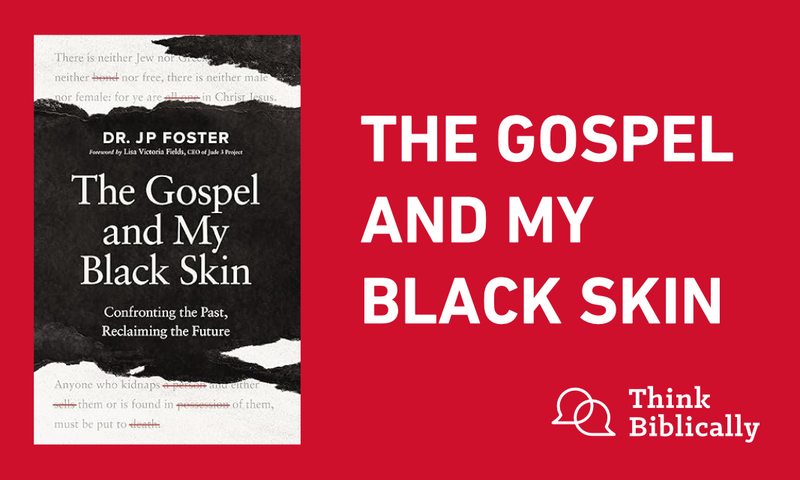
Episode Transcript
Scott Rae: [upbeat music] Historically, how has Christian faith been weaponized to harm Black people? And how is the gospel being distorted today to do something similar? And by contrast, how does the hope of the gospel actually lead to racial reconciliation? We'll look at these questions and a whole lot more with our guest, doctor and pastor J.P. Foster, around his new book entitled "The Gospel in My Black Skin." This is Think Biblically from Talbot School of Theology at Biola University. I'm your host, Scott Rae.
Sean McDowell: I'm your co-host, Sean McDowell.
Scott Rae: J.P., thank you so much for being with us. You are adjunct faculty here. You have a great impact on students. You have a great impact in your role as pastor of Faithful Central Church in Inglewood.
JP Foster: Yes, sir.
Scott Rae: And this new book is just terrific stuff.
JP Foster: Thank you.
Scott Rae: It's hard.
JP Foster: It's very.
Scott Rae: It's a d- it's a difficult read, not because it's complicated, but c- but because it's painful.
JP Foster: Yes.
Scott Rae: Uh-
JP Foster: Yeah.
Scott Rae: And so, but we're, we're looking forward to getting through the pain and into the hope-
JP Foster: Amen. Amen
Scott Rae: ... That, is, that I know is the focus of the book.
JP Foster: Yes, it is.
Scott Rae: So, thanks for being with us. Tell us, you know, I mean, you've, you've written other stuff. Why this book this, at this time?
JP Foster: Yeah, this book, is more of a burden to me, a weight, a passion. I've, I've watched, you know, being, for the most part, connected to the Black church, and our church being in the inner city, in the Black community- ... I've watched young adults and people wrestle with their faith and actually walk away from the church. And when I began to survey and ask questions and wrestle with some young adults, and some adults, that had just been wrestling with the faith, Christianity... And I think in our context in the inner city and the Black church, we deal with different apologetic issues-
Scott Rae: Sure
JP Foster: ... That come up. And so I think Christianity is one of the things that's always tested in our community, like, how can you be Black and Christian? And so I think some of our members and community are saying to themselves, "Well, can I be fully Black and fully Christian?" Because the way it's posed is that you have to leave one of them at the door. You have to pick or choose between one or the other. So those, the confronting issues. But to me, a deeper issue is what you mentioned, in the introduction, is that hope. Eternity's at stake, so it's not just that you're leaving the church. It's not just... It is, salvation comes through Jesus Christ. And so to see, younger Black men and women, and some who have been connected to church for decades now walking away from the church and Christianity, that's a salvific issue. That is a eternal issue. What happens to your soul? And I think that's, that really w- That's really what drove me. And I've been able to address some of these issues with some college students in different college campuses, and they've come to church and gotten baptized and rededicated their lives.
Sean McDowell: Amazing.
Scott Rae: That's great stuff.
Sean McDowell: Praise the Lord. I love that. Well, let's, let's get into it. Maybe give us from your experience and historically how Christianity has been weaponized to harm Black people, maybe some of the most prominent examples, and even some, not only from the past, but maybe that you still see happening today.
JP Foster: Yeah, I think historically, the most predominant ones I think would be the misuse of scripture, the Bible, known as the slave Bible, and also, the curse of Ham. So if I could start with the slave Bible.
Sean McDowell: Start where you want.
JP Foster: Yeah, so in our context, we have a lot, a lot... Black people in our community wrestle with, is this the white man's religion? We have different religious cults in our community that try to pull Christians away, saying, "This, this Christianity, this religion was given to us to oppress us and to enslave us." And I don't think, you know, and I think they narrow history, so the historical timeline of Christianity has to be narrowed to make that fact. Now, was Christianity used to harm Black people? And the answer to that question is yes. But Christianity also was thriving in Africa before it was used in Europe and America, and I think that narrowing of history is a mistake. The, the slave Bible in and of itself was a, an intentional... I think it was 19- 1807, the British West Indies, they curated a slave Bible. The intention of this Bible was to remove any scriptures of freedom, of liberation, or even unity between brothers and sisters of different color- ... In scripture. So 90% of the Old Testament was stripped, almost 50% of the New Testament was stripped, and the Exodus story was str- was missing. I mean-
Sean McDowell: Wow
JP Foster: ... That's one of the most powerful, liberating [chuckles] stories in scripture- ... Of bondage and freedom- ... And God's hand moving to liberate His people in Egypt. It was completely missing. Even Joseph's story of him being, enslaved, you know, he's, he's in the pit, then he's in the palace, and he's serving, but there's never a, an, the scriptures of him come, becoming second in command, it's missing. You have Galatians, right? Galatians, now I'm in Galatians 3, where, there's no more Jew, no more Greek, no more male, no more female, no more slave, no more free man. We're all one in Jesus Christ. The scripture's missing. And so these scriptures were deliberately removed to make subjugation. So scriptures that said, "Slaves, obey your masters," were the prominent passages, and they were used to be preached, to make it seem as though being slavery of Black Africans was a mandate from God, like it was a divine act or call from God. And so that's, that's one of the most prominent. The second would be the curse of Ham. The, the curse of Ham was, is in some s- ca- senses, if you know the Bible-
Sean McDowell: Mm-hmm
JP Foster: ... It's like Ham wasn't cursed.
Sean McDowell: [chuckles]
JP Foster: Canaan was. But then you see the curse of Ham was used as a mandate that every descendant from him, is subject to continual servitude, perpetual servitude. So in that, in that sense, now you have this issue of they labeled the curse of Cain, the curse of Ham, to justify perpetual servitude of Black Africans. Well, number one, racial hierarchy is not mentioned in the text. Number two, you, n- Black Africans are not mentioned in the text at all, but they use it to justify that these, th- w- this scripture's referring to Africans, and they are, the scripture demands that they be servants or s- or slaves. And so this particular curse of Ham that was coined the curse of Ham has become two major marks, the slave Bible and that really... And the reason why, Sean, I think this is big is because in doing so, this removes, this removed the Imago Dei.So when you look at us being created in the image of God, when I, when I think now, when I, when I zoom the lens out, I'm like the brutality of slavery and all those things, well, if you're able to strip away someone's full identity, full dignity, full image of God- ... Then I can see how you could... The, the treatment of slaves was done that way in America and across the, across the nation. So-
Sean McDowell: And of course, Nazism did the same thing by dehumanizing-
JP Foster: See, that's it
Sean McDowell: ... The Jews.
JP Foster: That's it.
Sean McDowell: What adds to the horror and brutality of slavery is that the Biblical justification-
JP Foster: Yes
Sean McDowell: ... Is used for it.
JP Foster: Yes.
Sean McDowell: That's a layer-
JP Foster: Yeah
Sean McDowell: ... Of spiritual abuse-
JP Foster: Yeah
Sean McDowell: ... That not only does physical harm to the body, it does-
JP Foster: Spiritual harm
Sean McDowell: ... Spiritual harm.
JP Foster: Spiritual harm.
Sean McDowell: Even sex abuse, as terrible as it is, when it's done by a priest or a pastor adds a layer-
JP Foster: Oh my goodness
Sean McDowell: ... Because when Jesus was tempted, he uses the Bible to
JP Foster: Defend
Sean McDowell: ... Against evil.
JP Foster: Yeah.
Sean McDowell: Now you're using it for evil. I don't know how it gets much worse [laughs] than that.
JP Foster: Yeah. I agree. And one of the reasons why, Scott, you mentioned, you know, the book is difficult. I had to be upfront and honest about the things that have happened, how the Bible was used or weaponized to dehumanize Blacks. But I also had to show how it's also been used as a liberating force to help freedom in America. And then the last section, what does, what does the ministry and gospel of Jesus actually say about, Asians and Latinos and whites and Blacks sitting at a, sitting at a table being brothers and sisters in Christ? You see, I, but I, we can't get to that point because in our community, the Bible is being used as a weapon, that how could you be Christian? How could you be, how could you become a Christian and be Black at the same time? So I'm, I'm, I'm going straight, I'm going head on with these issues- ... To say, "I'm not gonna shy away from these things. They did happen, but let me give you a fuller context historically of what's happened and what does the ministry of Jesus say." Like you just said, they were misused to dehumanize, and that's the key. That, and I tell people, "The full Bible wasn't used." So the Bible you're holding in church today is not what was used to subjugate Black people in the, in the country. It was a slave Bible. It was more like a church fan or, [laughs] or a pamphlet, right? Or, or the-
Sean McDowell: That's probably the-
JP Foster: ... "Here, here go the church announcements." But it wasn't the full Bible that we, that we contain and we use today.
Sean McDowell: Yeah.
Scott Rae: So let's, let's come a little more recently.
JP Foster: Yeah.
Scott Rae: You maintain the gospel is still being distorted-
JP Foster: Yeah
Scott Rae: ... To harm Black people today. How so, how so?
JP Foster: Yeah. So I've had the... I'm just, I'ma call it grace. God has allowed me to be in just rooms and places that I never would've imagined I would be in, and it allowed me to forge relationships with white scholars, Christians, and it's just been- ... Incredible to be able to do ministry that way. And I think s- in a, in an honest attempt to say, what can we do to fix this disunity amongst Black and white people in our country? And I think one of the things that's been distorted is this colorblind theology concept of, oh, I didn't s- we don't see color. You know, we're just, we're all one in Jesus Christ, which is tr- we all are one in Jesus Christ, but there is beauty in how God has made us and created us that like I'm, I'm proud to be, that God created me Black. I think you should be proud that God created you- ... To be, to be white. I think those things we should embrace and see the beauty of diversity in how God's created us. I think the danger in how it's distorted today, if you look at colorblind theology, what it will do then is if it then... If I don't see color, it can, it can lead me then to not see your lived experience. And I think sometimes when we dismiss color and some things that happen in our country or nation, then it dismisses the experience. Well, as a Black person in America- ... I have been targeted because of my skin color. I'm not always targeted, but I have literally experiences in my own life that I've experienced be- just simply just because I was Black. So I think if we... The colorblind theology can dismiss lived experience, and when that happens, then you don't fight for in- you don't fight against injustice, or you don't fight for the, for the vulnerable or marginalized, and I think that's where it can become very complicated. I think another one, which is, you may be able to help me with this 'cause I don't know fully, I c- ... Still can't fully find a full definition, is this concept of Christian nationalism.
Scott Rae: Oh. [laughs]
JP Foster: So when that's mentioned, it becomes problematic-
Sean McDowell: Yeah
JP Foster: ... Because what the definition is in the Black community or communities of color, I've noticed it's slightly different from what it would be- ... From in white spaces, and then I've seen three different types of definitions in white Christian spaces. So for me, I'm, I'm not gonna sit here and say, "Oh, I know, I have the definition." I don't have a full definition of it, but I can tell you of the impact that concept has in our community. So when we look at Christian nationalism, I think some theological issues arise in it when it comes to it being under the umbrella of Christianity. Number one is it appears to put, ideology, politics, and theology in one cup and it mixes it. And I think, so my, what do I do if my ideology and my theology disagree? Does my ideology overrule my theology? And then how much of my theology or my relationship with God in my, in my Christian walk is impacted with my politics? So I'll give you an example. The fear in the Black community when it comes to Christian nationalism is that, it appears sometimes that... Now, not all, I don't know all, so you guys can help me.
Scott Rae: [laughs]
JP Foster: Is that in some spaces, it seems it's a, it's a push for political power. It is, it is ideological and a push for political power, to use faith or the c- under the Christian umbrella to get that power. Well, in the Black community, that's a red flag because of the history of what politics and faith have done when a, when a push for power under the umbrella of faith is done, it's normally impacted Black communities or marginalized people. And I'm not... So I wanna make sure I'm being clear. I'm not saying that we shouldn't love our country. I do. We should. But I do think that in some definitions, in some white evangelical spaces I've heard, the difference between patriotismAnd and nationalism right? I can be, we should have pride in our country and wanna see the best for our country and wanna see our country thrive, but I think when there are hierarchies, Jesus says, "Seek ye first the Kingdom of God, the Kingdom of Heaven and His righteousness, all those things will be added to," I think the issue becomes where the first is no longer God, and we're seeking to build some kind of kingdom here on Earth, and where in some spaces it appears that under the umbrella of Christian nationalism, that God's, this is God's chosen land in which He wants to reign, rule, and do as if the, as if Christianity is an, is only national-based and not global. So, those are just some things I'm throwing out there.
Scott Rae: Well-
Sean McDowell: Yeah, that's helpful.
Scott Rae: Well, I think, I think you've hit it right on the head, and that's the definition of Christian nationalism that we've used when we talk about- ... When we talk about it here. And that is that some, somehow, some a country, any country-
JP Foster: Yeah
Scott Rae: ... Has taken the place of God's chosen people-
JP Foster: Yeah, yeah
Scott Rae: ... That was unique to Old Testament Israel-
JP Foster: Yep, yeah
Scott Rae: ... And no longer in effect today.
JP Foster: Yeah.
Scott Rae: And what's re- what's replaced, the cho- the quote chosen people-
JP Foster: Yeah
Scott Rae: ... Part as God's chosen nation is a multiethnic, multinational, you know, multiracial body of Christ.
JP Foster: Yeah.
Scott Rae: And that's the locus through which God is working today. Now, I think what's significant about that analogy is that even after the first Jews-
JP Foster: Yeah
Scott Rae: ... Became Christians-
JP Foster: Yeah
Scott Rae: ... They were still Jews.
JP Foster: Yeah.
Scott Rae: And they did not, th- and this is to your point about colorblindness, they did not give up their Jewish identity, nor in our view theologically did they give up their future-
JP Foster: Yeah
Scott Rae: ... As Israel by virtue of coming to faith. Now, it tri- they, it was a more important part of their identity, but it didn't replace it.
JP Foster: Yeah.
Scott Rae: And I think, so I think there's, there's a, there's a good biblical precedent-
JP Foster: That's good
Scott Rae: ... For what you're suggesting about the colorblind theology-
JP Foster: Yeah
Scott Rae: ... That you're referring to. This is not about Christian nationalism.
Sean McDowell: Yeah, agreed.
Scott Rae: But I think it, but it's a good observation because it has, it's often referred to as white Christian nationalism.
JP Foster: It is, yeah.
Scott Rae: And I suspect that's the way it's referred to-
JP Foster: Yes, in community
Scott Rae: ... In Black communities.
JP Foster: Yeah.
Sean McDowell: And by the way, when you say, what do you mean by Christian nationalism, I don't think anybody can define it-
JP Foster: Yeah
Sean McDowell: ... When I ask them.
JP Foster: Yeah.
Sean McDowell: It's used in so many different ways that just saying, "What do you mean by this?"
JP Foster: Yeah.
Scott Rae: I thought I thought I just did. [laughs]
Sean McDowell: Then we can have a conversation. Outside of you defining it-
JP Foster: Yeah, yeah
Sean McDowell: ... Fair enough.
JP Foster: Yeah.
Sean McDowell: But there's still, there's that article in The New York Times-
JP Foster: Yeah
Sean McDowell: ... That was like, "Here's five definitions of Christian nationalism."
JP Foster: Yeah, that's right.
Scott Rae: Exactly.
Sean McDowell: And so we've gotta get on the same page. All right, let's move on. So one of the things you talk about is that there's certain African roots of theology that are not well-known.
JP Foster: Yeah.
Sean McDowell: Who are some of the most prominent early theologians with African roots?
JP Foster: So, so one that blew my mind was, Tertullian. I did not know when, you know, younger that the coin, the word trinitas, which we get our word trinity-
Sean McDowell: That's right
JP Foster: ... Came from a North African theologian. I had no idea, and I think just the light bulb of that was like, "Whoa, wait a minute." And, and it's significant because if I'm living in a, in a, in a modern era where we look at Christianity as this umbrella of this white man's religion, where there's no African roots to it, even before colon- co- colonialism, well, that's not true. When you start looking at some of the theologians earlier on, it mist- it mistells that story. So I think just knowing the coin, the word trinitas, I mean, the tr- the Father, Son, Holy Spirit, that's, that's major. Um-
Sean McDowell: By the way, this is the turn of the third century he's writing.
JP Foster: Yeah.
Sean McDowell: So he's early.
JP Foster: Yes.
Sean McDowell: Phrases like, "The blood of the martyrs-
JP Foster: Yes
Sean McDowell: ... Is the seed of the church." Like, there's a lot that's owed to Tertullian.
JP Foster: Yeah.
Sean McDowell: And people don't always connect his roots.
JP Foster: And-
Sean McDowell: But keep going
JP Foster: ... Frumentius, the Ethiopian Church. That blew my mind, that he was known as the, as the Bishop of Ethiopia and how the gospel was spreading. We read, we read, of the Epo- Ethiopian eunuch, and we see how that pivotal moment of, "But there's water right there. Why are we waiting? You baptize me now." And he goes back- ... And we don't really hear too much after that moment in Scripture, but then to hear, Frumentius to be ov- to be the Bishop of Ethiopia and which is the beginning of the Ethiopian Orthodox Church, just there's, there's incredible roots that I just didn't know. And I think in studying and learning more, I think for people of color, especially the Black community, they don't know this at all. And so it helps, it helps, destroy those arguments of Christianity isn't for you, or why would you... Well, well, it's, it was on our soil [laughs] before, colonialization and colonialism. So I think that's important. I think some of the more modern- ... Would be, like, Nat Turner. And I'd use, to me, he's, he's pivotal for me because the slave Bible, you have this historical, time of slavery. Nat Turner gets ahold of the whole Bible. And when he gets ahold of the whole Bible, he reads Exodus, and when he hears the words of God saying, like, "Let my," Moses, "Let my people go-" ... It changed everything, and it started the, one of the first, revolutions and revolts. So I think those moments of these am-
Sean McDowell: That's amazing
JP Foster: ... These amazing characters, and you have, Fannie Lou Hamer, fighting for voters rights, during the Civil Rights Movement. I mean, there are names that you don't normally hear much is why I'm using those names, and to see the impact that they've had, historically from African soil to even here in the United States of America, I think those are just incredible heroes.
Sean McDowell: Were you surprised researching this yourself, [laughs] looking for these people?
JP Foster: Yeah, I was blown away.
Sean McDowell: Huh.
JP Foster: I, yeah, I was blown away. I said, "This is incredible," but rich, 'cause I know, I know historically Christianity and all those things, but for people who are walking away from the faith that don't, that don't trust it or are skeptical, I think these really help, dismantle some of those-
Sean McDowell: Makes sense
JP Foster: ... Lies that have been told.
Sean McDowell: Yeah.
Scott Rae: Well, and it's not just, you know, it's not just Tertullian who came from North Africa. I mean, Augustine... Came from there. Athanasius-
JP Foster: Mm-hmm
Scott Rae: ... Came from there. I mean, just the, these... It's not just the person who coined the term trinity. These are the people who shaped-
JP Foster: Theology
Scott Rae: ... A lot of the theology that we've inherited-
JP Foster: Yeah. Yeah
Scott Rae: ... And still adhere to today.
JP Foster: Amen. Um-
Sean McDowell: I mean, who's more influential in the history of the church than Augustine?
JP Foster: I don't know.
Sean McDowell: No one more.
JP Foster: No. Yeah.
Sean McDowell: I mean, maybe others equal, Aquinas, Calvin, whatever, but nobody more than Augustine.
JP Foster: No.
Sean McDowell: Period.
JP Foster: I agree.
Sean McDowell: Yeah.
JP Foster: All, all I can say is amen. [laughs]
Sean McDowell: All right. Appreciate that
Scott Rae: [laughs] That's it.
JP Foster: Keep preaching.
Scott Rae: All right. Now, you des- you also describe a Black exodus-
JP Foster: Yeah
Scott Rae: ... From the church that's taken place-
JP Foster: Yeah
Scott Rae: ... Just recently, like in the last 15 years or so.
JP Foster: Yeah.
Scott Rae: Tell us about that, and what's, what has generated that?
JP Foster: Yeah, so that really, again, this is back to the heart of the book, The Black Exodus. The Black Exodus is, relates to Blacks leaving the church in droves. In fact- ... Barna came out with research that, and Pew-
Scott Rae: Mm-hmm
JP Foster: ... Research that showed that Blacks were normally the least non-religious affiliated. So the nones, so the lower, the lowest percentage of nones was that non-religious affiliation, because normally, for the most part in America, Blacks have been the highest religious group.
Scott Rae: Mm-hmm.
JP Foster: They've gone now to the l- to the highest percentage of nones, the highest percentage of nones within the last decade or so. And that, again, is the Black exodus. They're, they've been leaving the church for various reasons, some, because of the, how Christianity is now being politically aligned. I think they... The, the sentiment and the voices they're hearing with Christianity being aligned with politics, I think is one of the reasons that came up in the research. Another reason is because of, the police brutality and things that happened in our nation historically have caused... They felt, especially in multi-ethnic churches or even white evangelical churches, that the pastors or preachers weren't saying anything about what- ... The, again, the lived experience of Black people, to the ex- to the extent of not even just praying. I understand. I'm, I'm, I'm a pastor. There's so much going on in our country even right now. I can't, I can't be- preach the news every Sunday. I just can't do it. Like, I, there's, there's an... Something's happening literally every other day.
Sean McDowell: Yeah.
JP Foster: I have to, you know... But I ca- I have to be, I have to be empathetic and I have to be discerning about what's going on in our nation, and to not pray at all. Some of the responses were the pastor wouldn't even pray, and that's not picking a side. That's praying about what's going on. And, and so I think that's, that's one of the reasons. And so a lot... Some, some of it came to down to injustices. And then the last that was not trusting Christianity anymore. Can I be fully Black and can I be a Christian? 'Cause it seems like I'm having to choose between, me being a Christian or my lived experience as a Black person in America, and it's, it's, it's hard to do that. So I think those are some of the things that led to the, to the Black exodus, and which really what led me to write, because I said, "Look, I'm, I'm seeing this is a, this is a salvific issue. It's an eternal issue." And so that's, that's pretty much what the Black exodus has shaped itself to be.
Sean McDowell: On the flip side to that, a little, a little bit different, but we've heard talk in the past maybe six months, two years, about kind of a rebirth of faith and a revival.
JP Foster: Yes.
Sean McDowell: The studies don't really show there's a dramatic return of faith, but I've heard enough anecdotes and seen enough stories to say at least the conversation has shifted in certain ways-
JP Foster: Yeah
Sean McDowell: ... And there is an openness in this generation. Do you see that in the Black community?
JP Foster: Our church has... Our youth has quadrupled.
Sean McDowell: Since?
JP Foster: Our... Oh, since-
Sean McDowell: Like-
JP Foster: ... The, like the last year.
Sean McDowell: Oh my goodness.
JP Foster: Our youth ministry has quadrupled.
Sean McDowell: Really?
JP Foster: I'm not lying. Our children's ministry, which we literally are trying to find more space, our church sanctuary itself, we're doing a renovation right now to add 1,000 seats.
Sean McDowell: Oh my goodness.
JP Foster: Yeah, our church-
Scott Rae: That's great. [laughs]
JP Foster: ... There's no room.
Sean McDowell: Awesome.
JP Foster: So when you're talking about a revival, it's happening around our nation. It's literally happening-
Sean McDowell: Huh
JP Foster: ... In our Black, in the Black church right now. So there is a revival. There is a openness to- ... The gospel. People are seeking truth, and, I think we're having to now write things like this or do what you do w- on your podcast, which is incredible, is speak to the generation. They're listening to podcasts. They're going on TikTok.
Sean McDowell: They are, yeah.
JP Foster: They're getting their theology from TikTok and Instagram posts and YouTube. And so if we're not writing and speaking to these issues that they're facing, they're gonna believe someone who's not s- learned, not a scholar, and they're just gonna believe someone that has used ChatGPT and decided to make a video. I'm not joking.
Sean McDowell: I know.
JP Foster: That's literally what we're facing.
Sean McDowell: I'm only chuckling 'cause it's painfully true. [laughs] Like...
JP Foster: Yeah. So I think, yeah, so we're, we're seeing a revival. We're seeing a, an increased number of people come to faith. I particularly have been in places in, at different universities in our city where I've spoke specifically to Black men or Black women, and they have l- they've come in droves to the church to be baptized and join the church because of these questions.
Sean McDowell: Praise the Lord.
JP Foster: I was at one university, and I was the last speaker, and it was, it was... The Q&A was supposed to be 10 minutes. It was crickets.
Sean McDowell: [laughs]
JP Foster: You know, I'm like, "I'm, I'm, I'm sure closing this thing out well."
Scott Rae: [laughs]
JP Foster: Right? It was crickets. And I said, "Come on, you guys don't have any questions?" And it got quiet, and I said, "Listen, when I was your age, if I had a Black pastor that was willing to come to my university, who I c- who was at least a scholar, who at least had some degrees in this field, I would, I would be asking 100 questions." I said, "You guys don't have any questions?" I said, "It could be as crazy as you want. It c- it could be about private jets. It could be-" [laughs]
Scott Rae: [laughs]
JP Foster: As soon as I said that, the first hand went up.
Scott Rae: Yeah.
JP Foster: I said, "It could be about private jets. It could be about, you know, clo- whatever you want." And then the floodgates opened. And then it came to- ... These questions of, "Man, how can you be a Christian and you're Black? How can you trust the Bible? How do you know it wasn't misu- Like, how do you know that that's the original, like, that those scriptures are s- like, the canon, basically? How do we know that it wasn't manipulated?" So we had the... We all supposed to... M- Remember, my Q&A was 10 minutes. It... I was there for an hour and 45 minutes.
Sean McDowell: Whoa.
Scott Rae: That's fantastic.
Sean McDowell: Just for you.
JP Foster: The floodgates opened, an hour and 45 minutes, and then-
Scott Rae: Yeah
JP Foster: ... Those men came to church and got baptized. One of them's mother flew all the way out of state to come to our church service to look me in the eyes and say, "Thank you so much. You don't know, I've been praying for my son to come back to church, and I just wanted to thank you in person that God used you to do it."So
Scott Rae: That's great
JP Foster: There's a revival.
Sean McDowell: Well, I'd like to say you're the hero of the story, but that mom is the hero of the story, JP.
JP Foster: Well, her prayer.
Sean McDowell: Sorry, my man.
Scott Rae: Her prayer, absolutely. [laughs]
JP Foster: [laughs] And, and i- and if we were, i- in our, in one of our theology classes, God's the hero, right?
Scott Rae: Yeah. Exactly.
JP Foster: The Holy G- Holy Spirit-
Sean McDowell: Exactly
JP Foster: ... Moving in and through the lives of His people.
Scott Rae: JP, these are tough conversations.
JP Foster: Absolutely.
Scott Rae: You know, not only when, you know, Black and White people talk together about race-
JP Foster: Yeah
Scott Rae: ... But when you're talking to folks in your community who are disillusioned with-
JP Foster: Yeah
Scott Rae: ... The Bible and with faith-
JP Foster: Yeah
Scott Rae: ... About some of these things. W- how do you navigate through some of these when the people you're trying to-
JP Foster: Yeah
Scott Rae: ... Address are getting defensive on you?
JP Foster: Yeah. So one of the thing- one of the things I had to accept, is that I'm okay with being disliked. That was the first step. Because if I'm talking to the Black community, it could frustrate the White community. If I'm with the White community, it can frustrate the Black community. But my goal is hope, reconciliation, oneness. And so for some Black people, my conversation might not be Black enough. Right? But for me, the goal is the gospel. So how do I deal with these tough conversations, especially when it becomes divisive? Number one, I think two things I've learned. One is more psychological. It's, called the art of listening. It's a, it's a, therapeutic psychology-
Scott Rae: Mm-hmm
JP Foster: ... Understanding of listening. So the art of, the art of listening is we sometimes make the mistake of having the dialogue with someone and listening to respond versus listening to hear. When I'm listening to respond, I'm in the conversation with you, and I'm waiting for that moment where you say something, I got you.
Scott Rae: Right, where I can jump on you.
JP Foster: Where you say something I don't like, so I can jump on you- ... Or scream at you, versus listening to hear. Listening to hear changes the whole posture of my heart. It changes my response, and it puts me in a position as a student to learn. Like right now, we all have degrees at this table, whatever. We're students. I'm a s- I can tell by the work you all do. We're students of the Word. We're disciples of Jesus, followers, learners of Jesus. So I'm a student. When I sit down with someone, I say to myself, "How can I learn from you?" What is... 'Cause there's an- whatever's going on, I need to know your lived experience to understand what is, what is, what is, what's going on. So one is the art of listening. Can I have a healthy dialogue? 'Cause this is hard stuff, but can I listen to hear versus waiting for my moment to respond? Because I notice that if I jump in to respond or lash out, I got you, I may miss a moment that could have actually made a difference in my, in the dialogue by just listening. Dietrich Bonhoeffer goes further and says there's, there's the, there's something called the ministry of listening. In the ministry of listening, that is, he says that in the community of faith, that one of the, one of the m- one of the greatest blessings amongst believers is us listening to each other. And so I think for me, what's helped the, with the divisiveness is saying, how can we, how can we live in the ministry of listening? How can I listen, and learn from you? How can you listen and learn from me, with the goal that we're brothers and sisters in Christ, and we wanna learn to find a way to bring together oneness? That's the key. Us screaming at each other and walking away doesn't resolve anything, but how can I learn? And I'm okay that what if we agree with 90%? Most people don't p- some people are, who are married right now don't, don't [laughs] agree on 100% of everything. And it's, and they're, they're, they, for better or worse, for richer or poorer, right, till death do us part. There, it's okay. We have friends and family members who we do not agree on with 100% of anything. That, and that's, but we're still in a relationship with them. And so I, that's one of the, that's one of the ways in with the art of listening. Another way is understanding that there's this new humanity, in Christ. And in that, I don't want us to fall into the error of saying that, okay, the only way that we can have oneness or unity is that,
JP Foster: like, everything has to be multiethnic. Like, that's, that's it. That's the standard, like some big diversity picture, and I don't think, I don't think we have to be careful with that. I don't think there's anything wrong with a thriving White church. I don't think there's anything wrong with a thriving Black church or a thriving Latino church, or I don't think there's anything wrong with a thriving, a multiethnic church. I think that's incredible as long as we all understand that when we get to Heaven, we're all gonna see each other. [laughs]
Scott Rae: [laughs]
JP Foster: So as long as we have that understanding, right? We shouldn't be surprised, oh, my goodness, how'd they get here? [laughs]
Scott Rae: [laughs]
JP Foster: As long as we understand that, but-
Sean McDowell: And they're looking at us going, "How did he get here?"
JP Foster: Yeah, how did you get here? [laughs]
Scott Rae: [laughs]
JP Foster: But, but to deal with that diversity is we can partner, though. Like, if you, if you're with a, in a th- a thriving White church and I'm in a thriving Black church, we can partner on s- on things that can impact the gospel, the community, and the kingdom. We can do that. There, there's other ways we can do that. We can partner in showing the world what unity looks like, what partnership looks like, what true reconciliation looks like, and we can make, we can make moments where we can work together to build the kingdom. And I think that is, that is, I think that's, that's some of the ways we can do that.
Sean McDowell: Tell me exactly who you wrote the book for. The title, The Gospel and My Black-
JP Foster: Yeah
Sean McDowell: ... Skin, is pretty descriptive-
JP Foster: Yes
Sean McDowell: ... Of who you're-
JP Foster: Yeah
Sean McDowell: ... Appealing to. But is it older? Is it younger? Is it apologetic? Give us a-
JP Foster: Yeah
Sean McDowell: ... Sense of... And if somebody who doesn't fit that exact demographic-
JP Foster: I love that question
Sean McDowell: ... What would they get out of it?
JP Foster: Yeah, I love that question. So it is, I literally say in the introduction that I'm lit- I'm writing to Black believers. I would say 30 and younger, but it is, this is, to me, an apologetic device, a way to dismantle some of the lies that have been told about Christianity and the faith, and that you can be fully Black and fully Christian at the same time. So this, that is it. But I do, I don't want... I say this in my introduction, that this book is also for... 'Cause I've watched older people struggling with their faith and leaving- ... And going to religious cults now because of they just don't, they don't have the historical theological truths that are laid out in history and biblically, biblical theology. It's also, I actually deliberately... This book was originally f- like 15 chapters, then it went down to 12 chapters, and it went down to nine chapters. [laughs] But I had-White Christian friends that I had, that I know- ... Read this book and gave me honest feedback. And they were blown away. Like I didn't... At first, the first section, I didn't even know all these things historically happened in the country.
Sean McDowell: Wow.
JP Foster: Some because of just location, growing up in school in the Midwest, curriculum's different than it would be on the West Coast. So there's just some locations of people's upbringing-
Sean McDowell: Yeah
JP Foster: ... They didn't get certain educational, historical information. That, that's, that's how the system works. So I would say, white Christians would benefit from this significantly. One, 'cause they can, they can... If you've ever wondered, "Man, what's going on in the Black community? What's going on with the Black church? Why is, why is some, why there's tension? What are the..." This book will lay it out. If you wanna know, like, historically what's happened to us, why are we suspicious of certain, Christian things, this book lays that out. Also, the... But it, but as you mentioned, Scott, it leads us to the, to what it looks like to actually live out the gospel together as well. So if you wondered, like, what are some, what are some things that have happened, that are important and that Black people have suffered in America, it's gonna lay it out. But not just that, some of the historical things, like the African theologians.
Sean McDowell: Mm-hmm.
JP Foster: Some, some, uh-
Sean McDowell: Right
JP Foster: ... White Christians just don't know that at all. They, they just weren't taught it. They don't know that. That's another way that I think... And I think it'll give you a picture of... Some people wanna know... Like I tell my personal stories in the book. The book was very heavily academic. I changed it like five times.
Sean McDowell: [laughs]
JP Foster: I even had one version of it that was like a courtroom, and I changed that. But I just said, "You know what? This, I've been in this, these situations. I'm gonna share more of myself." So I share stories about my dad. I share stories about my brothers. Both, two of them have passed away. One of them, one of them, I do the dedication in the beginning of the book because he... The questions that they asked me as Black men literally helped me write this book. They were very suspicious about Christianity. We had some of the richest dialogue. My older brother was influenced by the Nation of Islam, and so he had, he had good questions, good concerns that I was able to lay out and address.
Sean McDowell: Good.
JP Foster: So I think it deals with mu- you know, a variety of different readers, I think. You... I don't know anyone that will read it and not be, not be blessed by it.
Sean McDowell: Good.
Scott Rae: So tell us about, a little bit more about how the gospel tends and leads toward racial reconciliation.
JP Foster: Yeah.
Scott Rae: And what... How does the hope of the gospel give you hope for what you're doing with your church-
JP Foster: Yeah
Scott Rae: ... And in your community?
JP Foster: Yeah. When I look at the, ministry of Jesus goes through Samaria and that was, you know this, it was not the normal route to go through Samaria. Jews did not go through Samaria.
Scott Rae: Mm-hmm. Mm-hmm.
JP Foster: In fact, they took a longer route, just to avoid Samaritans. And you get to Paul's writings and he says he's, he's torn, he's destroyed the wall of hostility. And I think when you actually see what Jesus' ministry has done to divide walls that separate us, I think we have to be careful not to build up the wall that's been destroyed. And, when you read Jesus' ministry, when you read Paul's letters, I think it's very clear to us that Jesus' ministry... He says this in John 17, and it, which just haunts me today, in a good way. He says that, "Father, my prayer is that they be one." And, and I, to me, I mean, I, my, the hairs on my arms stand up. He says, "Lord, I pray that they be one." And the next words Jesus says is, "So that the world will believe that the Father sent the Son." I said, "Oh, my goodness. Are you serious?" Lord, I pray that they be one. We, we, his disciples, us in the body of Christ, we be one, so that the world will believe that the Father sent the Son. And I thought about it. I said, "Wait a minute. Do... Is he saying that when we're divided..." Think about this now. What's the reverse? Well, if we're not one, are we telling the world that the Father didn't send the Son? That's just saying, wow, what picture then are we, are we saying to the world when we are divided then? So to me, the oneness, and I, and I would... I go in my book heavier on oneness than reconciliation part- ... Because of personal events.
Sean McDowell: Yeah.
JP Foster: It's not any theological issues.
Sean McDowell: Okay.
JP Foster: It's just personal. But I'll, and I'll, I'll share why. I believe everything the Bible says about the ministry of se- reconciliation. I believe when a person is reconciled to God, it allows us to be reconciled to one another. And I think some of the racial prejudice things that we deal with in our country and our, in the world at large, globally, that when we are able to be reconciled to God, I think that's when those barriers internally that we have are destroyed and we're able to reconcile to one another. But in my context, reconciliation events that we've had in church have literally just been an event.
Scott Rae: Mm-hmm.
JP Foster: Literally. You've come to our church. We did kumbaya. Y'all went back. We didn't talk again. But we did a good, we had a good service, but then that's it. And I think oneness to me, that that's why I lay it out like this way, oneness is a lifestyle. It, it is when you are, when we're one, it is that we're living as one. So it is, it's not an event that happens. It's a lifestyle of events that continue to happen over time. And so personally, I've built, I've built relationships with, pastors of different races. Like I have a, from the, Asian community, Latino community, white community, strong relationships. And we partner to do things together. Like we have an apologetics thing we do. And, and- ... A shout-out to Pastor David Lee. He's, he got his degree in apologetics. He's gonna graduate from Talbot School of Theology-
Sean McDowell: Oh.
JP Foster: This May.
Sean McDowell: There we go.
JP Foster: And, incredible. We s- we're sitting down and seeing an Asian guy, a Black guy sitting down discussing apologetics and how it is we can grow in the faith. And then we did another one with, organization called Jude 3.
Sean McDowell: Yeah. Yep.
JP Foster: And with the Jude 3 project-
Sean McDowell: Yeah, Lisa.
JP Foster: Yeah, so with Lisa Fields. Shout out to Lisa Fields. It's, I'm sitting down and, we have a white guest, and we, so we made sure it was multicultural, but what we're doing, we're literally defending what does the Bible say about suffering? But they're seeing a picture of three or four different- ... Races or ethnicities displayed on stage-
Sean McDowell: That's great
JP Foster: ... And we're talking aboutHow to deal with suffering. So there's moments that we can, we can come together and create the, these moments, and I think also in the commu- I think the community needs to see it. I have a church that, says, "You know what? The Lord put it on my heart to switch." And I'm not telling you you have to do this. But they said, "We're switching our banking. Like, the church is switching all of our ... We're, we're moving all of our funds to a Black bank." I said, "Whoa." I'd never heard of it. [laughs] But that's, that's what the Lord put on that church's heart to do. Another church said, "Hey, I know that you guys are doing a significant amount of, scholarship donations to your, to the kids at your church in the inner city. We wanna partner with you." So a White church is partnering with a Black church to help-
Scott Rae: That's great
JP Foster: ... More kids, more kids in the inner city be able to go to college. So I think there's so many ways that we can do it, and, it doesn't have to be one-sided. I'm, I'm for- ... Partnership and partnerships and working together in the community.
Scott Rae: Sounds like there's, you know, in the midst of the battle and the struggle, there are things that are still giving you hope.
JP Foster: Oh, oh, absolutely.
Scott Rae: So what ... Well, let's say what's at the ... One last question from me. What's at the top of the list of things that are giving you hope?
JP Foster: Wow. The top of the list. I think salvations.
Scott Rae: Yeah.
JP Foster: Yeah, I think salvations, 'cause this is an eternity. This is a salvific issue, people getting saved. This ... Before the book was published, I have watched people come to Christ, and I'm watching my church, Easter Sunday, Resurrection Sunday, I've never seen the amount of ... I saw White couples. Like, this is a church ... We, our church is 90 years old. This year we'll be- ... 90 years old, and we have literally, since 1936, we have been a predominantly Black church. And, our, founding pastor, I mean, going through, from 1936, I just have to ... All I have to do is say the year out loud. You know the struggles of 1936.
Scott Rae: Yeah.
JP Foster: To the second pastor going through the civil rights movement, to my pops, Bishop Ulmer, 40 years of the church, and now me. And now watching the church, I'm ... We're seeing young couples, White, Asian, Latino. I mean-
Scott Rae: Amazing
JP Foster: ... But I watched a couple, like, literally holding hands in, on Resurrection Sunday, giving their life to Christ, and I saw half of a whole row this past Sunday with their guests, with fr- like, friends. I said, "Lord, what are you doing?"
Scott Rae: [laughs]
JP Foster: Right? And, and again, it comes to, I do ... I'm trying my best to deal with the issues in our culture, but I'm a Bible preaching pastor. That's, that ... I, if I, if I ... All I got is Jesus. And in, and proclaiming the gospel of Jesus still works. I don't care about your church events. Praise God. But if you preach the gospel of Jesus Christ, people respond to the gospel, and they're getting saved. So salvation has given me more hope than anything.
Scott Rae: Well, and if Je- if Jesus is all you got, thank God that He's enough.
JP Foster: Come on.
Scott Rae: He's enough.
JP Foster: He is enough.
Scott Rae: It works.
JP Foster: See, 'cause I'm not a motivational speaker. I'm a Bible preaching pastor.
Scott Rae: Well, you're pretty good on the motivational side, too-
JP Foster: [laughs]
Scott Rae: ... I would say.
Sean McDowell: And pretty good author, too. We'll throw it in there.
Scott Rae: Yeah, you ... Yeah, as a matter of fact.
JP Foster: Thank you.
Scott Rae: Hey, thanks so much for being with us on this.
JP Foster: Well, thank you for having me.
Scott Rae: I wanna, I wanna commend your book, JP Foster, The Gospel and My Black Skin. It's great stuff. It's, it's, it's an ... It's not an easy read emotionally. But it's, it's a nec- it's like a necessary one. And there's, there's a lot, there's a lot of stuff in there that I didn't know-
JP Foster: Yeah
Scott Rae: ... Before reading this for the first time. So really appreciate you being with us.
JP Foster: Oh, thanks for having me.
Scott Rae: Appreciate your friendship and your-
JP Foster: Likewise
Scott Rae: ... You know, your partnership and ministry and teaching here at Biola.
JP Foster: Yes, sir.
Scott Rae: Ooh, I think ... I can, I can see a lot of parents thinking, "I would love for my kids to have a course with him."
Sean McDowell: For sure.
JP Foster: Praise God.
Sean McDowell: Sure.
Scott Rae: And, so-
JP Foster: Well, bring 'em, bring 'em to Biola. [laughs]
Sean McDowell: [laughs]
Scott Rae: That's good stuff. All right. This has been an episode of the podcast Think Biblically, conversations on faith and culture. It's brought to you by Talbot School of Theology, Biola University, with a whole host of bachelor's and master's programs ranging from Old and New Testament, theology, spiritual formation, marriage and family therapy, pastoral ministry, and probably one or two that I'm not ... That I've forgotten about. Visit biola.edu/talbot in order to learn a little bit more. We'd really appreciate it if you have comments or questions or suggestions. Email us at thinkbiblically@biola.edu. If you enjoyed today's conversation, please give us a rating with your, on your podcast app, share it with a friend, and join us on Friday for our weekly cultural update. In the meantime, thanks for listening, and remember, think biblically about everything. [outro music]