Biola University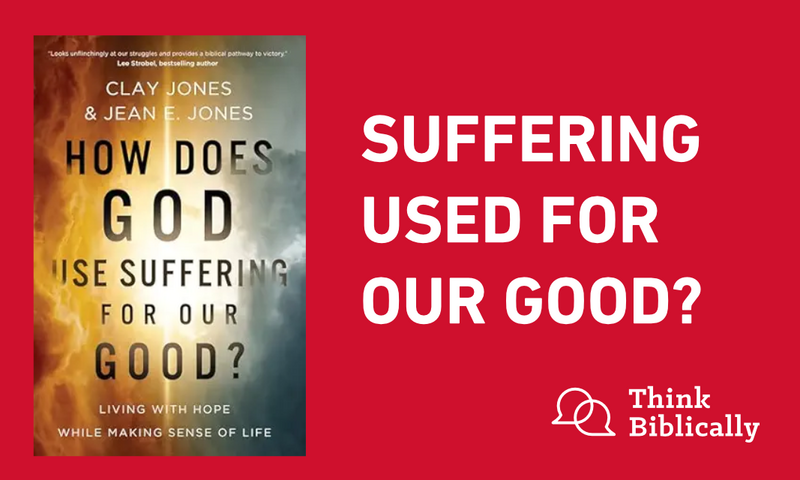
How does God use our suffering for our good? What does it mean for us honor God in our suffering? And how does our eternal hope give us comfort in the midst of suffering? We’ll address these questions and more with our guest and former colleague, Clay Jones around his new book co-authored with his wife, How Does God Use our Suffering for our Good?
Dr. Clay Jones served as a Professor of Christian Apologetics at Biola University and is former Chairman of the Board for Ratio Christi, a university apologetics ministry. He is the author of two other books, Why Does God Allow Evil? and Immortal: How the Fear of Death Drives Us and What We Can Do About It.
Episode Transcript
Scott Rae: [upbeat music] How does God use suffering for our good? And what does it mean to honor God in the midst of the suffering that we endure? And how does our eternal hope give us comfort in the midst of suffering? We'll address these questions and a whole lot more with our guest and former colleague, Dr. Clay Jones, around his new book that he's co-authored with his wife, How Does God Use Our Suffering for Our Good? I'm your host, Scott Rae.
Sean McDowell: And I'm your co-host, Sean McDowell.
Scott Rae: This is Think Biblically from Talbot School of Theology at Biola University. Clay, great to have you back with us. So app-
Clay Jones: Well, thank you
Scott Rae: ... So appreciate the work that you and your wife have done, on this new book. It's great stuff, and a l- I think a lotta, a lotta help for our listeners, so I'm looking forward to getting into it.
Clay Jones: Well, thank you. It's a pleasure to be with both of you again, and I wish I could be there in studio, but, that would've been a long drive during rush hour, and so I'm glad we can just do this via, you know, remote.
Scott Rae: All right. So Clay, tell us a little bit of the backstory that gave rise to your book.
Clay Jones: Well, you know-
Scott Rae: As briefly as you can-
Clay Jones: [laughs] As briefly as I can
Scott Rae: ... Covering a 20, a 20-year period.
Clay Jones: Yeah, you know, it's funny 'cause in 1994, I decided to start working on, the problem of evil, and of course, as you know, I wrote a book entitled Why Does God Allows E- Allow Evil? And then, you know, that didn't come out though until 2017, so it took 23 years, for that to come out. But, and then I started... You know, I wrote a book on death, and, how we can overcome our fear of death, and it just seemed like a natural thing to o- to write on suffering. Because if you've written on evil and death, why not write on suffering-
Scott Rae: [laughs]
Clay Jones: ... And put 'em all together? So, that's what I did. And, and, of course, we, Jeannie and I, have gone through a lot of suffering. I've had cancer. I just had open-heart surgery, 10 weeks ago. I'm fine, by the way, but it's been quite an adventure.
Scott Rae: Wow. So to give a, just say a, just a brief summary, the present condition of your health is still okay? Are you-
Clay Jones: Well, you know, it's amazing because-
Scott Rae: Are you fi- are you fighting some cancer at the moment?
Clay Jones: I... Well, my cancer's not curable, but here's the weird thing, is, as my, the chief doctor [laughs] Thankfully, I go to Cedars-Sinai for my treatments. They happened about two and a half years ago to bring a guy over from Harvard, Medical School who was a professor there, and he was the, he was the director of, the chordoma program, which is the cancer that I have, at Massachusetts General. And, so he's the guy, and he says, "You know," he says, So every few months I've been going in, every six months or so, I've been going in to have MRIs done, and he said to me, he says, "You know," he says, "your immune system seems to be keeping your cancer at bay, so there's nothing to treat." So [laughs] bottom line is-
Scott Rae: Wow, that's very nice
Clay Jones: ... I'm just going in, February 9. In just a few days, I'm gonna go in and have another set of MRIs. But, but there's been, well, as he put it, my immune system, and I, of course, see this as from the hand of God, that for some reason the Lord has chosen to keep my cancer at bay. Because other than that, it's not, there's no, there's no cure for the cancer that I have.
Sean McDowell: Clay, you were at, in our apologetics program for years, and you-
Clay Jones: Yes
Sean McDowell: ... Would teach the class on why God allows evil, and so when I had a chance to kinda, you know, take that class, I wanted to incorporate you as a part of it because your lectures are so transformative for the students. Because one of the things you talk about is how the glory of eternity helps us deal with present suffering. Why do you think we tend to underappreciate what eternity holds for us, and why don't we apply that more practically to our suffering?
Clay Jones: Well, that's one of the most important questions of all, and I think part of the huge answer to that is is that, Satan, some of Satan's best work has been to make heaven look like a place you don't wanna go, where we're going to be sitting on, sitting there on clouds, strumming harps, singing the same song again and again, sporting flightless wings, and we're gonna do that for all of eternity. That's all Satan's work. None of that's true. Heaven is most often compared to a banquet. In Isaiah, it says that we will, in heaven, be, feasting on, fatted meat and aged wine [laughs] and, I think that's... We're gonna have the good stuff. I mean, think Wagyu and the really good wine. And I do think, by the way, we will actually be eating. Jesus in his post-resurrection body, ate and drank.
Sean McDowell: That's right.
Clay Jones: I think we will be eating and drinking in heaven. I don't know exactly [laughs] what it'll be, but it's gonna be good stuff. And I think Satan has just done his... So like I say, some of his best, and I'm being, of course, facetious there, some of his most devious work, has been when it comes to making heaven look like a place that you don't wanna go. God created all the pleasures. The, He created the pleasure of food and drink and sex, and those are tremendous pleasures that He created, and we're going to have, if anything, we're gonna have even more in heaven, not less. So anyway, I... But, but people look at heaven and they go, "Ew, ew. Whatever. We're gonna be, like I say, sitting on a cloud, sporting flightless wings and singing nonstop." None of it. The scripture doesn't teach any of that as being trueAnd then we're, of course, all, and sadly, an awful lot of Christians, are li- are seeking the American dream. You know, get married, have kids, and, you know, build a big... Get a career, build a big 401 [k] , and et cetera, as opposed to looking to the glory that awaits us forever and ever and ever. And so that's where the big change needs to come.
Scott Rae: So Clay, y- what... You refer several times in the book, it's a, it's a theme throughout the book about honoring God and being victorious in the midst of suffering. Tell us a little bit more about w-what you mean by that. W-what does it mean to honor God in the midst of suffering? And can you give an example or two from your own experience of p- of times when you felt like you did a good job of honoring God in the midst of your suffering?
Clay Jones: Well, yeah, I can do that. I... You know, it's, it's interesting, but, 23 years ago, I started, maybe 24, I started having lower back pain- ... And the pain got worse and worse and worse and worse. And I went to see doctors, and the doctors would say, "You need to do stretching exercises." And, it got... The pain got to the point where it was so bad that I couldn't sleep upstairs with my wife anymore because I was getting up and down so often because I was in pain. Finally, I got a CT, and, it turned out that I did have a tumor on my tailbone. Well, Jeannie was on the other line. The doctor called me. I got the CT on, a Friday. Monday morning, the... I get a phone call. Jeannie picks up the other line. The doctor says that my orthopedic surgeon is on the phone. I thought, "This isn't..." Immediately I thought, "This isn't good." [chuckles] My orthopedic surgeon is calling me, and not his PA or his, you know, nurse or whatever. He's on the phone, and he says, "You have a, you have a tumor on your spine, and you need to see this doctor out at Cedar Sinai." And, when we hung up... Anyway, make a long story short, when we hung up the phone, Jeannie and I met, and held hands, and I led us in a prayer of thanksgiving to God. And at that moment, I knew I had defeated Satan in the heavenly realms. At that moment, I knew I had justified Satan's judgment because I could take whatever suffering, ca- that came upon me, and I could honor God through it. And as we, honor God through suffering, instead of going, "God's not fair. Why does he allow this? How..." You know, s- you know, I've been... You know, whatever. But as we honor God through it then, and we can honor God in that way, then my cancer was misdiagnosed. Once they found out, yes, I have a tumor, they misdiagnosed my cancer-
Scott Rae: Wow
Clay Jones: ... And went, as being fatal, basically. They said, "Well," the doctor says, "Well, if this is the cancer you have, we will, we're not gonna take it out. We'll start you on chemo. If, the chemo shrinks the tumor, we might take it out." I thought, "That's... You know, this is a death sentence." But, so Jeannie was, of course, on the other line again. He said it might be mistaken, though. They, because he says the local hospital doesn't see that many cancers like he does. Well, anyway, when we got off the phone, Jeannie and I met in the hallway and we held hands. And again, I did ask for the Lord's healing, but I thanked the Lord and I said, "Father, thank you for bringing this upon us." And, and, we had tears streaming down our faces. I always wanna mention that because I don't want people to go, "Oh, it, you know, it was easy." It's not easy. We had tears streaming down our faces, but I led us in a prayer of thanksgiving to God. And that is, that's... Anyway, there's an example in our lives of how we, thank God through s- or honor God through suffering. And now I've got... The same cancer's returned [chuckles] and it's metastasized. But, anyway... And when we found that out, we held hands and I led us in a prayer of thanksgiving to God, and I knew, of course, that we had then defeated Satan in the heavenly realms.
Sean McDowell: Clay, that's a remarkable story, and in some ways, the question I'm gonna ask you, the book is an answer to this, but I think all Christians would check the box and say, "I believe God is sovereign. I believe in heaven. I believe this life is temporary." But when that kind of news comes, is not gonna respond the way [chuckles] that you responded. So how do we get from, A, believing the right things in our mind, to experientially submitting and obeying and just have the character, so to speak, to respond as you did? How do we connect those dots?
Clay Jones: Well, that, I think the first thing is we need to read the Bible a lot. Jesus said in John 8:32, you know, "If you abide in my word, then you really are my disciples, and you will know the truth, and the truth will set you free." And sadly, an awful lot of people, who call themselves Christians are not abiding in God's Word. Y- we need to be abiding in my W- in His Word and doing what it says. Jesus told a parable and He said, you know, He says, He says, "The man..." He says, "The man who hears my word, but doesn't do them is like the man who built his house on the sand, and the wind came and the storm came and the waters came, and it w- it destroyed the house." He says, "The man who hears my word and does it, he's like the guy who built his house on the rock, and so the water came and the wind came, and his house still stood." We really have to beIn his word and taking it in, because that's-- so that when the storm comes, we can respond to it appropriately. And unfortunately, an awful lot of Christians are not in a position where they're really, reading his word, trying to do what it says. And so when suffering comes, they're not prepared for it. But, and a lot of this is, you know, I've been a Christian now for, well, [laughs] since nineteen sixty-nine. And so, you know, I've had a lot of years of growing and enduring suffering and seeing God work and use it in a very positive way.
Scott Rae: You know, Clay, when you mentioned that through tears, admittedly, you thank God when your cancer, you know, first, you know, when you first got that diagnosis and then when it came back, I could see-- I could see where that might strike some of our listeners as reacting s- with this sentiment that, you know, I'm just not that spiritual, and I'm just, I'm just not that with the program. But it struck me, Clay, that, you know, the Psalms give us a l- a lot of, a lot of place for mourning and lament. And I think sometimes it's not, it's not all that clear that the psalmist got to Thanksgiving, at lea- not that qui- at least not that quickly and at least not until the end of the Psalm. So where does lament and mourning, and all of that sort of fit in to the notion of honoring God in the midst of suffering?
Clay Jones: Well, you know, the psalmists, well, of course, as you know very well, Scott, there's not, it's not just a psalmist. There's many of them and yes, s- they're coming from different places. In Psalm seventy-three, I'd encourage everybody that's listening to this to check out Psalm seventy-three because you have there a fellow going, "Wow, it just seems like God is, you know, blessing the wicked. What about me?" And then he says... He pondered it and considered it and went, "Okay, I get it. This isn't... You know, I'm not right." And he says, "If, if I had spoken thus, I would have betrayed your people." And so yeah. But-- And also when it comes to the psalmists, the psalmists didn't have the r- tremendous revelation [laughs] that we as Christians have. We have a tremendous amount of revelation. And, read Ephesians on how... You know, read the entire New Testament on how, especially from Paul going, "Here's the thing that has been a mystery to you, and now I'm revealing it," that we are... Well, not just he, but we are revealing it to you, through Jesus. And, so yeah, they didn't have the revelation that we have now. But again, I would just say people need to be reading the Bible, doing what it says, and unfortunately, a lot of people aren't doing that. And so yeah, some of the psalmists and the way they write are like, "Man, I don't see what you're doing," but in time... See, this is the Christian life. When my first tr- the first tribulation, the first trials that I came upon, you know, it's like you go, "What's going on here?" But as you walk with the Lord and as you stay faithful to Him, then you begin to understand.
Sean McDowell: Clay, you and I are apologists, and so we are regularly asked and asking the why questions. Why this and why that, and make sense of it.
Clay Jones: Right.
Sean McDowell: And yet Jeannie, your wife, your co-author, indicates that some time ago she stopped asking why when it comes to her suffering and to yours. The book gives a lot of thoughts and answers to the why I am suffering question. So how do you keep intention, just not asking that and following her advice, and yet also giving appropriate responses to the why questions?
Clay Jones: Well, you know, in the thing I think you're talking most about, Sean, is when Jeannie had one miscarriage after another- ... And we weren't able, never able to have kids, Jeannie just was devastated by that. And she went outside and, was praying and seeking the Lord and going, "Why, why isn't this happening for me? Why am I not able to have kids?" And, as time went on, you know, she began to realize, "You know, I'm can't... I'm just gonna have to give this over to you. I'm just gonna wrap this up," as she says in our book, "as a present and give it to you, that I don't know the answer. It's a sacrifice of praise to you." But now as time goes on, we really aren't in that situation anymore. Jeannie's not in that situation. When suffering comes upon us, we may not know exactly the specific goods that the Lord's gonna work out of... For whatever particular suffering we're going through. But now we know that He always works suffering out for our good, and, you know, we write down how our sufferings, and then we write down how the Lord has blessed us through those sufferings. And, so now we go, "It's always for our good." As Paul says in Romans five, "We rejoice in our suffering because suffering produces endurance, and endurance produces character, and character produces hope." And so as we walk in the Lord and as we, go through these sufferings, we realize, that we're more godly. And by the way, I know Christianity's sub- objectively true through the resurrection of Jesus from the dead.
Sean McDowell: Amen.
Clay Jones: And that's how I know J- Christianity is objectively true. Nothing assures me that Christianity is sub-subjectively true more than my going through tremendous periods of suffering, and Jeannie and whatnot. And-... Are going through tremendous periods of suffering, and when the suffering ends, we go, "You know, I'm more like Jesus than I used to be." that is- w- as I began to see that working in my life and going, "I'm more like Jesus than I used to be," is what's really caused me to go, "Christianity is not just objectively true, it's, subjectively true," because I see God using suffering in my own life to make me more like him. I mean, there's other ways that I see it subjectively too-
Sean McDowell: Of course
Clay Jones: ... But that's the biggest.
Scott Rae: Yeah. Now, Clay, as I, as I read the New Testament, it seems to me that most of the references to suffering that the early church experienced and that the early believers experienced was suffering specifically on account of their faith, not so much the suffering produced by living in a fallen world that we get from disease and things like that.
Clay Jones: Right.
Scott Rae: Is, is... Do you see a difference between the suffering f- specifically on account of your faith and suffering produced just by virtue of living in the fallen, broken world that we're in?
Clay Jones: I don't, it... That's a very good question, and I don't, analyze that. [laughs] It sounds like a funny thing to say, but what I mean is it's like, am I suffering right now because I live in a fallen world? Is my cancer because I just live in a fallen world, or is Satan bringing this upon me, or have I done something? Well, we always need to look at ourselves and see if we've done something sinful. The scriptures, warns us about that, particularly in, I think in James and in other places. But, I... Whatever the case is, I do think, however, a lot of our f- even though I'm not being, let's say, burned at the stake as a lot of Christians have been, even though that's not happening to me, that doesn't mean that it isn't persecution. And the reason I say that is look at Job. Job's suffering was actually, you could say, in a very real sense it was persecution. Satan, You know, the Lord says, "Have you considered my servant Job?" to Satan in Ce- in Satan says, "Pshaw, you give him everything he wants." if, you know... And, the Lord then says, "Okay, have at him, then. We'll see how he does." But notice that Satan afflicted Job, physically because Job was a righteous person. And so I think that a lot of the suffering that we go through, physically here can be a l- can be Satan going, "You know, I'm going to make your life very difficult." And, I mean, Paul sa- talks about having a thorn in the flesh, and I... So anyway, I... But I don't, I don't really see the point in going, "Is this just because of the fall of Adam, or is this specifically because Satan decided to harass or persecute me?" but I do think that, both of those can be true at the same time. And, and I think Christians can take comfort in the fact that God loves them, but, you know, we live in a fallen world, and we live in a world where Satan is allowed to certainly afflict us. And, and so [laughs] and here we are.
Sean McDowell: Clay, perhaps the most common verse that's cited when people are suffering is Romans 8:28, "And we know that for those who love God, all things work together for the good, for those who are called according to His purpose." I've seen people drop that verse somewhat callously to mourning, to hurt, as if just, "Hey, just believe this. Move on. God's got this." So I'm curious what... Two questions about this. What does this verse really mean? And then on the flip side, what does it not mean? And how should we use this verse with people when they're suffering?
Clay Jones: Wow. Big questions. I think, first of all, if somebody's just suffered a loss, I mean, they've lost a spouse, they've lost a child, they've found out that they've got, you know, an incurable disease or whatever, the first response is not to explain God's larger plan in the universe. That's not the answer. The scripture says to weep with those who weep. And that's the very first thing that we need to do, if somebody has just suffered a loss, is cry with them, frankly. Just be there, encourage them, put your arm around them. I, would say be careful not to say like, "Anything you need, let me know," unless you're actually [laughs] going to do that, and a lot of people don't. But, so the first thing is we need to weep with those who weep. After a while, people, after they've just suffered a major loss, after a while a lot of people will go, "Okay, now what... Why did God allow this?" or, "How... Why is this happening to me?" At that time, once they get to that place, you can explain God's larger plan in the universe, but not when they've just first suffered a loss. Now, nothing is more encouraging to Jeannie and I than, seeing how God has taken our sufferings and used it for our good. And, we keep a, what we call a truth journal, and we write down the sufferings we've gone through, and then we write down how God has used that as time goes on, how God has used that suffering for our good. And yes, God does. I, 100%. He always works every hard thing out for our good. He does, always. But during, while you're... Well, it may take [laughs] years sometimes. There's times where I've gone, "Wow, this just hurts," and it's hurt me for years. But then as I've lived long enough, I've gone, "Wow, I see how that was really good. Thank you, Father." but it may take quite a long time.But I do absolutely believe that God works everything out for our good, and I found that to be true in my own life. And, and then Jeannie found that to be true in her own life. And so anyway, it-- so that is true, but y- we don't wanna use that as some sort of a spiritual bromide, when somebody has just suffered a major loss. "Oh, God's gonna work it out for your good," or, "God's got this," or, you know, "You can just, you know, take it easy and rejoice and..." No, no. Weep with those who weep, but then, as time goes on, you can share with them how God u- will use that for their good.
Scott Rae: Clay, just a quick follow-up on that. I wonder if it's, if it's some... You s- you've mentioned that sometimes it takes years to see how God has worked these things together. And in Romans 8:28, I think, emphasizes that God works all these things in our lives together for our good.
Scott Rae: But I th- I wonder if there's, if there are some things that occur in our lives that we have to wait till eternity to see how o- how those puzzle pieces all fit together. Do you think that, do you think that's the case?
Clay Jones: Oh, I do. Absolutely. I mean, obviously [chuckles] we, you know, as, Sean knows, you know, one of my lines is, that I tell everybody, only one thing is gonna prevent everyone listening to this from watching everyone they know die from murder, accident, or disease, and that will be their own death from murder, accident, or disease. Well, obviously that's very hard.
Scott Rae: That's a happy thought. [laughs]
Clay Jones: And, and the benefit of that, you know, of a lot of our suffering, we're not gonna see until we get to heaven. But thankfully, if we, if the Lord does allow us to live long enough here, we will see God use it for our good here. But yes, an awful lot of things we're not going to see, how the Lord has used it for our good until we get into the kingdom. Again, however, us building, his character in us, w- again, Romans 5, the su- the suffering produces endurance, and endurance produces character. That's eternally valuable. And, but yeah, there's going to be a lot of stuff that we're not going to see why God's doing it until we get to heaven.
Scott Rae: Well, and I think, I think that illustrates the wisdom of your wife to stop asking some of those why questions, that may not be answerable until we get to glory. I th- I think that was, that was a really insightful part. You oughta pass that along to her. I found that part particularly insight-
Clay Jones: I'll do it
Scott Rae: ... Insightful and helpful. You m- you mentioned a concept that I hadn't thought about before, and that is that suffering is the best means to stop loving the world. Can you spell that out a little bit? Why... And I, 'cause I'd never, I'd never considered that before.
Clay Jones: Boy, I'll tell ya. You know, we talk, you and I, you know, the three of us talk to our brothers and sisters in Christ, and we're like, "You need to read the Bible. You need to do what it says. You need to, you know, understand it and apply it to your life." and so many people who, say they're Christians, I'm not saying they are or not, that's not my point, but, they don't do that. They're not really learning what God wants them to learn. Well, guess what? Suffering can force people to become more godly, force Christians, because all of a sudden you go, "Uh, wow, I'm, I'm hurting here. This is very hard." And, and what we try-- what we do usually when that happens is we resort to old coping mechanisms, and a lot of those don't work. And, and as they don't work, then we go, "Okay, I've got to, try some new things." And, and maybe, just hopefully, they'll turn to the Word of God, and start to go, "I... You know, what's the Lord say here?" And, and it-- also, one of the things about suffering, and I'm, you know, I'm going through quite a bit right now, having a incurable cancer and, you know, like I say, having open heart surgery just 10 weeks ago. I'm going through a fair amount of suffering in my life. We both-- and Jeannie is going through it, you know, with me on these things. But, this is, preparing us. You know, it causes us to look to heaven. And the last... You know, we have seven principles in our book, How Does God Use Suffering For Our Good? We have seven principles in our book, and the last one is, we're going to be together forever. Now, we won't be married in heaven. Marriage is about exclusivity. We're not going to be married, but we're going to be together with... Jeannie and I will be together with all the other saints, of course, and we have all of eternity, and we're not going to forget our lives here. But, suffering has caused us to go, we're gonna be together forever, and ever, and ever, and ever. And that is the ultimate answering, answer to suffering, because, well,
Clay Jones: if eternity's true, and of course, as Jesus being raised from the dead, is objective evidence, as I said a few minutes ago, that Christianity's true. Jesus was raised from the dead, that's a, makes it objectively true, and we're going to be together forever. And we're gonna know each other in heaven. As G.K. Chesterton said, "We're not gonna be stupider in heaven than we are now." we're gonna know each other in heaven. We're going to be able to enjoy each other's company, and Jeannie and I, and together with all the saints, forever and ever and ever. But suffering makes us go, "Okay, I'm ready." Because I gotta be honest with you, I'm ready to go now. I don't want to go now, because I... You know, as Paul said, "For me to live is Christ, to die is gain."He says, "But life in the flesh proves fruitful labor for me." My being here and staying here allows me to take care of my wife and to minister, to my brothers and sisters in Christ, and... But see, I'm, I'm ready to go, and suffering, [laughs] suffering helps us get ready to go, 'cause you go, "Man, this life is hard."
Sean McDowell: Clay, last question for you. When people ask me for a book on evil, your book Why Does God Allow Evil? Is one of the top books I recommend. This book, How Does God Use Suffering For Our Good?, is now going to be one of the top books that I recommend [laughs] on suffering. I think it's fantastic. But there's a ton of books on suffering that are out there. What makes this book unique?
Clay Jones: I think one of the big... Perhaps the biggest thing is Jeannie and I are sharing... I started writing the book long before I found out I had cancer again or any heart issues. I found out that... I started writing it long before that. W- then once, however, once I found out that my cancer had returned and, I had ser- some serious heart issues, we, Jeannie and I... And, and again, there were tears, and we had to go through some hard times over it. But,
Clay Jones: and for a couple days, I mean, when I first found out, we first found out, there were tears for a couple of days. But, we started applying, making sure we were applying all these principles to our lives. And so for instance, I, we personalized it. And so I will say to Jeannie, "The Lord lo-" And this is a little corny perhaps, and it's a little embarrassing to say, but I'll say to Jeannie, "The Lord loves Jeannie Jones and Claybi Jones." And Jeannie will reply immediately, "The Lord does love Jeannie Jones and Claybi Jones." And we have seven principles like that, and I share how we very personally apply these to our lives. And the last one is, of course... And I'll say... Or one, another one is, I'll say for instance, "And, and God always works every hard thing out for our good." And Jeannie will reply, "Every hard thing, and always." And, and anyway, and the last one, of course, is, "And we're going to be together forever and ever." And Jeannie will say, "We're going to be together forever." and I think one of the things that makes the book unusual is just our sharing about how we talk to each other very openly about our own suffering bec- because it's... You know, you can say, "God works everything..." You know, I could say, "God loves us, Jeannie," and she could go, "Yes. Yes, that's true." But that, but that's not as, frankly, as good as saying, "The Lord loves Jeannie Jones and Claybi Jones." And she repeats it back and say, "Yes, the Lord does love Jeannie Jones and Claybi Jones." it's that kind of personalizing, seven principles that we've found that are really true for us. And, and that's, I think that's one of the big things that makes our book unusual, one. And also, you know, I mean, obviously I've written a book on the problem of evil and, then a book on how we can overcome our fear of death. So I kind of have this big theological background into suffering, and so, and and that helps obviously, too. But, the biggest thing I'd just say is the way we've personalized, how we handle our own suffering.
Scott Rae: Clay, this has been s- really helpful. We so appreciate your book. I think I especially appreciate that it's co-authored with your wife. I think she's g- she's got a lot of good insight in h- in here.
Clay Jones: Yeah.
Scott Rae: And, we wanna, we wanna commend your book to our listeners, How Does God Use Suffering For Our Good? It's great stuff, and I think it's, it's very helpful. It's very practical, but it's also really well grounded biblically and theologically. So Clay, thanks so much for being with us. We really appreciate the book and your time and your transparency in sharing the different things that, led you to write this.
Clay Jones: Well, thank you. It's a pleasure to be with you, Scott and Sean, and, I look forward to seeing you face to face one of these days soon.
Scott Rae: Hear, hear. This has been an episode of the podcast Think Biblically, conversations on faith and culture. It's brought to you by Talbot School of Theology, Biola University. We've got programs in Southern California and online, including our degrees in Christian apologetics and spiritual formation, Bible, theology, pastoral ministry, marriage and family therapy, and a whole host of others. Visit biola.edu/talbot in order to learn more. If you got questions, come on... Comments, please email us at thinkbiblically@biola.edu. If you enjoyed today's conversation, please give us a rating on your podcast app. It really helps when you do that. And feel free to share it with a friend, and join us on Friday for our weekly cultural update. In the meantime, remember, think biblically about everything. [outro music]