Biola University
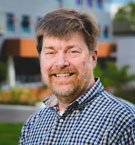
Scott is joined by Greg Ganssle, Professor of Philosophy at Talbot School of Theology, to discuss:
- World Cup Faith Goes Public: World Cup stars from the U.S., Brazil, England, Belgium, and beyond bring Christian faith into the public spotlight with unusual openness and confidence.
- American Christianity Faces Its History: A New Yorker essay sparks a wide-ranging look at how revivalism, evangelicalism, politics, and cultural engagement shaped the church in America.
- When Faith is Just an App: Christian apps may help people start spiritual habits, but screen-based faith can also flatten worship, prayer, Scripture, and community into another consumer experience.
- The No-Human Future: Radical visions of a no-human future expose the stakes of human exceptionalism, transhumanism, and the Christian claim that people are more than machines.
- Listener Question: Does Church Discipline Still Matter?: A listener question wrestles with whether church discipline can still work when people can simply leave one church and find another.
- Listener Followup on Dad Brain Article: A physician listener challenges claims about fatherhood and brain health, prompting a careful reminder that good science depends on strong methodology.
- Listener Question: Detransition Questions Demand Courage: A final listener question raises concern about medical and cultural pressure around detransitioning and the need for careful, compassionate engagement.
Episode Transcript
Scott Rae: [upbeat music] An encouraging story about faith at the World Cup, an insightful diagnosis of the American church, the impact of Christian apps on our spiritual formation, and the prospect of a no human future. These are the stories that we'll discuss today, and we'll take some of your, as always, really good questions. I'm your host, Scott Rae, and sitting in for Sean, who is still out of the country, is my Talbot colleague in philosophy and several times over guest on the podcast, Dr. Greg Ganssle. This is the Think Biblically weekly cultural update coming to you from Talbot School of Theology at Biola University. Greg, thank you so much for being with us.
Greg Ganssle: Sure.
Scott Rae: We've had you on several times before, and I'm look, looking forward to your insights on these stories.
Greg Ganssle: Sounds great.
Scott Rae: All right. We'll start on an encouraging note at this today. And a very encouraging story about the World Cup reported first in the UK publication, The Guardian, and expanded on in Christianity Today. The Guardian piece is focused on the United States team and cites not only the Christian faith of several players, but points out on previous World Cup team contained a small smattering of other religions such as Islam and Buddhism with a few other players. The article also points out the contrast between this year's team and past teams, all of, all of which had religious players, but their faith was rarely spoken about publicly. This year's team seems different in the, in their public and overt expressions of their, of their Christian faith. For example, Christian Pulisic and Weston McKennie are both committed Christians. Chris Richards is outspoken about his faith. Goalkeeper Matt Freese and coach Mauricio Pochettino are both devout Catholics. Now, the Christianity Today piece expands this to point out that star players from other countries are also outspoken followers of Jesus. But probably half a dozen players on the Brazilian team, including their star player, Neymar, who has long been vocal about his faith, goalkeepers Alisson Becker and Ederson, Belgian players Jeremy Doku and, I'll do my best to pronounce this, Dodi Lukebakio, Bukayo Saka, Marc Guéhi, and Eberechi Eze, who play for England, and of course, Christianity Today also mentions Christian Pulisic of the United States. Many of these international players grew up in the developing world, in Latin America on the Brazilian team, and a lot of the ones I've, that I've just mentioned grew up in Sub-Sahara Africa, but are now on the world stage. They're playing in the World Cup. They're starring for their teams. They've been successful players for their mostly European top soccer clubs. So, Greg, I found this story to be super encouraging about these great athletes on the, on a world stage publicly proclaiming their faith and doing so unabashedly and unashamedly. I found it very refreshing and very encouraging. How did you respond to this?
Greg Ganssle: Well, exactly the same way. I think it's encouraging that there... It seems like there's a groundswell of enthusiasm for, recognizing, admitting, and articulating, your faith commitments on the public stage. And I don't know if there's been a shift of culture in, the World Cup and professional football or soccer, that has made this the time when this can happen. But, contrasting with, the World Cup before where there were people of faith, but not that vocal, I wonder if a kind of a critical mass has happened and people are recognizing that they can have these conversations and still contribute to the whole team. And the organizers don't seem to be, worried about it. They don't seem to be getting any kind of censor, and I think that's encouraging.
Scott Rae: I think it does help that these are really good players.
Greg Ganssle: [chuckles]
Scott Rae: And you sort of, you censor them at your own risk. And I think it's significant, Greg, that a lot of these players who grew up in the developing world are... They're playing for European teams. They're playing for European countries to, which they've immigrated. And you might think that given the secularism of Western Europe, these public expressions of faith might not be particularly welcome. But I, it looks like that, you know, being good players on the football pitch is overshadowing or overcoming sort of the secularism that sort of pervades Western Europe. I'm not quite sure what to make of that, but they seem to not have a problem with going against the secular grain of the place where they live and the place where they play most of their sport.
Greg Ganssle: I think that's right, and, it makes sense that The Guardian would look at, players of faith from America because I think Europe thinks of America as
Greg Ganssle: religious in a way that Europe just doesn't understand. And, but to see this happening from with players all over the world, including the stars of the European teams, it's gonna be very hard for... Think about the average 10-year-old in Europe who's following these people and loves these teams and is rooting for their favorites, and then they hear these testimonies of people of great respect, great accomplishment. It could shift the plausibility in a lot of people's lives towards the gospel.
Scott Rae: Yeah. Now, Greg, to be fair, I don't know a lot of the, a lot of the stories
Greg Ganssle: Mm-hmm
Scott Rae: ... Behind these players. And, you know, we don't... I don't know a lot about what their private life is like, you know, and the degree to which they actually live consistently with the faith that they proclaim. And so I suspect at some point we might hear some pushback on this and say, "Well, you know, they proclaim one thing but live out something different." but everything that I've seen so far is that- You know, they seem to be living consistently with their faith, though I think-
Greg Ganssle: Mm-hmm
Scott Rae: ... To be fair, we probably need to be open to the notion that, you know, these are fallible human beings and miserable, wretched, depraved sinners just like the rest of us. And our our spirituality is often three steps forward and two steps back. And I it wouldn't be surprising if that were also true of these players.
Greg Ganssle: Well,
Scott Rae: And because they're on a public stage, too, they're under way more scrutiny than the average person.
Greg Ganssle: Exactly. I sure wouldn't wanna be under that kind of scrutiny. But, I think that is true, what you're saying, and we have to be open to these kinds of stories emerging. But, in general, we can be very encouraged. And in fact, even when people, stumble in various ways, it's the gospel that has a entire story about why we stumble and what the the, remedy is for our moral spiritual failures or our rebellion against God. And people, you know, Christians, looking at these players, if these kinds of events happen, ought to be very merciful and say, "Look, we all need the mercy of God in our lives," and to be on such a public stage is very challenging.
Scott Rae: Yeah, I think that's a good word, that, a little grace may be due here-
Greg Ganssle: Mm-hmm
Scott Rae: ... Since, you know, maybe we could give them some grace since God has already done that before us. And recognize that, you know, all of us are works in progress in our sanctification. You know-
Greg Ganssle: Absolutely
Scott Rae: ... Great international athletes, no exception to this. And they may, you know, be ... And because of their, you know, because of their notoriety, because of their recognition, you know, and because of the scrutiny they're under, they may face challenges that the average person just, can't relate to and don't understand.
Greg Ganssle: Exactly.
Scott Rae: All right. Anything else on this?
Greg Ganssle: Oh, no, it's very encouraging.
Scott Rae: Yeah. I agree. And I will, I'm I'm now watching the World Cup through maybe a little different set of lenses than I would have before-
Greg Ganssle: Mm-hmm
Scott Rae: ... 'cause I'm looking for these players. And I encourage our listeners to reference the, both of these articles. We've got the links up on the, you know, on our intro page to the podcast, and especially the Christianity Today piece that cites these star players from a number of different countries. And, you know, as you watch the World Cup, assuming you do, you know, look for, look for these players, and, especially I think look for their professions of faith-
Greg Ganssle: Yeah
Scott Rae: ... Which I suspect will ... I suspect this is not the last time we're gonna hear about that from-
Greg Ganssle: Mm-hmm
Scott Rae: ... From many of them. All right. Here's story number two. This is actually, this is a really interesting piece, Greg, from The New Yorker magazine, and it says, it's a diagnosis of the American church. And it, and basically the idea is how did the American church end up like it did? And it's a, it's a nice, brief sort of history of the American church, which helps explain how that history shaped the religious landscape that we see today. It points out that from the very beginning of the country, Christianity, namely Protestantism, was enmeshed in public life as well as encouraging a private spirituality. Early on, there were state-sanctioned churches in many states, but the First Amendment started a new trend. And that is, as the article describes, the withdrawal of state control of religion, something that most of the people who came to the United, to America to settle here, they were trying to escape that kind of state control. Now, what he calls this, he has, I think, a wonderful explanation of this in marketplace terms, and he puts it like this: The great deregulation of religion led to a thriving marketplace, forcing churches to innovate and compete for, quote, "customers." The question then, as is now, was how the dominant churches and denominations would seek to imprint their values and beliefs upon the nation as a whole. Now, the the article also highlights the revival movements of the 1800s as the country expanded, westward, and as the historian Mark Noll has pointed out, the revivalist movement, for as effective as it was, Greg, left the faith intellectually impoverished. Now, they point out that there are four streams of Christian belief that emerged as the nation matured: conservative, revivalist, liberal, and liberationists. So here's what they, what they, what he means by these. Christians who drew from the conservative stream emphasized tradition and the historic creeds. Revivalists prioritized the conversion of souls and the transformation of individual lives. Liberals sought to adapt Christian theology to the latest intellectual currents, and liberationists saw faith as a vehicle for social justice. These would be like the social gospel folks, for example. Now, the they point out that the fundamentalist modernist controversies that dominated the early 20th century sent conservatives underground while modernists dominated the public expressions of faith. And that lasted until the 1950s with the rise of Billy Graham and the evangelical movement in the following decades, reacting to the sexual revolution and the racial and gender issues that came out in the '60s and '70s. What this did, Greg, was prompted a reversal of fortunes in conservative churches and the corresponding decline of mainline Protestants, and with renewed engagement in the political arena with the rise of religious right and today's versions of various versions of Christian nationalism. Now, here's what I think what this means for today is that historically, the most popular and most influential religious bodies tend to exert a countervailing force on the culture at large, which is sort of, as I read the scripture, that's sort of what they're supposed to do. And that periodically moves into the political arena. Now, the article concludes with this challenge: "Could these churches," he's referring to the evangelical ones, "which have dominated the marketplace for a half century, change? Or could an upstart that prioritizes love and mercy, say, over dominion," which is, I think, a shot at some of the, some of the Charlie Kirk folks and his successors, "lure away their adherence? Plenty of evangelical pastors, writers, and advocates have called for and modeled a more compassionate and inclusive faith. It would demand charismatic religious entrepreneurs championing a countercultural, supernatural faith that encourages its followers to love their neighbors and grow in grace." And it ends with this hopeful note, "Perhaps such a gospel could flood the nation." Now, Greg, there's a ton of things to talk about here, but I'm really curious as to your thoughts on this.
Greg Ganssle: Well, yeah. Like you said, there are a ton of things. I mean, the history that's traced is traced fairly adequately. There... I mean, I would've written it slightly differently, an article like this, in parts. You know, we have to remember that the, that the fundamentalist movement arose in response to mainstream, seminaries and large churches starting to reject foundational doctrines, like the resurrection of Jesus doing miracles. And the reason fundamentalists launched their own colleges and seminaries was, because they wanted to train people for the work of ministry. I remember a quote from, Machen, J. Gresham Machen, who taught at Princeton Seminary, and it was something like, "How can I prepare people for ministry if the guy whose office is next to mine doesn't even believe in the resurrection?" And so, that's what prompted a lot of the withdrawal in the beginning, and Machen and his friends went and started Westminster Seminary. Now, eventually, for fundamentalists, as a, as a broader movement, separation became a badge of orthodoxy. And it wasn't until, as you said, the '50s, really in the late '40s with people like Carl Henry that there was a vision for an intellectually robust but creedally orthodox, faith. And, you know, to be honest, Biola Talbot stands in that very tradition. So I think there are other things that could've been said to give a more, maybe nuanced or balanced kind of view. But Christianity in America, especially the fundamentalist evangelical strain, has been a very populist movement and tends to, be suspicion of elitism and things like this. And that's part of what especially in the middle of the century, we saw a lot of, response to the basic gospel. And it's only in the last 30, 40, 50 years that those movements crept into more, places of influence, like the university and things like that. So there's a, there's a lot of overlapping stories to be told. I think maybe one other thing I would push back on the author is that, and you were kind of alluding to this, that the notion of political power as
Greg Ganssle: the strategic tool for the progress of the Christian mission, I think that's held by a minority of evangelical Christians. I really think it's much smaller than we hear in the news. Most churches, pastors, they're trying to be faithful. How do we love our neighbor? How do we serve the community? How do we, deepen our roots in the life and person of Jesus? So I think there's a, there's a lot to be said on these issues, and I'll let you follow up and we can get into any particularities that interest you.
Scott Rae: I'm interested to see what you think of my take on this because, the author ends this with a demand for, [lip smack] you know, a a faith that is more compassionate and inclusive.
Greg Ganssle: Mm-hmm. Mm-hmm.
Scott Rae: And I what exactly a more inclusive and compassionate faith would look like, in my view, is the $64,000 question. And-
Greg Ganssle: Exactly
Scott Rae: ...
Scott Rae: I could see, and this may... I if I'm being a bit cynical about this, I'll stand corrected, but since it's within The New Yorker, it wouldn't surprise me if I'm on target here. I think some of the plea at the end is code for the Church changing its views on sexuality and gender, which I think is what inclusion is code for here. And I think loving your neighbor could be code for a more open borders view of immigration. Now, I'm not, I'm not so sure about that, but it seems to me if the Church is being asked to become more progressive as an entanglement of faith, that's one thing. But if it's a matter of our style of engagement, then I think it's on, it's on target. Now-
Greg Ganssle: Yeah
Scott Rae: ... Yeah. Comment on that?
Greg Ganssle: Let let me comment on that. I I think you're right because, probably these things are code for the kinds of things you're talking about because, the plea is could we be more this way? And I think this is the way we've been living. This is what faithful Christians have been doing. You know, it's the, it's the Christians that are working in homeless ministries and working in recovery ministries, and all of these acts of compassion which happen on a very grassroots level that are full of inclusion, serving anybody who needs to be served. And so whenever there's a plea like, "Can't you be more inclusive?" it's at least a reasonable suspicion that there's, that there's content to what that means, and it's ... It usually has to do with the sexuality issues.
Scott Rae: Yeah. Now, our listeners don't... May not know this about you, but you and your wife and lots of folks from your church have had this really significant ministry among the homeless for a long time. I mean, ever since you've been here at Talbot- ... For the last decade. And it's pretty significant stuff, you know, washing their clothes and, you know, you know, making sure they get meals and showers and-
Greg Ganssle: Exactly
Scott Rae: ... Stuff that's sort of basic human dignity for them.
Greg Ganssle: And building relationships and having-
Scott Rae: Yeah
Greg Ganssle: ... Conversations. And it's actually been transformative for us, because it
Greg Ganssle: You know, we know people who are underserved. And even though I spend most of my life in the university, it's really good for my soul-
Scott Rae: Yeah. Yes
Greg Ganssle: ... To be aware of these people.
Scott Rae: Well, and I think, Greg, it's... I think it's really important for our listeners to recognize, and I would say it's important for the author of this piece to recognize that faith and culture and faith and politics, they've always mixed-
Greg Ganssle: Yeah
Scott Rae: ... In American history. For example, the debate about slavery was not only a theological debate, but it was fundamentally a theological one about the intrinsic dignity of Black Americans.
Greg Ganssle: Yes.
Scott Rae: And it wasn't... It really wasn't until the 1970s with, I think with the rise of the pro-life movement that this intermixture of religion and politics became sort of almost universally controversial.
Greg Ganssle: Yeah. Let me, let me step in here. I think one of the reason it did is because the more theologically liberal denominations had the monopoly on religion and politics, and it was only, as you say, and I think you're absolutely right, with the rise of the pro-life movement in the '70s when evangelicals got on board with pro-life, the Catholics were there before us, that people took notice and said that, "How dare these evangelicals that have different ideas of what politics should do step into this arena as if it had never been done before?"
Scott Rae: Right. Right.
Greg Ganssle: But the theologically liberal, denominations and the article, tells the story of, Fosdick, I think his name is. They were, embedded with politics all the way along, and it's just in the '70s that evangelicals and more theologically conservative people began to pick up some of these things.
Scott Rae: Yeah, I think the social gospel and the New Deal legislation-
Greg Ganssle: Mm-hmm
Scott Rae: ... It was not an accident that the... That legislation followed the social gospel in the early part of the 20th century.
Greg Ganssle: Right.
Scott Rae: You know, as Sean and I have talked about several times, we need to be clear about this. The First Amendment did not intend to separate the church from the state. It was just the reverse. The wall of separation was to keep the state out of the affairs of the church- ... Because our founders were very good students of history, and they recognized that when the state became the arbiter of religious belief, you had inquisitions and wars of religion- ... Which was... Were two things that the colonists came over to this country to escape. And I think there is... I I'll wrap my comments up with this. I think there are things that are countercultural. The author won't say countercultural faith. And I think what makes us, makes faith countercultural today may be different from previous generations. What's countercultural today in the public arena is kindness, winsomeness, listening, compassion. They have to do with how we take public stands for our faith, not so much the specific positions that we champion. And I think, I think you can do both. You can stand firm on principle, but do it with a winsome spirit, and ultimately because we recognize that changing the culture is ultimately up to God and not to us. Our obligation is to be faithful, to stand for righteousness, to do it winsomely with kindness, doing more than winning arguments. We want to win people, not just win-
Greg Ganssle: Mm-hmm
Scott Rae: ... Arguments. And the idea that we would, quote, "Own our opposition," I think is contrary to the, to the Gospel spirit of winsomeness. So anything else you want to add to this?
Greg Ganssle: Yeah. I think what you said is absolutely right and can't be said often enough. Think about the term culture war. Well, I can't win somebody if I've declared war against them, right? I could win the war, but I can't win the person. And so I think we have to reject that kind of language in the practice of being humble, merciful, and compassionate.
Scott Rae: Yeah. And I think to be fair to our friend James Davison Hunter, the sociologist who coined the term-
Greg Ganssle: Mm-hmm
Scott Rae: ... Culture war back in the '90s, he intended that as a descriptive term, not a normative one.
Greg Ganssle: Right. Right.
Scott Rae: He's been very clear about that distinction.
Greg Ganssle: Mm-hmm.
Scott Rae: All right. Here's this... I love this next story. I think you'll get a kick out of this one, too. This is from The Free Press, entitled When Faith Is Just an App. It's written by a Gen Z woman who's commenting on the reports of something like a revival among younger adults, and who describes herself as new to Christianity. And I'm not exactly sure what that means. She may just be a seeker. She may be a new believer. It's not quite clear. But despite some disagreement on the numbers and statistics, she concludes that something seems to be happening among Gen Z with regard to Christian faith. She comments on how much Christian content is online, but, there's a but coming, and she puts it like this, "But now it feels as if all of Christianity can be done on a screen. To stay connected with God, all we need to do is subscribe, download, and press play." Now, Greg, Sean and I have talked about faith-based chatbots and the danger of those, but not so much about just the sheer amount of content available to someone to grow in their faith without ever having to be in person in a church or in a school. And she puts it like this, "But now with smartphones, apps, and social media, the market intrudes on almost every religious ritual and tradition." Now, she describes in quite vivid terms how it's impacted her personally. She quotes, I'm quoting her, puts it like this, "I can't pretend that it's not convenient. I've never read the Bible all the way through, but I have an app that summarizes it for me and texts me to me a passage every day. I use a number of apps, you know, iBible, Hallow, Glorify." And she says, "I'm sure this kind of thing has attracted more young people, that it helps meet a generation where they are." And here's the big idea, I think. "But lately, I'm beginning to feel as if Christianity has become another thing to do on my phone. Now I need my faith fast and convenient. I can pray as I go. I can stay prayed up, and I've got a streak going."
Greg Ganssle: [chuckles]
Scott Rae: And she surfaces, I think, the danger, as she sees it, of experiencing the digital version before the real thing, and invariably, when the digital version becomes a substitute for the real thing. She puts it like this. I love... She's so fra-frank and honest-
Greg Ganssle: Yeah
Scott Rae: ... About this. She says, "How on earth am I going to get through the Book of Psalms when I'm used to iBible? Now I need the New Testament to be YouTube Shorts. Sure, I can take a minute to connect with God, but it better be just a minute. Anything more is agony. Don't worry, my apps reassure me. It's just a few minutes a day, or it's just one minute, actually. Just give Jesus, like, 30 seconds." Now, she points, she has, this I would call a profound grasp of the obvious here, and I commend her for saying it like this. She points out that this leads to a shallow faith, not the deep roots of a long-lasting, durable faith. Now, is this better than nothing? Maybe so. But she pleads, quote, "For the first time in our lives, let us relate to God as, to God something not as a consumer, please. I connect with everything else this way, not God too."
Scott Rae: And I I say that's, I would call that a really nice drop-the-mic moment. So Greg, what do, what do you make of this? I'm curious sort of what you think this says about our view of spiritual formation, too.
Greg Ganssle: Well, I I think she's putting her finger on something that very well can be a problem. I have no idea what percentage of, young people are only developing their spiritual life in this way and what percentage it's a supplement to other things. But-
Scott Rae: Let me, let me jump in here and just say, if you, if you are one of the Gen Z folks that she's referring to, it'd be really interesting to hear from you to find out sort of how much of your spiritual life is done online, through YouTube, on apps-
Greg Ganssle: Mm-hmm
Scott Rae: ... And how much is done in person. That'd be really helpful just for us to know. Anyway, carry on.
Greg Ganssle: Yeah. Well, and a big shift in this happened during COVID when the churches couldn't meet, and-
Scott Rae: Right
Greg Ganssle: ... Everyone put services online, and and then if you're looking at your own church service online, you can just, you know, hit a YouTube button and hear Tim Keller preach. And why wouldn't you wanna hear Tim Keller over me or you? And of course you would. I would. And then it becomes... It reinforces the consumer. But... And it's not that these things aren't great content, but they're incredibly, it's a small slice of the pie of spiritual formation. And ideally, we grow in community, and virtual communities are not communities. We have to be standing next to people. We have to sing and hear the people sing and stand up and have the, have kind of the physical embodied participation in worship. And if we don't, we miss a whole bunch. And so I think she's got her fingers on something. It could be... It's very isolating,
Greg Ganssle: to... When I get content on my phone, it's just me and the content. But the Christian life is meant to be lived out communally. And of course, we do have an individual relationship with God, but that is developed in a community, and not just community with people we like. I I heard a story about a Christian leader who asked the question about church, "Is there room in your church for people you would not have chosen?" And if the answer is not
Greg Ganssle: doing church right. There's gotta be room for people that I'm committed to, even though I might not have chosen them when I was starting out. You gotta do that face to face
Scott Rae: Yeah, I I've told my wife repeatedly, "I'm happy to be in a small group as long as I can choose everybody else who's in it."
Greg Ganssle: Or a small group of one. That's my favorite-
Scott Rae: Yeah
Greg Ganssle: ... Small group.
Scott Rae: And she reminds me this. She says, "That's not exactly the New Testament idea."
Greg Ganssle: Exactly. [laughs]
Scott Rae: Greg, I'll be interested, I'll be interested to see what you think of my take on this because-
Greg Ganssle: Mm-hmm
Scott Rae: ... I think this is an image of spirituality and not the substance.
Greg Ganssle: Yeah.
Scott Rae: Now, I admit I have, I have used a devotional app from time to time, and I think it's a pretty good one. The Anglican Church, the Anglican denomination that I'm a part of puts it out. And I admit, it started out, it started out well. It started out nurturing my spiritual life. But pretty soon it became a box that I checked in my day, and it crowded out real devotional time with God. And I've real- I realized something really important in response to this article. Our spiritual formation is not supposed to be easy or convenient. If it was, the scripture wouldn't talk about it a, as a battle.
Greg Ganssle: Right.
Scott Rae: It wouldn't talk about it as spiritual warfare. It wouldn't use the imagery of the Olympian training to describe-
Greg Ganssle: Mm-hmm
Scott Rae: ... Our spiritual life. You know, it Greg, it seems to me we're supposed to wrestle with scripture.
Greg Ganssle: Mm-hmm.
Scott Rae: We're supposed to plead and lament and praise God in prayer and pour out our hearts to God in prayer, not to make it a box to check or even a game to play. Now, I want to, maybe to temper this a little bit, I want... If this gets someone started down the spiritual path, I I'm good with that. If that's their point of entry-
Greg Ganssle: Right
Scott Rae: ... So be it. But I don't want that to be the ending point because I don't want it to be a substitute for the real thing. The real thing, I would say, is not a dopamine hit or an addictive algorithm that is, that is aimed at... And you know, one of the things that struck me, I use, every once in a while I'll use a, an eBible on my computer when I'm, you know, when I'm looking up a passage or something like that. And what I've discovered is the the number of ads that pop up on my eBible to distract me from the text has... I've started to notice that, and it's started to become pretty annoying.
Greg Ganssle: Yeah.
Scott Rae: And I'm thinking, you know, like I realize that, you know, these Bible apps need to generate revenue, but it's... Well, I wonder if sometimes these apps are shooting themselves in the foot by having these constant distractions pop up that take me away-
Greg Ganssle: Mm-hmm
Scott Rae: ... From the biblical text. Am I being too tough on this?
Greg Ganssle: Well, I don't think so. I mean, I use, I use Bible Gateway when I'm doing work because it's really easy to cut and paste passages. I don't have to type in, you know, the parable of the sower, for example. I can cut and paste it. And so there are some advantages to these things. But, if... I mean, your comment about ads is really interesting because the undistracted focus that we need in our spiritual, formation is,
Greg Ganssle: increasingly difficult. I mean, everybody has commented on how attention spans and distractibility have been, just blatant hindrances to all kinds of deeply human things. And the distraction that you get on these apps and things can be, can be, super challenging. I I think that the other thing that happens is it's kind of a reductive spirituality that it reduces most of it to digesting content, to not even digesting, but absorbing content. And content is very important, but spiritual life is more than just digesting content, as if more information equals better spirituality. You know, I have to learn to love people that I don't like. I have to be in community. I have to give up my preferences for others. I mean, I go to an Anglican church too, and when we do the prayers of the people, I learn to pray sometimes because of the other people's prayers, and I enter into those, and I'm stretched in my prayer life in ways that I wouldn't be on my own. So I think I agree that as training wheels, these things can be helpful. But the, but the real normal spiritual life that God is calling us to is a life in community, a life of embodied participation with others in worship, in engaging the word, in the sacraments, in prayer. Very important.
Scott Rae: Yeah. The contrast to this, was really stark for me because not too long ago, my wife and I were in Italy, and one of the places we visited, which was about an hour and a half drive from where we were staying, was the town of Assisi-
Greg Ganssle: Mm-hmm
Scott Rae: ... Where St. Francis of Assisi spent his life. And, you know, we went into the town, which has become... It's kind of a, kind of a touristy commercial thing. I think Francis would probably be appalled at how his name's become commercialized. But we went up the hill, and outside of the city to the Hermitage, which is the place where where he lived his adult life. And he and his followers, sought to to devote themselves to a life of faithfulness and communion with God, undisturbed and undistracted by, outside concerns. And it was... The place was, it was barren, it was sort of stark. You know, we saw the the place hewn out of the rock where he slept. And I, and I remember my thought is, "This would've been so pure, such wonderful communion with God," but I thought, "This..." And I remember thinking to myself, and being kind of bummed about it, I said, "This would drive me nuts-"
Greg Ganssle: [laughs]
Scott Rae: "... To have to live, to have to live like that."
Greg Ganssle: Mm-hmm.
Scott Rae: And I, something struck me as sort of, you know, that as being the wrong answer [laughs]
Greg Ganssle: Mm-hmm
Scott Rae: ... On that.
Greg Ganssle: Well, yeah, I mean, this question goes back to Aristotle, right? Is the life, the active life or the contemplative life the best one? And of course, Aristotle was no Christian, but that tension is throughout Christian thinking. And we see both in the scriptures, the contemplative life, but also the life of participating in the broader community, the broader culture, bringing the hands and feet of Jesus wherever. And I I would have a terrible time. I am... I'm not a very contemplative person. But I know one thing is that an app isn't gonna help me become more contemplative.
Scott Rae: Probably not.
Greg Ganssle: Yeah.
Scott Rae: Probably not. All right. Ready for one more?
Greg Ganssle: Sure.
Scott Rae: This is, this is a bit out there, but it contains things in it, ideas that are pervasive in the culture today. Here, this story is about the post-human future, whether it's something to be feared or to be excited about. This is from the publication called Science and Culture Today. It actually describes some philosophers in the UK and in Australia as imagining not so much the post-human future, but what they call the no-human future. In other words, the AI apocalypse that extinguishes all of us, as they call us, all of us insignificant humans. Now, this begins with what we talked about last week in our discussion of Peter Singer, in his reaction to Pope Leo's encyclical denying the notion of human inse- exceptionalism. And the advocates of a no-human future, which the sponsors of this periodical, is the Discovery Institute, which is something they do not adhere to. So they, you know, they're very clear that the human future is something they're very much in favor of. But, the philosophers who are calling this into question call it human narcissism, because we all die and none of our beliefs, values, and ideals will ever truly survive. He and they bring it, they point it to it like this. They say, "Why do we keep believing that the universe and reality itself revolve around us human beings as their center of gravity?" Now, Singer refers to this as what he calls speciesism or being a racist for your species. And these philosophers hold that human beings are nothing more than elaborate machines, that death ends everything, and that the machines that will replace us will actually be better than us at doing most of the things that we now do. So Greg, I know you are big on analyzing the worldview behind some of these philosophical movements and applications.
Greg Ganssle: Mm-hmm.
Scott Rae: I'm really curious to hear your take on this, and I suspect you may invoke, the philosopher Friedrich Nietzsche, who you've become an expert on.
Greg Ganssle: [laughs] Well, hardly an expert. I I think they're... Given the fundamental assumptions of these, philosophers, they're not far off, right? They don't believe in any teleology in reality, any purpose. There's no structured purpose to the cosmos. Human beings emerged completely accidentally, and we have all of these capacities that basically came around accidentally. There's no purpose for them. And human nature is a moving target, and this is something that really, caught the wind with Darwin and Nietzsche was certainly in this camp, that human nature is a moving target and there's gonna be development and there's gonna be, Now, Nietzsche didn't use this phrase, post-humans. That's a contemporary phrase. And, whether that's a good or a bad thing, different people defend different things. Now, a lot of people outside of the post-humanism, have been talking in ways that seem to glorify the no-human future. You can get this from some radical environmentalists who think that the basic problem is that human beings exist. And so there are different kinds of pressures that move people into this. Well, if human beings are just machines, and, Oh, I should tell you a brief story. When our daughter was born, I was in my PhD and we brought her to the philosophy Christmas party. And so I'm holding this little baby and all the grad students are kind of enamored with her, and over my shoulder was a grad student and I said, "Elizabeth, this is Michael. He thinks you're a machine." And [laughs]
Scott Rae: [laughs]
Greg Ganssle: And this guy Mike got so embarrassed. I said, "But you do." That's your worldview. And you know, so sometimes people will say this, but when they confront like a baby and say, "Oh, just a machine," they... Maybe they don't really believe it. But if human beings are just a machine, then what we can do is augment the machine's capacities, and this is what, transhumanism is. Moving towards a post-human future. Transhumanism wants to be the next stage of evolution where we design the new human being and will ultimately transcend the species. And that's through, AI, computer chips in the brain, all of these kinds of, things that we mostly see on science fiction. But the fundamental distinction between this and Christianity is that there is a sense in which the cosmos is human-centered. From Genesis 1 to the end, it's all about God's plan for human beings. God created us with purposes, so we're not insignificant, and we're not reducible just to the mechanics of our machine. And
Greg Ganssle: so there is a hope. And we will die physically, but we will live, and our ideas, our relationships, our delight in each other and who God is will live on. Let me let you jump in here-
Scott Rae: Yeah
Greg Ganssle: ... 'cause I
Scott Rae: Think, yeah
Greg Ganssle: ... On a rant here. [laughs]
Scott Rae: No, that's a great... I love that story, too, about hold-
Greg Ganssle: Mm-hmm
Scott Rae: ... Holding your baby-
Greg Ganssle: Yeah
Scott Rae: ... And requiring your colleague to be consistent with-
Greg Ganssle: Mm-hmm
Scott Rae: ... His worldview.
Greg Ganssle: Yeah.
Scott Rae: And it strikes me if Nietzsche is right and if Richard Dawkins is right that there is no God, then there is no essential human nature. There's no intrinsic human dignity. There there's nothing exceptional about human beings. Then any exceptionalism is strictly an illusion.
Greg Ganssle: Yeah.
Scott Rae: And that as Dawkins puts it, the universe holds human beings with blind, pitiless indifference. And obviously there's no destiny beyond this life. Human beings are no different than machines. You're absolutely right. And it strikes me, you know, tell me, tell me if you think I'm right on this, that, these philosophers we've been describing here are actually quite consistent with their underlying atheism. And they're consistent in a way that I don't think a lot of atheists actually have the stomach for. And I think- ... Your, the example with your philosophy colleague, when you were a doctoral student I think shows some of the limits of how far people are willing to go with their worldview.
Greg Ganssle: Yeah. But it's interesting that there was a comment in the article by one of these thinkers that, the beings that will supplant us will be better than us. And of course that question raises better in what way? And the only answer that could possibly be true is better able to perform certain kinds of tasks. There's no moral, dimension here. There's no... Although there are some people, in the transhumanist movement who think we can make the kinds of biological improvements in genetic engineering to make human beings more moral, and we can actually accomplish that. So there is, there is lots of different thinking going on in in these, You know, it's kind of a loose affiliation of ideas at this point.
Scott Rae: Yeah. Ready to move to some questions?
Greg Ganssle: Sure. Love to.
Scott Rae: Got some, got some good questions. Before we get there, though, we'd love for you, our listeners, to consider studying with us at Talbot. If you'd be interested in studying with someone like Dr. Ganssle or myself or Sean or a, we have a terrific faculty at Talbot, both the undergrad and grad level, and a variety of programs at the master's and bachelor's level in apologetics and spiritual formation. We've got a online bachelor's program in Bible theology and apologetics. We've got, degrees in marriage and family therapy, pastoral ministry, Old and New Testament, systematic theology, philosophy, apologetics, and our Doctor of Ministry program is for, is for con- that continuing education for pastors. And if you, if you're interested in some of those things, please visit biola.edu/talbot in order to learn more. And just a reminder to our listeners, too, that Sean and I will be taking the month of July off from the Cultural Update as we've done for the past two years. It's important for us to sort of recharge our batteries. But every Friday in July, we will be posting bonus episodes that, will have great content for you every Friday. Just won't be the weekly Cultural Update for the month of July. All right. Here's this... We got some, really interesting questions [laughs] and I'm interested to hear your take on some of these. This is from a listener who is asking, "Is church discipline still possible today? If so, how can or should it be done? I'm a Protestant and generally think a lot of good came from the Reformation, but with the emergence of so many denominations in churches, do people still willingly submit to church leadership when they enact discipline? Wouldn't they just leave the church and find another one if the leaders try to discipline them?" Now, you've been... Greg, you've been sort of, you know, sort of part to half-time pastoring while you've been-
Greg Ganssle: Mm-hmm
Scott Rae: ... A professor.
Greg Ganssle: Mm-hmm.
Scott Rae: And I know you think that church discipline should be a thing, but how would you answer this question for this particular listener?
Greg Ganssle: Well, I think the listener has put his or her finger on, one of the fundamental things that makes church discipline difficult, is that, people just leave and go to another church. And when the Pauline letters were written, and there was lots about church discipline there, and the Gospels, were quoting Jesus on these topics, there was one community of believers in the city. And so the person who was unrepentant was, in Jesus' words, treated as a tax collector. Now, that doesn't mean you shun the person. That means you try to win them with the gospel. And so someone who is excommunicated, whatever that means, is now someone you're trying to persuade to repent and... But you're simply not assuming they're part of the family of God anymore. That assumption's gone. I think church discipline will work. One thing that's necessary is a pretty robust picture of what church membership is, and different churches do this better or worse than others. And so if you have a robust picture of membership that includes being subject to challenge by the elders, then at least there's a context where it can happen. But what seems to happen as far as I can tell is, people don't stick around for the church discipline. They get disaffected. They either leave the church altogether or find another church that doesn't know about their problems. So I don't think there's an easy answer to this.
Scott Rae: Yeah, and I think your point's well taken. I think that pe-people generally do tend to leave-
Greg Ganssle: Mm-hmm
Scott Rae: ... And go, and go somewhere else, which i-in effect accomplishes part of the church discipline, but it misses the redemptive part.
Greg Ganssle: Right.
Scott Rae: And that's the really important part.
Greg Ganssle: Mm-hmm.
Scott Rae: That while the person is seen as sort of separate and distinct from the people of God who are trying to live faithfully... And this, by the way, is not the person who sort of stumbles into sin. This is the person who is sort of high-handedly defiant and-
Greg Ganssle: Mm-hmm
Scott Rae: ... Justifying their sin. That's the context of 1 Corinthians
Greg Ganssle: Mm-hmm
Scott Rae: ... Where they were boasting in their sexual immorality. So I think, I think, you know, to expose some of this for what it is, I think is not, is not, is not necessarily a bad thing. But I think it's unrealistic to expect people to stay in your church when there are so many other options, which I think is unfortunate because it misses the redemptive element.
Greg Ganssle: It... Right. It does.
Scott Rae: All right, here's a second one. It's, "I'm a medical doctor and was intrigued by the New York Times article by Darby Saxbe on the dad brain, which you discussed last week. I found an article critiquing Dr. Saxbe's source material, and I strongly agree with the critique. The authors of the fatherhood study used by Dr. Saxbe admit that it was merely an observational study. As such, it's impossible to conclude having offspring leads to improved brain health. The critique also highlights ways in which rigorous science is eschewed. Although I have kids and grandkids myself and feel it's compatible with God's plan to, for us to be fruitful and multiply, Saxbe's approach doesn't seem to be good science. Rather, it's science designed to sell a book." How would you evaluate this kind of critique?
Greg Ganssle: Well,
Scott Rae: Now, Craig, you weren't, you weren't there for that conversation, but you're aware of it.
Greg Ganssle: No I'm a little bit aware of it, and, I I think it might very well be a good critique. You know, you have to really dig into the methodology, to see does a particular critique, count against a study or not. And I mean, the great thing on what you might call an, a higher order level is that this is the way that science should be working. Things should be def-defended, and then critiques come in on the methodology, and we get closer and closer to, more reliable conclusions that can be drawn. And so I can't comment on whether having children has positive effects on the brain. I... But I can imagine from a, not so much a neuro, psychological view, but from a human flourishing view, that it very well could because the normal life for human beings i-is embedded in family. Now, that's not true for everybody for a variety of reasons. But we flourish best in relationships and we really learn to love and sacrifice when we have children. And so does that actually make the brain healthier?
Greg Ganssle: It wouldn't surprise me if it
Scott Rae: Would, yeah, me either
Greg Ganssle: ... Because these things are, these things are good for human beings.
Scott Rae: Yeah. I appreciate this physician wr-writing in. The Times article did not offer any, contrasting pushback on the main, on the main thesis. And I think that, you know, Dr. Saxbe admitted that it it was merely an observational study.
Greg Ganssle: Mm-hmm.
Scott Rae: So I think the critique, I think, is well taken, but, we... A-and I can, I admit we did not dig into it, in probably the way in which we should have before talking about the article. But I appreciate the comment.
Greg Ganssle: Yeah
Scott Rae: ... I'm gonna talk to Sean about the possibility of, having, Dr. Saxbe's book as an entire episode and really doing a deep dive into some of the methodology and and go from there. But I appreciate. Thank you to this physician for-
Greg Ganssle: Great question
Scott Rae: ... For bring, bringing this to our attention. Here's one final one. "I look forward to the Think Biblically podcast and love your insights. Thank you for addressing transgender. But it seems that there's more going on with transgender ideology than doctors merely pushing the trans agenda on patients. There also seem to be cases where doctors who have tried to counsel people toward detransitioning have been shamed, criticized, and even threatened with losing their medical license. Are you aware of this active opposition to dre- detransitioning, and what do you think should be done about it?"
Greg Ganssle: Well, I'm not really aware [laughs] of this. It's not a surprise to me because, there are certain,
Greg Ganssle: issues that begin to take on the level of being a shibboleth. And the word, the shibboleth is from the Old Testament, that the spies could tell where you were from if you could pronounce the word. And if you pronounce it wrong, then they know that you're an enemy. And so that word has come to be like this is, this is what you have to be in favor of in order to be accepted. And that's a very common phenomenon, in general culture. It's common in our churches. It's common in our political disputes. You think about the
Greg Ganssle: use of masks during COVID. In some part of, parts of the country, if you did not have a mask, you were shamed, and other parts, if you did, you were shamed. And it's not, it's not a healthy kind of thing. But there's a lot of momentum and power behind the, In support of what you might call the trans movement. And so it wouldn't surprise me if this kind of, kind of thing happens. And it's just going to take a lot of, good, careful, winsome engagement to get beyond this kind of, communication climate.
Scott Rae: Yeah, Greg, this seems to me to be the two sides of the same-
Greg Ganssle: Mm-hmm
Scott Rae: ... Ideological coin. And a lot of doctors were really uncomfortable with some of the trans stuff, but, they were also uncomfortable about not adhering to patients' and families' wishes. And the shaming of doctors who counsel people toward detransitioning is just the other side of that ideological coin.
Greg Ganssle: Yes. Yeah.
Scott Rae: And I think that, you know, the detransition movement is something that I'm encouraged about.
Greg Ganssle: Mm-hmm.
Scott Rae: But it's deeply troubling that there are the number of detransitioners that there are who had these procedures undertaken when they were adolescents and before puberty was even complete.
Greg Ganssle: Yeah.
Scott Rae: That's, and we've talked about that. The Cass report in the UK had a lot to say about these, procedures being done on minors before puberty was actually complete. Well, I think we've covered a pretty good amount of ground today, Greg.
Greg Ganssle: Yeah.
Scott Rae: Thanks so much for hanging with me and for yeah, your usual great insight on this stuff.
Greg Ganssle: [laughs]
Scott Rae: This is just great to have you with us.
Greg Ganssle: Well, thanks. It's my pleasure, and I appreciate what you guys do. [upbeat music]
Scott Rae: This has been the Weekly Cultural Update, from the Think Biblically podcast, coming to you from Talbot School of Theology at Biola University. If you'd like to submit comments, ask questions, or make suggestions to us, please email us at thinkbiblically@biola.edu. If you enjoyed today's conversation, please give us a rating on your podcast app and do share it with a friend. And join us on Tuesday for our conversation with Dr. Ryan Burge, who is our go-to person on the state of religion in America around his super interesting new book called The Vanishing Church. Thanks for listening, and in the meantime, remember, think biblically about everything. [upbeat music]