Biola University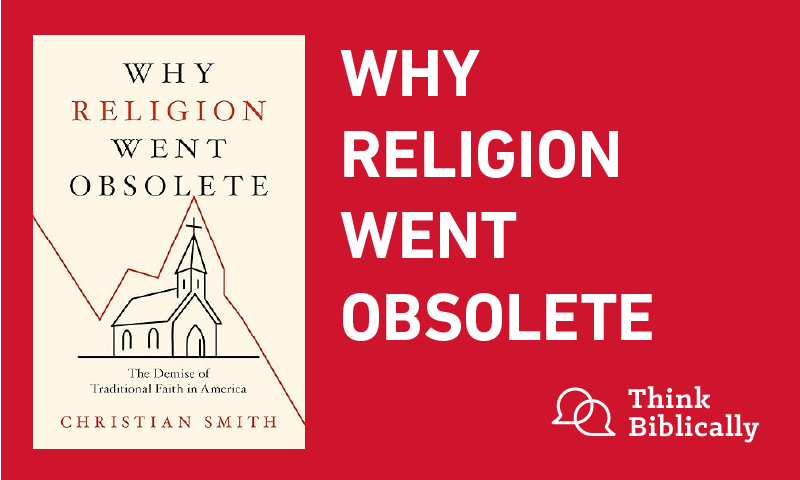
Has traditional faith become obsolete in America? And if so, what are the main contributing factors? Until now, there has not been a thorough sociological analysis of the various factors contributing to the demise of religion in America since the 1990’s. In this interview, rooted in his latest book Why Religion Went Obsolete, Dr. Smith offers a 30,000-foot analysis of why traditional religion has faded in America.
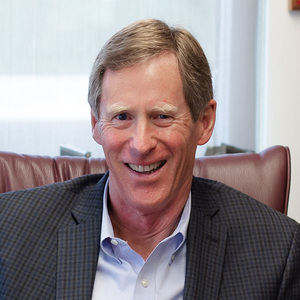
Dr. Christian Smith is a highly influential sociologist and religious scholar. He is the William R. Kenan, Jr. Professor of Sociology and Director of the Center for the Study of Religion and Society at the University of Notre Dame. Smith received his MA and PhD from Harvard University in 1990 and his BA from Gordon College in 1983
Episode Transcript
Sean McDowell: [upbeat music] Has traditional faith become obsolete in America? And if so, why? Until now, there's not been a thorough sociological analysis of the various factors contributing to the demise of religion in America since the 1990s. Our guest today, Dr. Christian Smith, a sociologist, has written an important new book that deserves a lot of attention, in which he does just that. I'm Sean McDowell.
Scott Rae: I'm your co-host, Scott Rae.
Sean McDowell: This is the Think Biblically podcast, brought to you by Talbot School of Theology, Biola University. Dr. Smith, thanks for coming on.
Christian Smith: Thank you for having me.
Sean McDowell: Really appreciate your book titled, Why Religion Went Obsolete. For starters, maybe just tell us, what's your interest in the question of religious decline in America?
Christian Smith: Yeah. So I'm a sociologist, and, American religion is really interesting. And, for the longest time, the story was that religion has declined in Europe, secularization has happened elsewhere, but not in the US. In recent decades, however, we've seen a lot of indicators of religious decline, and so-- and it's, it's significant. It stands out, so it's obviously something that would be interesting to a sociologist. And of course, people of faith, communities of faith, would be very interested in this topic. So, yeah, there's a lot of different kind of audiences that care about this. I don't think we'd understood it well enough until now, so I would-- really wanted to, try to explain it better.
Scott Rae: Yeah, you use a different term than most people use to describe religious decline. You use the term traditional religion becoming obsolete in America. Tell us a little bit about what you mean precisely by that term, religion becoming obsolete.
Christian Smith: Yeah, so, I mean, what the normal usage is, that obsolete happen-- obsolescence happens when most people feel something is no longer useful or needed because something else has superseded it in function or efficiency or value or interest. And, the normal word, as you said, we normally use is, decline, and that usually refers to organizational decline or decline in the population's beliefs or practices. I'm trying in this book to focus more on cultural, the cultural feel of how traditional religion, especially among post-boomers, fits in to the larger culture and in people's lives. And the word obsolescence, I think, kind of conveys that sense that religion is still around, there are still people that practice it, fewer than in the past, but it just has a feel of having been superseded or not so relevant to increasing number of people's lives. To be clear about that, to say that relig- traditional religion has become obsolete is not to say that it's useless or that it's failed or that it's, or that it's worse than what has replaced it. Yeah, again, there's some things that have gone obsolete that actually are better than what's replaced it, like vinyl records. But for various reasons, I'm claiming among post-boomers, there's a certain obsolescence, a cer- a certain kind of old-fashioned, doesn't really connect, doesn't really match anymore with where people are in their lives.
Sean McDowell: Well, we could have a debate about whether or not music is better since vinyl records-
Scott Rae: [laughing]
Sean McDowell: ... But I'll let that one go. [laughing]
Christian Smith: [laughing]
Sean McDowell: Kidding aside, my favorite example that you used in the book, and I mentioned this when we talked about this before, is the idea of the Western. Like, it's still interesting, we look back in the past, but it's not really relevant to our culture today, and it feels like a time passed. That's how the data shows that religion is viewed increasingly among post-boomers. Now, maybe you could clarify for us, how do you gauge religious decline, and is it a mixed bag, or does all the data kind of point towards religion becoming obsolete?
Christian Smith: Yeah, so sociologists obviously don't know what's going on in people's hearts and spiritual lives, but we have a lot of different kind of measures. And where I start in the book is the standard measures of things like American reports on surveys of whether they consider themselves strongly religious or strongly committed to their religion, and their confidence in their belief in God. I also have measures of confidence in or trust in organizational religion and in religious institutions. There's a separate measure of trust in clergy, confidence in clergy ethics and moral standards. I have measures of church closings, which have been growing, net of, new church openings. Things like the average age of church attendance or religious service attendance has been increasing, which shows, you know, it-- older people are not being replaced by younger people who were flowing in. So there's a whole series of, standard, and different measures that we can use that all point... The-- about the only measure that hasn't declined is belief in an afterlife. But again, Americans have very different views of what an afterlife might be. But in general, lots of measures show, organiz- traditional religion has been in decline.
Scott Rae: So how much of this demise, Christian, do you think can be contributed to what we would call sort of anti-religious forces like Dawkins and the New Atheists, universities, you know, wokeism, things like that? Or is most of it some of these cultural forces that are deeper than that?
Christian Smith: Yeah, so the story of my book is that there's some of that going on. It's, it's common-- there's a certain narrative in certain religious traditions that, you know, the world is out to get us, and anti-religious people, secularists, secular humanists, atheists, are trying to kill religion. Um-... There's a bit of that going on, but the story in my book is that most of the powerful forces at work over a long period of time that have undermined religious strength are not about religion. They're long-term trends. They're unintended. They have unintended consequences that have harmed traditional religion. And new atheists, others certainly don't help, but that's not the main force causing religion's obsolescence. Furthermore, religion, traditional religion itself has done plenty, as I write in a whole chapter in the book, to, harm itself, to create its own destruction. I think religion has done more to harm itself than anti-religious forces have done to harm it.
Sean McDowell: I agree with that. In fact, I think the damage religion has done to itself has fed fuel to the fire of the criticism from anti-religious forces, [chuckles] and had we not had many of the failures that you talk about and scandals within the church, And of course, 9/11 played a big role in the new atheists, but they wouldn't have as much force and as much credibility. So I agree with you. Now, you interestingly point to a specific year, which I thought was fascinating. And of course, you can't attribute all the decline to one year, but there are pivotal times where we see things increase and change, and you point to the year 1991, which is when I was a freshman in high school. So tell us what was so pivotal about that year.
Christian Smith: Yeah, I mean, I don't wanna overemphasize it, but-
Sean McDowell: Sure
Christian Smith: ... Looking back in history, we can see turning points, right? And 1991 was a, I think, a turning point in all of this. Up until then, re- traditional religion looked like it was doing pretty well. It was pretty strong. In 1991, that was, for example, the year when the number of Americans who said they were non-religious on surveys, the nones, the religious nones, started to increase. Before then, it was very stable at around 60 or 70%. Starting in 1991, the number of Americans who said, "I'm not religious," started to increase, and it's been growing and growing, ever since, until possibly until recently. A number of other things happened. The end of the Cold War, which I argue in the book, was significant in changing Americans' sort of self-understanding and role in the world in a way that made religion less, central to our national identity. And, I have a whole list in the book of things that happened in 1991, from cultural changes in popular culture, such as I, you know, I point out Nirvana's, hitting the world with, Smells Like Teen Spirit. A whole lot of other things around sexuality, culture wars transpired in 1991 that I think opened up a new era for millennials to start to exert more influence on culture and for traditional religion to hit harder and harder and harder times.
Scott Rae: Now, Christian, one of the things I so appreciated about the book is your emphasis on the, what you call the deep culture trends, these, you know, these broad cultural trends that may not have directly impacted, the decline of religion, but made, I guess if I'm, if I'm reading you correctly, made the sort of the spirit of the age much more, I wouldn't say, not overtly hostile, but much- made religion have a much more uncomfortable fit with the spirit of the age than it did prior to that. Is that a fair rendering of that?
Christian Smith: Yeah, that's true. I talk in the book about the millennial zeitgeist that developed in the '90s and early 2000s, which, again, creates an atmosphere. It's a lot harder to measure sociologically, you know, a spirit of an age or a n- or something in the air or the atmosphere, but I think there was really something real in cultural transformations that made the world in which millennials especially grew up in, and older and, younger Gen Xers, just feel different, that traditional religion didn't fit. And another piece of this is this idea of deep culture. I think what really governs people's lives is not so much what they think about every day, but the deep, deeply embedded, taken for granted assumptions, presuppositions, outlooks on life that are just- they seem they're taken for granted, they just seem natural, and those have been... There, there have been shifts in those, so it's almost like plate tectonics in earth geology. It- the tensions can build up, and the deep culture can transform over time, and then eventually you hit a point where you have earthquakes or volcanoes or whatever. And, yeah, and then once the deep cultural assumptions and presuppositions have changed or shifted, it's really hard, if you don't fit those, to, make sense to people.
Scott Rae: Well, let me highlight a co- a couple of those things that you, that you point out in the book. G- what grand cultural trends? Well, you talk about the changing state of the family, for one, as w- as one of those, one of those things that was, you know, forms-- used to form part of the, part of the air that we breathe. You know, I mean, when I, when I, when I came of age, it was just assumed that, you know, you would get married and have children and settle down and, have a job and provide, and, you know, all those things. And but you point out that that, you know, that understanding of the f- of marriage and the family has changed dramatically. Spell that out a little bit further.
Christian Smith: Yeah, so it's not... This is, this is an example of long-term transformations that are not directly about religion in most cases, but have consequences for traditional religion. ... I mean, it's no news that, you know, over the decades, there have been changes in people's assumptions about, how they wanna live their lives in relationships, and so not just the increase in divorce, but a l- a 10-year delay in first marriage over a period of time, voluntary childlessness or long-delayed, bearing a first child and raising a family, increase in cohabitation, increase in just living with roommates. That changes the kind of the demographic of the audience of people. Traditionally, traditional religious organizations would be most appealing to, married couples, heterosexual married couples with children, and that, pool of people has been shrinking over a long period of time. And so before we get to any of the other many factors, simply the demographics of a market, so to speak, for traditional religion, has been profoundly transformed. And along with that goes some- there goes other deep cultural assumptions about: What is the purpose of life? What makes somebody happy? What is the role of sexuality in life? What does it mean to be committed? What does it mean to settle down, et cetera? All of those other cultural ramifications of the transformation of marriage and family have big consequences in a deep cultural way for, traditional religion.
Sean McDowell: It's really helpful that you draw out some of these, larger sociological factors that, in many ways, have decades and centuries of change taking place that aren't about religion, but affect religion. And you list a bunch of those, at least the practice of religion, a bunch of those in your book. But if I could take a step back, it might be helpful. Help us understand how millennials tend to view religion in America. There's a certain lens that the data shows that they bring to religious questions, and is it the same as what you wrote in Soul Searching about two decades ago, kind of this moralistic, therapeutic deism?
Christian Smith: Yeah, there's a... I think there's a mismatch between what, most Americans think religion is about and what they would value religion for, and what the religious traditions themselves believe they have to offer, and what the most committed and educated religious Americans understand themselves to be. For, for most Americans, religion is a nice, a sort of optional identity accessory you might have in your life. It's not the center of your life. It's not the organizing principle of your life. It's- it has the same status as, you know, whether you're in the tennis club or the swim club or the, or the... And, and so therefore, religion is viewed as it's good if it provides this worldly, very imminent, payoff, like making people behave well, making people make good- helping people make good choices, giving people community, giving people psychological well-being, help providing sort of ethical standards or models for society, and an older one that's now obsolete, is helping to hold American society together. So the emphasis is not on transcendence, eternity, ultimate truth, capital T, you know, true knowledge about the way the world is, and something that should shape our lives. It's more religion has... When and however it happened, religion has become something that we use to make our lives better. And so it's very easy then for people, to v- our lives better in this world now. It's very easy for people then to think, "Well, if religion is not gonna do that, I don't need that. Like, what's the point?" And if religion violates... If, if there are bad religious people or if religion is abusive toward people, then it doesn't deserve anybody's, sort of commitment. So yeah, so again, this is an example of deep culture at work. There have been, I think, long-term American, transformations in American culture about an understanding of what religion even is fundamentally, that then when the world around religion changes, helps to make religion feel mismatched or polluted or obsolete.
Scott Rae: I think one of the other tectonic plate movements that you describe is a more recent one, which is the digital revolution.
Christian Smith: Yeah.
Scott Rae: Tell us a little bit about how that has impacted religion. It, it may not have caused decline, but it certainly has, it certainly has had effects on that. How, how so?
Christian Smith: Yeah, I mean, I think everyone knows the digital revolution, the invention of the internet, social media, et cetera, has had a huge, you know, colossal implications for the way we live, our technologies, our culture. I think that... I also think, going back to the 2000s, you know, when I did this research with teenagers, there was a lot of sense, like an intuition, that this is not really great for, passing on faith to teenagers. But I-- in this book, I myself tried to really drill down to causal mechanisms. What is it about the internet? What is it about Google? What is it about social media that undermines? Not intentionally. Again, I think nobody who invented the Internet was trying to get rid of traditional religion, but lo and behold, the new technologies have, in fact, consequences in people's sense of authority, in people's sense of epistemology, how can we know what we know? In people's time commitments, people's time uses, people's sense of, quote-unquote, "community," and quote-unquote, "friends," people's a, attention spans. Like, we just know empirically that people that spend more time on the internet have shorter attention spans. And, you know, if you wanna understand scripture, if you wanna understand tradition, if you under-- wanna understand theology and doctrine, that takes concentration. If you wanna sit through a sermon that has some substance to it, that takes attention and concentration and discipline, so to speak. If you wanna follow a Christian calendar across the year, that takes attention and discipline. So, you know, that's just one of the many ways. I think in the book, I spell out 10 different mechanisms by which the in-- the digital revolution that sort of explodes in the '90s and the 2000s really-... Had these unintended consequence of making it much harder for post-boomers to think and to be and to practice and commit to religion.
Sean McDowell: Those 10 points, some of them are obvious in the sense of, like, time that people are spending on, or attention span. We've talked about that. But you also draw out really important points, like a shift in authority. Now people-
Christian Smith: Yeah
Sean McDowell: ... Have access to endless information, to listen to other sermons, to fact-check a sermon, and it kind of moves the authority, whether people realize it or not, from the pastor, from the Bible, internally to oneself. Technology kind of plays a role in that, so I appreciate that you're drawing out some of these connections for us. You also talk about the significance of religious scandals in the demise of religion, and you had a page where you just listed scandal after scandal. Some of them I was aware of, going back to the, I think the Swaggart and the Jim Bakker scandals. Some of these I was not aware of, but how big do you think those have played in the obsolescence of religion?
Christian Smith: I think, as I said earlier, I think religion has done a lot to damage itself. It's not all-- It's clearly not all pastors and not all religious people-
Sean McDowell: Of course
Christian Smith: ... But the way, in a, in a digital age, in the world where, if things go viral, you know, in an afternoon, all it takes is a small minority of bad actors to really give a black eye to an organization or a movement. So I think that they played a really big role. As you said earlier, religious scandals gave religion's enemies or opponents or rivals, something to feed on. It gave them opportunity. It created doubt in the minds of people who otherwise would've been pretty friendly to religion. Again, back to what we said earlier about deep culture, if Americans think the main job of religion is to help people be moral, this moralistic approach to faith, which goes back to moralistic therapeutic deism. If Americans think the main job of religion is to be moral, and then they hear every month there's a new scandal in the news about some religious leader in any given tradition, this is not just evangelicals, and it's not just Catholicism, although they've had huge problems. It's in ch- American Judaism, Mormonism, and, Black Protestantism. When Americans hear news story after news story, it seems relentless, of people being caught, you know, doing bad things, that c- really corrodes, their confidence, and this shows up in the data. You know, it shows up in surveys over time, their confidence that religion is doing its job, it's doing what it should be doing. So that... These scandals were huge, in conjunction with other problems within religion that really turned a lot of people off. We don't know if that was the main cause why people a bit, let's say, stopped going to church, but even if it isn't the main cause, it gives people a cultural rationale that's sensible. It gives people, a justification. Maybe they, maybe they just don't want-- don't feel like getting dressed up and meeting other people. But if some, if a sociologist asked them or a friend asked them: "Why aren't you going to church anymore?" It's very-- It makes total sense to everyone. Well, it's... Or most people, it makes total sense. "It's a bunch of hypocrisy," or, "You can't trust these people," or, "The church is totally corrupt," or however you wanna put it. That's powerful, ammunition in our culture.
Scott Rae: Christian, one thing that struck me as I, as I read throughout the book is, you know, particularly in, particularly as you got to the last chapter, where you des- you describe in real, in real detail all these factors that contribute to the spirit of the age, what you call the zeitgeist of the culture today in the US. And I thought about back to the first century. The, the zeitgeist of the ancient, the Greco-Roman world in the first century could not have been more opposed to the Christian message, and yet the early church flourished in the midst of a, you know, a spirit of the age that was actually overtly hostile to it, and not just consider- I mean, considered it dangerous and damaging, not just, irrelevant. So the question is, in light of that, do you see, do you see a way where religion can, particularly, you know, traditional Christianity, can flourish in spite of these deep, broad cultural trends that you're describing?
Christian Smith: Yeah, that thinking through the parallels with the, with the early church and the Roman Empire is really fascinating, and it's complex. It's hard to sort of sort out in a short period of time. But I'm not, I'm not, a cheerleader of religion's demise by any means. As a sociologist, I'm trying to explain and understand it. Of course, we would say, yeah, in any given context, nothing is hopeless, and it-- for people who are Christians to be able to say, "Yeah," that, you know, in every given context, there are opportunities, there are ways to move forward. I think, one of the reasons I wrote this book is to help people understand the larger picture, the bigger context of what in the world is going on, so that people can step back and reflect on, you know, what are we doing well? What are we not doing well? What is it that- what cultural forms do we have that are getting in the way of what we should be doing? And what things, what things do we really s- need to stick with our guns, because that's who we are, and rethink pretty profoundly in light of a new c- a cultural, social context, what would it look like to be a faithful practitioner or follower of this religious faith? So yeah, I think the answer is yes. I can't spell it out here. I don't really have that many answers, but in principle, I would say-... Once the situation has been figured out, there should be ways to sort through, okay, how to move forward in a way that's faithful and intelligent, and maybe effective.
Sean McDowell: Christian, I thought it was fascinating in your book how you talked about, like, the mainline church, for example, has faded in terms of people going there, and in part, that's a result of its success, that mainlines would maybe be in line with certain cultural trends, and one big example would be sexuality. And so because of their success, less [chuckles] and less people are like: Why do I need to go to church?
Christian Smith: Yeah.
Sean McDowell: On the flip side, with evangelicals, the spirit of the age has been expressive individualism. It's about me and my feelings, and maybe evangelicals have benefited in one sense from this focus on me and Jesus spirituality, but there's a negative sense to that, too. You described it's like: Well, then why should I go to church? Why do I [chuckles] have to follow these rules if it's all about me? So tell us a little bit about what you describe as evangelical me and God spirituality, and why that's significant.
Christian Smith: Yeah, so American evangelicalism is relatively individualistic. It's subjectivistic. It really emphasizes-
Sean McDowell: Yeah
Christian Smith: ... Sort of how you feel inside, whether you're authentically, you know, having real devotion, or real connection with God, or really feeling worship, or really feeling called to something. And, so that's part of evangelical DNA or much of evangelicalism's DNA, and, in some ways, it really vibes with the culture. And I think that helped evangelicalism to b- to become more appealing in the post-war era, especially, let's say, in the late '60s, '70s, and '80s. But then these things can become double-edged swords. So I talk in the, in the book, as you just mentioned, that evangelicals have this phrase, you know, "You need a personal relationship with God." And evangelicals have used that phrase to great effect to make the point: Just 'cause you, quote-unquote, "believe in God," doesn't mean you're a Christian or going to heaven. You know, you need a personal relationship. This needs to be a personal commitment. It needs to be authentic. It needs to be heartfelt. Well, what I argue in the book is that this discourse has spilled out of evangelicalism into the culture broadly, so that now when we go interview post-boomers, very many will say, "I don't need an institution. I have a personal relationship with God. I don't need to follow the Bible directly. You know, I have a personal relationship with God, and that God is the God that I believe in, I make up," kind of, "or the God that resonates with me, or that fits my subjective sensibilities, and who needs an organization? Who needs an institution?" The point is, evangelicals who originally started this phrase, "personal relationship with God," they never meant it to justify-
Sean McDowell: That's right
Christian Smith: ... I don't need to go to church, or I can have whatever God I want to. But the culture-- but the, in the two-edged sword sort of sense, or the unintended ironic sense, the culture can take over such religious discourse and use it in a way that undermines the original intention.
Scott Rae: So, Christian, let me ask you to maybe put on your prophetic hat here for a moment. What do you think might happen to American culture as religion declines, as you've described?
Christian Smith: Yeah, so obviously, I'm much more comfortable describing and explaining things that have already happened in the past, and I hesitate to say about the future. But based on the past, we can make some conjectures at least. It's the... We know, and, you know, secular scholars know this, that e- that, religion is, has been, in American history, a source of social cohesion, a source of people's psychological coping, a source of what's called social capital, trusting relationships among people, a source of social bonding and bridging, a source of charity, a source of... There's a huge amount of institutions, hospitals, orphanages, et cetera, et cetera, that religion has generated, that have w- you know, what some people call pro-social effects. Even mental health is much better among religious people. You know, we can argue about how and why that happens, but it appears that religion has contributed a lot towards sort of the cohesion and functionality of society, which is one reason why, you know, Americans expe- think that's what makes religion good. But, if that's the case, if religion sort of fades away, then unless something else comes to replace it, which is an open question, we should expect there to be more isolation, more mental health challenges, more, longing for community that people don't know how to find, less social capital, which makes for a worse society. And, you know, I'm not pinning it all on religious obsolescence, but especially since COVID, and that was part of it, too, we see this empirically. Like, we know that Gen Z-ers, and Millennials and especially Gen Z-ers, have lots of, you know, mental and emotional struggles that older generations who, say, fought World War II, maybe they had them, but they worked through them. And we know that especially after COVID, but it's not just because of COVID, there's a lot of Americans who are feeling lonely and isolated and wish they had community and don't know how to find it. Well, churches and synagogues used to be the place where people found it. If they're not gonna find it there- ... If they don't find it somewhere else, they're gonna be lonely- ... And not fe- and not have the community they want. So in theory, we have good reason to p- to wonder or to suspect that this will have socially, damaging, so to speak, and psychologically damaging and interpersonally damaging consequences if people decide traditional religion is not of any interest.
Sean McDowell: ... I think there's a lot of people that would agree with you, people such as Richard Dawkins now, [chuckles] ironically and surprisingly, and a range of voices of people saying, "You know what? This movement to get rid of religion, and then we'd have a wonderful society, maybe that was short-sighted, and at least we need it for a cultural kind of cohesion and health position." And, of course, we'd argue here at Biola that religion has much more [chuckles] value than that, but I think that would support your point as well. Dr. Christian Smith, really appreciate you coming on. Your book, Why Religion Went Obsolete, is excellent. It's the first kind of 30,000-foot-view perspective on various forces contributing to the demise of traditional faith in America. And Scott and I were talking how there's, you know, maybe a point here or there where we might quibble or differ, but that's really beside the point here. I would encourage individuals to study, especially churches. At the end, you don't give a big, like, solution, "Here's how you fix it." You stay in your lane, [chuckles] which I appreciate as a sociologist, and say, "I'm just diagnosing as best I can what's going on in America." I would really encourage churches to pick up a copy, Christian schools, talk about it, discuss it, and say, if you are right, what would this mean for their practice? That's where I think some of the huge value will come in. So we really appreciate you coming on. Again, folks, pick up a copy of Why Religion Went Obsolete. Thanks, Dr. Smith.
Christian Smith: You're very welcome. Thanks for your interest.
Sean McDowell: This has been an episode of the podcast Think Biblically: Conversations on Faith and Culture. It's brought to you by Talbot School of Theology at Biola University. We have programs online and in person here in Southern California, spiritual formation, Christian apologetics, Bible theology, and more. Please send in your comments or ask questions to us at thinkbiblically@biola.edu. I'd really encourage you to please consider writing a review on your podcast app. It helps us tremendously to reach more people, and again, we really appreciate you listening. In the meantime, before our next episode, remember to think biblically about everything. [upbeat music]