Biola University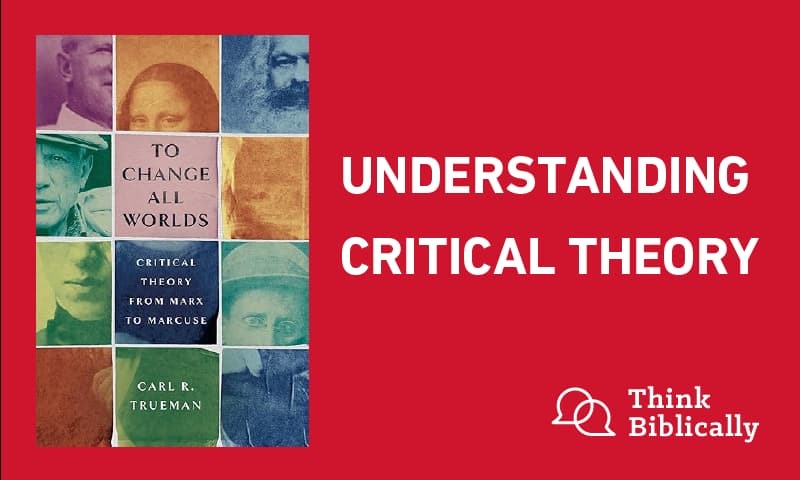
What is critical theory and why is it so vital for Christians to understand today? What are its historical roots and where do we see it manifest today? Carl Trueman is one of the leading Christian social critics today and he has a new book To Change All Worlds. Sean and Scott talk with him about the motivation behind the book, why it is so timely for Christians today, and offers ideas for navigating our cultural moment in light of this profoundly influential movement.
Carl Trueman earned his Ph.D. at the University of Aberdeen and he currently is a professor of biblical and religious studies at Grove City College. He is the best-selling author of multiple books including The Rise and Triumph of the Modern Self.
Episode Transcript
Scott Rae: [upbeat music] What is critical theory, and why is it important for the Christian to understand it? What's the connection between critical theory and the sexual revolution of the 1960s? And can there be such a thing as a biblical critical theory? We'll look at these questions and a whole lot more with our guest today, Dr. Carl Truman, in his latest, very insightful book, entitled To Change All Worlds. I'm your host, Scott Rae.
Sean McDowell: And I'm your co-host, Sean McDowell.
Scott Rae: This is Think Biblically from Talbot School of Theology, Biola University. Carl, so happy to have you with us and so appreciate the book that you've done that takes a really complicated subject and makes it accessible to people who may not have a background in this area.
Carl Trueman: Thanks very much. It's great to be with you guys.
Scott Rae: So fir-- Carl, let's start with this. For the person who's, who's completely unfamiliar with critical theory, what is it, and why does it matter for people to understand it?
Carl Trueman: Yeah, good question. Critical theory really has its origins in some comments that Karl Marx makes in the, 1840s, where he makes the observation that, up until his point in time, the philosophers have interpreted the world. But the point, he says, is to change it. And critical theory is really an approach to, we might say, the criticism of culture that is designed not simply to describe or explain cultural behavior, what's going on in society at any given point in time, but is specifically designed to bring about revolutionary change, to destabilize, society as we find it, i- to serve the purpose of the unmasking of power, for example, and the bringing about, if you're a Marxist, of a kind of Marxist, revolution. So critical theory is... You know, don't be too hung up on the theory side of it. Critical theory is actually revolutionary practice in a theoretical form.
Sean McDowell: Carl, let me ask you this question. What is, what is your personal interest in this topic? What motivated you to research and write this book? [chuckles]
Carl Trueman: Well, I first got interested in critical theory as an amateur in the 1980s. I studied at the University of Cambridge. My, history supervisor there was a Marxist, and I had to read some-
Sean McDowell: Wow
Carl Trueman: ... Critical theory stuff because of, things that he was sort of pointing my way, and I became interested in how it had developed over time. More recently, of course, critical theory has become a hot topic, specifically critical race theory. And the origins of this particular book, emerged in, I think, 2020, 2021, when BNH, the publisher, approached me and said they wanted a book that would help, explain the basic principles of critical theory to, undergraduates, in, you know, Christian colleges. So that was really the immediate, motive for writing this particular book.
Scott Rae: So, Carl, this, I think it really helpful to show that the, what the critical theorists were after was not just a description of culture, but a way of transforming it. But to be a little more specific, what were some of the main questions that the critical theorists were trying to address when the discipline got started?
Carl Trueman: Well, first of all, the discipline really gets started in about fift- 1923, with a group of German, and mainly Jewish intellectuals, very influenced by Marx, at the Institution- Institute for Social Research, in the city of Frankfurt, hence the name the Frankfurt School for this early group. And they were interested in why the working classes, in Germany were not moving in a communist direction i, in elections. They were actually starting to cast their vote for the rising parties of the nationalist right, of which, of course, the Nazis will become the most, prominent, and successful example.
Scott Rae: Against what you would consider to be their own interests?
Carl Trueman: That was what puzzled them, because classical Marxism would really have led one to believe that capitalism will ultimately collapse under its own contradictions. The working class will come to realize that and will, move in their best interests. But the Frankfurt School are interested in why is it that the, if you like, the imagination of the working classes doesn't, carry them to the left, but carries them against their best interests, to the right? So that's the sort of the big question. And one could see that that then morphs into more general philosophical questions. So, for example, the question of truth becomes interesting. What is truth? And for many critical theorists, truth is not what we would consider truth. You sort of, you know, the correspondence theory of truth, where, you know, the cat is on the mat is true if there is a cat indeed on a mat, or false if there isn't a cat on a mat. Truth becomes any statement or idea that moves the revolution forward. So truth becomes that which destabilizes the stories that capitalism tells about itself in order to retain its power within, society. So we see the sort of the... Not only are they interested in questions of, you know, why the working class vote the way they do, but they're also interested in recasting some fundamental philosophical categories in order to make them revolutionary.
Sean McDowell: It's really helpful to think about critical theory in terms of its activism, and it even shapes, like you said, how they view truth. It's more pragmatic than purely just philosophical. In one sense, cultural critique is not new. I mean, the Old Testament [chuckles] prophets engaged in scathing critiques of Israelite culture and religion and other nations around them. How is the cultural critique of critical theorists that different?
Carl Trueman: Well, I think the major difference, of course, between, say, what Isaiah is doing when he critiques idolatry, is, you know, the, and critical theory would be that Isaiah feels he has a direct access to the truth.... And he's able to critique the world as it is in comparison to this truth that has been revealed to him, by God. Critical theorists really would question whether anyone, including themselves, has access to the truth in that way. All they can really know is that what confronts them is false, and exposing its falsity, and its instability, and its lack of substance is the key thing, that they are doing in order to move the historical process forward. You might say, you know, if you're a Marxist critical theorist, the truth is not out there, in a way that it is for Isaiah. The truth lies somewhere in the future, and it's getting society to that future, which will ultimately bring about the truth as part of the historical process.
Scott Rae: Now, you maintain in your book that there are actually two versions of this. You just made reference to the Marxist version, but you also describe a more-- what you call a postmodern iteration of this. So how are those two things different? Help our listeners understand what the differences are.
Carl Trueman: Yeah, I would draw a broad contrast in critical theory between those that I would say are inspired by what I've called the Frankfurt School, which is a kind of emerges from a form of Marxism, and what we might call the poststructuralist school that emerges really in the '60s and '70s in France, is associated with a figure such as Michel Foucault, who's emphatically anti-Marxist and anti-Hegel, in his thinking. The things they share in common are a concern for exposing how power operates and how they see all truth claims as being manipulative. The difference between them would be that the Marxists see this as part and parcel of moving towards the truth, moving history forward, to a revolutionary phra- phase where, you know, utopia can and will be realized on Earth. Whereas somebody like Foucault doesn't think there is any truth. He doesn't think it can be realized in the future. He doesn't think that, you can move forward to a utopia. All you can ever do is destabilize claims to truth in the present. So we might say that the Marxists have a kind of metaphysical vision of the future, whereas, somebody like Foucault really is pitted against all forms of metaphysics.
Sean McDowell: What's the connection between critical theory and the sexual revolution of the '60s and beyond?
Carl Trueman: Yeah, it's an interesting one, and we find the connection in terms of thinkers, really connects to two particular, critical theorists. One, Wilhelm Reich, who's sort of loosely connected to the Frankfurt School, and the other one, a man called Herbert Marcuse, who's, you know, very much part of the early Frankfurt School. And these men really latched on to the idea that the way, unjust capitalist society maintains itself is through its sexual codes, and therefore, attacks on traditional sexual morality and traditional sexual categories, become part of the revolutionary project. So, Marc-- Reich dies in the '50s. Marcuse lives, long enough to see the student revolutions of 1968, where he's, he's a bit of a, of an iconic figure, really, because the whole sexual revolution that the student revolutions participated in was inspired by Marcuse. And, you know, he would argue, for example, that, homosexuality should be promoted precisely because homosexuality is a, is a s- a, an inextricably sterile form of sex. Yeah. [chuckles]
Scott Rae: Wow!
Carl Trueman: You can't be producing a supine workforce through homosexual sex. The mere act, a mere homosexual act is itself revolutionary because it contradicts the capitalist production mentality that surrounds traditional sexual codes.
Sean McDowell: Wow, that's interesting. You know, side note, my father-in-law had Marcuse as a philosophy professor at UCSD-
Carl Trueman: Wow
Sean McDowell: ... In the early '70s, interestingly enough-
Carl Trueman: Wow
Sean McDowell: ... And remembers him as an interesting radical, [chuckles] to say the least.
Carl Trueman: Yeah, it would've been f- I would've loved to have sat in on some of his classes.
Sean McDowell: [chuckles]
Carl Trueman: I bet he was a dynamic, uh- ... A dynamic teacher. [chuckles]
Scott Rae: I think at le- at least he shook up the troops, uh-
Carl Trueman: Oh, yeah
Scott Rae: ... In those classes. So that's-- I think that's one area that critical theory has been applied to. What are, what are some other areas, maybe in the last twenty, thirty years, to which critical theory has also been applied? And how, sort of-
Carl Trueman: Yeah, well-
Scott Rae: How... Spell out how does that, how that works.
Carl Trueman: I mean, think about the issues over, you know, what is a woman, that sort of swirl around at the moment. The i-- the whole idea of the separation between biological sex and gender, and the idea that, gender is a, is a performance and not something, connected to biology, that the way we use biology in the sexual debates is itself a power play. That kind of thinking that you find with somebody like Judith Butler at UC Berkeley, clearly very closely connected to, critical theory. Critical race theory, which emerges in the '50s and '60s, in law schools, become very important, of course, around about 2019, 2020, when critical race theory, it was even being talked about at the Southern Baptist Convention, of all places.
Scott Rae: [chuckles]
Carl Trueman: The question of how we construct notions of race, how race is used, in, culture, whether certain things such as Brown v. Board of Education, that traditional liberals and I would say traditional conservatives would regard typically as a good thing and as moving society in the right direction.... Is that actually just a power play by the white population to sort of throw the black population a bone to keep them in their place? That sort of question that erupted, in, 2019, 2020, that too is, something that connects to the kind of ideas that we see bubbling away in critical theory in the 1930s. So race and gender, two very obvious, examples.
Sean McDowell: Carl, there's a lot of debate and discussion, as you know, about whether or not Christians can and should borrow or lean into critical theory and bring any positive things out of it, or keep all of critical theory, [chuckles] so to speak, at an arm's length. I'm curious your take on how, if at all, critical theory can be useful to Christians.
Carl Trueman: Yeah, it's a very good question, and I think we have to be very careful here because critical theory is not-- it's not a tool. Certainly, the critical theorists don't regard it as a tool. They see it as a pretty comprehensive way of approaching, society and culture. So I would be very wary. I didn't like the language, you know, circling in Christian circles in 2020, 2021, of, you know, critical race theory is a useful tool for Christians. I think as soon as you start talking about critical theory as a tool, you've fundamentally misunderstood what critical theory is about. I would say where critical theory is, you know... Where I find critical theory is interesting to interact with is this: it often raises difficult questions that Christians have to answer. It's not so much in the answers it proposes, as in the questions that it demands we answer. So take, for example, the question: What is a woman? Most of us would say, "Well, woman can be defined biologically." But critical gender theory makes us very aware that we use the term woman about a whole lot of things beyond biology. [chuckles] You know, when we think about what does it mean to be woman, what does it mean to be feminine, that's not just biology playing into that. There's a lot of culture that plays into that. So, you know, being feminine in Texas is very different to being feminine in London or being feminine in Tokyo. So I think critical theory, it raises challenging questions that Christians need to think about. It doesn't really offer positive proposals that Christians, I think, can buy into.
Scott Rae: I think, yeah, that's a... I think that's a fair critique. I think that became really evident with the Black Lives Matter movement and the critical race theory, in particular, that this, the solution, the prescriptions that it had in mind, I think came under, I think, heavy criticism, and I think, correctly so, even though some of the diagnoses may have been, may have been on target. Let me ask you, just, if you had- if you could say sort of one sort of overarching critique of most versions of critical theory, what would it be?
Carl Trueman: It offers no real hope. I think when you-- if you look at the Foucault variety, you know, it's, it's, it's a bleak, continual analysis of power and manipulation. If you look at the Frankfurt School variety, it can put no flesh on its vision of hope. One of the interesting things about critical theorists of that school is they're often very clear on what's wrong. When they move into telling you what the world would a- should actually be like, they can't give you a vision of that, because by... On the terms of their own thinking, you cannot describe utopia from the position of dystopia, and we live in a dystopia at the moment. And you see a little bit of this in Black Lives Matter. I think they've changed the website, but I went there a couple of years ago, and it was very clear, for example, on the BLM website, what they were against. You know, they were against the, against the funding of the police, for example. But when it moved into the things that they were for, the language got rather, what I would describe, it got rather poetic. [chuckles] Yeah, you know, oh, something to the effect of, you know, "We- we'll all live in a village," or something like that. Well, you know, villages, I grew up in a village, we actually had a policeman. [chuckles] yeah, I wanna know what these villages that these critical theorists envisage will actually look like. Don't give me the poetry, give me some substance. So I would say there's- there is no real hope, in, the vision that critical theory offers.
Sean McDowell: Carl, how would you, compare and contrast wokeness with critical theory? Is that basically a popular term to capture some of the deeper academic ideas of critical theory, or what's, what's that intersection?
Carl Trueman: Yeah, it's an interesting... I mean, to some extent, it's gonna come down to how you define wokeness, and I try to shy away from what I would regard as terms that become, shorthand pejoratives for people we disagree with. [laughing]
Sean McDowell: [laughing]
Carl Trueman: You know, whether it's cultural Marxism or wokeness-
Sean McDowell: Sure. Sure
Carl Trueman: ... Or, yeah, often these things take on a life of their own. I hate, I hate to sound like George Lukács, the great Hungarian Marxist, but often they get reified. They take on a life of their own. [chuckles] I think there's clearly a connection. I would say, a lot of wokeness as it manifests itself on things like Twitter and social media, et cetera, and even in certain political statements, is really a sort of, popular reduction- ... Of pretty complex ideas to crowd-pleasing slogans. Now, there is a connection between-... Critical theory and some of the slogans that are, that are, that are hurled around. But the connection often involves a, an oversimplification of what critical theorists are actually saying, in and of themselves. So there is a connection, and I suspect there's also a cultural mood connection as well, that both things became popular because there was a certain cultural mood applying in the era of COVID, end of the Trump, beginning of the Biden era, that sort of thing.
Sean McDowell: You lay out some of the historical and cultural forces of why critical theory kind of rises to the surface. Do you think there are certain psychological kind of factors in our cultural moment that have made critical theory, and maybe its popular renditions, wokeness-
Carl Trueman: Yeah
Sean McDowell: ... Kind of appealing to people in this moment, like they're drawn to it?
Carl Trueman: Yeah, I think, we live in an era where I would describe, you know, victimhood as having become the great virtue. If you can claim to be a victim, then you have the moral high ground, and critical theory is nothing if it's not a dramatic theory of victimhood. And I would also use perhaps the Nietzschean concept of ressentiment here. It's a French word, but Nietzsche uses it even in his German texts, that refers to really a seething feeling of resentment from a position of weakness. We might say, "Well, what does that mean?" It means, when you feel powerless, when life isn't as you want it to be, you look for somebody else to blame, and you turn their strengths into what you regard as immoral positions. So you redefine your morality based around the fact that you don't have something that they have, and you decide that what they have therefore makes them morally inferior to you. And I think that psychology of ressentiment, pervades a lot of modern culture and certainly explains a lot of the appeal of something like Black Lives Matter or popular versions of critical race theory.
Scott Rae: Carl, one final question for you. I thought the, maybe the most provocative thing in the book was what came at the end, where you maintained that the Church, not an argument, is the best way to refute critical theory. Can you spell out a little bit more what you mean by that?
Carl Trueman: Yes, I think that w- critical theory, I... It would take a long time to sort of fully elaborate it, but I think we are, what I would say, intuitive creatures. By and large, most of what we believe, derives from intuitions that have been formed through the environments that we find ourselves in. And then, and the Bible clearly speaks to this when it h- prioritizes the Church, when it prioritizes good company as shaping our moral structure. Well, you know, if you want to demonstrate to the wider world, for example, that Christianity is not a manipulative power play, but is what the New Testament says it is, it is a religion that involves a sacrificial self-giving to others, then the best way to prove that that's the case is not simply to argue for it, but to behave in that way, to have your own intuition shaped by that, so that you can shape the intuitions of others. So at the end of the book, I really make the case for, you know, the Church being the Church is itself a powerful testimony to the falsity of so much critical theory, that you cannot reduce all human relationships here and now to manipulative power relationships, for example. That it is possible to be hospitable and kind. So my basic point at the end there was, you know, let's not get too hung up on the theoretical response to critical theory. Any theory, any argument you offer to a critical theorist, they're simply gonna come round and say, "Well, of course, you'd say that. You're a middle-class, white, heterosexual bourgeois." [chuckles]
Scott Rae: [chuckles]
Carl Trueman: That argument's not gonna hold sway theoretically with them. Maybe if you see them stuck at the side of the road with a flat tire, and you pull over and help them to change the tire, that might actually have a more powerful impact on the way they think about you. So my pitch at the end for the Church was say, you know, God has given us a way to show what true humanity looks like. It's called the Church. Let's do it, and let's do it well.
Scott Rae: Well, and that is, that's such a helpful admonition, I think, and it is such a fitting way to close the book, and particular- I think, particularly in the cultural moment that we're in today. Such, such good advice. Carl, this has been so insightful. So appreciate you taking your time to be with us. I want to commend your book to our listeners, entitled To Change All Worlds, subtitled Critical Theory from Marx to Marcuse by Carl Truman. This has been a rich conversation, Carl. Thank you so much for joining us, and, all the best to you.
Carl Trueman: Thanks for having me on, guys.
Scott Rae: This has been an episode of the podcast Think Biblically: Conversations on Faith and Culture, brought to you by Talbot School of Theology at Biola University, offering programs in Southern California and online, including master's degrees in apologetics, spiritual formation, Old and New Testament, systematic theology, philosophy, marriage and family therapy, and probably some others that I'm for- that I'm forgetting. Visit biola.edu/talbot in order to learn more. If you'd like to submit comments, ask questions, or make suggestions on issues you'd like us to cover or guests you'd like us to consider, email us at thinkbiblically@biola.edu. If you enjoyed today's conversation with our friend Carl Truman, please give us a rating on your podcast app and share it with a friend. And join us on Friday for our weekly cultural update. Thanks for listening, and remember, think biblically about everything. [upbeat music]