Biola University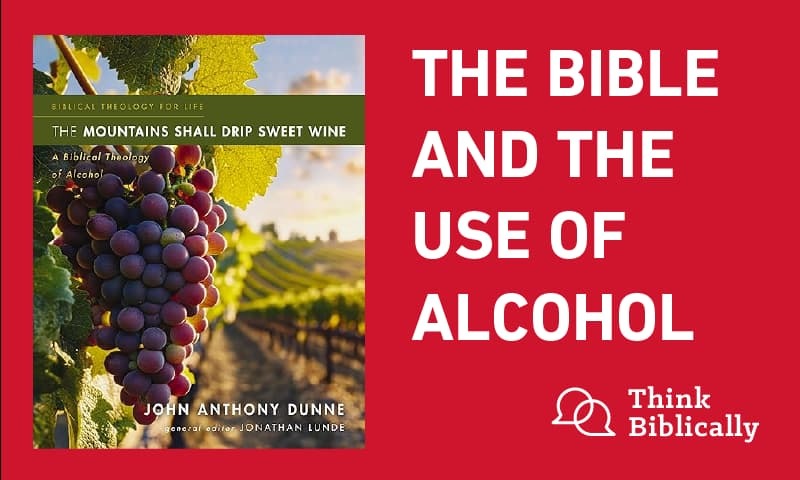
What does the Bible say about the use of alcohol? How is alcohol both God’s gift and a curse at the same time? What does the use of wine in the Eucharist say about acceptability for other uses? We’ll address these questions and more with our guest Dr. John Anthony Dunne around his book The Mountains Shall Drip Sweet Wine.
Dr. John Anthony Dunne is Assistant Professor of New Testament at Bethel Seminary. He's a Talbot grad, twice over, and his research interests lie primarily in the New Testament, the life and letters of Paul (esp. Galatians), Christian origins, and second temple Judaism.
Episode Transcript
Scott Rae: [upbeat music] What does the Bible say about the use of alcohol? How is alcohol both God's gift and a curse at the same time? And what does the use of wine in the Eucharist say about its acceptability for other uses? We'll address these questions and a whole lot more with our guest, Dr. John Anthony Dunne, and his new book, The Mountains Shall Drip Sweet Wine. I'm your host, Scott Rae.
Sean McDowell: I'm your co-host, Sean McDowell.
Scott Rae: I did enjoy saying that, you know it? [chuckles]
Sean McDowell: Oh, man. [chuckles] You made me laugh at that one. [laughing]
Scott Rae: This is Think Biblically from Talbot School of Theology at Biola University. John, so mu- so grateful to have you with us. We loved your book, and I have to admit, we've been doing this now for over eight years.
Sean McDowell: This is year nine, huh?
Scott Rae: Yeah, and this is the first time we've talked about this subject.
Sean McDowell: That's true.
Scott Rae: So-
John Anthony Dunne: Well, cheers.
Scott Rae: You, you are, you... Yeah, right. [chuckles]
Sean McDowell: Cheers. [laughing]
Scott Rae: [laughing] You are, you are breaking new ground here.
John Anthony Dunne: Love it. Love it.
Scott Rae: And, so tell us a little bit about what sparked your interest in this subject. There's got to be a backstory-
John Anthony Dunne: Yeah
Scott Rae: ... Here somewhere.
John Anthony Dunne: Right. Yeah, well, I, you know, I grew up in a fundamentalist Baptist sort of, schooling context, and I, you know, was basically just told, "It's all evil. Don't touch it." And- ... You know, my mom used to drink. She gave up drinking. My dad never had a taste for it. So it really wasn't part of, you know, my life growing up, and when I went off to college, which was Biola University-
Scott Rae: Let's go!
John Anthony Dunne: ... Of course, we had a, you know-
Scott Rae: Come on
John Anthony Dunne: ... We had a honor code. You know, we had a policy that we would, abide by, you know, that included not drinking. And I went to Talbot, which continued. There was the same, you know, sort of policy at the time for seminarians. And, you know, I was, I was intrigued to, you know, realizing, like, you know, there's, there's, there's more to this, to this topic than I've really considered and just kind of like a flat, like, is it good or bad, and sort of the way I inherited a way of thinking about it that was like, "Just don't touch it," you know? 'Cause obviously I knew people who in- who could enjoy- ... A nice beer or a nice wine or something like that, and I just thought, "I need to really revisit this." And so I decided to revisit it for our blog, The Two Cities, which is now a podcast, but when we started it as a blog, I took the first couple of posts to l- do a little bit of a deep dive into, you know, kind of wine or alcoholic beverages in general, in the Old Testament and in the New Testament, respectively, and that just opened up a lot of doors for, further investigation, and, knew there was more there that I could address, later down the road, and so grateful that it's finally come out. I signed the contract for this back in 2013. I was still in-
Scott Rae: Wow!
John Anthony Dunne: ... My doctoral... Yeah, I was still in my doctoral, degree at the time. So a little, too ambitious, thinking about other book projects while I still had to finish a dissertation. [chuckles] but, uh-
Scott Rae: Usually not advised.
John Anthony Dunne: No, no, exactly. And I'm sure my advisor actually, did advise me not to, [chuckles] perhaps, but I don't, I don't recall. But, it was... Anyways, it was a lot of fun to work on it, and it's really great to be at this point when it's finally out there.
Scott Rae: Well, you... You know, I admit, you had me right at the very beginning-
John Anthony Dunne: [laughing]
Scott Rae: ... When you said our Bibles are soaked with alcohol. Can you tell us a little bit more what you mean by that?
John Anthony Dunne: Right. Yes, so, you know, I really just think, regardless of whether we drink or not, our Bibles have all of the same references to alcoholic beverages, to the production, to the consumption, to the effects of alcoholic intoxicating beverages. It's ubiquitous. It's all over the Bible, and so I think if we, if we want a robust biblical theology, we wanna think about, you know, what the Bible does with various themes in robust, holistic ways, a topic like wine, and even beer, is something that we really should, you know, incorporate and think about more deeply. And I just think, you know, there are so many references, to, intoxicating beverages, that it would be, an injustice to basically leave that topic unexplored. I think there's a stigma to it. I think there's, you know, different sort of ideas that, you know, maybe these, you know, wine isn't as important as, like, the Kingdom or like covenant or some of these other, you know, big biblical theological themes, exile, return, atonement, you know? But then it's like, wait, l- take a step back. Wine touches on all of those things, right? All of those topics are incorporated, into, these other bigger, big, biblical theological topics. And so, I just really wanted to set the stage, you know, with a provocative, opening line. [chuckles]
Scott Rae: [laughing]
John Anthony Dunne: But I, but I did wanna set the stage as, you know, we're, we're talking about the Bible, full stop. That's what this book is about. It's about the Bible, and our Bibles have so many references to alcohol.
Sean McDowell: So what were the various types of alcohol, alcoholic beverages that were produced or available to people in biblical times?
John Anthony Dunne: Right. So obviously, you know, our minds immediately goes to wine, right? Our, we think about grape-based alcohol, and of course, that is the predominant set of, references to intoxicating beverages that we find, in scripture. But it's not the only type of, fermented beverage that we find. There's a, there's a reference, set of references, using this, Hebrew term shekar, which has been a little bit of a puzzle for translators and interpreters. It's cognate to the Hebrew verb shakar, which means to get drunk, and so-... It's often been treated as a general intoxicant, as something that makes drunk, so strong drink is the classic King James translation. But that makes people think about distilled spirits, you know, like whiskey or something, and that's just not what we're talking about at all in Biblical literature. I'm, I'm in a camp that thinks that shekar is actually grain-based alcohol, and there's a number of reasons for that. I won't get into it. The, the book, covers that, t- covers that ground. But the idea is that if there are references to, you know, grain-based alcohol, it just opens up kind of the breadth of the diversity of Biblical references to alcohol that go beyond wine, that, Yeah, basically, we need to cast a little bit of a wider net when we think about, this topic. 'Cause so often the topic is reduced to wine, which granted, it's the m- predominant, you know, fermented beverage in the Bible, but it's not the only one. And even saying wine, what are we actually talking about here? There are different terms-
Sean McDowell: Yeah
John Anthony Dunne: ... For wine as well. So you've got, you know, wine that has been aged a little bit, but you also have references to new wine, right? And, and, as I argue in the book, that this is most likely referring to wine from the most recent vintage, as opposed to, you know, grape juice or something like that, you know, unfermented, wine. Sometimes there are people who think that maybe all references to wine could be unfermented, and it's really context that makes the difference. That's a really poor approach. It's often led by a priori assumptions, where kind of modern concerns about alcohol really creep in and kinda steer, our thinking away from the fact that we are talking about fermented beverages, when we're talking about wine in the Bible, not least because you only have a small window in which you can enjoy grape juice, which is harvest time-
Sean McDowell: Yeah
John Anthony Dunne: ... Immediately after it's pressed, because fermentation happens naturally and quickly because there's yeast on the skins. The yeast is going to eat the sugar in the grape juice, and it's gonna give off, CO2 as it produces alcohol. So it's just a natural process, happens quickly. And certainly, if we're talking about something like the Eucharist, for example, and we think about, you know, the Last Supper, which is springtime, you know, and we're thinking about what were Jesus and the disciples drinking? Well, decidedly, they were not drinking grape juice. Nobody is drinking grape juice in the springtime.
Sean McDowell: That's really fascinating. Okay, so if I was gonna force you to, like, send out a tweet, you said wine- [laughing] ... Different kinds of wine.
John Anthony Dunne: Yeah.
Sean McDowell: When you say grain, does that now mean beer, certain kinds of hard alcohol? Like, what other things would that likely include, as best we can guess?
John Anthony Dunne: Yeah, I think beer is the best, the best way to think of this.
Sean McDowell: Okay.
John Anthony Dunne: And we're not talking about anything particularly strong. Most likely, ancient beers were probably, on average, around 2 to 3%. It's-
Sean McDowell: Huh
John Anthony Dunne: ... It's definitely possible that we could get higher than that, but in order to really get, something higher than that, you need certain types of yeast. And it's possible at certain, in certain places, that there was, you know, the kind of yeast in the area, on the fac- on the equipment, in the facilities where beer was made, that would, sort of ferment more strongly. But on average, we're probably dealing with something that wasn't terribly strong, about 2 to 3%. But we shouldn't think that's negligible. I think this is one of the kind of interesting things when people think about this topic, that you might hear 2 to 3%, and you might think, like, "Oh, well, no one's getting drunk off of that." Except, you know, the Bible and ancient, literature points in the opposite direction. There's, there's, all kinds of examples of drunkenness and references to drunkenness. It's not really about the strength of the beverage, it's about how you drink it, and I think that is something that we also- we really need to keep in mind. So, for example, I've been doing some, tasting events where I have a kind of curated, menu of different beverages that help to open up the diversity of Biblical beverages a little bit more, help us to think about how there's a lot of different things going on. And one of the topics is dilution, you know. When they added water to wine, how much did that sort of, you know, water down the wine to where the alcohol was negligible? There's a kind of sense that some people have that maybe ancient wine was stronger than modern wines, which is just a myth. It's not true at all. Yeast has a natural stopping point. But what happens when you add water? Do you, do you make it negligibly alcoholic, such that you could just drink it endlessly, and it really wouldn't do much to you? Well, I demonstrate this in large group settings, where I will, in front of them, you know, pour out a bottle of, like, 14.5%, red blend of whatever, and then add three bottles of water to that mixture, have it go around, have everybody try it, and ask them, "Do you think this is negligibly alcoholic?" And basically, everybody says, "Yes. It tastes like water. It doesn't taste like anything hardly at all. It's not very good." And I'm like, "Yeah, it it's not very good, that's true, and it does taste like water, but if you thought this was negligibly alcoholic, you'd be wrong." You know, in Minnesota, you couldn't even buy this at the grocery store because it's over 3.2%.
Sean McDowell: Oh.
John Anthony Dunne: And, and not only that, but if you go to a British pub and order an IPA, what we're drinking right now is stronger than most of those IPAs at British pubs. So, so there's, there's, there's the, there's a, [lips smack] there's a way that the dilution actually... [chuckles] in some ways, you could imagine how it might, pull you, pull you away thinking that, oh, you know, there's not much alcohol here, but it is just so easy to drink. And I think that is one of the, one of the things about dilution that, a lot of people don't realize, is that you're making it very easy to drink. You are extending the amount of time in which you're going to be drinking, you're extending the product that you have that you can share with your guests, and so there's gonna be more drinking. And so, and so these references to drunkenness, they make, they make total sense because of how you're gonna drink it and how you're gonna assume that dilution promotes temperance. And maybe that's the stated goal for a lot of people, but I think the reality is, a little bit, otherwise.
Sean McDowell: So, John, true or false, the references to wine in the Bible refer to non-alcoholic wines?
John Anthony Dunne: [laughing] False. Absolutely false.
Sean McDowell: And, and just a quick explanation for why that is.
John Anthony Dunne: Yeah, so you know, we have-- we do have different terms in the Bible, in both Hebrew, and Greek, for different types of beverages. And I think if there was a concern for differentiating between, you know, let's say, unfermented and fermented wine or something like that, then I think we would see that reflected in the terms that are used, that we would see distinct terms to convey this. The fact that we don't have different terms highlights that, A, there wasn't a concern, but also that, B, that wasn't one of the distinctions that people made. So for example, new wine doesn't refer to grape juice because new wine can intoxicate, and we see examples of that. There is a term for grape juice. It's asis in Hebrew. It occurs five times, and in one of those incense, instances, in Isaiah 49, it causes drunkenness, and so even grape juice causes drunkenness. So what's going on there? Well, it highlights the fact that when we're talking about wine in the ancient world, we should not be thinking about unfermented and fermented. Instead, we should be thinking about fermenting and fermented wine. Because, as I said earlier, you know, it's going to naturally ferment, and it's gonna do so quickly because of the yeast that's on the skins, and it's just going to get into the sugar in the juice, the must, as it's called, when it's first, pressed or crushed. So that, is I think the clearest, kind of example. You know, usually what happens when s- when somebody wants to say, "No, no, this is all, this is all grape juice," is they wanna say that, basically, in certain contexts where there's no kind of allusions to drunkenness or whatever, that those could be positive references to wine, and then those are likely, references to grape juice in particular. Because, there's nothing about drunkenness in context, there's nothing negative said about them, so those must be the good stuff. Those must be, grape juice. But that's just absolutely, ridiculous. It's, it's, it's special pleading. Additionally, there are passages like, Psalm 104, verses 14 and 15, which is this great passage about God's provision. You know, you cause the grass to grow, all this stuff, all this stuff that God provides, and one of the things that God provides is wine to gladden the human heart. Now, obviously positive, but also euphemistically referring to intoxication. That's what the gladdening, communicates, the effects of the effects of the alcohol, in the wine. And so, it's, it's a, it's a clear instance of both a positive and intoxicating quality to the wine that, really undermines the whole thing. But again, it's, it's based on modern concerns about alcohol. It's... A- the ancients did not share those same concerns in the same way. They also didn't understand how fermentation worked, so the idea that they, you know, would have had sophisticated ways of thinking about how could we, you know, make this non-alcoholic, they don't know how this works. They just know if you crush it a certain way, [chuckles] it, you know, it's going to turn into, alcohol. And in fact, it happens on its own. It happens on the vine. So I volunteer at a, at a winery, a vineyard, here in Minnesota, out in Stillwater, called Saint Croix Vineyards. And, you know, sometimes if you, if you've ever been out at harvest time to help, s- to help pick grapes, you sometimes smell this kind of like vinegary, kind of alcohol smell in the air, and that's because certain grapes that have been punctured by like, you know, insects have been eating them, or birds, or whatever, the yeast is getting into the grape, and it is causing the grape to ferment.
Sean McDowell: Huh!
John Anthony Dunne: And so you can smell it even at harvest time, that it's-- that process is just, it's natural, and it's quick, and you can't stop it. And, and of course, you can stop it through pasteurization, but that's not something that was disco- dis- you know, invented, until after yeast was discovered, and then pasteurization, was implemented. They weren't, they weren't doing, they weren't doing this in the same way, and they couldn't have done pasteurization at scale, right? You imagine how much, how much wine is gonna be produced, each year. You're, you're not-- They're not, they're not boiling everything, and they don't show... That, we don't have evidence for that. They, they don't show c- the same concerns. They don't show awareness that that, it would have that effect. We do see them sometimes boiling down wine, but they do so to create syrups, and oftentimes, it, they do so to flavor other wines. [chuckles] So, so, it's even in service of, other alcoholic beverages.
Sean McDowell: ... You talked about one of the positive images of alcoholic drinks, but of course, people are gonna have some concerns, and the Bible talks about things like drunkenness. What other restrictions are put on consumption of alcohol apart from drunkenness?
John Anthony Dunne: Right. So in both the Old and New Testaments, we see, a couple of different places where there are restrictions, and it, those tend to be on leaders. And the types- ... Of restrictions, for example, in the Old Testament that we see, is like, when the priests are going to go into sacred space, they are not meant to be drunk, of course. They need to be able to distinguish the holy from the profane, right? They have, they have various things that they're supposed to do in the temple, and to be drunk, of course, would impinge upon their duties, and so they're not meant to be drunk. Now, that doesn't mean that priests aren't supposed to drink at all. It just means they're not supposed to do so before they, before they work their job, before... You know, the, no drinking on the clock, in other words, right? And that, of course, makes total sense. Another restriction is the Nazarite vow. So the Nazarite voluntarily, chooses to be a Nazarite, and that includes a handful of things, like, you know, not cutting your hair, not drinking. And, there, it's a really interesting passage, number 6. But one of the things that happens, at the end of that sort of, process, however long the Nazarite is a Nazarite for, when it ends, there is a kind of procedure, that includes cutting the hair and drinking wine.
Sean McDowell: Huh.
John Anthony Dunne: So in other words, you bring your Nazarite vow to an end by directly addressing those things that you were abstaining from. So you know, you, there's a kind of ritual consumption there, along with the cutting of the hair, and there's a sacrifice. You know, there's, there's the, everything else that's involved in that process, but it includes drinking wine, which is, very interesting, of course.
Sean McDowell: Yeah.
John Anthony Dunne: You also have, like, Proverbs 31, you know, what, King Lemuel's, mother says to him about how it's not good for kings to, you know, to drink wine or shikar, but instead, that that should be given to the poor. And so there is that kind of sense about leadership, that, like, in order to, like, rule wisely, you know, King Lemuel should avoid, alcohol, and that is, that is part of that passage as well. In the New Testament, you have references in, like, 1 Timothy, you know, about the elders and the leaders in the church not being given too much wine. So a similar kind of, you know, set of expectations, as it relates to leadership and alcohol, largely as it pertains to, leading well, you know, doing your job, doing your job, rightly, you know, l- those sorts of things, as well as the Nazarite vow, which is, again, this voluntary vow that is temporary and, does conclude with wine consumption. But yeah, drunkenness, of course, you know, it's, it's a vice. It, it is something that Paul includes, like in Galatians 5, in this works of the flesh, you know, list of things that keep one from the Kingdom of God. So the excess is something that you see, as well, being, sort of restricted. It's not formally a sort of restriction like some of these other examples that was just mentioned, but of course, rhetorically, the idea is that these things, drunkenness included, should be avoided.
Scott Rae: What would you say to the person who [clears throat] abstains from alcohol because they think it's intrinsically immoral-
John Anthony Dunne: Yeah
Scott Rae: ... To drink?
John Anthony Dunne: Yeah. The main thing I would say is, I have no interest in changing your habits. I've no interest in that. If you don't drink, then don't drink, right? If I have any interest in changing anything, it's maybe changing your mind about a couple of biblical passages, how you read them. And if this person was, you know, wanting to have a conversation in good faith, I would be, very much on board with that conversation.
Sean McDowell: Sure.
John Anthony Dunne: And, and I have that conversation often. I mean, I have students who take my, classes, where we're talking about wine in the Bible and, some of them, some of whom are, teetotaling. And, and I always, I always say, you know, like, "This is not something where I'm trying to get you to, like... It's not a wine appreciation class, right?" [laughing]
Scott Rae: [laughing]
Sean McDowell: [laughing]
John Anthony Dunne: I'm not trying to get you- I'm not trying to get you, get you all to become fans of wine.
Sean McDowell: Sure.
John Anthony Dunne: It's, it's really just trying to make sense of our Bibles- ... Which includes a lot of wine.
Sean McDowell: That's fair. I think that's, that's a good, balanced approach, to bring to that discussion. How does its role in the Last Supper or Eucharist add- ... Nuance to our understanding of alcohol?
John Anthony Dunne: Right. Well, I think what's interesting is, like, when you, when you think about the role of wine in the Bible, you have, like, ritual use of wine, really suffusing, like, Israel's temple system and the tabernacle before it, where, you know, wine is sent to sacred space as a tithe. It's poured out as a libation, to God. And I think that kind of ritual association of wine is also kinda connected to the way that wine would be consumed, at, h- on holy days, festivals. You know, it was, it was part of the kind of celebration of, you know, God's actions in history and how, um-... How Israel was reflecting on what God had done for them and celebrating, what God had done for them. And I think that carries over into, the Eucharist, where there, it is this kind of continual ritual, response to what God has done for us in Christ. And, and it's, it's also, you know, deeply connected to Christ himself, the, you know, "This is my body, and this is my blood," which goes, you know, a bit beyond what we see in the Old Testament in terms of its ritual use. But I think that there is a kind of connection there, where wine is central i- to Christian practice because of its placement within the Eucharist. You know, some people have said that, you know, this essentially set up Christianity to not be a teetotaling religion, and I think that is a, fair statement. Now, of course, what happened in church history, you do have ascetic movements, you do have concerns about drunkenness, you have dilution becoming part of the Eucharist, and then, of course, by the time you get to Thomas Bramwell Welch, a Methodist, who, you know, wanted a way of taking communion without, wine, he took the method of pasteurization and, developed Welch's grape juice, which, of course, allows for the use of- [chuckles]
Scott Rae: Who knew?
John Anthony Dunne: ... Of, yeah. Yeah, who allows f-
Scott Rae: Wow
John Anthony Dunne: ... You know, which allows for the, for the use of grape juice, in communion so that the wine doesn't have to be a part of it. Now, I think, you know, I think there are some unfortunate things that we lose when we don't take wine in communion. And I talk about that a little bit in my final chapter, and I'm also talking about it as somebody who hasn't had as many experiences with wine in the Eucharist as I would like. So growing up, never had it. The churches that I was involved in California or in Scotland never used it. The church I attend and am a member and a leader at, i- at here in Minnesota, doesn't use wine either. So it's really only been a handful of times where I've been at Anglican churches, or I tell a story about a Baptist church in Paris that I went to, where I have had wine and communion. And I do think that there is, there's something missing about, ab- that we at least need to talk about in how we preach, and especially, like, if we're doing a little kind of mini sermon or reflection when we, when we do communion, depending on how often your church does communion. My church does it weekly, but we don't use, we don't use wine, but there's always a little bit of a kind of reflection, before we participate, in communion. And I j- I just, I feel it in myself every time I take a sip of that cloyingly sweet grape juice. [laughing]
Scott Rae: [laughing]
John Anthony Dunne: I just feel like I wonder if we're, if we're missing something about the sting of death. Because I do think there's something about when the wine hits, and there's, there's, there's a little bit of that burn, [lips smack] it... At least for me, it's been a powerful reflection. And so I just remind myself that, you know, this sweet juice- ... That I'm drinking, you know, that I know what it is like to drink something that burns, that stings, and I just try to remind myself that, you know, that there is a, there is a death here that I am, I am meant to be, reflecting on.
Sean McDowell: So really quickly, John, is this unique to you? I've never heard that about the wine being used and the burn in the throat. Is this unique to you, or have I just not heard it, and this is one reason people have talked about why wine is used?
John Anthony Dunne: So this is, this is my own kind of personal reflection on-
Sean McDowell: Gotcha
John Anthony Dunne: ... An experience I had when I wasn't prepared to drink, wine, 'cause I thought it was grape juice. It was a French, you know, speaking church in Paris, and my French was clearly not good enough-
Scott Rae: [chuckles]
John Anthony Dunne: ... Because they were telling us all that the outer ring had wine and the inner ring had grape juice or something. Maybe it was the opposite, but they were telling us the procedure, and I just missed it. And anyways, it was, you know, the, it was being sent around the way that I was used to, the little, those little thimble, you know, f- it looks like there's grape juice in it, and I just, you know, I grabbed it, and I just downed it like it was, like it was grape juice, and it just, it wasn't grape juice-
Scott Rae: [chuckles]
John Anthony Dunne: ... So it burned a bit. But no, I think, you know... So why do we use wine? Why have we used wine? I think, you know, one of the reasons why we've used wine is the precedent, right? That's what Jesus did. But also, you can't use grape juice except at harvest time, right? Going back to that-
Sean McDowell: Yeah, makes sense
John Anthony Dunne: ... Initial-
Scott Rae: Good point
John Anthony Dunne: ... That initial point, right? You can't, you can't-- There is no grape juice, to use until Welch, right? So, so after we discover, yeast, after we develop pasteurization, and then, of course, in, kind of nice, coincidence, perhaps, refrigeration, ice boxes, right? That, that there's, there's a, there's a way of actually keeping that grape juice from fermenting because, under certain conditions, it absolutely could ferment even though it's been pasteurized. So I think that that is something, that we have to keep in mind. So the, they're using wine because of precedent and because of, the fact that you can't really use grape juice.
Scott Rae: Hey, hey, John, one final question for you.
John Anthony Dunne: Yeah.
Scott Rae: Give us briefly, a couple of biblical principles that should guide believers in their use of alcohol.
John Anthony Dunne: ... Absolutely. So I think the main one is, what I, what I call a principle of drunkenness. So I, so I don't think that we should think in terms of like, "Oh, okay, there's wine in the Bible, so therefore wine is good, but maybe like, you know, scotch is, like, off limits, so let's, like, you know, set that to the side." Again, I don't think it's so much about what we're talk- like, what the content is. Like, is, are we talking about beer? Are we talking about wine? Are we talking about scotch? I really think it's about how you drink it, right? So if we're talking about, like, taking shots and, like, trying to get drunk, that's obviously gonna be out of bounds, right? [chuckles] but if we're talking about enjoyment, and we're talking about a posture of appreciation for the craft and the artistry that goes into making, you know, good beer or good scotch or good wine, I think we're talking about something very different. So I think it's really more about how you drink it, taking this principle of drunkenness, which is really the main restriction that we see for all people. I don't think there is any kind of restriction for all people at all times, but I think that a severe excess of alcohol consumption is something that the Bible is, negative on, and I think that is a, is something that should guide us as we think about this. So, so can you enjoy some scotch without getting drunk? If the answer is yes, then do it to the glory of God, right? And I think that that's really the way that I would frame it, is, let's all pursue sober-mindedness as something we're called towards, and I think there are ways of being sober that can include moderate consumption of alcohol. It's... I think it's a matter of how you, how you drink it, and not really so much what you drink.
Scott Rae: Yeah, that's a really helpful guideline. I appreciate that. That's a, that's a good place to stop here, I think, and, a very helpful set of guardrails around it. So let me, let me commend our listeners to your book, The Mountain Shall Drip Sweet Wine. I want to emphasize that the book is a, is a really deep dive into the subject. It's not, probably not bed, bedtime reading. [laughs]
John Anthony Dunne: [laughs]
Scott Rae: But, you know, if you want something at a more popular level, we probably have to look somewhere else. But this is... If you really want to do a deep dive into this subject, this is a really good resource, for us.
John Anthony Dunne: Mm-hmm.
Scott Rae: John, thank you so much for being with us. It's a terrific book, and, I learned, I learned more about this than I thought, I thought possible. [laughs]
John Anthony Dunne: [laughs] Wow!
Scott Rae: So it was, it was, it was really insightful.
John Anthony Dunne: Oh, cheers. Love to hear that. Thank you.
Scott Rae: This has been an episode of the podcast Think Biblically: Conversations on Faith and Culture. We come to you from Talbot School of Theology at Biola University, with programs in Southern California and online at the master's and the bachelor's level, including degrees in marriage and family therapy, Bible, theology, pastoral ministry, philosophy, and apologetics. If you'd like to submit comments or ask questions or make suggestions to us, guests you'd like us to consider, issues you'd like us to cover, please email us. We love your, love your questions and comments. Email us at thinkbiblically@biola.edu. If you enjoyed today's conversation, please give us a rating on your podcast app, and please feel free to share it with a friend. And join us on Friday for our weekly cultural update. In the meantime, thanks for listening, and remember, think biblically about everything. [upbeat music]