Biola University
America has a religious landscape unlike any other country on earth. But it is rapidly changing. In this episode, we interview Ryan Burge, a leading demographer on religious trends in America. We discuss the present state and future of evangelicalism. And we explore the growth and status of other religious groups such as Jews, Muslims, Latter-day Saints, Black Protestants, Secularism, and more. Finally, we ask Dr. Burge for his insights on how Evangelicals can best pass on their faith to the next generation.
Ryan's latest book is The American Religious Landscape: Facts, Trends, and the Future.
Episode Transcript
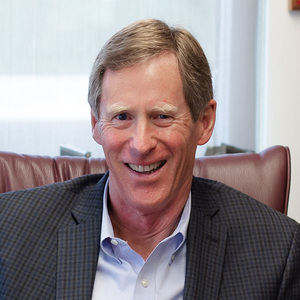
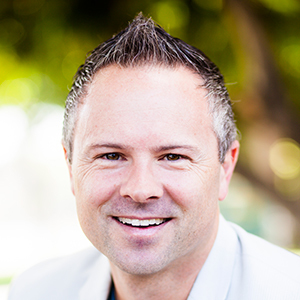
Sean McDowell: [upbeat music] The United States has a unique religious composition, and it is changing in significant and surprising ways. Here to discuss the religious landscape of America and what challenges and opportunities it brings to evangelicals is Professor Ryan Burge, a leading demographer of religious trends and author of the new book, The American Religious Landscape. This is the Think Biblically podcast, brought to you by Talbot School of Theology. I'm your host, Sean McDowell.
Scott Rae: I'm your co-host, Scott Rae.
Sean McDowell: Ryan, thanks for coming back.
Ryan Burge: Always a pleasure to be with you guys.
Sean McDowell: Now, I'm gonna start where your book starts, because the opening line of your book, you say that there's no other country on Earth that has the religious composition of the US. So what is that composition, and what makes it so unique?
Ryan Burge: So, America today is 63% Christian, about 30% non-religious, and about 7% everybody else. That's Mormons, Hindus, Buddhists, you know, A- the Wiccans, Jedis, you name it-
Scott Rae: [laughs]
Ryan Burge: ... That's in that 7%. [clears throat] no country looks like that for a couple reasons. One is, if you take our kind of closest cultural neighbors, like Western Europe, for instance, they're vastly more secular than we are. I mean, many of the Nordic countries have, attendance rates that are below 5%, so, you know, we can't really compare ourselves to Sweden or Norway or Denmark, but even Italy and France don't look like... The secular numbers are way higher there. And then so let's say let's compare us to a really religious country. You'd have to go to places like Sub-Saharan Africa or the Middle East, and the religiosity there does not look like the religiosity here. What really sets us apart is we're a very religious country, and also we're a very wealthy country. No other country on Earth can claim both those things at the same time.
Scott Rae: So is that the fun- the fundamental difference between, say, Christian faith south of the equator and north?
Ryan Burge: Yeah, in a lot of ways, what's going on in central-- We don't even really fully understand, like, the contours of what Christianity looks like in, like, let's say, Sub-Saharan Africa, Central South America. There's a growing explosion of evangelicalism, kind of what we would call evangelicalism, but really Pentecostalism in a lot of those places. Charismatic worship is really taking off. Those non-denominational churches are doing really well there, and they're conservative. You know, their theology is actually probably to the right of the average evangelical in America, and that's actually causing all kinds of issues. For instance, the g- the breakup of the United Methodist Church was due in part-
Scott Rae: Yeah
Ryan Burge: ... To the fact that the only growth happening there is happening in Africa, where those, folks are more conservative than the average United Methodist in America, and they really kind of had a split they couldn't get around, and that's why they're called the Global Methodist Church, the break-off denomination, because they really do have a locus of power outside the United States.
Scott Rae: So you said six- 63% Christian.
Ryan Burge: Mm-hmm.
Scott Rae: 30- some- 30-something...
Ryan Burge: 30% nones. Yep.
Scott Rae: Nones, okay.
Ryan Burge: Mm-hmm.
Scott Rae: So why is it that we refer to the United States as a secular society-
Ryan Burge: [sighs]
Scott Rae: ... If we ha- if we have that many religious people-
Ryan Burge: I think-
Scott Rae: ... In the country?
Ryan Burge: I don't-- Well, I think what the thought there is that, like, our government should be postured on a secular, you know, position. Like, we're not trying to advocate for one religion over the other, and that's actually, I think, what makes the United States really unique from its Western European neighbors is most of Western Europe had a state church at one point, if not until now. Even Germany has state religion. Even today, you actually pay taxes to a local denomination. We never did that. And, you know, I'm a Baptist, so I'm a believer of strong [chuckles] separation of church and state, and I actually believe that one of the reasons that religion is still robust in the United States is because we are a secular country from a government perspective. We don't favor one religion over the other. We don't pay taxes to a state church or any church. The government's not involved in any of those things, and I actually think that created a religious marketplace that allowed religion to thrive in a way that it really doesn't thrive in most of our closest cultural neighbors.
Sean McDowell: I think part of the conversation, too, would be some of the influential spheres, like the media, educational system, university, shaped more by secular ideas than by religious ideas, but in many ways, that's a separate conversation for another time. I'd, I'd love to know, in your research on evangelicals, especially in this book, when you're looking at kind of the American religious landscape-
Ryan Burge: Mm-hmm
Sean McDowell: ... What surprises you about that?
Ryan Burge: [sighs] Y- One thing I think that most people don't fully appreciate is if you look at sort of a distribution of age in the evangelical population, there's a huge concentration of evangelicals in the ages of, like, 55 and 70 years old. Which is good for now, but really bad in 25 years [chuckles] because most of those people will be dead or close to death. You know, they won't be active members of their church. They won't be volunteering and doing all the work behind the scenes to make those churches go, and there's not another sort of bulge in the, in the age pyramid behind that to replace all the people that have left. Really, the evangelical movement, if I would describe it's a baby boomer-led movement. I mean, it really gained traction in the 1970s through the 1990s, when boomers were coming of age, and there's no generation that's really come up behind them to fill in those gaps. And man, a lot of these churches that are, let's say, 300 people today, are not gonna be 300 people in 20 years because all those boomers are gonna die off, and there's just not a lot of millennials and Gen Z to fill that gap in.
Sean McDowell: What would you say about the discussion today in terms of revival and Gen Z coming back to church? I know you did a Substack on this a while ago-
Ryan Burge: Yeah
Sean McDowell: ... Which I read your Substack. It's great, by the way. But are we seeing a possible shift where there might be a new baby boom generation that leans into evangelical ideas?
Ryan Burge: So this is... I literally get asked this question probably five times a week now by-
Sean McDowell: [laughs]
Ryan Burge: ... Everybody on Earth, um-... So there is some peripheral metrics that do sort of like nudge their way towards revival. For instance, you know, Bible sales are up 40%, Spotify streams of Christian music are up 50%-
Sean McDowell: Yeah
Ryan Burge: ... Christian app downloads are up 90%, which, I mean, those are interesting metrics, don't get me wrong, but at the end of the day, it's, it's, it's about butts in seats, to be, [chuckles] to be clear, right? Like, that's what revival would lead to. And let me just walk us through a, an exercise here. Let's say, so today in America, about 25% of Americans report weekly attendance. Whether that's true or not, it's irrelevant. That's just the number, 25%. Let's say a revival would be an increase of just three percentage points in weekly attenders. So that translates in actual numbers to somewhere between 10 and 12 million new people coming to church today that were not coming six months or a year ago. 12 million people across about 300,000 Christian houses of worship, which means that every single church in America would need to add, on average, 30 to 35 new people today they didn't have six months ago, to get to that three percentage point increase. So when you actually, like, think of the numbers of what it would actually take to see a significant bump in religiosity in America, you realize, wow, that's a really... [chuckles] That's a, that's a huge mountain to climb. And, while we can all talk about churches that have added 1,000 people last year and 2,000 people last year, the average church in America is somewhere between 70 and 75 attendees. So are they adding 30 new people? Are they getting 50% larger? I think we can all admit that most churches are not doing that. They're staying stagnant or not even getting smaller over the last six months or a year.
Scott Rae: So, Ryan, what, if anything, gives you hope and optimism about the future of evangelicalism, given- ... The trends that you've just described?
Ryan Burge: I think it's the fact that, you know, there's this concept, like the remnant, right? You know, the, like, the faithful few who still stick around, and I think actually evangelicalism would serve itself a lot better by not trying to dominate the culture, by living in the culture and being one of many groups in a pluralistic society. And operating from that posture, I think is much more humble- ... It's much more approachable, it's much more willing to engage in dialogue. And I think the problem is, I think a lot of people who are outside the church feel like the church is trying to dictate their entire lives, and the reality is 63% of Americans are Christian, so yeah, I mean, you're the majority group, but in the future, that's not gonna be true. So how does-- how do evangelicals, how do Christians, largely speaking, reorient themselves? And I'm, I'm hopeful, actually, that creates a more helpful and healthy posture of evangelicalism in America. We can't lord over you. We have to walk alongside you and try to convince you know, why this message is right.
Sean McDowell: As far as my awareness, Ryan, it feels like, and this might be because I was in college in the '90s, but there was discussion about the downward trajectory of the mainline church at an even greater rate than the evangelical church. In your book, you say it's, like, going to largely disappear. So we've been talking about the coming potential cliff, and it seems like you're saying, "Yeah, the cliff is coming. It's going to disappear." So I'd be curious what you think, how bad is it for the mainline Protestant church, and is it really gonna disappear? And if so, why?
Ryan Burge: So, I mean, there's no way to sugarcoat this. I mean, it's, it's ba- however bad you think it is for the mainline- ... It's worse. Um-
Sean McDowell: Wow!
Ryan Burge: So they were, over 50% of America in the late 1950s, they were 30% of America in the mid-1970s, and today, less than 10% of all American adults are a part of the mainline. Less than 2% of all American adults are young mainline Protestants, in the ages of 18 and 40 years old-
Scott Rae: Wow!
Ryan Burge: ... Which means those are childbearing ones. Those are the ones who replicate, right? Who can kind of pass the denomination on to the next generation, and there's just very few of them. I mean, in the Episcopal Church, God love the Episcopal Church, they're so good at record keeping, and they actually publish the numbers even when they're really bad, and they're really bad. [laughing] you know, half of Episcopalians have celebrated their 65th birthday, and 13% are under the age of 18. I mean, [chuckles] just math that out actuarially. Like, what does that look like? And, and they're not alone in that. I mean, most mainline denominations are down 40 or 50% in membership just since the late 1980s. And there's really, like I said, there's just really not a whole lot of hope. When you walk in those churches, and you see, you know, a whole lot of gray hair and no kids or very few kids, I mean, you've basically demographically sealed your fate in that situation, that there's, there's not a lot of light at the end of the tunnel.
Scott Rae: So by... I suspect by contrast, Ryan, the Black Protestant church is different than that. So tell us, tell our listeners a bit about the state of the Black Protestant church-
Ryan Burge: Mm-hmm
Scott Rae: ... And sort of what, I suspect there are unique challenges that they face in comparison to evangelicals and the mainline.
Ryan Burge: Yeah, so the Black church has always been, you know... Like, I, when I teach about this, I have to make this point. The reason we divide the Black church up is 'cause if you've ever walked into a Black church, and you grew up in a white evangelical church, even a white mainline church, you realize just how different they are- ... You know, culture-wise. And also, the Black church is sort of the center of the, center spoke of the community, in the Black community. It's not just a religious space, it's also a social space, it's also a political space, and that's because they were locked out of those other spaces, you know, 30, 40, 50 years ago with Jim Crow. So that institution developed completely differently there. They are sort of slowly sliding downward. The share of Americans who are, members of a Black Protestant church are less than 5% now. Interesting fact, though, about Black Protestants, they're actually really religiously devout. On a lot of metrics, I c- actually can make a pretty strong empirical argument. They might actually be the most religiously devout, of any religious group on things like, frequency of religious attendance- ... Things like prayer frequency, things like religious importance. They score higher than even Latter-day Saints on a lot of those metrics. So the ones that are left there are incredibly devout, and when African Americans leave the Black church, they actually don't go that far. So if you look at Black nuns, so Black non-religious people, 90% of them describe their religion as nothing in particular. Only 10% say they're atheist or agnostic. So when they leave, they don't go to the, sort of the other end of the religious spectrum. They sort of hang out in the mushy middle, where they don't hate religion, but they're also not an atheist either. They're just sort of, they shrug their shoulders when they think about religion.
Scott Rae: Now, are... Would you, would you see the Black evangelical church as somewhat different than that?
Ryan Burge: ... So this is, like, where classification gets really hard. So when we call it the Black church, we usually think, like, the AME Church, African Methodist Episcopal Church, the AME Zion Church, the National Baptist Convention. And a lot of them, their theology is very evangelical. Like, they believe the Bible is literally true. They try to evangelize other people. The reason that we divide them out, not just the thing we talk about culturally, but also, you know, let's be clear here, 80% of white evangelicals voted for Donald Trump in 2024, and 90% of Black Protestants, voted for Harris. So, you know, the way I describe to my students is, theologically, evangelicals and Black Protestants are actually really close together, but politically they couldn't be further apart, and I think that's really one of the key differences.
Scott Rae: That's a help- that's a helpful distinction.
Sean McDowell: Wow, 80 and 90, that's amazing. It's hard to think of something that would be more defining in terms of differences-
Ryan Burge: Yeah
Sean McDowell: ... Than that. Now, in your book, you talk about Latter-day Saints, growth of Muslims. You talk about Catholics, and I'm really curious, how religiously active are Catholics today?
Ryan Burge: Mm-hmm.
Sean McDowell: And how much, kind of in particular, do they practically embrace Catholic teachings on social issues like abortion, same-sex marriage, and contraception?
Ryan Burge: Yeah, so the share of Americans who are Catholic has actually been really stable over the last 50 years. You know, I put the graph up, and it's just basically a line just bouncing, you know, above and below 25%, 23%, 26%, 25%, just bounce up and down. Now, the last couple years, it's gone down just a little bit. So today, the share of Americans who are Catholic is probably 22 or 23%, down just a couple points from the baseline. But the number below that number is actually the more important number, which is the share of Catholics who report attending mass nearly every week or more. In the 1970s, about half of Catholics were weekly mass attenders, and today it's only 25% of Catholics- ... Are weekly mass attenders. So on an average Sunday in America, we can extrapolate out there's about maybe 15 million Catholics going to mass nationwide in a country of 340 million people. So yes, there's a lot of... You know, almost a quarter of Americans identify as Catholic, but the actual number who are sort of devout, church-going, practicing Catholics, is incredibly low. And as you mentioned, if you look at their behavior on abortion, a majority of Catholics, favor of abortion rights. On contraceptives, even though the church, preaches specifically against birth control, 95% of Catholics have used birth control in their lives before.
Sean McDowell: Wow!
Ryan Burge: So I think there's a lot of sort of cultural Catholicism, where you're a Catholic because you're, you know, Irish American, Italian American, Hispanic, and it's part of your sort of familial lineage. It's almost become like, you know, people are, like, ethnically Jewish. It's almost like that with Catholicism, and they're not really... You know, they might go to Confirmation, go to First Communion, do all those things, and by the time they're 13 years old, they stop going entirely.
Scott Rae: Wow, that I had no idea that the ratio was that high. I mean, I think it's, it's... I think it's pretty common knowledge that, not every- not everybody who claims to be Catholic adheres to all the elements of Catholic teaching. But to see the number that high on some, on some of those aspects is really surprising.
Sean McDowell: 95%, I just have to say again, use contraception, and over-
Ryan Burge: Mm-hmm
Sean McDowell: ... Half are pro-choice.
Ryan Burge: Yeah.
Sean McDowell: These are, like, defining, important issues for Catholics, just to emphasize your point, Scott.
Scott Rae: Yeah. Now, Ryan, I'm, I'm curious, as- to ask a similar question that Sean did about Catholics, I'm curious about how m- how m- that might apply to the Jewish community.
Ryan Burge: Mm-hmm.
Scott Rae: And is it... You know, h- I mean, are there- is there a different... Can, can we distinct- can we distinguish between secular religious Jews, you know, and how religiously committed they are? Because you've got, you know, we got the Ul- the Ultra-Orthodox, who I'd say are the, are the ultra-committed, and then Reformed and other types of Jewish communities, not so much. And then I think there are some that are just Jewish by ethnicity-
Sean McDowell: Or culturally
Scott Rae: ... Yeah, more than anything, more than anything else.
Ryan Burge: Yeah, that's actually one of the hardest things. Judaism presents a real problem from, like, a survey research standpoint because it- like you mentioned, it's, it's, it's a religion, but it's also a genetic thing, a heritage thing, right? Your parents are Jewish. They're... And, and so therefore, you're Jewish, but you might be an atheist Jew. That's always a fun thing, when people tell me they're an atheist Jew. I'm like, "Okay."
Sean McDowell: Right? [chuckles]
Ryan Burge: "How are we gonna classify these people?" [laughing] but the problem is you can't really write a survey, like a general purpose survey, that really digs down into the Jewish issue, you know, dividing them into... Like, you wanna ask Jews, like, the follow-up, which is like, "Are you a secular Jew, or are you, like, a, like, a religious Jew?" But you can't, you can't do that for Catholics.
Scott Rae: Right.
Ryan Burge: You can't do that for Protestants. It would feel weird to do that. So the problem is, we have to sort of, like, back into the answer. And I... You know, in the book, I talk about, like, you know, Jews who don't have a lot of importance on religion or don't go to synagogue very often, but even then, like we just talked about with Catholics, I mean, there's a lot of Catholics... Even among evangelicals, half of them don't go to church every week. So it's like, how do you-- I don't wanna, put my values. You know, people are like, "What about the real Christians?" I go, "Define a real Christian for me." [chuckles] You know? Like, what's the dividing line? Operationalize, that's my, the term I use a lot. Operationalize the concept for me, right? What is the dividing line between a real Christian and a not? Is it prayer frequency? Is it religious attendance? Is it evangelical identification, religious importance? Tell me, like, how to create a real Christian, because if I ask 10 people, they'd all create a different category, and I think-
Scott Rae: Right
Ryan Burge: ... The same thing's true with Jews. You know, like, what's the dividing line between being a secular Jew and being a religiously observant Jew? I think if you ask 10 Jews, they'd give you a different answer.
Sean McDowell: I wanna highlight for our audience-
Scott Rae: Yeah
Sean McDowell: ... That we're not trying to answer the question theologically or biblically, what is a real question, but in terms of surveying the religious [chuckles] landscape.
Ryan Burge: Exactly right.
Sean McDowell: How do you really get to the heart and beliefs about somebody and show that on a survey?
Ryan Burge: Mm-hmm.
Sean McDowell: That's where it gets tricky.
Scott Rae: Yeah, so just to follow up on the, on the Jewish community, Ryan, if you, if you had to guess at it-... Mm-hmm, what percentage would you say are secular as opposed to religious Jews?
Ryan Burge: Probably half. Yeah, so about one and a half percent- ... Of Americans, identify as Jewish, and so I think you could probably put, like, observant Jews probably right below 1% of the population. So you're talking in a, you know, country of 345 million people, you're talking about maybe three and a half million-
Scott Rae: Mm-hmm
Ryan Burge: ... Observant. And I think that's actually one of the, like, one of the takeaways from the book is, I think we need to understand how small some of these religious groups really are. You know, like, I think they play an outsized role in the discourse. For instance, you know, like we talk about Jews are 1.5, maybe 2% of the population at the most, yet it seems like there's a lot of discussion about Judaism in America or, Muslims. You know, Muslims are 1% of the population. They're not this huge share, yet we talk about them all the time. For every one Muslim in America, there's 63 Christians, and we don't talk about Christians in America 63 times more than we talk about Muslims. I think we're fascinated by these really small religious groups in America.
Scott Rae: Well, I think partially for the Jewish community, I think you can make an argument that they've had outsized cultural influence, given their numbers. We also talk a lot about antisemitism.
Ryan Burge: Mm-hmm.
Scott Rae: Why do you think we talk so much about antisemitism for 1% of the population?
Ryan Burge: [sighs] This is the, this is the question that's gonna... Like, you gotta dodge landmines left or right.
Scott Rae: [laughing]
Ryan Burge: And it's unfortunate, right? 'Cause we can't just, like, have an honest conversation about things. But, I mean, I think you are right. Like, empirically speaking, Jewish people are overrepresented in places like the legal profession, right? Like, that's just a fact. They have... Statistically speaking, they have really high incomes. Actually, of the the top four, highest incomes, it goes Jewish group, Jewish group, Hindus, and Jewish group, and then Episcopalians- ... They're fifth. So, like, statistically speaking, like, these tropes, you know, these stereotypes do come from somewhere that's statistically true. That's actually one of the weirdest, like, most awkward parts of my job, is I have to say, "Yeah, the thing that everyone says, like, kind of jokes about, is actually true, empirically true." And I mean, we'll add to that the fact of what's going on with Israel and Gaza, Hamas, and all that stuff. I think, you know, Israel's always... I bet Israel as a country is discussed more in the United States than any other country in the world, and I just think that's a really fascinating... I mean, they're not statistically that large or that powerful or really that important, but man, we talk about Israel and Judaism a lot in this country. And I think part of it, too, by the way, is Zionism. A lot of evangelicals want to talk about Israel and protecting Israel and the end of times and all those things, but they d- I think it's statistically true to say they play an outsized role in the discourse based on the actual size of their population.
Scott Rae: Yeah, and not that you're saying that's a bad thing.
Ryan Burge: No, not at all.
Scott Rae: It's just, it's just an observation, right? And, and-
Ryan Burge: It's just an observation, and that's the thing is, like, you know, you don't wanna get accused of being anti-Semite. Like, the last thing I would ever wanna do. I have a l- I work with Jewish groups all the time. I love them. I work with Latter-day Saint groups all the time. I work with the Freedom From Religion Foundation guys.
Scott Rae: [chuckles]
Ryan Burge: They gave me a grant to study their membership. I did that.
Sean McDowell: Amazing.
Ryan Burge: I will work with any group who is willing to give me access to data and have no editorial control over what I write. I just wanna understand the world, whether it be evangelicals or Catholics or Muslims, I don't care. If you want... If you think I can help you understand yourself and help other people understand you, then I'm in, all the way.
Sean McDowell: And by the way, I know at this point some people are saying, "Well, of course, Israel has an outside influence because of God's promises to them and the future of Israel." Again, that's a theological point. We are looking at this in terms of surveying religious trends in America and beyond. That's kind of the trajectory by which you're approaching this.
Ryan Burge: Mm-hmm.
Sean McDowell: Now, you've mentioned a couple times the Latter-day Saints.
Ryan Burge: Mm-hmm.
Sean McDowell: What is the conversion trajectory for, the Mormon Church, and how much of that, if we can really tell, is due to conversion birth versus birth rate?
Ryan Burge: Okay, so interesting fact about Latter-day Saints: there are actually more Latter-day Saints living outside the United States now than inside the United States.
Sean McDowell: Wow!
Ryan Burge: I don't think a lot of people realize that. [chuckles]
Sean McDowell: Huh.
Ryan Burge: Like, it's actually been called the most American religion, which I think is true, by the way, 'cause it's, like, the religion that started in the United States-
Sean McDowell: That's right
Ryan Burge: ... That has a global reach.
Sean McDowell: That's right.
Ryan Burge: Like, that's a fact. But their growth has actually slowed down significantly inside the United States and grown exponentially... It's like these weird k- the Philippines, there's a huge LDS community in the Philippines. In Hawaii, I know it's America, but in Hawaii, there's also a huge LDS community there, too. You're like, "How is this...?" In Brazil. So there's, it's like these odd countries you would never figure out why. Conversion, by the way, let's just talk about conversion for a second, 'cause I think they're a great example of something that evangelicals need to consider very carefully. So, you know, if you're an LDS male and you turn 18, graduate high school, you're supposed to go on mission for two years. You know, somewhere, in America or even across the world, you wear those black pants and the white shirt and the tie, you walk door to door, you try to get people to convert to, Mormonism. You know what the average number of converts one of those missionaries gets in their two-year mission? The answer is about two lifelong converts. So they work 40 hours a week for two full years, and they manage two conversions total. So you can hire a missionary for your church right now, pay them a wage, and send them out to work full-time, and if there's one of them, they will bring one convert back in 365 days. Or you could have four kids, you know, have a family in your community have four kids, and you keep all of them in church. So which one's easier? You know, I would say conversion is hard and retention is easy. I think they're the prime example. But one of the reasons they're still doing so well in America is 'cause they have a really high fertility rate, and they manage to keep, a significant portion of the children who are raised in the Latter-day Saint faith. That is how they're growing in America. It's not really converting new people in.
Scott Rae: Now, would the same thing, Ryan, be true of Muslims?
Ryan Burge: ... So Muslims are interesting because they're so young. I think people don't realize this about, Muslims. A majority of Muslim adults in America today are under the age of 35 years old. They are a very young-
Sean McDowell: Wow.
Ryan Burge: Like, for instance, the average age of a Muslim in America is around 30 years old. Among evangelical, it's like s- it's close to 60. I think it's 58 years old now. So they're very young. Immigration helped them a lot, obviously, in America over the last 10 or 15 years, although that's probably changing over the next 10 or 15 years. But you also have to understand, you know, the rate of growth of Islam in America was, it was about 0.5% in 2007, and today it's just a little over 1%. So they grew a half a percentage point in about 15 years. There's no reason to think they're gonna be even 5% of the population in 50 years. That growth rate's gonna slow because the fertility rate here will match our fertility rate. They're not gonna have eight kids. They're gonna have two kids, like Americans typically have. And by the way, I know everyone likes to talk about, like, Dearborn, Michigan. The share-- There's not a single state in the union where Muslims make up more than 5% of the population today, and there's actually only two or three states where they make up at least 3% of the population. So, you know, there are Muslims in America, and they do sort of congregate in certain areas like Dearborn, Michigan. But even in places like that, the only place they're really the majority is one city in Michigan, Dearborn. Most other places, they're, they're a very small minority.
Sean McDowell: What about the secular kind of community in the US? And by that, I'm referring to people who identify as atheist or agnostic. What's the number and kind of what's their trajectory for the future?
Ryan Burge: Mm-hmm. So about-- So today in America, somewhere between 5% and 6% of Americans identify as atheist, and about the same share say they're agnostic. So, you know, if you put 100 Americans in a room, 10 to 12 of them were atheist, agnostic. It's actually... It's a group that's, that's big-ish. I mean, they're probably the same size as the mainline is right now, interestingly enough. [chuckles] but the trajectory of their growth has actually slowed down really significantly over the last five years or so, even longer than that. I mean, we might have seen a 1% increase in the share of Americans who are atheist, agnostic today versus 2018. So you really don't see a whole lot of growth there. And even if you look at, like, the youngest adult Americans, you know, in the entire population, about 12% of people are atheist, agnostic. Among 18 to 22-year-olds, it's only 14%. So, like, they're not-- We're not gonna see a future in America where, like, let's say, 25 or 30% of Americans are atheist, agnostic, unless something just changes dramatically in the data that we've not seen before. I mean, they're probably gonna end up being somewhere between 13% and 15% of the population, even 30 or 40 years from now. So, like, I think in a lot of ways, the evangelicals sort of make a boogeyman, you know, out of atheist, agnostics. Like, "Oh, they're all out-" th- yeah, like, they do exist, and like I said, but for every one atheist/agnostic, there are six Christians in America. So they're there, but they're still very much outnumbered, by Christians in America.
Scott Rae: Ryan, let me ask you to put on your prophetic hat for a moment. What, if you had, if you had to give your most educated guess at it, what do you think the religious landscape is gonna look like 30 years from now?
Ryan Burge: Yeah, that's, that's a good question, and I think a lot of it... If you would've asked me five years ago, I'd have given you a different answer than what I'm gonna give you right now, 'cause the nones had continued to rise, five years ago, basically without stopping, just continued up. Trajectory would continue to go, and we really didn't know where the nones were gonna stop. You know, we didn't know if it was gonna be 50% of the population, 60% of the population. So actually now what we kinda know with a little more clarity is that among Gen Z, the share who are non-religious is somewhere between 42% and 45%. And the share of Christians is probably about 45-- probably about the same share, 45% to 50%, maybe. So what I think the future's gonna look like, more than likely, is probably 40% to 45% non-religious, and then 40% to 45% Christian, and then the other 10% are gonna be all these other groups we talked about: Hindus, Muslims, Buddhists, Jews, Latter-day Saints, you know, the Wiccans, the Jedis. All those people are gonna make up the last 10%. So in the future, I mean, I don't think we're gonna get to a place in my lifetime where a majority of Americans claim no religious affiliation. I think actually, Christians and the nones will probably be in pretty statistical parity with each other in 30 or 40 years.
Sean McDowell: You've mentioned the Jedis twice-
Ryan Burge: Yeah
Sean McDowell: ... So I've gotta ask, what percentage of Americans [chuckles] identify as Jedi?
Ryan Burge: Oh, it's like, it's a fraction of a percentage.
Scott Rae: [laughing]
Ryan Burge: Like, if you, if you... The way that works is, like, you get the-
Scott Rae: I thought you were just throwing that in as a joke.
Ryan Burge: Yeah, 'cause everyone laughs when I use the word Jedi, 'cause it's like, "Ah, Jedis!" Actually, in, like, New Zealand, they're a recognized religious group now, 'cause there's enough of people who say they're Jedis.
Sean McDowell: Oh, huh.
Ryan Burge: But, but so there's this category called something else.
Sean McDowell: Yeah.
Ryan Burge: And you can, like, write in a box what you are, and you get the weirdest answers in that something else category, right?
Sean McDowell: Mm-hmm.
Ryan Burge: You get, like Jedis. You get also, like, ancient alien theorists, like vegetarians. One dude said, "I'm an atheist, but my wife's Episcopalian. I go to church with her." And I'm like, "Oh, man, like, I don't even know what to do with you in this situation-
Scott Rae: [chuckles]
Ryan Burge: 'cause you're atheist, but you go to Episc-" You know, like... And, and what's funny about those and kind of sad about those is a lot of them will say they're Baptists or Pentecostal or non-denominational when the first option on the actual question was Protestant. They don't know they're Protestant. So actually, there's a lot of people who call themselves something else that are really Protestants-
Scott Rae: Interesting
Ryan Burge: ... And just don't know it because we don't use the word Protestant a whole lot. So one of my big hobby horses recently is convincing survey firms to include a, another option called Christian, other than above, on the survey to kind of capture those people who don't know what the word Protestant means but are, in fact, Protestants.
Sean McDowell: Ryan, final question for you. You, you work with a lot of different religious groups and obviously have your own religious beliefs. You were a pastor for a while, and you talked about, moving on from that. But our audience are primarily evangelicals, and evangelicals have a range of concerns, but one would be passing on their faith to the next generation, and another would be evangelism.
Ryan Burge: Mm-hmm.
Sean McDowell: So given our religious landscape, what encouragement would you give to evangelicals, to maybe do those well in the years ahead?
Ryan Burge: Yeah, so the first thing I would say is-... You've gotta understand, evangelicals are actually doing a better job than other groups are. Evangelical retention rate is above 70%, which means you have, you know, there's 10 evangelical kids in your church right now, seven of them will still be evangelicals into adulthood, which is actually, you know, you think, "Well, three left." That's actually really good, 'cause among Catholics and mainline Protestants, it's closer to 55%. So still doing really well. But I think the key, and this is something you see over and over in the data, is that most non-religious people never were that religious to begin with and were never really raised in religious households. If you raise your kids... You know, I just did a- I just wrote a piece about this. We did a huge survey of nones, 12,000 non-religious Americans. We asked a ton of questions about the religious environment they grew up in, and if you, if you grew up in a household where your mother and your father were both Protestants or Catholics, and both of them went to church every week, the chances of you not being a Christian were 13%. So, like, if you raise your kid in a religious household, the vast majority of the time, they are going to stay in the way that they were raised. And I think that should actually provide a lot of comfort for a lot of people who are doing those things that we just talked about. They're, they're committed Christians. They're going to church on a regular basis. It- a lot of nones grew up in houses that were marginally religious at best, if not non-religious, and they just never really grabbed onto religion. So I think in many ways, you know, train up a child in the way he will sh- he will go, and when he gets old, he won't depart from you, is, you know, biblical wisdom is actually empirical wisdom, statistical wisdom, that it actually does show up in the data that way.
Sean McDowell: Well, that is a good word-
Scott Rae: That's very encouraging
Sean McDowell: ... To end with. Biblical wisdom is empirical wisdom, and of course, we see that in Deuteronomy 6, when it talks about talking with these things to your kids when you walk along the way, when you lie down, when you get up. So living it out, mentoring it, taking kids to church, prioritizing spiritual things, you have a great likelihood of seeing your kids do as well. Ryan, I told you it was the last question, but I do like to let our audience know the kind of book we're talking about. This is an Oxford Press book, and it's a research book, isn't it? Who did you write it for?
Ryan Burge: I wrote it for anyone who just wants to know basic answers to questions about religion. You know, they just don't know where to get them from. What, you know, what share of Americans are Muslim? Where are they located geographically? What do Latter-day Saints look like in America? What's the average age of a mainline Protestant, you know? I wrote it to almost be like a reference manual, but I really, what I wanted to do was I wanted to get it assigned in, you know, cl- American religion classes, history classes about American religion- ... Theology class. I want it to be taught in seminaries, 'cause, you know, my big, you know, my big thing now is seminaries will hire people to teach you Greek and Hebrew and Aramaic, but you don't have a sociologist on staff to, like, help your s- you know, seminarians understand what American religion looks like. Where are the soft spots? Where are the growth part- You know, what can we learn from a, from a more sociological perspective? And I hope my books can sort of be introduced in some of those courses to help those students understand what the world actually looks like.
Sean McDowell: Well, you're doing great work. I read your Substack regularly, and somehow you have a knack for just asking the questions that are in the back of my mind, and I go, "Yeah, I've wondered about that,"-
Ryan Burge: [chuckles]
Sean McDowell: ... As it pops up, and I read it. So we will keep having you back as long as you keep producing stuff and you're willing to join us. The book, again, is called The American Religious Landscape, and our guest today has been Ryan Burge. Ryan, thanks for coming on.
Ryan Burge: Always a pleasure, guys. Appreciate it.
Sean McDowell: This has been an episode of the podcast Think Biblically: Conversations on Faith and Culture. We've got master's programs in person and online in Old Testament, New Testament, marriage and family, philosophy, apologetics, and so much more. Please keep your comments and questions coming. You can send them to us at thinkbiblically@biola.edu. Whether you enjoyed today's episode or not, please give us a rating on your podcast app. We would deeply appreciate it, and consider sharing it with a friend.
Scott Rae: Preferably a positive one.
Sean McDowell: Yeah, preferably, but you know what? We'll take an honest review wherever we can get it, and to be honest with you, the each review actually really helps us spread the word to get more people thinking biblically. So we appreciate you listening, and remember, think biblically about everything. [upbeat music]