Biola University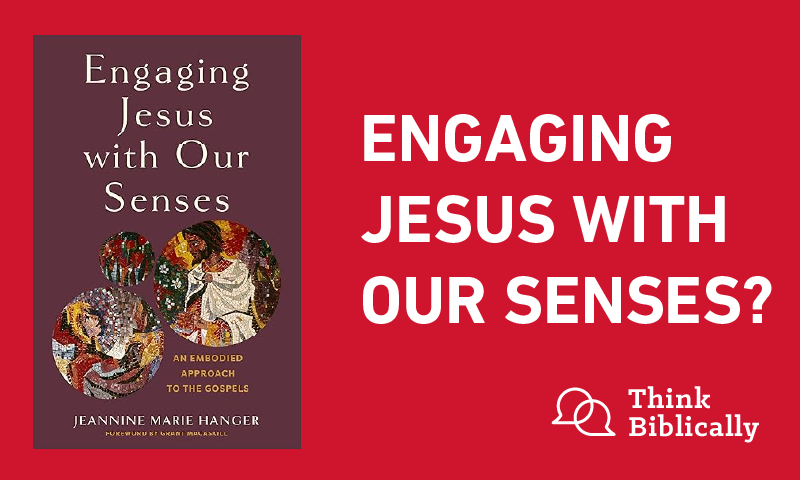
What does it mean to engage Jesus with our senses? What is an embodied approach to studying the life of Jesus as opposed to the way we normally read the gospel accounts? How could this change the way we encounter Jesus in the gospels? We’ll discuss these questions and more with our guest, Talbot colleague Jeannine Hanger in her new book, Engaging Jesus with Our Senses.
Dr. Jeannine Hanger is Associate Professor of New Testament at Talbot. She has a Ph.D. from the University of Aberdeen, and is scholar in residence at Coastline
Covenant Church in Southern California.
Episode Transcript
Scott Rae: [upbeat music] What does it mean to engage Jesus with all of our five senses? What is an embodied approach to studying the life of Jesus, as opposed to the way we normally read the Gospel accounts? And how could this change the way we encounter Jesus in the Gospels? We'll discuss these questions and more with our guest, our Talbot colleague, Jeannine Hanger, with her new book, Engaging Jesus with Our Senses. I'm your host, Scott Rae.
Sean McDowell: And I'm your co-host, Sean McDowell.
Scott Rae: This is Think Biblically from Talbot School of Theology at Biola University. Jeannine, welcome. Really glad to have you with us, and we loved your book. It's just got a lot of good things in it that frankly, I hadn't thought about much before. I've been reading the Gospels for 50 years- ... And this brought out some really helpful things- ... That I think will help me read the Gospels in more depth. So welcome, great to have you with us.
Jeannine Hanger: Thank you. Thanks for having me.
Scott Rae: So tell us, first of all, what inspired you to write a book like this, that I think is... I just don't see much like this out there. It seems like the- ... You've got a nice little niche that you're filling here. So what urged you to get involved in this particular area of study in the Gospels?
Jeannine Hanger: Yeah. It, it all stemmed, actually, from my doctoral studies in Gospel of John, and I was, I was actually searching around for, a dissertation topic. [chuckles] And the thing that I'm most captivated by is this idea of our union, our participation with Christ. When we, you know, come into a relationship with Him, what is this abiding relationship? And so I was really, drawn in by John 15, abiding. Jesus says, "I am the vine. We are the branches who abide in the vine." And so that was the initial, jumping-off point, and then from there, you know, the... That is the seventh of seven "I am" sayings in John, so then it expanded out to seven "I am" sayings. And as I was looking and looking and looking at the seven "I am" sayings, I realized these are metaphors, and they're actually pretty sensory. "I am the light of the world," we're invited to see the light. "I am the bread of life," we are invited to eat the bread, and Jesus is the one saying, "I am the bread."
Scott Rae: Mm-hmm.
Jeannine Hanger: And so what does it mean to eat, and how does that contribute to our notion of participation with Christ? And so from there, it expanded out, to look at the Gospels more widely.
Sean McDowell: There's a few terms that I want you to kind of unpack and explain to us. You talk about how knowing is embodied-
Jeannine Hanger: Mm-hmm
Sean McDowell: ... And how senses are culturally mediated.
Jeannine Hanger: Mm-hmm.
Sean McDowell: What do you mean by that, and how would that mesh with mind-body dualism-
Jeannine Hanger: Yeah
Sean McDowell: ... That we are both body and soul?
Jeannine Hanger: Mm-hmm. Yeah, I think sometimes we fall into this, notion that knowledge is just something that exists in our minds, almost like a, like knowledge is a disembodied thought or a propositional truth, which, I mean, there are propositional truths that are knowledge, but the things that we know, we know as embodied beings. And so, thinking about, knowledge, To give an example, I can talk to you all day long about a kitten and what it feels like when you touch its fur, but you don't really know what it feels like till you touch its fur. So it's a certain kind of knowledge- ... That you can only get through your senses. You know, I can do the same thing with bread. I can tell you about it. We can smell it. We can even bake it, but you don't know what it tastes like till you taste it. So it's certain kinds of knowledge like that. And your second question?
Sean McDowell: Well, you were talking about culturally-
Jeannine Hanger: Oh, yes
Sean McDowell: ... Embodied.
Jeannine Hanger: Yeah, so, um-
Sean McDowell: And culturally mediated.
Jeannine Hanger: Yeah. The se- the thing, as I was researching, the, sensory elements of the "I am" sayings, I came upon this newer discipline called sensory anthropology, and it's really just a multidisciplinary effort to look at the senses. And what they've discovered is that the senses are actually culturally mediated.
Scott Rae: Huh.
Jeannine Hanger: And so we think of five senses as if it's a biological existence that all of us agree on, you know, sight, hearing, smell, taste, touch. But if you go to other cultures, they count the senses differently. They value the senses differently. So you might have, you have some cultures where, heat is kind of... Thermal dynamics are considered to be part of their senses. Or maybe they only count two senses. They might count sight and then a term to capture all the rest. And so, the five senses is a very modern... Well, I mean, it actually... I think that you could argue that there are five senses we see in the Bible, and that's actually the, collection of senses I've used in my study. But there are other scholars who've counted more than five.
Scott Rae: Huh.
Jeannine Hanger: So yeah.
Scott Rae: Very interesting.
Jeannine Hanger: Yeah.
Scott Rae: So this idea of faith being embodied.
Jeannine Hanger: Mm-hmm.
Scott Rae: Of course, we are, we are embodied creatures.
Jeannine Hanger: Mm-hmm.
Scott Rae: We're not just souls on a stick.
Jeannine Hanger: Mm-hmm.
Scott Rae: And the bo- the body matters-
Jeannine Hanger: Mm-hmm
Scott Rae: ... Because, you know, if it doesn't, then we got a lot to explain with the incarnation-
Jeannine Hanger: [chuckles] Right, right
Scott Rae: ... And, you know, Jesus taking on human flesh.
Jeannine Hanger: Yeah.
Scott Rae: But how does this concept of our, of our faith actually being embodied-
Jeannine Hanger: Yeah
Scott Rae: ... How is, how is that important to understanding the life of Jesus?
Jeannine Hanger: Yeah, I mean, when we talk about our faith, you know, it's more than just, I am m- giving mental assent to a belief. It is, it is your whole life, right? It is... We talk about believing in Jesus, and it's really easy to keep it at just, like, "I believe a bunch of things about him." but really, I mean, when you look at, the Gospels, it's about a believing life. It is when you join your life to Him, it is about stepping into His presence, and it's a long, [chuckles] it's a long-term, believing life. It's the abiding life. And so, an embodied faith, I think, is recognizing that, this is a belief that infiltrates every part of our- ... Lives, and it's, You know, how do we understand it as we relate to Jesus? Jesus is the Word made flesh in the Gospels, and we read about, the life that He lived. And I think as we look into the Gospels with an eye toward, t-... Trying to really, like, get inside the world of the text, I think it reminds us, "Oh, yeah, this is maybe what it would've been like to encounter Him in person," and, it gives us a sense of tangibility in a world where He actually says, like, you know, in the Farewell Discourse before He goes to the cross, He says to His disciples, "I'm leaving [chuckles] -" " ... But I'm gonna be with you. Like, I'm with you, but I'm not with you." And so it's the presence and absence, so we live in a world where He is not physically present, but we have, you know, His Spirit. We, we are also told that He abides with us, so how do we understand that better?
Scott Rae: Well, I think the rest of the New Testament brings that out, too.
Jeannine Hanger: Mm-hmm.
Scott Rae: When Paul said, you know, "Gl- glorify God with your body"-
Jeannine Hanger: Yeah
Scott Rae: ... You know, specifically.
Jeannine Hanger: Yeah.
Scott Rae: It's not, it's not just how we think- ... But it's how, it's how that translates into, you know, how we behave with our bodies.
Jeannine Hanger: Mm-hmm.
Scott Rae: That's a big part-
Jeannine Hanger: Mm-hmm
Scott Rae: ... Of what our discipleship's about.
Jeannine Hanger: Yeah.
Scott Rae: I think you, I think you've captured that well. One, one sort of follow-up on this: Why, why do you, why do you think we've, we've overlooked this?
Jeannine Hanger: I think, sometimes as believers, you know, we are so, intent on when we, want to connect with God, and we engage through the Word, and we should. That's what we... You know, we understand who God is by looking into His Word, but do we only keep- do we limit it to that, where we're just engaging words, on a page, and so it's very sight-centric? You might hear the words being read, but there's more to it than that. It is, You know, it- I think that we can think about how does the Word flesh out in our daily lives? If we believe that Jesus is truly present at all times, how does... How is He working at all times as we encounter the Word and then seek to live it out?
Sean McDowell: I might be pushing a little bit beyond the focus of this, but your question, Scott, was, "Why do we overlook these sensory elements?"
Jeannine Hanger: Mm-hmm.
Sean McDowell: And my question is, "Who is we?" Because I suspect in the broader Christian tradition, this is less Catholics and Orthodox-
Jeannine Hanger: Mm-hmm
Sean McDowell: ... Probably more Evangelicals.
Jeannine Hanger: Yeah.
Sean McDowell: Would you agree with that, and is there something embedded within kind of the Protestant, Evangelical, just the way we read the Bible, [chuckles] the way we go to church-
Jeannine Hanger: Mm-hmm
Sean McDowell: ... That maybe encourages a less sensory approach to the Scriptures, or is it really just moderns today as a whole read it through a different lens?
Jeannine Hanger: Yeah, interestingly, when I first started going down that path, it was actually directed at first to academics- ... Because that was the... It was started in my dissertation, and it was like, as academics, we read in sensory silent libraries. [laughs]
Sean McDowell: [laughs] Right.
Scott Rae: [laughs]
Jeannine Hanger: You know, like we spend so-
Sean McDowell: Exactly.
Jeannine Hanger: Like, we're in books, and we're thinking about all this truth and knowledge. [chuckles] And so to bring it into, you know, all the senses felt a little bit like I was pushing it in the academic realm.
Sean McDowell: Yeah.
Jeannine Hanger: But then when you bring it into the church, too, I mean, it is this focus on, you know, we have to be in the Word, and-
Sean McDowell: Yep
Jeannine Hanger: ... It can become almost like a, you know, divorced from, "Well, how does this live in your daily life?" And, and it's all integrated, but do we always live that way? You know, I have, you know, my time that I spend in the Word over here, but then I go live my life over there, and how are these coming together? So it... Yeah, I think it could. I think the Evangelical world, it can apply there as well.
Sean McDowell: I mean, you even look at some of our practices.
Jeannine Hanger: Yeah.
Sean McDowell: Like, in a Catholic church, you get down on your knees.
Jeannine Hanger: Knees. Yep. Yep, yep.
Sean McDowell: It's a very embodied kind of-
Jeannine Hanger: Yep
Sean McDowell: ... Experience. Orthodox have icons.
Jeannine Hanger: Yep.
Sean McDowell: And that's a whole debate we won't enter into, but a-
Jeannine Hanger: Right
Sean McDowell: ... Visible representation.
Jeannine Hanger: Yeah.
Sean McDowell: Evangelicals, like you said, will pray, read the Bible, very less embodied-
Jeannine Hanger: Yes
Sean McDowell: ... Kind of experiences.
Jeannine Hanger: Yes.
Sean McDowell: And I haven't really thought about this until your book-
Jeannine Hanger: Yeah
Sean McDowell: ... Like, how much that shapes the way we read the Scriptures-
Jeannine Hanger: Yep
Sean McDowell: ... And just miss truths that are there.
Jeannine Hanger: Yeah.
Scott Rae: Yeah, and I think even, I mean, even some traditions have smells.
Jeannine Hanger: Yep. They do! [laughs]
Scott Rae: You know, that's right.
Sean McDowell: That's right.
Scott Rae: They burn incense-
Sean McDowell: That's right
Scott Rae: ... And, you know, other things.
Jeannine Hanger: Yep.
Scott Rae: And, uh-
Jeannine Hanger: Mm-hmm
Scott Rae: ... You know, and so, yeah, I think that's, that's designed to get us to engage, you know, engage the Gospel message at a-
Jeannine Hanger: Mm-hmm
Scott Rae: ... You know, at a sensory level-
Jeannine Hanger: Mm-hmm
Scott Rae: ... That I think sometimes our own Evangelical tradition-
Jeannine Hanger: Mm-hmm
Scott Rae: ... Is absent.
Jeannine Hanger: Yeah, yeah.
Scott Rae: So let's be a little more specific here. You- 'cause you devote some material in each ch- in each, in each chapter to each of the five senses.
Jeannine Hanger: Yeah, I do.
Scott Rae: So what about the s- the role of taste? That's the one I think that is... Maybe we have a tough, have-
Jeannine Hanger: Yeah [chuckles]
Scott Rae: ... A little difficult time getting our arms around.
Jeannine Hanger: Mm-hmm.
Sean McDowell: Sure.
Jeannine Hanger: Mm-hmm.
Scott Rae: But the role of taste in the Scripture, you've already talked about Jesus being the Bread of Life, but how did- how does that- how does the role of taste factor in in the Scriptures and guide our understanding of our, of what our spiritual life should be like?
Jeannine Hanger: Yeah, so taste, I've actually expanded it to include hunger and- ... Being hungry and being filled, so it's taste, but it's also hunger-
Scott Rae: Mm-hmm
Jeannine Hanger: ... And s- being satiated. And so, I would say the first thing is, the first thing that kind of resonated for me was I actually was writing a chapter on taste while I happened to be fasting. It was, like, un-
Sean McDowell: Oh, wow.
Jeannine Hanger: It was unrelated-
Scott Rae: Interesting
Jeannine Hanger: ... But not, [laughs] um-
Sean McDowell: [laughs] That's painful. [laughs]
Jeannine Hanger: Yeah, and I'm f- I was fasting, and I was having this experience of feeling so weak, but not just physically weak, but, like, the physical weakness of not eating had infiltrated all of- ... Like, I sensed, like, if someone said something mean to me, I was gonna cry.
Scott Rae: [laughs]
Jeannine Hanger: Like, it just made me feel very vulnerable in the mo-
Scott Rae: Yeah
Jeannine Hanger: ... Like, I just was vulnerable, not just, physically, but in... It really kind of made me feel vulnerable all around. And, and I think it reminded me that s- that spiritual hunger is kind of a... This idea of being hungry and being in need, for Jesus, how does that maybe correlate to a physical experience of being in need, of feeling physically vulnerable, and this idea of our need for Jesus? And in that passage, Jesus is the Bread of Life. I mean, our nourishment-... Only comes through engagement with him, and so, what does it mean to be hungry spiritually, and to be filled? And so that's maybe the first, direction I took with taste.
Scott Rae: Yeah.
Jeannine Hanger: We can expand into other parts of the-
Scott Rae: You know, I mean, it's interesting that there's that connection between hunger and vulnerability.
Jeannine Hanger: Yeah. Yeah.
Scott Rae: That I've, I've never thought about, and to connect that spiritually- ... I think is really interesting.
Jeannine Hanger: Yeah, and I think sometimes we don't like to feel vulnerable, and we don't like to feel dependent. It's... I feel like that's a very countercultural idea. But in the economy of the kingdom, to need Jesus is the place to be, really. It's the ideal. To, to be in a place where we need and depend on him, that's where we're supposed to be, but we don't like to depend on anyone in our world. Like, we, you know- ... We spend our lives trying to be independent. I'm raising my kids to move out of my house [chuckles] and be independent, right? And so what does it, what does it mean to really meditate on this idea of being dependent on him?
Scott Rae: Well, I think that, too, the vision of the kingdom being this wedding banquet-
Jeannine Hanger: Yeah
Scott Rae: ... Where there's this feast-
Jeannine Hanger: Yes, yes
Scott Rae: ... Of, you know, all of this choice food.
Jeannine Hanger: Yeah.
Scott Rae: I mean, what does that say about what we, what we can expect-
Jeannine Hanger: Yeah
Scott Rae: ... You know, when the Lord returns?
Jeannine Hanger: Yeah, taste and see that the Lord is good. I think, I think that gets embodied in something like a banquet, where, he has created all of the good eats and tastes that we experience in this life. It's just this reminder of the goodness, the goodness of God and, the goodness of sitting around a table with people and enjoying good food, and f- you know, i- with that comes hospitality and fellowship and all the good things, I think, that mark, the goodness of God.
Sean McDowell: It's hard to think of a more embodied spiritual practice than fasting.
Jeannine Hanger: Yeah. [laughs] Yeah.
Sean McDowell: But I just think about, how often are we encouraged in church to fast?
Jeannine Hanger: Mm-hmm.
Sean McDowell: It's basically read your Bible, pray, go to church.
Jeannine Hanger: Mm-hmm. Yeah.
Sean McDowell: That's really what the evangelical formula is.
Jeannine Hanger: Yeah.
Sean McDowell: And those are embodied on one level-
Jeannine Hanger: Yeah
Sean McDowell: ... But not the same level as fasting.
Jeannine Hanger: Yeah.
Sean McDowell: How about the sense of smell-
Jeannine Hanger: Mm-hmm
Sean McDowell: ... Particularly in events like Mary anointing Jesus in Luke?
Jeannine Hanger: Mm-hmm.
Sean McDowell: The death of Lazarus on day four-
Jeannine Hanger: Mm-hmm
Sean McDowell: ... Living out the aroma of Christ.
Jeannine Hanger: Mm-hmm.
Sean McDowell: I've read those stories, countless times, but haven't thought, "What did it smell like in that moment?"
Jeannine Hanger: Mm-hmm.
Sean McDowell: Now, I think about smell sometimes when I talk about the empty tomb, [chuckles] like-
Jeannine Hanger: Mm-hmm
Sean McDowell: ... The apologetic argument.
Jeannine Hanger: Mm-hmm.
Sean McDowell: Like, what did it smell like, the musty scent-
Jeannine Hanger: Mm-hmm
Sean McDowell: ... To make it come alive to people?
Jeannine Hanger: Mm-hmm.
Sean McDowell: But what insights can we gain from paying attention to the smells in those scenarios or more?
Jeannine Hanger: Yeah, so I mean, if I could look at Lazarus's tomb for a minute, I... This is probably the only place where you see an actual mention of stench, in the New Testament- ... In the Gospels, for sure. Jesus says, "Roll away the stone," and Martha's like, "But Lord, there's gonna be this stink," you know, because he's been dead for four days. And, there never is mentioned whether there actually was one, just the implication that there would be one. I assume that there was one. They roll away the stone. It, you know, you kind of have to fill in with your imagination a little bit. Interestingly, The Chosen does it really well. Like, I kind of watched to see, would they, would they include the smell, and they do. There's a visible response. But to think about, what would it have been like to experience the stench of death and then to see life emerge out of the tomb, there's just something really powerful about that. And only a chapter later, Mary anoints Jesus's feet with a fragrance. Again, a fragrance is mentioned, and it's a beautiful fragrance. It's not a stench, it's a fragrance, and yet Jesus interprets that as for his death-
Sean McDowell: Interesting, yeah
Jeannine Hanger: ... Which is a death that will lead to life.
Scott Rae: Yeah.
Jeannine Hanger: I mean, there's just so much going on in that text between-
Sean McDowell: That's really interesting
Jeannine Hanger: ... Death and life and fragrance and-
Scott Rae: Yeah, one of the most helpful parts, I think, in that, in that particular area was how you described how smell was perceived in the ancient world.
Jeannine Hanger: Mm-hmm. Yeah.
Scott Rae: 'Cause you... Because there were certain places that had what you call the stench of immorality.
Jeannine Hanger: Yes. Yeah.
Scott Rae: And that smells... There were smells that were characteristic of, you know, where you were on the social ladder-
Jeannine Hanger: Yep, yep
Scott Rae: ... Which I found just fascinating-
Jeannine Hanger: Yeah, yeah
Scott Rae: ... That they, we were able, you were able to distinguish between-
Jeannine Hanger: Yeah
Scott Rae: ... You know, sometimes between good and evil simply by the smell-
Jeannine Hanger: Mm-hmm
Scott Rae: ... And between social classes-
Jeannine Hanger: Mm-hmm
Scott Rae: ... By the smell. Spell out a little bit more what you found there.
Jeannine Hanger: Yeah, I mean, there are other scholars who kind of look into the different, senses in the ancient world, and so with smell, smells would be attached to someone's occupation. So if you were a tanner or a fuller, you smelled like your occupation, and so people knew, "Oh, this was- this is kind of your station in the world." And so, and as far as morality, I think I wrote about how, brothels would have a s- a certain kind of smell. And so if you worked there, you know, the, these scholars will say, like, "Immorality stank." Like, there was this idea that, this was kind of your station, and so, it really becomes attached to economic class. It becomes attached to, you know, gender in some interesting ways. It, it becomes attached to these different sten- smells become attached to these different kinds of, elements of society. And, and it's... I would contend it still happens today. We just- I haven't spent time thinking too hard about our context, but, I mean, even what we've just talked about, in certain church settings, you look at, you know, some context, there's a scent because there's maybe incense. Whereas we might try not to have a smell, but there probably is a smell. We just don't... We're just so, used to it in our own context- ... That someone coming in from the outside might say, "Wow, they smell [chuckles] different than us," you know? And we spend so much time-... You know, curating our smells, but to some people, it's maybe not, you know- -uh, not pleasant for them.
Sean McDowell: It's interesting how much we can control smells today in a way they couldn't in the past.
Jeannine Hanger: Yeah, yeah.
Sean McDowell: Right? 'Cause we have running water to shower. [chuckles] We can buy deodorant, it-
Jeannine Hanger: Mm-hmm
Sean McDowell: ... Like, that's marketed.
Jeannine Hanger: Mm-hmm.
Sean McDowell: We can afford perfume.
Jeannine Hanger: Mm-hmm.
Sean McDowell: There's even cheap perfume if you need it.
Jeannine Hanger: Mm-hmm.
Sean McDowell: And we don't take for granted that those smells were just ever present everywhere they went and just pungent in a way.
Jeannine Hanger: Mm-hmm.
Sean McDowell: I mean, running air changes everything. [chuckles]
Jeannine Hanger: Yeah, yeah.
Sean McDowell: So even just seeing it through that lens transforms it.
Jeannine Hanger: Mm-hmm.
Sean McDowell: Well, let's talk about touch. I'm curious to see if you could weigh in on this.
Jeannine Hanger: Mm-hmm.
Sean McDowell: And just last night with my daughter, who's... She's coming to Biola next year, wants to study nursing-
Jeannine Hanger: Mm-hmm
Sean McDowell: ... Was writing a paper on, how do you, really in a sense, how do you think biblically and vocationally about being a nurse? It's at a Christian school.
Jeannine Hanger: Mm-hmm.
Sean McDowell: So I took her to the end of Mark 1 and the beginning of Mark 2, where Jesus heals the paralytic at the end of Mark 1, and he just commands him to stand up.
Jeannine Hanger: Mm-hmm.
Sean McDowell: But then he heals the leper, and he touches him.
Jeannine Hanger: Mm-hmm.
Sean McDowell: So I asked my daughter, I said, "Why did he touch the leper- ... Not the paralytic?"
Jeannine Hanger: Mm-hmm.
Sean McDowell: "And how do you think the leper experienced that?"
Jeannine Hanger: Mm-hmm.
Sean McDowell: So just last night, I was having this conversation with my daughter. So talk a little bit about just the act of touch in Jesus healing, touching of his garment, blessing children-
Jeannine Hanger: Mm-hmm
Sean McDowell: ... Washing the disciples' feet. How does Jesus use touch? And looking through that lens, how can we more richly kind of read the scriptures?
Jeannine Hanger: Yeah. Yeah, it's a great... It's such a great, topic, to think about Jesus engaging with people, sometimes from a distance, but a lot of times right up close, and, in a lot of ways, he broke the rules around touch in his society. I think that was what was so shocking, that he would touch a leper, that he would, make mud with his hands on the ground and apply it to the blind man's eyes, and he would see. And I think he, really conveys an element of love that you cannot get any other way. There's, there... He can touch- he could heal from a distance, but when he gets up close, it's a, it's a tangibility that, it's a way of, approaching someone that you can't get any other way.
Sean McDowell: I think that's right. Before you jump in, Scott, two things. I just realized healing the paralytic is in Mark 2, and it's the leper at the end of Mark 1.
Jeannine Hanger: Mm-hmm. [chuckles]
Sean McDowell: Senses Think Biblically, gotta get that data right. [laughing]
Scott Rae: Right. [chuckles]
Sean McDowell: But in terms of touch, you're right, it's so interesting. What does the touch of a slap communicate-
Jeannine Hanger: Yeah, yeah
Sean McDowell: ... Versus the touch of a kiss-
Jeannine Hanger: Yeah
Sean McDowell: ... At the betrayal?
Jeannine Hanger: Yep.
Sean McDowell: Versus a hug?
Jeannine Hanger: Yeah.
Sean McDowell: Like, all of this, I would argue, I was a communication major here at Biola, that you communicate more non-verbally-
Jeannine Hanger: Yep
Sean McDowell: ... Than you do verbally.
Jeannine Hanger: Yep.
Sean McDowell: Paying attention to these things actually unlock richness in the scriptures-
Jeannine Hanger: Yeah, yeah
Sean McDowell: ... That's often lost.
Scott Rae: So I've talked a bit about the references to sight and light.
Jeannine Hanger: Mm-hmm.
Scott Rae: And there's a lot, there's a lot of these references even outside the Gospels-
Jeannine Hanger: Mm-hmm
Scott Rae: ... To this.
Jeannine Hanger: Mm-hmm.
Scott Rae: You know, "Your word's a lamp unto my feet."
Jeannine Hanger: Yep, yep.
Scott Rae: "You walk by faith, not by sight."
Jeannine Hanger: Mm-hmm.
Scott Rae: Thing, you know, things like that. So what do these sensory descriptions about, specifically about sight-
Jeannine Hanger: Mm-hmm
Scott Rae: ... Reveal to us about what it means to follow Christ?
Jeannine Hanger: Yeah, I mean, [exhales] Jesus says, "I'm the light of the world," and, really, I think he is, he is drawing on a long tradition of- ... God connected to light, right? The Israelites followed, the pillar of light in the desert, which was the presence of God, and Jesus says, "I'm the light of the world," and invites believers. Those who, believe are called to see and follow the light, and so, yeah, I, that's probably the first thing I would say.
Scott Rae: Okay. Yeah, so and even the idea of, you know, you're the light of the world-
Jeannine Hanger: Yeah
Scott Rae: ... Not hiding your light under a bushel basket-
Jeannine Hanger: Yeah, yeah
Scott Rae: ... You know, things like that.
Jeannine Hanger: Yeah.
Scott Rae: That, you know, that's appealing to visual imagery.
Jeannine Hanger: Mm-hmm.
Scott Rae: That's probably the, some of the first things that we think about-
Jeannine Hanger: Yeah
Scott Rae: ... With a sensory approach to the Gospels.
Jeannine Hanger: Yeah, yeah.
Scott Rae: One more, just one more follow-up on this. You've got some really interesting exercises-
Jeannine Hanger: Mm-hmm
Scott Rae: ... In your book-
Jeannine Hanger: Mm-hmm
Scott Rae: ... That help people take this down to a really tangible application.
Jeannine Hanger: Mm-hmm.
Scott Rae: Give us an example of, you know, of one of these.
Jeannine Hanger: Yeah.
Scott Rae: And then I'm sort of curious about how you, how do you, how do you help your students-
Jeannine Hanger: Mm-hmm
Scott Rae: ... Experience some of this in your classes here at Biola?
Jeannine Hanger: Well, I tested them all out on my students [chuckles] before I wrote it into the book- [laughing]
Scott Rae: [laughing]
Sean McDowell: [laughing]
Jeannine Hanger: ... Actually. [laughing]
Sean McDowell: Smart, smart.
Jeannine Hanger: It was actually in one of my classes where, I've assigned these practices, and I, and they report back, and it's, it's really fun to see. But, one of the ones, I just had a student comment on it yesterday, and it involves sight, and it's, it's like take 15 minutes and reflect on John 8, where Jesus says, "I'm the light of the world," and then now for 15 minutes, put... Go into a completely dark space, like a closet- ... Or a dark room-
Scott Rae: Interesting
Jeannine Hanger: ... And just sit there- ... And meditate on these words for 15 minutes. And then introduce a soft light into your midst, whether a candle or a f- a flashlight, and reflect on, the Israelites living in a time where there was no electricity, where they are following this pillar of light through a desert, and then spend about 15 minutes journaling about that. So that's one example, and so I... There's a few different exercise, exercises for all five senses that anyone could engage in.
Sean McDowell: While you're saying this, so many things are going through my mind, 'cause I taught high school 21 years.
Jeannine Hanger: Mm-hmm.
Sean McDowell: And I- and maybe like a youth pastor, it's like, I'm gonna talk about the story of Lazarus, and we're just gonna go read it at a graveyard or something like that. [laughing]
Jeannine Hanger: Yeah, [laughing] yeah.
Scott Rae: [chuckles]
Sean McDowell: I mean, how different might that be?
Jeannine Hanger: Yeah.
Scott Rae: Yeah.
Sean McDowell: Although you wouldn't probably have the stench-
Jeannine Hanger: Right
Sean McDowell: ... That's gonna make it come alive-
Jeannine Hanger: Yeah
Sean McDowell: ... A little bit more.
Jeannine Hanger: Yeah.
Sean McDowell: Just thinking through that lens, whether speaking, whether teaching in the classroom-
Jeannine Hanger: Yeah
Sean McDowell: ... Whether reading the Bible, I think really is game-changing. So maybe, like, we have a lot of pastors and small group-
Jeannine Hanger: Mm-hmm
Sean McDowell: ... Leaders who listen to this.
Jeannine Hanger: Mm-hmm.
Sean McDowell: How could they incorporate this sensory approach into Bible study practices-
Jeannine Hanger: Yeah
Sean McDowell: ... Worship, preaching? What might that look like?
Jeannine Hanger: ... Yeah, we're actually gonna be doing it at our church in the new year. So we're, we're running it as kind of a lab, which is similar to, like, a Sunday school class, like a six-week session where we're gonna go through a chapter per week, and-
Sean McDowell: Really?
Jeannine Hanger: -we'll probably have us practice. One- like, pick one of these to practice at the end, and let's talk about it afterwards. So I think you could use it in that way. Our church actually also just did a series on postures, and so we've actually talked about how we are, wanting to bring more embodied practice into our worship services, to talk about kind of the evangelical, tendency to be, you know, focused on, like, we go, we sing, we listen to a sermon, and then we leave. We did some things that kind of challenged people, like, you know, just more, getting up and moving around and-
Scott Rae: Mm-hmm
Jeannine Hanger: ... Having more embodied practice in the actual worship service, I think. It challenges people, but we would do it in a way that's like, "Hey, this may not be your thing, and if it's not, that's okay, but we're gonna, we're gonna try it," because there are some people who are yearning to do something that's a little bit more tactile or multisensory that helps them engage better. You know, we have students in our classes, I think, that, when you get them moving or talking, I think that it helps them think better than when they're just sitting and listening, and so I... There's always the challenge of trying to get us to engage with, things, with, you know, teachings in ways that aren't just listening or reading, but also, you know, talking and maybe drawing or different- ... Kinds of, tactile opportunities.
Scott Rae: I c- I could see a lot, I could see lots of, lots of really creative ways you could do this.
Jeannine Hanger: Mm-hmm.
Scott Rae: Like, if you were in a, you know, a small group meeting in a home-
Jeannine Hanger: Yeah
Scott Rae: ... Talking about Jesus being the bread of life, maybe have bread baking. [laughs]
Jeannine Hanger: Yep.
Sean McDowell: [laughs]
Jeannine Hanger: Yep.
Scott Rae: You know, while-
Jeannine Hanger: Yeah!
Scott Rae: [laughs] You know, while you're talking, you're talking about it-
Jeannine Hanger: That's actually one of my assignments in class, bake a loaf of bread.
Scott Rae: Yeah.
Jeannine Hanger: And yeah, I think it's, I think it's awesome.
Scott Rae: Yeah.
Jeannine Hanger: Yeah.
Sean McDowell: And you also wonder how much... Like, what was the bread like? Like, how much extra-
Jeannine Hanger: Yeah
Sean McDowell: ... Effort? What did that smell like? How did they bake it? Like, even that extra step-
Scott Rae: Mm-hmm
Sean McDowell: ... Of finding out-
Jeannine Hanger: Yeah
Sean McDowell: ... Could even transform that experience.
Jeannine Hanger: Yeah, yeah.
Scott Rae: All right, one final question here. If you could sort of summarize, you know, what you hope people will- ... Take away-
Jeannine Hanger: Yeah
Scott Rae: ... From this as they, you know, as they read the Scripture and- ... As they encounter Jesus-
Jeannine Hanger: Mm-hmm
Scott Rae: ... What would it be?
Jeannine Hanger: I mean, I hope that people will... Well, I really just hope that they will t- be moved to walk with Jesus more closely. I mean, that's at the core of it. But more practically, I think for newer readers of Scripture, I think it's a really engaging way to enter into the ancient context, by thinking... It just adds more descriptive value, to think about, how do, how do you put yourself in that world? You know, with our students, I think we're always trying... I think the big light bulb for a lot of the freshman students when we teach biblical interpretation is, the how do we understand the historical context? And I think this is an [clears throat] a fun way to get into the historical context. But I also think for those who've been around the Bible for a long time, it's a refresh. It's a, it's an opportunity to look at the text in a way maybe you haven't before, so.
Scott Rae: I think that... I mean, that certainly applies to me.
Jeannine Hanger: Mm-hmm.
Scott Rae: Because I, you know, you know, I've, I've sort of typically, you know, thought about things like, you know, tone of voice-
Jeannine Hanger: Mm-hmm
Scott Rae: ... And, you know, what their body language might've looked like.
Jeannine Hanger: Mm-hmm.
Scott Rae: But that's as far as I went.
Jeannine Hanger: Mm-hmm.
Scott Rae: But to think about, you know, what was, what was the aroma like-
Jeannine Hanger: Mm-hmm
Scott Rae: ... In the room when Jesus was encountering, you know, the prostitute in Luke 7-
Jeannine Hanger: Yeah
Scott Rae: ... For example?
Jeannine Hanger: Yeah, yeah.
Scott Rae: You know, what was, what was that like, you know, m- removing the stone from Lazarus's tomb?
Jeannine Hanger: Yeah, yeah.
Scott Rae: You know, that would've been just overpowering for people-
Jeannine Hanger: Yeah.
Scott Rae: And helping people get a sense of that, I think, is so valuable.
Jeannine Hanger: Yeah.
Scott Rae: And so this is... I mean, I'm, I'm grateful just for my own spiritual life- ... 'cause it's given me a lot of stuff that I hadn't thought about before, and I suspect that'll be true for our listeners, too. I hope, I hope that our listeners have found this helpful, and I want to recommend your book, Engaging Jesus with Our Senses by Jeannine Hanger. It's a ter- it's, it's just a terrific introduction to, I think, a whole, a whole new world- ... Of understanding not only what life was like in the f- in biblical times-
Jeannine Hanger: Mm-hmm
Scott Rae: ... But also how that can be translated for today. So very grateful for your work on this.
Sean McDowell: And by the way, Scott, before you wrap up, oftentimes I try to think of resources that could help, like, a church.
Jeannine Hanger: Mm-hmm.
Sean McDowell: It's an academic press, but it's only 170 pages. It's very readable. I think it's the kind of book that a pastor could take, and you could have a children's director there, you could have worship, you could have high school, you could have college, and just say, "What does this look like to you? How do we engage?" And create such good conversations- ... Kind of across different ministries. So I'd really recommend it for settings like that, people to just work through and discuss.
Scott Rae: Yeah, I'll be interested to hear how it goes in your church.
Jeannine Hanger: Yeah, yeah.
Scott Rae: You know, at the-
Jeannine Hanger: I'll let you know.
Scott Rae: Yeah.
Jeannine Hanger: [laughs]
Scott Rae: It'll be very interesting. So thanks so much for being with us. It's been a fascinating conversation.
Jeannine Hanger: Thanks for having me. It's been great.
Scott Rae: This has been an episode of the podcast Think Biblically: Conversations on Faith and Culture, brought to you by Talbot School of Theology at Biola University, offering programs in Southern California and online, including more programs at the grad level than we know what to do with in Old and New Testament, theology, pastoral ministry, marriage and family therapy, philosophy, apologetics, and then undergrad programs in Bible and theology and apologetics as well, offered f- offered in person and online. Visit, talbot.edu in order to learn a little bit more. If you want to submit comments, ask questions, or make suggestions on issues you'd like us to cover or guests you'd like us to consider, please email us at thinkbiblically@biola.edu. If you enjoyed today's conversation with our colleague, Jeannine Hanger, give us a rating on your podcast app, and please share it with a friend. And join us on Friday for our weekly cultural update. Thanks for listening, and remember, think biblically about everything. [upbeat music]