Biola University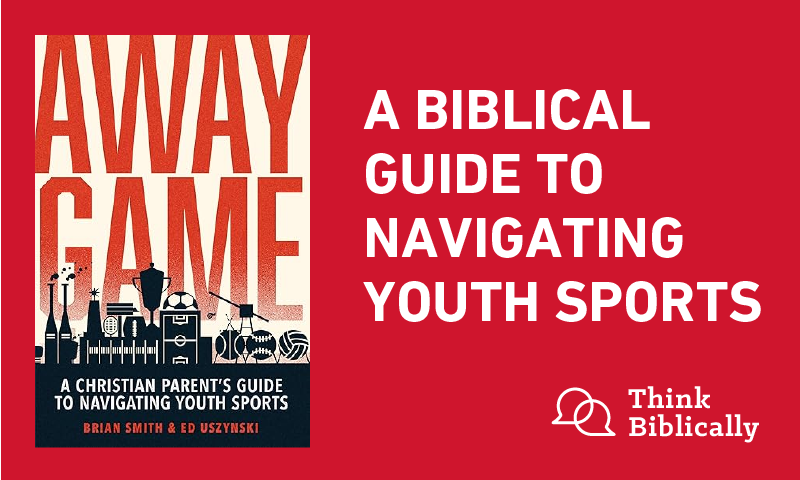
How can Christian parents and other Christian leaders best navigate youth sports? What are some of the toxic elements of youth sports that Christians can avoid, or strategically use as an opportunity for ministry and growth? Our guest today, Ed Uszynski, is the author of a new book Away Game: A Christian Parent's Guide to Navigating Youth Sports. Ed joins Sean and Scott to discuss how our perspective of youth sports needs to shift so we can better watch, coach, and help young people participate in youth sports.
Ed Uszynski is an author, speaker, and sports minister with over three decades of experience discipling college and professional athletes. He has written articles, essays, and training materials at the intersection of faith and sports. He received his PH.D. in American cultural Studies from Bowling Green State University.
Episode Transcript
Sean McDowell: [upbeat music] How can Christian parents best navigate youth sports? What are some of the toxic elements of youth sports that Christians can avoid or use as an opportunity for ministry and growth? Our guest today, Ed Uszynski, who's been a friend of mine probably 25 or 30 years, going back to high school, worked with Athletes in Action for a long time, former Division I athlete, coach, parent, is the author of a new book, co-author, called Away Game. That's the topic we're gonna discuss today. I'm your host, Sean McDowell.
Scott Rae: I'm your co-host, Scott Rae.
Sean McDowell: This is the Think Biblically podcast, brought to you from Talbot School of Theology, Biola University. Ed, thanks for coming on.
Ed Uszynski: So good to be here with you guys. Great topic to kick around.
Sean McDowell: Bro, this is a book that should have been written three decades ago-
Scott Rae: At, at least
Sean McDowell: ... Someone. [chuckles] And you guys finally stepped up to the plate. It's biblical, it's practical, it's interesting. I could guess, but tell us the backstory of why you wrote this book.
Ed Uszynski: Well, because we were living it.
Sean McDowell: [laughing]
Ed Uszynski: We're parents who are... Brian has three kids, I have four, so we're parents who are trying to navigate the youth sports world. We've been in ministry to college and professional athletes for literally 50 years combined between us. We both coached at all different levels. So, you know, we've been immersed in this sports world and now the youth sports world, and we looked at each other, eight years ago, actually, and started to not only realize that youth sport was, it was an industry, you know? It was more than just a culture. It was a massive industry that has its own values and has a particular weight that it puts on us as parents and our kids, but that there really wasn't anything written about it. That's literally what we said to each other as we looked around, and we... It took us a few years, but he finally came back to me a year ago and said, "Dude, there still isn't anything from a Christian perspective, or there's very little that's out there in book form, and we need help." So we finally put it together, the things that we've been talking about for the last decade and listening to and gathering from research, but just lots of anecdotal input, and it finally turned into Away Game.
Scott Rae: So Ed, maybe for our listeners who may not be as familiar with the youth sports scene, what do you mean by the youth sports industry, and what are some of the problems that you see with that today?
Ed Uszynski: Yeah, it's a great question. Significant change that's happened across the last 50 years, but I'd say it's only intensified in the last 10 to 20 years, and that is that youth sports really did used to be the domain of what used to be called muscular Christianity, and that is this belief in the early 1900s and mid-1900s that sports was a, an arena where you would grow spiritually, that it was important actually to be involved in physical, competitive activities because of what you could gain and, experience on the spiritual level, on the character level, at the very least. And there's really been a shift away from that as it's become more of a business, and again, there's a, there's a great history to it. There actually has been quite a bit written about that. Paul Putz just wrote a book called The Spirit of the Game, that traces the history of that development in detail, and it became a business. And as entrepreneurs realized that kids could actually become commodities and the quest to, get college scholarships or just some kind of carrot that's out there in front of us, there's, there's, [chuckles] there's different carrots that have been put in front of us to make us want to buy elite status or the opportunity that, we promise is behind our particular club or our approach to sports. And you combine that with the fear that we all innately feel as parents to begin with, that we're gonna screw our kids up, or that we're not gonna give them the best opportunities, or that our kid's gonna fall behind somehow, or worse, our kid is so much an extension of us that for him or her not to succeed and be at the top would be an embarrassment to us in some way, and I know there's a lot to talk about in all of that.
Sean McDowell: Sure.
Ed Uszynski: It's just... It's, it's become this machine that just pulls us along, costs a ton of money, has us traveling all over the country, and really, at the end of the day, does not have kids' best interest in mind most of the time.
Scott Rae: You know, Sean, this- you'll get a kick out of this, too, Ed. When I played youth sports, it was considerably longer ago than when Sean did, but, the only league that was available f- to play baseball was a church league. And all,
Sean McDowell: Right
Scott Rae: ... All the churches in the community, you put together your own team, at specific age groups, and the churches competed against each other. And, you know, we never... I mean, we hardly ever had a problem with parents. You know, every once in a while, we'd get a parent that would get upset. In fact, in fact, I umpired in this league after I quit, after I quit playing in it. Uh-
Ed Uszynski: Right
Scott Rae: ... And it was, it was just totally d- I mean, the idea that you would, that this would become an industry where kids were the customer and parents were the customers, was, that was, that was just completely foreign- ... To what I grew up with.
Sean McDowell: We've come a long way. [chuckles]
Scott Rae: Yes, we have.
Sean McDowell: That's for sure.
Scott Rae: Now, you know, and then, you know, I'm coaching my, I'm coaching my kids in club sports, and we're traveling all over the place, so it's, it's, you know, sort of come back- ... Full circle again.
Sean McDowell: Ed, one of the metaphors that you use in the book, which I'm curious about, is of all the stories and kind of biblical characters, is the story of Daniel.... Mm-hmm. Why, why that one as in approaching [chuckles] youth sports?
Ed Uszynski: What we appreciate about Daniel is that, he lived in a Babylonian culture that was obviously deeply secular. I mean, Babylon became sort of the metaphor for anti-godhood throughout the Bible. He lived inside of Babylon, and he did not lead a coup against Babylon. He wasn't trying to take it over. That, that wasn't his approach, nor did he insulate himself or kinda hide over in the corner or isolate himself, but he and his friends were striving to be faithfully obedient right in the midst of broken Babylon. They were gonna be counter-cultural in the way they operated, case by case. And again, we don't have much on him, but in all the stories that we do have, that's exactly what he's doing. He's coming up with an alternative way of being right in the midst of Babylonia. And so as we think about youth sports, we're not advocating or encouraging people to separate themselves completely from it. It, it's not a book that's just ranting about how horrible youth sports is. It's just like any other secularly driven aspect of society. It's broken, and in need of Jesus, and we have the opportunity to be salt and light as we participate in it. And so that's, that's really... You say that, we say that right at the beginning of the book. We really wanna kind of fall in the spirit of Daniel and ask, what does it look like as parents to be counter-culturally Christian? But how do we then go about discipling our kids, even in the midst of still competing, pursuing excellence, pursuing winning? Again, we're not casting any of that aside, but how do we disciple our kids with the opportunities that sport provides us? Instead of just paying attention to their performance all the time, which is what too many of us get just stuck on that aspect of it. We, we lock in on their performance and miss out on the opportunities that we have actually to help them do life better.
Scott Rae: Ed, let me take this a little bit further, if I might, because obviously, youth sports was not around in biblical times. So how do you approach scripture to help us think biblically about youth sports and what it's become today? Because it seems to me the application from scripture might not be obvious to people at first glance.
Ed Uszynski: Yeah, that's a good question, Scott, and again, that's maybe why, [exhales] I don't know, why a lot of pastors haven't tried to talk about it. I don't know. Maybe that's a whole 'nother question as to why hasn't anybody written about it, or why hasn't there been a ton, put out there content-wise for how to think Christianly about sports? And I... You know what? I don't have a super clever answer to that. I think, what does it, what does it look like to agape love in the midst of sports? Are, are we not all called to wake up every day and look for ways to serve rather than be served, to do what's best for other people in spite of what it costs us, which is what I think is really at the heart of agape. Well, what does that look like in the context of sports? How do we help our kids to not spend so much time with their eyes on themselves, but actually start to see the people around them? How do we embrace gentleness, which is one of the chief characteristics that Jesus modeled in the midst of being, [exhales] the ultimate man? Can I say that? He's the ultimate man-
Scott Rae: Yeah
Ed Uszynski: ... And gentleness was one of his chief characteristics in terms of the way he interacted with people, both enemy and friend alike. So what would it look like for gentleness to show up in the context of sport culture? Those are the kinds of questions that we're, we're asking. Just how do you take basic Christian virtues and play them out in the midst of this culture? And really, again, Scott and Sean, one of the first things that needs to happen is that I, as a parent, need to recognize, that maybe I've created a dichotomy between our Christian faith and the things that we're striving to live out in day-to-day life and what I'm doing in sport culture. I think a lot of people wind up separating those out. They're not doing it on purpose, but they just, by default, end up separating it out and aren't thinking about what it means or would look like for me to be a Christian parent as I show up at this game- ... To interact with my kids with a Christian mindset, a sport missionary mindset, instead of just kind of being drug along for the ride, hoping that my kid gets maximum playing time and is able to set personal records and will be starting on their teams till the day they stop playing.
Sean McDowell: Ed, one of the things we hear in youth sports all the time, it's almost become a mantra that people [chuckles] just accept, is that sports builds character. Now, when I hear this, my quick take would've been, especially before reading your book, and I want you to weigh in on this, is I would say I don't think sports builds character. I think it does more revealing character. But sports gives opportunities that a classroom doesn't. There's drama, there's conflict, there's hurt feelings, there's success, there's failure. Sometimes as a teacher, I'm envious of coaches, and I look back at the days I coached more 'cause I'm like: Man, there's just built-in opportunity here if you'll use it to help kids build character. What's your take on the claim that sports build, builds character?
Ed Uszynski: Yeah, love that you're saying that it exposes character, and I'll put this story... You guys will appreciate this, and listeners [chuckles] will appreciate this. It didn't make the book, but I can remember being in seminary back in the 1990s-... And we would play pickup basketball. All the seminarians would play basketball, and again, this is, there's all kinds of papers that should be written about what goes on in a seminarian gym. [laughs]
Scott Rae: Leave, leave your, leave your spirituality at the door, huh? [laughs]
Sean McDowell: [laughs]
Ed Uszynski: I remember one guy in particular who just kept losing his mind every time we played, said he wasn't gonna play anymore. And, you know, I remember talking to him and asking him why, and he said, "Well, I just don't like what it brings out of me." And the conversation became, "Brother, that's actually exactly where you need to spend more time, because what it's bringing out of you is who you really are. The rest of it, the veneer, and the, you know, the social skill to cover that over is all well and good, but who you really are is what comes out in that gym. And then we have an opportunity actually to work on that anger problem that you have or a lack of self-control." Okay, so [chuckles] so those are the kinds of conversations we were having, and I think the same thing holds true with youth sports. Why do we say that sports don't build character? They expose it, and they give people then an opportunity to direct it or redirect it or teach how we should operate in this situation. We talk about what the Holy Spirit needs to do. Again, if we're coming from a Christian perspective, the work that the Holy Spirit needs to do in us to transform us into something that we won't become on our own. But sports in and of themselves, they're not gonna shape the character, it's people. And again, without trying to be too clever, it's people that end up shaping character. And so when kids go through a handshake line after a game, which is still perfunctory, at least out here in Ohio it is, after almost every sport, you still line up to shake hands. Well, the kids that win are all laughing and having their good time, but you see this all the time. Kids won't... The kids that lost are pouting. They won't look the other team in the eye. They just hold their hand out in a limp kind of way, you know, [chuckles] as if to say, "This is, this is how I'm gonna get you back. I'm not gonna give you a good handshake here." They don't shake the officials' hands respectfully. And so in that very moment itself, after every single game, the question that sits out there is, will there be a parent who pulls their child aside at the very least and says, "That's not how we operate when we lose," and talks to them about what it looks like, again, at the very least, just to have class. But what does it look like to actually be the hands and feet of Jesus in the midst of loss? 'Cause guess what? You're gonna end up losing probably a lot more in life than you will winning, so we better learn actually how to engage that moment, like a man, like a Christian man, like a Christian woman. But I'd even be curious to hear you guys' thoughts. How often does that happen- ... That those kinds of conversations happen after games? I don't know. I- you can't find very many coaches that would actually teach that immediately after a game. I don't come across hardly any in my... With my four kids in all the different sports that we play, and I think it's just as hard to find individual parents that will do that kind of work.
Scott Rae: You know, Ed, my experience is it probably doesn't come right after a game. It comes in calmer moments when you can reflect on it, you know, later. But I just-
Ed Uszynski: Good
Scott Rae: ... But s- I think some- well, maybe what I would say is that sports gives the opportunity to build character if we capitalize on those moments. 'Cause I-
Ed Uszynski: Absolutely
Scott Rae: ... You know, I'm sure your kids have been the same way. My kids learned, they learned what it, what it means to sacrifice for a team. They learned that it's, it's not all about them. They learned how to persevere and work hard. They learned how to deal with disappointment. I mean, I remember some of the best lessons one of my kids got was when he got cut from his club team. It was devastating to him, and we tried to put that in perspective, and it was a, it was a major teachable moment that we took advantage of. So I think those are the things that, you know, that sports... That sports gives an arena in which the- we can build those things. Uh-
Ed Uszynski: But Scott, don't, don't miss, and listener, don't miss what Scott just said, is you did that work. Your, your wife did that work. You took advantage of the opportunity and took the courage-
Scott Rae: That's right
Ed Uszynski: ... Or took the, you know, again, whatever the different emotions are that it takes to step into a teen's life and to try to have that conversation, whether it went well, whether they responded well to it or not, you still stepped into it and attempted to direct them in a particular direction. What Brian and I... Again, that's not what the whole book is about, but one of the things that we're just calling to our attention as parents as sort of a wake-up call, is that if we're not gonna disciple our kids in those moments, sport culture is already doing it.
Sean McDowell: Amen.
Scott Rae: That's right.
Ed Uszynski: Yeah, when sport culture allows everybody to go through the line like that, and that becomes the norm, they've learned. They've learned that it's okay to lose like that. So if there's not an intervention by usually a parent, it could just be a really sharp kid who's also been taught already, but it's usually a parent that has to start the dominoes falling, say, "That's not how we're gonna operate," then sport culture... Again, I just wanna say sport culture is already- they're already d- it's already discipling your kid in a particular direction.
Scott Rae: Yeah.
Ed Uszynski: So will we, will we take that responsibility? [clears throat]
Scott Rae: No, that's a, that's a great point. I have seen... I've literally, I've seen this one time with a coach who stepped in. It was in the last game of the season, it was on a club team my middle son was playing on. And the playoff game was next week, and they did the line to shake hands, and the best player on the team refused to shake hands. 'Cause I- he had been hit hard a couple of times and had, built up some understandable anger about that. And the coach stepped in immediately and said, "If you don't shake hands with the opposition, you're sitting out the next game."
Ed Uszynski: Nice. [chuckles]
Scott Rae: And he held him to it. And the guy- kid refused, and the coach held him to it, sat him out the playoff game, and they lost.... But-
Ed Uszynski: Wow!
Scott Rae: It was an invaluable lesson, I think, that the kid learned in the aftermath of that.
Ed Uszynski: And possibly everybody else that was watching.
Scott Rae: That's also correct.
Ed Uszynski: Mm-hmm. Yeah, just think about, think about how much more important that moment is for when that kid turns 30, potentially, versus the actual outcome of the game, which nobody will remember. Nobody will remember a detail from the game, and again, I need to keep reminding myself of this as a parent who still now has a ninth grader. You know, I've had four shots at this now, [laughing] so hopefully-
Scott Rae: [laughing]
Ed Uszynski: ... Ray's gonna get the best, the best version of what I have to offer, and it's still not gonna be good enough, but here it is. I need to just remember, nobody remembers the details of these doggone games. They don't, and we get so caught up in the wins and the losses and the statistics and the, and the, you know, the rivalry, and it's all fun. I love it. I love being a part of it, but it is so small relative to the, to the life, to the lifeline. But if I take advantage of one moment like that, it may stick to him in a way that changes the trajectory of the rest of his or her life. I mean, it really is that dramatic, and that's why even in the way we've written this book is more of an encouragement and almost an excitement to say, "This is such a great opportunity for us. Let's, let's kind of take some smelling salts together, some spiritual smelling salts, and lock arms together and start to head in a different direction than what sport culture is heading, and not miss the moments that we have with our kids." Here's some really practical questions. Here's some really practical, interventions that you can have with your kids when these opportunities present themselves.
Ed Uszynski: That's what we're after.
Sean McDowell: No, I love it. I saw this team play down in San Diego against my son, and this team had so much class. When players [chuckles] on the other team fell, and, like, the ball was on the opposite side of the court, they would reach out a hand and help the player up off the floor, and I thought, "Oh, my goodness," like, "he's almost sacrificing a point to help someone he fouled hard." Like, you never see this! And, of course, we could have the c- [chuckles] the question-
Ed Uszynski: Yeah
Sean McDowell: ... Or the debate about whether you're bound to do that or not, but I went to the coach afterwards, and I just said, "Thank you for coaching with such character." It's the exception to see that. I don't know if most parents are talking to their kids after the line of giving five, but it is the exception, in my experience, to see a coach do that. Now, why? I think it's because the system weighs against it.
Ed Uszynski: Yes.
Sean McDowell: My job is on the line. My funds are on the line. My ego is on the line if I sit that kid that Scott was talking about-
Ed Uszynski: Right
Sean McDowell: ... Then, it's like the system is weighing against doing the right thing.
Ed Uszynski: Yes.
Sean McDowell: So how do we live faithfully when a kid's scholarship is on the line, a coach's ego is on the line, a parent's [chuckles] ego is on the line, and the system, as much as it has good things, my kids have played sports, there's things endemic, you might even use the word systemic within it-
Ed Uszynski: Right
Sean McDowell: ... That weigh against doing the right thing. So how do we live faithfully within this system? What does that look like?
Ed Uszynski: Well, let me just throw this out since you said it. Almost never will a scholarship be at risk for doing the right thing. [laughing]
Scott Rae: [laughing]
Ed Uszynski: And that's a whole 'nother, that's a whole 'nother problem that we have is actually thinking that it's our efforts as parents that are gonna cause the scholarship to happen, when in reality, it's the way God made a kid and an innate, not only an innate ability but an innate drive, that will cause them to be part of the 1% that wind up playing college. Okay, so I just, I always feel like I need to say that, because-
Sean McDowell: Good
Ed Uszynski: ... That's a lie that we bought into. You know, how about this? Any time we're gonna take a stand for conscience sake, for character sake, to be countercultural, there may be a cost involved. There may be a cost involved. You, you may lose some reputation with the local baseball moms and dads if you choose to play everybody when they're on a 12-year-old baseball team instead of, you know, the three or four kids that always played when they were 10 years old on another team, while other kids sat the whole time. It may be really upsetting to those parents for their kid to actually have to sit for three innings at a time, and I'm, I'm actually referring to something that actually happened. But when it's the right thing to do, when you as a coach or you as a parent have determined that it's the right thing to do because this is where justice lives or this is where righteousness lives, there's always gonna be pushback on that. There's always gonna be some kind of a cost, and we end up having to weigh whether we, and again, without this sounding too cliché in our circles, can we trust God that He's gonna catch us when we get knocked down for doing the right thing? Can we say that we're gonna, we're gonna walk with God, and we're gonna do what our conscience leads us to do, our spirit-led conscience leads us to do, in spite of what it ends up costing us, and believe that He's gonna make it all work out the way it's supposed to in the end? I know that's a, that's a pretty general statement, but doesn't that hang over our lives in all different kinds of arenas, whether it's being at work and having to choose to do the right thing and to have character, or the classroom as a student when everybody's cheating or, you know, taking things off ChatGPT or whatever the current ways are of cheating in the classroom, or [sighs] on a sports team? To do the right thing is gonna have consequences, and at the end of the day, we're saying as Christians that we're gonna trust God with those consequences.... Recognizing that's gonna be difficult to do, and it may hurt, but it's worth it in the end.
Scott Rae: So Ed, let me shift gears just a tad here, and s- talk specifically to parents who are spectators at one of their kids' sporting events.
Ed Uszynski: Yes.
Scott Rae: What, what biblical advice would you have for parents when watching a competition?
Ed Uszynski: What biblical advice would I have? I wish- what's the pr- [chuckles] what's the proverb, I don't have it off the top of my head, that it basically says, repeatedly says, "It's better to be quiet than it is to speak-"
Scott Rae: [laughs]
Ed Uszynski: "... Because soon often follows words," right? What's the proverb that says that?
Scott Rae: That, that's a good, that's a good enough paraphrase.
Ed Uszynski: Wasn't- is that the message? That's the Ed Uzinski, message version.
Scott Rae: [laughs]
Ed Uszynski: [sighs] Really, research shows, and again, there's so much more we could say about this, and I'll just say this briefly. Research shows, kids' feedback shows, my own personal experience shows that it's better... It's far better to keep my mouth shut at games, if at all possible. And if anything is gonna come out of my mouth, it may just be an encouraging word, an, "Atta boy, atta girl," now and again. Try this sometimes. It, it's really interesting. There, there's been actual studies done where they played, soccer games. They've had a silent soccer, is what they would call a tournament, where parents have to come and literally not say a word. Tennis actually already does this just by default. Like, you're not really supposed to say anything when you go to a high school tennis meet. Again, at least in Ohio, you're not allowed to.
Sean McDowell: And girls' beach volleyball, beach volleyball is often that way-
Ed Uszynski: Okay
Sean McDowell: ... Too, yeah.
Ed Uszynski: Well, the kids enjoy that so much more because our voices, even our encouraging voices, end up creating a pressure for them. And they love having us there. They, they do wanna know that we're behind them, but they don't need our en- they don't need our correction, they don't need our exhortation, they don't need our urgency and our anxiety, they don't need our insecurity being shouted at them during the games. They really don't. I mean, [chuckles] with my, with my ninth grader, you know, I've, I've tried to be very quiet at the games, and I've only shouted out encouraging things, and he pulled me aside this, just this past spring and said, "Dad, I don't need a hype man. I don't wanna hear your voice during the game." [laughs]
Scott Rae: Good. How about that?
Ed Uszynski: He literally said that to me, and I... You know, it just, it stung a little bit, but I smiled, because I'm in the middle of writing this book, too.
Scott Rae: [chuckles]
Ed Uszynski: And I just smiled and said, "Thank you for telling me that." I wa- I said, "Can I cheer for the other kids?" He said, "I'd love for you to cheer for the other kids." He said, "When I hear your voice, it distracts me. It just throws me off." And again, he's 13, he's learning the sport.
Scott Rae: Yeah.
Ed Uszynski: "It's just one more thing that I'm trying to process," and he's very articulate, you know? So he's actually able to express that. Most kids feel the same thing, [chuckles] and they'll never tell you. So the more you can be quiet at a game or just, again, to cheer for the other kids by their name, the better. And to definitely not, and Scott, you already said this, you know, more research shows that the thing that the kids hate the most in their sport, youth sport experience is the ride home after the game. And why is that? Because I've been sitting for two hours storing up all of my correction and all of my fixes and all of my frustrations with a lack of performing in this way or that way, and no matter how kindly that may come out or as much as I want that to be helpful, most of the time, kids don't wanna talk about their performance right after the game. They may not wanna talk about it at all because they just wanna play. They're not even that interested in getting better, and I know that just sounds terrible, and it galls us, especially if we paid $2,200 to be part of the club. It seems [chuckles] like we deserve to have the expectation that our kids would want to get better and to reach their maximum potential as an athlete. But it really is okay that most of the time, kids just wanna play. They just wanna play the game- ... Without all the performance pressure that we tend to put on them as parents. So again, everybody can take that however they want.
Scott Rae: Sure.
Ed Uszynski: There's lots of research out there [chuckles] about it and lots of stories. It's just a matter of, will I check myself? Because it really ends up being more about me, and I think that's what I've realized through the years of being at these games with my kids, that so much of what's coming out of me is really more about me than it is them. It's my own issues. Again, that's a whole nother podcast, probably.
Sean McDowell: Sure.
Scott Rae: Sure. [chuckles]
Sean McDowell: That's, that's-
Ed Uszynski: It's me being too embarrassed-
Sean McDowell: Yeah
Ed Uszynski: ... When they mess up and too proud when they succeed. Even though embarrassment and pride, those are not evil things to feel, but when they become too much and they almost become an idol, it's more of my problem. So there's, there's a lot going on in there.
Sean McDowell: That's a-
Ed Uszynski: Keep your mouth shut. The kids will do better. They'll love you for it.
Sean McDowell: That's a good word. As I think back on it, watching... It's been interesting for me to contrast, like, the culture of basketball with the culture of volleyball. [chuckles]
Ed Uszynski: Yeah. Yeah.
Sean McDowell: And it's just, it's night and day. There's like, for the most part, respect built into volleyball. I guess in beach volleyball, you can cheer, but you cannot coach your kids at all.
Ed Uszynski: Yeah.
Sean McDowell: You never yell at the refs. In fact, the coaches send a player over to talk to the refs. There's something kind of refreshing about it. Now, they're not in physical contact, 'cause they're separated by a net, so that-
Ed Uszynski: Yeah
Sean McDowell: ... Creates a little bit of a distinction.... But for someone like you, who grew up playing hoops, seeing a different approach is, a little bit of a breath of fresh air, so to speak. Well, let me ask you a last question. I found with my kids, my son, when we get in the car, he's playing hoops at Biola, he wants to talk before we're in the car. "Dad, what'd you think about this? What can I do better? What like..." And our issue is like, "Don't say anything until we're in the car, 'cause I don't want anyone to overhear [chuckles] if you have an opinion about something. Wait until we're in the car." My daughter just does not wanna talk about it.
Ed Uszynski: Yeah.
Sean McDowell: So we've learned to personalize it with our kids, and just-
Ed Uszynski: Yeah
Sean McDowell: ... Asking them, "What do you want? What helps you the most? What do you want out of this?" But you mentioned you're on number four. Last question: What are you gonna do with your number four that you didn't with the first three, or at least in your spirit-filled moments, you intend upon doing [laughs]
Ed Uszynski: [laughs]
Sean McDowell: ... With this last one?
Ed Uszynski: Yeah. I'll say two things, and one comes from Brian Smith, who's the co-author of the book. A few years ago, he hit me with this. He said, that the first thing he does when he gets in the car is he says, "Is there anything from the game that you wanna talk about?" And again, he's- ... He's got three kids. "Is there anything that you wanna talk about from the game?" And, and gives them control of whether or not that's what the topic is gonna be.
Sean McDowell: That's great.
Ed Uszynski: And almost always the answer is no. Now, again, Sean, you said you've got a college basketball-playing son. He is part of the 2% who actually loves it. He wants to talk about it. He wants to get better. He, he wants to go home and work on whatever was broke or whatever. 98% of the kids don't want to do that. They just don't. So let's find out by asking them what they want. So that's number one. Number two, I'm going to, just even more than I've been able to with these last couple, I want to just enjoy the moment without allowing my fear of the future to come into it. And that mean... The, the fear of the future could be, mean what's happening next week with him on this team, or it could be that I'm trying to project 10 years into the future, which is just such a silly thing to do, but it lives in me. I just wanna enjoy him playing, [lips smack] and not put pressure on him, to work more than he wants to. Now, again, hear all this. If kids are misbehaving or there's bad attitude or there's, you know, there's behavior that's just out of line, I'm snatching that up right away after a game, or I'm at least gonna call it out, even if we're gonna talk about it more later. Just, just f- just from... That's my perspective on how to parent. I wanna call that stuff out immediately while it's fresh and while we're right next to the, to the situation that happened. Talking about performance stuff, I'm talking about trying to fix or coach them as a player, most of the time they don't wanna talk about that, and I'm only gonna do it if they want to, and I really just wanna enjoy watching them play instead of trying to hope that they're gonna become something different.
Sean McDowell: I love it.
Ed Uszynski: How's that?
Sean McDowell: Oh, that's great.
Ed Uszynski: Good stuff.
Sean McDowell: Ed, this is so helpful, so interesting. I'm gonna share this podcast, in particular, with a lot of people. Not, like, weaponize it and send it to a coach and be like, "Hey, get your act together"
Ed Uszynski: [laughs]
Sean McDowell: ... But just share it with folks to start a conversation, and recommend your book. Again, it's called Away Game: A Christian Parent's Guide to Navigating Youth Sports. And I didn't mention, to our listeners that you have a PhD in American culture studies, so there is serious research behind this book, but it's totally readable, totally practical, very biblical. Again, the title is Away Game. I hope folks will pick it up. Ed, thanks for writing a great book, and, thanks for joining us.
Ed Uszynski: I've enjoyed it. Thanks, guys.
Sean McDowell: This has been an episode of the podcast Think Biblically: Conversations on Faith and Culture. We have programs here in Southern California and online on a range of topics: Christian apologetics, spiritual formation, Bible, theology, marriage and family, and so on. We'd love to have you think about joining us. To submit comments or ask questions, please email us at thinkbiblically@biola.edu. We hope you'll consider sharing this conversation, with a friend, and please take a moment to give us a rating on your podcast app. Thanks for listening, and remember, think biblically about everything. [upbeat music]