Biola University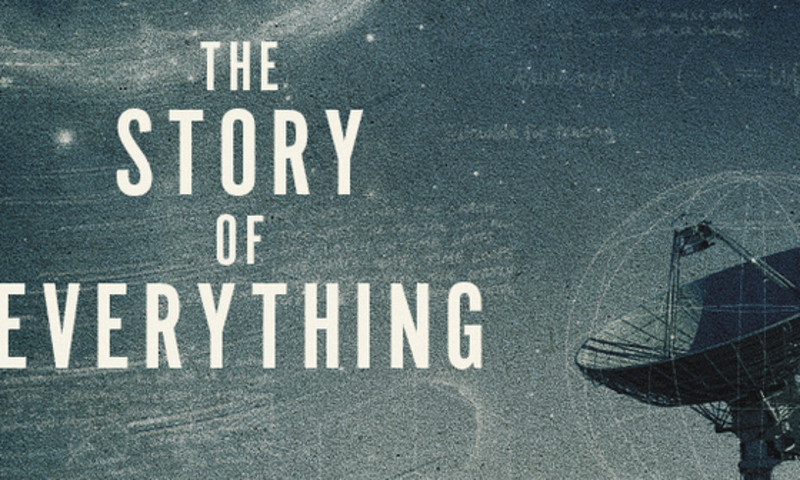
The film “The Story of Everything,” in theaters April 30, explores the cosmos as a whole, revealing the hidden hand of the Creator behind the universe. From the precise laws that govern the stars to the intricate patterns found in every living cell, the documentary-style film traces evidence of intentional design throughout nature. Two Biola University professors appear as experts in the film alongside top scholars from around the world.

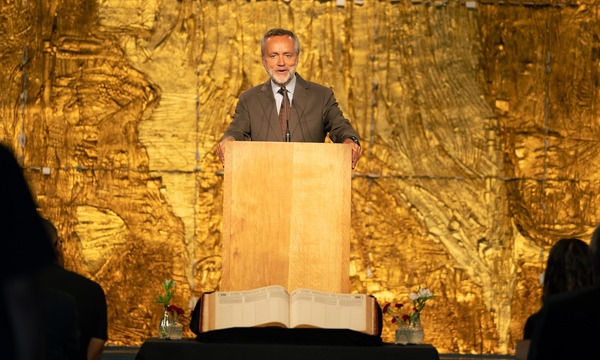
School of Science, Technology and Health professors Dr. Douglas Axe, the Rosa Endowed Chair of molecular biology and co-director of the Stewart Science Honors Program, and Dr. Richard Gunasekera, research professor of science, technology and health, professor of nanomedicine and biochemistry and principal investigator of the nanomedicine and genomics research program, share their expertise on intelligent design at the molecular level in the film. Biola is hosting a free advanced screening of the film on April 22 at 7 p.m. Both Axe and Gunasekera will share their insights on a panel at the screening. Read about some of their expertise included in the film below.
Share a bit about what you contributed to the film.
Axe: I got to speak on the exquisite design of the protein molecules that carry out the processes occurring within our cells. When they were interviewing me, I also spoke about the extravagant beauty of life, and I’m pleased to see that this point made it into the film.
Gunasekera: In the movie, I discuss the intricacies of design at the molecular level, particularly within DNA. I explain that during DNA replication — when cells divide to create new life — enzymes such as DNA polymerase not only copy precise genetic information but also possess proofreading capabilities that can detect and correct errors. In that sense, there is a kind of “typographical editing” occurring during DNA replication. This is especially important in processes such as embryogenesis, leading to the formation of a new baby.
DNA is composed of a chemical “alphabet” consisting of four bases: A, T, G, and C. These must be arranged in an exact sequence to encode the correct biological information — much like letters forming meaningful words in a sentence. If an incorrect base is inserted — analogous to a typographical error — DNA polymerase and associated repair mechanisms can recognize and correct many of these mistakes (or mutations) to maintain fidelity. As a biochemical geneticist working in cancer research, this is central to my work and to the training of our research students.
How did you find your expertise and past research helping you as you contributed to this film?
Axe: I became fascinated with proteins when I was in graduate school, and the Lord has given me opportunities to pursue that fascination ever since.
Gunasekera: When I was completing my post-doctoral fellowship at Baylor College of Medicine, part of the Human Genome Project was being carried out in my department. What we learned from the HGP about these kinds of intricate molecular mechanisms gave me a deep sense of awe for the precision of intelligent design — even at the cellular and molecular levels. Since then, my current nanomedicine and genomics research has continued to reinforce my conviction that there is indeed a high level of intelligence embedded in the design of life — from the engineering of human anatomy and physiology down to the molecular level of DNA and RNA.
What about the origin of life do you find fascinating? What about intentional design and the way it shows itself in life, in our universe and world?
Axe: I actually learned something new about this when I previewed the film. I have known for a long time that British astronomer Fred Hoyle figured heavily in the development of Big Bang cosmology, but I didn’t know that he made a very specific prediction about the carbon atom that was confirmed by scientists at Caltech. Hoyle reasoned that stars would be unable to produce carbon unless there were a very specific nuclear resonance state, and because life absolutely requires carbon, he realized that a universe made for life would have to have this very precise resonance state. When this was confirmed, it became eerily clear to him (as an agnostic) that our universe was made for life. Wow!
Gunasekera: The work of the Human Genome Project showed the world that we humans are 99.9% identical at the DNA level across races, pointing to a single origin of mankind. Earlier research on mitochondrial DNA suggests that all living humans trace their maternal lineage back to a single woman — often called "mitochondrial Eve" — indicating a common maternal origin. Similarly, Y-chromosomal studies by Dr. Spencer Wells and others point to a single common paternal ancestor. While mainstream science interprets these findings as the most recent common ancestors within a broader population, many scholars — including those from Christian, Jewish and Islamic traditions — see this convergence as consistent with the belief in a single founding pair. Taken together, these points point toward an intentional designer of life.
Why do you think it is important for Christian college students to engage in these topics?
Axe: It’s so important for believers to realize that all of creation bears witness to the Creator! So, if you’re a music major, you delight in the fact that music was made for worshiping our Lord, but you should also delight in the fact that the stars and the elements and the inner working of living cells — indeed, all of life and all of creation — invite us to worship him! Whatever things he has called us to study, we should love the fact that all studies, if pursued with a humble commitment to the truth, lead us to him!
Gunasekera: Christian college students are exposed to a range of scientific, philosophical and theological ideas, including evolutionary theory as proposed by Darwin, other scientific frameworks, and accounts recorded in Scripture. The scientific findings of the Human Genome Project, and the evidence presented in this film, give students the tools to think beyond theories proposed in 19th-century science and to engage with 21st-century genomic discoveries.
We believe it is essential to keep students' minds open — able to innovate, ask new questions and test new ideas using the scientific method. It is important for them to know that more than one framework exists for interpreting the evidence and merit fresh examination in light of modern science.
Biola’s exceptional faculty in the School of Science, Technology and Health are gifted in their area of expertise and passionate about discovery and innovation. Students are frequently involved in faculty research, giving them real-world experience before entering their careers. Learn more and apply to Biola by May 1 and seize the opportunity to study at the number one comprehensively Christian college in North America.
If unable to attend the free screening of the film at Biola, tickets for the theatrical release on April 30 are available online.
Written by Sarah Dougher, strategic communication manager. For more information, email sarah.m.dougher@biola.edu.