Episode 137: Reclaim Neighbor Love with a Theology of Place
The Christian faith should shape and enliven our ordinary, day-to-day activities. But it can be difficult to drum up things to do that are public, practical, and powerful. Tim speaks with J.D. Greear, pastor of Summit Church in Raleigh, North Carolina, and author of recently released, Everyday Revolutionary, on a theology of place. They look to the book of Acts and the ministry of Jesus to draw out some everyday activities Christians can take up to reclaim loving one’s neighbor in our current cultural moment.
Transcript
Tim Muehlhoff: Welcome to the Winsome Conviction Podcast. My name is Tim Muehlhoff. I'm a professor of communication here at Biola University in La Mirada, California, and the co-director of something called the Winsome Conviction Project that seeks to open lines of communication rather than close them. We're always looking for individuals who make us think, who prompt us to act and communicate like Jesus, and we're very excited to have a return guest. J.D. Greear is the pastor of Summit Church in Raleigh-Durham, North Carolina. Under Pastor J.D.'s leadership, the summit has grown from a plateau church of 300 to one of 12,000. He has led Summit in a bold vision to plant 1,000 new churches by the year 2050. He's also a gifted author. He's written several books, including his newest one, Everyday Revolutionary. So we are very excited to have J.D. Greer back. J.D., welcome to the podcast.
J.D. Greear: Tim, I am honored to be on here.
Tim Muehlhoff: Hey, let me mention two things that I have to get to because I absolutely loved it from your book. The first one is called the Theology of Place, and I know you quote Heather Holleman, who's a friend of ours. Noreen and I have a Cru background and she's still with Cru. But this theology of place, to me, the neighbor love aspect maybe is my, after five years of trying to do this, I think neighbor love is the way to get out, is to reclaim this idea that we're neighbors and we love each other. So this idea of a theology of place, you do a great job of saying, "When you look around, what are the questions we should be asking?" And here are some of them real quick. Who is there? What needs do you see? What questions are they asking? What crisis are they in? And where might God be at work? Can you elaborate on this idea of Summit Church being rooted in an actual location that we can practice neighbor love?
J.D. Greear: Yeah, because it's really, and I'll follow Heather's, the way she kind of teaches this. Acts 17, Paul says, "God has appointed the boundaries of various nations." And the logical extrapolation of that is if he's doing that with nations, he's doing that with you. And you can lament why you're in a certain situation or what mistakes you or somebody else made to get you there, but the point is you're there. And if you read Acts, what you see is that so many of the great advances of the church happen because of some calamity where God scattered his people and put them suddenly in Antioch. And so they plant a church there and that church becomes the greatest mission sending force of the first century.
Well, the same thing is God has arranged where your location is and he's put those needs in front of you. And you can't meet the needs of the whole world, but you can meet the needs of the ones right there. For Summit Church, what that's meant was, I referred to this story earlier, but in Acts eight, when Philip does his works and there's much joy in the city, I asked our church years ago if there was much joy in our city as a result of our presence there. Acts nine, it talks about a disciple by the name of Tabitha, who, when she dies, the community gathers at her bedside and weeps. And I'm like, "Do you feel like anybody would weep if we were gone from this place?" So on behalf of the church, it was a time of repentance, is what you would call it. And I met with, I called it the mayor, the very last-
Tim Muehlhoff: Oh, you're kidding.
J.D. Greear: Yes. I met with the mayor. I mean, he was as left as like ... Well, that's just all I'll say. He was about as caricatured on that side as you could get. And I met with him and said, "Hey, we're here. Will you tell me what the five most broken areas of our city are?" And he mentioned the homeless, the orphan, the prisoner, the unwed mother, and the high school dropout.
Tim Muehlhoff: Wow.
J.D. Greear: And so Tim, for 20 years, we've been pursuing developing local ministries toward the homeless, orphan, prisoner, unwed mother, and high school dropout. And our goal is just to say, "Hey, we're here. The city is a better place to live because we're here." And if we get thrown to the lion's den, which may happen if we're preaching the truth, I want the mayor and the rest of the city to say, "Ooh, I'm not sure about that, because we need those people because, otherwise we're going to have to raise our taxes to take care of all the people they're taking care of."
Tim Muehlhoff: Oh, I love how you quote Kuyper, "There is not one inch of the entire cosmos of which Jesus does not declare mine." And that he's concerned about our communities regardless of ideology, gay, straight, Democrat, Republican, neighbors are neighbors. And I think we just need to say to them, "Look, we love you. We have these disagreements, but you have needs. And guess what? We have resources, and we can give you ... " But then don't you risk the risk of being said, "How in the world can you support that group and minister to that group? Are you not condoning that group by ministering to them, isn't that synonymous with condoning?"
J.D. Greear: Yeah. I mean, the one story that Jesus tells of neighbor love where he is specifically saying what neighbor love looks like, he chooses a racial, political, and many ways religious opponent of the Jews. And he said, "That's how you're going to measure your love, is how your love extends across those lines." Yeah. We're not going to give money to certain things here, and yeah, we want to steward our money well.
Tim Muehlhoff: Right.
J.D. Greear: We want it to have a good return on investment for the kingdom of God, but we're also going to invest some money just saying to our city, "We love you and your needs are our needs." That's Jeremiah 29:4, like, "Live in the city, make its problems your problems, work for the prosperity of the city."
Tim Muehlhoff: Yeah.
J.D. Greear: This past weekend, I told you about what we call Church of the Dome. We found out that the Orange County schools had some rather challenging needs. And so we just said on that Sunday, we're like, "Every penny of the offering we take up today, there's only one week out of the year, not 52 weeks, but every offering we take up today, every penny we're going to give to these needs to meet this in the public school." And so we gave a couple hundred thousand dollars that day to needs in a public school.
Now, to be honest, a lot of that money is not going to be used to preach the Gospel directly. It's going to be used to help buy kids textbooks and supply classrooms. But I think us doing that, knowing the message that we preach from our pulpit, that that is an effective way of preaching the Gospel, is doing this in both word and deed at the same time.
Tim Muehlhoff: Yeah. You quote Esau McCaulley, who observes that in the Old New Testaments, there never was an idea of a private spirituality sphere, right?
J.D. Greear: Right.
Tim Muehlhoff: Just taking care of our own. And I love what Paul says, "When your enemies are hungry, I want you to do the counterintuitive thing of feeding them."
J.D. Greear: Yeah. That's right.
Tim Muehlhoff: And that's the social capital that I think we forget about a little bit is, this isn't magic. I mean, we can look at sociology, psychology, communication theory. Social capital is you're building up credibility, and ethos, and then your Gospel message is even more effective because you've earned the right to be heard.
J.D. Greear: Yeah. Which is a verse that's really key in the book, Peter's verse. And most of your listeners will have heard this verse throughout their lives, but 1st Peter 3:15, he says, "Hey, you should live in a way that unbelievers are provoked to ask the question for the hope that is within you." One of the things I try to do in the heart of this book is I try to show that effective Christian witness begins by living quietly, which is, that's Paul's phrase.
Tim Muehlhoff: Yeah.
J.D. Greear: And it's kind of strange coming from a guy who stood in front of an amphitheater full of angry Ephesians and told them their gods were made up. That doesn't seem like a very quiet guy. But his admonition is to live quietly, not because he wants you to be invisible or silent. He's saying, "Live quietly because that's going to set you up for loud testimony," the way that you're blessing and loving and small things, whether it's just being a good neighbor, or whether it's honoring the emperor, or whether it's taking care of the schools in your neighborhood, that sets you up for an incredibly loud testimony where you can point people to Jesus.
Tim Muehlhoff: Well, I love that your book isn't called Professional Revolutionaries. Your book is called Everyday Revolutionaries. And I think some of us can look at it and say, "How am I an everyday revolutionary?"
J.D. Greear: Right.
Tim Muehlhoff: But these are somewhat simple, intuitive things that a theology of place says, "As you look around, what needs are jumping out at you and how can you, your family, your church, meet some of those very practical needs?"
J.D. Greear: Yeah. And the heart of this book, there's three parts. The middle part is where I try to unpack what is the everyday revolutionary agenda of every Christian, whether they're a CFO at a multinational conglomerate or they go to work every day teaching third-graders at a local elementary school. And there are five kind of things that Paul and Peter lay out that you should do every day to make Babylon a better place to live in. And we don't have a long time to talk about them, I know, but it is creation fulfilling. You're fulfilling the mandate God gave to develop the world and make it a better place for humans to live in. It is excellence pursuing. You're doing all things as under the Lord and not in the men, reflecting his worth.
It is holiness reflecting, meaning it displays the purity, and the beauty, and the highest standards of ethics that God has. It's redemption displaying, which means that it's done with a way for bless and profit, where profit alone is not your bottom line, but you're trying to bless, it's displaying redemption. And then the last one is mission advancing as followers of Jesus. We are looking for how do we extend the great commission through our jobs in the right, appropriate places and times. So those are the five things that, like I said, whether you're a stay at home mom or whether you're a soccer coach, those are the things that you can do every day that constitute the quiet life, the everyday revolutionary that sets you up for the loud testimony.
Tim Muehlhoff: I love that. Hey, let's close with a little bit of controversy. I love that you're not afraid to go there. I mean, the book is incredibly practical and obviously just throughout this interview, it is rooted in the scriptures. But you make a point that so resonated with me and those of us who are given direction to the Winsome Conviction Project. So let me read you this quote and just have you respond to it because I literally wrote amen next to it.
This is what you say, "When our name is associated with a political party, or our hearers associate us with whatever evil that party practices, just as the early missionaries did, we have to distance ourselves from political corruption associated with our name. Otherwise, our Gospel is undermined. Thus, our loudest protests should be against abuses associated with our tribe, because the reputation of Jesus among Babylonians is paramount to our objectives. See how that works? We are Christ's witness, setting him apart as holy and encouraging others to do the same. If we win a political game but tarnish the name of Christ in the process on God's scorecard, it goes down as an L." Amen. Can you elaborate on that a little bit, how that works?
J.D. Greear: Yeah. One of the big 10, the third commandment is, "You shall not take the name of the Lord, your God, in vain," which most of us came to a point where we realized that was more than just, you know, not using Jesus's name as a swear name.
Tim Muehlhoff: Mm-hmm.
J.D. Greear: Actually, you know, what that meant to early Jewish people was never associate God's name with something that is unworthy of him.
Tim Muehlhoff: Mm-hmm.
J.D. Greear: And even, let's just say that you are very convicted that one of the two parties is clearly the righter, more correct, wiser choice for our society and for maintaining Christian values. And you're just absolutely convinced, no questions about it at all. I would still, at that point, do everything I could to not make Jesus' name synonymous with that, because then he becomes associated with something that is not even of God, it's of the earth. And all of a sudden he becomes associated with all the leaders of that party and all the things that they say. And that is a violation because you have taken his name in vain and you have sullied the glory of his name, and thereby obscured the way of salvation. What I try to say in that quote is, you mentioned this in my bio, I am the former president of the Southern Baptist Convention. People in America are not unclear as to where Southern Baptists line up on politics. I don't think anybody is like, "Where are they, right or left?" You know?
Tim Muehlhoff: Right.
J.D. Greear: Everybody knows. Which means that in the eyes of our community, I live actually in a very blue city, because our city here in Raleigh, because of all the college and research stuff is actually quite blue, but everybody here associates me and our church with ... There's no question about it. "Oh, of course you vote this way."
Tim Muehlhoff: Right.
J.D. Greear: And so when our side, so to speak, comes out with something that is just not reflective of the beauty of Jesus, yes, I will speak up even more quickly than I do when something comes out on the left side, the other side, because nobody associates us with that other side. But I'm like, "Hey, I'm not trying to say something here like, "These people are more evil, or this is more wrong, or they're worse." What I'm trying to say is, "There's a difference in who Jesus is and who this particular political figure is. And I need to make sure you don't miss him because of your anger over what, or miss Jesus over what this other political figure says, because I'm associated with it. I have to keep the way of salvation clear and I have to honor God's name as holy in the eyes of the Gentiles."
Tim Muehlhoff: Oh, that is so well said. So when I was at UNC Chapel Hill doing my graduate work, I got to know the professors. I was the most conservative person in the room by a mile, politically, religiously, socially. But I grabbed one woman I deeply respected. She was brilliant postmodern thinker. And I said, "Okay, what is your critique of my community?" And J.D., you know what she said? "You have selective moral outrage."
J.D. Greear: Huh. Yeah.
Tim Muehlhoff: Selective. And I just sat there and said, "I need to sit with this because we are so quick to criticize the left, and we are shockingly silent about things that are happening within our own camp." And I'm currently working on a book on deconversion. And Pew Research came out and said, "For every one person who converts to Christianity, eight deconvert."
J.D. Greear: Wow. Yeah.
Tim Muehlhoff: And asked why the idea of hypocrite comes up over, and over, and over again is that we are quick to condemn others, but we are amazingly silent to critique our own, as you say, tribe.
J.D. Greear: Yeah. That's absolutely right.
Tim Muehlhoff: I love how you close that section. You say, "Choosing between the lesser of two evils may indeed sometimes be necessary, but it still means choosing an evil, and we have to make it clear that the name of Christ is not associated with evil."
J.D. Greear: Yeah. I'm trying to be practical. I mean, at some point you walk into a booth, and there's two names there, and you got to choose. And sometimes you got to say, "You know what? Yeah, I'm choosing the lesser of two evils." And I think that is valid whether you abstain from voting or whether you vote one way or the other, that's a robust discussion. And Tim, I want to be clear, there are choices that you can make that I think are colossally unwise. And over coffee, I would tell you that. I'd be like, "Yeah, I don't think that's ... Are you sure you're thinking about that?" But I know that when you do that, that doesn't mean that I express as an officer of the church, as a representative, de facto representative of Christ in our community, that doesn't mean that I just say, "Yes, and now Jesus is synonymous with that."
Tim Muehlhoff: Yeah.
J.D. Greear: And there's an extra level of burden here for Christian leaders. Abraham Kuyper, you brought him up before. He draws out a distinction that I'd never heard anybody make before, but it was so helpful for me. As he said, "Throughout the New Testament, you see the church as organization and as the church's organism." He said, "As an organism, that's the members of the church and they ought to be bringing the salt and light of God's presence into every sphere." If you're in the real estate industry, you need to be thinking about what the Christian worldview, what implications it has for the real estate industry. And if you're helping set tax policy in Washington, DC, you need to be thinking about what the Christian worldview, what are the right ways to approach tax, and welfare, and distribution, and all that kind of stuff? What does the Bible really teach about this? That's the church's organism.
He said, "The church's organization, that's what Jesus and the apostles do." It's kind of official officers of the church. And he said, "There, you've got a higher standard that you need to reach before you're willing to speak to something." Because it's not that God's ... Abraham Kuyper, there's not one square inch of which he doesn't declare mine. It's not that there's not an opinion. It's just that it's that my role as Jesus' officer in the church, is my role is to keep the church itself and the pulpit, the proclamation of the Gospel. I've got to keep that really clear. And that means like Jesus in Luke 12, sometimes I'll step back from a particular discussion and say, "I'm not saying there's not a right and wrong. I'm not saying that somebody shouldn't be in here helping me with this. But as the pastor, I'm not going to do that because I'm neither called nor competent to tithe Jesus' name to my opinion on this issue. So I'm going to step out and I'm going to keep my authority and my bandwidth around the Gospel and the unity of the church."
Tim Muehlhoff: Well, thank you for giving us direction and input. And again, the book is Everyday Revolutionary: How to Transcend the Culture War and Transform the World by Zondervan Press. If you've enjoyed what you've just heard, please check out Summit Life with J.D. Greear. It's a daily, half hour radio broadcast featuring the teaching of Pastor Greear. Thank you so much, J.D., for taking time.
Thank you for listening to the Winsome Conviction Podcast. If you want to find out more about us, just go to our website, winsomeconviction.com, and you can see all of our past episodes, sign up for our quarterly newsletter, and follow us on Instagram. Simply go to @WinsomeConvictionProject. We don't take your listening for granted. Thank you for checking in.
Authors
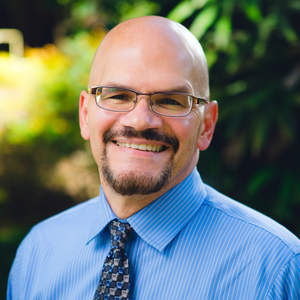
Timothy Muehlhoff
Tim Muehlhoff (Ph.D.) is the Senior Director of Biola’s Winsome Conviction Academy that seeks to reintroduce compassion and civility into our disagreements. He is the co-host of the Winsome Conviction Podcast where people with differing viewpoints are brought on for engaging dialogue. Tim has written extensively in the area of cultural engagement and conflict including I Beg to Differ, Winsome Persuasion, Winsome Conviction, and his newest book (co-written with Sean McDowell) is End the Stalemate: Move Past Cancel Culture to Meaningful Conversations.

J.D. Greear
J.D. Greear (Ph.D.) is the pastor of The Summit Church in Raleigh-Durham, North Carolina. Under Pastor J.D.’s leadership, the Summit has grown from a plateaued church of 300 to one of over 12,000. Pastor J.D. has led the Summit in a bold vision to plant one thousand new churches by the year 2050. He has authored several books, including Essential Christianity (2023), What Are You Going to Do with Your Life? (2020), Searching for Christmas (2020), Above All (2019), Not God Enough (2018), Gaining by Losing (2015), Gospel (2011), Stop Asking Jesus into Your Heart (2013), and Jesus, Continued… (2014). Summit Life with J.D. Greear is a daily, half-hour radio broadcast featuring his teaching. He also co-hosts multiple podcasts that explore faith and culture. J.D. completed his Ph.D. in Theology at Southeastern Baptist Theological Seminary. He served as the 62nd president of the Southern Baptist Convention. J.D. and his wife Veronica have four kids. His newest book, Everyday Revolutionary, is now available nationwide.