Episode 140: Your Heart Drives Your Life
In the biblical wisdom literature, Proverbs 4:23 says,”Above all else, guard your heart, for everything you do flows from it.” This is sound wisdom, but this bit of advice can often seem irrelevant in matters of church quarreling and cultural rage. And yet, formation in civility, both for the health of the Church and for broader cultural engagement, is crucial. On today’s podcast, Rick and Tim speak with Rev. Dr. Todd Pickett (Ph.D.) on the role of spiritual formation in matters of civility and whether becoming formed to the likeness of Jesus is the highest priority for Christians. They discuss discipleship, the spiritual disciplines, the centrality of the heart, and the practice of attunement in pursuing a good life.
Transcript
Rick Langer: Welcome to the Winsome Conviction Podcast. My name is Rick Langer and I'm a professor emeritus at Biola University, as well as the co-director of the Winsome Conviction Project. And I'm privileged to be here with my good friend, Tim Muehlhoff. Tim, who have we got with us today?
Tim Muehlhoff: Well, Rick, we've been around going on our sixth year and there's just certain people, they're our go-to people. When we want to get advice on certain things, we think of certain people. And when it comes to the spiritual formation side of the heart, there's one person we both think of immediately, and that is Todd Pickett. Todd has a PhD from UC Irvine in English. He has two master's degree. One from Trinity College in Dublin, Ireland in the classics. And then he has a MA from our own Talbot School of Theology in spiritual formation. And he served as Biola's Dean of Student Development for over 15 years. He now serves as the rector, pastor of Holy Trinity, Anglican Church in Costa Mesa, California. Todd, welcome to The Pinnacle of Your Life, the Winsome Conviction Podcast.
Todd Pickett: I'm happy to be here, Rick and Tim. Thank you so much for inviting me.
Tim Muehlhoff: Well, I really did mean that when we said when we think of certain topics, we think of certain people. And something's happening today that we need to explore our hearts. So let me ask this question. In today's argument culture, it sure seems people are perpetually angry, which makes discussing potentially explosive topics like politics or different theological positions difficult, if not impossible. What do you think is fueling all the vitriol today?
Todd Pickett: Yeah. Well, to the degree that that's true, and it indeed may be true, that there is kind of a surge of anger, impatience, hostility, I think anytime you have a cultural phenomenon, what it means is there's several inputs, there's several things happening at once to give rise to something that is happening everywhere. And I think a lot of sociologists and observers have a lot to say about this. I mean, I think I'll come up with probably some of the stuff you've heard, but from my point of view, I'd say four or five inputs are fueling this. We live, as we well know, in an individualistic, consumeristic society, and Amazon and others have trained us to get what we want now. And this is not just products, right? We want results. We want people to change their minds. We want to win now. And so I think this kind of consumeristic mentality has really made our patience thin. So that's got to play in there somewhere.
I think we have a loss of really any collective consciousness, right? We are so separated from one another that I think some of our sense for, I don't know, the consequences for one another of our decisions, our responsibility for one another, has kind of freed us up, sadly, to really say what we think, regardless for how it affects others, to get our way, regardless of how that visits others. And so I think the continuing withdrawal from collective life makes us less humane generally.
Certainly the digital age has also distanced us from one another's humanity. We all know the problems on social media that give rise to this. And another is the rhetoric of destruction. We're told that if we don't win, our enemies will destroy us. But I would say generally, Tim and Rick, I think what has always been true of humans is that we have certain passions. And these passions, things like anger, greed, avarice, these kind of coping mechanisms are always there, they're kind of idling under the hood of our human being cars. They're kind of idling there. And they just need to be poked sometimes and that's all that needs to happen. And we come out with these, what the ancients called passions. And so I think there's a lot of poking going on.
Tim Muehlhoff: Yeah. A technical word, poking, but it's true. Hey, let me just say this. Okay. So yes, the general backdrop, but why don't Christians rise above this? I would hope that we would recognize what you just said, but also be able to rise above it. But it sure seems like what Rick and I would say as we deal with churches, we are not rising above it. We're going after each other almost like anybody else does. So one, answer why is that, and then second, how does throwing the Bible around, like these Bible passages to support my view, make the argument between Christians even worse when we're having these drop the mic moments of listing certain passages? So can you tackle both of those?
Todd Pickett: Yeah. Well, I think this question of how come Christians seem to be like everybody else in some of these negative ways, I think that does go back to what the ancients called the passions, these ... And passion means suffering, right? That's what the word originally means. And we suffer our anxieties. We suffer our fears. We suffer our wanting to get our way. We fear a loss of freedom. We fear what political and cultural change, how it'll affect our wellbeing. We fear our children's experience in the world. And we all know that fear gives rise to anger, right? Anger is a covering for fear.
So to the degree that most of us are kind of living in this unreflective, instinctual, reactionary existence is to the degree we're going to look like each other. I mean, if we're not kind of examining our own hearts and not seeking transformation, we will default to the passions and it will look like anger because many of the passions are fears.
And so it doesn't surprise me at all if Christians aren't really seeking their own formation of the heart, which kind of brings us to that other question. What does this kind of argument culture, especially among Christians, tell us about the status of our hearts? And if you excuse the pun, that really is kind of the heart of the matter for Christians. The heart is our hope, right? A reformed heart is really our only hope for at least Christians to transcend or offer another way. The heart is hugely important in Scripture, mentioned over a thousand times for the person. Jesus tells us where your treasure is, there will be your heart also. That is the things that we care about most are in the heart.
And so when those things are threatened, man, we respond passionately. Again, but sometimes the passions are greed, avarice, anger. Proverbs 4:23 I think says it best, "Watch over your heart for from it flow of the springs of life." You better know it's in your heart because your heart drives your life. It's just going to drive your life. I don't think Christians set out to yell at their opponents. I don't think they think, "I'll get on social media today and I think I'll slander several people." No, what happens is they leak it. They leak it. The fear is in their heart, the anger is in their heart and they leak it.
Rick Langer: Yeah. Todd, let me just follow up a little bit on this. I was struck at the outset where you were talking about things like the passions, but also avarice and greed and things like that that evoke the notion of seven deadly sins and things like that. And it's a great reminder, as much as we talk about this being a 2025 kind of an issue, this is our microcultural moment, it is interesting to think of passions and deadly sins that Christians have been talking about for 1800 years or however. I don't even know when we first cataloged seven deadly sins. But I think we sometimes lie to ourself that the problem is with our cultural moment and not somehow with our own souls or desires. Does that seem right, that maybe another escape mechanism of not having confront what's going on in ourselves is just that we can push it off on social media and all these other things that no one's ever had to deal with before?
Todd Pickett: Right, right. Yeah. I think the Scriptures are pretty clear. James says, why do you quarrel? It's because the desires that are in your heart. Now, desires aren't bad, right? We are made to be desiring creatures. But if our desires aren't properly formed, if we're too attached to certain treasures, overattached to certain treasures, we will quarrel. I mean, there's probably not a better word from the Scriptures to describe the current moment. We are quarreling.
And what is our hope as Christians? Our hope is that God will actually reform our desires still to desire the good, right? So maybe still to advocate or have convictions about the good. But the greatest desire is that we would move among others like Jesus, right? That is union with God, the vine and the branch, that ought to be our highest good. And otherwise, even if we seek the good, apart from that, we will quarrel.
Rick Langer: Yeah. So this is an interesting thing that I wonder if people ... It'd be good to ask since if we were to ask ourselves when we're feeling this kind of tendency to quarrel or tendency to rage and flame at people, I have most often heard that justified by people saying, "Well, the cause that I'm worked up about, the thing that I want to change, is really, really important, so it's right for me to be worked up. It's okay for me to rage and flame because this is such an important issue."
And I hear part of what you're saying is that even that is its own misordered, disordered desire. And by that I mean the desires are just not properly rank ordered. It isn't that the thing you're desiring is bad. It's less good than some other thing and you're sacrificing this higher good on the altar of this secondary good, as important as that secondary good might seem.
Todd Pickett: I think you're exactly right. I think of a verse like Romans 8:28, "All things work together for good." Ah. And we often stop there and we like, "Oh, great." And we have various notions of what we think that good will be. But Paul goes on to say, "For those called to be formed in the image of his son." Wow. Wow. That is a serious caveat. Do we want most to be formed in the image of Jesus? Is the figure of Jesus even present in our modern day arguments or discussions or quarrels or is it just the truth? If it's just the truth, fair be it, there's goodness and we should be discussing, even robustly. But is our highest good that we want to be like Jesus? And how would Jesus being in the room, on the podcast, on social media, how would that change our responses? What would practicing the presence of Christ? I often listen to people and how much they talk about God in such context and how often they actually talk about Jesus. Does Jesus complicate? Does the figure of Jesus complicate these problems? It might, and that's why he may not be named so much.
Rick Langer: Well, it is an interesting thing that kind of our moral convictions, moral absolutes, we drop anchor them, often we associate that with the term God, I think exactly because we believe them to be transcendent. They are beyond time and culture and things like that. And in a weird way, that also makes them safe because they're so high up, you're not confronted with some weird thing like a Jesus who says, "Well, love your enemies and do good to people who persecute you. If a person you were so worried about as an enemy or a sinner, well, why don't you befriend a sinner? Because I did that." And Jesus is really unnerving, I think, that way, and God may be a little safer in a weird way. His transcendence versus the immanence of Jesus confront us in different ways.
Todd Pickett: Yeah, I think you're onto something there, for sure.
Tim Muehlhoff: Okay. This is way too convicting, so let's move on. Wow. That's so interesting to think about how Jesus changes the equation. Okay. So Todd, let's say we want to do it. We want to reform our heart. We want to reform our desires. And reforming our heart, of course, is important. What Jesus says in Luke chapter six, it's from your heart that you speak. So you have a master's in spiritual formation, spiritual disciplines. I think sometimes our listeners hear that phrase and they sort of kind of sort of know what you mean by that. So maybe break that down for us. If somebody is brand new to spiritual formation or the spiritual disciplines, how would you unpack that?
Todd Pickett: Yeah. Well, I think actually both those terms, spiritual formation and the disciplines, both do need some contextualizing. I think for some people, the phrase spiritual formation is new. Maybe they feel like it's a rebranding of the good old-fashioned word discipleship. And actually, a funny thing happens on the way from the gospels to the epistles. In the Gospels, you do have the word disciple and discipleship quite a bit. And that's because, of course, the model that Jesus was inhabiting that was current in the day was you had a rabbi and you had disciples. And the people who followed the rabbi were called disciples and the process was called discipleship. That was just what it was in that pedagogical context.
Now, I think if a rabbi dies, people can still call themselves a disciple of the rabbi, but God had another plan. He goes, "I'm not going to just have you follow a dead person and call yourself a disciple. I want you to follow a living person." And so Jesus tells them, "Hey, look, the Holy Spirit's coming. It's good that I'm going away." Which they think, "How could that be good?" "It's good that I'm going away. I'm going to send the spirit inside you." And then what you get in the Epistles, the word disciple completely disappears. It just disappears. And what you get are various forms of the word form. [Greek 00:16:02] is the verb in Greek. Do not be conformed to this world, but be transformed. When we see him, we will be transformed into his image. Or most of all, Paul the missionary says, "I labor so that Christ will be formed in you." Well, that's where the word spiritual formation comes from. Now it's the Holy Spirit, almost like fetal development, Jesus kind of being born in us. So no one should be afraid of the word spiritual formation.
And the disciplines, I'll simply say this and you can ask more if you like, the disciplines, also called means of grace by the Puritans, also called rhythms, are simply cooperating with that formation. They're making space for God, making space for me to identify what God's doing in my life and cooperate with it. These are various rhythms that do that. We all have rhythms in our lives, eating, sleeping, traveling, everything. These are rhythms that are designed to create space for God and the formation of Christ in our hearts.
Rick Langer: So just as you were talking, Todd, I had this little flashback to the good old days that probably all three of us are old enough to remember just fine. And that is when you hopped into your car, if you wanted to listen to the radio, you had to go through a discipline of tuning where you ... It didn't just pop up automatically to raging talk radio or sports radio or whatever it is that you happened to listen to. Whatever it was you wanted, you had to adjust the dial to tune into what was going on. And part of, I guess, the image that came to mind as you were talking of spiritual disciplines, is that as an exercise in tuning to the voice of Christ through the Holy Spirit in our hearts, I guess, where you really-
Todd Pickett: If you think about, it reminds me of the word attuning. We're told that when a child is born, the most important thing is for them to attune to a healthy parent. Now, this is before the child can think. This is before the child can reason. But we all know that some of the most powerful formation happens in those first few years of life. What's happening is they're attuning relationally to a person. Now, the health of that person that they're attuning to will actually determine much of what they struggle with or enjoy later on. What we're doing in the spiritual rhythms is not just an ethic. It's not just a workout. It's not a morality. It's not a self-improvement. Ultimately, the spiritual rhythms or means of grace are attuning us to the person of Jesus from God by the Holy Spirit. And so it is a relational formation. It's relational formation, not a self-help, autonomous character-building, although it may result in better character, exercise.
Tim Muehlhoff: Hey, just for the record, I have no idea what you're saying about tuning a radio. I'm dumbfounded. Yeah, yeah.
Rick Langer: Yeah.
Tim Muehlhoff: And by the way, Todd, at one point when you were saying it was so profound, I literally heard sirens. I just want you to know that. It was probably just the Holy Spirit, it was probably just me. Okay. So this tuning, I really like this attuning. So when we talk about heart transformation, are there certain disciplines that you think particularly come into play when we're addressing the heart? Like what's in my heart or how do I change my heart? Are there ones that come to mind that maybe even you find particularly useful?
Rick Langer: Yeah. In fact, let me just jump in here for a second, Todd. It might be great for you to describe what you do in your own life on this issue. Give us kind of a tangible image or our listeners a tangible image of what this looks like on a day-by-day basis for you.
Todd Pickett: Yeah, I'll do that. I think in answer to Tim's question, there is the question of the what, what means of grace, what rhythms? Probably those are the terms I prefer. Disciplines is fine too. But it really is the question of how we do them that addresses the heart. So I think in many cases, there are the classic disciplines. You could pick up any book on spiritual formation really if they include the disciplines, you could see the many classic disciplines of study, worship, fasting, reading the word, prayer. But I think, and this is a longer conversation, but what really we need to do, and this will lead to my own practices, what we really need to do is look and see our circumstances right now. What is hard for us? What is difficult? Where is it difficult for us to obey God? Because that's kind of a symptom of resistance. Something's going on in the heart. And so I need to find or create a rhythm in which I allow God to address the heart.
So I mean, for myself for instance, one of my temptations is what I'm doing now, which is talking. I try to rhetorically manage everything and everyone. I figure if I can just say enough or say it loud enough or say it often enough, everything will work out. If they're not understanding, if they're not changing, they're not understanding me. So I need to say it again. And that leads me to sometimes dominate conversations. And so what would be the spiritual rhythm? And what it is for me is when I'm in a meeting and I can feel the flesh rising up in me. I'm not getting my way. This conversation's not going the way I want it to. I need to say something. I need to turn it back. I can literally feel the anxiety rising in me and my rhythm is I am not going to speak right now. Now, what I may say may be brilliant and right in my own mind, but, see, the rhythm is already built in meetings.
And this is the good thing about the spiritual rhythms. We can take an existing rhythm, meetings, and we can walk in and say, "Jesus, you're here. I know what my temptation is and I'm going to not speak." But it's not just a negative. Now, even as I'm in silence for a moment, I'm opening my heart and going, "Lord, what is going on with me? I want control. Why do I want control?" Well, maybe because I'm worried about my wellbeing if I don't get my way. I'm worried my department won't get enough funding. I'm worried this. I'm worried that. And I'm opening the heart. I'm opening my fear. I'm opening my lack of trust. Ah, there it is. There it is in the heart, the lack of trust. Oh Lord, have mercy on me. Build my trust.
So the rhythm, which is tied to an existing life rhythm, gives me space to open the heart to God. It's not just repression. It's not just don't speak. It's, "Lord, now that I'm not speaking and feeling this, what is going on with me?"
Rick Langer: So in this sense, the spiritual discipline, to use that term, is not an add-on to your daily life, but rather is embedded in your daily life. Is that right? You just use these things that come up in life anyhow, and do you mentally let that be a trigger for a pause and kind of a presencing of Jesus? Or how does that play out? Well, number one, am I right that you're talking about having these disciplines more embedded than added to our life? Number two, if embedded, how does that work?
Todd Pickett: Well, it works. The embedded ones, I think both, but the embedded ones work just that way. Hopefully we know ourselves well. And again, the great danger is that we have ... a great danger for Christians is they don't have double knowledge. They have knowledge of God. They have all these opinions and theology, but they have no knowledge of themselves, and that's going to result in a shallow spirituality. But hopefully we have enough knowledge of ourselves where we begin to see, "Oh my gosh, this is the pothole I fall into. This is the area of resistance, this area of disobedience. This is where the deeds of the flesh come out."
And so then I kind of design a rhythm. I do have ones that are not embedded. I mean, one of my rhythms, I run a little anxious as a person. So one of my rhythms is contemplative prayer. And many things go by the name of contemplative prayer, but in my case, it is just a practice of the presence of God and a certain solitude ... I mean, it's never solitude, right? God's always there, so that's kind of a misnomer. But it's a silence in which I just sit with him, which actually is quite difficult because our brains are so active all day long and often what happens is thoughts charge in. And of course, because of our treasures, our thoughts go right to our concerns. They may go right to our anger. They may go right to our impatience.
And I practice letting those slide off me and turning to Jesus. Or I'll say to Jesus, "Oh, Jesus, look at that. I am really angry about that, or I'm really pissed at that person. Look at that, Jesus. What's going on there?" And so in the silence, I hear my noise and I open it to God. And if we have to have a discussion, we can, or just simply God's love for me and my sense of having to trust him, I am practicing something that's going to happen in real life. It's going to happen that day. I'm going to get cranked up again. Oh, but my body remembers he's here. I've done this before. And so there are certain practices that I know I need regardless of embedded situations and contemplative prayer, at least in the way I'm thinking of it, is one of those practices I need daily.
Tim Muehlhoff: You know, you mentioned reminding ourselves of the love of God. And I wonder if I couldn't, just for a second, quote a mutual friend of ours, Dr. Todd Hall, who we both love his book, Relational Spirituality, which is just so insightful. But I've heard you quote him before, that Todd says, "We need to be loved into loving." So maybe that's a good way to end this as both an ending to this podcast, but a beginning to a person's journey with God, is that's the place to start, is Todd's observation that we're loved into loving. Can you just comment on that real quick as we wrap up?
Todd Pickett: Oh, he said that? I thought I said that. I've been plagiarizing all these years. No, I know Todd said that. Yeah. So if you think about, and a Christian should think about this, if we identify areas of acting out, sin, resistance, disobedience, we should understand what's the thing below the thing? What is the thing below the thing? So it's not just, as Dallas Willard liked to say, "We're not just doing sin management here." I need to stop sinning. No, you're not going to be able to. I mean, you should try to stop sinning, please do, for our sake. But the question to ask is, "What is the thing below thing? What's driving that?" And I bet in most cases it could go under the general label of insecurity. Insecurity. I mean, that's almost the definition of the human, right? We are insecure creatures. We cannot secure ourselves enough to satisfy ourselves. And so of course we want our way. Of course we want to master others. Of course we want as much money as we can. We are insecure people.
But what if there was a divine, omniscient, omnipresent, omnipotent God who also loved us? What if his love, as he says to Paul, "See if my grace is enough for you?" What if that could secure us in the world? What if that could love us such that we don't leak on each other if our leaking comes from insecurity? I think that's what Todd Hall means. We need to be loved into loving. The answer is not simply sin management. I mean, stop sinning, stop it. Yes. But you won't be able to. Your insecurities are driving your sin and all the numbing behaviors, et cetera. What if we were so loved that we were free from our insecurities? We would love others. I think that's what he means.
Tim Muehlhoff: Rick, sometimes I wish we were not just audio, but visual, because I'm literally taking notes like a madman. I'm sitting there ... One time I actually hit the microphone arm and I thought, "Oh crud," because I'm trying to write down what Todd's saying.
Todd Pickett: And I'm just stipulating that I moved my mouth a couple times.
Tim Muehlhoff: Man, that is something to think about. I love what you said, embedding it not just in the theoretical, but in the medium about to go to, but then also general things in the backdrop like anxiety. Boy, this is so good. Todd, I want to bring you back, if it'd be okay, Rick and I would love to bring you back because as you were speaking, I was thinking not of meetings, but of other scenarios that I bet you a lot of our listeners are thinking about, like how would this practically work? So would you agree to come back and join us again?
Todd Pickett: It'd be my pleasure.
Tim Muehlhoff: Oh, we'd love it. Hey, thank you for listening to the Winsome Conviction Project. You can check us out at winsomeconviction.com. And, Rick, we are brand new on Instagram. So check us out at at Winsome Conviction Project. And we're sticking our big toe into Instagram. It's been really fun.
Rick Langer: Wow. I have no clue about Instagram. Thanks for that update, Tim. I'll be sure to check us out on Instagram if I could just find it on my phone.
Tim Muehlhoff: That's because you're still tuning your radio.
Rick Langer: Yes, but I'm good at tuning my radio, so don't mock me.
Tim Muehlhoff: I'm not.
Rick Langer: That's all I have to say.
Tim Muehlhoff: Hey, so check us out. You can even sign up for our quarterly newsletter at winsomeconviction.com. Thank you so much for listening. We don't take that for granted.
Authors
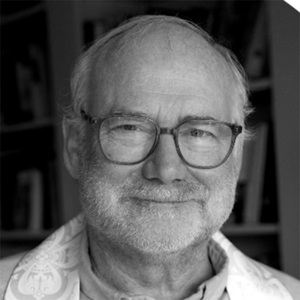
Todd Pickett
The Rev. Dr. Todd Pickett (Ph.D.) is pastor of Holy Trinity Anglican Church in Costa Mesa, CA. Prior to his leadership in the pastorate, Dr. Pickett served for 27 years as a professor, Dean of Spiritual Development and campus pastor at Biola University.
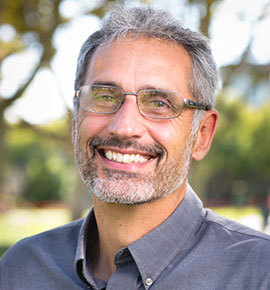
Rick Langer
Rick Langer is a Professor of Biblical Studies and Theology and the Director of the Office of Faith and Learning at Biola University. He specializes in the integration of faith and learning, and has also published in the areas of bioethics, theology and philosophy. He has a passion for helping Christians of all ages understand the connection between the Gospel and all the diverse facets of the created order in which we live. Prior to coming to Biola, he served for over twenty years as a pastor at Trinity Evangelical Free Church in Redlands, California.

Timothy Muehlhoff
Tim Muehlhoff (Ph.D.) is the Senior Director of Biola’s Winsome Conviction Academy that seeks to reintroduce compassion and civility into our disagreements. He is the co-host of the Winsome Conviction Podcast where people with differing viewpoints are brought on for engaging dialogue. Tim has written extensively in the area of cultural engagement and conflict including I Beg to Differ, Winsome Persuasion, Winsome Conviction, and his newest book (co-written with Sean McDowell) is End the Stalemate: Move Past Cancel Culture to Meaningful Conversations.