Episode 143: The Seducing Power Of Fault-Finding In Others
We long for a life characterized by goodness, beauty, and kindness, but the fractures and hostility in our world get in the way. What can we do? On today’s episode, pastor and author Rich Villodas speaks with Tim about some of these themes in his book, Good and Beautiful and Kind. They discuss the role of empathy and the slippery slope of emotional engagement, the danger of depersonalization and the reality of supernatural battle, recall how Jesus would meet people where they are when speaking about the good news.
Transcript
Tim Muehlhoff: Welcome to the Winsome Conviction Podcast. My name is Tim Muehlhoff. I'm the senior director of the Winsome Conviction Project at Biola University in La Mirada, California. We believe that we should open lines of communication rather than close them, think the best of people, not the worst, and that God has called us to speak truth. We give a hearty amen to that, but also with love. We should have reasons for the hope that is in us, but also with in all reverence. Thank you for listening. Right now, we're not sure when this is going to post, but right now, since 1936, Biola has done something called the Torrey Bible Conference. We literally shut down everything. There are no classes whatsoever. The entire student body is required to attend. And so over these next three days, literally the entire student body is going to hear from Bible teachers, people that we think we want to expose them to. So the Winsome Conviction Project, these last two years have formed a partnership with the provost office to bring in speakers, we think model the things that we want to put before students because a huge part of the Winsome Conviction Project is raising up a new generation of peacekeepers. Jesus said, blessed are the peacemakers and we want to take that seriously.
So when I came across a book called Good and Beautiful and Kind: Becoming Whole in a Fractured World by Rich Villodas I immediately thought, I think I just found my speaker for the Torrey Bible Conference right here. And I started to read it. And Rich, I mean you can see it, our listeners there is just post-it notes everywhere. I just think this is just a wonderful book. Thank you for the time and attention you did in writing this book.
Rich Villodas: Oh, thank you Tim. It's author's dream to see all those post-it notes.
Tim Muehlhoff: I know, isn't it? It really is. So let me give a little bit more of a formal introduction. Rich is the Brooklyn-born lead pastor of New Life Fellowship, a large multiracial church with more than 75 countries represented in Queens, New York. His book, The Deeply Formed Life, was released in September 2020 and won a Christianity Today Book of the Year award in the category of spiritual formation. Followed by a second book, Good and Beautiful and Kind, which we're going to talk about today and his most recent book, The Narrow Path, released by 2024. But hold the phone, we have a new book coming out. I just learned on my walk over with Rich. We'll have him talk about that. A devotional. He and his wife Rosie, have two beautiful children, reside in Long Island, New York. Rich, welcome to the Winsome Conviction Podcast.
Rich Villodas: Tim, a joy to be with you. You are a delight and I look forward to a good conversation.
Tim Muehlhoff: Tell us about the new ... You literally said this thing just came out like two weeks ago.
Rich Villodas: Yeah. Mid-September 2025. I wrote an Advent book called Waiting for Jesus, and we and our congregation have allowed the church calendar to form our worship and our liturgy. And so I thought, yeah, we've done this for a while. Why not offer a resource maybe that can help others?
Tim Muehlhoff: Oh, that's great. That's awesome. Okay. So I love this book Good and Beautiful and Kind. Remember Jerry Maguire, you had me at Hello?
Rich Villodas: Oh yeah.
Tim Muehlhoff: Remember that?
Rich Villodas: Of course.
Tim Muehlhoff: Well explain to people the title because I'm a huge Langston Hughes fan and this is probably my favorite poem that he's ever done. Tell us a little bit about the title and what inspired the title.
Rich Villodas: Yeah. A number of years ago, I came across a number of poems from Hughes, but one in particular stood out, it's called Tired. And Hughes writes, I'm so tired of waiting, aren't you for the world to become good and beautiful and kind? Let us take a knife and cook the world in two and see what worms are eating at the rind. And I was so moved by that because I think Hughes is naming the ache we all have the longing we all have for goodness, beauty and kindness. He doesn't want to just live with the longing, he wants to identify what's getting in the way. And so it sounds like language of greater division. Let's take a knife and cut the world in two. But it's not language of division, it's language of discernment and depth trying to figure out what's really at work beneath the surface that we need to address. And so I was just really moved by the poem, and when I wrote it, I thought, I think our congregation first of all needed some language around the worms beneath the rind. And so I thought it would be a helpful contribution to our church and beyond.
Tim Muehlhoff: Your book is, okay, let's do that and find out what's happening below the surface. But you don't leave us there. You offer some really helpful suggestions of what to do. We're huge spiritual formation people here at Winsome Conviction because we take seriously what Jesus said is from the heart that you speak and that we've really got to learn how to have heart change before we get to communication techniques. And that's coming from a calm professor.
So you jump in very quickly and you say, okay, let's take a look at some of those things that's happening. And one is a failure to love. And then you make this really interesting comment. Sin is at work when those who have experienced undeniable racism are not met with empathy and care, but rather are demonized for naming the problem. So we had on the Reverend James White and he said this about Black Lives Matter ... he's an African-American pastor. He said, so Black Lives Matter draws attention to the pain of my community, not perfectly by any means. And your first response is, yeah, well it's Marxist. And he said, I don't think that's the first response. So can you unpack that quote a little bit that we need to meet at least pain with empathy first?
Rich Villodas: Well, at the essence of sin, I think this is actually a sin problem because St. Augustine would say that his definition of it was [foreign language 00:06:14], that is to be turned in on oneself. And when sin is really messing up our lives, we are so inward focus, the world revolves around us and there's no capacity to step out of ourselves for the sake of love. And so in a case like that, that example I think often ... And this is across the board, whether we're talking about a marital conflict, whether we're talking about parenting, we could so easily get caught up in our own world, turning ourselves in that we refuse to see the invitation to step into the world of someone else, to be incarnational like Jesus was for the sake of understanding, for the sake of attunement, for the sake of empathy, for the sake of love.
And so I think this is at its core, a sin issue. And just along those lines as it relates to the failure to love ... One day I was reading the gospels and I was so moved because Jesus says ... He talks about the greatest commandment is to love God with your heart, soul, mind and strength and love your neighbor as yourself. And as I was meditating on that, I thought, if that is the greatest commandment, then the essence of sin must be the failure to live that commandment, failure to love God with our heart, soul, mind and strength and our neighbor as ourselves. And so I think there's something to pay attention to there.
Tim Muehlhoff: So we have the Think Biblically podcast with Sean McDowell and Scott Rae. Awesome. Please check it out if you haven't. We did a book called The Sin of Empathy. We did Joe Rigney's book, The Sin of Empathy, where he is arguing against empathy against an empathy that I jump in and lose all sense of myself when I empathize with you. Yeah. So can you bring some clarity when you say empathize, when a person comes to you deeply hurt, but representing a perspective that you clearly disagree with, but they're coming to you and you see the pain. Is there a little bit of a hesitation that if I empathize with you, I'm condoning a community and a perspective I know I don't agree with? So how do I balance empathy with making sure that I don't condone the ideology of a group?
Rich Villodas: At its core I think what drives that kind of mentality is deep fear and anxiety. And when fear and anxiety is now framing our interactions with one another, we're going to miss something out as it relates to being obedient to Jesus and loving God. And so for me, I think we can hold two things together that I can enter into someone's world and not have to go down a slippery slope of theological, whatever carelessness or whatever you want to call it. There is a way in which I can enter into your world and hold onto myself. And that's the challenge that ... Lots of folks don't have The imagination to see that entering into your world doesn't mean I lose myself. In fact, the incarnation ... We talk about in our church, incarnational listening as a practice, that to step out of our world into someone else's world, Jesus leaves heaven enters into earth and retains who he is. Yet at the same time, he allows himself to be formed by a particular experience that someone else is going through. But empathy does not mean erasure. I have to be erased. And I think because it's a in or out either or bounded set approach, I think we miss out on the gift of empathy and only see fear.
Tim Muehlhoff: And to lead with empathy, to lead with, I want to see the world from your perspective. And then I would add, I like your incarnational idea. Embodied empathy and perspective taking is I don't want to just cognitively understand where you're coming from. I want to feel it. Remember Hebrews, I want you to pray for those in prison as if you're in prison, the pain that they feel as if you're feeling that within your own body. I think we can try to do that even with people we really disagree with to say, I'm setting aside my ideology for a second to feel your pain and to grieve with you, and then we can pick it back up and have a conversation later.
Rich Villodas: I think at its core to connect with another human being on that level to see where there's pain, where there's disorientation, where there's disruption and distress. And to be able to say, can I be present and attuned to you? In and of itself, that doesn't mean I have to compromise convictions that I hold. It doesn't mean I have to get rid of all of the theology that I understood. It does mean at the same time that we should live with greater humility as it relates to maybe we don't see us clearly as we think we do. We see through a glass dimly, First Corinthians 13. And so how do we hold convictions with great humility? And I think it's the humility part, Tim, that often gets missing here because it's our pride, our certitude, our certainty that now keeps us from entering into the world of someone else.
Tim Muehlhoff: Will you unpack just for a second the slippery slope idea that you had? So I'm a communication professor and the slippery slope idea has been brought up ever since grad school, which by the way, keeps the left in place, keeps the right in place because if I give on this one issue, it's the slippery slope. And so I won't give on one issue. I'm going to lock it down right in the beginning. Can you address how the slippery slope fallacy can be true and wise, but how can we break free of that kind of thinking, that if I give on this one point, we're going to be down the road?
Rich Villodas: On one level I think the question is to what degree is my sense of emotionality driving conviction? And so the slippery slope argument is if you get close to someone, enter into their shoes, get proximate to their pain, you are going to have an emotional response. And that emotional response will override anything else, any theological conviction, any historical teaching. And so be careful about your emotional engagement with someone else because it'll lead you down a slippery slope of compromising centuries long theology or whatever it might be. And so I think that's the ultimate fear. But again, I think there is a way where we can say, I believe this to be true and here are my reasons why. And I could be a follower of Jesus and enter into the pain of others without having to again erase myself in the process. But I think it's almost the tension of am I going to be led by emotion here to the point of compromise, or am I just going to hold onto the scriptures into theological teaching and at the same time be harsh and distant? And I'm saying, no, no, no, we can do both people. We can do both.
Tim Muehlhoff: Both of those, harsh and distant. We come across Jack Gibb talked about detach neutrality. You explained that-
Rich Villodas: That's a nice phrase.
Tim Muehlhoff: Yeah. I love that phrase. But 1960s, he was coming up with this when the wheels were really falling off in our country. He just said, listen, detach neutrality is you explain the hardest thing that's ever happened in your life and you get nothing from me. No reaction whatsoever. He said, that's going to foster defensiveness. So go back to Dr. Reverend James White, and you can go to winssomeconviction.com and of course, hear all of our past episodes. Rich, here's his drop the mic moment. I will never forget him saying this. He goes, okay, so what's our response when we come up to a traffic accident? Do we pop our heads in the window and say, see, should have been wearing seatbelts or do we feel their pain and try to help? I thought, oh man, we are ... See, you should have been wearing seat belt. We are a community evangelicals that so quickly want to jump in and give the raw naked truth. And remember, book of Proverbs, a word spoken at the right time is compared to fine jewelry. And I think sometimes, man, we just want to speak the truth.
Rich Villodas: And I think in the process, and maybe I'm getting there too soon here, Tim, but I think in the process we are so habituated into a culture of depersonalization where we no longer see individual stories and human beings, we see swaths of people. We don't see the particularities of their own journeys and stories. We lump everyone in. And when you can lump everyone in a group, it's easy to be mean and easier to be distant and easier to have that neutrality. And that's the powers that work in our world.
Tim Muehlhoff: I was flying ... I forget where I was flying and just bored out of my mind, so I clicked on a CNN documentary called Becoming Karen and it was about a father and his teenage son who was transitioning to becoming a woman and wanting to run track. They weren't particularly good at it, but he just run track. And I'll never forget the father of saying, "I really thought I was going to lose my child." I mean, suicidal ideation among the trans community is through the roof. And he said, "When the transition happened, I saw them smile for the very first time, and I thought, 'Oh, I got my child back.'" I'm sitting there, I'm bawling my eyes out watching this thing. Because if you ask me, describe the trans community, it's all theoretical. I don't know one trans person. And I just learned about the backstory and I was just overcome with emotion. And man, forgive me for just making the trans community this faceless, nameless threat to NCAA sports, which by the way, I'm for setting limits-
Rich Villodas: Sure. Of course.
Tim Muehlhoff: In NCAA sports. We need to be fair. I believe very much in Title IX and all those kinds of things, protecting our female athletes. But it put a face and a name, and that's when it became humanized.
Rich Villodas: Yes. Yes. And it is depersonalization and demonization that's running the show here as opposed to how do we humanize someone, see the particular contours of their journey, respect their journey. Not everyone's on the same journey. No two people are the same. And how do we meet people where they're at as opposed to where we want them to be? And so at its core, it's a recognition, I'm not God, I'm not in control. Can I meet people where they're at? And that's very threatening because we have a particular way that we think the world should be ordered.
Tim Muehlhoff: Yes. We could camp out on this all day, but let's get to ... We're only on chapter one. This is going to be an NBC miniseries. It's going to be a Netflix 10-part series. But man, if you didn't have me at Langston Hughes, you had me at chapter two because I don't see many chapter twos in many books. And that is called The Unseen Enemy. And something's happening in this world. I mean, when John says the whole world lies in the power of the evil one ... And we have a great scholar here named Clint Arnold, who's written three books on spiritual battle. Top-notch, New Testament scholar. Oh my gosh. He just finished a, I want to say, 920 page commentary on Colossians.
Rich Villodas: Wow.
Tim Muehlhoff: 920 pages.
Rich Villodas: That's a short book, Colossians.
Tim Muehlhoff: I know. It'd take everything I've ever written and we wouldn't get 900 pages. But he wrote a book on Paul and the powers of darkness, and he said we have this double-mindedness today that everybody would say, "Hey, do you believe in the devil?" "Yeah. Yes." "Okay. Does it change how you do life at all?" And the answer's probably no, not really. I love that you go there. Can you explain a little bit before I read some killer quotes, why go there?
Rich Villodas: Yeah. I think on one level, part of this was I think influenced by C.S. Lewis. So Screwtape Letters-
Tim Muehlhoff: Come on.
Rich Villodas: Was so formative. In fact, I remember when I was reading it for the first time, it was probably 2003 maybe, and I'm at the local laundromat in Brooklyn, just throwing in my clothes, try to get washed there, and I'm reading the book and find myself just ... Wow. The temptations of a Wormwood and Screwtape here, I'm like, "I'm experiencing that right now." So I think that's kind of set me off in terms of a particular direction. Secondly, I became a Christian in a Pentecostal tradition. And so the challenges were, and Lewis mentions this in the introduction, we can very easily see a demon behind every bush, or we have no kind of imagination for the demonic. And so I think my own experience seeing pain, and then when I look at the world, there has to be some explanation beyond people are just not nice. There's something else. There're evils in the world that are so deep and profound and ugly and disturbing that the only possible way to think about it is there has to be something else at work in the world. And so that's probably the starting point for why I thought a chapter like this would be important.
Tim Muehlhoff: Yeah. And you say this on page 25. "We are so accustomed to clear, easy answers when it comes to pointing out what's wrong with the world. It's the liberals or the conservatives." This cracked me up. "People who put pineapple on pizza."
Rich Villodas: Yeah, those are really bad.
Tim Muehlhoff: It's wrong.
Rich Villodas: I'm a New Yorker. That's really bad.
Tim Muehlhoff: I don't get it. But the biblical narrative helps us acknowledge that finding the source of the problem is much more complicated than we think. So I wrote a book called Defending Your Marriage: The Reality of Spiritual Battle. When I'd speak to pastors, number one response is, "Listen, we can't get carried away with this." And my answer was, "I think we're a long way from getting carried away with this." But it's complex. And I don't doubt that pastors and parachurch leaders do think, I don't want to open Pandora's box. I'm really am scared. But you say, "In the biblical story, there are forces outside ourselves somehow wreaking havoc in our lives, seducing us away from the God of love." So how does this seduction happen in your estimation as you look at what's happening today? I mean, our communication climate has always been difficult, but now it's toxic in certain places and became deadly with the assassination of Charlie Kirk and the attempted assassination of President Trump.
Rich Villodas: Yes.
Tim Muehlhoff: So what does the seducing look like?
Rich Villodas: Well, in terms of just definition, first of all, my working definition of when we talk about powers and principalities rooted in kind of Ephesians six as a primary text, is that the powers and principalities are evil forces that get connected to individuals, ideologies, and institutions with the three-fold goal of deception, depersonalization, and division. And so that's my starting point for talking about the powers. There's something at work in the world that's rooted in deception, that sounds like the evil one. Depersonalization. I no longer see individuals. I see groups here.
Tim Muehlhoff: Affective polarization.
Rich Villodas: That's exactly right.
Tim Muehlhoff: I don't just disagree with you. You're horrible for this country and I hate you.
Rich Villodas: That's exactly right.
Tim Muehlhoff: I despise you.
Rich Villodas: That's exactly right. Which leads to division. And then if I want to keep the alliteration going, now death to your point here. I mean, we've gotten to that point. And so I think that the seducing power of finding fault with another human being, it was ... Who was it? Aleksandr Solzhenitsyn who would say, "The dividing line between good and evil runs through me. And until I'm able to recognize my own mixture of good and bad, of saint and sinner, it's far easier to now point the finger outward."
And I think that we are playing right in the hands of the powers when we do that because we're always looking for someone else or something else. And I think that's at the core, in many respects of what seduces us into that kind of climate, where the powers and principalities are having their day.
Tim Muehlhoff: I think we don't know what to do. Okay. Let's grant John his assertion. Let's say the whole world lies in the power of evil. And let's say my church is experiencing conflict, tensioned with the election, with whether we should do a memorial for Charlie Kirk. I mean all of those things. Mask mandates. I mean, we jumped into the Winsome conviction project with the mask mandates and it was baptism by fire. So then what? Now that we're going to recognize this, and you're pastor of a super influential church, I mean, what do you do to keep the guardrails in place? Because I do think some churches can go too far. How do you do this in a way that is balanced?
Rich Villodas: Well, I think on one level we have to recognize the limitation of trying to negotiate our differences via social media technology from a distance. The distance that is inherent in the primary way that we engage one another these days, social media technology, there's no nuance, there's no proximity. You can't read tone. So I think so much of the ways that we're trying to fix the world is through a means and a medium that is inherently disembodied and disconnected.
Tim Muehlhoff: Depersonalizing.
Rich Villodas: Depersonalizing. And so I think the key to it, and I get very discouraged around this, is it is in hyper local environments where I can see you and hear you and touch you and hug you. And those are the spaces. And so as a pastor, for me, when I talk to other pastors, I'm trying to, what would it look like in our local communities to negotiate our differences well? And that requires such a level of nuance and proximity. And at the same time, I think we have to recognize there's only so much we can do online, which is not much.
And we have to call it for what it is. The limitations of online discourse is significant and only leads us into greater fraught spaces here. And so on one level, it's how do we move out of these spaces into a more personalized, embodied, proximate space? This is why the local church is so important. Because the local church can be a countercultural community. And I've lived this in Queens. The level of diversity in my congregation is through the roof. And yet we've seen if we can get together and see one another and eat a meal and have a drink and whatever it is, there's something that can get done in that particular space. And so I think we have to recognize the limits of our discourse, especially when we're not proximate to one another.
Tim Muehlhoff: The meal thing is so fascinating to do. We would bring faculty together who disagree with each other here, and we'd have a meal beforehand and just hear each other's stories and laugh. But here's what we've noticed, Rich. It just drives me crazy. We work with certain organizations and churches where you have a really good meeting. It's been productive. This has been great. We had some breakthroughs and maybe even some tears were shed. That night, on social media, the very people in the room described what happened in the most uncharitable ways possible. And I was like, "What just happened with your mentality? Why did you think it was okay to say that when you didn't say it in the meeting?" And we have found that it really sets it all back because here's what they say. "That's what you really believed, was what you put online, not what you said to me as we were having lunch."
Rich Villodas: And a situation like that, which I think is very common in lots of different, whether it be workplaces, whether it be churches, various institutions. I think the question is ... And I gave a talk earlier to the faculty here at Biola around differentiation. What does it mean to move beyond fear? So much of that is rooted in fear. I can't really be honest. I can't speak up and tell the truth from my perspective as I see it because XYZ. How do we move beyond the fears that keep us so tied up and begin to say, "This is how I might be different from you." At the same time, I want to maintain connection. Distinction without disconnection. And I think that's the kind of culture that we desperately need in our moment where difference does not necessarily mean to cut off. Difference can lead to connection on some level, but it costs us something. It costs us something. And I'm not sure if the cost of doing something like that ... Lots of people just don't have the capacity, I think, emotionally and physically. And so the subterranean interior examination call is one that I think is a priority if we're going to negotiate our differences well. This is not going to happen from the head and not happen externally. Until we're able to look within to find out what's really animating my decisions here, we're going to have a hard time to do it.
Tim Muehlhoff: What do you think about this idea? This is totally off the cuff. Totally off the cuff. However you answer is what we're going to do. Whatever you say, Rich, we're doing. Okay. So let's say we're going to have a two-day meeting with a Christian organization that is experiencing strife of some kind. Do you think it would work to say, "Okay. We're going to have this discussion and here's what it takes to be part of the discussion. You will for the next one week heading into the discussion and one week after the discussion, not to be on social media, not to talk about this in social media."? One, do you think people would agree to that? And two, do you think it would work? Do you think it'd make any difference?
Rich Villodas: Well, I think it varies from person to person. There's some folks that because of ... I don't know if they've done enough work to absorb and meditate and contemplate what's really going on in them. In some respects, it's a reflexive kind of social media is just, I need to get it out. And as a result, that's their ... I don't think people journal nearly as much as they used to. Their journal is online, and as a result, all kinds of craziness is released because of the power of our words. And so I think it would be a reasonable ask for sure. If an organization's coming in, there's tension, can we figure out a way to negotiate our differences well in this space here without exacerbating and naming something out there for folks that are not even in the room?
Tim Muehlhoff: Right. Not even in the room.
Rich Villodas: Yeah.
Tim Muehlhoff: My goodness. We could talk about this forever. Will you come back?
Rich Villodas: Happy to.
Tim Muehlhoff: We'd love to have you back. Because we've only scratched the surface of this great book. Please check it out. And then where can they find out more of your books? You do Substack?
Rich Villodas: I do Substack. I'm at richvillodas.com is where you can find the books that I've written. Substack is where, as the spirit moves me, I write, which is usually once to twice a month or so. And then on social media, @richvillodas, usually Instagram and X, formerly known as Twitter. That's usually where I'm at.
Tim Muehlhoff: Great. And Villodas for you who wanted to check rich Out is V-I-L-L-O-D-A-S. Hey, thank you so much, one for coming to Biola University and speaking at our Torrey Bible Conference, and you spoke to the faculty today. Thank you for coming on our podcast.
Rich Villodas: Thanks, Tim.
Tim Muehlhoff: You've been listening to the Winsome Conviction Podcast. If you want to check out more our archives, if you want to get our quarterly newsletter, please go to winsomeconviction.com. We don't take your listening for granted. So thank you and we will talk soon.
Authors
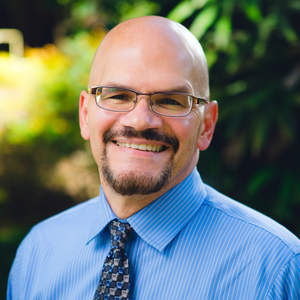
Timothy Muehlhoff
Tim Muehlhoff (Ph.D.) is the Senior Director of Biola’s Winsome Conviction Academy that seeks to reintroduce compassion and civility into our disagreements. He is the co-host of the Winsome Conviction Podcast where people with differing viewpoints are brought on for engaging dialogue. Tim has written extensively in the area of cultural engagement and conflict including I Beg to Differ, Winsome Persuasion, Winsome Conviction, and his newest book (co-written with Sean McDowell) is End the Stalemate: Move Past Cancel Culture to Meaningful Conversations.
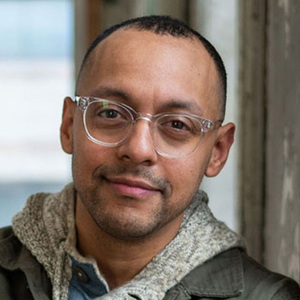
Rich Villodas
Rich Villodas is the lead pastor of New Life Fellowship, a large, multiracial church with more than seventy-five countries represented in Queens, New York. His award-winning book, The Deeply Formed Life, was released in September 2020, followed by his second book, Good and Beautiful and Kind (2022). His most recent book is The Narrow Path (2024). He and his wife, Rosie, have two children and reside in Long Island, New York. You can learn more about Rich and his work at his personal website.