Episode 146: How Can We Talk Like Jesus?
Friend and New Testament scholar Doug Huffman (Ph.D.) joins today’s episode to speak with Tim and Rick about his work as a consultant on a wildly popular television series, The Chosen. They discuss the fictive portions of the series and consider these in light of the historical gospel accounts of Jesus’ life and ministry. They reflect on questions including, What does the television series portray really well? Why does The Chosen stir up agitation and anger among some Christians? Do controversies in documented in the gospels and depicted in the television series speak to our controversies today? And can fictitious stories show truth things?
Transcript
Tim Muehlhoff: Welcome to the Winsome Conviction podcast. My name is Tim Muehlhoff. I'm the senior director of the Winston Conviction Project housed at Biola University, where we take seriously the command to speak truth, but to do it in love. We believe in opening conversations, not closing them. And we're interested in presenting Jesus in a way that's winsome. And so I'm here with my co-host, Dr. Rick Langer. Rick, so great to have you back.
Rick Langer: Tim, thanks for the welcome. It's great to be with you again. And I'm really excited today about the fact we get to bring in one of our best mutual friends, a guy that we have known really well over the course of the last 14 years, I guess, that Doug Huffman was with us at Biola. He is now serving as the Dean of the School of Theology & Ministry and the Special Advisor to the President at Northwestern University in Saint Paul, Minnesota. And he's a wonderful guy. I mean, Doug has got his PhD from Trinity Evangelical Divinity School. He's done a multitude of publications. I don't even bother keeping track of what all he's done in that regard. But one of the fun things about Doug is he's become involved from the very beginning in The Chosen project.
And for those of you who've been recently living in a cave and are unfamiliar with The Chosen, let me just give a quick description of this because it's kind of important for setting up what we want to talk about. The Chosen is a multi-season series telling the life story of Jesus and his disciples. And it's now, I think, been streamed over 200 million times, the largest crowdfunded media project in history, I think, by far.
Tim Muehlhoff: Kind of like our podcast, Rick, but go on.
Rick Langer: Yeah. Our podcast does pale a little bit in comparison. Just at a personal level, I can't count the number of people I've talked to who've absolutely loved it and been moved by it. It had an impact on their spiritual lives. One of the interesting things about the series, it goes beyond the material of scripture and incorporates backstories for many characters that are fictional backstories. Just things we don't know. They might be true. We have no knowledge of that. But they've been part of the key of making The Chosen a success, but there's always controversy when you mix fact and fiction into any sort of a presentation, particularly about Jesus. And therefore, Dallas Jenkins, the producer of The Chosen, was very concerned to have consultants who assured that the fictional aspects of the narrative were in keeping with the realities of first-century life in the Holy Land. That they were faithful to the time and place and weren't just made-up, made-up things.
The episodes include these bonus speech or round table discussions among these three consultants that he worked with that have become really popular in their own right. And one of those consultants is indeed our good friend and colleague, Doug Huffman. So we want to have Doug come and join us for a conversation about civility for a couple of reasons. First, because Jesus is portrayed in The Chosen as a remarkably winsome, civil, gentle character. He exhibits a lot of wonderful qualities. He's the perfect example of a friend of sinners, and he brings that same spirit into his conversations of the Pharisees and Roman soldiers. So he models Winsome Conviction like few other people would. The second reasons wanted to have Doug with us is there's been a lot of controversy about the show, too. And we'd like to talk a little bit about how these controversies have been navigated by Doug and others who are working behind the scenes. So that's the long setup for all this. Doug, so good to have you with us. Thanks for joining us here.
Doug Huffman: Thanks, guys. It's a pleasure to be with you.
Tim Muehlhoff: Woo-hoo. It's so good to have you, Doug.
Rick Langer: So before we talk about The Chosen, I'd love to just take a few moments and just talk to you as a New Testament scholar. You spend a ton of time in the New Testament. You teach Acts, you've written a commentary, I'd say. Have you done a commentary on Luke, too? I don't even know.
Doug Huffman: Not full one. No.
Rick Langer: Not a full one, but anyhow. So you are a great guy to ask this question to. Just talking about the Jesus we meet in the gospels, not the Jesus we meet in The Chosen. It seems like he's continually surrounded by controversy. So what can we learn from Jesus about how we talk to others and treat others, even others with whom we have the most profound disagreements about the most important issues? I guess I'm asking, how can we talk like Jesus?
Doug Huffman: Well, that's a great question, Rick. I think when you look at the gospels, we see that Jesus asks lots of questions. People have often noted that Jesus answered a question by asking a question in return. I think this actually helps people feel heard. It helps them feel like there's a desire for them to be understood. And sometimes the question that Jesus asks, it shifts the conversation and maybe even quiets the controversy or brings it to light to its more poignant implications. So I think we can talk more like Jesus by seeking to help other people feel understood and by showing them that their questions do matter, even if they may not be fully aware of how much their questions matter or the ways in which their questions matter.
Rick Langer: Yeah. It does seem like Jesus' questions had an act for ending up making you talk about something different than just where everything started. He wasn't necessarily jerking the chain; he was diving deeper into what was going on on the surface, it seems like.
Doug Huffman: Yeah. And in that way, he takes people seriously.
Rick Langer: Yeah.
Tim Muehlhoff: One of my favorite examples, Doug, of Jesus taking people seriously is the woman at the well. It's one of my favorite scenes of scripture, but also amazingly done in The Chosen, where you have two actors at the top of their game. The woman at the well is amazing. But he takes a genuine interest in her. He wants to know her backstory. He wants to know the pain that she's experiencing and the defensiveness she has when he asks, "Can you give me something to drink?" So being attuned to a person's pain really comes across in The Chosen from Jesus.
Doug Huffman: And what's interesting about that story is we've been told in polite conversation, you don't talk about religion and politics. And Jesus is talking about those things cross-culturally in a setting where you're not supposed to be talking to a lady in public, and you're certainly not supposed to be talking to a person who's of that kind of conviction. Yeah, those social mores, Jesus was willing to cross, but in this gentle, inviting way so that even the hot topics of the culture could be addressed, and addressed well and in person.
Tim Muehlhoff: Yeah, it's so great. 90% of the popularity of The Chosen, if I were to put a percentage on it, I think has to do with the fact that people just really like Jesus in this. There's a fondness that Jesus has towards his disciples, towards his family, towards children, towards the people he meets. The fondness in the show works almost exactly like it does in real life. Fondness exhibits a kind of gravitational pull towards people. It draws out and draws people in. Do you think this part of the story is fact or fiction? Impossible question. But was Jesus really like that? I mean, I'm thinking of scenes where he's messing around with children and he's laughing, and he's at times, tired. And other times, he's being hugged. So much so, he's being picked up off the ground by a person hugging him because Jesus healed him. What do you think about this idea that people just generally like the Jesus in The Chosen?
Doug Huffman: Well, one of the things I really appreciate about the writing team on The Chosen is they appear to me to be paying much closer attention to scripture. Even in those imaginative fictional scenes, they're paying closer attention to scripture than people give them credit for. These various fictional features of the show are actually quite often character expansions that are tied directly or indirectly to a passage of scripture. The kind of compassion or fondness, as you call it, that Jesus has for children, I mean, that's anchored in those gospel passages that say, "Jesus says, 'Let the little children come to me for such is the kingdom of heaven.'"
So they take that verse seriously and say, "Oh, so Jesus was welcoming to children." And so they're imagining that he's not making that up or saying it, but not living it. They're saying, "Oh, he probably lived in such a way that he welcomed children into his own life." So those fictive portions of the show are actually expansions of these passages we actually have in scripture.
Tim Muehlhoff: I'm thinking of the unclean woman who touches just the hem of his garment is such a powerful scene, Doug. Again, that was a taboo at the time. I mean, the people in the crowd are trying to keep her quiet. Like, "Don't you dare go towards him. We'll address this later." Remember that powerful scene where he stops, he turns around, he kneels face to face with her, and he goes, "Daughter," and she goes, "I'm nobody's daughter." I'm getting choked up just saying that.
Doug Huffman: That portrays the first-century world where people were very worried about being contaminated by evil in any of its forms, whether illness, sickness, or moral, or demonic evil. And they thought those things were contagious. In some ways, we think evil is contagious, which is why parents are concerned about the friends their children make, because peer pressure is a way that evil is contagious amongst children, but they were even more sensitive about it in the first century, and the show portrays that sensitivity. And again, it portrays Jesus' willingness to move beyond those social concerns because he is somebody who the contagion works the other way. He wouldn't catch evil or death, but people touching him caught health and life. And so the show portrays that, I think, really well in a way that was stunning to the modern audience because it was that stunning to the first century audience.
Rick Langer: It's interesting, as I talk to people to think about how this connects some of the controversies we face and deal with today. I hear people when they're upset about things and really engaging things in a charged manner, talking about how, well, this is a moral issue. And as you're talking about this, I realized, in the first century, it was an amazing number of things that were moral issues. And by that definition of moral, I'm definitely saying, in the perception of the people in question, this was people's absolutely deeply held, culturally enforced belief about the moral requirements God placed on them as covenant people.
And so if you're not eating at the right time, if you're touching the wrong person, if you're not doing things, that isn't just a courtesy issue, which I think I drop it in that mental category. If I touch someone wrong in America or if I crossing cultural boundaries and I shake a hand when I should have made some other gesture, we all kind of like, "Oops, sorry." And I think these things were very often morally supercharged issues in a way that we don't sense that part of the background. Is that accurate?
Doug Huffman: Yeah. I think you're onto something there, Rick. There was a holism about life in the first century that's actually admirable. We would all do better if we would realize that we're whole people and that all the various features of our lives do affect the other factors in our lives. But Jesus was both self-aware and perceptive about his world and himself, and he was both grounded in his beliefs and gracious with the people who didn't share his beliefs. So he was a person who was capable of being loving toward even people who disagreed with him. He was capable of showing love towards sinners without fearing that he was going to somehow be tainted by their sin because he was that grounded and that gracious at the same time.
And as you mentioned, people couldn't understand how he could be a friend of tax collectors and a friend of sinners. But he could keep those things separated in his mind because his life was so fully integrated. And I think we have in scripture a Jesus who could be kind and loving toward people, even the people with whom he had great disagreement, because he understood himself and he understood them so well. That is what you're about with your Winsome Conviction.
Tim Muehlhoff: Oh, thank you. I think sometimes people hear this tax collector phrase often, that Jesus even befriended tax collectors. Could you put that in context for us, why that would have been shocking to Jews of that time, like Jesus is even reaching out to a tax collector?
Doug Huffman: Yeah. So Matthew, one of the twelve chosen to be an apostle, was a Jewish man who was working for the occupying enemy country, Rome. They were present in the country and heaping taxes upon the people. So there was a political as well as a religious offense there. And not to mention economic offense. And wow, Jesus is able to befriend this person who's betraying our country and working for the heathen enemy that doesn't believe in God. Yeah, that is major cultural taboo. But Jesus knew himself, and he knew those people well enough that he could conduct himself wisely, carefully, and lovingly in those nuanced ways.
Rick Langer: And let me just pick up with that, as long as we're talking about this. I believe it's the Matthew account of the Calling of Matthew, of Levi. And it talks about him almost immediately after going out to dinner with a bunch of tax collectors. Because sometimes you think, well, yeah, Matthew came to Jesus. I mean, he became a disciple, so it's cool that he goes and hangs out with him. But it's kind of like, Jesus just went and he engaged in hospitality, welcoming sorts of activities with these guys who were clearly not already converted. So comment briefly on that. The other thing I'd love to have you describe a little bit for us is the background of the significance of that kind of hospitality of meal sharing. Sharing and sitting down for a meal with another person. What did that mean then? What would that be like now? And can we cross those boundaries with some of those who we have our most contentious disagreements with?
Doug Huffman: Yeah. In the first-century world, actually, in the Middle East still today, and in some other cultures, meal sharing, or what scholars like to call table fellowship, is really important. You can see this evidenced in scripture when the Lord and two angels show up to Abraham's camp in Genesis and say, "We have a message for you, Abraham." Abraham says, "Wait, I'm going to go cook a meal." And he goes and slaughters a goat and roasts the meal, and serves the food. And then after these important people, the Lord and two angels eat something, "Okay, now we can conduct the business."
I have a friend who runs a shop in the old city of Jerusalem, and when I show up there with guests and students, he sees me and, "Oh, Dr. Doug, wait just a moment." And he disappears, and he comes back with little Dixie cups of warm Coca-Cola and serves me and all of my students, because you have to do hospitality first. Okay, now we can do business. That table fellowship really important feature of the Middle Eastern culture. And you do that out of a sense of loving your neighbor.
Tim Muehlhoff: Can we unpack that a little bit, Doug? I'm so glad you brought this up, Rick. So a book I read that really blew my mind was Craig Blomberg's book, Contagious Holiness: Jesus' Meals with Sinners. So Doug, help us. How can we do that today? How can we pull this off today to have a meal, fellowship with notorious sinners, and yet not condone them because we don't want to do that, but we want to love them? I guess Jesus could navigate it, but how do we navigate that, having that table fellowship with people that we really disagree with?
Doug Huffman: Yeah. I think first we should note that while table fellowship is really important in some cultures, and doesn't seem as important in Western cultures. I would ask people to think themselves about when they go to a cafeteria. My students, they don't like to eat by themselves. So table fellowship really is, I think, built into the human DNA. There's something about eating a meal that I don't want to do it alone. Do you ever go to a restaurant and eat by yourself? That's kind of unusual. People like table fellowship, and they like table fellowship with people they agree with. That's the default that we all live in. I think we should note that and say, okay, so that's part of why I'm afraid of eating with people I disagree with is because my default is to eat with people I agree with. Once we notice that about ourselves, we can do our own countercultural activity and say you know what I’m going to choose to eat with somebody that I disagree with, and it’s going to be okay. And then you discover, ah, this person I thought I disagreed with, I actually agree a lot with them than I thought I did.
Rick Langer: And it does seem like a scary thing how we often say, hey, if I'm willing to have table fellowship with someone, I must automatically agree with everything they think, or I support everything they think, and all that. We're worried about what other people will think about our being with that person, our talking with that person, whatever it might be. And I think that's another thing that tends to increase our already problematic polarization when we won't even take the opportunities we have to soften the edges of our disagreements.
Doug Huffman: I think C. S. Lewis, in his classic essay, The Weight of Glory, offers a wonderful piece of insight here. You might recall the line where he says, "There are no ordinary people. You have never talked to a mere mortal." As Lewis would have us recall, it is immortals with whom we joke and with whom we work, and we interact with them every day. Even the people that we disagree with are immortals just like you and me. They have souls that are going to live forever. And I think this is how Jesus appears to interact with people in the gospel, and that's how The Chosen is trying to portray Jesus as someone who's interacting with everyone because they're all immortals.
Rick Langer: So a quick question on this, Doug. The story of Jesus isn't all snuggles and smiles; there's hard things said and done both in the gospel. One of the things that comes up a lot when Tim and I talk to people about gentleness and kindness and things like that, is that people point to the cleansing the temple, calling Pharisees whitewashed sepulchers, calling Herod that fox. Are these examples at odds with being Jesus actually being kind and gentle? Was kind and gentle a thing he did sometimes? It wasn't really a core value for him or whatever you want to call it. How do you make sense of these as a biblical scholar? And then you might also tell us how that was dealt with in The Chosen.
Doug Huffman: Yeah, sure. Let me say two things about that. First, it seems to me that many of the controversial circumstances we find Jesus involved with in the gospels are places of disagreement with the people most like Jesus. In the first century world of Israel, the conservative Bible believing people most respected by the general population were the people known as Pharisees. That's right. The Pharisees were the good guys of the first century in Judaism. They believe the Bible is true. They believe that people should live their lives according to God's word. They are what we today call evangelical Christians, people that believe the Bible.
Well, wait, then why does Jesus have his harshest words for the people who were most like him? Yeah, because those were the people that were being hypocritical. I tell my students, if Jesus had not come 2000 years ago and if he came in person for the first time today, his harshest words would be towards people like me who call ourselves evangelicals. Today's conservative Bible believing people rightly thinking that the Bible's for everyone and everyday living. That's me. That's people like me. We're all like the Pharisees because we too easily tend toward hypocrisy. So Jesus was having harsh words towards his own people.
Tim Muehlhoff: Doug, can I borrow from your expertise real quick because again, I think this is another scene that goes by very quickly, and we just remember, oh, Jesus overturned tables. So can you give us the context of what compelled him to take that action of overturning tables? What was the background that motivated him to take that action?
Doug Huffman: Yeah, this is actually my second point. You'll note that Jesus, in those kinds of moments, his harsh words and his confrontations, they are actually motivated by love and a desire to protect people from harm. He warns the Pharisees about tripping up these little ones, as the Gospel of Matthew likes to say. We all like a good hero who comes to the rescue, and he rescues people from wrongdoers. That's the kind of thing that The Chosen tries to portray in that scene in season four, where Jesus is cleansing the temple. He's trying to overturn the tables and chase out the people who are doing their businessy things with their business trappings.
On the pretense of helping with worship, they're actually getting in the way of people worshiping. And so the Lord says, "Hey, you need to stop this. Instead of helping people worship, you're actually making worship an opportunity to do wrong. You're making the temple into a den of thieves," Jesus says in Matthew 21. So yeah, Jesus is coming to the rescue. He's seeking to do justice. I think it's interesting that Jesus never gets in trouble for cleansing the temple because people knew he was doing the right thing.
Rick Langer: That's a really interesting point. I've never thought about that. There's plenty of Jesus getting in trouble in the gospels, but that isn't actually a thing that seems to come back to haunt him or whatever that way. It was like, yeah, that's probably a thing that shouldn't have been going on anyhow.
Doug Huffman: Yeah.
Tim Muehlhoff: This is brought to our attention all the time. For the last five years, we've heard, "Well, winsomeness guys, Jesus overturned tables, right? Didn't he? Didn't he?" So give us some takeaways from the table turning. What could we reasonably take away from that today, and what would be some inappropriate takeaways from Jesus overturning tables?
Doug Huffman: People who want to excuse their harsh behaviors as table-turning, we should simply ask: Who is it you're trying to protect here? Who are you showing love to by this protective activity? Who are you making way and making room for so that they can worship the Lord in a right spirit? That was what was motivating Jesus for clearing out the temple. I mean, he actually quotes scripture. Like I said, people I think are kind of aware that he's right in protecting Israel. So that's the question to ask to today's table turners. Now, who are you protecting? Who are you showing love to?
Rick Langer: One of the things that I'm interested about is this challenge of adding extra biblical material to a story like The Chosen. I'm curious, why does that seem to stimulate so much controversy, and I would even say anger? I mean, I've been surprised. I've had a few moments of being startled with the strength of the reaction. So why has that happened, and how have you guys handled it? I'm also curious, in the course of that, if you could just tell us a little bit about how that's been for you personally. Because you've invested a lot of time and effort and things like this, and it can't be fun to hear some of that going on. I'm just intrigued how you've processed all of that.
Doug Huffman: All right. Rick, you're right. I have received complaints. I've even been charged with blasphemy and heresy for my involvement with The Chosen. Let me say that I noticed right away. There's a proper sentiment that might give people pause when they first start watching the show, and that proper sentiment is a concern for a respectful treatment of scripture. I'm an evangelical conservative Christian myself, and as such, I have a high value and respect for scripture. But the problem when it comes to The Chosen is people mistake The Chosen for the Bible itself. I simply remind people, The Chosen is a TV show; it's not the Bible. It's not a recording of the Bible. If you want that, there is lots of good versions of that available to you, but that's not what The Chosen is.
There's even a disclaimer at the very beginning of the show where the show's makers declare, "Hey, this show is based upon the gospels of the New Testament. We're adding backstories and fictionalizing some conversations, but the goal here is to get people to go read the actual Bible and meet the real Jesus." So the show's only attempting to get people to give the Bible another look because we think the people are reading the Bible incorrectly. And watching the show makes them go, "Oh, maybe I should read the Bible differently than what I have been." I think that's the good motivation of people. They're just making what I would call a genre mistake.
Tim Muehlhoff: But what a great principle, Doug, is to give people the benefit of the doubt, of saying, "Listen, I think your intention is good and I want to recognize that. I don't think this is appropriate how you're expressing it, but I'm going to grant you that we both care about the same thing." But what a great and neglected principle today.
Doug Huffman: Yeah, I understand the mistake these people are making. It's a confusion of categories, but it's understandable. But on the other hand, I'm delighted with people who are watching the show and doing precisely what the show is intending to do. They're going and reading their Bibles, and people are becoming believers in Jesus, but it's been controversial.
Tim Muehlhoff: Can we ask you to get a little transparent? So Rick and I know how much time and attention you've put into this. So talk to our listeners just a little bit about when you really care about something, like this is close to your heart, and it's being critiqued. Not just saying, hey, The Chosen isn't my cup of tea, it's dangerous to watch The Chosen. This is leading to heresy. How do you personally internalize and deal with that type of harsh criticism?
Doug Huffman: I'm a people pleaser. My personality is such that those things can bother me, but I take that as part of my own personal maturing process. I have to live out my convictions, and I'm responsible to the Lord. I think the show is not perfect. Sitting in these round table discussions with Dallas Jenkins, the creator and director. He's pretty forthright about that too. He said, "Oh yeah, we goofed that up. We made a mistake. I'm sorry." So I'm happy with it. He understands the show is not inerrant. The Bible is, but the show is not. It's just a TV show. I've even recently published an article where I admit, "Look, the show has got these 10 different ways in which the show is not authentic to scripture." And I think it's interesting that some people don't even notice some of these inauthentic ways.
For example, nobody has ever written to me and complained that the show is filmed in English. I mean, if you're really a stickler for it being historically accurate, none of the people would be speaking English in the show, but everybody's willing for that little bit of authenticity to get by. Why? Well, because they want to understand it and they like the show in their language. So in fact, we're translating the show into 600 languages, 100 dubbed languages, and 500 more subtitled languages. The Come and See Foundation is helping us with that.
Tim Muehlhoff: Rick mentioned this in the beginning, but these bonus sections are... You're not the only consultant, right?
Doug Huffman: No, no.
Tim Muehlhoff: There are two other consultants who come from a little bit different perspectives. Can you tell us who they are and how does that interaction work? How do you guys handle your differences and negotiate that? Because you've been together now, how long, these consultants?
Doug Huffman: Yeah, six years.
Rick Langer: Yeah, that's right. You guys wouldn't have to look far for a controversy; you just kind of look across the table.
Doug Huffman: That's right. Yeah, Father David Guffey, Roman Catholic priest. I'm the evangelical scholar, and Rabbi Jason Sobel, Messianic Jewish rabbi. So yes indeed, a priest, a scholar, and a rabbi go into TV studio and talk about The Chosen. The three of us read the scripts ahead of time. We give our feedback, they do the filming. They produce the show, and then we all watch those episodes again and sit down and film those round table discussions. And there are moments we disagree with one another, and we disagree amiably, I think.
In fact, season six, the Last Supper season, we come to the point where we talk about the Eucharist, and there's a Roman Catholic priest and a Protestant, and a Messianic Jewish rabbi, and we talk about our disagreement about that episode. And then the Roman Catholic priest and I went and had dinner together. We shared table fellowship and prayed for each other over that meal. It's surprising to me how much we agree with one another, even though we have sharp disagreements on some things and don't make excuses for our disagreements. But we can enjoy table fellowship for the things we've discovered that we agree on.
Tim Muehlhoff: Can you bring us in on that disagreement very quickly, just the Eucharist, what the disagreement is very quickly?
Doug Huffman: Oh, sure. So Roman Catholicism has a view called transubstantiation, where they view the elements of the communion service, they call it the Eucharist, Thanksgiving service, the bread and the wine, actually become Jesus' body and blood. And so in essence, there's a re-sacrifice of Jesus' body happening at the communion table. For Protestants, of course, we generally don't view that. We see the service as either a commemoration service or what's sometimes called a real presence of Jesus. He's here, spiritually speaking, and we're remembering his act of salvation for us that was done once and for all. It's not a re-sacrifice of him in this meal. So that's a substantial disagreement between Protestants and Catholics.
Rick Langer: To just run with that, Doug. I assume part of what's at contention in this sort of a conversation is things like... What is it? The Hebrews 9 talks about Jesus' sacrifice once for all time, and it's not a repeated sacrifice. So this would have the appearance in that sense of being a direct biblical violation in the mind of, I presume, many Protestants. My guess is that the Catholic priest would see it differently, but you can see how this could be viewed as a absolute issue that you shouldn't be just getting along over.
Doug Huffman: Yeah, indeed. And what The Chosen has the advantage of doing is they're just trying to portray the meal, and they're not overtly theologizing in the meal. They leave that open for us to talk about, which we could say is what the gospels do. And the show is trying to just do the gospel component from the Gospels of Matthew, Mark, Luke, and John. Yeah, I would say there's other episodes in The Chosen so far where people will watch and go, "Oh, that's kind of a real Protestant lean there. They don't really talk too much about Catholicism."
There's other episodes. Mary, the mother of Jesus, gets a lot of screen time in The Chosen, and some Protestants might take offense at how much Mary is shown, but I'd like to point out that she's never shown in the show as some Co-Redemptrix kind of figure that some Roman Catholic theology moves toward. She is truly a Jesus' mother figure. Yeah, I think the show is trying to navigate these fine lines of discussion to encourage people even to have their own round table discussions with people they might think they disagree with and discover, oh, we have more agreement than we would've thought before.
Tim Muehlhoff: Here's a point that really has struck me with The Chosen is how utterly real the disciples are. I mean, you get them having bad days, like just disagreeing with each other and getting into arguments and trying to one-up each other. And you get this power... I mean, one of the most powerful handlings of the problem of evil I've ever seen, to be honest, is Thomas' wrestling with the death of a loved one and Jesus not giving him the easy answers to the pain that he's experienced. Can you just comment for a second on sometimes we think we have to put our best foot forward every single time as Christians to show people that we really have it all together, and The Chosen takes a different tack? It says, "No, no, no. We're going to show you that these disciples were trying to work it out and weren't always doing a great job with it."
Doug Huffman: Yeah. Thanks, Tim. The Chosen has done a nice job with Thomas. And this is a fine example of what I mentioned earlier, where the writers are not inventing these things out of whole cloth. They're actually doing this character expansion tied directly to passages of scripture. So Thomas is noted, particularly in the Gospel of John, unfortunately, all too famous for being the doubting Thomas, as he's been nicknamed. But earlier in the Gospel of John, John 12, there's an almost throwaway comment where Jesus says, "Hey, let's go back to Jerusalem." And Thomas says, "Oh, let's go die with him." Well, that's an interesting thing to come out of the mouth of Thomas. So The Chosen writers say... They take these two verses of scripture really seriously. So what is it that would lead a man like Thomas to really second-guess the resurrection of Jesus?
"I'm not going to believe it until I feel it with... Can a person really come back from the dead? I don't believe it." And what is really going to make a person decide to follow Jesus, but with this hopeless sense of, well, we're all going to die anyway? I mean, notice they don't make him be a disbeliever because he lost his fiance. He's still following Jesus, but he's struggling with this loss, and what does this mean for my life. The Chosen is offering this backstory as a plausible backstory that would lead a person to have these kinds of serious questions and this sort of despair. Even if it's not really doubt of a permanent faith kind, but a, yeah, prove to me that someone could come back from the dead. Maybe he lost somebody, and that's why he questions whether resurrection's possible or not.
Maybe he's willing to give in to death himself because he's lost the reason for it. What kind of tragic thing could have been involved in his life that would... Oh, maybe he lost a loved one. Oh, maybe that's it. Yeah, the writers have jumped from what's actually in the Bible to offer a plausible story so that you and me, the viewers will say, "Oh yeah, they're real people. They're not these flannelgraph kinds of people, but they're three-dimensional people with loves and problems and finances and friends and enemies, and all of that."
Tim Muehlhoff: What a great thing to keep in mind when you're having a conversation with a person, right? This is a complicated person. The Harvard Negotiation Project said, "People's lives are much more complicated than you think." And I think that it's a great reminder. And even Jesus, right, Doug? Remember when he's been healing all day, and he comes back so tired he cannot take his sandals off. I mean, he is spent. I think there's something relatable to that. We've all had those days where we just slouch back and we're exhausted, because in his humanity... It was so relatable that scene of him being utterly, utterly exhausted.
Doug Huffman: Yeah. The writers of The Chosen do this character development. I think we should notice this about The Chosen. Eight episodes a season, and they're doing seven seasons. So that's 56 episodes for character development. Your average Jesus movie goes for two hours. So you don't get as much character development in those Jesus films. So I think we should give them a little bit of a pass there. If they're doing a two-hour movie in the life of Jesus, they're going to focus on Jesus. But that's the advantage that The Chosen has is to call us viewers into imagining more fully the real lives of not just Jesus, but the people around him.
Rick Langer: Yeah. So one thing I'd love to chat about with you, Doug, is something Tim and I mentioned... In the first book we wrote together, Winsome Persuasion, one of the things we talked about was that the Holy Spirit models a greater, what you might call, complexity of rhetorical postures than many of us actually practice on our own. So for example... I mean, I developed this just thinking about passages of scripture about this. The Holy Spirit certainly has a rhetorical mode where he... Thus saith the Lord, he boldly declares truth and has a little bit of a sense of let the chips fall where they may. I don't know if I always want to blame it on the Holy Spirit, but you can...
Jonah was pretty good at just saying, "Hey, here's the deal you Ninevites, and take it or leave it." But clearly, he was responding to a prophetic call that the spirit was giving. And there's plenty of examples of prophets being that kind of really, really almost harsh in their declarations of what are right and wrong and pointing out sin. Holy Spirit all seems to be quintessentially pastoral in the sense of being the one who comes alongside us. One of the names of the Holy Spirit is that he's a paraclete. He's the one who's called alongside, and in so doing... The whole imagery is exactly one of them meeting us at our point of need.
And then of course, there's the preacher persuader rhetorical mode that the Holy Spirit is the one who's going to be guiding us into all the truth. He's going to be the one who is helping us see the truth of the gospel, and these are some of the works that the Holy Spirit does. And my observation simply, gee, we tend to drift really quickly when we think it's an important issue. We grab the prophetic mode and proclaim it. Again, obviously, there's nothing wrong with that in my little analysis here because the Holy Spirit does that sometimes. So this is not out of bounds. But the point is, it's like we have one arrow in our quiver, and we might be better off in some cases and say, "We've done the prophet things three times and it hasn't worked. If we turn up the volume and do it one more time, I bet it'll work this time." That doesn't really sound very rational.
And instead, well, maybe we should try the persuasive posture. Maybe we should try the pastoral posture just to say there's different ways of speaking about matters of conviction, and that's the big thing for me. It isn't like we get to be pastoral when it doesn't really matter. I'm like, "No. No, no, no. All of these things are things that matter; the point is, how do we best communicate to another person." There's a long backstory. The thing that hit me as I was thinking about this in your work in the gospels as a Bible scholar also working with The Chosen is: Do you see those same things happening with Jesus? Does Jesus do that as well? What would you say to all of that?
Doug Huffman: I love that, Rick. I think you're right. And maybe without the definitions you just offered, the writers of The Chosen seem to be finding those things in the gospels and portraying Jesus behaving with those same variety of rhetorical postures. So for example, Jesus functions as a prophet when announcing God's truth to the people in his Nazareth sermon, recorded most fully for us in Luke 4, when Jesus from Isaiah, announced that the spirit of God was upon him. And the people in his hometown synagogue in Nazareth took offense at that. And they thought, "Well, if he's making this claim, maybe we need to put him to death by pushing him over this cliff." That's how prophetic Jesus was and how offended the people were by that comment. They weren't able to go through with their wonderment, and he walked right out through the crowd, as we know. Yeah, that was very much prophet-like behavior.
But the pastor type behavior, pastor related to the shepherding role. Jesus functioned that way, tending to the needs of people in the healing stories in the gospels that we see portrayed in The Chosen, and in particular, the feeding of the 5,000. In fact, the Gospel of Mark, which has the feeding of the 5,000, in his story, he actually says, "Jesus had compassion on the people when he saw that they were like sheep without a shepherd. So he had them all sit on the green grass." Only the Gospel of Mark mentions the color of the grass. Only the Gospel of Mark mentions the shepherds. I think Mark, while he's writing this down, is thinking Psalm 23, "The Lord is my shepherd, makes me lie down on green pastures." Yeah, Jesus function pastorally, tending to people's needs. And then the third rhetorical posture you mentioned that of the persuader. Nice three Ps there.
Rick Langer: Yeah, you know what? You got to do this alliteration thing sometimes.
Doug Huffman: Jesus functioned as a persuader; we have some nice examples of this, trying to persuade people to understand the truth. In the Gospel of Luke 20, Jesus is... In that final week before the crucifixion, he's in the temple courts and he's having debates regarding things like who should pay taxes to Caesar. And it's a trick question, and he's able to wiggle his way through that just fine. The question of, well, is the resurrection even possible. And oh, Jesus does theology with the Old Testament. It's the Sadducees are asking that question. The Sadducees only believe in the Pentateuch, the first five books of the Old Testament. Jesus uses their scriptures and argues back. And Luke actually said, "Nobody had any more questions for him after that."
Yeah, Jesus is the persuader warning people about the scribes and their hypocritical behavior. So he is able to change those postures depending upon the audience and the audience needs at the time. Very aware. As I said earlier, Jesus is self-aware, and he's also audience-perceptive. He is grounded in himself, and he's also gracious for his listeners. So he can move from one posture to the other just fine for the sake of people's salvation.
Rick Langer: That's great, Doug. When the Holy Spirit does something, it has a bit of intangibility about it. The nice thing about Jesus is it comes fully clothed in real relationships with real people. And I suppose in some ways, kudos to The Chosen as well on this count is making these people really thickly clothed and relationally embedded, and all these things. You see him doing these different things depending upon who he's dealing with, and doesn't treat everybody the same way. He heals one person, doesn't heal another person. That kind of hurt and all those things that come out, I think, really is part of a sensitivity to the environment and the context that he's communicating and what different people need.
Doug Huffman: One thing that The Chosen does in season three, episode two, is they have a fictitious conversation between Jesus and the Little James. There was two apostles named James. And in church history, they're known as Big James and Little James, and so The Chosen uses those titles. The actor for Little James really does have a physical limp. He really does. It's not a made-up thing for the actor. So it's perfect for him to have this conversation with Jesus about how can I be involved healing other people on the short-term mission trip when I myself have this physical thing that I'm not healed with. And Jesus has this conversation with him. It's all fictitious and totally biblical.
By biblical, I mean this is the theology we read the Apostle Paul talking about when he has what he calls a thorn in the flesh. And he prays three times to be healed of this, and the Lord says, "I'm not going to heal you. My grace is sufficient." I would like to suggest to you that Paul did not invent that theology; that Paul got that theology from someplace else. And maybe Jesus had that same theology, and it wouldn't be surprising for Jesus to share that theology with somebody who had a physical difficulty that wasn't being healed. So The Chosen is trying to be biblical in this bigger sense of the word biblical by even its fictitious stories showing true things. And there's good precedent for teaching truth through made-up stories. Some people call those parables.
Rick Langer: Yeah, there you go.
Tim Muehlhoff: And you know there's a ton of communication precedent too. Walter Fisher's narrative theory, his belief that people are hardwired for story. Even more than hard facts and rhetoric, it's story, and I think The Chosen does such a great job of modeling that. Doug, thank you so much for joining our podcast. And just know that you're in our thoughts and prayers, both your work that you're doing as an academic, as a leader, and as an advisor for The Chosen. Thank you. And our prayer is you would listen to the Holy Spirit and come back to Biola. That's our main prayer, a softening of your heart. So Doug, thank you for joining us.
Doug Huffman: Thanks, Tim. Thanks, Rick.
Tim Muehlhoff: Well, you've been listening to the Winsome Conviction Project. We're so glad that you are being with us on a regular basis. Please check us out online. You can go to winsomeconviction.com, hear a past episode, sign up for our quarterly newsletter, check us out on Instagram @winsomeconvictionproject. Thank you so much.
Authors
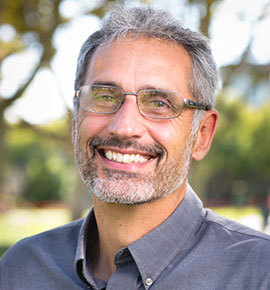
Rick Langer
Rick Langer is a Professor of Biblical Studies and Theology and the Director of the Office of Faith and Learning at Biola University. He specializes in the integration of faith and learning, and has also published in the areas of bioethics, theology and philosophy. He has a passion for helping Christians of all ages understand the connection between the Gospel and all the diverse facets of the created order in which we live. Prior to coming to Biola, he served for over twenty years as a pastor at Trinity Evangelical Free Church in Redlands, California.
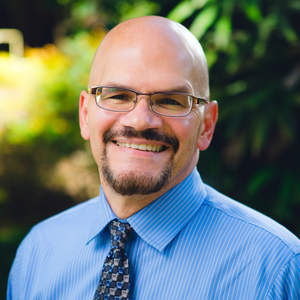
Timothy Muehlhoff
Tim Muehlhoff (Ph.D.) is the Senior Director of Biola’s Winsome Conviction Academy that seeks to reintroduce compassion and civility into our disagreements. He is the co-host of the Winsome Conviction Podcast where people with differing viewpoints are brought on for engaging dialogue. Tim has written extensively in the area of cultural engagement and conflict including I Beg to Differ, Winsome Persuasion, Winsome Conviction, and his newest book (co-written with Sean McDowell) is End the Stalemate: Move Past Cancel Culture to Meaningful Conversations.

Doug Huffman
Douglas S. Huffman (Ph.D.) is the Dean in the School of Theology & Ministry and Special Advisor to the President at the University of Northwestern in St. Paul, MN. Before starting at Northwestern in 2025, Dr. Huffman had been serving in the Talbot School of Theology at Biola University, most recently as Dean of Academic Programs, where he taught New Testament courses and supervised the program directors for Talbot’s undergraduate and graduate programs. Dr. Huffman has authored and edited numerous books and peer-reviewed articles, including The Jesus Story Continues: A Survey of the Acts of the Apostles (Grand Rapids: Zondervan Academic, 2025) and Understanding the New Testament Use of the Old Testament: Forms, Features, Framings, and Functions (Grand Rapids: Baker Academic, 2024). As a professional script consultant for The Chosen, the multi-season television series on the life of Christ, Dr. Huffman has participated as the evangelical expert in the Bible Roundtable discussions debriefing each episode. He has co-authored The Chosen Bible Study Series, co-edited Watching The Chosen: History, Faith, and Interpretation (Grand Rapids: Eerdmans, 2025), and spoken at various events about the show. He is now also working with 5&2 Studios on spin-off shows, as The Chosen cinematic universe is expanding. Dr. Huffman earned a Ph.D. in Theological Studies with a focus on New Testament Exegesis and Theology from Trinity Evangelical Divinity School, where he also completed an M.A. in Christian Thought – Systematic Theology & Philosophy of Religion. Prior to that, he earned an M.A. in Biblical Studies with an emphasis on the New Testament from Wheaton College and a B.A. in Ministries – Christian Education & Recreation from Northwestern College in St. Paul. He is also a licensed and ordained minister with the Evangelical Free Church of America.