Episode 141: We Need Faith-Based Institutions
The crisis in higher education highlights the vital role of faith-based institutions within the broader educational landscape and the value these institutions provide to society at large. By integrating rigorous academics with religious identity, faith-based universities are poised to address a meaningful, purpose-driven education. Today’s episode is a live recording of a discussion that took place this past December at Biola University with Dr. Barry Corey (Ph.D.), President of Biola University, and Dr. Shane Reese (Ph.D.), President of Brigham Young University, on the impact of faith-based higher education, and this discussion was moderated by Tim.
Transcript
Tim Muehlhoff: Welcome to the Winsome Conviction Project. My name is Tim Muehlhoff. I'm the senior director of Biola's University's Winsome Conviction Project that seeks to open lines of communication rather than close them. We feel very strongly about this. We feel that this perfectly aligns with Biola's mission statement, which is to raise up a generation of men and women rooted in the scriptures that will engage the world for the Lord Jesus Christ. We feel that it's very important not just to talk about this, but to actually model it. And we have a president who not only wrote a book called Love Kindness, but one that really is a great example of bridge building. So what you're about to listen to is a chapel service that happened on December 2nd of 2025. This is a great chapel. It's called After Dark Chapel. It starts at 9:10 at night and it is packed with students. It was a golden opportunity to introduce them to both Dr. Barry Corey, president of Biola University and Dr. Shane Reese, president of Brigham Young University.
Now listen, we know this is a little interesting to have the president of a university that is so linked with the Church of Jesus Christ of Latter Day Saints. So I introduced it that evening, and then I did an interview with both President Reese and President Corey talking about how can we maybe set aside some of our differences. And you'll hear in my introduction that we are fully engaging the LDS church on our differences, but we also don't want to overlook commonalities of how we care about religious freedom, how we care about the issue of poverty, protecting women and children across the world. So what you're going to listen to is my introduction and then an interview with Dr. Reese and Dr. Barry Corey.
Well, welcome to After Dark. My name is Tim Muehlhoff. Come on. This is my 21st year here at Biola University. Wow, we're going to be here all night. I'm very excited to be a part of Biola University. I love a university that actually lives out its mission statement. And our mission statement is to engage. And Biola University has a long history of engaging the LDS church. We've done this over the years. Had very productive conversations, and I'm excited to announce that that engagement continues. This spring break, our own student led group, EMI, Evangelical Mormon Interaction, are heading to BYU University to share the evangelical perspective and constructive dialogue with BYU students. Next week, from all across the country, LDS theologians, as well as evangelical theologians and educators are meeting in Utah to address both common goals that we have, but also theological differences that we have, but to do it in a way that's constructive.
Also, in the spring, in partnership with one of BYU's professors, Biola students are going to zoom into a BYU class on how to have constructive religious dialogue. And we're going to get to know these students over the course of five weeks. And then they are coming here to spend three days with us, three professors, 15 students and a dean to interact with us. You may remember that they came last semester and we had just a great time with them. A one day experience. They also visited Azusa and Westmont.
Well, Brigham Young University has produced a three-part series on what is the value that faith-based institutions can bring to higher education and to society at large. You're going to hear from two major voices in the documentary, how awesome that Biola University and Brigham Young University have prominent voices. Well, tonight in a whirlwind trip from Utah, we have the 14th president of Brigham Young University, Dr. Shane Reese, is here tonight. As well as our own beloved Dr. Barry Corey. Let's welcome both of them to the stage.
President Reese, thank you so much. You literally jumped on a plane this afternoon. You got here. So thank you so much for taking time to do that. Let me get the important information out of the way. Right up front, BYU football is ranked 11th in the nation.
Shane Reese: Yeah.
Tim Muehlhoff: And basketball is ranked ninth in the nation.
Shane Reese: Yes, sir.
Tim Muehlhoff: Let me just brag on Biola. Biola football has been undefeated since 1908. Now, when we watch this three part series ... Thank you for doing that, putting time, money, resources into producing this. Amazing collection of voices within higher education are speaking out about the need for faith-based institutions. It's so fascinating in the documentary you both use the exact same language of saying, "Now, more than ever, we need faith-based institutions." Dr. Reese, can you explain a little bit why you think now is such a pivotal time? And then Dr. Corey, if you can follow.
Shane Reese: Up. Yeah, I was really just riffing off of DBC. I look out here and I heard that truly stunning, by the way, the band. Unbelievable. You guys were amazing. I just want to thank you for what you brought to this gathering here this evening. When I see the energy in this room and I know what you all are about, what you're trying to do by pursuing your education in a way that builds your faith, that's a remarkable thing. And when we talk about the need for it being now more than ever, I think that that has so much to do ... Right now, there is a crisis in higher education. You might not know that because right here on this campus, it's not a crisis at all. This is a place where you're building yourself in all of the ways that matter and that matter deeply to go out into the world and to make a difference in a world that needs it desperately, but you're doing that in a way that you may not even be aware of the crisis that's happening in higher education.
Ari Berman, in the documentary, the piece you just saw, the president of Yeshiva University said that we are suffering from a crisis of meaning in this country. It's in the world, but it's in this country in particular. And so now more than ever, we need a generation of people who walk through the doors of these institutions of higher education and say, "I want to make a difference in the world. I want to make a difference in a world that needs people who can make that difference. And it is people who are trained at institutions like Biola that can do that." So I think now more than ever, we need as a group of faith-based institutions, this strong collaboration, this strong willingness to stand up for one another because we have a value proposition that exceeds anything else that's offered out there in higher education.
Barry Corey: Great. Thank you. And I am beyond thrilled that my dear friend, President Shane Reese is here. We've gotten to know each other over the last few years. He's two and a half years into presidency at Brigham Young University. He was telling me this morning that they have every Tuesday, a devotion time where the students can come and gather. I think this morning you said there were 18,000 that gathered together for that devotional time at Brigham Young University.
Shane Reese: In our basketball stadium.
Barry Corey: In the basketball stadium. Yeah. Number nine. We heard about it already. So I just want you students to know how important friendships are. And so when someone like President Reese can come to Biola University and I can go to Brigham Young, and we know there are theological differences, we all understand all of that, but there's this common bond that we have that we are understanding the value, which we were just talking about, of this deeply faith-based university, whether it's in Provo, Utah or whether it's here in La Mirada, California. And to President Reese's point on meaning, just even reading some of the statistics lately about the younger generation, Gen Z wanting to be more involved in church and then number of Bible sales that has increased 8% or 11% and 20% over the last few years, there's just a hunger for something that is transcendent, a hunger for something that's enduring, a hunger for something that has meaning. And in a world with these fleeting ideologies. Whatever the idea of the day is, it comes and it goes. But here at Biola, we think deeply about those things that matter, about the way God intended things to be. There's just something I think just that's like grounding in that.
I was in the cafeteria the other day with students and just talking to them about what matters in their own lives and it's friendships and it's a deep and abiding faith and it's to be able to think Christianly about the world of ideas and to be able to articulate their views, but not with like wrapping themselves in razor wire and going after the other side, but doing in a way where they learn to love those without giving up on your deeply held values. I actually think that ... We'll probably get to that, but that's so much of the antidote of everything that's wrong in our world today is ... Yeah. I don't know. To be continued.
Tim Muehlhoff: I don't want to pass by the friendship part of it because we had a chance to have dinner right before this. And just watching you two interact, there's a friendship there. I think we've grown skeptical that that's not possible. If you have disagreements, that friendship is just not possible. Can you just bring us up to speed on the origin of that friendship? When did you first meet? When did you start to interact with each other? And C.S. Lewis said friends look in the same direction. When did you realize that you were looking in the same direction when it comes to higher education?
Shane Reese: Yeah. Well, I'm just going to jump in because you may not even remember the first time, DBC. You invite an LDS guy here who's going to share all the secrets. But no, really, one of the things that I need you to know is that ... And I'm sure as I heard when we walked in and the chance of DBC were ringing loud and clear, this is a phenomenal president you have here. He's a phenomenal human being. There is a group that gathers and they invite all presidents of faith, mostly faith-based institutions. It's called the CCCU. And for those of you who don't know, the LDS church is not a member of the CCCU because of some of the differences that we've talked about there. These are important differences, things that we feel very deeply about and things that you teach and feel very deeply about, but they invited us to come to this gathering, this group of presidents.
And Shirley Hoogstra, who was pictured in the video, President Corey, you and I have such great admiration and love for Shirley. She put her arm around me and she said ... And I was a president of exactly six days when I was at this gathering that I wasn't invited to. And she said, "Shane, these are your people." And she pointed all the other presidents there. And I'm telling you that as someone who was new to this role, feeling very overwhelmed, very unqualified for the position, to have someone put their arm around me and say, "These are your people. These are the people to whom you can turn." And immediately after that, this man walked up to me, embraced me and said, "Welcome to our meeting. We're glad you're here." And I remember that like it was yesterday. So Barry, thank you so much for your love and your friendship.
Barry Corey: Well, thank you for saying that. And I mean it when I say I dearly love Shane Reese. And part of it is when some of you, you're going to rise to levels of leadership that you can't quite imagine. I've probably told the story about it. I was a shy undergraduate, a bit introverted and sitting in a crowd like this and didn't realize that someday I'd be in a chair like I am. And when you're in these leadership roles, you find this kindred spirit with new friends that share the same perch because we bear some of the same burdens and we can walk through those burdens together. There is a burden of loneliness in our roles. We are the only employee at our respective institutions. We have no peer. We're not alone, but there's this loneliness to it. And there's this burden of accumulated grievances that come our way and burden of initiative and burden of like taking assaults and all those kinds of things.
When you can find friends to be able to ... They get it. And you'll be there. So many of you one day. Just those friendships matter deeply and you need to have those kinds of ... Which you and I have done. You kind of let your hair down and be able to say like, "Hey, this is what I'm going through and it's not easy right now." And I say, "I get it." And you say to me, "You get it." And there's something about that that's it's a precious gift to me and you are exactly that, Shane.
Tim Muehlhoff: I found the hair comment alienating, but that was okay. Dr. Corey, one of the things that I think makes this friendship work and your vision for faith-based higher education is a quote that we've all heard a lot, but it's in the documentary where you say, "The posture of institutions of faith should be a firm center and soft edges." Could you unpack that for us, particularly in relation to how a faith-based institution can work? What do you mean by firm center and soft edges?
Barry Corey: Yeah. I know I sound like a broken record, not that they know what a broken record is, but you and I do. You guys have heard me say this before, and it's the essence of like having these deep convictions that for us at Biola are rooted deeply in the primacy of scripture and the exaltation of the resurrected Christ and the work of the Holy Spirit in our lives and the proclamation to go and make disciples, like these deep, deep convictions that we have that just need to be just formed and reformed and unshakable within us. But that we don't lead with how I'm right and you're wrong. We don't lead with like, "I've got my act together and you don't." We lead with this posture of humility, this posture of kindness, this posture of hospitality, this posture of listening to those who may not think like us and believe like us, whatever it might be, and listening while wanting to learn rather than listening while waiting to respond. And there is a difference between the two.
And so I just think that that is, as I said earlier, the antidote to so much that's wrong in our world today is that we might have two extremes. We might have those that have like these like firm centering convictions, but everything's a battle to fight and become very combative and you want to like beat the whatever out of the other side because they've got it wrong and you've got it right. And that's not what the gospel calls us to. But the gospel doesn't call us to have like these soft edges and this spongy center of like, "Hey, whatever's good for you is good for you, whatever's good for me is good for me." That's not what we're called to either. And I believe that the idea of firm center and soft edges is actually ... It's not my kitchy bumper sticker language, it's rooted in the gospel where Jesus came full of truth, firm center and full of grace, soft edges.
Love the Lord your God with all your heart, soul, mind, and strength, firm center, and love your neighbor as yourself, soft edges. Be wise as serpents, firm center, be gentle as doves, soft edges. And the writer of the epistle says, always be prepared to defend the hope you have firm center, but do so with gentleness and respect, soft edges. It's everywhere there. And I just think that if you can just resist the temptation to have these hard edges and buy into this angry culture that is so prevalent today, that's the long game. God's going to reward you for that, and that's the way to go.
Tim Muehlhoff: And before we get to a great quote from you, President Reese, you at dinner said something fascinating that your predecessor had told you when you assumed the presidency ... Could you share with that a little bit?
Shane Reese: Yeah. I was sitting at one of my first dinners and one of my predecessors who are always invited to this dinner, I asked him for advice. "What do you have of advice for a new president and what do BYU students need to know when they leave this institution?" And I was expecting ... Of course I'm as a statistician, I was hoping he'd say, "We want them all to know statistics." He did not say that. But he said something that I thought was really profound, and I think it just feeds into exactly what you're saying, which is that we need a generation of young people who learn to have conversations with people with whom they disagree. That so few of you ... And I apologize for my entire generation because we haven't given you good role models for what that's supposed to look like. Our public figures don't model that for you. The people that we put up on television, the people we put up in social media are horrible models for how we have dialogue and conversation with people that we disagree profusely and there has to be an ability for us ... Us. Those that are trained in a faith tradition in these institutions of higher education to be able to have the conversation, to talk about truth with love. That is that firm middle, soft edges mentality.
And I do think that we got to have the ability to develop a conversational way that is loving, that doesn't disrespect the integrity and dignity of the person who's sitting across from us, even though you absolutely totally disagree with everything they're saying. And I think you all are being trained in that way, and I hope you know what a gift it is to be able to have that when you walk out of here and that you don't forget it when you leave these doors, that you actually go out and model for the rest of the world because we're in desperate need of people who know how to do this.
Tim Muehlhoff: And what's great is it's not just faith-based institutions who feel this way. According to Pew Research, 98% of Americans ... Let me say that again. 98% of us feel that incivility is a threat to this country. And so I think people feel it deeply. They just need models of what that looks like to be able to have the kind of conversations that you just described.
Shane Reese: And I just want to say thank you for being such amazing hosts and demonstrating what that looks like for our students. When they've been here on this campus, they felt that they could have those conversations with all of you. They felt that despite the doctrinal differences that we might have, that they could have those conversations and they felt respected and they felt warmly welcomed in spite of any differences that we had. So I just wanted to express on behalf of the Brigham Young University, our gratitude for your warmth and hosting us.
Tim Muehlhoff: Thank you. And again, it was five years ago, President Corey, that you had the vision to start the Winsome Conviction Project, which is let's enlarge conversations, not shun them down, let's have that firm center of soft edges. And so thank you for that. And tonight we're launching, the project is now becoming a full-blown academy and we'll tell you about how you can get more involved in that in a minute. But Dr. Reese, from the documentary, you had this great quote. You said, "At BYU, we strive for an education that is not only intellectually enlarging, but in education that is spiritually strengthening." You see those two as not being in opposition to each other, but actually augmenting each other. Could you elaborate on that?
Shane Reese: Yeah. This would be the thing I would repeat and my students would be like, "We've heard that like eight times." We just feel so deeply that we have to resist the critics of our institutions that say you have to pick between being intellectually enlarging and spiritually strengthening. We feel like those things are mutually reinforcing. That it in fact is a false dichotomy to say that you got to pick between them. This really is one of those both and not either or ideas. That you can absolutely develop yourself, be an amazing accountant, be an amazing statistician, be an amazing musician, and that you can double down on your commitment to being a true disciple of Jesus Christ. That those things aren't mutually exclusive. Rather, it actually enhances your ability to study statistics and accounting and business. All of those amazing things that you're going to study are enhanced because of the faith that you're building simultaneously to that.
It is the enlightenment of the gospel that will in fact enhance your learning in the secular subjects. It is an amazing thing and people will refute this idea. They'll tell you, "No, you're going to either be a seminary or you're going to be at a university," and I'm here to tell you that I believe that's just a falsehood, that you're actually going to be a better, whatever it is you're going to be because you're developing your faith at the same time. It is a remarkable and an audacious thing to say, I can do both and I can do both well.
Tim Muehlhoff: Dr. Corey, your predecessor, Dr. Cook, when I was hired, first question out of his mouth was, "Can you talk about integration for a second?" And you've carried on that tradition here at Biola. What's your view of integrating faith and academics here at Biola?
Barry Corey: Yeah. Thanks for asking. Thanks for your ... Just flows so naturally from you. I know the students love you at BYU. I think it's like a three-legged stool for the way in which we need to understand this. One is that truth matters. And truth is not relative, truth is founded, it's grounded. We understand it through God's revealed word and in God's revealed world, so we seek truth and truth is such an important dimension of all of our enterprises. Secondly, it's about character. It's about how we live into that. We have this phrase like think biblically about everything, but live biblically about everything, like live in biblical proportions. And that is what I was talking about. Integrity and having a moral compass and an ethical life and that spirit of Christian hospitality and loving your neighbor. And Jesus says, "Love your enemy and pray for those who persecute you." We were talking about that earlier because I'm a Red Sox fan and my brother Shane's a Yankees fan and so there's some blood there going on.
Shane Reese: Some things we might not be able to agree on. I'm just saying. We're not sure we're getting over this one.
Barry Corey: One day we will. When the Red Sox beat the Yankees and the ALCS and everything else. Okay. Now I lost my train of thought. But anyway. It's truth, it's a sense of character and living that life that Paul says like you are the aroma of Christ and not everyone's going to like that smell, but just keep smelling like Jesus. And the third is like be good at what you do, to your point. Excellent is one of the great apologetics of the day. If you're an accounting major out there and you go to work for one of the big three firms and you're really like a lousy accountant, then I don't think people are going to be listening to you as much as if you're really good at what you do. And if you're a screenwriter or if you're a high school math teacher or if you're a high tech entrepreneur or if you're a biotech researcher, really be good at what you do because it is truth, it is character and it's excellence that makes a difference. So that's a different way of answering the integration question, but I can answer whatever way I want to because that's what I do.
Tim Muehlhoff: Yes, you can. Absolutely. Yes, sir. Tonight is not about differences. You've heard all the different ways that we're engaging each other on our theological differences, but it's also about collaboration. And the thing that really struck me is the ways that we can collaborate together for the greater common good, such as addressing the disadvantage and underserved, the common good that faith-based universities can give to society and religious freedom. So this collaboration, we can come together in very important ways, but I want to stress that word come together. Can I quote one of your law professors and please help me with her name in a second. You tried to coach me and I hope I do not butcher her name, but her name is Dr. Shima Baughman.
Barry Corey: Shima Baughman.
Tim Muehlhoff: Shima Baughman. Thank you. Last name Muellhoff, I get it. She made this comment in the documentary. I thought it was so good. She said, when we talk in abstract, we can be very harsh resulting in scorn and mockery. When we talk in abstract. So I love the fact that we're doing this live. We could have done this via social media through text messages or emails. But what is the benefit, especially in today's culture where it's become vogue that I don't meet with my adversaries. I refuse an invitation to meet. What is so good about this face-to-face encounter that we're having right now?
Barry Corey: We were created as incarnate beings. We were meant to be in community and I just think that the way in which this parlay and interaction works best is not when you're like shouting across a barricade or pontificating on the internet, but you're actually talking across the table. I think Jesus models it so well in so many ways, like break bread together and you don't have to necessarily see eye to eye to work shoulder to shoulder. Be in community together and learn to have conversation. And the truth is, it doesn't sell, right? Anger sells like hyped up rhetoric sells, click bait headlines sell. But a quiet conversation about a meal and look Listening to each other and trying to engage in a conversation to come to a greater good, it doesn't necessarily produce a lot of revenue. What was your word earlier about entrepreneurialism?
Tim Muehlhoff: Conflict entrepreneurs today.
Barry Corey: Yeah. Conflict entrepreneur. People are making money off of this and it smells like smoke and it's from the pit. When people are not talking to each other and building bridges, instead they're building walls. And that's not the way Jesus called us to be in community. And there's something beautiful, as counter cultural as is to be able to engage with those who don't see the world the same way and do so in a way that you can stay firm in your convictions, but you're also loving your neighbor in a way that Jesus calls us to. Anyway.
Tim Muehlhoff: Dr. Reese?
Shane Reese: I think that's perfectly stated and I wouldn't add anything more. One of the things I do think is that we sometimes don't appreciate the importance of proximity. That idea of being proximate to people matters deeply in how we can come to understand one another. I think it requires proximity. I think the fact that you could have all watched this over Zoom instead of having been next to one another tonight, gathered in this compact community, there's a difference. Gathering means something. Being proximate to people means something. And I love, by the way, the energy as we walked into this room. It was off the hook. Seriously, it was amazing. And I think that so much of that is something that builds when we gather together. And I think that's true when we gather together in large groups like you are here tonight. And I think it happens when we gather for these intimate conversations. It changes the nature of how we talk to one another. And so I think it's required.
Tim Muehlhoff: But as far as proximity, like I've gotten a chance to watch Dr. Corey be president of Biola and what it demands. You got on an airplane and jumped over here and you're leaving tomorrow morning at what? What time would you leave tomorrow?
Shane Reese: 9:30.
Tim Muehlhoff: 9:30. So proximity was you decided it is worth it to be here tonight for you to jump on a plane with Hell, your chief of staff. That's an amazing thing for a president of a 30,000 student university to do. I think that's the takeaway is that proximity can be overcome. Why make that decision? That was quite bold.
Shane Reese: It's because I love this guy. Really. And now, by the way, I'm never ... I'm just going to call you DBC from here on out. But really, these relationships matter. Those relationships are the relationships you're making with the people that are sitting next to you right here tonight. They're the relationships that you have with your roommates. They're the relationships that you have with the person sitting next to you in class. By the way, who probably didn't come from the same hometown you came from and they probably didn't grow up in the same way you grew up. They might not even speak the same language that you spoke, but those relationships matter deeply and I'm grateful for this one for sure.
Tim Muehlhoff: The Winsome Conviction Project gets a chance to go to Capitol Hill to work with Christian organizations there and we pitched this idea to them. These are self-professed Christian political leaders. And we said, "Grab a meal with somebody. Sit down with somebody." I will never forget one high ranking person said this, "Have a meal. We don't even share the same elevators," is the comment from Capitol Hill. So I love the fact that we're sharing a stage. Both of you are sharing a stage.
Hey, in closing ... well, first let's give a huge round of applause. Thank you.
In the one minute I have, I get to make a really special announcement. Honestly, based on the work that Dr. Corey did with two major foundations, the Templeton Religious Trust and Arthur Bonnie Davis Foundation, we've secured enough money to take the Winsome Conviction Project and turn it into a full-time academy. I'm the full-time senior director of that academy. We are launching with a brand new website. Hats off to our graphics people. This website is amazing. So let's take a look. Please check us out at winsomeconviction.com, or you can scan that code right there. But we are seriously looking for people that want to engage, firm center, but soft edges. One of the top bridge builders in the entire country. Simon Greer said, "I need people of faith who are convicted, but honestly can have a give and take conversation with people they disagree with." And I think it just speaks well that he pointed to Biola University and said, "I think Biola is one of those institutions." So check out our website. We're going to close with one song. Thank you so much for coming. Thank you, President Reese. Yeah.
Well, I hope that you enjoyed listening to that dialogue. By the way, in the introduction you may remember, I mentioned this meeting that was occurring in Salt Lake City, Utah on December 11th and the 12th. It was a meeting between the Church of Jesus Christ of Latter Day Saints and the National Association of Evangelicals that is led by Dr. Walter Kim, who has served as their president. Fun story about Dr. Kim. I actually had him as a student way back when with Campus Crusade for Christ now called Cru, something called the Communication Center. It was so fun to see him that day. But that meeting was amazing. In the morning, we talked about needs of the world that need to be addressed like poverty, homelessness, protecting religious freedom, the rights of women and children all across the world. And how can evangelicals and Latter Day Saints come together to minister to those individuals?
Then rest assured the afternoon, we got to theological differences. It was really powerful. I sat at a table. To my right, was a Brigham Young University theologian and an elder of the Church of Jesus Christ of Latter Day Saints, along with some evangelical pastors. And we opened the scriptures, we talked about our differences, we talked about beliefs that we held to, that we weren't going to give up. It was a powerful time to witness. But that was powerful because of the ways that we had formed loose connections to meet the needs of the world. I think that's what opened their ears to listen to an evangelical presentation. I'm proud of a university that engages. We not only engage in our differences, but we look for ways that we can minister to God's children, minister to people that are in distress. And I think having President Reese on campus was a powerful illustration of that. And then the meeting that happened right after that in Salt Lake City, Utah. And I'm so thankful to the National Association of Evangelicals for setting that meeting up.
Thank you for listening to the Winsome Conviction Podcast. If you want to find out more about us, go to winsomeconviction.com. You can get past podcasts, you can sign up for a newsletter, and you can find out all the different events that we have going on as we try to speak truth and love in today's divisive times.
Authors
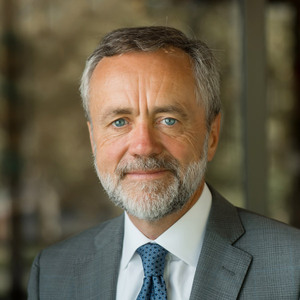
Barry Corey
Dr. Barry Corey (Ph.D.) is President of Biola University.
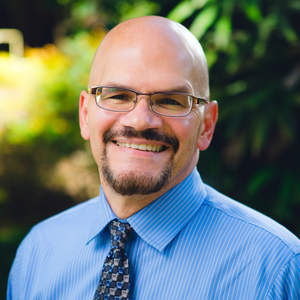
Timothy Muehlhoff
Tim Muehlhoff (Ph.D.) is the Senior Director of Biola’s Winsome Conviction Academy that seeks to reintroduce compassion and civility into our disagreements. He is the co-host of the Winsome Conviction Podcast where people with differing viewpoints are brought on for engaging dialogue. Tim has written extensively in the area of cultural engagement and conflict including I Beg to Differ, Winsome Persuasion, Winsome Conviction, and his newest book (co-written with Sean McDowell) is End the Stalemate: Move Past Cancel Culture to Meaningful Conversations.
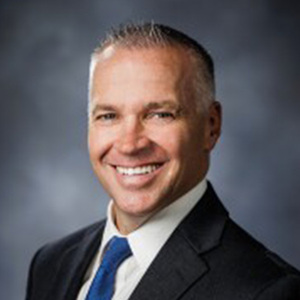
Shane Reese
Dr. Shane Reese (Ph.D.) is President of Brigham Young University.