Episode 142: Doing Jesus Things The Jesus Way
Mean-spiritedness and vitriol are contributing to the breakdown in our contemporary discourse, and tactics expressive of affective polarization, where disagreements on policies devolve into bitterness and hatred toward people with whom we disagree, are all too tempting for Christians. And yet, aren’t Christians called to a different way, a different manner of public engagement? On today’s episode, Steve Porter (Ph.D.) speaks with Rick on the role of spiritual formation for shaping how we work in public life.
Transcript
Rick Langer: Welcome to the Winsome Conviction Podcast. My name's Rick Langer and I'm of a professor emeritus at Biola University, as well as a co-director of the Winsome Conviction Project. And I'm your host today for the Winsome Conviction Podcast. And it's a privilege for me to have with a good friend and colleague that I worked with at Biola for many years, Steve Porter. And Steve is now at Westmont College, working at the Martin Institute, heading that up as the executive director that is seeking to develop and support a new generation of leaders in the area of spiritual formation. And he's also spent years as the managing editor of the Journal of Spiritual Formation and Soul Care. You've done a lot of work with Dallas Willard, who is one of the foremost thinkers about spiritual formation in the 20th century, I think it would be safe to say.
So the bottom line is, it's a privilege to have you. And what we really want to talk about is some of the connection between issues related to spiritual formation and the breakdown of our contemporary discourse. So thanks for joining us, Steve. Really looking forward to having this conversation with you.
Steve Porter: Well, thanks for having me, Rick. I'm looking forward to it as well.
Rick Langer: I've read a lot of studies about affective polarization and had a lot of experience talking to people with this as well. And the contentions, the discovery seems to be that our contemporary moment is marked by an alarming increase in this affective polarization. And that's defined as when people disagree, not about policies and positions, which is normal polarization, but rather about the emotional charging of that so they actually feel an active disdain towards the other people with whom they disagree, not just the policies that those people are advocating. They think the world would be better if those people weren't there. They wish they were gone from the organization or whatever it might be. And you might think Christians would have some kind of an inoculation to this because we're called to love our enemies, right? But it seems that this doesn't actually work out to be the case very often. So let me just ask, are you seeing this kind of this in your experience? And if so, why do you think it's the case? What's going wrong here for us?
Steve Porter: Yeah. Yeah, it's a great question, Rick. Yeah. Well, I see both sides of it and both sides here in the sense of I do see Christians who are involved in the polarizing and the kind of disdain comes out, whether it's in social media or other platforms, and even people I know, conversations that we get into about these things. And so, surprised at times by Christians who are having the kind of attitudes that fuel this sort of... Really, sometimes it's kind of a mean spiritedness towards others. On the other hand, I know lots of Christians who I think maybe are equally, as you said, kind of concerned about the policies or positions and disagree with other folks who have a different view of those things, but they don't come at it with the same sort of derogatory or demeaning kind of tones and attitudes. So I see both sides within Christianity, but I definitely think in the case where we are approaching these topics with that sort of demeaning and contempt feelings towards our opponents, yeah, that is a sign of spiritual immaturity.
That's not the way of life that Jesus wants to show us into through following Him by His spirit. And so, there's a need to grow there. There's a need to mature. That should be something that we are convicted about and see as a growth edge.
Rick Langer: Yeah. So if... I think one of the dangers is that you get used to the sign of the times, so to speak. Everybody's arguing, it becomes a background condition. So then you become numb to it or you don't question it. You don't stop and think, "Wait a minute, does this sound like Jesus would sound, so to speak? Does this sound like what the Holy Spirit would be working in my life?" So I'm hearing you say that there is an indication when we're going in kind of the flaming and raging that there's something wrong in our soul, so to speak. And if there's something deep or something below that on the surface, I'm just curious, what is it and how can we get at it perhaps as a question, and then what can we do about it?
Steve Porter: Well, I mean, I think the first thing to say is there's kind of two lines on this in church history, right? There's kind of a pessimistic line that Luther really embodies quite well that would say, "Well, no, actually Christians aren't going to be much different than non-Christians when it comes to our behavior and our attitudes and our feelings and emotional responses. That before grace and after grace, we're pretty much miserable sinners and we're going to remain miserable sinners, right?" That was the language that B.B. Warfield picked up on, miserable sinner Christianity. And so, one line is very pessimistic. There's not going to be much growth. Maybe we should strive for holiness, we should strive to be better, but we're going to fail. And so, if you're on that side of the theological camp, then you might think that a lot of what we see coming from Christians that fuels polarization is, that's just the way it's going to be in the church age until Jesus returns.
The other camp is a more optimistic camp. And so, here you might think of, well, really Calvin, I think was in this camp, Wesley certainly, Puritans, and certainly the modern day spiritual formation movement, so folks like Willard and others, this camp thinks, no, no, no. If you really look at scripture and look at the teachings of Jesus and of Paul and other biblical authors, it seems quite clear that we've been given this new life in Christ. And to maybe pick up on Jesus' teaching in John 15, that if we abide in Him as He abides in us, we'll bear much fruit. And that fruit includes our character and certainly the fruit of the spirit, love, joy, peace, kindness, patience. So if you walk in the Spirit, you won't gratify the desires of the flesh. And I was looking at the desires of the flesh, a lot of them are the kinds of things that fuel polarization, envy, jealousy, dissension, divisiveness, anger, fits of anger.
And so, those are the deeds of the flesh, not the fruit of the Spirit. And so on that line, it looks like there is a way of life as we learn from Jesus how to live life in His Father's kingdom by the Holy Spirit that transforms us from the inside out. And it produces these character traits and really produces a view of the world that I think can help us chill out a little bit. I mean, I think part of why disciples of Jesus can develop patience and can respond to those who persecute us with love is because we're growing deeper and deeper in our confidence that God is with us, that He knows what we need, that He's for us, and that He's active in the world, and that we can leave these outcomes up to Him and do our best to follow Him and love those we encounter.
And so, there's the need to try to take control or to try to get our way or to try to use manipulation or put somebody down. All of those things kind of get undermined a bit, quite a bit, as I think we develop a more confident, faithful embrace of God, God's work in the world and His presence and empowerment in our own lives.
Rick Langer: Yeah. And you mentioned something interesting there, Steve, about getting our way. And I guess I have two thoughts about that. It strikes me that there's something pretty significant going on with our desire to get the world shaped according to our vision of what it should be. And I've noticed in talking with people that oftentimes they would add to that, "Well, yes, of course I want the world shaped in the way I want it to be because my desires are biblical desires." In other words, "I see clearly what the world should be like and I want it to be that way and I'm just trying to be biblical. I'm just trying to be faithful to Jesus. So yeah, I'm calling it out when it misses what it ought to be." I feel a tension when I hear someone saying that because I'm going, "So what about the fruit of the Spirit?" I worry about how that... Well, let me just pause there. How do you see that and what is the significance of this? And then we can dive a little deeper into some of this.
Steve Porter: Yeah. I guess the view I would take is that certainly we should be advocating both in our personal lives and in our social and political lives. We should be advocating for, as best we can, what we believe is the good and true and beautiful in the world. And so nothing wrong with wanting the world to be more like God intended, but it's the tactics we use, it's how you go about it. And that's where the fruit of the Spirit is going to come into play. And I think it's also connected up to what degree do we feel that that's the mission we've been given as followers of Jesus. So again, nothing wrong with advocating, nothing wrong with working to do what we can to make the world and culture more honoring to God or more according to Christian principles. But at the end of the day, whether that happens or not, my mission and your mission and the church's mission as God's people in the world remains exactly the same, that we are meant to be the light of the world, that we're meant to be the salt of the earth.
And that shows up in our good deeds. Jesus is really clear about that in Matthew 5, that it's our good deeds that show forth our light. So not our accomplishments in the political sphere, but how we go about working in the political sphere and are we known as people who are fair and just and loving and caring and kind and compassionate and joyful and peaceful and content. And so, these are all virtues that Christians are meant to have and that we can find a way into through life with Jesus. And so, that's... Eugene Peterson has this nice kind of notion of that Christians are not only called to do Jesus things, but we're called to do Jesus things the Jesus way. And so, doing Jesus things is trying to make things happen the way I think Jesus wants them to happen any way I can.
But doing Jesus things the Jesus way is to say, "Well, there's a certain way of love and that the way of love suffers and the way of love is patient and the way of love is long-suffering." And so, we often are in a situation where we are going to defer to the needs of others and we're not going to force our way. And so, that's the character of Christ that we need to bring into these things. And so, just the last thing I'll say on this, so we might lose, right? We might lose the argument, we might lose the debate, we might lose in some other way, and it's okay to lose as a follower of Jesus because again, at the end of the day, our mission in the world is not to win, it's to show forth Christ's life in and through us no matter the outcome of our conversation or our efforts.
Rick Langer: Yeah. So I remember, I think this was a 2016 election where there was a bunch of... There kind of a meme about the Flight 93 election, which is a reference to Flight 93 on 9/11, where that was the one where the guys crashed into the cockpit and ended up crashing the plane into the field there in Pennsylvania, I think. But the point is they saved the White House, which I think that the plane was supposed to go and crash into. And the feeling of sort of if this election is lost, and this has been... I'm using the political example because it was framed in that context, this is catastrophic. And so, there is a bit of a sense of by any means necessary, there's that much at stake. And is there a sound theology behind that, or is that really, as you look at it upon reflection, just saying, "You know what, that's almost exactly a failure to trust in God, not an example of trusting in God." How do you process that? Because I hear more of that than I might have thought.
Steve Porter: Yeah. Well, there's a important disanalogy between... Was it Flight 93? Is that the number?
Rick Langer: Yeah. Yeah.
Steve Porter: There's an important disanalogy there, right? So on the one hand, the ends never justify the means. And so, then you might think, "Oh, well, they shouldn't have broken into the cockpit and done whatever they could to wrestle control of the plane away from those terrorists." Well, no, those are exactly the right means in that situation because the people who were in control of the plane were breaking the law. They were trying to kill people intentionally. And so, in that sort of situation, now there's going to be debates among Christians about violence and the use of violence even in those situations, but nevertheless, you can certainly go to a great extent to protect lives when the people who are putting those lives in danger are acting illegally, immorally, and need to be stopped. To take that into the political sphere, the disanalogy comes in and my political opponents or those who hold different policies than me, they're not at least obviously breaking the law.
Of course, we can get in debates about that, but if they are breaking the law, there's a procedure to go through in our country to kind of bring them to justice. We don't have to do that ourselves. And again, while we may think their policies will put people's lives in danger, it's not as if they're directly intentionally trying to terminate people's lives. So in that sense, we can't justify the same use of means as you could in that flight situation because the situation's different, right? And so, while there might be occasions, again, like Flight 93, where that is the Christ-like thing to do, it'd be very hard to think that we're in that situation when it comes to an election, for instance. I mean, because again, that would suggest that we could go to violence to win the election or something like that. And that's just not the situation we're in.
Rick Langer: So let me just run out kind of a scenario for you for a person who is... When they think about this, they feel a genuinely apocalyptic fear for our country. If this election, if this candidate of whatever it is not elected or is elected, whichever way it's going, I am worried that this will be the end of America as we know it, and then perhaps the free world in general. Without worrying about how they talk or anything else like that, I worry that fears at that magnitude legitimately, so to speak, disorient us. We don't think our best when we're suddenly confronted with a fear of that magnitude. And let's just stop for a second and say, what do you do with your own heart when you're feeling fears that profoundly? Because I'm afraid that if the fear isn't managed all to talk about how we talk to each other, it's kind of wasted talk because the magnitude of the fear.
Steve Porter: Yeah. Well, I think of two... So what do you do with the fear? Well, I think of two kind of biblical passages that I think can give us some direction on this. One is when Jesus comes to His disciples and says, "In this world, you will have much trouble or much tribulation, but take courage or take heart. I've overcome the world." And what's interesting about Jesus' overcoming of the world there is that He overcame the world in a very interesting way. It was through the cross and out the other side, right? He let himself become a victim of the injustice of the world. He overcame the world by finding a way through it that led to resurrection and life. And so, there's something consoling, one, that Jesus says to His disciples, "You're going to have trouble. You're going to have tribulation, but take courage. Again, it's not that you're going to win here and now, but with me, you're going to overcome. You're going to come out the other side."
So even if it is the end of democracy, even if it is the end of our country, even if it is the end of this or that, we're going to be okay. Jesus has us. The other passage that comes to mind is Psalm 23, "The Lord is my shepherd. I shall not want." And again, this is, I think, why we can take courage, right? The Lord is my shepherd. Jesus is my shepherd. I have need for nothing. He makes me lie down in green pastures. He leads me to still waters. He leads me aside streams of living water for His name's sake, leads me in paths of righteousness. And then even if I walk through the valley of the shadow of death, I'll fear no evil. For you are with me, you're rod in your staff. So I fear no evil. Why? Because Jesus is with me, He's with us, His rod and His staff, they comfort us. And again, those aren't just truths to believe and speak with the tongue, as Calvin would say, but those are truths that we need to have sink into the heart.
And so, as we internalize a vision of life in God's kingdom where God is reigning, He is in control, He knows what He's about and He knows what's coming and that He is our good shepherd and He is taking care of us and He knows what we need and He knows what the church needs and He knows what humanity needs. He knows what the globe needs. Again, not that that means everything's going to turn out great, but that even if we walk through the valley of the shadow of death, we don't have to fear evil because He's with us and He'll prepare a table before us in the presence of our enemies, our cup runneth over. So this picture that God is with us, He is good. He knows what he's up to in the world. We can trust Him, that entering into that way of life. And when I say enter in, this is where spiritual formation becomes an important term or language or sanctification.
When I say enter in, I don't just mean getting saved, but I mean this ongoing process of working out our salvation of abiding in the vine as He abides in us, of walking in the Spirit, that this ongoing process of deepening our dependence and trust on God, on Christ by the Spirit, that is what is transformational. That is what diminishes the fear and the anxiety and there is more love and more joy and more peace and the other fruit of the Spirit are kind of scaffolded, if you will, by some of these shifts in our affections and responses and attitudes.
Rick Langer: Yeah. So I think that's a great point, Steve. There's a famous saying about that, some people are so heavenly minded they're no earthly good, but sometimes you get so earthly minded that we lose the good of heaven or we only see the good of heaven as somehow being relevant once we get to heaven. But I think you're reminding us that there is a transcend... The story arc that we're a part of doesn't actually end in the here and now. It ends in there and then, and if we don't treasure and value that ending, then we're going to be in trouble in the here and now because we may be... God wrote it. He saw every one of the pages in our book before we were born, Psalm 1:39. And I think the thing we forget is that that book was probably a Russian novel. It's like a thousand pages long and your little slice of that sucker is Chapter 37.
And I hate to break it down, but Chapter 37 is really lousy. And you're like, yes. But at some point, you have to say, it's a great book nonetheless, even if my chapter wasn't so good, even my chapter started good and ended bad. And I think we're caught in a bigger narrative and if we demand it to make sense within the narrow timeframe that we have, we end up with this fear out of control. "Oh, this is going to end badly. I can't have it end badly, so I got to fix it." And you realize it's a bigger story. It's a bigger story.
Steve Porter: Yeah. Yeah. I was on the heavenly minded, no earthly good. Colossians 3 is an interesting passage to go to, because Paul says, "Set your mind on things above, don't set your mind on things of the earth, but seek the things that are above where Christ is, seated at the right hand of God." And so, if that's what it means to be heavenly minded, then I think we will be of great earthly good, right? Because if setting our mind on things above is to set our mind is to actually imagine Christ, our Lord, our savior, who made it through and out the other side, seated at the right hand of the Father, seated in the position of all authority, of all power. And He's seated, right? He's not pacing back and forth. He's in a position of rest. And so, I'm setting my mind on the Jesus who loves me and knows me, who was and is and is to come, and He's seated and He sees it all, right?
He sees it all and He's not wringing His hands in fear and He's not upset. If I can set my mind on the reality that Jesus... Actually, then Paul says in Colossians 3, he says, "Therefore, put to death what is earthly in you." And it's out of that vision of heaven, of setting our minds on things above where Christ is, that we're able to put to death what is earthly in us. And part of what is earthly in us is wanting it our way now and not being willing to be patient and to actually suffer and to suffer in ways that aren't the way we want things. But again, we can trust that God is with us and that we will make it out the other side as well.
Rick Langer: Yeah, that's great. And that phrase about putting to death these earthly things, I'm reminded what you mentioned earlier about the words of the flesh and the fruit of the Spirit. And I just turned in my Bible to Galatians 5, and let me just read these, the words of the flesh, they include sexual immorality, impurity, and sensuality. And then Paul's pretty much done with those kind of things. And then he talks about idolatry and sorcery, which are two interestingly different kind of spiritual idolatry kind of things. And then he goes through this long list of enmity, strife, jealousy, fits of anger, rivalries, dissensions, divisions, and envy. And I'm like, boy, he kind of has a three to one ratio of anti-social media. I don't know.
Steve Porter: Yeah. I was going to say, that sounds like the Facebook feed after someone posts political, it's envy, it's jealousy, it's rivalry, it's dissension, it's division, fits of anger for sure, right?
Rick Langer: Yeah. And so, it really is, and I worry that perhaps we don't actually think about this in some sense as a real spiritual warfare.
Steve Porter: Yeah.
Rick Langer: We're blind to that, I think, sometimes.
Steve Porter: Yeah. Yeah. Well, and spiritual warfare, I mean, I think it's always important to remember that the three classic obstacles are the world, the flesh, and the devil. And so all of that's caught up in spiritual warfare, certainly the demonic, but also our flesh. I mean, right before that passage in Galatians 5, Paul says, "Walk in the Spirit, you won't gratify the desires of flesh," but then he very quickly says, "But the desires of the flesh are opposed to the desires of the Spirit and they'll keep you from doing what you want." So our fleshly desires are still at work in our lives as we are seeking to walk in the Spirit. And so those fleshly desires, when they're indulged, give rise to the deeds of the flesh. The fleshly desires just are the desires that give rise to those things. And again, that's what we see when we see Christians who are involved in this kind of dissension and fits of anger and all those things.
What we're seeing, and when we see ourselves, it's not just those people out there, when we see those things in ourselves, envy, jealousy and things like this, it's like, okay, that is the old man. That is what Paul calls the former manner of life, right? And it's still not dead. We have to put to death what is earthly in us. And then culture, the world doesn't collude sometimes with our own fleshly desires because if everyone else is doing it, if everyone else is kind of acting that way or talking that way or using those tactics, then why can't we as Christians? And we become desensitized to it as well. So oftentimes, culture is part of the problem as well in terms of inciting this kind of thing. So yeah, the world of flesh and the devil end up being kind of our source, our nemesis. But again, there is a way to crucify the flesh and its passions as Paul says.
Rick Langer: Well, thanks so much, Steve, for sharing with us, thinking a little bit more deeply about what's going on with some of the vitriol. I appreciate especially underscoring the need for managing fear and anxiety and things like that. And also, engaging in an honest spiritual warfare, realizing where the temptations lie. And so, often the fruit... Or, the works of the flesh are really marked by the kinds of things that are the contentious strife and things like that, that often start small, but create an atmosphere of kind of huge destructiveness in our lives and the lives of those around us. So, thanks so much.
Steve Porter: You bet. Thank you.
Rick Langer: Let me just thank all of our listeners. Thanks for joining us for the Winsome Conviction Podcast. We really encourage you to subscribe on Apple Podcasts or Google Play, wherever it is that you get your podcasts, Spotify. We'd love to have you be a regular subscriber, and you can also check us out on the winsomeconviction.com website, find a lot of resources and things like that there. Thanks again for being with us for this episode.
Authors

Steve Porter
Steve Porter (Ph.D.) is Senior Research Fellow and Executive Director of the Martin Institute for Christianity & Culture at Westmont College, and an affiliate Professor of Theology and Spiritual Formation at the Institute for Spiritual Formation and Rosemead School of Psychology (Biola University). Steve received his Ph.D. in philosophy at the University of Southern California and M.Phil. in philosophical theology at the University of Oxford.
Steve teaches and writes in Christian spiritual formation, the doctrine of sanctification, the integration of psychology and theology, and philosophical theology. He co-edited Until Christ is Formed in You: Dallas Willard and Spiritual Formation, Psychology and Spiritual Formation in Dialogue, and Dallas’s final academic book, The Disappearance of Moral Knowledge. In addition to various book chapters, he has contributed articles to the Journal of the Evangelical Theological Society, Journal of Spiritual Formation and Soul Care, Philosophia Christi, Faith and Philosophy, Journal of Psychology and Theology, Themelios, Christian Scholar’s Review, etc. Steve and his wife Alicia live with their son Luke and daughter Siena in Long Beach, CA.
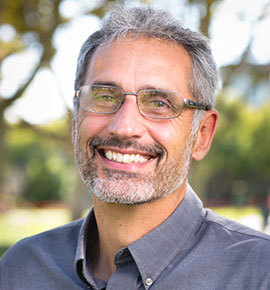
Rick Langer
Rick Langer is a Professor of Biblical Studies and Theology and the Director of the Office of Faith and Learning at Biola University. He specializes in the integration of faith and learning, and has also published in the areas of bioethics, theology and philosophy. He has a passion for helping Christians of all ages understand the connection between the Gospel and all the diverse facets of the created order in which we live. Prior to coming to Biola, he served for over twenty years as a pastor at Trinity Evangelical Free Church in Redlands, California.