Biola University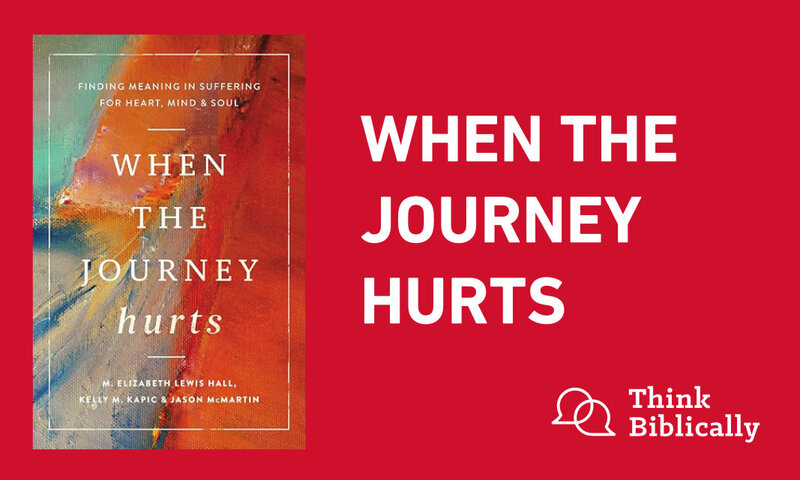
Does God cause our suffering? How does our suffering undermine our sense of life’s meaning? What does it mean to say that God redeems our suffering? We’ll answer these questions and a good deal more with our guest, Dr. Jason McMartin around a new book he’s co-authored with two other Biola faculty members, entitled, When the Journey Hurts.
Dr. Jason McMartin Is Professor of Theology and teaches systematic theology and theological integration for Rosemead School of Psychology and for Talbot School of Theology. He is the author of numerous journal articles in the integration of psychology and theology.
Episode Transcript
Scott Rae: [upbeat music] Does a sovereign God actually cause our suffering? How does our suffering undermine our sense of life's meaning? And what does it mean to say that God actually redeems our suffering? We'll answer these questions and a good deal more with our guest, our colleague, Dr. Jason McMartin, around a new book that he has co-authored, with one other of our faculty members, called When the Journey Hurts. It's a great insightful work. It's, subtitled Finding Meaning in Suffering for Heart, Mind, and Soul. So we're looking forward to this conversation. I'm your host, Scott Rae.
Sean McDowell: I'm your cohost, Sean McDowell.
Scott Rae: This is Think Biblically from Talbot School of Theology at Biola University. Jason, really glad to have you with us. Thanks so much for joining us, and really appreciated the book, and looking forward to getting into some of the details on this. So most of the books that we feature have some sort of backstory that explains the author's interest in this. Now, this, there's three of you on this, so it may be that one person's backstory is a little stronger than the others. But tell me what sparked your interest in this particular subject.
Jason McMartin: Yeah, in my particular case, there isn't a great deal of story. I don't have a kind of a suffering story per se, as actually, my co-authors do. In my case, it was actually starting with teaching a class over 15 years ago with Liz Hall in positive psychology. It's one of our integration classes for our psychology majors here at Biola. And a lot of it is really just centered around a flourishing life. What does psychology say about what a flourishing life is? What does theology say about that? And then integrating those and bringing those together. And really from the very beginning, Liz and I recognized that we couldn't really approach the topic of flourishing without the topic of suffering included in it, because the Christian picture just says that flourishing is connected to suffering in a lot of ways, and that suffering is actually in a lot of ways a means to flourishing. And, we would be remiss from the flourishing conversation if we didn't talk about suffering, even though that's not something that really is present in the field of positive psychology. But we knew as a Christian approach to that, we would need to do that. So we kind of started that conversation even way back then. Over time, that led to some grant funding, some academic research study, and then eventually this book, which was always the hope, which was to bring that material to the church, the research that we had done over time on that, on that topic.
Sean McDowell: And you have, and the interdisciplinary approach is unique. And of course, you bring a theological approach to this question. And so let's just jump right in. Does God cause our suffering? Why or why not?
Jason McMartin: No is the short answer. God certainly allows it and, you know, in his sovereign purposes, of course, we don't know what all that's about, and I'm sure we'll get into that more as we go in the conversation. But God is not the direct cause of our suffering. God, in his love for us, wills good for us. He wants good things for us. Suffering is not kind of plan A, as it were, but, he has set up the world in such a way that, it can happen, and it does happen, and he allows it to happen. Sometimes, of course, that's just because of the natural consequences of how things go. You touch something hot, you get burned, and it's sort of a natural consequence. And so some of those things are sort of built into the structure of the universe. But it's not a direct cause. It's not as if God is burning my hand or something like that. God is allowing these things to happen.
Sean McDowell: So there's times maybe when God does, to judge, like, say, Herod, obviously, in the Book of Acts, but those are the exceptions. The norm is God allows. Would you agree with that?
Jason McMartin: Yeah, absolutely.
Sean McDowell: Okay.
Jason McMartin: Yeah. And actually, even maybe in the instances of judgment or punishment, I'm not even sure I would necessarily say that God is directly causing per se, but at least in a lot of cases. Sometimes maybe yes, Pharaoh, plagues, that sort of thing. But a lot of times I think it's just natural consequences
Sean McDowell: Mm-hmm
Jason McMartin: ... You know, our sin, our wrongdoing, kind of built into things. Things break when you do it against God's intentions, and then
Scott Rae: Yeah
Jason McMartin: ... Face the consequences.
Scott Rae: I I remember several years ago, I attended a bioethics conference where one of the presenters was presenting a a theological case for God causing genetic abnormalities for his glory. And you could see as he developed this, the level of discomfort in the room theologically just started to
Sean McDowell: You could just sense it, huh?
Scott Rae: Well, you could, you could see.
Sean McDowell: Oh, man.
Scott Rae: Well, and people were not, people were, they were shaking their heads from the start. And there was just, there was just this sort of in you know, almost innate repugnance of that kind of a view that a good, loving God would be the author of evil-
Jason McMartin: Yeah
Scott Rae: ... Like that. And in my, in my view, that creates as many theological problems as it does-
Jason McMartin: Yes. Right
Scott Rae: ... Right? It does as others. But I think what is clear about this is that, and you make the, you know, make this point in the book, that suffering does undermine and challenge our own sense of meaning-
Jason McMartin: Mm-hmm
Scott Rae: ... For ourselves. And I think that's a, that's a little deeper dive into-
Jason McMartin: Right
Scott Rae: ... Some of what suffering actually does to us, and then maybe at the end of the day for us that God allows. So how do, how does that work, that suffering undermines our sense of our own meaning and purpose?
Jason McMartin: I think a lot of times when we're considering suffering, we focus maybe on the loss itself, you know, the sickness or if it's cancer or something like that, and we're thinking about the suffering in terms of that actual problem, and we forget that the suffering will often, almost always, generate more, especially in the form of the kind of meaning that it has in our lives. So let me give you kind of a quick example. I don't know that this is a huge example of suffering per se, but it's a personal one, so it makes sense to me.
Sean McDowell: Okay.
Jason McMartin: So I helped plant a church, small church, bivocationally in Fullerton, and then helped close the church. And I never wanted to be a pastor. I grew up in a pastor's family, didn't want to be a pastor. No disrespect to my dad. He's great, but I didn't want to be one.
Sean McDowell: Sure.
Jason McMartin: And then in God's, you know, sovereign sense of humor, I became one. And then it took me a long time to see myself as a pastor. But I was one, so I had to see myself as one, and then I wasn't one because I helped close the church. And so it was a really weird season, and it was The sense of loss of the church that we had to close down was also tied up with my own sense of self. Who am I? You know, I thought, "Oh, well, I guess maybe I'm actually a pastor." And now I'm not, 'cause I don't have a church, so how do I understand who I am, in the midst of this loss? So it it kind of got to my own sense of identity, to my sense of vocation, my sense of even, did we do anything that mattered? 'Cause we had to close the church. Did the work we do make a difference, or did it not make a difference? And all of those are meaning questions. They're questions about identity, purpose, results, all those kinds of things, and those are all bound up with, the suffering that we experience.
Sean McDowell: You know, I appreciate that the title is When the Journey Hurts, not If the Journey Hurts.
Jason McMartin: Yeah. [laughs]
Sean McDowell: I gave a talk at my home church on Acts 12. There's a lot of death and suffering in Acts 12, from Herod to James to the guards and I stopped to point out to the college students, I said, "By the way, if this feels abstract to you, it's only a matter of time-
Jason McMartin: Mm-hmm
Sean McDowell: ... Before it hurts." And this
Jason McMartin: Yeah
Sean McDowell: ... Emotional hurt. It can express itself in a range of different ways. But how do people regain a sense of meaning in the midst of suffering? Or if they're in the midst of suffering and feel like, "I can't get there. I don't have the strength for this-"
Jason McMartin: Mm-hmm
Sean McDowell: ... How do they do it maybe [laughs] after it's passed-
Jason McMartin: Mm-hmm
Sean McDowell: ... If that's all the faith they can muster?
Jason McMartin: Yeah. Well, we talk about this quite a bit in the book. We use this meaning model that really comes from the field of psychology, and we unpack it quite a bit. But the basic idea is that we have a worldview, a kind of a global way that we understand things, understand ourselves, the world, God, all those kinds of things. And then when something disruptive happens, it shakes the foundations a little bit, and it causes us maybe to question certain things, question who we are, who God is, who the world is, you know, all those kinds of things. And so somehow we have to reach a new kind of calibration again to help things make sense again in the midst of the suffering. And a lot of times that's gonna involve some kind of change. Either I have to change how I understand this event. So if the event has been very disruptive and I think, "Oh, you know, that is the end of this relationship," or, "That is the end of my career," or whatever it is, I might have to reframe and re-understand the significance of that thing- ... In my life. Or I might have to change something about the world. You know, I ask students all the time, "Do you think the world is fair?" And they, you know, they always say, "No, of course it's not fair." Except the problem is that of course cognitively they know-
Sean McDowell: That's right
Jason McMartin: ... It's not fair, but that doesn't necessarily mean that their heart doesn't think it's supposed to
Sean McDowell: Mm-hmm
Jason McMartin: ... And that it is. And so a lot of times what suffering does, too, is it kind of reveals some of those deeper things that if you were to ask, people'd say, "Oh, no," but it is actually kind of deep in there that they do actually think the world is fair. "I was healthy. I exercised. How did I get sick?" And then we might actually need to really adjust on maybe a deep level our understanding of the world, and our worldview.
Sean McDowell: Yeah.
Scott Rae: Let's take that a step further. You point out in the book, I think one of the most insightful parts of it, is that there are a handful of, quote, "Christian misconceptions-"
Jason McMartin: Mm-hmm
Scott Rae: ... About how to deal with suffering. So spell out some of what those are and why you think those are misconceptions.
Jason McMartin: Yeah. So we talk about three in the book and focus on this sort of roadmap metaphor throughout. And so we talk about vague roadmaps, triumphalistic ones, and defensive ones. And, in each case, we're kind of pointing to the ways in which Christians maybe kind of commonly engage with their suffering, but in ways that are unproductive for various reasons. So if you use the roadmap metaphor, I think it's very clear why a vague roadmap isn't all that helpful, because it just doesn't give you much. And I think that's a problem that we often have as Christians, is we have a pretty thin theology of suffering, and I think a lot of people have talked about that.
Scott Rae: Yeah, if
Sean McDowell: That's true
Scott Rae: ... If we have one at all.
Jason McMartin: If we have one at all.
Scott Rae: [laughs] That's fair.
Jason McMartin: Right. And maybe it begins and ends with Romans 8:28 or something, and there just isn't much more to say, when actually there's a lot in Scripture to help us understand suffering and have a really robust theology of suffering. Probably the more common problem is actually the triumphalistic one. I think as Christians we're eager to skip to the end. We know how the story ends, which is fantastic, praise the Lord. But we sort of put ourselves at the end of the story rather than remembering that we're in the middle of it and that we are in the midst of the struggle. It's the already and the not yet, and we're not there yet. We're not in new heavens and new earth. And then we sort of act as if we're there when we're not, and that's the kind of triumphalistic mode. And, then the final one we talk about is the defensive mode, which is kind of the mode of in some ways I think of it as a, the past-looking one, where we're constantly trying to figure out, "Well, why did this happen? Why did this happen?" And then, "How could God allow it?" Something like that. Which isn't a a useful question. But if you're thinking again about the roadmap metaphor, you don't wanna focus so much on where you started from. You wanna think about where God is taking you to in the midst of these things. And the roadmap is to help you get to where God wants to take you, not just think about where you came from.
Sean McDowell: This is somewhat of a practical question for you, although as an apologist, I have my apologetics angle to this, is that I think Scripture's really clear this side of eternity, we may never see God's purposes in allowing our suffering. We won't understand them. And I've definitely through my own suffering come to accept that experientially and intellectually. But how does this impact how we try to make sense of our own present suffering when there's a certain barrier that we just likely will not be able to cross?
Jason McMartin: Yeah, of course, in one sense there is a barrier. We're human, we're finite, we're limited. We don't have God's perspective on things, so we're just not gonna know these things. And there's always gonna be at least a built-in barrier of a certain kind, which is good, because it means God is God and we're not, and that's a good thing. At the same time, it's a little bit more complicated than that, I think because God is a God of revelation and He wants us to know things, and He's given us a book where He's made all kinds of things known, and ... He doesn't want things to remain Ultimately mysterious, but he wants to be known and he wants us to know. And so I think what we can do then is we can think about how the pages of scripture give us part of it and true parts of what purposes there can be and are in suffering, even if it's not complete. So it's true, it's partial, and it also then points us to what the more complete could and might look like, that perhaps we'll know better in the hereafter. I don't think God wants us to just remain completely ignorant about these things. I think God does want us to have some sense of meaning and purpose and also recognize that that meaning and purpose is ultimately, at the end of the day, dependent on God's grand purpose.
Scott Rae: Yeah, I found that's that's a huge obstacle in my view, what you, what you've suggested here, to try and, try and help make sense out of this when really the meta question about how all these disparate puzzle pieces, you know, fit together into a coherent whole, you know, we're just not gonna know-
Jason McMartin: Yeah
Scott Rae: ... Until after we see the Lord face to face.
Jason McMartin: Right. Well, and actually, I sort of think that there is actually a kind of answer that is the answer, but it's both partial now and will be complete later, and it's unsatisfying in certain ways now and satisfying in certain ways, which is just simply God's presence with us
Scott Rae: Yeah
Jason McMartin: ... The midst of our suffering, that we're meant to be with God and live in and for God, and that that is the answer. But it's also unsatisfying in certain ways in the sense
Scott Rae: Yeah
Jason McMartin: ... You know, providing an explanation or something.
Scott Rae: But I think it's better than a cognitive-
Jason McMartin: Yes, exactly. Right
Scott Rae: ... Explanation 'cause I don't know too many people who will find that particularly satisfying. In fact-
Jason McMartin: Right
Scott Rae: ... I think most people if you give them what you think is a cognitive answer, they'll probably ask for another one.
Jason McMartin: Sure.
Scott Rae: Yeah.
Sean McDowell: But it does help though on one level. Like, if I know I'm on a sports team and I'm suffering, I know exactly why I'm suffering.
Jason McMartin: Mm-hmm.
Sean McDowell: Of course, you could say the end goal is to be conformed to Christ and be with him in heaven. Like, we have-
Jason McMartin: Mm-hmm
Sean McDowell: ... I guess comparable things, but I I, for me, and maybe we differ on this, I think there is something like I kinda wanna know why, and if I know why, I at least think it would help me [laughs] and maybe you're-
Jason McMartin: Yeah. Yeah
Sean McDowell: ... Right that it wouldn't.
Jason McMartin: Right.
Sean McDowell: But we're not gonna know that why.
Jason McMartin: Yeah.
Sean McDowell: That's baked into the cake. That's what I think makes it hard to a degree and we have to trust God and I think lean into his goodness.
Scott Rae: Yeah. So I mean, I think there's something ... You describe it as God repurposing- ... Our suffering.
Jason McMartin: Mm-hmm.
Scott Rae: And I wonder if that's a, that's a part of the answer here. What what do you mean by that and what does that involve?
Jason McMartin: I mean, I think in one way we're kind of just trying to say that God redeems our suffering. It's a different way of saying that. But it's focused on what God is doing and how God is taking us into something new in the midst of difficult life experiences that we have. But another way of getting at it perhaps is it's taking the very thing that's broken and then turning it into some kind of good thing. The image that I often return to is the one in Isaiah 61, which is actually the one that Jesus uses in announcing his ministry in Luke.
Sean McDowell: In Luke 4, yeah.
Jason McMartin: But in Luke 4. But, you know, the part that we get in Luke, if you continue on, talks about exchanging ashes for crowns of beauty and things like that. And so it's a picture of God bringing good things out of difficulty and out of hardship. So the repurposing idea is that making something new, that couldn't maybe have even existed in the absence of that brokenness. And there's some things that we see, when Paul talks in 2 Corinthians 1 about being able to comfort those who need it with the comfort of Christ. I think in part what he's even getting at there is that I become a different kind of comforter when I have received that comfort from Christ, and then I'm able to pass it on, and that's a repurposing of the suffering that Paul experienced into a new ministry.
Sean McDowell: One of my favorite talks to give, which might sound weird just 'cause it, the way it lands with people, is like why God allows evil and suffering, trying to just theologically, biblically, apologetically make sense of this. And one of the points that I draw out is, like, people don't just stay neutral when they suffer. Either it's lean into God and His grace and His kindness and [laughs] dependence, or it's like, "Why don't you say curse God and die," Job's wife. Like, it really brings clarity. But how is it, especially as believers, that we can allow or have our suffering draw us closer to God rather than respond in a way that would be in lining with our sinful nature and very natural to just put a distance between us and God?
Jason McMartin: I actually think it's a super empir- or interesting empirical question to know what sorts of people turn away and what sorts of people turn towards-
Sean McDowell: A great question
Jason McMartin: ... In the midst of suffering. I think there would be some really interesting things to do there. We did a lot of, empirical research. We did over 100 interviews with, cancer survivors from different Christian denominations and worked with some refugees. And actually in our, a lot of our interviews with the cancer survivors, very few of them seemed to question their faith in the midst of suffering. Those weren't the kinds of questions they were asking, which is an interesting thing that we found.
Sean McDowell: It is, yeah.
Jason McMartin: And so there would be something interesting to follow up on there. But I do think we need to be honest that sometimes people do turn away or at least they, their faith seems to be weakened because of their suffering. So I think suffering is interesting because on the one hand it can absolutely strengthen somebody's faith. It can draw them closer. Or it could do the opposite. But it's worth noting that healing can do that, too. So healing can draw somebody closer and healing can push somebody farther away. I think of the 10 lepers and the nine who were healed-
Sean McDowell: [laughs]
Jason McMartin: I mean, they had God standing in front of them, and they went away from Him because of their healing. And so in a sense, it seems like their healing actually took them farther away from God. And so I think we need to recognize that that can happen, too. So it's not unique to suffering that it can be both, drawing us closer and-
Scott Rae: Yeah, that's, that seems strangely counterintuitive.
Sean McDowell: Now, do we know that the nine, only one, the Samaritan, comes back and says thanks? So I don't know, do we know that it drew them away from God? That's what I don't know theologically.
Jason McMartin: Well, sure. I mean, at least physically it did.
Sean McDowell: But-
Jason McMartin: They went away
Sean McDowell: ... Physically it did.
Scott Rae: Yeah.
Sean McDowell: But to make, to make your point, John 5, when you have the man who He heals, been paralyzed 38 years, he goes and reports to the religious leaders, which is a way that John is saying he's rejecting Jesus and not being the right witness. So I think, I think your point stands, [laughs] that particular passage aside. That is such an interesting point, though, about healing. We assume evil, at least I assume, turns people away. The data questions that, but sometimes a healing can do the opposite. If you ever have data on that, far-fu- I would love to see that.
Jason McMartin: Yeah, I don't know that we,
Scott Rae: What, what's your, best guess as to what the reason for that is?
Jason McMartin: Why suffering can draw people-
Scott Rae: No, why healing ... People away from God.
Jason McMartin: Oh, well, you know, I think at least part of it is is that what suffering does, and this gets to why suffering can actually lead us closer, is that suffering, maybe like nothing else does, forces us to face our limits, our dependency, our need. And hopefully what that means is we turn to the ultimate source of our lives in Christ and recognize that at the end of the day, that's where all, it all comes from, and that suffering can turn us there. So then I think the flip side is is that when we are healed, something good happens, it can drive us away in the sense of it puts us back into that illusion of independence and lack of need. And maybe it doesn't really, encourage us to engage fully in our relationship with God. And so I kind of wonder if sometimes if that's the reason why Jesus is a little bit ambivalent about miracles in the Gospels, because He knows that a lot of the folks aren't there for Him. They're there for the show or for the meal or for the healing or whatever, and it's not about relationship with Him at the end of the day.
Sean McDowell: That's why I think He teaches in parables, to weed out who's there for the show versus who's gonna come and ask and probe further, I think to further your point. Tell us what you mean by God is in the business of repurposing our suffering.
Jason McMartin: You know, so I think like any good ruler, God allows things to happen as we've already talked about, where there's things that are happening in the broader kingdom that aren't what are supposed to be happening. But that's okay, because God is still the King. He's the ruler of the domain, the dominion. But at some point, a good king has to set things right, and those things have to be set right at some point. And the setting right, then, is when God actually brings about the redemptive goal, the redemptive purpose for whatever it is. And I think that's maybe one place where we have broad stroke pictures to get to your earlier question about, you know, what is God doing? What's, you know, what's the purpose here? We have the broad stroke picture in a lot of ways. We know what some of the parameters are, but we don't know a lot of the details and, often won't know a lot of the details for us as individuals, but I take it that much will become more clear later.
Sean McDowell: I sure hope so. [laughs]
Jason McMartin: Yeah. [laughs]
Scott Rae: I'm sort of counting on that. Now you all point out in the book, I think a really helpful section is, the ways in which Romans 8:28 is not only used, but misused. Now you made reference to that the vague roadmap is just a sort of a simplistic appeal to that text of Scripture.
Jason McMartin: Mm-hmm.
Scott Rae: But how are some of the ways where maybe a more in-depth use of that could be misused?
Jason McMartin: So first, just wanna say Romans 8:28 gets a lot of air time, but for good reason. It's an amazing passage of Scripture.
Scott Rae: It is.
Jason McMartin: And it is a beautiful promise, and it's embedded in a beautiful chapter, so, you know, we're not denigrating Romans 8:28 [laughs] by any means. It is, it's amazing. It, the problem just I think comes is that how we use it. So I mean, most anybody, you know, most any Christian who's gone through a difficult time can tell you of instances where other Christians came to them well-meaning, well-intentioned-
Sean McDowell: By the way, we're assuming everybody knows Romans 8:28, but cite it for us just in case
Jason McMartin: We know that in all things, God works for the good, which is usually kinda where it stops, [laughs] actually.
Sean McDowell: Right.
Jason McMartin: But for those who know and love God.
Scott Rae: Yeah.
Jason McMartin: Yeah, and that's the other problem we'll get to in a moment, is kind of Romans 8:28 are people parceling out when they're making use of it? And it, and it is meant to be an encouragement, so maybe somebody is going through a difficult time, and the Christian brother and sister will come and say, you know, "But God is, God is working for good. All things are working for good." and it's true. One problem can be timing, of course.
Sean McDowell: Yeah.
Jason McMartin: It just is not the right time. But I think, the other problems probably all at the end of the day are summed up by taking it out of context in certain ways.
Scott Rae: Mm-hmm.
Jason McMartin: Because I think what we do is we sort of import things into it that we maybe want to be there but aren't necessarily there. So for example, when we, you know, all things are working for the good, well, I think sometimes people have very specific things in mind about what counts as the good that God is doing, or that they're hoping for or that they're expecting. And that maybe if they don't receive it, then God isn't doing what God is supposed to do. I think we take it pretty individualistically. You know, it's about my good. I think we have a specific timeframe in mind, you know, that it needs to be within this timing, that I get that good. Otherwise, it doesn't count. Because we take it individualistically, I think we forget, communal good. I think we forget- What God's overall purpose in the world is, what cosmic, you know, what God is up to. I think also, and this maybe sounds a little strange, but in all things God works for the good, we can maybe forget where Jesus fits in the whole picture, which the rest of the chapter doesn't let you do. So if you read the rest of the chapter, you recognize the whole Trinitarian picture of the Father, the Son, and the Spirit, and the way in which they're working in the midst of our hardship. But that's another way it can be sort of vague, is it's like, "Well, you know God." And, "Okay, well, what about Jesus, and what about Jesus' suffering?" So there's kind of a lot of ways in which we sort of, again, probably mostly just decontextualize it from the rest of the chapter, and then it gets a little wayward as a result, and maybe fulfills our own hopes or expectations rather than actually speaking to what God is up to.
Sean McDowell: So Romans 8:28 is one that is often misused. Do you have a verse that you think should be more used when people are suffering, or should we stay away from verses? And I'll give you mine. I think Romans 12:15, "Rejoice with those who rejoice. Weep with those who weep." And I don't cite that to somebody. I just think that informs-
Jason McMartin: Uh-huh. Nice
Sean McDowell: ... How we should respond better than giving somebody a theological truth, as important as that is, that might not fit the timing or the context. Do you agree with that take, or do you have one you're like, "No, I would go with this verse or this passage"? Or is the idea of just one verse a whole misguided way of approaching suffering? [laughs]
Jason McMartin: Well, I hate to be too contrary, and it may be a slightly misguided.
Sean McDowell: Do you?
Jason McMartin: I but I do think, as I mentioned earlier, I think Scripture just gives us so... It's just, it's a wealth of resources, honestly, when it comes to a theology-
Sean McDowell: And
Jason McMartin: ... Of suffering that we haven't really appropriately mined in a lot of ways. Some of the most interesting stuff in biblical studies, in my view, that's come out in recent years has been scholars noticing that there's a considerable amount of lament in the New Testament. So for example, there's a couple books out that suggest that Paul structured the Book of Romans around lament, and that there's multiple laments throughout the entire Book of Romans, and that it's a kind of, in one way, a large lament book.
Sean McDowell: I've never heard that. Keep going. Keep going.
Jason McMartin: Yeah, but it's fascinating. Once you, once you look at it that way-
Sean McDowell: Uh-huh
Jason McMartin: ... You realize, in fact, there are a lot of things in there. So one of the key laments is, "Why haven't my fellow Jews believed in the Messiah?" And it's a lament. It's He's sorrowful over this thing that has happened. And, so there's a kind of even a lens that theology of suffering could give us to mine a lot of the riches of Scripture maybe that we're not, we're not getting at. So, the Bible, it would be great. But, I... You know, the verse that I guess was coming to mind for me, the one I'm drawn to, I think, is, 2 Corinthians 12, where Paul's talking about the thorn in his flesh. And the reason I'm drawn to that one is because the way that Paul talks about it is he says that,
Jason McMartin: "The power of God came to rest in me." But the ... Word picture is it's made it his home. Like, really the pic- word picture is that Christ came and made His home in Paul in the midst of his suffering. And for me, that's a really summative picture, I think, of what Scripture wants to say about what sort of role suffering can have in our lives, is that God can come take residence in our lives in the midst of it.
Sean McDowell: It's beautiful.
Scott Rae: Yeah. Is that sort of what you mean by identifying with Christ in His suffering? Something like that?
Jason McMartin: Yeah, I think that's a big part of it. So we have a chapter on identifying with Christ in His suffering. And, you know, when we talk about identifying with somebody, we're kind of talking about how we connect with them, and how we understand their experiences, and how we understand that their experiences could, you know, help them understand us. And it's a way in which we weave our lives together. And when you share experience with somebody, you grow in relationship. And really, that's how friendships grow, is through shared experiences. And so when Paul talks about the fellowship of Christ's suffering in Philippians 3:10-11, I think partly what he's talking about is that our own suffering can help us understand Jesus better because we experience things that He experienced, and we realize that He experienced things that we experience, and that in that shared experience, we can actually knit our lives more closely together in a way, that wouldn't have been possible when we didn't know what it was like for Christ to experience those things that He experienced. So I think that's a big part of it. Another part of it, I think, that you see in the New Testament is identification means that you look at the way Jesus went about things. You know, the, 1 Peter strikes me this so much. You know, so the way in which Christ patiently endured through the suffering without, you know, reproach, without turning, you know, against His attackers, there was a this virtue, character-filled way that Jesus approached His difficulties that, of course, provides a model for us. So there's a emulation we can, we can try to do likewise as we go through our own suffering. But I think that's another facet of identifying. It's I wanna do it that way. I wanna, I wanna do it the way He did it. He did it in a way that was majestic. It was beautiful. It was, of course, on mission.
Jason McMartin: It was full of grace and truth and humility and dependence on the Father. And, may I be able to do likewise.
Sean McDowell: I've got a last question for you, and your answer might be, "You know what, Sean? That's just one of the tensions that we live in." But as I look back on my life, there's... In fact, my wife said this. We've been married 26 years, and she knew me since junior high, and if you asked her, she'd say two seasons in which she saw the most growth in me. One, when I did the MA Phil program here, just my confidence, my vision, absolutely transformative to me. Then three years ago, I went through really miserable physical pain, dropped down to 135 pounds, just was on my back a few hours a day, just taking a breath at a time, and I know in my mind- That it's through, especially the latter one, that pain and suffering brings growth. It's such a biblical idea, and yet I do everything in my life [laughs] ... And minimize it, including eat when I'm hungry, take a Tylenol when I have a headache. Is this just a tension we live in that we know it, or should we embrace it? Like, no, let's lean into suffering. How do you make sense of that kind of tension we find ourselves in?
Jason McMartin: Well, it's a really difficult one, and if you look at the pages of church history, you realize that Christians haven't always done a really good job with this because there's been, on the one hand, a recognition that suffering can be a means. In fact, a lot of times Christians throughout the ages have kinda described suffering as almost a shortcut to intimacy with Christ. That it's it's a very clear thing that God uses to deepen us and to deepen our relationship with Him. And so [laughs] what you see in the pages of church history is that a lot of people take that and, "Well, then let's go pursue it voluntarily, and let's
Sean McDowell: Right
Jason McMartin: ... Do crazy things to our bodies, to bring about the suffering, to bring about the intimacy with Christ," which probably was misguided in certain ways. It had maybe the right intention, but some of the wrong means. So I don't think... So the tension is that we ought not pursue suffering directly, and I think we still do everything we can to avoid it as appropriate. As appropriate is a big word that needs some unpacking.
Sean McDowell: Sure.
Jason McMartin: But even Jesus in the garden asked for the suffering to be taken for Him. And presumably, that wasn't a lack of faith on His part. Presumably, it was perfectly acceptable and the exact right thing to do to ask for it to be taken away, and to do things within His means even maybe to have it taken away. So I, you know, taking the Tylenol I think is completely fine.
Sean McDowell: [laughs]
Jason McMartin: But at the same time, as you, as you mentioned at the outset, it will come, and we all will experience it in one way or the other. So then the question becomes, well, what do we do with it, and how do we handle it, and how do we handle it in a way that, well, of course, is honoring to the Lord? But I think even there's just better and worse ways of going about it, and a large part of what we're trying to do in the book is offer resources that we see in the pages of Scripture and that many have been used by Christians throughout the ages of ways that we can actually engage with God in the midst of our suffering, engage with our faith in the midst of our suffering, and in so doing, actually provide a context in which the suffering can turn into something good and be repurposed for, ... Beautiful purposes.
Scott Rae: I'm still gonna get Novocaine when I go to the dentist.
Sean McDowell: [laughs]
Jason McMartin: [laughs]
Sean McDowell: Oh, man, that would be painful.
Jason McMartin: Yes, I recommend that.
Sean McDowell: Oh, gosh. [laughs]
Scott Rae: I got one final question, too. How do you want people to use this?
Jason McMartin: Well, our heart really from the beginning with even when we were doing all the academic research, and we've done quite a bit at this point, was always to put into people's hands some resources for how to, how to engage suffering well. You know, one of the things that's been really striking to us in our research has been that, again, sort of if you look, well, in the pages of Scripture and across church history, there's a lot of stuff there, and a lot of it just doesn't show up in our contemporary scene and in our current churches. Like lament, for example. You know, 40% of the Psalms are psalms of lament, and yet, by some estimates, it's as little as 4% of contemporary church worship services. And so that's a pretty drastic difference. And so a lot of what we are hoping for is really just to put some resources into people's hands about when they're going through difficult times, what could they turn to and what could help them, continue to engage with God and to meet God, really. I think, that's like maybe really the way I would put it is what are some things we can do to meet God and see what God is up to?
Sean McDowell: By the way, before you wrap this up, I think Dennis Prager wrote a book on, a Jewish commentator, radio host, on, The title was Happiness Is a Serious Problem. And he talked about that couples who lost a child were more likely to get divorced or separated than not. And he said, "What made the difference?" He said, "Those who had a philosophy of life typically ahead of time before the suffering were more likely-
Jason McMartin: Yeah
Sean McDowell: ... To withstand it," 'cause they had a purpose and a sense for it.
Jason McMartin: Right.
Sean McDowell: So you said for when people are suffering, I would say actually the time
Jason McMartin: Yeah
Sean McDowell: ... Before you're [laughs] suffering-
Jason McMartin: Sure, yeah
Sean McDowell: ... To develop a theology of suffering.
Jason McMartin: Yes.
Sean McDowell: So I just wanna give a wider audience to your book-
Jason McMartin: Oh, sure
Sean McDowell: ... Not just those who are currently suffering.
Jason McMartin: Yeah, no, thank you for that. I absolutely agree with that. And we do say that a lot of the things... And this is absolutely the case. I mean, these are, these are things that you can do even if you're not in sort of an active, you know, period of suffering. The one thing I've often thought about, so, and partly I think about this because our research team right now is about five of us, and three of them are, cancer survivors. And so, you know, there's a lot of maybe very direct connection to these things. And then there's me, and I'm like, "Well, I don't know that anything really overly horrible has happened to me." But at the same time, there are things in my life that I realize... So the story I shared earlier about pastoring the church, that, you know, realize that, no, actually these things can help me in those places, too. So it can be suffering big and small, and it can be how do we prepare ourself for those seasons as well.
Sean McDowell: Amen.
Jason McMartin: Yeah.
Scott Rae: No, this is great stuff. I so appreciate the book, and your colleagues, too, Liz Hall and Kelly Kapic. You know, all three of you have done a great job with this. And I think I I would say here they've succeeded in providing a really valuable resource for people before they encounter suffering.
Jason McMartin: Yeah. [laughs]
Scott Rae: Not necessarily while they're in the middle of it. So Jason, thanks so much for being with us and for all the work that went into this, and, trust that, trust that this will get a very wide reading, and be of benefit to the Church.
Jason McMartin: Yeah. Thanks so much.
Scott Rae: Well, thank you all for joining us. Hope you've enjoyed this version of the Think Biblically podcast for conversations on faith and culture. If you wanna email us, with suggestions or ideas, please do so at thinkbiblically@biola.edu. Look forward to seeing you next time. [upbeat music]