Biola University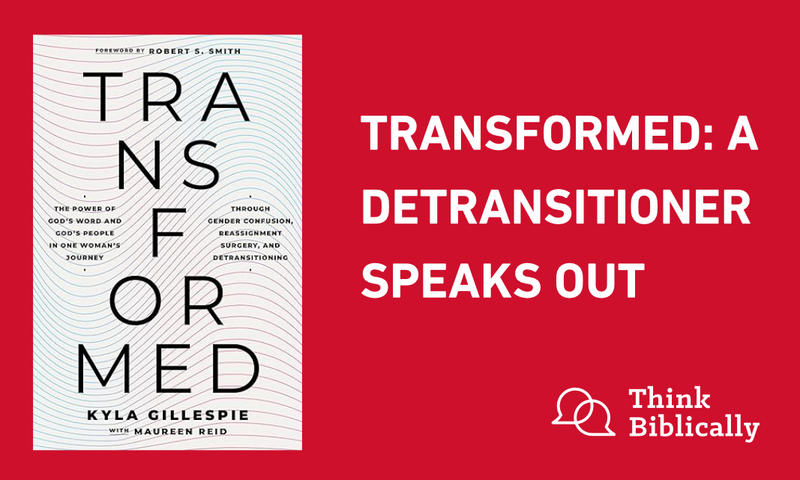
Why would a professional Canadian hockey player, who grew up as a Christian, transition from female to male, and then detransition back? How did God’s word transform her life and what did she learn through the process of gender confusion, reassignment surgery and detransitioning? In this episode, Sean talks with author Kyla Gillespie about her new riveting book Transformed.
Kyla Gillespie was born in BC, Canada. Being raised in a Christian home, she came to faith in Jesus Christ at a young age. As early as the age of five, she began to experience gender dysphoria. In her teens, wrestling with both same-sex attraction and gender dysphoria, life became difficult. She spent her late teens and adult years as a Professional Women's Hockey Player. After a lifelong battle with Gender Identity, in 2011 she fully transitioned from female to male. While living as a male for six years, God revealed himself to her in a powerful way. Since then she has fully de-transitioned and is now living out her God-given gender and sexuality as a woman in pursuit of Jesus. Kyla is an active and involved member of her local Church, Gospel City, in Port Coquitlam, BC, Canada.
Episode Transcript
Sean McDowell: [upbeat music] Why would a professional Canadian hockey player who grew up as a Christian transition from female to male and then detransition back? How did God's Word transform her life, and what did she learn through the process of gender confusion, reassignment surgery, and detransitioning? Our guest today is Kyla Gillespie, and she has written what I think is a fascinating and interesting and enjoyable read about her life. It's called Transformed. I'm your host, Sean McDowell, and this is the Think Biblically podcast, brought to you by Talbot School of Theology, Biola University. Kyla, I've been looking forward to this for a long time. Thanks so much for coming on.
Kyla Gillespie: Hey, Sean. I've also been looking forward to this for a long time, too. It's so great and such an honor to be on your podcast.
Sean McDowell: Well, thanks so much for saying that. I wanna jump right into your story and see how much we can cover in the time that we have. And so here's something you write. You said, "As far back as I could look, I was looking for a different gender, a different me." When do you first recall not feeling at home in your body, and what did you do with some of those feelings?
Kyla Gillespie: Yeah, it was, very early on in my life. Actually, at the age of five and six, I had two specific moments where, of course, being five years old, I don't have a category for, like, gender dysphoria or same-sex attraction.
Sean McDowell: Yeah.
Kyla Gillespie: Nothing like that. I... Here I was, just, you know, I have a older brother and a cousin who's male, and my father that I look up to, and I just liked doing the things that the boys did, like Micro Machines, playing out in the yard, ball hockey, whatever, those kinda things. And it was specifically when I begged my parents to take me out of figure skating and put me into ice hockey. A few months into it, my parents came up to me and they asked me, they said, you know, "Coaches and parents have come up, and they were wondering if we could change you in a different dressing room." And again, five years old, I'm not sure what I reacted with, but I just remember this feeling of being like, "Oh, my goodness, I'm not like these boys?" Because there was no gender-specific hockey teams in that a-
Sean McDowell: Right
Kyla Gillespie: ... Like, that age group on Vancouver Island in Canada, in the 1980s, right? So I just, yeah, I just felt different. I thought I was one of them, and I was the only girl on the hockey team. And then there was another specific moment in my life at a really young age where, you know, my, I just felt different than most little girls.
Sean McDowell: Thanks for sharing that. And one of the things that's full of your book is just these memorable stories that give us a sense of different stages of your life. Towards the end of the book, you say something that I wanna kinda begin with. You said, quote, "For some people, gender confusion goes very deep, and the sense of being born in the wrong body is no light thing." For those who may not experience that level of deep gender confusion in this area, what is it like? Help those not experiencing that as best you can get a sense of just how confusing and painful this sometimes can be.
Kyla Gillespie: Yeah. What I mean by that is it is. Like, we're so attached to... We almost put our identity and our, say, sexuality and gender and all these kinda things, and so it w- it's so intertwined. When, when we talk about, like, sexuality, you know, as a holistic view of the whole person, sometimes it can feel like that is who I am because I experience these feelings. And so what I mean by that is, like, we live in a broken world. We know that. And, so we have broken desires, broken wants, broken dreams even, that are not God's desire and plan for our lives. And that's what I mean by that, is, like, raging against those, you know, things that you feel so deep inside, and submitting that to Christ, what does that look like each and every day no matter how I feel about myself? And so I felt... You know, I still struggle with same-sex attraction and gender dysphoria. However, you know, it's been about nine, 10 years that God has really transformed my life, my mind. I think differently. I want the things that He wants. But yeah, it can be a very difficult place to be when you're feeling something that's contrary to what the Word of God says is good for you.
Sean McDowell: I really appreciate your vulnerability, not just here about where you're at, but the book. There are a few things you wrote, I was like, "Wow, she is really being vulnerable and honest here in a way I can't imagine was easy to write." Being a writer myself, I understand those decisions. But part of this journey is your story. You grew up in a Christian home, yet it fell apart. So talk a little bit about what happened, how that formed you, and then you have a chapter that just talks about rejection being a part of your life from that point forward.
Kyla Gillespie: Yeah. Growing up in a Christian home, you know, as early as I can remember being young, I loved Jesus. I believed with, faith like a child you would say. And I didn't question it. I just, yes, I believe in Jesus, and that's how I lived my life growing up. But then, it would probably come to a head in my teenage years when I was about 13 and 14 years old. Out of the blue, my momTold me that, you know, they called me into the room, and my dad was there, and it was awkward, and they said, "Kyla, like, we're getting a divorce." And we would've been called, like, the Gillespie family, the perfect, you know, quintessential Christian family that, no one expected would blow up like this. And it took us by shock, my older brother and myself, because we never saw them argue or fight. We just assumed that everything was great, and obviously it wasn't in the background. And so, like, later on I learn, you know, the dynamics of my mom and my dad's relationship in deeper ways as I got older. But yeah, it was a very difficult time, for me in that process because what it did, it kind of separated our families obviously. And I was asked, again, sitting me down, and they said to me, "Kyla, you have to choose who you wanna live with." And I share this in my book.
Sean McDowell: Oh, man.
Kyla Gillespie: It's like how do you pick two people that you love so much-
Sean McDowell: Oh
Kyla Gillespie: ... And have to make that choice? Because I felt like I couldn't love them both equally, and I was always, like, the peacemaker of my family. You know, my, I tried to do everything good so it wouldn't ruffle the feathers in our family and, you know. But I knew this choice that I had. And I ended up not knowing who to choose. I chose my mom, but would leave one of them really hurt and broken, and it ended up leaving my father very hurt.
Sean McDowell: Understandably, right? And yet you had that forced upon you. Just for a kid to have to make that decision in itself, yeah, the parents are hurt, but this is traumatic for a child and just so unfair. You know, the other piece of your journey that I really enjoyed, 'cause I was, I was an athlete, did not have near- ... The level of success that you had playing professional hockey, and I'll be completely honest, I'm not a fan of hockey.
Kyla Gillespie: Okay.
Sean McDowell: But I'm reading this going, "This is such an interesting story." I loved it in a way. I've never followed women's hockey before. But this is a piece of your story. So maybe talk about your experience with professional hockey, how it shaped you, your life, your identity, and this is where you say you had your first encounter with the LGBTQ community.
Kyla Gillespie: Yeah, that's right, Sean. So what happened is I started playing hockey when I was young, like I said, about five, six years old. And I played every sport, like basketball, volleyball, badminton, you know, at the young ages. But then it came to a head probably in grade, 10, 11, and 12, where you have to be more specific on what direction you wanna go. And, you know, in my grade 12 year, I had already been pursuing hockey, as best I could living, in Vancouver Island. It was a small community. There wasn't, you know, high-performance hockey happening. But some friends from, summer camps told me about this team in New Westminster, Vancouver, the greater Vancouver area, and it was, you know, young people all the way from age, I don't know, 17 to 22, 23, somewhere in there. And they were a high-performance AAA women's team, which, was trying to make it to the Canadian National Championship. And they said, "If you come play on this team, you will be scouted at the national championship and possibly go play at a higher level for the Canadian, Olympic program," which was in Calgary, Alberta. And so I put everything... 'Cause here I was, you know, broken from my parents' brokenness, the relationship, and then my dad and my mom within, like, a year, a year and a half both got remarried. It was really hard for me to come back and forth from my mom's and my dad's. My mom married a unbeliever, and my dad married a woman with five kids, and I just didn't feel wanted anymore at my dad's. So here I am- ... Wrestling with that for a good three years. And, so I put everything into hockey. Like you said, my identity was Kyla hockey. And I ended up going and training in my grade 12 year for that team in Vancouver. We went to the national championships, and, there was a Olympic program for high-performance athletes, and they would train year-round, and I got scouted and asked to come play in that program. And it was really the feeder program for the women's national team.
Sean McDowell: That's amazing. Congratulations, by the way. And I think you said in the book-
Kyla Gillespie: Thank you
Sean McDowell: ... You also had a basketball scholarship that I-
Kyla Gillespie: [laughs]
Sean McDowell: Like, I'm, I walked on the team here at Biola and sat the bench three years, so when someone can play two sports at a high level-
Kyla Gillespie: Right
Sean McDowell: ... Nothing but admiration and respect for that. You did talk about, I think if I read correctly, it was not only competing there athletically, but that was kind of your introduction into the LGBTQ community. How did that happen, and what kind of experience shaped your i- or your identity which eventually leads towards you transitioning in 2011?
Kyla Gillespie: Yeah, good question. Just go back a little to, like, 14 years old. My family's broken up, and I'm going to youth group, and I love Jesus. I'm, like, literally would tell anyone about him, and I wanted to follow him, but that was the years of really realizing, like, hitting puberty and going like, "Oh, my goodness," like, "my cousin and my friends at youth group are attracted to the opposite sex." And I really had feelings for this other girl. I wanted to be like a guy so I could date her, and there, it was so confusing and so much angst and, a- but I didn't have anyone to tell back in, you know, 1994 or whatever. There was no conversations. There's no podcasts like these or books like mine. And so I felt very lost, and I just suppressed that. And so heading into, you know, pursuing, a-This hockey in grade 12, I lived in a small little community in Nanaimo, on Vancouver Island, and all of a sudden I was introduced to the LGBTQ+ community. In the hockey team that I made, there was lots of LGBTQ+ people, and what I saw for the first time is they called them butch in, the LGBTQ community. And I met some butch girls, and women were actually attracted to them, and this seemed, like, okay. It almost seemed free. Like, they were free to express themselves, and here I had been, suppressing for so many years all the feelings and all the thoughts and everything, and I would cry out to God and, you know, every night and ask him to take those feelings and thoughts away, but that wasn't the story for me. And so as I wrestled with that, it was, like, the first introduction, and I'm going like, "Okay, I love Jesus. I'm gonna follow Jesus. I'm not gay," and really just ignoring and suppressing. But I kept it in the back of my mind. "Okay-
Sean McDowell: Mm-hmm
Kyla Gillespie: ... You can be this kind of person, and it seems to be okay." And then moving into, you know, going into, Calgary, Alberta to train with the national program, God had kept me all my life away from drinking alcohol. I was always like, "No, I don't wanna party or drink. I want to go play sports, and I need to be ready, and I need to train."
Sean McDowell: Right.
Kyla Gillespie: And so it just was something I didn't do.
Sean McDowell: Mm-hmm.
Kyla Gillespie: But at 19, feeling so lost and so broken and the first time I ever moved away from home, my dad had, you know, told me that it's just easier to start over with a new family, which absolutely crushed me, and, I picked up a drink. And from there, you know, intertwined in the book, in my story is this life where I came out as gay when I was 23, finally f- done fighting. I saw it black and white, like God was showing me, either you can follow Jesus this direction, or you can have the life that you want over here. And it was so, like, clear that if I choose this other life, then I have to forfeit my relationship with Jesus. Now, looking back, I had a total distorted view of the gospel itself-
Sean McDowell: Sure
Kyla Gillespie: ... And the love of God and how you can be discipled no matter what you're struggling with. So it continued into about 11 years of being an alcoholic, playing at the highest level in the National Women's Hockey League, the West Women's Hockey League, so close to making Team Canada, but my drinking for, like, 11 years was, ruining all my relationships.
Sean McDowell: Mm-hmm.
Kyla Gillespie: And I came to a place where I asked my old pastor, I actually moved to Vancouver, and I asked him, like, "I need help. I don't think I can do this anymore." But something I wasn't willing to give up was my sexuality and my gender, and I actually told him that I was gay for the first time and that I would, transition eventually from Kyla to Bryson, from female to male.
Sean McDowell: Okay, so there's a, there's a difference, at least in experience, between someone who says, "I'm gay. I have same-sex attraction," and gender dysphoria, feeling like I'm a man trapped in a woman's body. You went through kind of both of these experiences, so what was that process like to transition in 2011, and what was kind of the promise behind that that you thought this transition would bring?
Kyla Gillespie: Right. Yeah, it wasn't cool to transition. It wasn't... You know, I had met a couple different trans people throughout the hockey, my hockey career, and I started to see them transform be- for my eyes. And then I started to watch videos on social media, on YouTube and everything, about, you know, watching someone's journey from being female and transitioning to male. Not only transitioning socially, which means just telling friends and you're, you know, "Please use my proper pronoun, he," and, "My name is Bryson now. I've changed it." Like, those weren't just the things that I was seeing. I was seeing, you know, women that were transitioning, and they were using testosterone, and they had some surgeries and I, and I saw this whole life that really yelled to me, "This will make you complete." "If you just change your gender in the outside, then the brokenness inside will be complete and satisfied." And that's the lie that I believed, and I did. I went through, you know, coming out, as transgender publicly, and then to my family, which really hurt my mom. It was really hard for her. And then getting on testosterone and also having some surgeries. And still, I, you know, by the end of the day, I thought maybe this surgery would satisfy, maybe this, you know, name change and testosterone would satisfy, but I was left broken, and it was almost five and a half years into my transition when I really started to feel the weight of that brokenness.
Sean McDowell: So when you came out to your mom, if I remember correctly in the story, as, "I have same-sex attraction. I'm gay," sh- it seems like she was just kind of supportive, but then it devastated her-
Kyla Gillespie: Mm-hmm
Sean McDowell: ... When you, when you transitioned to a male. Why the different response from her?
Kyla Gillespie: Yeah, I think she knew that, the whole time that this was, this was a life that I w- or a way that I was gonna choose. Like, she said, "I love you no matter what- ... You choose to do, but are you sure this is who you are?" And, I think she s- thought there was more hope in just coming out as gay than when I came out as transgender, and it was... Like, I didn't think about all these things. I didn't think of the reality of what it would do to my mom and how it would affect her. She, you know, said to me that it was like grieving the death of her daughter, that- ... She would never hear her voice again. And-That, you know, she just loved the name Kyla, and she dreamt of having a little girl all her life. And see, when I made all the choices, I was tired of living a life, that everyone else kind of spoke into, and I was determined to do it without knowing the full weight and picture of what it would do to our relationship, which really hurt me, too.
Sean McDowell: Understandably, yeah. I mean, I can understand as a parent because when you have a child, you name that child, and you think about it, and it means something. And [laughs] then your child is taking into their own, you know, their own authority, so to speak, and saying, "Nope, I'm not who you thought I was. I'm not who you named me. I'm changing." And, and you're right. You know, in my experience, a lot of people who transition have not really thought about how that's going to affect other people around them. And so I can understand why your mom would have that process of grieving. Now, there's so much more to your story. We're, [laughs] we're skipping over here in this short interview. But you said about five or six years, you really hit a point where you just kinda hit a low point and need you, knew you needed to do something about it. So what was that detransition process like?
Kyla Gillespie: Right. So I was in a relationship with another woman, and, you know, five years clean, and sober. So I was an alcoholic, and I hadn't drank in those years. I had fully passed as male. Like, no one even knew I w- had a full beard, and I just passed. And what we called it in the, LGBTQ+ community is I wanted to have what they call a stealth life, where I just fit in, and no one questions anything, and I live as Bryson, male, for the rest of my life under the radar. But after that relationship ended in, like, probably almost two years into my transition, I guess I didn't realize that I would have to do this on my own. And I just thought that 'cause I- we were engaged, and I thought that relationship would last forever, and I would never be alone. But I see God's hand in all of it because it made me really think, like, "What, what are you doing, Kyla?" Like, "W- what is this?" But as I came into my probably fifth year of transition, five and a half years, the recovery community is very small, but, most of them had moved on, and no one really knew my story except for- ... A few people. And then this pastor and wife started taking over the ministry, which was called God Rock, on Saturday nights, and it was mandatory for us to go, if we were in the recovery homes. And I went for the last five years and thought, "Well, this is a really accepting prog- you know, like, program ministry." but then these people took over and I talk about them in my book, the pastor, BJ, who's still my pastor today.
Sean McDowell: Oh, good.
Kyla Gillespie: And Jessica, which is one of my closest friends and dear friends. In that time, I held this deep, dark secret, and they started opening up the word of God. So we didn't have, like, community groups when they weren't taking over the ministry, and all of a sudden they were opening up smaller groups where they started to share their brokenness. And I got to hear their stories, and I'm like, "Oh my goodness." Like, I'm getting to know them, but I feel so scared to let this secret out. Like, would they just ditch me? Would they say, "Sorry, thank you for your story, but we don't wanna have anything to do with you"? And there was really fear as we started to build relationship. I started to really care about these people. And so there, that was that fear. And one day I just was out with Jess, and, I just first... I don't even know. It, it had to be led by God is like, I just poured out my heart to her. Of course, I asked her first, and she said, "Yes, I w- share with me. I'm, I'm so honored that you would share with me." And so I did. I shared that and I said, "You know, I would love to share with BJ, Pastor BJ, just so he hears it from me." And so we gathered together, and, I told him my story. And there's something specific that he told me that just blew me away that day. 'Cause here I am, you know, with a secret, w- big fears about what they would say or do, abandonment issues from my father, really scared of relationships. And he said, "Bryson," 'cause that was my name at the time, he says, "We love you even more."
Sean McDowell: Oh my goodness.
Kyla Gillespie: And in that moment, this, you know, big, muscular guy that, you know, was a professional bodybuilder, here he was so soft to me. And, and I a- you know, asked him later what he meant by that, and he s- he said, "Your vulnerability allowed us to love you deeper." And they said, "If you wanna walk this out, we don't know. We've never dealt with this. We've never walked with a transgender person, but we're willing. We're not going anywhere. But the authority of the Bible has to be what guides us in this relationship." And then they asked for so much grace 'cause they knew they were gonna say things wrong and do things wrong. And so we extended that back to each other, and that was, like, a big start of, like, what it looked like to live for Jesus. And I thought in a million years he would never ask me to detransition.
Sean McDowell: That, that is such a beautiful story of their just patient, genuine, enduring love in your life. In some ways it reminded me of the pastor, I think maybe it's Pastor Ken, who in Rosaria Butterfield's life just kept loving on her and caring for her and just building a genuine relationship of care with somebody that just slowly broke down walls, but also with the power of the word of God. I do wanna draw out one point that you said that I think is important, that sometimes, because I've spoken on topics of LGBTQ for, like, 15 years in a different range, and sometimes people have the vibe of like, "Well, if I don't have same-sex attraction, I can't help somebody who does."And part of your story was like, "Here's a group of people going, 'We haven't experienced gender dysphoria. You might be the first person we know, but we love you, and we think the Bible's true, and we're committed to you.'" And, like, that's what it takes to help anybody really who's hurting. So that's an encouragement to people to say you can love those around you well like Jesus. One of the things I pulled out. Now I am curious because five years into transitioning, you are given these big promises, which are rooted in transgender theory. You obviously, the way you describe from your family, a lot of pain that you brought to this. So five years in, you just realized this is not all it's cracked up to be. But what would you say to somebody who has transitioned and is just seemingly content and happy and fulfilled in their life as far as we can tell?
Kyla Gillespie: Yeah. I believe that whether or not we see it or recognize it or acknowledge God in our life, for being the creator of us and the one who purposed and planned all our life before the foundation of this world, He created us either male and female, that there's so much intricately woven into who we are, and that can never be erased. So whether or not we just say no to that, and we suppress, and we s- we say it's not true, and we just go ahead and live our lives, or if we start opening up the Word of God, which has the power to transform our mind and show us all through the Bible is God's love and character pointing to Jesus, His, you know, one and only Son who did the biggest sacrifice that anyone could have ever done, and He died for us 'cause He loves us so much. And so at, for someone that is saying, like, "I'm happy, and I just wanna be who I am," I can believe that part of that is true because part of me was more congruent sometimes in my feelings and the, my desires when I could act more masculine. Now I don't see it that way because I s- I wanna lean into my femininity. I wanna lean into who God created me to be, and that's where we flourish. And so w- I call it self-autonomy. It's like when we say we're our own god, and I can do and say and be whoever I want to be contrary to what God says, and it's called slavery. And that's what I started to notice is, like, this freedom that everyone was speaking about, like, "Just be who you wanna be. Follow your own heart," like, all these kinda things were empty. They were empty, and they left me all changed on the outside but so broken on the inside still. And so as I surrendered my life to Him, He started to, you know, draw me closer, and I started to see the beauty of who I was created. Even if I don't always feel like it's good- ... I can trust God that it is good because He says it is good. And, and so whether or not we wanna admit it or we wanna suppress it, but here's a crazy statistic, and I'm, I'm not gonna say the whole statistics or anything.
Sean McDowell: Sure.
Kyla Gillespie: But what I've read, and there was a big study done on LGBTQ+ people in the US, and this study particularly said that, like, a crazy amount, I'm talking, like, 93% or 83% were raised in a Christian home from, of the LGBTQ+ community. And so I think that if we realize that as Christians, as disciple makers, as people that follow Christ like my pastor and his wife did, is w- if we know that we're all broken, we were all lost, and we were in need of Jesus, and without that we're [laughs] we're, we're... It's devastating. And so we can maybe humanize the conversation rather than dehumanize the conversation. We can see people that are wrestling and struggling with these things are created in the image of God, and they have infinite value. And we start seeing the whole person rather than just a struggle, rather than just one particular thing that we can't relate to.
Sean McDowell: That's a great answer, and you got me thinking in the back of my mind about the stat that 80% of LGBTQ, individuals who identify that way came from a Christian home. And part of me is sad, and the other part of me is like, "Well, at least in America, roughly 80% of people identify as Christian anyways." But then when you break that down, it, you know, these are not Bible-believing, church-attending-
Kyla Gillespie: Yes
Sean McDowell: ... You know, so what that... You know, how many were really raised in loving, caring Christian homes who are modeling this? I have no data on this. But I strongly-
Kyla Gillespie: Me neither
Sean McDowell: ... Suggest it's way less than just the cultural understand of what it means to be a Christian.
Kyla Gillespie: I agree.
Sean McDowell: And that's not to imply that it's our family that causes this because I know in your story, what... Let me just ask you this question. I think there might be some people reading your story who would say, "Oh, broken family. Oh, she was rejected by her father. That explains some of the same-sex attraction and the gender dysphoria." And of course, this gets to the debate about nature versus nurture. How do you see some of those dynamics in your life and study?
Kyla Gillespie: Yeah. It's hard to pinpoint certain things because it, we do. We talk about nurture and nature, and I think they both have, a play in things. What I didn't wish upon myself was to feel weird in my own body, to feel like- ... I was a boy, and I wasn't, to cry about it, to, go to youth group loving Jesus as much as I thought I did and knew Him, in a broken way, not in a complete way. Um-And wanted to tell everyone about Jesus, and here I am attracted to other women and girls at youth group. Like, I never desired those things. And so when I think of, like, yes, I came from a broken family, people ask me, like, "If your family stayed together, would you have not come out as gay or be trans?" And I don't know. Maybe, but this was the road that I walked on, walked along, all the way till I fully surrendered my life to Jesus. And, and I'm grateful that I was raised in a Christian home because I knew some of the Bible. And I... And honestly, all through my transition, all through the years of struggle and coming out as gay, I knew that it was against God's design for me to live that. I just didn't care anymore. And, you know, looking back at it, yeah, that sucks that I came to that place, but at the same time, God did so much miraculous work in my life, and I can see His faithfulness all throughout my life on how much He was there for me in the deepest, darkest places of my life. Yeah, so yes, there is nurture in nature, and yes, coming from a broken home. You know what? We were created to belong.
Sean McDowell: Amen to that.
Kyla Gillespie: Yeah. And if we don't belong to a local Christian church that's biblically speaking every verse by verse and knowing the Word of God, we're gonna belong to something else. And the LGBTQ+ community does a pretty okay job of, like, accepting people, right? But it comes down to this thing, like, when I was gay, I had all these lesbian and gay girl f- like, friends that I played w- played hockey with, and I... You know, they were all my close-knit group. But as soon as I transitioned, 'cause I wasn't very popular, I lost all of them. They didn't have anything, you know, that they needed from me anymore. I was a boy. I was, you know, a man. I was, transitioned. And, and so it's faulty in lots of other ways. And so when we belong to a local church and a home church, I believe that we can build that familial love and trust and get to know each other, and actually, we'll see more of the same things than the differences. And what I mean by that is when Jess and BJ and the leadership group started to be vulnerable and share some of their deepest pains and where they came from and who they are now through Christ, we really... I got to see that actually I have more similarities than I do have differences being a human being.
Sean McDowell: Amen. I love that. That's so good. In our age of identity politics that focuses on differences, I always say across race and sexuality and, you know, age and generation, we have far more in common because of our shared humanity than differences. Kyla, thoroughly enjoyed this. I really enjoyed your book.
Kyla Gillespie: Thank you.
Sean McDowell: And I guess I thought it was gonna be interesting, but I was... I found myself going, "I can't put this down." Like, you-
Kyla Gillespie: [laughs] Wow
Sean McDowell: ... You're, you're a good writer that really drew me in. Like I said at the beginning, I, you know, in complete honesty, have never really thought much about women's hockey in Canada.
Kyla Gillespie: Right.
Sean McDowell: But I was like, "Wow, her story's fascinating." So I just wanted to encourage you. And I'm gonna actually give a copy to my son and tell him I'm gonna pay him if he'll read it.
Kyla Gillespie: Wow.
Sean McDowell: He's not a natural reader, but I'm gonna try to-
Kyla Gillespie: Okay
Sean McDowell: ... Entice him to read it and then talk with me about it. So we'll see how that goes. But-
Kyla Gillespie: That's awesome
Sean McDowell: ... But either way, I hope our audience will pick up a copy of Transformed by Kyla Gillespie. It's an excellent book. Thanks so much for coming on.
Kyla Gillespie: Thank you, Sean.
Sean McDowell: [outro music] This has been an episode of the podcast Think Biblically: Conversations on Faith and Culture. We have programs, master's programs, in-person and distant, in Christian apologetics, spiritual formation, marriage and family, Old Testament, New Testament, so much more. Please submit your comments or your questions to us there. You can email us at thinkbiblically@biola.edu. And please consider giving us a rating on your podcast app. Every single rating really helps us to grow and reach more people. We'll see you Friday for our weekly cultural update. Thanks for listening, and remember to think biblically about everything. [outro music]