Biola University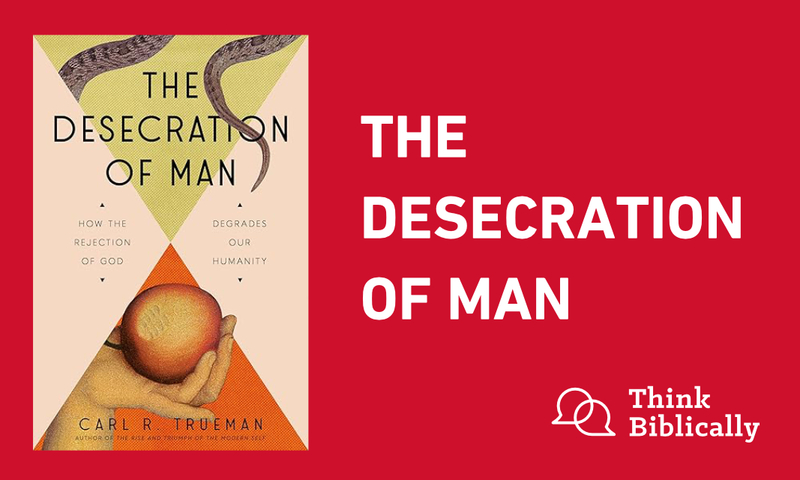
Has Western culture merely forgotten God, or is the problem even deeper? In his remarkable new book The Desecration of Man, Dr. Carl Trueman argues that we have reached a new point in which culture has not only rejected God, but now desecrates Him. We can see this in the "shout your abortion" movement or the reveling in the mistreatment of immigrants. In this episode, Carl discusses the common thread of dehumanizing people that we see in the Sexual Revolution, technology, and how Christians approach death.
Dr. Carl R. Trueman is Professor of Biblical and Religious Studies at Grove City College in Grove City, Pennsylvania. He earned an MA in Classics from the University of Cambridge, and a Ph.D. in Church History from the University of Aberdeen. He is the author or editor of over a dozen books, and is the co-host of “The Mortification of Spin” podcast.
Episode Transcript
Sean McDowell: [upbeat music] Our guest today, Dr. Carl Trueman, is who I would consider one of the most important Christian thinkers of our time. He's written a book today called The Desecration of Man: How the Rejection of God Degrades Our Humanity. We have him in studio today to have a conversation, and I read your book, Carl, three times carefully, underlined, highlighted it, and I will probably go back through it again 'cause I think it's that important. Thanks for joining us today on the Think Biblically podcast.
Carl Trueman: It's a great pleasure to be here, and, you've read the book more often than I have, I think. [laughs]
Sean McDowell: Fair enough. Well, we'll get into why, but I think it's eye-opening. I think it's interesting. I think it's relevant. It, it shifted a couple things in my mind. But let's just start with the title. It's provocatively called The Desecration of Man. What do you mean by desecration, and can you give us some cultural examples, if you will?
Carl Trueman: Well, the background to the title Desecration of Man, partly it's, a little homage to C.S. Lewis because, who wrote famously The Abolition of Man.
Sean McDowell: Yeah.
Carl Trueman: And partly it's, it's an attempt to supplement, the current, tendency among a lot of Christian thinkers to talk about the world as being disenchanted. The idea is, that the world has lost its magic and has lost its depth. And I think that's certainly an insight into the way we live today. We all feel the world is less mysterious. It's less magical. It's less enchanted. But it doesn't fully explain all of the aspects of modernity, and indeed, it doesn't explain some of what I consider to be the most important aspects of modernity. And one example that I use in the book is the language that surrounds abortion. In the 1990s, the language for abortion was that it should be safe, legal, and rare, which is... There's a sense of sort of regret in that language.
Sean McDowell: Yeah.
Carl Trueman: It's, okay, the world is not as it should be. Sometimes we have to do things that we would rather not do, but if we've got to do those things, then let's make sure that they're safe, make sure that they're regulated by the law, and make sure that they're rare. They don't happen very often. In the 30, 35 years since that phrase was popular, we've seen this remarkable turnaround such that abortion is now something that people are to be proud of. They- ... Shout their abortions. They wear sweatshirts proclaiming that they've had an abortion. We had the very bizarre situation a year or two ago where there was a man who wanted to become a woman so that he could get pregnant and have an abortion. There is a, an exhilaration-
Sean McDowell: Yeah
Carl Trueman: ... A celebration involved in this, well, I would say destruction of humanity. The, the category of disenchantment doesn't really allow us to explain, so I latched onto desecration as a way of trying to capture the exhilarating, intentionally destructive nature- ... Of so much of what we now do as human beings.
Scott Rae: So in the very beginning part, you sort of frame the book around Friedrich Nietzsche's madman.
Carl Trueman: Yeah.
Scott Rae: Tell us a little bit about, for those that aren't familiar with Nietzsche, what the madman represents-
Carl Trueman: Yeah
Scott Rae: ... And how that, how that helps frame where you're going with the book.
Carl Trueman: Yeah. Well, Friedrich Nietzsche, for those not familiar with the name, was one of the great 19th century atheist philosophers. Not well known really during his own day. He's become much more significant in the, in the century or so since his death in 1900. Nietzsche was also a great writer. He didn't write tedious philosophical tomes. He wrote with a real literary flair.
Scott Rae: Yeah.
Carl Trueman: And in one of his works, The Gay Science, he has this parable, as he calls it, the parable of the madman, where he tells this story of a madman who runs into a town square in the middle of the day, holding up a lantern. Even though the sun is shining, he's holding up a lantern. So he's clearly a lunatic, and he berates the people who are gathered in the town square, who happen to be atheists. He berates them with the declaration that God is dead. God does not exist anymore. And the men in the town square, they're, they're confused by this, and they laugh at him. It's a sort of, "Of course he's dead. What are you going on about?" And the madman says, "No, you don't understand. God is dead because we killed him. We've intentionally got rid of him." And then the madman goes on to say, you know, and I summarize here, essentially saying something like, "You can't carry on as if everything is the same when you've got rid of God. If you get rid of God, then you really have to get rid of everything that was once built upon God. In fact, you have to become gods yourselves. You have to decide what the values are that you live by. You have to decide what the meaning of your life is. You have to overcome the suffering that comes your way and make it serve your purpose." and that's both a terrifying responsibility because it means we have to rise to be gods, but it's also exhilarating as well because we have to rise to be gods. And that language of, you know, God is dead because we have killed him, that's exhilarating language. You know, what greater sense of power could a human being have than having the blood of the divine on his hands? And so Nietzsche's really throwing out a challenge there to atheists and saying essentially, "You can't be a polite atheist."
Scott Rae: [laughs]
Carl Trueman: "You can't be an atheist and then just carry on as if Christian morality, human nature, is true and unchanged by the death of God. No. Now everything's up for grabs. You have to rise and become gods yourselves."
Scott Rae: I take it this was part of the metaphor where his cut flower civilization co-comes from.
Carl Trueman: Yeah. Yes.
Scott Rae: And rec-recognizing that we can't, you can't have the benefits of the beauty of those flowers when cut off from the roots.
Carl Trueman: Absolutely.
Scott Rae: Mm-hmm.
Carl Trueman: It's a sort of-- Nietzsche's really calling the bluff on the Enlightenment. What he's essentially saying, and I think he's probably got somebody like Immanuel Kant in his, in his crosshairs here. He's essentially saying, you Enlightenment philosophers can't get rid of God without fundamentally revising your understanding of morality, human value. You know, underlying it all is this idea that, you know, he, Nietzsche looks at somebody like Kant and thinks, "He's got rid of God, but he smuggled something back in-
Scott Rae: Yes
Carl Trueman: ... To do the job that God once did, human nature." Actually, no. You can't even talk about human nature now. Human nature is not something objective and given to us that we have to conform to. We get to decide as individuals what our nature is, what is good for us, what is bad for us.
Scott Rae: So how does that connect-- How, how does that also capture the cultural moment we're in at present?
Carl Trueman: Well, of course, the challenge then becomes, how do I know that I am acting in an authentic way? You know, Nietzsche would say, "How do you know you're not going along with herd morality?" Well, the answer is transgression. By smashing through the things that the old God put in place, we demonstrate our independence from him. We get that buzz of knowing that, well, we ourselves are gods because we are riding a coach and horses through the things that God set up as barriers to hem us in. So it tilts strongly towards a kind of transgressive view of what it means to be human. I'm at my most authentic when I'm breaking the rules. And you think about, you don't have to read philosophy. You could just switch on the TV and watch reality television at this point.
Scott Rae: [laughs]
Carl Trueman: What is, what are the set of values that reality television thrives on? It's values of transgression.
Scott Rae: Right.
Carl Trueman: It's people behaving, we would say, you know, using the old-fashioned morality, people behaving badly. That's what we like to see. Those are the people that we idolize in our culture now.
Sean McDowell: So you talk about how this is kind of on the left and on the right, and I appreciate that this is not a political book.
Carl Trueman: No.
Sean McDowell: You're trying to analyze culture. Some of the critiques you give that would maybe be categorized more on the left would be shout your abortion-
Carl Trueman: Yeah
Sean McDowell: ... Or drag queen story hour, and there's a great example here how this is just kind of flaunting gender. It's targeting children.
Carl Trueman: Yeah.
Sean McDowell: There's the desecration element of it. One of the examples on the right was not just that we are, hold a certain view of immigration, but we almost celebrate and revel in the mistreatment of immigrants. Now, when I read that, I thought, is there a difference between desecration like shout your abortion-
Carl Trueman: Yeah
Sean McDowell: ... And just being cruel to people? So is that the same kind of desecration, and are there other examples on the right that make your point, or is it more largely a phenomena that we see on the progressive left?
Carl Trueman: I think we s- we see it. Certainly, if you're a Christian, you'll tend to have seen it on the progressive left.
Sean McDowell: Yep.
Carl Trueman: That's where American evangelicalism tends to, tends to see the problem.
Sean McDowell: Mm-hmm.
Carl Trueman: But it definitely exists on the right as well, and the example I use in immigration is, you know, it's one thing to be calling for, I would say, you know, sober and appropriate immigration policies. It's one thing to want strong borders. It's another thing to post pictures online of children of immigrants- ... Being carried off by ICE and taking joy in the pain and the fear in those children's eyes. Now, one might turn around and say, "But it's the parents' fault that the children are in that situation." Okay, one could argue that case. But even so, I take no pleasure in the suffering of a child-
Sean McDowell: Yeah
Carl Trueman: ... Even if that child is the victim ultimately of the parents' misdemeanor, not the, not the immigration, services. So, and I think what's going on there is a fundamental failure to recognize the image of God in other people. When we take pleasure in the destruction, be it emotional or physical, of other people, we're taking pleasure in the destruction of the image of God. Well, what is that? That's the ultimate desecration. It's the, it's the thing that makes us feel most powerful. Dostoevsky has a very powerful passage in his, book, Notes from the Dead House, when he's reflecting, you know, he's reflecting on different prisoners there and what's got them there. And there's one very urbane man, and he's puzzled when he discovers that this very urbane, gentlemanly, well-educated, well-spoken man is actually a serial killer.
Sean McDowell: [laughs]
Carl Trueman: Blows his mind. Why did he kill these, so many people? And Dostoevsky's answer is, well, the first man he killed, perhaps he killed him for a reason. It's not to say we approve of him killing somebody, but maybe the other guy cheated at cards or cheated with his wife or something. You could see there's a rationale to the crime. But having killed this other man and got such a buzz from crossing a sacred line, such a buzz of power from destroying the image of God, he had to do it again and again and again. And so there's the, that addictive dimension- ... That feeling of Godlikeness that desecration gives us. So, you know, one example on the right would be the rejoicing in the suffering of little children at the moment. Another example might be the treating of other human beings simply as pieces of garbage. I think that, you look at the X accounts of politicians on the left and right, and look at how they talk about people with whom they disagree. They rarely talk about them as flesh and blood human beings. They talk about them as things, as an aggregate of ideas that they happen to disagree with. That, too, is a form of desecration, the denial of the full humanity of somebody else.
Scott Rae: And you contend that throughout the book that the question of what's a human being-
Carl Trueman: Yeah
Scott Rae: ... Questions of anthropology are the central, not only theological, but central cultural and philosophical question of the day.
Carl Trueman: Yeah.
Scott Rae: Why, why is that so central, and how typically do you see our culture answering that today?
Carl Trueman: Yeah. Well, I came across the, what I call the anthropological problem, really in my earlier work when I was exploring how did transgenderism become so plausible. I was puzzled that, you know, the statement, "I'm a woman trapped in a man's body," would've been regarded as completely nonsensical by my grandfather. He, he died in the early '90s. He was fairly, you know, died fairly recently in the sweep of history, and yet today would be seen as intuitively true by a lot of people. And I came to the conclusion that you couldn't answer that question completely in isolation. It's ultimately not a question about gender. It's a question about human embodiment, how the body connects to what it means to be a human being. It's a much deeper question of what does it mean to be a human being, and how has that question become problematic in our day? I think a number of reasons. One, as I've argued in earlier books, over the last 4 or 500 years, we've increasingly come to identify ourselves with our inner feelings. Rather than seeing our identity as located in fixed social relations or localities or family callings, we've tended to see the continuity in our lives as being provided by our inner life, our inner feelings. And secondly, we have the role of technology. Teleology, the idea that human beings have an end or a set of ends, has been fundamental to understanding what it means to be a human being. I'm a Presbyterian, and you know, the first answer of the Westminster Shorter Catechism-
Scott Rae: That's right
Carl Trueman: ... What is the chief end of man? Man's chief end is to glorify God and enjoy Him forever. So-
Scott Rae: Amen
Carl Trueman: ... To be a human being is to have that end, glorify God and enjoy Him forever. What technology's allowed us to do is think that, like the madman's challenge, we can invent the ends for ourselves. I have the, I have a male body, but that need not impose any teleology upon me because technology allows me to take hormones-
Scott Rae: Mm-hmm
Carl Trueman: ... And have surgeries that, you know, allow me to think that I'm a woman. So technology has played a huge role in scrambling teleology, and that has a deep knock-on effect, on how we understand what it means to be human.
Scott Rae: That's great.
Sean McDowell: One of the examples you gave in the book that I found especially helpful was to compare how over, like, the past 25 years, how somebody would ground their identity has changed more than probably, like, throughout the history of the world. [chuckles]
Carl Trueman: Yeah, yeah.
Sean McDowell: So you take someone in England in the 12th century and the 13th century, and really nothing has changed that dramatically about how they ground themselves, and yet with AI and other technologies, things might shift within six months or two years or-
Carl Trueman: Yeah
Sean McDowell: ... Three years. Will you kind of explain that and unpack that illustration a little bit for us so our viewers really grasp it?
Carl Trueman: Yeah. Well, if we do a thought experiment and, you know, time travel back to an English rural village in 1200- ... And spend a couple of months there, get to know the people, get to know the rhythm of life. Rhythm of life would be determined by the seasons.
Sean McDowell: Mm-hmm.
Carl Trueman: Get to know the area. Well, people would be tied to the area, probably wouldn't travel more than 40 miles away from their place of birth during their entire life.
Sean McDowell: Amazing.
Carl Trueman: If you were to ask somebody in that world, "Who are you?" They'd give a very straightforward answer. "I belong to this family. We live in that part of the village. We are the bla- local blacksmiths," or, "We're the local farmers. We till this land here. Oh, and by the way, I was baptized, I got married, and I'll be buried in that church just down the road." All of the things that are important to defining who we are are fixed. And if you were to go forward to 1300 or 1400, the faces would've changed, but by and large, the rhythm of life would remain- ... The same. Then you move to 1600. 1500, 1600, things are starting to change. Take the invention of the printing press.
Sean McDowell: Mm-hmm.
Carl Trueman: Suddenly you're living in this village, but you hear word that, man, you can make good money by moving to the city- ... And learning how to print, becoming part of a printer's, setup. Well, over the next few centuries, of course, the printing press is only one of the technological innovations. You get to the 19th century, the Industrial Revolution, everything's changing. People are moving from the countryside into the cities. Families are getting-- The, the network of family connections is getting smaller. The ability to move around is getting more and more, possible. Everything that once fixed your identity is now up for grabs. Now move into the 21st century and as you pointed out, Sean, you know, in the last 10 or 15 years, we haven't just had the invention of the printing press. We're getting the equivalent of the printing press being invented every three or four months. I was sitting in the airport yesterday or the day before and looked around, and everybody in the departure lounge was staring at a tiny little screen.
Sean McDowell: Yep.
Carl Trueman: And I'm thinking, "Wow, this scene would've been impossible to imagine 15 years ago," and yet now it's quite normal. 15 years ago, people might have been talking to each other. The, the departure lounge might have been animated by the buzz of conversation. Now it's this silent scrolling that's taking place. That's not incidental to who we are. How we think about life is increasingly mediated through a tiny handheld screen. And who knows what's coming next?
Sean McDowell: That's right.
Carl Trueman: Who knows what's coming next?
Scott Rae: So one thing I appreciate about the book is you move, you move from the general to the specific in the second half, and you apply some of these, some of the anthropology that you lay out in the sexual revolution to end of life and other, controversial areas. So let's, let's, let's look at the sexual revolution for a moment. How is, how is this, the sexual revolution rooted in this more contemporary understanding of human nature? And we've, you've talked about technology already, but, technology has a lot to do with that-
Carl Trueman: Yeah
Scott Rae: ... In this regard too.
Carl Trueman: Yeah.
Scott Rae: So, let me hear... I'd love to hear your thoughts on sort of both those things.
Carl Trueman: Yeah. Well, first of all, you know, if we think about the nature of sexual desire, it's a hardy perennial of human existence. There i- there's a reason why, you know, when I talk to students at Grove City College, we talk about the Iliad, let's say. We can understand the Iliad. It's, you know, it's from many centuries before Christ. But it's dealing with a basic perennial story of one man sexually desires another man's wife, runs off with her. The jilted guy gets together with his brother, heads overseas to get his wife back. We can understand the basic dynamics of the story. Why? Because sexual desire and sex is powerful. That's a perennial-
Scott Rae: Mm-hmm
Carl Trueman: ... Of human existence. And that tells me that when, thinking about what sex is and how it works changes, something very fundamental is going on in how we think about what it means to be a human being. Now, there's always been sexual transgression. The Bible is full of examples of sexual transgression and is full of laws against sexual transgression. If there was no sexual transgression in the Bible times, there'd be no need for those laws, no basis for those stories. But certain kinds of sexual behavior were always regarded as transgressive. The norm was one man, one man leaves his mother and father, becomes one body with a woman, they have children. That was the norm. Think about how that's changed in recent years. Sexual revolution, I would say, doesn't just represent a shift in sexual behavior. It represents a fundamental shift in sexual attitudes. Sex has ceased to be a u- a seal on a unique relationship between one man and one woman, primarily for the purpose of reinforcing that union and the production of children, and has moved to being thought of as recreation.
Scott Rae: Mm-hmm.
Carl Trueman: Now again, sex as recreation, that's not a new thing. The difference between now and, say, 200 years ago is 200 years ago, you had to be wealthy to get away with sex- ... As recreation.
Scott Rae: [chuckles]
Carl Trueman: You know, the English royal family, they could do it and get away with it.
Scott Rae: Mm-hmm.
Carl Trueman: The average man or woman in the street, they might like to have thought of sex as recreation, but they couldn't act on that thought because she's gonna get pregnant. He's gonna get a nasty disease. There are gonna be serious biological, social consequences. But now we have technology. We have easy access to contraception, plenty of antibiotics out there to deal with those unpleasant diseases, abortion if you do get pregnant.
Carl Trueman: That's allowed us not only to think that sex is mere recreation, it allows us to act as if sex is mere recreation, and that involves a fundamental transformation of what it means to be human. And one of the interesting statistics that I'm told by friends who work in the pro-life area is this. When, when the pill was legalized, you would've expected the number of abortions to drop. Actually, the number of abortions goes up. Well, ask yourself, why is that the case? I would say because the social imagination of what sex is shifts so that pregnancy comes to be seen as an unfortunate accidental byproduct, a problem, and not the actual end or purpose. So sexual revolution involves fundamental revision of what sex means, not simply an expansion of what you can do sexually, and, in the process involves a fundamental revision of what it means to be a human being.
Scott Rae: Let me follow up on that-
Sean McDowell: Yeah, do it
Scott Rae: ... Briefly. If I heard you correctly yesterday-
Carl Trueman: Yeah
Scott Rae: ... You know, with our faculty, you seem to have some sort of, some guarded allowance for some forms of contraception.
Carl Trueman: Yeah.
Scott Rae: I take it, I take it what you meant by that was the ones that are abortifacient are problematic, and the ones that are genuinely contraceptive would be-
Carl Trueman: Yeah
Scott Rae: ... Would be acceptable.
Carl Trueman: There are two-
Scott Rae: Did, did I, did I hear you correctly on that?
Carl Trueman: Yes. I mean, what I would say about my own position at this point in time is, one, I would certainly say abortifacients are wrong. In terms of non-abortifacient forms of contraception,
Carl Trueman: I think I'm a work in progress. What I would say is that I don't think Protestantism wrestled with the issue at the depth it should do, that the issue of contraception sort of passed almost by accident into Protestant culture after the Lambeth Conference of 1930, I think it was. And very few of us Protestants, and I include myself in that, have thought very deeply about the issue at all. I think Catholics,
Carl Trueman: Catholics are able to knock us from pillar to post on that because we haven't thought about it deeply enough. Certainly abortifacients are wrong. Whether non-abortifacient forms of contraception are wrong, I'm a work in progress on that.
Scott Rae: Okay.
Carl Trueman: But I would still say they're only ever legitimate within the context of a marriage.
Scott Rae: Of, of course.
Carl Trueman: So still would not legitimate sex as pure recreation.I'll come back, I'll come back, I'll come back to that in a minute
Sean McDowell: I would love to have that conversation with you separately. I'm a work in progress, too, and I've not seen good Protestant answers-
Carl Trueman: No
Sean McDowell: ... To some of the Catholic theology of the body, not to mention you only have the effects of contraception-
Carl Trueman: Yeah
Sean McDowell: ... Like the pill, et cetera, but the in-principle argument itself. But that's a separate issue that would take us aside for now. You also talk about pornography-
Carl Trueman: Yeah
Sean McDowell: ... And how that revolution, the accessibility of pornography, now-
Carl Trueman: Yeah
Sean McDowell: ... AI with pornography and through social media is changing so many things. But you criticize pornography and sexual activity outside of marriage partly because they deny the unitive and procreative functions of sex and thus turn sex into a solely or primarily recreational activity-
Carl Trueman: Yeah
Sean McDowell: ... Which turns people into objects and-
Carl Trueman: Yeah
Sean McDowell: ... Commodities.
Carl Trueman: Yeah.
Sean McDowell: That's kind of the heart of the case you make.
Carl Trueman: Yeah.
Sean McDowell: Everyone would agree with it. How and why do you marshal a similar criticism against IVF? What's the root of your concern with IVF?
Carl Trueman: Yeah, a number of concerns with IVF. One, there is a definite connection between IVF and eugenics. That IVF encourages us to think about children as things that we design and purchase. IVF must ultimately press society towards thinking about what lives are worth living and which, what lives are not worth living. As soon as we take control of conception at that level, when we're effectively tinkering with what it means to be a human being, the tendency will be towards a sort of master race thinking about children. We already see that to some extent in a place like Iceland, where Iceland famously boasts that it has eliminated Down syndrome.
Sean McDowell: Yeah.
Carl Trueman: Whereas what Iceland has actually done is decided that babies in the womb with Down syndrome are unworthy of life and therefore should be eliminated. I would say a more honest approach is say we've eliminated persons with Down syndrome, not we've eliminated Down syndrome. So my concern about IVF is, again, the commodification of children, the eugenics that lie behind it. Now, when I wrote that chapter, I thought, "This is the chapter that I'll get most hate mail from."
Sean McDowell: You wrote that in there. [laughs]
Carl Trueman: Yeah, it's the one that I'll get into trouble for because it's easy for a man who found it easy to have children with his wife-
Sean McDowell: Yep
Carl Trueman: ... To say the things I said. Couples who are childless and are desperate for children, heartbreaking situation. And I can see the pull, the attraction of IVF there. And the way I, the way I look at it is this. It's, it's the couple desire a good thing.
Sean McDowell: That's right.
Carl Trueman: What they need to do is reflect upon the wider implications of how society thinks about children concerning the specific line of or course of action that they are, attempting to approach. And, and I would recommend, you know, don't listen to somebody like me on it. Get hold of the work of Elizabeth Kirk, a wonderful professor- ... At Catholic University of America, wonderful person, who herself, she and her husband struggled for many years with infertility. She's very opposed to IVF, and she can write with authority on that issue in a way that a man like myself lacks that personal authority to speak to it.
Sean McDowell: That's great. Super helpful. Can I push in on one thing here?
Carl Trueman: Yeah.
Sean McDowell: So the concern tied to eugenics, I think all people would share that it turns individuals into commodities-
Carl Trueman: Yeah, yeah
Sean McDowell: ... That are human beings. There's also the concern tied to a theology of the body, like what is the body? What is the purpose of the body?
Carl Trueman: Yeah.
Sean McDowell: And is there a built-in design and intention-
Carl Trueman: Yeah
Sean McDowell: ... For fertilization? And IVF, the term test tube baby-
Carl Trueman: Yeah
Sean McDowell: ... I think you say in the book, [laughs] is not entirely false where fertilization takes place. So it's also your concern that there's an in-principle reimagining what fertilization is supposed to look like, sexual reproduction, ties to eugenics aside.
Carl Trueman: Yes, I think so, and I would go to the, I think the very provocative and helpful title of Oliver O'Donovan's little book, Begotten or Made, and he makes a distinction there between, you know, do we think of children as begotten, or do we think of them as made? I would say, in other words, do we think of them as mysterious creations that we mysteriously beget, or do we think of them as products that we make? And that, I think, touches on something really very important there. Let me-
Sean McDowell: Yeah, go for it
Carl Trueman: ... Pursue that a little bit further-
Sean McDowell: Yeah, sure
Carl Trueman: ... If I might. You describe dehumanizing as essentially treating a person as a thing-
Sean McDowell: Yeah
Carl Trueman: ... And treating them as a means to an end-
Sean McDowell: Yeah
Carl Trueman: ... Not an end in themselves. And so take this, for example, and full disclosure here, this is one of the areas that Sean and I have a... We don't have too many significant differences, but this is one of them.
Sean McDowell: It is, yeah.
Carl Trueman: So let's, let's take the IVF situation. You've got an infertile couple.
Sean McDowell: Yeah.
Carl Trueman: You know, my wife and I didn't go down the IVF road, but we definitely went down the infertility road.
Sean McDowell: Yeah, yeah.
Carl Trueman: And the, you know, the angst and-
Sean McDowell: Of course
Carl Trueman: ... Things you describe is very real. But a, you know, a couple wrestling with infertility for whom IVF is the indicated treatment.
Sean McDowell: Yeah.
Carl Trueman: And just to be clear, I have huge problems with the standard of practice-
Sean McDowell: Right
Carl Trueman: ... In IVF, but I'm looking at more the idea of conceiving a child outside the womb intrinsically. It seems to me if the, if the child or the embryo-
Sean McDowell: Yeah
Carl Trueman: ... Which they would r- which they regard as a child-
Sean McDowell: Yeah
Carl Trueman: ... W- and as they rightly-
Sean McDowell: And I would regard as a child as well
Carl Trueman: ... As they rightly, as they rightly should.
Sean McDowell: Yeah, yeah.
Carl Trueman: And they, the child is desperately wanted-
Sean McDowell: Yeah
Carl Trueman: ... And will be loved and brought into, brought into the same kind of family environment-
Sean McDowell: Yeah
Carl Trueman: ... That he or she would have had they been conceived naturally.
Sean McDowell: Yeah.
Carl Trueman: Where it's, it's hard, it's hard for me to see how that child is being dehumanized.
Sean McDowell: Right.
Carl Trueman: So help me with that.
Sean McDowell: Yeah, and I think the interesting aspect to that is, you know, I've had this response when I've spoken on this. Somebody come up to me afterwards and said, you know, "We had our child by IVF. Are you saying my child's not a human being?"
Carl Trueman: Yeah.
Sean McDowell: And absolutely not.
Carl Trueman: Of course, of course not.
Sean McDowell: I don't, I'm not talking about dehumanization-
Carl Trueman: Yeah
Sean McDowell: ... In that way. I'm thinking about the general way in which society imagines children to be, that they start to become
Carl Trueman: Products, they start becoming a thing. That's not to deny the very real love that the couple who've conceived a child through IVF have for that child. Not, not at all is it to deny that. It's to look at the broader social framework that's being developed that could lead to very bad consequences on a broader front. So that's what I'm thinking about.
Scott Rae: Yeah, and I would certainly agree that, you know, the eugenic-
Carl Trueman: Yeah
Scott Rae: ... Temptation-
Carl Trueman: Yeah
Scott Rae: ... Is one that we should have done away with back-
Carl Trueman: Yeah
Scott Rae: ... In the-
Carl Trueman: Yeah
Scott Rae: ... You know, around the turn of the 20th century-
Carl Trueman: Yeah
Scott Rae: ... When it really got started.
Carl Trueman: Yeah.
Scott Rae: I'm not convinced that that's a necessary part of what-
Carl Trueman: Right
Scott Rae: ... IVF involves.
Carl Trueman: And I, you know, if I could ... I wouldn't say put the case against me, but if I were to alter the terms of debate, I would say, you know, no-fault divorce does a similar thing to children actually.
Scott Rae: Yeah.
Carl Trueman: Because no-fault divorce-
Scott Rae: Yeah
Carl Trueman: ... Treats children as a problem to be solved after the parents are separated.
Scott Rae: No, I-
Carl Trueman: No-fault divorce-
Scott Rae: Mm-hmm
Carl Trueman: ... Has to treat them in the same way that, you know ... Yeah, I was gonna say, who gets the dog after we divor-
Scott Rae: Yeah
Carl Trueman: ... Get divorced? Well-
Scott Rae: Yeah
Carl Trueman: ... It's, it's more emotionally intense perhaps, but who gets the children? You are reducing children in no-fault divorce. So I certainly don't want to be read as saying IVF is unique in the way it tilts the culture to think about children. There are many aspects of our culture-
Scott Rae: Yeah
Carl Trueman: ... That do that
Scott Rae: And I thi- I mean, I would admit, it does, it does open the door-
Carl Trueman: Yeah
Scott Rae: ... I think, to the eugenic temptation. Um-
Carl Trueman: A more, a more dramatic-
Scott Rae: But, but-
Carl Trueman: ... Example, of course, provided by surrogacy. And I use the example in the book of, Baby Gammy, who was, conceived by surrogate for an Australian couple. And then it was discovered that Baby Gammy, I think had Down syndrome, and it led to this on long-running legal debate about who the parents were.
Scott Rae: Yeah.
Carl Trueman: The, those who'd provided the genetic material-
Scott Rae: Right
Carl Trueman: ... Or the woman who was carrying the child. And ultimately, the courts decided it was the woman carrying the child. The, the parents had wanted her to have an abortion, and she refused and brought the child into the world and is bringing the child up. And that's, you know ... If you're looking for a modern Handmaid's Tale that objectifies-
Scott Rae: Something like that
Carl Trueman: ... Woman and objectifies children, you know, it's, it's-
Scott Rae: Yeah
Carl Trueman: ... Not, The Handmaid's Tale. It's surrogacy that-
Scott Rae: Let me pursue one more thing
Carl Trueman: ... You're doing there
Sean McDowell: I know I've got some questions too, but go for it. You're the boss.
Carl Trueman: This is fun.
Scott Rae: No. [laughs]
Sean McDowell: I know.
Carl Trueman: I'm enjoying this. [laughs]
Scott Rae: Only for, only for a short time.
Sean McDowell: Do it. Do it.
Scott Rae: Listen, to go back, to go back to your contraception.
Carl Trueman: Yeah.
Scott Rae: I mean, it seems to me that one of the things the acceptance of contraception does-
Carl Trueman: Yeah
Scott Rae: ... And I admit, you, if you're still a work in progress-
Carl Trueman: Yeah
Scott Rae: ... I'll, I'll give you some grace on that. But, the contraception does separate the unitive and procreative-
Carl Trueman: Yeah, it does
Scott Rae: ... Aspects of sex. And I ... And, or it makes the, it makes the, it makes the, bringing those t- having to have those always be together-
Carl Trueman: Yeah
Scott Rae: ... It makes that less of an absolute.
Carl Trueman: Right.
Scott Rae: And so that there would be situations where it would be justifiable to separate the unitive and procreative aspects of sex. So if that's the case for contraception-
Carl Trueman: Yeah
Scott Rae: ... Why wouldn't that be the, also the case on the other side of the coin-
Carl Trueman: Right
Scott Rae: ... When it comes to separating procreation-
Carl Trueman: Yeah
Scott Rae: ... From normal sexual relations?
Carl Trueman: Because I think it separates procreation dramatically from the unitive. I mean, I ... That's what I would say, that the purpose of sex is, you know, the man and woman become one flesh. The unitive, I suppose in my thinking, has priority at that point. And procreation becomes a function of the unitive but not always a function of the unitive. Now, a Catholic would push back and say-
Scott Rae: Of course
Carl Trueman: ... You're separating the two. But I would say they're not parallel instances.
Scott Rae: Yeah, I wonder what you, what you would make of this because it seems to me that God has ordained a natural separation of the unitive and procreative-
Carl Trueman: Yeah
Scott Rae: ... Aspects of sex with the phenomena of menopause. And I take it that, for example, in Genesis, Abraham's wife, Sarah, was shocked and-
Carl Trueman: [laughs]
Scott Rae: ... Thought it preposterous-
Carl Trueman: Yeah
Scott Rae: ... That she could conceive at her adva-
Carl Trueman: They were still making love by the signs of it
Scott Rae: ... At that, at that age.
Carl Trueman: Yes. Yeah.
Scott Rae: So what that suggests to me is that menopause is something that is part of the natural order-
Carl Trueman: Yeah
Scott Rae: ... Of things-
Carl Trueman: Yeah
Scott Rae: ... And not a result of the general entrance of sin.
Carl Trueman: Right.
Scott Rae: So if menopause is a God-ordained separation-
Carl Trueman: Yeah
Scott Rae: ... Of that, then why would contraception be problematic, as long as it's not abortifacient-
Carl Trueman: I think that's a good-
Scott Rae: ... And on the other end-
Carl Trueman: That, that's a good argument, and that's certainly something I would want to take into account when thinking about contraception. As I said, I'm not willing to concede as yet to my Catholic friends that the unitive and the procreative have to always be held together. I think that in the same way that I think, you know, we can eat food, but eating food is not just about replacing calories. There are all kinds of other things that flow from a good meal. So yeah, that would probably be, the strongest-
Scott Rae: I've actually tried that out on a-
Carl Trueman: ... Strongest outlines
Scott Rae: ... On a handful of my Catholic friends.
Carl Trueman: Did it work?
Scott Rae: No.
Carl Trueman: [laughs]
Scott Rae: Yes, it ... They had no, they had no answer for it.
Carl Trueman: Oh, that's good. I'll have to remember that next time in conversation.
Scott Rae: So I think I'll-
Carl Trueman: I'm gonna take the win here.
Sean McDowell: No. No, no.
Carl Trueman: [laughs]
Sean McDowell: I wanna, I wanna circle back on that food, that last one you made later. The Catholic response would be just because there's a God-ordained separation doesn't mean we can choose to add a separation for desires and times that we want. That would be the Catholic response to that.
Scott Rae: And there is a Protestant response to that too.
Sean McDowell: And so just putting it out there.
Scott Rae: Yeah, I understand.
Sean McDowell: And the one before, your question about how does it dehumanize the unborn, in Conceived by Science, Stephanie Gray Conner says, "Part of being human is that we are designed to be conceived inside our mom and our dad, and kids have the moral right to be the result of a lovemaking between mom and dad and conceived naturally through that process."To remove it in a test tube that we control rather than mystery is a kind of dehumanization. Now again-
Carl Trueman: That-
Sean McDowell: Whether there's a response to that or not-
Carl Trueman: That's, that's-
Sean McDowell: We're somewhat-
Carl Trueman: That's a tough one
Sean McDowell: ... Getting aside.
Carl Trueman: That's a tough one to get your, to get my arms around.
Sean McDowell: So fair enough. But I think-
Carl Trueman: So but anyway, yeah, I've, I've-
Sean McDowell: Both of us want to keep going down this
Carl Trueman: ... I'm off my hobby horse.
Sean McDowell: Okay, so fair enough.
Carl Trueman: Thanks for, thank you.
Scott Rae: It's fun seeing the two of you-
Carl Trueman: Thank you for having me on there
Sean McDowell: ... Oh, man. We had a whole conversation about IVF back and forth, and I'm, I'm still in process on some of these things.
Carl Trueman: Yeah.
Sean McDowell: Leaning more towards a Catholic position-
Carl Trueman: Yeah
Sean McDowell: ... Because I think they're far more consistent as a whole, but still in process. Let's move to something totally different. You also talk about, how Christian approaches to death sometimes mirror the secular world.
Carl Trueman: Yeah.
Sean McDowell: So what do, what is the secular world's approach, and how do Christians sometimes mirror this? And I realize this is a complicated question. You got this.
Carl Trueman: Yeah.
Sean McDowell: But what's the secular world's approach? How do we mirror it? How should we actually deal with death?
Carl Trueman: Right. I think the secular world, you know, responds to death in various ways, but one might say primarily by trivializing it or marginalizing it, pretending it doesn't happen. And I think in the Christian circles, the rise of the phenomenon of celebrations of life as funerals would be one good example. Now, again, I certainly don't want to be implying that somebody who had a celebration of life for their dear beloved late father is sinning in that. But I would ask the question of why use the language celebration of life? If the life was worth celebrating, surely the death is worth mourning. We need to understand that death is catastrophic. Death leaves those left behind reduced. I mentioned in, I think it was in chapel this morning at Biola, the first account we have of weeping in the Bible is Abraham going in and weeping for his wife Sarah. And I made the comment there that of all people on the face of the planet at that moment in time, Abraham knows the answer. He knows the covenant God-
Sean McDowell: Interesting
Carl Trueman: ... And he knows that God is going to be bringing things to a satisfactory conclusion, and yet he weeps for the loss of his wife. And the application I drew this morning was it's okay to weep and lament when a loved one dies, and I think we as Christians need to, we need to face up to death as the horror that it is, and not take the temptation of the therapeutic temptation of trying to make it something other than that.
Sean McDowell: That's great. That's, that's really helpful, and I think we can see Ernest Becker, who talked about the way we don't take death seriously, is even the language we have. Passing away-
Carl Trueman: Yeah
Sean McDowell: ... And no longer with us-
Carl Trueman: We have all sorts of euphemisms for it
Sean McDowell: ... Is a reflection of trivializing it, but not really coming to grips with the weight of what death is.
Carl Trueman: Right.
Scott Rae: How do you balance that with the biblical notion that death is a conquered enemy?
Carl Trueman: Yeah. Well, I think, we mourn, but not as those without hope. I think, you know, my, when my father died, I was reduced. I'm still reduced. I'm still less of a person than I was when he was alive. And it's right to mourn and lament that. Even though I know that that could well be put right at the end of time, in the interim, I mourn and lament him. Think of a more trivial example. You know, when you're traveling and you're away from your wife, if you were to say to your wife, "Well, I was away from you, but frankly, it didn't care. It didn't have any effect on me"
Scott Rae: [laughs]
Carl Trueman: ... Your wife would say, "Wow, our relationship is dysfunctional in some pretty deep and profound way." And I would want to say, if you can simply shrug your shoulders at the death of a loved one, then they weren't really a loved one, because our loved ones make us who we are. When they're torn from us, we're reduced by that. So we mourn as Abraham mourned, but Abraham had, he had a resurrection hope. Christ himself says, "Abraham saw my day and rejoiced."
Scott Rae: Mm-hmm.
Carl Trueman: Abraham knew what was coming, but even so, the remaining days of his earthly life, he was a less of a person because his beloved Sarah had been taken from him.
Scott Rae: One, one thing I've not- I spent about 15 years consulting at the bedside for- ... Hospitals on ethics, and one thing I saw, particularly among believing families, was this tenacious desire to hold on-
Carl Trueman: Right
Scott Rae: ... To their loved one when the prognosis was very bleak.
Carl Trueman: Right, right.
Scott Rae: And they, what they were really doing was just delaying an inevitable and-
Carl Trueman: Yeah
Scott Rae: ... And sort of semi-imminent homecoming.
Carl Trueman: Yeah, yeah.
Scott Rae: And I've oft- I often wanted to say to them, "Do, do you actually believe this stuff that you-
Carl Trueman: Yeah
Scott Rae: ... Say you believe about eternity and resurrection and, you know, and the hope of the gospel?" And I wonder if there's, if there's some sort of dehumanizing of our loved ones at the end of life when we make decisions based on what's best for us-
Carl Trueman: Right
Scott Rae: ... Because we don't want to let them go, as opposed to what might be best for them.
Carl Trueman: Yeah, that's a very interesting, comment, and my mind immediately went to something that I used to wrestle with when I was a pastor, and we'd have times of prayer in the evening where congregants were allowed to make prayer requests, and then whoever's leading in worship would offer those prayers to God. And you would get that, occasionally get that question or that prayer request, you know, "My 98-year-old grandmother has had a fall. Can we pray that the surgeons put her back together and she's okay?" And I remember thinking, that's a legitimate prayer. But at what point do we also pray, "But if it's not your will for her to be put to- back together, Lord- ... May she have a safe and as comfortable a passing as possible into the next world." We're unwilling to make those prayers. And I think, you know, whether I'd use the language of dehumanizing about that, I'm not sure. I'd have to think about that. But I do think there is, there's a serious pastoral issue there that we... And when you think about the majority of prayers, in my experience, and I'm as guilty of this as anybody, majority of prayers at-Times of open prayer or prayer meetings, they're often focused on bodily health issues.
Sean McDowell: Right.
Carl Trueman: You know, young and old, we tend to be praying for-
Sean McDowell: That's so true
Carl Trueman: ... Broken arms and bruises and headaches and nosebleeds. Paul doesn't, in his letters, have a lot to say about those things, by and large. He's praying more about the joy and the grace that the saints are growing in.
Sean McDowell: Oh, yeah, but they do, when it gets serious, like with the 98-year-old grandmother-
Carl Trueman: Yeah
Sean McDowell: ... They do pray for a miracle.
Carl Trueman: Yeah. Yeah.
Sean McDowell: And I've often been, I've often been tempted to say, well, if we're gonna go, if we're gonna hope for a miracle-
Carl Trueman: Yeah
Sean McDowell: ... Then let's really go for it-
Carl Trueman: Yeah
Sean McDowell: ... And turn off everything-
Carl Trueman: Yeah
Sean McDowell: ... And trust God for that-
Carl Trueman: Yeah
Sean McDowell: ... And essentially turn the person back over to God.
Carl Trueman: And the great miracle is the resurrection of that person.
Sean McDowell: Of course.
Carl Trueman: That is the great miracle.
Sean McDowell: Yeah.
Carl Trueman: Yeah.
Sean McDowell: Carl, your book before this was on critical theory.
Carl Trueman: Yeah.
Sean McDowell: But critical theory's a little bit like kind of a golden thread that runs through this that you interact with.
Carl Trueman: Yeah.
Sean McDowell: Is critical theory the kind of thing that we can take, I think it was phrased yesterday in the staff meeting in a question to you, kinda chew the meat and spit out the bones?
Carl Trueman: Right.
Sean McDowell: Or is it something that should be completely rejected, and we should just be interested in the questions that motivate people-
Carl Trueman: Right
Sean McDowell: ... To consider-
Carl Trueman: Yeah
Sean McDowell: ... And believe in critical theory?
Carl Trueman: I think there are certain aspects of critical theory that are interesting. Critical theory will tend, for example, to challenge other people, you know, has your philosophy delivered on its own terms? And I think that's a useful approach for Christians.
Sean McDowell: Hm.
Carl Trueman: We look at the sexual revolution and say, okay, sexual revolution-
Sean McDowell: Right
Carl Trueman: ... Promised to liberate women. Has it liberated women? No.
Sean McDowell: Yeah.
Carl Trueman: So I think there are things we can learn from critical theory on that front. I would never use the language of describing it as a useful tool-
Sean McDowell: Yeah
Carl Trueman: ... Or saying, you know, we can, we can chew on the meat and spit out the bones, because for critical theory purists, of course, it stands or falls as a whole.
Sean McDowell: Right.
Carl Trueman: It's not a descriptive or analytic thing. It's a revolutionary thing. The idea is not to describe and explain reality. The idea is to change or transform reality.
Sean McDowell: Hm.
Carl Trueman: What intrigued me about, and this connects to the theme of this book, what intrigued me about critical theory was in 2020, 2021, what I'd always regarded as pretty complicated and obscure branch of the humanities-
Sean McDowell: [laughs]
Carl Trueman: ... Suddenly became the-
Sean McDowell: Yes
Carl Trueman: ... Stock and trade of the internet.
Sean McDowell: It did.
Carl Trueman: Among people who probably never read any critical theory in their lives. Thinking, so critical theory must resonate pretty deeply. Some of its ideas or some of its slogans resonate with-
Sean McDowell: Hm
Carl Trueman: ... Ordinary people out there on the internet. And I came to the conclusion that what resonated was the, its negation.
Sean McDowell: Hm.
Carl Trueman: It loves smashing up that which is.
Sean McDowell: Hm.
Carl Trueman: And that, of course, ties in beautifully-
Sean McDowell: It does
Carl Trueman: ... With the idea of-
Sean McDowell: Hm
Carl Trueman: ... Modernity is committed to desecration.
Sean McDowell: Hm.
Carl Trueman: That's why in queer theory, you'll find the language of desecration popping up.
Sean McDowell: Hm.
Carl Trueman: Because that's what they think they're doing. They're tearing down that which previous generations have considered to be holy and sacrosanct.
Sean McDowell: Hm.
Sean McDowell: We good to go? Any last questions?
Carl Trueman: You know,
Sean McDowell: I mean, I'm sure we could go for hours
Carl Trueman: ... We could, we could go for quite a long time, but I think we should probab- this is probably a good place to stop.
Sean McDowell: Yeah. Good stuff.
Carl Trueman: It's good stuff.
Sean McDowell: Carl, I'll say it again, thoroughly enjoyed your book. I've got it highlighted and underlined. I could show you all through here.
Carl Trueman: [laughs]
Sean McDowell: I would recommend it to our listeners and our viewers as much as any book.
Carl Trueman: I've not, I've not read it-
Sean McDowell: This is probably my wife
Carl Trueman: ... Three times, but I have underlined it.
Sean McDowell: Shame on you. Shame on you. [laughs]
Carl Trueman: I have underlined it thoroughly.
Sean McDowell: Well, he only needs to read it once. He gets it.
Carl Trueman: Yeah.
Sean McDowell: I'm a little slower.
Carl Trueman: [laughs]
Sean McDowell: It takes me a few times.
Carl Trueman: I don't think my wife has read anything I've ever written, even once.
Sean McDowell: [laughs]
Carl Trueman: So she'll read the foreword of this to make sure that I thank her.
Sean McDowell: [laughs]
Carl Trueman: But other than that'll be her interest in it. [laughs]
Sean McDowell: I love that. Well, Carl Trueman, appreciate you being on campus.
Carl Trueman: This is great.
Sean McDowell: Meeting with the staff, meeting with the students, joining us in studio. We'll do it again for sure.
Carl Trueman: Thanks very much. Been lovely to be here in the flesh.
Sean McDowell: Yeah. This has been part of the Think Biblically podcast, conversations on faith and culture. We'd love to have you join us on campus. We have master's programs in apologetics, worldview, theology, ethics, marriage and family, doctoral programs. If you have questions for us, you can send them in to thinkbiblically@biola.edu. Thanks so much for listening, and remember to check out our Friday weekly cultural update. We'll see you then. [upbeat music]