Biola University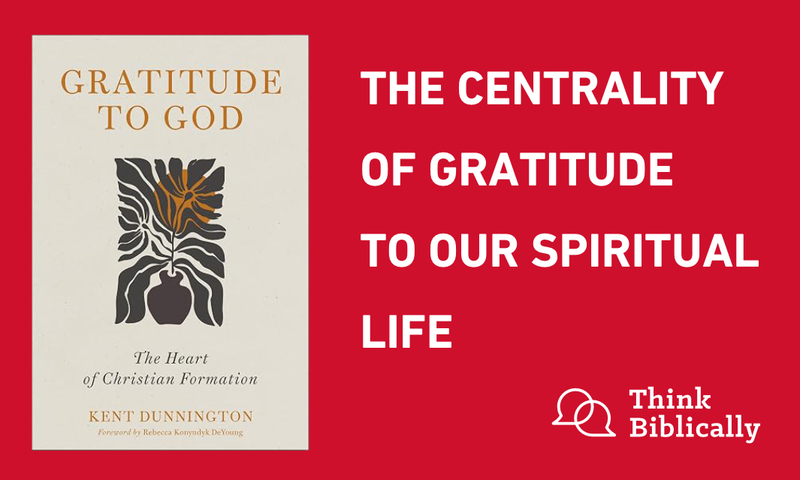
Is gratitude to God the heart of our spiritual formation? What do we make of the notion of a debt of gratitude? How was grace and gratitude viewed in the world of the New Testament? We’ll answer these questions and more with our guest, our Biola colleague in philosophy, Dr. Kent Dunnington, around his new book, Gratitude to God: The Heart of spiritual Formation.
Kent Dunnington is Professor of Philosophy at Biola University. He teaches and writes in the areas of virtue ethics, the philosophy of religion, and the philosophy of addiction. He is the author or editor of four books and numerous journal articles.
Episode Transcript
Scott Rae: [upbeat music] Is gratitude to God the heart of our spiritual formation? What do we make of the notion of a debt of gratitude? And how is grace and gratitude viewed in the world of the New Testament? We'll answer these questions and a whole lot more with our guest, our Biola colleague in philosophy, Dr. Kent Dunnington, around his new book, "Gratitude to God: The Heart of Spiritual Formation." I'm your host, Scott Rae.
Sean McDowell: And I'm your co-host, Sean McDowell.
Scott Rae: This is Think Biblically from Talbot School of Theology at Biola University. Kent, really good to have you with us. Really appreciated your book. It was just very insightful and, connected some dots that I hadn't thought about before in some really helpful ways.
Kent Dunnington: Thanks for having me.
Scott Rae: Yeah. So tell us what got you interested in the subject of gratitude? And it's... And you make a point in the book that what you're talking about here is different from the sort of the typical psychologically based view of gratitude. Specifically, you're referencing gratitude to God in particular. So what got you interested in tackling this subject?
Kent Dunnington: Yeah, the short answer is money. I'm [laughs]
Scott Rae: [laughs]
Kent Dunnington: I mean, I'm only joking a little bit. As you know, sometimes there are grant opportunities, and this was a grant opportunity.
Scott Rae: Yeah.
Kent Dunnington: Templeton Foundation is really interested in overlap between philosophy, psychology, and theology. And in particular, they've been interested in the connection between the positive psychology movement's focus on character traits that lead to positive life outcomes and
Kent Dunnington: theological interest in the virtues. And so gratitude is one of these topics that positive psychology has gotten really excited about. And the Templeton Foundation wanted to... They put together this grant where they invited philosophers, psychologists, and theologians to try to think through gratitude to God specifically. But, I mean, the reason I was interested in applying is because I think I've had a sense for much of my life that gratitude is kind of the key into a long life of joyful faith. And I think I thought that because of the people that I was watching around me, especially I talk in the book about my grandmother, who is just sort of always talking about how good God has been to her, and, you know, she'll tear up. And I remember when I was younger, I thought, "Wow, God must be... He must be doing really cool stuff in her life that's not happening in mine." but, you know, of course, that's not the case. It's just that my grandmother, I now realize, had learned to see God in His benefits and to therefore experience her life as a kind of constant gift from God. And so I have struggled a little bit myself with adopting that posture, and I wanted to understand why, I guess. And as I started reading the literature on gratitude to God, I really started thinking there was something missing because, to your point, Scott, there seemed to be an assumption that if you are well-versed in gratitude generally and you're a believer, your ability to be grateful to other people will naturally translate into a posture of gratitude to God. And I hadn't found that to be true for myself. And so I had this hunch that gratitude to God is kind of... It's its own challenge, and I wanted to to unpack why that might be, and that's what I set out to do in the book.
Sean McDowell: You know, you've prompted me to think about some of the people in my own life that I respect most spiritually, and an underlying theme in them is gratitude for life, gratitude for their salvation, gratitude for gifts, kind of like an awareness of what John the Baptist says, "No one has received anything that did not come from above." Now, to quote you exactly, you say, quote, "Gratitude is the heart of spiritual formation." So not faith, not perseverance, not love, gratitude. Explain what you mean by that and why you believe this to be the case, if you will.
Kent Dunnington: Sure. So first, it may be helpful to define spiritual formation. I think of it as the process, that allows us to become capable of consistent, intimate relationship with God. That's sort of the goal for all of us. But we're not born with that capacity. We grow into it. But how do we grow into it? Well, think about how we grow into intimacy with others. Think about maybe babies who grow into intimate, trusting relationships with their mothers, or think about lovers who grow into intimacy with one another. It almost always happens through embodied acts of love. I mean, this is really clear in the case of infants, right? The mother caresses and holds and coos at and smiles at the baby, and all of this is profoundly embodied. But God is not embodied, and God can't touch us. I mean, we speak that way metaphorically, but God doesn't touch
Sean McDowell: Sure
Kent Dunnington: ... And God doesn't embrace us and speak gently to us. And this is, I think, a big problem that children recognize instantly and talk about. "How am I supposed to love God? God's invisible." But we adults, we stop talking about it. And I think the only way to make sense of how we can grow in intimacy with someone who loves us but is not embodied and is, in fact, invisible is through gratitude because gratitude is the skill of recognizing the love of another in their benefits. And so I say, you know, imagine you had an invisible lover, somebody who loved you dearly and poured out love upon you consistently, but you couldn't see them or touch them or smell them. How would you grow in intimacy with them? Well, you'd need some way of recognizing the kindness that they gave to you that didn't rely on your five senses. And I think that's what gratitude to God is. It's our ability to identify God's generosity even when we can't see or touch or smell God.
Scott Rae: So Kent, you mention in the book, and it's quite vulnerable of you to say that gratitude to God doesn't come easily to you. Is there more to it than just the part that God's not embodied?
Kent Dunnington: Yes. I, It's interesting that you say that, Scott, 'cause I did feel like, you know, we academics are not trained to be very personal in our writing, and I... So this book was a bit of a stretch for me because it came from a pretty personal place-
Scott Rae: Mm-hmm
Kent Dunnington: ... And a, and a real personal struggle. And, you know, in the last part of the book, I share pretty vulnerably about my own struggle with some chronic health issues and how that's put some barriers between me and God. And, so I think to to your question, why is it a struggle for me? Well, I'm sure it comes more naturally to some people than others, but I suspect that what I have to say in the book about the challenges of gratitude to God will resonate with most people. And I actually go through, I think 12 in one of my chapters, 12 ways in which gratitude to God is hard because God is, from the human perspective, such a strange kind of giver. God is a very strange benefactor, as I say. And I'll just mention a couple in addition to God's being invisible, a non-human person. So take for example the fact that as we believe, God is utterly unlimited. God is all-powerful. Now, think about what provokes your generosity in the case of interpersonal giving, right? So imagine your spouse or a friend gives you a gift. A big part of what triggers, I think, our gratitude is our knowledge that it was costly for them, that it cost them time and attention and money, that it was effortful. Well, God isn't limited in the ways that we are, and it's not clear what it means to say that God would have to try really hard to give me a good gift. And so I think it's hard to know how to be grateful to someone who doesn't have the kinds of limitations we have. Our expectations for them change. I'll give one more example.
Scott Rae: Sure.
Kent Dunnington: So say your friend gives you a gift for Christmas.
Kent Dunnington: We expect that when our friend gives us a gift, they really do transfer ownership to us in a sense. In fact, we... You know, when I was growing up, there was like a racist name for someone that gave you a gift and then took it back. It was thought that that kind of giving isn't real giving. But I think there's a real sense in which that is the giving that God gives, right? Every gift that God gives us is provisional. I mean, Job says it best, "The Lord giveth and the Lord taketh away." And I think we struggle to know how to be grateful to a giver like this, who gives in a manner that doesn't give us complete control over anything. And so in these and so many other ways, I think, we have to learn gratitude to God because God is so profoundly different than most human benefactors.
Sean McDowell: Tell us about the distinction you make as a good philosopher between natural and graced gratitude to God.
Kent Dunnington: Good. Good.
Kent Dunnington: So maybe an easier way to do it is, there's a story that Søren Kierkegaard tells in one of his books. I mention this in my book. Now I can't remember which book it is that Kierkegaard tells the story. But anyway, it's a simple story about this famous actor who, has experienced wild success one night at the theater, you know, like minutes of applause. And when he comes home, Kierkegaard says he drops to his knees and he tearfully thanks God for his talent and the theater and his fans and so on and so forth. But Kierkegaard asks us to imagine what if instead he had been, like, hissed off the stage. What would this guy, this famous actor, have done? And Kierkegaard imagines that he would've cursed God with the same intensity and passion with which he thanked God for his good night. Kierkegaard says this is natural gratitude, or what Kierkegaard calls aesthetic gratitude. It treats God sort of like a cosmic sugar daddy, and as long as the benefits keep rolling in, you're happy, but the minute they stop, you become embittered. And that's a natural way that gratitude works. But I think we see biblically a very different kind of gratitude that I call graced gratitude. You know, you think about someone like the Apostle Paul who invites us to be grateful in all things and demonstrates in his own life gratitude in jail cells and being beaten and all of this stuff. Or I tell the story in the book of Corrie ten Boom, the, daughter of a Dutch watchmaker who's imprisoned in a Nazi concentration camp. In these letters that she writes, she's expressing gratitude to God from the midst of a prison cell about things like being able to hear a bird outside of her window or hearing a young child's voice. And I think this is a very different kind of gratitude than natural gratitude. It's something that we have to learn through long practice, through spiritual formation. But it's something I think we're called to learn biblically.
Scott Rae: Kent, tell... One of the things I thought was most helpful about your book was the way you sort of looked back into the Greco-Roman culture of the, of the New Testament. And tell us a little bit more about their unique view of gifts and reciprocity, and particularly what that, what that made Jesus seem like in the eyes of many as, of his contemporaries.
Kent Dunnington: In the ancient Greco-Roman world, all gift giving was part of a, what we call now a patron-client economy. And the basic idea is there is this transactional web of mutual obligation so that the minute you receive a gift from a patron or a benefactor, you are indebted to reciprocate in kind. And there's, like, whole treatises written on how you do that, how you figure out the scope and magnitude of the gift, what a good return gift is like. And the reason that this is so important for the Greeks and for the Romans is that the practice of giving and gratitude is what really holds the social web together. Like economically, if you are willing to give to someone else, you depend on them giving you in return. And so it's sort of like a give to get. You scratch-- I scratch your back, you scratch mine. We think of that now as a bit crass, but we think of that because of the sort of fresh wind that the Bible blew into the Greco-Roman world. It would not have seemed at all crass in the ancient world to give a gift in a calculating way knowing what you have coming back. Well, when Jesus shows up, he just completely subverts that whole system, right? Think about what he says. "Give banquets to people, the poor, the lame, the blind, precisely people who cannot repay you." To the ancient Roman mindset, this is crazy. Giving away resources, precious resources to people who cannot offer you any return isn't virtuous in that world. It's plain foolish. And to do something like that for Jesus was for him to almost intentionally rebel against sort of the whole patron-client schema. So by refusing to sort of play that game of elite social reciprocity, Jesus made himself a social rogue. They... He and the Apostle Paul were called ingrates precisely because they disrupted that- ... Smooth flowing patron-client system.
Sean McDowell: That's super interesting. I had a fun, I think a friendly debate with Bart Ehrman based on his new book about Love Thy Stranger, and one of the points he said was people would give and serve the poor in the past basically to make themselves look good publicly. It was a kind of virtue signaling, and it's like uniquely with the Christian message is actually when you give because it's good and we're commanded to and it's moral to do so. And amidst all our differences, I think he got that one right, and I think you're tying that in very much so in the idea of gratitude as well and what's unique about a Christian sense of gratitude. What do you mean by the idea, a quote of, "Gratitude is the gift detector"?
Kent Dunnington: Yes. So actually before I, address-
Sean McDowell: Sure
Kent Dunnington: ... Do you mind if I say something about-
Sean McDowell: Please
Kent Dunnington: ... The comment that you made about-
Sean McDowell: Yeah
Kent Dunnington: ... About, Bart Ehrman? So, you're quite right that giving to the poor can... Was and still can be a form of virtue signaling.
Sean McDowell: That's right.
Kent Dunnington: One of the things that I think is tempting to think is, yeah, when Jesus said, "Give to those who cannot give back," he really meant that, but that means that what I should give to those who cannot give back is purely my excess. In other words, I need to only give away to the poor things that I can afford to live without. That is not what Jesus says. Right? So Jesus interestingly does not remove gift and gratitude from the economic sphere. That's what is a temptation we think today of charity in that way. Charity is something that you can give that economically just doesn't actually cost you anything, maybe the old clothes in your closet or something like that. Interestingly, Jesus still thinks of both gift and gratitude as solidly in the economic sphere. That is to say, dealing with things that we need to survive. The shift that Jesus makes is I can give to the poor something that I actually need, not because I expect the poor to give back to me or demand that they will, but because I trust God to secure my needs. That's sort of the radical move. It was both radical in Greco-Roman culture, and I think it is still radical today in Christian cultures that tend to shift towards what I would call a mere charity view of giving. Does that make sense?
Sean McDowell: Yeah, that's a great distinction. His argument was it's the first time you see an out group that you're supposed to sacrifice for rather than your in group, and that's where-
Kent Dunnington: Yes
Sean McDowell: ... I think his point was so radical about loving people. And if it doesn't cost you anything, like you're saying, like it's just excess clothes, then am I really loving somebody? I think that was his point that I agree with, and I think you tied that in... You tied it in beautifully. That was great. So let me circle back if that's okay-
Kent Dunnington: Sure
Sean McDowell: ... 'cause this quote is in your book. You called it the, "Gratitude is the gift detector," and I'm hoping-
Kent Dunnington: Mm-hmm
Sean McDowell: ... You can explain that to us.
Kent Dunnington: Sure. Yeah. So, think about the process through which we teach children to be grateful. It's like one of the most important things that parents want to do for their children is teach them gratitude, and we say it over and over. What do you say? What do you say? What do you say? So, you know, imagine a situation where someone brings, let's... Someone brings your child, a gift. You know, make it concrete. Let's say it's, They bring your child a remote control car. Your child tears open the box, so excited, they grab the toy, run out of the room to start playing with it, and the parent stops them. You know, "What do you say? What do you say?" And then the child dutifully says thank you before they run out of the room. Like, we've all seen this, right? So why do we have to teach them that? It's not that the kid typically it's not that the child is malicious, simply wants to refuse to acknowledge a gift. That's not what's going on. It's that the child sees a remote control car, but they do not see a gift. In other words, they haven't yet learned to register the remote control car as a relational expression of someone's love and attention. They see the object, but they don't see the giftedness of the object. This is why I say gratitude is the gift detector. Gratitude is the character trait that genuinely reveals the giftedness of reality. Without gratitude, the child sees a remote control car but not a gift. Without gratitude, we see our health or our daily bread or, the, you know, our families, our livelihoods. We see all of those as objects or as entitlements, but we don't see them as gifts. And gratitude is the detector that sort of set... Turns on the light and says, "This isn't just good stuff. These are expressions of someone's love." And so I think we're all, to varying degrees, like that child. We are surrounded by gifts but often don't recognize them as gifts per se. Growth in gratitude is... It is honestly like, developing vision. I say sometimes that gratitude is a set of lenses that we put on that allows us to see reality more truthfully.
Scott Rae: So Kent, I wanna go back to the Greco-Roman world just for a moment, and this culture of gi-gifts and reciprocity and I take it that this system is what you mean by the debt of gratitude that's incurred when a gift is given. What does that, what does that look like when Jesus and the apostles started talking about salvation as a free gift of grace? How, I mean, I... How was that... How... What obstacles would've been in the culture for that to have been received well?
Kent Dunnington: It would've seemed honestly nonsensical or foolish. The idea of a unconditional free gift that incurs no reciprocal requirements, no material or monetary requirements of reciprocation would've seemed crazy. And so this is, this is connected to Jesus', admonition to give to those who cannot pay back. I mean, he's pointing us towards a way of giving and a type of generosity that is at root. I mean, it is, it is a mere imitation of the fundamental gift of grace, of God's gift of salvation. And so, Jesus says essentially, "No, this is what real generosity is like." Like, real generosity is giving without expectation of return, and we know that because this is the way that God the Father gives. But you can imagine how difficult this is, right? I mean, it's... It is... It can be harmful to one's pride to be given a gift that one cannot in any way repay. And so, anyone who's really been confronted by genuine grace, where they're given something that they desperately need that they cannot repay, it is a profoundly humbling experience. And this was not something that would've been easily embraced by a, you know, a man of virtue in ancient Rome. No one in ancient Rome wanted to be the recipient of a gift that they would be unable to pay. And to be the recipient of a gift that you weren't even expected to repay was really sort of outside of the realm of s-sort of the social imagination.
Scott Rae: So K-Kent, d-do you think that's what it... What Paul meant in 1 Corinthians when he said that God... The gospel is foolishness to those who are perishing?
Kent Dunnington: Yeah. I mean, I think that's a big part of it. I think a big part of what seemed so foolish about the gospel to those who were deeply shaped by the Greco-Roman view is the idea that there is a free gift of grace and that it You can do nothing to receive it. So you don't... You can't position yourself in a certain way within the economy to be the recipient of this wonderful gift, nor can you do anything to repay it. It would've seemed like foolishness to the Greeks.
Scott Rae: And ju-just for clarity, piggybacking on that a little bit, I've often taught about how in some ways grace is the most beautiful thing that we can experience. It's unbelievable, and yet it's also counterintuitive because it's built into us. When somebody [chuckles] gives me a gift, I give it back. I just feel this obligation. So, like, how do you make sense of those two things together? Are they both true at the same time? Like, how is it that we... God's built in us this sense of like, wow, when I experience God's grace and understand my sinfulness, there's nothing more beautiful than that, and yet I just can't escape this need to give back, which is also a part of fairness and justice which God has built into us. So how do you make sense of that seeming tension?
Kent Dunnington: That's a nice question, Sean. So there is a a question that I don't think is clearly and obviously answered in scripture about whether the notion of a debt of gratitude still makes sense after the transformation of gratitude by Jesus and subsequently by Paul. It's kind of hard to know partly because, Jesus rarely thanks... In fact, I don't think Jesus anywhere thanks any another human being for anything. Jesus thanks the Father consistently. Paul only does it once. There's one place- ... In the Gospels where Paul thanks, I think it's Aquila or maybe it's Prisca. But Paul was a recipient of extraordinary human kindness and generosity, and yet, he's always thanking God for it. That also would've seemed offensive, by the way. The Epistles of Paul would've seemed offensive because he will name a gift that someone has generously given him, like monetary support, and turn right around and thank God for it instead of the person. And then he'll say, "Don't worry, God will secure all your needs." That's him sort of thumbing his nose at the patron-client system. Well, anyway, all that leaves open the question of whether we have debts of gratitude at all. My own view and the view that I try to spell out in the book is that we still do, that if, for example, I throw a a lavish party for my daughter or something, and she enjoys the party and then walks out and doesn't say thank you, I think we all have a sense, to your point, Sean, that something unjust has happened there, that she does owe me gratitude. But here's the difference that I think Christianity made to what that debt of gratitude is. She doesn't owe me a return gift. She doesn't have to figure out how to give me something equal in value to the party that I threw her. What does she owe? Well, my read of the scripture is what she owes is a genuine expression of thanks, just like a verbal expression in most cases, and right use of the gift- ... And continuing generosity to others. And so I think that's the sense in which both the things you're pointing to, Sean, are true. It is simultaneously true that God gives us gifts that we cannot repay, and yet it's also true that justice demands that we respond in some appropriate way, by expressing gratitude to God, by rightly using the gifts that God gives us, and by continuing to be generous to those who are needy.
Scott Rae: Kent, one of the challenges, I think, to gratitude is some of the trials and suffering that we endure. And, you know, you're pretty clear that, you know, your life circumstances don't exempt you from having to show gratitude to God for the things that He's blessed you with. So how do, how do you encourage... How can someone have gratitude to God in the midst of suffering, I mean, some of which might be very painful and life-altering?
Kent Dunnington: This is the biggest challenge. I mean, it's the biggest challenge to Christian faith in general, right? How to stay connected to God through trial and hardship, and it's the biggest challenge for maintaining a posture of gratitude. It's something that I wrestle with in the book, and I say in the book that I hope that my... The chapter I write on suffering is honest, both in its description of how hard it is to maintain gratitude through suffering and in what it calls us to. I say... I'm gonna try to go through this quickly, but I think most of us, when we are suffering, have one of several common responses. One is to just shut down and be silent- ... To stop talking to God. One is to actually curse God, just like Job's wife said. We might... We may not say wor- curse words to God, but we can intentionally write God off. And then another, really common one is to pretend to keep acting like everything's okay, when inside bitterness and resentment is building. And then a final one is to demand an explanation. We call this... In philosophy, we call this theodicy. Like, "I need to understand why God is allowing this suffering, and then I'll praise God." I try to suggest that the biblical pattern has elements of all of those but is ultimately profoundly different from any of them. And I look carefully at the practice of lament as it's practiced throughout the scriptures, but especially in the Psalms. And I think that in lament, you have elements of each of those other things, right? There is often kind of just a period of profound silence. I mean, think about the silence of Jesus on the cross. That's natural in a time of suffering, but it can't go on forever without distancing us from God. Then you do have, like, real complaint, real even rage against God in lament. But unlike the rage against God that Job's wife encouraged him to perform, it never stops there in the Psalms of lament. So there's silence, there's genuine complaint in the Psalms of lament. There is also a request for an explanation. But here again, unlike our demand for theodicy, which sometimes says, "God, I will talk to you once you give me an answer," the psalmist says, "Why are you doing this?" And then turns immediately to praise. And so what I think the Psalms of lament do for us is they show us that it's fine to be silent before God. It's fine to complain. It's fine to ask why, but all of this has to be framed by expressions of trust and worship. And so the thing that I say to, that I've tried to do for myself and that I say to others who are struggling with gratitude in A time of suffering is genuinely practice lament. Like, write a lament psalm of your own. Like, write out your laments and try to get, try to develop the muscle of lamenting in the way that the Bible trains us to lament.
Scott Rae: So Kent, one final question. This sort of picks up on that, on that part. What sort of practices would you encourage our listeners to think about or to adopt to, in order to grow in gratitude to God?
Kent Dunnington: I mention a number of different practices throughout the book-
Scott Rae: Just give
Kent Dunnington: But I close with one
Scott Rae: ... Give me your one or two favorite.
Kent Dunnington: Yeah. I close with one that has been the most important to me, and it's not anything particularly novel. It's gratitude journaling.
Scott Rae: Mm-hmm
Kent Dunnington: ... This has become really popular over the last, you know, five or 10 years. But I first sort of learned about it from a book called One Thousand Gifts, where Ann Voskamp sets out to literally write down 1,000 things she's grateful for over the course of a year. I did that too, but then I modified the practice over time to try to focus on areas where I knew I was really struggling. So for instance, I knew that distraction was a problem for me, so that meant I had to deal with technology and the way that it would keep me from noticing the gifts of God. I realized that service was super important. Being in service was essential to me experiencing gratitude. So I would, along with logging daily, gratitude lists, keep, note of the kinds of acts of service I was trying to perform or of how I was doing with technology. I think everyone has to sort of, develop the practice for themselves, but I think a literal practice of journaling about your growth in gratitude is maybe the most powerful thing that you can try to do.
Scott Rae: I appreciate that. Sean, any last comments from you on this? Questions?
Sean McDowell: No, that's, that's great. I Well, actually, yes. If I had one last one, you described at the beginning about how personally it was a struggle for you to be grateful. Now that you've written this and you've been journaling, how do you look back on this now differently, if at all, from when this journey began?
Kent Dunnington: I'm glad you asked that as the last question, Sean. I wrote the first half of the book where I express how hard gratitude to God is first, and then I just put it on the shelf because I didn't myself feel like I had found my way into a deeper life of gratitude, and I didn't wanna write a book until I felt like I had sort of found a medicine that was helpful.
Sean McDowell: [laughs]
Scott Rae: [laughs]
Kent Dunnington: And but then gratitude journaling was a big part of it. Being part of a 12-step recovery program was another big part of it. I found my way into spiritual direction with a pastor, and suddenly some of the things that I was learning started clicking into place, and I can honestly say that the last year and a half of my life, I've experienced more consistent gratitude to God than ever before in my life. So I actually feel like if the book doesn't help anyone else-
Sean McDowell: [laughs]
Scott Rae: [laughs]
Kent Dunnington: ... It really, writing it really did help me.
Scott Rae: Good. [laughs]
Kent Dunnington: And so I'm grateful to God for it. [laughs]
Scott Rae: That's fair enough. I appreciate the honest admission on that. Well, Kent, thank you so much for hanging with us here. Your book is terrific. And I wanna commend this to our listeners, Kent Dunnington, Gratitude to God: The Heart of Christian Formation. It's got so much good stuff, so much helpful material on the, on understanding the Biblical texts better on gratitude and the spiritual practices that have worked for Kent and I suspect will really be helpful for others. So very grateful for your work on this, brother. Thanks so much.
Kent Dunnington: Thanks again for having me. It was, it was great to talk with you both.
Scott Rae: This has been an episode of the podcast Think Biblically, conversations on faith and culture. It's coming to you from Talbot School of Theology at Biola University with programs at the master's and bachelor's level in Old and New Testament, theology, pastoral ministry, spiritual formation. I guess we have to mention spiritual formation since-
Sean McDowell: [laughs]
Scott Rae: ... Since we just finished talking about it. And marriage and family therapy and philosophy and apologetics among other things. If you wanna learn more, visit biola.edu/talbot in order to learn more. If you have comments or questions or suggestions that you'd like to give us, please email us at thinkbiblically@biola.edu. If you enjoyed today's conversation with our colleague Kent Dunnington, give us a rating on your podcast app. Please share it with a friend, and join us on Friday for our weekly cultural update. In the meantime, thanks so much for listening, and remember, think biblically about everything. [upbeat music]