Biola University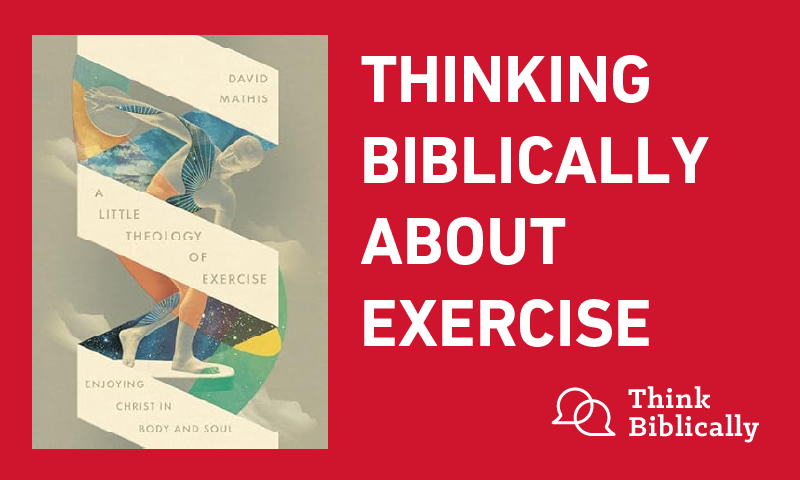
Why would a pastor write a theological book on exercise? Would Jesus exercise if he were here bodily today? What does the Bible say about exercise and physical activity? And are Christians sinning if they don't exercise? These are a few of the questions Sean and Scott explore with pastor David Mathis, author of the new book A Little Theology of Exercise.
David is senior teacher and executive editor of desiringGod.org, pastor at Cities Church (Saint Paul), and adjunct professor for Bethlehem College & Seminary (Minneapolis). He is author of ‘Habits of Grace: Enjoying Jesus through the Spiritual Disciplines.’ His articles and messages are available online at desiringGod.org/mathis. He is married to Megan and father of four children.
Episode Transcript
Sean McDowell: [upbeat music] What is a biblical view of exercise? Would Jesus have exercise if he were here bodily today? And what are some idols and pitfalls for Christians as it relates to exercise? Our guest today is Pastor David Mathis, and he's the author of an interesting new book entitled A Little Theology of Exercise. I'm your host, Sean McDowell.
Scott Rae: I'm your co-host, Scott Rae.
Sean McDowell: And this is the Think Biblically podcast, brought to you from Talbot School of Theology, Biola University. The moment I saw this book, Scott, I thought, "We've talked about a lot of topics biblically, but never exercise. What a wonderful topic to explore!" So Pastor David, thanks for writing just a helpful, interesting book and for coming on as a guest.
David Mathis: [chuckles] Thank you, Sean. Thank you, Scott. It is a joy to be speaking with you.
Sean McDowell: My, my first question that really hit me is, I wanna know what motivated you, distinctly as a pastor, to write a theological book on exercise?
David Mathis: Yeah, well, I have, I have found in my own life and ministry, that exercise in this modern age, in the 21st century, has been helpful to me, and I wanna share that with others. So there's, there's a personal story there in terms of, h- living an active childhood, young adult period, getting married in 2007, and then living a pretty sedentary life, for several years there. And, after a while, I had accumulated some of that sedentariness around my waistline, and [chuckles] I figured I was about 40 or 50 pounds heavier than I really should be at a healthy weight. And so in 2016, I kinda slowly started getting back into being more active, and so it's, it's been a little over 10 years now of- ... In particular for me, it's been running, but there's also been some weightlifting components, and I play a little bit of baseball with my boys. There's some balance components. It, it's pretty modest on the whole. I mean, I'll spend, [tsks] well, less than two hours a week on exercise, but it has made a significant impact on my own soul, not just my body, but my soul. It's helped my ministry. And then, as I've taught on these things over the years, now going on, what, almost eight years of teaching publicly on these things, people have seemed to get some help. It seemed to meet a need. Maybe there's not a lot on the topic from Christians, from pastors to Christians, and so I've, I've found there to be a need and enjoyed teaching on it. And [chuckles] my buddy at Crossway Books suggested, "Hey, you should put a little book together."
Sean McDowell: There you go.
David Mathis: He even ma- came up with the title. It's, There's this old book by Helmut Thielicke called A Little Exercise for Young Theologians, and so my friend Justin, I guess he thought that maybe some young theologians needed a little bit of exercise.
Scott Rae: [laughing]
David Mathis: And so that's where the book title came from, and, I mean, he had that idea back in 2017. So I've sat on this for a while, and I wanted to teach on this publicly some before trying to put it in a book, and so that's what I've, I've finally done, and I'm, I'm excited for it to be out here this summer.
Scott Rae: So David, let's sort of cut to the chase here in terms of the biblical story. Did Jesus exercise, in his first-century culture? And if he lived today, in our largely sedentary culture, would he exercise, in your view?
David Mathis: This is such a good question, 'cause I think this really gets at how contextual this is, it- generational, civilizational it is for me. My simple answer is, did Jesus exercise? No, not in the way I would define exercise. So if I, if I borrow a definition of exercise from, [tsks] from a Harvard professor, Daniel Lieberman, very simple definition of voluntary physical activity for the sake of health- ... The answer is no with Jesus. He worked with his hands as a carpenter, as a tradesman. He walked everywhere he went. There were no automobiles, so he's walking all over Galilee and 1st century Palestine. And then Jesus wasn't sinful. Jesus didn't have any sin, so he didn't overeat. He wasn't lazy. And so the simple answer is, I don't think Jesus exercised in the way that I'm defining exercise. Now, if you ask the question, "Well, what about today? Like, would he exercise today because we live in this more sedentary age?" And my answer is, it would depend, I think, on his vocation. So if Jesus was a day laborer, if he's working with his hands, if he's on his feet all day, if he's walking, you know, 15 or 20 miles in a day on a journey, then I don't think there would be need for additional activity for the sake of health. I think he's already having that natural movement, and that most humans throughout the history of the world have had the the God-designed movement of the human body to have it working at its optimal, function. But for us nowadays, [tsks] man, we got these screens, we got these planes and trains and automobiles. We spend so much time sitting, and we have so many creature comforts, and so I do think exercise is a kind of a modern phenomenon to help us get to the normal levels at which the... The normal levels of movement at which God designed our bodies for. And so if Jesus to- if he was among us today, and if he had a pretty sedentary vocation... So I don't know. I think most pastors probably do have pretty sedentary vocations. We spend times on c- on our time on computer writing a sermon. We do a lot of reading. We're doing counseling appointments where we're sitting down. I think probably the average pastor would be wise to supplement his vocation with some form of exercise. I, and I do suspect that Jesus would maybe do some form of exercise if he lived the kind of sedentary life we do today. And also, as p- as a perfect man, he would not overeat- [chuckles]
Scott Rae: Mm-hmm
David Mathis: ... And Jesus would not be lazy.
Scott Rae: [chuckles]
David Mathis: And so many of us have been cultivated. We have been, by our modern technologies, not just of food, but of creature comforts, we have cultivated a kind of expectation of comfort and expectation of moving as little as possible. When I pull into a parking lot-... And my first thought as a modern person is, "How can I get the closest space possible?" [laughing]
Scott Rae: [laughing]
David Mathis: Instead of walking an extra 50 steps? [laughing] And, and modern life has cultivated that kind of instinct in us. And, so I think Jesus would evaluate his own vocation, the activity levels of his life, and then try to make some modest adjustments. I don't- I doubt Jesus would be a bodybuilder.
Scott Rae: [laughing]
David Mathis: I don't think he would run marathons. I think he would think about the optimal kind of physical activity that would serve his own emotional health, his brain health, would make him ready to glorify his Father and to do acts of service that would bless others.
Sean McDowell: Honestly, David, I think he'd be the ultimate deadlifter.
Scott Rae: [laughing] Okay.
David Mathis: [laughing]
Sean McDowell: Get it?
Scott Rae: Nice.
Sean McDowell: Deadlift.
Scott Rae: Yeah. [laughing]
Sean McDowell: You know, just had to throw that in there.
Scott Rae: There you go.
David Mathis: Just after Easter. [laughing]
Scott Rae: Yeah. David, would you distinguish between somebody being active and somebody who is exercising? Because I think you could make a good argument that Jesus was very active.
David Mathis: Correct.
Scott Rae: And, I mean, and the walking he did... I mean, I've- if you've been watching The Chosen at all, you see how much walking they did. And my, you know, my son lives in New York. He walks everywhere. And so he, I mean, he's very active, but I, but I don't think he would say that he exercises specifically for the sake of health. What-
David Mathis: Yeah
Scott Rae: ... What kind of difference would you see between those?
David Mathis: I mean, in the end, it's gonna be, it's, as- in a sense, arbitrary or how we de- how we decide to define exercise. If we're gonna define it in terms of some voluntary physical activity for the sake of health, you know, in other words, you're supplementing something because you're not getting the normal human levels of activity in your pattern of life. You're voluntarily choosing some extra physical activity to take you from your subhuman levels of activity up to the normal human levels. If we're gonna define that as exercise, then yeah, I would go along with your son's instinct there, that if he's living a very active life, he's walking around... And, and automobiles are a huge thing. I mean, I think it's easy for us in the 21st century to just assume the automobile. We think about our most recent technologies of all the screens, and all the screens do have a huge sedentary impact on us because we're usually not moving. We're usually not active when we're in front of those television screens and movie screens, and then often these little pocket screens slow us down and make us less active as well. But that's all built on top of this 20th-century reality of transportation, of the planes and of the automobiles. And so, yeah, if somebody's living a very active life, especially in terms of their activity in transportation, in walking, that really changes the framework. But for those of us who are in automobiles all the time and who are in front of screens all the time, that's something worth evaluating with Christian wisdom and thinking: What does it mean for me to live at the normal human activity levels that God designed this human body to function at in its optimal function?
Sean McDowell: David, you have a chapter with the subtitle, "Making Exercise Christian." [chuckles] And I'll be honest, when I read it, I thought, "It's probably wise he didn't title this Making Exercise Great Again," for a lot of reasons. [laughing]
David Mathis: [laughing] Yeah, that's right.
Sean McDowell: But, you know, you ask a question in there that I think is really the heart of the question. You says... You say, "How do I make exercise holy?"
David Mathis: Right.
Sean McDowell: Tell us what you conclude.
David Mathis: Okay, well, I've, I've pinned that on a particular text in 1 Timothy 4, where Paul is addressing bodily activity. So he's talking about food, and he's talking about the marriage bed, but I think it's also fair to make application to our sleep. It's also fair to make application to exercise. And the text is insightful for how we take bodily life that God's given to us. In this world, we have these bodies, we have this age, this life, and how do we make that life holy? Not do it just like animals, where we just move from instinct to instinct, or like non-believers, but how do we, as Christians, make bodily life, real-world life, holy? And so Paul says there that, "God created food, the marriage bed, to be received with thanksgiving by those who believe and know the truth," Verse 4 of 1 Timothy 4, "For everything created by God is good, and nothing is to be rejected if it is received with thanksgiving," Verse 5, "for it is made holy..." There's the holiness. "It's made holy by the Word of God and prayer." So my question is: What does it mean to make bodily life holy by the Word of God and prayer? But I think what the Word of God means there is, it's what God says about it. What, what purpose does God Himself, who made the world, who made the body, who made life, what does He say about His design, about His purpose? What's God's story about food? What's God's story about the marriage bed? What's God's story about sleep, and about our bodies, and our exercise, and our movement? And so I think we want to begin there with: What does God say about this activity? And so in the book, I go through some major stages of God's story about our bodies. Our bodies are in storied. Part of the story is that He made them, and that they are fallen because of sin, and that God Himself, in the person of His Son, took a human body and accomplished our redemption in a human body, and that the Holy Spirit dwells in our human bodies. Just as we have indwelling sin, so we also have the indwelling Holy Spirit, and that God calls us to live right now, in this age, in this moment, in our bodies, in a way that glorifies Him. And then the last step of that story is you have a spectacular bodily upgrade that is coming if you're a Christian.... So the Word of God here, how to make, how to make your body holy and your exercise holy by the Word of God and prayer. First, what God says about your body is important. We wanna know what the Scriptures have to say about our bodies and about the movement of our bodies, that we would, as we think about a definition of exercise. But then He doesn't just end with, "By the Word of God," He says, "and prayer." Make it holy by the Word of God and prayer. So He means for us, in light of what God says and reveals, that we ourselves get involved. We have the dignity of prayer, of asking- ... God for help, of consecrating a moment. This, this is why it's, it's so appropriate that we would, we would pause to pray over breakfast, lunch, and dinner. This, it's a profoundly Christian thing to stop and pray before a meal. You're asking God to consecrate the moment. You're making that moment holy with your holy consciousness, your heart, your mind as a Christian, your posture of humility and dependence upon Him, to ask God, the Creator, to bless, to consecrate the moment of eating. And I think the same applies to exercise, that you would make it holy by living in light of what God says about your body and its movement, and I'll try to summarize that in the book, and then to pray about it. So, so very practically, [chuckles] as I went for a run this morning, I pause at the beginning, and I'll say a little short prayer of, "God, would you, help me as I run? Would you keep me from injury, and then would you bring about good purposes in my body? Help me to think well. Help me to feel well as a Christian. Make my legs strong, make my body strong, so that I can care well for my wife and for my family, and do what you called me to do." And then I like to pray at the end. [chuckles] I've developed this instinct. When I, when I finish up with a run, I just say, "Thank you, God. Thank you for upholding me. Thank you that my lungs work. Thank you that I didn't twist an ankle along the way." And then sometimes I'll... I've got a big hill as I come back toward my house. There's a park not far from our house, and I'll go run around the park, and there's a big hill on the way up, and that big hill prompts me to pray for help. [chuckles] "God, help me keep going. Help me not give in too easily here." And so, exercising in light of what God says about our bodies, not what the world says, not what we intuit. What does He say about our bodies? And then making those moments holy by asking for His help, and thanking Him, thanking Him through prayer as He provides. So, David, I suspect that maybe some of our listeners are wondering this abou- at about this point in the episode, 'cause they recognize that, you know, maybe they're, they're not the f- the folks who are exercising regularly. This is the question that I wanna... That they may be thinking about, that, you know, except for people who have significant physical limitations, is it a sin to not exercise? I would say no. No, it's not a sin, not if your life is sufficiently active, not if your consumption is modest. And, and then the question I would want to ask, like, so are you ready to do good works? That's the kind of fitness that I think Scripture would call us to, is, are we ready to do good works? That's a phrase that Paul uses, Titus 3:1. He uses it again in 2 Timothy 2:21, to be ready to do good for others. And so, I do think exercise is very much a modern phenomenon, a modern opportunity for us to judge with Christian wisdom. And if you are... If you're in an occupation where you're on your feet, you're working with your hands, you're getting sufficient human activity in your life already, I don't think you need to supplement that with exercise. And exercise is this parenthetical, it's this remedy to a modern problem, and if your body is in the, in the fitness that God would require for you to be ready to do others good, this is not world-class muscles, this is not world-class endurance. This is- So you're, you're not recommending- [chuckles] ... Training for triathlons? I am not. [chuckles] No, no. There's no expectation. This, this is a very modest encouragement, for us as Christians to steward these bodies. And, and, you know, you can get to the point, you can build muscles that are so big that they're in the way of doing good work. And you can have such a workout routine, you're so committed to be at the gym this often or on all this triathlon training or marathon training, you are so committed to the training, you're actually cutting yourselves off from the good that God's calling you to do in your life. Like, do you have availability to help people? So I do think one of the pole stars that we wanna bring in to this whole exercise constellation is: Is my exercise serving the good of others? Is it, is it getting my body into such condition and keeping it in that condition, which is pretty modest, that I'm able and ready to help others? That I'm able to glorify God by letting my light shine in such a way that others would see my good deeds and give glory to my Father in Heaven, not glory to me. You know, if your exercise is producing the kind of physique where people are just always giving glory to you, there's no glory to your Father, there's glory to you with your stunning physique, then that's not the call that we're making here for exercise. But, no, I would not consider it a sin if someone's not exercising. Now, if their, if their life is full of laziness and gluttony, then I'd want to ask about that and pull on that some and see how exercise might be a God-given path to fight those various sins of modern life. Now, I can't speak for Sean on this, but nobody's gonna mistake my physique for stunning. [laughing]
Sean McDowell: I will not comment on that one, Scott-
David Mathis: [chuckles] Right
Sean McDowell: ... Just for the record. Y- David, I'm, I'm really curious because I actually love exercising. I enjoy it. I played basketball at Biola back in the day and have always enjoyed pushing myself, combeat- competing, the endorphins, and I don't-... I don't know how to help other people find [chuckles] that joy who don't. And you talk about how you exercise because it brings you joy. What would you say to someone who's like, "I just don't find any joy in this? It's just such a task, and it's painful for me." Is it just find another way to be active, or is the response, "No, here's how you can exercise and find joy in it?"
David Mathis: Yeah, that's a great question. I would wanna say, I mean, I- that exercise is typically an acquired pleasure. So I just wanna concede that and let people know that right out the gate. I'm, I'm assuming that many of my listeners are hearing this and thinking: Wow, I don't really enjoy it. It's hard. It's challenging. And, and that is true. Like, it should be that. And one nice thing about basketball, Sean, is that you get... Your mind is on the goal. You're not thinking about how much you're running. You know, you're preoccupied- ... With something else. You end up getting a lot of [chuckles] exercise without thinking about it when you're playing basketball. But, but the, It's hard work, and so for, especially for someone who's not in shape, they're- they have a very sedentary life, you know, maybe a whole life or maybe years of being sedentary, just a few modest steps is the beginning of the process. So the goal is not to be able to do a triathlon, perhaps ever, not to run a marathon right out of the gate. You don't, you don't get there overnight. One thing would be is, you know, if you- if your typical pattern of life is a few hundred steps a day or a couple thousand steps a day, what change might it be if you added in a five-minute period of walking every other day? I think walking's very helpful here. And in the ch- last chapter, I commend that walking counts. That, that really does matter. That's one thing that God designed our bodies to do, is to walk, except in unusual circumstances of injury or disability. But walking gets the heart rate up. Walking can accomplish a lot. And so if someone is saying to me, "Hey, I just, I don't enjoy this at all," I would say, "Well, give it some time, you know? Did you enjoy the first cup of coffee that you ever had?" There, there are some things that are acquired tastes, and exercise is typically one of those. And if you know this is good for you to combat laziness and to have a little bit more activity in your life, you can start out in some very modest ways. And then there are some other things that we can, that we can talk about. You know, people talk about the runner's high. Another way to talk about it is the persistence high, where if you do a semi-strenuous activity and you continue in that for 20 minutes or more, there's a... We talk about the endorphin payoff. And endorphins can be part of that. I think the most c- most recent research talks about the endocannabinoids, which is the body's own marijuana, so to speak. [chuckles] The, the body has these receptors for endocannabinoids, and that's what cannabis binds to. The cannabis creates the calming, satisfied effect of having pushed the body for 20-plus minutes. That, that runner's high is very similar to the effects of cannabis. It's hijacking the nat- the natural system. That's a way that shows how God made our bodies to exert themselves and then for our bodies to reward ourselves for that kind of exertion. And so if someone's learning to do, over the course of six months or a year, incorporate a little bit of walking in their lives, maybe it's a simple little step counter. We have these little wearables now. You can get a very inexpensive one and count your steps. You can count your steps for a few weeks and say: "Huh, now I've got a certain pattern. Could I increase my steps?" And you may be surprised over time. You don't need to rush this. This could be, this could be months, this could be years of slowly increasing your steps. You may get to the point where you might wanna do a little bit more. Add in a little bit of resistance training or weight training, something like that, in a very modest way. So I would want somebody who comes with the initial instinct of, "I don't like exercise," I would say, "That's okay. That's normal. And would you, would you give a few things a chance, and don't have the verdict come in too quickly on that before you've tried some things?"
Sean McDowell: And, David, you also mentioned that exercise helps us enjoy God more fully. Can you just spell out a little bit how that works?
David Mathis: Yeah, that... And this is really the heart of my burden, Scott. The,
David Mathis: [exhales] in exercise alone does not produce spiritual joy, it can produce a kind of natural joy. Just, and there's all sorts of layers to that. One thing is, if you set out a plan, even a five-minute, 10-minute plan, and you do it, you can feel a sense of accomplishment from it, the dopamine of just accomplishing a task, not to mention the endocannabinoids, as I talked about, and the other ways that exercise can be a natural joy. The way that it would serve spiritual joy, there are multiple ways, but one is that as I come to pursue spiritual joy by communing with God in His Word and in prayer and with others in the life of the local church, I don't wanna come into that pursuit of spiritual joy with a natural joy deficit. [chuckles] If, if you come in really encumbered in your natural joy, that's gonna affect your spiritual joy. These, these are enigmatic, [lips smack] connections and relationships, the way that the acts of our body, the joys of our body relate to the soul and the way that a spiritual joy relates to the physical. I mean, you go a night without sleep, and you'll see how hard it is to have spiritual joy in God. So you are better prepared to enjoy God through His Word, through the company of fellowship in the local church, and in prayer, through having got a full night's sleep and having gotten modest exercise for the body. So my hope in this project, very similar to sleep or other aspects of life in the body-... Is that as we pursue joy in God, which is the paradigmatic joy, it's the great joy in which to pursue, that these would be helps or boosts. They're not the joy in and of itself. The joy of exercise is not the goal of the Christian life. At the heart of the Christian life is to glorify God by enjoying Him forever, as the Westminster Catechism begins with that. I'm gonna glorify God, not just and enjoy Him, but you can glorify God by enjoying Him. I can say more about that in a minute, if that would help. And, I wanna pursue that as someone who is coming not with a natural joy deficit, and whatever boost there might be from modest fitness, from exercise, then I wanna take that boost up to God. I wanna read my Bible with more clarity, and attention, and energy, and pray without distraction, and be someone who's a better listener at church and a better contributor to the conversations between believers that are a vital means of grace, in our Christian lives.
Sean McDowell: When I was reading your book, I almost had more questions at the end of the book than I started with, and that's a compliment, actually, because you made me think about a lot of stuff [chuckles] biblically. So I'm thinking at the end, I'm like, "Okay..." And by the way, the book is titled A Little Theology of Exercise. It's meant to do exactly what the title says. But at the end, I'm thinking, "Is there a biblical way to think about different kinds of exercise? Like, are some better than others? Is it the physical exercise itself, what we do with our bodies, or is it the way we think about it in our souls?" And you made a statement earlier that you didn't think Jesus would be a bodybuilder.
David Mathis: [chuckles]
Sean McDowell: Like, is there something intrinsically about that kind of exercise that's maybe sinful or wrong? 'Cause I've had that conversation with bodybuilders, and so I'm just... I'm curious how you would approach different kinds of exercises and what biblical principles we should at least keep in mind as thinking about them.
David Mathis: Yeah, that's a, that's a great question, Sean. The, I, just to clarify, I don't think I would say that bodybuilding, per se, is a sin. I don't suspect that Jesus, as the one God man, would embody humanity as a bodybuilder. [chuckles] But I do think that pe-
Sean McDowell: [chuckles]
David Mathis: ... That Christians could be bodybuilders. That wouldn't necessarily be a sin. I do think what I would want to ask about any kind of exercise is, what's the goal and purpose? Like, what am I trying to do with this? Like, if it's weightlifting, if it's running, if it's balance exercise, like yoga, those are typically the big three categories you hear about is cardiovascular training, which is exercise, riding the bike, doing something where the heart rate is elevated for an extended period of time, or there's resistance training, that's weightlifting. That can be push-ups, that can be pull-ups, and then balance training, which is yoga, other exercises where you're working on your balance. And, I do think in evaluating those, I'm wanting to think, what am I seeking from this, from this exer- from this exercise? Like, am I, am I seeking to present my body in such a way that is not in accord with what the Bible would have us do as Christians? Like, what are, what are the biblical goals I'm seeking? I wanna commend three goals that are kind of one goal. [chuckles] That would be glorify God in your body through having joy in Him, and that joy overflows to meet the needs of others. So the glory of God, through enjoying who He is, marveling at who God is in Christ for us, having a soul that in is in the right condition to enjoy the goodness of God and marvel at Him through His Word. And then I wanna be a more loving person. A, a soul that is full of Him, filled up through Him, can then pour out for others. So I do wanna run, as we think on different kinds of exercises, run them through the grid of, how is this helping my calling as a Christian? How is this serving the health of my soul that glorifies my Father and that serves other people? And those are gonna be different questions. I think within the breadth of healthy Christianity, there may be some who are bodybuilders, there may be some who, their particular, their particular hobby, you know, their manifestation is they do distance bike stuff, or they're marathoners. Those answer... Those will probably be answered differently for people. At the heart of it, I wanna encourage your average, normal Christian, who's not the extreme athlete, is not the professional athlete, is not the bodybuilder, I wanna encourage the average Christian to think about how modest exercise, modest activity in those different areas, some resistance training, some cardio, can help serve the body in such a way that it serves the soul and makes us Christians who are able to accomplish the purposes that God's called us to in the challenges of modern life and our sedentary age.
Sean McDowell: I really think this is a strength of your book, that you're, rather than diving into the particulars of exactly what kind of weightlifting or running or biking, just saying, "Let's sift all this through why God gave us bodies, what it means to glorify God, love my neighbor," and just sifting it through that lens is gonna bring a lot of clarity. Now, you talk about other stuff in your book, about how sin affects the body and people who maybe can't exercise, what it looks like for them to glorify God in their bodies, so there's so much more here. But let me just end with this question: Who did you write the book for, and how do you hope people use it?
David Mathis: Yeah. Yeah, thank you. I, [sighs] I'd love it if people on the extremes were inspired, and by extremes, I mean someone who-... Is maybe super sedentary and out of weight, out of shape and overweight, and just can't even ponder doing exercise. Or on the other extreme end, [chuckles] the world-class athlete, the professional athlete. I mean, I hope it could be useful to them. I doubt it will be. I think I really have in mind the m- the folks so- in the middle here, most of us, who maybe, you know, we have some activity in our life. Maybe we have some sport in our past. We used to play basketball or used to do some running or some weightlifting in the past or something like that. There, there's some activity in our lives, and we're Christians, and we want to think better about that and act better to the glory of God, the joy of our own souls, the good of others through that. And I hope that this framework of asking the kind of questions I do, presenting... It's a very short book, just a small book, 100 pages, presenting the biblical text that I, that I put together, and try to get at some of those key motivations in the, in the back part of the book. I hope that will help the average Christian think through these issues. And, and like you said, Sean, I am not seeking to produce a certain workout regimen.
Sean McDowell: [laughs]
David Mathis: I have hardly... I don't have anything to say about diet.
Sean McDowell: You're not, you're not selling w- you're not selling workout tapes? [laughing]
David Mathis: [laughing] That's right. Just a-
Sean McDowell: Tapes
David Mathis: ... A pastoral synthesis-
Sean McDowell: Oh. [laughs]
David Mathis: ... Of what, of what God has to say in the Bible.
Sean McDowell: Uh-
David Mathis: Which, it, that means it's a little book. Like, the, you know, because the Bible was written in ancient times, there are principles there that we can bring into our sedentary 21st century, but there's not a lot of biblical texts that bear immediately upon this, though theologically, the theology of the body and of human beings and the human heart, those are all important realities. But I hope that maybe the average Christian be helped. In particular, if not through the theology of the body at the beginning, I've... I end with five motivations that have been significant for me here in the last decade. What gets me out of bed, what gets my shoes on, what gets me over the... The most difficult hump is starting out a workout. If it's a five-minute workout, if it's a 30-minute workout, moving from sitting and being stationary to getting into the act of exercise is a really important moment, and I hope that those motivations, biblical motivations, would be helpful for people as they consider exercise.
Sean McDowell: David, I definitely think they are, and you mentioned the two extremes. I think if I was gonna fall on either extreme, it'd be working out probably more [chuckles] than I need to. I enjoy it. I love it. I'm challenged by it, and I do think your book has something to say to the world-class athlete and somebody who exercises one or two hours a day. I mean, you talk about secular workout culture and its false gods.
David Mathis: Mm-hmm. Right.
Sean McDowell: You ask the question: How does a body glorify God? I mean, these are all the right questions, even if it's not meant to answer all those questions. Again, it's called A Little Theology of Exercise. You're bringing it back to Scripture. You're helping us think biblically about it, and I think you're asking the right questions. So I'd encourage people to just read it and talk to somebody about it. I chatted with my wife about a few things. She was a [chuckles] college athlete, too, so we go on runs together- ... Like, daily. And so I just, I found it a really helpful guide to think about these issues, and I definitely want to commend it to our listeners. So thanks for writing a great book. I hope it sells a ton of copies, and thanks for coming on.
David Mathis: Sean, thanks for your kind words. I really appreciate that.
Sean McDowell: This has been an episode of the podcast Think Biblically: Conversations on Faith and Culture, brought to you by Talbot School of Theology, Biola University, where we have master's programs in Old Testament, New Testament, marriage and family, apologetics, philosophy, so much more, online and in person. We would love to have you join us. To submit comments or ask questions or suggest issues or guests you'd likes to include, please email us at thinkbiblically@biola.edu. If you enjoyed today's conversation, after you get a workout, take the time to give us a rating on your podcast app and consider sharing it with a friend.
Scott Rae: Or better yet, listen to this while you're working out.
Sean McDowell: There you go!
Scott Rae: Man, nice.
Sean McDowell: Best advice yet.
Scott Rae: [laughs]
Sean McDowell: Good word, Scott. Thank you for listening, and remember to think biblically about everything, and we'll see you Friday with our weekly cultural update. [upbeat music]