Biola University
What is the state of religious freedom in the US? What about those who claim that religious freedom is sometime seen as code for bigotry and discrimination, inconsistent with some trends toward justice? What are the main challenges to religious freedom in the West today? We’ll answer these questions and more with our guest and good friend, Baylor University Professor Dr. Frank Beckwith.
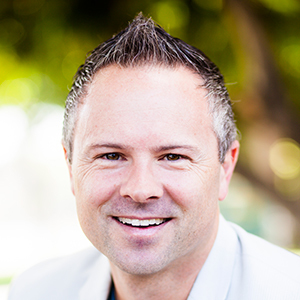
Dr. Frank Beckwith is Professor of Philosophy & Church-State Studies at Baylor University, where he also serves as Associate Director of the Graduate Program in Philosophy, Affiliate Professor of Political Science, and Resident Scholar in Baylor’s Institute for Studies of Religion (ISR). He is the author of numerous books in philosophy, apologetics, political science and church-state relations.
Episode Transcript
Scott Rae: [upbeat music] What is the state of religious freedom in the United States and around the world? What about those who claim that religious freedom is sometimes code for bigotry and discrimination, inconsistent with some trends toward justice? And what are the main challenges to religious freedom in the West today? We'll answer these questions and more with our guest, Dr. Frank Beckwith. I'm your host, Scott Rae.
Sean McDowell: And I'm your co-host, Sean McDowell.
Scott Rae: This is Think Biblically from Talbot School of Theology at Biola University. Frank, thanks so much for being with us, taking time out to join us on this really important subject.
Frank Beckwith: Well, thank you for having me.
Scott Rae: So how would you summarize the state of religious freedom in the United States today, and compare that to where you might see it in Europe and maybe even in the Middle East?
Frank Beckwith: Yeah, I think, the state of religious liberty in the US is actually quite good. I mean, it depends on how you look at it. So, at least in our law, which differs obviously from Europe and other, Asia, Africa, and so forth, we have, in the Bill of Rights, a First Amendment, which includes a free exercise and establishment clause. In terms of free exercise, our courts have been quite good. Our, legislative, bodies, including the federal government, Congress, and state, depending on the state, generally have been quite good in terms of protecting religious liberty. The other part of religious liberty, the establishment clause, has to do with, questions about the role that the government, plays in, let's say, supporting religion, and there, you're probably gonna have a lot more controversy. Issues like, school vouchers, whether it's permissible for a state government to create a program that allows, parents who send their children to religious schools to be reimbursed for tuition and so forth. There, you're gonna have people, I think, of goodwill disagreeing on whether that is a kind of advance in religious liberty or because it involves state support, that it gives a kind of preference to religion. So I think generally, it's, it's been quite good. Obviously, there are gonna be some questions on which, there's gonna be deep disagreement. But I think generally, in terms of legislation in the courts, it's quite good, at least in the United States.
Scott Rae: What, what would you say about... Do- can you compare that to where the state of, religious freedom in Europe, for example?
Frank Beckwith: Yeah, so Europe's an interesting case because you have, a continent that had virtually all its nations had established churches. We, we don't, really don't have that experience in the US. I mean, some of the states had kinda quasi-established churches, but only insofar as there was financial support. But in Europe, you actually had monarchs being committed to a particular Christian denomination, and so they had a... There's a slightly different history. The history, at least in places like France, there's, like, an anti-clericalism that makes their understanding of religious liberty somewhat different. So in France, and it's a, it's a good example, they prohibit, their public employees, which is a sizable number of their population, from wearing religious symbols, and there are actually laws against, Muslim women from wearing burqas in public. Something like that would've been, would be incomprehensible in the United States. And so that's a... Part of it has to do with, the, first off, their anti-clericalism, so there's al- the, there's a history there of, the Church, using, state power to coerce people that didn't share, the c- the Catholic faith, of the monarch. So that's one reason for it. The other is a much more kind of ethno-national history, and so the idea of having symbols that are contrary to being a Frenchman [chuckles] . So it's a... I'm not- I think it's a... My own view, it's a mistaken view, but I think it's important to understand why it arises, and I think it arises because there's a much more, kind of a blood and soil understanding of one's relationship to the state that you don't have in the United States.
Sean McDowell: Frank, there's a document, 60 years old this year, a Catholic document called Dignitas Humanae. What was so important about this document-
Frank Beckwith: Yeah
Sean McDowell: ... And what did it contribute to how we think about religious freedom?
Frank Beckwith: Yeah, so in 1965, as part of the Second Vatican Council, the Catholic Church issued its declaration on religious liberty, and at the time, it was considered to be quite radical because the Catholic Church had, for generations, you know, had close relationships with governments. So, for example, Spain, France, Italy. Not so much France in the, after the Revolution, but you had, a kind of anti-liberal way of looking at religious liberty. And then eventually, the Church, issues this document, and as I said, it was perceived to be quite radical. It's kind of, at least for a lot of traditionalist Catholics, it was perceived as a kind of an appeasement to modernism. But looking back now, it's actually quite a conventional, traditionalist document. It, it talks about that the ground of religious liberty is the dignity of the human person, and that human beings, by nature, are inclined to the transcendent, to God, and that all that religious liberty recognizes is some truths about human nature. The other thing that's going on in 1965 is you have kind of two historical trajectories. The one historical trajectory is the one I just alluded to, the kind of past that the Catholic Church had had with different governments, and it pretty much came to the conclusion that it didn't work. [chuckles] And then there's also the Iron Curtain. You have all these nations, that are under communist, dominance, in which-... Belief in God is, marginalized, denigrated, attending churches could get you put in prison. And so you have, on the one hand, this sort of, kind of atheocracy [chuckles] that dominates, what was called the Second World at the time. And in the First World, a kind of realization after the Reformation, a kind of an exhaustion that, like, you know, we just have to stop fighting each other and allow for at least some kind of, way of looking at the relationship between church and state that will prevent us from killing each other. [chuckles] So those are the two things that the church has in mind, but there's another thing, though, that also is important, and this is a, one of the dangers about a view of religious liberty that leads to a kind of indifferentism. Indifferentism is a, is a, is a term that, often refers to people who just think religion doesn't matter. So, so there's a line by Thomas Jefferson where he says, "I don't care what somebody believes, as long as they don't pick my pocket and break my leg." And so that's kind of indifferentism, right? So the church wants to resist that, too, and so it has to say that there is a... Every human being has a moral obligation to become Catholic, [chuckles] but it's not the role of the state to enforce that. It's a violation of conscience. So that's a way in which it can sort of balance its claim of truth, but at the same time, defend religious liberty, and that's something that all Christians have to face, right? You defend religious liberty... Well, if in fact you believe your faith is true, why would you do that? Why don't you, like, wanna make people, you know, get saved, [chuckles] right? But I think what the, what Dignitatis Humanae does rather, I think, ingeniously, it sort of, offers an account of religious truth, and at the same time defends religious liberty.
Scott Rae: So one of the things that you've maintained in your work is that, religious liberty is sometimes seen as inconsistent with some of the social justice trends today, and it's often... I think I've heard religious liberty used actually as code-
Frank Beckwith: Yeah
Scott Rae: ... For bigotry.
Frank Beckwith: Yeah.
Scott Rae: How so? Spell that out a little bit. Why, why are those things seen as not being consistent?
Frank Beckwith: Yeah, I think it... If you look at the issues on which that u- that criticism is usually raised, it- you can sort of, identify them as having to do with, issues concerning life and death, right? So the kind of non-controversial question would be something like conscientious objection statutes for military conscription, right? So there, the federal government, in a series of statutes, sought to accommodate people that were part of peace churches, pacifists, and there were some Americans who opposed that, thinking they should have a obligation to fight just like the rest of us. So that was kind of the first wave of the charge that people were unpatriotic [chuckles] if they were pacifists. But today, the issues have to do with questions concerning human sexuality, the nature of marriage, issues concerning beginning-of-life questions, you know, debates about whether, privately owned, businesses, family-owned, closely held businesses, let's say like Hobby Lobby, whether sh- they should be required under the Affordable Care Act to provide contraception, that they... Or birth certain forms of birth control they oppose. So I think that the, where you find these issues or these debates are ironically, at the parts or the aspects of life that actually religion touches on. So you think about, the beginning of life, right? Well, there's Christian traditions that, and, well, even non-Christian ones, that have certain kind of ceremonies or liturgies. So think about, like in Catholic and Orthodox and Anglican circles, there's infant baptism. Marriage is the other one, right? So you have a lot of these Supreme... Well, a couple, well, one Supreme Court case, but several other court cases involving vendors, wedding vendors that refuse to, create, either, you know, d- flower displays or take photographs at same-sex weddings. And one thing that I think that has been lost when people look at these cases is that, well, why is it those issues? It's because religion, and particular Christianity, marriage is likened to the relationship between Christ and the church. So there's a, there's a connection between marriage that's not the case with other sorts of events. So let's say you have a case, like the one in Masterpiece Cakeshop, which is the one involving the baker that refused to design a cake for a same-sex couple. If so, if, let's say, a same-sex couple walked in and said, "I'd like to- we'd like to buy some cupcakes," [chuckles] right, that would not be controversial, right? At least for him, because there isn't a connection there between participating in a liturgical event that is contrary, to what he, his conscience tells him he shouldn't participate in. I think, to use an analogy, and I've, I've used this in a couple of my works, imagine you had a Baptist baker who is approached by a friend to make a cake for his daughter's first Holy Communion. Imagine she's, she's Catholic, and the baker is asked to design a cake with, a giant Eucharist, [chuckles] which is the, you know, the communion wafer in the Catholic Church, which Catholics believe is literally the body and blood of Christ, and he's asked by the client to say, you know, put "body of Christ" on it or something like that. I mean, it would seem to me that it would be permissible for him to say, "I really can't do that because I don't believe that-... Particular, sac- that's a, that's a sacrament. I don't believe what you believe about that. And that seems to- so I've used that, and I've, I've lectured on this at a number of secular law schools. It was 10 years ago at University of Pennsylvania, where I first actually floated this analogy, and there were people in the audience that were critical of my view, but they found that to be helpful for them to better understand why is it that on these particular sorts of, events... So, you know, the, I have an alliteration for it in a couple of my works. I say that, weddings are more like baptisms and bar mitzvahs than they are like barbecues-
Sean McDowell: [laughing]
Frank Beckwith: ... And ba- and, baby showers.
Sean McDowell: Yeah. Mm-hmm.
Frank Beckwith: You know, there's just a different, at least in terms of religious citizens.
Sean McDowell: That was a helpful distinction with Jack Phillips in terms of baking a cake. He's more than happy to serve and hire gay people-
Frank Beckwith: Yeah
Sean McDowell: ... But it's what the cake means-
Frank Beckwith: Yeah
Sean McDowell: ... In itself, distinctly.
Frank Beckwith: Yeah.
Sean McDowell: And he called it masterpiece-
Frank Beckwith: Yeah
Sean McDowell: ... Because each cake was a result of-
Frank Beckwith: Yes
Sean McDowell: ... Expressing his love for his master, and he also wouldn't make pornographic cakes or Halloween cakes.
Frank Beckwith: Yeah.
Sean McDowell: So there's some consistency there-
Frank Beckwith: Yeah
Sean McDowell: ... That's often lost, so I appreciate that you're nuancing that.
Frank Beckwith: Yeah.
Sean McDowell: Help us under- take a step back. Help us understand the connection between human dignity itself-
Frank Beckwith: Yeah
Sean McDowell: ... And religious freedom.
Frank Beckwith: Yeah, so the idea of human dignity, it's- human dignity is one of those, one of those f- terms that everybody uses, but it's very difficult to precisely define.
Sean McDowell: [laughing]
Frank Beckwith: You know, it's like, I guess even like terms like social justice, too. I mean, they're, they're... You know, we kind of have a sense of it. I do think that human dignity is one of these terms that only makes sense when it is connected to a rich anthropology.
Sean McDowell: That's right.
Frank Beckwith: Like, if somebody says, "Well, I believe in human dignity," well, what exactly does that mean? I mean, for certain, types of thinkers, human dignity just means a kind of right to do whatever you want consistent with your own vision of the good life, right? For somebody else, they could say, "Well, you can autonomously choose things that are undignified," [chuckles] right? So, so in terms of the document that we were talking about earlier, Dignitatis Humanae, human dignity is connected to our being made in the image of God, and that means that our ability, to exercise our will and reason in ways consistent with what we know to be morally good. So the difference between human beings and, let's say, cats and dogs, is that they have a, they have a sort of instinct to, pursue things that they know or realize are good. Like, you know, you put the food out for the dog, and it runs to it, right? Whereas human beings will fast, [chuckles] right? We will actually reflect and say, "It is good for us to deny ourselves food- ... In order to, you know, lead to a more flourishing spiritual life." That's a kind of reflection that an animal just doesn't, doesn't have.
Sean McDowell: Like a second-order reflection-
Frank Beckwith: That's right
Sean McDowell: ... On our appetite and desires.
Frank Beckwith: That's right. And so, and so we have a sense of we can choose the good because it is good- ... 'cause we know it is good. I... And when I teach it, to my students at Baylor on this, I say that, "Your, your dog knows that, know- can distinguish you from other human beings, but he doesn't know that you are a human being." [chuckles] That is only something that, it's a, it's an abstract concept. And so for the, at least in terms of Dignitatis Humanae, the dignity has to do with, the power that God has given us, to make choices about our spiritual life, and that means the possibility of getting it wrong. So one of the issues, going actually back to the Middle Ages, although the Dignitatis Humanae doesn't mention this, there was a question raised in the Summa Theologica, which is authored by Thomas Aquinas, where the question, is: Is it right for Christians to baptize Jewish babies without the parents' consent? And, for listeners out there who don't know, in Catholic theology, baptism removes original sin, and so, Aquin- you know, so to not baptize a child is to imperil its eternal salvation, right? So Aquinas, though, says, "No, it would be wrong." Even though the child would be better off in, you know, in an absolute sense, being baptized, there's such a thing as natural justice, and that means that parents have a right to direct the religious education of their children, even if it's the wrong religion. [chuckles] And so I think that that kind of thinking that you find in Aquinas, it doesn't get fully cashed out in terms of religious freedom in total, but I think it does in Dignitatis Humanae. I think there's this understanding that the freedom to be able to, seek the good, that is, or transcending good, is itself something worth protecting, even if it means the risk of people making mistakes.
Sean McDowell: Let me jump in.
Frank Beckwith: Yeah.
Sean McDowell: I'm gonna... I've got one for you. I gotta follow.
Frank Beckwith: Okay.
Sean McDowell: You said, "We need a rich anthropology-
Frank Beckwith: Yeah
Sean McDowell: ... To justify human dignity."
Frank Beckwith: Yeah.
Sean McDowell: Does that require a Judeo-Christian-
Frank Beckwith: Yeah
Sean McDowell: ... Anthropology, or is it just a theistic or-
Frank Beckwith: Yeah, good-
Sean McDowell: Tell us your thought.
Frank Beckwith: Yeah.
Sean McDowell: It's a huge question-
Frank Beckwith: Yeah
Sean McDowell: ... But I want you to weigh in on this.
Frank Beckwith: Yeah, good question. I do think that, there is a Ch- I think that you don't have to be a Christian to appropriate or understand Christian anthropology, and so what do I, what do I mean by that? I think that, there are certain goods, human goods, that can be recognized by people who don't share our faith, and this is why it's not, It shouldn't surprise us, for example, that Augustine appropriates Plato or Aquinas appropriates Aristotle-
Sean McDowell: Sure, yeah
Frank Beckwith: ... Because they saw in them certain truths. Now, there are certain aspects to Plato and Aristotle-... That are inadequate, and so you need special revelation to sort of shore that up.
Scott Rae: Yep.
Frank Beckwith: But yeah, so the irony about Dignitatis Humanae is that at the end of the day, it really is using Christian anthropology [chuckles] . And I actually think you can make the argument that the, American idea of religious liberty itself is dependent on Christian anthropology. Not in the sense that it's, [lips smack] you know, it's, it's in any way doctrinal, that you sort of have to, like, belong to a particular, denomination of any sort. I think that what I mean by it is that the under- the belief that human beings are in- have an inclination to the transcendent. We, we are ordered to that. So, you know, in the Confessions, Augustine says, "Our hearts are restless till they rest in thee." And I think that's what... When you read, for example, James Madison in his Memorial and Remonstrance, he talks about every human being have a duty to God, and so that's why religious liberty makes sense, is that we have that duty and that the government, exceeds its jurisdiction when it tries to invade that sort of aspect of our lives.
Scott Rae: Now, Frank, you have a, I think, a unique take on some of the threats to religious liberty in the future. 'Cause I think most people would say, well, you know, it has to do with sexuality-
Frank Beckwith: Yeah
Scott Rae: ... You know, directly or, you know, abortion rights or things like that. But you see this, what I, what I would call a little bit more from a 360-
Frank Beckwith: Yeah
Scott Rae: ... You know, 35,000-foot level. What are, what are the main threats that you see to religious freedom today?
Frank Beckwith: Yeah. So I think there's a couple. I've given them two names. One I call hegemonic liberalism and the other eliminative egalitarianism, and I'll explain each one real quickly. [laughing] So hege-
Scott Rae: For our listeners, hang in there. He's going to define them. [laughing]
Frank Beckwith: So, so I distinguish hegemonic liberalism from political liberalism. So political liberalism is a term that, I... It's actually the title of a book by the late John Rawls, who taught for years philosophy at Harvard. And Rawls had this view about how the government should function and what rights ought to be protected in a pluralistic society. There's some of Rawls that I don't agree with, some that I do agree with, but I think Rawls had this kind of, I think, a healthy understanding of the depth of the disagreements that we have on a variety of moral and religious questions. And so in the late 1990s, he, Ronald Dworkin, Robert Nozick, Judith Jarvis Thomson, Tom, Scanlon, several very prominent philosophers, published a brief. That is, they submitted a friend-of-the-court brief to the US Supreme Court in a case involving physician-assisted suicide. It's called the Philosophers' Brief. It's not a line of clothing, by the way. [laughing]
Scott Rae: [laughing]
Frank Beckwith: So the F- Philosophers' Brief basically made the argument that because people deeply disagree on issues concerning end-of-life questions, whether they are against euthanasia or not, they should allow citizens to make their own choices. Now, there's some of that, some in that, some parts of that I don't agree with. I don't think that there should be a recognized right to suicide or anything like that. But one of the things that comes out of that is that they're saying that if you oppose it, if you oppose euthanasia, you're not irrational. You're, you're part of a reasonable, comprehensive doctrine, which means worldview. Now, what- fast-forward to today, if you read a lot of the recent work in bioethics, you'll see several bioethicists saying conscience protection should be eliminated for physicians who oppose abortion and euthanasia. So in the, in the 1990s, people like Rawls and others would argue, "No, Catholic hospitals should be allowed to not be forced to perform abortions. There should be a recognition that there's this, you know, diversity of views." But what shifted is I think this... I call it hegemonic because it's now no longer is there any kind of tolerance for dissent on these questions. It, it begins with, all points of view are permissible, and then over time, the views that were recognized as reasonable by people like Rawls and Dworkin and others are now considered to be, sort of beyond the pale. So that's one. So that's hegemonic liberals. I think-
Scott Rae: Oh, and let me just-
Frank Beckwith: Yeah, sure.
Scott Rae: Just to be clear about this, too, for our listeners, when you talk about liberalism, that's small L-
Frank Beckwith: Oh, that's right
Scott Rae: ... Liberalism. We're not talking about the liberalism of the left-
Frank Beckwith: That's right
Scott Rae: ... Today.
Frank Beckwith: No, that's right. So I'm, I mean a view that comes out of, thinkers like John Locke and Montesquieu, some of the American founders, namely that there are certain fundamental rights that ought to be protected by the government, and those rights include religious liberty. Now, contemporary liberal is a little different than the American founders, but it's part of that same tradition. That's right. So you can be a political conservative, you know, big C, and still be a liberal, small L.
Scott Rae: The clas... I would refer to that-
Frank Beckwith: Yeah
Scott Rae: ... As a classic liberal.
Frank Beckwith: Yeah.
Scott Rae: Which was more the tradition of the American founders.
Frank Beckwith: Yes. Yeah.
Scott Rae: Now, you described hegemonic liberalism means what?
Frank Beckwith: It's, it's, it's a... So it's, it's almost ironic because to be a liberal, you can't really be hegemonic [chuckles] in the sense that like-
Scott Rae: [laughing]
Frank Beckwith: ... You know, like, there's only... Basically, it's our way or the highway. That's, that's, you know, that there's only one view of the good, and that view is one in which, at least in terms of the context of medical ethics, patients have absolute autonomy, and that physicians should facilitate anything that they choose, because in a way, medicine is really just a delivery system for what patients want.... And that's just a remarkably different than, let's say, different visions of medicine that were accommodated under liberalism. You know, okay, Hippocratic medicine, views of medicine more consistent with Christian tradition.
Scott Rae: So, so would you see something like cancel culture as another example of this hegemonic liberalism?
Frank Beckwith: Yeah, so there's this kind of, Just, it's, it's amazing I've lived long enough to see, the culture change from, you know, the, "The government should stay out of my bedroom," to, "Oh, the government must make you enter my bedroom and watch." I mean, [chuckles] it's like, it's a comp- it's an amazing sort of shift where this idea of privacy, has, it been expanded to such an extent that it, that it doesn't allow for what many of us recognized as a kind of a fundamental liberty. So yeah, so cancel culture... And I, you know, I don't- I mean, I use the phrase, just like most people do, but I think,
Frank Beckwith: the areas in which it's, it's become the most pronounced in the academy, at least in the secular, a lot of secular state institutions, I think the thing that really has stunned me about it is how confident people that they're... Are, are that they're right. Like, like, it's like, you know, I think I'm right about things, right? I, you guys think you're right about things, but you also understand that, you know, that other people could have a point. And even if you wind up disagreeing with them, the worst that could happen is that you could be, like, friends with them [chuckles] or let's say, maybe adjust your views in some way, or better understand them, or maybe change your mind, right? So those are all... But it's, it's weird how, like, that kind of, kind of generous interaction that really drew me to the academy when I, when I was an undergraduate. I wanted to be a professor, even though I, you know, recognized as somebody that was a, and still is, a political conservative. Majority of people didn't agree with me, but I never thought it was a liability. I didn't think that people would say that I wouldn't have a place in the conversation, and I think that's the thing that's really the most stunning thing, is the... How, how sure people are. Like, they just, You know, it's, I mean, you know, we- I guess I joke with my students that if YouTube were around, when Galileo was alive, he would, he wouldn't have a channel, right? [chuckles]
Scott Rae: [chuckles]
Frank Beckwith: You know? 'Cause they'd say that, you know, it's misinformation to teach that the, that the Earth is not the center of the universe [chuckles] right? I mean, this is the thing I think that we have to remember, is that, yeah, a lot... There's a lot of stuff out there that's false, and it's... But I'd rather err- I'd rather, I'd rather love the truth more than being afraid of error, and I think that's, I think that's the real shift. People are more afraid of error than they are lovers of the truth.
Scott Rae: I don't want to be one of those people that's sometimes wrong but never in doubt.
Frank Beckwith: Yeah. Yeah, [chuckles] yeah.
Scott Rae: No.
Sean McDowell: Frank, you described this threat to religious liberty as hegemonic liberalism-
Frank Beckwith: Yeah
Sean McDowell: ... In the sense that almost this extreme individualism and autonomy, and anybody who's principled, doctor, et cetera, stands in the way, will be crushed on the commitment to individualism.
Frank Beckwith: Yeah.
Sean McDowell: The other one you described, and I wanna make sure I get it right, is called eliminative egalitarianism.
Frank Beckwith: Yeah.
Sean McDowell: Tell us about that one.
Frank Beckwith: Yeah, so this is the view that religion is not special. That, that to single out religion as a special category of human autonomy is to violate equality, that why should we privilege religion over other forms of expression and lifestyle that make people just as happy and fulfilled as religion does for people that are conventionally religious? And so you get these arguments that,
Frank Beckwith: [tsk] that you can find parallels, with religious practices. So one that's used by, R- Brian Leiter, University of Chicago law professor and philosopher, in his book, Why Tolerate Religion? He says... He, he uses the example of a Sikh, that is, somebody who belongs to the Sikh religion. There's actually a couple of, court cases that have dealt with, Sikh, elementary... Well, actually, middle school and high school students who, go to school while wearing a kirpan, which is this knife, ceremonial knife, and they... Some schools have s- told them that they can't wear them because it violates the no-weapons policy. And so what, they've won, actually, in the cases where they've been told that they can't wear it, that they can't wear it. And, Leiter says, "Well, what if, what if you had a boy from a rural background who is given a family knife that's been passed down by the men in his- through the generations, a kind of family heirloom, and he's told that he can't wear it to school?" He goes, "For him, he's as conscientiously committed to the family knife as the S- the Sikh kid is to the, kirpan." And I think that's just a mistaken view of how sacred objects function for religious people. And so as a counter to Leiter, I reimagine both cases as the same case. I say... Or the same person. Imagine that the Sikh kid is both the rural kid, and he's a Sikh, and so he carries on him both the family heirloom and the kirpan. [chuckles] ... And he, I think that th- he and his family would know the difference. [chuckles] They would know the difference between a sacred object and a family heirloom. I think the problem with this voi- view is that it focuses on the subjective psychological state of the person rather than the object of their belief. That's the key, and so, now, that doesn't mean there aren't, like, borderline cases. So like, a example I've used in my class is imagine there was a family that had the same misgivings of the, contraceptive mandate of the Affordable Care Act, like the Green family of Hobby Lobby. They objected to four of the 20 forms of birth control because they functioned as abortifacients. Imagine, though, there was a family just like that. The Green family argued that it violated their religious liberty 'cause they were d- as devout Christians. But imagine, you had another family, we'll call them the Blue family, and they own a business called Diversion Doorway rather than Hobby Lobby. So Diversion Hobby, I... Okay. So [laughs] and so but let's say they're atheists, and they actually, like... But they also believe that early embryos are persons, just like the Green family. I think cases like that are a little bit more difficult for the position I'm defending, but I think the reason why they're difficult is that they're in an area that theology addresses, but so does philosophy. So there's a, you know, it's like with a lot of other things in ethics, where you can think of you may be- you may believe something because that's what the Bible teaches, but you also may believe it because you just think it's morally right. So let's say somebody converts to Christianity, and they've worked for a charitable organization all their life. They wouldn't... They, they would just say, "Well, now my theology confirms what I've already believed." So I think those cases are, for my position, I think are a little bit more difficult, but I do think in that case, that's more of a matter of moral conscience that could be religious or not, that, And, and ironically, American federal law has actually distinguished that. Back in the late '70s, after Roe v. Wade, Congress passed several bills to protect, the conscience of physicians so they wouldn't be forced to perform abortions, and it's interesting, the legislation says moral and religious. It doesn't just say religious.
Scott Rae: Yeah, but I appreciate the nuance in that, and that's, that's really helpful and insightful. One last question for you.
Frank Beckwith: Sure.
Scott Rae: Of, of all the books that you've written, do you have one on religious freedom that you could recommend to our listeners?
Frank Beckwith: Yeah, I published a book, it's gonna be 10 years now, called Taking Rites Seriously, R-I-T-E-S, and the subtitle is Law, Politics, and the Reasonableness of Faith. And, much of, Some of what we talked about i-i-is in the book.
Scott Rae: Yeah.
Sean McDowell: It's a great book, Frank.
Frank Beckwith: It is a great book.
Sean McDowell: I read it, and I recall that one well.
Frank Beckwith: Oh, thank you.
Sean McDowell: Yeah.
Scott Rae: Yeah. No, we highly recommend that, so thanks. Thanks so much for being with us. This is super insightful stuff, and, appreciate all your work in being the champion for religious freedom that you, that you've been and continue to be.
Frank Beckwith: Thank you.
Scott Rae: This has been an episode of the podcast Think Biblically: Conversations on Faith and Culture, brought to you by Talbot School of Theology, Biola University, offering more master's and bachelor's programs in Southern California and online than we know what to do with, in Old Testament, New Testament, theology, apologetics, spiritual formation, pastoral ministry, marriage and family therapy. Just visit biola.edu/talbot in order to learn more. If you want to submit comments, ask questions, or make suggestions on issues you'd like us to cover or guests you'd like us to consider, please email us at thinkbiblically@biola.edu. [upbeat music] If you enjoyed today's conversation with our friend Frank Beckwith, give us a rating on your podcast app and share it with a friend. Be sure and join us on Friday for our weekly cultural update. Thanks for listening, and in the meantime, think biblically about everything. [upbeat music]