Biola University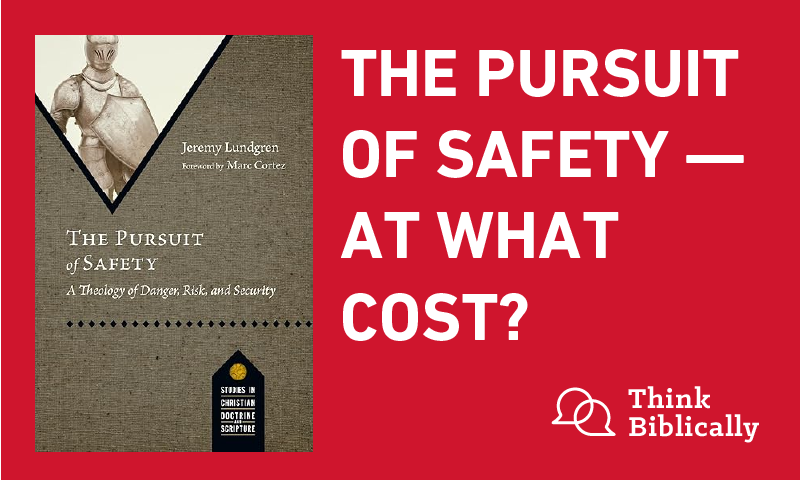
Does God promise to always keep us safe? What does the Bible have to say about our pursuit of safety for ourselves and our kids? How can the pursuit of safety become a form of idolatry in our lives? We’ll discuss these questions and more with our guest, Talbot grad Jeremy Lundgren in his new book, The Pursuit of Safety: A Theology of Danger, Risk and Security.
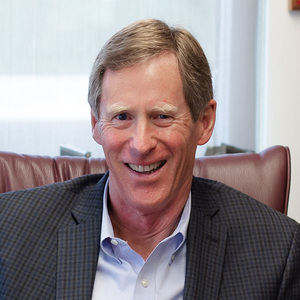
Jeremy Lundgren (PhD, Wheaton College) is director of Nicolet Bible Institute and coordinator of the MA in Biblical and Theological Studies program at Wheaton College.
Episode Transcript
Scott Rae: [upbeat music] Does God promise to always keep us safe? What does the Bible have to say about our pursuit of safety for ourself and for our kids? And how, if at all, can the pursuit of safety actually become a form of idolatry in our lives? We'll discuss these questions and a whole lot more with our guest, our Talbot grad, Jeremy Lundgren, in his new book called "The Pursuit of Safety: A Theology of Danger, Risk, and Security." I'm your host, Scott Rae.
Sean McDowell: And I'm your co-host, Sean McDowell.
Scott Rae: This is Think Biblically from Talbot School of Theology at Biola University. Jeremy, really glad to have you with us. Glad to have a Talbot grad on with us.
Jeremy Lundgren: Let's go!
Scott Rae: And he's produced a really terrific book, and I admit, this is the first book I've seen on this subject.
Jeremy Lundgren: Oh, thank you.
Scott Rae: Yeah. What motivated you to invest a lot of your time and energy in writing about a theology of risk and safety, and why is this needed so much?
Jeremy Lundgren: Yeah, thank you. And, you had mentioned it's one of the first books you'd seen on the subject, and w- as I started researching this topic, I found a few books 'cause I was looking what else is written on it. And so I will, I will just say that, John Piper, at the time, a few years ago, had a book called "Risk Is Right."
Scott Rae: Huh.
Jeremy Lundgren: There were a couple of others on, relating risk, primarily to missions, so saw some work in that area, and then obviously some books with the word risk in the title related to open theism, so, "The God Who Risks."
Scott Rae: Oh.
Jeremy Lundgren: Things along those lines.
Scott Rae: Something like that.
Jeremy Lundgren: And, and some of those, some other work related to that kind of tied the idea of God taking risks with our experience as humans of taking risks and things like that. But most of those were from that open theism standpoint, and, so I wanted to come at that from a different theological perspective. But it actually started... You know, I studied construction management as an undergrad- ... And I remember thinking about this topic of just how we engage with the physical world, things that we do, and I would talk with my wife about it from time to time when we were newly married. And, then we went and lived as missionaries in Kazakhstan for a couple of years, and, I'm sure you've heard of culture shock, and then people also talk about reverse culture shock. And, I remember coming home back to the United States, and one of the things, that just stood out to me because I'd been thinking about it previously, because of my background in construction, was just the emphasis that our American culture put on safety. And, so I started thinking about it, started talking about it, and, a quick story, so I did my Master's of Divinity at Phoenix Seminary. My wife is from, [lips smack] Orange County, and, so we were gonna move with our young kids from Arizona to California so I could start my, a Master's of Theology program at Talbot. And I had a few days before classes started, and I was kinda, you know, getting acquainted with things. I didn't have much to do for a few days, so my wife just said, "You know, you talk about this topic of safety a lot. Why don't you go just take some time, you've got, like, a week or so, and just, you know, write something, write out your thoughts about it?" And so I did. I took my laptop and just wrote out some very unrefined, thoughts about safety and what it means to be safe, and why is it so important in our world, and, you know, just some very rough thoughts. How do we tie that in with, Christ's call of discipleship? Things along those lines. Well, the ThM program started, and I remember it was either the first or second week of class, I was in a seminar with, Dr. Rob Price, who I'm sure you know.
Scott Rae: Of course.
Jeremy Lundgren: And, he went around, and he asked us, "I- if you're doing a thesis for this master's program, what's the topic of your thesis?" Well, I did not realize I was gonna be asked that soon- [laughing]
Scott Rae: [laughing]
Jeremy Lundgren: ... What my topic was gonna be. And I was genuinely... And I knew I wanted to do a PhD, and I had some very rough, like, categories of ideas, but I didn't have anything locked down of what I actually wanted to research on. And I'm... You know, he's going around the table, and it gets to me, and I just said, "Safety," because that's what I had been writing about, thinking about. And he asked me some questions, you know, "What do you mean by that? You know, the Lord is our refuge, that kind of safety?" And I didn't know what to say, and I just said, "No, I th- I think I mean, like, seat belts and hand sanitizer and that sort of safety. I wanna research that in some way." And so, Dr. Price was a great help in, thinking through kinda what theological categories to attach that to, putting me in contact with some other Talbot professors that helped, think me through that. Dr. Mark Saucy was eventually my- ... My supervisor on that project. So anyways, you know, you were asking what motivated me to do that, and I just had to tie it in with Talbot, had a, had a wonderful time there, and that's-
Scott Rae: Yeah
Jeremy Lundgren: ... Kinda where it got started. I did the ThM, and then at the end of that thesis, saw that there was still a lot more thinking I wanted to do on the topic-
Scott Rae: Good, good
Jeremy Lundgren: ... And a lot more need for research on it, and so I continued doing that into my, PhD research.
Scott Rae: Very good. Very good. Thank, thank you for the PR for the Talbot faculty.
Sean McDowell: Yeah, no, we love it. The-
Jeremy Lundgren: Of course.
Sean McDowell: There's always been concern about safety, like, it's a timeless topic, but it's also timely because in the book you express a concern, like, societally speaking, an overemphasis on safety in the broader culture. What's underneath the cultural ethos of safety first?
Jeremy Lundgren: [sighs] Yeah, that's a, that's a good question, and like I said, coming home from Kazakhstan, I had a little bit of reverse culture shock and just noticed that that's part of kind of the modern Western world, this high priority on safety. And I think you can tie that in some big ways just to, the advance of modernity and how we view the world that we live in contrast with premodern views and, you know, what nature is. You know, just the fact that it's called nature or a cosmos, you know, or calling it God's creation, whatever it is, but just how we interact with the world around us, has some big changes in how we think... Just the extent to which we can control the world around us or the extent to which God is in control of things, and that's one of the big themes that you'll see is, oftentimes modern authors will portray, premodern people as superstitious, as religious, as very passive-... And, but now that we under- now that we truly understand the world, from a scientific perspective, we can develop systems, we can develop technologies and methods to control the world around us and get it to be what we want it to be. And I think there's some truth to that narrative. There's some truth to that story. But with that comes, yeah, this desire for control, and then, there's that phrase, "safety first," which that came out of the kinda early modern industrialization in America. And there's a sense in which that slogan was addressing a very acute problem, in the, in the, in the modern world, where factories were being built. You've got new machinery, equipment, and there were just a lot of, injuries and fatalities, in the workforce, and so there was this emphasis, like, "Let's put safety first." I think it started in the railroad industry. But then the question is, once that idea of safety first becomes ubiquitous, once it's, it's pushed out into all corners of society, you start to ask these questions. Okay, you've got this slogan, safety first, but underneath that or with that, you know, safety first above what? And, and you start asking the question, or I think we need to start asking the question more. Is safety really first? Are there other things that we would say are more, important than safety? And so a couple basic questions that you could ask yourself, if you say... If you kinda are used to that way of thinking, right? We've kind of been trained to say, "Safety first," or, "Don't do that, it's not safe," is to just ask ourselves some diagnostic questions. You want to keep yourself safe, and then just say, "For what?" Like, safety isn't an end in and of itself, or it shouldn't be, but what do you want your life preserved for? What's the greater thing that you seek to accomplish? And of course, we want to look to Christ, we want to look to Scripture for answers to that. And then the other side of that coin, another good question to ask is there anything in your life, is there anything, that we value as a society or as a church that we'd be willing to give up our safety for? So we say safety first, but is there something else that we would put above that? So those are some of the questions I try to draw to the surface and engage with as we, as we look at, yeah, that emphasis on safety in our broader culture.
Scott Rae: So let me pursue that just a touch further. Um-
Jeremy Lundgren: Sure.
Scott Rae: You maintain the pursuit of safety can actually go too far. What are some of the downsides of the pursuit of safety? Let's be a little more specific.
Jeremy Lundgren: Yeah. S- safety always comes with a, with a cost. So we want to control things, so- ... What's the, what's the quote from The Hobbit? "It's a, it's a dangerous business walking out your front door." And if you really think about the nature that we, nature of the world that we live in, if you wanted complete safety, you'd have to have complete control over things. Well, what does it take to get complete control over things? You've got to control the environment around you've got to control other people, and their responses to things. You can't have anything that's unexpected happen. You need to be able to predict it. You need to be able to anticipate what's gonna happen in or- in order to deal with it. And so, as we think about the, yeah, the costs of, a pursuit of safety, those are some of the practical things that I think come to the surface, where there's just this, need for control. And then you look at, okay, if you want to control things around you, what are you giving up? Well, you're giving up,
Jeremy Lundgren: Freedom, or at least the freedom of other people around you. You're giving up anything mysterious or unpredictable or spontaneous or free, things along those lines. And so that's what... But, but that's, like, the draw, and so you look at, the use of technology, you look at, different ways that we try to control the world around us. And, safety is only one of the things that we desire to contro- you know, desire to have. It might be power, it might be, you know, any number of things that people want, if you can control the world around you. So I think those are some of the, some of the downsides, at least some of the things that we need to think through, as we pursue safety, is to just think through what are, what are we giving up, or what are the negotiations, the compromises we're making as we seek for safety?
Sean McDowell: I think you're right that one of the defining features of modern culture is this sense that we can control things, and we're shocked and surprised when we can't-
Jeremy Lundgren: Mm-hmm
Sean McDowell: ... Control things. So a-
Jeremy Lundgren: Right
Sean McDowell: ... Plane goes down a number of years ago and just disappears, and we're, like, shocked with our modern technology, how it could disappear. It baffles us, and yet, at its roots, the desire for safety is a desire for control, good or not. So I think there's a really interesting, play-off that you're, you're drawing out there, so to speak. Now, you also talk about how a lack of safety can be a testimony to God's judgment, kind of on the flip side. How could that be the case?
Jeremy Lundgren: Yeah, that, [sighs] that's a tough question just because, you know, you think about each individual person and the shape of their life-... Whe- you know, the good things that happen, the bad things that happen, the unpredictable or tragic things that happen. And we just have to recognize when we're, we're asking questions like this, discussing these types of things, is just to recognize that God is sovereign, and the way that He works is often mysterious. Right? We don't fully understand things, this side of heaven. But yeah, with that said, you know, we live in this world, that is created and ordered by God, and, you know, you read His Word, and when we walk in submission to God, when we walk in submission to how He created the world, how He created us, and what He calls us to do, how He calls us to live, I think it's right to say that there is, you know, goodness and wholeness and peace that comes with such a life, and then when we, when we walk in rebellion to those things, that there are consequences for that. So, we see that with the blessings and curses in the Book of Deuteronomy, in God's, God's relationship with Israel. We see that obviously in the Book of Proverbs, the practical wisdom in Proverbs. And then we also recognize, you know, you read the Book of Ecclesiastes, and you see that there are, there are exceptions. There are times when life doesn't, doesn't make sense, right? There are times in Scripture when the righteous are persecuted for being righteous, and so when we look at, the dangers that we face in this life, when we look at all those ups and downs, yeah, we just recognize there's, there's a level of mystery to it, or level of understanding that we can't fully comprehend, on this side of eternity. But one of the, one of the points I try to make in the book is that, as humans, we can never escape our mortality. So death, obviously, or things that could kill us, that draws our mortality to the surface, but even the little things, even the dangers that don't kill us, but they just slow us down or they just impede us a little bit, I think it's right, to look at those things biblically as indications of our vulnerability, indications of our limitations, and then ultimately, indications of our, of our mortality. And so it might seem like a stretch to say every time I stub my toe, it's a reminder that I'm mortal-
Scott Rae: [chuckles]
Jeremy Lundgren: ... And that I'm gonna die someday. Um-
Scott Rae: Well, it's just-
Jeremy Lundgren: But it is kind of a reminder of that. [chuckles]
Scott Rae: Sure. It's just a reminder that I'm a klutz. [laughing]
Jeremy Lundgren: [chuckles] Right, right. But I think it's right to say all those dangers and, sicknesses, things like that encroach on our lives, yeah, that they remind us... You know, Hebrews 9:27, "It is, it is destined for man once to die, and then the judgment." And so there is a sense in which the nature of life in this world, it should be, right, if we're, if we're thinking biblically about, our days and our lives, right, reminds us, reminds us of our mortality and then reminds us, right, that we're gonna be judged by God. And, yeah, so we need to remember that. Christ makes a point on numerous occasions, to bring our mortality, to bring the fact that we're gonna stand before God, right, to the, to the forefront of our minds. I think most famously there, is it in, Luke 13, where they ask him about the Galileans whose blood Pilate mixed, with the sacrifices, and then he r- he brings up the Tower of Siloam that collapsed-
Scott Rae: Yeah
Jeremy Lundgren: ... And killed some people.
Scott Rae: Mm-hmm.
Jeremy Lundgren: And you think about that, and so those are, you know, political deaths and then, kind of a tragic accident type of death. And with both of those things, right, the disciples are asking, the people are asking, and they wanna know, like, why were those people so bad that they died in those sorts of ways? And we know what Jesus says. He says, "It's not that they were worse sinners than the rest of you," and then Jesus reminds them, "Unless you re- you repent, you will likewise perish." And, and so I think that's right to take, I think you were asking me how a lack of ses- lack of safety can be a testimony of God's judgment, and I think there are times in people's lives where they're living in disobedience to God, and so there's this immediate sense of, "I'm bearing the consequences of maybe this foolish thing that I've done." but the bigger picture that I'm trying to draw out along with that is just the fact that the presence of danger and risk in our lives reminds us of our mortality, reminds us of our, you know, just that we're gonna stand before God one day, to give an account for how we've lived.
Scott Rae: You know, Jeremy, I don't think the q- I don't think this was ever addressed directly head-on, but as the book progressed, the, you know, it just, it just continued to beg the question that I, that I wanted to hear you address directly, and that is, does God promise to always keep us safe? I think that's, it's... I think it's widely assumed in many of our churches that God promises to do that. The Bible talks about God being our refuge, our strong fortress, b- ... Both of those are figures of speech for a place of safety. But, you know, the reality is that lots of times bad things happen to good people. And so-
Jeremy Lundgren: Yeah, they do, they do
Scott Rae: ... And so how do you- how do we square that? D- you know, so maybe the best way to get at this would be, does God promise to always keep us safe?
Jeremy Lundgren: [lips smack] I think I would answer that he promises to ultimately keep us safe- ... For us as his children, and I spend a long time in the book because I didn't want to... You, you could take a topic like safety, and you could just say, "Well, in heaven, everything works itself out." Well, that's true, but we've gotta live our lives now, and we've gotta think of how we engage with these topics in the here and now. And so, you know, I spend a long time just looking at safety and danger in this age with our, with our present bodies, this current life. But, one of the things that you see lacking with any other approach to safety is it can't ultimately deal with the problem of death. C- 'cause one way or another, you and I, we're all gonna die. There's gonna be some set of circumstances that overtakes us. You know, unless Jesus returns, we're, we're gonna die, and so just recognizing that limitation and to say, You know, so the answer is, no, God does not promise, that we're gonna avoid every accident or illness, that he's gonna keep us safe in that sense, right? Jesus promises, that in this age, you will suffer, right? That we will suffer for his sake. But he- but Romans 8 tells us nothing's gonna separate us from the love of God in Christ Jesus, and so-... We will face difficulties, we will face trials, we will, we will even face, random, unexplainable tragedies. And those are the types of things that a theology of safety needs to address, right? Where there's no explanation. And so we might have something that happens because, you know, martyrdom, because you took a stand for Christ- ... You're suffering, or there are other things where we can-- right, there's some sort of calculus in our mind, some sort of equation where we can make sense of things, but there are other, also just those seemingly random, unexplainable things that happen. I spent some time in the book dealing with a passage in Ecclesiastes chapter 10, and verse 10, it has... There's this little line where it says-- it's talking about dangers that we face in various, activities that we do, and then there's this little line that says, "Wisdom helps one to succeed," or, "Wisdom gives w- gives you an advantage or offers an advantage." And one of the things I think we need to be careful with is to make a distinction between an advantage and a promise. And so a promise isn't the same thing in a, as an advantage and vice versa. And, so there are advantages that we have in this life. We walk, we live and walk according to wisdom. But yeah, there are still things that happen that are outside of our control. There are still things that happen that,
Jeremy Lundgren: Yeah, where we're not o- we can, we don't-- we can't, like, put a claim on God, like, "God, you have to keep me safe-"
Sean McDowell: Sure
Jeremy Lundgren: ... "in this situation." He, he doesn't make that promise, but he does promise, like I said, ultimately, he's gonna, he's gonna keep us safe. And, that's where we see the theology of safety, kinda coming up to the theology of salvation, life in the age to come. And, I remembered as I was doing this research, just being touched when you look at the various ways that the world pursues safety, and then it gets to a point where it just says, "But there's death," that ultimately there are things that we just have to throw up our hands and say, "We want control over things," but ultimately, our power, our control doesn't extend beyond the grave. But for you and I, as Christians, we can look to Christ, and we can say, "But his power does." His control over our days, takes us up to the point of death, and then even through it to the other side, to the resurrection. So yeah, God is our refuge. God ultimately keeps us safe, but it is... But it includes life in this age, life with the trials, the struggles, the risks that we face.
Sean McDowell: Safety really is an interesting angle to approach the scriptures through. Like I thought about doing a theology of fairness in light of how one of my kids, I felt, was just so profoundly [chuckles] mistreated by somebody in authority, and I started thinking-
Jeremy Lundgren: Okay, fairness
Sean McDowell: ... "What does the Bible promise about fairness? How do I approach this and just unpack it through that lens?" Well, that's what you're doing here in a sense with safety. What does the Bible promise? What does it not promise? So if we push a little bit further, you know, the emphasis on safety is biblical on one side because humans are made in the image of God, and we have survival instincts, and we should care about life and be safe. And yet, Jesus said, "Pick up your cross-
Jeremy Lundgren: Mm-hmm
Sean McDowell: ... And follow me."
Jeremy Lundgren: Mm-hmm.
Sean McDowell: And you mentioned martyrdom earlier. I did my dissertation on the deaths of the apostles historically-
Jeremy Lundgren: Okay
Sean McDowell: ... Analyzing that. And so I read these passages, and Jesus doesn't mean, like, your cross is, you know, my boss is domineering or my neighbor's loud.
Jeremy Lundgren: [laughing]
Sean McDowell: He actually meant, pick up your cross and be prepared to die for this. So how do we balance that kind of command that is, like, from a safety perspective, just foolish, and yet there's deeper biblical precedent to do so?
Jeremy Lundgren: Yeah, and I think the w- the command of Jesus, "Take up your cross and follow me," is even stronger than be prepared to die. There's a sense- ... In which it's, you know, before the face of God, through our conversion, that we are, we've died to ourself, we've died to the flesh and its desires. And, we know that that's an ongoing process in the, in the Christian life as well.
Sean McDowell: Yeah.
Jeremy Lundgren: But yeah, and that's one of the things that came to the surface for me, where I thought, I... There, there's more that Christ is calling me to than just being prepared to die or prepared to suffer, if that comes about. But there needs to be a sense in which I've already, right, counted the cost, right? Before we, before you build a tower, before you go to war, you count the cost.
Sean McDowell: Yeah.
Jeremy Lundgren: Where we've already counted that cost, and we've said, "Okay, my life is in your hands, God. I've already laid down my life for your sake." And then, we're all called, yeah, to, d- to die to ourselves, to live to Christ, and whatever that looks like, whether it's a long life of obedience and patience, whether it's, in a, in a, in a more acute moment of persecution or suffering, whatever that might be, yeah, we're, we're called to, take up our cross and follow Him. I think I forget the second, or the first part of the question there. [chuckles]
Sean McDowell: Oh, no problem. I'll just-
Jeremy Lundgren: I was just motivated by that, what you were saying about taking up our crosses.
Sean McDowell: Yeah, it's no problem at all. And maybe it's just the tension that we live in, that safety is rooted in the fact that we're made in God's image, and we should care about not harming others and ourselves. But then there's this command to, "Pick up your cross and follow me," which is clearly not safe for my body. So it's just about- ... That tension that we see biblically, maybe how you make sense of it.
Jeremy Lundgren: Yeah, and the other part of that tension that I would add, too, I was talking earlier, you know, in kind of the emphasis on a theology of safety, on control, and I really, enjoyed kind of thinking through in the modern world. So I spent some time in the book talking about technology. I talk about the theory of probability and how we use it to predict the future, and then proceduralism, or just kind of how we try to get things done. And, and I look at how, we don't live in a chaotic universe, right? Where we just throw up our hands and say, "You can't predict anything. You can't know anything." but we also don't live in a perfectly predictable universe. We li- it's almost as if we live in a universe controlled by a living God- ... Who, lives and works and does things according to his good pleasure, and that He's not, right, He's, He's not an idol that we can control. He's the living God who calls us to submit to Him. And, it's real hard to parse through. You know, God has given us, as humans, the ability to remember the past, and He's given the abil- us the ability to anticipate the future. So when Jesus says, "Don't worry about tomorrow," well, we could wish we were goldfish that have no awareness of tomorrow, but Jesus gives that command to us as humans who can anticipate tomorrow, and the next day, and the next day, and the next day. And, and so there's this weight on that command when Jesus says... Yeah, Jesus knows, "I know that you can think about your life 10 years from now. I know you can think about what's happening with your kids and what that's gonna mean for their future. And even with that God-given ability to anticipate the future, don't worry about tomorrow. And I know that you can plant seeds. You're not a bird who can't store up the grain." I know that, right? Christ knows that we as humans can, plant today in anticipation of reaping the harvest tomorrow. But He still says, "Don't worry about those things." So that's the other side of that, is just recognizing the God-given capacities that we have, the responsibilities that we have from God, and yet even with those responsibilities, to trust Him as a good Heavenly Father.
Scott Rae: Well, I think that's really good advice, in the midst of some of the realities of a fallen world. And the fact that we worship a God who is loving, and good, and all-powerful, but sometimes, you know, sometimes, the sometimes this side of eternity, the fallen world, wins, and, we don't, we don't often know how that fits together. One final question for you, Jeremy.
Jeremy Lundgren: Sure.
Scott Rae: What, what advice would you have for the person who is, I would say, overly risk-averse, and then to the person who is just the opposite of that, we s- we say might [chuckles] have what we call the thrill-seeking gene, in their lives, and they take risks all the time?
Jeremy Lundgren: Yeah, I mean, first of all, we just have to thank God that He made so many different people, with so many different, like, levels of risk, What's the term? Like, tolerance and things like that. So that's something that I've grown a lot in thinking about this topic, is just, you know, praise God for the people who will push it further than I think is good, and for the people that, you know, just their constitution, they're, they are a little more risk-averse. And, and it gets to, it gets back to that question I raised earlier of why. So if you are very risk-averse and you want to preserve your life, you've gotta ask your question, you've gotta ask that question, why? What are you preserving your life for? Or if you're willing to take risks, again, just, you're, you know, are you doing it just to seek a thrill, or are you doing it o- in obedience to Christ? And, it's, it's really hard to prescribe for other followers of Christ which precise risks-
Scott Rae: Mm-hmm
Jeremy Lundgren: ... They should take or shouldn't take. But I know in my own life that a lot of those calculations we tend to do, a lot of those hypothetical discussions we have over whether we should do this or that, I think they tend to just diffuse and resolve themselves, when it gets back to that hard issue of, have I taken up my cross? Am I living for Christ? Whether this goes well, or... And God pr- God provides, keeps me safe, or whether it, by the world's standards, things go poorly, and I suffer because of this, am I doing this in obedience to Christ? So anyways, that's my advice to anyone-
Scott Rae: Yeah, that's, that's-
Jeremy Lundgren: ... As you, as you look at the dangers, is this next step you're gonna take, are you doing it for the glory of God? Are you doing it in, surrender to the Lordship of Christ?
Scott Rae: Yeah. Hear, hear. I don't think many people in the early church would have been surprised with the notion that they would be suffering for their faith.
Jeremy Lundgren: No, no.
Scott Rae: I don't, don't think-
Jeremy Lundgren: They rejoiced to do so
Scott Rae: ... That wasn't exactly breaking news for them in the early church. Jeremy, this is so helpful. Uh-
Jeremy Lundgren: Thank you.
Scott Rae: I really appreciate all your good work in this area, and I hope our listeners have enjoyed maybe thinking about an area sort of like I have for the for the first time, really thinking seriously about that. So I want to commend your book to us. It's not, it's not a light read, so just to be aware of that, called "The Pursuit of Safety: A Theology of Danger, Risk, and Security." Really grateful for your good work on this, and thanks so much for coming on with us.
Jeremy Lundgren: Thank you.
Scott Rae: This has been an episode of the podcast Think Biblically: Conversations on Faith and Culture. It's brought to you by Talbot School of Theology at Biola University, offering programs in Southern California and online, including master's degrees in apologetics, spiritual formation, Old and New Testament, marriage and family therapy, theology, philosophy, and there's probably one or two others that I missed, Sean, like I usually do. If you want to submit comments, ask questions, or make suggestions on issues you'd like us to cover or guests you'd like us to consider, please email us at thinkbiblically@biola.edu. If you enjoyed today's conversation with our friend Jeremy Lundgren, give us a rating on your podcast app and share it with a friend, and join us on Friday for our weekly cultural update. In the meantime, think biblically about everything. [upbeat music]