Biola University
What is the enduring legacy of MLK?, why has the culture neglected the theological basis for his civil rights work?, what assumptions to white and black people have about each other that are inaccurate or unhelpful? We'll discuss these questions and more in a joint podcast with the Biola Winsome Convictions Podcast and my co-host Tim Muehlhoff. Our guest is Pastor Chris Brooks, pastor of Woodside Bible Church in metro Detroit and host of the radio program, Equipped with Chris Brooks.
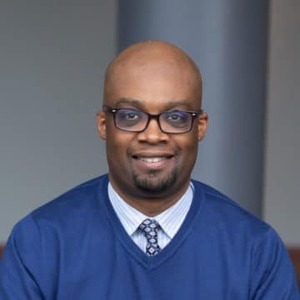
Chris Brooks is a husband, father, pastor, radio host, and author. He and his wife, Yodit, adopted three of their six kids. He holds degrees from Michigan State University and Biola University and is currently pursuing a doctoral degree from Asbury Theological Seminary. In addition to pastoring our church family, he hosts “Equipped with Chris Brooks,” a national radio program by Moody Radio, and is the author of Urban Apologetics.
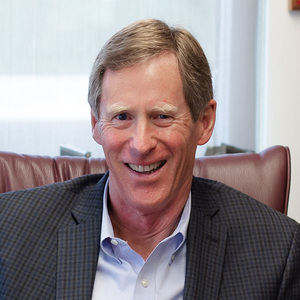
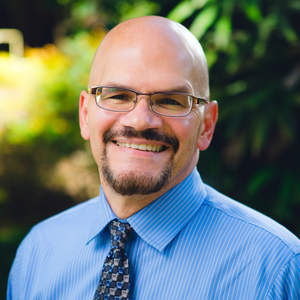
Tim Muehlhoff (Ph.D., University of North Carolina) is a professor of communication at Biola University in La Mirada, California; co-director of The Winsome Conviction Academy and Podcast; and a speaker and research consultant for the Center for Marriage and Relationships. His books include The God Conversation, I Beg to Differ, Winsome Conviction, and Winsome Persuasion, which received a 2018 Christianity Today book award in apologetics/evangelism.
Episode Transcript
Scott Rae: [upbeat music] What's the legacy of the great moral theologian, civil rights leader, and orator, Martin Luther King Jr.? Why do you think that the culture sometimes neglects the religious and theological foundations for his work? And why do you think it's so challenging for majority culture folks to understand and accept that the suffering of racial minorities is real? Are there any racial assumptions that white and Black people make about each other that are inaccurate or helpful? We answer these questions and a whole lot more with our friend, Reverend Chris Brooks. This is a joint podcast with Think Biblically and Winsome Convictions, co-hosted with my colleague on Winsome Convictions, Dr. Tim Muehlhoff. Chris, it's great to have you with us. Chris is pastor of, Woodside Bible Church in metro Detroit, thirteen campuses, eleven thousand people in attendance on a, on a Sunday. He's also the host of a weekly radio program called Equipped with Chris Brooks, and the author of a terrific book entitled Urban Apologetics. Chris, it's great to have you with us, and, really delighted to have you out here. I think because your daughter's here, this was probably the fastest in- fastest yes you've said [laughing] to an invitation-
Chris Brooks: [laughing]
Chris Brooks: [laughing]
Chris Brooks: ... In a long time. Absolutely.
Scott Rae: So it's, it's great to have you with us. I know-
Chris Brooks: And the fact that it's, seven degrees below zero at home [laughing] —
Chris Brooks: [laughing]
Chris Brooks: —um, doesn't hurt either.
Scott Rae: Understandable. I know, you know, when you spoke in chapel this morning, you helped connect a couple of things that-
Chris Brooks: Yeah
Scott Rae: ... I think maybe most of us haven't thought about.
Chris Brooks: Yeah, so obviously, we'll, we'll talk about the moral philosophy of Dr. King before it's all said and done, but I don't think that we should quickly overlook the connection between, these last several days in the life of our country. Yesterday was, the inauguration of forty-seventh president of the United States, Doc... Donald J. Trump. And I think that when it comes to the Imago Dei, there is no institution that has greater sway or influence in how that is, practically, lived out and maybe even thought about in the minds of, men and women in our country, than our government right now, and the political, in particular, the partisan conversations that we're having. We have to acknowledge that. But yesterday also, I don't think by coincidence, is, also MLK Day. And the heartbeat of his message, moral philosophy, is the Imago Dei. But then Sunday was the forty-first Sanctity of Life Sunday, in reflection of the events of 1973 and, the, act of SCOTUS to legalize abortion on demand and all that's happened subsequent to that. And so I think we need to connect those dots. I think we need to recognize both the Imago Dei and the Missio Dei. What is, what is the, natural outflow and expectation of how now shall we live as a result of the Imago Dei? If we really believe and embrace that as being the fi- primary principle of Scripture that drives all human dignity, how now shall we live in light of that? And I think that's what Dr. King gives us. Dr. King gives us an embodied ethic of what that li- looks like lived out, taking it from the philosophical to the practical, from orthodoxy to orthopraxis. So to me, it couldn't be a better time to have this conversation than this week.
Chris Brooks: Well, Chris, thank you so much for being here and diligently praying over the Detroit Lions.
Chris Brooks: [laughing] Maybe I shouldn't have did that study on Lamentations-
Scott Rae: [laughing]
Chris Brooks: ... Before the game. [laughing] It could have been bad timing. [laughing]
Chris Brooks: Good thing this isn't, visual.
Chris Brooks: [laughing]
Chris Brooks: Chris, you've said in the past you believe that MLK is the greatest moral philosopher our country has ever produced, but we often overlook that because he was such a great orator. I wonder if you wouldn't just for a second, 'cause I'm a comm professor, can we just for a second, though, talk about, how powerful he was, both in written form, I'm thinking of Letter from a Birmingham Jail, which we read in our rhetoric classes here at Biola, but also he moved the needle with words and actions. Can you just comment very quickly on what you take away, yourself being a gifted speaker, from Martin Luther King Jr.?
Chris Brooks: There are very few people whose voices cause us to pause-
Chris Brooks: Mm-hmm
Chris Brooks: ... Arrest us as soon as we hear it. I guarantee you, if we had the ability to do it, to simply play an audio of any of his sermons, that it would capture and captivate the hearts, minds, and the imagination of the entire room. He was such a powerful orator that he still remains a dominant influence of African American preaching to this day. I think there's so much we could talk about, and I recognize we're blending, the two podcasts, so I'll just simply say two things here that I think is pretty special about Dr. King. Dr. King had the ability of, speaking to two audiences at once, and he never forgot both. That while he was having an intimate conversation with his immediate audience, he always recognized that the world was listening.... And I think we can easily make the mistake of speaking to one or the other, of being so localized that we lose sight of the fact that everyone isn't in our context. But we can also, think beyond our context and be of no practical help to the people that God has called us to primary min- primarily minister to. So I appreciate the fact that Dr. King always recognized that the immediate audience was who God called him to speak to arouse their moral imaginations, but that there was a broader audience that was always listening, and that's why this movement that started in the American South became a movement of global influence. You could track the movement of independence that happened even in African nations, as a result of what Dr. King and many others contributed to here. The other thing that Dr. King did so masterfully, and this is often overlooked, his primary audience were African Americans, who by and large were in poor communities, who by and large were, didn't have privy to institutions of higher education, but yet he's quoting Plato, Socrates, great philosophers, as if they knew him. You know, and he was raising the intellectual bar of the group without belittling, without creating distance, and it's one of the most impressive things of any speaker to be able to do that, to be able to, on the one hand, be relatable, but on the other hand, say things that cause people to go back to read, to grow, to be exposed to something that they wouldn't have otherwise had access to.
Scott Rae: Chris, I want to go back to an incident when my s- my middle son was in high school. He was re- he was asked to read the letter from Birmingham Jail-
Chris Brooks: Yeah
Scott Rae: ... As one of his course assignments.
Chris Brooks: Yeah.
Scott Rae: And I see, I gave him a heads-up, 'cause he told me about the assignment, so I told him sort of what to look for. I said, "Be, you know, watch out for all of the biblical and theological illusi- allusions and references that there are in that letter."
Chris Brooks: Yes.
Scott Rae: And after he finished the assignment, he came back to me and said, "Dad, I don't know what you were talking about, 'cause there was none of that there." [laughing]
Chris Brooks: [laughing]
Tim Muehlhoff: [laughing]
Scott Rae: And I was so... I'm a- I'm about to have major egg on my face.
Chris Brooks: Yeah.
Scott Rae: So we went back and looked it up online-
Chris Brooks: Yeah
Scott Rae: ... And read the whole original-
Chris Brooks: Yeah
Scott Rae: ... And discovered that his teacher had edited out all of the theological components.
Chris Brooks: Wow. [laughing]
Scott Rae: And my, needless to say, my son was not happy about that.
Chris Brooks: [laughing]
Scott Rae: And, but I th- I think that reflects a broader trend culturally-
Chris Brooks: Yeah
Scott Rae: ... To minimize the religious component, the religious underpinnings-
Chris Brooks: Right
Scott Rae: ... Of a lot of his message. Why, why do you think that is?
Chris Brooks: Right.
Scott Rae: And then how did, how do you, particularly in your position as a pastor, help connect with secular folks on the religious component that so energized his message and his mission?
Chris Brooks: Well, I think to the first part of your question, I think there's a desire for mo- many people, many groups, to want to claim his legacy. But like any other person, Dr. King was complex. He, is a person who, said so many things that even a secular leader would want to affiliate with, but you can't deny his commitment to the local church and the gospel. And so I would imagine that the answer to why edit, why disassociate him with those things, is to be able to claim the portions that we want while denying the others. I will say, though, and we'll come back to this in a moment, but I will say that I do think that it's important to recognize that Dr. King spoke to two groups, primarily. He spoke to, the local church, he was a churchman, but he also spoke to labor unions- ... A lot of labor unions. And, and I think that there are those who will identify with his theology of work and his, sensitivities to the poor and classism, that are things that want to be picked up on. You asked the second question of what do I do? I, you know, I try to remember one of his statements. He's obviously quotable, and each one of us, could recite one or more of his quotes, but one of the things that I love the most is a quote, and I'll kind of paraphrase this, he says that his first calling was to be a preacher of the gospel, and that remained his primary and strongest commitment throughout his entire civil rights journey, and that he saw his work in civil rights and human rights as an extension of his ministry, and he never forgot that. As a matter of fact, on my social media, I posted it yesterday, that he saw himself first and foremost as Reverend Dr. Martin Luther King Jr., which obviously would date back to the huge influence of his father, who was the one who introduced him to, the German monk, Martin Luther. You guys know, is, he was born as Michael King, who later changes his name to Martin Luther King Jr. In identifying with the Reformation period. So just remembering how much the Reformation and how much church history and how much theology... I mean, he goes to school at Boston University for a degree in systematic theology. So-... He was a, he was a, he was a Christian leader through and through. Not perfect. We can debate some of the theological failings, but certainly deeply committed there.
Chris Brooks: Chris, I wonder if I could pick up what you said about his sensitivity. [clears throat] A couple years ago, you came here and did a chapel talk that was phenomenal, and in it, you made the comment, "Maybe the best place to start when it comes to the huge body of work of Martin Luther King Jr. Is Strength to Love."
Chris Brooks: Yeah. Yeah.
Chris Brooks: So, I picked up a copy of it, and I was really struck where he begins, and he begins with hard-heartedness.
Chris Brooks: Yeah.
Chris Brooks: He says, on page six, "The hard-hearted person never truly loves. He engages in a crass utilitarianism that values other people mainly according to their usefulness to him. The hard-hearted person lacks the capacity for general... A genuine compassion. He is unmoved by the pains and afflictions of his brothers." Can you comment a little bit on how maybe hard-heartedness has crept into the Church when it comes to race? That after a while, it, we just become tired of the race conversation. And our work with the Winsome Conviction project, race has really done a number on churches and Christian organizations not being able to resolve that issue or even talk about it. Do you think hard-heartedness is creeping in to the modern Church when it comes to race?
Chris Brooks: Yeah, I think I would describe it as two ways. I would describe it first as exhaustion. I think, it was Dr. Charlie Evans who says, "Whenever reconciliation is the primary goal of the conversation, we always miss it. Whenever kingdom advancement is the primary focus of the conversation, then reconciliation inevitably happens-
Chris Brooks: Mm-hmm
Chris Brooks: ... Because it takes all of us to advance the kingdom of God." so I think there's an exhaustion that sets in on all sides of this. In particular, since we have surrendered so much of the conversation publicly to partisan politics, who, whose goal is driven by something different than our goal as the Church. You know, earthly politics divides in order to get electoral wins. Kingdom politics unites in order to get eternal wins. And so we know, because of our eschatology, everything is moving towards Revelation 7:9- ... Right? Where people from every tribe, and tongue, and, language will all be gathered together to the glory of God and giving praise to our King. But [chuckles] that's not the motivation of earthly politics. The earth... The, the motivation of earthly politics so often is to be able to animate the worst within groups of people, and their thinking, suspicions, and doubts in order to gain wins, electoral wins, and the sad thing is that it works. And so this creates a cycle whose end goal isn't to get to solutions. And, and so I'm a big believer that, we have to have conversations about the Imago Dei because, once we understand what it means for us to bear the image of God, and what that really means, again, connected to the mission of God, then that forces us to look for real solutions towards reconciliation that actually causes everyone to be more motivated. But yeah, the embitterment that you realise, I think, comes from an, a frustration and a deep suspicion towards one another.
Chris Brooks: So my ears perked up when you said we assume the worst.
Chris Brooks: Yeah.
Chris Brooks: If you go back to the Letter from Birmingham Jail-
Chris Brooks: Yeah
Chris Brooks: ... I reread it, uh-
Chris Brooks: Yes
Chris Brooks: ... You know, for this. I was struck by how he started it.
Chris Brooks: Yeah. Yeah.
Chris Brooks: Remember?
Chris Brooks: Yes.
Chris Brooks: Remember? He says, "Listen, I often don't respond-
Chris Brooks: [laughs]
Chris Brooks: To criticisms-
Chris Brooks: Yeah
Chris Brooks: ... Because my secretaries would be-
Chris Brooks: Yeah
Chris Brooks: ... Swamped." But then he says this about the-
Chris Brooks: "I assume the worst," yeah
Chris Brooks: ... White clergy-
Chris Brooks: Yeah
Chris Brooks: ... Who were really asking him, "Be patient. Don't bring your protests here." He said, "Because you're men of genuine goodwill, and I believe that your criticisms are sincere..."
Chris Brooks: Yes.
Chris Brooks: He believed the absolute best about them.
Chris Brooks: Yes.
Chris Brooks: And then he gave his classic retort.
Chris Brooks: I'm so glad you brought that up because I think that that is what allows us to be able to have conversations within the Body of Christ that can ultimately benefit the world, is when we recognise that our common goal is the same: the glory of God, the plan of redemption being advanced in our communities. I got a chance to work with a colleague. We... You talk about two, different backgrounds. His grandfather was a Klansman. My dad, was a Black Panther, and here we are, having conversations week after week after week about how we were raised to see the world. But what kept us in the conversation with one another is that we are brothers in Christ.
Chris Brooks: Mm-hmm.
Chris Brooks: And, and even when we vehemently disagreed, we believed the best for, of one another. But unfortunately, as you know, that is not the present ethos around these conversations.
Scott Rae: Let me, press down on that just a little bit further, Chris. What... Are there certain racial assumptions that white and Black people make about each other that are-
Chris Brooks: A few [laughing]
Scott Rae: ... Either inaccurate or, [Chris laughing] or, you know, which of these-
Chris Brooks: Yeah
Scott Rae: ... Would you say are the most inaccurate or the most unhelpful?
Chris Brooks: Man, there's so, there's so many. I think that, probably at the top of my list would be the assumption of difference, right? I've had the privilege for 20 years, I pastored a predominantly Black church. Since 2019, I took a missions trip to pastor a predominantly white church.
Chris Brooks: [laughing]
Chris Brooks: And, some of you will get that later. But, [laughing] ... But, but I do believe that what I've noticed is that they're the same fears. My predominantly Black church I got a chance to pastor, anytime we introduced any song that wasn't, sung in the Black tradition, or I brought in, a speaker that wasn't from an African American background, there was a suspicion of, "Are we going white?" You know? And, same fears in my predominantly white church. When I do the opposite, "Are we going Black?" Right? And so I think that we fail to recognize how m- how our fears are common, right? I think there are also assumptions of goals and motives that are very, false. I'll just simply say this, and then we can go deeper, is that somehow what we have to manage to do is to live neither on the extremes of paranoia or naivety, and it's hard. It's hard to be in cross-cultural settings and not either be paranoid that there is some underlying conspiracy, or to be naive to it and pretend like the human heart is not fallen, right? And so I think it's both the paranoia and at times naivete that works against us in our dealings with one another, and we have to start with a place... From a place of we're all fallen, we all have our struggles, and yet Christ redeems and allows us to be able to be one in him.
Chris Brooks: You're very quick to say that this unity that needs to happen deeply impacts the gospel, and yet we h- we live in a world in which our struggles are there for everybody to read. I mean, we live in, sadly, in a post-Rabbi Zacharias world that broke the hearts of all of us when that came out. And so you made the comment, "Social media gives 24-hour access to our Christian hypocrisy if we're not mindful." So how do we counter that? How do we, when it's out there for everybody to see, what are ways that we can reinstill trust to both those within the Church and those outside the Church?
Chris Brooks: Tweet less. [laughing]
Scott Rae: [laughing]
Chris Brooks: I... [chuckles] You know, I think that, you know, it's foolish for us to think that we can have substantive conversations, let alone disagreements, on social media. I mean, this is something I've, I've learned in conversation with you. I mean, the challenge of social media, and we've all fallen prey to this, is, if you and I are disagreeing on social media, we know that at a minimum, 100 people are looking on to that conversation, right? And, and who wants to look like they were wrong or the fool in that type of setting? I mean, the best thing that can happen if you post something that I think is absolutely wrong, is for me to DM you and to say, "Hey, let's have coffee. Let's meet. Let's have a conversation face to face." The worst thing that can happen is for me to go public in response in your comment section and tell you how wrong you are. How many of us, by the show of hands, are embarrassed to admit that we've lost hours, if not days, trying to have social media fights and stuff? And there's been times when my wife has said, "Are you with us or are you not?" [chuckles] You know, because I'm thinking about, what am I gonna post next that's witty and will win this argument, hands down, you know? And so I think that the answer to social media is this: is that if we're gonna use it at all, use it for the purposes of demonstrating something that's countercultural, and that is self-deprecation. I think that the more that I can be honest about my own struggles as I watch the hypocrisy of the world that I legitimately criticize, but yet too often, emulate and identify with, the more that I can go online and say, "You know what? I struggle so often showing humility," or, "I understand what it's like to miss the mark in this way or this, or this, in this form," the more you disarm your critics because you're not simply pointing out the wrongdoing of others. I think the problem that so often happens in this generation is that there's right virtue, like the desire for justice, with the wrong content filling that container, that virtue container. And so we have truncated the definition of justice as simply the act of calling out bad actors.
Scott Rae: Mm-hmm.
Chris Brooks: Right? And if justice is only the act of calling out bad actors, you got a problem in that all have sinned and fallen short of the glory of God. Eventually, everyone's a bad actor if that logically plays itself out. But the other problem you have is that you're s- you're constantly lobbing bombs at other people when you're living in a glass house. And so it's, it's a, it's a, it's a game that no one wins. And so I think that if we're gonna use social media, use it to be self-deprecating, to show how truth has worked itself out in your life, the journey of sanctification, and I think you'll win a lot more people while still being able to make solid points about how we all fall short.
Scott Rae: I think that's really helpful. I think to take our task seriously, but not ourselves-
Chris Brooks: Yeah
Scott Rae: ... Too seriously.
Chris Brooks: Yeah, yeah.
Chris Brooks: G.K. Chesterton-
Scott Rae: Some-
Chris Brooks: -just came to mind, that, yeah, he would laugh at himself, and he was-
Scott Rae: ...Let's go back to his moral theology-
Chris Brooks: Yeah.
Scott Rae: -for a minute.
Chris Brooks: Yeah.
Scott Rae: Tim said he's one of the greatest moral philosophers. I think we would say he's one of the greatest moral theologians-
Chris Brooks: Yes
Scott Rae: -of our generation as well. Other than the image of God, which you talked about at length in chapel this morning, what are some, maybe one or two other key components of his moral theology that stand out to you?
Chris Brooks: Yeah, I would strongly recommend Michael Honey's book, Dr. Michael Honey's book, All Work Has Dignity. The work that Dr. King does on faith, work, and economics is so vastly underappreciated. How many have heard his quote about sh- being a street sweeper, right? That if you're gonna be a street sweeper, sweep like Michelangelo painted, like Beethoven made music, you know? Do it as if all of heaven is looking over at you as you, sweep streets, so that when you die, heaven might say, "There was a great street sweeper," right? Who says that, right? But he's speaking to... And, you know, I've been a part of the faith, work, and economics movement for some time, and get a chance, the privilege of sitting on a board for this great organization called Made to Flourish. And, but so often, the videos and the thrust and the literature of that movement targets white-collar entrepreneurs and stuff, and, the task that I often feel I have is to be a translator for the urban context, to, translate to a blue-collar environment. But Dr. King had a way of making sanitation workers- -feel like they were advancing the kingdom of God, right? And so we all have maybe heard that, little quip about the three bricklayers. A man walks by three bricklayers, and he asks the first one, "What are you making?" And he says, "About fifteen bucks an hour." Then he asks the second one, "What are you making?" He says, "Well, I'm building a wall." Then he asks the third one, "What are you making?" He says, "Well, I'm building a church where families will come, be restored, and worship God." All three were working on the same project. All three had different perspective, on it. Dr. King had a way of taking the conversation from paycheck to purpose, right? So I think when it comes to his, work in moral philosophy, his ability to recognize the effects of not just racism, but classism, and to uplift the dignity of the poor is, something that's profound even for today.
Chris Brooks: You've said that, Christians are called to run to the hard places, not from them. Why do you think some churches or Christian institutions of higher education don't make diversity an issue, or they don't make it a priority? What, what keeps them from running to what I think today is a pretty big, hard place that people want to avoid?
Chris Brooks: Yeah, let me lu- use an, a practical example of this, but let me just first say, because it's hard, right? I think diversity is one of the coolest phrases of our day. But as a pastor, we have fourteen campuses, and, I think what makes our church somewhat unique is that typically, multi-campus movements are in the similar or the same socioeconomic context, right? So all suburban or all urban, but our fourteen campuses are urban, suburban, rural. We have some predominantly Black campuses, some predominantly white campuses, various socioeconomic. So when I do the roadshow of visiting our campuses, it's, it's in very different contexts, and I'm, I'm grateful for that. But it is extremely hard, especially when you come through political years like what we just went through, where you're not gonna please anybody, or let me put it a different way: fifty percent of what you do... Everything you do will be pleasing to fifty percent of people and not pleasing to fifty percent of people. You just gotta decide which fifty percent you're gonna tick off on that day, you know? But one just practical example of how hard this is, I don't know how many of you live in homes that are multigenerational, but my mother-in-law, who's a widower, lives with us, so there's three generations at our dinner table, right? And so one of the things that we decided is that we're gonna rotate who gets to pick dinner. So if my kids pick dinner, we're having pizza every night, right? 'Cause that's, that's what they want, right? If me and my wife pick dinner, we're gonna have a different menu than the kids. If my mother-in-law picks dinner, she's Ethiopian by heritage, and she loves home-cooked meals. She loves cooking, those traditional foods from her particular background. So in order to survive, we rotate, right? So nobody's fully happy. [laughing]
Chris Brooks: [laughing]
Chris Brooks: But you know your day is coming. [laughing]
Chris Brooks: [laughing]
Chris Brooks: Right? And I think that that's what it takes in order... At least so far, this is what I'm learning. I think that's what it takes in order to, venture into those places. It takes the ability to say something that we don't like saying, and that is, "I'll be inconvenienced for the sake of the gospel." Make no mistake about it, I think that corporate America has done far more for race reconciliation than the Church. And I think it's because when we go to work, we know we have a common mission, we have to work with one another, my job depends on your job, and so there is a built-in forced incentive.... I think that in, a society like ours, a free market society, and I'm not against a free market, I am a capitalist raising capitalist children, [audience chuckling] but I also recognize the downside of it, and that is the church becomes elective. And it's far easier for me to say, "I didn't like that music. I didn't like that sermon." And when we don't think of ourselves in the context of a group, and this is- this goes... I don't wanna be too long-winded, but this goes back to how we even teach the gospel. I mean, the average person will explain it in your typical local church as, "Jesus came for me, He died for me, so that I might be saved." And we don't teach as pastors, and I criticize my own guild for this, and even myself in that, so often we don't teach that you are a part of a redemptive community, a covenant community, a family of faith, and we're to live on mission together. And so when we don't have those strong group bonds, it becomes very easy to be driven by preference and just simply to walk away. And if I, if I'm defined by my elders as only being successful based off of nickels and noses- ... Then I'm gonna have, as my greatest failure, people leaving, and my greatest success, people coming, instead of people maturing. So if I'm not defining myself in terms of formation, and I'm defining success simply quantitatively, not qualitatively, then it continues to inadvertently feed division. And so this, homogenous unit principle that drives the church growth movement, even to today, is successful because it works. You won't mature being in isolated, segmented groups, but you will grow numerically. So you'll have to decide if diversity and the glory of Christ in the local church is worth limited growth. And if it's worth limited growth, then stick to it.
Scott Rae: Yeah, as I read the Gospels, I don't see Jesus losing a lot of sleep over when people decided to stop following him.
Chris Brooks: Yeah. Yeah, John 6.
Scott Rae: Yeah. Let's- we got a few minutes left. Let's open it up for questions from you all. David Turner's got a mic. And let me just say, too, we are recording this for use on our podcast. If you have a question that you wanna ask but don't want it recorded, let us... Let Tim or I know after we're done, and we'll make sure that gets edited out.
Denise Reed: Hi, Denise Reed, School of Education. I just have a question. Given the context of your congregation, how would you recommend-
Chris Brooks: Yeah
Denise Reed: ... How to engage and keep our white brothers and sisters engaged when it appears that conversations about diversity get difficult, so they won't check out, that they will stay engaged in the conversation? How would you- what recommendations-
Chris Brooks: Yeah
Denise Reed: ... Would you give to them?
Chris Brooks: First off, Denise, thank you for what you do, and thank you for the question. I recognize that I'm in a privileged position in that I'm not just a member of my local church. I get to be in a position of leadership within my local church. So in many ways, because of that, I can, in some ways, leverage influence to keep us in conversations that we otherwise would not wanna be in. I don't know how to answer your question besides the fact that there has to be a greater commitment to the glory of God and the honour of Christ than it is to our conveniences, because once our preferences and conveniences, are our greatest commitment, we will bail. And what Denise is highlighting is this, reality that is true for all of us, and that is we bail on hard conversations when we- when any sense of culpability comes up on us, and, that's true in racial conversations. That's true also in marriages, right? How many times have I done counselling, and maybe the wife brings the husband in, drags him in, and says, "Fix him"? [audience chuckling] And, and so I start out, and something may come up that reveals some deficiencies in her, and I'll try to bring a balance to the conversation and never see the couple again, right? And I think it's true for all of us that we bail tough conversations. So let's make sure, number one, we don't see that simply as a white failure. I think it's a common failure of humanity that we bail tough conversations, and I think we have to ask ourselves: How good am I at staying in conversations in which it highlights culpability or failures on my part? But secondly, I think that we have to have a defined goal or definition of a win, because if all we're doing is recycling, failures and guilts from the past, but there is no clear goal... I will tell you, this conversation has predominantly been driven by men. White men have had disproportionate power, but even the civil rights movement, Black men were highlighted. And the one thing about men is we don't stay in things if we don't feel like there's a win in it.... If we feel like we can't see ourselves winning in it, I don't care if it's golf, football, baseball, cards, pinochle, I don't care what it is, we're getting out of it if we don't see a win. And when it comes to the race conversation, we have to be clear. This is why one of the books that I recommend is J. Dedalus Roberts. He was a contemporary of Dr. King, writing in the '60s. He wrote a book called Liberation and Reconciliation, where he not- he didn't let go of, didn't let his foot off the gas pedal of liberation needing to happen, but he also had a defined win. What does reconciliation look like? How do we know we've made progress? How do we know we've succeeded? And if we have that clearly defined, I think we can stay in it.
Mike Longinow: Mike Longino, I teach journalism in the Division of Communication with Tim. We have students in our classes who are living in a cancel culture-
Chris Brooks: Yeah
Mike Longinow: ... Where, you can cut somebody off completely. How do you counsel people in your church, and especially undergraduate-age students, how not to be in that, what to do if you're canceled, those kinds of things?
Chris Brooks: Yeah, a-a-again, Mike, thank you for what you're doing. Thank you for the question. I think the simplest answer to this is to try to have the toughest conversations with those that you have the deepest relationships with, because typically there is more grace given there for if you misspeak or don't say things perfectly or mess up. You can't control who cancels you. You know, we're doing a journey through, in our church right now, Jesus's high priestly prayer of John seventeen, and verses, ten through sixteen, he talks about twice that we will be hated by the world because He was hated by the world. We're not of the world, like He is not of the world, and so He presupposes that we're going to be canceled. He presupposes that there will be a cultural, price to pay for what we do. We have to be committed to doing what's right because it's right, and hopefully, and I know this is true for me, I can sustain being canceled out there if I know I have a community that loves me deeply, right? And so the love of my local church gives me courage and boldness to speak with honesty and integrity, knowing that if I'm rejected out there, I got some folks who love me. Even more, I got a wife who's gonna hug and kiss me when I get home, right? So even if you cut me off, I still got wife, kids, community, all that stuff. If our world is online, or if we're driven by the social media influencer-type culture that we're in right now, then to be canceled is an ultimate death. It is the ultimate assassination, right? If you don't have deep relationships of love. And so build those deep relationships of love, build community so that if the world cancels you, and you can't control that, you still will have a family and a family of faith to embrace you.
Tom Crisp: Hi, Tom Crisp from the Department of Philosophy, School of Humanities and Social Sciences. My chair just fell over. Dr. King was a powerful, incredibly articulate, exponent of the ideas of nonviolence, nonviolent direct action as a method of, agitating to resist injustice, to dramatize the indignities visited on the poor, people of color, and other peoples. But that language of nonviolence, you don't hear as much, I've- I think, in the, church daily- in the church circles that I run in. It's a foreign language I f- I often find as I'm teaching it to my students. Can you speak at all to the legacy of Dr. King on, and the church's, use of the language of nonviolence and methods of nonviolence to do kingdom work?
Chris Brooks: Yeah, and obviously, he picks this up from Gandhi, right? And so Gandhi becomes a very strong influence on his life, and we can debate whether or not all of that is good because it does shape his theology, and it does lead him to a universalism that I would reject in some of his theology, but that's for a later conversation. But yeah, the language of nonviolence is the recognition that if I return evil for evil, at the end of the day, I won't win over those people that I'm trying to win over. "When a man's ways please God," scripture say, "He will cause even his enemies to be at peace with him." Dr. King recognized that even if all the African Americans in this country were united, because of our minority position, we didn't have enough leverage to be able to change culture, let alone the lack of positions of power. So if he was going to, win over those who held the purse strings, walked the halls of government, held institutional bureaucratic positions, they could not see images every night of Blacks responding in a way that they were already culturally conditioned to assume they would, right? Also, he was driven by the scriptures: "Love your enemy," right? "Turn the other cheek." And so he does, ab- a really incredible job when you, when you think about how they trained, and again, they trained... It was massive training that went into being able to have coffee thrown on you, being, beaten by police and not respond. I don't know if I have the strength of being able to do what they did. It's not for the faint at heart. But I think, again, like many things you don't hear it talked about today, because it's hard.... But I also don't think we should forget that he was massively criticized for it by the contemporaries of even his day: Stokely Carmichael, Malcolm X, all these others who considered it weakness. And part of what you see at the end of Dr. King's life is even he began to recognize that, "I'm losing sway over the minds of the community that I'm trying to reach," because they began to even be critical and cry out, Psalm 13: "How long, O Lord?" Right? And so we live in a day and age, and it's important to recognize, I know we're limited on time, how much the conversation about race has changed circa 2016. That we went from the goal, of being not racist to the goal of being anti-racist, and that's... It may seem like semantics. There's a huge difference in that no longer is the goal, sufficient for you not to have, animus towards another group of people or not to want to do harm for them. You're now expected to be, an activist, and if you're not an activist, then you're not, advancing the struggle. You're an enemy, you're not an ally. And so nonviolence has continued to be pushed further and further away from our social consciences. And, and I... You know, my biggest prayer, and our church's biggest prayer last year around the political season was around political violence, that there wouldn't be more political violence, but I fear that there's more of that even ahead for us. But there is so much to learn from, what they did, and their work was effective, but it was massively criticized then and now.
Joshua Smith: Thank you. Joshua Smith, literary scholar with the Torrey Honors College, and I'm also a local pastor. So my question has to do with, Well, I'll frame it this way. I, the church I pastor is predominantly African American in a community that's not predominantly African American, so we've historically had a lot of commuter, commuters come and join us. But to have local engagement means to do cross-racial, cross-cultural things, and so, you know, we wrestle with that. And I agree with you that, you know, Black folks can have the sim- the same reservations as other communities. However, you know, one of the things that's come up as we wrestle with this is this question around, kind of multiethnic, goals, often don't help Black people specifically. So it's like it's a, it's a trade-off from the specific things that nourish... And again, maybe this is kind of a California thing, so you got Black folks looking for a Black community in California that they wouldn't be looking for, say, on the East Coast. So I wonder if you can kind of speak to that tension.
Chris Brooks: Yeah, I don't think it's a California thing at all. As a matter of fact, probably the organization that has given most voice to this is called New Era, and, you'll see New Era Detroit, New Era Chicago, New Era LA. I mean, and it is, the recognition that, we have to have a Black social agenda that actually benefits us. It's interesting because when I say the term affirmative action, most people think that the primary benefactors of that has been, Blacks or ethnic minorities, when the truth of the matter is that the number one benefactor group of affirmative action has been white women, right? And so this is why a lot of people assume that when you start talking about multicultural, multiethnic goals, that it's a code way of saying, "Hey, we're not going to be sensitive to your specific issues or needs, but we will, cater towards other groups." but this is where I think we, in this modern moment, have to learn from the civil rights movement. What is the failure of groups so often, and I'll be critical for a moment of Black Lives Matter, but you could pick other protest groups. Occupy Wall Street, how many are old enough to remember them? Protested till it got cold outside. [audience laughing] but, you can pick a number of different groups, and what you'll be hard-pressed to find is: What's the agenda? What's the definition of success? So I would just say, first off, thank you for what you're doing. As a fellow pastor, I think that, it's the toughest job you'll ever love. I love pastors, and I would just simply say that the best thing we can do in our local communities is to convene and to say, "What is it that we want to see? What of these things can we do ourselves, 'cause we have to own our community self-lift and improvement, and what are the real barriers that's keeping us from success that may be beyond our control that is legitimate racism?" You cannot call every failure of your community racism. It's not. But you have to be able to identify where that legitimately exists, and what barriers do we want to see removed? For Dr. King, it was very clear: We want voters' rights. We want to be able to have an amendment that gives us protection around voting, because there was a belief that if we can control the political apparatus and the outcomes of our community, then we can change this nation. They may have put too much faith in politics, but that's what their agenda was, so it was very clear. And then later on in his life, when he launches the Poor People's Campaign, there's a housing, a workforce development, but it's a clear agenda that they're trying to accomplish. We have to have more than just lament. We have to be able to have a clear agenda so that, going back to what you said earlier, y- so that when we are doing things to animate the problem, and people actually want to come to the table to try to find solutions, that we have something to present, to say, "This is what success looks like, and if these barriers are removed, then, we can, we can see advancement." So, hopefully that's helpful. To actually have an agenda, though, is really important.
Scott Rae: Chris, thanks. It's been super insightful and helpful. [audience applauding] Much appreciated.
Scott Rae: This has been an episode of the podcast Think Biblically: Conversations on Faith and Culture. It's brought to you by Talbot School of Theology at Biola University, offering master's degrees and bachelor's degrees in Southern California and online, including degrees in Old Testament, New Testament, theology, apologetics, spiritual formation, and undergrad degrees in Bible theology and apologetics, and an accelerated Bible theology and ministry program that allows students to earn bachelor's and master's degrees together in just five years. Visit biola.edu/talbot in order to learn more. If you want to submit comments, ask questions, or make suggestions on issues you'd like us to cover or guests you'd like us to consider, you can email us at thinkbiblically@biola.edu. If you enjoyed today's conversation with Tim Mulholland and Chris Brooks, give us a rating on your podcast app and share it with a friend. And join us on Friday for our weekly cultural update. Thanks for listening, and remember, think biblically about everything. [upbeat music]