Biola University
In this episode, Scott Rae and guest co-host Dr. Tim Pickavance tackle key cultural issues through a biblical lens:
- Are Traditional Wedding Vows Disappearing? A discussion on the enduring significance of wedding vows and their role in shaping lasting marriages.
- Free Speech in the Digital Age – How platforms like X (formerly Twitter) and Meta are handling (or not handling) hate speech, and the tricky balance between free expression and content moderation.
- Is TikTok Killing Democracy? The impact of social media on students’ ability to think critically and engage in meaningful discourse.
- Another IVF Tragedy – A heartbreaking mix-up at a fertility clinic raises tough ethical and personal dilemmas.
- Listener Q&A: Addressing deep questions on faith, social issues, and bioethics, including how to help young people think biblically, how to acknowledge miscarried children, and the ethics of medical enhancement.
Episode Transcript
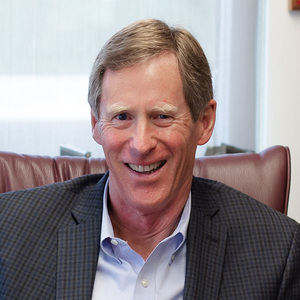
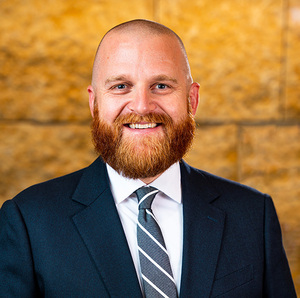
Scott Rae: [upbeat music] Are traditional wedding vows still a thing? Is there such a thing as free speech online? Is TikTok killing democracy? And another tragic mix-up at an IVF clinic. These are the stories we'll cover today, and we'll take some of your questions. I'm your host, Scott Rae, and sitting in for Sean, who's celebrating his 25th anniversary this week, is my close friend and philosophy colleague, Dr. Tim Pickavance. This is a weekly cultural update from Talbot School of Theology at Biola University. Tim, welcome. Really, really good to have you with us.
Tim Pickavance: Hey, thanks for having me, Scott.
Scott Rae: Hey, two things first for our listeners. As we mentioned last week, too, there is so much in the news about the new administration in the United States, and lots of people are covering this. We're gonna let you know that there are other great stories out there with cultural significance, and those are the ones that we'll be focusing on. Second, we get lots of great questions from you all, and this week on the Cultural Update, we only have time for a handful to answer every week. So we've even recorded an entire session of just your questions that we'll post in the next few weeks on our regular Tuesday episode. So Tim, here's story number one: Are traditional wedding vows still important to couples? This is from the Institute for Family Studies, based on a new book entitled Vows: The Modern Genius of an Ancient Rite. It shows us how profound and lasting is the marital bond, and the author points out that the wedding ceremony from the Anglican Book of Common Prayers forms the basis for most civil ceremonies that take place today. She points out this, that the Anglican ceremony that reminds us not only of what we are promising in marriage, which are, just between you and me, wild promises-
Tim Pickavance: [chuckles]
Scott Rae: ... Which is why we have witnesses to them, forms not only the basis of what we are promising in marriage, but what the institution of marriages promises us in return. To paraphrase, the ceremony gives us a foundation of procreation and raising of children, a remedy against sexual incontinence, and finally, mutual society help and comfort, both in prosperity and adversity. The marriage vows hold deep, distilled cultural meaning and import, having evolved from the ceremonial oaths of loyalty in medieval culture. These oaths were promises of faith and mutual service undertaken voluntarily by both parties, who typically swore to them on holy objects. They involved reciprocity of loyalty and protection, and they were meant to be formal and permanent contracts. Now, the first thing I would say is I'd call them a covenant, not a contract, but we can talk about that a little bit further. Tim, this is a day in which marriage is on the decline, and ceremonies are becoming more casual, and fewer are held in houses of worship today. So what do you, what do you make of this piece from the Institute for Family Studies?
Tim Pickavance: Well, the first thing I wanna say is I'm surprised to hear that you have not kept your wedding vows perfectly, as I have.
Scott Rae: [chuckles]
Tim Pickavance: So I'm disappointed by that, but, uh-
Scott Rae: I'm sure, I'm sure my wife would echo that, too.
Tim Pickavance: [chuckles] I kid. Uh-
Scott Rae: All right
Tim Pickavance: ... I mean, I actually found this piece really very interesting. One of the things that the author pointed out that I found fascinating was that, a commitment to the institution of marriage was more important as a predictor of marital success and happiness than, like, knowing how to resolve disagreements and those kinds of things. I found that fascinating because this was a case where focusing on something that you might think of as robustly practical, like dealing with disagreements in a marriage, turned out to be, in the long run, less practical than focusing on this kind of ideal of a marriage that you might have from a kind of wedding ceremony in, you know, a church that is using all these, this traditional language and so on. So I thought that was very... That was, that was one of the more interesting things about this piece to me, was that kind of practicality of the impractical. I don't know what, so-
Scott Rae: Well, I think, yeah
Tim Pickavance: ... Does that make sense?
Scott Rae: Yeah, of course. It's the ideal, and I think the practicality of it is in the commitment that you're making, not just to another person, but also to something bigger than both individuals as a couple.
Tim Pickavance: Yeah, and so this, so another thing I was thinking about as I was reading this was the way that the Church has always thought of marriage as a way of imaging the relationship between Christ and the Church, and that that actually adds a theological layer to the grandness of this narrative. It makes sense of why we've done these kinds of things in churches. It makes a wedding ceremony more than just the union of people. It's a kind of... It's a witness to a much deeper reality, and all of those kinds of things add a gravity to the marital ceremony that signals something very deep about marriage. And, and so it's, it's interesting to me that focusing on those kinds of grand ideas is more practically significant in the long-run success, as it were, of a marriage.
Scott Rae: Yeah. Tim, let me ask you something. Y- I mean, you've, you've been to lots of weddings. Actually, you've done some weddings, too. When's the last time you heard somebody talk about the connection between Christ and the Church as the really sacred part of- ... The wedding, in a, in a wedding ceremony?
Tim Pickavance: I don't recall, actually. Usually, people talk about First Corinthians 13 or something like that, you know, which is great, but it's very rare that you get a sermon on Ephesians 5.
Scott Rae: Yeah. So the idea, this really interesting idea, that maybe the wedding ceremony is not maybe first and foremost about the couple themselves.
Tim Pickavance: Well, I think it is about them, but it's about more than them.
Scott Rae: Yes.
Tim Pickavance: Yeah, and so there is this mystical thing that's happening. It's a, it's an incredible ceremony when you think about it.
Scott Rae: Yeah, and which I think is part of the reason why we have such a strong stand that we do on heterosexual, permanent, monogamous marriage as coming from the Scripture, because there's something about heterosexual marriage that says something about the relationship between Christ and the Church that same-sex marriage can't and doesn't say.
Tim Pickavance: That seems right, yes.
Scott Rae: ... Now, Tim, I've done, I mean, I've done dozens of weddings. In fact, I lost count of how many several years ago, 'cause I was, you know, I was a singles pastor before coming on the faculty at Talbot. And I did probab- I probably did one wedding a month in my five years there. And, you know, frequently, couples write their own vows. I've actually had some grooms that I'm, I'm convinced were actually winging it on the spot. [laughing]
Tim Pickavance: [laughing]
Scott Rae: Which I, eh, I, you know, I had no inclination to try and help them out of the jam that they were in when they sort of got lost [chuckles] in what they were trying to say.
Tim Pickavance: Oh, no.
Scott Rae: And you know, what I've discovered more recently is that couples often really want the traditional vows. And not be- you know, maybe because they don't want to write their own, but sometimes I think it's because they want what the traditional vows actually say. Now, let me give you what they say from the Book of Common Prayer. Now, I've, I've tweaked these slightly. Couples, I offer them the opportunity to change some things as they want. But it says, "In the name of God, I take you, so-and-so, to be my husband or wife, to have and to hold from this day forward, for better or worse, for rich or for poor, in sickness and in health, to love and to cherish, until we are parted by death." "This is my solemn vow." I mean, virtually every civil ceremony does, says the same thing.
Tim Pickavance: Yes.
Scott Rae: And c- what couples like about this is that I think sometimes they realize that writing their own vows or w- or especially winging it, might actually miss the point of a wedding itself, which is that public declaration of entering a covenant. And often, if they write their own, they inc- these are some of the things that they surely include in there. They just, you know, embellish them a bit.
Tim Pickavance: Mm-hmm.
Scott Rae: But they say some of the very same things, and I think they recognize that there's, there's really value in s- in what the traditional vows hold for people. Now, I would call, I would call it a covenant, not a contract.
Tim Pickavance: Mm-hmm.
Scott Rae: Because, you know, contracts can be broken, and contrary, you can walk away from contracts. Covenants are a lot, a lot tougher to walk away from.
Tim Pickavance: Mm-hmm.
Scott Rae: But I think the fact that during the time that the Anglican Book of Prayer was actually being used in the Church of England regularly, the couple would actually recite their vows while placing their hands on some sort of a holy object- ... To s- to sacralize their vows, and I think that's, that's actually something I think [chuckles] really insightful and really helpful.
Tim Pickavance: Well, so just on that point, I think this is... The, the movement back toward the more traditional vow may be, yet another indicator of a more general movement that I feel anyway, amongst our students here at Biola, of wanting to connect to something more ancient and stable. I think that's in part because of the experience of the world as a kind of, you know, mess and where all things are in flux, and so they're looking for stabilizing forces. And these old traditional ways that Christians have built up to do these kinds of things has been useful to people, and it's, it's stabilized them in these kinds of spaces. I'm reminded of the confessions of sin that come from the Book of Common Prayer as well. There's something really beautiful about them because the thoughtfulness and care that went into them, you kind of cover all the bases, right? What I've done and what I've left undone, right? Thought, word, deed. And it's similar with these vows. You're, you're kind of walking through some of the standard challenges and joys of marriage and saying, "I'm committed to you through thick and thin," all of those things. And that's- there's a kind of, you know, generality and solidity of that sort of commitment that is captured by these vows that are... It's very hard to recreate on your own.
Scott Rae: Yeah, you know, I spoke in chapel yesterday, and one of the things, I was making a point about the passage that I was covering in 2 Corinthians, and I, and I just, I just happened to mention, it was not, you know, just sort of an aside, that my wife and I just celebrated our 40th anniversary last year. And it, there was spontaneous applause-
Tim Pickavance: Oh
Scott Rae: ... That came from that, throughout the whole group. And the people who were in charge of chapel relayed to me that there were, there were a lot of students with these really puzzled looks on their faces, like, "How, how does that happen today?"
Tim Pickavance: Interesting.
Scott Rae: And I think what it reflects is that, there's that desire for stability- ... And permanence, and something that, you know, that lasts through time and change and through adversity and all sorts of ups and downs.
Tim Pickavance: Yeah.
Scott Rae: So what they're seeing, what they're seeing, from, in some respects, coming from their own homes, I think it echoes that... It's a really good insight about the students wanting something that has a long history to it-
Tim Pickavance: Mm-hmm
Scott Rae: ... And has stability and has weathered the storms that culture has brought, weathered the headwinds that culture has brought for many years.
Tim Pickavance: Mm-hmm.
Scott Rae: And not just many years, but for, let's, let's try millennia. [chuckles]
Tim Pickavance: Well, right. [chuckles] Yes.
Scott Rae: Oh.
Tim Pickavance: Yeah, the general problem of human sin. [chuckles]
Scott Rae: Right. [chuckles]
Tim Pickavance: Yeah. Yeah.
Scott Rae: Something like that. But I've, you know... But I think we, what we have to s- what we have to balance this with is just the general trend in the culture that is away from marriage- ... And more people cohabiting without any real intent of getting married. And we see the, and we see the, that procreation is plummeting. And so, you know, you, I wonder if, you know, maybe the traditional wedding vows say something important about marriage, but maybe not enough to counteract the trends that we see with marriage and childbearing in general, culturally.
Tim Pickavance: That seems right to me. I mean, I don't think the vows themselves are gonna do the trick, but I do think what this witnesses to is a kind of opportunity that the Church has, where your s- your sense... There's a sense that something is missing, and people feel that need. They don't have any clue how to-
Scott Rae: True
Tim Pickavance: ... Fill that.... But that's an opportunity for the church to step in and say, "Actually, we have a, we have a vision of this. We have a picture of what this can look like, and we've been at it for a long time, and it involves a kind of life that isn't focused fundamentally on the self. It's focused fundamentally on others and on sort of, bringing goodness and beauty and truth into the world, and that includes giving yourself away." And that's witnessed to in these vows, but it's also something that you can see in child-rearing, and so on. You know, you have to get outside of yourself. You have to let other things, as it were, dictate your life to you, in a certain sense, when you embrace these kinds of ancient practices. It's, it's something you can't do and be all about yourself. And that's-- I've, I think people sense the need for that, but they're not totally sure how to squeeze that into what they think of as, like, a modern good life.
Scott Rae: No, that's a great insight to refer to that as an opportunity- ... 'cause I think it is. And for the pastors and church leaders who are listening, we'd encourage you to think about that further as an opportunity. Maybe when you know, when you have couples come to you wanting pastors or church leaders to perform weddings for you, and they want to do it, you know, at the beach or somewhere else, not in a church, maybe we encourage people more explicitly to, "Let's do this in a church," because there's a sacred component-
Tim Pickavance: Mm-hmm
Scott Rae: ... To Christian marriage, that is not just about the couple themselves.
Tim Pickavance: Yeah.
Scott Rae: All right, let's v- we're gonna shift gears pretty dramatically here- [chuckles] ... From wedding vows to free speech. This is the, from the New York Times just this week, and it has to do with online free speech. Now, this week, Kanye West, now known as... I'm not sure how to pronounce it, but Ye or Ye.
Tim Pickavance: Ye. Ye.
Scott Rae: Is that right? Posted on X, formerly known as Twitter, a stream of misogynistic and anti-Semitic invectives to his more than 30 million followers. He posted uncensored clips from pornographic movies, denigrated women and Jews, posted photos of swastikas, named specific Jewish executives who he believed were sabotaging his career, and said, quote, "Slavery was a choice." He took back his 2023 apology that he had made publicly for similar types of remarks. Now, Tim, the interesting part of this is that only small parts of the rant were actually flagged with a warning for hate speech policy violations, just the part that had to do with where he named specific Jewish executives who were undermining his career. Now, X, Twitter, under Musk, under Elon Musk, has shifted away from proactive enforcement of hate speech, as has Meta under Mark Zuckerberg. Which Meta has scaled back its third-party fact-checking mechanism. Now, some folks in the broader culture cheer this as a return to genuine free speech online. But what remains is the question of whether Ye's speech should be broadcast via any platform algorithm. And hands-off approaches, critics will say, give oxygen to hate speech and misinformation. And human and automated moderators, third-party fact-checkers, swift enforcement of clearly articulated policies can work to curtail the spread of harmful content. Now, the article points out like this, that free speech is essential for a healthy democracy, but social media platforms don't merely host speech, they also make decisions about what speech to broadcast and how widely to broadcast it. Content moderation, they conclude, as flawed as it has been, offers a framework for preventing the loudest or most hateful from overshadowing everyone else. Right, now, you and I are both ad- big advocates of free speech-
Tim Pickavance: Yes
Scott Rae: ... Within boundaries.
Tim Pickavance: Yes.
Scott Rae: And Biola University has a, I think, a very really well-thought-out statement on both diversity of thought and freedom of expression, that we are, we're, we hold to this as a very important value, but again, within boundaries. We'll say a little bit more about that in a minute. But I know you're a big advocate of this. What's your take on this particular piece that comes out of the New York Times?
Tim Pickavance: Well, I think this is a very tricky issue, first and foremost. I confess that these kinds of questions, once you get in the weeds of trying to figure out how to work in these sorts of spaces, moderation or limitations or, you know, the, codes of conduct on these kinds of platforms, it is a very delicate question, not only I think, constitutionally, but also with respect to just the morality of it, which is a separate question. One of the things that I th- I found helpful about this piece was they early on put their finger on the problem, and that is defining danger in these kinds of social media spaces. And I, for one, am interested to hear what you have to say about that because I think you would probably have a lot more helpful things to say than I would. But another thing that the [chuckles] the author pointed out is they didn't just call on the platforms to make changes. It was also issuing a call to the public to engage with these platforms in a healthier way. So at one point, the author says, "Scrutinize sources before sharing," and they add dubious, but I think before sharing any claims, right? Scrutinizing sources is a really good thing. Think about these things, investigate them, don't just trust whatever you read. That is, I think, a call that we can all get on board with to engage with these platforms in a healthier way, not just trusting whatever it is we see because it's coming from a particular voice, but actually looking into it a little bit and trying to discern. So I think that idea of scrutinizing sources is important. The, the last thing I want to say, or add at this point is just one question I had, and that the author didn't address-... Was the dangers in policing this sort of thing too much. So, you know, this is an op-ed piece. They have a take, I get that. But when I think about these things, there's clearly a danger in just letting anything go, and-- but there's also a danger in policing it too much. And the reason why this is so challenging is because what we're trying to do is find a balance where we're not shutting down speech inappropriately, but we're also not amplifying and promoting, especially the sort of speech that, you know, the American constitutional sort of structure has always prohibited, [chuckles] right? Even it, so that free speech as a, as a, as a, as a right that human beings have, can be cultivated and supported, and our democracy can function in the way that it's meant to do.
Scott Rae: Right. Now, now, I've-- it's, it's a really helpful, I think, take on this, Tim, because, you know, what you described, those two competing interests, that's the equivalent of what I would call a four-inch balance beam that we're trying to walk on-
Tim Pickavance: Yes
Scott Rae: ... Without falling off on either side.
Tim Pickavance: Yeah.
Scott Rae: And I think what I want our listeners to be clear about is that, you know, free speech is not an absolute. I mean, it was never intended that way from the beginning. I'll say a little bit more about that in a minute, but, free speech, you know, is restricted by, the principle of harm. You know, you can't, you can't, you don't have the freedom to say things that are, that directly incite violence against someone else. Obviously, the old maxim, you can't yell fire in a crowded movie theater because of the harm that the trampling audience will bring. And I think there, the article points out that misinformation has actually led in some, in other countries, has actually led to people being harmed, and being victimized by violence. Now, I think, again, to be clear, when the free speech that the Constitution protects only applies to government, not private organizations.
Tim Pickavance: Yes.
Scott Rae: Now, private organizations can, I mean, under the Constitution, can limit speech however they choose. And the founders clearly wrote the Bill of Rights to protect, fundamentally, to protect citizens from government tyranny, and it pr- it only prevents government from arresting you for what you say in public or in private. You can- you cannot be prosecuted, you cannot, you cannot have that held against you by government. But private citizen, private organizations are not government and don't have the same restrictions.
Tim Pickavance: And that's part of the free speech rights more generally.
Scott Rae: That's correct.
Tim Pickavance: So if I start an organization and I don't want people who are a part of that doing certain things, that's my right as a free citizen to-
Scott Rae: That's correct
Tim Pickavance: ... Do that sort of thing.
Scott Rae: You know, and if, you know, if we have faculty members at Biola University who come out in their classes and say things that they believe that diametrically oppose our doctrinal statements-
Tim Pickavance: Mm-hmm
Scott Rae: ... They have the right to say that, but they don't have the right to stay employed after they say it. Now, here, the-- I think to add to this just a little bit, the virtue in free speech, and I wanna hear you say a little bit more about the harm that comes if we go too far on the other side of restricting it, but the virtue of free speech is that it allows for competition among ideas. And the, for the founders, the answer to content that's misleading or hateful is to counter it with better ideas presented more compellingly. This is part- particularly true in a university like Biola, where we want students to wrestle with those things, but to do it under our umbrella-
Tim Pickavance: Mm-hmm
Scott Rae: ... So we can counter those with better ideas. But here, what the, what the right of free speech assumes is that participants have the internal resources available to them to counter their worst impulses. And the founders were clear that the, that those internal resources came from a Judeo-Christian view of the world. They, they appealed to human beings being made in the image of God. They appealed to the reality of sin and the reality of the fall as being some of the reasons why free speech had to have some boundaries around it, too. But the f- the founders were not, in general, optimistic about democracy flourishing apart from those religious resources to encourage virtue and to discourage vice, and it's particularly applicable to the realm of free speech. Because we assume that the participants who are engaging in free speech do so within some self-appointed boundaries that restrict them from saying things that they know will be harmful, hateful, or hurtful. I think the f-- God bless the founders for understanding that doctrine of original sin and its impact on individuals and society. So say a little bit more about the har- the har... I talked a little bit about the benefits.
Tim Pickavance: Mm-hmm.
Scott Rae: What about the harms of going too far in restricting-
Tim Pickavance: Well, I think I-
Scott Rae: ... Speech in private organizations?
Tim Pickavance: I think it's the flip side of that coin, in the sense that because what free speech is meant to support is a kind of, exchange of ideas and a, and a, as it were, as you were describing it, a kind of marketplace of ideas, and the capacity for people, even as Christians, to share their faith and so on. So one of the dangers is that if these kinds of policies come to be viewed as involving harm, when, for example, you say, that you disagree with someone's, you know, life choices or something like that has to do with your Christian commitments, then you might be policed for having said that kind of a thing. And we don't... You know, you can shut down conversations around sensitive subjects-
Scott Rae: Correct
Tim Pickavance: ... Including religion, morality, politics, and so on. And this is why-
Scott Rae: Just about anything.
Tim Pickavance: Just about anything. And this is why you find, in more totalitarian regimes, a significant kind of control over things like the media, education, and so on. That's because they don't want the free exchange, s- because the danger for them is that they'll lose control over-... The populace, right? So the danger is allowing that kind of thing to take hold and take root that would shut down the kinds of free speech that support the institutions and the kind of society that we want to have. And, I mean, I was thinking about this, just as an analogy. You know, baseball season's coming back around, and, you know, baseball's made all these changes to, the way that they structure their games, and one of the things they added was a pitch clock. And so pitchers have to pitch within a certain amount of time, and so you don't-- you know, the games have gotten a lot shorter. But another rule change that went in about the same time was, you can't have a shift, right? Your infielders can't sort of be all on the one side of the infield, based on how the batter tends to be. And I think-
Scott Rae: Even though you know the hitter's gonna hit it there.
Tim Pickavance: Exactly. And, and so I'm kind of pro pitch clock but anti the shift because I thought that eventually batters would figure out if you can hit the other way, then, you know, you're gonna actually do better, right? And so eventually, the game itself would have taken care of the problem that people found in the shift. We didn't need a rule about that. But the pitch clock, there was no incentive for the pitchers-
Scott Rae: Right
Tim Pickavance: ... To do the thing that would've kept the games moving. And so this essentially, you know, there are conversations about, well, should we have any of these, and so on. Is it the purity of the game and that kind of thing? I think there's a similar kind of balancing act, where how long do you let the game take care of these kinds of things, and when do you step in as the governing body and sort of implement a shift or a change that would basically force it? I think that's similar to what these social media platforms are dealing with because, on the one hand, they're private corporations. On the other hand, they're, they're, you know, they're s- analogous to power companies in certain ways-
Scott Rae: Yeah
Tim Pickavance: ... And not in others.
Scott Rae: They're sort of public institutions.
Tim Pickavance: It-- yeah.
Scott Rae: Pseudo.
Tim Pickavance: So there's kind of this bal- there's this kind of weird, fuzzy line, and so it's unclear, I think. We're in a new age where we're trying to work this stuff out, and we're gonna be... You know, the pendulum's probably gonna shift back and forth over time, and hopefully, eventually, we'll kind of get a happy medium.
Scott Rae: Yeah. Well, I think an- it's another thing I think to be, to think about for our listeners, that the deeper concept of freedom that the founders had in mind was not a freedom to do whatever the heck you wanted to do.
Tim Pickavance: Right.
Scott Rae: It was the freedom to do what your conscience told you you ought to do. It's the freedom to do the right thing, and I think that applies really nicely to free speech because the freedom-- free speech is not the freedom to say whatever, you know, whatever your worst impulses leads you to say. It's this... It was designed to protect the freedom of people to follow their conscience and to speak out on things that their conscience was dictating them to speak out upon. And I think today, what we discovered with this restriction of speech on many college campuses and in the media, we've seen a new absolutism- ... Come about, with cancel culture and, you know, I think, really extreme, consequences for people who violate those speech codes that private institutions have put out. So I think at Biola, I mentioned before, we have a document that outlines our views on the free expression of ideas in a uni- in a Christian university setting. We encourage it, but within boundaries theologically and with civility and respect for opposing views. In fact, at Biola, we have a whole, a whole project that is devoted to that, called the Winsome Conviction Project, which is devoted to nurturing these traits in our students, our faculty, to have the kind of interaction I think that more that the founders had in mind.
Tim Pickavance: Mm-hmm.
Scott Rae: And I think-- I wonder today, we c-- and this is a question for our listeners to think about, too. I wonder, if our founders had been devising the Bill of Rights today, would they have said- ... Something different about free speech than they outlined in the Constitution, you know, 250 years ago? I don't know.
Tim Pickavance: I don't know either.
Scott Rae: Something to think about.
Tim Pickavance: Yeah. [chuckles]
Scott Rae: All right.
Tim Pickavance: Indeed.
Scott Rae: Another... Here's-- Tim, here's another story about social media, but this time it's about TikTok. And this is from the Acton Institute that both you and I have association with, and it's entitled "Students Are TikTokking Democracy to Death." Now, ask experienced teachers how things have changed in classrooms post-COVID-
Tim Pickavance: [chuckles]
Scott Rae: ... And they probably will say something, that there's a diminished capacity in students to engage in good, old-fashioned hard work and studying. Gone, I think, is the kind of American student of several generations ago, defined by diligence, determination, the expectation that learning is hard work, and that sort of learning and fun didn't often go in the same sentence, in the past. In its place, there's an expectation that learning will be easy. We have open-note tests, study guides that give away the questions on a test, even some places have permissible cheat sheets that they bring to tests. And you add to this, you have assertive parents who are demanding a whole realm of ex- of exceptions, more time, alternative questions, more breaks, a chance to retake exams. And here's this-- this is the part of the article that I love. This is the most, I think, the [chuckles] one of the most compelling parts. It goes like this: "And now, worst of all, the ubiquity of artificial intelligence."
Tim Pickavance: [chuckles]
Scott Rae: It describes it like this: "That's st- that's sadistically seductive for teenagers who have always yearned for the ultimate academic Shangri-La, a scholastic universe untethered to practicing arduous math problems, writing term papers, reading long books, or taking part in the process of painstaking research." Okay? Now, he goes on to cite one other point, and then I'll, I'll turn this over to you, Tim. "Every American high school teacher I know," the author says, "can relate dozens of stories similar to this one." an individual who noticed- notices having lunch with a 22-year-old Stanford student, that the young man was having trouble speaking.... What was the student's explanation? He said, and I quote, "Sometimes I forget words now. I'm so used to having ChatGPT complete my thoughts that when it's not there, my brain feels slower." I thought-
Tim Pickavance: [chuckles]
Scott Rae: -really interesting. Now, the article points out a number of things like diminished attention spans, inability to focus, and no- seemingly no regrets from students about this diminished capacity or recognition that it's a capacity that's become diminished. And the article claims that this itself might be a threat to democracy- ... Because democracy assumes that people are up to the hard work of thinking hard about the issues of the day and expressing themselves, like we just mentioned, with civility and respect. So Tim, you teach hundreds of college freshmen every year.
Tim Pickavance: I do.
Scott Rae: You, you know this group really well. Is this too strong, or is there a, is there a point there to be made? Kinda what's your take on this?
Tim Pickavance: I think there's a point to be made. I, in a way, I think there is a trend of more students who struggle in the ways that the author describes, more students who have a hard time focusing, studying. I think about note-taking, so understanding how a lecture is structured. Students-- There are more students who struggle with that. But I'm not sure that it is as dire as the author suggests, because my sense is that what's happened is that- ... There's more of an, what you might think of as like an inverse bell curve or something, where instead of having this kind of group of students in the middle who are moderately disciplined, moderately able to sort of attend to things, moderately competent, and then you have these tails that are smaller of the high-achieving students and then the ones who really struggle, it's more like there aren't any students in the middle. What we're getting is-
Scott Rae: Interesting
Tim Pickavance: ... A big group of students who are actually doing really well, and then a big group of students who are actually really struggling, and there's not, like, a middle class, as it were.
Scott Rae: And what happened to that bell curve?
Tim Pickavance: Well, that's-- Yeah, so it's, it's inverted. It's, it's like a polarization of grit or something like that. And so what I, what I'm sensing is that there's, there are more students who are actually able to follow through, to attend, to concentrate, and also more students [chuckles] who are struggling very badly. And of course, as a teacher, you're always winding up focused on the students that you're trying to bring along, and so teachers' attention gets focused on the-
Scott Rae: Mm-hmm
Tim Pickavance: ... The students who are really struggling, understandably. And so we miss the big group of students who are actually doing really well. So here's an example. I have more students these days who have a sort of dedicated accommodation, which I, you know, I think we're all happy to sort of follow through on, for peer note-taking assistance. And when I send out requests to my students for peer note-takers, for students to take notes for those students, I get loads of responses-
Scott Rae: Huh!
Tim Pickavance: ... Way more than I need. I have so many generous students who are willing to go the extra step, and so on. And I think what's happened is the kinds of students that we get here are students who have grown up in this kind of crazy era that has included a global pandemic and [chuckles] all sorts of-
Scott Rae: Right
Tim Pickavance: ... And all the challenges that have come along with that, and some of them have discovered the internal resources that are often a gift from God or are a gift from God, to sort of overcome those sorts of challenges, and some of them have not found their way to that yet. And so I'm- I see these, this massive group of students who are doing even better than the students that I had before all of this kind of mess took hold. And so I'm not as worried. You know, it's even... I see this in students who are turning off TikTok, turning off social media, getting phones that don't have color screens and things like that. That, that is happening more and more also. So there's the kind of rebellious ones, and then there's the ones that struggle, [chuckles] if that makes sense.
Scott Rae: Yeah. So I think I'll, I'll be a bit more encouraged if I see a whole horde of students that go to flip phones- [chuckles]
Tim Pickavance: Well, there are some
Scott Rae: ... In the future.
Tim Pickavance: That's the, that's the striking thing, is I've actually-- I know a number of students who have these phones that have black and white screens, that, you know, they can access their email, but social media looks terrible. It's almost like trying to scroll on Instagram if you're on a Amazon Kindle, old school-
Scott Rae: Yeah, yeah
Tim Pickavance: ... You know, E Ink Kindle-
Scott Rae: Yeah
Tim Pickavance: ... Not one of these Kindle Fire things, you know? So it's, it's a, there is a movement toward that kind of a thing, and it's a growing population. I'm also th- I also, as I was reading this, ha- thought about the popularity of people who are doing very long-form kinds of engagement with ideas. And whatever you think about these kinds of folks, people like Jordan Peterson, who go around think- giving two-hour lectures on Jungian readings of Genesis, or Joe Rogan's podcast, which is the most popular-
Scott Rae: Mm-hmm
Tim Pickavance: ... Podcast in the world, and it, all of the episodes are two, three hours [chuckles] long.
Scott Rae: Yeah.
Tim Pickavance: And people listen to that, and they seem to be able to attend. You know, it's just a free-form conversation, and there's a craving for that kind of thing. So that kind of growth is showing, I think, that there's, again, like we were talking about before, there's a hunger for something that's meatier and more serious, and that people actually can find their way to following along, but it just takes the hitting the right buttons, as it were, in people's hearts to get them to sort of wake up to that possibility.
Scott Rae: Yeah, no, Tim, that's a really good take on this. It sort of reminds me of the, you know, back 150 years ago, the Lincoln-Douglas debates about slavery, where-
Tim Pickavance: Yes
Scott Rae: ... You know, they were three or four hours long.
Tim Pickavance: Yeah. [chuckles]
Scott Rae: And, you know, students hear that today, and they think, "Well, gosh, didn't the audience get bored?"
Tim Pickavance: Yes.
Scott Rae: The answer is, no, they didn't.
Tim Pickavance: Yeah. [chuckles]
Scott Rae: ... You know, those debates drew, you know, upwards of 20,000 people.
Tim Pickavance: Mm-hmm.
Scott Rae: And, and they had, they had nuance, they had careful thinking, and people were, people were equipped to follow it at that point. And what I'm-
Tim Pickavance: Well, and, you know, so that's one of the things this author points out is that age, I think, the age from 1810 to 1859, where you have this kind of stuff going on. But I was reflecting on this and thinking, at the same time, Charles Sumner is getting beaten with a cane on the Senate floor and being dragged off bloody.
Scott Rae: [chuckles]
Tim Pickavance: And the guy who beat him just walked away, escaped a Senate censure, resigned, and then got reelected.
Scott Rae: [chuckles]
Tim Pickavance: So it's not like [chuckles] these ancient periods-
Scott Rae: No
Tim Pickavance: ... Like, of ancient American history for, you know, for our British listeners, that's not that ancient. But, you know, 150 years for a, for an American is a long time, you know? Tho- that time period, though it had a lot of capacity for that sort of thing, also had a lot of capacity for some pretty gnarly things, too. And so it wasn't just sort of this, you know, sh- wonderful era where everything was going really well.
Scott Rae: Right.
Tim Pickavance: Obviously, it's pre the Civil War.
Scott Rae: Right.
Tim Pickavance: It's in the build-up to the Civil War.
Scott Rae: Yeah.
Tim Pickavance: But the, so at the same time, you've got these three-hour debates attracting 20,000 people, you have people getting beaten with canes on the Senate floor. And so it's, it's an, it was an interesting time period. It's all... You know, I'm not sure how that relates to today, but I don't think we can look back at that and think, "Well, everything was more civil and more," [chuckles] you know-
Scott Rae: Definitely not.
Tim Pickavance: It was a wild time.
Scott Rae: Yeah. Ask, ask African Americans-
Tim Pickavance: Well
Scott Rae: ... African Americans about the civility of it.
Tim Pickavance: Sure. Yes.
Scott Rae: Yeah.
Tim Pickavance: Yeah, exactly.
Scott Rae: Yeah.
Tim Pickavance: Yeah.
Scott Rae: Now, we've talked about what social media has done to the mental health of teenagers. That's, you know, that's not exactly breaking news.
Tim Pickavance: No.
Scott Rae: What I'm more interested in from this piece, Tim, is how might this impact the follower of Jesus- ... Rather than its impact on democracy. What does it mean to be transformed by the renewing of your mind? What does it mean to take every thought captive to the obedience of Christ, 2 Corinthians, or to love God with all your mind? I think sh- at the least, that means being able to, and inclined, to think hard about important things that have to do with your faith. And as you tell your students all the time, Christian faith is not just a relationship to God, it's a worldview. It's a set of ideas-
Tim Pickavance: Mm-hmm
Scott Rae: ... That you are also committed to, that form the lenses through which we see the world. Now, this is not to say that you have to be a brainiac or an academic to faithfully follow Jesus, and everybody has different-- everybody's wired a little differently on this, but I think there is a significant part of our discipleship that has to do with the way we cultivate our, the life of the mind. And that's, I think, that's, I think, in my view, the big takeaway from this for our listeners. And d- to, then don't think that you can sort, you can sort of turn off your mind and faithfully follow Christ at the same time.
Tim Pickavance: Oh, I mean, as you know, Scott, this is a serious passion of mine. I mean, I wrote a whole book about it, right? I think this is so true, and I'd, I think that when people talk about Christianity as a relationship, I want to endorse that idea, but then notice that every relationship in your life requires attending to the other person, growing in your understanding of them and what makes them tick. This is why when we go on first dates, we talk about our histories, because there's something about that that amplifies the connection between a people. And so when we think about loving God with our minds, this is not separate from our relational devotion to God. It's actually constitutive of it. It's not all that it is, but it's a very important piece of it. You have to learn about God and who He is and what He has done in order to relate to Him well, just like with any other person. If you said you knew your wife and you were relationally connected to her but didn't know anything about her, I would think you're crazy. But somehow we've come to think that we can do that with God, like it doesn't really matter what we think about God. No one thinks that about their friends or their spouse. Everybody recognizes that you have to understand who they are to be really loving toward them, because that helps you relate to them in healthy and appropriate ways. And it's just like that with God. And one of the things about God is that He's kind of involved in all the stuff. [chuckles] So if you want to-
Scott Rae: Shocking.
Tim Pickavance: Yeah.
Scott Rae: I know.
Tim Pickavance: Everything that we encounter is somehow related back to God, because God is creator of all things. And so we have to, we have to always be, referring things back to Christ and the Triune God, and that will actually amplify the relationship in the long run.
Scott Rae: Yeah, that's such a good take, and it's... Yeah, I wish our audience could see your facial expression-
Tim Pickavance: [chuckles]
Scott Rae: ... As you sort of, you sort of lit up when you talk about this because you're-
Tim Pickavance: I love this stuff. [chuckles]
Scott Rae: I'm so, I'm so grateful that your students get this, you know, sort of week in and week out-
Tim Pickavance: Mm-hmm
Scott Rae: ... In your, in your freshman biblical studies courses. All right, one other story, sort of briefly, and this is-- we talked about this a couple weeks ago, but another tragic mix-up in an IVF clinic. Christina Murray delivered a baby in late '23, and she knew immediately that the boy was not hers, because the baby was Black, and she and her sperm donor were both white. She has sued, just this week, has sued the clinic because at f- at five months old, she had notified the clinic of the mistake. The clinic notified the bio parents, they immediately demanded custody, and at five months old, the baby was given back to the bio parents because she knew that her law- her lawyers had told her that this was a case she couldn't possibly win. Her lawsuit against the clinic claims that the clinic caused Christina to be turned into an unwitting surrogate against her will for another couple. Her lawyers represented more than 1,000 patients taking action against fertility clinics for mistakes being made.... Now, Tim, we've talked about other couples who've had these mix-ups, and some really novel approaches to balancing the rights of parents and the interest of children. But Scripture, I think, is pretty clear that the interest of others often, not always, but often takes priority over the exercise of your own rights. Life is not only about my rights. Philippians 2, I think, is a good example, is, "Look out not only for your own interests, but also for the interests of others," and then highlights how Christ looked out primarily for the interests of others when he went to the cross. Now, I think this is particularly true with the most, with the most vulnerable people among us. And I think that, you know, if it weren't for the racial differences here, you might be, you might be able to make a getter ca- better case for the interest of the child to be back with the birth mother, but at five months, I think transfer to the bio parents could work out okay and still be in the best interest of the child. This is a really sticky wicket that, mix-ups in IVF have created, and it puts these couples and, you know, and parents in situations that they never envisioned, and these sort of gut-wrenching decisions that they have to make that I wouldn't wish on my worst enemies.
Tim Pickavance: I read this and f- and felt so heartbroken for this person, Christina Murray. I-- It's unimaginable what this must have been like. I can't get my head around it, and I'm not... It's, it seems to me like w- just what you were suggesting, Scott, which is this child may be better off, and that's the sort of judgment of these folks. And she almost seemed to sort of agree, though, un- it sounds like her lawyer was involved. But, I mean, you can, you can only imagine, I mean, how hard, must have been.
Scott Rae: No, it's brutal.
Tim Pickavance: So, that whole how to resolve this is such a challenging question, but my question, because I don't know a whole lot about these kinds of spaces, what rights do surrogates tend to have?
Scott Rae: None.
Tim Pickavance: None. Is that because, generally speaking, there are pretty explicit agreements-
Scott Rae: Yes
Tim Pickavance: ... About what that's going to involve?
Scott Rae: And also because in most cases, s- almost all cases, surrogates don't have any genetic connection to the child they're carrying.
Tim Pickavance: And that genetic connection is a big part of how the rights are-
Scott Rae: That's, that's basically the trump card.
Tim Pickavance: I see.
Scott Rae: Yes.
Tim Pickavance: And so that's why there was no chance of her-
Scott Rae: Right.
Tim Pickavance: I see.
Scott Rae: That's right.
Tim Pickavance: My word, I, [exhales] what-- I, [chuckles] I love that you brought up Philippians 2. I mean, you know, Paul there says we should endeavor to have the same mind as was in Christ Jesus and to sort of look to others-
Scott Rae: Yeah
Tim Pickavance: ... In humility. But I hesitate to say that to Christina Murray.
Scott Rae: Of course.
Tim Pickavance: Right? [chuckles] you know.
Scott Rae: Yeah.
Tim Pickavance: What a difficult situation.
Scott Rae: All right. I say to our listeners, stay tuned. We'll probably talk about some more of these as they come up in the future.
Tim Pickavance: Yeah.
Scott Rae: You ready to answer s- a few questions?
Tim Pickavance: Let's do it.
Scott Rae: Okay. "I work with kids of all ages. Some are in very early stages of discovering who they are, determining whether or not they have same-sex attraction, how to tell their parents if they do, and so on. Some struggle with their faith, questioning whether or not God exists, and whether they should try to follow God's directions for life. I really want to help them start thinking deeper about these things, but don't know how. What questions can I ask them, or advice can I give them to encourage them to start thinking more deeply and biblically?"
Tim Pickavance: This is an excellent question.
Scott Rae: It is.
Tim Pickavance: And I'm reading this, as someone who is working mostly with, Christian students because of the way they, Jermaine, uh-
Scott Rae: It's fair to assume that
Tim Pickavance: ... Talks about, you know, questioning their faith and/or questioning whether or not God exists, struggling with their faith. My, my read of these kinds of situations is that people struggle the most when their expectations are somehow in tension with their experience. And so a big part of walking with people as they go through this is to actually ask them questions about those expectations and those experiences, and try to help them even navigate their own self-understanding. So what do they think, for example, a healthy sex life for a, an adult should be? And then once they've kind of had a, an honest reckoning with those kinds of things, then people are often more open to considering questions about, "Okay, you know that sometimes it's not good for you to do things that you want," so now you can move into those kinds of spaces once they feel like someone actually cares about them enough to explore their own experience and their own initial kind of starting point. So that's the big piece of advice I would give, is ask them a lot of questions about themselves. Ask them... And especially about their expectations for what faith should be like, what it should feel like, you know, about sexuality and those kinds of things. And then once that process unfolds, I think you can start to move into questions about: What does the Scripture have to say? Why would God ask us to-
Scott Rae: Yeah
Tim Pickavance: ... Not do things that we want to do? And I think the answers to those things become pretty clear, and they're pretty natural for people, but they're often wanting someone to acknowledge that it's gonna be hard-
Scott Rae: Right
Tim Pickavance: ... And really-
Scott Rae: Right
Tim Pickavance: ... Challenging for them to actually follow through on what God has for them. And so giving them the space to actually just, you know, express all of that is an important part of coming alongside people who are struggling.
Scott Rae: That's re- that's really helpful, Tim. I've got a couple suggestions. I know the Reasonable Faith-... Website, Bill Craig has written children's books- -about, he's got about a half a dozen of them, on different aspects of Christian faith and Christian apologetics. And depending on how young the kids are that this person is dealing with, those might be very helpful. Reasonablefaith.org is the site, and this is... Second thing, I know something Sean does, is he watches TVs and movies with his kids and asks lots of questions about how, what they think about the plot, who the protagonist and antagonist are, what kind of, what- is there any redemptive story in it, and how that connects with a Christian worldview. He's really good at that. But just to watch movies and TV with them, and just bring, just ask questions about what they're seeing, what do they think about what they're seeing, and how that might fit with their faith.
Tim Pickavance: That's, that's fantastic. I think one more thought is, one of the things that I've seen happen is people, going back to the things about, for example, TikTok and other forms of social media, is that these algorithms are very good at funneling you toward things that are things that you want. And often, younger folks will get kind of trapped in a sort of vortex in these kinds of areas. And so one question that I think you want to explore with younger folks who are wrestling with these kinds of things is, where are you getting your-
Scott Rae: Yeah
Tim Pickavance: ... Insights about what's good and bad?
Scott Rae: How do you know this?
Tim Pickavance: What, who are the voices that you are finding compelling?
Scott Rae: Yeah, that's great.
Tim Pickavance: Not to try to just sort of say, "Those are the wrong voices," but to actually just hear what their experience is and what's shaping their expectations, and so on. Because those sorts of locations can be very damaging because they can kind of silo you into a space where competing, y- you know, voices are... Have a really hard time breaking in.
Scott Rae: Yeah, that's, that's really good insight. Here's a second one. This is, this is pretty challenging, I think, as they all are: "Our son and wife had two healthy children, now four and one. Last year, they suffered two miscarriages early in pregnancy. When asked about how many grandchildren I have, should I say two or four? But I've never met two of them. I know what the Bible teaches about life beginning at conception, so I'm thinking biblically, but how do I speak biblically about this? As you remind us, words and how we use them matter, so are we not minimizing the truth that life begins at conception when we ignore miscarried babies? Especially when we talk to fellow believers, are we being inconsistent and perhaps even uncaring to ignore the children who don't survive? Are we easing our own pain at the cost of a commitment to the sanctity of life?"
Tim Pickavance: Mm-hmm. I love how committed this person is to wanting to think theologically and biblically about, as a c- as a Christian, about how to talk about these lost children, which I think we agree that because life... With, with this person, we agree that life begins at conception, and so these are children made in the image of God, and it's a tragic situation to have lost them. I have a number of friends who are dealing with miscarriages, very recently. But I do think that we need to think of this as the kind of space where there's probably not going to be a one-size-fits-all, once-for-all answer to the question, that it's going to be a matter of wisdom. So just as Proverbs tells us to, "Return the fool according to his folly, lest he be wise in his own eyes, and not return the fool according to his folly,"-
Scott Rae: Yes
Tim Pickavance: ... "lest you become like him," there are opportunities and dangers present in these kinds of things, and we need to be honest about where we stand on those kinds of things and recognize that different situations will call for different accounts. And most of the time, in most of life, I think it's okay to say, "I've got two kids," if this is the situation that you find yourself in, because that's a vulnerable space, and not everyone needs to be in the most vulnerable spaces-
Scott Rae: That's right
Tim Pickavance: ... Of our lives. And so it's not-- you're not lying. You, you have two children, right? [chuckles] And, and so you can move through life with that as a kind of way of talking and communicating with people. But then when you're getting more serious and more... And having a more significant conversation about things, that's when, you know, I think it's appropriate to bring things in. But look, if someone in this kind of situation wanted to say, "Every time someone asks, I have four kids," I think that's a choice that they can make and be fully within the-
Scott Rae: Mm-hmm
Tim Pickavance: ... The boundaries of the Christian vision of life. I think it's a, it's a question of wisdom and how we want to sort of communicate and reveal ourselves to people, as we move through our kind of ordinary life.
Scott Rae: I do-
Tim Pickavance: But I'd be curious-
Scott Rae: Yeah
Tim Pickavance: ... To know what you think about this.
Scott Rae: That's a, that's a great take on this. Your pastoral side's coming out-
Tim Pickavance: Oh!
Scott Rae: ... Really nicely here. I'd say, f- in the first place, two miscarriages might not be something that your kids would want it to have public information.
Tim Pickavance: That's a good point.
Scott Rae: I'd be sensitive to that.
Tim Pickavance: Mm-hmm.
Scott Rae: And I would say, if you've acknowledged, you've acknowledged it yourselves, you know, maybe say, "I have two here and two in heaven." But here's the thing, and I think this is the wisdom part from my view: I would not want to open the door to other questions that are most likely not anybody else's business. And in answer to what is really probably intended in most cases as a pretty innocuous question. You know, they're not looking for deep stuff. They're just... It's sort of a, you know, it's one of the basic get-to-know-you questions.
Tim Pickavance: Mm-hmm.
Scott Rae: I would, I'd be inclined to say, you know, let two, let it go, unless it's a person you're close to or the relationship makes that difference that I think you're referring to.
Tim Pickavance: Yep.
Scott Rae: All right, here's final question. This is another [chuckles] really good question: "On several occasions, you have expressed..." He's talking to me here, I think, "... That it's morally acceptable for science and medicine to replace the loss of function due to disease or the general entrance of sin into the world.... Kidney dialysis, heart bypass, and so on. My question is there a moral difference between these examples and using medicine or technology to enhance otherwise normal function? We give artificial limbs to amputees, but as technology advances, these limbs may soon be superior to regular arms. Would there be anything wrong with a normally functioning man using these superior prosthetic arms so he could work longer hours, more years, and better provide for his family? I'm hoping if that's true, then I want guns [laughing] with my-
Tim Pickavance: [laughing] Oh, no.
Scott Rae: So just a, just a brief take on this. What do you think?
Tim Pickavance: I-- Well, I think the first thing I thought of was we kind of already do this. Like, I get here to work a lot faster every day in a car than I would with my feet.
Scott Rae: Yes.
Tim Pickavance: And so there's something about technological innovation that is appropriate. Now, the, I think the hard cases are gonna come in where, you know, you kind of decide, "Oh, I'd rather have a better arm," so you lop off the arm you got, and you add in a different one.
Scott Rae: That's what he's talking about.
Tim Pickavance: Yeah, and that, I think that's the real meat of this question, and the answer to that seems to me to be human bodies have purposes that are sometimes not apparent to us. And though we might be able to see that these kinds of technological advancements could amplify certain aspects of that purpose, it's not obvious to me that we can always know that everything that we're given these things for is going to be amplified by changing them. And so we need to trust that God has put us in the body that we're in, and that should be the kind of default, that we're not going to do this sort of thing unless there's a clear case of, you know, challenge or difficulty, malformation, not because we just want to enhance. Now, that's a, that's a-
Scott Rae: Yeah
Tim Pickavance: ... Blurry line, I think, in certain cases.
Scott Rae: Can be.
Tim Pickavance: But, but I think-
Scott Rae: Yeah
Tim Pickavance: ... There are very clear cases both directions, and so we need to not focus so much on the blurry ones, but on the very clear ones.
Scott Rae: Yeah, and I think the blurry ones are only, are only a handful-
Tim Pickavance: That's right
Scott Rae: ... And are pretty innocuous, in my judgment. This is not a place where it's blurry-
Tim Pickavance: Yes
Scott Rae: ... In my opinion, and I think there's a difference between enhancement and treating disease, although some things do have dual uses that it's hard to, hard to, you know, do one and not the other. But I think here, I think we need to recognize that the goals of medicine are primarily the prevention of disease, disability, decay, and the dying process as best we can. They are-- The goals of medicine are designed to alleviate the effects of the general entrance of sin into the world.
Tim Pickavance: Mm-hmm.
Scott Rae: And some of the things, like the strength of our arms, you know, weightlifting notwithstanding, now those are givens. You know, our biological sex is a given. You know, our eye color, hair color, I think those are givens, okay? And I think what we, what we are called to as fallible, human beings that have limited lifespans, we are called to accept the givens of life as God's given them to us.
Tim Pickavance: Mm-hmm.
Scott Rae: And to avo-- I think, in general, to avoid enhancing otherwise normal traits in these kinds of radical ways. Right now, I think, for ex- I think some things are nor- no harm, no foul. For example, I don't think... Or, or crooked teeth I don't think are a result of the entrance of sin. I would think orthodontics for cosmetic purposes is totally fine. And there are some things that I think relate to combating aging, and which is a result of the general entrance of sin, which I think are also okay. Now, we-- This is probably a... We could have a whole subject on this- ... Which we probably will. Thank you. Thank you for your question, in which you've generated an entire episode-
Tim Pickavance: Yeah [chuckles]
Scott Rae: ... Forthcoming on this. But that's the way I would see that, and I think in general, you know, I think we can, you know... Of course, we can drive cars. We don't have to walk.
Tim Pickavance: Right.
Scott Rae: So you be encouraged by that.
Tim Pickavance: Yeah. Thank you. Yes.
Scott Rae: And there's lots of things that we, you know-- I think technol- medical technology, in general, is God's good gift-
Tim Pickavance: Mm-hmm
Scott Rae: ... To help us flourish. But it's designed, I think, to alleviate those effects of the general entrance of sin.
Tim Pickavance: That's a good word.
Scott Rae: Well, this has been quite a conversation. We, I think we've covered a lot of ground today.
Tim Pickavance: It's been great.
Scott Rae: Tim, thank you so much for being with us. This is so terrific, and, you've been so insightful and just what I expected out of this.
Tim Pickavance: Oh, I appreciate that, Scott. Thanks for having me again.
Scott Rae: This has been the Weekly Cultural Update, part of the Think Biblically co- podcast, brought to you by Talbot School of Theology at Biola University, offering programs in Southern California and online, including programs in apologetics, philosophy, theology, spiritual formation, Old and New Testament, pastoral ministry, marriage and family therapy. I think I'm leaving one or two out, but that's, that covers most of them. Visit biola.edu/talbot in order to learn more. [upbeat music] To submit comments, ask questions, or make suggestions on issues you'd like us to cover or guests you'd like us to consider, please email us at thinkbiblically@biola.edu. That's thinkbiblically@biola.edu. If you enjoyed today's conversation, please give us a rating on your podcast app and share it with a pr- a friend. Join us on Tuesday for our conversation with Katie McCoy on the subject of: How does gender ideology affect women? Look forward to seeing you then. Thanks so much for listening, and remember, think biblically about everything. [upbeat music]