Biola University
.jpg)
I recently read Michael Svigel’s 2024 book The Fathers on the Future: A 2nd-Century Eschatology for the 21st-Century Church (Hendrickson Publishers). This book is full of many insightful discussions—both biblical and patristic—all focused on the future. I reached out to Dr. Svigel to see if he’d be willing to do an interview on his book. I’m so happy that he agreed!
Ken Berding (KB): First, can you tell us a little about yourself?
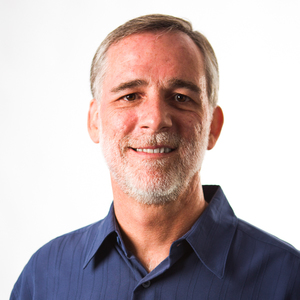
Michael Svigel (MS): Thanks for the chance to share about my book. I serve as chair and professor of Theological Studies at Dallas Theological Seminary, where I teach both historical theology and systematic theology. I’ve been teaching at DTS since 2007, but I’m originally from Minnesota and did my undergraduate work at Cairn University in Langhorne, PA. My wife, Stephanie, and I have been married for over thirty years, and we have three adult children: Sophie, Lucas, and Nathan.
KB: What prompted you to write this book?
MS: My interest in the early church fathers—patristic studies—began back in Bible College in 1993, when I started reading through them chronologically, partly out of curiosity, mostly to see whether the budding trend of evangelical interest in the fathers had any merit to it. Could we learn anything from those earliest fathers worth retrieving and applying to the modern church? At the time I was also wrestling with where I personally landed in regard to eschatology. I was raised Lutheran and came to Christ through a Baptist, but I had no real eschatological moorings. As I read through the patristic writings, I was surprised to see how solidly the earliest church fathers—from about AD 50 to 200 or so—resembled a futurist, premillennial eschatology, and that amillennialism and other approaches to the end times developed later, in the late second to fourth centuries. So, I landed in the premillennial tradition. Fast-forward a couple decades after my Master of Theology in New Testament and PhD work in patristics, and I found myself teaching graduate and doctoral courses in patristics as well as eschatology. After about fifteen years of teaching eschatology pretty much every semester (including summers), I decided it was time to produce a volume that reflected my decades of work in the fields of patristics and eschatology. At first, I had trouble finding a publisher for a technical, academic book articulating and defending my futurist, premillennial eschatology through the lens of Scripture and the early church fathers. A couple publishers simply wouldn’t publish a book from that premillennial perspective (some publishers push only certain theological opinions). A couple others were interested but wanted a popular-level end-times book instead (those sell much better than academic works). But we have enough popular-level books on the subject. Finally, Hendrickson Academic picked up the project, and the result was The Fathers on the Future.
KB: Here’s a difficult request. In one paragraph, can you give us a summary of eschatology? What do we need to know about what is coming in the future—in one paragraph only?
MS: Regarding eschatology, I summarize what we need to know as Christians with the “three Rs”—Return, Resurrection, and Restoration. All Christians, regardless of their denominational or theological backgrounds, must believe that Christ will one day return as judge and king, that he will resurrect the righteous to eternal life and the wicked to eternal condemnation, and he will restore all things in a new creation after vanquishing sin, suffering, death, and the devil. We may quibble over details, but the three Rs—Return, Resurrection, and Restoration—sum up orthodox eschatology.
KB: What’s different about the approach you took in this book as compared to other books on eschatology?
MS: Many eschatology books approach the subject of the end times by expositing passages of Scripture and drawing conclusions (Daniel, Matthew 24, 1 & 2 Thessalonians, Revelation, etc.). Others deal with major events systematically (resurrection, tribulation, antichrist, millennium, etc.). Still others defend a particular confessional perspective (covenant amillennialism, dispensational premillennialism, New Covenant theology, etc.). The Fathers on the Future approaches eschatology from an additional angle—early church history. It basically says, “Look, when they actually spoke about the issue, the earliest church fathers—many of whom were direct disciples of the apostles or only one teacher away from the apostles—taught a well-developed futurist, premillennial eschatology, which some of those fathers claimed had been handed down from the apostles themselves. Let’s see what they say about the end times, and then go to Scripture to see if these things are true.” The result is that Fathers on the Future spends about one third exploring early Christian eschatology (mostly from the first and second centuries) and about two thirds exegesis of major passages, treating these subjects in order from most foundational issues to less central issues: the kingdom and millennium, the future Day of the Lord (“tribulation”), and the assumption (or “rapture”) of the church. So, the unique approach of this book is that it presents a biblically, theologically, and historically grounded premillennial, futurist eschatology for the twenty-first century church. It assumes that the early, widespread, and well-developed consensus on eschatology of the first and second generation after the apostles has the “presumption of apostolicity.” This doesn’t mean it’s automatically true, but it means the burden of proof is on those who try to argue that the apostles taught something completely opposite of what seems to have been left to their disciples. Then, by looking at Scripture, we see that, indeed, the best exegesis of those relevant passages actually matches what the earliest Christians believed and taught.
KB: How has this study helped you spiritually?
MS: My study of eschatology over the years has instilled a sense of deep hope even in the midst of suffering, uncertainty, and despair. This world will let you down at every turn. No merely human, temporal institutions can provide lasting hope. No political party. No denomination. No Christian leader. No technology. All those things are shaky grounds for hope. But the coming King and his kingdom is the cure for hopelessness. At the same time, though, the coming kingdom is not just a purely future reality. It’s spiritually realizable in a partial but real sense, as God’s will is done on earth as it is in heaven (Matt 6:10). Though that kingdom will be fully experienced in all creation at the return, resurrection, and restoration, we can presently live out the values, virtues, principles, priorities, and power of the future kingdom in the present world—promoting life, peace, justice, mercy, blessing, truth, love, kindness, beauty, and authentic worship. That kind of kingdom living between the first and second comings of Christ can transform not just individual lives but also families, communities, and nations. So, eschatology is not just a deep longing for a new beginning that will follow the end of this age. It’s transforming lives in the present as we “remember the future” and borrow from that future as strangers and aliens, ambassadors of the future kingdom in the world today. That kind of thinking and living has removed from me anxiety and fear as I look forward to the “blessed hope and the appearing of the glory of our great God and Savior, Christ Jesus” (Titus 2:13).
KB: Thank you so much for introducing us to your helpful and thought-provoking book, The Fathers on the Future: A 2nd-Century Eschatology for the 21st-Century Church .