Episode 138: How Psychology Enlivens Neighbor Love
The biblical call to “love your neighbor” is one of Christianity’s most profound and challenging practices, especially in today’s argument culture. On today’s episode, Tim speaks with professors Katherine Douglass and Brittany Tausen on their forthcoming book, Love Your Neighbor: How Psychology Can Enliven Faith and Transform Community (released on January 15, 2026), in which they wed insights from social psychology and practical theology to empower loving one’s neighbor. Drawing from evidence-based research, they discuss how to foster meaningful connections with neighbors, and they share what they are doing with students to transform relationships with neighbors in Seattle, WA.
You can follow the work of this project at their shared website: lovingbetter.net, as well as their shared Instagram: lovingbetter2025.
Transcript
Tim Muehlhoff: Welcome to the Winsome Conviction Podcast. My name is Tim Muehlhoff. I'm the senior director of the Winsome Conviction Project. We've been going strong now for five years. We're trying to open lines of communication rather than close them trying to reintroduce the biblical idea of gentleness. We believe very strongly in what Peter said, "When insulted, we would rather that you bless a person than respond with an insult." Thank you for joining us with the podcast. The podcast has been around as long as the project has.
So for five years I've been traveling around, going to Capitol Hill, going to other universities, trying to lead town hall meetings, working with even high schools. And I'm often asked the question, "How did we get here?" To what Deborah Tannen calls the argument culture, and then more importantly, "How do we get out?" Well, that's a very interesting question, "How do we get out?" Here is my short answer, neighbor love. That's how we get out. It's the second great commandment. I think in the end, if we can reclaim a sense of neighborliness, if we can look at each other not as combatants, but rather as neighbors, that we do life together, I think we can transform communities, neighborhoods, town hall meetings. I don't know if we can fix the national discourse, but I do think we can make a difference locally, and I think that's what the New Testament strategy was. It was the church at Rome, it was the church in Galatia, it was the church in Corinth, and they made a difference over time exhibiting this neighbor love.
Well, I don't think it's a shock to anybody that neighbor love has kind of fallen on hard times, and we do need some help to reclaim it. It's one thing to believe in it that this is the second-greatest commandment building off the first greatest commandment. This is the beauty of being part of the Academy of Higher Education is we're not alone in this. God has given us common grace, which means of course we have the scriptures. I teach persuasion and for sure Paul says, "Knowing the fear of the Lord, we seek to persuade men," but he doesn't tell us necessarily how to do that. I think we get the second great commandment, but there's a lot of obstacles into actually enacting that in a way that's going to change the communication climate of our country.
Well, help is on the way. I have read a book called, Love Your Neighbor: How Psychology Can Enliven Faith and Transform Community, that if you could see the book right now, the advanced copy I have, there are literally coffee stains everywhere and Post-It notes everywhere because I was saying amen the entire time I was reading the book. What a beautiful blend of common grace with scripture. The two authors, Katherine Douglas is associate professor of educational ministry and practical theology at Seattle Pacific University. She's also an ordained minister in the Presbyterian Church USA. Her research interests include the role that the arts play in faith, confirmation as a rite of passage, ministry with marginalized youth, and religious socialization in the home.
She's joined by her co-author, Brittany Tausen, is also associate professor of psychology at Seattle Pacific and director of Classrooms that Cultivate Character. Wow, we should do a whole episode on that alone, an initiative that leverages science-backed practices to help young adults grow in virtue. Her research focuses primarily on ways to reduce dehumanization, enhance neighbor love, and cultivate virtue so that loving intentions are more readily manifest and loving actions. Thank you both for joining this podcast.
Brittany Tausen: Thank you, Tim. We're so happy to be here.
Katherine Douglass: Yeah, thanks for having us.
Tim Muehlhoff: And I know writing a book is a long process and it takes a whole lot to do. So congratulations on this book. It's going to come out January 2026. But I meant what I said in the introduction, I do believe neighbor love is the way that we're finally going to get out of this, but it's hard to pull off when passions run high.
I love the fact that you see science and faith as not being in conflict. We actually did an entire podcast with Dr. Elizabeth Hall from Rosemead School of Psychology. She has a grant exploring this view that we often have between the religious realm and science, but you don't see that as being in conflict, do you?
Brittany Tausen: No, we don't. And it's funny because I think even our upbringings were different in that way. And so I think I was raised more to believe there was some kind of tension between faith and science and maybe more of kind of an either or approach. But through conversations with Katie, it's been really encouraging to hear that that was never really her faith upbringing. So I think it's been fun for me to come along that journey and to see how the two fit together. And also, I would love for Katie to share that her upbringing shows that that's not necessarily always the approach either.
Katherine Douglass: Yeah, I mean, I did grow up in a home where we thought science was cool and one way to learn about the world God created, the relationships God created. So my field, practical theology, is by its nature interdisciplinary. And we believe that in order to better understand the world and people, social movements, justice, various fields that are not theology are able to help us understand societies or history or biology better so that we can live more faithfully. So anyway, when we started our project early on, way before we had an idea of a book, we both realized we were interested in the way students on our campus were experiencing a homeless encampment called Tent City 3 that we were hosting on our campus.
Brittany was doing a study where she was asking about student perceptions when they were just kind of noticing that this encampment was on campus, and I took my students on a tour and they were the person who was the locally designated mayor for the week. He gave us a tour, they got to meet people, and they were so moved and convicted and had this really positive experience. And Brittany's, her survey showed that students didn't have quite so positive experience generally, and we were so curious about this and we thought, "Wow, we're kind of interested in the same thing. How do we treat these unhoused neighbors on our campus and how do we shift student perceptions?" So that's kind of the beginning of our work together was noticing that science and theology care about very similar things, but we approach learning about something or the topic a little bit differently. So it's been really fun to work together. We've learned a lot from each other.
Tim Muehlhoff: Was the encampment on campus?
Brittany Tausen: It was, yeah. It's called Tent City 3. And so it's a traveling homeless encampment that's government-sanctioned in Seattle. And one of the aspects of it being government-sanctioned is that it needs to move every three months. And so there are different hosting sites, often universities, churches, and nonprofit organizations that host. And the time that Katie and I were there was actually the second time that SPU had hosted Tent City 3. And so the very first time they were right in the center of the campus in what we call the Loop. And the second time when Katie and I were both exploring questions around how to help our students see individuals experiencing homelessness is more human, they were just kind of on a parking lot, which was better for the actual setup of the tents that they had right next to our male office. So right on campus.
And our students helped set up and our students helped tear down. And as a part of hosting, we also were committed to ensuring that the individuals in Tent City 3 were well cared for and well-fed while we were there. So our nursing students set up clinics, we had a whole kind of coordination of things around the ways that we were engaging with our unhoused neighbors on campus.
Tim Muehlhoff: I love. What an expression of neighbor love.
Brittany Tausen: Yeah.
Tim Muehlhoff: And could you talk for a second? So we're huge fans of something called Perspective Taking, seeing the world through the perspective of others, but also a version of that called Embodied Perspective Taking, where we go to the actual place. I mean, Skid Row is 60 miles away from Biola's campus, one of the largest encampments in the entire country of homeless and displaced people. I mean, you could have talked about this encampment in your classes and never gone to it. What difference do you think it actually made actually going to the encampment and walking in that space and meeting individuals face-to-face?
Katherine Douglass: Yeah. Well, I mean, when I took my students there, it was they immediately connected with the man giving us a tour because he had a dog. And my students miss their dog from home, so they got to pet their dog. But then they got to hear about how these people living in the encampment hear their stories, but specifically to hear about how they don't think of themselves as homeless. They think of themselves as a place where people can live safely. So they have very strict rules. There's no alcohol or drugs. They also have an emergency shelter, which is a larger tent where if somebody just suddenly has no place to stay for the night, they can provide housing for them. And so my students learned. Their stereotypes about homelessness were suddenly disrupted in really profound ways.
They also saw some really heartbreaking things, children living in this encampment. They saw how they had a kitchen set up and how people were bringing donations. And so my students said, "Oh my gosh, we could bring a donation." So we brought bagels from Eltana, and for my students that learning was so powerful, I was really sad to learn that they were leaving after three months. And so that's where Brittany and I started talking together, "Well," like you said, "This embodied perspective taking is so powerful and transformative. How can we carry on and do that more?" And so then we started to dream up not just an assignment for my class, but how that could be an experiment that was verifiable and kind of held up to psychological standards. And so that was kind of where I would say this book kind of started in our formal work together as not just friends and colleagues, but researchers took off.
Brittany Tausen: Yeah.
Tim Muehlhoff: Oh, go ahead.
Brittany Tausen: I was just going to add, I think that the embodied-perspective taking is so nice because it reduces what we call psychological distance. And so there's lots of different components to psychological distance, but one of them is just physical space. And so when you are trying to empathize with somebody, the greater psychological distance you're at, the harder it is for you to empathize with someone and the less likely you are to help them or to care about them and connect with them. And so anything we can be doing to reduce this psychological distance is really a core component of helping people to connect.
And another piece of this, I guess, is something that Katie and I talk lot about, which is just eliminating power dynamics. It's really easy to maintain a safe distance that creates like, "I am in a different place socially on a social hierarchy than somebody else experiencing homelessness when you read simply about their stories." But anything that we can do to intentionally disrupt these power dynamics is really important for creating meaningful connection. And so we're trying as much as we can to disrupt our students' level of comfortability within reason, but to make sure that they are not approaching this from a safe, "I'm here to give and not to receive." And so what we see is these themes of mutuality being so important that we are able to both give and receive in those spaces and that we don't walk in with the pride of just, "I have something to give you and there is nothing that you have to offer me in return."
Tim Muehlhoff: That is so good. We often mention a podcast called Talking to People Who Hate Me. It's a young gay activist who would write in a blog and people would just respond to the most vitriolic ways you can imagine being attacked. What a great idea for a podcast. I'm actually going to reach out to these people. I'm actually going to have a conversation with them. And let's break stereotypes. Let's realize our commonality. And every episode was hilarious because this gay activist would say, "So you write that I'm a worthless piece of blank." And the person would be like, "Okay, yeah, that was probably overstating because now he's actually talking to a real life person who has a pet and loves this and that." And so this breaking of stereotypes is very rare, but what a great way of actually going to meet individuals and do what Barbara Myerhoff calls self-definitions. I allow you to define yourself. I'm not going to let my stereotypes define you.
Brittany Tausen: Yeah, I love that. And what we find is that those interactions do help to reduce stereotypes for the one individual you're connecting with. And where some of the psychological science I think has been helpful to add to that is to say, "But it doesn't necessarily extend to your perceptions of the entire group." So it wouldn't necessarily extend to a group of the LGBTQ community from having that one interaction or for us, that one interaction with Penn City wouldn't necessarily extend to everybody's perception of individuals experiencing homelessness in general. And so we really believe you break stereotypes one person at a time, but you really need to be engaging and interacting with multiple folks from the groups in which you stereotype. Otherwise, people tend to have this psychological tendency to kind of label those people as the exceptions to the rule.
Like, "Yeah, this one individual who's experiencing homelessness might be different, but everybody else experiencing homelessness for example, is all the same." And so that's part of our work together. And I think part of our wrestling together of the qualitative and the quantitative research has really helped us dig into that finding that we need both, we can humanize the person sitting right in front of us more readily from those mutual power-eliminated interactions, but we need to continue to push people to have those interactions with multiple group members as much as possible to really change stereotypes.
Tim Muehlhoff: That's such a great point. When I was in grad school at UNC Chapel Hill, I was an evangelical. I let people know I was on staff with Campus Crusade for Christ during my PhD program, and here's what happened, that's why this insight is so good is they would say to me, "Okay, but you're clearly the exception to evangelicals. They're not like you at all. You're like this one..." And I kept, "No, honestly, there's a whole bunch of us." And they're like, "No, there's really not. You're just the exception to the rule." And so it's going to take multiple, I think, exposures to make sure that we are getting to know as many people as possible and not just limited to one exposure.
Brittany Tausen: That's exactly right. And then thinking about the counter exposure we have online and just the frequency of that, right?
Tim Muehlhoff: Yeah.
Brittany Tausen: That might be highly stereotypical content. And so you really have to do a lot of legwork intentionally to be meeting individuals that actually represent that group to counter those biases.
Tim Muehlhoff: Okay. So I promise I'm not going to say, "My favorite chapter is...," because I have way too many candidates, but let me throw out two candidates, is Chapter 10, Treating Every Place Like Home. I think this is the secret sauce to what made the New Testament community work. I mean, they were rooted in Corinth, they were rooted in Rome, they were rooted in Ephesus. And then listeners are aware of this book, because I mentioned all the time, by Rodney Stark called The Rise of Christianity. But when plagues hit the Roman Empire, we're talking mortality rates of 40%, Christians would come out and literally give their lives helping complete strangers.
And that really changed the ethos, the reputation of the church, but they were rooted in a place, and you talk about this rooting, and I love the idea of this residential stability that maybe that homeless encampment was going to move on because they were mandated that they had to. But that doesn't mean there aren't others that are part of our home that we could go to once this encampment had to move on. Can you elaborate this chapter just a little bit of this idea of rootedness and stability within a community?
Brittany Tausen: Yeah, there is so much to say about this. I think one really interesting insight for me is right now it's just so much easier to leave our communities than it ever has been before. And so this kind of residential mobility that we have, whether we're talking about online, I can really quickly leave my social groups online and find other ones that reverberate my beliefs or even just the rate with which people are leaving their hometowns or traveling more frequently. And so I think that there is something about being grounded and staying in a place where you almost have to work it out like you don't have any other options. Well, these are my people and that's who's going to be the people that can help me later on. I think about my grandmother who's lived in the same small town of about 600 people since forever, and just the way that my aunt's friends still take care of my grandmother to this day in Moorcroft, Wyoming is so incredibly beautiful.
And it's like they've had their tensions, they've had their hard times, but they work through it because at the end of the day, those are the people that are showing up for you. They're the ones making you sloppy joes when you lose your husband, they're the ones that are going to be with you in the future. And so there's something about staying in a place that just helps us to make that investment in people. And I think to be honest, there's some self-interest in it in the sense that you recognize that like, "I will be here to help you and you will be here to help me." But I don't think that that self-interest takes away from the value of what that can create.
Tim Muehlhoff: Well, I love this quote, you write this, you go, "What this suggests is that when we are stuck with folks and feel connected to a shared place, we may be more likely to help them even if they aren't particularly likable." And then you say, "Simply staying in the same place creates a situation where we're more likely to help everyone, not just people we like." So we're in this together and here in California, wildfires are for real. And so when wildfires hit Brea, California where we've lived for going on 21 years, everybody came together to help each other because listen, this has affected all of us. I don't care gay, straight, Republican, Democrat, evangelical, Muslim, wildfires just hit everything. We are devastated. Our school is closed. So let's all pull together and help each other and row in the same direction because we're stuck with each other.
But I don't think many Americans feel that way. I don't think there is one Brea, California. There's the conservative side, the liberal side, and we don't have this feeling of mutuality that we are stuck with each other, that I don't feel compelled to help your community because of what you believe and your values. That's a difficult place to be.
Brittany Tausen: Yeah, it really is. And I think I'd add that we don't feel like we need each other oftentimes, and until we're in crisis, oftentimes we have set up a society in which we can get along pretty well without relying on a whole lot of people, but we're also all really suffering from trying to do it all alone.
Tim Muehlhoff: And I love that you mentioned, so what's great about the book in many different ways is we really do value integration here at Biola University, the Biola Institute of Los Angeles. And this is an integrative work. I love the balancing of both good solid research and then you augment it with this great section of, "Okay, let's think theologically about this." And you mentioned great stories, biblical examples. Tell us a little bit about that decision to take the best of psychology and wed it with biblical scriptural thinking.
Katherine Douglass: This was for me really fun. And Brittany and I, at this point, we were going for a walk yesterday talking about one of the chapters, and I was telling her this insight that I loved that she included in the book, and she said, "You wrote that section." And I was like, "Well, I really love it." But I think that one of the things about working together was Brittany's working on a degree in theology right now. I was a science major in my undergrad, and so I think we already had a lot of collaboration and overlap. But what was really fun for me was Brittany would say something like, "Hey, there's this really great research on mobility. Do you know of any stories in scripture that would maybe reveal something about this or that harmonize with it?"
And so I would go back to scripture and say like, "Wow, if you read the story of Isaac going back to Gerar, it reads maybe more deeply or more profoundly if we think about it in terms of residential mobility." So he moves into this land, his father Abraham had formerly owned it. They find wells that Abraham had used, and they're all filled with dirt. And so they dig them up and the well becomes useful, and suddenly the local people are like, "Hey, that's great. You've treated this place like home. We would like that well back now." And Isaac is responsive to that, and instead of staying or fighting, he's like, "Oh, okay, yeah, I'll move." And he does this a number of times and it gets the attention of the whole community, but they keep kind of nudging him out further and further because it's not just him with his wife and kids, it's like flocks and all the servants that work for him.
But everywhere he goes, he treats like home. And because of that, it brings peace to the land where there was formerly conflict. And when it comes to loving your neighbor, I think, I mean to me it's so profound when I think about people in my neighborhood, we have a young man who's 19 with disabilities, but everyone in the neighborhood loves Nina. We all come out for Nina. When Nina got lost on Halloween, we were all out looking for him. The tensions or the wildfires or famines or places where our society feels like vulnerable or weak, have the opportunity of being moments when we're brought together rather than separated more. And Brittany and I, we actually, we both got tenure around the same time. And we said, "If we could write any book right now, what would we do?" And we just felt such sadness around the state of the world and the way people treat each other that we were like, "What if we can make the world more loving through writing something?"
And so anyway, that was our goal as we brought this book together. But it's been fun because I do think because Brittany's an expert in social psychology and I'm a theologian, we were able to write in really deep ways that connect the two fields.
Brittany Tausen: Yeah, and one thing I think about it too is just theology does such a nice job with the storytelling, which is actually what people remember. It's funny because we had so many edits of this book, we wrote it probably three or four times, and most of the times the feedback was like, "This is still too scientific, this is still too scientific, this is still too scientific." And I'm like, "I don't know how to tell stories." But Katie's really, really good at telling stories. And so that chapter that she's talking about with residential mobility still what sticks with me is this idea of like, "Build deep wells. Wherever you go, however frequently you have to move, invest and build deep wells." And so I think it's the stories that will stick with and resonate with people long-term, even when it was a psychological finding that kind of helped us to maybe illuminate some of the why behind that is so important for people.
And so I think about this a lot just as I'm exploring interdisciplinary spaces. It's just we really need to be looking for overlapping truths like, "Where can we see resonance between what we are finding theologically?" And also, the truths that I believe we're able to come to know through science about God's creation and the people that God loves. And so I really love that we were able to find so many overlapping truths. And I hope that then people can see those are grounded empirically, they're reliable, but they also are deeply meaningful and hopefully will stick with them because of the storytelling and because it's a common ground, it's like a bridge that most people will be more familiar with the theological stories and that form of authority than they might be with the scientific kind of research or approach to knowing.
Tim Muehlhoff: Well, I think the way that you structured your chapters really fights against this being like a textbook, even though certainly it can be a textbook adopted in classes. I like how you start by, "Let's learn from psychology then let's think about this theologically." But then what's so useful, I think at the end of every chapter is, "Let's live this out faithfully." So in this particular chapter, you start by saying, "According to an article published in the Atlantic, the average American moves approximately 11 times over the course of their life." Interesting that you compare it to Europeans who move four times, and the data suggests that 25% Americans have moved in the past five years.
But then you do a thought experiment that I thought was brilliant. You say, "Now I want you to imagine that you are not going to move again, that this is it. This is it. What kind of investments would you make?" That's a really interesting thought to say, "I'm going to go deep in my roots. How does this idea of permanence make you feel? What about your current behaviors or lifestyle would you change knowing you're going to be with these people for the next 5, 10, 15, 20 years? Now, how does that change the context of neighbor love?" So how did you come up with this idea of this loving faithfully section and comment specifically on this thought experiment, which I think is fascinating?
Brittany Tausen: Oh, thank you. I think Katie and I, practical theology and social psychology are both really applied. We want to be practical. We don't want to stay up in the clouds and talk about heady ideas and not give people tangible tools to take next steps. So I think the living faithfully was an obvious next step for us in some ways because we're like, "We want people to do something with this."
I do a lot of virtue research, and you can teach a lot of people really good definitions of different virtues, but if you don't give them opportunities to practice strengthening those virtue muscles, they aren't going to grow. And so if we really want this book to change the way people are able to live or to help them to remove psychological barriers to loving others well, I think we really had to kind of put our money where our mouths are and just say, "We need to give you opportunities to practice this," and we hope people will take us up on that. The thought experiment piece of this is actually just kind of my bread and butter, to be honest. My PhD was in perspective-taking actually, and pretty much the entire time I was just asking people to imagine different scenarios.
I'd blindfold them in a room and walk them through different types of mental simulations and look at the way that those different types of mental simulations were embodied differently and how it changed their judgment and decision making as well. And so I think that approach is pretty natural to me, but the story is personal in the sense that we're actually getting ready to move. And I am a relatively introverted person, and so investing in places is really hard for me. And if I think like, "Oh, I'm going to leave," just trying to mentally gear myself up to really lean into the spaces I'm in doesn't come supernatural. And so I almost have to trick myself into thinking, "I'm going to be in a place for a really long time."
Tim Muehlhoff: That's right.
Brittany Tausen: To kind of motivate or encourage myself to really try to form connections because otherwise the effort, cost benefit analysis, I think doesn't fall on my side given my more introverted tendencies, I guess.
Tim Muehlhoff: No, I think that's great. I remember early in our marriage we had an argument and my wife said to me, "Hey, we better figure this out or the next 50, 60 years is going to be rough." And I thought, "Oh, that was a great way to think about it is we're in this for the long term."
Let me say one thing about the book for the listeners. So what's great when two academics come together is it goes through a process of writing where you're just not allowed to say things without giving some kind of documentation, a footnote to say, "Where are you getting this from?" Early on, I did write a book on marriage, which is maybe one of the stupidest things I've ever done in my life because my wife read the book. She's like, "We do chapter 10."
Brittany Tausen: Oh my God.
Tim Muehlhoff: I'm like, "Well, broad stroke, we do chapter 10." So in the introduction, I make an offhanded comment, and here's the offhanded comment. "In a country where roughly 50% of couples get a divorce, blah, blah, blah, blah, blah, blah, blah." The editor comes back and says," Hey, I've heard that forever. Can you just tell me where you're getting that from?" And I'm like, "Sure, no problem whatsoever." And I sit down and I am like, "Are you kidding me? It is never been 50%,
But I just threw that out. So it was a popular book, so I just threw it out. But the editor came back and said, "No, no, give me a footnote on that." And it changed the whole myth of this 50% and it's never been 50% in our country, but that's what I appreciated about a book like this. And again, people don't need to go back and look at all the footnotes, but I think there's a certain confidence that this has been vetted by an established publisher like Eerdmans. So we need that today in an age of blogs and podcasts where people are throwing around facts and figures and we just don't have the time or attention or know-how to fact-check, I appreciate the fact that both of you say, "No, it's really important for us to give some grounding to what we're saying."
Katherine Douglass: I mean, our work together has been really fun, but also hard. We actually wrote an article a while ago about how challenging it's been, and now I'm going to throw you under the bus. But one of the things related to what you just said is we were constantly having to use language that was accessible to the other person and explain things and say like, "Oh, you're using the word experiment this way. This is the way I would use that word." And so we actually decided to provide a glossary at the end because for both of us, there's some insider language in the world of psychology. There's some insider language in the world of theology that it's not complicated. You can explain it, but somebody needs to do the explaining.
And so for example, in-group, out-group, that means something in psychology and it's always in relationship to the person, the main person in the story is always the in-group, not the person who's the most dominant in a culture, for example. But that was new to me and I was really grateful Brittany was willing to go there and help me out. And then I threw in crazy words like super irrigation or other ones where it's when people go kind of beyond the call of duty, which is a really meaningful word and is helpful in some places when we're thinking about these patterns of behavior. But one of the things that I think made the book a lot stronger is we were always reading thinking about how a non-expert would read this. And so we had a number of family members and close friends read over it and they would say like, "I have no idea what you're talking about."
And so I think it made the book more accessible because we were also thinking like, "Who do we want to read this? We want this to be a book where we could say to anybody, 'You should read this book. We think it's pretty good with humility, but we tried really hard to make it so that anyone who could read this book,' but it's also at the end, they feel empowered and they feel smarter and maybe even more faithful."
Tim Muehlhoff: Well, I'm looking at the glossary real quick. I mean, you kind of were looking at my notes. That was where I was going to end this segment. And just looking at confirmation bias, people need to know what that is. Contempt gets thrown around all the time, but how do you actually define contempt? What do you mean by that? Cultural humility, I love the iPhone effect. We've actually mentioned that quite a bit on this podcast. But things like that, fundamental attribution error, we use that all the time in communication theory.
So those might sound like really big words, but you do such a nice job of not only explaining it within the body of the tax, but this is like a cheat sheet to say, "I know I've heard this before, but I honestly don't know what it is." And this is just a great little cheat sheet glossary to go back to and say, "Okay, that makes a ton of sense." So I think that's a wonderful tool that people can have. So the book comes out January 15th, 2026. I assume they'll be able to get it anywhere, like Amazon, Eerdmans website, places like that?
Brittany Tausen: Yeah, absolutely. It's already available for pre-order on Amazon, and Barnes & Noble, and at Eerdmans specific website as well. So yes, you can pre-order it now or you can wait and order it January 15th that comes out, but pretty much those main sites.
Tim Muehlhoff: Well, listen, we have just literally the tip of the iceberg, there's so many things. We have to talk about empathy, we have to talk about contempt, which the great work of John Gottman and Arthur Brooks would say. I mean, Brooks was on the podcast, it was amazing, because he came to Biola and he said, "America does not have an anger problem. We have a contempt problem." And I think you do a great job unpacking that. So would you guys come back for a round two sometime in the future?
Katherine Douglass: We would love that.
Tim Muehlhoff: That'd be great.
Brittany Tausen: That would be awesome.
Tim Muehlhoff: Well, thank you so much. Again, the book is called Love Your Neighbor: How Psychology Can Enliven Faith and Transform Community. Katherine Douglas and Brittany Tausen from SBU, so a school we greatly love. Do you happen to know Katie Kresser?
Brittany Tausen: We do, yeah.
Katherine Douglass: Oh, yeah.
Tim Muehlhoff: She is one of our go-to people. She's such insight. We're doing a special theme issue for the Christian Scholars Review on perspective taking, and she has written a lead article on how art can help us get through what C.S. Lewis calls the watchful dragons, our defensiveness. And it is absolutely brilliant. She is our go-to person. We just love her work. Man, SBU is great.
Brittany Tausen: Yeah, we have some amazing folks here.
Tim Muehlhoff: Yeah. Well, hey, thank you so much and we will absolutely have you on sometime in the future.
Brittany Tausen: Beautiful. Thank you so much.
Tim Muehlhoff: You bet.
Brittany Tausen: Bye, Tim.
Tim Muehlhoff: Bye. Thank you for listening to the Winsome Conviction Podcast. If you want to listen to past episodes, just go to winsomeconviction.com. All of our podcasts are archived, as well as a resource page. Sign up for our quarterly newsletter. We have some very exciting news coming about some funding we have secured that allows us to tackle some really important issues. So we do not take your listenership for granted. Thank you so much, and check us out at winsomeconviction.com.
Authors
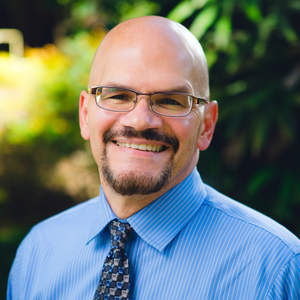
Timothy Muehlhoff
Tim Muehlhoff (Ph.D.) is the Senior Director of Biola’s Winsome Conviction Academy that seeks to reintroduce compassion and civility into our disagreements. He is the co-host of the Winsome Conviction Podcast where people with differing viewpoints are brought on for engaging dialogue. Tim has written extensively in the area of cultural engagement and conflict including I Beg to Differ, Winsome Persuasion, Winsome Conviction, and his newest book (co-written with Sean McDowell) is End the Stalemate: Move Past Cancel Culture to Meaningful Conversations.
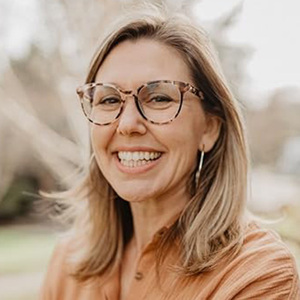
Katherine M. Douglass
Katherine M. Douglass is associate professor of educational ministry and practical theology at Seattle Pacific University. She is also an ordained minister in the Presbyterian Church (USA). Her research interests include the role that the arts play in faith, confirmation as a rite of passage, ministry with marginalized youth, and religious socialization in the home.

Brittany M. Tausen
Brittany M. Tausen is associate professor of psychology at Seattle Pacific University and director of Classrooms that Cultivate Character, an initiative that leverages science-backed practices to help young adults grow in virtue. Her research focuses primarily on ways to reduce dehumanization, enhance neighbor love, and cultivate virtue so that loving intentions more readily manifest in loving actions.