Biola University
What is the contribution of the neurosciences to our understanding of gender? How does the study of the brain help us understand transgenderism? How, if at all, are male and female brains different? And would it be possible to have a male brain in a female body? We’ll answer these questions and more with our guest, Dr. Stephen Willing.
You can view a transcript of Dr. Willing's talk at the Evangelical Theological Society here.
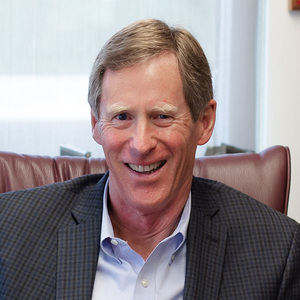
Steven Willing is board-certified in diagnostic radiology and neuroradiology, with an MD from the Medical College of Georgia and an MBA from the University of Alabama at Birmingham. He has held faculty positions at the University of Louisville, the University of Alabama at Birmingham, and Indiana University, where he taught and practiced diagnostic and interventional neuroradiology. Currently, he is a clinical neuroradiologist at Children’s of Alabama, a consultant in radiology at Tenwek Hospital in Kenya, a visiting scholar with Reasons to Believe, and an adjunct Professor of Divinity at Regent University. Dr. Willing is the author of Superbia: The Perils of Pride. The Power of Humility.
Episode Transcript
Scott Rae: [upbeat music] What is the contribution of the neurosciences to our understanding of gender? How does the study of the brain help us understand transgenderism? And how, if at all, are male and female brains different? And would it be possible to have a male brain in a female body? We'll answer these questions and more with our guest today, Dr. Steven Willing. Steven is a physician. He's a neurological radiologist who comes with great qualifications to do this. I'm your host, Scott Rae.
Sean McDowell: And I'm your co-host, Sean McDowell.
Scott Rae: This is Think Biblically from Talbot School of Theology, Biola University. Steve, thanks so much for being with us. Your paper is fascinating, and looks-- so looking forward to getting into some of these ways in which the neurosciences contribute to our understanding of gender. Now, you start out with the insistence that it's, it's almost impossible to get people to agree on a definition of gender. Why do you think that is, and how are you defining gender?
Steven Willing: Well, Scott, up until maybe ten years ago, it was not hard. Everybody pretty much agreed on the definition of gender, and it was more or less equivalent with sex. You'd see that when you're filling out applications, when you're on driver's licenses, passports, go on. Beginning a little over ten years ago, this greater controversy emerged related to transgenderism, and this developed with the idea that a person could have a gender that was different from their sex, that they were independent entities, and that in some people they could be mismatched. Well, if that's the case, then you... If, if gender is different from sex, then what is gender? And there's this added pressure of having to define it in terms that don't rely upon sex. If you're really saying that gender is not sex, then you can't go back full circle and define it in terms of sex, yet that's what they keep running into. So I cite how the EU had a $4 million project. They attempted to come up with the definitions for sex and gender, and they failed. This was reported just this year.
Sean McDowell: So I heard it said one time that if you've met one Muslim, you've met one Muslim, meaning there's a range of views of how it means to practice Islam. Well, the same is true with transgender. There's-- whether somebody identifies as transgender or a part of the larger trans community, there's a range of different ways people will define gender. So there's not a monolithic view, as you claim, just within the transgender community, about how to understand gender. What are some of the different kind of competing and contrasting ways of understanding gender within the transgender community?
Steven Willing: Well, I would go beyond the transgender community per se, because I don't think they're completely in control of the narrative. I would-- I prefer to use the terms, gender-affirming to describe those people who are supportive of transitioning, and gender-critical, who are more inclined to object or question, transitioning. And these two terms, gender-affirming, gender-critical, are really not pejoratives. So I try and stay away from that. If you go into the gender-affirming community, as I went through this, I could identify three main positions. The first one would have been that it's simply a mental illness, as traditionally understood, but people in this camp would still support transitioning. This would have been the mainstream position until about 2013. The DSM, the Diagnostic and Statistical Manual, is used for coding and diagnosing and categorizing mental illnesses, and this has gone through five major editions. In DSM-4, the fourth edition, it was referred to as gender identity disorder, and it was regarded as a mental illness when a young person or adult felt that they were of a gender different from their birth sex. This changed with DSM-5. They tightened the restrictions to require that the person must experience emotional distress in association with this, so they eliminated the diagnosis, gender identity disorder, and called it gender dysphoria. What this meant is if the person felt like they were of the opposite sex but experienced no dysphoria, then they were normal. That was, completely, acceptable. They... We use the term depathologize. Something that was once considered a disease or a mental illness is now regarded as normal, and what the DSM-5 did was to depathologize transgenderism as a mental illness, and that's just describing the first category.
Sean McDowell: Mm-hmm. Now, that's really helpful. So for clarification, it went from transgender, in a sense, where your mind does not match up with your body, being a disorder, to only when you experience emotional distress, gender dysphoria, being a disorder. So in a sense, this normalizes transgender as a way of being human.
Steven Willing: Exactly.
Sean McDowell: Okay, perfect. Second one. Good.
Steven Willing: The second camp looks at this and says, "No, this is not a mental illness." They are-- so they are affirming the change with DSM-5. They're saying that this range of expression is a range of normal human variation, and be-- if the person feels like they should transition to the opposite sex, that that decision should be supported. But they don't-- They regard it as real. They tend to regard it as something you're born into, and so they would support gender transitioning. This is probably the main view that has permeated the pop culture.
Sean McDowell: So that's the second one, that it's normal, normative. This is the popular one we see in movies, television, sports, et cetera.
Scott Rae: Would you go far as to say that that's something that ought to be celebrated?
Steven Willing: In the eyes of some people, certainly. So the third category sort of emerged out of second-wave feminism and Judith Butler. As you probably are aware, there's this movement afoot since the mid-20th century to deny any difference between male and female, and out of this camp emerged the idea that all gender stereotypes, everything pertaining to masculinity and femininity, is socially constructed, that it-- you're not born that way in any respect, that it is completely socially constructed, but also-... To be embraced. Now, the fact that it's socially constructed doesn't decrease its legitimacy. So in the Butler camp, there are, you know, there is a contingent that says, "Yes, of course, it's socially constructed, and we still think that the best way to go forward is to transition if the person so chooses." But these are almost completely opposite. You're born that way versus it's completely a social construct.
Scott Rae: All right, so your background is in the neurosciences. How, how do the neurosciences actually shed light on the transgender question?
Steven Willing: Well, let me give a little background. What is neuroscience? I'm a neuroradiologist, so I'm a physician, and I read MRI and CT scans. I've been doing this literally since MRI was invented. I was at UAB when they first got their first MRI scanner. I was at University of Louisville on faculty when they got their first MRI scanner. So neuroscience is really a broad field that encompasses anatomy and psychology and chemistry, the chemistry of neurotransmitters, the development of the brain, and diagnosing mental disorders using direct imaging. Now, how does this pertain to transgenderism? There are several avenues. First, it could be used to just study transgender people to look for differences in the brain. The second would be if you thought there might be explanations for transgenderism, to develop a hypothesis and test this hypothesis against the imaging studies. The third is mostly hypothetical so far, is, you know, maybe some people should transition and maybe some people shouldn't, and maybe you can use neuroimaging or neuroscience to predict the best approach and treatment for individual people. That's specific to transgenderism, but there's a broad background. There's a vast corpus of work in neurosciences that should also inform this, things that we know about the brain, like neuroplasticity, that your brain is not fixed at birth, that environmental influences and life course have a huge effect on the development of the brain. We also know, coming into this, before this ever came into being, this controversy, they've spent decades looking at male-female differences and been able to establish that, yes, there really are differences between male and female brains on many levels.
Scott Rae: So let's tackle that one in more detail. How are some of the ways... And sort of if we could keep this on the, on the non-technical shelf for our listeners. [laughs]
Steven Willing: Sure. [laughs]
Scott Rae: How are some of the ways that the male and female brains are different?
Steven Willing: You know, you would think it would be structural, looking at the brain, but that's not the case. I've looked... Like I said, I've read tens of thousands of MRI scans over my career, and I could no more, you know, tell you whether the brain is male or female than I could tell you where the stock market's gonna be tomorrow or one year from now. You just can't. But that doesn't mean there aren't differences. It's just they're very subtle. With highly sophisticated tests, we call it functional MRI, special MRI techniques that look at how the brain activates different regions and how they talk to each other. Using sophisticated computer algorithms, they actually can differentiate male and female brains with a high level of accuracy. But that's just talking about, like, the physical differences. How does this work out in practice? And this is where the research is much stronger. Just looking at human behavior, little boys tend to be more risk-taking, more aggressive. Little girls tend to be more risk-averse. Little boys are more systems-oriented. Little girls are more empathic in nature, and these have to do with the development of the brain. The brain... Developing a brain is affected by testosterone in utero, after birth, and again in adolescence. So there is a vast range of work in this area that's emerged, and to the point that essentially the s- debate is settled, that male and female brains differ. Now, the Judith Butler camp, again, still refuses to accept this, so there is still some opposition, but it's as much as science can be settled, this matter has been settled.
Scott Rae: So, so the things that you're describing, are describing, some people would still insist that they are socially constructed?
Steven Willing: Exactly.
Scott Rae: But it's, in your view, the science is pretty well settled, that these things are intrinsic to the male or female brain and not environmentally determined or socially constructed?
Steven Willing: Exactly. Something I share over and over again in my talks is that the January 2017 issue of the Journal of Neuroscience Research was entirely dedicated to laying out the evidence for male-female brain differences in matters far beyond reproduction. The journal editor, Larry Cahill, said, "This is an idea whose time has come," that male and female brains are indeed different.
Sean McDowell: So this point that you're making to us, is this mainstream? Do people push back on this? Within kind of the scientific medical community, is it like, "We all know this," or is there an entrenched philosophy or way of looking at this that maybe seeps into how people interpret the data?
Steven Willing: Well, it's like you said at the beginning about Muslims. Nobody's completely objective. I mean, people, why we believe the things that we believe, we would like to think it's all based on facts, logic, and experience, but really, it's heavily influenced by emotional, emotions and social factors and traditions, peer pressure, as well as spiritual influences. So why people believe the things they believe is not a straightforward thing. There are always going to be people who are so influenced by ideology or by peer pressure that they will kind of dismiss the science or find ways to explain it away. That's just human nature.
Sean McDowell: But where's the mainstream, if I may? Like, is this view you're laying out, that male brains and female brains are different, is that widely accepted? Is that the norm?
Steven Willing: I would have to say it's very widely accepted throughout the neuroscience community.... But once you get further away from the community, it would be more contested.
Sean McDowell: Got it. That makes sense. So the idea that a male could-- you could have a male brain in a female body, how do you process that, and how would the larger neuroscience community process that as a whole?
Steven Willing: I mean, how I would initially process this, it would set off my fraud detectors- [laughing]
Sean McDowell: [laughing]
Scott Rae: [laughing]
Steven Willing: -and my red alarms going off. Because most of us know from life experience, if you've ever been a parent, if you've ever been a teacher, you know that little boys and little girls are different. And those differences are not just physical, but behavioral, and behavior is rooted in the brain. So intuitively, you know there ought to be a problem with that.
Sean McDowell: Fair enough. That's kind of a, an intuitive, natural response from looking at boys and girls. I totally share that with you. As far as you can tell, would many of, say, your colleagues or those in neuroscience find the idea, since they're looking at it through that lens, of a male having a female body, they would take issue with that? Is that fair in that community, as far as you can tell?
Steven Willing: They probably would, but if they're good scientists, they wouldn't wanna just dismiss it outright. They'd wanna test the hypothesis, and that, I think, has been done.
Scott Rae: Well, one of the things you write, it goes like this: "Since it's reasonably possible to tell whether a brain is more male or female based on sophisticated imaging techniques, it's possible to study transgender subjects and determine whether their brain corresponds closer to their sex or their gender identity." So what do some of these studies actually tell us with regard to that?
Steven Willing: Yeah, thank you, and that really cuts to the heart of what my presentation is today at this meeting. I went through the neuroscience, the neuroimaging studies and papers that have been published over the last four to five years that were looking at transgender brain. And there's not much point in going any further back than that because there was very little until the last four or five years. It was actually so rare, but as you know, the demographics have changed. I went through all these studies. Some of them are, original research, some are literature reviews, and I narrow- filtered it down to eight studies that I include in my presentation. And the upshot of it all is that while some will find subtle differences between a man who identifies as a man or a man who identifies as a woman, they might find subtle differences in the transgender population as opposed to the cisgender gen- population. In no case does it emerge that the trans woman really has the brain of a woman. In every case, they're, they were much closer to their natal sex by a l- wide margin than they were to their gender identity. It simply, I would say, has been falsified so far. Does that mean it won't be in another five or ten years? I don't know. But so far, the evidence indicates that transgender brains more class- closely match their birth sex, not their gender identity.
Sean McDowell: So do you think if we had a study... I don't know how to word this, but if you had 100 individuals who were transgender, 100 who were not, and they compared their brains, would we be able to distinguish between and say, "Well, that's a male who identifies as a transgender female, as opposed to a male who doesn't?" Would there be, as far as you're aware, any noticeable differences in how people would be able to look and discern that?
Steven Willing: Well, that study's been done. Maybe not with 100. These studies I reviewed, some are quite large, and some are quite sm- quite small, but no, they've tried to predict whether a person would experience gender dysphoria or whether they would experience a gender different from their birth sex, and they cannot, not prospectively, not at all.
Sean McDowell: That's really interesting. Did that-- Like, I'm curious, as you've studied this, what surprised you most [chuckles] in terms of your findings on this research?
Steven Willing: I mean, kind of maybe a little off-topic, what surprised me most is sort of the Rube Goldberg nature of some of these studies because you have to make a lot of assumptions when you're looking at brain activation, 'cause you really don't look at brain activity. We look at, you know, oxygen consumption. When you see, the MRI studies look at blood flow, and that is sort of a proxy for oxygen consumption, which in turn is a proxy for neuronal activity, so that's how you get the data. But then when they process the data, almost all these studies are using artificial intelligence. They're using computer algorithms to look for patterns, to develop, you know, pattern recognition things. So I think all the research that emerges, you have to realize there are a lot of assumptions, and it's really complicated getting to that data, which makes it maybe not quite as tangible and compelling as you might think.
Scott Rae: Well, that was, that was my question: What's, what's the consensus on the validity of these studies? Especially if some, if s- as you suggest, some of the algorithms that are used may have some biases built in or may have some blind spots built in.
Steven Willing: I feel pretty good about the validity of these studies that I've read. Now, it's definitely a problem in this field. There is a lot of publication that's highly ideological, that's highly motivated. Jesse Singal, an investigative journalist, has been all over this, and he wrote a column called Potemkin Science, how, you know, they will withhold results, they will suppress negative results, they will exaggerate positive results, and, you know, just reading some of these papers, the language is so intensely ideological. But in the neuroscience papers that I studied, I did not encounter that. I feel like they're really good studies.
Scott Rae: One thing that struck me in your, in your paper is you suggested that personal identity actually has a neurological- ... Component to it. Can you, can you spell that out a little bit further for us?
Steven Willing: That's not quite how I would phrase it. What we know is, you know, different regions of the brain, tend to manage different tasks. So the limbic system is associated with emotions and memory formation, and anterior regions of the frontal lobes are associated with executive control, sort of the superego, in Freud's terms, but the decision-making part of the brain. Well-... We also look at regions of the brain that are associated with identity, and that overlaps with areas of the brain that are sort of introspection or daydreaming or thinking about yourself. And one area that, of the brain that emerges is the medial prefrontal cortex. So there are certain areas of the brain that are associated with identity formation. That doesn't mean it's determined, it's just where it's being processed. And these regions are sort of separate from the regions of the brain that are differ most between male and female, so it's sort of intuitively obvious that, you know, you could have a mismatch between your identity and your sex on that basis.
Scott Rae: Let me, let me back up just a little bit. I'm sort of cur- I'm curious about this. I take it you have, you have a fairly full practice, and your job as a, as a radiologist keeps you really busy. What sparked your interest in the application of the neurosciences to gender, in... That got, that got you started down this road?
Steven Willing: Well, obviously, this is an issue of great social concern right now. Everybody's talking about it, and, you know, it's important when untruths are being told to stand up against that. It's more as a- my mission as a Christian, I see this as spiritual warfare and, you know, what is spiritual warfare? What's the greatest weapon of our enemy? It's deception. And what is our weapon? The belt of truth. I look at, you know, standing up for the truth as spiritual warfare.
Sean McDowell: In the larger world of kinda neuroscience and the professional world you live in, will it or could it come at a cost to you to speak up on these issues, personally, professionally, in some fashion? Or you think many people just go, "Follow the science, be objective, see where it leads?"
Steven Willing: Oh, not at... I'm not at all at risk. I- ... Retired from full-time practice eight years ago. I- my skills are still in demand, and I do a lot of continuing work. I'm on staff at Children's of Alabama, and I do pediatric neuroradiology there on a limited basis, but my efforts more these days are more focused on apologetics and ministry.
Sean McDowell: That's music to my ears, by the way, just for the record. [chuckles]
Scott Rae: I kinda like, I kinda like that idea.
Sean McDowell: [laughs] Love it.
Scott Rae: So where... I don't know. This may I be asking you to put on your prophetic hat a bit, but where do you see the research in this area headed in the future?
Steven Willing: I would expect the research is never gonna show that there is a transgender brain. You know, I think it's, it's a belief. And I talked about Judith Butler and the social construct hypothesis. I actually find that framework extremely useful. I don't think that male-female differences are socially constructed, but I'm perfectly cons- comfortable with the idea that transgenderism, and really most of the LGBTQ spectrum, is socially constructed. And since I think it is more socially constructed than biological ba- biologically based, I think the research is probably gonna continue to show that you really don't have... These things aren't fixed and determined in the brain at birth.
Scott Rae: What it sounds like is that the neurosciences are suggesting something like what we- the philosophers call a biological essentialism, that these characteristics of male and female are so- are intrinsic. Now, they're not socially constructed but more intrinsic to male and female based on the way the brain has developed and what we're learning about brain function.
Steven Willing: Well, in every case, it's a mixture of both nature and nurture. We do know that these male-female differences have a definite basis in the brain in development. We know this. We know they're not socially constructed because we see this in the higher primates. You know, young chimpanzees are more aggressive, and they don't get that from watching TV or playing video games. We see... So we see these differences. We know they're biologically based, but we also know about neuroplasticity, that the brain can be shaped by the trajectory. That's why we get so concerned when we're talking about transitioning young people, because what they call gender affirmation really could emerge to be gender confirmation. If you-- the studies on transgender children to date had shown that the desistance rate, the ones who become at peace with their physical body by adulthood, is about 85%. But if you go them- put them down a medical pathway, if you start with socially transitioning, then medical, and then surgically transitioning, the... Once they start medical transitioning, the desistance rate drops from 85% down to 2%. You're seem to be locking them into this trajectory. So the treatment itself is not-- you're not treating something, you're shaping something, you're determining something.
Scott Rae: So you would say that this is proceeding in the absence of treating what may be the underlying causes for which the gender dysphoria is a, is a, not the root of it, but one of, one of the outworkings of deeper mental health issues. Would that be a fair statement?
Steven Willing: If you accept that there's always deeper mental health issues, and I think there probably are in a lot of cases. In my talk, I describe at least, you know, four possible explanations for it. One is there could be s- a traditional mental illness, as it would have been considered in up to DSM-5. The other is just a delusion, somebody intensely believing something that's not true. That could arise from pre-existing mental illness. We know there's a high association with mental illness. We call it comorbidity, when person who has one disease tends to have other diseases. There's a lot of psychological comorbidity in these patients. A third-... Possibility. It's just like a social contagion, that people imitate other people. I'm just starting to get into Rene Girard, and he talks about mimesis and how, people tend to ident- imitate other people, and that can be a huge factor as well. So, and then we know that social media seem to have- be playing a major role in this.
Sean McDowell: So probably in a lot of circumstances, it's some combination of those factors, and maybe all four in certain cases. If, if that's the case, I'm really curious what your advice would be for parents or grandparents whose kids are experiencing gender dysphoria, or maybe they're transgender and are not experiencing gender dysphoria. 'Cause I mean, I get weekly, sometimes daily emails from just parents and sometimes pastors just struggling 'cause their kids have fallen into this social contagion, and they don't know what to do. What advice or suggestions would you have to just kinda navigate some of those relationships?
Steven Willing: Let me just focus on the kids, 'cause the adults, I'm willing to just give a little more leeway in, you know, how they live out their lives. But the kids are a particular issue, and the... Everything to date, you know, certainly leading up to the Cass Report issued in the UK this year, everything to date indicates that there is no proven benefit to these transitionings. The harms are given. The harms we know. You start puberty blockers, you affect their brain development, you affect their physiology. Cross-sex hormones, even worse. So the harms are given. They've failed to prove any benefit. So my first point of advice would be, if you have it in your power, full stop. Do not proceed. The second is that many of these children do have other mental ills- issues going on. Many of them have been traumatized or abused, so get good counseling and make sure all these other mental health issues are addressed. And, you know, with counseling, it's buyer beware. Some counselors will be helpful, and some others could be destructive. I would say get fully informed on this matter. Go to the Christian Medical and Dental Association. We have resources on that. I would say, you know, get, And pray, and this is spiritual warfare, and pray not generally, but very specifically. Jesus taught us, when he taught us to pray, he said, "Deliver us from the evil one," not from evil, but from the evil one, and his main weapon is deception, so we pray for deliverance from Satanic deception. And, you know, last point is just love, support. You know, if you're in a state where the state can transition your kids without parental permission, I have to say, get out of there as soon as you can. If your children are at risk, your children's lives may be at stake. Don't fall for this noxious lie that would you rather have a living son than a dead daughter? That is criminally deceptive. There's no evidence that... The, first, the suicide rate really is, has been shown to be extraordinarily low in this population, and second, there's no evidence that this transitioning decreases that rate to any degree. So that's a lot, and there are probably more that I might have forgot.
Sean McDowell: That's great.
Scott Rae: Wow, this is, this has been super helpful, and I appreciate, I appreciate the clarity with which you bring to this, and your, you know, your background as a physician, as a, as a radiologist that spent, you know, your career studying MRIs of the brain. So thank you for, Steve, for coming on with us. This has been super helpful, and I hope for our listeners, Maybe what we could do, we'd like to, if we could put a link to your paper, in the, when we post this episode, so that our listeners could read a little further on this if they want to, if you, if you'd be okay with that.
Steven Willing: Certainly.
Scott Rae: If you're, if you're not okay, we'll edit that part out. [laughing] but if that'd be okay, we would love to be able to post that and give them access to it.
Steven Willing: Absolutely. I'd appreciate that.
Scott Rae: So thank you very much. This has been super helpful.
Steven Willing: Okay, thank you.
Scott Rae: This has been an episode of the podcast Think Biblically: Conversations on Faith and Culture. Brought to you by Talbot School of Theology, Biola University, with master's programs and undergrad programs in Bible, theology, apologetics, philosophy, marriage and family therapy. What else, Sean? Spiritual formation. We, we got-
Sean McDowell: Did you say philosophy? I mean-
Scott Rae: We got, we got more master's programs than we know what to do with here.
Sean McDowell: We do.
Scott Rae: So if you're interested in hearing more about that, visit biola.edu/talbot in order to learn more. If you wanna submit comments, ask questions, make suggestions on issues you'd like us to cover or guests you'd like us to consider, email us at thinkbiblically@biola.edu. [upbeat music] If you, if you enjoyed today's conversation with our friend, Dr. Steve Willing, give us a rating on your podcast app, share it with a friend, and join us on Friday for our weekly cultural update. Thanks for listening, and remember, think biblically about everything. [upbeat music]