Biola University
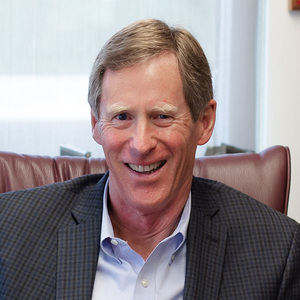
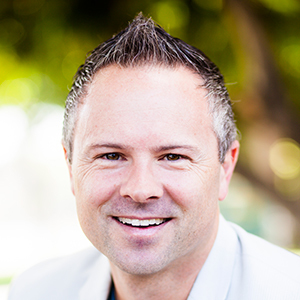
How strong is the evidence for near-death experiences? How has the field of study changed over the past 50 years since doctors, academics, and other experts began studying them? And what do they reveal about the soul or the afterlife? In this episode, Sean and Scott talk with Dr. Steve Miller, a near-death experience researcher and author, about these questions and more. They discuss how the study of near-death experiences, and deathbed experiences, has shifted over the past 5 decades.
Steve is an educator (teaches in the Interdisciplinary Studies Department at Kennesaw State University), researcher, entrepreneur, and speaker, having taught audiences from Atlanta to Moscow. Along with studying near-death experiences, Steve has also researched and written on the topic of deathbed experiences. He is the author of multiple books including Near-Death Experiences as Evidence for the Afterlife and Heaven.
Episode Transcript
Sean McDowell: [upbeat music] What are near-death experiences, and why have they spurred so much discussion and research over the past 50 years? Is there good evidence they are real, and if so, what do they tell us about God and the afterlife? Our guest today, Dr. J. Steve Miller, is one of the leading Christian researchers on the topic. He's authored multiple books and is a professor at Kennesaw State University. You've been on my YouTube channel multiple times, Steve, but it's the first time on Think Biblically. We're thrilled to have you here. I'm the host, Sean McDowell.
Scott Rae: I'm your co-host, Scott Rae.
Sean McDowell: This is the Think Biblically podcast, brought to you by Talbot School of Theology, Biola University. Steve, maybe the place to start with is just define for us what is meant by an NDE and maybe how common they are.
J. Steve Miller: Sure. Near-death experiences are, as it says, a time when a person comes near death, even some would call it clinical death. For example, let's say a person has a heart attack. Their heartbeat stops, their cessation of breathing. This is called clinical death. And so you'd expect during that time that the, your consciousness just, everything evaporates quickly, when your heart stops. And yet, they found that these people often, maybe a third of them having a cardiac arrest, will come to and express a very vivid experience that happened while they were clinically dead,
J. Steve Miller: which no one would be expecting under naturalism. [chuckles]
Sean McDowell: Of course.
J. Steve Miller: So, and the types of things that they encounter are similar. Now, you would think that if it was just a naturalistic occurrence, that this would just be a hallucination based on their expectations or who knows what. But instead, people cross-culturally will report leaving their bodies, looking back at their resuscitation efforts, talking to deceased relatives or angels, maybe having a life review, just, and very similar from culture to culture, and then actually having an exit from it all, where you're talking to some angelic presence or a being of light, which they all seem to say is God, and they say, "Hey, do I need to stay here or come back?" And then they come back, so it has closure as well.
Scott Rae: So Steve, I'm kind of curious, how did you get interested in this- ... To begin with? There's-- I suspect there's something of a backstory here that our listeners would be interested in.
J. Steve Miller: Sure, and I didn't mention that, Sean was asking how prevalent they are. There have been, surveys in Germany and Australia and the United States that show at least 4% of the population claiming to have had a near-death experience.
Scott Rae: Really?
J. Steve Miller: So that's one out of 25 people. You know, you have a Thanksgiving gathering coming up, you might want to ask around because people, it's very much widespread. So the way I got into it is I'm a perennial doubter, questioner. I went through periods of doubt early in my Christian life, had to study apologetics, reading pro and con things, and which is why I appreciate, Talbot and Biola so much because you've taken this area seriously, and that's really what God used to keep me in the faith. But in all these years, I'd never read anything about near-death and deathbed experiences until a relative, wanted me to read the little book, Heaven Is For Real, and see what... And I wasn't really interested, but as a favor to a relative, I read it, and I thought, "Well, it's a nice story. Maybe it happened, maybe it didn't. I di- I don't know the family. I'm a kind of skeptical guy." But i- so this was about a little boy, a pastor's son, who had had a near-death experience, and actually, a movie was made out of it. But one of the blurbs in the book was by a physician, Dr. Long, who said that he had studied thousands of these experiences, and this was consistent with what he had studied. And I thought, "Intellectuals are studying this? I need to get back and see what they've studied." So what I did is, rather than pulling up, experiences from YouTube or this type thing, I went in to see what the best studies by cardiologists, professional researchers at universities, what they had discovered about these, dramatic experiences that are so powerful.
Sean McDowell: Maybe give us a specific example of one. So you described what happens, kind of common themes and kind of common trends, but in your books, you list dozens and dozens, and these are documented, but what's one that just stands out to you that's interesting and maybe helpful of why this contributes to apologetics?
J. Steve Miller: Sure. Well, let's take the Pam Reynolds case. Now, and one reason I like it is because Dr. Sabom, who was teaching at Emory University, he was not just your average cardiologist next door. He was teaching-
Sean McDowell: That's right
J. Steve Miller: ... Cardiology at Emory, very well-respected, level-headed guy who's just out for the evidence. Now, someone had shown him Dr. Moody's book on near-death experiences, and he thought his word was hogwash. He said, "Yeah-
Sean McDowell: [chuckles] That's right
J. Steve Miller: ... I've got all these patients. Nobody talks about these things. This is just craziness." And somebody challenged him to start talking to his patients. And when he did, I think believe it was his third patient who told him about a dramatic experience. So as he just said, "Well, I'm going to study these," and he did. Over a period of, about a year, finally, he concluded that these people were actually exiting their bodies because they could tell very specific things that happened during the resuscitations, whereas a control group of his patients who had clinical death but did not have a near-death experience, when they would try to guess what happened in their resuscitations, always got it wrong. So he said, "How could they get it right in these specifics?" Well, one doctor in the Atlanta area said, "You need to study-- You need to go-"... Interview people about this Pam Reynolds case. So he actually did great research on this. He compared the doctor's records, talked to the physicians that were involved, because it was a type procedure he was not used to. So Pam Reynolds had an aneurysm in her brain that was very dangerous and required very delicate surgery, and there was a hospital where they specialized on this, and what they would do is drain all the blood out of your head, lower your body temperature, and operate on you and take care of that aneurysm, where you wouldn't bleed out, and that's the only way they could do this. Well, in order to do that, your heart is stopped. You're experiencing clinical death. They're measuring-- They're making sure that you're not waking up or anything. They're measuring brain stem activity by three major tests. You are dead, [chuckles] laying there. And yet, when she woke up, the intern or whoever had come in to talk to her, she starts telling about seeing the procedure from outside of her body. And so she goes to the doctor and says: "You need to go in and [chuckles] you need to talk to this lady." I mean, but her head was covered. You know, the only part that was open was the part that was having the surgery. How could she have known? Plus, there were 100 decibel clicks going on in her ears. She couldn't have heard anything, she couldn't have seen anything- ... And yet there she was, and she wasn't just describing something that she's seen on a TV show. She described some very specific instruments used for that. Dr. Sabom wasn't even familiar with the, with the instruments, so he actually asked for the spec sheet so that he could look at it, and sure enough, as she described it's kind of like a toothbrush, but it was going zzz, and they use this to cut, [chuckles] cut. And Sabom says: "How could she have known? How could she have known?" There wasn't anybody to tell her about it. She couldn't see anything, and yet, when she went to the other side, she was talking to beings on the other side. It was very vivid to her at a time when she shouldn't have had any brain activity at all. So I'd say the Pam Reynolds case is a great one.
Sean McDowell: There's dozens and dozens of these cases documented carefully. What's most important for people to see, especially of apologetics, is not just somebody who dies and has an experience and who tells us about it, as powerful as that is, but then when it can be checked and confirmed, and someone could not have known in the state they were at, with the decibels in their ears, the eyes covered up, that makes you go, "Wait a minute, you're minimally more than your body, and maybe this story you're telling is true." That's really the evidential hook that I want people to see that makes this so significant. Now, I've interviewed Long, I've interviewed Sabom, and you're right, these are top-tier scholars, cardiologists, no-nonsense. When I interviewed Sabom, he used the word hogwash exactly like you did- [chuckles]
J. Steve Miller: Yes, yes
Sean McDowell: ... To describe the way he looks at it. But this study of near-death experiences, you also mentioned Moody, who was one of the first- ... Has been going on for five decades.
J. Steve Miller: Yes.
Sean McDowell: So for 50 years, and it's still just starting to get the attention of kind of the apologetics world and the popular world and beyond. But you're-- we're in the middle of the Evangelical Theological Society, and you're doing this presentation on kind of 50 years of studying NDEs. So maybe just tell us a little about how it started and how it's changed over time and kind of the state of NDE study right now.
J. Steve Miller: Sure. Well, Raymond Moody was a study at the Univers- he was a student at the University of Virginia, an honor student studying philosophy. He eventually got his PhD in philosophy, so that fits in with our conference. His dad was an atheist, and he'd asked-
Sean McDowell: Oh
J. Steve Miller: ... His dad at one point. His dad would come home, and he was a surgeon, and he would ask-- he would talk about his surgeries over the table, and, someone had died on the table, and he had his chest opened up, and he said: "Hey, I just massaged it, and it started back." And, and little Raymond, as a kid, said: "Well, what did he experience?"
Sean McDowell: Huh.
J. Steve Miller: And his dad said, "Well, of course, he experienced nothing. He was dead. His heart was stopped." But, he just didn't even ask the question. Obviously, nobody could have any experience when that's-
Sean McDowell: No
J. Steve Miller: ... Going on. So that was Raymond's growing up, very secular background. But he was studying philosophy, then read Plato's Republic, and, Ir, a soldier, had experienced-
Sean McDowell: Yeah
J. Steve Miller: ... Death on the field, came back, and he, and ul- and Moody was fascinated with this. So, his-- he talked to his professor, and his professor said, "You need to talk to this psychiatrist," very well-respected on campus, who had one of those experiences. And sure enough, when he went to hear him speak, the psychiatrist passed around his own death certificate [chuckles] because he was dead so long, but it was a very Christian-like experience of Jesus directing this experience. So that kind of started Moody realizing, "Hey, it wasn't just Ir. This may be going on now." So he ended up interviewing, like, 150 people and wrote his book, Life After Life. But this wasn't a very scholarly scu- study, not very scientific. It was just interviews of people that he talked to, but it showed that there are commonalities to these. They're not just weird hallucinations, and it got people's attention, and he also didn't direct it toward Christians so that it was secular researchers could come in and just look at it and build upon that. So what we've seen is, over the past years, by 2005, and I haven't calculated it since then, but it, by 2005, over 55 researchers or teams published at least 65 studies of over 3,500 near-death experiences. Hundreds of NDE articles have been published in serious literature like The Lancet, Resuscitation, Neurology. These are all top-tier, peer-reviewed journals. So there's just a lot of, studies out there, plus meta-analyses of what we've found to date on near-death experiences.
Sean McDowell: Now, you, Steve, it sounds like you've been at this for a while.
Scott Rae: ... And you've been, you've been, you've been studying the studies, and you've been talking to people in the Christian community about this. What in, what in general has been the response of the Christian community to this whole phenomena of NDEs?
J. Steve Miller: I think, well, it's varied. Some high-profile Christians have written books on heaven that slam NDE, NDEs and just say they're all either hallucinations or they're of the devil, and the way they come to that conclusion is typically that they've read the little paperback books and listened to things on the internet, and they've said, "Hey, a lot of these are very new agey, or they're... Or they're saying that Christianity's wrong or reincarnation," and they get into all these things, and so they're warning people against these experiences. And I happen to agree with them. The f- according to Proverbs, "The fool believes everything he hears," and the devil, I think that there are malevolent presences on the other side that are out to deceive people. But these people have never seemingly read the actual research by legitimate cardiologists. They've read the popular literature and said, "This is heaven tourism literature. Stay away from it. We know what we need to know about heaven from the Bible." But then other people react by coming to me and telling me their experiences, and I, what I... What shocked me is I'm studying all the studies out there, and as I began to tell people, even in s- and I'm teaching in secular academia, and I'll be in a master's program get-together or something, and my wife will say, "Hey, Steve, tell them what you're studying," and I'll say, "Oh, near-death and deathbed experiences." Inevitably, somebody will look at me and motion me and say, "Come outside. I want to talk to you about something." [chuckles] And here they are talking to me about when they drowned as a five-year-old, and they had this near-death experience, and they want to talk to somebody about it, and this opens up conversations. I w- I was at a table of men at a men's meeting, early breakfast, five people around me. I told... I introduced myself, told them what I was studying, and the guy next to me says, "Oh, those things are real," and he told me about his near-death experience, where he saw Jesus on the other side when he was close to death from a sepsis condition. Then the guy on my right tells me about a vision of Jesus he had, and both of these grown men, about my age, in their 60s, they can hardly get through it because they're almost crying, 'cause it was so meaningful. These people need somebody to talk to about it, and yet, for some reason, we've been silent in our churches. Maybe I'm just hanging around the wrong crowd. I'm not Pentecostal nor, charismatic. Maybe they talk about it more, but in my churches, we just haven't talked about these things.
Scott Rae: Part of the... Part of what puzzles me about this is that, you know, the examples of fraud out there, I think, are enough to make people somewhat skeptical. But are there, are there other reasons why people of faith are so... Are resistant to accepting, you know, what looks to be sort of clear empirical facts on some of these?
J. Steve Miller: There are about 12 reasons I could give, and they probably vary-
Scott Rae: Just, just-
J. Steve Miller: ... From person to person-
Scott Rae: Just give me the one at the top of the list
J. Steve Miller: ... I think the one big thing is from the late 1800s through the 1900s, naturalistic materialism came on so strong that when people talk about spiritual experiences, like visions, they're afraid people will think they're crazy. In a lot of other cultures, you talk about these things, and we talk about it as a family. So-and-so's dying. They have some visions of angels and deceased relatives, very meaningful to them. Here, we're, someone had said we're embarrassed by the supernatural-
Scott Rae: So is that last-
J. Steve Miller: ... So we just don't talk about it.
Scott Rae: Is that latter thing you described, what's, what you mean by a deathbed experience?
J. Steve Miller: Yes, and I should distinguish those. A near-death experience is a halftime experience where you actually, experience clinical death and come back and have a story to tell. Deathbed experiences, which was the subject of my dissertation, which again, a lot of study has been done on since the late 1800s even, but, these are experiences just before your final death, and, but also of angels, deceased relatives- ... Coming to welcome you to the other side.
Sean McDowell: I included a chapter, or I had a chapter in a book responding to New Atheists in 2010 on the soul, and I included the story of Pam Reynolds in there as one additional piece of evidence that we're not just a body, we are a soul. But I didn't really at that point study near-death experiences. I thought, "This is probably an exception, an interesting one." Maybe six or seven years ago, I thought, "You know what? I'm gonna actually really study this," and J.P. Moreland, who endorsed or wrote the forward for one of your early books, had said, "You've got to check out this book." So I read your book on near-death experiences, amongst a few others, and was pleasantly surprised. I didn't expect the evidence to be [chuckles] that good. So I s- I suspect for a lot of people, they think these are just stories. They're no different than a dream. There's not that much to it, and yet one of the things you convinced me is that we can have confidence in the reporting of these NDEs. So maybe walk us through, why do you trust a lot of these stories and the people who tell us about them and the research that's been done on it? Professionally, why should we give that credence?
J. Steve Miller: Sure. Well, look back to the Bible. You know, our reports of the resurrection are testimonies. We, we don't- ... People who say we can't believe testimonies, I guarantee you, even if they're a physical scientist, 95% of what they believe about science, they read... They believe because they read it in a textbook, they heard another reputable scientist say it. They haven't done experiments on all these things themselves. So we learn to differentiate between good testimony and bad testimony. One reason I believe a lot of the... And, and listen, in this area, if you just start pulling up instances on YouTube, you're gonna find some people that are making things up, some people that are trying to get clicks on their website, and so they kind of-... You know, make their, make their experience a little more interesting. You have people who are mentally ill. You have all kinds, so you have to use discernment in testimonies.
Sean McDowell: Yeah.
J. Steve Miller: But the one reason that these, especially in the research by cardiologists, people don't wanna tell their doctor. They may tell a nurse they had an experience, but they're afraid if they tell the doctor about an experience, they're gonna recommend them over to the psych ward. They're scared to tell that, and the first time they open up about it, even to a wife, they may just be very uncomfortable in our culture. So when you have in a court of law legal testimony, if somebody has something to lose by giving that testimony and doesn't have anything to gain, those are some of the elements and reasons we trust these testimonies. And what I found, which what shocked me, is as I began opening up about my research, people that I already know and trust are coming up to me saying, "Let me tell you about my experience," which may be the one of the most important experiences of their life, but they never told me as one of their friends. And so these are people around me that I already know and trust, family members, friends, and they're talking about it, but they've never had... Felt safe coming out about [chuckles] their experience.
Scott Rae: So let's say that, one of our listeners finds himself or herself in a conversation with a friend or a family member, and they share that they've had a near-death experience. How would you suggest that the, that our listener respond when they hear the stories of near-death experiences?
J. Steve Miller: A good general biblical principle is be quick to hear, slow to speak. [chuckles]
Sean McDowell: Amen.
J. Steve Miller: Listen to them. Now, I have one friend that I've listened to about his experience, and I think he probably had a legitimate experience, at the first, but then he started telling me about subsequent visions, and it got weirder and weirder, and then he starts telling about God telling him things, that he's right... And finally, he says that he's been diagnosed with schizophrenia and is off his meds, and so you don't just accept everything. The naive, according to Proverbs, believes everything, so I don't naively, but I'll listen, get their side of the story, ask them what they think it means. They may have never had anybody they could talk to about it, and they need you as a compassionate believer need to be a listener who's there to help them in interpreting what's going on. But I ask the person how they interpret it. I keep the conversation open, and I say, "What does it mean? Would you mind if we talked about this again?" They hardly ever get that, because people hear it once, then they go on and talking about the rest of their day and their groceries and the Atlanta Falcons or whatever-
Sean McDowell: [laughing]
J. Steve Miller: ... And they just wanna move past it. Listen to them. Talk to them. This is a meaningful experience, and it's, it's not easy having an experience that's so meaningful that you feel like you can't talk to people about. Be a good counselor.
Sean McDowell: It's r- it's really helpful. I'd like to think before I studied this, if somebody told me a story, I would've listened and shown compassion, but in the back of my mind, I probably would've thought, "Ah, this is a dream. This person's a little crazy. They're a little nuts." I prob-
J. Steve Miller: And I would've thought the same thing-
Sean McDowell: I probably would have
J. Steve Miller: ... 20 years ago.
Sean McDowell: I'm telling you, Steve, it's crazy. You know, I've talked about this, that once I really studied it and saw how prevalent it was and just have an ear to listen, how many people share stories. We had a student in our apologetics programs maybe five years ago, and she described how just being in a serious car accident, the car flipping, time slowing down, and a man in a white robe that just was translucent, and she's like, "I just knew it was Jesus, reached out and told me I was gonna be okay," came out of this, transformed her life, which as you described, so many people with near-death experiences, it's transformative for them.
J. Steve Miller: Yes, yes.
Sean McDowell: Dreams are not typically, unless they're some kind of supernatural dream, but typically they're not, almost all near-death experiences minimally haunt [chuckles] the person and are transformative. So she was like, "This has changed the direction of my life. I wanna come study apologetics," like, it was really powerful, but I completely believed her. I affirmed, I listened, and I think it was a positive experience for her. Now, I want you to tell us, what is maybe one or two of the most common naturalistic explanations for this?
J. Steve Miller: Sure.
Sean McDowell: And before doing so, I just sent out a tweet, like, a week or two ago, and I said to a- I said, "If you don't believe in God, is there anything about the world that gives you pause?" And an atheist I've known for 25 years, one of the smartest atheists I know, he said, "Near-death experiences make me think twice about my physicalism." And I thought, "That's really interesting."
J. Steve Miller: Mm-hmm.
Sean McDowell: So what would be one or two leading naturalistic responses, and why aren't you convinced?
J. Steve Miller: Sure, and we need to be very open. I mean, scientifically thinking and objectively thinking, we need to take any hypothesis that might explain things and look at it in the eye.
Sean McDowell: Right.
J. Steve Miller: If these are not real, we need to know it, and we need to be able to help people from that perspective. Moody actually listed a lot of these in his original book in 1975. So over and over, the researchers have tried to control for these to see, was it caused by drugs? Well, a lot of these people, were not on morphine or any kind- ... Of hallucinenic-genic drugs, and you can look at the doctor's records. That kind of rules that out in cases. Some would say that lack of oxygen-... Is, the problem, but people who lack oxygen, they're f- they're, they're, if they're passing out from that, their thinking gets fuzzy, whereas in a near-death experience, it's, it's very clear and unforgettable, very different from, lack of oxygen. Some will say maybe a DMT-type hallucinogenic drug, something natural in our brains goes off at a time of death, which makes us hallucinate about things, and we feel good and all this. But if you com- there have been some very good studies comparing the DMT experience to the near-death experience, and while there's overlap, like people feel like they're really on the other side, outside of their b- or not necessarily outside of their bodies, but they're outside of this physical reality, when you look at the specifics, those type people, will talk about seeing... Yes, they see sentient beings on the other side, but those beings tend to be like clowns or talking insects.
Sean McDowell: Huh.
J. Steve Miller: And nobody that I know that's experienced a near-death experience are experiencing those. Very few on DMT are gonna experience a deceased relative, and yet here in near-death and deathbed experiences, it's deceased relatives, it's angels. It's very specific, very different. So I just say these naturalistic hypotheses have been looked at by researchers for their lifetimes of research, and one after another, they've just had to say, "No, that just really doesn't fit with the data that we have from near-death experiences."
Scott Rae: So Steve, one, I think one final question, at least from me. I'm curious, you know, we've talked a lot about a lot of different things here today, but in... Just to su- to summarize, give me one or two components of what you think it means to think biblically about these near-death experiences.
J. Steve Miller: Well, I've been reading through the Bible on visions and just was shocked to see how many times visions are mentioned. Almost every chapter of Genesis, except for maybe two or three, has a vision [chuckles] in it, and they're talking about visions. Abraham has a vision, okay? And, and it impacted him evidentially enough to move his whole family and make plans based upon it. You look at the Book of Acts, they're all through the b- what, Book of Acts, all the way to the end. So when I'm looking at it, this is a very biblical thing to talk about. And yet, when I look through all the seminars going on here, a- I don't see much on visions. I didn't see anything on visions. I think that we've just stopped talking about these things. They're extremely biblical. There are all kinds of visions in the Bible that people are having, a multitude of different types. We, we see in the Transfiguration that Jesus and his top-tier disciples actually experienced some long-deceased people. Well, that's what we often see in near-death experiences. You look at Stephen, and at his death, he has a deathbed experience. You see the Apostle Paul in 2 Corinthians 12, that... What he expresses there, he said, "I don't know if I was in the body or outside of the body," but he calls it paradise or heaven. He was on the other side and thought it was possible he was outside of his body. So I don't see how someone can come and say, "Oh, this is unbiblical." Visions are very biblical, and they seem like they're very consistent with visions to me, and when you get into the best research, I don't see it conflicting what we see taught in the scriptures. So, yes, we need to do a good job of both having great theology and seeing the best of near-death research, rather than just kind of hearing some things on the web and treating it lightly. Because these are important, and we need to help people think through which worldviews or which worldview fits best with the data we have, and for their own experiences, how to interpret them.
Sean McDowell: I think you've done that better than anybody. In your books, you say, "Why can't New Age explain this? Why can't, worldviews like naturalism explain this?" Monism can't explain it, on and on and on, and show how it points distinctly, in many ways, towards a Christian worldview. You're working on your fourth or your fifth book on near-death experiences?
J. Steve Miller: Fourth book.
Sean McDowell: Working on your fourth book. For those who say, "All right, I'm intrigued, I wanna consider the evidence," which of your books would be the place to start?
J. Steve Miller: Just start with my first book, and I go by J. Steve Miller, the letter J, Steve Miller, to distinguish me from the band.
Sean McDowell: [laughs]
Scott Rae: [laughs]
J. Steve Miller: And, you can, But it's Near Death Experiences as Evidence for the Existence of God and Heaven. It's really an easy read, but I document it relentlessly- ... So that will introduce you to the research, the naturalistic responses, plus, about t- a dozen lines of evidence that I think indicate that these, that often these experiences that are talked about are actually real, and experiences with the other side, giving evidence for God in heaven. So I would start there, and I have several books out, and I try to keep them inexpensive, so... And if you can't afford it, email me, jstevemiller@gmail.com. I'll send you a free PDF. I'm not out for the money. This is important stuff. We need to know if this is of God or what.
Sean McDowell: Oh, that's really generous of you to send that.
Scott Rae: That's a nice offer.
Sean McDowell: That is, the first book that I read. Again, J.P. Moreland recommended it, and, I don't say this lightly. It was game-changing for me, and that's one of the reasons [chuckles] I think you've been on my show five or six times. We have you coming back up in a few weeks. We've talked about, hellish near-death experiences. We've talked about deathbed experiences. So that would be another place. Just go to YouTube, and there's probably five or six hours of you and I talking live, taking questions, the toughest objections to it. So we will definitely have you back. This is-
J. Steve Miller: And, and if you want to have a discussion on it, go below one of those interviews, and I really enjoy discussing and talking to people. So that's, that's another area where you could say that we're dealing with people's real questions and not scooting around, avoiding them.
Sean McDowell: Yeah, if you... Honestly, listening to this has amazed me about you, Steve, is that you respond to so many of the questions personally that people send in. So if people have had an experience and they have questions, you can mail them in through our Think Biblically. It'll come to us through my website. I'll forward it to you, and I know you do your best to answer personally as many [chuckles] of those as you can.
J. Steve Miller: I'm a couple of months behind, but I'm... But I keep trying to catch up, because-
Sean McDowell: This may ramp it up a little bit, but you do an amazing job serving people. That's just really a special ministry. So it's great to finally introduce you to our audience here at Think Biblically, and we'll definitely have you back.
J. Steve Miller: Thanks for all you do, Scott and Sean. We appreciate it.
Sean McDowell: This has been an episode of the podcast Think Biblically, conversations on faith and culture. The Think Biblically podcast is brought to you by Talbot School of Theology, Biola University. We have programs in apologetics, spiritual formation, Bible, theology, marriage, Old Testament philosophy. I haven't even started to mention all of them, online and in person. To submit comments or questions, please email us at thinkbiblically@biola.edu. We would deeply appreciate a podcast rating on your podcast app. Each one helps, and if you found this fascinating, share it with a friend. Thanks for listening, and we will see you Friday for our weekly cultural update. In the meantime, remember to think biblically about everything. [upbeat music]