Biola University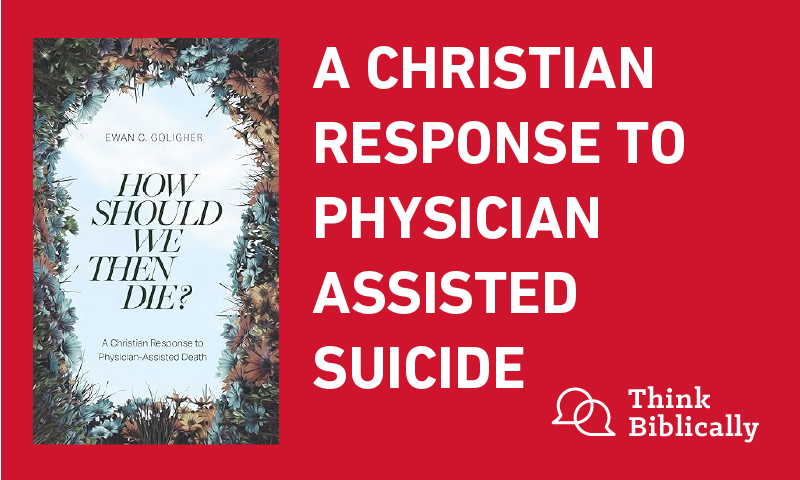
What is the state of assisted suicide/euthanasia in Canada today?; How significant are the financial pressures on the Canadian health care system and is that a reason that PAS/E is encouraged?; What is involved in a Christian response to PAS/E? We’ll address these questions and a few more with our guest Dr. Ewan Goligher, critical care physician and professor of medicine and physiology at the University of Toronto.
Ewan C. Goligher (MD, PhD) is a physician and scientist at the University of Toronto. In the context of his practice of intensive care medicine, he often cares for patients at the end of their lives. He is author of How Should We Then Die?: A Christian Response to Physician-Assisted Death. He has authored more than 150 academic and medical papers. He serves as a ruling elder at Christ Church Toronto.
Episode Transcript
Scott Rae: [upbeat music] What is the state of assisted suicide and euthanasia in Canada today? How significant are the financial pressures on the Canadian health system, and is that a reason that assisted suicide and euthanasia are encouraged? And what is involved in a Christian response to physician-assisted suicide and euthanasia, otherwise known as medical aid in dying? We'll address these questions and a whole lot more with our guest, Dr. Ewan Goliger, critical care physician and professor of medicine and physiology at the University of Toronto. I'm your host, Scott Rae, and this is Think Biblically from Talbot School of Theology, Biola University. Dr. Goliger, thank you so much for being with us. I know we're part of, part of a major conference here this week, and you're inundated with folks that wanna talk to you, but thank you for taking the time to have this conversation about medical aid in dying and a Christian response to it.
Ewan Goligher: Oh, it's my very great pleasure. Thanks very much, Scott.
Scott Rae: So how would you summarize the state of medical aid in dying in Canada today? And maybe, first of all, clarify what is... What is actually meant by that term, medical aid in dying?
Ewan Goligher: Well, medical aid in dying is a, an umbrella term that encompasses practices such as assisted suicide and a practice like euthanasia, both of which, are aimed at bringing about the death of the patient. With assisted suicide, a patient ingests a lethal, dose of, cocktail of drugs. With euthanasia, a physician or a nurse practitioner directly administers the drugs to the patient. But from a moral point of view, they're really very similar practices, where a healthcare professional's trying to cause a patient's death. And, medical aid in dying is a term that, as far as I can tell, was invented 12 or 15 years ago to sort of, normalize these practices as part of, care for patients at the end of life. And, since, it was legalized in Canada nearly 10 years ago, it's expanded rapidly. A total of over 60,000 Canadians have sought assisted death. I think last year alone, it was, upwards of 15,000 to 16,000 patients. And now-
Scott Rae: Wow
Ewan Goligher: ... I would say most Canadians and most Canadian households have been touched by the issue. Most people know somebody who sought assisted death or who is-
Scott Rae: Really?
Ewan Goligher: ... Thinking about it and wrestling with it.
Scott Rae: Yeah.
Ewan Goligher: So it's really a very common thing now in Canadian society.
Scott Rae: So, the incidence of it has risen-- sounds like it's risen rather dramatically in the, in the last few years.
Ewan Goligher: Yeah, that's right. I think based on the last available numbers, about 6% of deaths in Canada were by assisted death, for the last year for which we have numbers, probably 2023. So yeah, I mean, that's, that's, that's quite common.
Scott Rae: That's a, that's a big number. That strikes me as, you know, a percentage that's quite higher than it is in some of the other countries in Europe that have been at this quite a bit longer than Canada. Is, is that the case?
Ewan Goligher: Well, I would say our numbers are similar. I think what's scary is how quickly we got there compared to them. You know, the Netherlands and Belgium, you know, it was-- this was legalized in the '90s. It grew relatively slowly. The fact that we went from 0% to 6% in less than 10 years just highlights the way this has been rapidly embraced and normalized in Canadian society.
Scott Rae: Now, it's legal all throughout Canada, correct?
Ewan Goligher: That's correct.
Scott Rae: Okay, and that was, that was... The, the legalization was done at the national level, as opposed to the province level?
Ewan Goligher: Yes, and importantly, the legalization was, based on, you know, a Supreme Court decision that declared, the criminal prohibition unconstitutional, so that m- essentially enforced, you know, the legalization of the practice. So it wasn't the result of a prolonged, deliberative legislative process.
Scott Rae: So how frequently do physicians actually refuse a patient's request for medical aid in dying?
Ewan Goligher: I don't know the numbers on that. It definitely does happen from time to time. I would say it's probably relatively less common. As a physician, you don't really often have good grounds to refuse a request because essentially, the, a lot of the criteria that are employed are pretty subjective. The patient decides whether their suffering merits, dying, and a lot of the other eligibility criteria are pretty subjective. From what I hear, from time to time, there are, physicians who practice euthanasia who will decline a patient, but in fact, often those patients are encouraged just to go talk to somebody else and find somebody who's willing to do it. So at the... In the end, it's not often, I think, that people really get declined.
Scott Rae: Now, I take it, I take it you would decline all those requests.
Ewan Goligher: Yeah.
Scott Rae: Does the law also require you to refer to somebody else who will fulfill that request?
Ewan Goligher: Yeah, so the law doesn't speak to that directly, and in fact, the Supreme Court decision that legalized euthanasia in Canada specifically said that nothing about their decision requires physicians to provide this, but they left it to the jurisdiction of the provinces-
Scott Rae: I see
Ewan Goligher: ... That manage health system to sort of specify policy. So in the province where I live, the College of Physicians there said that it's part of professional expectations and obligations that a physician makes a referral to a willing provider if they're not willing to do it themselves. And so that really put those of us who are unwilling to participate, you know, at some risk of professional discipline, and, you know, we've found various ways around that. But it remains very much the, there's a kind of pressure that expects you to treat this as sort of normal medical practice, and if you don't go along for the ride, then you're not, practicing in accordance with good medical standards.
Scott Rae: And, and just so we're clear for our listeners, too, I... It's under- I think it's more easily understandable that you have a m- a moral issue with administering euthanasia or providing the medication for a patient to do it himself or herself, but what's the problem with referring?... That to somebody else who's, you know, which removes you quite a, quite a distance, but who will provide that service?
Ewan Goligher: Yeah, I think it's important for people to appreciate that when a doctor refers a patient to another physician, they're really taking on significant moral obligations as to what happens to that patient. I have a responsibility if I refer a patient to someone else, to make sure I'm sending them to someone who's gonna take good care of them, who's qualified, who's knowledgeable, who has the requisite expertise, et cetera. And traditionally, colleges and, physicians, regulators have recognized that a referral is a very serious thing to do. So, for example, the College of Physicians in Ontario has a policy that prohibits physicians from referring someone for female genital mutilation.
Scott Rae: Right.
Ewan Goligher: Recognizing that referral obviously makes you complicit if a patient ends up, being mistreated in that way. And so, but, you know, then here there's this kind of dissonance where they're saying, "Oh, you're forced to refer, and if you're concerned that make you complicit, well, that's not our problem." So yeah, there's, an immense pressure to try and really normalize this practice and not allow individuals to object to participation.
Scott Rae: Well, from what you've said, with the frequency of it increasing so dramatically, it sounds like that normalization process is well underway.
Ewan Goligher: Yeah, sadly.
Scott Rae: Now, you said you don't see any moral distinction between assisted suicide and euthanasia. Are there other, I mean, non-moral differences that our listeners ought to be aware of?
Ewan Goligher: I think that it's really important for people to appreciate a very important practical or operational difference between assisted suicide and euthanasia. And to sort of illustrate the difference, I like to point to the example of California, which has a population about the same size as Canada's, probably a distribution of political, leanings that's not too dissimilar from Canada's, and legalized assisted suicide in 2016, the same year that Canada legalized euthanasia and assisted suicide. And in California, the number of people who've sought and obtained assisted suicide is far lower than the number of Canadians who have obtained euthanasia. And in Canada, something like 98% of patients prefer to have euthanasia over assisted suicide, so they prefer to have the doctor or the nurse end their life than to ingest the lethal drugs themselves. So, you know, obviously, we can speculate about it, why that is exactly, but I suspect that it's actually very difficult for a patient to lift their hand and to end their own life.
Scott Rae: Mm-hmm.
Ewan Goligher: And, and so that seems to be a significant barrier to the widespread uptake if you limit the practice to assisted suicide.
Scott Rae: So just, speculate with me for a minute. Gi-given in California, and that- this is true in the dozen or so other states in the US that have legalized assisted suicide, would you say it's inevitable that they will also legalize euthanasia at some point?
Ewan Goligher: Given the underlying logic of the practice, I think there's a lot of pressure to do so, because if you accept, in principle, the idea that, letting someone end their own life, with the assistance of a lethal prescription is appropriate, and that it's appropriate for physicians to support and endorse that action, and you start to hear the stories of the assisted suicide gone wrong, because if the patient doesn't ingest the whole cocktail or, and doesn't take it properly, you know, they can end up in medical distress without actually being-
Scott Rae: Mm-hmm
Ewan Goligher: ... Dead, then people will start to say, "Well, clearly, the patient-centered, compassionate thing to do is actually just to euthanize the patient." And so I think there is inevitably major pressure to, support euthanasia once you endorse assisted suicide, because morally, they're really not terribly distinct.
Scott Rae: So yeah, I mean, I would say they're, they're morally, virtually indistinguishable. And it's just, well, you know, the means by which it's carried out, that the end is the same, the intention is the same, it's just the means are different. Now, in Canada, I'm curious about this: What are some of the most common reasons that a person will request medical aid in dying?
Ewan Goligher: Yeah, so the literature and even the annual reports produced by the federal government are really quite clear about this, that the reasons that people are seeking this out have really relatively or very little to do with uncontrolled physical suffering, and everything to do with people's struggle to, face the existential challenges of suffering and dying. You know, people seek this because they feel like they're becoming a burden, they're losing control, and they're struggling to see any point in going on in life when they can no longer do the things that they wanna do or get the things that they wanna get. And they-- And I think there's that deep sense of, uselessness that they feel, and the i- with the idea of being a burden. And so those are the main drivers of the reasons that people are seeking assisted death, and that's documented very consistently in academic papers as well as in these government reports, that this has a lot more to do with existential suffering than it has to do with physical pain.
Scott Rae: So in Canada, what are the criteria for eligibility? Because... And, and do they vary from region to region?
Ewan Goligher: No, the criteria are standard across the country because they're, they're specified within federal legislation, that pertains to the Criminal Code. And in Canada, the Criminal Code is applied at the federal level, so these laws apply across the country.... So in Canada, we have two tracks. There's track one and track two. Track one is, was the original eligibility for euthanasia, which is that you have grievous and irremediable suffering, and y- death is, [lips smack] reasonably foreseeable, a natural death is reasonably foreseeable. And in that case, like-
Scott Rae: Within a time-
Ewan Goligher: There's-
Scott Rae: Within a specified time period?
Ewan Goligher: They don't actually specify a time period-
Scott Rae: Not really
Ewan Goligher: ... But reasonably foreseeable. So left pretty open. But so if you have, like, advanced cancer or, and you're at or near the end of life, then you might, for example, you know, fit into track one. Track two, which was added, more recently, is for people for whom death is not reasonably foreseeable, but who still have grievous and irremediable suffering and who decide that death is their preferred way out of facing this suffering. And, y- that's restricted at present to people with significant physical disabilities. So if you have a significant physical disability, say, you have a spinal cord injury or s- or some other chronic, disability, you could be eligible, for euthanasia under the so-called track two. And the m- the reason to distinguish between these tracks is that the, kind of monitoring and consenting requirements, and the waiting period are different. In track one, now you can get assisted death nearly within 24 hours of asking for it- ... Whereas there's, the rules are a little bit more stringent with track two, although stringency is not really, a quality of any of the Canadian legislation. It's really been designed in a way to sort of maximize access for patients.
Scott Rae: Yes, I think so much for the notion that it'd be a well-considered request, that endures over time, as opposed to something where you could, almost like drive-through. So that's, that's, I mean, that's quite different. I know that's quite da- actually quite different from when the Dutch first started doing this back in the '80s. It had to be... I mean, there had to be a time elapsed between your first request and the administration of euthanasia. Sounds like that, you know, that notion of it being a well-considered request is sort of going out the window. Is that, is that, is that overstating it?
Ewan Goligher: No, I don't, I don't think so. I mean, I think with the track two, there's this-- they do, I think it's a 90-day waiting period and so on. But, you know, I would say that part of, you know, we've already talked a little bit about the way this has been normalized in Canadian society. Once you embrace death as a therapy for suffering, the question starts to become why you would deny it to anyone, and so the burden of proof sort of becomes on the- on those who want to slow down and deny, and so on. But for sure, there's lots of patients who sort of nearly on a whim request this and then change their minds again at the last minute. There's a lot of wavering. You know, obviously, the kinds of issues that patients are wrestling with that motivate them to make these requests are very weighty and impact their emotional state, you know, significantly. So yeah, there's... You know, once you shrink the waiting time to 24 hours, there's, there's room for, you know, serious error and abuse.
Scott Rae: I... To what degree is it, I think, is it considered as part of the eligibility that, you have elderly, frail, marginalized, you know, disabled persons who are not always able to speak up for themselves? And I wonder, what kind of safeguards are in place to prevent family members from basically twisting a loved one's arm to sign a d- a medical aid in dying declaration, not because- not so much because they're tired of living, but because their loved ones are tired of them living? 'Cause you mentioned a big factor in this is them, f- the patients feeling like they're becoming a burden, and I wonder how... What, what guardrails are there in place to prevent, you know, family members from actually coercing someone into signing this? You know, at least on the surface, looks normal, but if you dig a little deeper, you find out it probably is against their will.
Ewan Goligher: Yeah. So the guardrails are limited. You know, the law makes very clear that the request has to be voluntary. So often, there will be an assessment of a patient's capacity to voluntarily make decisions, but that really has to do with you being in a state of mind such that you can work through the, you know, the decision, understand the consequences and the nature of the act, and so on. So that really has to do with just, like, having, like, intact cognition, and it's not a way of assessing whether a patient's feeling or experiencing underlying pressures from their family, and so on. And so much of that guardrail, guarding against abuse, towards vulnerable people, comes down to an individual physician's judgment about whether the patient's, under pressure or not, and it's very difficult to assess that, if- especially if you don't have a long-term relationship-
Scott Rae: Mm-hmm
Ewan Goligher: ... With the patient and the family. And given the challenges that we have with primary care in Canada, where often patients are talking to this with doctors who barely know them, it's, I think the guardrails are very fragile.
Scott Rae: So how would-- I mean, if you're, if you're a physician, and you have a patient coming to you, let's say that, let's say you're not morally opposed to this, how does the system handle patients with various ranges of dementia in being able to make that decision? 'Cause I suspect that, you know, in early stages of dementia, they might not, you know, they might not be quite ready for that, but in the latter stages, when they, when they would be ready for that, they've lost competence to make that decision for themselves.
Ewan Goligher: Yeah. This raises the whole challenging discussion around advanced directives.... And increasingly, there's advocacy that patients should be able to make an advance directive, say, when they get an initial diagnosis of dementia, they still have capacity for medical decision-making, that they can make an advance directive that when the time comes, when they lo- have lost capacity, and they, you know, and they're, you know, increasingly disabled, that at that point in time, the doctor would go ahead and euthanize them. There's been a ton of pushback and concern about that in the Canadian public pretty generally. I mean, I-- to me, that is a next-level thing because essentially what it would mean is that if I have a physician who made a, or if I have a patient who made a prior advance directive, it's me walking into the room, looking at the person, saying, "Ah, this person's existence clearly is no longer worth living." So it's really very profoundly demeaning, and, at present, I understand in Quebec, already these advance directives are being assessed, accepted, even though the law doesn't actually support that practice yet, but they've chosen not to prosecute that in Quebec.
Scott Rae: Interesting, because in the US, one of the main pushbacks against advance directives, especially if it's done so far in advance, is that patients, you know, they want one thing for the end of life when they're perfectly healthy, but they may, they may change their mind at some point, you know. And they may discover that living with some of the losses that come with the end of life are not as significant as they thought they might be when they originally filled this out and were perfectly healthy. So I, that strikes me as, you know, a bit risky, not having an opportunity for patients to change their mind about that at some point, because they-- in the US, we encourage people to evaluate their advance directives at least every five years to make sure that they want the same things. And it sounds like the, that's part of the guar-- the guardrails that are not that substantial that you're referring to.
Ewan Goligher: Oh, yeah, absolutely, and even as a practicing critical care physician, when we're making decisions about whether someone... It's consistent with someone's goals of care to put them on life support or to consider withholding or withdrawing life-sustaining measures, advance directives don't carry all that much weight in those conversations for exactly the reason you're saying, is that people's, you know, needs and values and expectations shift over, shift over time. So I think the point that you're making is a very important one, and just one more reason to refuse, you know, to oppose that kind of change in policy.
Scott Rae: Yeah, we've, we encourage family members, especially, to recognize that the interpret-- the advan- the advance directive, their role is enforcement, not interpretation, and that the, you know, the family or the surrogate decision maker, they don't, they don't get the prerogative of coming up with a better idea than what the patient had written down, presumably well thought out in advance, and, you know, giving room for the fact that they might actually change their mind. Now, you had, you had said earlier, when I heard you speak on this, that, medical aid in dying undermines the value of a human being. This, I think, sort of gets to the heart of your moral issues with it. But I-- but proponents of medical aid in dying actually say roughly the same thing, that not to do this, to allow somebody to s-- you know, to be in this state of, you know, interminable suffering for, you know, an indefinite period of time, is inhumane. And so w- how exactly does the practice of medical aid in dying undermine the value, the intrinsic value of a human being?
Ewan Goligher: Yeah, I think this is the heart of the issue, because I think both sides sincerely believe that they're, you know, supporting human dignity. You know, the, advocates of euthanasia, you know, they call themselves Death with Dignity, or their organization Dig- with Death with Dignity. So there's a real, belief, that this is good for people, and I think it's predicated on a misconception of the true nature of human value. You mentioned the word intrinsic there, and if you distinguish between intrinsic and then extrinsic value, you're looking at different forms of value. Intrinsic value is value that you have just from what you are. Extrinsic value is value that you have by virtue of your usefulness. Intrinsic value is value that you... That can't change. It just, it belongs to you because of what you are.
Scott Rae: Regardless of-
Ewan Goligher: Yeah
Scott Rae: ... Your ability to function.
Ewan Goligher: Exactly. It's unconditional, it's unchanging. Extrinsic value is value that can vary over time, depending on your usefulness. And when it, when the time comes, or if someone comes along to me and says, "Hey, I want you to end my life," what they're saying is, "I don't think my existence matters anymore. I don't think I matter anymore," 'cause if I lift my hand to end someone, what I'm saying is, "You don't have value. It's not good that you exist." And if that's the case, then you're-- what you're implying is that people only have extrinsic value. They have value that can change and come and go, depending on their usefulness to themselves, and so this is actually a lower and very demeaning, form of value. You know, slavery is a form of treating people as if they only have extrinsic value. Human trafficking is a form of treating people as if they only have extrinsic value, and if assisted death is predicated on the, on a notion of human value that's extrinsic in character, then that's, that's profoundly demeaning and degrading, to the true human value, which is intrinsic and unconditional and unchanging.
Scott Rae: And I, and I've been, I've been reluctant to invoke the, you know, the earlier attempts at euthanasia in Nazi Germany and even before that, because of the, you know, the some of the slippery slope fallacies, um-... But it seems to me that there are some things in common, and the one you point out is one of the main ones, which is the noti- the notion that there can be such a thing as a life that's not worth living.
Ewan Goligher: Absolutely.
Scott Rae: Or, and that people, I think, as-- I forget who said this, but more recently, people who describe the elderly and the term, the seriously ill as useless eaters, it seems to strike right at that, right at the heart of what you're suggesting.
Ewan Goligher: Yeah, I, like, I completely share your reticence in drawing those comparisons because, you know, voluntary euthanasia, as morally opposed as I am to it, is still not nearly as heinous as involuntary euthanasia-
Scott Rae: Right
Ewan Goligher: ... Which is obviously what the Nazis were engaged in. But-
Scott Rae: Yeah, I always say they started at the bottom of the slope.
Ewan Goligher: Yeah. [chuckles]
Scott Rae: It never had a beneficent purpose-
Ewan Goligher: Exactly
Scott Rae: ... To begin with-
Ewan Goligher: Yeah
Scott Rae: ... And went further downhill.
Ewan Goligher: Exactly.
Scott Rae: Go ahead.
Ewan Goligher: They started at the bottom of the slope is a good way of putting it. But, you know, I always, in the, in the book, I write a little bit about the story of this woman named Gillian Bennett, who, end- who ended her life by assisted suicide before it was legal in Canada. She found someone who would offer her a prescription, and she, and she ended her life. And she did this after she'd been diagnosed with dementia, and she very eloquently wrote about her decision, published this online, and actually went online shortly after she died, and this was in, I think it was 2014. You know, provoked a huge amount of public discussion about euthanasia because what she said so eloquently, you know, just explaining her point of view, was that she foresaw her future as one of progressive disability, increasing uselessness, describing herself as an empty husk in a, in a bed in a hospital, who, you know... And no nursing student goes into the noble profession of nursing to look after an empty husk. So it was this idea that that kind of existence was utterly absurd and useless, and underlying that way of looking at her own value is this concept of life not worthy of life, which was, of course, exactly the same rubric-
Scott Rae: Mm-hmm
Ewan Goligher: ... Through which the Nazis were looking at the disabled and, you know, other marginalized members, the Jews, et cetera. And so I think there is a deep kind of shared and congruent notion of human value operative there.
Scott Rae: And, and you ra- you raise, I think, a que- a question that I had not thought about before when I heard you speak on the subject. And, and the question is: How do we know if someone is better off dead than continuing to live? And, I mean, it would seem to me that there are, there are some cases of suffering, which some of these that you describe in your book, that are so severe that it seems clear that they are better off not continuing to live. So how do you, how do you answer that question? How do we know if someone's better off dying than continuing to live?
Ewan Goligher: Well, I think that good medicine that's practiced, on the basis of reason and rational deliberation, always assesses a treatment in terms not only of whether we need to do something, but also of what the outcome will be. And when it comes to death, doctors simply do not know what it's like to be dead. I can't, can't tell you, I can't reassure you that it's nothing. I can't reassure you that it's paradise. I can't reassure you that it's judgment. I can't reassure you that it's, you know, reincarnation. All the kind of range of options that humans have tr- considered through the years. The point is that I need to refrain from making any such assumption 'cause I have no authority to do that as a physician. But when you lift your hand to end someone, telling them that this is good for them, that death is good for them, you're making an assumption about what it's like to be dead, and I'm just-- my point in that argument is that doctors have no authority to do that. I... And, and so really what's going on here is a kind of secular blind faith at play, where you're willing to take that risk, willing to make that leap off the cliff without knowing what's over the edge, because you're so, sort of persuaded of your own metaphysical beliefs. But in that case, we're really practicing on the basis of our own personal, quasi-religious life vision rather than, you know, on the kind of basis that doctors would be-
Scott Rae: Mm-hmm
Ewan Goligher: ... Expected to make medical decisions.
Scott Rae: I don't think I'd u- even use the term quasi-
Ewan Goligher: Right
Scott Rae: ... Because I think they are the equivalent. It's because it's a w- it's a worldview.
Ewan Goligher: Yes.
Scott Rae: It's your own-- It's your, it's... And I think you're right to say that that's basically, that's a faith commitment. And, and in this case, it's an extremely faith commitment. Now, I'll give you just an example. My mom passed several months ago, very severe dementia, and she was... I mean, she was virtually unconscious for the last, I don't know, week to 10 days of her life. Now, she wasn't in pain, wasn't in discomfort, and had no, had, said nothing about... She's a, she's a Christian, had said nothing about, you know, any medical aid in dying. She was quite content to live out her days as the hand of God provided for her. But I could see a scenario where if somebody doesn't have that eternal assurance, they could, they could see themselves as just taking up space. And, I mean, she lost the ability to communicate. I mean, she was-- she bas- she basically had the autonomic functions still going in the body, but there was, I mean, she, I wouldn't, I wouldn't say she was partially brain dead, but there was just, there wasn't a lot going on upstairs. Would that be a case that would maybe challenge the view that, you know, maybe she might be better off?... If God takes her home, and whether that happens by a physician's hands or naturally, so be it?
Ewan Goligher: Yeah. I think one of the great ironies in this whole discussion is that from a Christian point of view, speaking theologically, we have great confidence about what comes after death.
Scott Rae: Yes, we do.
Ewan Goligher: And so, and we look forward to it in a lot of ways. Like, you know, Paul, the Apostle Paul said to depart and be with Christ is far better. So who has more motivation to seek assisted death than us? But, I- at the same time, we humbly recognize that having been made in God's image and imbued with such profound value, to lift our hands to, end something, would be to violate that value, would be to tread upon the sacred, would be to desecrate someone made in God's image. And so it's this strange irony that even though we're very confident that death is good for the Christian, it's death that we wait for from God's hand, rather than taking it into our own hands.
Scott Rae: Yeah, I think the question we can, at what cost?
Ewan Goligher: Yeah.
Scott Rae: And I think there's, you know, part of the reason that the scriptures have so much to say about not taking innocent life is becau- even your own, is because the timing and manner of our death ultimately belong to God, and that's, that's not, that's not something that comes with our... We don't, we don't own our own lives, ultimately.
Ewan Goligher: Yes.
Scott Rae: And especially at the end of life, we don't, we don't own the timing and manner of our death. That's up to God, and as you pointed out, just stopping life support is a different decision because it's not the underlying disease is what causes the death, not the intentional hand of the physician or the physician-enabled patient in that. Now, what's the-- how would you describe the state of palliative care across Canada, and does that provide a viable alternative to medical aid in dying?
Ewan Goligher: Yeah, so, I mean, I'm, I'm not a palliative care specialist, and I don't practice in palliative care, so I... You know, my knowledge of palliative care is largely related to sort of my hospital environment and so on, and what I've heard from colleagues across the country. I mean, to say palliative care is fairly good in Canada, but always, of course, could be better. Could be better investment in making home palliative care readily available and, in particular, educating the public about all their options with palliative care. Hospice, the availability of hospice care is sort of spotty and variable across the country. If you, if you live in a large urban center-
Scott Rae: Mm-hmm
Ewan Goligher: ... I think your chances are better than if you're in a, in a smaller, town, but y- I think it's reasonable. I think the, for sure, the thing that we've seen is that there's been an effort to say, normalize euthanasia as sort of a part of the spectrum of palliative care, rather than drawing distinctions.
Scott Rae: I see.
Ewan Goligher: And,
Ewan Goligher: I'm sorry, I'm totally blanking on the second question you asked me.
Scott Rae: Yeah, does it provide a viable alternative?
Ewan Goligher: Yeah, does it... So this, I would say yes and no. So yes, palliative care is a very powerful way of addressing the physical suffering and pain and symptom management that really make people really fearful about the dying process, understandably. And we really can effectively control people's suffering, physical suffering, so that, you know, life can be bearable and lived to the fullest extent possible as they journey through the dying process. But at the same time, would the availability of really good palliative care make the demand for euthanasia disappear? I don't think so, and that's really because, like we talked about before, the desire for euthanasia is driven more by existential and spiritual concerns, and, you know, no medical treatment-
Scott Rae: Sure
Ewan Goligher: ... Can really effectively address those things. So in some way, palliative care is really important in making euthanasia unnecessary, but another way, there are deeper issues here that need to be addressed, beyond medicine, that euthanasia raises.
Scott Rae: Yeah, fair enough. So w- Ewan, one final question. What's, what's involved in a Christian response to medical aid in dying? Because I suspect that what, in the f- the US, what's going on north of the border is coming south, and it's just, you know, coming to a theater near you. It's just not exactly sure when. In fact, just, like, two weeks ago, the state of New York legalized assisted suicide, but with pretty strict criteria of terminal illness, six months or less to live. And the argument is those, like what's happening in Canada, those criteria will eventually broaden significantly for that reason. So what opportunity is there for the church here in this context?
Ewan Goligher: Yeah, so I think the f- the first thing for the church is to establish, you know, absolute moral clarity on this issue. We need to speak with one voice to say that we can't support this, and we need to be able to communicate to congregants in the pew, p- to pastors, and then to the world outside the church, why this is anti-human as opposed to humane. And, I think if we can establish that clear messaging, that shared consensus, then our voice on this issue is gonna be much clearer and much more effective. I think that so many of the issues that drive people's desire for death, that sense of being a burden, the struggle to find meaning in the face of suffering, loneliness, and a lack of social and care and support, so all those needs can be met by the church. I mean, we have- we proclaim a gospel that is almost like a philosophy of suffering, you know, understands where evil comes from, understands that it's been conquered and defeated, that-... You know, the suffering we face now is a momentary thing, not, something that finally defines our existence. The church is a place where people are called to bear one another's burdens and so fulfill the law of Christ, where we understand it's more blessed to give than to receive, where we're called to actively look around to see what needs and burdens we can bear in the life of others, so that others can see their value, in us. Jesus said, "By this shall all men know that you're my disciples, that you love one another." So the Church is the kind of place where people should sense their value and see their meaning and significance to such a depth that euthanasia is sort of unthinkable. It's like, "Why would I do that when I clearly matter so much to so many people, when I'm loved this way?" And so I think we need to make a concerted effort to ensure that our church communities attend very carefully to those who are sick and disabled, elderly, frail in our midst, and also, sort of disciple people well to understand what's at stake and why it is that honoring human value is such an important form of worship for the one who made us for Himself.
Scott Rae: That's a, that's a great word, and I say a hearty amen to that. And, for those of our listeners who are pastors or church leaders or elders, that's something that needs to become part of the fabric of the life of the Church. Because the number of people who are approaching, you know, age 65 and over will be the highest percentage of folks in our population, both in the US and in Canada, than we've ever had before. And we're just, we're-- I don't, I don't think the wave has not quest- crested yet, in those numbers that are gonna need our care. So, Ewan, thank you so much for being with us. This has been a rich conversation, so appreciate your expertise in this, particularly your perspective coming from Canada, and the fact that you're, you know, you're on the front lines of doing critical care medicine. And m- you may not do palliative care yourself, but you certainly have the opportunity to influence people toward palliative care instead of the medical aid in dying options. So very grateful for your work and for your time here with us. And I want to commend to our listeners your book as well, How Shall We Then Die? Is a, is a great piece, really insightful stuff, and so I want to commend that to our listeners. It's well-written. It's not a difficult read. I want to commend that to them as well.
Ewan Goligher: Thank you very much, Scott.
Scott Rae: This has been an episode of the podcast Think Biblically: Conversations on Faith and Culture, brought to you by Talbot School of Theology, [upbeat music] Biola University, offering programs in Southern California and online. Visit biola.edu/talbot in order to learn more. If you'd like to submit comments, ask questions, or make suggestions on issues you'd like us to cover or guests you'd like us to consider, please email us at thinkbiblically@biola.edu. If you enjoyed today's conversation, give us a rating on your podcast app, and please share it with a friend. And join us on Friday for our weekly cultural update. In the meantime, thanks for listening, and remember, think biblically about everything. [upbeat music]